GUIDELINES FOR THE PREPARATION
OF THE
MASTERS THESIS AND DOCTORAL DISSERTATION
University of Oklahoma Health Sciences Center
Graduate College
1105 N. Stonewall Avenue
Robert M. Bird Library Building, Room 258
Oklahoma City, Oklahoma 73117
(405) 271-2085
ORGANIZATION OF THESES AND DISSERTATIONS
The Graduate College allows the submission of theses and dissertations in two different organizations; the traditional organization or the manuscript organization. The organization that a student uses is at the discretion of the student’s committee and the degree granting program. The Traditional Organization
This is the organization that has been historically used for theses and dissertations. Following is the format for thesis and dissertations using this type of organization:
Chapter 1: Introduction
Chapter 2: Materials and Method Chapter 3: Results
Chapter 4: Discussion Chapter 5: Summary
The Manuscript Submission/Publication Organization
The manuscript submission/ publication organization allows students to organize the Methods and Materials and Results chapters of the Traditional Organization into independent chapters each comprised of a manuscript. The manuscripts do not need to be submitted or accepted for publication to be included in the thesis or dissertation. Work that is done but is not ready for publication at the time of writing the thesis or dissertation would be organized as an independent chapter using the same format as a manuscript. Manuscripts with more than one author should include a statement outlining the student’s contribution to the work. For example, “AB generated the data in Figures 2,3 and 5 and wrote the Introduction (and/or Discussion and/ or manuscript).”
The Introduction and the Discussion chapters would be comparable to these chapters in the traditional organization. The Introduction should be a scholarly work that introduces the topic of the thesis or dissertation, reviews the literature of the topic, and presents the hypotheses to be tested. It is important that this section be unique and specific to this document. The Discussion should discuss the results presented in the thesis or dissertation in the context of the field of study. It is important that this section be a scholarly extension of the discussion sections in the manuscripts in the chapters. This section should not be just a reiteration of the discussion presented in each of the manuscript chapters.
The Introduction and the Discussion chapters in this organization would constitute what is usually considered the “scholarly” part of the thesis or dissertation. This organization would allow the student to gather, organize and write up their results as a manuscript for submission and hopefully encourage and facilitate the submission of manuscripts.
Manuscripts in the format submitted for publication are the copyright of the author and can be placed directly into the theses or dissertation, even if published; only the journal format is the copyright of the journal. If the student and their committee agree published manuscripts may be placed in the thesis or dissertation in the published format; however, the student must obtain permission from the publisher to use this format and permission of the publisher must be submitted to the Graduate College. In either case, the source of a published manuscript must be included.
Following are examples of the format for thesis and dissertations using the manuscript submission /publication organization:
Example A:
Chapter 1: Introduction – must include scholarly review of the literature
Chapter 2*: To be submitted manuscript, submitted manuscript or published manuscript Chapter 3*: To be submitted manuscript, submitted manuscript or published manuscript Chapter 4*: To be submitted manuscript, submitted manuscript or published manuscript Chapter 5*: Discussion – must include scholarly discussion of results
Chapter 6*: Summary Example B:
Chapter 1: Introduction – must include scholarly review of the literature Chapter 2†: Materials and Methods
Chapter 3*: To be submitted manuscript, submitted manuscript or published manuscript Chapter 4*: To be submitted manuscript, submitted manuscript or published manuscript Chapter 5*: To be submitted manuscript, submitted manuscript or published manuscript Chapter 6*: Discussion – must include scholarly discussion of results
Chapter 7*: Summary
*Number of middle chapters dependent upon the number manuscript chapters. Chapter could also contain results that will not be published but can be presented in thesis or dissertation. †The addition of a Materials and Methods section would be at the discretion of the student and their committee. This would provide the opportunity to provide details on the development of innovative methods or details that would not find their way into a manuscript.
Preparation of Thesis/Dissertation
The candidate is responsible for seeing that the thesis/dissertation is submitted in proper format. The highest standard of mechanical details must be achieved. The candidate is responsible for the form of the thesis/dissertation and with the aid of the committee should carefully edit the final draft for arrangement, sentence structure, paragraphing, punctuation, spelling, quotations, and the form of footnotes, tables, and bibliography.
The thesis/dissertation should be prepared in a style acceptable to your department and committee, however, the Graduate College requirements must be followed. REGARDLESS OF THE STYLE USED, THE FOLLOWING ITEMS MUST REMAIN.
All dissertations and theses must be submitted in electronic format. In addition, the thesis or dissertation can be printed if the student or program desires bound copies. Order of Material
Title Page, Signature Page, Copyright Page, Acknowledgments, Table of Contents, List of Tables, List of Illustrations, Abstract, the Text of the Thesis/Dissertation, Bibliography or Literature Cited, Appendix, Index (optional). (See attached sample pages.)
Numbering of Pages
For electronic submission, all pages are numbered, including the title page.. Page numbers must be centered, 0.5 inches from the bottom of the page.
Font Selection
Font sizes should be selected carefully and should enhance the professional quality of the publication. Arial 11 point is recommended but a serif font is acceptable.
Margins for printed and bound copies 1
Left Margin 1 ½ inches Top Margin 1 inch Right Margin 1 inch Bottom Margin 1 inch Footer ½ inch
Margins for ONLY electronic submission
Left Margin 1 inch Top Margin 1 inch
Right Margin 1 inch Bottom Margin 1 inch* Footer ½ inch
The use of "justified" or "left-aligned" margins are acceptable, but are not interchangeable. Spacing
Documents should be double-spaced throughout, with the exception of the Bibliography, Figure Legends, Table entries, footnotes and quotations of more than four lines or two or more sentences. In the Table of Contents, titles of more than one line are single spaced.
Paragraph Indentions
If you are printing double-sided, there is a setting in Microsoft Word to alternate the wider margin –
1
check the “Mirror Margins” box in the Margin setting menu. Traditionally, in a printed version the title page has no number but the next page is numbered as 2.
Either block style with no indentation or indented 1/2" is acceptable. You must be consistent. Title Page (see attached sample)
1. Name of University and Graduate College 2. Title of Thesis or Dissertation
3. Name of Degree
4. Graduate's Name (first name first)
5. Location should always be Oklahoma City, Oklahoma 6. Year thesis/dissertation deposited
Signature Page (see attached sample) 1. Title of Thesis or Dissertation 2. Names of Committee members
3. Original Signatures on the three final copies when submitting printed and bound thesis/dissertation. If submitting electronically, a single page with original signatures must be filed with the Graduate College.
Copyright Page (see attached sample)
All information is to be centered on the page. This page is required for all students and has nothing to do with the optional copyrighting services from Proquest.
1. Copyright notation
2. Graduates full legal name 3. Date the degree is conferred
Acknowledgments Page (see attached sample) Abstract
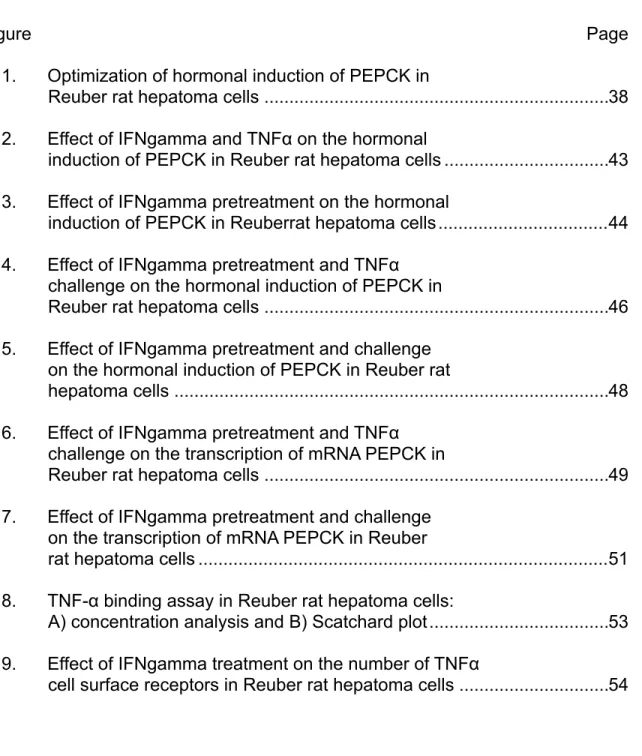
Table of Contents/List of Tables and List of Illustrations
Follow the format of the abbreviated sample included in these instructions. This page is to be fully justified. Any titles more than one line should be single-spaced. If a second page is required, include the appropriate heading such as “Table of Contents Continued”.
Headings of Major Divisions
The first line of the first chapter will be "CHAPTER I". Three lines below this appears the title of the chapter in capital letters, centered. Double-space succeeding lines of the title if it is longer than one line. Three lines below the chapter title, place the first line of text. Succeeding chapters, "CHAPTER II", etc., should follow this same format. Do not use terminal punctuation on any chapter headings.
Headings of Subdivisions
Any logical system of subdivision within chapters or sections is permissible, but the scheme must be consistent throughout the manuscript. The subdivision within a chapter or section does not begin on a new page unless the preceding page is filled. If there is not room for the complete heading and at least two lines of text at the bottom of a page, the new subdivision should begin on the next page.
References
References usually consist of information in parenthesis or square brackets within the text. Two common methods of referencing are (1) to use author's name and date of publication, as in (Smith, 1990), or (2) to assign numbers to the bibliographical entries and insert the corresponding number for the reference in the text, as in [95]. Use a citation manager such as
EndNote and consult your mentor and committee as to a preferred style for your field of research.
Bibliography/List of References
A thesis/dissertation must include a list of materials used in the preparation of the manuscript. This may consist only of references cited in the text (List of References) or it may include works consulted as well (Bibliography). Use bibliographic software such as EndNote. Consult your mentor and committee to select a reference style appropriate to your field.
Double space between each reference. References of more than one line should be single spaced.
Appendix
An appendix is not required, however if desired, you must maintain the same margins and consecutive page numbering as used in the body of the text.
Acknowledgments
This page is to thank those who have helped in the process of obtaining the graduate degree. Permissions to quote copyrighted material are listed here, as well as acknowledgments for grants and special funding.
Tables and Figures
Tables and figures are to be incorporated in the text as appropriate and not included as a set at the end of the chapter or thesis/dissertation. Tables which would normally take more than an 8 ½ x 11 inch sheet must be divided into multiple pages or reduced by using a smaller font. All titles and page numbers must be in the same font and type size as the body of the text. The area used for the graph and for all captions and legends must be within the appropriate margins.
Permission must be obtained from the copyright holder if you are including any published material. Where the publisher holds the copyright you can usually apply for permission on their web site.
Photographic Reproductions/ Scanned Images
New technology continues to provide methods for displaying photographs and images in your thesis/dissertation. It is your responsibility to ensure that the highest quality of resolution is presented in your thesis/dissertation.
Color
Electronic versions will contain color. If you submit bound printed copies they must all be printed the same, either in color or black and white. If you wish to print in black and white, make sure that lines or columns on charts etc are clearly distinguishable.
Patent Policy
University Patent Policy provides that all discoveries, which are made or conceived while the inventor is a student of the University or has made substantial use of facilities or funds provided by or through the University are the property of the University. This Policy provides protection to both the University and the inventor and offers substantial benefits to the inventor. Students who make an invention or discovery under the stated conditions should contact the Vice President for Research in the Library Building, Room 121 before writing their dissertation or thesis. Copies of the Patent Policy may be obtained from the VPR’s office.
Submission of Reading Copy to the Graduate College
Use Turnitin to ensure your thesis or dissertation is free of plagiarism. Submit to the Graduate
College an approved reading copy at least 10 business days before the defense. The reading copy must be submitted as a hard copy or PDF document along with a memorandum from the committee chair indicating committee approval and listing the members of the reading committee. Approval to submit the reading and final copy in electronic format must be indicated by the committee chair in the memorandum. The reading and final copy deadlines are printed in the OUHSC Academic Calendar found on the Office of Admissions and Records homepage. Dissertation Defense Announcement and Abstract
The final oral examination is a defense of the dissertation and is open to the public. At least 10 business days before the defense the candidate must submit to the Graduate College an electronic Defense Announcement for the Final Exam and double spaced abstract of no more than 350 words (see examples attached). Thesis students are not required to submit these items. After the Dissertation defense the student has 60 days to make corrections and prepare the final copy.
DEPOSIT OF FINAL COPIES TO THE LIBRARY Electronic Submission of Thesis/Dissertation
Electronic versions of dissertations and theses are required. The final version of your dissertation should be converted to a PDF document and submitted to the Graduate College on a CD, DVD or USB stick. Include on each CD/USB stick a separate file of your abstract. The Graduate College will make a final check. If all is in order, the files will be given to the student to be deposited with the library on two duplicate CD/DVDs.
Dissertations are sent to ProQuest for addition to the Dissertation database. There is a publishing fee and optional copyright fee payable to the Graduate College who are billed by ProQuest. You can request a temporary embargo on release of your dissertation to protect intellectual property or unpublished data.
How to prepare your dissertation for submission to ProQuest
http://media2.proquest.com/documents/UMI_PreparingYourManuscriptGuide.pdf Hard copy submission of Thesis/Dissertation
Students who elect to also submit a printed and bound dissertation/thesis must submit three final copies of the thesis/dissertation on 100 percent cotton bond paper with original signatures of the committee. Text and figures must be printed at high quality. The final copies must be delivered to the Graduate College within 60 days of the final defense. If all is in order, the material is given to the student to be deposited with the library. Personal copies may be turned in for binding at the same time. These must be pre-paid; currently the cost is $8.00 each plus tax (price subject to change).
Selected information from the Bird Library web site:
How do I find theses or dissertations written by OUHSC graduates?
Search the Bird Library catalog to find theses and dissertations written by OUHSC graduates. Search Tips
To find a specific thesis/dissertation by author:
• Enter the author's name in the search box (e.g. jorge padron or padron jorge)
• Select "author" from the drop down search box
• Select "Bird Health Sciences Library" from the drop down library box
• Click on "Search"
To find theses/dissertations focused on a particular topic or area:
• Enter thesis AND oklahoma AND [your keywords of interest] into the search box (Remember that you may need to experiment with a number of combinations to find the keywords that provide the most relevant results)
• Select "Bird Health Sciences Library" from the drop down library box
• Click on "Search"
To find all OUHSC theses/dissertations:
• Enter thesis AND oklahoma into the search box (thesis is the appropriate search term even if you are looking for dissertations)
• Select "Bird Health Sciences Library" from the drop down library box
• Click on "Search"
•
Browsing the Print Collection
Print copies of OUHSC theses and dissertations are shelved on the third floor of the Bird Library with call numbers beginning W 4A. Within this call number range, items are then organized alphabetically by author and finally by publication year. (e.g. W 4A P124c 1956 is a complete call number assigned to an OUHSC dissertation)
How do I identify theses or dissertations regardless of where the degree was completed? The Bird Library subscribes to a number of databases that make it easy to identify theses and/or dissertations even when the degree was not awarded by OUHSC.
ProQuest Dissertations & Theses
• Search across four different databases, including dissertations and theses produced at institutions worldwide from 1743 to the present
• Access full text for most works added since 1997; select full text is available for items written prior to 1997
OUHSC faculty, students, and staff can access ProQuest dissertations and theses database both on and off campus. More detailed information about off campus access to all library
resources is available in our Remote Access link.
Databases with a Limit Option to Dissertation and/or Thesis
The databases listed below have options available that will allow you to limit a particular search to dissertations and/or theses. These databases do not typically provide full text access to the dissertation or thesis.
CINAHL (Cumulative Index to Nursing and Allied Health Literature)
• Provides "publication type" limits for Doctoral Dissertation and Masters Thesis
• Select one or both of these limits to find all of the doctoral dissertation and/or masters thesis records in the database
ERIC (Educational Resources Information Center)
• Provides "publication type" limits for Dissertations/Theses including the ability to specify doctoral dissertations, masters theses, and/or practicum papers
PsycINFO
• Provides a "publication type" limit for Dissertation Abstract
OUHSC faculty, students, and staff can access any of these resources from both on and off campus by using the “Resources” menu in the Bird Library's home page (http://
library.ouhsc.edu), then select “More Databases”.