An Examination of the Implementation of Ireland’s
New Higher Education System Performance
Framework in a Sample of Higher Education
Institutions
Author: Seamus O Shea, B.Sc., M.Eng.
Presented for the Award of
Doctor of Education
Supervisor: Professor Joe O Hara
Dublin City University Institute of Education
I hereby certify that this material, which I now submit for assessment on the programme of study leading to the award of Doctor of Education is entirely my own work, and that I have exercised reasonable care to ensure that the work is original, and does not to the best of my knowledge breach any law of copyright, and has not been taken from the work of others save and to the extent that such work has been cited and acknowledged within the text of my work.
Dedication
Acknowledgements
I wish to express my sincere gratitude to the following people:
My supervisor, Professor Joe O Hara, for sharing his wisdom, for his positive encouragement and good humour, and his direction and support at all times;
The participants in the study for sharing their time and their views with me and without whom none of this would have been possible;
The staff of DCU for their interest in guiding our class along the way and to my class mates for their friendship, support and encouragement;
The Institute of Technology Tralee (my employer) for its support;
My work colleagues who participated in some pilot activities and those who took the time to inquire, encourage and support;
Margaret, Siobhán and Patricia for their great sense of humour and the interest and support provided to me on this journey;
Tadhg for acting as a sounding board for the statistical analysis;
Table of Contents
Chapter 1 Introduction and Context ... 1
1.1 Introduction ... 1
1.2 Research Question ... 2
1.3 Contextual Factors ... 2
1.3.1 New Public Management ... 2
1.3.2 EU Context ... 3
1.3.3 Ireland’s Higher Education Strategy ... 3
1.3.4 Ireland and EU Policy ... 5
1.4 Conclusion ... 7
1.5 Format of the Thesis ... 8
Chapter 2 Literature Review ... 10
2.1 Introduction ... 10
2.2 International Context & Developments in Higher Education ... 10
2.2.1 New Public Management & Higher Education ... 10
2.2.2 Higher Education in the Global Economy... 12
2.2.3 World-Class Universities or World-Class Higher Education Systems ... 12
2.2.4 Widening Participation and Funding of Higher Education ... 14
2.3 European Context ... 16
2.3.1 Bologna Roadmap from Sorbonne to Yerevan ... 17
2.3.2 The Lisbon Strategy for Growth and Jobs & Education and Training 2010 Work Programme ... 19
2.3.3 Europe 2020 Strategy & Education and Training 2020 (ET 2020) ... 21
2.4 Performance Management ... 22
2.4.1 Performance Management and Strategic Planning – Positive Experiences ... 25
2.4.2 Performance Management and Strategic Planning – Challenges ... 32
2.5 Ireland’s Policy Context ... 36
2.5.1 National Strategy for Higher Education ... 37
2.5.2 Systems Performance - Implementation Challenges ... 41
2.6 Oliver’s Strategic Response Theory ... 47
2.6.1 Theoretical Underpinning ... 49
2.6.2 Predictors of Strategic Responses ... 51
2.6.3 Adaptation of Oliver’s Strategic Response Theory ... 53
2.7 Conclusion ... 55
Chapter 3 Research Design and Methodology ... 56
3.1 Research Design ... 56
3.2 Research Methodology ... 60
3.3 Mapping Research Questions to Oliver’s Strategic Response Framework ... 62
3.4 Measures/Instruments ... 65
3.5 Sampling ... 66
3.6 Interviews ... 67
3.7 Method of Data Analysis ... 68
3.7.1 Qualitative Data Analysis ... 68
3.7.2 Quantitative Analysis of Baseline Questionnaire ... 71
3.8 Methodological Rigour ... 73
3.10 Ethical Considerations ... 75
3.11 Conclusion ... 76
Chapter 4 Findings from Interviews and Strategic Compacts ... 77
4.1 Introduction ... 77
4.2 Findings & Analysis UCC Using the Strategic Response Framework ... 79
4.2.1 HEI Introduction - University College Cork (UCC) ... 79
4.2.2 Cause: Legitimacy or Social Fitness (UCC) – Comply or Negotiate ... 79
4.2.3 Cause: Efficiency or Economic Fitness (UCC) – Comply or Negotiate ... 81
4.2.4 Constituents: Multiplicity of Constituent Demands (UCC) – Comply or Negotiate 82 4.2.5 Constituents: Dependence on Institutional Constituents (UCC) – Comply or Negotiate ... 84
4.2.6 Content: Consistency with Organisational Goals (UCC) – Comply or Negotiate .... 84
4.2.7 Content: Discretionary Constraints Imposed on the Organisation (UCC) – Comply or Negotiate ... 87
4.2.8 Control: Legal Coercion or Enforcement (UCC) – Comply or Negotiate ... 88
4.2.9 Control: Voluntary Diffusion of Norms (UCC) – Comply or Negotiate ... 89
4.2.10 Summary (UCC) ... 90
4.3 Findings & Analysis CIT Using the Strategic Response Framework ... 92
4.3.1 HEI Introduction – Cork Institute of Technology (CIT) ... 92
4.3.2 Cause: Legitimacy or Social Fitness (CIT) – Comply or Negotiate ... 92
4.3.3 Cause: Efficiency or Economic Fitness (CIT) – Comply or Negotiate ... 94
4.3.4 Constituents: Multiplicity of Constituent Demands (CIT) – Comply or Negotiate . 95 4.3.5 Constituents: Dependence on Institutional Constituents (CIT) – Comply or Negotiate ... 97
4.3.6 Content: Consistency with Organisational Goals (CIT) – Comply or Negotiate... 97
4.3.7 Content: Discretionary Constraints Imposed on the Organisation (CIT) – Comply or Negotiate ... 99
4.3.8 Control: Legal Coercion or Enforcement (CIT) – Comply or Negotiate ... 99
4.3.9 Control: Voluntary Diffusion of Norms (CIT) – Comply or Negotiate ... 101
4.3.10 Summary (CIT) ... 101
4.4 Findings & Analysis WIT Using the Strategic Response Framework ... 103
4.4.1 HEI Introduction – Waterford Institute of Technology (WIT) ... 103
4.4.2 Cause: Legitimacy or Social Fitness (WIT) – Comply or Negotiate ... 103
4.4.3 Cause: Efficiency or Economic Fitness (WIT) – Comply or Negotiate ... 105
4.4.4 Constituents: Multiplicity of Constituent Demands (WIT) – Comply or Negotiate ... 105
4.4.5 Constituents: Dependence on Institutional Constituents (WIT) – Comply or Negotiate ... 107
4.4.6 Content: Consistency with Organisational Goals (WIT) – Comply or Negotiate .. 107
4.4.7 Content: Discretionary Constraints Imposed on the Organisation (WIT) – Comply or Negotiate ... 110
4.4.8 Control: Legal Coercion or Enforcement (WIT) – Comply or Negotiate ... 110
4.4.9 Control: Voluntary Diffusion of Norms (WIT) – Comply or Negotiate ... 111
4.4.10 Summary (WIT) ... 111
4.5 Findings & Analysis IT Carlow Using the Strategic Response Framework ... 114
4.5.1 HEI Introduction – Institute of Technology, Carlow (ITC)... 114
4.5.2 Cause: Legitimacy or Social Fitness (ITC) – Comply or Negotiate ... 114
4.5.3 Cause: Efficiency or Economic Fitness (ITC) – Comply or Negotiate ... 116
4.5.4 Constituents: Multiplicity of Constituent Demands (ITC) – Comply or Negotiate 117 4.5.5 Constituents: Dependence on Institutional Constituents (ITC) – Comply or Negotiate ... 118
4.5.6 Content: Consistency with Organisational Goals (ITC) – Comply or Negotiate.... 119
4.5.7 Content: Discretionary Constraints Imposed on the Organisation (ITC) – Comply or Negotiate ... 121
4.5.8 Control: Legal Coercion or Enforcement (ITC) – Comply or Negotiate ... 121
4.5.9 Control: Voluntary Diffusion of Norms (ITC) – Comply or Negotiate ... 122
4.5.10 Summary (ITC) ... 122
4.6 Findings & Analysis ITT Using the Strategic Response Framework ... 124
4.6.1 HEI Introduction – Institute of Technology Tralee (ITT) ... 124
4.6.2 Cause: Legitimacy or Social Fitness (ITT) – Comply or Negotiate ... 124
4.6.3 Cause: Efficiency or Economic Fitness (ITT) – Comply or Negotiate ... 125
4.6.4 Constituents: Multiplicity of Constituent Demands (ITT) – Comply or Negotiate 127 4.6.5 Constituents: Dependence on Institutional Constituents (ITT) – Comply or Negotiate ... 128
4.6.6 Content: Consistency with Organisational Goals (ITT) – Comply or Negotiate .... 129
4.6.7 Content: Discretionary Constraints Imposed on the Organisation (ITT) – Comply or Negotiate ... 131
4.6.8 Control: Legal Coercion or Enforcement (ITT) – Comply or Negotiate ... 131
4.6.9 Control: Voluntary Diffusion of Norms (ITT) – Comply or Negotiate ... 132
4.6.10 Summary (ITT) ... 132
4.7 Conclusion ... 134
Chapter 5 Findings from Quantitative Analysis ... 135
5.1 Description of the Sample ... 135
5.2 Visibility of the HESPF ... 135
5.3 Goals of the HESPF ... 137
5.4 Influence of the HESPF ... 138
5.5 Institutional Capacity and the HESPF ... 139
5.6 Usefulness of the KPIs and the HESPF ... 139
5.7 Factor Analysis Combining All Variables ... 140
5.8 Multiple Discriminant Analysis (MDA) on the Five Factors for All Variables for Staff Position ... 141
5.9 Summary ... 141
Chapter 6 Discussion ... 143
6.1 RQ1 HESPF – Aiding or Inhibiting Institutional Planning Towards the Related Policy Initiatives ... 143
6.1.1 RQ1 HESPF Aids to Planning – Constructive Relationship Building ... 143
6.1.2 RQ1 HESPF Aids to Planning – Self Reflection, Institutional Learning and Strategic Capacity Building ... 144
6.1.3 RQ1 HESPF Inhibitors to Planning – Strategic and Developmental Level ... 145
6.1.4 RQ1 HESPF Inhibitors to Planning – Structural Flaws ... 148
6.1.5 RQ1 HESPF Inhibitors to Planning – Lack of Incentives ... 150
6.1.6 RQ1 HESPF Inhibitors to Planning – Unintended Consequences ... 151
6.2 RQ2 HESPF – Goal Displacement and Steering ... 153
6.2.1 RQ2 HESPF Strategic Influence & Steering ... 153
6.2.2 RQ2 HESPF Reputation & Compliance ... 155
6.3 RQ3 HESPF Institutional Capacity ... 156
6.3.1 RQ3 HESPF Funding ... 156
6.3.2 RQ3 HESPF Human Resources_Industrial Relations (HR_IR) ... 158
6.3.3 RQ3 HESPF Institutional Research Capacity ... 159
6.4 RQ4 Behavioural Influence and Scale of Expectation ... 161
6.4.1 RQ4 HESPF Behavioural Influence ... 161
6.4.2 RQ4 HESPF Scale of Expectation ... 164
6.5 Summary ... 165
Chapter 7 Conclusions and Recommendations ... 166
7.1 Conclusions ... 166
7.1.1 HESPF Influence on Goals and Performance ... 166
7.1.2 Accountability, Steering and Diversity ... 168
7.1.3 Capacity Issues ... 169
7.1.4 Parity Between Process and Outcome ... 170
7.1.5 Influence of the National KPIs ... 171
7.1.6 Summary ... 172
7.2 Contribution to Knowledge ... 174
7.3 Recommendations ... 175
References ... 179
Appendices ... 203
Appendix A Recurrent Grant Funding Model ... 203
Appendix B Quality Assurance Instruments in Higher Education... 203
Appendix C Funding Mechanisms for Higher Education ... 203
Appendix D Quantitative Analysis: Factor Data and Cross Tabulations ... 203
Appendix E Interview Schedule ... 203
Appendix F New Higher Education System Performance Framework Questionnaire . 203 Appendix G Nodes List ... 203
Appendix H Word Frequency Query ... 203
Appendix I Qualitative Analysis Documentation Form Sample ... 203
Appendix J Plain Language Statement ... 203
Appendix K Informed Consent Form ... 203
Appendix L Framework Matrix Sample ... 203
Table of Tables
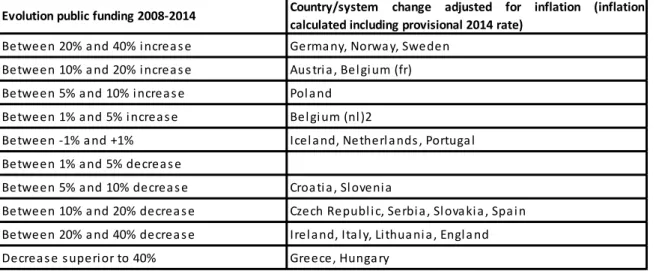
Table 2.1 Evolution of public funding to higher education institutions between 2008 and 2014
... 21
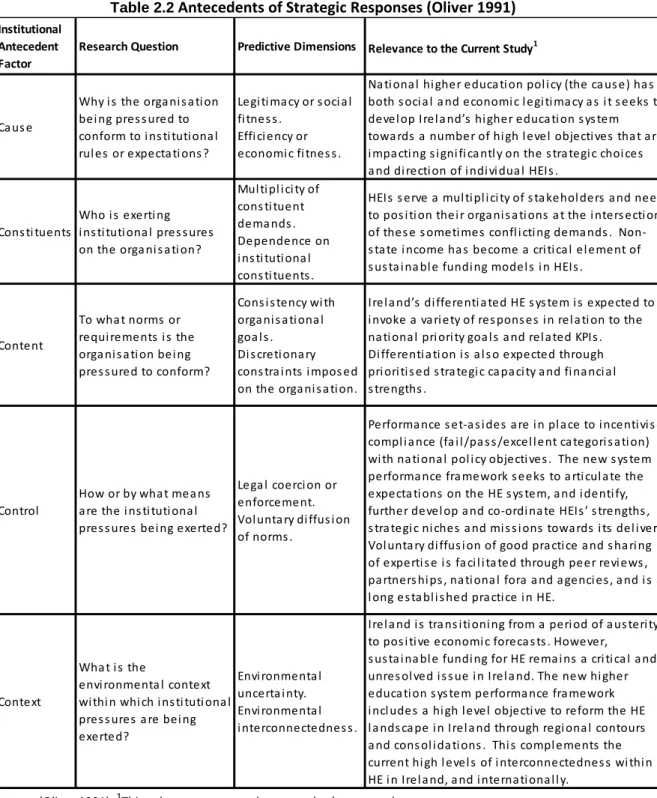
Table 2.2 Antecedents of Strategic Responses (Oliver 1991) ... 48
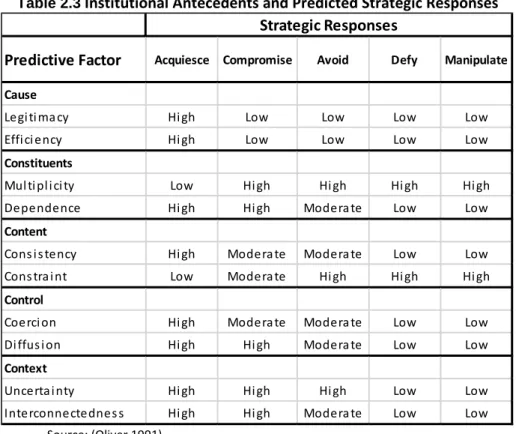
Table 2.3 Institutional Antecedents and Predicted Strategic Responses ... 52
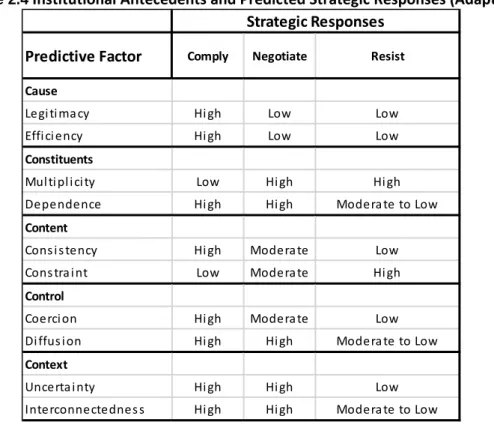
Table 2.4 Institutional Antecedents and Predicted Strategic Responses (Adapted) ... 54
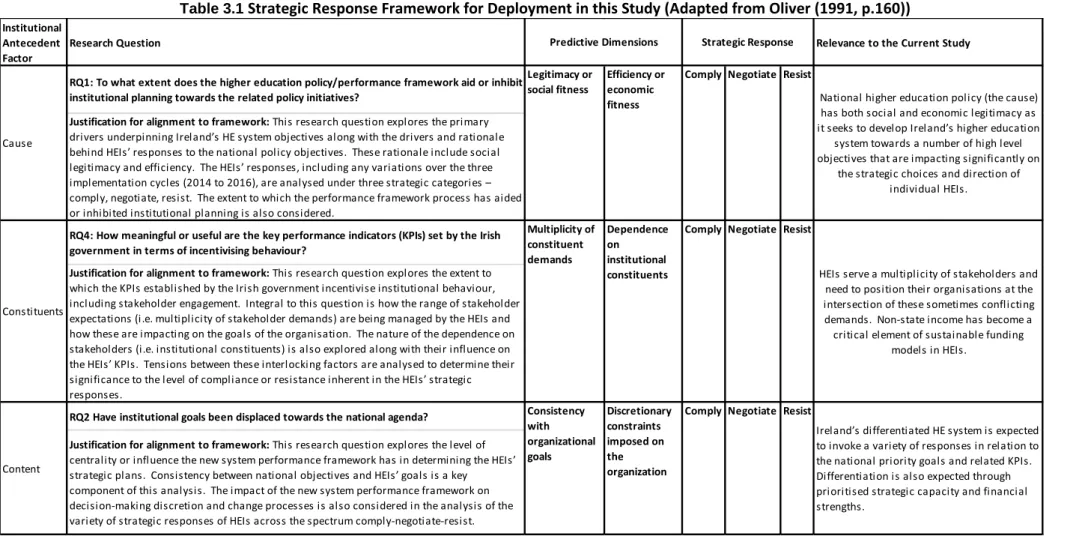
Table 3.1 Strategic Response Framework for Deployment in this Study (Adapted from Oliver (1991, p.160)) ... 63
Table 3.2 Design Protocol (Yin 2014) and Action Taken... 73
Table of Figures
Figure 2.1 Overview of Public Funding Allocation Mechanisms ... 16Figure 2.2 The Bologna Process: from Sorbonne to Yerevan, 1998-2015 ... 18
Figure 2.3 Model of Academic Quality (Van Damme 2004, p.133) ... 30
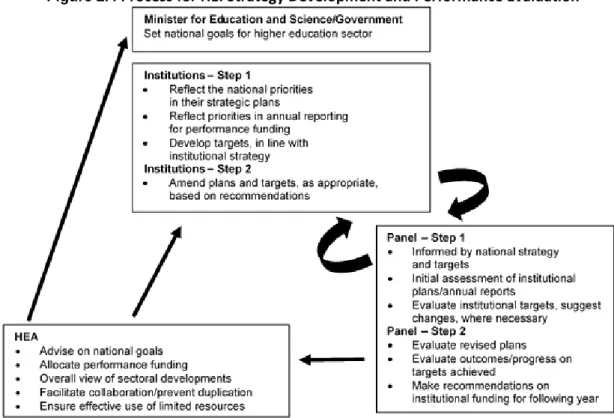
Figure 2.4 Process for HEI Strategy Development and Performance Evaluation... 39
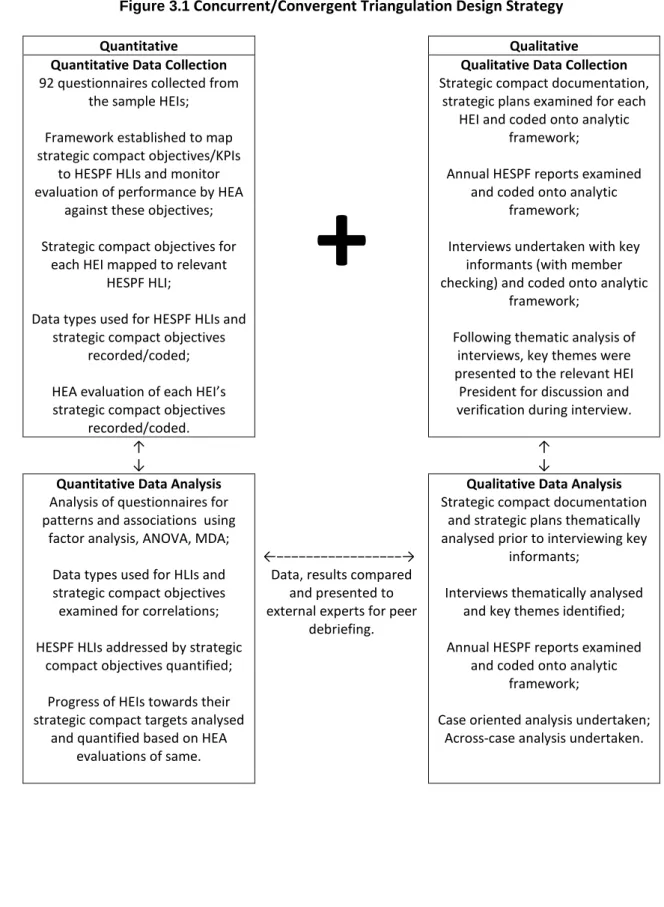
Figure 3.1 Concurrent/Convergent Triangulation Design Strategy ... 61
Figure 3.2 Strategies for Addressing Interview Limitations... 68
Figure 3.3 Components of Data Analysis: Interactive Model (Miles et al. 2014, p.14) ... 69
Figure 4.1 Examples of Alignment of UCC’s Strategic Goals with KSOs ... 85
Figure 4.2 Examples of Alignment of CIT’s Strategic Goals with KSOs ... 98
Figure 4.3 Examples of Alignment of WIT’s Strategic Goals with KSOs... 108
Figure 4.4 Examples of Alignment of IT Carlow’s Strategic Goals with KSOs ... 120
Figure 4.5 Examples of Alignment of ITT’s Strategic Goals with KSOs ... 130
Figure 5.1 Awareness Levels of Ireland’s HESPF ... 135
Figure 5.2 Awareness Levels of KSOs in the HESPF ... 136
Figure 5.3 Awareness Levels of HEI’s Strategic Compact with the HEA ... 137
Figure 7.1 Characteristics of Performance Agreements and Ireland’s HESPF ... 173
Figure 7.2 Comparison between Ireland’s HESPF and Common Aims of Performance Agreements ... 176
Acronyms
ACE Adult and Continuing Education ANOVA Analysis of Variance
CAPPA Centre for Advanced Photonics and Process Analysis CIT Cork Institute of Technology
CORE Centre of Research and Enterprise DARE Disability Access Route to Education DCU Dublin City University
ECF Employment Control Framework EHEA European Higher Education Area EI Enterprise Ireland
ENQA European Association for Quality Assurance in Higher Education
ET2010 Education and Training 2010
ET2020 Education and Training 2020
EU European Union
EUA European University Association
FETAC Further Education and Training Awards Council HE Higher Education
HEA Higher Education Authority HEI Higher Education Institution
HEIx0y This is a code for an interviewee, where x and y are digits (e.g. HEI204) HESPF Higher Education System Performance Framework
HETAC Higher Education and Training Awards Council HLI High Level Indicator
HSS Health and Social Sciences
IHEQN Irish Higher Education Quality Network IBEC Irish Business and Employers’ Confederation IDA Industrial Development Authority
IOT Institute of Technology
IOTI Institutes of Technology Ireland IR Industrial Relations
ISSE Irish Survey of Student Engagement ITC Institute of Technology Carlow ITT Institute of Technology Tralee IUA Irish Universities Association
IUQB Irish Universities Quality Board KPI Key Performance Indicator KSO Key System Objective
LIT Limerick Institute of Technology MST Maths, Science and Technology NFQ National Framework of Qualifications NFTL National Forum for Teaching & Learning NMCI National Maritime College of Ireland
NIMBUS Centre for Research in Embedded Networked Systems NPM New Public Management
NQAI National Qualifications Authority of Ireland
OECD Organisation for Economic Cooperation and Development PA Performance Agreement
PPP Public Private Partnership
QQI Quality and Qualifications Ireland
REAP Roadmap for Employment - Academic Partnerships REC Research Ethics Committee
RPL Recognition of Prior Learning SIF Strategic Innovation Fund
SSTI Strategy for Science, Technology and Innovation STEM Science, Technology, Engineering and Mathematics TCD Trinity College Dublin
TTSI Technology Transfer Strengthening Initiative TU Technological University
UCC University College Cork UCD University College Dublin WTE Whole Time Equivalent
Abstract
An Examination of the Implementation of Ireland’s New Higher Education System Performance Framework in a Sample of Higher Education Institutions. Seamus O Shea, B.Sc., M.Eng.
This research study seeks to examine the implementation of Ireland’s new higher education system performance framework (HESPF), through its first 2014-2016 three-year strategic compact cycle, in a sample of higher education institutions (HEIs). In particular, the study explores the extent to which the framework aids or inhibits institutional planning; whether institutional goals are being aligned with the national agenda; if the national performance indicators for the higher education sector are incentivising behaviour; and institutional capacity to support the national policy objectives. An exploratory case study design frame is used to address the research question, with cases drawn from small, medium sized, and large institutions in the Southern regional cluster. A concurrent triangulation design strategy is deployed with qualitative data drawn from 24 key informants and strategic compacts, and quantitative data elicited from 92 questionnaires. Oliver’s strategic response framework (Oliver 1991) was adapted for qualitative data analysis and factor analysis combined with ANOVA was utilised to investigate patterns and associations in quantitative data. The HESPF is generally considered a good concept that has resulted in improved accountability through a process of constructive dialogue between the HEA and HEIs. Strategic planning capacity building, self-reflection and institutional learning are regarded as strengths of the process. However, the process is regarded as not being conducted at a sufficiently strategic level, not enabled by funding, a bureaucratic overload, potentially open to deceptive tactics and there are mixed views on the extent to which it improves visibility on performance. The level of realism in the national KPIs was found to be questionable in the current funding environment and the KPIs are regarded as not impacting behaviour in any significant way. The results of this study shed light on key implementation issues in a strategic compact process that is generally aligned with the common characteristics of such performance agreements internationally (De Boer et al. 2015).
Chapter 1
Introduction and Context
This chapter introduces the aims and research questions associated with this study and presents a brief outline of the broad contextual factors that impact on the study, particularly new public management philosophies (NPM), European Union (EU) policy, Ireland’s higher education (HE) strategy and its related policy context. An outline of the format of the thesis is then presented which provides the reader with a roadmap for the project design.
1.1 Introduction
This research study seeks to examine the implementation of Ireland’s new higher education system performance framework (HESPF) (HEA 2013a), through its first 2014-2016 three-year cycle, in a sample of higher education institutions (HEIs). The framework focuses on identifying national priority goals for higher education, and provides a context for the ongoing evaluation of performance of Ireland’s higher education system and that of individual HEIs. These priorities have been identified as: “economic renewal and development; social cohesion, cultural development and equity; public sector reform towards greater effectiveness and efficiency; and restoration of Ireland’s international reputation” (HEA 2014b, p.119). Integral to the framework are strategic compacts (i.e. contracts) that are negotiated between individual HEIs and the higher education authority (HEA), which specify how institutional strategies and related performance indicators contribute to national priorities, and that link funding to performance. The purposes of the framework are to: systematically “monitor performance” of the higher education (HE) system and “hold it accountable” for achievement of national priorities; “articulate the expectations” from government of the HE system; improve “visibility of performance” of the HE system to all stakeholders; inform “system and policy development”; facilitate HEIs in “identifying their strategic niche”; and to agree a strategic compact between individual HEIs and the HEA which forms the basis for performance evaluation (HEA 2013a, p.1).
As the implementation has completed its first three-year cycle it is timely that a review takes place to assess the impact of the performance framework on planning and behaviours at institutional level. In particular, the study explores the extent to which the framework aids or inhibits institutional planning and whether institutional goals are being aligned with the national agenda. It also explores if the national performance indicators for the higher education sector are incentivising behaviour along with capacity, resource and visibility issues. These performance indicators are aligned with the national priorities and relate to graduate profiles, access for underrepresented groups, teaching & learning, research & knowledge
exchange, international activity, restructuring in the sector, and accountability for public funding. The five HEIs (UCC, CIT, WIT, ITC, ITT) in the Southern cluster have been chosen as the sample for the study.
This research study represents a distinctive opportunity to examine the implementation of the new HESPF at the end of its first three-year cycle of implementation. It has the potential to inform subsequent incarnations of the framework and to add significantly to the literature in the area of performance management in higher education, with particular reference to performance contracts and the Irish context.
1.2 Research Question
The overall objective (i.e. main research question) of this study is to examine the extent to which institutions of higher education are responding to state policies to develop strategic responses to support the policy goals envisaged in Ireland’s new higher education system performance framework. There are four sub-questions arising from the main research question:
1. To what extent does the higher education policy/performance framework aid or inhibit institutional planning towards the related policy initiatives?
2. Have institutional goals been displaced towards the national agenda?
3. Is institutional capacity being developed to support the national policy objectives, including at sub-unit level?
4. How meaningful or useful are the key performance indicators (KPIs) set by the Irish government in terms of incentivising behaviour?
The environmental factors impacting on the higher education institutions are also considered within these questions.
1.3 Contextual Factors
This section introduces the main contextual factors that impinge on the study topic – new public management, EU policy and policies relevant to Ireland’s higher education sector.
1.3.1 New Public Management
Many countries since the 1990s have introduced new public management approaches to the delivery and management of public services. These approaches seek to manage performance through the use of key performance indicators (KPIs), with increased attention to institutional governance, accountability, transparency and compliance, not least in higher education as it is seen as key to states’ economic and social development and prosperity. HEIs play a key role in the research and innovation ecosystem and are seen as pivotal in supporting the human
capital requirements of the state in a socially cohesive fashion. Increasingly, national education systems are introducing performance measurement frameworks to measure progress of the higher education sector towards the achievement of such national policy goals and against international benchmarks with, in many instances, performance linked to financial rewards.
1.3.2 EU Context
In the European context, HEIs are regarded as pivotal to smart, sustainable, inclusive economic growth under Europe 2020 (European Commission 2010a). A modernisation agenda for European higher education is being pursued, linking education to workforce needs to support the lifelong development of a skilled workforce and placing increased emphasis on research and innovation through a number of ambitious flagship initiatives. This has led to governance arrangements that emphasise increased institutional autonomy linked to accountability and quality improvements, a shift towards performance based funding and the emergence of frameworks that align individual HEI goals to state strategic priorities. Of particular interest to this study is the extent to which “global scripts” (Takayama 2012, p.506) in higher education, as implemented through the new HESPF, are being deciphered or construed within HEIs in Ireland.
1.3.3 Ireland’s Higher Education Strategy
Ireland’s National Strategy for Higher Education to 2030 (Department of Education & Skills 2011) envisions the HE sector as playing a central role in its social, cultural and economic development and is framed within the government’s policy on Building Ireland’s Smart Economy (Government of Ireland 2008). The strategy is also cognisant of the national access plans (HEA 2008a; HEA 2015k), the national science strategy Innovation 2020 (SFI 2015) and its predecessors, (Government of Ireland 2006; Government of Ireland 2010a), the national enterprise policy Enterprise 2025: Innovative, Agile, Connected (DJEI 2014a; DJEI 2015), Ireland’s National Skills Strategy 2025 (DoE&S 2016), and the international education strategy Irish Educated, Globally Connected: An International Education Strategy for Ireland, 2016-2020 (Department of Education & Skills 2016b; Government of Ireland 2010b). The range of KPIs in Ireland’s HESPF are also influenced by EU policy across the full spectrum of the seven key system objectives – supply of human capital, promoting access to HE for disadvantaged sectors, enhancing the quality of teaching and learning, research excellence and collaboration, internationalisation, system restructuring and increased accountability. The HESPF represents a distillation of these key policy initiatives and influences into forty KPIs that were created by
Government to provide practical guidance to the HE system in constructing their strategic compacts. Such developments are placing the Irish higher education performance within a globally competitive framework with an attendant focus on quality, accountability, transparency, and systems to support international comparison.
However, the national strategy was launched (in 2011) at a particularly difficult juncture. Since the commencement of the global financial crisis in 2008 Ireland’s higher education system has experienced unprecedented challenges with a 32% reduction in funding from the exchequer in the period 2008-2015, staff cuts of circa 2,000, and 25,000 extra places alongside a projected 27% growth in demand to 2027 (HEA 2016d; O Sullivan 2014). “Ireland was effectively in receivership” (O Sullivan 2014, p.1) at this time and a sustainable funding model for HE has yet to emerge from Government to underpin its ambitious plans for HE and to address the deficits that have emerged during that period.
The national HE strategy envisages a consolidation, through mergers or incorporations, of smaller institutions to promote coherence, critical mass, and efficiencies and concentrating expertise through economies of scale. Policies to date had prioritised regional access ahead of “focussed centres of excellence” resulting in a “crowded and unstructured landscape” in programme provision with prioritised funding for research leading to “greater institutional research specialisation” (HEA 2012, p.3). A smaller number of multi-campus high quality HEIs are envisaged (through consolidation in the institute of technology sector) that may be designated as technological universities where they meet internationally benchmarked criteria relating to applied research and scholarship and are to be characterised by career-focused programme provision from levels 6 to 10 on the National Framework of Qualifications that includes a strong emphasis on lifelong learning.
Internationally, a technological university is a higher education institution that operates at the highest academic level in an environment that is specifically focused on technology and its application.
(Department of Education & Skills 2011, p.103)
The new strategy highlights the need for a differentiated system of HEIs operating within a clear framework aimed at developing a coherent set of higher education institutions (HEIs). This system performance framework (HEA 2013a) is at the heart of this research study.
1.3.4 Ireland and EU Policy
Overall, the range of KPIs in Ireland’s HESPF show a clear relatedness to EU policy, while also clearly reflecting national priorities. International benchmarks identify with position relative to EU/OECD countries (HEA 2014b). This is not unique in the European context (de Boer and File 2009).
When comparing the various national reports, and when analysing the survey data, one is struck by how national policies are increasingly influenced and framed by a European dimension – concerning both higher education and research - without denying the importance of domestic agendas.
(Stensaker et al. 2007, p.14)
Ireland has set ambitious targets (as set out below) which in most cases exceed those included as the benchmarks for Europe 2020, but it faces significant challenges in achieving most of these with the attendant impact on the HE system and social and economic development as envisaged under the new HESPF (HEA 2013a).
1.3.4.1 Higher Education Attainment and Lifelong Learning
Ireland has set a target of 60% of the population aged 30-34 with tertiary education attainment (20% above the EU target and an 11% increase on its 2009 benchmark) – the progress to 2017 shows an undulating trend to 53.5%, suggesting that this target is extremely challenging (Eurostat 2018). It has set an accompanying target of “producing the highest % of graduates from MST in the EU”, having ranked third in 2007 (European Commission 2011; HEA 2014b, p.121) and second in 2014 (HEA 2016d, p.21), but faces challenges in gender imbalance and STEM graduates relative to the EU-28 average (HEA 2017b, p.31). However, Ireland faces significant challenges in adult participation in lifelong learning if it is to reach the EU 2020 target of 15% from its relatively low base of 7% in 2010 and 6.5% in 2015 (Eurostat 2017, p.70) and is “currently heading in the wrong direction (6.4% in 2016/17)….and is less than half the benchmark set in ET2020” (HEA 2017b, p.35), compared to an average of 10.8% for the EU (Smidt 2018).
1.3.4.2 Widening Participation
Ireland has set targets in its National Access Plan (HEA 2015k) for socio-economic groups and other groups under-represented in higher education, and is ranked in the EU top five countries in 2014 for measures to support the participation of disadvantaged students (European Commission/EACEA/Eurydice 2015, p.121). However, progress on socio-economic, mature and disability entrants are in most instances projecting decreases, according to the latest
HESPF reports (HEA 2016d, p.1) with some stabilisation reported in 2017 (HEA 2017b), rather than growing towards the national access targets (HEA 2015k, pp.35-36).
1.3.4.3 Student Mobility
The EU 2020 target of 20% for graduate mobility features among Ireland’s targets alongside an equally ambitious national target of 15% for the proportion of international students in the overall student body (HEA 2014b, p.125). This is a particularly difficult target based on growth from 4.6%1 in 2000 to 8.8%1 in 2008 (European Commission 2011, p.37), 9% of WTE full-time
students in 2014/15 (HEA 2016d, p.1), and 11.6% of full-time students in 2016/17 (HEA 2017b, p.68), and the strong track record of competitor English speaking nations, such as the US, Australia, the UK, not least related to the positioning of their top universities in international rankings. Ireland accounts for less than 1% (n=5,942) of the incoming non-EHEA students to the European Higher Education Area (EHEA) space and its leading colleges have been slipping on commercial international rankings until recently – “four countries, namely the United Kingdom, France, Germany and Russia, attract 71.3 % of all non-EHEA mobile students enrolled in the EHEA” (European Commission/EACEA/Eurydice 2015, pp.229-230) and also account for 53% of doctoral students in the EHEA (European Commission/EACEA/Eurydice 2015, p.31). In addition, “most students choose a geographically proximate institution of higher education” both in the US and in Europe (Dill 2003, p.140). This has serious implications for funding of the higher education sector in Ireland, as highlighted by Minister Jan O Sullivan in January 2016.
Increasing the number of foreign students who choose to study here would bring an extra €720 million into the economy, Ms O’Sullivan said….currently, the percentage of international students in higher education is 8.8%. The target is to increase it to 15% by 2020.
(Loughlin 2016)
1.3.4.4 Research & Development
Ireland’s international benchmark for R&D under the HESPF is related to its position in OECD (HEA 2014b, p.124). Eurostat data shows that Ireland’s R&D investment target is 2% of GDP compared to an EU target of 3% - it grew to 1.61% of GDP in 2009 but has steadily declined to a mid-table position of 1.51% in 2014 (Eurostat 2018; OECD 2017b).
Spending on R&D in Ireland as a whole remains below average EU levels, and well below that of innovation leaders.
(HEA 2017b, p.54) Ireland is one of 36 countries in the EHEA where doctoral students account for less than 5% of enrolments (European Commission/EACEA/Eurydice 2015, p.31; HEA 2016e), which
significantly impacts on the capacity for research and innovation across Europe’s knowledge-based economies. Post-graduate researcher numbers are also struggling to recover to the highs (2009/10) achieved in the last decade (HEA 2017b, p.57). Despite the relatively modest investment in research, Ireland is “ranked 9th in the world overall in global scientific rankings”,
is “first in Europe in knowledge transfer performance of public research organisations”, has received “32 prestigious ERC grants under Horizon 2020” (HEA 2016d, p.1) and in 2017 was meeting the Government’s target for Horizon 2020 funding which paradoxically, due to cross-subsidisation, eats into the budget available for “education of students” (HEA 2017b, pp.60-61). Ireland is classed as an Innovation Follower (level 2 performance group) on the Innovation Union Scorecard 2015, 13% above the EU average in 2014 (European Commission 2015, p.51) and (on a per capita basis) its HE system is the fifth most innovative in Europe in 2018, according to Reuters (Ewalt 2018).
1.3.4.5 Teaching & Learning
The Bologna objective of alignment of QA procedures with international best practice is overseen by Quality and Qualifications Ireland (QQI) which was established in 2012, absorbing the functions previously performed by FETAC, HETAC, NQAI and the IUQB. The HESPF includes a range of “essential deliverables” associated with “excellence in teaching in learning” (HEA 2014b, p.123) and has established a National Forum for the Enhancement of Teaching and Learning to give effect to these (HEA 2016d, p.39). However, the staff:student ratio, a commonly used proxy for quality of T&L, has deteriorated from 1:15.6 to 1:20.6 in the period 2007/08 to 2016/17 (HEA 2016d, p.1), lagging behind the OECD average of 1:16 (OECD 2017a, p.358).
1.4 Conclusion
Ireland’s new HESPF is firmly rooted in NPM principles as the state seeks to leverage its academic capital to deliver on its national priorities - economic development, social cohesion, restoration of Ireland’s international reputation and a more effective and efficient public sector. This approach reflects global trends in higher education and state relationships relating to deployment of performance management frameworks to steer higher education systems, improve visibility of performance and hold the system (and individual HEIs) accountable for delivering on national priorities. Ireland’s approach is consistent with the European modernisation agenda for HE which is aligned with the Europe 2020 strategy for smart, sustainable and inclusive growth (European Commission 2010a). The Irish government has distilled key national policies into a set of forty KPIs to guide HEIs in the development of
their strategic compacts with the HEA. These KPIs are strongly influenced by EU priorities while also recognising national imperatives. However, the new system has been introduced during a period of austerity as government funding to the sector declined by 32% in the seven-year period to 2015. The system has consequently been severely challenged to meet the expectations articulated for it under the HESPF 2014-2016.
This research study has the potential to shed light on how these challenges are impacting on institutional planning/behaviours and co-operation with the new HESPF in the prevailing environmental context. If offers an opportunity to contribute to the literature on performance management in higher education and to the evidence base relating to the appropriate design and implementation of strategic compacts. In an Irish context, the findings from this study can inform the design and implementation of the second and subsequent iterations of the HESPF.
1.5 Format of the Thesis
Chapter 2 situates the study within the literature and discusses in greater detail the impact of NPM on higher education along with both positive experiences and challenges associated with performance management in a higher education context. It also traces the development of higher education policy in the EU from the Bologna declaration to the current projects associated with Europe 2020 and which have been accorded higher political status due to their significance to European performance and competitiveness. The penultimate sections discuss Ireland’s HE policy context and the challenges faced in the implementation of the new HESPF. The final section of the chapter presents Oliver’s Strategy Response Theory and its adaptation which is being used to explore the strategic responses of HEIs to the HESPF.
Chapter 3 presents the research design (exploratory case study) and methodology (mixed methods research) and focuses in particular on the strategic response framework that has been adapted from Oliver (1991) for deployment in this study. Data collection instruments are described along with the data analysis methods used.
Chapter 4 presents the findings from interviews and strategic compacts for each of the five cases that are used as data sources for the study – University College Cork (UCC), Cork Institute of Technology (CIT), Waterford Institute of Technology (WIT), Institute of Technology Carlow (ITC), Institute of Technology Tralee (ITT).
Chapter 5 considers findings from analysis of questionnaires and uses the statistical analysis techniques factor analysis, analysis of variance, and multiple discriminant analysis to assist in this regard.
Chapter 6 uses the strategic response framework to discuss the findings in the context of the research questions, combining results from all data collection instruments. The HESPF as an aid or inhibitor to planning is first discussed followed by its impact on goal displacement and steering of HEIs. Matters relating to institutional capacity are then considered and the chapter is drawn to a conclusion by examining behavioural influences and the scale of expectation associated with the new HESPF.
Chapter 7 brings the thesis to a conclusion and discusses the findings in the context of the literature. It also relates the HESPF to common characteristics of performance agreements (i.e. strategic compacts). Recommendations are then presented in the context of Ireland’s HESPF and the common aims of performance agreements internationally.
Chapter 2
Literature Review
2.1 Introduction
This literature review sets out the background and context for the study of the implementation of Ireland’s new higher education system performance framework. It is broken down into four main sections. The first section sets the international stage and examines the impact of new public management philosophies on higher education globally. It proceeds to examine the tension between establishing world-class universities as opposed to world-class systems of higher education as nation states seek to harness the resources of their higher education institutions and align them with the nation’s vision for its economy and society at large. This is followed by a discussion on other key issues facing higher education on a global scale – internationalisation, widening participation and funding sustainability.
Section two focuses on developments in Europe as they impact directly on policy development in HE within the member states. It begins by tracing the journey of the Bologna process - to establish the European Higher Education Area (EHEA) - from its inception in 1998 (Sorbonne Declaration) to the latest review in Yerevan in 2015. The targets for the Education and Training 2010 (ET 2010) programme are considered along with the findings from the stocktake at the 10th anniversary of the process, in the context of the Lisbon Strategy for Growth and Jobs (2000). The follow-on strategy to Lisbon, Europe 2020, is then considered along with its impact on the development of the Education and Training 2020 (ET 2020) programme.
The third section then considers performance management systems in higher education and their influences – both positive and negative – on planning and behaviours at institution level. The penultimate section considers the policy context within Ireland, its national strategy for higher education and challenges faced in implementing the new HESPF. The literature review concludes with a presentation of Oliver’s Strategic Response Theory which is the framework being deployed to examine the strategic responses of HEIs to the HESPF.
2.2 International Context & Developments in Higher Education
2.2.1 New Public Management & Higher Education
Many countries since the 1990s have introduced a transformational agenda for the reorganisation and management of public services, prompted by slowing economic activity and a greater emphasis on accountability, efficiency, and effectiveness in public service delivery (Karlsson 2003, p.432). The new approach to the reorganisation of public services
imports “business concepts, techniques and values” and “market-type mechanisms” Pollitt (2007, p.110) which have been classed as the New Public Management doctrine. Characteristics of NPM include: performance management through the use of key performance indicators, benchmarks and targets to evaluate effectiveness and value-for-money; clustering and creating centres of excellence; competitive tendering; an increasing emphasis on risk management and quality enhancements (Dill 2003; Pollitt 2007; Pollitt and Dan 2011; Slaughter and Cantwell 2012). NPM concepts travelled extensively and were adopted or adapted under modernisation agendas with varying results including “worsening of performance” (Pollitt and Dan 2011, p.2). In the higher education context, these were accompanied by an attendant focus on structures for system and institutional governance and regulatory frameworks to support autonomy, monitor compliance and improve accountability and transparency (Fielden 2007; Reale and Primeri 2015; Rumbley et al. 2015; Schulze-Cleven and Olson 2017; Scott 2016; van Vught and De Boer 2015).
Castro and Ion (2011) emphasise that new managerialism represents a shift in the perception of the role of universities, a rebalancing of their mission, and new governance arrangements to align HE policy with social and economic aims in a process of globalisation, amongst others (Fagerlind and Strömqvist 2004; Jessop 2017; Tirronen and Nokkala 2009; Välimaa 2011). Altbach (2004, p.5) defines globalisation as the “broad economic, technological, and scientific trends that directly affect higher education and are largely inevitable”, emphasising that “academic systems and institutions may accommodate these developments in different ways, but they cannot ignore them.” Neave (2012, p.29) argues that NPM rules are setting in place the conditions of self-management and institutional self-governance through “self-exertion to meet public expectations – but to do so as a result of their own efforts” and this being reflected in increased emphasis on diversification of funding sources. Seeber et al. (2015) found that the level and pace of adoption of NPM principles were differentiating structures and practices across European HEIs and Kauko and Diogo (2012, p.119) contend that “OECD reviews have helped national actors to adapt to the global rules of the game”. Benneworth et al. (2016, p.731), in turn, emphasise the importance of local context over “importing third mission instruments” from elsewhere. “The principles of NPM have to large extent been introduced in HE in Europe and beyond, be it quite often partially” (Broucker et al. 2015, p.5), fuelled, not least, by the dependence of states’ prosperity on knowledge based economies and interpreted through the lens of global rankings publications on higher education (Aghion et al. 2008).
2.2.2 Higher Education in the Global Economy
Tertiary education policy has become increasingly important on national agendas. Drawing on the findings of a major review of tertiary education policy in 24 countries worldwide (OECD 2008), the OECD reports that there is “widespread recognition that tertiary education is a major driver of economic competitiveness in an increasingly knowledge-driven global economy” (ibid, p.2). Countries are being challenged to generate human capital to sustain the new economy (European Commission/EACEA/Eurydice 2015; Salmi 2017; Tirronen and Nokkala 2009), to develop areas of research excellence that are internationally recognised (Dakka 2015; European Commission 2014a; Salmi 2009a; Shaffer and Wright 2010; Tirronen and Nokkala 2009), and to improve knowledge diffusion for the welfare of society at large (Escrigas et al. 2013; OECD 2008) in what Kerr (2001, p.5) refers to as the “multiversity”. In the modern era, higher education is seen as a key ingredient in the “empowerment of people and the development of nations”, where knowledge production and innovation at the frontiers of technology are seen as the “source of growth and prosperity” (Altbach and Salmi 2011, p.xiii).
Such developments are placing higher education performance within a globally competitive framework with an attendant focus on systems to support international comparison, such as global rankings of HEIs, which are directly influencing government policy and decision-making (Hazelkorn 2016).
2.2.3 World-Class Universities or World-Class Higher Education Systems
Most nations have been implementing strategies to refine or restructure their higher education systems and “their relationship to the rest of society” (Calhoun 2006, p.7). Some are aiming for “world-class universities” as opposed to “world-class systems” in response to the globalisation of HE (Hazelkorn et al. 2014, p.10). Reactions have ranged from behavioural changes at institutional level (Hazelkorn et al. 2014) to policy adjustments at the level of the state (Aagaard and de Boer 2016; Boudard and Westerheijden 2016; Cremonini et al. 2014; Shattock 2017), reflecting the tension between vertical stratification in response to international competitiveness and horizontal differentiation or brand identity to cater for diversified social and economic needs (Erhardt and von Kotzebue 2016; Hazelkorn 2012; Marginson 2016b; Marginson and van der Wende 2009; Naidoo 2018). Marginson (2016a, p.1) argues that co-operation and collaboration within systems has been weakened by the primacy of the ambition of HEIs in a global rankings game which magnifies research and reputation at the expense of teaching and learning.
The main strategies used to support the establishment of world-class universities are “upgrading a small number of existing universities that have the potential of excelling; encourage a number of existing institutions to merge….to achieve the type of synergies corresponding to a world-class institution;….create new world-class universities from scratch” (Salmi 2009a, pp.7-9). Pruvot et al. (2015b, p.8) have developed a framework for profiling “different types of mergers and concentration processes” in European HE systems based on relative size and homogeneity of institutions, depth of the integration proposed and relatedness to system wide restructuring initiatives. Pruvot et al. (2015a) found a significant dispersion and increase in HEI mergers in the period 2000 to 2015 and excellence initiatives have been introduced in a range of European countries (Aagaard and de Boer 2016; Boudard and Westerheijden 2016; Government of Finland 2015; Myklebust and Dobson 2016; Pruvot et al. 2015a; Salmi 2016; Usher 2016), following what Boudard and Westerheijden (2016, p.5) term the “Shanghai shock”.
The merger [in Finland] that has excited the most interest has the unashamed aim of creating a world-class university.
(Aarrevaara et al. 2009, p.10)
Yet, many European universities lost ground in THE rankings 2016 - including in Germany, the Netherlands, Finland, Denmark, and Ireland - although they achieved “similar or higher scores than they did last year, but they did not improve as rapidly as institutions in Asia” (Bothwell 2016, p.1).
A number of authors caution that in such hierarchical stratification, the totality of the higher education system is sacrificed with limited benefits to the lower echelons (Cremonini et al. 2014; Klumpp et al. 2014; Marginson and van der Wende 2009; Naidoo 2016). Such high-class institutions account for less than 3% of higher education institutions world-wide (Altbach and Salmi 2011, p.11) and tradition has a powerful influence in these upper echelons – all of the top ten universities in the 2015 AWRU rankings were founded prior to the 20th century.
Developments in Europe suggest that there is a greater level of sensitivity towards diversification and classification of the higher education system (van Vught et al. 2010) supported by a recently sponsored EU classification and profiling system, U-Map/U-Multirank, a user-driven, peer group comparable, multidimensional, multilevel and context based framework (Ziegele 2013). Its purposes are to improve transparency on performance of HEIs through benchmarking (within the EU and globally), facilitate profiling of HEIs within the EHEA
and inform stakeholders on the various dimensions of activity. These dimensions relate to teaching & learning, research & innovation, knowledge exchange, international activities and regional engagement. Data can be compared on a whole-of-institution basis or using field-based categories. However, a review by the EUA (Loukkola and Morais 2015, p.8) found that
“increasing their visibility and improving their profile abroad was the main motivation for
participating in UMultirank”. Many countries, including Ireland, recognise the strengths of a “connected system” (p.1) that promotes diversity in an environment that is both collaborative and competitive, is both research and education oriented, and supported by appropriate governance and accountability structures (Prendergast 2014). An analysis by Huisman et al. (2015, pp.376-377) found that patterns emerged that defined European countries by levels of diversity across most aspects of their activities, “corresponding to the divide between Northern and Western European countries on the one hand, and Mediterranean and Eastern European countries on the other hand”.
2.2.4 Widening Participation and Funding of Higher Education
Over recent decades, enrolment in higher education institutions across the globe has grown dramatically, facilitated through policies of institutional diversification to meet economic, educational, and societal needs (Guri-Rosenblit et al. 2007; Marginson 2016b; Santiago et al. 2008a). Graduation rates from university level programmes have almost doubled in the period 1995 to 2012 (OECD 2014) and “it is estimated that 57% of young adults in OECD countries will enter tertiary education at least once during their lifetime” (OECD 2015, p.340).
Enrolment levels around the world are projected to “more than double to 262 million by 2025, with international students expected to rise from current annual figures of 4.3 million to 7.2 million by 2025” (Altbach and Salmi 2011; Hazelkorn et al. 2014, p.14). This mirrors the exceptional development of the Irish higher education system which has moved from social elite to widespread participation through a doubling of capacity over the previous two decades, with close to a further doubling expected for the next two decades (Department of Education & Skills 2011). This places major strain on the finances of governments and higher education institutions and is the subject of ongoing debate, with increased emphasis on global competition and positioning, diversification of funding bases, and the public or common good versus private good in higher education (Hazelkorn 2017a; Hazelkorn 2017b; Martin 2018) – who benefits and who pays (Calhoun 2006; Martin 2018)?
The OECD reports an increase in spending per tertiary student in a majority of countries (including OECD and EU22 averages) between 2008 and 2014, with a significant decrease in
Ireland (OECD 2017a, p.179). Between 2008 and 2014 both public and private spending increased for the OECD and EU22, with public spending decreasing for Ireland while private funding increased strongly (OECD 2017a, p.200). The European modernisation agenda highlighted the need to increase the share of private funding towards higher education (European Commission 2006; Eurydice 2011), with Aghion et al. (2008, p.2) recommending growing the funding by 1% of EU GDP over a ten year period.
While Ireland’s %GDP spend on tertiary education (from private and public sources) matched the OECD and EU averages in 2008 (OECD 2015, p.233), the latest data (2014) shows that it lags behind the OECD and EU22 averages (OECD 2017a, p.187). In Ireland, “state grant income to the HE sector has dropped by 25% in the five years to 2011 with tuition fees now overtaking state grants as the highest source of income” (Grant Thornton 2014, p.2), with a further decline of 22% in the period to 2015 (Cassells 2016). In addition, the state’s spending on capital infrastructure has declined from €184m in 2008 to €87m in 2015 (p.68), approximately half of what is required to maintain existing stock (Cassells 2016).
A capital programme of €5.5 billion is required over the next 15 year period.
(Cassells 2016, p.47)
Most countries, including Ireland, are trying to balance public expenditure with competing claims for various public services in an environment where resources are mostly stagnant or reducing (Pruvot et al. 2015a; Salmi 2007), placing further pressure on HEIs to diversify their funding base through a range of strategies that include endowments, competitive research funding, returns from research discoveries and patents, industry and public sector contracts, responding to market needs in workforce development, and generating income streams from student fees, particularly in the international arena. States are matching this move towards a market-led environment with increased autonomy for HEIs, enabled through regulatory frameworks and accountability mechanisms that sensitise their responsiveness to market needs while simultaneously protecting the public interest of the state (Benneworth et al. 2016; Fielden 2007).
Public funding of higher education typically provides support towards teaching, running costs, infrastructure, targeted projects, and research (Salmi and Hauptman 2006a). The variety of mechanisms used to provide such funding are illustrated in figure 2.1 (Pruvot et al. 2015a, p.26) with associated descriptions drawn from various sources provided in appendix C.
Figure 2.1 Overview of Public Funding Allocation Mechanisms
Source: (Pruvot et al. 2015a, p.26).
While the combination of funding options deployed in individual countries differ, they tend to converge around the models presented in figure 2.1. Jongbloed (2010, p.25) attributes some of the “increased prominence of performance contracts and the allocation of project funds” to the difficulty in achieving consensus on how to load particular indicators in funding formulae. Notwithstanding the particular combination of options used, there is sufficient evidence presented in the literature of attempts to link policy at state level with HEI’s strategic plans using funding instruments to incentivise behaviour. However, despite the emphasis placed on performance funding in almost twenty countries across Europe, “it comes out clearly that input-related factors are still very important in all countries” (Jongbloed 2010, p.21). The implications, advantages, and challenges presented by performance funding initiatives are explored in section 2.4.
2.3 European Context
In the European context, HEIs are regarded as pivotal to economic development, competitiveness, and social integration (Burquel and van Vught 2010; EUA 2015a; Jongbloed 2010). There has been a resultant change in the governance relationship between governments and their HEIs, characterised by an increase in institutional autonomy linked to accountability and quality improvements, a shift towards performance based funding linked to performance indicators, an infusion of market related instruments, the emergence of strategic compacts or contracts that align individual HEI missions to state strategic goals, and that form the basis for system co-ordination and steering (de Boer and File 2009; Fagerlind and Strömqvist 2004; Frølich et al. 2011; Gillard et al. 2016; Herbst 2007; Jongbloed 2010; Pruvot
et al. 2015a). Maassen et al. (2017, p.240) cautions that “the effects of these reforms have been promised more than evidenced”.
Nowhere today is higher education undergoing more substantial change than in Europe. As countries pursue policies designed to integrate their economies, political systems and social structures under a broader, more powerful Union, it is becoming increasingly clear that higher education, research and innovation are critical components to fully realising the potential gains stemming from the changes ahead.
(de Boer and File 2009, p.8)
Substantial policy initiatives at EU level underpin the changes in European higher education systems at national level. Notable among these are the impact of the Bologna Declaration (European Commission 1999) on convergence of qualification structures and quality assurance within a European Higher Education Area; the Education and Training 2010 Work Programme (ET 2010) (European Commission 2002); the Modernisation Agenda for Universities: Education, Research and Innovation (European Commission 2006); and the Strategic Framework for European Cooperation in Education and Training (ET 2020) (European Commission 2009b). These policy initiatives are seen as key to delivering on the Lisbon Strategy for Growth and Jobs (European Commission 2000) and its successor, the Europe 2020 Strategy (European Commission 2010a) for smart, sustainable and economic growth to 2020. The following sections provide more detailed discussion on these policy instruments, how they evolved over time, and challenges faced.
2.3.1 Bologna Roadmap from Sorbonne to Yerevan
The Bologna declaration (European Commission 1999) was the start of a process that has been central to radical higher education reforms within Europe. Its aim was to create a European Higher Education Area where there is a greater harmonisation of national higher education systems and its relevance has extended globally (Hartmann 2008). Figure 2.2 provides a roadmap that illustrates the key stocktakes and undertakings entered into at ministerial conferences from the Sorbonne in 1998 to Yerevan in 2015. The various conferences have reviewed, re-asserted and developed upon the key priorities that were established at the initial stages of the process. At the meeting held in Leuven/Louvain-la-Neuve in 2009, priorities were agreed for European higher education until 2020. Priority status was accorded to the “social dimension (equitable access and completion), lifelong learning and employability, research and innovation and mobility” (European Commission 2009a, pp.2-4).
Figure 2.2 The Bologna Process: from Sorbonne to Yerevan, 1998-2015 1998 1999 2001 2003 2005 2007 2009 2012 2015 Sorbonne Declaration Bologna Declaration Prague Communiqué Berlin Communiqué Bergen Communiqué London Communiqué Leuven/Louvai n-la-Neuve Communiqué Bucharest Communiqué Yerevan Communiqué Mobility of students and teachers Mobility of students, teachers, researchers and administrative staff Social dimension of mobility Portability of loans and grants Improvement of mobility data Attention to visa and work permits Challenges of visa and work permits, pension systems and recognition Benchmark of 20 % by 2020 for student mobility Explore ways to achieve automatic recognition of academic qualifications Automatic recognition of qualifications from EHEA countries, portability of grants Social
dimension Equal access
Reinforcement of the social dimension Commitment to produce national action plans with effective monitoring National targets for the social dimension to be measured by 2020 Strengthen policies of widening access and raising completion rates Implement EHEA social dimension strategy Lifelong learning (LLL) Alignment of national LLL policies Recognition of Prior Learning (RPL) Flexible learning paths in higher education Role of higher education in LLL Partnerships to improve employability LLL as a public responsibility requiring strong partnerships Call to work on employability Enhance employability, lifelong learning and entrepreneurial skills through improved cooperation with employers Frameworks to recognise prior learning, remove obstacles to recognition of prior learning (RPL) Use of credits A system of credits (ECTS) ECTS and Diploma Supplement (DS)
ECTS for credit accumulation Need for coherent use of tools and recognition practices Continuing implementation of Bologna tools Ensure that Bologna tools are based on learning outcomes Revised ECTS guide adopted European cooperation in quality assurance Cooperation between quality assurance and recognition professionals Quality assurance at institutional, national and European level European Standards and Guidelines for quality assurance adopted Creation of the European Quality Assurance Register (EQAR) Quality as an overarching focus for EHEA
Allow EQAR registered agencies to perform their activities across the EHEA ESG Standards adopted, European approach for QA of joint programmes Europe of Knowledge European dimensions in higher education Attractiveness of the European Higher Education Area Links between higher education and research areas International cooperation on the basis of values and sustainable development Strategy to improve the global dimension of the Bologna process adopted Enhance global policy dialogue through Bologna Policy Fora Evaluate implementation of 2007 global dimension strategy with aim to provide guidelines for further developments Review national legislations for compliance with Lisbon Recognition Convention QF-EHEA adopted National Qualifications Frameworks launched A common two-cycle degree system Easily readable and comparable degrees Fair recognition Development of recognised Joint degrees Inclusion of doctoral level as third cycle National Qualifications Frameworks by 2010 National Qualifications Frameworks by 2012
New roadmaps for countries that have not established a national qualifications framework
Include short cycle qualifications in overarching framework of qualifications for EHEA
Source: (European Commission/EACEA/Eurydice 2015, p.25). The final column is the author’s own work.
An assessment of the first ten years of the Bologna process found that “overall, higher education across the 46 EHEA countries looks substantially different from 10 years ago— perhaps with the exception of the social dimension. Most architectural elements of the EHEA have been implemented in most countries...[but at] different speeds of implementation and varying levels of commitment” (Westerheijden et al. 2010, pp.5-6). Challenges identified included large attrition rates, limited participation in some elements, pressures on quality
associated with rapidly increasing enrolments, and an absence of emphasis on the social dimension “in most Bologna Process countries” (Westerheijden et al. 2010, p.9).
The 2015 Stocktake found that the Bologna process and the development of the EHEA has been a catalyst for the transformation of quality assurance systems (European Commission/EACEA/Eurydice 2015, p.18). However, a later study by Vukasovic and Huisman (2017) found that European policy was not the primary influence but had a legitimising role in domestic policy implementation, and that legacy issues in the local context were of greater significance and that the Bologna process is somewhat diminishing in political importance (Vukasovic et al. 2017). Progress on the social dimension was again deemed to fall well short of the goal of equity of access to higher education (European Commission/EACEA/Eurydice 2015, p.19) and the report also highlights the lack of “evidence of major structural changes or national action” to support the “dramatic economic and social changes” in contemporary life (ibid, p.21). Student mobility continued to be an issue with less than 50% of EHEA countries having an internationalisation strategy and incoming students lagging at “4.4 % of total enrolments” (European Commission/EACEA/Eurydice 2015, p.23).
2.3.2 The Lisbon Strategy for Growth and Jobs & Education and Training 2010 Work
Programme
The EU’s Lisbon Strategy (2000) for growth and jobs was triggered by “persistently lower growth” in Europe relative to the United States and this was considered to be “closely linked to the state of innovation and higher education in Europe” (Aghion et al. 2008, p.3). This treaty committed the EU to “the ambitious objective of becoming the most competitive and dynamic knowledge-based economy in the world, capable of sustainable economic growth with more and better jobs and greater social cohesion” (European Commission 2010b, p.2), underpinned by world-class systems of education, research, and innovation. In 2001, ET2010 was launched “in accordance with the mandate given by the conclusions of the Lisbon European Council” held in March 2000 (European Commission 2001, p.1). Two of the five benchmarks to be achieved by 2010 relate directly to higher education – increase Maths, Science and Technology (MST) graduates by at least 15%, and have 12.5% of adults (25-64) in lifelong learning (European Commission 2011, p.10). However, “several years of lagging progress forced policymakers to essentially restart the process by refocusing on broader economic growth and innovation” (Stensaker et al. 2007, p.1).
At the European Union level, the Communication of 10 May 2006 (European Commission 2006) urged Member States to press on with the modernisation of Europe’s universities with the aim of increasing universities’ contribution to the Lisbon Agenda for more growth and for more and better jobs.
The 2006 communiqué is critical, inter alia, of member states’ tendency towards “preservation at national level”, tight regulatory control and “micromanagement”, leading to “uniformity” and “generally good average performance…rendering co-operation difficult at national, let alone European or international level and impose conditions which prevent universities from diversifying and from focusing on quality” (European Commission 2006, p.3). The “huge dual funding deficit” for both education and research featured alongside a differential of €10,000 per student between European and US HEIs for “both education and research activities”, with an increasing emphasis being placed on the need to leverage private funding (ibid, p.4). The communiqué also strongly emphasises vertical stratification within the higher education system – “the emergence of an articulated system comprising world renowned research institutions, plus networks of excellent national and regional universities and colleges” (European Commission 2006, p.4).
Ambitious targets were set to “devote at least 2% of GDP (including both public and private funding) to a modernised higher education sector” and 3% of GDP to R&D by 2010 (European Commission 2006, p.7). However there was a “mismatch between aspirations and funding” (Jongbloed 2010, p.8) and these targets, while both laudable and desirable, proved unachievable due to competing demands on limited finances (Van Vught 2009, p.28).
In 2011 annual public expenditure on tertiary education for the EU as a whole was 1.2% of GDP, of which public investment accounted for 1.12% of GDP (European Commission 2011, p.62). Despite the recent increase [to 2.01% of GDP in 2013], the EU-28’s R & D expenditure relative to GDP remained well below the corresponding ratios recorded in Japan (3.38 %, 2011 data) and the United States (2.81 %, 2012 data) (Eurostat 2016, pp.135-136).
Aghion et al. (2008, p.23) highlighted that European research performance, while good and a “solid second”, “does not lead the world” and does not match its aspirations towards a “high-productivity (knowledge-based) economy which is second to none”.
A final review (European Commission 2011) of progress towards achieving the five benchmarks set in ET2010 provides further evidence of the challenges faced. It found that the percentage of MST graduates was the only benchmark to have been achieved. Progress on lifelong learning was deemed to have “progressed reasonably well until 2005” but “stagnated” thereafter, reaching only 40% of the 2010 target (ibid, p.11). A greater proportion of students enrolled in EU-27 HEIs, in the period 2000 to 2008, were from outside Europe – “there was a