From Bitstreams to Heritage:
Putting Digital Forensics into Practice
in Collecting Institutions
Christopher A. Lee, Kam Woods, Matthew Kirschenbaum, and Alexandra Chassanoff A Product of the BitCurator Project
Putting Digital Forensics into Practice
in Collecting Institutions
Christopher A. Lee, Kam Woods,
Matthew Kirschenbaum,
and Alexandra Chassanoff
A Product of the BitCurator Project September 30, 2013
“[M]uch will be lost, but even when disks become unreadable, they may well contain
information which is ultimately recoverable. Within the next ten years, a small and elite
band of e-paleographers will emerge who will recover data signal by signal.”
--R.J. Morris, 19981
1. Introduction
This paper examines the application of digital forensics methods to materials in collecting institutions – particularly libraries, archives and museums. It discusses motivations, challenges, and emerging strategies for the use of these technologies and workflows. It is a product of the BitCurator project.
The BitCurator project began on October 1, 2011, through funding from the Andrew W. Mellon Foundation. BitCurator is an effort to build, test, and analyze systems and software for incorporating digital forensics methods into the workflows of a variety of collecting institutions. It is led by the School of Information and Library Science (SILS) at the University of North Carolina, Chapel Hill and the Maryland Institute for Technology in the Humanities (MITH) at the University of Maryland, and involves contributors from several other institutions. Two groups of external partners are contributing to this process: a Professional Expert Panel (PEP) of individuals who are at various levels of implementing digital forensics tools and methods in their collecting institution contexts, and a Development Advisory Group (DAG) of individuals who have significant experience with software development.2
This paper is a product of phase one of BitCurator (October 1, 2011 – September 30, 2013). The second phase of the project (October 1, 2013 – September 29, 2014) continues the development of the BitCurator environment, along with expanded professional engagement and community outreach activities.
1 R.J. Morris, “Electronic Documents and the History of the Late Twentieth Century: Black Holes or Warehouses?” in
History and Electronic Artefacts, ed. Edward Higgs (Oxford: Clarendon Press, 1998), 33.
2 Christopher A. Lee, Matthew Kirschenbaum, Alexandra Chassanoff, Porter Olsen, and Kam Woods, “BitCurator: Tools and Techniques for Digital Forensics in Collecting Institutions,” D-Lib Magazine 18, no. 5/6 (May/June 2012), http:// www.dlib.org/dlib/may12/lee/05lee.html.
2. Motivation
Materials with cultural, administrative, scholarly and personal value are increasingly “bor n digital.” Collecting institutions—libraries, archives and museums (LAMs)—have unprecedented opportunities to acquire and preserve traces of human and associated machine activity through access to both consciously created electronic records (e.g. word processing files, databases, spreadsheets, email, multimedia productions, social media) and various other inscriptions that are the result of interactions with a computer (e.g. system logs, configuration files, filesystem metadata). Likewise, researchers have unprecedented opportunities to discover and learn from those traces. In order to fully realize these opportunities, LAMs must be able to extract digital materials from their storage or transfer media in ways that reflect the metadata and ensure the integrity of the materials. They must also support and mediate appropriate access: allowing users to make sense of materials and understand their context, while also preventing inadvertent disclosure of sensitive data.
LAMs are increasingly called upon to transfer born-digital materials stored on removable media into more sustainable preservation environments. This can involve media already in their holdings (e.g. disks stored in boxes along with paper materials), as well as materials that institutions are acquiring from individual donors or other producers—sometimes including entire computers.
Computers are human artifacts, built and engineered to implement a mathematically-based environment for creating, manipulating, disseminating, and storing information in symbolic form. The literature on digital collections thus tends to place a great emphasis on the “virtual” (i.e. intangible) nature of such data. Though computer systems maintain “an illusion of immateriality by detecting error and correcting it,”3 it is essential to recognize that digital
objects are created and perpetuated through physical things (e.g. charged magnetic particles, pulses of light). This distinct mode of materiality brings challenges, because data must be read from specific artifacts, which can become damaged or obsolete. However, the materiality of digital objects also brings unprecedented opportunities for description, interpretation and use.4
Digital materials can be considered and encountered at multiple levels of representation, ranging from aggregations of records down to bits as physically inscribed on a storage medium; each level of representation can provide distinct contributions to the informational and evidential value of the materials.5 There is a substantial body of information within the underlying data
structures of computer systems that can often be discovered or recovered, revealing new types of records or essential metadata associated with existing record types.
Digital forensics has its origins in law enforcement, both criminalistics and legal discovery. It is associated with the branch of forensic science known as “trace evidence,” which owes its origins to the pioneering work of the French police investigator Edmond Locard.6
3 Matthew G. Kirschenbaum, Mechanisms: New Media and the Forensic Imagination (Cambridge, MA: MIT Press, 2008). 4 John Lavagnino, “The Analytical Bibliography of Electronic Texts” (paper presented at the Joint Annual Conference of the Association for Literary and Linguistic Computing and the Association for Computers and the Humanities, Bergen, Norway, 1996).
5 Christopher A. Lee, “Digital Curation as Communication Mediation,” in Handbook of Technical Communication, ed. Alexander Mehler, Laurent Romary, and Dafydd Gibbon (Berlin: Mouton De Gruyter, 2012), 507-530.
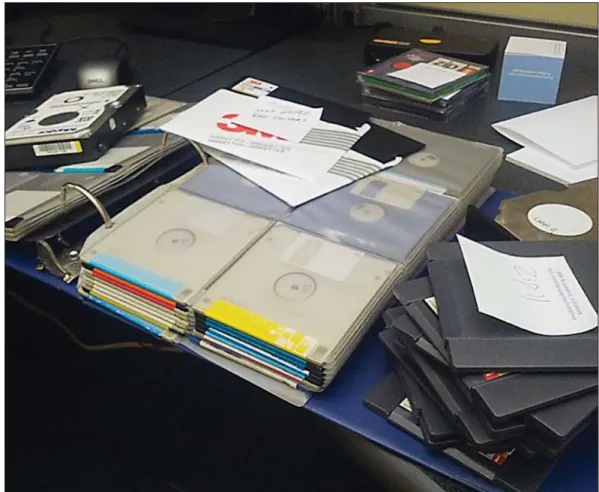
Figure 1: Legacy removable and fixed digital media.
Locard’s “exchange principle”—often summarized as “every contact leaves a trace”—has become a basic precept of the forensic sciences, the consequence of just the kind of material interactions we acknowledge above. Procedures and tools for acquiring and validating data from physical media are well established in the field of digital forensics. Their recognition and adoption within LAMs is a more recent phenomenon. Two particular streams of activity show great promise for informing the practices of collecting institutions. First, the number of collecting institutions exploring the application of digital forensics to the acquisition of digital materials is growing rapidly. Second, there is a rich and growing body of open source tools that can be used to process, manage and disseminate forensically acquired data. While the primary target for many of these tools and methods is the law enforcement community, there is great potential for connecting these two streams of activity in order to support the work of collecting institutions.
Many digital forensics applications and strategies can aid LAMs in their work, particularly by advancing three fundamental archival principles: provenance, original order and chain of custody.7 Provenance “consists of the social and technical processes of the records’
inscription, transmission, contextualization, and interpretation which account for its existence, characteristics, and continuing history.”8 According to the principle of provenance, records from
a common origin or source should be managed together as an aggregate unit and should not be arbitrarily intermingled with records from other origins or sources. In digital environments, it can be important to consider provenance at levels of granularity finer than an entire record, such as why a specific data element appears within a dataset and where specifically the data
7 Christopher A. Lee, “Archival Application of Digital Forensics Methods for Authenticity, Description and Access Provision,” Comma (forthcoming).
8 Tom Nesmith, “Still Fuzzy, but More Accurate: Some Thoughts on the ‘Ghosts’ of Archival Theory,” Archivaria 47 (1999): 146.
element was generated.9 It is also important to include technical components in one’s notion of
provenance, such as system configuration information.10
Closely related to provenance is the principle of original order, which indicates that archivists should organize and manage records in ways that reflect their arrangement within the creation environment. There are compelling arguments for retaining original order in a digital environment. Even if this order is messy and idiosyncratic, it conveys meaningful information about the recordkeeping context.
The chain of custody is the “succession of offices or persons who have held materials from the moment they were created.”11 Ideal recordkeeping systems would provide “an unblemished
line of responsible custody”12 through control, documentation, and accounting for all states
of a record and changes of state e.g., movement from one storage environment to another, or transformation from one file format to another, throughout its existence. Such a system would therefore cover the point of creation, important interactions with the record, and (when appropriate) destruction.
Professionals in collecting institutions must increasingly apply their professional principles to collections composed—in whole or in part—of born-digital materials. Among other activities, this includes moving materials that are stored on removable media into more sustainable preservation environments. This can involve media that are already in their holdings (e.g. disks stored in boxes along with paper materials), as well as being acquired for the first time from individual donors or other producers.
Forensic methods identify, capture and retain various forms of contextual information, which can be vital for users making meaningful use of digital materials.13 Two important types
of metadata that forensics tools can extract from digital materials are metadata related to document creation activities, including versioning, embedded media, software dependencies, and rights information; and logs of user activity recorded by the operating system and other software.
The authenticity of a handwritten document often depends upon the ink that was used to write it, the paper it was written on, and other artifactual characteristics. For digital documents, the environmental context from the original device or platform can be used to more thoroughly establish ownership and methods of production and use. Access to the full range of data on a disk can ensure that the record of provenance includes not only curatorial events within a repository but also events, actions and processes that have occurred between initial creation of a particular digital object and the changes or user/system activities related to the object over its lifetime within a particular digital ecosystem.14
Extraction of basic technical metadata (such as timestamps) from file systems can provide a foundation on which one can establish a “ground truth” for content and structure on a device.
9 Peter Buneman, Sanjeev Khanna, and Wang-Chiew Tan, “Why and Where: A Characterization of Data Provenance,” in Database Theory - ICDT 2001: 8th International Conference, London, UK, January 2001. Proceedings, ed. Jan van den Bussche and Victor Vianu (Berlin: Springer, 2001), 316–30.
10 Maria Guercio, “Archival Theory and the Principle of Provenance for Current Records: Their Impact on Arranging and Inventorying Electronic Records,” in The Principle of Provenance: Report from the First Stockholm Conference on Archival Theory and the Principle of Provenance, 2-3 September 1993, ed. Kerstin Abukhanfusa and Jan Sydbeck (Stockholm: Swedish National Archives, 1994), 82.
11 Richard Pearce-Moses, Glossary of Archival and Records Terminology (Chicago, IL: Society of American Archivists, 2005), 67.
12 Hilary Jenkinson, A Manual of Archive Administration: Including the Problems of War Archives and Archive Making (Oxford: Clarendon Press, 1922), 11.
13 Christopher A. Lee, “A Framework for Contextual Information in Digital Collections,” Journal of Documentation 67, no.1 (2011): 95-143.
14 Kam Woods and Geoffrey Brown, “From Imaging to Access - Effective Preservation of Legacy Removable Media,” in
Archiving 2009: Preservation Strategies and Imaging Technologies for Cultural Heritage Institutions and Memory Organizations: Final Program and Proceedings (Springfield, VA: Society for Imaging Science and Technology, 2009), 213-218; Kam Woods, Christopher A. Lee, and Simson Garfinkel, “Extending Digital Repository Architectures to Support Disk Image Preservation and Access,” in JCDL ‘11: Proceeding of the 11th Annual International ACM/IEEE Joint Conference on Digital Libraries (New York, NY: ACM Press, 2011), 57-66.
They can provide significant support for assessment and preservation activities. File names may include evidence of the hierarchical structure of data within the original file system, and can often include information that should be considered private and assessed accordingly. Timestamps may help identify files that have been copied from alternate locations. Although collecting institutions often record timestamps as part of the provenance record, they often omit access and modification timestamps. Likewise, file system permissions on the host system (along with a record of users and groups with access to particular files) can assist in creating more complete documentation of creation and use contexts.
Metadata associated with user logins or user accounts associated with specific data objects also can be valuable. Examples include the following:
• System information located in common storage areas such as Microsoft Windows registry hives. Such information can assist in verifying unique user identifiers, removable media that have been used on the host computer, and application metadata.
• Extraction of user information from operating system and application-specific data stores such as SQLite databases, which are typically used to record and maintain user activity, cache information from network access, and store private data.
3. Activities to Date
Recovery of data from physical media has been a concern of LAM professionals for several decades. The application of digital forensics tools and methods is a more recent phenomenon, but one that has grown rapidly in the past decade.
Research, Development and Professional Literature
Margaret Hedstrom argued in 1984 that archivists could face “potential obliteration of significant portions of the historical records” if they did not learn more about how computers, including storage media, function; and she proceeded to explain computer systems of the time to an archival audience.15 There have been various publications in the LAM and records
management literature about the viability of particular storage media (e.g. laser disk, magnetic tape) for preservation purposes. However, until quite recently, there had been relatively little writing about the recovery of data from the media in order to move them into preservation environments.
An important contribution came in 1999, in a report by Seamus Ross and Ann Gow that discussed the potential relevance of advances in data recovery and digital forensics to collecting institutions.16 This was followed by a few papers and articles about the skills and methods used
to recover data from old media, including reports on experiences from the National Library of Australia17 and Cornell University’s File Format and Media Migration Service (initiated in 2004
but no longer active).18 Lucie Paquet published an article in 2000 about working with personal
electronic records, in which she stated, “When I visit my donors, I bring an external disk drive with me in order to copy electronic records of historical value so that I can take them back to the National Archives of Canada.”19 Paquet’s activities were laudable and valuable; she was
reporting on actions that relatively few archivists had yet broached in their own work. However, there was no indication at that point that she was using forensic methods to ensure the integrity of the materials.
The professional landscape has changed quite dramatically since then. In the past eight years, a number of authors have investigated the use of forensic tools and techniques to care for digital collections in libraries and archives.20
15 Margaret Hedstrom, Archives and Manuscripts: Machine-Readable Records (Chicago, IL: Society of American Archivists, 1984), 7.
16 Seamus Ross and Ann Gow, “Digital Archaeology: Rescuing Neglected and Damaged Data Resources” (London: British Library, 1999).
17 See e.g. Deborah Woodyard, “Farewell My Floppy: A Strategy for Migration of Digital Information,” National Library of Australia, 1997; Deborah Woodyard, “Data Recovery and Providing Access to Digital Manuscripts” (paper presented at the Information Online 2001 Conference, Sydney, Australia, January 16-18, 2001).
18 Richard Entlich and Ellie Buckley, “Digging up Bits of the Past: Hands-on with Obsolescence,” RLG DigiNews 10, no. 5 (2006).
19 Lucie Paquet, “Appraisal, Acquisition and Control of Personal Electronic Records: From Myth to Reality,” Archives and Manuscripts 28, no. 2 (2000): 71-91.
20 A thought leader in this regard has been Jeremy Leighton John at the British Library. See e.g. Jeremy Leighton John, “Adapting Existing Technologies for Digitally Archiving Personal Lives: Digital Forensics, Ancestral Computing, and Evolutionary Perspectives and Tools” (paper presented at iPRES 2008: The Fifth International Conference on Preservation of Digital Objects, London, UK, September 29-30, 2008).
The Prometheus21 and PERPOS22 projects have developed software for data extraction,
focusing on needs of specific collecting contexts. The Personal Archives Accessible in Digital Media (PARADIGM) project investigated “issues involved in preserving digital private papers through gaining practical experience in accessioning and ingesting digital private papers into digital repositories, and processing these in line with archival and digital preservation requirements.” PARADIGM’s most visible outcome was the “Workbook on Digital Private Papers.”23 The Digital Lives project, led by Jeremy Leighton John at the British Library,
investigated “personal digital collections and their relationship with research repositories,”24
and it generated a major report that included discussions of digital forensics.
In 2008, MITH initiated a collaboration with the Ransom Center through an NEH-funded Digital Humanities Start-Up grant directed by Matthew Kirschenbaum that brought together practitioners at the University of Maryland, the Ransom Center, and Emory University for site visits and knowledge exchange. They generated a white paper based on a series of site visits and meetings of those working with the born-digital components of three significant literary collections.25 A project funded by the Andrew W. Mellon Foundation called “Computer
Forensics and Born-Digital Content in Cultural Heritage Collections” hosted a symposium and generated a report published by the Council on Library and Information Resources (CLIR), both of which were major contributions and milestones in the application of digital forensics in LAMs.26
Christopher (Cal) Lee and Kam Woods administered “Curation of a Forensic Data Collection for Education,” a sub-grant of an NSF-funded project led by Simson Garfinkel of the Naval Postgraduate School. They enhanced, packaged, and distributed a collection of data that represents a realistic scenario (e.g. traces of computer use across a given timespan, multiple disk images relevant to a particular set of historical activities, and in which numerous end-user applications are installed and used), while also being appropriate for students to use in support of digital forensics education.27 Primary focus areas were annotation, scenarios, exercises, answer
keys and other forms of data that can further enhance access and use of the disk images. They also investigated strategies for ensuring that the data sets would remain available and useful beyond the life of the project.
In 2011, the Forensic Information in Digital Objects (FIDO) project addressed “the application of digital forensics to support the curation and preservation of digital information held on computer systems and digital media.” FIDO investigated and documented the use of various digital forensics tools, with a particular focus on university archives.28
21 Douglas Elford, Nicholas Del Pozo, Snezana Mihajlovic, David Pearson, Gerard Clifton, and Colin Webb, “Media Matters: Developing Processes for Preserving Digital Objects on Physical Carriers at the National Library of Australia” (paper presented at the 74th IFLA General Conference and Council, Québec, Canada, August 10-14, 2008).
22 William E. Underwood and Sandra L. Laib, “PERPOS: An Electronic Records Repository and Archival Processing System” (paper presented at the International Symposium on Digital Curation (DigCCurr 2007), Chapel Hill, NC, April 18-20, 2007); William Underwood, Marlit Hayslett, Sheila Isbell, Sandra Laib, Scott Sherrill, and Matthew Underwood, “Advanced Decision Support for Archival Processing of Presidential Electronic Records: Final Scientific and Technical Report,” Technical Report ITTL/CSITD 09-05 (October 2009).
23 Susan Thomas, Renhart Gittens, Janette Martin, and Fran Baker, “Workbook on Digital Private Papers” (Paradigm Project, 2007), http://www.paradigm.ac.uk/workbook/introduction/index.html; Susan Thomas and Janette Martin, “Using the Papers of Contemporary British Politicians as a Testbed for the Preservation of Digital Personal Archives,” Journal of the Society of Archivists 27, no. 1 (2006): 29-56.
24 Pete Williams, Katrina Dean, Ian Rowlands, and Jeremy Leighton John, “Digital Lives: Report of Interviews with the Creators of Personal Digital Collections,” Ariadne 55 (2008); Jeremy Leighton John, Ian Rowlands, Peter Williams, and Katrina Dean, Digital Lives: Personal Digital Archives for the 21st Century >> An Initial Synthesis, Version 0.2, March 3, 2010, http:// britishlibrary.typepad.co.uk/files/digital-lives-synthesis02-1.pdf.
25 Matthew G. Kirschenbaum, Erika Farr, Kari M. Kraus, Naomi L. Nelson, Catherine Stollar Peters, Gabriela Redwine, and Doug Reside, Approaches to Managing and Collecting Born-Digital Literary Materials for Scholarly Use (College Park, MD: University of Maryland, 2009).
26 Matthew G. Kirschenbaum, Richard Ovenden, and Gabriela Redwine, Digital Forensics and Born-Digital Content in Cultural Heritage Collections (Washington, DC: Council on Library and Information Resources, 2010).
27 Woods, Lee, and Garfinkel, “Extending Digital Repository Architectures,” 57-66.
28 Gareth Knight, “The Forensic Curator: Digital Forensics as a Solution to Addressing the Curatorial Challenges Posed by Personal Digital Archives,” International Journal of Digital Curation 7, no. 2 (2012): 40-63.
The Born Digital Collections: An Inter-Institutional Model for Stewardship (AIMS) project developed a framework for the stewardship of born-digital materials that includes the incorporation of digital forensics methods.29 The Digital Records Forensics project at the
University of British Columbia also articulated a variety of connections between the concepts of digital forensics and archival science.30
Finally, there has been a significant strain of new research on digital media. This has originated largely in the humanities under the broad rubrics of “platform studies,” “software studies,” “critical code studies,” and “media archaeology.”31 While the particulars of these
labels and affiliations vary and should not be understood as merely mutually interchangeable, work identified in these ways has important shared characteristics that bear directly on our understanding of the collecting activities now being undertaken by LAMs, and forensic methods in particular. The research contributing to these fields generally:
• assumes the computer and computational processes are material in nature, and thus subject to documentary and historical forms of understanding;
• is technically rigorous and acknowledges the material particulars of media and computation as worthy of critical investigation;
• understands the particular constraints of software, code, and platform as generative for studying the processes and products of digital culture;
• cultivates and actively seeks to refine an archival record for digital culture; and
• understands the activity of archiving itself in new and capacious ways, that include such techniques as crowd-sourcing, hacktivism, restoration and retro-computing, and citizen archivists.
Matthew Kirschenbaum’s Mechanisms: New Media and the Forensic Imagination is emblematic in this regard: the book integrates techniques from digital forensics with long-standing practices and precepts from the humanistic fields of bibliography and textual scholarship to examine individual digital objects and reveal new histories of their production. While Kirschenbaum’s methods are recognizable to practitioners versed in the digital forensics techniques we discuss here, his conclusions and analyses are aimed at scholars with the intent of demonstrating that digital objects are always embedded in material histories that are recoverable through specific tools and technological procedures.
Building Institutional Capacity
In recent years, a variety of collecting institutions have made efforts to incorporate digital forensics activities into their workflows. While the current list of such institutions is rapidly changing and expanding, some of the early leaders of note were the Bodleian Library (Oxford), the British Library, Emory University, King’s College London, the National Library of Australia, the New York Public Library, Stanford University, and Yale University.
Not all of this capacity has been developed in traditional collecting institutions. For example, at the Maryland Institute for Technology in the Humanities, Matthew Kirschenbaum and Doug Reside have helped to build a collection of vintage and antiquarian hardware. This was largely drawn from their personal collections and cast-offs from the university community. MITH now owns a broad array of obsolete systems used for research and instruction. In May 2007, MITH
29 AIMS Working Group, AIMS Born-Digital Collections: An Inter-Institutional Model for Stewardship, 2012.
30 Luciana Duranti and Barbara Endicott-Popovsky, “Digital Records Forensics: A New Science and Academic Program for Forensic Readiness,” Journal of Digital Forensics, Security and Law 5, no. 2 (2010).
31 See Nick Montfort and Ian Bogost, Racing the Beam: The Atari Video Computer System (Cambridge, MA: MIT Press, 2009); Wendy Chun, Programmed Visions: Software and Memory (Cambridge, MA: MIT Press, 2011); Erkki Huhtamo and Jussi Parikka, ed., Media Archaeology: Approaches, Applications and Implications (Berkeley, CA: University of California Press, 2011); Jussi Parikka,
What Is Media Archaeology? (Cambridge, UK: Polity Press, 2012); Nick Montfort, Patsy Baudoin, John Bell, Ian Bogost, Jeremy Douglass, Mark C. Marino, Michael Mateas, et al. 10 Print Chr$(205.5+Rnd(1));:Goto 10 (Cambridge, MA: MIT Press, 2013); Wolfgang Ernst and Jussi Parikka, Digital Memory and the Archive: Electronic Mediations (Minneapolis, MN: University of Minnesota Press, 2013); Lev Manovich, Software Takes Command (New York: Bloomsbury, 2013).
acquired a large collection of vintage hardware, software and other archival material from Deena Larsen, an author who has been an active member of the creative electronic writing community since its inception in the mid-1980s.
Two other related initiatives have been SWAT and Jump In. The SWAT (software and workstations for antiquated technology) initiative has been led by Ricky Erway at OCLC. 32 It
aims to match up institutions that do not have the capability to recover data from particular media with institutions that do have such capabilities. For example, Archive A with a collection of legacy Iomega Zip disks could send them to Archive B that has the capacity to read and copy data from the disks. Archive B could create disk images and send them (along with basic metadata and documentation of the process) to Archive A. The Jump In initiative has taken place within the Manuscript Repositories Section of the Society of American Archivists (SAA). It has been a catalyst for several archives to take initial steps in addressing their born-digital holdings. Specifically, participants promised to:
• Locate computer media in any physical form.
• Record the location, inventory number, type of physical medium, and any identifying information found on labels or media such as creator, title, description of contents, and dates. If no identifying information exists, indicate this.
• Record anything that is known about the hardware, operating system, and software used to create the files.
• Count the number of each media type, calculate the total maximum amount of data stored in each medium, and then calculate the overall total for the collection.33
Participants submitted essays describing what they had done, along with photographs of themselves and the media that they surveyed. Twenty-three institutions participated in Jump In, and their essays can be found on the Manuscript Repositories Section web site. Several of the participants reported on their work at the Manuscript Repositories meeting at the SAA Annual Meeting in New Orleans on August 16, 2013.
Professional Events
On February 9-11, 2009, the Digital Lives project hosted the first Digital Lives conference at the British Library in London. At that event, Simson Garfinkel made the case for the relevance of digital forensics methods to recover traces of individuals’ online activities.34 Just a few weeks
later, on March 31, 2009, in association with DigCCurr 2009, Lee organized a symposium with Richard Szary (UNC-CH) and Tom Hyry (then at Yale University) called “Stewardship of E-Manuscripts: Advancing a Shared Agenda.” In this symposium, an invited set of leaders in this field (coming from Australia, Austria, the United Kingdom, and the United States)
32 Ricky Erway, “Swatting the Long Tail of Digital Media: A Call for Collaboration” (Dublin, OH: OCLC Research, 2012).
33 Jump in Initiative, http://www2.archivists.org/groups/manuscript-repositories-section/jump-in-initiative. This set of steps was inspired by Ricky Erway, “You’ve Got to Walk Before you Can Run: First Steps for Managing Born-Digital Content Received on Physical Media” (Dublin, OH: OCLC Research, 2012).
34 Simson Garfinkel and David Cox, “Finding and Archiving the Internet Footprint” (paper presented at the First Digital Lives Research Conference: Personal Digital Archives for the 21st Century, London, UK, February 9-11, 2009).
Figure 2: The MITH facility at the University of Maryland, pictured during the Personal Digital Archiving 2013 conference.
shared strategies for and experience with the selection, acquisition, arrangement, description, preservation, and access to personal materials in digital form.35 This included participation of
leading experts on the application of digital forensics techniques to the acquisition of digital collections.
On May 14-15, 2010, MITH hosted an invitational meeting funded by the Andrew W. Mellon Foundation in support of the project and report discussed earlier, entitled Computer Forensics and Born-Digital Content in Cultural Heritage Collections, which was published by the Council on Library and Information Resources in December 2010. The co-authors of the report were also the co-organizers of the meeting: Matthew Kirschenbaum (Maryland), Richard Ovenden (Bodleian), and Gabriela Redwine (Harry Ransom Center). The agenda included talks from LAM professionals, scholars and digital forensics experts. The event and its discussions significantly advanced the connections between digital forensics and the activities of LAMs.
On June 28, 2011, the Digital Preservation Coalition (DPC) in the UK sponsored an event called Digital Forensics for Preservation in Oxford. Speakers addressed the nature of the problem, e-discovery and sense-making, digital forensics tools, mobile forensics, lab setup experiences, and the “practical and reasonable limits of forensics.” The DPC also commissioned Jeremy Leighton John to write a Technology Watch Report on “Digital Forensics and Preservation,” which was published in November 2012.36
A conference called “The Memory of the World in the Digital Age: Digitization and Preservation” was held on September 26-28, 2012 in Vancouver, British Columbia, Canada, by the Memory of the World Program of the United Nations Educational, Scientific and Cultural Organization (UNESCO) and the University of British Columbia in collaboration with the University of Toronto. There were more than 500 participants from a wide diversity of countries. The conference included numerous talks and sessions related to digital forensics,37 including a
sub-conference that constituted the Seventh International Workshop on Systematic Approaches to Digital Forensic Engineering (SADFE). This allowed for stimulating interactions between digital forensics experts and LAM professionals. SADFE had been held six times previously, but never in coordination with an event focused on cultural heritage. The call for papers for the next year’s SADFE—to be held in Hong Kong on November 21-22, 2013—included even more explicit references to archives, records management and preservation considerations.38
Lee is serving as the program co-chair for SADFE 2013, along with Adel S. Elmaghraby from the University of Louisville.
More recently, there have been two hackathons focused on applying forensics to digital collections: one in Copenhagen on May 15-17, 2013 (pictured in Figure 3) and one in Chapel Hill on June 3-5, 2013 (shown in Figure 4). The hackathon model has proved to be quite successful in bringing together practitioners and software developers, identifying existing technical gaps through real-world issues encountered within collecting institutions. These events produce a wide range of “serendipitous coding,” in which existing tools are adapted to address novel use cases, and the intellectual seeds of longer-term development projects and intellectual collaborations are planted.
Both hackathons were conducted in partnership with the Open Planets Foundation. As part of its commitment to supporting the digital preservation community and the emerging preservation and forensics community both within the United States and internationally, the BitCurator project introduced new software technologies at both of these events and benefitted from feedback from participating members.
35 Stewardship of E-Manuscripts: Advancing a Shared Agenda, March 31, 2009, http://ils.unc.edu/callee/emanuscripts-stewardship/.
36 Jeremy Leighton John, “Digital Forensics and Preservation,” DPC Technology Watch Report 12-03 (Digital Preservation Coalition, November 2012), http://www.dpconline.org/component/docman/doc_download/810-dpctw12-03.pdf. 37 The full proceedings are available at: http://www.unesco.org/new/en/communication-and-information/events/ calendar-of-events/events-websites/the-memory-of-the-world-in-the-digital-age-digitization-and-preservation/
Figure 4 - Hackathon in Chapel Hill Figure 3: 2013 OPF Hackathon in Copenhagen.
Affi rmation of the Importance of Forensics to LAMs
A product of the Memory of the World in the Digital Age conference discussed above was the “UNESCO/UBC Vancouver Declaration.” The document urges the UNESCO Secretariat to “encourage engagement of cultural heritage professionals knowledgeable about digital forensics concepts, methods and tools in order to ensure capture and reliable preservation of authentic, contextualized and meaningful information, and appropriate mediation of access to the information.”39
On July 23, 2013, the National Digital Stewardship Alliance (NDSA) announced the National Agenda for Digital Stewardship 2014, which is designed to “to provide funders and executive decision-makers insight into emerging technological trends, gaps in digital stewardship capacity, and key areas for funding, research and development to ensure that today’s valuable digital content remains accessible and comprehensible in the future.” The agenda includes the following:
As more digital materials are selected for long-term digital preservation, the need to integrate digital forensics tools into production workflows for collections becomes increasingly important. This will require identifying the boundaries between technical infrastructure development and organizational policies, and where there is tension that creates issues for providing access or pursuing work that reduces tension whether it be new or refined policies or services and tools development. Integration of these tools can build on exploratory work using digital forensics. Tools Currently under development can be leveraged and workflows can be implemented. Aside from the need for tools and workflow developments, there are also important opportunities for organizations to share resources in order to tackle these issues. In this respect, pioneering new organizational models for centers of stewardship, such as SWAT sites, can help to support the development of centers of excellence that help to scale up this kind of activity.
There is a clear need to move the basic research in digital forensics tools from research to implementation in production workflows for organizations. This would require investment in scaling up tools and creating collaborative models for sharing resources to make this work possible. The digital preservation community would also benefit from a shared space for exchanging knowledge around how forensics tools are being integrated into production preservation activities.40
The Signal is a newsletter-style blog concerning digital preservation. It is produced by the Library of Congress. It receives considerable attention from professionals working in the digital preservation arena, and has given significant treatment to digital forensics issues over the past three years.41
39 “UNESCO/UBC Vancouver Declaration: The Memory of the World in the Digital Age: Digitization and Preservation,” Vancouver, British Columbia, Canada, September 28, 2012.
40 http://www.digitalpreservation.gov/ndsa/documents/2014NationalAgenda.pdf
41 See e.g. Leslie Johnston, “Digital Forensics and Digital Preservation,” June 7, 2011, http://blogs.loc.gov/ digitalpreservation/2011/06/digital-forensics-and-digital-preservation/; Martha Anderson, “F is for Forensics,” November 30, 2011, http://blogs.loc.gov/digitalpreservation/2011/11/f-is-for-forensics/; Bradley Daigle, Matthew Kirschenbaum, and Christopher Lee, “Bit by Bit: Recent Projects on Digital Forensics for Collecting Institutions,” January 24, 2012, http://blogs. loc.gov/digitalpreservation/2012/01/bit-by-bit-recent-projects-on-digital-forensics-for-collecting-institutions/; Bill LeFurgy, “Floppy Disks are Dead, Long Live Floppy Disks,” April 11, 2012, http://blogs.loc.gov/digitalpreservation/2012/04/ floppy-disks-are-dead-long-live-floppy-disks/; Trevor Owens, “Life-Saving: The National Software Reference Library,” May 4, 2012, http://blogs.loc.gov/digitalpreservation/2012/05/life-saving-the-national-software-reference-library/; Susan Manus, “Digging Up the Recent Past: An Interview with Doug Reside,” August 14, 2012, http://blogs.loc.gov/ digitalpreservation/2012/08/digging-up-the-recent-past-an-interview-with-doug-reside/; Susan Manus, “The Born Digital In the Archives: One Curator’s Experience,” August 29, 2012, http://blogs.loc.gov/digitalpreservation/2012/08/the-born-digital-in-the-archives-one-curators-experience/; Jose Padilla, “Digital Forensic Perspective Helps Cultural Heritage Institutions Meet Deep Challenges,” February 7, 2013, http://blogs.loc.gov/digitalpreservation/2013/02/digital-forensic-perspective-helps-cultural-heritage-institutions-meet-deep-challenges/; Trevor Owens, “Born Digital Archival Materials at NYPL: An Interview with Donald Mennerich,” April 22, 2013; Trevor Owens, “What’s a Nice English Professor Like You Doing in a Place Like This: An Interview with Matthew Kirschenbaum,” August 12, 2013, http://blogs.loc.gov/ digitalpreservation/2013/08/whats-a-nice-english-professor-like-you-doing-in-a-place-like-this-an-interview-matthew-kirschenbaum/.
Educational Offerings
Lee developed an educational offering called “Applying Digital Forensics Techniques to Materials Acquired on Physical Media,” which he taught as a half-day workshop at the IS&T Archiving Conference in May 2009 and a full-day workshop for staff of UNC Libraries in August of the same year.
From June 2010 to June 2011, Lee served as the Principal Investigator for the Digital Acquisition Learning Laboratory (DALL) project, which was funded by the Andrew W. Mellon Foundation.42 He oversaw the installation and setup of the digital forensics hardware and
software to be used in support of both course work (offered to undergraduate and graduate students) at SILS and continuing professional education offerings. In early 2010, Lee and the SILS computing staff worked closely to build expertise and infrastructure within the school to administer novel educational exercises integrating digital forensics into LAM acquisition tasks. In addition to building significant hardware, software and procedural capacity for future digital forensics teaching and research, the DALL project provided SILS personnel with practical experience concerning opportunities and challenges for LAM professionals using digital forensics tools. It also allowed Lee and a member of the SILS information technology staff to take a series of online courses on digital forensics, offered by AccessData, as well as an on-site course offered by Digital Intelligence.
The FIDO project discussed above ran a training event called “Applying Digital Forensic techniques to AIM [Archives and Information Management]” on August 16, 2011 at King’s College London.43 There were three talks followed by a breakout discussion of specific
professional and ethical scenarios. There was then a hands-on session, in which participants used OSForensics44 to analyze a disk image from a laptop computer.
In Spring 2011, Lee administered an integrated set of exercises within the Electronic Records Management course (INLS 525), which he taught with fellow SILS faculty member Richard Marciano. Lee and Kam Woods then developed a new special topics course at SILS, Acquiring Information from Digital Storage Media (INLS 490-141), which they offered in Spring 2011. They substantially expanded the course to become Digital Forensics for Curation of Digital Collections (INLS 690-141) in Fall 2013. These courses have introduced students to digital forensics concepts and methods using both commercial and open-source software. Another SILS course that covers several core digital forensics concepts and methods is entitled Understanding Information Technology for Managing Digital Collections (INLS 465), which was introduced in Fall 2008 as an outgrowth of the DigCCurr (Digital Curation Curriculum) project funded by the Institute for Museum and Library Services (IMLS). Lee has also incorporated core digital forensics exercises into the DigCCurr II Professional Institute, which is a week-long continuing education course that has been offered annually in Chapel Hill (and once in Copenhagen) since 2009, as well as the State Electronic Records Initiative (SERI) Institute which was administered in Indianapolis, Indiana on July 8-12, 2013.
In 2012, Lee began administering a series of Digital Forensics for Archivists classes for the Society of American Archivists as part of the DAS (Digital Archives Specialization) certification.45 Dozens of practitioners in locations across the United States have participated
in these workshops, which focus on “bootstrapping” practical applications of digital forensics within institutions handling born-digital materials. Kam Woods also began serving as instructor for the classes in December 2012; Lee and Woods have recently expanded it into a two-day event, which includes significant hands-on exercises components, using both commercial and open-source software.
42 Christopher A. Lee and Kam Woods, Digital Acquisition Learning Laboratory: A White Paper (November 2011), http://www. ils.unc.edu/callee/dall-white-paper.pdf.
43 https://fido.cerch.kcl.ac.uk/digital-forensics-for-archivists-training-event/ 44 http://www.osforensics.com/
Since 2010, Matthew Kirschenbaum and Naomi Nelson (a member of the BitCurator Professional Experts Panel) have co-taught annually a newly designed course at the University of Virginia’s Rare Book School (RBS). While the RBS is renowned for its offerings in areas such as book history, paleography, illustration and bookmaking techniques, and typography, it has also had a strong record of offerings in electronic text, digital librarianship—notably Encoded Archival Description (EAD) and the Text Encoding Initiative (TEI)—and digital humanities. Kirschenbaum and Nelson’s offering on Born-Digital Materials: Theory and Practice is a week-long course, which typically enrolls a dozen students for some 30 contact hours, covers the life-cycle of a digital object, from initial conversations with a donor to accessioning, arrangement and description, preservation and metadata, and patron access to born-digital materials.
Kirschenbaum teaches several sessions dedicated to digital forensics as part of this curriculum. In the first iteration of the course attempts were made, with at best partial success, to have students download and install existing open source applications such as the Sleuth Kit for instruction. The vagaries of individual operating systems and environments (for example, students lacking administrative access to computers owned and maintained by their institutions) as well as varying levels of technical skill and familiarity with the UNIX command line proved prohibitive for a productive instructional experience. With the advent of BitCurator, most students in the class can download and install a complete digital forensics processing environment and begin working within an instructional context in a very short period of time; exercises walk the students through activities ranging from the imaging of media to the generation of human- and machine-readable reports. In addition to these hands-on activities, Kirschenbaum also covers the theoretical contexts for digital forensics, and closely related issues such as privacy and ethics.46
At the iSchool at the University of Texas, Patricia Galloway has also led an effort over the past several years to provide students with hands-on experience in recovering data from media. In 2009, she created a specialized Digital Archaeology Lab, which teams of students have used to work with a variety of born-digital materials. This is an outgrowth of groundwork for the lab that began in 2005 and more than a decade of courses at the iSchool in which Galloway has had students work in teams to address challenges associated with real-world digital collections.
Conclusion
The professional vocabulary of those working in collecting institutions is evolving to now include terms such as disk image, hex (hexadecimal) viewer, cryptographic hash, and file system. LAM professionals are also gaining access to new communities and sources of guidance, e.g. papers from the annual Digital Forensics Research Workshop and instructions from gaming enthusiasts about how to create, read and mount disk images of old storage media. The first and second points are closely related; having the right vocabulary can open up many new mechanisms for learning and sharing information.
46 Course materials, including a reading list and student evaluations, are available at: http://www.rarebookschool.org/ courses/libraries/l95/
4. Technical Opportunities and Methods
for Applying Digital Forensics
A range of free and powerful open source digital forensics tools exist to assist in processing large (and legacy) data collections. There are numerous benefits to the use of these technologies:
• Automation and processing efficiency: Access to tools that allow users—particularly those who have not received extensive technical training—to rapidly and accurately extract and report on the contents of a given file system, those items most likely to require further human intervention, and export technical and preservation-specific metadata on file items.
• Accuracy in data triage, and reducing temporal footprints: Ensuring that coverage of the contents of a given storage medium is as complete as possible, i.e. that a particular tool (or set of tools) identifies—accurately and using an algorithmic method than can be reviewed and explained—specific data items that are relevant within a particular preservation context.
• Assurance of data integrity: Using software and hardware technologies that are well-documented (and freely well-documented), and which have been sufficiently tested to ensure their performance in real-world scenarios.
• Identifying personally identifying and sensitive information (PII): For example, Simson Garfinkel’s bulk_extractor extracts “features” such as email addresses, credit card numbers, and URLs (among others) from disk images and directories of files.
• Establishing environmental and technical context: Disk images retain all of the data on a source medium, supporting answers to a range of potential future questions, including “What kinds of programs were used to create this data?” and “What did the daily workflow of a particular user look like?” Digital forensics tools may be used to extract information corresponding to installed software, user activities (for example, times and dates that a particular user was logged on), and create high-level timelines of activity.
Information located in disk images can assist in linking digital objects to other data sources and activities:
• Versioning information: The version of a software package used to create a given document may have specific bearing on the future renderability of that document. For example, although many current and legacy office document formats are “cross-platform,” documents created on a given platform may exhibit rendering idiosyncrasies on another. Metadata about the production software may not always be embedded in the document, so access to a disk image that contains a complete copy of the production environment may improve preservation outcomes.
• System Logs: Many types of data transfer (such as plugging a USB flash drive into a Windows machine, accessing a network drive, or uploading data to an online service) leave traces on disk. Knowing that such traces exist can assist both in recovering lost data and in organization of the raw materials received.
• Local and network user activity: Log files and local databases recording user activity may be queried to address questions of document provenance, or to assist in producing a narrative about how a particular producer worked on a given system. Alternately, such information
may be redacted to protect private and sensitive data, or assigned a higher or lower priority during data triage depending on the contents. Materials collected (particularly those from the past decade) also are likely to include traces of network activity, such as use of online email services, social networks, and document-sharing mechanisms. Such traces may be used to create a more complete picture of the work habits of a particular donor, document links to other electronic resources, or trigger redaction protocols as required.
Forensic Disk Images
Accessing data on a storage device normally involves mounting a volume and then copying or opening files by interacting with the file system. There must be hardware to detect signals on the medium, hardware and software to translate the signals into bitstreams, and hardware and software to move the bitstreams into the current working computer environment. One can then interact with data as entire files or components of files. The file system mediates between the user and the underlying data, and it is designed to facilitate interaction at the file level (e.g. file naming, viewing timestamps, access controls). The file system serves to “hide” complicated information from the user about “where and how it stores information.”47 For most
purposes, the file system is a valuable high-level abstraction, because it does not require users to understand or directly access the underlying data.
Those who are interested in the underlying data that are hidden by the file system can instead generate and interact with disk images, or sector-by-sector copies of all the data that reside on the storage medium. Inspection of the disk image can reveal a significant amount of information that users of the drive did not consciously or intentionally leave there,48 but can
also lead to traces of valuable contextual information. These may include information about other users who have interacted with the device or storage medium, indications of data transfer to online storage or social media platforms, and information a user may have considered “lost” or unrecoverable.
Forensic workflows often involve creation of a disk image to serve as a baseline copy of the data from the disk, upon which many further extraction and analysis tasks can be performed. Digital forensics professionals use hardware write blockers to ensure that no data on the disk – including essential metadata such as timestamps – are altered or overwritten during the process of copying the disk’s contents. Device failures and the presence of unforeseen firmware or software bugs cannot be eliminated, but established workflows in forensics practice reduce the probability that these will occur undetected. The National Institute of Standards and Technology (NIST) tests and reports on hardware- and software-based write-blockers.49
LAMs can incorporate a variety of forensics practices and methods by treating disk images, rather than individual files or packaged directories, as basic units of acquisition.50 Using write
blockers, creating full disk images and extracting data associated with files is essential to ensuring provenance, original order and chain of custody.51 There are a wide range of hardware write
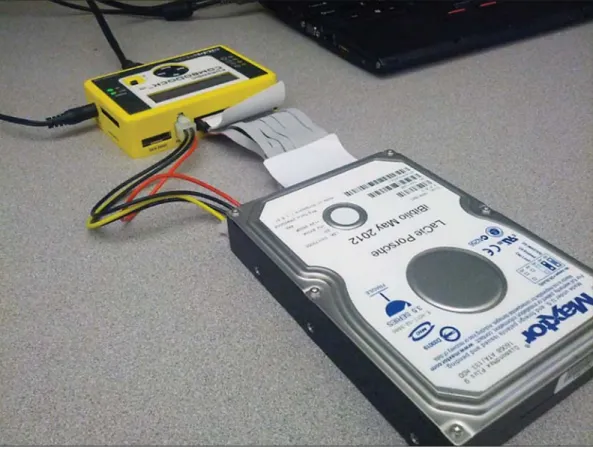
blockers available today from companies such as Tableau and WiebeTech, but—performance and packaging considerations aside—they all essentially perform the same task: preventing the host system (computer used for acquisition) from writing any data back to connected source media. In Figure 5, a legacy PATA (IDE) hard disk drive is connected to a WiebeTech device that provides write blocked access to PATA and SATA hard drives. This particular device allows a host with USB 2.0, FireWire, or eSATA ports to read these media.
Even the “modern” interfaces that allow these devices to interact with legacy media will ultimately become obsolete, and there are ongoing discussions concerning how and when the
47 Dan Farmer and Wietse Venema, Forensic Discovery (Upper Saddle River, NJ: Addison-Wesley, 2005).
48 Simson L. Garfinkel and Abhi Shelat, “Remembrance of Data Passed: A Study of Disk Sanitization Practices,” IEEE Security and Privacy 1 (2003): 17-27.
49 http://www.cftt.nist.gov/hardware_write_block.htm
50 Woods, Lee, and Garfinkel, “Extending Digital Repository Architectures,” 57-66.
51 Kam Woods and Christopher A. Lee, “Acquisition and Processing of Disk Images to Further Archival Goals,” In
forensic hardware itself should be preserved and documented. This is especially important for institutions that elect to purchase hardware as a hedge against acquisitions problems long into the future.
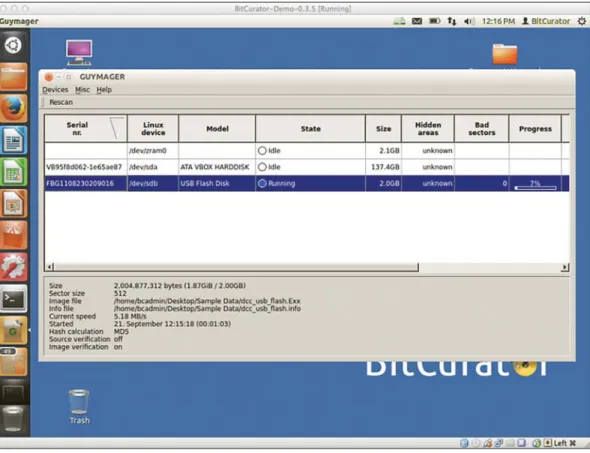
In combination with a disk imaging software tool (such as the Guymager tool shown acquiring a USB flash device in Figure 6), the disk imaging process is both simple (from the standpoint of the end user) and highly reliable. Disk imaging tools will typically produce metadata about the acquisition process in a human-readable text file; technical provenance may therefore be retained even if the user elects to produce a raw, rather than a forensically-packaged disk image. This metadata typically includes the time and method of acquisition, technical details on the device or media carrier from which the image was extracted, any errors encountered (such as bad blocks on a disk), and notes created by the person administering the process. In the following section, we describe both this and other forms of forensic metadata in additional detail.
Creating and Extracting Forensic Metadata
Forensic metadata incorporated into packaging such as Guidance Software’s Expert Witness Format and the Advanced Forensic Format (v3) incorporate low-level technical metadata about the disk, including the block size, the size of the physical medium in blocks, any compression method used, and one or more digest hashes. This is useful for tracking provenance and verification of integrity, but the true power of forensic imaging and analysis lies in the metadata that can be extracted from the file system(s) contained within a disk image.
The core facilities used by an operating system to interact with a file system can be replicated by forensic software designed to parse the contents of a disk image without mounting that image; a low-level approach to extracting large amounts of potentially relevant information. From the standpoint of forensics tools, the most basic of these views is to provide a listing of the contents of the file system in question – the volumes, directories, files, and other data contained on a particular medium.
Figure 5: A legacy IDE hard disk connected to a modern forensic write blocker.
In the past decade, there have been several pushes towards the creation of interoperable standards for digital forensics metadata. Among the most visible of these has been Digital Forensics XML (DFXML), originally designed and developed by Simson Garfinkel. DFXML is intended to serve as “a standardized set of tags and representations for current XML tools,” along with “a DTD and schema to allow XML validation.”52 At the time of writing, the schema
has not been finalized (although a formal release is currently being reviewed by the DFXML Working Group53), but a range of relatively mature tools exist to produce and process core
DFXML output describing file systems.
The same tools that generate DFXML can also incorporate metadata from other tools used in repositories. For example, fiwalk includes a plugin mechanism which can be used by LAM professionals to accommodate the output of preservation-specific tools and resources such as the PRONOM registry.54
Identifi cation and Redaction of Sensitive Information
Forensic tools can be used to identify, flag and redact, or restrict access to sensitive information.55
LAMs may use these tools to target gaps in existing workflows, or to shift away from time-consuming, expensive manual analysis toward automated and reliable procedures that can free LAM professionals to focus their energy on the tasks that require human intervention.
The BitCurator project has constructed an environment that incorporates bulk_extractor, a tool capable of identifying “features of interest” within a disk image, bitstream, or location (folder containing files) within a live file system. The features identified by bulk_extractor are typically
52 http://www.forensicswiki.org/wiki/Category:Digital_Forensics_XML 53 https://github.com/dfxml-working-group
54 https://github.com/anarchivist/fiwalk-dgi
55 Christopher A. Lee and Kam Woods, “Automated Redaction of Private and Personal Data in Collections: Toward Responsible Stewardship of Digital Heritage,” in Proceedings of Memory of the World in the Digital Age: Digitization and Preservation: An International Conference on Permanent Access to Digital Documentary Heritage, 26-28 September 2012, Vancouver, British Columbia, Canada, ed. Luciana Duranti and Elizabeth Shaffer (United Nations Educational, Scientific and Cultural Organization, 2013), 298-313.
Figure 6: Guymager acquiring an image of a removable USB flash device in the BitCurator environment.
textual patterns with a specific semantic interpretation (e.g. Social Security numbers, email headers, image and geolocation metadata, and user activity history such as URLs corresponding to search results). These features may not all constitute PII (Private and Individually Identifying) information for a given device, but their extraction can assist in performing triage on large-scale digital containers (or large collections of small-scale digital containers), and in allowing those materials deemed most critical for human review to filter up to the top.
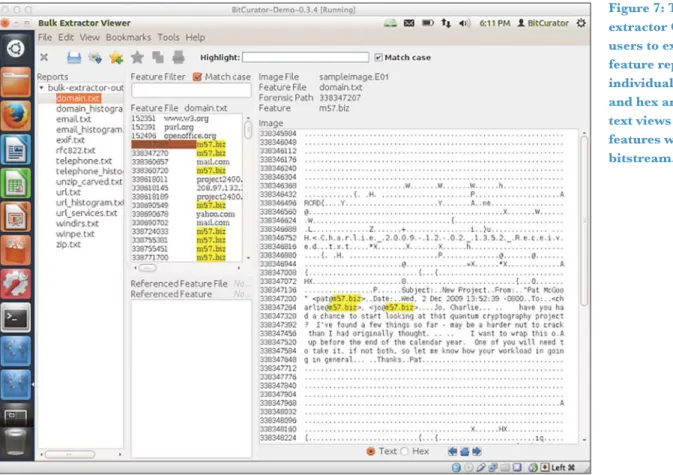
Because it operates on the raw underlying bitstream, bulk_extractor can be run on disks that contain any file system. It identifies the locations of features in terms of byte offsets (number of bytes one would have to read from the beginning of the disk to reach them), rather than indicating where they reside within the folder and file structure within the file system. For example, in Figure 7, the bulk_extractor viewer shows a domain name that appears at offset 338347207, rather than indicating what specific directory path on the disk would be associated with that location. This approach has major performance advantages, because bulk_extractor does not use the file system to read data. It also means that bulk_extractor—like many other forensics tools—can find and present data that resides in corrupted or unallocated areas of a disk (e.g. traces of deleted files), which would not be visible through normal user interaction through the file system, such as when one uses Windows Explorer to navigate to folders and files.
Other programmatic methods allow one to match features that bulk_extractor has found to specific files and locations within the file system(s) identified on a particular device (in this case, for those file systems that are understood by The Sleuth Kit). Following this process, it is possible to generate simple, human-readable lists of pertinent information: “This Social Security number was found in this file”, or “Evidence of email activity was found, even though this area on the disk is no longer seen by the file system.” Software developed for the BitCurator project outputs these lists in forms—.xlsx spreadsheets or PDF files—that can be read using commonly available applications.
Figure 7: The bulk_ extractor GUI allows users to examine feature reports, individual features, and hex and raw text views of those features within the bitstream.
Once these two forms of information are available—the raw features of interest that might correspond to private and/or sensitive information and a mapping of those features to their locations on disk—it is possible to automate the redaction of these items. A relatively simple Python script (iredact.py) distributed with the DFXML tools produced by Simson Garfinkel illustrates this possibility. Feature contents identified as potentially sensitive or private may be overwritten at the byte level—at the discretion of the user—with randomized data or a sequence of specific characters. Ongoing work is being performed in this area to build programs capable of selective encryption of these contents, laying the foundation for access scenarios in which white-lists governed by specific encryption keys may be used to moderate access to the raw disk image.
5. Challenges
Digital forensics offers valuable methods that can advance the goals of maintaining authenticity, describing and preserving born-digital records and providing responsible access.56
However, most digital forensics tools were not designed with these objectives in mind. The BitCurator project is attempting to bridge this gap through engagement with digital forensics experts, library and archives professionals, as well as dissemination of tools and documentation that are appropriate to the needs of memory institutions. Much BitCurator activity is translation and adaptation work, based on the belief that LAM professionals will benefit from tools that are presented in ways that use familiar language and run on platforms that LAMs can support.
Challenge #1:
Incorporation into the workfl ows of LAMs,
e.g. supporting metadata conventions,
connections to existing content
management system (CMS) environments.
It is desirable to not just run forensics tools over disks, but to also export forensic data in ways that can then be imported into LAM collection management and descriptive systems, as well as modifying forensics triage techniques to better meet the needs of LAMs. Many institutions have now incorporated digital forensics into their workflows.57 However, there must
still be considerably more work before forensics tools and methods are tightly integrated into their overall systems and practices. For many LAMs, born-digital workflows are undergoing significant evolution, as their collections grow, they gain further expertise, and new practices continue to emerge from the field. Moreover, the metadata being routinely captured and stored in CMS environments varies widely across institutions. Integration with LAM workflows and systems will, therefore, be an ongoing endeavor.
Challenge #2:
Obsolete Storage Media and File Systems
Most current forensics software is designed to work with a relatively small set of common file systems, such as FAT and NTFS (Windows), ext (Unix) and HFS+ (Mac). Not only will many tools not be able to read older and less common file systems, but the tools often will not even be able to identify those file systems. Likewise, specialized physical interfaces to a particular hardware platform are unlikely to be addressed by the current manufacturers of forensic acquisition hardware, and even support for common interfaces is likely to be discontinued within a timeframe of one to two decades (e.g. the recent removal of SCSI connectors from the latest generation of Digital Intelligence’s UltraBay write blockers). An example commonly encountered by LAMs is the 5.25” floppy diskette, which is no longer supported on current computers. It is unlikely to be a target for most forensics practitioners, because it has not been actively used for many years and is thus not likely to be used as evidence in an investigation.
56 Woods and Lee, “Acquisition and Processing of Disk Images,” 147-152.
57 For examples of such workflows, see Martin J. Gengenbach, “’The Way We Do it Here’: Mapping Digital Forensics Workflows in Collecting Institutions,” A Master’s Paper for the M.S. in L.S degree, August, 2012; and AIMS Working Group,
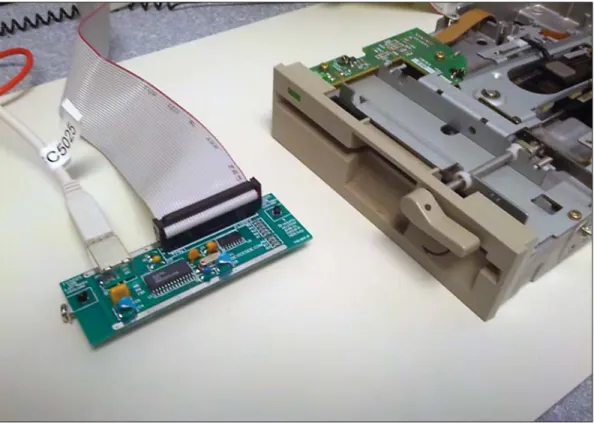
However, LAMs often have many of these disks in their collections. Specialized devices such as the FC5025 shown in Figure 8 can help.58
Challenge #3:
Dealing with large, internally complex
data fi les.
The digital collections in many LAMs have now grown to contain millions of digital objects. This has resulted in many discussions about “big data” and the scalability of their technical architectures. These discussions have taken place in a variety of professional venues including the International Conference on Digital Curation (IDCC), the Preservation and Archiving Special Interest Group (PASIG), and series of meetings from 2007 to 2013 on Designing Storage Architectures for Preservation Collections organized by the National Digital Information Infrastructure and Preservation Program (NDIIPP).59 The iPRES 2013 conference
in Lisbon, Portugal also included a workshop on September 5-6, 2013, devoted to exploring “Digital Preservation at Scale.” However, LAMs still have relatively limited experience in caring for individual items that are as large (gigabytes or even terabytes) and internally complex as disk images. Such files often require news tools, but also new arrangements for storing and transferring data, as well as workflows that can accommodate long delays as large data files are processed.
Challenge #4:
Provision of public access to the data.
The typical digital forensics scenario is a criminal investigation in which the public never gets direct access to the evidence that was seized. By contrast, LAMs that are creating disk images face issues of how to provide access to the data. This includes not only providing access interfaces, but also redacting or restricting access to components of the image, based on confidentiality, intellectual property or other sensitivities.
58 See also “Use Guide for the FC5025 Floppy Disk Controller,” Maryland Institute for Technology in the Humanities, http://mith.umd.edu/vintage-computers/fc5025-operation-instructions.
59 http://www.digitalpreservation.gov/meetings/
Figure 8: FC5025 being used to copy data from a 5.25” floppy disk.
Challenge #5:
Defi ning and Implementing Ethical
Commitments
In addition to the logistical issues, there are also institutional and ethical issues,60 which
will be explored and clarified in ways that would not be possible without direct experience with the technology. LAM professionals can benefit from new ethical frameworks that address long-standing principles and values but are attentive to the many levels of representation that are present in digital environments.61 It will also be important to clarify donor expectations
and agreements regarding the retention, treatment and exposure of various traces of data (e.g. deleted files, user logs, configuration files, tracked change data within office documents).
60 Christopher A. Lee, “Bringing Values to the Bitstream: A Framework for Digitally-Aware Professional Ethics of Curation” (presentation to the Society of American Archivists (SAA) Research Forum, Austin, TX, August 11, 2009). 61 Christopher A. Lee, “Computer-Supported Elicitation of Curatorial Intent,” in Dagstuhl Seminar Proceedings 10291, Automation in Digital Preservation, ed. Andreas Rauber, Jean-Pierre Chanod, Seamus Ross, and Milena Dobreva, 2010.
6. Lessons and Insights
Experiences from the BitCurator project—including monitoring and engagement with various other contemporary activities—have yielded a number of lessons and insights.
Digital forensics has arrived for archival processing.
As evidenced by the discussion above, there have been dramatic changes in the status of digital forensics within LAMs in just a few years. Many institutions now acknowledge that procedures and practices for the curation of born-digital materials should involve forensic tools and methods. There is growing recognition, for example, of the value of creating forensic disk images.
There is still much work to done, however. In a 2012 survey of libraries belong to the Association of Research Libraries (ARL), 78% of respondents indicated that a strategy they employ regarding born-digital records stored on legacy media is “storing legacy media as is (without transfer to new media or server storage and/or keeping it with [an] analog collection).”62
The introduction of digital forensics to LAMs does not
dictate specifi c policies or practices.
One can adapt and adopt tools and procedures to suit the circumstances of an individual institution and environment. For example, some institutions may retain significant amounts of forensic metadata as integral to the Archival Information Packages in their collections, while o