SPIRITUALITY AT WORK:
THE DEVELOPMENT OF A THEORETICAL MODEL
Jason Timothy Palframan BSc (Hons), MSc, MBA
A thesis submitted in partial fulfilment of the requirements of Liverpool John Moores University for the degree of Doctor of Philosophy
ABSTRACT
Spirituality at work has received much interest in recent years, and a stream of research notes its benefits beyond a trend. Despite the topic’s growing recognition, the research community raised the need for the integration of spirituality at work with traditional areas of investigation (Giacalone & Jurkiewicz, 2003). A potentially fruitful first step towards this involves use of person-organisation (PO) fit theory (Ashforth & Pratt, 2003; Sheep, 2004, 2006; Singhal & Chatterjee, 2006; Singhal, 2007). The purpose of this study is to build upon initial attempts towards this integration and to promote further acknowledgement of the potential benefits of incorporating spirituality at work into wider organisational psychology frameworks. This was achieved by integrating both PO fit and transpersonal psychology, and subsequently developing a theoretical model that investigates three questions: a) what antecedents lead individuals and organisations to seek spirituality at work?, b) what are the perceived spiritual preferences (needs) of individuals and how are those preferences fulfilled through the context of the workplace (supplies)?, and c) what are the consequences of meeting spiritual preferences (needs), as perceived by individuals?
Using constructivist grounded theory, analysis of interview data from thirty-four participants located in organisations (one spiritual and three non-spiritual) across The Netherlands, Ireland, the United Kingdom and Portugal led to a theory in which I propose a core category of reconciling self as a critical factor of spirituality at work. Reconciling self captures the process whereby the self consistently attempts to maintain a congruent relationship with the ego and the environment, and this construct emerged as the primary concern for participants. Reconciling self was influenced largely by meaning and purpose and the need to connect to something larger than oneself, and through the organisation making a difference. The congruence or perceived fit within the workplace was captured through the action strategy conscious reconciling experiences; in the case where the immediacy of such expression was compromised, reconciling self was noted through the action strategy active adjustment. The action strategies were influenced through a set of intervening conditions that included a set of spirituality at work needs and supplies, through a context that emphasised attributes such as spiritual values, a culture that focused on openness and support, and relational leadership. The consequences of spirituality at work included benefits such as individual job satisfaction, positivity and self-realisation, and organisational outcomes as being a force for good and fostering employee commitment.
The contribution of this study includes a new theoretical model concerning why, when, and how spirituality at work influences individual and organisational processes and outcomes. Such understanding contributes to better understanding of spirituality at work, and identifies ways in which PO fit occurs within a broader psychological context than that proposed in mainstream organisational psychology (i.e. through reconciling self influenced by meaning and purpose, the need to connect to something larger than oneself, and a set of spirituality at work needs). These findings reduce the PO fit gap. Implications of the study include the findings that spirituality at work creates positive outcomes, and insistence on the role of connecting to something larger than oneself implies individuals are always in the process of moving toward reconciling self. Organisations should consider their ability to harness latent human potential and transcendence by extending self-boundaries and developing the self. Limitations and future research directions are discussed.
ACKNOWLEDGEMENTS
I thank my supervisor, Les Lancaster, for not only his encouragement and support, but also his time, patience, and extensive comments on previous drafts. I thank Andy Tattersall for his valuable comments on a later draft, and David Jenkins for his helpful comments and sharing his dream insights. I am especially grateful to all participants who volunteered for the study and gave up their valuable time. I also thank the managers who organised the interviews across a range of locations, especially, Liz Waters, CEO, and Carmel Habington, human relations manager, at An Cosán; Phil Jepson, human resources director at Beaverbrooks; Hugo Stienstra, public relations manager at Vitae; and José de Sousa, MD of Liberty Seguros. I thank my colleagues at the Department of Business Studies, Athlone Institute of Technology for their support and encouragement, and for the institute’s funding of my research. I also thank my colleagues at the Open University for their support and encouragement. I thank Alex and Darian, and I especially appreciate Sally’s support without which I would not have completed this thesis.
TABLE OF CONTENTS
Abstract ... 1
Acknowledgements ... 2
Table of contents ... 3
List of appendices ... 4
List of tables and figures ... 5
List of abbreviations ... 6
Chapter 1 - Introduction ... 7
1.1 Thesis overview ... 7
1.2 Background ... 8
1.3 Spirituality at work and person-organisation (PO) fit theory ... 11
1.4 The research rationale ... 16
1.5 Purpose of the research ... 18
Chapter 2 - Literature review ... 19
2.1 Introduction ... 19
2.2 Spirituality at work ... 19
2.3 Spirituality at work and person-organisation (PO) fit theory ... 36
2.4 A transpersonal psychological perspective and spirituality at work ... 39
2.5 Conclusion ... 42 Chapter 3 - Methodology ... 43 3.1 Introduction ... 43 3.2 Research design ... 43 3.3 Research methods ... 49 3.4 Sample ... 50 3.5 Procedure ... 52 3.6 Conclusion ... 67
Chapter 4 - Reconciling self: Development of the theoretical model ... 68
4.1 Introduction ... 68
4.2 Open coding ... 68
4.3 Axial coding: Context and basic psychological processes ... 69
4.4 Selective coding and core category: Reconciling self ... 104
4.5 A theoretical model of reconciling self ... 104
4.6 Conclusion ... 107
Chapter 5 - Reconciling self as a critical factor of spirituality at work ... 108
5.1 Introduction ... 108
5.2 Reconciling self as a dynamic feature of spirituality at work and PO fit ... 108
5.3 Implications for theory and practice... ... 126
5.4 Limitations and future research ... 127
5.5 Personal reflection ... 131
5.6 Conclusion ... 134
Chapter 6 - Conclusion and evaluative criteria of the study ... 135
6.1 Introduction ... 135
6.2 Overview of the research findings ... 135
6.3 Theoretical and practical contributions ... 137
6.4 Evaluation ... 138
6.5 Conclusion ... 143
LIST OF APPENDICES
Appendix 1 - Copy of letter confirming ethical approval ... 161
Appendix 2 - Invitation letter to sample ... 162
Appendix 3 - Participant consent form ... 163
Appendix 4 - Participant information sheet ... 164
Appendix 5 - Initial semi-structured interview schedule ... 165
Appendix 6 - Developed semi-structured interview schedule ... 167
Appendix 7 - Example of a post-interview memo ... 169
Appendix 8 - Example of an early memo on the concept of openness ... 170
Appendix 9 - Example of a later memo, after sorting early memos ... 171
LIST OF TABLES AND FIGURES
TABLES
Table 2.1: Marques et al. (2007) - Vital themes for a spiritual workplace ... 31
Table 3.1: Philosophical and methodological underpinnings of the current study ... 44
Table 3.2: Demographic characteristics of participants and organisations... 50
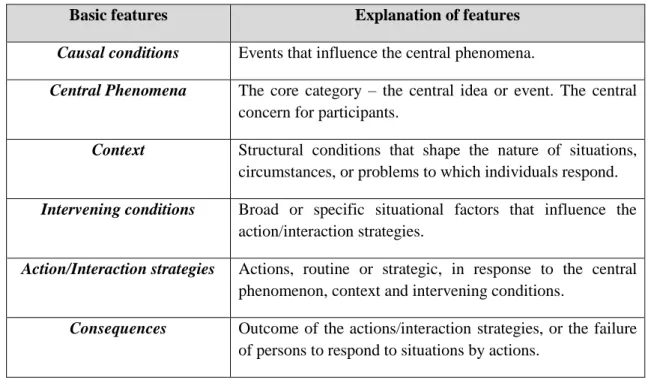
Table 3.3: Corbin and Strauss (2008) - Paradigm model and explanation of features ... 62
Table 4.1: Description of axial codes and sub-categories ... 69
Table 4.2: Axial code antecedents, sub-categories and properties ... 70
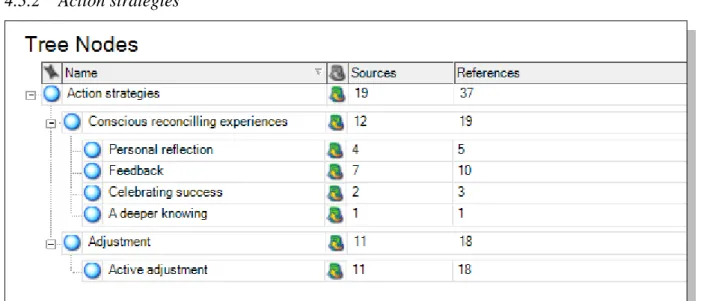
Table 4.3: Axial code action strategies, sub-categories and properties ... 73
Table 4.4: Axial code foundational attributes, sub-categories and properties ... 78
Table 4.5: Axial code normative expressions, sub-categories and properties ... 81
Table 4.6: Axial code relational leadership, sub-categories and properties ... 83
Table 4.7: Axial code spirituality at work needs, sub-categories and properties ... 85
Table 4.8: Axial code spirituality at work supplies, sub-categories and properties ... 94
Table 4.9: Axial code consequences, sub-categories and properties ... 100
Table 5.1: Matching spirituality at work needs with organisational practices and broader context ... 116
Table 6.1: Criteria for judging qualitative research ... 139
FIGURES Figure 2.1: Singhal and Chatterjee (2006) - A conceptual framework of spirituality at work ... 27
LIST OF ABBREVIATIONS
AoM Academy of Management
ASA Attraction-selection-attrition framework BPS British Psychological Society
CWPS Critical workplace spirituality
CES Comparative Emphasis Scale
GPTW Great place to work
HRM Human resource management
ICSW International Center for Spirit at Work LJMU Liverpool John Moores University OCP Organizational Culture Profile PE fit Person-environment fit theory PO fit Person-organisation fit theory RBV Resource based view of the firm SAWS Spirit at work scale
SHRM Strategic human resource management SIT Social identity theory
SRW Spirituality and religion in work TWA Theory of work adjustment WPS Workplace spirituality
Chapter 1 - Introduction
1.1 Thesis overview
This thesis is organised into six chapters. Chapter 1 introduces spirituality at work and highlights both growing interest in the topic and a growing body of evidence that examines the benefits of spirituality at work as an organisational inquiry. Despite growing recognition, I discuss how the research community has raised the need for spirituality at work to be integrated with traditional areas of investigation. I discuss how recent attempts to meet this call through person-organisation (PO) fit theory represent a valuable beginning, but more research is needed to advance PO fit with spirituality at work. I explain how I meet this call and outline the research rationale and central research questions.
Chapter 2 examines extant literature, organised in three sections. The first section examines spirituality at work literature and as noted above, highlights growing recognition of spirituality at work. I note how researchers conclude that if spirituality in the workplace is to emerge as a mainstream area of inquiry, it needs to be integrated with traditional areas of investigation. The second section introduces initial attempts to meet the need for integration through use of PO fit from organisational psychology. The argument is that initial attempts to integrate spirituality at work with PO represent a valuable beginning, but more research is required to promote theoretical integration. The third section argues that transpersonal psychology bridges spirituality at work and PO Fit theory from mainstream organisational psychology and could promote theoretical integration.
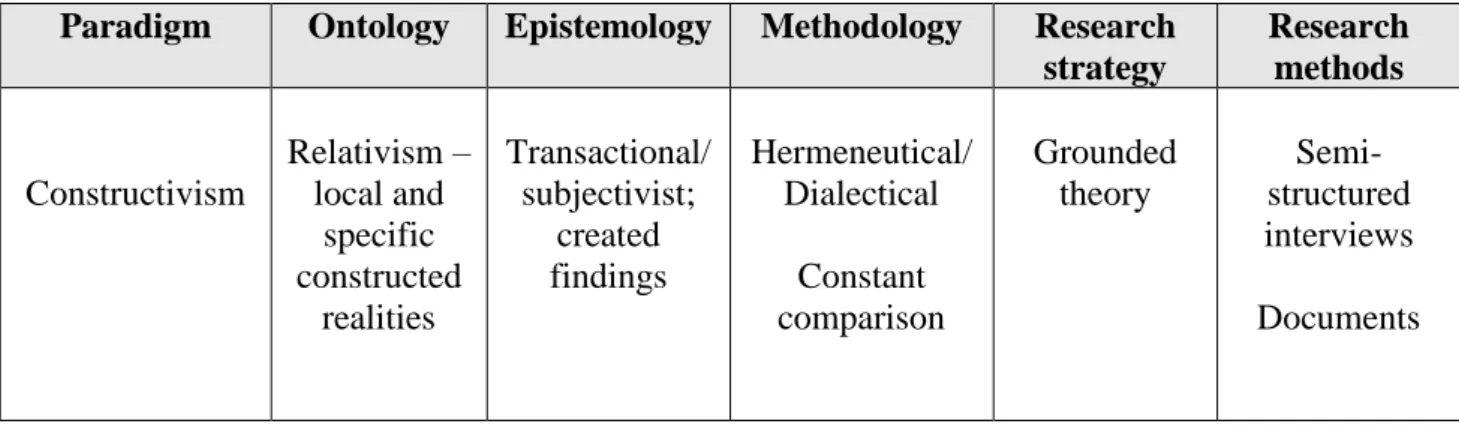
Chapter 3 discusses the philosophical and methodological propositions that informed the study. These propositions are informed through a constructivist paradigm. The discussion includes an overview of data collection methods, and explains the research setting, sampling strategy, analytic procedure of data analysis, and ethical considerations.
Chapter 4 reports the results of this study, including a theoretical model of reconciling self as a critical factor of spirituality at work (Figure 4.1) that conveys the essence of participants’ experiences of spirituality at work.Chapter 5 discusses the theoretical model of reconciling self presented from chapter 4 in the context of extant literature. A reflection of my research experience follows, and the study’s limitations and future research directions conclude the chapter. In chapter 6, I outline the main conclusions of the study and then sum up the theoretical and practical contributions of the study. Finally, Corbin and Strauss’ (2008) evaluative criteria of grounded theory is discussed in the context of the theory presented in chapters 4 and 5.
1.2 Background
Spirituality at work has garnered increased interest in recent years (Duchon & Plowman, 2005; Giacalone & Jurkiewicz, 2003). Oswick (2009) reports that the period between 1991 and 2009 generated 232 articles published on workplace spirituality that appeared in social science journals, with 77 of these articles published in management and management-related journals (e.g. Journal of Management Inquiry (2005), Journal of Organizational Change Management (1999, 2003), Journal of Management, Spirituality and Religion, and Leadership Quarterly (2005). Wider academic circles and popular presses include a significant number of writings on topics such as Handbook of Workplace Spirituality and Organizational Performance (Giacalone & Jurkiewicz, 2003), Spirituality and Business (Nandram & Borden, 2010), Spirituality in the Workplace (Marques et al. 2007), a Spiritual Audit of Corporate America
(Mitroff & Denton, 1999), The Spirit at Work Phenomenon (Howard & Welbourn, 2004), and Work and Spirit: A Reader of New Spiritual Paradigms for Organizations (Biberman & Whitty, 2000). Interest among management scholars and practitioners spawned groups such as an Academy of Management (AoM) interest group on management, spirituality, and religion, and the International Centre for Spirit at Work (ICSW).
Interest among management scholars and practitioners focuses on the benefits of spirituality and how those benefits can be fostered at work. Benefits especially espoused include ethical well-being (Fry, 2005), higher employee attachment, loyalty, and belonging (Duchon & Plowman, 2005; Fairholm, 1996; Milliman et al. 1999), increased commitment to organisational goals (Crawford et al. 2009; Fry, 2003; Kinjerski & Skrypnek, 2004; Leigh, 1997), increased creativity (Kinjerski & Skrypnek, 2004), increased honesty and trust within the organisation (Brown, 2003; Krishnakumar & Neck, 2002), increased organisational performance and profitability (Biberman & Whitty, 1997; Biberman et al. 1999; Burack, 1999; Korac-Kakabadse et al. 2002; Neck & Milliman, 1994; Thompson, 2000), positive work attitudes (Milliman et al. 2003; Stevison et al. 2009), and reduced absenteeism and turnover (Giacalone & Jurkiewicz, 2003). In terms of fostering spirituality at work, one stream of research focuses on use of culture and values (Jurkiewicz & Giacalone, 2004), leadership (Fry, 2003), and organisational practices (Pfeffer, 2003).
These interests and benefits demonstrate that spirituality at work is more than a trend (Gotsis & Kortezi, 2008); it depicts a new paradigm in organisational theory and practice (Karakas, 2010) and a movement called the organisational fourth-wave: the spirituality based firm (Wagner-Marsh & Conley, 1999), amovement in which a number of highly diverse firms are attempting to instil a spiritual corporate culture. As Ashmos and Duchon (2000) argue, ‘There is
increasing evidence that a major transformation is occurring in many organizations...[i]n what is sometimes referred to as the spirituality movement..’ (p.124). A number of scholars echo the importance of the spirituality movement because of its relevance to the well-being of individuals, organisations, and societies (Sheep, 2006), and new ground it breaks in organisational sciences (Giacalone & Jurkiewicz, 2003).
Despite growing recognition of spirituality at work, the research community raised the need for integration of spirituality at work with traditional areas of investigation. Giacalone and Jurkiewicz (2003), note that spirituality at work research lacks a ‘sound theoretical base’ (p.11), and how the literature is based on ungrounded and anecdotal observations. They conclude that if spirituality in the workplace is to emerge as a mainstream area of inquiry, future empirical investigations need to be ‘integrated into more traditional areas of investigation’ (p.12). Krahnke et al. (2003) argue that ‘important to theorganizational literature as a whole, the study of workplace spirituality must be placed within the context of multidisciplinary research, illustrating how it fits within the broader mainstream research’ (p.398). Lund Dean et al. (2003) suggest spirituality at work research needs to be grounded in established inquiry-based traditions. ‘SRW [spirituality and religion in work] researchers have a variety of theoretically, conceptually, and empirically sound inquiry traditions to integrate into their work. Searching related subject matter and research design methods in those well-established fields [e.g. transpersonal psychology] may yield prior insights that responsible researchers should include in their own SRW work’ (p. 382). Thus, the prevailing view is a need for an integrative approach to spirituality at work that is grounded in traditional areas of investigation.
A first step toward integrating spirituality at work with traditional areas of investigation has been suggested through person-organisation (PO) fit theory (Ashforth & Pratt, 2003; Sheep, 2004, 2006; Singhal & Chatterjee, 2006; Singhal, 2007). The next section introduces PO fit and broadens the discussion to include recent attempts to integrate it with spirituality at work. First, I introduce PO fit through Person-environment (PE) fit theory.
1.3 Spirituality at work and Person-organisation (PO) fit theory
PE fit has been a central concept in organisational psychology literature for over 100 years (Ekehammer, 1974; Lewin, 1935; Murray, 1938; Parsons, 1909). PE fit is the ‘compatibility between an individual and a work environment that occurs when their characteristics are well matched’ (Kristof-Brown et al. 2005). Exploring the organisational fit literature, it soon becomes apparent that a number of challenges exist for fit researches with an abundance of conceptualisations, measures and theoretical approaches (Kristof-Brown et al. 2005). As Kristof-Brown and Billsberry (2013) put it, ‘there are as many ways to conceptualize and measure fit as there are scholars who study it’ (p1). Over the years, types of PE fit have evolved such as group (PG) fit, job (PJ) fit, organisation (PO) fit, person-supervisor (PS) fit, and person-vocation (PV) fit. Within each of these types, Kristof-Brown et al. (2005) further note diversity in terms of how fit is conceptualised (i.e. similarity, need-satisfaction and demands-ability match), and how content dimensions have been operationalised (i.e. skills, needs, preferences, values, personality traits and goals).
The roots of PE fit research trace to Plato (Dumont & Carson, 1995), though contemporary PE fit traces to Parsons (1909), who developed the matching model for career decision-making. His model is the forerunner for demands—abilities fit where an individual should consider the overall requirements of work along with aptitudes, resources, and limitations. Murray (1938,
1951) followed with development of the needs-press model, the central feature of which is a typology that distinguishes whether needs are conscious or unconscious, physiological or psychological, and hidden or expressed openly. Following needs-press theory, Lewin’s (1935, 1951) field theory influenced PE fit research substantially (Edwards, 2008). His primary contribution was his argument that behaviour is a function of person and environment.
The term PO fit was coined by Chatman (1989), who proposed an interaction model in which individual and organisational values influence each other over time. Whilst research on PO fit reflects congruency between an individual’s values, interests, needs, and abilities, and corresponding characteristics of an organisation, defining PO fit has been confusing due to its multiple conceptualisations and operationalisations, and its limited distinction from other forms of P-E fit (Judge & Ferris, 1992; Kristof, 1996). To resolve this confusion, Kristof (1996) defines PO fit as ‘the compatibility between people and organizations that occurs when (a) at least one entity provides what the other needs, (b) they share similar fundamental characteristics, or (c) both.’ Kristof’s definition refers to two interrelating approaches to PE/PO fit. For example, criteria (a) refers to a complementary approach and (b) a supplementary approach.
A complementary approach to fit has been operationalised as a match between the ability of the individual and the demands of the organisation, but also to the need-fulfilment process, where fit can be obtained when one party fills the need of the other, individual needs and organisational supplies (need-supply fit), or between organisational supplies and individual values (supply-value fit). A complementary approach is commonly operationalised as a needs-supplies perspective, where fit is defined as the ‘match between individual preferences or needs and organizational systems and structures’ (Kristof, 1996, p.5). The roots of a needs-supply
perspective can be associated with need-press theory where Murray (1938) suggested that environmental presses either facilitated or hindered the meeting of physical and/or psychological needs (Murray, 1938). Similarly, a needs-supply perspective can also be equated with the theory of work adjustment (Dawis & Lofquist, 1984), and the notion that a person will be satisfied with work if his or her needs are fulfilled by the environment. Conversely, when supplies are insufficient to fulfil needs, there is a negative effect and decreased satisfaction. Interestingly in terms of the context of the current study, Edwards and Shipp (2007) have noted that generally satisfaction will be higher when needs and supplies are both high in contrast to being low. As they note, ‘high needs represent ambitious standards held by the person, and high supplies signify that these standards have been met. Fulfilling high standards can itself serve as a supply for needs concerning growth and self-actualization’ (p.237). More recently, a needs-supply perspective of PO fit has focused on general perceptions of need fulfilment (Cable & DeRue, 2002; Saks & Ashforth, 1997), job complexity (Edwards & Harrison, 1993), job enrichment (Cherrington & England, 1980), and social relationships (Cook & Wall, 1980).
The supplementary approach originated with Chatman (1989), who proposed an interactional model in which both individuals and organisation value systems influence each other over time, and subsequently influence both individual and organisational outcomes. Thus, Chatman (1989) views PO fit as ‘congruence between the norms and values of the organisation and values of persons’ (p.339). While Chatman’s instigation of value congruence is prevalent in PO fit theory (Kristof-Brown & Jansen, 2007), congruence also centres on content dimensions such as personality (Ryan & Schmitt, 1996) and goal importance (Witt, 1998). The process underlying a congruence approach is based on the similarity-attraction paradigm (Byrne, 1971), which suggests people sharing similar characteristics are attracted to each other and experience better affective consequences. This follows Schneider’s (1987) Attraction-Selection-Attrition (ASA) framework, which suggests individuals seek organisations that are attractive to them,
are selected to be a part of the organisation, and leave when they are no longer attractive to each other. Thus, supplementary fit occurs when a person ‘supplements, embellishes, or possesses characteristics which are similar to other individuals’ in an environment’ (Muchinsky & Monahan, 1987, p. 269).
In short, the essence of PO fit is compatibility or fit that explains outcomes more than the person or the organisation alone. The greater the compatibility between the individual and organisation, the more likely outcomes such as satisfaction and organisational commitment can occur. The larger the gap, the more dissatisfaction can occur.
Recent attempts to integrate spirituality at work with PO fit incorporate a complementary approach, operationalised in a needs-supply perspective (e.g. Ashforth & Pratt, 2003; Sheep, 2004; Singhal, 2007; Singhal & Chatterjee, 2006). Sheep (2004), developed the Workplace Spirituality PO Fit Scale, arguing that a needs-supply perspective of PO fit facilitates both theoretical development and empirical investigation of workplace spirituality. Using a needs-supply perspective of PO fit to investigate workplace spirituality, he notes a complementary relationship between individual preferences (perceived spiritual needs of the organisational member) and member perceptions of the level of organisational supplies—‘...the environment and resources such as reward or communication patterns’—as either being congruent or incongruent of those preferences (Ibid, p.3). A central feature of Sheep’s (2004) scale is inclusion of four recurring themes (e.g. self-workplace integration, meaning in work, transcendence of self, and personal growth/development of one’s inner life at work), traceable as common dimensions of workplace spirituality found in the literature between 1994 and 2003. Although Sheep (2004) developed the Workplace Spirituality PO Fit Scale, the only subsequent advancements of the needs-supply perspective of PO fit and spirituality in the workplace were conducted by Singhal and Chatterjee (2006) and Singhal (2007).
Singhal and Chatterjee’s (2006) argument for a needs-supply perspective of PO fit builds on the notion that context is important for an individual. Noting the importance of context, they suggest a need for more research to understand the interactive effects of both personal and workplace spirituality. Singhal and Chatterjee (2006) offer a framework built on the needs-supply perspective of PO fit to enable focused empirical inquiry into this little-understood area of organisational concern. The framework focuses on three areas of investigation. First are antecedent factors leading to spirituality at work: what factors lead organisations and individuals to take up spirituality at work? Second are the constituents of spirituality at work: what are the individual spirituality at work preferences (needs), and how are those preferences fulfilled through the context of an organisation (supplies)? Third are the consequences of perceived fit between individual needs and organisational supplies.
Singhal (2007) investigated the spirituality at work framework in six Indian organisations (three explicitly spiritual and three non-spiritual). Using a survey method, he concludes that respondents did not agree with the position that socio-economic factors promote a search for spirituality at work. Instead, influences of childhood and family values motivate individuals to look for spirituality in later life. Activities that compromised spirituality encourage individuals to search for organisational environments that provide an opportunity for practising spirituality at work. Support was also found for integrity and wholeness, meaningful work, and being larger than oneself as the central constituents of spirituality at work. Finally, positive correlations were found between spirituality at work and outcomes such as job satisfaction and organisational commitment.
1.4 The research rationale
Initial attempts to integrate spirituality at work into traditional areas of investigation have provided a valuable beginning, but it is only a beginning since little attention is given to advancing PO fit and spirituality at work. Accordingly, there is a need for more integration. Further integration and investigation of Singhal and Chatterjee’s (2006) framework can be applied in two ways.
First, I argue that transpersonal psychology provides an integrative explanation of spirituality and addresses the call for integration of spirituality at work with traditional areas of investigation. A central feature in spirituality at work is the self (Howard & Welbourn, 2004; Sheep & Foreman, 2012), and transpersonal psychology offers a more integrative explanation of self (Lancaster, 1991, 2004) than that offered by social and organisational psychology. Transpersonal psychology has developed a large literature base on the nature and functions of self (e.g. Daniels, 2005; Ferrer, 2002; Lancaster & Palframan, 2009; Pappas & Friedman, 2007), and is invaluable for examining spirituality at work. A more integrative explanation of self and spirituality, such as that from transpersonal psychology, bridges spirituality at work and PO fit theory from mainstream organisational psychology.
The value of bridging spirituality at work with PO fit theory lies in the potential for widely respected approaches from mainstream organisational psychology to be integrated with the framework of transpersonal psychology in which notions of the self and spirituality are explored. Integration of these disciplines provides holistic understanding of how spirituality influences the workplace at both micro (e.g. individual) and macro (e.g. organisational culture) levels. Better appraisal of spirituality at work is particularly useful for finding new directions for PO fit. Although research on the nature of fit has been prolific, little is known about how
spirituality moderates PO fit for individual outcomes. For example, greater interconnectedness or sense of belonging between an individual and organisation could increase the likelihood that an individual perceives a sense of fit. However, absence of belongingness or congruity could suggest an absence of spirituality or fit at work.
Second, to date little work exploring spirituality at work has focused on using inductive and emergent methodology. In the current study, constructivist grounded theory was chosen for its applicability to answer central research questions, and for meeting a call for more inductive and emergent research on spirituality at work (Eisenhardt, 1989; Lund Dean et al. 2003; Sheep, 2006). As Sheep argues, more research is needed that provides a ‘richer description and meaning of workplace spirituality as it is experienced in the workplace’ (p.371). In terms of applicability, the strength of constructivist grounded theory lies in its focus on inductive theory building, and its applicability to dynamic psycho-social processes. Understanding how individuals perceive PO fit through constructivist grounded theory offers a new direction for organisational fit research (Kristof-Brown & Billsberry, 2013). As Kristof-Brown and Billsberry (2013) argue, ‘researchers taking an interpretivist approach to the thorny problem of how various forms of PE fit (e.g. PJ, PO, PV, and PG) interweave in people’s minds could be very useful.’ In short, constructivist grounded theory broadens the understanding of spirituality at work and PO fit through its theory-building capacity and its strengths in exposing dynamic psycho-social processes and the explication of rich subjective experiences.
1.5 Purpose of the research
The purpose of this study is to promote further integration of spirituality at work with traditional areas of investigation and establish a theoretical model of spirituality at work through investigation of the following three research questions:
1. What are the antecedents that lead individuals and organisations to seek spirituality at work?
2. What are the perceived spiritual preferences (needs) of individuals, and how are those preferences fulfilled through the context of a workplace (supplies)?
3. What are the consequences of meeting spiritual preferences (needs), as perceived by individuals?
Chapter 2 - Literature Review
2.1 Introduction
The purpose of this chapter is to contextualise and examine the spirituality at work literature critically in line with the research questions. In section two, I examine the spirituality at work literature and focus on conceptual, methodological, and theoretical developments in the field. An examination of the literature highlights the benefits of spirituality at work to both individuals and organisations, though a number of calls suggest spirituality at work should be integrated with traditional areas of inquiry. In section three, I discuss steps toward integration with mainstream inquiry through a needs-supply perspective of PO fit theory. I argue that initial attempts to integrate spirituality at work with PO fit have been invaluable, but they represent only a beginning; there is more room for integration. In section four, I discuss the significance of transpersonal psychology concerning how it bridges spirituality at work and PO fit, and ultimately contributes to better understanding of spirituality at work.
2.2 Spirituality at work
2.2.1 Spirituality at work - Past and present
Perceived relationships among workplace, religion, and spirituality are not new; an analysis of these relationships can be found in Argyle’s (1989) classic work The Social Psychology of Work. He notes that in pre-civilised communities, although incentive to work involved satisfaction of immediate needs, work was motivated through other forms such as being part of a collective task, as duty to others, as a connection sought through social relationships, and with religious rituals. He notes that work was integral to life and was not in any way different from leisure (p.12). Argyle points to the influence of the church on how work was organised
Benedict, with rules such as ‘condemning idleness in order to avoid sin’ and a need for manual work to discipline the soul; as Argyle puts it, ‘work was not seen to be degrading, but as ennobling, a way of serving God’ (p.16).
In the early-industry stage of work, the primary incentive to work was payment, but as Argyle notes, people were expected to work hard and not enjoy profit; work was deemed ‘natural and necessary’ and ‘as serving God and society’ (p.18). In the same period and with the rise of Protestantism and the Protestant work ethic, reformers such as Calvin and Luther believed people were judged individually and on the ‘basis of their whole life’s work, of which their calling was the most important part; on the other hand money should not be spent on oneself’ (p.19). The next stage was the industrial revolution, which while central to the works of Weber, Marx, and Durkheim, also witnessed the emergence of Methodist, Calvinist, and Quaker corporations (Case & Gosling, 2010). Beyond the industrial revolution and the subsequent period of scientific management, the emergence of the Human Relations School offered insights into spirituality in the workplace. These insights included movement away from money as a motivator, as advocated by Taylorism and scientific management, to a period of focus on the context of social relationships and behaviours at work. Although researchers such as Dehler and Welsh (2003) emphasise the manipulative intentions of management philosophies during this period, Johnson (2007) notes how Mary Parker Follett, a central figure in the Human Relations School, laid a subsequent foundation for spirituality in the workplace. Follett outlined the cornerstone of her idea in Creative Experience, where she emphasises a need to integrate one’s spiritual life into the workplace:
The divorce of our so-called spiritual life from our daily activities is a fatal dualism. We are not to ignore our industry, commerce, etc., and seek spiritual development elsewhere; on the other hand we shall never find it in these, but only by an eternal influence and refluence. There is energy flowing from [our material progress] which, uniting with other energies, will create new men and new environment. (Follett, 1924, p.37)
Johnson (2007) points out that Follett argues for work environments that foster spirituality in the workplace because while influencing the individual, they influence society and the environment. Follett (1924) argues that fostering spirituality at work through dynamic interaction of relating to others is central to meaning, values, growth, and connectedness.
In recent years, interest in spirituality at work has been considerable. Hicks (2003) notes that interest gained momentum in the late 1980s, and is geographically located in the United States. An indicator of interest of spirituality at work lies in considerable quantities of articles published in management and management-related journals (e.g. Journal of Management, Spirituality and Religion, and Journal of Organizational Change Management) (Oswick, 2009). A number of books have been published on the topic (e.g. Spirituality and Business (Nandram & Borden, 2010); Spirituality in the Workplace (Marques et al. 2007); The Spirit at Work Phenomenon (Howard & Welbourn, 2004); Work and Spirit (Biberman & Whitty, 2000). Interest among management scholars and practitioners has generated groups such as the Academy of Management (AoM) interest group on management, spirituality, and religion, and the International Centre for Spirit at Work (ICSW), and more recently conferences such as the 2nd International Conference on Spirituality in Organizations (2009) held in Pondicherry, India and the 3rd Conference of Management, Spirituality & Religion, held in Lourdes, France (2013).
2.2.2 Conceptual development and measurement of spirituality at work
Despite increased attention on spirituality at work, there has been little advancement toward a widely accepted conceptual definition (Giacalone & Jurkiewicz, 2003; Gotsis & Kortezi, 2008). The reason is lack of consensus in defining spirituality (Giacalone & Jurkiewicz, 2003). Typical definitions range from ‘the presence of a relationship with a higher power that affects
God’s gracious call to a relationship with himself’ (Benner, 1989, p.20). A further definition describes spirituality as ‘a way of being and experiencing that comes about through awareness of a transcendent dimension and that is characterized by certain identifiable values in regard to self, life, and whatever one considers to be the Ultimate’ (Elkins et al. 1988, p.10). McSherry and Cash’s (2004) spiritual taxonomy demonstrates the diverse nature in which spirituality has been defined. As they note, on the extreme left of the taxonomy, spirituality is explained through religious or theistic ideas, and on the extreme right, spirituality is grounded in humanistic and existential thought.
A number of empirical investigations suggest researchers and participants define both religiousness and spirituality disparately. In an early empirical investigation of 68 social scientists’ understanding of religion, Clark (1958) found a diverse range of definitions. Definitions were categorised from concepts of the supernatural, spiritual, or non-material to ideas of interaction between inner and outer aspects of life. Scott (1997) conducted a content analysis of 31 definitions of religiousness and 40 definitions of spirituality that appear in the literature, and found all definitions were distributed over nine content categories, and no category accounts for a majority of definitions. She concludes that there is diversity in the content of definitions for both religiousness and spirituality. Zinnbauer et al. (1997) content analysed definitions of religiousness and spirituality from 305 participants, who represented various backgrounds, into thirteen categories. Like Scott’s (1997) findings, they report no category accounts for a majority of either construct.
Although lack of consensus exists in defining both religion and spirituality, psychologists of religion traditionally agree that both concepts are multi-dimensional and that spirituality or the spiritual is subsumed under religion as a broadband construct (Hill et al. 2000; Pargament, 1999). Hill et al. (2000) discuss in detail that religion and spirituality are multi-dimensional.
They note Marty and Appleby’s work on religious fundamentalism in which the multi-dimensional construct of religion not only ‘deals with the ultimate concerns of people...[but] provides personal as well as social identity within the context of a cosmic or metaphysical background’ (p.58). Likewise with spirituality, a number of researchers (Elkins et al. 1988; Gall et al. 1995; LaPierre, 1994) propose multidimensional frameworks. Gall et al. (2005) refer to the multidimensional nature of the construct of spirituality as ‘dynamic and relational, phenomenological, transactional and process-orientated’ (p. 90).
Spirituality or the spiritual is traditionally subsumed under religion and not differentiated explicitly from religion. Pargament (1999) asserts that religion is a ‘broadband construct’ and ‘encompasses the search for many objects of significance’; spirituality ‘focuses on the search for one particular object of significance—the sacred’ (p.13). For Pargament (1999), a traditionalist in the psychology of religion, the cornerstone of both religion and spirituality is the sacred. Although the traditional approach to psychology of religion incorporates a broader notion of religion, undifferentiated from spirituality, modern developments suggest a shift in the opposite direction. A notable trend is the emergence of spirituality as a distinct construct, and, consequently, a tension between the constructs of religion and spirituality (Hill et al. 2000; Wulff, 1997; Zinnbauer et al. 1999; Zinnbauer & Pargament, 2005). Although primary indicators of this trend associate with a ‘subjective turn in contemporary Western culture’ (Sheldrake, 2007, p.2) and a trend ‘towards deinstitutionalization and individualization’ (Pargament, 1999, p.7), the consequences point to narrower and polarized notions of both religion and spirituality (Zinnbauer & Pargament, 2005). Zinnbauer and Pargament (2005) emphasise that ‘with the emergence of spirituality, a tension appears to have risen between the two constructs of religiousness and spirituality. In its most extreme form, the two terms are defined in a rigidly dualistic framework’ (p.24). Lack of consensus in defining spirituality and overlap with religion poses a conceptual challenge to understanding spirituality at work.
Notwithstanding these challenges, a number of researchers nevertheless conceptualise spirituality at work. Ashmos and Duchon (2000) indentify three themes that are fundamental to spirituality at work: inner life, meaningful work, and community. Ashforth and Pratt (2003) apply three themes to spirituality at work: transcendence of self, holism and harmony, and growth. Milliman et al. (2003) report three themes in their work: meaningful work, sense of community, and alignment with organisational values. Sheep’s (2004) argument for conceptual convergence of spirituality at work suggests four themes: self-workplace integration, meaning in work, transcendence of self, and personal growth and development of one’s inner life. Finally, Singhal and Chatterjee (2006) and Singhal (2007) suggest a conceptual convergence toward spirituality at work under three themes: integrity and wholeness, meaningful work, and being larger than oneself. Despite overlap in terms of spirituality at work conceptualisations, researchers have yet to agree on a clear definition.
Definitions of spirituality at work focus on individual or organisational levels (Giacalone et al. 2005), and/or a mix of the two (Kinjerski & Skrypnek, 2006c). Kinjerski and Skrypnek’s (2004) empirically based definition demonstrates focus at the individual level:
Spirit at work is a distinct state that is characterized by physical, affective, cognitive, interpersonal, spiritual, and mystical dimensions. Most individuals describe the experience as including: a physical sensation characterized by a positive state of arousal or energy; positive affect characterized by a profound feeling of well-being and joy; cognitive features involving a sense of being authentic, an awareness of alignment between one’s values and beliefs and one’s work, and a belief that one is engaged in meaningful work that has a higher purpose; an interpersonal dimension characterized by a sense of connection to others and common purpose; a spiritual presence characterized by a sense of connection to something larger than self; and a mystical dimension characterized by a sense of perfection, transcendence, living in the moment, and experiences that were awe-inspiring, mysterious, or sacred. (Kinjerski & Skrypnek, 2004, p.37)
At the organisational level, Kinjerski and Skrypnek (2006c) note that spirituality at work implies ‘an organizational culture guided by mission statements, leadership, and business practices that are socially responsible and value-driven, that recognizes the contributions employees make to the organization, and that promotes individual spiritual development and wellbeing’ (p.3).
A number of researchers attempt a mix of both individual and organisational levels. Duchon and Plowman (2005), define spirituality at work as ‘a workplace that recognizes that employees have an inner life that nourishes and is nourished by meaningful work that takes place in the context of community’ (p.625). Marques (2006) defines spirituality at work as ‘an experience of interconnectedness and trust among those involved in a work process, engendered by individual goodwill; leading to the collective creation of a motivational organizational culture, epitomized by reciprocity and solidarity; and resulting in enhanced overall performance, which is ultimately translated in lasting organizational excellence’ (p. 886). Giacalone and Jurkiewicz (2003) define spirituality at work as ‘a framework of organizational values evidenced in the culture that promotes employees’ experience of transcendence through the work process, facilitating their sense of being connected to others in a way that provides feelings of completeness and joy’ (p.13). Although spirituality at work is defined at a number of levels, lack of conceptual clarity raises considerable issues concerning how best to measure spirituality at work, and what to measure (Tischler et al. 2007).
Giacalone and Jurkiewicz (2003) argue that for spirituality at work to establish legitimacy, a scientific, data-based approach is crucial to highlight effects. Examples include works from Kinjerski and Skrypnek (2006c) and development of the Spirit at Work Scale (SAWS) to measure experiences of spirituality at work, and Milliman et al. (2003) and their focus on measuring the relationship between spirituality at work and employee attitudes. Other
researchers (Benefiel, 2003b; Case & Gosling, 2010; Fornaciari & Lund Dean, 2001; Lund Dean et al. 2003; Poole, 2009; Sheep, 2006) challenge the positivist paradigm in spirituality at work research and argue for interpretive and qualitative approaches. Lund Dean et al. (2003) note that methodologically, research opportunities beyond positivism (e.g. inductive research) might align better with spirituality at work. Although not opposed to positivism, Sheep (2006) calls for a multi-paradigm approach to workplace spirituality research to avoid privileging one research interest over another. Acknowledging strengths of objective methods, he argues for emergent research such as grounded theory methodology. Presenting a case for open-ended inquiry, Case and Gosling (2010) note a lack of understanding of the paradigm war in management and organisation studies, and its impact on spirituality at work. While not discrediting interest in spirituality at work, they argue for a nuanced approach that includes interpretive perspectives that reflect the subtlety of the field.
2.2.3 Theoretical development of spirituality at work
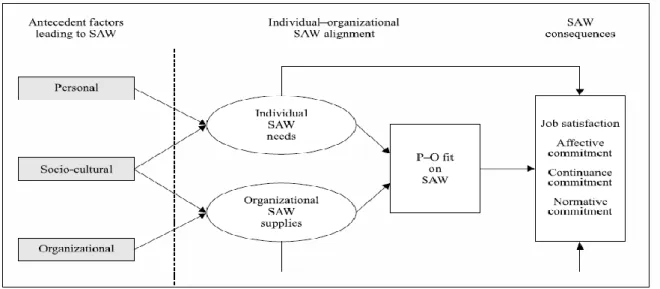
Spirituality in the workplace research is undeniably in the initial concept/elaboration stage of development (Giacalone et al. 2005), and theorising has evolved non-systemically. The fragmented and unsystematic way in which the spirituality at work theorising has evolved makes the task of examining and critiquing the extant literature problematic. Nevertheless, I organise the theorising of spirituality at work around the research questions which are taken from Singhal and Chaterjee’s (2006) (Figure 2.1) conceptual framework of spirituality at work. Their framework attempts to integrate the current disparate spirituality at work theorising into three sections: the antecedents factors leading to spirituality at work; the perceived spiritual preferences (needs) of individuals, and how those preferences are fulfilled through the context of a workplace (supplies) (spirituality at work constituents); and consequences of meeting spiritual preferences (needs), as perceived by individuals.
Figure 2.1: A conceptual framework of spirituality at work (Singhal and Chatterjee, 2006, p.174). Copyright Sage Publications (2006). Reprinted with permission.
2.2.3.1 Antecedent factors leading to spirituality at work
Singhal and Chaterjee (2006) note that a framework that explores the socio-cultural, organisational, and personal factors that comprise spirituality at work could benefit the limited empirical understanding of its antecedents in organisational discourse. At the personal level, they note that faced with ever-increasing competitive and stressful environments, employees re-evaluate priorities and ‘demand a more humane workplace’ (p. 167). At the organisational level, in ever-changing environments, organisations find it difficult to maintain commitment, thus ‘[spirituality at work] becomes another tool to ensure continued employee’s organizational commitment, thereby improving productivity’ (p.167).
A number of other reasons have been cited as the antecedent factors leading to spirituality at work. Among the reasons are individuals seeking self-actualisation rather than materialistic satisfaction (Giacalone & Jurkiewicz, 2003; Inglehart, 1997). Individuals seeking spiritual support and a search for a deeper meaning in life because of instability and uncertainty within social and business contexts. (Cash et al. 2000; Mitroff & Denton, 1999). Individual searches
for higher purpose, personal meaning, and transcendent values (Klenke, 2005) are especially salient, and there has been increased interest in Eastern philosophies (Brandt, 1996) that promote general increases in spiritual yearnings. Work is also seen as a context for spiritual growth and connection to others. (Mirvis, 1997).
A further stream of research to consider is that of calling. The notion that work can be approached as a calling is centuries old. Myers (2014) traces twenty centuries of revolutionary and evolutionary shifts in the meaning of calling. She notes how three historical periods now define calling scholarship: (1) the Protestant reformation of the 1500s; (2) the birth of management studies and the introduction of calling in early 1900s; and (3) a renewed interest in calling in the 1980s (p.2). Whilst researchers have yet to agree on a single definition of calling, research on calling has formed into three different management perspectives: secular individualistic callings; transcendent callings and sacred callings (Myers, 2014).
Secular individualistic callings is the dominant management perspective and examines the meaning and purpose derived from paid employment. Theoretically, secular individualistic callings can be acquired by active search, inner insight, or nurturing during one’s youth (Myers, 2014). A positive relationship also exists between secular individualistic callings and individual outcomes (e.g. well-being, development and job satisfaction), and organisational outcomes (e.g. employee commitment and engagement) (Rosso et al. 2010). Transcendent callings typically involve a transcendent guiding force (Dik & Duffy, 2009; Hunter et al, 2010; Oates et al, 2005) seen as either external (Dik & Duffy, 2009), or internal (Treadgold, 1999) to the person. Myers (2014) notes how the transcendent calling, whilst being both secular and spiritual, challenges the secular individualistic calling, where ‘at a minimum, calling is spiritual and has a social dimension’. (p.37). Sacred callings are more closely aligned with a
transcendent calling, where the religious element from the Protestant reformation of the 1500s is retained. The notion of transcendence, however, is explicitly religious rather than psychological or spiritual. Research in the area of sacred calling, however, has been limited (Myers, 2014).
The discussion above demonstrates that further examination of the antecedent factors leading to spirituality at work is needed and represents an opportunity for future research (Kolodinsky et al. 2008; Singhal & Chaterjee, 2006).
2.2.3.2 Spirituality at work constituents
Spirituality at work constituents include empirical examination of the central themes noted earlier (e.g. self-workplace integration, meaning in work, transcendence of self, and personal growth and development of one’s inner life (Sheep, 2004)), the importance of context, and the interactive effects of both personal and workplace spirituality. Exploratory approaches set conditions for a contextual discussion of spirituality at work by relating to theoretical/philosophical models, cultural/religious traditions, and scientific paradigms (Gotsis & Kortezi, 2008).
King and Nicol (1999), integrate the theoretical frameworks of both Jung and Jacques as a source of managerial insight into the process of spiritual growth within the context of the workplace. Jung asserts that a spiritual journey entails individuation. Jacques asserts the environment was crucial in fostering self-awareness to be fully actualised. From a psychoanalytical perspective, Driver (2005) argues that current notions of spirituality at work (i.e. an authentic or real self (King & Nicol (1999)) should be abandoned since they are nothing more than an imaginary function of the ego. She argues for a Lacanian psychoanalytical
perspective on the function of the ego. Milliman et al. (1999) contextualise their understanding of South-West Airlines through integration of a value-based management model and a strategic human resources management (SHRM) framework. Nandram and Borden (2010) frame spirituality at work as a resource-based view (RBV) of the organisation. The basis of their approach is that spirituality at work is an essential resource for individuals in terms of meaning and fulfilment, and for organisations as a source of competitive advantage. As I noted earlier, Singhal and Chaterjee (2006) frame their research through the use of PO fit. They note how the central constituents of spirituality at work consider the spiritual needs of the individual, and the extent to which those needs are fulfilled through the context of the organisation (i.e. needs-supply fit). Singhal and Chaterjee (2006) note that by examining the central constitutes of spirituality at work, results help ‘validate the claims of [spirituality at work] literature, beyond furnishing evidence to examine issues relating to person-organization fit in [spirituality at work]’ (p.174).
Another stream of research focuses on how organisational culture contributes to the experience of spirituality at work. Kinjerski and Skrypnek (2006b) investigated the organisational conditions that foster an individual’s experience of spirituality at work. The main findings concluded there were seven factors that fostered spirituality at work. The first factor included inspiring leadership and was central to all the factors. Kinjerski and Skrypnek (2006b) note that inspiring leaders ‘created a caring culture, practiced enabling leadership, and modelled behaviours that were consistent with the organization’s philosophy and intention’ (p.285). A second factor included having a strong organisational foundation which included a compelling vision, clarity of intention and reflection and evaluation of employees. A third factor included having organisational integrity through alignment of organisational and individual values, and the encouragement of trust and honour. A fourth factor was evident through a positive workplace culture and space. A fifth factor included a sense of community amongst members
that was characterised through personal relationships, the value of effective teamwork and having fun. A sixth factor included opportunities for personal fulfilment and continuing learning and development. Finally, through appreciation and regard for employees and their contribution.
Kinjerski and Skrypnek (2006b) note that further research is needed with a larger sample to identify the interactional effects of these factors as to whether some of the organisational conditions are best understood as antecedents of spirituality at work, whereas others (e.g. sense of community) should be viewed as outcomes of spirituality at work. The focus of the current study could in fact help to identify whether or not the factors reported by Kinjerski and Skrypnek (2006b) were antecedents, organisational conditions or outcomes of spirituality at work.
Marques et al. (2007) investigated the common themes (table 2.1) vital to a spiritual workplace. What was most significant from their findings was, with the exception of belief in God or a higher power, the themes relate to already described concepts in management and organisational behaviour literature.
____________________________________________________________________________
Ethics Trust
Truth Kindness (bonding, conviviality, compassion) Belief in God or a higher power Team orientation
Respect Few organizational barriers
Understanding A sense of peace and harmony
Openness Aesthetically pleasing workplace
Honesty Interconnectedness
Being self-motivated Encouraging diversity Encourage creativity Acceptance
Giving to others
Kolodinsky et al. (2008) also report that the content of an organisation’s culture matters to employees. They found that ‘workers desire workplaces perceived as exuding spiritual values, even if the workers themselves are not personally spiritual’ (p. 475).
Some researchers support a religion-based framework for grounding spirituality at work. An example is Borden and Shekhawat’s (2010) work on Buddhist practices and principles in the workplace. The basis of their approach is that a Western focus on personal achievement and material fulfilment is detrimental to individuals in a globalised world. A Buddhist approach with a sense of ‘Dharma or responsibility towards one’s family, one’s company, one’s country, and ultimately toward God leads to an altogether different type of behaviour and consequent fulfilment that comes from deep within and is independent of one’s material gains and dependencies’ (p.141). Rupani (2010) focuses on Indian teachings such as those from the Bhagavad-Gita, and notes how ‘a prayerful attitude, working in the name of God without attachment to the end results and accepting the results as God’s blessings would add a spiritual element to work’ (p.98). Delbecq (1999) contextualises Christian spirituality with contemporary business leadership, noting three themes that inform executives on their individual journeys. The first theme is a Christian perspective on calling as an orientation to work. The second is integration of spirituality with work from an ignatian ethos of being contemplative in action. The third includes spirituality as a source of courage that explores the courage to stay the course and survive the many challenges associated with leadership.
Another contextual factor of exploratory approach is scientific paradigms. Giacalone and Jurkiewicz (2003) argue for scientific inquiry that is grounded in positivism when approaching spirituality at work. Hill et al. (2013) contend that in order to advance a workplace spirituality paradigm rooted in science, three critical issues need to be addressed: (1) levels of conceptual analysis; (2) conceptual distinction and measurement foci: and (3) clarification of the
relationship between criterion variables (p.622). Hogan (2000) organises thinking of spirituality and work into opposing paradigms. She notes the old paradigm from a modern, positivist, industrial era, and discusses four themes: fragmentation, self-absorption, emphasis on material values, and instrumental purpose at work. She argues the new paradigm as postmodern and post-industrial, with the following four themes: wholeness, relationship focus, inclusion of spiritual values, and developmental purpose of work. Milliman et al. (2003) sought to address some of the limitations in past research on spirituality at work by employing a more rigorous empirical method to measure certain workplace spirituality themes. They provide empirical support for three spirituality at work themes: meaningful work, sense of community, and alignment with organisational values.
Although there are many claims relating to spirituality at work constituents, more work is needed to understand the interactive effects of personal and workplace spirituality (Jurkiewicz & Giacalone, 2004; Singhal & Chaterjee, 2006). As Singhal and Chaterjee (2006) put it:
...a significant indicator for future research appears to be the individual’s perception of a fit between an individual’s need for expressing spirituality at work and the correspondingly favourable or unfavourable conditions provided by the organization. (p.173)
2.2.3.3 Spirituality at work consequences
The focus on spirituality at work consequences has mainly focused on the beneficial effects at both individual and organisational levels. For individuals, benefits include a sense of meaning (Gull & Doh, 2004; Mitroff & Denton, 1999), enhanced personal relationships (Kinjerski & Skrypnek, 2006a), feeling part of a community (Brown, 1992; Milliman et al. 1999), increased joy, peace, serenity, and job satisfaction (Burack, 1999; Giacalone & Jurkiewicz, 2003), personal fulfilment (Krishnakumar & Neck, 2002), and personal well-being and job performance (Neck & Milliman, 1994). For the organisation, benefits include increased
commitment to organisational goals (Fry, 2003; Kinjerski & Skrypnek, 2004), improved consumer service (Kinjerski & Skrypnek, 2006a), increased honesty and trust (Marques et al. 2007; Barrett, 2003), increased creativity (Krishnakumar & Neck, 2002; Kinjerski & Skrypnek, 2004), increased profits and morale (Mitroff & Denton, 1999), higher productivity (Fry, 2003; Kinjerski & Skrypnek, 2006a), reduced absenteeism and staff turnover (Fry, 2003; Giacalone & Jurkiewicz, 2003; Kinjerski & Skrypnek, 2006a), commitment of the organisation to quality and customers (Wagner-Marsh & Conley, 1999), and enhanced organisational performance (Neck & Milliman, 1994; Turner, 1999).
Karakas (2010) explores spirituality at work in a review of how it benefits individuals and supports organisational performance. In a review of 140 articles, Karakas (2010) integrates extant literature into three perspectives. From a human resources perspective, he suggests spirituality at work enhances employee well-being, increasing morale, commitment, and productivity by decreasing stress, burnout, and workaholism. From a philosophical and existential perspective, he notes that spirituality provides employees with a sense of meaning and purpose at work. This perspective is ‘turning into a critical success factor for companies as employees’ quest for deeper meaning and fulfillment in their careers is intensified.’ From an interpersonal perspective, he argues that spirituality provides employees with a sense of interconnectedness and community, increasing their ‘attachment, loyalty, and belonging to the organisation’ (p.96).
Although there are many claims relating spirituality at work to positive outcomes, Singhal and Chaterjee (2006) note that a focused exploration on the benefits of spirituality at work ‘would have more organizational theorists and practitioners take up spirituality at work and advance its theory and practice’ (p.174).
Other consequential research focuses on the harms of introducing and/or practicing spirituality in the workplace through critical workplace spirituality (CWPS) (Bell & Taylor, 2004; Benefiel, 2003a; Boje, 2008; Driver, 2005, 2008; Karakas, 2010; Lips-Wiersma et al. 2009; Lips-Wiersma & Nilakant, 2008; Poole, 2009; Steingard, 2005). Karakas (2010) argues that managers can use spirituality as a tool to manipulate employees. A critical voice explaining how employees are manipulated or controlled at work is useful because it demonstrates how ‘misuse of spirituality robs managers and employees of deeper meaning, authenticity and integrity’ (p.100). Lips-Wiersma et al. (2009) assess the literature and note that spirituality at work is acknowledged predominately as ‘win-win-win: good for the employee, good for the employee’s coworkers, and good for the organization.’ From a critical viewpoint, they offer two negative organisational dimensions of spirituality at work: control and instrumentality. Control is direction exercised by the organisation over its members, and instrumentality is the extent to which employees are treated as means of achieving a goal. Although organisations by nature are control oriented and instrumental, they suggest future empirical and conceptual work ‘must include the “dark side” by interrogating avenues for potential misuse and harm’ (p.292, emphasis original).
The literature review presented confirms that spirituality at work is in a concept/elaboration stage (Giacalone et al. 2005), and theoretical development has mainly evolved non-systemically (Singhal & Chatterjee, 2006). Giacalone and Jurkiewicz, (2003), criticise authors for personal perspectives, and for absence of empirical substantiation. They comment on the way in which authors ‘reinvent the wheel’ (p.11) due to an inadequate grasp of theories extant in the literature. Gotsis and Kortezi (2008) observed the latter point recently, criticising workplace spirituality discourse as ‘discontinuous, in some instances unsystematic and [as being …] mainly constituted (with few exceptions) of sporadic and spermatic theoretical