Educational Administration: Theses, Dissertations,
and Student Research Educational Administration, Department of
11-2016
A Professional Development Certification Program
for Instructors Teaching in the Online
Environment and Student Completion and
Success Rates at a Midwestern Community
College: An Ex Post Facto Study
Marie L. Gardner
University of Nebraska - Lincoln, [email protected]
Follow this and additional works at:http://digitalcommons.unl.edu/cehsedaddiss
Part of theCommunity College Leadership Commons, and theOnline and Distance Education Commons
This Article is brought to you for free and open access by the Educational Administration, Department of at DigitalCommons@University of Nebraska - Lincoln. It has been accepted for inclusion in Educational Administration: Theses, Dissertations, and Student Research by an authorized administrator of DigitalCommons@University of Nebraska - Lincoln.
Gardner, Marie L., "A Professional Development Certification Program for Instructors Teaching in the Online Environment and Student Completion and Success Rates at a Midwestern Community College: An Ex Post Facto Study" (2016).Educational Administration: Theses, Dissertations, and Student Research. 276.
A PROFESSIONAL DEVELOPMENT CERTIFICATION PROGRAM FOR INSTRUCTORS TEACHING IN THE ONLINE ENVIRONMENT AND STUDENT
COMPLETION AND SUCCESS RATES AT A MIDWESTERN COMMUNITY COLLEGE: AN EX POST FACTO STUDY
by
Marie L. Gardner
A DISSERTATION
Presented to the Faculty of
The Graduate College at the University of Nebraska In Partial Fulfillment of Requirements For the Degree of Doctor of Education
Major: Educational Studies
(Educational Leadership in Higher Education)
Under the Supervision of Professors Brent Cejda and Jiangang Xia
Lincoln, Nebraska November, 2016
A PROFESSIONAL DEVELOPMENT CERTIFICATION PROGRAM FOR INSTRUCTORS TEACHING IN THE ONLINE ENVIRONMENT AND STUDENT
COMPLETION AND SUCCESS RATES AT A MIDWESTERN COMMUNITY COLLEGE: AN EX POST FACTO STUDY
Marie Gardner, Doctor of Education University of Nebraska, 2016 Advisors: Brent Cejda and Jiangang Xia
The increased demand for online courses in higher education, particularly at community colleges, highlights two concerns: 1) online courses have high drop-out rates and 2) the prevalence of part-time instructors teaching online courses. As demand for online increases, administrators are challenged to hire faculty who are knowledgeable about their content and also qualified to teach in the online environment. Since the
quality of online programs depends upon the performance of faculty, community colleges that offer online programs should provide training and on-going support for their
instructors. The literature indicates that a best practice in online education to facilitate student learning success is to provide professional development opportunities for faculty.
The purpose of this ex post facto case study was to examine whether the best practice of a professional development certification program for faculty who teach in the online environment contributes to increased student completion and student success rates in subsequent online courses. Specifically, this study examined whether differences in online student completion rates or student success rates (measured by the student’s earned final grade) exist when measured before, during, and after instructors completed
the professional development certification program at one Midwestern community college.
This study included 32 instructors who completed the professional development certification program at Midwestern community college who taught online classes both before or during and after the semester they participated in the professional development. A paired samples t-test and a repeated-measures ANOVA were used to compare group means with𝑎𝑎 = 0.05. The present study found marginally and statistically significant differences in mean student completion and success rates. The greatest increase in mean student completion was observed the semester instructors participated in the program, while the greatest increase in mean student success rates was observed after instructors completed the professional development certification program.
Dedication
This completed dissertation is dedicated to my children whose lives were irrevocably altered during this journey. This dedication is not sufficient in exchange for the journey of the past five years. I love you both very much! I pray that someday you will understand this experience and also hope that I will have served as a role model for you in reaching your dreams.
Acknowledgements
I would like to thank many people who have contributed to this journey. First, to Brian, who planted the seed; thank you for your support over the past five years. Thank you to my advisor, Dr. Brent Cejda and to my dissertation co-chair, Dr. Jiangang Xia. You both have been invaluable resources to me and I appreciate your expertise and your time. To the members of my committee, Dr. LaCost, Dr. Steckelberg, and Dr. Torraco, thank you for sharing your insights with me. To my colleagues: Sarah, Dale, LuAnn, Paulette, Sheri, Nancy, Jon, Kevin, Luka, Mark, Jason, Tina, Jim, and many others who took time to inquire about my progress, thank you for your continued encouragement and your support. To my siblings, parents, and extended family: John and Katie, Shelly, Marsha, Mom and Michael, Dad and LaWanna, John and Dorothy, Marilyn, and Keith, thank you for believing in me, encouraging me, and also understanding my limited availability these past years. To my many friends who have walked on the peripheral of this journey: Audra, Julie, Amanda, Tabitha, Stephanie, Dana, Mindy, Angela, Jerri, Lynnett, Jennifer, Stacy, Brandi, and Elaine, your words of encouragement, and the many other ways you supported me and my children, mean more to me than you know. To Monica, thank you for understanding it all! Finally, to my family: Carl, Coyd, and Cyla, thank you for your support during these past years – I think it’s time for a family vacation now!
Table of Contents
CHAPTER 1 – INTRODUCTION 1
Background ...1
Statement of the Problem ...2
Framework ...5
Purpose Statement ...7
Research Questions ...8
Overview of the Methodology ...8
Definition of Terms...10
Assumptions ...12
Delimitations ...12
Limitations ...13
Significance of the Study ...14
Organization of the Study ...16
CHAPTER 2 – LITERATURE REVIEW 17 Background Information ...17
Increase in distance education in community colleges. ...18
Issues in distance education at community colleges. ...20
Student attributes ...21
Perception of quality ...22
Increased need for adjunct faculty. ...23
Opportunities and challenges of utilizing online adjuncts. ...25
Professional Development ...29
Considerations for Adjunct Instructors ...31
Recruiting adjunct instructors. ...31
Developing adjunct instructors ...32
Best practices for supporting adjunct faculty...34
Thorough orientation to the institution. ...34
Training in fundamental teaching and classroom management skills. ...35
Initial and ongoing professional development. ...35
Sense of belonging. ...36
Recognition for quality work. ...37
Considerations for Online Instructors ...38
Recruiting online instructors. ...38
Training online instructors. ...39
The Indiana Wesleyan model for online faculty training. ...41
The U21 Global Consortium faculty training program. ...42
Best practices for developing online instructors. ...45
The five goals of the orientation program...45
Continuous faculty development program. ...46
Strong supervisory practices. ...47
Considerations for Online Adjunct Instructors ...48
Recruiting online adjunct instructors. ...49
Developing online adjunct instructors. ...52
Orientation to college policies and practices. ...53
Technical training and support...54
Communication and inclusion in the college community...55
Mentoring. ...57
Evaluation. ...58
Summary ...59
CHAPTER 3 – METHODS 61 Midwestern Community College ...61
Midwestern Community College’s Certification Program for Online Instructors ...63
Institutional Review Board ...66
Research Design...67
Data Management ...69
Data Elements / Coding ...70
Research Questions ...71
Hypotheses for t-Tests ...72
Hypotheses for ANOVA ...73
Data Analysis ...74
Repeated measures t-tests ...74
Repeated measures ANOVA ...76
Summary ...78
CHAPTER 4 – RESULTS 79 Introduction ...79
Descriptive Statistics ...79
Hypothesis Testing...81
Repeated measures t-test ...81
Research question 1: Student completion rates ...82
Research question 2: Student success rates ...84
Repeated measures ANOVA analysis ...85
Research question 1: Student completion rates ...86
Research question 2: Student success rates ...89
Summary ...91
CHAPTER 5 – INTERPRETATION AND RECOMMENDATIONS 93 Study Summary ...93
Discussion of Results ...94
Research question 1: Student completion rates ...96
Research question 2: Student success rates ...96
Implications for Practice ...97
Recommendations for Future Research ...98
Recommendations for future research at Midwestern community college. ...98
Recommendations for future research across higher education institutions. ...100
Conclusion ...101
List of Tables
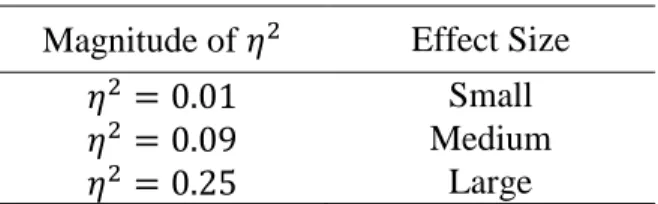
Table 3.1 Cohen's Criterion to Evaluate Effect Size for t-tests ... 76
Table 3.2 Cohen's Criterion to Evaluate Effect Size for ANOVA ... 78
Table 4.1 Number of Certified Online Instructors by Category ... 80
Table 4.2 Study Subjects by Employee Classification ... 81
Table 4.3 Student Completion Rates for Before and After Groups ... 83
Table 4.4 T-test for Before and After Student Completion Rates ... 83
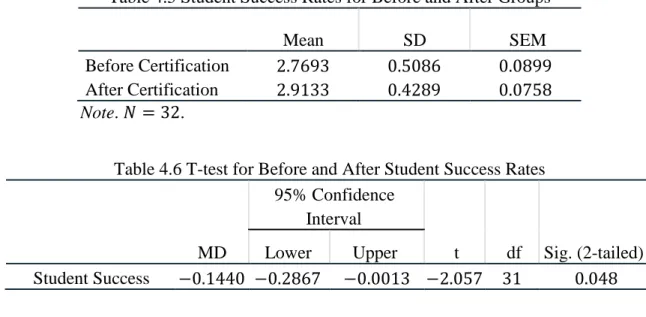
Table 4.5 Student Success Rates for Before and After Groups ... 85
Table 4.6 T-test for Before and After Student Success Rates... 85
Table 4.7 Student Completion Rates for Before, During, and After Groups... 87
Table 4.8 ANOVA Tests of Within-Subjects Effects ... 88
Table 4.9 Pairwise Comparison for Student Completion Rates ... 88
Table 4.10 Student Success Rates for Before, During, and After Groups ... 90
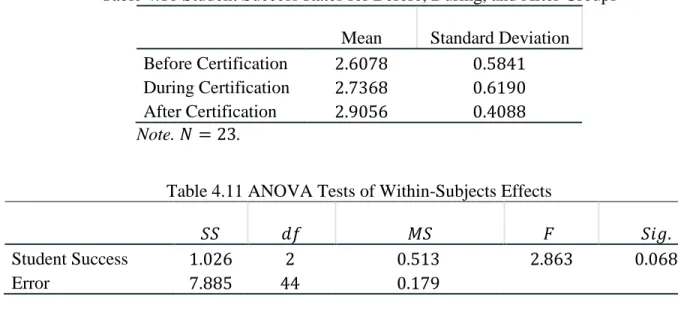
Table 4.11 ANOVA Tests of Within-Subjects Effects ... 90
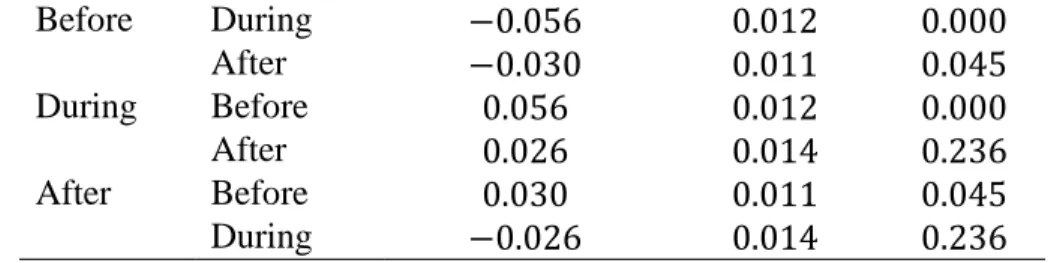
Table 4.12 Pairwise Comparison for Student Success Rates ... 91
List of Figures
List of Appendices
Appendix A Professional Development Certification Program Syllabus
Appendix B Professional Development Evaluation Results: Question Analysis Appendix C Professional Development Evaluation Results: Participant Comments Appendix D UNL IRB Approval Letter
Appendix E Online Student Completion Data for t-Test Appendix F Online Student Success Data for t-Test
Appendix G Online Student Completion Data for ANOVA Appendix H Online Student Success Data for ANOVA
CHAPTER 1– INTRODUCTION Background
Distance education, particularly online courses, plays an “increasingly dominant role in community college education” (Dillon & Cintron, 1997, p. 93). In its report on Community Colleges and the Nation’s Future, Reclaiming the American Dream, the American Association of Community Colleges (AACC, 2012) advocates the use of web-based learning environments stating they “hold great promise for improving the student experience and should be vigorously pursued” (p. 19). While online learning is in its infancy compared to traditional modes of education (Velez, 2009), “online education is one of the fastest growing enterprises in the United States” (Betts & Sikorski, 2008, p. 1). Data released by National Center for Education Statistics (NCES) in 2003 (as cited in Puzziferro-Schnitzer, 2005), indicate that 90% of public 2-year institutions offer distance education courses. This is substantiated by Allen and Seaman (2014) who report that 1,504 of the nation’s 1,685 associate-granting institutions provide online offerings. Based on records from its annual membership database, AACC (2012) reported that community colleges enroll over 13 million students annually. Approximately 11,700,000 students at community colleges enroll in at least one online offering each year.
It is clear there is an increased demand for and enrollment in online courses, particularly those offered by community colleges (Bedford, 2009; Betts & Sikorski, 2008; Gerrain, 2004; Husmann & Miller, 2001; Maguire, 2005; Puzziferro-Schnitzer, 2005; Tipple, 2010; Weaver, Robbie, & Borland, 2008; Yang & Cornelious, 2005). Therefore, community college administrators must find “qualified faculty to assume the increasing workload” (Bedford, 2009, p. 1) caused by expanding enrollment in online
programs. Gerrain (2004) further describes this issue, stating “Community colleges and career schools have a dilemma on their hands. Student enrollments are up and the demand for online learning has increased, fueling the need for additional instructors” (p. 8). In the absence of full-time faculty, and with the desire to meet the student demand as well as minimize costs, community colleges are utilizing adjunct or part-time instructors (Cohen & Brawer, 2008; Jaeger & Eagan, 2009; Schnitzer & Crosby, 2003).
The increase in adjunct instructors is chronicled by Schmidt (2008) who cites data from the Department of Education indicating the percentage of part-time faculty
members rose from 22% in 1970 to 46% in 2003. Tipple (2010) cites data from National Center for Education Statistics (NCES) that indicates 48% of instructional faculty in the United States are adjunct faculty members. The American Federation of Teachers (as cited by Offerman, 2010) offers even higher statistics claiming that 70% of all faculty members in colleges and universities are adjunct instructors. The increase of part-time instructors in community colleges parallels the national increase across all higher education institutions over this time period. In 1970, adjunct instructors teaching in community colleges represented approximately 27% of the total faculty (Schmidt, 2008), which was slightly higher than the national average at the time. Citing data from a Department of Education study, AACC (2012) reports that adjunct instructors now constitute 68% of the faculty in community colleges.
Statement of the Problem
A primary challenge facing online programs offered by community colleges is high drop-out rates and low retention rates (Aragon & Johnson, 2008; Holder, 2007; Park & Choi, 2009; Rovai, 2003; Stover, 2005; Tutty & Ratliff, 2012). Stover (2005) states
“everyone agrees that retention rates for distance education programs are lower than traditional on-campus programs” (p. 1). Drop-out rates for distance education courses reported by some community colleges are 20% higher than those for traditional
classrooms (Aragon & Johnson). Tutty and Ratliff (2012) estimate the retention rates for distance education “range from 50% to as low as 20%” (p. 917). The apparent
discrepancy between face-to-face and online retention rates is disturbing and community colleges must take action to effect positive change.
A corollary to the retention and attrition problem is the challenge of ensuring that online offerings are of a high quality. One indicator of student retention is if the students perceive they are enrolled in a quality online course and receiving quality instruction (Park & Choi, 2009; “Taking a Holistic View,” 2006). There is a prevalent assumption that “students exposed to greater levels of instruction from part-time faculty members experience fewer meaningful interactions with those faculty members than they would with full-time instructors” (Jaeger & Eagan, 2009, p.174). This assumption is
substantiated by the findings from a study of individuals who enrolled in, but did not complete, an online course at a rural Midwestern community college. Aragon and
Johnson (2008) sampled two-thirds of the students who did not complete the course, with 28% of the sample indicating an issue with course design or instructor responsiveness as their primary reason for not completing the course.
Puzziferro-Schnitzer (2005) claims “virtual adjunct faculty have largely carried higher education into the cyber classroom” (p. 1). It is clear that community colleges have turned to online adjunct faculty members to help meet their students’ needs, however, it is not clear that community colleges are doing what they should be to help
their adjunct instructors who teach in the online environment. Research exists regarding training for adjunct instructors (Coburn-Collins, 2014; Sawyer, Kata, & Armstrong, 2014; Strycker, 2008) as well as for online instructors (Clinefelter, 2012; Lorenzetti, 2013; Sammons & Ruth, 2007; Shattuck, 2009; Shah, Morgan, Stone, & Sterling; 2014; Sull, 2007). Virtual adjunct instructors are a “precious and invaluable resource”
(Puzziferro-Schnitzer, p. 5) and should be treated as such, particularly at the community college level.
In a time when community colleges are being closely scrutinized for their low completion rates (American Association of Community Colleges [AACC], 2012), community college administrators overseeing online programs must focus their efforts and resources on training and supporting of both full-time and part-time instructors. Weaver, Robbie, and Borland (2008) support the belief that an institution’s management should provide full and ongoing support for online learning and the development of online educators. A study conducted by Husmann and Miller (2001) reveals that administrators “perceive quality to be based almost exclusively in the performance of faculty” (p. 6). Husmann and Miller further report that administrators of distance learning programs believe that their largest investment should be in their faculty because the quality of their program is based upon the faculty’s performance.
Best educational practices indicate an effective way for community colleges to address low retention and high attrition in online programs is to provide faculty
development programs for their online instructors (Clinefelter, 2012; Shattuck, 2009) and to evaluate whether these professional development programs influence student
completion rates and the level of student success (Clay, 1999; Murray, 2002a; Murray, 2002b).
Framework
The framework for this study is derived from the concept of best practices or best educational practices. The idea of a best practice in education is borrowed from the fields of medicine, law, and management and is centered around improving performance (Bretschneider, Marc-Aurele, Jr., & Wu, 2005). In those fields, the term describes “solid, reputable, state-of-the-art work in a field” (Zemelman, Daniels, & Hyde, 2005, p. vi). Professionals, particularly in law and medicine, who follow best practices are cognizant of current research and are able to provide their clients with “the full benefits of the latest knowledge, technology, and procedures (Zemelman et al., p. vi). In the business world, the idea of a best practice was used generally to describe the activities or habits of businesses in the top five percent in their industry (Arendale, 2015).
David Arendale, Manager for the Educational Opportunity Association National Best Practices Center relays that the term best practices in education is used to refer to a “wide variety of activities and approaches that may or may not have been rigorously evaluated” (2015, para. 2). He further imparts that because of its overuse, the term has become “practically meaningless” (Arendale, 2015, para. 2). This idea is also expressed by Zemelman, Daniels, and Hyde (2005) who claim the term “best practice” has suffered “terminology drift” (p. v), meaning while it once was a useful idea, it has become overly popular or used in a careless manner and the consequence is that its current meaning has shifted from the original meaning.
In order to provide common language for educators, policy makers, and others, the Educational Opportunity Association National Best Practices Center defines best education practice as the “wide range of individual activities, policies, and programmatic approaches to achieve positive changes in student attitudes or academic behaviors” (Arendale, 2015, p. 4). The center also delineates three levels of best practices: promising education practice, validated education practice, and exemplary education practice. These levels build upon each other based upon the amount and quality of research that has been conducted on the practice. For example, a promising education practice includes a detailed description, including the theoretical basis and guidance on implementation, but has not yet been evaluated to show positive educational outcomes. A promising education practice may become a validated education practice, or an evidence-based education practice, once a rigorous evaluation has shown positive educational outcomes. If a validated education practice is replicated in multiple settings with similar positive outcomes, it becomes an exemplary education practice. Exemplary education practices are also denoted as “scale-up”, a reference to their potential successful implementation in other settings.
Bretschneider, Marc-Aurele, Jr, and Wu (2005) identify two necessary and sufficient conditions that are required to correctly identify a true “best practice”: completeness of cases and comparability of cases. The authors acknowledge that it is rarely possible to fully meet these conditions. There are two important items to consider in order to achieve comparability. The first is the definition of groups or cases to be compared, which must be formed on the basis of their similar characteristics. The second is understanding how to define the link between the practice being investigated, or the
action, and the outcome. In order to achieve completeness, they suggest that limiting geographic space is a better strategy than collecting random samples.
The idea of “scale-up” has also been referenced as extrapolation or applying a best practice from one situation to another (Ongaro, 2009). The extrapolation of a best practice is an attempt to provide generalized knowledge from a specific case that can potentially be applied in similar situations. Ongaro (2009) suggests a five step protocol for extrapolation of best practices. These steps include identifying the function, defining the practice, describing the practice, identifying the effects of the practice, and defining the key process context factors, or the conditions under which the practice works. The power of best educational practices can be found in the extrapolation or application of a best practice from one educational setting to another.
The literature indicates that a best educational practice in online education to facilitate student learning success is to provide professional development opportunities for faculty (Clay, 1999; Clinefelter, 2012; Hill, 2009; Shah et al., 2014; Shattuck, 2009). This case study attempts to identify whether a professional development certification program for online instructors, offered at one Midwestern community college, leads to increased online student completion and student success and is therefore an evidence-based best educational practice at this institution.
Purpose Statement
The purpose of this research study was to examine whether the best practice of a professional development program for faculty who teach in the online environment contributes to increased student completion and student success rates in subsequent online courses. This research study investigated a specific example of a faculty
development program for instructors who teach in the online environment at one Midwestern community college. Specifically, this study examined whether there are differences in student completion rates or the level of student learning success (measured by the student’s earned final grade) before, during, and after instructors completed the professional development program to earn an online instructor certificate.
Research Questions
The primary reason for this study was to examine whether the best practice of a professional development program for faculty who teach in the online environment leads to increased student completion and success in online courses at a Midwestern
community college. The following research questions were developed to address this question.
1. Is there a statistically significant difference in student completion rates in online courses before, during, and after an instructor completes an
institutional professional development certification program for instructors teaching in the online environment?
2. Is there a statistically significant difference in student success rates (as defined by earning a transferable grade of A, B, or C) in online courses before, during, and after an instructor completes an institutional
professional development certification program for instructors teaching in the online environment?
Overview of the Methodology
This quantitative case study was non-experimental in nature and utilized an ex post facto approach. Quantitative research designs test theories by examining specified
variables and the relationship among them (Creswell, 2014). The purpose of an ex post facto research design is to explain “educational phenomena through the study of cause-and-effect relationships” (Gall, Gall, & Borg, 2003, p. 295). Ex post facto is a Latin term meaning “after the fact” (Gay, Mills, & Airasian, 2006). Ex post facto studies examine data retrospectively.
For this study, data were analyzed to examine means before, during, and after an instructor completed a professional development certification program for instructors teaching in the online environment. The specific means examined were student
completion rates and student success rates. A dependent, repeated measures t-test and a repeated measures analysis of variance (ANOVA) were used for analysis purposes. As t-tests compare two data points, the before and during means were grouped for comparison to the after data.
Creswell (2013) identifies case study research as an “approach in which the investigator explores a real-life, contemporary bounded system (a case)… over time, through detailed, in-depth data collection” (p. 97). The subject for this case study was a rural, public, two-year community college located in the Midwest. The selected
institution served more than 3,000 students during the 2015-2016 academic year and approximately 40% of these students were enrolled in at least one distance education course. The Institution has been nationally recognized for its Assessment of Student Learning system and according to the Institution’s Fact Sheet, was also ranked #1 in Student Success in its state. This particular community college was an appropriate choice for this study due to three main reasons. First, the institution has been offering online courses for more than ten years and the online offerings represent approximately
one-third of the credit hour production for the college. Second, the institution employs approximately three times as many adjunct faculty members as it does full-time faculty. Third, the institution offers a comprehensive professional development program for instructors who teach in the online environment.
This ex post facto research design provided the opportunity to analyze data to determine if completing a professional development certification program helps increase student completion and success rates. The results from this research study will be useful in evaluating whether this promising education practice can become a validated education practice with regards to providing professional development programs for faculty who teach in the online environment at this Midwestern community college.
Definition of Terms
For the purpose of this research project, the following terms shall be defined as follows:
Adjunct faculty. Sometimes referred to as a part-time faculty member, an adjunct instructor is a non-tenure track faculty member who is hired to teach a specific course. Adjunct instructors work on a term-by-term basis and often are not eligible for tenure and/or other benefits (Conley, Leslie, & Zimbler, 2002). The terms adjunct instructor and part-time instructor are used interchangeably in this research.
Learning management system (LMS). The learning management system is software that provides a virtual learning environment for students and faculty. Components often available in the LMS include various assignments and gradebook options, forum discussions, calendar, class roster, file sharing, participation or attendance
data, and different communication opportunities, such as email and /or blogs. Often, the LMS is integrated with an institution’s student information system.
Distance Education. The Higher Learning Commission (HLC, 2015) defines distance education courses as “those in which all or the vast majority of the instruction and interaction occurs via electronic communication, correspondence, or equivalent mechanisms” (HLC, 2015, Definitions section, para. 1). HLC further stipulates that in distance education, faculty and students are “physically separated from each other” (HLC, 2015, Definitions section, para. 1) and that “regular and substantive interaction” (HLC, 2015, Definitions section, para. 3) occurs “either synchronously or
asynchronously” (HLC, 2015, Definitions section, para. 3). In this research, the terms distance education and online education are used interchangeably.
Best Education Practice. The Educational Opportunity Association National Best Practices Center defines best education practice as the “wide range of individual
activities, policies, and programmatic approaches to achieve positive changes in student attitudes or academic behaviors” (Arendale, 2015, p. 4). Arendale (2015) further
delineates three levels of best education practices that build upon each other.
Promising Education Practice. A promising education practice refers to a best education practice that is presumed to yield positive educational outcomes, but has not yet been proven to do so (Arendale, 2015). The description of a promising education practice would include the theoretical basis and guidance on implementation.
Validated Education Practice. A validated education practice is a promising education practice that has been rigorously evaluated and proven to lead to positive educational outcomes (Arendale, 2015) Validated education practices are also referred to
as evidence-based educational practice. These terms are used interchangeably in this study.
Exemplary Education Practice. An exemplary education practice is an evidence-based education practice that has been replicated in multiple settings and proven to have similar positive outcomes (Arendale, 2015). Exemplary education practices are
sometimes referred to as “scale-up” practices. These terms are used interchangeably in this study.
Assumptions
The overlying assumption within this research study is that the professional development certification program at this Midwestern community college helps prepare or further develop both full-time and part-time instructors to teach in the online
environment. Further, it is assumed that institutions that hire and train instructors to teach in the online environment will benefit from understanding the findings of this research. While there is ample research on professional development for online instructors as well as helping part-time instructors acclimate to a new institution, there is little research in the area of training for those adjunct instructors who teach in the online environment. For example, adjunct instructors, particularly those who live at a distance from their
institution, benefit from an orientation to the institution. At the core of education is the assessment of its effectiveness; institutions are constantly assessing their practices in an attempt to improve.
Delimitations
This research study seeks to identify whether a professional development certification program for faculty who teach in the online environment that follows best
practices as revealed in the literature is indeed a validated or evidence-based best
practice. The design of this study analyzes data from one Midwestern community college to evaluate if completion of the intensive professional development certification program leads to increased student completion and success rates. This is a delimiting factor in this study.
Another delimitation of this study is the frequently changing nature of technology, and thus the online teaching environment. This research attempts, in part, to identify whether a professional development program for faculty who teach in the online environment can be considered an evidence-based best practice. With constant technological advancements, it makes sense that the nature of teaching in the online environment, as well as the institution’s LMS tools that are used to teach in the online environment, will change frequently, as well. It is expected that the best practice
professional development certification program from this study would change over time to accommodate changing technology and student needs.
Limitations
There were a number of limitations to this study:
One limitation of this study is found in the research methodology. The findings suggest that the best practice of a professional development certification program may lead to increased student completion and success rates; however, since this study did not utilize an experimental design, the findings cannot be used to establish that it was in fact completion of the professional development certification program that caused the increase in student completion and success rates.
In addition, since the intervention occurred at the instructor level and the outcomes were measured at the student level, factors other than
instructors’ completion of the professional development certification program may have influenced the student completion and success rates. There are other possible variables that were not controlled for in this study. One possible explanation that may have affected the findings in this study includes the passage of time. Perhaps instructors naturally improve their instructional methods with experience, which is gained over time teaching in the online environment. It is also possible that as students get more accustomed to the online learning environment over time they naturally improve their performance.
A further limitation of this study was that there were not enough full-time certified instructors at the Midwestern community college in order to perform a statistical test when compared to part-time certified instructors. An additional limitation of this study is found in the data coding process.
This study used existing institutional data, which was manually coded for the purpose of the data analysis. Any time the researcher must physically manipulate or code data for entry into a statistical package, a margin for error exists, particularly related to reliability and validity. This researcher took precautions to ensure the data were coded cleanly and consistently.
Significance of the Study
This study examined a faculty development certification program for both full-time and part-full-time instructors who teach in the online environment at a Midwestern
community college accredited by the Higher Learning Commission. Given the increase in online courses and the prevalence of part-time instructors at community colleges, the knowledge gained through this research was significant. Professional development improves the quality of instruction and therefore increases student learning and retention (Clinefelter, 2012; Kelly, 2012; Shattuck, 2009). Therefore, this research is significant to those interested in improving the student experience or increasing retention rates for online students. If online programs are going to be of quality, then professional
development opportunities for all instructors, including adjuncts who teach in the online environment, need to be provided. This study is significant to researchers who are interested in the plight of the adjunct instructor, professional development, or the quality of online educational programs. An understanding of whether the current professional development effort by one Midwestern community college contributes to increased student success rates sets the stage for future studies that might further explore instructors teaching in the online environment and also lays the groundwork for further research related to the effectiveness of similar faculty development efforts at other institutions. In addition, findings of significant differences in online student completion and success rates before, during, or after instructors complete the professional development
certification program lead to future experiments that can investigate the possibility of a cause-and-effect relationship. Ultimately, an increased awareness by both those
responsible for implementing professional development activities and university administrators on the various professional development activities that colleges could implement to improve the quality of instruction and increase student learning can be realized through this research and subsequent research.
Organization of the Study
The remainder of this study is divided as follows: Chapter 2 provides a review of literature as it applies to the growth of distance education and the use of online adjunct instructors at community colleges, the challenges inherent in hiring and training adjunct instructors at a distance, and a review of best practices for training instructors to teach in the online environment. Chapter 3 describes the methodology utilized for this research. Chapter 4 presents the results of the research survey and an analysis of the findings. Chapter 5 discusses the implications of the research and recommendations for those charged with training full-time and part-time instructors to teach in the online environment. Chapter 5 also includes suggestions for further research.
CHAPTER 2– LITERATURE REVIEW
This research study seeks to identify whether completion of a professional development certification program for faculty who teach in the online environment contributes to increased student completion and success rates at one Midwestern
community college. This chapter is organized into four sections: background information, part-time faculty, online faculty, and online adjunct faculty. The chapter begins with background information related to distance education, the use of part-time faculty in community colleges, and professional development strategies. In this section, literature is presented that explains the dominant presence of part-time faculty teaching online
courses, particularly at community colleges. For this reason, a section dedicated to part-time faculty that reviews the literature associated with recruitment, development, and the best practices for supporting part-time faculty is included. The online faculty section in this chapter encompasses the literature associated with recruitment, training, and the best practices for developing online faculty, including both full-time and part-time faculty. The chapter concludes with a discussion of professional development ideas and unique circumstances related to adjunct instructors who teach in the online environment at community colleges.
Background Information
“The footsteps down the hallowed halls of academia are rapidly being replaced with keystrokes zipping through cyberspace” (Holder, 2007, p. 245). It is commonly accepted that distance education opens the doors to higher education in the United States, providing access for more students to earn degrees and technical training. While
scheduling difficulties or geographic issues or a desire for more flexibility in their life (Stumpf, McCrimon, & Davis, 2005), working adults constitute the largest group of online students (Taylor, 2002).
Distance education courses are comprised of “working professionals who want to advance their careers by taking courses part time, executives who travel frequently but want to earn graduate degrees, and parents who want to finish their undergraduate work without missing their kids' Saturday soccer games” (Carnevale & Olsen, 2003, para. 2). With its “potential to reach the disabled, the homebound, the isolated, and the
economically and educationally disadvantaged” (Dillon & Cintron, 1997, p. 95), distance education provides the convenience, flexibility of time, and savings (Easterday, 1997) that many students need. Distance learning has been compared to the “joker in the deck” because it serves as a great equalizer (Maier, 2001, para. 1).
Increase in distance education in community colleges. Distance education,
particularly online courses, plays an “increasingly dominant role in community college education” (Dillon & Cintron, 1997, p. 93). In its report on Community Colleges and the Nation’s Future, Reclaiming the American Dream, the AACC (2012) advocates the use of web-based learning environments stating they “hold great promise for improving the student experience and should be vigorously pursued” (p. 19). While online learning is in its infancy compared to traditional modes of education (Velez, 2009), “online education is one of the fastest growing enterprises in the United States” (Betts & Sikorski, 2008, p. 1). Data released by National Center for Education Statistics (NCES) in 2003 (as cited in Puzziferro-Schnitzer, 2005), indicate that 90% of public 2-year institutions offer distance education courses. This is substantiated by Allen and Seaman (2014) who report that
1,504 of the nation’s 1,685 associate-granting institutions provide online offerings. Based on records from its annual membership database, AACC (2012) reported that community colleges enroll over 13 million students annually. Approximately 11,700,000 students at community colleges enroll in at least one online offering each year.
Given the mission of the community college is to provide access to higher education (Cohen & Brawer, 2008; Geller, 2001), it is not surprising that community colleges have played an integral role in paving the path of online education since they have a “reputation for adaptability” (Cejda, 2010, p. 7). Kozeracki (1999) notes that the issue of access is “central to the mission of the community college” (p. 89) and the way community colleges define community has changed due to the ramifications of online education allowing community colleges to “move beyond the geographic boundaries of their traditionally serviced populations” (Yee, 1998, para. 1). The community college “as the representative of our vision of educational opportunity for all, stands poised to demonstrate how distance education can provide education for each” (Dillon & Cintron, 1997, p. 100). Maier (2001) effectively sums up the opportunities provided by online instruction, saying the “cyber-Pandora's Box has been downloaded. We now have … the ability to reach a far wider population with a far wider scope of learning, and that's a good thing. We can't turn back, either, and that's a good thing too” (para. 11).
Community colleges are widely praised for making higher education an attainable goal for their community members; Cohen and Brawer (2008) summarize this by stating “Open-admissions policies and programs for everyone ensure that no member of the community need miss the chance to attend” (p. 35). Online delivery of courses has opened the doors wider by providing many students access to higher education in a
method that allows maximum flexibility of schedule. Student persistence and retention rates impact completion rates and these are lower in online courses than the rates for traditional, face-to-face courses. This indicates a need for community colleges to
implement strategies to increase these rates to ensure that students not only have access to higher education, but that students are equipped to successfully complete their online courses.
Issues in distance education at community colleges. A report from the U.S.
Department of Education in 2000 claimed “at least one-third of the 3,500 American colleges and universities were offering distance-learning courses” (Stumpf et al., 2005, p. 358). Thirty-nine percent of all distance education courses were offered at community colleges; 2-year institutions reach almost half a million more students than private and public 4-year institutions combined (Kozeracki, 1999). Cohen and Brawer (2008) state “an institution, or a program within that institution, that places few barriers to student matriculation cannot expect a high rate of program completion” (p. 439).
Distance education programs are hindered by high drop-out rates and low retention rates (Aragon & Johnson, 2008; Holder, 2007; Park & Choi, 2009; Rovai, 2003). Stover (2005) states “everyone agrees that retention rates for distance education programs are lower than traditional on-campus programs” (p. 1). Aragon and Johnson (2008) suggest these numbers are accurate at community colleges as well. Their research indicates some community colleges report online courses have a dropout rate that may be up to 20% higher than traditional face-to-face courses at their institution. Tutty and Ratliff (2012) estimate the retention rates for distance education “range from 50% to as low as 20%” (p. 917). The apparent discrepancy between face-to-face and online
retention rates is disturbing and community colleges must take action to effect positive change.
Student attributes. Some researchers have attempted to create a method to predict student success based on multiple variables, such as student attributes, attitudes, and academic readiness. Rovai (2003) attempted to synthesize the traditional retention and persistence models from Tinto and Bean and Metzner with the needs and characteristics of online students to create a composite model. He concluded “there is no simple formula that ensures student persistence” (p. 12). Kember, as summarized by Holder (2007), claims it is unlikely that a single formula that would predict a student’s chance of success in an online course could be created as it would need to account for many complex factors that contribute to persistence and even if such a formula could be created that it would be “unwieldy if not unmanageable” (p. 257).
Holder (2007) surveyed students seeking an associate’s, bachelor’s, or master’s degree who were enrolled in a growing Midwest university. Halfway through the first course in the program, students were given the opportunity to complete a questionnaire of 60 items, grouped into 12 subscales, each assigned to one of the four categories:
Academics, Environment, Motivation, and Hope scale. Holder’s study found three criteria that were likely to predict retention: Emotional Support, Self-Efficacy, and Time and Study Management. Holder’s recommendation includes a caution to institutions to utilize the findings from these research studies appropriately. They should not be used “to exclude or discourage potential students from becoming effective online learners” (p. 257). Rather, institutions need to embrace the opportunity to positively impact student learning by empowering students to identify individual strategies to succeed. Beyond
simply learning about these characteristics, educators must implement strategies that will help students be more successful in the online environment.
Park and Choi (2009) surveyed 147 adult learners who either dropped out of or completed the online course in which they enrolled at a large Midwestern university. Of these participants, approximately two-thirds completed and one-thirds were dropouts. Park and Choi’s focus was to identify specific differences between those adult students who drop out and those who persist in online courses. They reported statistically significant findings in two categories: organizational support and relevance. To be successful in online courses, adult students need to have support from their family and or other organizational structures. They also are more likely to complete their online courses when they perceive the course covers material that is relevant to them.
Perception of quality. Ensuring online offerings are of a high quality is
imperative for institutions. One indicator of student retention is if the students perceive they are enrolled in a quality online course and receiving quality instruction (Park & Choi, 2009; “Taking a Holistic View,” 2006). This is substantiated by the findings from a study conducted by Aragon and Johnson (2008), in which they surveyed students
enrolled in online courses at a rural, Midwestern community college in the United States. The purpose for the study was to analyze differences between students who complete and students who do not complete their online courses. Approximately 62% of the students were classified as completers, with the remainder being non-completers. This study also sought to identify reasons students do not complete online courses. The researchers made up to three attempts to contact each of the non-completers to ask their reason for not completing their online course. A total of 56% of the non-completers participated in this
portion of the study. When asked why they did not complete their online courses, 28% of these non-completers indicated an issue with course design or instructor responsiveness as their primary reason for not completing the course. In a time when community colleges are being closely scrutinized for their low completion rates (AACC, 2012), this potential factor in student dropout is further cause for alarm for community college administrators overseeing online programs.
Increased need for adjunct faculty. It is clear there is an increased demand for
and enrollment in online courses, particularly those offered by community colleges (Bedford, 2009; Betts & Sikorski, 2008; Gerrain, 2004; Husmann & Miller, 2001; Maguire, 2005; Puzziferro-Schnitzer, 2005; Tipple, 2010; Weaver et al., 2008; Yang & Cornelious, 2005). Therefore, community college administrators must find “qualified faculty to assume the increasing workload” (Bedford, 2009, p. 1) caused by expanding enrollment in online programs. Gerrain (2004) further describes the issue, stating “Community colleges and career schools have a dilemma on their hands. Student
enrollments are up and the demand for online learning has increased, fueling the need for additional instructors” (p. 8). In the absence of available full-time faculty, community colleges are utilizing adjunct or part-time instructors (Cohen & Brawer, 2008; Jaeger & Eagan, 2009; Schnitzer & Crosby, 2003).
The increase in adjunct instructors is chronicled by Schmidt (2008) who cites data from the Department of Education indicating the percentage of part-time faculty
members rose from 22% in 1970 to 46% in 2003. Tipple (2010) cites data from National Center for Education Statistics (NCES) that indicates that 48% of instructional faculty in the United States are adjunct faculty members. The American Federation of Teachers (as
cited by Offerman, 2010) offers even higher statistics claiming that 70% of all faculty members in colleges and universities are adjunct instructors. The increase of part-time instructors in community colleges parallels the national increase across all higher education institutions over this time period. In 1970, adjunct instructors teaching in community colleges represented approximately 27% of the total faculty (Schmidt, 2008), which was slightly higher than the national average at the time. Citing data from a Department of Education study, AACC (2012) reports that adjunct instructors constitute 68% of the faculty in community colleges.
Puzziferro-Schnitzer (2005) claims “virtual adjunct faculty have largely carried higher education into the cyber classroom” (p. 1). It is clear that community colleges have turned to online adjunct faculty members to help meet their students’ needs, however, it is not clear that community colleges are doing what they should be to help their adjunct instructors who teach in the online environment. As discussed in subsequent sections, much literature exists regarding training for adjunct instructors (Coburn-Collins, 2014; Gadberry & Burnstad, 2005; Green, 2007; June, 2013; Kelly, 2012; Sawyer et al., 2014; Strycker, 2008) as well as for online instructors (Clay, 1999; Clinefelter, 2012; “Indiana Wesleyan,” 2005; Lorenzetti, 2013; Sammons & Ruth, 2007; Shah et al.; 2014; Shattuck, 2009; Sull, 2007; Vail, 2006; Yang & Cornelious, 2005); yet, there are unique and challenging circumstances to consider for online adjunct instructors (Betts &
Sikorski, 2008; “How to Get the Best,” 2009; Liebhaber, 2011; Offerman, 2010; Santovec, 2004; Schnitzer & Crosby, 2003; Sixl-Daniell, Williams, & Wong, 2006; Tipple, 2010).
Opportunities and challenges of utilizing online adjuncts. “Adjuncts are a precious and invaluable resource. The virtual faculty workforce is the fabric of distance learning, particularly at the community college level” (Puzziferro-Schnitzer, 2005, p. 5). The use of adjunct instructors is beneficial to the institution for a variety of reasons. The most common are the institution’s ability to respond to enrollment demands in a timelier fashion (Strycker, 2008) and the financial benefits and savings afforded the institution by employing adjunct instructors (Offerman, 2010; Strycker, 2008). In addition, adjunct instructors are able to dedicate their time and energy to teaching, which is a vital factor particularly in the online environment (Hoyle, 2010). All of these are critical issues for community colleges today (AACC, 2012). However, administrators may need new strategies to fully maximize the “adjunct faculty’s specialized expertise, flexibility, and passion for sharing real-world perspectives” (Tipple, 2010, p. 1).
Community college administrators may encounter challenges that are unique to the online environment when working with adjunct instructors. Strycker (2008) notes “many institutions experience a high degree of turnover among the adjunct faculty” (p. 1). In California, the reliance on part-time instructional labor in community colleges has continued to rise and a recent analysis of part-time faculty members in the state’s community college system found a lack of stability within the part-time faculty
workforce (Jaeger & Eagan, 2009). The issue of high turnover is prevalent in the online environment, as well. Betts and Sikorski (2008) state “turnover and attrition of online faculty and adjunct faculty is a reality” (p. 1). In addition, a prevalent assumption exists that “students exposed to greater levels of instruction from part-time faculty members experience fewer meaningful interactions with those faculty members than they would
with full-time instructors” (Jaeger & Eagan, 2009, p.174). In light of this research and because of the large number of adjunct instructors at community colleges, administrators must work to combat this potential student drop-out.
Administrators of online programs at community colleges are faced with troubling attrition rates for adjunct instructors as well as a potential increase in student drop-out rates because classes are taught by adjunct instructors and in the online environment. Santovec (2004) identifies three additional challenges that online administrators must confront when utilizing online adjunct instructors as “hiring people who you will never meet face-to-face, managing faculty who are geographically dispersed, [and] …
involving and integrating adjuncts with the rest of the college community” (p. 8). Sixl-Daniell, Williams, and Wong (2006) expound on the management aspect as they describe a “complex community of … faculty spanning multiple time zones, cultures, nationalities and varying levels of technological capability and availability” (p. 2). In addition to Sixl-Daniell, et al., other researchers have also identified the likelihood that online adjuncts will be physically separated from the school (Schnitzer & Crosby, 2003; Tipple, 2010; Vail, 2006).
The role of the online program administrator. Administrators of online
programs in community colleges must work to combat high online adjunct attrition rates and low online student retention rates, a task that may further be complicated by the physical distance between an online adjunct and the institution. Institutional costs of attrition are high as are the costs associated with low student retention. Betts and Sikorski (2008) discuss the short and long term effects caused by using inadequately prepared faculty in distance programs. Utilizing under-prepared faculty can negatively affect
faculty and student attrition rates as well as lower the institution’s graduation rates. This practice can also open the institution to potential legal action and negatively impact the institution’s reputation. Betts and Sikorski (2008) compiled a list of direct and indirect costs associated with high faculty turnover and also highlight the institution’s opportunity costs associated with loss of faculty, loss of students, and ultimately the loss of business.
Therefore, administrators need to focus their efforts and resources on the most effective methods of training and supporting adjunct instructors. Weaver et al. (2008) support the belief that an institution’s management should provide full and ongoing support for online learning and the development of online educators. A Delphi study of 26 administrators who manage distance learning programs conducted by Husmann and Miller (2001) reveals that administrators “perceive quality to be based almost exclusively in the performance of faculty” (p. 6). Husmann and Miller further report that
administrators of distance learning programs believe that their largest investment should be in their faculty because the quality of their program is based upon the faculty’s performance. In their paper presented at the 2003 Distance Learning Administration Conference, which was subsequently selected as a “Best Paper,” Schnitzer and Crosby (2005) urge administrators of online programs at community colleges to realize that the institution’s practices after hiring may be more important to meeting the institution’s goals and increasing student learning than the selection process itself. Online programs administrators must “understand the inherent importance of recruitment, retention and incentive plans” for online adjunct instructors (Betts & Sikorski, 2008, p. 5).
The adopted leadership style of the online administrator is also critical to the success of an online program. Tipple (2010) suggests that effective administrators of
online learning environments must practice both transformational and situational leadership styles:
The essence of effective online adjunct faculty leadership consists in education leaders creating an environment that combines inspiring and motivating online adjunct faculty towards a compelling vision (transformation leadership) with helping them collectively and individually achieve their task (situational leadership). (p. 4)
Tipple further explains that education leaders create the appropriate environment by “hiring, training and retaining excellent, committed, quality adjunct faculty who are students centric [sic], empathic and motivated” and by “providing an effective
organizational and systems infrastructure that supports distance education students and faculty” (p. 4).
In light of the popularity of distance education offerings, the prevalence of
adjunct instructors at community colleges, the special challenges associated with utilizing online adjunct instructors, and because research indicates lower attainment of student goals in online courses, particularly those taught by adjunct instructors, community colleges should work to combat high online adjunct attrition rates and low online student retention rates. The best way for community colleges to do this is to provide faculty development programs for their adjuncts who teach in the online environment.
While there are numerous studies related to training part-time or adjunct
instructors in higher education and there are an increasing number of studies focused on faculty development for online education, there are relatively few that focus on training adjunct instructors who teach in the online environment. In addition to research focused
on faculty development for online adjunct instructors, this review of the literature includes research related to faculty development for both online instructors as well as adjunct instructors. The remainder of this chapter includes a discussion on professional development, considerations and best practices when working with adjunct instructors, considerations and best practices for developing faculty who teach in the online
environment, and also the literature for recruiting, retaining, and developing online adjunct instructors.
Professional Development
Research indicates that teacher quality is the single most powerful influence on student achievement, yet faculty professional development programs that might help develop faculty often fall short. Eddy (2007) researched faculty development efforts in rural community colleges as compared to urban community colleges and found at both types of institutions “faculty development leaders believed that they were not currently offering programming at the level they felt they should” (p. 74). After completing an extensive literature review, Murray (2002b) concludes the following three themes exist related to faculty development in community colleges:
Few community colleges make the effort to tie their faculty development programs to the mission of the college.
Few community colleges attempt to evaluate the success of faculty development programs.
Faculty participation in most faculty development activities is often minimal, and often those most in need do not participate. (p. 91)
Challenges faced by faculty at rural community colleges are similar to those across the educational continuum, including “navigating and balancing multiple demands because of shifts in institutional and student needs, a push to implement student-centered learning, increased community outreach, and the use of technology in teaching” (Eddy, 2007, p. 65). However, because community colleges are called to serve a diverse student population, faculty who opt to teach at community colleges must be well-versed in pedagogy in order to “develop diverse pedagogical approaches” to enable student success (Murray, 2002b, p. 90). Current faculty professional development programs at both rural and urban campuses “focus on classroom issues involving both students and the
integration of technology and new teaching and learning strategies into classroom teaching” (Eddy, 2007, p. 74). Because teaching is highly valued at community colleges and because of the prevalence of underprepared students at community colleges, faculty professional development programs should focus on helping instructors acquire the skills to effectively use technology as well as to effectively work with the academically diverse student body (Eddy, 2007).
Because faculty at urban institutions may have access to professional
development programs from universities, workshops, or other teaching resources that are not as readily available to faculty at rural community colleges, professional development programs are a critical component at rural community colleges (Eddy, 2007). Providing quality professional development programs can enhance recruitment and retention of faculty at rural community colleges (Eddy, 2007; Murray, 2007). Murray (2002b) further concludes the following elements are necessary if a community college is to develop and provide an effective faculty development program:
administrative support that fosters and encourages faculty development, a formalized, structured, goal-directed program, a connection between faculty development and the reward structure, faculty ownership, support from colleagues for investments in teaching, and a belief that good teaching is valued by
administrators. (p. 95)
Considerations for Adjunct Instructors
As student enrollment in higher education increased, so did the number of part-time adjunct instructors, particularly in community college courses. While part-part-time adjunct instructors outnumber every other category of instructor within higher education, it is well known that they have a comparatively low professional standing in the higher education workforce (Elizaga & Haynes, 2013). Terms such as “road scholars” and “freeway fliers,” which are often used to refer to adjunct instructors, exemplify the negative perceptions many have towards adjunct instructors (Elizaga & Haynes, 2013). To combat this perception and help adjunct instructors achieve their potential,
administrators who employ adjuncts should be well-versed in the needs of this segment of their faculty.
Recruiting adjunct instructors. When recruiting and hiring new adjunct
instructors, it may be helpful for administrators to recognize there are different categories of part-time instructors. In an effort to clarify these distinct groups of adjuncts, Leslie and Gappa (1994) developed a set of adjunct faculty categories. They used the following terms to identify these categories: Specialist, Career Enders, Freelancers, and Aspiring Academics. Understanding these categories may help administrators recruit the best qualified part-time instructor for a specific discipline or course.
More than half of all adjunct instructors are employed outside the education sector. The largest of the part-time instructor groups is comprised of individuals who often teach in specialized fields because of their knowledge in the field, these instructors are called the specialists, professionals, and experts. The next largest group of part-time instructors are the career enders. These individuals often choose to teach at the end of a successful career and may view this as a means to staying active and intellectually stimulated. The third segment within adjunct instructors are the free lancers. These individuals often look to teaching as a means to supplement income while pursuing their career or personal interests. Teaching as an adjunct provides the flexibility they need to advance their career goals or provides the satisfaction of working in varied fields. The aspiring academics are often newly doctoral completers or graduate students working on their dissertation. These individuals generally intend to seek a full-time teaching position. Administrators should understand that individual adjunct instructor’s needs may vary based on which of these categories the instructor falls within. It is also useful to note that the needs of individual adjunct instructors will also vary throughout their tenure with an institution.
Developing adjunct instructors. Educational leaders need to be cognizant of the
adjunct faculty member’s needs, which change during the relationship with the
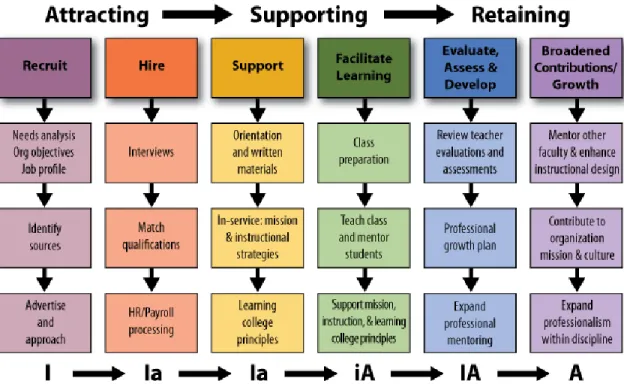
institution. Strycker (2008) created a diagram to illustrate this continuum of the “life of an adjunct” (p. 2) at a particular institution. There are three phases in Strycker’s
continuum, each of which has two categories or sub-phases. The processes of Recruiting and Hiring fall under the Attracting phase; Support and Facilitate Learning are functions
during the Supporting phase; and the final phase of Retaining is comprised of Evaluate, Assess & Develop and Broadened Contributions / Growth.
Figure 2.1 Strycker's Adjunct Continuum
Note: From "Recruiting and maintaining adjunct faculty," by W. K. Strycker, 2008, Madison Area Technical College, p. 3.
Strycker (2008) further notes that the onus of responsibility for each of these processes shifts between the institution and the adjunct over time. The institution has primary responsibility early in the continuum, the institution and the adjunct share responsibility during the majority of the continuum and finally, the continuum ends with the adjunct having primary and sole responsibility. To denote the differences between primary and secondary responsibility, Strycker chose to use capital and lower case letters. These representations are found along the bottom of Strycker’s continuum. Strycker suggests that administrators can facilitate an adjunct’s progress on the continuum by
addressing several key areas including orientation, basic support, departmental/ institutional support and inclusion, and evaluation / assessment.
Best practices for supporting adjunct faculty. In light of the increasing
utilization of adjunct instructors, the Higher Learning Commission identified a best practices document for institutions working with part-time adjunct instructors (Coburn-Collins, 2014). This document written by the Director of the Office of Adjunct Faculty Support Programs at Saginaw Valley State University received the “Best Paper Award” in 2014. The paper identifies the following five best practices for supporting part-time instructors to help them be successful:
1. A thorough orientation to the institution, its culture and practices 2. Adequate training in fundamental teaching and classroom management
skills
3. Both initial and ongoing professional development 4. A sense of belonging to the institution
5. Recognition for quality work that is perceived as appropriate and adequate (p. 1-2).
Thorough orientation to the institution. All new-to-the-institution adjunct
instructors need to have an orientation. Prime among the objectives for this orientation, is the need to adjunct to become familiar with the college’s mission so they can better understand what drives the institution (“Ten Things,” 2006). This orientation should also include practical information, such as how to turn on classroom projectors, get access to e-mail, and secure parking passes (June, 2013). After holding orientations for adjunct instructors for a few years, many institutions begin to view them as critical to the success