No 1 2 3 4 5 6 7 8 9 Content
A Semantic Web-based Approach for Enhancing Oral History Management Systems
Ahmad Zam Hariro Samsudin, Shah Jahan Miah & Michael McGrath
Strategic Management of Records and Risks for the Sustainability of Organizations
Azman Mat Isa, Raja Abdullah Yaacob & Nordiana Mohd Nordin
Knowledge Of Information Commodity-Based Business Towards Income Generation Among Bumiputera Entrepreneurs
Nora’ayu Ahmad Uzir, Irni Eliana Khairuddin & Norliya Ahmad Kassim
The Relationship of Sources of Knowledge and Knowledge Creation
Khalid Abdul Wahid, Mohd Nasir Ismail, Sawat Wanarat & Tipparat Laohavichien
Internet Usage Behaviors among Young Teenagers
Noraizan Amran, Farrah Diana Saiful Bahry, Norizan Anwar and Rosiah Abu Bakar
Evaluating Library Collections and Support Services for Distance Learning Programme: A Study of e-PJJ Students Perceptions of PTAR, UiTM, Malaysia
Halimatun Saadiah Roselley and Fuziah Mohd Nadzar
Information Seeking Behavior Among Undergraduate Students In Universiti Tun Hussein Onn Malaysia
Che Rusuli, M.S., Raja Abdullah Yaacob, and Norazlin, H.
Graduates’ Information Seeking Behavior
Maslinda Mohd Nadzir, Juhana Salim & Azizah Jaafar
The Functional Requirements for Trusted Electronic Records
Nurussobah Hussin, Rusnah Johare & Adnan Jamaludin
1-14 15-28 29-34 35-50 51-62 63-74 75-90 91-104 105-116 Page
ISSN 2231-8836
EVALUATING LIBRARY COLLECTIONS AND SUPPORT SERVICES
FOR DISTANCE LEARNING PROGRAMME: A STUDY OF e-PJJ
STUDENTS’ PERCEPTIONS OF PTAR UiTM, MALAYSIA
Halimatun Saadiah RoselleyIM772, Faculty of Information Management, Universiti Teknologi MARA, Shah Alam, Selangor
e-mail: [email protected] tele: 013-391 9016
Fuziah Mohd Nadzar
Faculty of Information Management, Universiti Teknologi MARA, Shah Alam, Selangor
e-mail: [email protected] tele: 019-332 2529
Abstract: This study was a descriptive research to determine the distance learning
students’ perceptions of library collections and library support services provided by the Perpustakaan Tun Abdul Razak (PTAR) to support the distance learning programme at the Faculty of Information Management, UiTM. Two research questions guided this study: (1) What are the distance learning students’ perceptions on the current PTAR’s collections? and (2) What are the distance learning students’ perceptions on PTAR’s support services for the distance learning programme? A structured survey questionnaire was developed to address these research questions. The questionnaires were administered to 138 distance learning students of the Faculty of Information Management, UiTM during their weekend classes. The findings revealed that most of the respondents were satisfied with the provision of library collections, which indicate that PTAR had been able to meet the needs of distance learning students in terms of its collections. However, this study found that most of the respondents were not satisfied with the library support services they received as distance learning students, especially PTAR’s web OPAC and PTAR’s reference assistance. The investigation into the distance learning students’ perceptions on library collections and support services for distance learning programmes may provide some insights for assessing and improving PTAR’s library services for distance learning programmes in the future.
Keywords: Library Support Services, Library Collections, Distance Learners, Distance Learning, Users’ Perceptions, Faculty of Information Management, UiTM, Perpustakaan Tun Abdul Razak (PTAR)
INTRODUCTION
Distance education is one of the important modes of learning, which significantly plays an important role in providing learning opportunities for those who are unable to give up their jobs, yet are highly motivated to further their education, as well as for those who are isolated due to geographical boundaries. Responding to the effort of producing more professional Bumiputeras, Universiti Teknologi MARA (UiTM) as the largest university in Malaysia, has been offering distance education programmes for more than a decade to the Bumiputera students, through its elektronik-Pengajian Jarak Jauh (e-PJJ) or Electronic Distance Education programme. This e-PJJ programme is an innovative approach in terms of learning and teaching in UiTM where the e-PJJ students are able to determine
the time, place and teaching mode that are suitable with their needs and lifestyles. Apart from offering various facilities and services to serve distance students in achieving their ambitions and dreams, this programme provides exposure to IT skills to these students in their learning experience. This innovative programme is a combination of a variety of learning methods, in which the learning educational technology serves as a platform for promoting effective learning.
On the other hand, the e-PJJ programme places students in a learning environment unfamiliar to many students and the faculties, where this environment is very much different from a traditional class of higher learning. And this continues to bring about questions from educators related to the issue of equivalency between on-campus and off-campus education programmes. As institutions change the way they offer their education programmes, they must also change the way they offer student support services, since the distance learners and the traditional students each have unique support needs (Carroll-Barefield, 2006). The concerned area in the e-PJJ programme in UiTM includes library support services by its library, Perpustakaan Tun Abdul Razak (PTAR). Aligned with the famous concept of “the library as the heart of the university”, a phrase attributed to Charles Eliot, President of Harvard University in the 1860s, PTAR is one of the most important departments that should be addressed by UiTM in support of learning and research through the delivery of quality services and provision of a conducive ambience for UiTM communities.
Since the library is no longer considered as a short walk across campus, this study addressed whether the existing library support services meet the needs and demands of the e-PJJ students who are enrolled in the programmes offered in UiTM. This is due to the fact that distance students are those students who are truly geographically isolated from the originating institution, often hundreds or thousands of miles away, very much in contrast to on-campus students. These students frequently have little institutional contact or identity. Furthermore, they also have special needs for library services and resources that they expect their institutional libraries ought to supply to them (ACRL, 2008). Although distance learning is increasingly used in the Malaysian tertiary distance learning institutions, the question of how well learners are satisfied with the library services provided to them as a learning medium has not been well-researched. While attention to “traditional” library services such as materials, references and training are still essential, the ways they are offered to support distance learning programmes may need some adjustments in light of the e-PJJ learning mode as well as the e-PPJ students’ overall needs. However, until the perceptions and attitudes of the distance students are assessed, there is no means for demonstrating equivalency and how to improve the effectiveness of these programmes. Therefore, of great importance to the credibility and quality of UiTM’s e-PJJ programmes and to those interested in quality issues in distance education, are the evoluation on the perceptions and attitudes of students who currently enroll in this programme with regards to distance library support services.
REVIEW OF LITERATURE
Distance learning or also known as distance education does not have one single definition as different disciplines and practices emphasize many different aspects of defining this long established field. Gained its popularity in the 1990s, Keegan (1990) had defined distance learning as the learning process in which there is a quasi-permanent separation of teacher and learner throughout the learning process; it is characterised also by the presence of specific learning materials and student support services, and by the use of different communication media. According to Howarth and Shardlow (2000) as cited in
Reviere (2002), distance learning or also known as distance education is an umbrella term to describe alternatives to traditional taught courses where the teacher and students interact directly through face-to-face contact. Yet, distance learning can be broadly defined as “an organized instructional programme in which teachers and learners are physically separated” (Newby, Stepich, Lehman & Rusell, 2000, p. 210). On the other hand, King, Young, Drivere-Richmond, and Schrader (2001) define distance learning as a method of learning that improved capabilities in knowledge and/or behavior as a result of mediated experiences that are constrained by time and/or distance, such that the learner does not share the situation with what is being learned. These definitions of distance learning have reflected both the fact that all or most of the teaching conducted by someone removed in time and space from the learner, and the mission aims to include greater dimensions of openness and flexibility, whether in terms of access, curriculum or other elements of structure (UNESCO, 2002).
According to the California Distance Learning Project (CDLP) (2011), distance learning traces its origins to mid-19th century in Europe and the United States. As a result of the increasingly widespread computer-network communications in the 1980s and 1990s, large numbers of people gained access to computers linked to telephone lines, enabling institutions of higher learning to introduce a new learning mode where teachers and students are able to communicate in conferences via computers. In Malaysia, the early years of the nineties had witnessed an increase and greater demand for tertiary education which has resulted in a remarkable increase in the number of distance learning programmes offered by local institutions (Khoo & Idrus, 2003). The demand for higher education among the working adults for self-development and upgrading skills has increased tremendously in the country, thus in 1995, the government directed all nine universities operating in Malaysia to open their doors to distance learning (Nawawi, Asmuni & Romiszowski, 2003). Academic libraries as a cornerstone in higher education play a vital role in distance learning programmes. Academic libraries have a role as a key support for research and learning by providing many more services and facilities than shelves and catalogues, in order to make distance learning a more pleasant experience to the remote students. Experts have also addressed the roles of libraries in distance learning (Buchanan, 2000; Kirk and Bartelstein, 2000). Cooper (2000) pinpointed that there has been less emphasis given to the problems of providing library services to support distance learning programmes. The importance of libraries as the central organ in a university (Haider, 2004) has increased due to the rapid emergence of distance learning programmes (Yang, 2005). Libraries play a significant role in providing library services to meet the needs of this unique community in new and innovative ways (Ault, 2002). Prior researches indicate that most students do not perceive that the library in the institution at which they are enrolled had been able to meet their information needs. Dillon, Gunawardena and Parker (1992) revealed that the majority of distance students indicated that their success in the courses required access to library materials, and it was found that the effectiveness of the library services provided seemed to be a significant barrier to distance students who are required to use the library.
METHODOLOGY
The purpose of this study is to evaluate the PTAR’s collections and support services for distance learning programmes as perceived by e-PJJ students. This study is expected to be helpful to identify the issues pertaining to the nature of the collections and support services offered to e-PJJ students. The findings of the study will be useful to improve the services and infrastructure of the libraries of the universities that offer distance learning programmes, particularly UiTM. The objectives of the study are:
(i) To determine the e-PJJ students’ perceptions and their views on the current PTAR’s collections.
(ii) To determine the e-PJJ students’ perceptions and their views on PTAR support services for distance learning programmes.
The 38-item survey questionnaire was constructed appropriately in order to determine the e-PJJ students’ perceptions of the PTAR’s collections and support services for distance learning programmes. It was divided into six sections, namely section A (Demographic Information), Section B (General use of PTAR), Section C (PTAR’s collections), Section D (PTAR’s support services), Section E (Overall satisfaction), and Section F (Comments and suggestions). Respondents were required to select the response choices for the items that have been arranged in a five-point Likert-type rating scale. The measurement of the questionnaire was based on the Likert scale as it is one of the three most adopted scales which address responses to a series of attitudinal dimensions (Brace, 2004).
It was then distributed to all 267 distance learners’ population at the Faculty of Information Management, UiTM. This technique of data collection was chosen as it is less time-consuming and economical for a scattered population across different geographical locations in Malaysia, including Sabah and Sarawak. Another reason for using a questionnaire was the convenience of contacting the respondents, as these students were not on campus most of the time. Thus, the distribution of the questionnaire was conducted on the dates of their scheduled weekend classes. Before the distribution of the questionnaire, a representative from each class, who usually was the Class Representative responsible for his/her class was identified. The class representatives distributed the survey booklets in each class. In order to obtain the maximum number of responses, a second round of data collection was attempted. The questionnaire was sent through email to a number of respondents who had previously not returned the questionnaires after class. In addition, a follow-up call was also personally made to everyone on the list of “respondents with unreturned questionnaire” as a reminder after one week of the date the questionnaire was sent. From this group, some of the respondents were personally contacted via telephone and their responses were recorded by the researcher. Despite these efforts, 129 respondents out of a sample of 267 respondents did not respond. Thus, the response rate totaled 138 respondents which represented 51.7% and the answers were coded and entered into a data file for analysis using the Statistical Package for Social Sciences (SPSS).
FINDINGS AND DISCUSSION
Demographic Characteristics
The respondents in the study were almost equal in terms of gender with 44.2% (61) males and 55.8% (77) females. The respondents’ ages were between the age ranges of 21 to 50 years old. It was found that over half, i.e. 56.5% (78) of the respondents were in the age range between 26-35, followed by 18.8% (26) in the age range between 21-25. Only 24.6% (24) were over 36 years old, with the smallest number of respondents that represented 4.3% (6) out of 138 respondents were in the age range between 46-50 years old. Of the respondents, 45.7% (63) were enrolled in the IM220 (Bachelor of Science (Hons.) in Information Management (Library and Information Management) programme, whilst 54.3% (75) were enrolled in the IM221 (Bachelor of Science (Hons.) in Information Management (Information System Management) programme. At the time of the survey, it was found that the majority of the respondents or 29.0% (40) were enrolled in the 5th semester. The
second highest group was from the 1st semester with 20.3% (28). Both the 2nd and 3rd semester students were represented by the same number of respondents, i.e., 16.7% (23) out of the total 138 respondents, with 11.6% (16) of the respondents in the 4th semester, while 5.8% (8) of the respondents were in the 6th semester. Majority or 97.1% (134) of the respondents were employed, while only 2.9% (4) of the respondents were self-employed. The findings of this study have supported the literatures that indicate that the distance learning students are typically older than traditional students with the average age being more than 25 years old, and they are more likely to be females rather than males. They tend to have family and job responsibilities that prohibit them from attending traditional classes. Most of them are being employed full-time while attending college on a part-time basis; and, they are often times disadvantaged by geographic remoteness, generally living in the rural areas and further outskirts from the city (Ashby, 2002; Halsne & Gatta, 2002; Smith, 2001; Gilliard-Cook, 1997; Guernsey, 1998).
The Use of the Library in General
For the purpose of this study, three items were designed to address the use of the library in general. These items were designed to determine the frequencies of library visits either in person or physically, information resources used most frequently for the distance learning programmes, and the most preferred resources from the library collections. The answers from these items were expected to elicit the information about the respondents’ general use of the library and its collections. The findings showed nearly three-quarters, i.e. 73.2% (101) of the respondents were visiting the library physically, with one-fourth or 24.6% (34) of them were frequently visiting the library physically. Only few 2.2% (3) of the respondents reported that they did not visit the library at all. These responses suggested that distance learning students were still motivated to use the library physically even though they were always not on campus.
In order to determine the types of resources most frequently used in conjunction with their coursework, the students were asked about the use of information resources for the purpose of their academic programmes. It was found that the most frequently used resource was the Internet/search engines. However, in terms of the most preferred information resource from PTAR collections, it was found that most of the respondents preferred books, followed by online databases, as compared to other library resources. Responses indicated that distance learning students increasingly relyed on the Internet to fulfil their information needs. It is important to highlight that since Internet-based resources hold great potential to distance learning students, it cannot be assumed that they are well-versed with the web seeking and retrieval of resources from the Internet for their information needs. With such a possibility, they may face problems or difficulties in finding and locating the scholarly materials they are seeking. Thus, it becomes more important that they are able to recognize and select quality resources. The ACRL (2008) indicated that information literacy, i.e. the ability of an individual to locate, evaluate and effectively used needed information, is a critical component of library instruction. This suggests that PTAR should design information literacy programmes to help distance learning students to locate, evaluate and effectively use information.
Distance Learning Students’ Perceptions on the current PTAR Collections
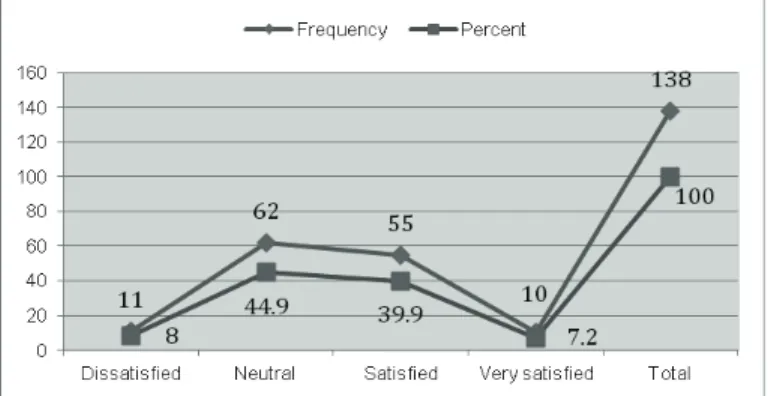
Much has been said and written about the promises of distance education. It is clear that, for it to succeed, students’ access to and effective use of information resources to support their learning is essential (Johnson, Reid & Newton, 2011). In relation to this concern, respondents were asked to report the likelihood with which they had perceived PTAR having sufficient collections in their areas of study, that the collections have met all their needs in fulfilling course assignments, and that the collections accommodate other informational needs of the distance learning community as appropriate. It was found that respondents had expressed “somewhat true” on all the given statements regarding PTAR collections. Respondents were also asked to report their overall satisfaction level towards the current PTAR collections. The findings showed that the number of respondents were almost even between neutral and satisfied/highly satisfied with the provision of library collections, whilst only a small percentage showed dissatisfaction, which indicate that overall PTAR had been able to meet the needs of distance learning students in terms of its collections.
Figure 1: Frequency distribution of the overall satisfaction with PTAR’s collection
Library professionals agree that distance learning students are eligible for library services that equal those of the on campus-based students. This is evident from the ACRL Standards of Distance Learning Library Services (2008) which specified that, “access to adequate library services and resources is essential for the attainment of superior academic skills in post-secondary education, regardless of where students, faculty and programs are located. Members of the distance learning community are entitled to library services and resources equivalent to those provided for students and faculty in traditional campus settings”.
Distance Learning Students’ Perceptions on the PTAR Support Services for Distance Learning Programmes
According to Gopakumar and Baradol (2009), with the existence of ubiquitous World Wide Web, electronic documents can be made available anywhere and anytime that two computers can connect. This technology allows for library documents to be viewed and printed by any person who has a web connected computer, whether that person lives nearby or in another distant location. Furthermore, email makes it easy to contact anybody at anytime and anywhere in the world, in just a few seconds. Thus the web opens new windows of opportunity to provide information support to distance learners. Neimi, Ehrard, and Neeley (1998) emphasized the expectations of distance learning students towards the libraries include the ability to search periodical indexes, abstracts, CD-ROMs, and bibliographic services such as ERIC; do electronic book check outs and renewals over the
telephone (toll free); deliver photocopies, the results of literature searches; internally track and deliver all inter-library loan services; and establish an electronic feedback system. Some of the library and information services that are offered by PTAR over the web are discussed in this section. There are four support services discussed in this study, namely PTAR’s website, PTAR’s web OPAC, PTAR’s borrowing service and PTAR’s reference assistance.
PTAR’s Website
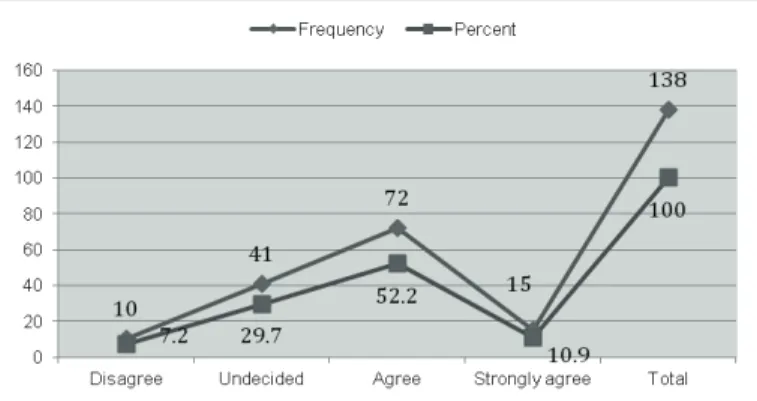
Among four services discussed in this study, it was found that the respondents perceived positively towards PTAR’s website. Most of them agreed that PTAR’s website provides reliable and error-free information, as well as keeping them informed. They believed that PTAR’s website is very useful to distance learning students. These responses indicate that PTAR’s services in terms of its website, is considered to function satisfactorily and meeting the users’ information needs.
Figure 2: Perceptions on PTAR’s website provides reliable and error-free information
PTAR’s Web OPAC
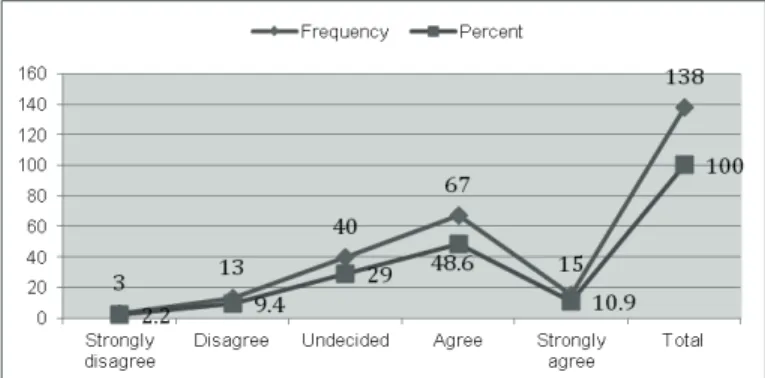
A number of studies have shown that the Online Public Access Catalog (OPAC), present in most libraries, can prove a source of problems when consulted, particularly in the area of subject access (Chris, 2000). The responses pertaining to PTAR’s web OPAC showed the PTAR’s web OPAC is used by majority of the respondents, and that they had perceived PTAR’s web OPAC to be unambiguous and in an understandable way. However, when asked their perceptions about PTAR’s web OPAC as an effective tool that facilitates searching and retrieval, most of the respondents indicated their disagreements. This is due to the fact that subject searching has been identified as the type of search feature presenting most problems for the users. However, many others are the alleged culprits: the query software, the interface, the system and policy behind the indexing, the lack of knowledge on the part of the users regarding the list of subject headings, and the short-comings of the Boolean model (Ville ́n-Rueda, Senso & de Moya-Anego ́n, 2007). Accordingly, PTAR must provide training for these students to use its web OPAC effectively.
Figure 3: Perceptions on PTAR’s web OPAC is clear and in an understandable way PTAR’s Inter-Library Loan Service
Respondents were asked to indicate whether they had used the inter-library loan (ILL) service while enrolled in the distance learning programmes. Respondents were asked to choose either ‘Yes’ or ‘No’ as might apply. Approximately, almost all of the respondents indicated that they had not used the ILL service. In relation to their feedback on the ILL use, the following question was designed to determine why respondents had not used the ILL service available at PTAR. For the majority of them, the ILL service was unimportant or may be of little importance. These responses may also indicate that many distance learning students were aware of the ILL services offered to them, but that they had not used this service as they had not any need to use it. This could also be possible that this is related to the strong support from the satisfactorily adequate collections provided by PTAR as indicated previously. For some respondents who did not know how to gain access to this service and/or had never known about this service before, this may indicate that libraries may need to provide instructions in accessing and using such a library service. Moreover, the findings also indicate the need for a delivery service for the requested materials, and majority of the respondents would not mind at all if PTAR were to impose some additional charges for the delivery service.
Figure 4: The reasons respondents had not used ILL service PTAR’s Reference Assistance
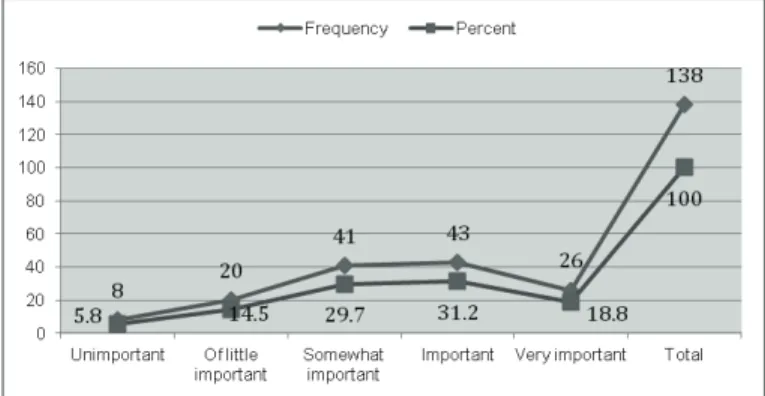
Respondents were asked to indicate the level of importance of the reference service for their courses. Most of the respondents agreed that the reference assistance service was important. However, when asked to report their perceptions of PTAR’s reference assistance, in particular whether this service was easy to reach virtually, majority of them
disagreed. Although it was found that the top two communication channels preferred by respondents were via e-mail and telephone, the difficulty to reach PTAR’s reference assistance virtually has led some of them to use over-the-counter assistance instead of other virtual channels. Overall, the level of agreements related to PTAR’s reference assistance demonstrated neither agree nor disagree. This indicates that there is a need for PTAR to foster communications and interactions with the distance learning students as well as provide a variety of methods for students to interact with the library. PTAR may need to improve its communication channel of the reference service especially through email as the respondents had indicated that this was the most preferred communication channel. As stressed by Gopakumar and Baradol (2009), email can be effectively used for providing reference services. Slade (2000) listed the advantages of email as unrestricted temporal and geographic access; reduced cultural and language barriers; receiving a written request from the patron; being able to transmit the results to the patron electronically; saving time by not having to meet the patron in person or contact them by telephone; cost savings in comparison with facsimile and telephone replies; provision of a printed copy of reference transactions to assist with future inquiries; and the option to build a database of questions and answers.
Figure 5: Perceptions on the importance of the reference assistance Recommendations and Conclusion
This study investigated the library collections and support services for distance learning programmes based on the perceptions of e-PJJ students at PTAR UiTM. Surveys of user satisfaction and perception are important in identifying the problems and issues faced by the distance learning students in accessing library services and resources. Analysis of the data collected provided the findings as follows:-
Generally, it can be concluded that PTAR does provide the support services for distance learning students. The services provided are primarily those available through the Internet, indicating that PTAR has adapted the virtual channel in their services to meet the needs of distance learning students. The data from the distance learning students questionnaire suggested that in general, students are aware of the availability of library services to support distance learning programmes, and that they have ready access to online library resources. However, most students do not perceive that the PTAR had been able to meet their information needs. This study also found that most of the students were not satisfied with the library support services they received as distance learning students, especially PTAR’s subject search feature in the web OPAC and PTAR’s reference assistance. As indicated in this study, most of the respondents had disagreed to PTAR’s web OPAC
serves as an effective tool that facilitates searching and retrieval, while PTAR’s reference assistance was found to be difficult to reach virtually. This had led some of the respondents to opt for over-the-counter assistance for reference services.
Assessment activities such as surveys can provide the basis for quality assurance and continuous improvement. The findings of this study indicate a need for PTAR to conduct on-going assessments of its library collections and support services provided to support distance learning programmes. PTAR should seek methods to increase their interactions with distance learning students. Strategies and technologies used by distance learning programmes such as telephone, e-mail, and interactive videos should be explored by PTAR to further enhance their services for this community of learners. Similar to the use of technology in providing instructions to distance learning students, web-based surveys could also be used on a regular basis to assess arising issues and problems.
The findings in this study indicate the need for follow-up study to better determine the perceptions of distance learning students on the library collections and support services provided to support distance learning programmes. Further research is recommended to examine the issue of library support services for distance learning students. The need for follow-up study is indicated by the fact that the distance learning students’ survey was conducted before PTAR had begun to address this issue. Additionally, a longitudinal study could track the progress of library services for distance learning students as they develop and mature. A replication of this study with both undergraduate and graduate distance learning students as the population is warranted to determine if the library needs of undergraduate students differ from those graduate students. Comparative studies are recommended to examine the equity of library services between distance learning students and on-campus students including student satisfaction survey. A replication of this study with both distance learning students and on-campus students as the population is warranted if the library needs of distance learning students markedly differ from those of on-campus students. In addition to survey instruments, qualitative research such as focus groups and other interview techniques are needed to conduct a complete study of the effectiveness of the library support services available to distance learning students. REFERENCES
Ashby, C. M. (2002). Distance Education: Growth in distance education programs and
implications for federal education policy. United States General Accounting Office Report
GAO-02-1125T.
Association of College and Research Libraries (ACRL). (2008). Standards for distance learning library services. Retrieved on October 2, 2011 from http://www.ala.org/acrl/
standards/guidelinesdistancelearning
Ault, M. (2002). Thinking outside the library: How to develop, implement and promote library services. Journal of Library Administration, 37(1/2): 39–48.
Brace, I. (2004). Questionnaire design: How to plan, structure and write survey material for
effective market research. London: Kogan Page.
Buchanan, E. A. (2000). Going the extra mile: Serving distance education students. Online
Journal of Distance Learning Administration, 3(1).Retrieved October 4, 2011 from
California Distance Learning Project (CDLP). (2011). What is distance learning? Retrieved May 20, 2012 from http://www.cdlponline.org/index cfm?fuseaction=whatis&pg=3 Carroll-Barefield, A. (2006). Assessing the administrative support needs (library and technical) of allied health students enrolled in a distance education program. The
Internet Journal of Allied Health Sciences and Practice, 4(3): 1-8.
Chris, E. L. (2000). Improving subject searching in web-based OPAC: Evaluation of the problem and guidelines for design. Journal of Internet Cataloging, 2: 159-186.
Cooper, J. L. (2000). A model for library support of distance education in the USA.
Interlending & Document, 28(3): 123-131.
Dillon, C., Gunawardena, C. & Parker, R. (1992). An evaluation of learner support services in distance education system. Distance Education, 13(1): 29-45.
Gilliard-Cook, T. (1997). Distance education information network technology and learning.
Retrieved October 27, 2010 from: http://web.syr.edu/%7Etgillard/656/index.html.
Gopakumar, V. & Baradol, A. (2009). Assuring quality in distance education for Library and Information Science: The role of the library. Library Philosophy and Practice (e-Journal), paper 262.
Guernsey, L. (1998). Distance education for the not-so-distant. Chronicle of Higher
Education, 45(3): 29-30.
Howarth, J. & S. M. Shardlow (2000). Empowering learners through open (distance) programmes: An evaluation of a practice teaching programme.
Social Work Education, 19 (2): 111-123.
Haider, S. J. (2004). Coping with change: Issues facing university libraries in Pakistan. The
Journal of Academic Librarianship, 30(3): 229-236.
Halsne, A. M., & Gatta, L.A. (2002). Online versus traditionally-delivered instruction: A descriptive study of learner characteristics in a community college setting. Online
Journal of Distance Learning Administration, 5(1). Retrieved October 10, 2011 from http://www.westga.edu/~distance/ojdla/spring51/halsne51.html
Johnson, I. M., Reid, P. H., & Newton, R. (2011). Guidelines for e-reference library services for distance learners and other remote users. Aberdeen: The Robert Gordon University. Keegan, D. (1990). Foundation of distance education, 2nd ed. London: Routledge. Customer-focused learner support. Asian Journal of Distance Education, 1 (1): 69-77. King, F.B., Young, M.F., Drivere-Richmond, K., & Schrader, P.G. (2001). Defining distance
learning and distance education. Educational Technology Review. Retrieved March 3, 2003 from: http://www.aace.org/pubs/etr/issue1/current.cfm.
Kirk, E. E. & Bartelstein, A.M. (2000). Libraries close in on distance education. Library
Neimi, J. A., Erhard, B. J., & Neeley, L. (1998). Off-campus library support for distance adult learners. Library Trends, 47(1): 65-74.
Nawawi, M., Asmuni, A., & Romiszowski, A.J. (2003). Distance education public policy and practice in the higher education: The case of Malaysia. Brazilian Review of Open
and Distance Learning, 2(2). Retrieved October 16, 2011 from www.abed.org.br
Newby, T. J., Stepich, D. A., Lehman, J. D., & Russell, J. D. (2000). Instruction technology for teaching and learning. Upper Saddle River, NJ: Merrill.
Reviere, R. (2002). Rethinking open and distance education practices: Unearthing subjectivities and barriers to learning. Journal of Black Studies, 31 (6): 709-728. Slade, A. L. (2000). International trends and issues in library services for distance learning:
present and future. In: Libraries without walls 3: The delivery of library services to
distant users, Brophy, P., Fisher, S., & Clarke, Z. (eds.). London: Library Association
Publishing.
Smith, S. L. (2001). Student services: The key to distance education programs. Retrieved October 27, 2011 from http://www.naspa.org/netresults/PrinterFriendly.cfm?ID=249 UNESCO. (2002). Open and distance learning: Trend, policy and strategy considerations.
France: UNESCO.
Ville ́n-Rueda, L., Senso, J. A., & Fe ́lix de Moya-Anego ́n. (2007). The use of OPAC in a large academic library: A transactional log analysis study of subject searching. The
Journal of Academic Librarianship, 33(3): 327-337.
Yang, Z. Y. L. (2005). Distance education librarians in the U.S. ARL libraries and library services provided to their distance users. The Journal of Academic Librarianship,