Western Oregon University
Digital Commons@WOU
Master's of Arts in Interpreting Studies (MAIS)Theses Interpreting Studies
5-30-2013
Interpreting in Iowa
AmyRuth McGrawWestern Oregon University
Follow this and additional works at:https://digitalcommons.wou.edu/theses
Part of theOther Education Commons, and theSpecial Education and Teaching Commons
This Professional Project is brought to you for free and open access by the Interpreting Studies at Digital Commons@WOU. It has been accepted for inclusion in Master's of Arts in Interpreting Studies (MAIS) Theses by an authorized administrator of Digital Commons@WOU. For more information, please [email protected], [email protected], [email protected].
Recommended Citation
McGraw, AmyRuth, "Interpreting in Iowa" (2013).Master's of Arts in Interpreting Studies (MAIS) Theses. 11.
Interpreting in Iowa
By
AmyRuth Goeldner McGraw A professional project submitted to
Western Oregon University In partial fulfillment of the requirements for the degree of: Master of Arts in Interpreting Studies
ACKNOWLEDGEMENTS
This project could not have been undertaken, or completed, without the support of a great many people. Support came from both near and far geographically, but always from a close and genuine desire to encourage me in my work. I would like to thank my advisor, Amanda Smith, and my committee members, Dr. Elisa Maroney and Dr. Richard Hurtig, for their support and encouragement throughout the process. Many thanks also to the interpreters, students, employers, and consumers who participated in the surveys and shared their honest perceptions of the state of interpreting in Iowa. Special thanks go to those who helped to disseminate the survey, in particular to the Cedar Rapids Association of the Deaf, Theresa Legg, Carly Armour, and Marsha Gunderson. I want to thank my colleagues in the American Sign Language Program at the University of Iowa and my peers in the Masters of Arts in Interpreting Studies program at Western Oregon
University for their constant cheerleading. Finally I want to thank my nearest supporters: David McGraw, my husband, Paul and YiYing, my children, and Pat Goeldner, my mother.
TABLE OF CONTENTS
Page
Acknowledgements... ii
List of Figures ... iv
Abstract ... v
University of Iowa Interpreter Education Proposal ... 1
ASL/English Interpreting ... 1
Interpreter Education in Iowa ... 2
Requiring Bachelor’s Level Education... 3
Best Practices: Thinking and Talking about the Work... 4
Best Practices: Opportunities at Iowa... 5
Innovative Teaching Models ... 5
Interpreting In Iowa: A Research Project ... 6
Potential Student Profile... 7
Future Steps ... 9
References ... 10
Supporting Paper... 11
Introduction ... 11
Background ... 11
Purpose of the Study ... 12
Hypotheses ... 13
Methodology... 15
Consumer Survey ... 16
Interpreter Survey... 17
Agency Survey ... 19
ASL Student Survey... 21
Findings ... 23
Consumer Survey Results ... 23
Interpreter Survey Results... 31
Agency Survey Results ... 45
Potential Student Profile ... 55
Recommendations for Pursuing Interpreter Education at the University of Iowa ... 57
References ... 60
Appendices... 62
Appendix A: Consumer Survey... 62
Appendix B: Interpreter Survey ... 69
Appendix C: Agency Survey... 80
LIST OF FIGURES
Page
Figure 1: Reported usage of interpreting services by consumer respondents... 24
Figure 2: Consumer satisfaction with interpreting services... 25
Figure 3: Satisfaction levels of interpreters who consider their work full time... 32
Figure 4: How long after graduation respondents became certified ... 35
Figure 5: How long after graduation respondents took the EIPA Assessment... 35
Figure 6: EIPA scores of respondents... 36
Figure 7: Interpreter Education Program graduate preparedness for work in Professional Behavior and Ethical Reasoning/Decision Making ... 38
Figure 8: Interpreter Education Program graduate preparedness for work in ASL and English ... 39
Figure 9: Interpreter Education Program graduate preparedness for work in Simultaneous and Consecutive Interpreting ... 40
Figure 10: Skill preparedness amongst AA Education Program graduates... 41
Figure 11: Skill preparedness amongst AA Education Program graduates... 42
Figure 12: Perceived level of training Interpreter Education Program graduates received in specific topic areas – K-12, Medical, Post-secondary, VRS ... 43
Figure 13: Perceived level of training Interpreter Education Program graduates received in specific topic areas – Religious, Mental Health, Community Interpreting, Deaf-Blind... 43
Figure 14: Licensed Interpreters in Iowa by County, Iowa Department of Education (2008)... 48
Figure 15: Population in Iowa, US Census Bureau (2010)... 49
ABSTRACT
Interpreting in Iowa By
AmyRuth Goeldner McGraw Master of Arts in Interpreting Studies
Western Oregon University May 21, 2013
The goal of this project was to develop a proposal for interpreter education at the
University of Iowa based on research into the needs of various stakeholders in the state of Iowa. Surveys were distributed to potential students of such a program, as well as to Deaf and hearing consumers of interpreting services, entities that employ interpreters, and interpreters currently working in Iowa. Data collected from these surveys provided insight into the current state of the interpreting field in Iowa; insight that was used to support the proposal for an Interpreter Education Program at the University of Iowa. Additional research into a variety of issues raised by this survey data is recommended. While the research conducted for this study was specific to the state of Iowa, the data collected could inform additional studies, specifically in the areas of consumer understanding of interpreting practice and interpreter education and certification.
University of Iowa Interpreter Education Proposal
ASL/English Interpreting
American Sign Language (ASL) is a visual language, distinct from English or other spoken languages, utilizing grammatical and syntactical features unique to a visual modality. People who use ASL often self-identify as Deaf, as a member of a cultural and linguistic minority. Whereas the word “deaf” refers to a loss of hearing, “Deaf”
(capitalized) implies an identity with social, political, and linguistic features. When interpreting between hearing speakers of English and Deaf signers of ASL, interpreters must utilize linguistic knowledge (vocabulary, sentence structure, register) as well as cultural skill. As with any cross-cultural mediation, interpreters between ASL and English must infer a speaker’s intent, by applying knowledge of cultural norms to a speaker’s utterance.
Sign language interpreters in America have historically been family members, neighbors or pastors of Deaf people (Fant, 1990). They were unpaid and would not have considered themselves “professional” in any sense of the word. As hearing members of the sign language-using community, they had been pressed into service at some point to respond to a need, helping Deaf people communicate with the hearing/non-signing majority. In the last 40 years, the world of sign language interpreting has changed dramatically. No longer is it acceptable to recruit a fellow parishioner to interpret a doctor’s appointment. Interpreters are skilled professionals, trained in their field, bound by a Code of Professional Conduct, compensated accordingly and certified by both state and national bodies.
Part of the shift from helper to professional has been the growth of interpreter training via workshops, classes, and, eventually, degree or certificate granting programs (Frishberg, 1990). Interpreter Education Programs (IEP’s) teach language (American Sign Language/English fluency) as well as ethics, Deaf culture, and interpreting skills. IEP’s can prepare students for certification exams, provide practicum experiences and teach students skills related to ethical, professional behavior.
Interpreter Education in Iowa
Several years ago, the faculty of the University of Iowa ASL program began to discuss the possibility of starting an interpreter education program at our institution. Currently the state of Iowa has two interpreting programs located at community colleges, which result in Associate’s degrees. One, Iowa Western Community College, is located in the far west of the state, the other, Scott Community College, on the eastern side. A third program, located in Cedar Rapids, has been suspended, perhaps temporarily. A fourth program, located at Des Moines Area Community College, in the center of the state, was discontinued two years ago.
Half of our faculty are consumers of interpreting services. Two more are certified interpreters. Anecdotally, the ASL program faculty was hearing stories of Deaf and hearing consumers who were unsatisfied with the level of interpreting in Iowa.
ASL/English interpreters provide access for Deaf consumers in a variety of crucial areas of daily life: education, medical and mental health care, religious practice, legal arenas, and employment, to name but a few. Deaf and hearing consumers should have access to the highest standard of service when seeking to engage with one another. If the current
satisfactory services, a BA program in Interpreting at the University of Iowa might remedy this issue.
Requiring Bachelor’s Level Education
The national certifying body for interpreters, the Registry of Interpreters for the Deaf (RID), in conjunction with the National Association of the Deaf (NAD), developed a new certifying exam in 2008 and agreed that by June of 2012, persons wishing to apply to take this exam must have a BA degree or higher. In addition, in the state of Iowa, persons wishing to work as an interpreter must be licensed by the Department of Public Health. While there is a provision for temporary licensure for non-certified interpreters, a permanent license is obtained with RID or NAD certification or an Educational
Interpreter Performance Assessment (EIPA) score of 3.5 or higher. In essence, this means that to work as an interpreter in the state of Iowa, national certification – and by
association, a Bachelor’s degree – is a requirement as of 2012. According to the Iowa Bureau of Professional Licensure, in 2007 there were 307 interpreters licensed in the state of Iowa. Two hundred and forty-seven of those were holding a temporary license,
indicating that they had not yet passed a national exam. While the statistics in the past 5 years have changed, for the better, anecdotal evidence suggests that Iowa continues to lack qualified interpreters. Collecting data to support the supposition that Iowa lacks certified interpreters is an issue I addressed in my research and will continue to explore.
One argument for housing interpreter education programs within 4-year
institutions is that Bachelor’s programs allow students to build a foundation not only in a professional skill but provide exposure to a variety of subjects and areas of knowledge that benefit working interpreters. Interpreting requires practitioners to be familiar with (or
learn how to become familiar with) a variety of subject matters, which might include anatomy (a doctor’s appointment), the law (a divorce proceeding), economics (a bank loan), and physics (a high school classroom). In addition to content knowledge,
interpreters must be able to comport themselves professionally in a variety of situations, to have facility with two languages in a variety of tones and levels of formality, and to interact positively with a variety of people. As stated on the University of Iowa College of Liberal Arts and Sciences website, our undergraduate education seeks to “prepare our students to be knowledgeable citizens of the 21st century and empower them to meet the challenges of a rapidly changing world.” What better place for student interpreters to learn their craft than in a professional program woven into a liberal arts education? Best Practices: Thinking and Talking about the Work
Robyn Dean, a current theorist in the area of interpreting studies, has, with her colleague Dr. Robert Pollard, pioneered a new paradigm for examining and discussing our work as interpreters. The Demand Control Schema provides both terminology and a process for interpreters and interpreter educators to talk about the work of interpreting. For many years, others have thought of us as technicians, and we have allowed and facilitated this model (Dean & Pollard, 2005). The idea that interpreters merely take in a message and produce an equivalent message in a target language sounds like something a computer could do. Dean and Pollard have helped us to name the factors of our work that are impossible for a computer to manage; the interaction with people, who are inherently unpredictable and changeable (Dean & Pollard, 2001). For years, we have recognized that the most respected and successful interpreters are those women and men who make
situation at hand. Demand-Control Schema has now allowed us to recognize the features of those successful professionals. An interpreter education curriculum that is infused with the Demand-Control Schema would be one that would empower students from Day One to be decision-makers, and to base those decisions on current best practices in
interpreting (Dean & Pollard, 2006). Best Practices: Opportunities at Iowa
Other practice professions, such as medicine and teaching, rely heavily on applied-learning experiences for their students, including practicum and internships. An interpreter education program must also provide this level of training. One advantage the University of Iowa would have over other institutions is a large teaching hospital, which provides countless hours of observation for medical and nursing students, among others. Interpreting students might be folded into this model with little disruption. The
University of Tennessee has already piloted a program where interpreting students were able to observe medical professionals and then return to the classroom to workshop their observations in a supervised session where brainstorming about interpreting decisions allowed them to prepare for practical work before they were ready to enter a practice situation where their decisions would have real consequences (Davis, 2005).
Innovative Teaching Models
Interpreting is an area ripe for the inquiry-based learning that is happening in TILE (Spaces to Transform, Innovate, Learn, Engage) classrooms around campus. Every interpreting situation is replete with issues best examined by students collaborating with one another to explore possible choices interpreters might make and the consequences of those choices. One difficulty that has plagued the interpreting field is that our
interpretation of the confidentiality tenet in our Code of Professional Conduct (formerly the Code of Ethics) has led us to believe that we cannot talk about our work with anyone - even to learn from other experienced interpreters. We do not know how to case
conference as doctors, social workers, and psychiatrists do; to talk about our work with other professionals for the purpose of learning from our actions and improving upon them. This reluctance to use real examples as teachable moments among working interpreters has bled into the area of interpreter education. In my own survey of
interpreters working in Iowa, as well as in Dean and Pollard's survey of interpreters in the Rochester, New York area, the largest complaint about interpreter education is that it didn't sufficiently address the kinds of decisions that interpreters are forced to make in their daily work. Interpreter education programs that focus exclusively on language skill miss the opportunity to train interpreters to quickly assess and address the demands of the work. Were interpreting students to regularly address the kinds of decisions interpreters are asked to make, and to address those problems collaboratively in a classroom, we would graduate students with a toolbox full of possible options when it came time for them to address the kinds of situations they might experience. It would also train them to
be more skilled at communicating their experiences to other interpreters for the purpose
of discussing and improving their work. Interpreting In Iowa: A Research Project
While national surveys have been conducted to collect a variety of interpreting-related information, not much concrete data about interpreting in Iowa exists. National studies pursued by the National Consortium of Interpreter Education Centers (NCIEC)
numbers. In an effort to collect more specific data for Iowa, I conducted four surveys of potential stakeholders of Interpreter Education: Consumers of interpreting services, both Deaf and hearing; ASL students; Hiring entities, including schools, hospitals and
interpreting referral agencies; and Interpreters currently working in Iowa. Strict IRB requirements regarding underage participants steered me towards focusing on participants who were over the age of 18, so I did not pursue data from deaf student consumers in elementary and secondary settings.
The response rate from ASL students (detailed below) and from working
interpreters was quite high and generated useful data about potential student interest, as well as information about the employment and educational experiences of current Iowa interpreters. A survey seeking information from consumers of interpreting services was less successful, although the survey does document some specific concerns of Deaf consumers, which might be used to begin a more in-depth conversation with those people who rely on interpreting services. A survey sent to entities that contract interpreters - schools, hospitals, colleges and universities, and interpreting agencies - also collected useful data, although additional information from employers of interpreters should be collected. When we move forward in the planning of an Interpreter Education Program at the University of Iowa, stakeholders will engage with us in the planning process.
Potential Student Profile
The survey, “Measuring Potential Student Interest in a University of Iowa Education Program,” was sent to ASL students primarily at the University of Iowa, but also forwarded to other ASL students across the state. One hundred ninety-nine students responded to the survey, 98 of whom are current University of Iowa students. One
hundred twenty-eight students from the larger group reported interest in an Interpreter Education Program (BA degree); 47 of those are current University of Iowa students, although 102 of the students who expressed interest have taken, or are taking, ASL at the University of Iowa. Student respondents were overwhelmingly from Iowa (57%), with 29% from Illinois. Eighty-seven percent of the respondents were between 18 and 23 years of age.
Students responding to the survey were most strongly influenced to choose interpreting as a potential major because of positive experience with ASL
Coursework/Instructors (90%), followed by “personal interaction with persons who are Deaf (61%). The idea that a major in interpreting would lead to employment was also appealing to students. Sixty percent chose “potential employment outside of Iowa” and 50% chose “potential employment in Iowa” as reasons for considering an IEP. The reason selected most often for not reporting interest in pursuing an IEP was “prefer different major” (61%), followed by “began education with other career plans (not interpreting) in mind” (42%).
A course, “Introduction to Interpreting” has been taught six times in the past eight years through the American Sign Language Program at the University of Iowa, with a combined enrollment of 117. This course introduces students to many elements of the interpreting profession, including potential employment, avenues for training, ethical considerations, and the history of the field. Since 2007, four students have transferred from the University of Iowa to other institutions offering interpreting majors in the semester following enrollment in the Introduction to Interpreting class. To my
knowledge, two more have pursued interpreter education after leaving Iowa. Each of these students was enrolled in the Introduction to Interpreting class.
Future Steps
Two areas of focus will be particularly significant in moving forward with program planning: how the program will interface with other parts of the university, taking advantage of existing resources in the University system, and the current
employment profile for interpreters in Iowa. One way the program might take advantage of University resources would be to focus on medical interpreting. The University of Iowa Hospitals and Clinics, located on campus, is a teaching hospital that allows students from a wide variety of programs, including pharmacy, audiology, PT, OT, and social work, as well as nursing and medicine, gain practical experience as part of their
education. The addition of interpreting students would not require significant adjustments to hospital operations. The current administrative home of the ASL Program, the Division of World Languages, Literatures, and Cultures (DWLLC) is also a resource that could support a new interpreting program. The DWLLC is home to a diverse faculty with expertise in language pedagogy and translation. The DWLLC also houses the Language Media Center (LMC), which could provide technical and lab support.
National data about the employment of interpreters, most recently collected and disseminated by the National Consortium of Interpreter Education Centers (NCIEC) can be provided to demonstrate that students will have opportunities upon graduation. The program would focus on graduating students who are prepared to take and pass national certification exams, which increases their employment options both inside and outside of Iowa.
References
Davis, J. (2005). Teaching observation techniques. In C. B. Roy (Ed.), Advances in
teaching sign language interpreters. Washington, DC: Gallaudet University Press.
Dean, R. K. & Pollard, R. Q (2001). The application of demand-control theory to sign
language interpreting: Implications for stress and interpreter training. Journal of
Deaf Studies and Deaf Education 6 (1), 1-14.
Dean, R. K., & Pollard, R. Q. (2005). Consumers and service effectiveness in interpreting
work: A practice profession perspective. In M. Marschark (Ed.), Interpreting and
interpreter education (pp. 259-282). New York: Oxford University Press.
Dean, R.K. & Pollard, R. Q. (2006). From Best Practice to Best Practice Process: Shifting
Ethical Thinking and Teaching. In xx (Ed.) Proceedings of the 16th National
Conference of Interpreter Trainers: A new chapter in Interpreter Education: Accreditation, research, & technology.119-132.
Fant, L. (1990). Silver threads: A personal look at the first twenty-five years of the
Registry of Interpreters for the Deaf. Silver Spring, MD: Registry of Interpreters for the Deaf, Inc.
Frishberg, N. (1990). Interpreting: An introduction. Alexandria, VA: Registry of
Supporting Paper Chapter 1
INTRODUCTION
Background
When the American Sign Language Program was founded at the University of Iowa 19 years ago, it began with a single ASL course and a single instructor. In the intervening years, the program has grown to employ 6 full-time lecturers, a tenure-track faculty member in the History Department who teaches for our program through a Memorandum of Understanding, and yearly course offerings of ASL I through IV and 9 advanced courses, including such classes as ASL Literature, American Deaf Culture, and Deafness in the Media. More than 300 students per semester enroll in these courses. The Program offers both an interdisciplinary certificate and a minor, but students regularly ask when they will be able to pursue a major related to ASL.
At the same time we are experiencing enormous growth, other educational offerings in the state of Iowa are disappearing. While Interpreter Education exists at the Associate’s Degree level at both the far western and eastern edges of the state, at Iowa Western Community College and at Scott Community College, the Interpreter Education Program at Des Moines Area Community College was suspended 2 years ago, including a discontinuation of all ASL instruction. Their website states, “The program is being suspended indefinitely until it can be re-structured to better meet the needs of the students and the community.” The Associate’s Degree program at Kirkwood Community College
is suspended as of next spring. Other university offerings are quite small and focused on language instruction. The University of Northern Iowa offers two ASL courses, but no other curriculum related to ASL, Deafness, or Interpreting. Iowa State University offered its first ASL course in Fall 2012. Drake University will offer introductory courses in ASL beginning in the Fall of 2013.
Purpose of the Study
For more than 5 years, the ASL faculty at the University of Iowa has been discussing the possibility of starting an Interpreter Education Program (IEP). Half of our faculty are frequent consumers of interpreting services; two more are certified
interpreters. Anecdotal evidence has been accumulating, from both the practitioner and consumer perspectives, that the quality of interpreting services in Iowa is lacking. Could the lack of Bachelor’s level interpreter education be a factor? We began to hope that a BA program at Iowa could begin to remedy this problem. However, the process of starting a program is a long one. All new majors at public universities in Iowa must be approved by the Board of Regents. Thus began a process, still ongoing, of collecting information that might support our supposition that a Bachelor’s program is needed and wanted by the stakeholders of such a venture.
One step I undertook in the process was to enroll in the Master of Arts in
Interpreting Studies (MAIS) Program at Western Oregon University. While I have been interpreting for 20 years, I did not go through an IEP myself, but instead went through an apprenticeship program at Gallaudet University. My Bachelor’s degree is in Theatre Arts, my MFA is in Theatre for Youth. My credentials were perhaps not what the Board of
me more credible, the coursework I pursued through the program also led me to engage in dialogue with other professionals about the aspirations of our program, focusing my goals and increasing my personal knowledge about interpreting theory and education. Hypotheses
Having worked as an interpreter in Iowa for 10 years, I have collected a fair amount of anecdotal evidence, through personal experience and dialogue with consumers, interpreters, employers, and students, about interpreting in Iowa. In anticipation of the survey data, I expected to find that both the quantity and quality of interpreting services was lacking in the state of Iowa. I anticipated that hiring entities, including hospitals, referral agencies, and schools, would report that the number of licensed interpreters was not sufficient to fill the need for them. I predicted that Iowa interpreters would express some dissatisfaction with their training, although, being isolated from other interpreting professionals, I considered that our local interpreters might not have a sense of
comparison to other educational experiences/professional preparation. In undertaking a survey for potential students I was prepared for a range of responses. Asking participants to predict their behavior regarding a program that does not yet exist could elicit data that reveals a lack of student support for, or understanding of, a new interpreting program. While this potential data would add a challenge to the creation of a program, it would not preclude its creation and would inform the marketing strategy of such a venture. In some ways I was surprised by the data I collected, but not in others. Were I to undertake these surveys again, there are changes I would make in the surveys’ structure and distribution. Ultimately, valuable data was generated by the surveys, but more data can and should be collected. This study is not intended to be generalizable beyond the state of Iowa,
Chapter 2
METHODOLOGY
Little conclusive data about interpreting in Iowa exists. National studies pursued by the National Consortium of Interpreter Education Centers (NCIEC) have not
generated enough data about Iowa specifically to be able to isolate those numbers. In an effort to collect more specific data for Iowa, I conducted four surveys of potential
stakeholders of Interpreter Education: Consumers of interpreting services, both Deaf and hearing; ASL students; Hiring entities, including schools, hospitals and interpreting agencies; and Interpreters currently working in Iowa. Strict IRB requirements regarding participants under age 18 restricted access to this age group, so I did not pursue data from deaf student consumers in elementary and secondary settings.
To test the efficacy of the surveys I began with a focus group of out-of-state stakeholders who could comment on the survey tool itself. Following the focus group, I revised the survey, making technical adjustments, and distributed it to as many members of the survey populations as possible. The survey was primarily conducted via a website. Survey questions and results can be found in Appendices A-D. When undertaking the survey, I had some concerns that the number of participants would be substantial enough to be representative of the potential stakeholders in Iowa. Keeping the survey short, distributing it via the Internet, and including an ASL translation of the text were all steps I took to maximize participation. While I did have multiple avenues for contacting potential respondents, and verbal confirmation from a variety of local stakeholders that
they would help me to distribute and publicize the survey, survey response was low for both consumers and hiring entities. Possible reasons for high or low survey response rates can be found in Section III.
Consumer Survey
Deaf consumers were recruited to participate in the survey via the Iowa
Association for the Deaf (IAD), through Cedar Rapids Association of the Deaf (CRAD), and through interpreting referral agencies. I attended CRAD meetings to publicize the survey, and Deaf members of CRAD and IAD sent email links of the survey to Deaf consumers they knew. The survey was administered through an online survey tool, but surveys were printed and taken to CRAD meetings for those consumers who did not have internet access. Paper surveys were also distributed through Communication Service for the Deaf, Cedar Rapids office. I translated the survey into ASL and recorded myself performing the translation, embedding the video into the online survey. Paper surveys were translated, as needed, by Theresa Legg, Community Employment/Living Specialist at Communication Service for the Deaf, as they were taken.
Hearing consumers were recruited through interpreter referral agencies and by Student Disability Services at the University of Iowa, however the number of hearing consumers was extremely small. Only two of the survey respondents indicated they were hearing, as opposed to fifty-seven respondents who indicated they were Deaf, Hard of Hearing, or Deaf-Blind. Were the survey to be repeated, increased effort to recruit hearing consumers would be necessary. While Deaf consumers of interpreting services can be recruited through Deaf organizations, hearing consumers of interpreting services
the hiring entity that provided interpreting services for the event that the hearing consumer attended.
Consumer questionnaires sought to determine quality of interpreting services in Iowa, asking about specific interpreted events (“the last time you used an interpreter”) as well as interpreting experiences in the aggregate (“in the past six months”). Respondents were asked to specify areas in which they were satisfied or dissatisfied with interpreting services. All respondents were given the opportunity to respond to questions about satisfaction and dissatisfaction regardless of the satisfaction level they indicated in the prior questions. Consumers were given a range of options as to why an interpreted event might be described as satisfying or dissatisfying. Respondents could mark as many reasons as they wished. Consumers were also asked to rate the quality of the interpreting services they have received in the past six months. They were given the opportunity to make comments at the end of the survey, as well as to provide their email address were they interested in being contacted for a focus group to explore the issues raised in the survey.
This survey did not ask for demographic data beyond asking respondents to identify as Deaf, Hearing, Hard of Hearing, or Other. Further demographic data may have led respondents to feel they were identifiable and therefore less likely to respond honestly to the survey questions. Respondents were asked with what frequency they utilize
interpreting services, in increments ranging from daily to once a year. Interpreter Survey
Current Iowa interpreters were surveyed regarding their working experiences and their perception of how their personal experience with interpreter education prepared
them for the work of interpreting. Interpreters were recruited by email through the Registry of Interpreters for the Deaf (RID) website, as well as through announcements via the Iowa State RID website. The RID website lists 110 members who live in Iowa, only 2 of whom did not list email addresses. Three hundred sixty people are listed with the Iowa Bureau of Professional Licensure as having current interpreting licenses (both permanent and temporary) so the RID list is not comprehensive, but it does cover a substantial number of interpreters working in the state. Though the Iowa Bureau of Professional Licensure does not publish the means by which interpreters achieve licensure, through national certification or EIPA assessment, we might assume that this disparity in numbers reflects that interpreters who are licensed by EIPA assessment are choosing not to join RID and pursue national certification.
The Interpreter Survey began with questions about general employment
experience: whether the respondent considered her- or himself a full time or occasional interpreter, how many hours per week of interpreting s/he did, and in what setting s/he worked both for primary employment, as well as secondarily. The next section of the survey asked about interpreter education. If the respondent had not attended an
Interpreter Education Program, the survey jumped to the section on certification. If the respondent had attended an Interpreter Education Program, s/he was asked questions about what degree the program offered and where it was located. The next set of questions asked how well the IEP had prepared the respondent to work in different settings, including medical, mental health, K-12 Education, VRS, or Deaf-Blind work, or with different skills areas, including linguistic skills, professional/ethical skills,
Respondents were given “check all that apply” lists to indicate which areas of their program they felt were positive and which they felt could have been changed. This checklist included program features such as length, amount of supervised practice, emphasis on ethical decision-making, interaction with the Deaf community, faculty, practicum, and rigor. The section of the survey addressing certification asked respondents to list the certifications they held, including Educational Interpreter Performance
Assessment (EIPA) rating, as well as how long after graduation they had achieved
certification or EIPA rating. Lastly, respondents were given an open comments section to add any comments about their experience with interpreter education.
Agency Survey
The purpose of this survey was to collect data about the number of interpreter requests that are made and whether or not the current pool of interpreters is sufficient to fill those requests. This survey regarding employment of interpreters was sent to
hospitals, schools, and interpreter agencies via email. Surveys were sent to interpreter agencies found via web search and through personal knowledge. Hospitals were contacted through their interpreting offices, if such an office existed. Post-secondary institutions with Student Disability offices were emailed with a link to the survey. Marsha Gunderson, consultant for Deaf and Hard of Hearing Education for the Iowa Department of Education, emailed the survey to the following entities:
Area Education Agencies and Local Education Agency Administrative Liaisons for Deaf and Hard of Hearing Students
Board of Sign Language Interpreters and Transliterators Deaf and Hard of Hearing Leadership Team
Early Hearing Detection and Intervention Advisory Committee Iowa Deafblind Advisory Board
Iowa Hands & Voices Office of Deaf Services
Urban Education Network Special Education Directors
Whenever possible, I asked persons who worked with interpreters or Deaf
consumers to forward the surveys to persons or entities they thought appropriate. Because I do not know many Deaf people or interpreters outside of the Iowa City/Cedar Rapids area, or many people who administer programs for Deaf persons, I found it advantageous to have ambassadors distribute the survey for me, lending me legitimacy.
The initial question of the survey was, “In your job duties, are you responsible for contracting or scheduling the services of signed language interpreters?” If the respondent answered, “No,” the survey jumped directly to a closing message asking the respondent to forward the survey to a more appropriate person. Of the 48 people who opened the survey, 12 answered no and were sent to the end of the survey.
Questions in the survey were designed to collect information on the employment environment for interpreters in Iowa from the perspective of employers. Topics covered in the questions included demographic questions such as the number of interpreting requests filled by the hiring entity and the approximate number of both deaf and hearing consumers served. In the hopes that entities contracting interpreters would be more willing to provide information about their hiring practices, survey respondents were not asked to specify their place of employment. The survey attempted to collect information about whom the interpreters were who were being hired, asking whether or not the hiring
entity required interpreters to hold certification, licensure, or a particular academic degree. Additional questions asked about the ease with which the hiring entity was able to find interpreters to fill assignments, which factors the respondent felt might impact the ease or difficulty of being able to do so, and what the hiring entity did if an interpreter was not found to fill an assignment. Finally, the survey asked how long job openings go unfilled and whether they currently had an unfilled opening.
ASL Student Survey
Surveys were sent to ASL students asking if they would be interested in pursuing a BA degree in Interpreting at the University of Iowa and which factors might influence their decision regarding this choice. A link to the survey was emailed to all students enrolled in an University of Iowa (UI) ASL Program course for the Fall of 2012, with the assumption that the majority of these students would continue to be enrolled in an ASL Program course in Spring 2013, as well as to the students enrolled in ASL I for the Spring of 2013. Combined enrollment for these courses was 390, although some students may have been enrolled in more than one course, meaning the survey was distributed to approximately 375 students. Surveys were also sent to students taking ASL courses at the University of Northern Iowa via the ASL instructor there. In addition, links to all 4 surveys were included when persons were contacted regarding the other surveys
mentioned above, so students at other institutions, both in Iowa and elsewhere, had some access to the survey, although all survey respondents who are currently students indicated attendance at an Iowa college or university.
This survey asked respondents whether or not they would have pursued Interpreter Education at the University of Iowa had it been an option. The survey also
inquired which factors would impact such a decision, either in the positive or the
negative, and asked respondents to rank their choices. The survey included demographic questions about age; gender; whether the respondent identified as deaf, hearing, or hard of hearing; and home state. It also asked where the respondent had done ASL
Chapter 3
FINDINGS
Consumer Survey Results
When I created the Consumer Survey, I anticipated Deaf consumers would reveal that the quality of interpreting services in Iowa is an issue; that comments about
professional behavior and skill level would reveal that interpreters currently working in Iowa are lacking in training. I also expected to see a strong response from Deaf
consumers tempered by milder responses from hearing consumers. I anticipated that hearing consumers would have different standards than Deaf consumers for interpreting services, particularly because hearing consumers have far less context for what
constitutes “professional interpreting services” than Deaf consumers do.
Surprisingly, Deaf consumers did not rate the quality of interpreting services poorly, although written comments in the survey may reveal a different level of satisfaction than was reflected in the quantitative data. Unsurprisingly, the number of hearing consumer respondents was low, the actual number of respondents (2) made the data unusable. I would be interested in pursuing additional opportunities to collect data from both hearing and Deaf consumers, beyond an online survey tool.
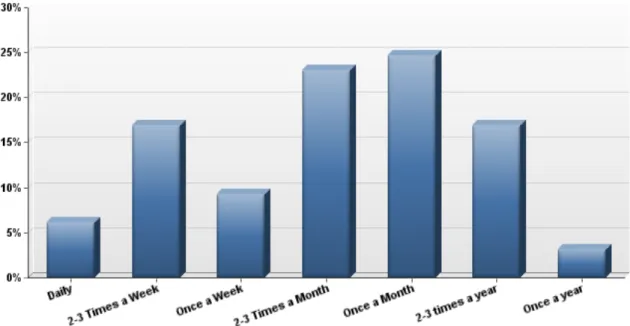
The majority of the respondents indicated using interpreters once a month or more, meaning their context for commenting on an interpreted event would be relatively recent. Twenty-five percent indicated using an interpreter once a month, 23% 2-3 times per month, 9% once a week, 17% 2-3 times per week, and 6% reported using an
interpreter daily. Seventeen percent reported using an interpreter only 2-3 times per year and 3% of respondents reported using an interpreter only once a year.
Figure 1: Reported usage of interpreting services by consumer respondents
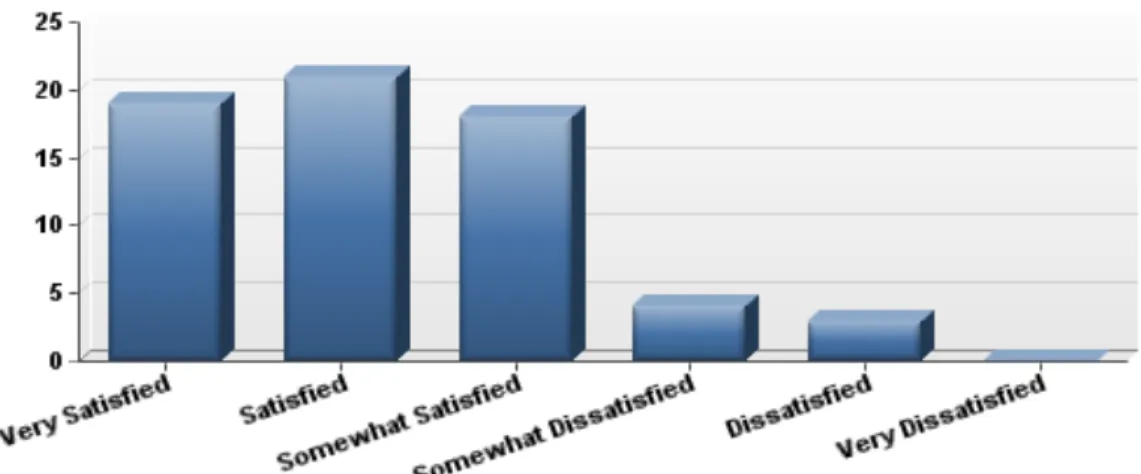
The focus of the survey was to discover whether or not respondents were satisfied by the interpreting services they have been receiving in Iowa. Respondents were also asked to rate the interpreting services they have received in the last 6 months. The majority of the respondents reported positive ratings, with 29% responding “Excellent” and 32% responding “Very Good.” Twenty-four percent chose “Good” and 12% chose “Satisfactory.” Only 3% chose “Fair” and no respondents chose “Poor.” In light of the satisfaction data that was collected, these high ratings were surprising.
Figure 2: Consumer satisfaction with interpreting services
When asked to describe why an interpreted event might be dissatisfying, the reason most often chosen by consumer respondents was, “Interpreter did not arrive on time” (35%). Respondents also marked, “The interpreter did not convey my meaning accurately to the other party” (29%), “Interpreter did not understand me” (24%), “I did not understand my interpreter” (22%), and “Interpreter left early” (18%).
The reasons listed on the survey as to why a consumer might find an interpreted event unsatisfying are reasonably significant in light of what an interpreted event might be. Having an interpreter arrive late for an appointment or a class could negatively impact the quality of medical care a Deaf patient might receive or how significantly a student would understand the course material that will appear on an exam. Whether or not a consumer understands or is understood by the interpreter is the heart of the interpreting event. That 24% of respondents reported they were not understood by the interpreter is dismaying. Again, in what context did this misunderstanding occur? A meeting with the
Deaf employee’s supervisor? A pre-surgery appointment? A session with a mental health counselor? A job interview? A call to family via Video Relay Service (VRS)?
A note about VRS interpreting: I did include VRS as a category in the survey question asking in what settings the consumer uses interpreting services, however a consumer has no way of knowing in what area of the country VRS interpreters are located. We do have a VRS center in Iowa, and one just across the border in Illinois, which employs Iowa interpreters. While the training of interpreters in Iowa might not directly impact the level of services Iowa Deaf consumers receive from VRS providers, Iowa interpreters do provide VRS services to Deaf consumers throughout the country.
Respondents who marked, “Interpreter behaved in ways I would label as ‘unprofessional,’” of which 27% did, were asked to add comments to explain what this might mean. Comments included:
“Offered to buy me lunch when I just met her.”
“Swirling in the chair while interpreting. One often sit slouch (sic) while interpreting.”
“Interjecting during classroom conversations.” “Long story... Just not professional, period.”
Were this question to be asked in another format, more qualitative data could be collected regarding “professionalism.” Based on the comments left by respondents both for this question and for the open comments section at the end of the survey, collecting stories about particular interpreting events could allow researchers to define “professional behavior” from the point of view of the Deaf consumer. Understanding what consumers
mean by the term “professional” is an under-researched area that would impact interpreter training in meaningful ways.
Respondents were also given the opportunity to add other reasons why
interpreting services might be unsatisfactory using an “Other” category. Respondents added:
“She does a professional job but then she tells her personal life in which is not professional”
“I used Signed English, often interpreters use ASL, so I can’t understand them.” “Interpreter did not convey english meaning into asl”
“Some interpreter sign different style” “was unable to locate one”
Respondents also used the “Other” category to express that they did not feel the need to check off items on the list:
“I have no problems...”
“no comments since I had felt satisfied with this service”
“Can’t think of any. All interpreters that interpretered (sic) for me at Iowa were professionals.”
Again, the comments section appeared to solicit more specific, or illustrative, attitudes towards interpreting than the ratings scale suggested.
When asked to describe why an interpreted event might be satisfying, the two reasons most often chosen were, “I understood the interpreter” and “Interpreter stayed until the appointment was finished” (72%). Respondents also marked, “Interpreter arrived on time” (68%), “Interpreter understood me” (58%), and “The interpreter accurately
conveyed my meaning accurately to the other party” (43%). Clearly there are consumers in Iowa who are having positive experiences with interpreters. Twenty-eight percent of respondents chose, “Interpreter behaved in a way I would label ‘professional.’” Asked to elaborate, respondents wrote:
“they follow the rules and ethic rules (sic)” “certified”
“Follow the CPC”
“She is very experienced and that helps.”
“Some are able to fit right with the setting or nature of interpreting assignment.” It is interesting to note that consumers who would indicate that “professional” behavior is the cause of their positive experience ascribe that experience to the Code of Professional Conduct or that professional behavior would automatically follow from certification. Neither the Code of Conduct nor certification are mentioned when consumers indicated dissatisfaction with the “professional” behavior of interpreters. Is the ethical behavior, as outlined in the Code of Conduct something consumers “know when they see it?” It would seem, in this limited survey, that consumers are not willing to label unprofessional
behavior as being outside the Code, whereas behavior that is satisfactory to the consumer is labeled as falling under the purview of the Code.
Respondents were also given the opportunity to add other reasons why interpreting services might be satisfactory using an “Other” category. Respondents added:
“I have had good experiences using this service and always there to assist any way they needed help with their ASL skills.”
“Some interpreters are very good, and other aren’t. Some were professional and signed clearly, others did not.”
“understanding - sometimes”
These last responses lead me to wonder if the format of questioning were
changed, eliciting particular examples of satisfying and unsatisfying experiences, whether respondents would be more clear in their own minds as to what they consider to be
acceptable behavior from interpreters.
The final question of the survey, “Are there other issues regarding interpreter services you would like to address here?’ elicited 29 text responses. Responses were varied, including both negative and positive comments, as well as four, “No comments.” Considering the number of respondents that rated the interpreters they had worked with so highly, it is interesting to note that only one of the free response entries was explicitly positive: “Can’t think of any but I was impressed with the interpreters that interpreted in the medical field.” Six comments communicated a concern about a scarcity of
interpreters; “Need more ASL interpreters in Central of Iowa” and “I wish we have plently (sic) of interpreters” being two such examples. Two of the respondents stated a desire for an Interpreter Education Program at the University of Iowa. Eleven of the respondents used this section to either elaborate on negative experiences or to make suggestions for how interpreters have not been satisfying, including:
“Even when details are sent prior, interpreters rarely ask for clarification when I think they should.”
“...I know the interpreters takes advantage as many deafs (sic) do not know the rules of the Code of Conduct. Sad.”
“So many older and not updates interpreter here in Iowa, it’s a big downgrade for me from oregon interpreter to Iowa interpreter”
Two respondents indicated the desire to express further thoughts about interpreters, including this comment, “i would like to use vp [video phone] to i cAN EXPLAIN CLEAR ABOUT INTERPRETER THANK YOU (sic)”. This blunt statement impresses upon me the limitations of an online survey tool in collecting information from survey takers whose first language is ASL.
While there may be a variety of factors as to why the number of Deaf consumer responses was low, only 57 Deaf or Hard of Hearing respondents finished the survey, I would suggest that the format of the survey was a primary reason. Although each question included a video translation of each question into ASL, the English portion of the survey did appear first and the first item in the survey was the consent document, which is dense text. One adjustment, were I to do a survey like this one again, would be to change the format of the document so that the video translation appears first.
Respondents were also unable to record their responses in ASL, which may have limited their ability to respond as they might have wished. Another reason Deaf consumer response rates may have been low is due to the collectivist nature of the Deaf community (Holcomb, 2013; Mindess, 2006). As a hearing person with few ties to the Iowa Deaf community, my request for information may not have been perceived as legitimate. Who was I, as a hearing person with ties to a large hearing institution, to be asking these questions? What was I going to do with the data? It is also possible that the stakes of the
survey may not have been clear to consumers. In informal conversation, I am often told that Interpreter Education at the University of Iowa is an attractive idea for members of the Deaf community. That this survey was a tool that could be instrumental in making that happen may not have been explicit. For these reasons, this particular survey is a prime example of how survey tools are not always the most effective tool for data collection.
Interpreter Survey Results
Unlike the Consumer Survey, the Interpreter Survey could be presented to respondents as emanating from “one of their own.” In my email requests to possible respondents I did identify myself as an interpreter, and though I did not include either my certification or licensure credentials I did identify myself as a faculty member at the University of Iowa and a member of the MAIS cohort. I was explicit about the survey’s
purpose, “to determine if additional interpreter education is needed in Iowa.” If we
consider that the potential pool of respondents includes all temporary or permanent license holders in Iowa (360) then I can report that 24% of that group responded to some part of the survey. My perceived legitimacy as a fellow interpreter may have been the strongest factor in encouraging potential respondents to complete the survey, but other factors may have been at play. The closing of one Interpreter Education Program and the imminent closure of another may be on the minds of graduates of those programs. I would also suggest that interpreting is a relatively solitary profession. While we are constantly interacting with other people, we are almost always the only interpreter in the room. Being asked to talk about one’s work is not an everyday occurrence, in my
experience, and the survey may have triggered the need to “talk about” the profession in a way that is not often encouraged.
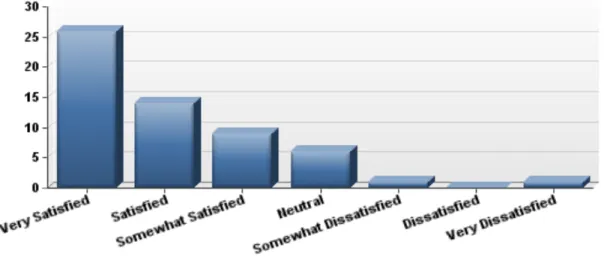
In the Interpreter Survey I was seeking to collect data both about the people who work as interpreters in Iowa, as well as about the employment experiences of these interpreters. Seventy percent of the respondents reported their interpreting work to be full time, compared to 20% who labeled it as part time and 10% as “occasional.” Of those working full time, 46% are “very satisfied” with the amount of work available to them, 25% reported being “satisfied,” 16% as “somewhat satisfied” and 11% as “neutral.” One respondent reported being “somewhat dissatisfied” with the amount of work available and one respondent reported being “very dissatisfied.”
Figure 3: Satisfaction levels of interpreters who consider their work full time
It is possible that a “dissatisfaction with the amount of work available” could be due to feeling overwhelmed by an excess of available work, although I find that an unlikely
reported working 30 hours or more, I am not entirely sure whether respondents were dissatisfied with the amount of work or the type of work they are offered. The majority (67%) of those who indicated they were working full time in the K-12 setting.
Of the 87 respondents, 76% had attended an Interpreter Education Program. Of those, 82% had earned an AA degree in doing so. Only 4 respondents had earned a Bachelor’s Degree and a single respondent a Master’s Degree. Fifty, or 76% of
respondents, attended their IEP in Iowa. Because there is no Bachelor’s program in Iowa, we can assume all of these respondents have AA degrees, although they may have earned a BA degree in another discipline. Other states represented by the survey respondents were: Colorado (1), DC (1), Illinois (2), Indiana (1), Minnesota (8), New Mexico (1), New York (1), and Tennessee (1).
Seventy-four percent of those who attended an AA program reported that their program “addressed certification” as part of the curriculum, but of those respondents who attended an AA program, only 62% are certified. In light of the recent research
surrounding the school-to-work gap, the differences in these numbers are indicative of the experiences of other programs nationally (Godfrey, 2011; Schick, Williams, & Kupermintz, 2006; Walker & Shaw, 2011). Of the four respondents who attended a BA program, all are certified. Of the 6 respondents who reported attending a non-degree certificate program, 3 are certified and 3 are not. Of the 21 respondents who replied that they had not attended an IEP, 20 answered the question about certification and 18 of those were certified. Examining the alternative training of successful interpreters who did not attend IEP’s would be an interesting perspective to add to the design of an IEP.
Respondents were asked how much time elapsed between finishing their IEP and certification or EIPA testing. Two respondents marked “0” for the time lapse between finishing their degree and certification and 9 respondents marked “0” for the time lapse between finishing their degree and the time they took the EIPA assessment. Some IEP programs do use certification exams or the EIPA as exit assessments, but it is also possible that these students took it upon themselves to pursue these examinations.
Thirteen respondents became certified 1-2 years after graduation and 15 respondents took the EIPA during that time. Eleven additional respondents took and passed a certification exam 3-5 years after graduation, with nine more waiting 6-10 years to take a certification exam. By contrast, 24 respondents had taken the EIPA within two years of graduating and 15 more had taken it within 7 years of graduating. Four respondents were certified 10 - 20 years after graduation, whereas 8 respondents took the EIPA 10 - 20 years after graduation. Respondents reported having a range of certifications, including NAD III, IV and V, the NIC, NIC Advanced, CI, CT, CSC, IC/TC, ED: K-12, and SC:L. Of the 64 respondents who reported having taken the EIPA, 14 scored below a 3.5 and 50 scored above. A score of 3.5 is required for licensure in Iowa.
Figure 4: How long after graduation respondents became certified
Figure 5: How long after graduation respondents took the EIPA Assessment
0 1 2 3 4 5 6 7 8 9 0 1 2 3 4 5 6 7 8 9 10 11 12 13 14 15 16 17 18 19 20 N u m b er o f R esp on d en ts
Number of Years
0 2 4 6 8 10 12 14 0 1 2 3 4 5 6 7 8 9 10 11 12 13 14 15 16 17 18 19 20 N u m b er o f R esp on d en ts
Figure 6: EIPA scores of respondents
Certification in the United States has developed over time, so we see a variety of certifications accepted by the Iowa Board of Sign Language Interpreters and
Transliterators. The oldest of these is the CSC, followed by the IC/TC, and then the CI and CT. These certifications were developed and administered by RID. The SC:L is a specialist certificate qualifying interpreters to work in legal settings. In 1991, the NAD also developed a certification system, which gave a graduated rating. Ratings of I and II were considered “novice” level and were not considered “certified” (NAD, 1999). Beginning in 2004, NAD and RID have offered a joint test, the National Interpreter Certification (NIC), which has also developed over time. The original NIC exam allowed test takers to score above the generalist rating as Advanced or Master. Whereas all of the NAD and RID certifications were intended to rate interpreters as generalists, qualified to
0 1 2 3 4 5 6 7 8 9 10 0 2.9 3 3.1 3.2 3.3 3.4 3.5 3.6 3.7 3.8 3.9 4 4.1 4.2 4.3 4.4 4.5 4.6 4.7 4.8 N u m b er o f R esp on d en ts EIPA Score
work in a variety of settings, the EIPA assessment is only intended to rate interpreters on their educational interpreting skills.
A significant number of respondents did not pursue certification or assessment until several years after graduation, leading one to wonder whether respondents did not feel prepared to pursue such until after more applied practice, above and beyond what was offered through their IEP programs. One-third of the respondents who supplied this information took 5 or more years before passing a certification exam. Unfortunately, based on Iowa law, temporary license holders only need to be supervised every 2 months, so interpreters can work without supervision and without licensure (national certification or EIPA assessment) for the majority of their work time (Licensure of Professional Interpreters and Transliterators, 2012).
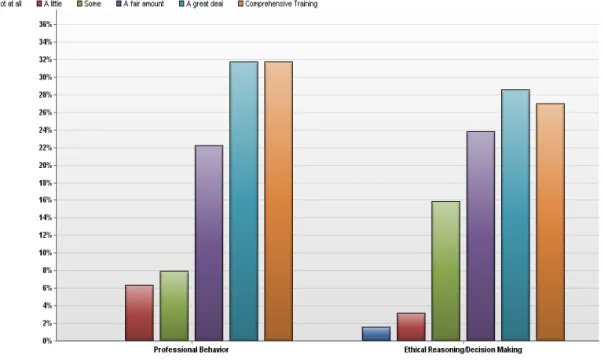
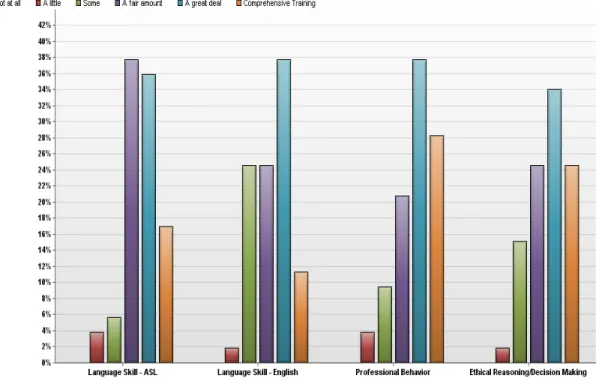
A major focus of the survey was to determine whether or not interpreters felt their training had prepared them for the work of interpreting in Iowa. Interpreters were asked, on a 6-point scale, how well their training had prepared them for interpreting work. Almost one-third of respondents reported receiving “comprehensive training” on
“Professional Behavior” in their programs, with another third reporting “a great deal” of training. Twenty-seven percent of respondents reported receiving “comprehensive training” in “Ethical Reasoning/Decision Making,” with an additional 28% of respondents reporting “a great deal” of training in this area.
Figure 7: Interpreter Education Program graduate preparedness for work in Professional Behavior and Ethical Reasoning/Decision Making
In light of the survey responses from consumers about the professional behavior of
interpreters, it appears the training and the practice, or the training and the expectations of consumers, are out of sync. Here again, more research would be needed, especially if we desired to draw a connection in the curriculum between the behavior and decision-making of interpreters with the knowledge and expectations of such from consumers. It might also be helpful to offer educational opportunities to consumers to inform them of the ways in which new interpreters are being taught about what “professional behavior” means in the context of interpreting.
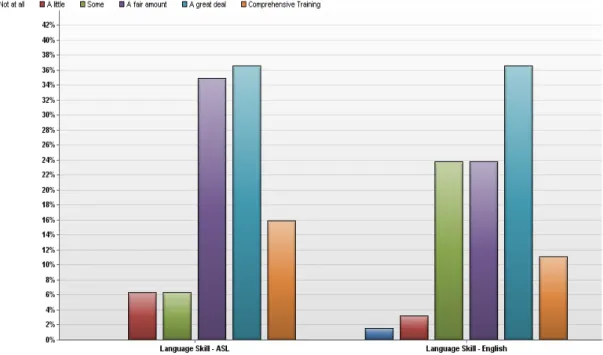
Only 11% of respondents reported receiving comprehensive training in English Language skills and almost 16% reported receiving comprehensive training in ASL, but
36% reported receiving “a great deal” of training in both of these areas. Again, we see a disconnect between this data and the responses of consumers who noted that interpreters did not understand them or were not able to communicate their message effectively.
Figure 8: Interpreter Education Program graduate preparedness for work in ASL and English
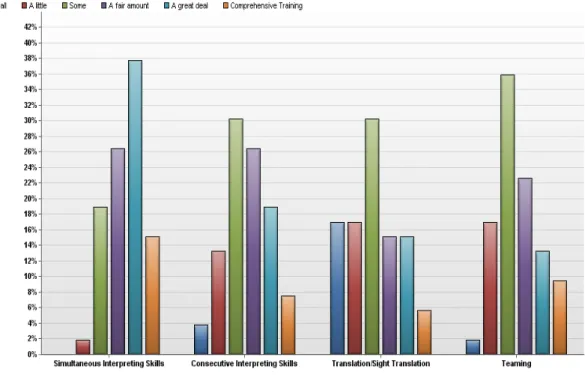
Respondents reported receiving the least amount of preparation in
Translation/Sight Translation (35% respondents chose “not at all” or “a little”) and in Teaming (22% chose “not at all” or “a little.”) In the areas of Simultaneous or
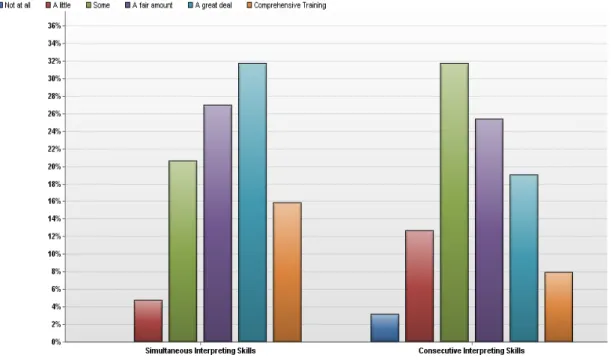
Consecutive Interpreting skills, interpreters reported more preparation in Simultaneous work, reporting “a fair amount” of training (27% of respondents), “a great deal of training” (32% of respondents), and “comprehensive training” (16% of respondents). In
contrast, only 7% of the respondents reported comprehensive training in Consecutive interpreting, 19% “a great deal” of training, and 25% “a fair amount” of training.
Figure 9: Interpreter Education Program graduate preparedness for work in Simultaneous and Consecutive Interpreting
If further contact is to be made with consumers in Iowa to pursue additional information about their experiences, questions about simultaneous and consecutive interpreting work could be added to the survey questions. While most interpreting programs list
consecutive interpreting coursework as part of their curricula and the interpreters who participated in the survey indicated training in this area, collecting information from consumers about their attitudes and understanding of these interpreting practices would
In all of the skill areas listed, the B.A. graduates were most likely to indicate their program had provided “comprehensive” or “a great deal” of training, particularly in the areas of language skill and professional behavior. B.A. graduates reported less in-depth training with simultaneous and consecutive interpreting skills. Of the 6 respondents who attended non-degree certificate programs, only 2 felt they had received “comprehensive” training of any kind. This group was most likely to mark “some,” “a little,” or “not at all” for various skill categories. The group of respondents who had attended AA degree programs reported feeling the least well trained in consecutive interpreting, teaming, and translation, but otherwise were of the opinion that their training had been significant in all other areas.
Figure 11: Skill preparedness amongst AA Education Program graduates
Interpreters were also asked to rank on a 6-point scale how well their program prepared them to work in specific topic areas: K-12, Medical, Post-secondary, VRS, Religious, Mental Health, Community Interpreting, and Deaf-Blind. Based on the survey data, programs did not emphasize specific topic areas in their training. Only 6% of the respondents reported comprehensive training in any topic area and no interpreter reported comprehensive training in the areas of Mental Health, Religious, and Deaf-Blind work. Thirty-three percent of the interpreters reported “a great deal of training” in Community Interpreting, the highest rating of any area. Thirty-six reported “a fair amount” of training in K-12 work. Interpreters reported being least prepared for work in the VRS field, with 65% of respondents answering “not at all” for the level of preparation they
12% - not at all, 25% - a little, 30% - some, 22% - a fair amount, 8% - a great deal, and 1% - comprehensive training.
Figure 12: Perceived level of training Interpreter Education Program graduates received in specific topic areas – K-12, Medical, Post-secondary, VRS
Figure 13: Perceived level of training Interpreter Education Program graduates received in specific topic areas – Religious, Mental Health, Community Interpreting, Deaf-Blind
Comparing these numbers with the setting in which these interpreters primarily work, we see that 52% of them work in K-12 settings, 9% in Medical settings, 9% in VRS, 12% in Community Settings, and 12% in Post-secondary settings. Interpreters were also asked in what settings they work besides their primary employment. The most frequent area in which interpreters supplement their primary employment is Community Interpreting (61%), followed by Religious settings (38%) and Medical work (32%). Interpreters also find themselves in Post-Secondary settings (29%), K-12 (20%), Mental Health (18%), and VRS (17%). Cross referencing the survey for data about where respondents work and the training they received in their IEP’s, only one interpreter who considers her primary employment to be the medical field received “comprehensive training” in this area. Of the 28 interpreters who consider medical interpreting to be a secondary area of employment, not one marked “comprehensive training” in this area. Of those who listed K-12 as their primary place of employment, only two indicated that their program has provided them with “comprehensive training” in this area. Clearly the interpreters who responded to the survey were trained “on the job” for interpreting work in specialized settings. A follow-up survey might focus on how this training is happening, whether it be by trial and error or by seeking out additional educational experiences (e.g., workshops.) In looking at building an IEP from the ground up, gathering information about how interpreters become skilled in their work would be significant.
In light of the above data, it was not surprising to see that when asked to comment about their prior interpreter education experience, 67% wished it had included more supervised practice. When asked about positive aspects of their programs, 81% of all respondents selected practicum/internship experiences, so the practice is happening, but
could happen more or in ways that would help students feel the experience was more comprehensive. More than half of all respondents, including respondents with both AA and BA degrees, wished their programs had been longer. Forty-one percent of all
respondents wished their programs had been more rigorous. Fourteen percent wished the instructors had been practicing interpreters and 27% wished there had been more focus on ethical decision-making.
Fifty-two percent wished their programs had included more interaction with the Deaf community. When asked to mention positive aspects of their educational
experience, three mentioned the presence of a Deaf instructor. In the open comments section at the end of the survey, four interpreters mentioned the desire to have had more interaction with Deaf people as part of their education. The desire for consumer
involvement in Interpreter Education is reflected elsewhere in the profession. The CCIE accreditation standards (2010) emphasize the inclusion of Deaf persons as faculty members, as well as creating a program philosophy that includes the Deaf community as an educational partner. It is heartening to see an alignment between the stated desires of working interpreters and the standards laid out for Interpreter Education.
Agency Survey Results
Of the 48 respondents who started the survey, 12 were not responsible for
contracting or scheduling the services of interpreters, making them ineligible to continue with the survey. Of the 36 respondents who were eligible to continue with the survey, only 25 answered some portion of the questions. There are a variety of factors that might have led to this small number of respondents. One reason is that surveys might have been sent to entities that hire interpreters, but the survey may not have made it to the person