A Machine Learning Based Investigation of
Cloud Service Attacks
By
Intisar Salem Hamed Al-Mandhari
A Doctoral Thesis
Submitted in partial fulfilment
of the requirements for the award of
Doctor of Philosophy
of
Loughborough University
April 2019
II
Abstract
In this thesis, the security challenges of cloud computing are investigated in the Infrastructure as a Service (IaaS) layer, as security is one of the major concerns related to Cloud services. As IaaS consists of different security terms, the research has been further narrowed down to focus on Network Layer Security. Review of existing research revealed that several types of attacks and threats can affect cloud security. Therefore, there is a need for intrusion defence implementations to protect cloud services. Intrusion Detection (ID) is one of the most effective solutions for reacting to cloud network attacks.
The application of machine learning-based techniques for the identification of network-based intrusion detections on the public dataset, KDD cup ’99, has become commonplace since the last decade. This work has demonstrated that machine learning can be used to detect network intrusions. This thesis reports on an empirical investigation to determine the underlying causes of the reported poor performance of some well-known classifiers especially in learning from to classify minor classes/attacks. The investigations carried out in this thesis reveals that the KDD Cup ’99 dataset is an imbalanced dataset due to the inherent nature of the network intrusion domain, where some attacks are very common and some attacks are rare. Therefore, there is an extreme imbalance among the number of data instances in the different attack classes of this dataset. Based on the number of the classes in the dataset, the imbalance dataset issue can be a binary-class problem or multi-class problem. In literature, most of the researchers focus on addressing binary-class misclassification problem as addressing the multi-class classification problem is a complex issue that requires detailed analysis of features of attacks and the performance and structure of classification algorithms used.
This thesis reports the basic methods that can be deployed to learn from an imbalance dataset. Different experiments are conducted to avoid the bias towards the major classes and enhance the detection rate of the classifiers used, especially in the classification of the minor classes. The findings show that the issue of learning from the imbalanced dataset is not due to the limitation of the classifiers but rather in the way they are structured and used in classification imbalanced datasets
Keywords: Cloud Computing, Intrusion Detection Systems, Network, Security, Attacks, Machine Learning, imbalance Dataset and Feature Selection.
III
Acknowledgements
First and foremost, praise is to Allah, the Almighty, on whom ultimately we depend for sustenance and guidance. Who was beside me all the time when no one was able to understand me and when the PhD stress reached its peak. My deepest gratitude is directed towards you, my lord, without your blessings, this achievement would not have been possible.
Special thanks to my soul mate who inspires me all the time, my darling husband, Mahmood Al-Azri, for his compromises, sacrifices, patience, understanding and endless support. To my soul, my little angel, my daughter, Durar, for providing me with both power and hope in life despite her small age. You are everything to me; you make me smile, happy and proud and from the moment they placed you in my arms, you have always snuggled right into my heart. I thank you both for putting up with me in difficult moments where I felt stumped and for goading me on to follow my dream to get this degree. Words cannot explain the depth of my gratitude towards you both.
I owe a lot to my parents, who encouraged and helped me at every stage of my personal and academic life, and longed to see this achievement come true. I deeply miss my father, who is not with me to share this happiness, who passed away in my third year of this journey. To the soul of my father, who taught me the endurance of success and life’s meaning and who always believed in my ability to be successful. You are gone but your constant belief in my abilities has made this journey possible. To my mother, my paradise, the biggest source of my strength, the most precious gift I have in this life and to her prayers. Her dreams for me have resulted in this achievement and without her loving upbringing and nurturing; I would not have been where I am today and what I am today. It is true that if God ever existed, he would be in the form of a mother because only a mother can love and give without expecting anything in return. Had it not been for my mother’s unflinching insistence and support, my dreams of excelling in education would have remained mere dreams. I thank my mother with all my heart and I know she is up there, listening, watching over me and sending me her blessings constantly and is my guardian angel.
To my brothers and my sisters, this would not have been possible without their unwavering and unselfish love and support is given to me at all times. To my mother in law, thanks for your prayers and caring. We represent a strong, big-hearted family with sturdy bonds; many thanks to you my lovely family and your prayers for me was what sustained me thus far.
IV
I am a pleasure to sincerely thank my supervisor, Dr.Lin Guan who has given me her best guidance and support. Special thanks to my second supervisor, Pro. Eran A Edirisinghe for his continuous support, advice, help and invaluable suggestions throughout my PhD journey. His excellent guidance, constant motivation, steadfast encouragement and expert guidance make this journey a rewarding experience in my life that I will never forget. It is because of their utmost supervision that I have now achieved my own research accomplishments.
It would be inappropriate if I omit to mention the names of my dear friends; Alia, Sahar, Roqaya and Dania, who were there when I was away from my home and beloveds, who never let things, get dull or boring. Who have, in their own ways, kept me going on my path to success, assisting me as per their abilities, in whatever manner possible and for ensuring that good times keep flowing. To my friends from the power of the dream group, thank you for your ceaseless support and encouragement and for showing me the power of the dream. To those awaiting this accomplishment, I thank you for your prayers.
To all my teachers throughout my life who have participated in building my teaching and learning skills.
Last but not least, I would like to thank my sponsor, the Ministry of Higher Education, Oman, for providing me with this opportunity to complete my Ph.D. and for their financial assistance.
V
Publications
Accepted and Published Conference
Al-Mandhari I.S., Guan L., Edirisinghe E.A. (2019) Investigating the Effective Use of Machine Learning Algorithms in Network Intruder Detection Systems. In: Arai K., Kapoor S., Bhatia R. (eds) Advances in Information and Communication Networks. FICC 2018. Advances in Intelligent Systems and Computing, vol 887. Springer, Cham
I.S. Al-Mandhari, L. Guan, and E. A. Edirisinghe, “Impact of the Structure of Data Pre-processing Pipelines on the Performance of Classifiers when Applied to Imbalanced Network Intrusion Detection System Datasets,” in Advances in Information and Communication Networks. IntelliSys 2019.
VI
Glossary
AFRL: Air Force Research Laboratory
AI: Artificial Intelligent
ANN: Artificial Neural Network
APIs: Application Programming Interfaces
ARP: Address Resolution Protocol
BID: Behaviour-based Intrusion Detection
BN: Bayes Net
CIA: Confidentiality, Integrity and Availability
CRISP-DM: Cross-Industry Process for Data Mining
CFS: Correlation-based Feature Selection
CSA: Cloud Security Alliance
CSP: Cloud Solution Provider
DARPA: Defence Advanced Research Projects Agency
DDoS: Distributed DoS
DIDSs: Distributed Intrusion Detection Systems
DNS: Domain Name System
DoS: Denial of Service
DT: Decision Tree
FNs: False Negatives
FNR: False Negative Rate
FPs: False Positives
FPR: False Positive Rate
FTP: File Transfer Protocol
HIDSs: Host-based Intrusion Detection Systems
IaaS: Infrastructure as a Service
ICT: Information and Communication Technologies
IDC: International Data Corporation
IDSs: Intrusion Detection Systems
IMAP: Internet Message Access Protocol
IP: Internet Protocol
VII
KDD Cup 99: Knowledge Discovery and Data Mining
MIT: Massachusetts Institute of Technology
ML: Machine Learning
MLP: Multi-Layer Perception
NB: Navies Bayes
NIDS: Network-based Intrusion Detection Systems
NIST: National Institute of Standards and Technology
PaaS: Platform as a Service
PART: Partial Decision Tree Classifiers
R2L: Remote to Local
RF: Random Forest
SaaS: Software as a Service
SMOT: Synthetic Minority Oversampling Technique
SVMs: Support Vector Machines
TNs: True Negatives
TNR: True Negative Rate
TPs: True Positives
TPR: True Positive Rate
U2R: User to Root
WM attack: WarezMaster attack
WC attack: WarezClient attack
VIII
Table of Contents
Chapter 1 : Introduction ... 1 1.1 Research Background ... 1 1.2 Motivations ... 1 1.3 Problem Statement ... 31.4 Aim and Objectives ... 5
1.5 Methodology ... 5
1.6 Original Contributions ... 7
1.7 Thesis Outline ... 9
Chapter 2 : Literature Review ... 10
2.1 Introduction ... 10
2.2 Cloud Computing Overview ... 10
2.2.1 Cloud Computing Service Models ... 11
2.3 Cloud Computing Security Concerns ... 13
2.3.1 Cloud Attacks Classification ... 13
2.3.2 Intrusion Detection Systems (IDSs) Requirement in Cloud Computing ... 15
2.4 An Overview of IDSs ... 16
2.4.1 Definitions and Terminology ... 16
2.4.2 The Classification of IDSs ... 19
2.4.2.1 Classification Based on Type of Data ... 19
2.4.2.2 Classification Based on Detection Approaches ... 21
2.5 Machine Learning in IDSs ... 24
2.5.1 The Adoption and Motivation of Machine-Learning in Line with Attack Detection ... 24
2.5.2 Insight Identification and Standards for Data-Mining ... 26
2.5.3 Identification of KDD Cup’99 Dataset Sub-minor Attacks ... 28
2.5.3.1 R2L Attack ... 28
2.5.3.2 U2R Attack ... 31
2.5.4 Machine Learning Detection Approaches ... 32
2.5.4.1 Data Labels ... 32
2.5.4.2 Output Format ... 33
2.5.4.3 Classification Techniques ... 33
IX
Chapter 3 : Developing an Understanding of the Classification of Imbalanced Datasets ... 36
3.1 Introduction ... 36
3.2 KDD Cup ’99 Dataset Classification Challenges ... 36
3.2.1 The Challenges Caused by Imbalanced Datasets ... 36
3.3 Managing the Challenge of Attack Classification in the Presence of Imbalanced Dataset ... 37
3.3.1 Data Level: Resampling Techniques ... 38
3.3.2 Algorithms Level: Cost-Sensitive Learning ... 39
3.3.3 Classifier Combination: Ensemble Learning ... 40
3.4 Feature Selection on Imbalanced Dataset ... 41
3.4.1 The Need of Feature Selection on Imbalanced Dataset ... 41
3.4.2 Approaches to Feature Selection ... 43
3.4.2.1 The Filter Approach ... 43
3.4.2.2 The Wrapper Approach ... 44
3.4.2.3 Hybrid/Two-Stage Design ... 45
3.5 Related Works ... 46
3.5.1 Imbalance Learning Methods ... 46
3.5.1.1 Navies Bayes ... 46
3.5.1.2 Ensemble Learning ... 48
3.5.1.3 Feature Selection and Resampling ... 49
3.5.1.4 Feature Selection for Sub-minor Attacks ... 50
3.6 Summary and Conclusion ... 52
Chapter 4 : Investigating the Machine Learning Classifier Behaviour in the Presence of Class Imbalance ... 54
4.1 Introduction ... 54
4.2 Experimental Setup ... 55
4.2.1 Data-Mining Tool ... 55
4.2.2 Dataset and Pre-Processing ... 55
4.2.3 Validation Methods ... 56
4.2.4 The Classifiers and Assessment Metrics ... 58
4.3 Investigating the Classification of Imbalanced Datasets... 59
4.3.1 Classifiers’ Performance after Resampling ... 59
4.3.2 Random Forest Behaviour in the Presence of Imbalanced Data ... 62
4.3.3 Classification of Minor Attacks with the Naive Bayes Classifier ... 64
X
Chapter 5 : Class Imbalance within Class for the Minor Attacks ... 67
5.1 Introduction ... 67
5.2 Class Imbalance within a Class ... 68
5.3 Research Methodology ... 68
5.3.1 The Proposed ML Framework to Address within Class Imbalance ... 68
5.3.1.1 Business Insight ... 69
5.3.1.2 Data Insight ... 70
5.3.1.3 Modelling ... 70
5.3.1.4 Evaluation ... 71
5.4 The Heterogeneous Model ... 71
5.5 Experimental Setup ... 72
5.6 NB Imbalance Learning within Classes ... 73
5.7 The Factors Underpinning Inadequate Identification of R2L by NB ... 76
5.7.1 The Accuracy of NB Based Detection Architectures for R2L Sub-Attacks ... 76
5.7.2 Using Stacking for Improving the Accuracy of Detection of Multihop and Warezclient Attacks... 77
5.7.3 The Factors Underpinning the Misclassification of Multihop and Wazerclient ... 78
5.7.3.1 Multihop Misclassification ... 78
5.7.3.2 Warezclient Misclassification ... 79
5.8 Summary and Conclusion ... 80
Chapter 6 : Impact of the Structure of Data Pre-processing Pipelines on the Performance of Classifiers When Applied to Imbalanced Datasets ... 82
6.1 Introduction ... 82
6.2 The experimental Setup ... 83
6.3 Experimental Result and Analysis ... 84
6.3.1 The Selected Features ... 84
6.3.2 Impact of Resampling and Feature Selection on Classification Accuracy ... 86
6.4 Summary and Conclusion ... 88
Chapter 7 : Feature Selection for the Minor Attacks and Its Sub-minor Attacks ... 91
7.1 Introduction ... 91
7.2 Experimental Setup ... 93
7.3 Experimental Results and Analysis ... 94
7.3.1 Characteristics of U2R Attacks ... 94
XI
7.3.1.2 U2R Sub-Minor Attacks vs. Normal Data Experiment ... 95
7.3.1.3 Buffer Overflow Attack vs. Normal Data Experiment ... 96
7.3.1.4 Loadmodule Attack vs. Normal Data Experiment ... 97
7.3.1.5 Perl Attack vs. Normal Data Experiment... 97
7.3.1.6 Rootkit Attack vs. Normal Data Experiment ... 98
7.3.2 Characteristics of R2L Attacks ... 99
7.3.2.1 R2L Attack Vs. Normal Data Experiment ... 99
7.3.2.2 R2L Sub-Minor Attacks vs. Normal Data Experiment ... 100
7.3.2.3 Ftp Attack vs. Normal Data Experiment ... 101
7.3.2.4 Password Guessing Attack vs. Normal Data Experiment ... 102
7.3.2.5 Imap Attack vs. and Normal Data Experiment ... 102
7.3.2.6 Warezmaster Attack vs. Normal Data Experiment ... 103
7.2.3.7 Multihop Attack vs. Normal Data Experiment ... 103
7.3.2.8 Phf Attack vs. Normal Data Experiment... 104
7.3.2.9 Spy Attack vs. Normal Data Experiment ... 105
7.3.2.10 Warezclient Attack vs. Normal Data Experiment ... 105
7.4 Analysis of the High and Low feature ranking results for the minor attacks and their sub-minors attacks based on NB performance ... 106
7.5 Summary and Conclusion ... 108
Chapter 8 : Summary, Conclusion and Future Work ... 111
8.1 Summary and Conclusion ... 111
XII
List of Figures
Figure 1-1:KDD cup’99 dataset imbalanced dataset issue ... 4
Figure 1-2:The scope of research investigation ... 6
Figure 2-1: An attacks categorisation in regards cloud services [21] ... 15
Figure 2-2: Distributed IDS ... 21
Figure 4-1: Classifiers’ performance with different holdout validation value ... 57
Figure 4-2: Classes distribution with different sampling value (with Percentage) ... 59
Figure 4-3: Classifier performance when data resampling is applied ... 62
Figure 4-4: Random Forest performance when using different learning methods and data resampling ... 63
Figure 4-5: NB based detection of U2R and R2L attacks ... 65
Figure 5-1: Proposed imbalanced dataset classification methodology ... 70
Figure 5-2: Flowchart for the study methodology ... 72
Figure 5-3: NB based detection accuracy for multihop and warezclient sub-minor attacks with resampling... 78
XIII
List of Tables
Table 2-1: Possible statuses for an IDS reaction ... 18
Table 3-1: Description of class distribution in KDD Cup 99 dataset ... 36
Table 3-2: Weight matrix for evaluating the result of the KDD cup 99 competition[109] ... 40
Table 4-1: Number of records in Full KDD Cup ’99 Dataset vs. 10% sample dataset used in experiments ... 56
Table 4-2: Number of records in 10% sample dataset with and without duplicates ... 56
Table 4-3: Classifiers’ performance with different holdout validation values ... 58
Table 4-4: Classes distribution with different sampling value (with value) ... 60
Table 4-5: Classes distribution with different sampling value below 0.1 ... 60
Table 4-6: Classifiers performance before resampling ... 60
Table 4-7: Classifiers performance after resampling ... 61
Table 4-8: RF performance when using different learning method ... 64
Table 5-1: KDD cup dataset class distribution before/after pre-processing and resampling ... 73
Table 5-2: NB detection accuracy for each sub-minor attack before resample ... 74
Table 5-3: NB detection accuracy of each sub-minor attack after resampling ... 75
Table 5-4: NB detection accuracy for R2L sub-attacks, before and after resampling ... 77
Table 5-5: Multihop - correct classifications ... 79
Table 5-6: Warezclient-correct classifications ... 80
Table 6-1: The selected Feature in case of RS+FS ... 86
Table 6-2: The selected feature in case of FS+RS ... 86
Table 6-3: Classifiers’ Performance on the Application of Resampling and Feature Selection Approaches ... 88
Table 7-1: KDD cup 99 dataset features category ... 92
Table 7-2: Ranked features of U2R attack ... 95
Table 7-3: Ranked features of U2R sub-minor attacks ... 96
Table 7-4: Ranked features of Buffer Overflow attack ... 96
Table 7-5: Ranked features of Loadmodule Attack ... 97
Table 7-6: Ranked features of Perl attack ... 98
Table 7-7: Ranked features of Rootkit attack ... 99
Table 7-8: Ranked features of R2L attack ... 100
Table 7-9: Ranked Features of R2L sub-minor attack ... 101
Table 7-10: Ranked features of Ftp attack ... 101
Table 7-11: Ranked Features of Password Guessing attack ... 102
Table 7-12: Ranked features of Imap attack ... 103
Table 7-13: Ranked features of Warezmaster attack ... 103
Table 7-14: Ranked features of Multihop attack ... 104
Table 7-15: Ranked features of Phf attack ... 105
Table 7-16: Ranked features of Spy attack ... 105
Table 7-17: Ranked Features of the Warezclient attack ... 106
Table 7-18: High and Low feature ranking results for the minor attacks and their sub-minors attacks based on NB performance ... 108
Page 1 of 146
Chapter 1
: Introduction
1.1 Research Background
Information technology is rapidly changing, and much of this is due to the introduction of Cloud Computing (CC) and the many applications supporting this technology. CC allows for resources to be distributed across a network, permitting users to interact with any of these resources as needed, with flexible access. As a result, convenience and security are increased, as users are not necessarily storing information independently. Companies have a greater ability to focus on the research and development of their own products but spend less time and energy designing secure data storage facilities, purchasing hardware for that purpose, or training staff to follow procedures if they are able to buy into cloud services offered by specialised cloud service providers. The many features and advantages of using cloud computing, including greater efficiency, lower costs, increased accessibility, reliability, and flexibility to manage and scale the systems make it very desirable to a variety of businesses and organisations in many different industries.
Unfortunately, cloud security is a significant concern for cloud users. As cloud usage relies heavily on the trust of users, there is a concern that organisations may be vulnerable to new threats and risks. Further, there is the possibility of cloud technology being invaded by intruders or hackers, thus giving them access to vital data in the cloud, owned by others. An intrusion or attack can have very significant implications for cloud usage. Since most attackers are likely to target networks with the largest numbers of users with the most accessible and most automated resources, as well as the networks containing an aggregate of the most information, it must be carefully investigated and all risks should be mitigated where ever possible. According to The Cloud Security Alliance (CSA), there are seven major threats to cloud systems [1]. Using Intrusion Detection (ID) methods is the best way to prevent attacks and defend the systems because these systems are able to rapidly recognise and therefore in a timely manner protect against attackers. Thus, it is imperative that any concerns surrounding cloud security be addressed before any benefits can be reaped.
1.2 Motivations
Because the internet is the delivery method of all cloud services, security is a priority [2]. Typically, any attacks incurred by a cloud system are unique to that cloud system. Recognising and eliminating the attacks is critical to maintaining the confidentiality and integrity of the cloud systems and the information and resources contained in those systems.
Page 2 of 146
Outsider attacks by intruders are not the only threat to cloud security. While firewalls can successfully help prevent outside intruders from attacking a cloud system, only Intrusion Detection Systems (IDSs) will be helpful in detecting insider attacks. According to the study in [3], the costs required for adopting cryptographic strategies secure data are not always financially viable for attack prevention. Thus, using IDSs for cloud networks is an important consideration. Current IDSs are embedded with limitations, such as those related to the accuracy, sensitivity to false alarms, costs of communication, ideal detection rates, and coverage for attacks. Because of these limitations, many cloud systems are vulnerable to attacks and breaches of confidentiality. Finding solutions to these problems is critical to the integrity of any cloud system. Until solid solutions are identified, it will be difficult for consumers to fully trust cloud systems.
Research during the last decade has focused on developing different Machine Learning (ML) techniques for IDSs as mentioned in [4]. Strategies that are most commonly used are those that are able to learn from training samples illustrating typical network behaviours under different attacks. The IDSs strategically learn to detect intrusions, without the intervention of a human to identify the attack. The IDSs is able to recognise attacks after learning the typical patterns and variations seen during previous, known attacks.
One of the most popular datasets used to assess the performance of intrusion detection systems during the last ten years has been the KDD Cup 99 dataset (Knowledge Discovery and Data Mining) as mentioned in[4]. As there are many types of attacks, researchers apply different machine learning techniques to learn how to recognise such attacks. However in the previous work of using machine learning in IDS' researchers’ have applied known classification algorithms for detecting various types of attacks. Majority of this work has been carried out by researchers who have the computer network security expertise, but not fundamental knowledge about machine learning algorithms. Therefore the attempts have only used the machine learning algorithm as a ‘tool’ to achieve detection of attacks, but many important aspects of the use and the essential fine-tuning needed in applying such tools have not been given the required importance. In particular, standard approaches to using machine learning classifiers to classify data within imbalanced datasets, often fail due to the fact that the number of training samples used to train minor attacks (i.e. attacks which are uncommon and hence not have enough samples to train the classifier model) is far less than the number of samples used to train to
Page 3 of 146
detect major classes. For example attacks of type R2L (Remote to Local) and U2R (User to Root) are minor classes and their detection accuracies are often poor. The research presented in this thesis sets out to address this challenge.
1.3 Problem Statement
Effectiveness is the main factor considered when assessing the overall quality of an intrusion detection system. Effectiveness of an IDS is assessed by investigating its ability to detect intrusions accurately (true positive) against its rate of issuing false alarms (false positives). The review of literature conducted within the research context of this thesis revealed that there are three primary outstanding issues with regards to the machine learning-based IDS proposed in literature to-date.
Firstly, the literature fails to show consistency in the findings reported. Review of previously published research indicates that inconsistencies are likely to be derived from the researchers choosing to use different subsets of the KDD Cup ’99 dataset in their research. Additionally, there are some methodological differences between how the data used for training has been pre-processed and the performance of the proposed machine learning systems have been validated.
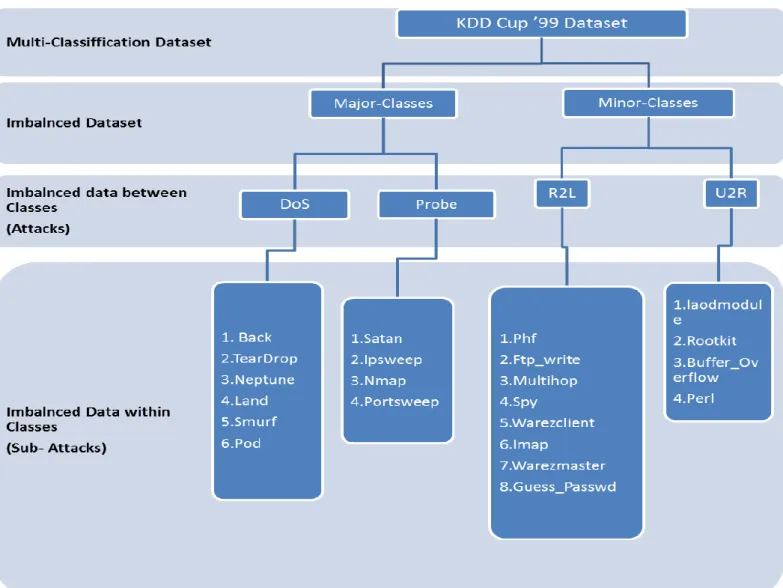
Secondly, the popular dataset used for the research works, the KDD Cup ’99 dataset, is not a balanced dataset. This becomes a significant issue when the number of instances in one specific class markedly outnumbers the number of instances in a different class, as this typically leads to a high number of misclassified instances for the class with fewer instances. Typically, the standard classification learning algorithms are often biased towards the majority class. One of the main problems with the KDD Cup ’99 dataset being imbalanced is the issue that certain algorithms designed for machine learning (such as Decision Tree (DT) and Artificial Neural Network (ANN)) tend to be biased toward major classes of datasets (DoS and Probe[5]), which means that the minor classes (U2R and R2L[6]) end up with a poor rate of classification. However, the major classes and minor classes are clearly defined based on their proportion on the dataset, as presented in Table 3-1. The issue of an imbalanced dataset could be solved through balancing the data distributions in the dataset. The data imbalance can be due to an imbalance of instances between classes or imbalance of data instances within classes, with the latter arising due to the presence of the so-called sub-classes within classes. The data imbalance
Page 4 of 146
between classes deals with the distribution of the instances between the dataset classes whereas data imbalance within classes deals with the data imbalance between sub-classes of a class.
Figure 1-1:KDD cup’99 dataset imbalanced dataset issue
Figure 1-1 highlights the data imbalance issue within the KDD cup 99 dataset and the related presence of major/minor classes and sub-classes within them.
Thirdly, with a poor detection rate for minor attacks, even if the between class imbalances are addressed, it is required that assessment of minor attacks, as well as sub-minor attacks (attacks that are under the category of the minor attacks which can be defined based on their characteristics and where the KDD Cup ’99 already classified it in their website), are carried out with care. Therefore this thesis will study the minor attacks and their sub-minor attacks. Our investigations revealed that sub-major classes do not affect the classification of major
Page 5 of 146
classes as they have a sufficient number of instances to contribute to the training of a classifier. Further, each attack type has its own characteristic features and it is essential that these features are selectively used in a way that the classifier selection and performance can be optimised for the detection of both minor and sub-minor classes.
1.4 Aim and Objectives
This thesis aims to address outstanding research issues of present cloud security services (see Section 1.3) by offering an intelligent and tailored attack detection system based on machine learning algorithms and this will be satisfied by the following objectives:
Obj.1: Carry out a review of existing cloud security systems, to recognise the unique challenges, and explore potential solutions.
Obj.2: Investigate in detail current machine learning-based IDSs, to identify limitations in using standard machine learning approaches in attack detection.
Obj.3: Investigate the impact of data imbalance between classes and within classes on the performance accuracy of machine learning classifiers when applied to IDS.
Obj.4: Investigate in detail, the accuracy of detection of minor attacks and the impact of the presence of sub-minor classes.
Obj.5: Propose a novel machine learning framework that will address both between-class and within-class data imbalance.
Obj.6: Investigate the impact of feature-selection on classifier performance and how it can be used to optimise the performance of classifiers applied to an imbalanced dataset network detection attacks.
1.5 Methodology
A. First, an exhaustive review of the current cloud computing paradigm, architecture and research issues will be performed, leading to a deeper understanding of cloud system issues, challenges and shortcomings. This will lead to a deeper understanding of the research background required for this research. In particular, a comprehensive investigation about cloud security will be carried out leading to the understanding of security-related challenges and likely potential solutions.
B. Secondly, an investigation into the various IDSs strategies will be conducted alongside exploring the use of machine learning techniques for network intrusion detection.
Page 6 of 146
C. Based on the approach followed in B, the strategies to improve the performance of classifiers in-network IDS will be examined. As a result, better-tailored learning methods will be applied based on classifiers, resulting in an improvement of detection accuracy of attacks.
D. The learning methods will be applied to the classification of attacks in a known imbalanced dataset, exploring the impact of both between class and within-class data imbalance on the classifier performance.
E. Given that feature selection is known to improve classifier performance in general, the thesis will explore the possibility of feature selection, depending on the type of attack, in order to classify attacks more accurately.
Figure 1-2 illustrates the scope of the research conducted with respect to the overall research context.
Figure 1-2:The scope of research investigation Low detection of minor attacks R2L and U2R attacks R2L and U2R Sub-minors attacks Imbalanced dataset Imbalanced learning approaches Resampling Feature Selection Ensemble learning Attack avoidance Attack prevention IDSs Cloud computing security issues SaaS PaaS IaaS Signature-based Anomaly-based Effectivenes s and Adaptability (QoS) Machine learning (AI) classifications DARPA Dataset KDD cup ’99 Dataset Minor attacks classification Binary-classes Multi-classes Attack detection
Page 7 of 146 1.6 Original Contributions
This thesis offers four contributions to the research area of network intrusion detection. While the focus of this research is mainly to contribute original knowledge to the area of intrusion detection systems, the proposed framework could also be used to deal with the classification of imbalanced datasets from other application domains. Hence the thesis also contributes to the general area of applications of machine learning algorithms.
1. Inconsistency & Poor Performance of Some Classifiers
The first contribution is a detailed investigation for the reasons behind inconsistency of the classification accuracy of machine learning algorithms reported in the literature for the purpose of network intruder detection.
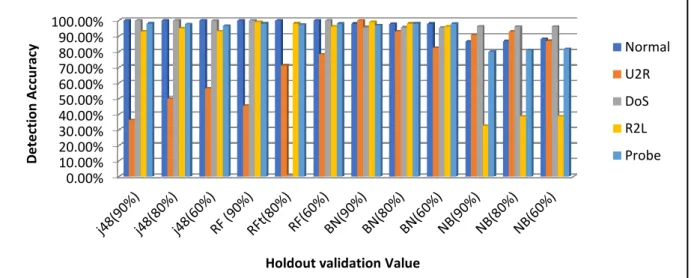
Regarding methods of validation, an experiment was conducted in this study which indicates that the result of the holdout validation differs based on the hold-out value that is deployed and the randomness of the training/test set selection. As a result, the tested instances may be different, depending upon the instances used in an alternative experiment, which may lead to an alternate detection rate. Based on this experiment, cross-validation was determined to be the ideal method, although it is computationally costly.
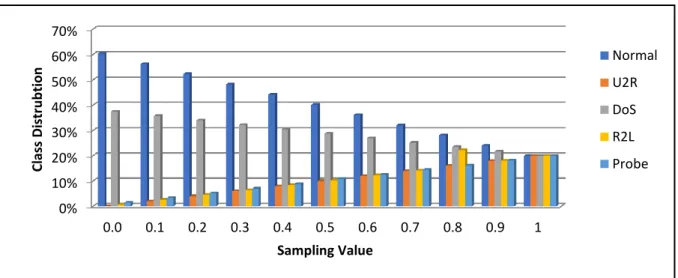
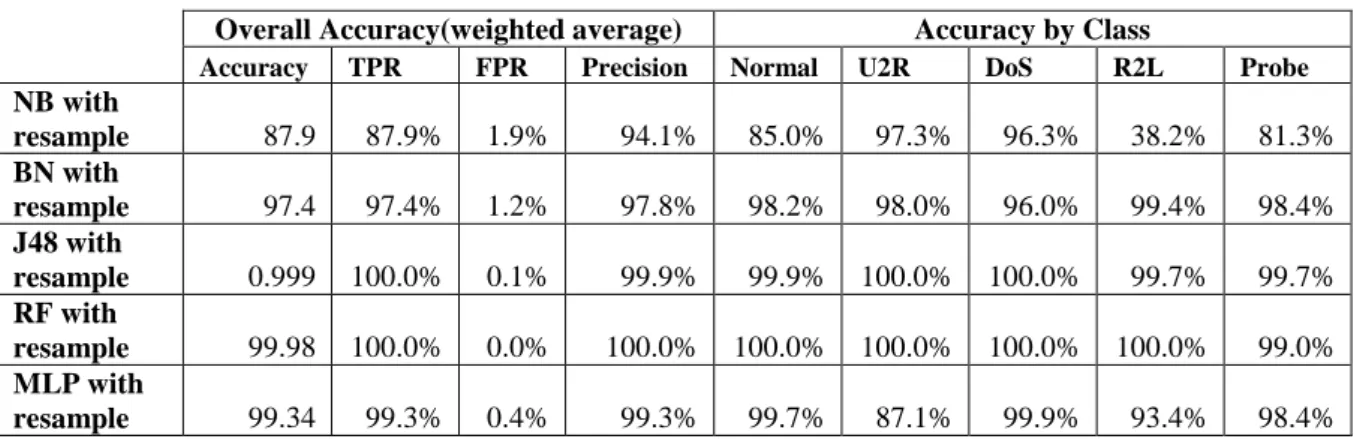
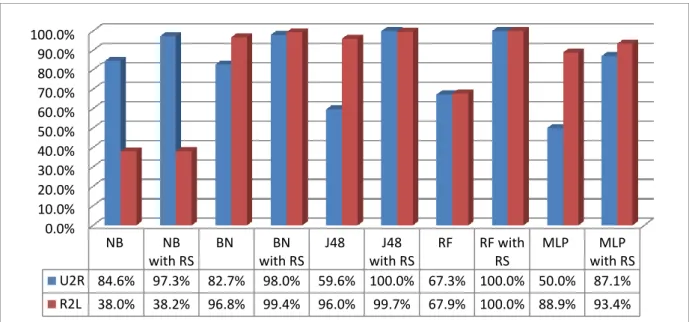
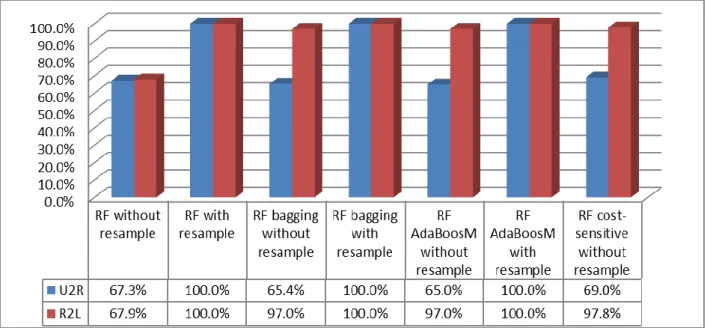
The second achievement is related to the performance improvements obtainable from classifiers when resampling methods are used to pre-process data prior to training and testing. Based on this experiment, bias toward the majority classes were shown to be due to the data imbalance in the dataset used. After utilizing resampling techniques, all of the classifiers investigated perform well, improving accuracy significantly. The detection rate for minority classes (such as R2L and U2R) increased, and the bias toward the majority classes was less obvious. Balancing data between classes improved the accuracy of performance of all classifiers when dealing with imbalanced datasets. This was not reported in previous literature and is, therefore, a significant contribution of the research conducted within this thesis.
The third contribution is related to the Random Forest classifier’s behaviour in relation to adopting imbalance learning methods. This investigation led to the conclusion that resampling with ensemble methods, such as Bagging or AdaBoosM, is the best approach since this results in the RF classifier’s rate of detection for minor classes improving without indicating a bias towards majority classes and poor classification of minor classes. It could be argued that RF performance is similar to the ensemble
Page 8 of 146
method, however, it is determined that using performance of RF as an ensemble offers better information for classification than using it as a tree-based classification algorithm. This is due to the fact that RF utilizes subsets of features to split each node in a tree classification, and bagging (ensemble) methods incorporate all features required for node splitting. As a result, it can be concluded that the features in the dataset impact RF performance. Additionally, it is noted that RF is more effectively implemented with resampling, and if the ensemble method is used without resampling, then the RF detection rates are poor for minority classes.
The fourth contribution is related to the Naive Bayes classifier and its ability to detect minor attacks. Although NB detection of the minority classes is improved by using a blended approach combining data-level methods with ensemble methods, the ideal strategy is using stacking (bagging of NB and RF).
2. The cause of poor detection of the minor attacks
The second achievement is derived from the study of reasons behind the poor performance of NB classifier in the classification of R2L attacks, despite using data resampling as a pre-processing stage. Due to the sub-classes of attacks, there are misclassifications. As certain features of R2L attacks are uniquely related to features of boundary/marginal attack classes, misclassifications may occur easily. As a result, the heterogeneous system being proposed is based on stacking and bagging, which improves the NB based detection of R2L attacks.
3. Impact of the Structure of Data Pre-processing Pipelines on the Performance of Classifiers
Based on the statistical analysis, both the sampling approach and the feature selection method should be used when any training for ideal classification methods is required. The strategy is based upon the classifier used and the type of features selected. The investigations in this thesis reveal that typically, the feature selection after resampling method will perform better than the other pipeline options.
4. Determine specific attributes of minor attacks and their sub-minor attacks and the significance of such features in the classification task
The research conducted in this thesis shows that feature selection algorithms can be effectively used to select the most prominent features that will in-turn be able to detect both minor and sub-minor classes more accurately when compared to using all possible features in
Page 9 of 146
classification. This is a significant contribution as this not only demonstrates how the accuracy of classifiers can be improved via feature selection, but the feature selection also reveals vital information to the network IDS research community in understanding the key attributes of different kinds of attacks. This work is presented in Chapter-7
1.7 Thesis Outline
The thesis is organised into eight chapters. Chapter 2 introduces concepts in cloud computing security and presents a brief literature review, centred on examining the various attacks facing the Cloud systems, in addition to a summary pertaining to IDSs and its various categorisations. In chapter 2, the concept of machine-learning will undergo appraisal, with an investigation of adopting it to network intrusion identification. Chapter 3 presents the various challenges and considerations witnessed in regards to the classification of attacks when standard machine learning approaches are used without considering data imbalance issues present in typical network IDS datasets. Chapter 4 explores the adoption of various machine-learning algorithms in an effort to circumvent the usual misclassification issues experienced by academics that used the imbalanced KDD cup 99 datasets throughout the course of their research works. Chapter 5 investigates the performance of the popular Navies Bayes classifier in the presence of imbalanced data, specifically in classifying minor attacks, namely R2L and U2R. Chapter 6 investigates the use of data resampling to address the issue of class imbalance and how it should be combined with feature selection in a typical data pre-processing pipeline. The question of whether resampling should be performed before or after feature selection, for each classifier examined, is investigated. Chapter 7 carries out a rigorous investigation of the importance and ranking of features and their ability to positively attribute towards increased accuracy of attack detection is used as a reduced feature set. Finally, Chapter 8 concludes this thesis and suggests future improvements and enhancements.
Page 10 of 146
Chapter 2
: Literature Review
2.1 Introduction
This chapter presents a literature review of Cloud Computing in general. Furthermore, it will seek to establish the security offered by Cloud Computing systems. Owing to the fact that the key objective is centred on improving Cloud-IDS security, there will be the presentation of a literature review, centred on examining the various attacks facing the Cloud, in addition to a summary pertaining to IDS and its various categorisations. Accordingly, the concept of machine-learning will undergo appraisal, with the specific adoption it to intrusion identification in cloud computing services.
2.2 Cloud Computing Overview
The most fundamental aspect of the Cloud can be identified in consideration to its component-centred nature, which is recognised as providing a number of different benefits, including customisability, extensibility, reusability, scalability and substitutability, the latter of which includes alternative adoptions, runtime component replacements and dedicated interfaces, all of which has been highlighted in the work of [7]. The key emphasis of Cloud Computing has been examined in the study of [7]which further established the key variances identifiable when comparing Grid Computing with the Cloud. Importantly, in the work written by [7], [8]the concept of Cloud Computing in the field of computer science was defined through the presentation of different definitions.
Nonetheless, Cloud Computing was defined by [9]as an IT implementation framework, centred on virtualisation, where there is the application of various applications, data and infrastructure-based resources through the internet, ‘as a distributed service by one or many different service providers’. As noted in the study by [9], such services are scalable on-demand and, furthermore, have their pricing structure determined in line with a pay-per-use approach. In this same regard, it is stated by [10]that Cloud computing utilises virtualisation technology in such a way so as to satisfy the objective to deliver computing resources as a valuable function. When comparing Autonomic Computing and Grid Computing with the Cloud, a number of different elements are recognised as comparable; nonetheless, there are also various aspects that differ between the three.
However, when considering the way in which Cloud Computing should be defined, the US National Institute of Standards and Technology (NIST) has provided a definition that has
Page 11 of 146
undergone much development to become a de-facto standard. Accordingly, this particular definition is the one receiving the most support and is the most commonly cited, which highlights Cloud Computing as being a framework facilitating convenient, on-demand, universal access to a shared number of resources, whether applications, networks, servers, services or storage, for example, all of which is delivered and released in a time-effective manner without the need for any significant interaction or effort at the management of service provider side[11]. Importantly, the definition presented by NIST recognises a number of fundamental Cloud characteristics, as detailed as follows:
Broad network access: Cloud resources can be accessed by the user through the network; this is facilitated by a variety of different platforms and mediums, including computers, mobile phones and tablets, for example.
Measured service: There are the measurement and establishment of resource consumption owing to the fact that the user pays for what they use. This is provided through the application of a billing system.
On-demand self-service: The service can be purchased and managed at the request of the user without the need for any human interaction.
Rapid elasticity: The resources and services used by the consumer are the only ones actually paid for as the Cloud delivers a computing resources scalability function, which is able to be carried out dynamically.
Resource pooling: The array of resources, spanning memory, network bandwidth, processing and storage, for example, are all brought together from the provider’s computing resources, with different users sharing these. Importantly, the user is not given access to information pertaining to the location of the resources.
2.2.1 Cloud Computing Service Models
In consideration to the definition of Cloud Computing provided by NIST and also in line with CSA, Cloud Computing services are recognised as broken down into three fundamental services, namely Infrastructure as a Service (IaaS), Platform as a Service (PaaS) and Software as a Service (SaaS). In line with the service, there are a number of different control level variations, along with access between the providers and consumers of the Cloud.
SaaS provides software that is remotely accessible by consumers over the internet through the application of a usage-centred pricing framework. Through utilising SaaS, the provider’s applications can be used by the consumer, which are notably run from a Cloud-based
Page 12 of 146
infrastructure. Furthermore, the infrastructure, which is seen to encompass network, operating systems, servers and storage, are unable to be managed or controlled at the hands of the user. Nonetheless, the framework provided by SaaS is recognised as multi-tenant, meaning that a number of different users can make use of the architecture at the same time, but remains unique as far as the user’s experience is concerned. In terms of the providers of SaaS, the most commonly utilised include Google Docs, Microsoft Office Online Services 365 and Salesforce.com.
Through PaaS, which is recognised as Platform as a Service, application developers are provided with an in-depth, wide-ranging development environment, with the CSP shouldering the responsibility for the configuration and installation of the virtual server, meaning this is not a task needing to be carried out by the user. Furthermore, the PaaS provider outlines the various program languages to be adopted and further provides APIs, databases, developer standards, libraries, toolkits, and software development environments, as well as payment and distribution avenues. Accordingly, this positions the user as being able to implement consumer-devised or gathered applications, generated through the use of various tools and programming languages, onto the Cloud infrastructure and supported by the provider. When it comes to the Cloud infrastructure forming the foundation of the system, the user has no control; however, the applications that are utilised is at the control of the user, and potentially so is the application-hosting environment configurations. Importantly, Google Apps, Force.com and Microsoft Windows Azure are all examples of widely used PaaS providers.
To this degree, Infrastructure as a Service (IaaS), which is essentially a somewhat generalised overview of the foundational hardware, and which is known to comprise mass storage systems, network components and PCs, is delivered. The provider of the Cloud ensures the Cloud is both available and usable, owing to the fact that the user is not able to gain access to its actual infrastructure. The customer in this regard is able to manage and make use of the resources available and is further positioned to utilise software, which might include applications and operating systems. Furthermore, the installation of additional services is also possible, with the user responsible for this, in addition to any connection established to an external system. Examples of commonly utilised IaaS providers include Amazon Web Services, Hosting.com and Rackspace.
Page 13 of 146 2.3 Cloud Computing Security Concerns
In direct consideration to the environment and features offered by the Cloud, work in [12] presented the argument that Cloud Computing provides a significant number of additional security issues when compared with more conventional computing. On the other hand, others as in [13] consider Cloud security from the perspective of data protection, taking into account the fact that any organisation prioritises and highly values data as one of its key, most fundamental assets. Accordingly, the suggestion is presented in various works, namely those by [12], [13], that the Confidentiality, Integrity and Availability (CIA) of data needs to be guaranteed through the providers of such services; this will help to further facilitate the security of the Cloud. At the same time, confidentiality and availability are highlighted by[9] and identifying it as the Cloud’s most fundamental security factors. Moreover, the range of restrictions and models between the consumers and providers of Clouds services result in weaknesses in the Cloud [14]. As has been established through the completion of the IDC(International Data Corporation) survey, owing to the presence of issues at privacy and security levels, in the work of [15] highlights that three-quarters of all users were found to have no inclination to move to Cloud Computing.
2.3.1 Cloud Attacks Classification
The point has been raised that an attack on the cloud has the potential to induce significant impact across both service and network, with media and network resources adopted by the attacker, which subsequently means a decline in the service performance, with the possibility that the network as a whole could collapse. It is acknowledged that there are three different types of attacks, namely interaction, penetration and mechanism, as highlighted in [16], [17] These are broken down as follows:
Interaction Type: This particular group of attack is recognised through the interaction between the attacker and the network environment itself, with such attacks seen to be either passive or active in their nature. In the case of the former, such as through idle scan, port scanner or wiretapping, for example, a volume of important data is collected through tapping into traffic streams. In the case of the latter attack (active attacks), the attacker is known to influence the system resources operation or might otherwise opt to reconfigure them, such as through the adoption of ARP positioning, Denial of Service (DoS) attacks, Man-in-the-middle attacks, or Spoofing, for example. Importantly, such attacks are commonly problematic to identify owing to the fact that very little trace is left by the attacker.
Page 14 of 146
Penetration Type: In the case of either insider or outsider attacks, penetration is witnessed, with insiders seen to be authorised users utilising their own services in order to carry out illegal or otherwise harmful activities, or alternatively using other users’ accounts. In the case of an outsider attack, the attack is initiated from beyond the borders of the network, with sensitive information garnered through scanning or probing attacks in an effort to subsequently implement actual attacks.
Mechanism Type: In line with the various approaches and mechanisms adopted during initiation, it is possible to categorise the attack as belonging to one of the following: Denial of Service (DoS), Probing, Remote to Local, User to Root (U2R), and virus/worm attacks.
A. Denial of Service (DoS) attack: This particular attack has an impact on the availability of services through denying or otherwise restricting the access of users to the resources of a system, including, for example, bandwidth, buffers, memory and/or processing capability. When striving to make an attack successful, it is common for weaknesses in software to be positioned as the target, with changes made to the way in which a system is configured, and resources exploited to their limit. Such an attack might include ICMP Nukes, Land Attack, the Ping of Death, Teardrop, and changing a compromised router’s configuration [18]–[20]
B. Probe/Scanning attacks: Through such attacks, networks are scoured for weaknesses or points of entry in order to gain access to network resources.
C. Remote to Local (R2L) attack: In this case, programs and commands encompassing local machine privileges are executed on the victim host after successfully circumventing the usual authentication process.
D. User to Root (U2R) attack: Higher level privilege is sought by attackers in achieving system access and control through achieving login access and accordingly circumventing the usual authentication process.
E. Worm/virus: Such an attack seeks to induce data loss, theft and dysfunction through the distribution of malicious code, which is implemented across a host or network.
Page 15 of 146
Nonetheless, it is possible for attacks to be categorised in line with Cloud Computing surface attacks. As an example, a total of six different Cloud surface attack categorisations have been provided in the work of [21], as can be seen in Figure 2-1
Moreover, it is noted in the work of [22] that, in line with the attacker’s behaviour in regards the weakness exploited or the type of mechanism utilised, attacks are defined as either host or network attacks:
Host-based attacks: Such attacks may arise as a result of weaknesses in applications or operating systems. Buffer overflow, format string, and rootkit are a few examples in this regard.
Network-based attacks: In this case, communications or interconnection structure confidentiality and integrity are attacked, with data modification, DoS attacks, eavesdropping, identity spoofing, IP address spoofing, and man-in-the-middle some examples of attacks on the network.
2.3.2 Intrusion Detection Systems (IDSs) Requirement in Cloud Computing
A number of attacks are critical and ultimately impact Cloud resources and services in terms of their availability, confidentiality and integrity. These attacks or intrusions can be a backdoor channel, flooding, insider, user root or virtual machine attacks. There is the suggestion that the Cloud’s ultimate foundation is the network, meaning that any network weakness can ultimately impact the security of the Cloud as presented in [2], [23] Accordingly, network intrusion detection is recognised as amongst the most fundamental of security issues in Cloud
Page 16 of 146
Computing, with network attacks adopting the form of DNS poisoning, DoS or DDoS attacks, insider attacks, IP spoofing, man-in-the-middle and port scanning as discussed in [2], [23]
When examining the most commonly utilised attack defences, these include IDSs and firewalls. Nonetheless, when it comes to managing the issues highlighted above, it is common for firewalls to be applied by the majority of Cloud providers, with a firewall able to protect the front access of the system, meaning the firewall is recognised as the first point of defence. Irrespective of firewall use, however, it is not possible for complex attacks or insider attacks, such as in the case of DoS or DDoS attacks, to be identified owing to the fact that only the network boundary’s packets are sniffed. An organisation providing a Cybercrime Defender Platform referred to as Threat Metrix emphasises that ‘You Can’t Fight the Fire from Behind the Firewall’. With this noted, a Cloud-based platform cannot be protected by a traditional firewall owing to their inability to satisfy the Cloud’s network security requirements. Accordingly, conventional firewalls are not recognised as a solid, effective approach to preventing all attacks [24]. One further approach to defence is through IDSs integration within the Cloud; this facilitates the monitoring and identification of internal and external network attacks across real-time network traffic. Moreover, a research was carried out in consideration to the security of Cloud Computing, with a survey implemented arriving at the conclusion that the identification of attacks and their prevention is recognised as the most pressing security consideration following the security of data.
2.4 An Overview of IDSs
2.4.1 Definitions and Terminology
The detection of attacks involves a process of identifying intrusion indicators in line with event supervision and accordingly examining what is seen to occur across ICT systems. Nonetheless, attacks are recognised as being a threat to or a violation of the security mechanisms or system components, where there is a compromise of availability, confidentiality and integrity. Attacks are implemented either inside or outside of the network, with inside attackers commonly exploiting the privileges they have been given and accordingly misusing them, whereas outside attackers commonly gain access to the system via the internet. Those systems that are seen to perform automated analysis and monitoring are referred to as Intrusion Detection Systems (IDSs). Moreover, IDSs is implemented by network and system administrators for a number of reasons, as detailed as follows in consideration to the work of [25]:
Page 17 of 146
To help ensure illegal behaviour occurrence is averted via improving the levels of risk regarding identification and penalty.
To facilitate security measures through further encompassing the attacks and security infringements not averted by it.
In mind of the identification and management of attacks.
Advising the entity in regards to the presence of risks through documentation.
Providing a high level of service quality, particularly in the case of complex enterprises, through ensuring the security administration and design quality is controlled.
To enhance the identification, improvement and correction of root causes through the deliverance of valuable data pertaining to the attacks that have been identified.
As has been highlighted in the studies of [26]–[28] availability, confidentiality and integrity are recognised as being amongst the most prominent and pressing of security metrics for application when it comes to system quality assessment. In order to ensure such approaches, there is a need for IDSs to work both accurately and efficiently in the identification of instances of intrusion. Nonetheless, as noted in the works of [29], [30]the overall efficiency of IDSs is determined through the following:
Accuracy and Precision: When there is inaccuracy in IDSs flags, this is recognised as identifying genuine actions as anomalous or intrusive. In actual fact, in regards to the outcomes of IDSs, there are four potential possibilities, as determined in Table 2-1. These are True Negatives (TNs) and True Positives (TPs) (which are seen to be aligned to a particular IDSs operation upon the successful labelling of events as either ‘normal’ or ‘attack’); or alternatively, False Positives (FPs) (in relation to false alerts provided by IDS, where a normal event is labelled as a potential attack) and False Negatives (FNs) (false alerts, which arise upon the occurrence of attacks, which are erroneously referred to as normal events as discussed in [31], [32]
Page 18 of 146
Table 2-1: Possible statuses for an IDS reaction
When seeking to measure the overall precision of IDSs, the rate of the reaction detailed above is calculated through the application of the following as mentioned in[33]:
𝑇𝑟𝑢𝑒 𝑁𝑒𝑔𝑎𝑡𝑖𝑣𝑒 𝑅𝑎𝑡𝑒(𝑇𝑁𝑅) = TN
TN + FP=
No. of true alerts No. of alerts
𝑇𝑟𝑢𝑒 𝑃𝑜𝑠𝑖𝑡𝑖𝑣𝑒 𝑅𝑎𝑡𝑒(𝑇𝑃𝑅) = TP
TP + FN=
No. of detected attacks No. of observable attacks
𝐹𝑎𝑙𝑠𝑒 𝑃𝑜𝑠𝑖𝑡𝑖𝑣𝑒 𝑅𝑎𝑡𝑒(𝐹𝑃𝑅) = FP TN + FP 𝐹𝑎𝑙𝑠𝑒 𝑁𝑒𝑔𝑎𝑡𝑖𝑣𝑒 𝑅𝑎𝑡𝑒(𝐹𝑁𝑅) = FN TP + FN 𝐴𝑐𝑐𝑢𝑟𝑎𝑐𝑦 = TN + TP TN + TP + FN + FP 𝑃𝑟𝑒𝑐𝑖𝑠𝑖𝑜𝑛 = TP TP + FP
Importantly, accuracy is seen to relate to the percentage of attacks that have been seen to arise and which have accurately been identified by the IDSs.
Performance: The performance of IDSs relates to the rate at which audit events are processed through IDSs. Should the identification be carried out not in real-time, the performance of the IDSs would then be assessed as inadequate.
Completeness: Those IDSs that are viewed as incomplete are unsuccessful in attacks identification. Nonetheless, as a result of the shortage of in-depth insight pertaining to attacks, such an approach is complicated when it comes to assessment.
Predicted
Normal Attack
Actual
Normal True Negative(TN) False Negative( FN)
Page 19 of 146
2.4.2 The Classification of IDSs
2.4.2.1 Classification Based on Type of Data
In line with information sources and projected objectivities, IDSs can be categorised into three key classifications as mentioned in the work of[34]:
Network-based intrusion detection systems (NIDSs)
The key commercial type of IDS is network-based referred to as NIDSs, which gather and examine network packets with the aim of identifying attacks. Furthermore, this type of IDS is able to monitor network traffic across different hosts linked to the segment through performing listening on the network segment or switch. It is common for NIDSs to contain a number of different single-purpose hosts or sensors at a number of different locations across a network. Accordingly, attack reports are communicated from such units following the monitoring of network traffic, with the central management console receiving this data, with a local traffic examination then carried out. In consideration of sensor security, this is simply achieved through the fact that the sensors are restricted to IDSs operation. Importantly, at the present time, sensors are designed in such a way so as to operate in what is referred to as ‘stealth’ mode, which therefore requires that a number of problems are experienced by attackers in establishing the correct location, or even just their presence [25]. In addition, there has been the suggestion that breaking down a network into individual parts, notably through the application of switches, is recognised as the most valuable approach when seeking to achieve large-scale network security. Accordingly, the individual parts of the network are well secured through the use of security technology, including IDSs and firewalls, for example as suggested in the work of[35].
In actual fact, when examining the benefits associated with the use of NIDSs, it is important to highlight that they are able to be made invisible, which therefore means the attacker is unable to find them. In addition, owing to the fact that NIDSs are recognised as passive instruments, the application of such does not have any effect with regards to existing networks. A well-sized network is successfully observed with the use of a handful of NIDSs should they be positioned in beneficial spots [25]. On the other hand, however, drawbacks may still be present, including the fact that, when the network is busy or have a notable size, it is not always possible to complete packets analysis, meaning that all of the attacks arising throughout a time of high traffic might not be successfully identified. One further drawback to the use of NIDSs is seen when considering that not every advantage can be garnered in the case of modern-day
switch-Page 20 of 146
based networks: although switches implement the breaking down of networks into different parts, it remains that the majority of switches cannot deliver universal port monitoring. Accordingly, NIDSs sensors’ monitoring ranges are somewhat restricted. Furthermore, it is not always possible for NIDSs to complete analysis on encrypted data and, with the increased adoption of virtual private networks by companies, the issue is becoming greater. Moreover, when there is an attack attempted, the user becomes informed of this, despite not being able to determine whether or not the attack has been a success. As such, if administrators are to establish this, they then have to complete manual investigations on the attacked host. As a further drawback, NIDSs are recognised as lacking stability and can, therefore, crash in those instances where segmented packets are involved in network-based attacks.
Host-based intrusion detection systems
An IDS that is seen to be host-based exists on the endpoints of a network owing to the fact that it is positioned on a host so as to facilitate its gathering and supervision of suspect data and events witnessed across it. Due to the fact that the design of HIDSs is carried out in order to facilitate functionality on particular hosts, such as in the case of web servers or mail, for example, HIDSs demonstrate a significant degree of precision and reliability. Furthermore, any attack and the way in which they impact processes and users can also be established, as highlighted in the work of [35].
As an additional ability offered by HIDSs, they are able to complete examination on encrypted packets, and therefore demonstrate sound functionality across switched networks, which therefore position them as a valuable complement to NIDSs. Furthermore, they have the ability to identify attacks that otherwise would not be identified by NIDSs, predominantly owing to their supervision of host-local events; HIDSs are unable to identify attacks beyond their borders. Nonetheless, the management of HIDSs is problematic, as can be seen when considering that all monitoring hosts’ information requires management and configuration as mentioned in the work of [36].
Distributed-based intrusion detection systems
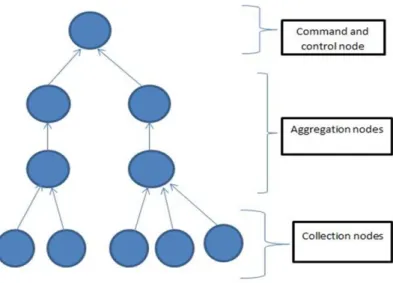
In the case of DIDS (distributed IDS), a number of different IDSs (such as HIDS and NIDS, for example) are seen to be encompassed across a large network. This type of IDS communicates across a hierarchical architecture with a number of different servers or otherwise a central service, which completes monitoring of the network. As can be seen in the Figure
2-Page 21 of 146
2, the IDSs’ hierarchical tree-like structure can be observed, where circles are representative of network nodes and the arrows represent the flow of data across various node types. The points of gathering to host- or network-based systems can be seen represented by the leaf nodes. Importantly, data from a number of different nodes are aggregated by the internal nodes, meaning the leaf node gathers the data that is communicated to the internal nodes. Subsequently, at the greatest node level, there is the operation of additional aggregation, abstraction and reduction of data until the root node is reached. Following, attack signatures are then assessed by the root node, with responses issued and a report communicated to an operator console, which is regarded as being the control and command system. Importantly, however, it is the administrator that carries out the role of assessing issue and status commands. It is posited that such a structure means direct attacks could be a weakness of IDSs.
Figure 2-2: Distributed IDS
In addition, in instances where IDSs are lacking communication lines or, at a minimum, the capacity to complete dynamic relationship configuration in the event of component failure, there is the potential of a number of different failure points. As has been highlighted in the study by[21], owing to the fact that survivability approaches, including dynamic recover, mobility and redundancy are not widely applied in the case of presently implemented IDSs, weaknesses may still be present. As has been highlighted by[29], EMERALD is one example of a DIDSs, whilst INBOUNDS is recognised by[37].
2.4.2.2 Classification Based on Detection Approaches
As has been presented a study by[38], there are two key methods to be adopted in the identification of attacks, namely KID (Knowledge-based Intrusion Detection) and BID
Page 22 of 146
(Behaviour-based Intrusion Detection). In the case of the former, attack evidence is sought in line with the data gathered that is seen to align with previously established attacks. It should be highlighted that KID is also referred to as misuse intrusion detection, rules-based intrusion detection, and signature-based intrusion detection. At the same time, through the latter method, BID, key deviations away from activities that are recognised as normal in line with the observations of the system throughout the phase of normal status are sought. BID is also commonly referred to as anomaly-based intrusion detection.
A. Knowledge-based intrusion detection
KID, fundamentally, relies on prior knowledge of vulnerable aspects within the system, how these could be exploited, and previous attacks that have taken place. These three components of information are held within a knowledge-based intrusion detection system (KIDS), which can objectively analyse incoming data, focusing on these specific components. Events that are not distinctly correlated to this stored information will be accepted, as the IDSs will not recognise it as an attack. When a behaviour that matches a previous attack is detected, it is flagged, ensuring quick recognition of an attack. In order for such knowledge-based systems to operate effectively, it is essential for the system to be updated in a timely manner with accurate information about previous attacks. Provided the information is accurate, there is a limited risk of type one, false-positive errors, and a high propensity for attack detection.
Whilst this is a key asset, the system relies solely on attacks being replicated. If an attack takes on a new form, even with a relatively subtle change, the system will not detect it. The system is only capable of learning from the experience of previous attacks and therefore cannot protect against new intrusions. There are a number of KIDSs available, with the most popular being Snort, which uses signature analysis, expert systems and state transition analysis to detect attacks as discussed in [22], [25]
1. Expert Systems: Within these systems, any attack is explained using a specific set of criteria included within IDSs in general. With expert systems, any event that is reported is first translated into a specific list of facts that define their meaning within the expert system. This list of criteria and facts is translated into rules that are subsequently processed by the KID to draw conclusions. Systems using the expert system approach must systematically browse the trail of incidents to determine patterns and assign

![Figure 2-1: An attacks categorisation in regards cloud services [21]](https://thumb-us.123doks.com/thumbv2/123dok_us/10174377.2919736/29.892.118.753.236.563/figure-attacks-categorisation-regards-cloud-services.webp)
![Table 3-2: Weight matrix for evaluating the result of the KDD cup 99 competition[109]](https://thumb-us.123doks.com/thumbv2/123dok_us/10174377.2919736/54.892.163.730.624.790/table-weight-matrix-evaluating-result-kdd-cup-competition.webp)