BRASFIELD, JON, Ph.D. A Comparison of Classification Issues across Teacher Effectiveness Measures. (2014)
Directed by Dr. Terry Ackerman. 140 pp.
In an educational landscape where teacher evaluation methods are increasingly discussed and scrutinized in research offices, legislatures, and school buildings, the differences in policy and instrumentation among states and school districts can paint a confusing picture of these varying methods and their impacts. To help assess the picture in North Carolina, this project examined teacher effectiveness data on 147 teachers from 16 schools in a large urban school district. Three measures of teacher effectiveness (a value-added measure of student growth, a third-party observation score, and state-mandated principal evaluations) were examined with a particular focus on how teachers were classified via the different methods.
The first research question examined the similarities and differences in
classification across the measures. Correlational and cross-tabular results suggested that the value-added measure and the third-party observational measure were not independent. It was also found that principal ratings do little to differentiate between teachers.
The second question examined the relationships of the variables that determine teacher pay with the effectiveness measures. It was found that no substantive
relationships exist, suggesting that the teacher evaluation measures in this sample do not exhibit bias based on experience, advanced degrees, or National Board status.
The third question examined relationships between overall school effectiveness measures and school demographic variables. The third-party observation measure tended
to be moderately associated with school-level demographics, a finding which may call into question the ability to compare teachers across schools.
A COMPARISON OF CLASSIFICATION ISSUES ACROSS TEACHER EFFECTIVENESS MEASURES
by
Jon Brasfield
A Dissertation Submitted to the Faculty of the Graduate School at The University of North Carolina at Greensboro
in Partial Fulfillment of the Requirements for the Degree
Doctor of Philosophy Greensboro 2014
Approved by _______________________________ Committee Chair
APPROVAL PAGE
This dissertation has been approved by the following committee of the Faculty of The Graduate School at The University of North Carolina at Greensboro.
Committee Chair______________________________________ Committee Members______________________________________ ______________________________________ ______________________________________ ____________________________ Date of Acceptance by Committee _________________________ Date of Final Oral Examination
ACKNOWLEDGEMENTS
I would like to acknowledge the guidance of my advisor and committee chair, Dr. Terry Ackerman, and the other members of my committee, Dr. Kimberley Kappler Hewitt, Dr. Judy Penny, and Dr. John Willse. Thank you for your thoughts, input, and flexibility in this process. I would also like to thank Dr. Marty Ward and the Winston-Salem/Forsyth County school district for their cooperation and support.
TABLE OF CONTENTS
Page
LIST OF TABLES ... vi
LIST OF FIGURES ... viii
CHAPTER I.INTRODUCTION ...1
Teacher Evaluation in North Carolina ...3
Limitations ...8
II.REVIEW OF THE LITERATURE ...9
Teacher Evaluation Systems ...9
Use of and Issues with Value-Added Modeling ...19
Combining Measures of Teacher Effectiveness ...41
III. METHODS ...48
Background ...48
Description of Sample ...49
Instruments ...52
Data Analysis Procedures ...62
IV.RESULTS ...69
V. DISCUSSION ...98
REFERENCES ...110
APPENDIX A. STAR3 OBSERVATION RUBRIC...120
LIST OF TABLES
Page Table 1. Demographic Characteristics of STAR3 Project Schools
Compared to District ...50
Table 2. Student Achievement Measures for STAR3 Project Schools Compared to District ...51
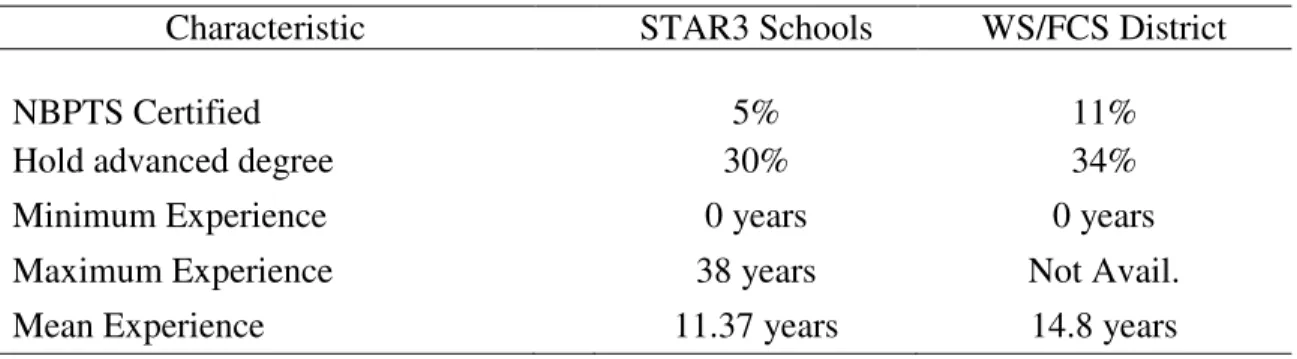
Table 3. Selected Characteristics of Sample Teachers Compared to District ...52
Table 4. Proportion of Teachers Receiving Each Rating by Standard on the NC TES, 2011-12 ...54
Table 5. EVAAS® Teacher Effect Composite Components by Grade ...56
Table 6. Inter-rater Agreement of Paired STAR3 Observations...60
Table 7. Research Questions, Data Sources, and Analyses ...67
Table 8. Descriptive Statistics for Each Measurement Method ...70
Table 9. Frequency Distributions of NC Standards I and IV for Sample ...70
Table 10. Classification Distributions by Measurement Method ...77
Table 11. STAR3 Classification vs. EVAAS® Classification ...79
Table 12. NC I Classification vs. EVAAS® Classification ...79
Table 13. NC IV Classification vs. EVAAS® Classification ...79
Table 14. NC I Classification vs. STAR3 Classification ...80
Table 15. NC IV Classification vs. STAR3 Classification ...80
Table 16. NC IV Classification vs. NC I Classification ...80
Table 17. Agreement of Measurement Methods ...81
Table 19. EVAAS® Classification by Degree Type ... 86
Table 20. EVAAS® Classification by NBPTS Status ...86
Table 21. NC Standard I Classification by Degree Type ...87
Table 22. NC Standard I Classification by NBPTS Status ...87
Table 23. NC Standard IV Classification by Degree Type ...87
Table 24. NC Standard IV Classification by NBPTS Status ...88
Table 25. STAR3 Classification by Degree Type ...88
Table 26. STAR3 Classification by NBPTS Status ...88
Table 27. ANOVA Results for Teacher Experience Means by EVAAS® Classification ...89
Table 28. ANOVA Results for Teacher Experience Means by NC I Classification ...89
Table 29. ANOVA Results for Teacher Experience Means by NC IV Classification ...90
Table 30. ANOVA Results for Teacher Experience Means by STAR3 Classification ...90
Table 31. School-Level Variable Descriptive Statistics ...92
Table 32. Correlations between Measurement Methods and School-Level Variables ...92
Table 33. EVAAS® Classification by School Type ...93
Table 34. STAR3 Classification by School Type ...94
Table 35. T-test Results for FRL% by Measurement Method ...95
LIST OF FIGURES
Page
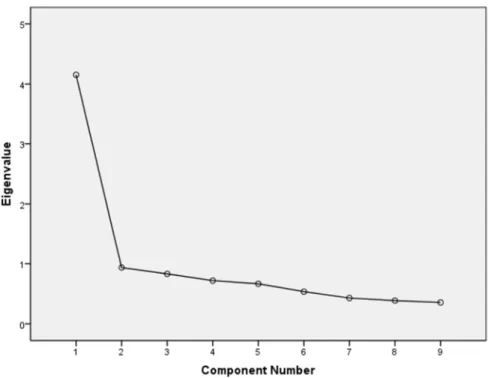
Figure. 1. Scree Plot of 2012-13 STAR3 Observation Data ...62
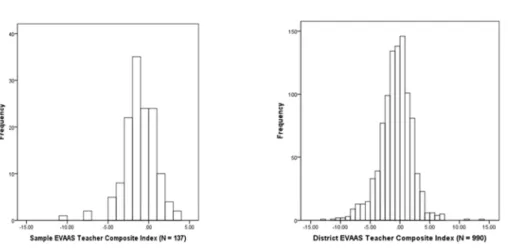
Figure 2. EVAAS® Teacher Composite Index Distribution for Sample and District ...71
Figure 3. STAR3 Observation Score Distribution for Sample ...71
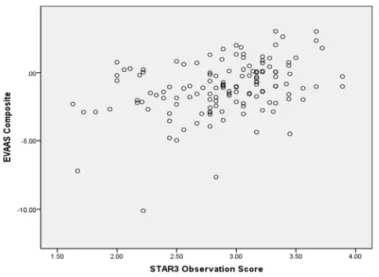
Figure 4. Scatterplot of EVAAS Index and STAR3 Observations (r = 0.36) ...73
Figure 5. Boxplot of EVAAS Index and NC I (r = 0.19)...73
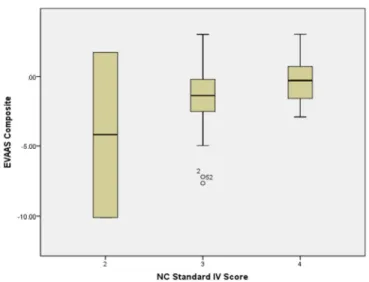
Figure 6. Boxplot of EVAAS Index and NC IV (r = 0.32) ...74
Figure 7. Boxplot of STAR3 Observations and NC I (r = 0.20) ...74
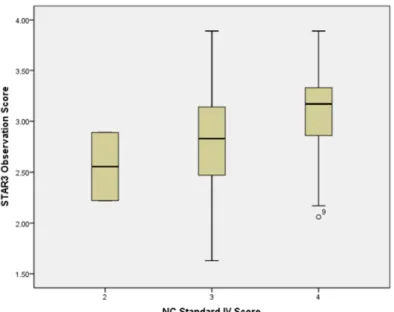
Figure 8. Boxplot of STAR3 Observations and NC IV (r = 0.33) ...75
CHAPTER I INTRODUCTION
Today, more data on more aspects of education are available than ever before. The ability of states, districts, and educational research organizations to capture and link information on students and teachers in a longitudinal manner has far-reaching
implications for the future of educational practice in the United States. One area in which this wealth of data has recently received attention both within education policy arenas and in mainstream society is the field of teacher effectiveness evaluation (e.g. Anderson, 2013; Banchero & Kesmodo, 2011; Ripley, 2010).
Partially due to the amount of information available and partially due to federal grant programs such as Race to the Top (RttT) and the requirement to use student growth data in teacher evaluation systems in order to receive a waiver from No Child Left Behind requirements, states and school districts have been revising their teacher evaluation systems at a rapid pace. In the period from 2009-2012, 36 states and the District of Columbia made substantive changes to their policies regarding teacher evaluation, including guidelines on tenure, retention, dismissal, and in some cases, performance pay (National Council on Teacher Quality, 2013). Though many policy changes have been instituted, there remains much diversity in the policies themselves, as well as in the research regarding the best aspects of a quality teacher evaluation system. Traditionally, teacher evaluation has been conducted as a primarily building-level
exercise, with a principal or other administrator issuing a rating of proficient or nonproficient on a teacher, and these ratings having some nominal effect on decisions regarding tenure status.
In recent years, considerable research has been done on the efficacy of this particular method of teacher evaluation, as well as on emerging methods of teacher evaluation such as value-added modeling (VAM), standards-based observation, and student surveys, among others. In 2011, the Bill and Melinda Gates Foundation
completed a massive study on this topic in an attempt to determine the best methods of measuring teacher quality. Among their findings was that standards-based observations, student survey data, and value-added modeling of teacher effects on student learning could be valuable indicators of quality. Policy changes across states have been inspired by this research, with 39 states now requiring that classroom observations of teachers be incorporated into teachers’ evaluations and 30 states requiring that some measure of student achievement be a significant or the most significant aspect of a teacher’s evaluation (Collins & Amrein-Beardsley, 2013). According to a nationwide survey of educational effectiveness policy, 40 states and the District of Columbia currently are either using or developing some sort of growth measure or VAM (Collins & Amrein-Beardsley, 2013). In the past four years, the number of states requiring that student achievement play a role in teacher tenure decisions grew from zero to nine (NCTQ, 2013). In addition, where teachers previously were evaluated irregularly, 23 states now require that every teacher undergo annual evaluation.
With so much research being done on the effectiveness of various methods of measuring teacher effectiveness, opportunities arise for examination of the purpose of teacher evaluation. Papay (2012) proposed that evaluation systems serve two potential purposes: first, to identify high- and low-quality teachers for purposes of tenure, dismissal, or merit pay; and second, to serve as formative assessment for a teacher’s practice, providing him or her with feedback crucial to the professional growth process. For a teacher evaluation system to serve either of these purposes, the conclusions reached by the use of these instruments must be meaningful and provide some diagnostic or prescriptive information. Different instruments used to sort teachers into performance-based groups would ideally sort teachers into the same groups, regardless of the influence of outside factors. In this project, three different teacher effectiveness measures from a set of elementary and middle schools in a large, urban school district in North Carolina were examined. The data were analyzed to assess how various teacher- and school-level variables affect measurements under various methods, as well as to determine if certain categories of teachers might be scored dissimilarly on various methods.
Teacher Evaluation in North Carolina
In North Carolina (at the time of data collection), teachers are subject to annual evaluation using the North Carolina Teacher Evaluation System (NC TES), a standards-based instrument designed to be completed by administrators (see Chapter 3). The system features five standards – one each regarding leadership, establishing a respectful
on their practice. Veteran teachers are evaluated annually on two standards of the NC TES instrument (leadership and facilitation of learning), and beginning teachers and teachers in review years are evaluated on all five standards. In their 2012 “State of the States” analysis of teacher evaluation practices nationwide, the National Council on Teacher Quality assigned North Carolina a grade of “C-“ for its ability to identify quality teachers – a grade that, while low, was in the top half of states. The grade was based on NCTQ’s interpretation of North Carolina’s policies as requiring evidence of student learning, but it lacked the inclusion of student growth as a “significant” factor in determining teacher tenure. As of 2012 in North Carolina, teacher tenure was granted almost automatically after four years of service (NCTQ, 2013). Legislative action in North Carolina has since begun phasing out teacher tenure, and the status will be fully eliminated in 2018. In its recommendations, the NCTQ suggested that states use multiple measures of student learning to measure teacher effectiveness and require classroom observations that focus on and document the effectiveness of instruction, stating, “well-designed and executed observations provide the clearest opportunity to give teachers actionable feedback on the strengths and weaknesses of their instructional practice” (NCTQ, 2013, p.8).
Whereas the NC TES does require evidence of student learning and does require classroom observations, it does not track the fidelity of observations through records of inter-rater reliability. The data set used in this project involved a second set of standards-based observations conducted by full-time, highly trained observers who exhibited high inter-rater reliability – one trait not present in the literature on the NC TES.
In addition to the NC TES, North Carolina teachers are also measured by a VAM, SAS Institute Inc.’s Education Value-Added Assessment System (EVAAS®). Though much controversy exists around the use of VAMs (see Chapter 2), the fact that North Carolina currently (and for the foreseeable future) uses EVAAS® for teacher
measurement warrants its inclusion in this study.
The subset of schools used in this study is unique in that teachers are evaluated by three measures of teacher effectiveness instead of the typical two. North Carolina
publishes aggregate data on NC TES outcomes
(http://apps.schools.nc.gov/pls/apex/f?p=155:1), and statewide EVAAS® trends are available to educators in the state, but the addition of a highly-focused standards-based observation system to these schools allows an opportunity to observe the differences in levels of classification between the two existing methods of teacher measurement in the state side-by-side with another method that has shown promise in research. Differences in teacher classification shown among the instruments and methods help contribute to the conversation about the best methods of teacher effectiveness measurement and
potentially examine the effects of introducing a standards-based observation component performed by highly trained observers into the NC TES.
As of 2012-13 in North Carolina, teachers were eligible for tenure based on the results of the NC TES evaluations. As previously mentioned, teacher tenure status has recently been removed by the North Carolina Legislature and will be completely
standards were placed in a probationary category, where termination may occur if
improvement is not shown. Teacher pay in North Carolina is not related to the evaluation system, and instead is determined by a teacher’s experience, highest degree earned, and National Board of Professional Teaching Standards certification status. For this reason, measurement methods were analyzed in the context of both classification and pay variables. This research was approached as a case study and is only intended to be descriptive of the sample used. The final chapter will discuss implications and directions for further research.
To fully examine the relationships between the methods of teacher measurement used in this sample and the school- and teacher-level variables of interest, the three following research questions were proposed:
RQ1: Do the three methods of teacher effectiveness measurement (TEM) classify teachers in substantively different ways?
This question focused on the distributions created when teachers are classified solely on one of the three methods (NC TES, EVAAS, or STAR3 observation score). Analysis of these distributions allowed examination of the relationships between the methods. Statistical tests were conducted to determine if significant differences existed in the classification of individual teachers using different methods. Of particular interest were the relationships (or lack thereof) in teacher classification via the NC TES and classification via the separate standards-based observation rubric. Differences would suggest that two measures of classroom techniques are measuring different constructs in
practice (or that one or both are unreliable or invalid), which ultimately may suggest that inclusion of a separate measure of classroom technique may be desirable.
RQ2: Are teachers with different degrees of experience, advanced degrees, and National Board Certification - the current methods of determining teacher pay - classified differently using different methods of TEM?
This question examined the distributions created by measuring teachers by each of the three measurement methods and compared them with respect to the variables that currently affect teacher pay in North Carolina. As in RQ 1, the individual teachers were the subjects of interest in this question. If all the instruments used in the measurement system were valid and reliable, and they were shown to classify teachers differently at different levels of the teacher-level variables, there may be implications for determining the fairness of the current teacher pay system in North Carolina.
RQ3: Which, if any, school-level variables have an impact on measurement of teacher quality?
This question focused on the school averages for each of the measurements. Analyses used to answer this question focused on attempting to determine if differences existed in any of the three measurements in terms of sensitivity to school-level factors such as poverty and native English speaking percentage. As in RQ1, evidence of differential scoring in this sample would suggest that further research should be conducted concerning the potential bias in the instruments used in evaluating teachers and schools in North Carolina.
Limitations
This study, as mentioned previously, used a highly focused sample from low-performing schools in one urban district in North Carolina. It also only used data from teachers of grades 4-8. This limits the generalizability of conclusions from the analyses. Results from this study can be used to inform directions for further research into the impact of different teacher effectiveness measures used in North Carolina and throughout the United States. In addition, an ideal sample would involve the use of the same
instrument by both principals and third-party observers, so that observer-effect and instrument-effect would not be confounded. In this sample, one can only compare the impact of the NC TES with the third-party observer system as it is currently designed.
This study is written in five chapters. The first three examine the purpose, context, data, and procedures of the study. The fourth presents the analysis of the data. The fifth chapter examines conclusions gleaned from the analysis of the data. The answers to the three research questions posed above are addressed and directions for future research are also discussed in Chapter 5.
CHAPTER II
REVIEW OF THE LITERATURE Teacher Evaluation Systems
Evaluation by principals. Traditionally, teachers have been evaluated by a state- or district-mandated process that involves some degree of judgment based on observable behaviors, both in and outside the classroom. Teachers who score high on these
evaluations, in general, tend to also score high on other measures of specific teacher effectiveness, such as classroom management and having better relationships with their students (Stronge, Ward, & Grant, 2011).
A significant amount of research has been conducted on these evaluative processes, and many of these studies have found that principals are the primarily responsible parties for conducting the evaluations (e.g., Zimmerman & Deckert-Pelton, 2003). Studies suggest further that principals are tasked with carrying out teacher evaluations without being well-trained in the process and with an inability to devote sufficient time to fidelity (Toch, 2008). Even when fidelity is attained, the tools used for evaluation often don’t focus directly on instructional quality (Toch, 2008).
Despite these challenges, “Principals’ behaviors, expectations, and perceptions help build the climate of a school and these data suggest that teachers are looking to their principals to be leaders in this critical domain of assessment and evaluation”
administrators are the parties responsible for determining teacher effectiveness contributes to a sense of alertness and attention to quality by teachers, when the evaluations are perceived as useful (Noakes, 2008).
However, many teachers do not find these evaluations to be a positive experience. In one study of 79 teachers in five Florida school districts, 38% of teachers noted that their principals conducted their evaluations in an inconsistent manner; they found the ratings subjective and did not feel that they had ample opportunity to appeal (Zimmerman & Deckert-Pelton, 2003). This same study found that the perception of inconsistency existed both within a school and between schools in a district, and that this inconsistency is a demotivator for experienced teachers.
An additional interview-based study found that elementary principals tend to lack follow-through on evaluations (Arrington, 2010). The author performed a series of four focus group interviews with 6-10 teachers each in Georgia, and concluded that, although reactions to the usefulness of evaluations by their principals were mixed, follow-up was minimal and evaluations were disconnected from a teacher’s actual performance.
McConney, Ayres, Hansen, and Cuthbertson (2003) came to similar conclusions regarding the value of such systems. The authors analyzed survey results from the Baltimore, Maryland, public schools district (N = 6,096 teachers) to determine
satisfaction with their evaluation system. A large majority of teachers in the system rated “good” to “excellent” the timeliness, dignity, and respect with which their evaluations were conducted, although only around half of teachers rated the accuracy of the
10 teachers saw evaluation policies as fair and ethical, applied evenly, oriented toward teacher improvement, and providing for due process. In contrast, McConney et al. found that 7 to 8 of every 10 principals believe that these standards are met to a good or great degree. It appears, then, that a disconnect exists between principals and teachers in their perceptions of the accuracy of teacher evaluation systems.
One potential explanation for teachers’ resistance to a principal-led evaluation system is that teaching has traditionally been a solitary activity. Teachers are not
socialized to having external observations of their work and are often uncomfortable with the observation process (Van Tassel-Baska, Quek, & Feng, 2006). This phenomenon was clarified in a qualitative study which found that teachers conveyed a “deep desire for a constructive and collaborative relationship with their principals regarding their
professional evaluation” (Zimmerman & Deckert-Pelton, 2003). This constructive and collaborative relationship which the authors found to be lacking can be established by administrators if they provide feedback which is perceived as honest and helpful (Marshall, 2005). To provide thoughtful feedback, principals must devote their full attention to a classroom for an uninterrupted block of time (Zatynski, 2012). If principals are to be the primary evaluators for teachers, then adequate preparation and ample time to establish a valid assessment of the teacher’s performance in the classroom are crucial. Unfortunately, studies have found that this training and time allowance is not always adequate (Ingle, Rutledge, & Bishop, 2011; Johnson & Roellke, 1999; Marshall, 2005; Ramirez, Lamphere, Smith, Brown, & Pierceall-Herman, 2011). Hill, Charalambous, & Kraft (2012) described the problem as such:
We also know from anecdotal evidence that principals may be pressed for time and thus “sample”, in a sense, a half hour from a lesson before moving on to their next responsibility. If the reliability of teacher scores is not affected by this sampling, then, at least from a measurement
perspective, it is a smart strategy. However, if principals are
systematically missing important aspects of instruction because of this time-saving approach, their ratings might not consistently capture the overall quality of instruction occurring in the classroom. (p. 57)
Evaluation by third parties. If training and adequate observational time are obstacles to fair and accurate teacher evaluations, then a logical fix would be to assign the task of evaluations to outside observers who have both adequate training and time to devote to the fidelity of the process. The Measures of Effective teaching (MET) project, undertaken in 2009 and funded by the Bill & Melinda Gates Foundation, was intended to build and test measures of effective teaching to find out how evaluation methods could best be used to help districts and teachers identify effective teaching and improve teacher quality. Over 3,000 teachers across six school districts volunteered to participate in the project, with the goal of determining how to “close the gap between expectations of effective teaching and what is actually happening in classrooms”
(http://www.metproject.org). The project examined student survey data, classroom observation data, student achievement data, teacher content knowledge, and teacher perceptions of working conditions.
As one aspect of their investigation, the MET project compared teacher evaluations conducted by principals to those conducted by “peers” – fellow teachers trained in and tasked with observing other teachers. In a sample of 129 administrators using a four-point observation scale, they found that principals rated their own teachers
slightly higher (0.1 points) than principals from other schools and even slightly higher (0.2 points) than peers (Ho & Kane, 2013). These differences may seem quite small, but given the highly compressed data (scores were disproportionately clustered in the middle of the distribution, another common finding in principal evaluations), a 0.1 point
difference in mean observation score was equivalent to ten percentile ranks.
In an interesting finding, although administrators scored their own teachers higher in terms of raw score, their rankings were similar to the rankings produced by others outside their schools, with an overall Spearman rank-order correlation of 0.87 (Ho & Kane, 2013). This implies that administrators’ scores were not heavily driven by factors outside the lesson, such as a principal’s prior impressions of the teacher or personal bias.
Another study (Searles & Kudeki, 1987) concluded similarly that principals (N = 28) and teachers (N = 81) do not have a tendency to rank teachers differently based on observable factors. The authors administered a 100-item questionnaire to both principals and science teachers on the effectiveness of observed science lessons. For 85 of the 100 items, results from Pearson chi-square tests suggested that there was no evidence that principals and teachers classified the observed teachers differently, suggesting principals and teachers tended to rank teachers similarly.
Likewise, Searles & Ng (1982) showed that principals (N = 22) and biology teachers (N = 41) tended to rate biology teachers similarly. On an observational checklist, 79 of 84 items exhibited no statistically significant difference between the two groups.
The reality of teacher evaluation, however, is that although principals may rank teachers similarly to the way their peers might rank them, rankings do not affect a
teacher’s employment status to the degree that ratings do. If feedback from principal evaluations is to be useful, it would follow that teacher ratings should be differentiated among the rating categories. Studies have found that this is not always the case. One study addressing teacher evaluations of over 8,000 teachers across five large school districts determined that almost 99 percent of teachers receive ratings of “satisfactory,” based on their district’s standards when a dichotomous rating system was used (Zatynski, 2012). A separate study showed that principals in 87 percent of schools in a single large urban district of over 600 schools did not issue a single “unsatisfactory” rating between 2003 and 2006 (Toch, 2008).
The MET project found a similar phenomenon in a different district: In a study where 127 school administrators and teachers observers each conducted 24 teacher observations, observers rarely used the top or bottom categories (“unsatisfactory” and “advanced”) on the four-point observation instrument, which was based on Charlotte Danielson’s Framework for Teaching. On any given item, an average of 5 percent of scores were in the bottom category (“unsatisfactory”), while 2 percent of scores were in the top category (“advanced”). The vast majority of scores were in the middle two categories, “basic” and “proficient.” (Ho & Kane, 2013)
It is a commonly accepted research practice to collect more data if the accuracy of a phenomenon is in question. With such a compressed rating scale, the accuracy of these teacher ratings would surely be in question. One solution, then, would be to increase the number of observations upon which a teacher’s evaluation is based. Another would be to
decompress the rating scale. The MET project came to the first conclusion, by suggesting that a district base a teacher’s evaluation on both principal observations and those by outside observers. This allows for the convenience of observations carried out by administrators in the building and with whom the teachers are already familiar,
acknowledging that “adding observations by observers from outside a teacher’s school to those carried out by a teacher’s own administrator can provide an ongoing check against “in-school bias” (Bill and Melinda Gates Foundation, 2013, p. 5).
In any case, effective teacher evaluation relies on the instrument and training processes as much as the observers themselves. One way to align these aspects is to choose an observation instrument that sets clear expectations (Bill and Melinda Gates Foundation, 2012). With an instrument that sets clear expectations, principals can use their contextual knowledge of a teacher in combination with their observations, and outside observers can rely on an outsider perspective.
Reliability and validity of observations. As many teacher evaluation systems, including the one in this study, are at least partially dependent on teacher observations by trained evaluators using a rubric, any discussion of the usefulness of their scores should include a discussion of reliability. It stands to reason that, as with any score, any one teacher observation score is actually comprised of various components, of which error is one.
The MET project found reliability values of 0.14 to 0.37 for single teacher
observation scores. In other words, the vast majority of the total variance in scores across all lessons, teachers, and raters -- typically around two-thirds -- is due to factors other
than persistent differences among teachers, such as observer differences, random fluctuation in lesson quality, and other factors (Bill and Melinda Gates Foundation, 2012). In a separate report, MET noted that reliably characterizing a teacher’s practice required averaging scores over multiple observations. In their study, the same teacher was often rated differently depending on who performed the observation and which lesson was being observed. The influence of an atypical lesson and unusual observer judgment were reduced with multiple lessons and observers. (Bill and Melinda Gates Foundation, 2012, p. 2). This is not to say that much variance was found to come from observer bias. It was found that less that 10 percent of total score variation actually resulted from some observers consistently scoring higher or lower than others. This underscores the ability to control the effects of over- or under-scoring through effective training.
Although persistent over- or under-scoring didn’t seem to be a substantial
problem, the project did find that teacher scores vary more among observers than among lessons observed by a single observer. Adding a second observer when multiple
observations were to occur increased reliability from 0.66 to 0.72, compared to the alternative of having the same observer conduct multiple observations on the same teacher. In fact, multiple shorter evaluations can be more reliable than longer observations by the same observer, a reliability increase from 0.66 to 0.69 (Bill and Melinda Gates Foundation, 2013, p.5). Other studies have focused heavily on assessing inter-rater reliability for teacher observations, and typical values range from 0.55 to 0.89, with most falling above 0.74 (Gersten, Baker, Haager, & Graves, 2005; Van Tassel-Baska et al., 2006).
One interesting study (Hill et al., 2012) brought up an important point regarding inter-rater reliability – namely, that inter-rater reliability as typically measured is largely influenced by the number of points on the scale. A scale with two score options would typically provide a much higher level of inter-rater agreement than one with ten score options, regardless of the quality of the instrument or the quality of the lesson being observed. The authors referred to the reliance on inter-rater reliability as “misleading,” because multiple factors go into an observation’s “true” reliability, and inter-rater reliability focuses only on one factor. Hill et al. write that even strong rater agreement does not assure the consistency of teacher scores and may even mask problems with the data. In addition to the number of points on the rating scale, agreement is influenced by the frequency of target behaviors observed and chance. The authors also noted that inter-rater agreement focuses only on the inter-rater as a source of agreement or disagreement and leaves unexamined other sources of variation such as instruments, training methods, and specific scoring designs.
Given these findings, along with the knowledge that school districts do not have unlimited funds for hiring and training observers, some suggestions are provided for maximizing the efficiency of classroom observation. It was found that observations based on the first 15 minutes of lessons were about 60 percent as reliable as full lesson
observations, although requiring one-third as much observer time, suggesting that the optimized solution may lie in shorter, more frequent observations with multiple observers (Bill and Melinda Gates Foundation, 2013, p. 19). A logistical issue, however, prevents overreliance on short observations, because some aspects of teaching monitored by
observers don’t tend to be observable during short observations – particularly if they are limited to the beginning of a class period (Bill and Melinda Gates Foundation, 2013, p.19).
The most salient point taken away from the research on improving reliability of teacher observations is the importance of requiring observers to be well-trained. Ideally, observers will demonstrate competency, consistency, and accuracy before conducting observations on live lessons.
Determining reliability of a teacher observation instrument is a fairly straightforward process, but determining validity can be more difficult. One way to establish validity of a particular system of evaluation is to analyze the relationship between observation scores and an already-existing measure of teacher effectiveness.
In a study of the Chilean national teacher evaluation system, Santelices and Taut (2011) found that teachers exhibited significant differences in the expected direction between teachers rated as “satisfactory” and “unsatisfactory” on teacher observation measures. Although the data were gathered from a school system outside the United States, the findings are relevant to the current study, as teacher effectiveness variables used were similar to those used in US-based studies.The 58 teachers in the sample were divided into “satisfactory”(n=32) and “unsatisfactory” (n=26) groups, and statistically significant differences were found between the two groups on such disparate measures as student achievement, content knowledge, and teacher observation scores. In particular, they found “especially strong and practically significant differences related to time on
task during lessons, lesson structure, student behavior, and student evaluation materials” (p. 72).
Another study examining criterion-related validity of a teacher observation instrument correlated scores from each instrument subscale with residualized student growth scores in reading performance. The various instrument subscales showed moderate to moderately strong correlations with student growth, ranging from 0.49 to 0.65 (Gersten et al., 2005).
Another approach to establishing validity of a teacher observation system was exhibited in Van Tassel-Baska, et al. (2006). An “expert panel” of professors, scholars, practitioners, and administrators was assembled to rate the instrument’s content validity, and intra-class coefficients were calculated to determine expert agreement on the validity of the form. Their agreement on the two dimensions of the validity was .86 for the importance of each item, and .99 for the clarity of language.
Use of and Issues with Value-Added Modeling
Another method of teacher effectiveness measurement included in this study is Value-Added Modeling (VAM). In North Carolina, teachers who teach state-tested subjects receive value-added scores through the Educator Value-Added Assessment System (EVAAS®), designed by SAS Institute Inc. and based on the Tennessee Value-Added Assessment System (TVAAS) (Sanders, Saxton, & Horn, 1997). The primary appeal of VAM to measure educator effectiveness is in its ability to capture student growth, rather than simple student achievement.
Value-added models were brought to education with the intent of measuring the specific contribution of a school (or teacher) to a student’s learning. Whereas traditional methods of student achievement measurement focus on proficiency and performance level, VAMs involve a prediction model that controls for, at a minimum, a student’s prior achievement. When out-of-context student achievement, such as raw achievement scores or the proportion of students above a particular proficiency bar, are used as the primary quantitative basis for teacher evaluation, teachers can be unfairly blamed or helped simply by having a classroom full of students with a history of low or high achievement, respectively. Value-added models (of which there are many forms) use various degrees of student-, classroom-, and school-level covariates (e.g. student demographics, SES, school size) to attempt to isolate the effect of interest. In general, VAMs rely on the assessment of student growth – students are predicted to perform at a particular level on a
standardized test determined by the variables in the prediction model, and any deviation from the prediction is attributed to the teacher (and/or the school).
In this sense, VAMs are distinct from more basic measurements of student growth. Growth models, like VAMs, track the same students over time, measuring their performance at one point in time relative to a previous baseline. However, these simpler growth models implicitly assume that all students learn at a uniform rate and that a teacher (or school) is the only responsible party for growth (Scherrer, 2011). VAMs also track student test score change over time, but in a way that models the added effect of a teacher after controlling for other effects, depending on the VAM used (Timmermans, Doolaards, & de Wolf, 2011).
However, as articulated by Van de Grift, “It is far easier to define the value added of schools than to assess it” (2009, p. 270). Although there are many applications of the value-added concept in educational assessment, one of the more common approaches is a general model from the work of McCaffrey, Lockwood, Koretz, Louis, and Hamilton (2004).
The general model. The general VAM described by McCaffrey et al. is restricted in that it only depicts projections for one subject, and contains variables that allow for the inclusion of a single year of test scores. The model, however, can be generalized to any number of consecutive grades or subjects. McCaffrey et al. identify the general model for a student’s initial year of testing as:
In this notation, 0 refers to grade 0, the first year of a student’s test history. In general notation, the yig refers to the test score of student i in grade g.The µg represents the district (or state, or reference unit) mean in grade g, and xi and zi0 refer to student-level covariates that are time-invariant (gender, SES, etc.) and time-variant (testing accommodations, setting, etc.), respectively. For the M schools in the district, the i0k refers to the proportion of the year spent by student i in grade 0 at school k, and the 0k refer to the school effects for school k in grade 0. Similarly, for the N0 grade 0 teachers,
refers to the teacher effect of teacher j. The i0 are normally distributed residual errors for student test scores.
As the authors note, this model can be adapted to fit many types of value-added models by setting any of the above coefficients to zero. In order to project student growth and teacher effect for a future year (year 1 using the above notation), terms can be
included that measure the impact of previous years’ teachers on a student’s projected score. This “alpha” value can be set to 1 to imply that a teacher’s effect on student learning continues unabated through a student’s career, set to 0 to imply that previous teacher effects have no bearing on future learning, or set to some decaying amount as years progress. In the above model, previous test performance would be included in the student-level time-variant z variables.
Types of value-added models. One of the primary concerns in choosing a model, at least on a conceptual level, has been the issue of whether to include student
demographic data in the prediction model. Martineau (2006a) states, for example, that fairness toward educators has been an important rationale for implementing VAM and has led the Dallas school district to include large numbers of policy-defined ‘‘fairness’’ variables as covariates in the models (p. 252).
Timmermans et al. (2011) categorize commonly-used VAMs into five types, which will be summarized here. The authors point out that because VAMs differ in the types of control variables they employ, they also necessarily differ in the meaning of their output. Any model that doesn’t explicitly include a certain variable that affects student
achievement results in an error term that includes the effects that are not accounted for by the variables in the equation. The five types identified are:
1) “Type 0” – This is a model without control variables. This is simply a model that compares the average student performance at a school to the average student performance at the average school in the district. The authors point out that this cannot be considered a true value-added model, as no effects are isolated. This model would be inappropriate to use in practice, as school effect estimates contain many variables outside of the school’s control.
2) “Type AA” – The Type AA model is a model which contains controls only for prior student achievement. The VAM used in this project is of this type. The output of this model compares student performance at a school with student performance at the average school among students of similar prior
achievement. This model contains the implication that all learning takes place due to the school (or teacher, if applying this model for teacher comparisons). 3) “Type A” – This model is like the Type AA model, but with the inclusion of
additional student-level controls. These added controls are typically
background characteristics such as gender, ethnicity, or socioeconomic status. This model compares student performance with the performance of other students who are similar in both prior achievement and background. Use of this model would address the concern that students from differing
backgrounds tend to differ not only in beginning achievement level, but also in rate of growth (Linn, 2001; Kupermintz, 2002).
4) “Type B” – These models include both student-level prior achievement and student-level controls and add school-level compositional effects such as average SES and average prior achievement. These approaches compare student performance with the average performance of similar students at schools that are compositionally similar.
5) “Type X” – Type X models are very similar to Type B, but also include nonmalleable school-level controls, such as school size, location, and staffing patterns. These models compare student performance to average similar student performance at schools that are both compositionally and structurally similar.
These five models are conceptually distinct, and Timmermans et al. (2011) performed a series of studies that compared their empirical effects in terms of
school/teacher ranking and classification. In a sample of 137 Dutch schools, it was found that all five models showed school effect correlations ranging from .68 to .85, suggesting that they are all measuring a similar underlying construct. In a smaller study (N = 22 middle school mathematics teachers), Hill, Kapitula, & Umland (2011) analyzed teacher effects from models AA, A, B, and X, and found Spearman rank-order correlations between all pairs to be equal to or greater than 0.82. However, results from this study may be questionable due to the small sample size.
The Timmermans et al. (2011) study also analyzed classification effects of the five models by sorting schools into underperforming, average, and overperforming groups based on significant school effect difference from zero. Coefficient Kappa values among the four models (not counting Type 0, that only exhibited slight agreement with the other models) ranged from .34 (Type AA with Type X) to .78 (Type B with Type X).
These findings suggest that the four models tend to classify schools in at least a moderately similar fashion. Progressing from simple to more complex models tended to increase the size of the high- and low-performance groups while shrinking the size of the average groups. More complex models explained more of both the school and student-level variance. For example, going from Model Type AA to A increased explained student-level variance from 17 to 27% and increased explained school-level variance from 35 to 42%. Interestingly, however, going from type B to X added no explained variance.
Another study found conflicting results with regard to the explained variance of Type X versus Type B. In a study of approximately 500 Australian schools (relevant to US schools due to its examination of similar value-added models), Keeves, Hungi, and Afrassa (2005) found that the Type X model, by including non-malleable school-level effects, increased variance explained in student scores by 13 percentage points over a Type B model. To this point, Timmermans et al. (2011) noted that conceptually, model Type B is preferable to Type X despite the additional explained variance if the purpose of modeling is to identify weak schools, regardless of their size. Including nonmalleable
factors such as school size in the model only identify as underperforming those schools which underperform compared to schools of similar size (and similar on other included nonmalleable factors). If a school is to be labeled as weak, the authors argue, it should not only be within the context of structurally similar schools.
The Keeves et al. (2005) study found similar results to the Timmermans et al. study when comparing unexplained student-level variance from a Type A model (53.1%) to the same from a Type B model (46.4%). These studies agree that the addition of school-level compositional covariates produces more useful results.
Criticisms of VAM. Even though the general aim of VAM is a conceptual improvement over the use of student-based outcome measures without controls as teacher evaluation tools, there remains much criticism about the use and overreliance on VAM. These criticisms exist on both an empirical and a conceptual level, both of which will be addressed in this section.
Van de Grift (2009) enumerates four empirical issues with the use of VAM for teacher evaluation: First, there is typically too much missing data to claim valid teacher effect estimates. In his study, the author found that 34% of students tested in a school district in the Netherlands were no longer in the sample six years later. In addition, 7% of students in Year 8 of his sample were not in the sample two years previous, and 11% were not in the sample four years previous. This would not be a significant problem if the students missing from the sample were random, but his second issue addresses this concern.
The second issue raised is that the missing data are not random. The author found in his study that 32% of students who disappear from a cohort do so due to retention. This alone has the effect of removing struggling students from the sample for future teachers, but there also seems to be a demographic effect. In an analysis of the retained students, it was shown that 27% of students from Turkish or Moroccan descent were retained at some point, compared to 17% of low-SES students and 11% of non-Turkish or Moroccan students.
Third, the results are unstable. In his study of 33 Dutch elementary schools over six years, no schools persisted in the over- or under-achievement category (defined by their school effect being significantly different from zero) over all six years. 29% of schools persisted in the middle category for all six years. The other 71% of schools all spent at least one year in the over- or under-achievement category. Again, though the study was performed on Dutch schools, the concepts of student mobility, nonrandom assignment of students to schools, and retention are applicable to US-based schools as well.
Much other work has been done on the stability of value added estimates. For example, Koedel and Betts (2007) used VAM to identify effective teachers, and found that only 35% of teachers in the top 20% in one academic year remained in the top 20% the next year. In a large study of many uses of VAM, McCaffrey, Sass, Lockwood, & Mihaly (2009) found that year-to-year correlations of teacher effect tend to be in the 0.2 – 0.5 range for elementary teachers and 0.3 to 0.7 for middle school teachers. In an
interesting note, McCaffrey et al. (2009) point out that correlations of 0.3 -- 0.7 in year-to-year performance are similar to the year-year-to-year performance measures of other
professionals, such as insurance salesmen and baseball players, whose output is measured directly. In addition, in a large study of the effect of measurement error on VAM, the Bill and Melinda Gates Foundation clarified an alternate interpretation of the relatively low year-to-year teacher effect correlations: “if student achievement gains are an imperfect measure of a teacher’s underlying value-added in one year, they also will be subject to error in any other year. The year-to-year correlation is diminished by the fact that there is measurement error in both years” (Bill and Melinda Gates Foundation, 2012, p. 44).
Finally, teacher rankings vary depending on the VAM chosen. This criticism is addressed above, in Timmermans et al. (2011), who found that when comparing
classification tendencies across five VAMs, the level of agreement as measured by Kappa can be as low as 0.34.
Other studies have criticized VAM for drawing conclusions about teacher or school contributions to student learning based on effect scores that are measuring more than the intended effect. One particularly noteworthy example comes from Rothstein (2010) who, after developing falsification tests for three commonly-used VAMs, was able to show fifth-grade teacher effects as a significant predictor of fourth-grade student score gains, a finding that should be impossible in reality. The author discusses this as an indication that VAM teacher effects contain non-modeled information about the students,
such as the non-random sorting of students to schools and teachers, and that these effects should be interpreted with caution.
McCaffrey et al. (2004) conducted a simulation study where various VAMs were employed to determine teacher effects in classrooms with different numbers of faster- and slower-gain students. The authors generated student data, including mean gain rates for each of two groups of students. The data was generated to compare the VAM scores of teachers who taught in a theoretical classroom entirely populated by fast-gaining students to teachers who taught in a theoretical classroom entirely populated with slow-gaining students, and theoretical classrooms with various ratios of the two. The difference in mean gain rates between groups was one gain score standard deviation unit. They found that across all models, teacher effects were moderately correlated (approximately 0.45) with the classroom percentage of fast gainers, suggesting that the estimated teacher effects were actually measuring the student gain speed independent of the teacher, to some degree.
Although VAMs used in teacher evaluation depend on standardized test scores, it makes sense that the test itself, and its associated measurement error, would have an impact on estimated teacher effects. In one study, Lockwood, McCaffrey, Hamilton, Stecher, Le, and Martinez (2007) found that math teachers’ value-added scores, across four different types of VAMs, were extremely sensitive to the particular math assessment used. In their sample of 34 teachers receiving effect scores from two different math assessments across three years, the lowest correlation between model types (holding
assessment constant) was 0.49. The highest correlation between differing-assessment teacher effects was 0.46. These findings show that the particular model chosen to estimate effects makes less of a difference in teacher effect score than the math assessment used.
Papay (2012) performed a similar study and obtained similar results. In a sample of approximately 700 teachers across nine VAMs, the author found Spearman
correlations ranged from 0.15 to 0.58 of teacher effects across three different, but conceptually similar reading assessments. He found that measurement error in the tests and the timing of the tests are the primary sources of variation in teacher effects. He notes that the correlations were all statistically significant and most are moderately sized, suggesting that, on average, teachers whose students perform well on one test tend to perform well on other tests. However, they were sufficiently low that they produced substantially different classifications of many individual teachers (p. 179).
As mentioned above, some researchers have conceptual arguments with the use of value-added assessment of teachers in addition to the empirical ones. Hill, Kapitula, and Umland (2011) stressed the importance of considering value-added scores from more than a statistical standpoint. They pointed out that statistical tests of VAM scores provide benefit but do little for advancing the larger issue of VAM validity in terms of how they are used in assessment systems.
Harris (2009) addressed his concerns by enumerating the assumptions inherent in VAM: (1) School administration and teamwork among teachers do not have a significant
impact on student achievement; (2) Controlling for previous achievement levels is sufficient to account for the impact of past school resources; (3) Students’ contributions to their own achievement can be measured with student fixed effects that account for the nonrandom assignment of students to teachers; (4) A one-point increase in test scores represents the same amount of learning regardless of the students’ initial level of achievement or the test year; and (5) Teachers are equally effective with all types of students. He claimed that none of the five assumptions are supported by research in schools, and that violation of these assumptions leads to serious issues when results of VAMs are used to reward or punish teachers.
Darling-Hammond, Amrein-Beardsley, Haertel, & Rothstein (2012) offered a similar criticism by pointing out that, in order for a VAM to effectively measure teacher quality, one must assume that, “student learning is measured well by a given test, is influenced by the teacher alone, and is independent from the growth of classmates and other aspects of the classroom context,” and that “none of these assumptions is well supported by current evidence” (p. 8).
Scherrer (2011) raised the issue of validity with a reliance on VAM teacher effects by stating that the standardized tests used in calculating teacher effect estimates don’t typically capture the true stated goals of student learning, such as critical thinking skills. He likened teachers aiming to teach to standardized tests while ignoring critical thinking skills to picking low-hanging fruit.
Scherrer also raised the issue of the “rational teacher” – a teacher who acts in their own self-interest by not doing anything to create learning for students whose scores will not contribute to their own VAM, and who would refuse to assist other teachers in educating students who will count for the other teacher’s VAM. This would happen because VAM is normative – teachers are compared to one another and not to criteria. Therefore, one teacher’s gain is necessarily another teacher’s loss. The author illustrated an example where two teachers on a team have complementary skills and decide to team teach. Teacher A is strong in math instruction and weaker in reading instruction, whereas teacher B is strong in reading instruction and weaker in math instruction. To combine their strengths, Teacher A instructs both classes in math, while Teacher B instructs both classes in reading. Even though this would seem to be a beneficial arrangement for the students, Papay (2012)argues that a rational teacher under a potential reward or
punishment system under VAM would then have an incentive to provide weaker
instruction to the student from the other teacher’s class. In a note relevant to this project, the VAM used in North Carolina attempts to correct for this by performing verifications to ensure that student scores are attributed to the teacher who actually taught the tested subject, not necessarily the teacher whose class a student is in.
Another common validity issue raised by researchers (e.g. Marder, 2012;
Martineau, 2006a; Scherrer, 2011) is that the skills taught in consecutive grades are often orthogonal (i.e. statistically independent) to one another. If the knowledge and skills in, say, 4th grade are completely orthogonal to those required in 5th grade, then there are problems in suggesting that the teacher is completely responsible for the knowledge
tested. Students may come in with more or less knowledge about the skills to be tested in the new grade, and there is no way to capture it. Consider a student being tested on arithmetic in year one, and being tested on geometry in year two. If the student has no background in geometry before year two, and arithmetic and geometry are orthogonal (an assumption made purely for this example), then a class of students may have a
completely different ability distribution on arithmetic and geometry, and the model wouldn’t be able to accurately predict a student’s geometry performance based on arithmetic performance. In essence, there is no true established baseline for students in that case.
This reliance on testing disconnected skill sets leads to teachers having a problem “buying in” to VAM scores. Buy-in also suffers based on the fact that the calculations that lead to the scores are effectively a “black box” (Gitomer, 2011). Similar to the frustration of teachers not understanding how their scores are calculated, Collins and Amrein-Beardsley (2013) found that, in a nationwide survey of VAM use among state education agencies, no state representatives had plans to use VAM data in a formative way. They point out that, to date, no research has shown that providing teachers access to value-added data produces positive educational outcomes. Although this may not be a concern if the only use of an evaluation instrument is identifying high- and low-performing teachers, this is a major concern if evaluation data is to be used constructively.
VAM used in this project. School districts in the state of North Carolina use, as one method of teacher evaluation, the Education Value-Added Assessment System (EVAAS®), developed by SAS Institute Inc. (Wright, White, Sanders, & Rivers, 2010). This particular VAM would be defined as a Type AA model, as it only controls for a student’s prior achievement at the student level and contains no controls at the school level. EVAAS® is based on the TVAAS model (Sanders, Saxton, & Horn, 1997). Despite only controlling for prior achievement, a case can be made that EVAAS® is the most robust and efficient model currently in use due to the model’s method of handling missing data and the software’s ability to handle large-scale analyses (Amrein-Beardsley, 2008).
Student scores on vertically-scaled assessments are the most straightforward to use in VAM, because measuring student growth is as simple as calculating a gain score by subtracting a student’s current score from her previous score. EVAAS®, however, is also robust to non-vertically scaled tests by using different models for the two different types of test. For non-vertically scaled assessments, the Univariate Response Model (URM) is used, which uses predicted scale scores rather than mean gains. In the Multivariate response model (MRM), scale scores are converted to normal curve equivalent (NCE) scores. Mean gains are computed using the NCE scores.
As previously mentioned, EVAAS® does not require vertically scored assessments in order to produce teacher effect estimates. Rather, EVAAS® has three criteria for the scales used in EVAAS® analyses: (1) they must be highly correlated with
state standards; (2) they must assess performance across the full range of scores; and, (3) they must be reliable (Wright et al., 2010).
Amrein-Beardsley (2008) pointed out that a commonly-touted feature of EVAAS® is the way the software handles the typically large amounts of missing data encountered in longitudinal growth analysis. Rather than imputing the missing data, EVAAS® accounts for missing data by using the correlation between current and previous student scores in the non-missing data to estimate means for the current and previous scores. Then, the difference between the two means is an estimate of the average gain for that set of students.
As mentioned above, EVAAS® uses two distinct models to handle two sets of data conditions: the Multivariate Response Model (MRM, a linear mixed model) is used when the test data are scaled to expect reasonable continuation of progress, and when the data have been collected over many schools and/or districts; in North Carolina, the MRM is used with elementary and middle school math and reading End-of-Grade exams. The Univariate Response Model (URM), that is similar to an ANCOVA, is used when the criteria for the MRM are not met. In North Carolina, the URM is calculated for secondary End-of-Course exams, 5th-grade and 8th grade science exams, Career and Technical Education exams, and common exams. The MRM is the preferred model (Wright et al., 2010) because the growth standard is anchored to a comparison population rather than normed each year, theoretically allowing all schools/teachers to meet or exceed expected
growth. In the MRM, the value-added mean gain is determined by comparing an estimate of current mean achievement level to an estimate of a past mean achievement level.
Teacher effect estimates for 5th grade science, 8th grade science, and middle school End-of-Course tests such as Algebra I are calculated using the univariate response model (URM). The URM is used when tests are not given in consecutive years and thus not vertically scaled, and when data from multiple tests is used (Wright et al., 2010). The URM, unlike the MRM, sets a new growth standard annually, based on that year’s student performance, and teacher effects and indices are based on each year’s norms. With the URM, it is not theoretically possible for all teachers to score at or above expected growth in a given year. It should be noted that both the URM and MRM are proprietary models and formulations are therefore not available.
In addition, EVAAS® relies on the intra-student correlation matrix to increase the accuracy of prediction. When student scores from multiple previous subject and grade assessments are taken into account, the amount of variance in student scores explained is increased and predications can be calculated for subject tests for which there exist no previous analogous data (Ballou, Sanders, & Wright, 2004). For this reason, EVAAS® requires at least three previous test scores for a student before a prediction will be calculated using the EVAAS® URM (Sanders, 2006; Wright et al., 2010).
Although EVAAS® has been described as the most recognized and widely-implemented VAM (Amrein-Beardsley, 2008), researchers have noted other
(2004) compared their general VAM model to the layered model (a version of the TVAAS model) and found evidence (likelihood ratio statistic p <. 001) that, unlike as modeled in TVAAS, teacher effects don’t persist unabated from year to year, but rather exponentially decay.
The most common criticism of EVAAS® specifically is that the model does not control for student- or school-level demographic or contextual factors. Linn (2001) suggests that controlling for student prior achievement goes a long way in leveling the playing field for teachers of students from various backgrounds, but it doesn’t go far enough. He claims that adjustments for differences in student achievement “do not preclude the possibility that students from different SES backgrounds will have different levels of support for learning and differential access to enrichment experiences outside of school” (p.17), and that these differences could cause systematic bias in the estimation of teacher effects.
In a similar criticism, Kupermintz (2003) states that TVAAS errs by using student prior achievement as a proxy for all other background variables, and cites several studies (Ballou, 2002; Ladd & Walsh, 2002; Sanders, 2006) that address the correlation of value-added scores and school SES, the non-random assignment of students to teachers, and the teacher classification issues that affect teacher effect estimates when SES is not explicitly modeled. All of these arguments stem from the concept that student background factors affect not only a student’s starting point, but also their rate of learning.
Ballou, Sanders, and Wright (2004) directly addressed these criticisms both conceptually and empirically, first pointing out that if assignment of students to teachers and teachers to schools is not random, then demographic and SES variables become proxies for school and teacher quality. Because these variables are correlated with unmeasured fluctuations in school quality, these coefficients would contain part of what should be measured by residuals, and predictors of effectiveness would be biased toward zero. Therefore, the authors state, that when low-SES students don’t gain as quickly, it’s difficult to know whether that’s the effect of the background or the effect of the school.
In order to test the criticisms regarding the lack of demographic controls in TVAAS, the authors modified TVAAS in three ways: (1) by adding student-level covariates, (2) by adding student-level covariates and school-level FRL, and (3) by adding student-level covariates and grade-within-school-level FRL, for a total of four models. The authors calculated all six pairwise correlations among the four models for each of 15 grade/subject combinations, and reported the smallest pairwise correlation for each grade/subject combination. Correlations between all pairs of models across three subjects and six grade levels ranged from 0.53 (7th grade Language Arts) to 0.98 (4th grade Language Arts), with all but one being above 0.75. These findings suggest that teacher effects tend to be similar regardless of whether one controls for demographic differences.
When testing the effect of model differences on teachers in high-poverty
for a teacher of a 100% FRL classroom when student-level demographic controls were included, with the cut score for being classified as “exceptional” at 1.5. On the other hand, adding a school-level FRL variable increased that difference to 2.5 for the same group – about ten times greater than using student-level FRL alone. Based on these results, the implications of including school effects in a teacher-level VAM are vast, while including student-level demographic data may not be substantial.
Ballou et al. (2004) also addressed classification issues and their sensitivity to demographic inclusion. In terms of student-level variables, little effect was found on teacher effect scores. When classifying teachers into “below proficient,” “proficient,” and “exceptional,” agreement between the four TVAAS-based models was 2.7 times more likely than disagreement in reading, 3.5 times more likely in ELA, and 8.5 times more likely in math. Overall, for the addition of school- and grade-level FRL variable inclusion, substantial differences in classification were found, but the estimates of the coefficients were unstable and had large standard errors. They swung from positive to negative across grade levels and the authors questioned the accuracy of the process.
Ballou et al. (2004) offer potential counters to those surprised that including student-level covariates doesn’t greatly affect estimates, and disproved all but one:
1) Teachers’ classrooms don’t vary as much as assumed – This was disproved by showing the mean proportion of students receiving free or reduced lunch in their sample was 47% with an SD of 23%.