When ‘I’ is replaced by ‘we’, even ‘illness’
becomes ‘wellness’: Exploring pharmacists’
interprofessional practice to better prepare
pharmacy students for interprofessional
collaborative working
Andrew Ian Jenkins
A thesis submitted in accordance with the conditions governing
candidates for the degree of
Philosophiæ Doctor in Cardiff University
August 2018
Cardiff School of Pharmacy and Pharmaceutical Sciences
Cardiff University
Contents
Contents ... 3
Declaration ... 8
Acknowledgements ... 9
Summary ... 10
List of Abbreviations ... 11
List of Figures ... 13
List of Tables ... 14
Chapter 1 - Context of the thesis ... 17
1.1. About this study ... 18
1.2. Organisation of the thesis ... 19
Chapter 2 - General introduction ... 21
2.1. Chapter overview ... 22
2.2. Overview of key terminology ... 23
2.3. The need for interprofessional collaboration within UK healthcare practice 25 2.4. How do pharmacists fit within the interprofessional team? ... 29
2.5. Evidence underpinning interprofessional collaboration ... 31
2.5.1. Evidence underpinning pharmacists’ interprofessional collaboration ... 36
2.6. Why is interprofessional collaboration not already the norm? ... 39
2.7. How can interprofessional collaboration be improved? ... 43
2.7.1. The role of Interprofessional education (IPE) in improving interprofessional collaboration ... 45
2.8. Aims and objectives ... 51
2.8.1. Objectives ... 51
Chapter 3 - The landscape of interprofessional education within UK
undergraduate pharmacy education ... 52
3.1. Introduction ... 53
3.2.1. Ethical approval ... 61
3.2.2. Sampling ... 61
3.2.3. Recruitment... 61
3.2.4. Questionnaire design ... 62
3.2.5. Piloting the questionnaire ... 63
3.2.6. Data input ... 63
3.2.7. Data analysis ... 63
3.3. Results ... 65
3.3.1. Response rate ... 65
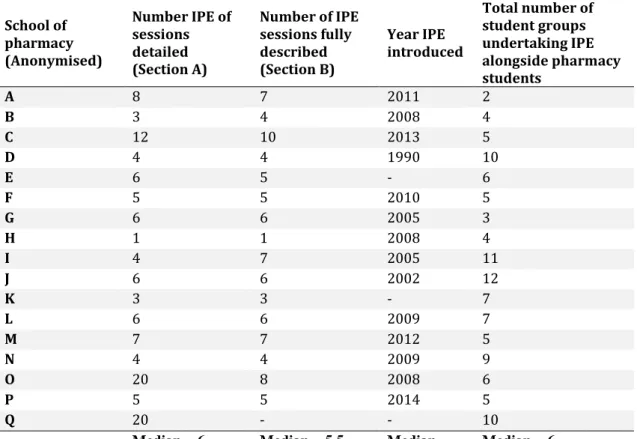
3.3.2. General information on schools’ IPE provision ... 65
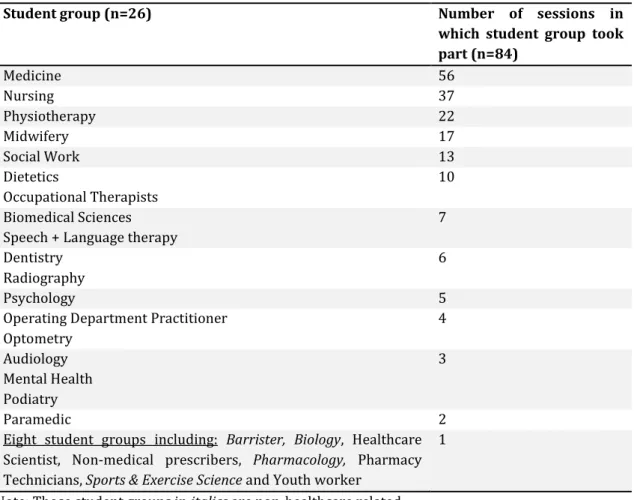
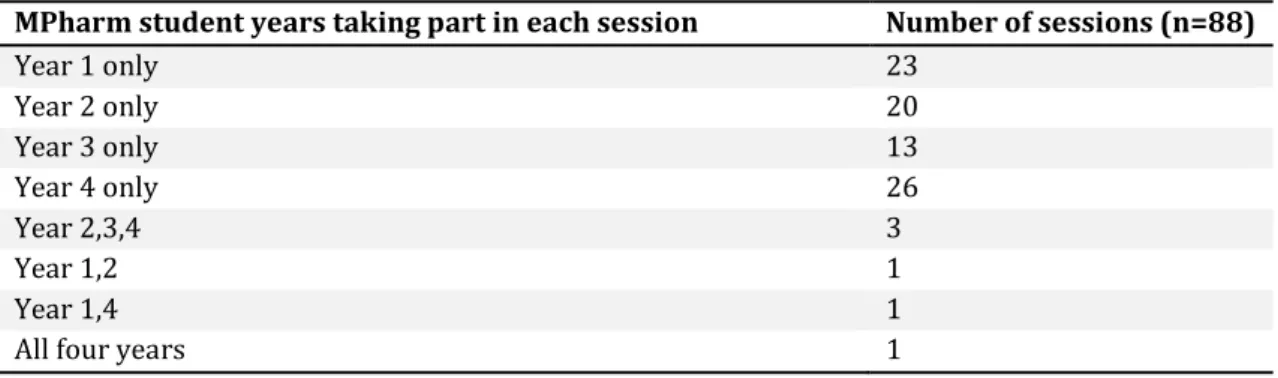
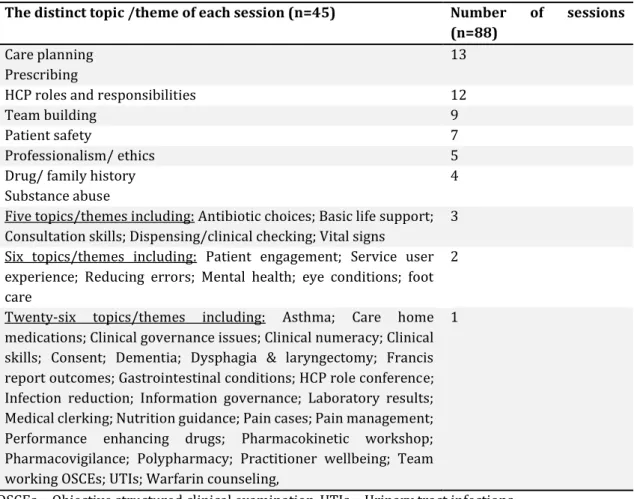
3.3.3. Description of IPE sessions conducted by participating schools ... 67
3.3.4. New IPE sessions to be implemented in the next academic year ... 73
3.3.5. Qualitative comments ... 75
3.4. Discussion... 76
3.4.1. Limitations ... 87
3.5. Conclusion ... 88
Chapter 4 - Who do pharmacists work with? - General methodology and
methods ... 89
4.1. Methodology ... 90
4.1.1. Methodology development ... 90
4.1.2. Epistemological and ontological view ... 93
4.1.3. Reflection on previous experience in the area ... 93
4.2. Study methods ... 94 4.2.1. Study location ... 94 4.2.2. Ethical considerations ... 95 4.3. Questionnaire methods ... 96 4.3.1. Sampling ... 96 4.3.2. Inclusion/exclusion criteria ... 96 4.3.3. Questionnaire design ... 97 4.3.4. Consent ... 98 4.3.5. Piloting questionnaires ... 98
4.3.6. Reliability and validity ... 98
4.3.7. Questionnaire dissemination ... 99
4.3.8. Data handling ... 99
4.3.9. Data analysis ... 100
4.4. Semi-structured interview methods ... 101
4.4.2. Overall qualitative approach ... 102
4.4.3. Sampling ... 102
4.4.4. Arranging the interviews ... 104
4.4.5. Participant consent ... 104
4.4.6. Interview setting ... 104
4.4.7. Interview schedule for data collection ... 105
4.4.8. Pilot interviews ... 106
4.4.9. Interview completion ... 107
4.4.10. Interview transcription ... 107
4.4.11. Data Analysis ... 107
Chapter 5
–
Which healthcare professionals do community pharmacists work
with? ... 110
5.1. Introduction ... 111
5.2. Methods ... 118
5.2.1. Stage one – Questionnaire determining community pharmacists’ frequency of interaction with other healthcare professionals and wider team members ... 119
5.2.2. Stage two – Semi-structured interviews exploring the nature of interprofessional interactions between community pharmacists and healthcare professionals ... 120
5.3. Results ... 124
5.3.1. Stage one –Questionnaire determining community pharmacists’ frequency of interaction with other healthcare professionals and wider team members ... 124
5.3.2. Stage two – Semi-structured interviews exploring the nature of interprofessional interactions between community pharmacists and healthcare professionals ... 139
5.4. Discussion ... 167
5.4.1. Limitations ... 183
5.5. Conclusion ... 186
Chapter 6 - Which healthcare professionals do hospital pharmacists work
with? ... 187
6.1. Introduction ... 188
6.2. Methods ... 193
6.2.1. Stage one –Questionnaire determining hospital pharmacists’ frequency of interaction with other healthcare professionals and wider team members ... 194
6.2.2. Stage two – Semi-structured interviews exploring the nature of interprofessional interactions between hospital pharmacists and healthcare professionals ... 196
6.3.1. Stage one –Questionnaire determining hospital pharmacists’ frequency of interaction
with other healthcare professionals and wider team members ... 200
6.3.2. Stage two – Semi-structured interviews exploring the nature of interprofessional interactions between hospital pharmacists and healthcare professionals ... 212
6.5. Discussion... 251
6.4.1. Limitations ... 266
6.5. Conclusion ... 268
Chapter 7 - Summary ... 269
7.1. Personal reflections and implications for my professional pharmacy practice ... 270
7.1.1. Recommendations for pharmacy practice ... 275
7.2. Implications for the design and delivery of interprofessional education... 276
7.2.1. Recommendations for the design and delivery of interprofessional education ... 281
7.3. Future research ... 282
7.4. Conclusion ... 285
Bibliography ... 286
Appendices ... 301
Appendix A – Methods for literature searching ... 302
Appendix B – Ethical approval ... 304
Appendix C – Landscape of IPE information sheet ... 306
Appendix D - Landscape of IPE questionnaire ... 307
Appendix E – Community questionnaire ... 312
Appendix F – Community questionnaire cover letter ... 315
Appendix G – Community interviews cover letter ... 316
Appendix H - Community interviews information sheet ... 317
Appendix I - Community interviews consent forms ... 318
Appendix J - Community interview schedule ... 319
Appendix K – Community questionnaire free text comments ... 322
Appendix L – Publication within the Journal of Interprofessional Care (abstract) ... 326
Appendix N – Hospital questionnaire cover letter ... 330
Appendix O – Template email for gatekeeper to aid hospital questionnaire dissemination ... 331
Appendix P – Hospital interview cover letter ... 332
Appendix Q – Hospital interview information sheet ... 333
Appendix R – Hospital interview consent form ... 334
Appendix S – Hospital interview schedule ... 335
Declaration
This work has not been submitted in substance for any other degree or award at this or any other university or place of learning, nor is being submitted concurrently in candidature for any degree or other award.
Signed: (candidate) Date: 19/12/2018
STATEMENT 1
This thesis is being submitted in partial fulfillment of the requirements for the degree of PhD.
Signed: (candidate) Date: 19/12/2018
STATEMENT 2
This thesis is the result of my own independent work/investigation, except where otherwise stated. Other sources are acknowledged by explicit references. The views expressed are my own.
Signed: (candidate) Date: 19/12/2018
STATEMENT 3
I hereby give consent for my thesis, if accepted, to be available online in the University’s Open Access repository and for inter-library loan, and for the title and summary to be made available to outside organisations.
Acknowledgements
First of all, I would like to thank my supervisors Dr Mat Smith, Dr Louise Hughes and Dr Efi Mantzourani for providing constant unwavering support, friendship and guidance throughout the project, which has helped me grow as a professional researcher. I would also like to thank the wider post-graduate and academic team within Cardiff School of Pharmacy, your warm friendship from the four walls of ‘the cave’ to the football pitches of Talybont to the sticky floors of Cardiff’s finest watering holes has made this journey which will live long in the memory (most of it…).
Secondly, I am grateful towards the pharmacists who kindly agreed to take part in this PhD study, it is safe to say I would have little to write about without you guys!
The biggest thanks have to go to my amazing friends and family! You have been there through thick and thin and as well as keeping me motivated and driven to achieve, you have more importantly kept me sane throughout it all!! I feel so privileged to have such close, caring and funny friends and family who have managed to keep me laughing and smiling throughout a process that has at times been extremely testing. You make many realisations throughout undertaking a PhD but one that will stick with me forever is how lucky I am to you lot by my side!
Overall, this has been one of the most challenging, yet rewarding experiences of my life. I’m so grateful to everyone who has made this journey possible. Now, did someone say pub?
Summary
The drive to increase interprofessional teamwork in the healthcare environment has gained significant traction in recent years. This has partly been as a consequence of UK inquiries that have cited breakdowns in communication and teamwork as contributory factors leading to poor patient outcomes. One method to prepare practitioners for interprofessional teamworking is interprofessional education (IPE). The General Pharmaceutical Council specifies that IPE must be embedded within UK Master of Pharmacy (MPharm) programmes. However, there is a paucity of literature examining IPE related to pharmacy and limited knowledge of pharmacists’ interprofessional interactions with healthcare professionals (HCPs). This makes it challenging for pharmacy educators to design IPE sessions that are reflective of practice. To address this, a mapping process was undertaken to identify IPE sessions that are delivered in UK MPharm programmes (17/29 schools responded). This identified significant variation in IPE sessions delivered in terms of learning outcomes addressed, topics covered, and the range of student HCPs involved. A mixed method study was then undertaken to explore pharmacists’ interprofessional interactions in practice. A questionnaire was disseminated to pharmacists in Wales via community pharmacies (61.9% response) and hospital pharmacy departments (estimated 59.1% response). Analysis of returned questionnaires identified that although the extent of interprofessional collaboration varied pharmacists in both sectors most frequently interact with doctors and nurses. Semi-structured interviews were undertaken with pharmacists from both the community (n=14) and hospital (n=15) sectors to explore the nature of interactions. Using deductive and inductive thematic analysis, the nature of pharmacists’ interactions with HCPs was elucidated, facilitators and barriers to interactions were determined and suggestions for IPE developed. Findings from these studies resulted in a series of recommendations for pharmacy educators and policy makers to facilitate pharmacists’ interprofessional collaboration in practice and aid the development of relevant IPE that is of value to learners.
List of Abbreviations
ACT Accredited checking technician BMA British Medical Association
BP Blood pressure
CAIPE Centre for the Advancement of Interprofessional Education
CAS Common ailment scheme
CBA Controlled before and after study
CKD-MBD Chronic kidney disease- mineral bone density CPD Continual professional development
CRM Crew resource management
CSPPS Cardiff School of Pharmacy and Pharmaceutical Sciences
CVD Cardiovascular disease
DH Department of Health
DMR Discharge medicines review
D/T Dispenser / technician
FY1 Foundation doctor - year 1
GDC General Dental Council
GP General practitioner
GMC General Medical Council
GPhC General Pharmaceutical Council
HCTM Healthcare team member
HCP Healthcare professional
HCPC Health and Care Professions Council
HV Health visitor
iOSCE Interprofessional objective structured clinical examination IPE Interprofessional education
IPI Interprofessional interactions LHB Local Health Board (in Wales) MCA Medicines counter assistant MDT Multidisciplinary team
MUR Medicines use reviews
MPharm Master of Pharmacy
MS Word Microsoft Word 2011 version 14.4.9
NASA National Aeronautics and Space Administration
NHS National Health Service
OSCE Objective structured clinical examination
OT Occupational therapist
RCT Randomised control trial
RPS Royal Pharmaceutical Society SALT Speech and language therapist
SCR Summary of Care Records
SD Standard deviation
SPSS IBM SPSS statistics data editor version 20
SW Social worker
TOSCE Team objective structured clinical examination UHB University health board
UK United Kingdom
US United States
UTI Urinary tract infection
List of Figures
Figure 4.1. Study design overview for mixed method exploration of pharmacists’ interprofessional interactions in practice
Pg. 92 Figure 5.1. Role of the respondents (n=442) in the community pharmacy Pg. 125 Figure 5.2. Number of GP practices community pharmacists (n=438)
perceived their pharmacy regularly serviced in a typical week
Pg. 126 Figure 5.3. The number of additional staff regularly working alongside the
community pharmacist (n=443) in the dispensary
Pg. 126 Figure 5.4. The locality of each respondents’ community pharmacy (n=441) Pg. 127 Figure 5.5. Number of community pharmacist respondents (n=443)
providing MUR, DMR, CAS and ‘other’ additional services
Pg. 128 Figure 5.6. Percentage of community pharmacists interacting with HCTMs
at least once a month or once a week, ranked in descending order by the at least once a month category
Pg. 132
Figure 6.1. The size of the hospital each pharmacist (n=270) worked within Pg. 201 Figure 6.2. The grade of the pharmacist (n=270) within the hospital Pg. 202 Figure 6.3. The specialisms more than five hospital pharmacist respondents
undertook and the number of times these were respondents’ primary specialism
Pg. 203
Figure 6.4. The environments more than five hospital pharmacist respondents worked within and the number of times these were respondents’ primary working environment
Pg. 204
Figure 6.5. Percentage of hospital pharmacists interacting with HCTMs at least once a month/week, ordered by at least once a month
List of Tables
Table 2.1. A glossary of the definitions used throughout this thesis identified within Barr et al. (2005), Reeves et al. (2010a) and Jelphs et al. (2016)
Pg. 24
Table 2.2a-c. Summary of the studies (n=9) included in the Cochrane review conducted by Reeves et al. (2017) which assessed the impact of interprofessional collaborative interventions on patient outcomes
Pg. 33-35
Table 2.3. Summary of the studies (n=6) included in the Cochrane review conducted by Reeves et al. (2010c) which assessed the effectiveness of interprofessional education
Pg. 49
Table 3.1. Description of the competency and assessment levels used by the GPhC for MPharm accreditation (GPhC, 2011), based on Miller’s triangle (Miller, 1990)
Pg. 54
Table 3.2. Statements relating to the need for interprofessional collaboration within the MPharm degree from the General Pharmaceutical Council (2011) ‘Future pharmacists: Standards for the initial education and training of pharmacists’ document
Pg. 58
Table 3.3. A comparison of the number of IPE sessions, number of HCP student groups and the year IPE was introduced in the 17 participating schools of pharmacy
Pg. 66
Table 3.4. The number of student groups that took part in individual IPE sessions (n=84)
Pg. 67 Table 3.5. The identity of student groups that took part in individual
IPE sessions (n=84)
Pg. 68 Table 3.6. The MPharm year group taking part in each individual IPE
session (n=88)
Pg. 69 Table 3.7. The setting of each individual IPE session (n=87) Pg. 69 Table 3.8. The distinct topics / themes associated with each individual
IPE session (n=88) (there can be more than one theme / topic per session)
Pg. 70
Table 3.9. The student learning outcomes for IPE session mapped to the seven key learning outcome themes identified by Steven et al. (2017) to be consistent across the five largest healthcare professional regulators (GMC, GDC, GPhC, NMC and HCPC)
Pg. 71
Table 3.10. Methods of measuring student outcomes in each individual IPE session (n=42/84)
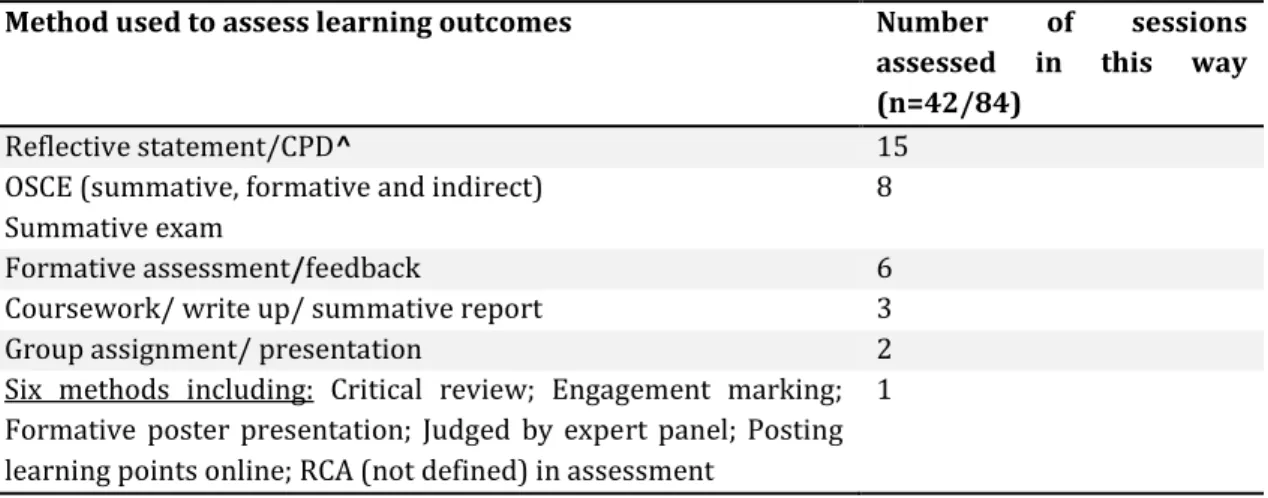
Pg. 72 Table 3.11. Methods of evaluating each individual IPE session
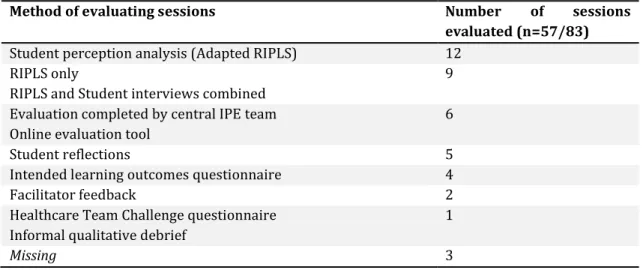
(n=57/83)
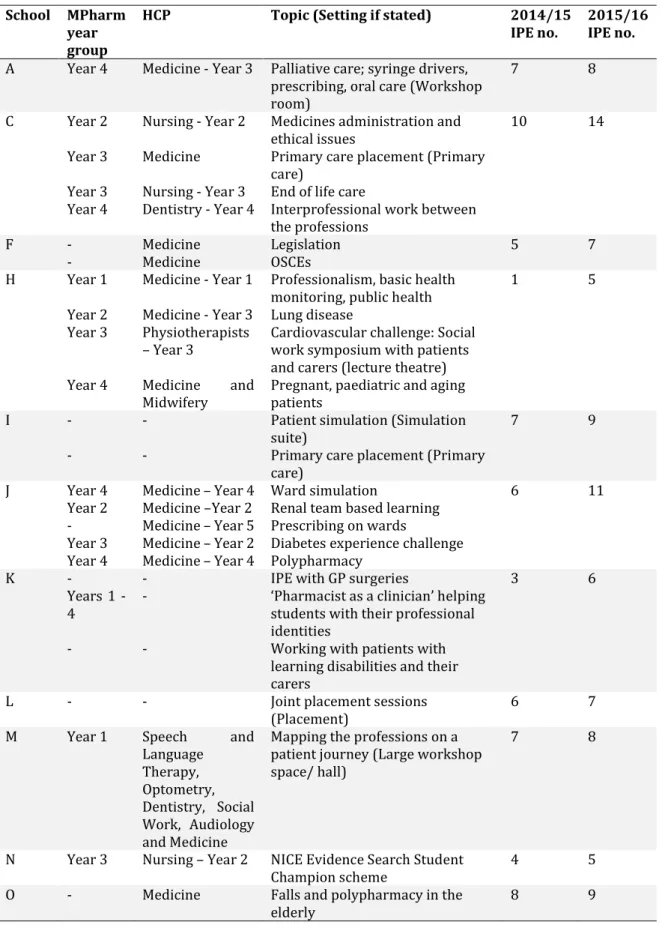
Pg. 73 Table 3.12. Details of additional IPE sessions planning to be introduced
in the following academic year (2015/16)
Pg. 74 Table 3.13. Additional qualitative comments made by respondents
(n=4)
Pg. 75 Table 4.1. Description of the three stage King and Horrocks (2010b)
inductive thematic analysis approach used for interview analysis
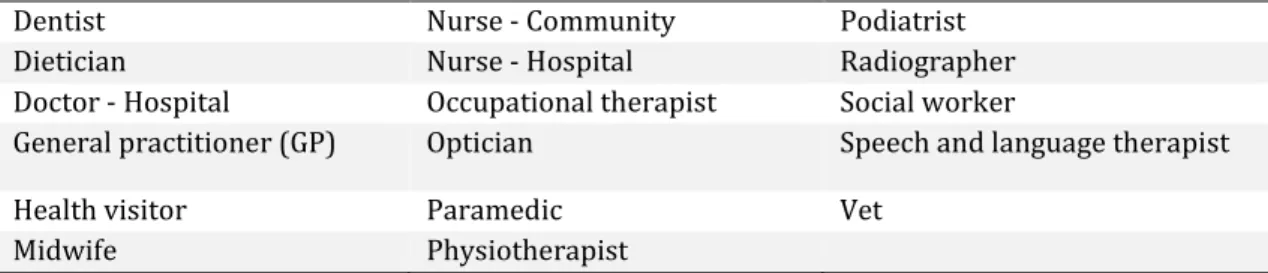
Table 5.1. List of the 26 HCTMs, identified from the NHS careers website, included in Section B of the questionnaire, categorised according to their sector of practice
Pg. 119
Table 5.2. List of the 17 HCPs identified from the NHS website used during the interview frequency of interaction
Pg. 123 Table 5.3. Distribution of community pharmacist respondents (n=443)
across all seven Welsh Local Health Boards (LHBs)
Pg. 125 Table 5.4. Community pharmacies reporting attachment to more than
one healthcare provider (n=14)
Pg. 128 Table 5.5. Enhanced services provided from community pharmacies in
this study
Pg. 129 Table 5.6. Percentage of community pharmacists reporting that they
interact with each HCTM at least once a month/week/day, ordered by ‘at least once a month’
Pg. 131
Table 5.7. A comparison of the number of dispensary staff working in independent and multiple community pharmacies. Multiple pharmacies were observed to employ significantly (p < 0.05) more dispensary staff than independents
Pg. 134
Table 5.8. HCTMs where significant differences (p < 0.05) in the frequency of interaction was identified when comparing community pharmacists practising in independent or multiple branch pharmacies
Pg. 135
Table 5.9. HCTMs where significant differences (p < 0.05) were found when comparing frequencies of interaction depending upon whether the respondents’ community pharmacy is co-located with a GP practice
Pg. 137
Table 5.10. Community pharmacists providing the DMR service reported significantly (p < 0.05) higher levels of interaction with hospital pharmacists
Pg. 138
Table 5.11. Characteristics of each community pharmacist interview participant (n=14)
Pg. 141 Table 5.12. Number of community pharmacist interviews in which
interactions with a HCTM was discussed (max. n=14)
Pg. 142 Table 5.13. A comparison of the frequency of interaction between
community pharmacists and HCPs discussed during the interviews (n=14)
Pg. 143
Table 5.14.a-b.
The reasons community pharmacist interview participants (n=14) reported interacting with HCPs, categorised as either clinical or practical interactions, and the number times each reason was discussed across the 14 interviews
Pg. 147 - 148
Table 5.15. A comparison of community pharmacist interview participants’ modes of communication with different HCPs
Pg. 150 Table 5.16. Descriptive overview of community pharmacists’
interactions with other HCTMs not previously categorised due to limited information provided across interviews
Pg. 151
Table 5.17. Themes/subthemes identified through inductive, thematic analysis of community pharmacist interviews (n=14)
Pg. 152 Table 6.1. List of the 29 HCTMs, identified from the NHS careers
website and previous community questionnaire, included in
section B of the questionnaire, categorised according to their sector of practice
Table 6.2. List of the 15 HCPs identified from the NHS website included in the ranking exercise
Pg. 199 Table 6.3. Distribution of hospital pharmacist respondents (n=270)
across the Welsh Local Health Boards
Pg. 201 Table 6.4. Percentage of hospital pharmacists reporting that they
interact with each HCTM at least once a month/week/day ordered by ‘at least once a month’
Pg. 207
Table 6.5. Number of respondents interacting at least once a month with additional HCTMs stated in ‘other’ category of the questionnaire
Pg. 209
Table 6.6. A comparison between the hospital pharmacists pharmacist’s professional grading (NHS banding) and their primary working environment within the hospital
Pg. 210
Table 6.7. Descriptive demographic characteristics of each hospital pharmacist interview participant showing the range of personal experiences and pharmacy locations
Pg. 214
Table 6.8. The frequency of interaction hospital pharmacist participants (max. n=15) stated they had with HCPs
Pg. 217 Table 6.9. The relative ranking hospital pharmacist participants
indicated with respect to the level of interaction with fifteen HCPs provided during the ranking exercise; data are provided in descending order i.e. the HCP with which the participant reported interacting most frequently are at the top
Pg. 218
Table 6.10. A comparison of hospital pharmacist participants’ (max. n=15) modes of communication with different HCPs
Pg. 220 Table
6.11.a-c.
The reasons pharmacists reported interacting with HCPs, categorised as either ‘clinical’ or ‘practical’ interactions. ‘n =’ refers to the number times each reason was raised across the 15 interviews
Pg. 224 - 226
Table 6.12. Identification of the topics of learning from HCPs that participants described
Pg. 227 Table 6.13. Identification of the areas participants would like to learn
from other HCPs
Pg. 229 Table 6.14. Participants’ suggestions for the design and
implementation of IPE
Pg. 231 Table 6.15. Hospital interview themes/subthemes generated through
inductive thematic analysis
1.1. About this study
In recent years the World Health Organisation (2010) and the UK Department of Health (2013c) have recognised the need to improve interprofessional collaboration in order to provide patient-centred care. This desire was further increased following the publication of a number of UK inquiries (including those by Francis (2013), Andrews and Butler (2014), Kirkup (2015) and Carter (2016)) that cited breakdowns in communication and teamwork as contributory factors leading to poor patient outcomes. One method which aims to enhance interprofessional collaboration and teamworking in the healthcare environment is the provision of interprofessional education (IPE) through undergraduate and postgraduate studies (World Health Organisation, 2013). Although IPE is now a required element of the undergraduate UK pharmacy curriculum (General Pharmaceutical Council, 2011), there is still a paucity of published guidance and literature about IPE involving pharmacists or pharmacy students and similarly, a limited knowledge of pharmacists’ interprofessional practice. This makes the design of IPE sessions that are meaningful, relevant and reflective of practice challenging for pharmacy educators. This study aimed to bridge these gaps. To do this an initial mapping process was conducted to determine the provision of IPE across UK schools of pharmacy. An online questionnaire was disseminated to IPE educators across all UK schools of pharmacy. This was followed by a mixed method study to identify and explore pharmacists’ interprofessional interactions in practice. As this thesis was conducted within Wales (at Cardiff University) there was a specific focus on the experiences of pharmacists based within NHS Wales, which although devolved from other UK NHS organisations (i.e. NHS England) is still guided by procedures and policies produced by the Department of Health. This study initially utilised a self-complete questionnaire to determine both community and hospital pharmacists’ perceived frequency of interactions with other healthcare professionals and wider healthcare team members (jointly termed HCTMs). Semi-structured interviews were subsequently undertaken with a range of pharmacists from both sectors to further explore these interactions, determining the nature of specific interactions with healthcare professionals (HCPs) pharmacists frequently interacted with (including the topic of interactions and the mode in which they took place), any facilitators and barriers to these interactions and suggestions for IPE. The ultimate aim of this thesis was to produce a series of recommendations for pharmacy educators and policy makers to facilitate pharmacists’ interprofessional collaboration in practice and aid the development of relevant IPE that is of value to and supports learners. Whilst the Welsh NHS has some autonomy in its delivery its practice is primarily governed by the Department of Health and therefore it is likely that data gathered from these pharmacists based within
Wales may reflect that of pharmacists based within other UK principalities such as England, Scotland and Northern Ireland.
1.2. Organisation of the thesis
Background literature informing the development and conduct of this study is presented in chapter 2. The chapter: outlines recent policy and practice changes that have resulted in a need for greater interprofessional collaboration across healthcare, with a particular reference to that between pharmacists and other healthcare professionals; examines existing literature related to pharmacist-HCP relationships, identifying gaps in knowledge; discusses the evidence surrounding why interprofessional collaboration is not currently the norm across healthcare environments; and explores the methods that have been used to try and improve interprofessional collaboration, with specific reference to the use of interprofessional education in the field of pharmacy. The chapter concludes by presenting the aims and specific objectives of the study.
Chapter 3 determines the current landscape of interprofessional education in schools of pharmacy across the UK. An exploration in undertaken of the types of sessions taking place in universities; who these sessions were conducted with; the timing of sessions and the topic explored; and methods used in assessing sessions or student progress.
Chapter 4 is the first of three chapters which explores pharmacists’ interprofessional interactions in practice. This chapter focuses on the study design and methods used. It provides detail on the mixed method approach used within the studies (quantitative questionnaire and qualitative interviews); methods of sampling and selection; design and piloting of the research instruments; data collection strategies and recruitment; and the handling and analysis of data.
Chapter 5 presents the findings from a mixed method analysis exploring community pharmacists’ interactions with other HCPs. An examination is made of the data gathered from a quantitative questionnaire to determine the HCPs that pharmacists most frequently interact with and explores the factors that influence such interactions, for example demographic and geographical characteristics. The chapter also details an analysis of data gathered from a series of interviews with community pharmacists. Here deductive and inductive thematic analysis identified the reasons community pharmacists interact with HCPs; the benefits these interactions can have for patients and the HCPs themselves; any barriers to, and solutions for, working interprofessionally with other HCPs; and the mode with which interactions take place.
Chapter 6 presents the findings from the mixed method analysis exploring hospital pharmacists’ interactions with other HCPs. The same areas as chapter 5 were explored, however with the focus on hospital pharmacists’ interactions with HCPs.
Chapter 7 concludes the thesis, providing an overview of the findings across the studies and discusses the similarities and differences between community and hospital pharmacists’ interprofessional interactions. This chapter also, discusses implications for practice, education and further research, provides a series of recommendations for educators and policy makers that may serve to improve interprofessional collaboration and education, and describes how this thesis has directly impacted the authors own professional practice.
2.1. Chapter overview
Working as part of a team is an essential element of modern life in a number of domains. From an early stage in life we are encouraged to integrate into a variety of teams including for example in sports teams, communities of learning in schools and as we embark on our careers in the workplace. The overarching philosophy of the team is for individuals to work together, utilising each individual’s skills to achieve a common purpose (Reeves et al., 2010a). This shared responsibility across the team to effectively achieve desired outcomes is synergistic producing further reach than when individuals act alone (Reeves et al., 2010b). Ultimately, a team’s successes and failures allow for collective reflection and improvements in teamworking and outcomes (Jelphs et al., 2016).
In the healthcare setting, a range of professions work in concert to deliver patient care. In general, patients do not see the inner workings of such teams and arguably this is not an issue as long as their health needs have been met. However, when effective teamwork breaks down, the consequence may be that patient related outcomes are negatively impacted.
Within the United Kingdom (UK) healthcare is predominantly delivered through the National Health Service (NHS), a free at the point of use service that provides treatment for patients related to all aspects of their health and social care (Department of Health, 2010). In total the NHS employs 1.7 million people, which range from health and social care professionals to administrative and support staff, making it the world’s fifth largest employer (Nuffield Trust, 2017). With such a range of professions working within the NHS to deliver a common mission, it is recognised that interprofessional teams must work together efficiently and effectively in order to optimise patient outcomes across the multitude of services delivered (Department of Health, 2013c; Carter, 2016). Effective interprofessional teamwork in this context maximises the utilisation of a range of HCPs (both generalists and specialists) working together to find solutions to simple and complex patient problems. However, coordination of interprofessional teams on such a large scale provides a challenge for the NHS because of a range of factors including the ingrained separation of HCPs in location, specialism, professional identity and values, and educational experiences (see section 2.4). Ultimately, the effective operation of teams in the healthcare environment can have significant consequences on patient morbidity and mortality. Indeed, a number of recent enquiries including those by Francis (2013), Andrews and Butler (2014), Kirkup (2015) and Carter (2016) have demonstrated negative consequences on patient outcomes directly related to ineffective teamwork (see section 2.3).
In this introductory chapter, an overview of interprofessional collaboration is provided, highlighting benefits to practice, barriers and facilitators to collaboration across a range of healthcare settings and the potential role of interprofessional education (IPE) in developing interprofessional practitioners. As the thesis will primarily address the role of the pharmacist in interprofessional teams, the introduction will include a focus on this area. Literature cited in this chapter was identified through a review process outlined in Appendix A.
2.2. Overview of key terminology
Before exploring the concepts of interprofessional collaboration and education it is important to acknowledge the terminology referred to throughout this thesis. In recent years there has been an expansion in research on interprofessional teamworking and education in the field of healthcare. As a consequence, there has been a proliferation of terms related to these concepts without a clear consensus on their use. Indeed, many studies use a range of terms to describe the same concept or conversely use the same terms to describe different concepts, something that has been highlighted in a number of review articles (Hall and Weaver, 2001; D'Amour et al., 2005; Reeves et al., 2010b; Jelphs et al., 2016). This thesis uses a common set of definitions, highlighted in Table 2.1, that have been defined by Barr et al. (2005), Jelphs et al. (2016) and Reeves et al. (2010a) and reflect those used in the Journal of Interprofessional Care.
Whilst there are a range of terms used throughout the literature this thesis primarily focuses on the interprofessional collaboration and teamworking that take place between health and social care professionals (HCPs) (rather than academic disciplines) in order to understand the ways pharmacists’ work towards a common goal. The difference between interprofessional teamworking and collaboration is based on the level of integration of HCPs, whereby teamworking implies this occurs in a fully integrated manner, something which is in contrast absent in collaborative working. Whilst ‘teamworking’ may be desired (see section 2.3) limited research and varied terminology use makes the differentiation between the two (teamworking and collaboration) often difficult to determine, resulting in the terms often being used interchangeably to highlight professions working in partnership to achieve a common goal. The term interprofessional interaction (IPI) is also used within this thesis to highlight there is some element of engagement between HCPs however it does not reference the extent of this engagement. ‘Interaction’ therefore could range between teamworking (where HCPs have worked together, sharing knowledge and skills to solve issues in an integrated manner) to information transfer (where HCPs have communicated information however did not directly work together during this exchange).
Table 2.1. A glossary of the definitions used throughout this thesis identified within Barr et al. (2005), Reeves et al. (2010a) and Jelphs et al. (2016) Term Definition (* = definition adapted for use within this thesis)
Healthcare
professional (HCP)
*Occupational professional groups who in general provide health and social services to others, such as pharmacists or social workers. It can be used as a term of self-ascription to avoid the need to apply regulatory criteria which differ between groups
Healthcare team member (HCTM)
*All professional and non-professional groups (i.e. administrative staff such as GP receptionists) who are associated with the delivery of healthcare, inclusive of all healthcare professionals
Discipline Comprises of different academic disciplines (psychology, sociology, mathematics) rather than from different professions such as pharmacists, doctors, social workers etc.
Collaboration An active and on-going partnership, often between people from diverse backgrounds, who work together to solve problems or provide services Teamwork An active and on-going partnership, often between people from diverse backgrounds, who share a team identity and work closely together in an
integrated and interdependent manner to solve problems and deliver services.
Interaction Any activity that involves direct engagement/communication with another person irrespective of the topic, frequency or nature (i.e. collaboration/teamwork)
Information transfer
*This is where an interaction has occurred (see above) however is purely focused on the transfer of information, with no direct collaborative working undertaken to jointly solve problems or provide services
Interprofessional A term which describes any activity undertaken where there is a strong propensity for team members to interact across boundaries to actively work towards jointly solving a problem
Multiprofessional Similar to ‘interprofessional’ but implies lower levels of cross boundary interactions, lower levels of collaboration and more ‘side by side’ working
Transprofessional Similar to ‘interprofessional’ but implies complete integration of professionals across sectors utilising the same conceptual and methodological
approaches thus promoting generic working: a process whereby the activities of one professional group are undertaken by members of another Intraprofessional Any activity which is undertaken by individuals within the same profession
Uniprofessional Any activity undertaken by one profession alone Interprofessional
collaboration
A type of interprofessional work which involves different health and social care professions who regularly come together to solve problems or provide services.
Interprofessional teamwork
A type of interprofessional work which involves different health and/or social professions who share a team identity and work closely together in an integrated and interdependent manner to solve problems and deliver services.
Interprofessional education
An educational tool used where members (or students) of two or more health and/or social care professions engage in learning with, from and about each other to improve collaboration and the delivery of care
2.3. The need for interprofessional collaboration within UK healthcare practice
Since its foundation in 1948, the NHS has been the centerpiece of health and social care in the UK. At its heart is the provision of a comprehensive service that is based on clinical need, available to all and free at the point of use (Department of Health, 2010). Across the UK the NHS is devolved and managed by each of the four independent countries: NHS Wales, NHS England, NHS Scotland and the affiliated
Health and Social Care (HSC) in Northern
Ireland
. Whilst each of these nations have responsibility for the specific delivery of patient care the Department of Health (DoH) has a strong influence over the final policies across all four nations. Therefore, although this project primarily focuses on pharmacists who work within NHS Wales and thus references specific Welsh policy documents, NHS Wales often adopts the DoH guidance aligning them with the other three UK nations.The NHS constitution published by the Department of Health (2009) states, among other principles, that it aspires to maintain the highest standards of excellence and professionalism by working in partnership across professions in the interests of patient care. However, in recent years a number of reviews have identified that the NHS is failing in some instances to reach these high standards and such reviews have frequently cited a failure in interprofessional teamworking as a contributory factor leading to poor patient care (Francis, 2013; Andrews and Butler, 2014; Kirkup, 2015).
The earliest of these reviews was conducted by Francis who investigated the Mid-Staffordshire NHS Foundation Trust between 2005 to 2008 over serious failings that led to the “appalling suffering of many patients” that included patients left in excrement, lack of privacy and dignity (even in death), patients denied requests for help, and food and water left out of reach (Francis, 2013). One key factor identified within the report which was paramount to the trusts failure to provide adequate patient care was the lack of effective interprofessional teamwork. A failure in communication between care sectors and HCPs was highlighted as preventing the active sharing of vital patient related information. Of note, there was an underlying assumption by many HCPs that monitoring, performance management and interventions were the responsibility of someone else due to a lack of understanding of roles and responsibilities. This was found to have significantly contributed to poor patient care. Furthermore, a fundamental lack of openness and transparency between HCPs was identified which ultimately limited sharing and communicating of information. This led Francis to recommend that “there needs to be effective teamwork between all the different disciplines” (pg.110).
Following publication of the Francis report, the Department of Health (2013c) responded with the publication of the ‘Patients First and Foremost’ document that underlined the importance of ensuring that the values and behaviours of HCPs were not siloed but rather they ensure a culture of open and effective teamwork. This was the first DoH publication to directly highlight the need for improved interprofessional teamworking across healthcare settings and was a clear priority with the then government health minister outlining a number of “Statements of Common Purpose” within the report that HCPs, alongside other care givers, must be committed to in order to improve UK healthcare delivery; the first statement of common purpose was “working together for patients” (pg. 9). The key feature underpinning these statements is that by getting HCPs to interact and collaborate in an interprofessional manner on behalf of the patients, individual strengths will be combined, professional knowledge shared, and healthcare teams will harbor a collective responsibility for the provision of quality patient care. This was reinforced in a supplementary document entitled ‘Integrated Care and Support: Our Shared Commitment’ also published by the Department of Health (2013a). The document stated that interprofessional teamworking needed to occur across all healthcare boundaries and settings to create a culture of cooperation and coordination between health, social care, public health and other local services. Similarly, the document stated that there must be an end to the institutional divide between physical and mental health services, and primary and secondary care. The desire to remove professional silos and better integrate interprofessional teams was neatly summarised; “too often, we don’t communicate properly with each other, don’t work together as a team or don’t treat people as whole individuals. As a result, care and support is often fragmented, delayed or duplicated, which can result in missed opportunities to prevent needs from escalating and intervening early. This leads to poorer outcomes and experiences for the people who use our services” (pg. 6) (Department of Health, 2013a). The drive to integrate professions throughout health, education and social care and across both primary and secondary care was also highlighted in the ‘Health and Social Care Act 2012’ released by the Department of Health (2012) the year prior to the ‘Integrated Care and Support’ document, further cementing the DoH’s desire to enhance collaboration across all aspects of care.
In 2014 attention was once again drawn to failings in interprofessional teamworking in a report published by Andrews and Butler (2014) that detailed an independent review of two hospitals within the Abertawe Bro Morgannwg University (ABMU) Health Board in Wales. This was a consequence of concerns that were raised relating to patient safety. Andrews and Butler found that there was (amongst other areas) poor professional behavior, lack of suitably qualified and educated staff, a disconnection between front-line staff and
managers, and confusion over leadership responsibilities and accountabilities. The report once again made a series of recommendations that reiterated the need for more cohesive interprofessional collaboration and greater levels of shared patient responsibility and accountability at all levels of patient care, with one recommendation specifically stating the need to make sure that “professional staff operate in cohesive clinical teams” (pg. 12). The ABMU board were also recommended to “develop more cohesive multidisciplinary team practice in the medical wards at the two hospitals, built around shared responsibility and accountability for patient care and standards of professional behaviour” (pg. 13) (Andrews and Butler, 2014).
In 2015, a review was published by Kirkup that detailed failings in the provision of care at the maternity and neonatal services within the University Hospitals of Morecambe Bay NHS Foundation Trust between 2004 and 2013. This review identified a number of serious failings within the trust which resulted in the unnecessary deaths of mothers and babies including (amongst other areas): substandard clinical competence; extremely poor working relationships, particularly between different staff groups, such as obstetricians, paediatricians and midwives; and failures of risk assessment and care planning that resulted in inappropriate and unsafe care. Kirkup also indicated that there was a culture of poor working relationships between HCPs that meant they were unable to work together effectively leading to repeated instances where HCPs failed to communicate important clinical information about individual patients to one another. He also cited a toxic “them and us culture” (pg. 13) as having a detrimental effect on team dynamics, and subsequently concluded that the breakdown in interprofessional collaboration was a key factor in unwarranted patient deaths.
Following these independent enquiries, the DoH published a further response entitled ‘Learning not blaming: The government response to Freedom to Speak Up, the Public Administration Select Committee report on clinical incidents, and the Morecambe Bay Investigation’ (Department of Health, 2015). Here they specifically noted the need to identify and develop measures that will promote effective interprofessional team working, believing that the removal of “inflexible demarcations between professional groups” (pg. 98) could help improve interprofessional care. This was reinforced in a review of the operational productivity of 136 NHS England acute hospitals conducted by Carter (2016) which found unwarranted variation in a range of key resource areas such as: clinical staff, pharmacy and medicines; diagnostics and imaging; procurement; back-office functions; and estates and facilities. One key finding Carter identified across trusts was the challenges related to delayed transfer of care and barriers to greater collaboration and cooperation,
which he found could “inhibit trusts’ ability to improve performance and result in sub-optimal clinical quality and efficiency across the local health economy” (pg. 8) (Carter, 2016).
Against a backdrop of these failings where interprofessional teamwork has not be effective, the potential benefits of interprofessional collaboration in the healthcare setting have been reported. For example, O'Leary et al. (2012) produced a general review article summarising the interprofessional working undertaken across hospitals, highlighting that teamworking across professions was critically important in the provision of safe, effective hospital care. They further surmised that hospitals with high teamwork ratings experienced higher patient satisfaction, lower hospital costs and higher staff retention, findings reiterated in the seminal ‘Working in Teams’ book by Jelphs et al. (2016). Of note, interprofessional interactions have been shown to have positive impacts in a number of domains including affording HCPs: (i) the opportunities to learn from one another (Freeth et al., 2008), (ii) recognise respective roles and responsibilities (Barrett et al., 2005; Freeth et al., 2008; Jacobsen et al., 2009)and (iii) build social relationships which make the work environment more pleasurable (Reeves et al., 2010b; Jelphs et al., 2016).
It is not just in the UK where the need for interprofessional working has gained traction. A number of recent publications by the World Health Organisation (WHO) have stressed the need for efficient and effective interprofessional collaboration across healthcare sectors in order to improve the delivery of patient care (World Health Organisation, 2010; World Health Organisation, 2013). The WHO stated in its ‘Framework for Action on Interprofessional Education & Collaborative Practice’ that having a strong, flexible and collaborative health workforce is one of the best ways to confront highly complex health challenges. Here it stated that interprofessional collaboration could benefit: family and community health; HIV/AIDS tuberculosis, and malaria; health action in crisis (i.e. in a provision of care in a humanitarian crisis); health security (i.e. responding to epidemics and pandemics); non-communicable diseases and mental health (i.e. working collaboratively to prevent and manage complex chronic conditions such as dementia, malnutrition and asthma); healthcare systems and services (i.e. through maximising the strengths and skills of HCPs, enabling them to function at the highest capacity, helping manage the strains placed on healthcare as a consequence of a shortage of healthcare workers)(World Health Organisation, 2010). The report highlighted that interprofessional collaborative practice can improve: access to and coordination of health-services; appropriate use of specialist clinical resources; health outcomes for people with chronic diseases; and patient care and safety, as well as decrease: total patient complications; length of hospital stay; tension and
conflict among caregivers; staff turnover; hospital admissions; clinical error rates; and mortality rates.
Collectively then, there is a national and international mandate for HCPs to build interprofessional healthcare teams in order to most appropriately utilise the skills and knowledge of a range of individuals to provide healthcare that meets the demanding needs of patients.
2.4. How do pharmacists fit within the interprofessional team?
One profession that has experienced a significant shift in roles and responsibilities over recent years is the pharmacy profession. Pharmacists, representing the third largest healthcare profession in the UK (General Pharmaceutical Council, 2018d), primarily practise within the community or hospital setting although there are specialist roles for example in the pharmaceutical industry or in academia and roles within the primary care sector which have seen significant growth in recent years (NHS England, 2014b; Welsh Assembly Government, 2015; General Pharmaceutical Council, 2018b). Pharmacists occupy a unique role as experts in medicines (NHS Health Education England, 2018) ensuring their safe supply from the dispensary setting and advising patients and HCPs on their safe and effective use (General Pharmaceutical Council, 2018d). Significantly, the independent report for the DoH conducted by Carter (2016) highlighted the need for greater incorporation of pharmacists within interprofessional teams in order to better utilise their clinical skills and improve patient care through their unique insight into medicines.
The General Pharmaceutical Council (GPhC) is responsible for regulating pharmacists, pharmacy technicians and pharmacies across the UK to assure and improve standards of care for people using pharmacy services. Therefore, although the NHS is devolved into the four independent UK nations (NHS England, NHS Wales, NHS Scotland and the affiliated
Health and Social Care (HSC) in Northern
) minimum standards must be met by pharmacists and pharmacies across the UK. This said, the drive to enhance the interprofessional integration of pharmacists has had a number of consequences for the role of the pharmacist in Wales including the development of new community pharmacy led services such as: discharge medication reviews (DMRs), smoking cessation services and flu vaccinations amongst others (Community Pharmacy Wales, 2018); greater access to patient care records (NHS Wales, 2018c); new hospital roles for example increased numbers of pharmacist prescribers and more time spent on patient facing medicines optimisation activities (as recommended by the Hospital Pharmacy Transformation Programme detailed by Carter (2016)); and integration of pharmacists in GP practices where they undertakepatient consultations to monitor and rationalise patients repeat prescriptions, improve medication adherence and conduct specialist reviews (particularly if they are prescribers) to optimise patients medications in a variety of clinical areas (i.e. anticoagulation, diabetes, etc.) (Primary Care Workforce Commission, 2015; Welsh Assembly Government, 2015). Although this has enabled pharmacists to expand their roles and responsibilities there has been a concomitant challenge for both pharmacists and other HCPs in understanding the position of the pharmacist within the interprofessional team. This lack of understanding of roles can be a significant barrier to interprofessional collaboration as HCPs are unaware of the ways pharmacists can benefit the interprofessional team (see section 2.4) (Hughes and McCann, 2003).
The apparent ambiguity of the pharmacists’ role in both the public and professional conscious is not a new phenomenon. In a study conducted by Elvey et al. (2013), UK pharmacists (n=43) based within community, hospital and primary care settings were interviewed and found to have varied perceptions of their roles. The authors identified nine separate pharmacist identities: (i) the scientist; (ii) the medicines adviser; (iii) the clinical practitioner; (iv) the social carer; (v) the medicines maker; (vi) the medicines supplier; (vii) the manager; (viii) the business person; and (ix) unremarkable character. Elvey concluded as a result that pharmacists’ have a lack of clear direction and ownership of what makes them unique as a health profession. Elvey also suggested that these varying perceptions also showed flexibility in pharmacists’ view of their professional role. A similar finding was demonstrated by Schindel et al. (2017) using a mixed method approach (a survey (n=416) with Canadian community and hospital pharmacists and focus groups/interviews with a total of 75 participants including community and hospital pharmacists, pharmacy technicians, other HCPs and members of the public) which identified that: participants perceived that the pharmacist’s role was transitioning to focus more on patient care; the varying consistency in pharmacists’ uptake of more developed professional roles was reflected in the range of beliefs and expectations voiced by the general public; and pharmacists with expanded scopes of practice were assuming greater responsibility. Schindel also found that pharmacists viewed interprofessional collaboration and the development of strong relationships with other HCPs as essential for practice.
Although the role of the pharmacist in interprofessional practice is generally underexplored, there has been some attention on the interactions between community pharmacists and GPs. These include a UK study employing social network analysis to determine practitioner perceptions of interactions through interviews with both community pharmacists and GPs by Bradley (2012); mailed questionnaires determining
community pharmacists’ attitudes towards becoming more active members of the interprofessional team in Canada by Dobson et al. (2006); a mixed methods study (small numbers of interviews and questionnaires) with community pharmacists and GP pairs to describe and identify the extent of the collaborative working taking place in the USA by Snyder et al. (2010); semi-structured interviews conducted in Australia with both community pharmacists and GPs to determine the extent of interactions and the impact pharmacy services have on these interactions by Van et al. (2011); uniprofessional focus groups with community pharmacists and GPs within Northern Ireland to explore the barriers between collaboration by Hughes and McCann (2003); and a survey distributed to community pharmacists and GPs in rural Australia to determine areas of commonality and barriers to collaboration by Norton et al. (2003). The results of these studies are detailed within chapter 5 (which explored community pharmacists’ interprofessional interactions). However, in summary the studies generally show that although pharmacists and other HCPs recognise the value in engaging across professions IPIs are generally limited due to a range of barriers within practice. In addition, in chapter 6 the small number of studies addressing hospital pharmacists’ interactions with hospital doctors and nurses are described. These include key informant interviews and reflective journaling from pharmacists, doctors and nurse practitioners to explore the interprofessional working relationships when providing team-based care in hospitalised medical patients in Canada by Makowsky et al. (2009b); focus groups with Australian nursing, pharmacy, and medical recent graduates to determine their perspectives and experiences of interprofessional collaborative practice and medication safety by Wilson et al. (2016). The findings from these studies generally echoed the studies that focused on community pharmacists interactions discussed above, with hospital pharmacists and HCPs once again recognising the benefits of interprofessional collaboration yet having limited interactions in practice.
Whilst these studies represent an exploration of some of the IPIs that pharmacists undertake with specific HCPs, it is evident from the literature that to date there has not been a synthesis of the broader requirements for pharmacists to engage in IPIs, the mechanism by which pharmacists undertake such IPIs and the barrier and facilitators to such IPIs.
2.5. Evidence underpinning interprofessional collaboration
Interprofessional collaboration is a priority within the healthcare environment largely due to a hypothesis that it can improve patient care (World Health Organisation, 2010; Department of Health, 2013c). Whilst a range of individual studies have been conducted, to date there are no high quality generalisable studies which definitively evidence the specific benefits of interprofessional collaboration on improving patient outcomes. For example,
one method the DoH uses to assess NHS performance is the Outcomes Framework (Department of Health, 2013b; Department of Health, 2016). The framework is used to review measurable patient outcomes (such as patient survival for example in cancer, quality of life for people with dementia, time spent in hospital by people with long term conditions, etc.) in order to assess the success of services (Department of Health, 2013b; Department of Health, 2016). The framework however does not contain any specific measure of interprofessional teamwork and therefore it is difficult to isolate the specific impact this has on such outcomes.
In a recent Cochrane review, Reeves et al. (2017) assessed the impact of interprofessional collaborative interventions on patient outcomes. The review identified nine randomised controlled trials (RCT) that were suitable for inclusion, however all were considered to have low or very low certainty of evidence (see Table 2.2a-c for a summary of the studies). These studies were all conducted in high-income countries (Australia, Belgium, Sweden, UK and USA) in primary, secondary and tertiary care settings and had a follow-up of up to 12 months. Eight studies compared and evaluated an interprofessional care intervention with usual care and one study compared one type of interprofessional meeting with another (Wilson et al., 2004). Strasser et al. (2008) found that the functional status in stroke patients may be slightly improved by externally facilitated interprofessional activities and Cheater et al. (2005), Deneckere et al. (2013) and Schmidt et al. (1998) found that HCPs’ adherence to recommended practices may be slightly improved with externally facilitated interprofessional activities or interprofessional meetings. In addition, interprofessional checklists (Calland et al., 2011), interprofessional rounds (Curley et al., 1998; Wild et al., 2004) or externally facilitated interprofessional activities (Strasser et al., 2008) were seen to slightly improve overall use of resources, reduce length of hospital stay, or reduce costs. Furthermore, Wilson et al. (2004) found that when compared to multidisciplinary audio conferencing, multidisciplinary video conferencing may reduce the average length of treatment and may reduce the number of multidisciplinary conferences needed per patient and the patient length of stay. All of these findings had a low certainty of evidence. Reeves concluded in the systematic review that it was unclear whether continuity of patient care or collaborative working were improved by externally facilitated interprofessional activities due to the very low-certainty for these outcomes. Of note none of the studies included reported on patient mortality, morbidity or complication rates.
Table 2.2a. Summary of the studies (n=9) included in the Cochrane review conducted by Reeves et al. (2017) which assessed the impact of interprofessional collaborative interventions on patient outcomes
Author Study design, outcomes assessed and the impact of intervention on outcomes Black et al.
(2013)
Australia
Method: Cluster-randomised trial to test the effectiveness of an intervention involving non-GP staff in GP practices, on the quality of care for patients with diabetes or cardiovascular disease
Participants: General practitioners, nurses, practice managers, receptionists, and other administrative staff. 60 general practices were randomised to receive a 6-month teamwork intervention immediately (intervention, n = 637) or after 12 months (control, n = 548)
Interventions: To assist non-GP staff (e.g. nurses, administrative staff (practice managers, receptionists) to work as a team with GPs, the intervention included a number of activities including: the use of structured appointment systems, recall and reminders, planned care, the use of roles, responsibilities, and job descriptions, as well as communication and meetings
Outcomes assessed: Quality of care (12 month follow up)
Impact of intervention on outcomes: It is uncertain if externally facilitated interprofessional activities increases patient-assessed quality of care because the certainty of this evidence is very low. It is uncertain whether externally facilitated interprofessional activities improve collaborative working, team communication, and co-ordination because the certainty of this evidence is very low.
Calland et al. (2011)
USA
Method: An RCT of an interprofessional collaborative intervention aimed to determine the effectiveness of procedural checklists for surgical teams during 47 laparoscopic cholecystectomies. General surgeons were randomly assigned to an intervention (i.e. the use of the checklist) or a control group
Participants: Ten general surgeon teams consisting of surgeons, anaesthetists and nurses. Twenty- three patients in the control group and 24 in the intervention group. Eighteen patients dropped out between the randomisation and the analysis
Intervention: An intraoperative procedural checklist including preoperative, intraoperative, and post- operative items
Outcomes assessed: Clinical process or efficiency outcomes: length of operation, discharge status, readmission rates and technical proficiency. Collaborative behavioural outcomes: team behaviours (e. g. team communication and co-ordination)
Impact of intervention on outcomes: Interprofessional checklists may slightly improve overall use of resources, length of hospital stay, or costs (low certainty). It is uncertain whether externally facilitated interprofessional activities improve collaborative working, team communication, and co-ordination because the certainty of this evidence is very low
Cheater et al. (2005)
UK
Method: An RCT where 22 multidisciplinary teams from five acute care hospitals were randomised to an intervention group that participated in a facilitated programme on multidisciplinary audit or a control group
Participants: Nurses, doctors and other HCPs (e.g. pharmacist, social worker, physiotherapist), service support staff (e.g. ward clerk, care assistant), and managers. A range of specialties (e.g. surgery, medicine, and nephrology) were included. There were 11 teams with a total of 77 participants in the intervention group and 11 teams with a total of 64 participants in the control group
Intervention: Five facilitated meetings over 6 months with activities designed to support multidisciplinary teams to undertake an audit
Outcomes assessed: Collaborative audit activity
Impact of intervention on outcomes: The use of interprofessional activities with an external facilitator or interprofessional meetings may slightly improve adherence to recommended practices and prescription of drugs (low certainty). It is uncertain whether externally facilitated interprofessional activities improve collaborative working, team communication, and co-ordination because the certainty of this evidence is very low