Structuring Serendipity: Mentoring as a Component of Leadership Development Programs in Higher Education
A Dissertation
SUBMITTED TO THE FACULTY OF UNIVERSITY OF MINNESOTA
BY
Denise A. Bonebright
IN PARTIAL FULFILLMENT OF THE REQUIREMENTS FOR THE DEGREE OF
DOCTOR OF PHILOSOPHY
Karen Seashore, Advisor Kenneth Bartlett, Co-Advisor
Acknowledgements
While writing a dissertation sometimes seemed like a solitary task, reaching this point in my career has been a community effort. I am very grateful to the people who have helped me on the way, beginning with my Organizational Effectiveness colleagues at the University of Minnesota who cheered me on through the process of taking the GRE and applying for graduate school (a big decision for someone who has been out of school for as long as I had). I am also grateful to the professors, colleagues, and classmates who provided a learning environment where we could explore ideas together and I could stretch professionally and academically. Thanks in particular to Josie Fritsch and Mary Severson for creating a mini-cohort, and Peg Lonnquist and Jennifer Engler for numerous supportive lunches and coffee breaks.
None of this would have happened without the support I received from my
advisors. Ken Bartlett got me started and taught me a great deal about what it means to be a scholar as well as a practitioner. Karen Seashore encouraged me over some rough spots and kept me going until the finish line. Having a chance to work with her represents everything good about serendipity.
I feel honored to have had an opportunity to meet so many talented leaders as part of the Minnesota Partnership, especially the participants and subject matter experts who took the time to talk with me about their experiences. Their insights and thoughtful comments formed the basis for this research. I am especially grateful to my fellow members of the planning team, who allowed me to examine our process and provided open and honest feedback along the way. I could not ask for a better group to work with,
and I think we learned a great deal from each other. Thanks to my MnSCU colleagues who attended my defense and formed a great cheering team, and especially Anita Rios, who asked that one right question at the right time.
Finally, I am deeply grateful for the support I received from my family. My parents and sisters, along with the extended family, cheered me on the entire way. My father, who was a first-generation college student, has been particularly supportive during my entire academic career. In addition, my children have been supportive and
understanding of the time commitment required to complete the degree. It was fun to be a student at the same time as my daughter and compare notes on our experiences. Most of all, my husband has been consistently positive and encouraging, and never once complained about all the Saturdays I spent at my desk.
Dedication
This dissertation is dedicated to my family. I am blessed to have so much support and encouragement from home and could not have done this without you.
Abstract
The need to develop a pool of well-qualified future leaders is a key concern for human resource development scholars and practitioners in higher education. Research indicates that formal leadership development programs are most effective when they are based on experiential models. Mentoring is one experiential component that can enhance such programs by providing context, opportunities to develop and practice leadership behaviors, and assistance with career decision making.
This study was a qualitative case study of a leadership development program, the Minnesota Partnership for Executive Leader Development, which included a variety of mentoring options. Two units of analysis were embedded in the case. By examining the program from the viewpoint of the sponsoring organizations and individual participants, the study sought to understand the organizational intent for mentoring and how it was experienced by the cohort members. Findings indicated that mentoring is most effective when activities occur within a formal structure that is grounded in a clearly articulated set of program goals and expectations and when the activities take into account the
individual needs, circumstances, and experiences of the program participants. The research related to design of formal mentoring programs is limited. This study added to the literature by proposing a definition of mentoring, identifying mentee characteristics that may influence mentoring outcomes, and proposing mentoring strategies that may be appropriate for meeting specific types of program goals. Results can be used to inform development of similar mentoring programs within higher education.
Table of Contents
Acknowledgements ... i
Dedication ... iii
Abstract ... iv
Table of Contents ... v
List of Tables ... viii
List of Figures ... ix
Chapter 1. Introduction ... 1
Background ... 2
Research Question and Design ... 3
Significance of the Study ... 4
Limitations of the Study ... 6
Terms and Definitions ... 7
Leadership. ... 7 Leadership development. ... 7 Mentoring. ... 7 Coaching. ... 8 Sponsoring. ... 8 Summary ... 8
Chapter 2. Literature Review ... 10
Leadership Development... 10
Developing Leaders in Higher Education ... 13
Mentoring ... 15
Desired outcomes of mentoring. ... 15
Formal Mentoring ... 17
Strategies for Designing and Implementing Formal Mentoring Programs ... 20
Polarity management ... 23
Summary ... 24
Chapter 3. Research Method ... 25
The Case: Minnesota Partnership for Executive Leader Development ... 25
Research Method and Design ... 28
Epistemological Assumptions ... 30 Sources of Evidence ... 31 Documentation. ... 31 Direct observation. ... 32 Interviews. ... 32 Interview process. ... 35 Data Analysis ... 36
Quality and Rigor of the Study ... 37
Data Collection. ... 38
Relevance for users. ... 39
Ethical Assurances ... 40
Chapter 4. An Emerging Definition of Mentorship ... 42
Mentorship as Defined for the MN Partnership ... 42
Comparison to traditional definitions of mentorship. ... 44
Mentee characteristics assumed in the definition. ... 45
Time and Intention Aspects of Mentoring ... 47
Mentoring as a Mutually Beneficial Relationship... 48
Indicators of a mutually beneficial relationship. ... 51
Supporting Mentees‟ Personal and/or Professional Goals ... 52
Organizational knowledge: putting problems in context. ... 53
Advice that leads to problem-solving. ... 53
Sponsorship. ... 54
Types of Mentee Goals ... 55
Career development. ... 55
Leadership skill development. ... 56
Work-life issues and personal development. ... 58
Patterns of Mentoring Relationships ... 59
Low mentorship. ... 60
Medium mentorship. ... 61
High mentorship. ... 62
Structure and Serendipity in Mentoring ... 63
Desired state and negative states. ... 66
Benefits of structure. ... 66
Negative consequences of structure. ... 68
Benefits of serendipity. ... 69
Negative consequences of serendipity. ... 69
Summary ... 70
Chapter 5. Mentoring as Experienced by the Sponsoring Organizations ... 72
Two Systems, Two Cultures, Two Designs ... 72
University of Minnesota (U of M). ... 73
Minnesota State Colleges and Universities (MnSCU). ... 79
Mentoring Outcomes During the MN Partnership ... 84
Networking and relationship building... 84
Career advancement. ... 86
Program Structure and Design ... 87
Summary ... 91
Chapter 6. Mentoring as Experienced by Program Participants ... 92
Mentoring Activities During the MN Partnership ... 92
Choosing to work with a mentor. ... 93
Choosing between supervisor and non-supervisor mentors. ... 94
Peer mentoring. ... 97
Balancing the Polarity Between Supervisory and Non-Supervisory Mentors ... 99
Desired state and negative state. ... 101
Benefits of internal mentor (internal feedback and resources). ... 102
Benefits of an external (non-supervisory) mentor. ... 105
Negative consequences of an external mentor. ... 106
Summary ... 107
Chapter 7. Structure and Serendipity in Leadership Development Programs ... 109
Mentoring as a Component of the MN Partnership ... 110
A Proposed Framework of Mentoring in Leadership Development ... 112
Matching Program Goals with Mentorship Strategies ... 114
High potential/executive development programs. ... 114
Mid-level leadership “framebreaking.”... 115
Mid-level leadership networking and skill building. ... 115
New leader orientation. ... 116
Providing Flexibility to Respond to Individual Participant Needs ... 117
Selecting mentors and sponsors. ... 118
Addressing past experiences with mentoring. ... 118
Implications for Practice ... 119
Implications for Further Research ... 121
Conclusions ... 122
References ... 124
List of Tables
Table 1: Demographic Characteristics of Study Participants ... 34
Table 2: Profile of Cohort Members Who Showed Career Advancement ... 87
Table 3: Mentoring Outcomes for Cohort Members of MN Partnership ... 94
List of Figures
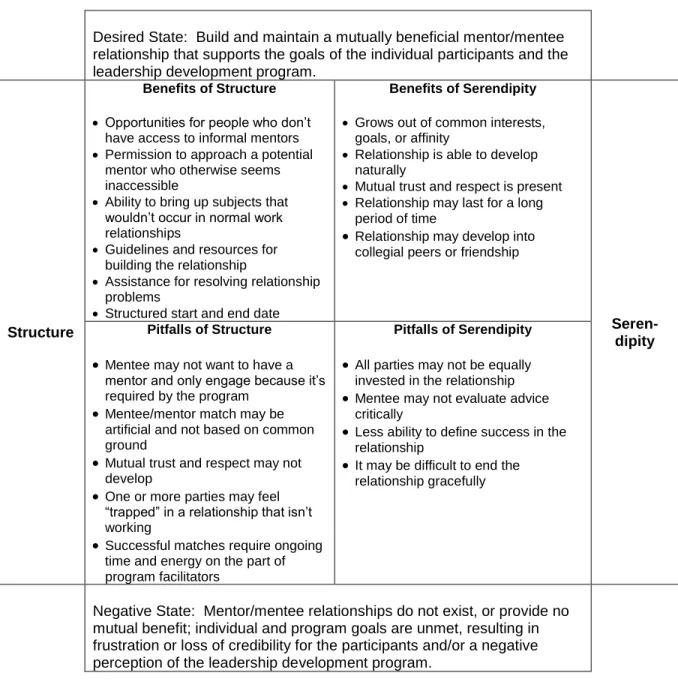
Figure 1: Polarity Map for Structure and Serendipity in Mentoring ... 65 Figure 2: Polarity Map for Supervisory and Non-Supervisory Mentoring
Chapter 1. Introduction
Developing the next generation of executive leaders is an important task for human resource development (HRD) professionals in higher education. Changing political and educational environments, along with a high number of anticipated retirements, have intensified the competition for well-qualified executive leaders. Sanaghan, Goldstein, and Gaval (2008) observed that in the United States college
presidents serve, on average, fewer than ten years. As a consequence, they found than in any given year about 25% of higher education institutions are preparing for, in the midst of, or completing a presidential transition. A recent survey of nonprofit retirement plan sponsors found that within the higher education sector up to 20% of the workforce is anticipating retirement within the next five years (NonProfit Times, 2013). This is causing a range of problems for human resources professionals, including workforce skill gaps, need for increased training, and greater responsibilities for remaining employees as duties are reallocated.
Responding to the need to reduce pressures on leadership pipelines, scholars and practitioners higher education, as in in the field of HRD in general, have focused on leadership development as a strategy. Madsen (2012) noted that within HRD “leadership development has become an important area of inquiry” (p. 4). She stated that leadership development has implications for key areas of HRD, including career development, training and development, and organization development and argued that it is now “central to HRD theory, research, and practice” (p. 4).
Leadership development is also a critical focus in higher education because new leaders often enter their roles under-prepared (Bolman & Gallos, 2011; Campbell, Syed, & Morris, 2010). A more professional and systematic approach to leadership
development is replacing the older model of promoting outstanding faculty members into executive positions without adequate preparation for the role. In spite of this, women and minorities are often under-represented in leadership talent pools (Harris & Lieberman, 2012; Madsen, 2012). These circumstances have created a need for effective leadership development strategies for experienced, new, and potential leaders in higher education. Background
HRD professionals have numerous options for designing and delivering
leadership development programs. Scholarly and practitioner journals agree that the most effective programs are not solely based on classroom experiences, but also include
experiential components that help participants apply what they learn to their daily work (Peshawaria, 2011). Common experiential components in leadership development
programs include 360-degree feedback, executive coaching, challenging job assignments, action learning projects, and mentoring (Day, 2001; Rhodes, 2007). Day (2001)
described this approach as helping people learn through their work rather than leaving their work to learn.
This study focused on mentoring as an experiential component of leadership development programs. Mentoring provides benefits for both mentors and mentees, as well as for sponsoring organizations. For example, Groves (2007) identified it as a “best
practice” and Solansky (2010) identified at is a “key component” in leadership
development programs. Thurston, D‟Abate, and Eddy (2012) stated that “the individual and organizational benefits of mentoring are important outcomes of a strong strategic HRD system” (p. 139).
While experiential learning approaches can be highly effective, Hernez-Broome and Hughes (2004) observed that “leadership development practices based on this paradigm are more difficult to design and implement” (p. 27). Unlike traditional
classroom-based training, experiential approaches typically involve greater investment of financial resources (for example, purchasing assessments or hiring executive coaches), program coordination (to create and monitor action learning projects, stretch assignments, and/or mentoring relationships), as well as staff time to complete 360-degree reviews and senior leader time to serve as mentors or sponsor learning projects. In relation to
mentoring, Cummings and Worley (2005) stated that it is “relatively prevalent in organizations,” but also noted that “artificially creating such relationships when they do not occur naturally is difficult” (p. 408). Further, Solansky (2010) noted that “having a mentor in place does not guarantee that the mentor-mentee relationship will be effective and open” (p. 679).
Research Question and Design
This study examined the question: In what ways can mentoring add value to a leadership development program in higher education? It was designed to provide new knowledge to inform the design and implementation of mentoring programs that meet the needs of institutions of higher education and the leaders who participate in the programs.
This study used a qualitative case study method to examine a specific leadership development program, the Minnesota Partnership for Executive Leader Development (MN Partnership). Embedded within the case were two units of analysis: 1) the sponsoring organizations, which were the University of Minnesota and the Minnesota State Colleges and Universities, and 2) the individual cohort members. The units of analysis were examined in order to provide multiple sources of evidence regarding the program‟s goals and outcomes.
The MN Partnership planning team consisted of six individuals, two from
MnSCU and three from the U of M. I was the sixth member of the planning team; during the course of the program I changed employment from the U of M to MnSCU. My role within both sponsoring organizations provided a unique opportunity to examine the design of the program‟s mentoring options and participant‟s perception of their success. Examining program design choices as made by each sponsoring organization and as enacted by participants provided new information about how mentoring is experienced by program stakeholders.
Significance of the Study
HRD professionals within higher education are faced with the challenge of designing leadership development programs that produce tangible outcomes and meet critical organizational needs. One of the questions faced by the design teams for
leadership development programs in higher education is whether, and how, to incorporate a mentoring component. Mentoring is a time-honored strategy for developing leaders, but there is little research on how to best structure formal programs to generate desired
results, particularly in the context of higher education. Including a mentoring component has the potential to increase program effectiveness, but it also greatly increases both the complexity of program design and the expenditure of organizational resources.
Instructional designers and program planning teams often find that relatively little practical advice is available to inform the design of mentoring activities and ensure that an organization‟s investment is used to its best advantage. There is a lack of research on the design process for mentoring programs (Baugh & Fagenson-Eland, 2007; Day, 2001; Solansky, 2010). Ligon, Wallace, and Osburn (2011) noted that while research exists regarding effectiveness of mentoring for leadership development, “far less is clear regarding how mentors transmit these learning outcomes from a process standpoint or how HRD might play a role in facilitating this occurring” (p. 306). Hezlett and Gibson (2005) observed that, “although mentoring theory, research, and practice have begun to mature, relatively few articles on mentoring have appeared in the human resource development (HRD) literature” (p. 446).
Zellers, Howard, and Barcic (2008) stated that higher education has been slower than business to formalize mentoring activities for faculty. They found that previous literature focused on informal or naturally occurring faculty mentoring relationships because of “the paucity of empirical studies” on formal programs (p. 553). Based on a review of the literature, I found that there are even fewer studies related to mentoring for higher education leader development.
This study contributed to the literature on leadership development by examining both the design process and intended outcomes of mentoring in a formal leadership
development program. Findings from this study may help program planners understand the relative strengths and applications of various types of mentoring models.
Limitations of the Study
My role as a program coordinator of the MN Partnership allowed me to have access to documents and a level of shared knowledge with interviewees that might not have been available to outside researchers. At the same time, the insider role can present limitations (Yin, 2009). First, there can be a bias caused by a tendency to take an
advocacy role toward the program being studied. This problem was partially mitigated by the fact that the program was designed as a pilot and there was a need to objectively decide whether or not the program was worth the fairly significant investment of time and resources. Triangulation by use of multiple sources of information was important to guard against any potential desire to portray the program in an overly favorable light. A second problem noted by Yin (2009) was that participant-observers may not have the time and attention needed to act as objective observers. That limitation was alleviated by waiting until the program was completed to begin the study. As a consequence, I was not playing an observer role during the program and field notes do not exist.
Yin (2009) stated that a limitation for case study research is the difficulty of generalizing beyond the single case. However, Gall, Gall, and Borg (2007), argued that qualitative case study research is not conducted with a goal of generalizability. They discussed the term applicability, or relevance to the study‟s users. While the focus of the study was one particular program, the MN Partnership shares similarities with other leadership development programs in higher education. It was my intent that readers
would be able to apply the findings to their efforts in designing mentoring activities for similar higher education leadership programs.
Terms and Definitions
Leadership. Much has been written in an attempt to define leadership.
Northouse (2004) observed that there are a “multitude of ways that leadership has been conceptualized.” While acknowledging that the term has many meanings, he proposed the following definition: “Leadership is a process whereby an individual influences a group of individuals to achieve a common goal” (p. 3). Kotter (2001) proposed that leadership, like management, involves “deciding what needs to be done, creating networks of people and relationships that can accomplish the agenda, and then trying to ensure that people actually do the job” (p. 86). However, he argued that management is about complexity while leadership is about change, and each requires a different set of skills and strategies.
Leadership development. This study will focus on formal leadership
development programs that are organizationally-sponsored efforts to 1) identify a group of individuals who are current or potential leaders and 2) provide them with a set of experiences designed to enhance their capacity and readiness for serving in leadership roles. The formal mentoring activities examined in this study meet the criteria defined by Douglas (1997) as being “assigned, maintained, and monitored by the organization, usually through an established program” (p. 1).
Mentoring. For this study, mentoring will be defined as a mutually beneficial relationship, intentionally built over time, in which mentors provide resources to help
mentees achieve personal and/or professional goals while, at the same time, increasing their own personal and/or professional satisfaction and growth. This definition emerged during data analysis and reflects a broad approach that is not bounded by traditional definitions in relation to number of participants or organizational hierarchy.
Coaching. While mentors may provide coaching, the concept of coaching differs from mentoring in several ways, particularly in its focus on improvement in specific areas of performance and the relationship between the coach the person being coached.
Supervisory coaching is an ongoing part of the supervisor/employee relationship, focused on performance in the employee‟s current position. It is often initiated by the supervisor and is less dependent on the readiness component explained in Chapter 4. Executive coaching occurs when one party is contracted to provide specific types of feedback to the other. Executive coaches are often outside of the client‟s organization and typically do not provide the organizational insights and networking assistance that may be part of a mentoring relationship.
Sponsoring. For this study, a sponsor is defined as a senior member of an organization who is serving as an advocate for a more junior member. The sponsor provides insight to help the individual understand and navigate the organization‟s culture and politics. A sponsor may also nominate an individual and support their participation in leadership development activities.
Summary
Kezar (2009) called leadership development “one of the most important conditions for the health and future of higher education” (p. ix). As HRD scholars and
professionals within higher education seek to develop the next generation of leaders, they may find that the literature is limited in regard to design and implementation of effective strategies.
This study used a qualitative case study to examine the goals and outcomes of mentoring as a component of a formal leadership development program. This strategy is regarded as potentially effective, but also as presenting significant challenges to program planners. By examining the choices and outcomes that occurred during the initial design phase and pilot implementation of the MN Partnership, the study generated new
Chapter 2. Literature Review
There is a great deal of scholarly and practitioner literature on the topic of leadership, and a significant amount relating to leadership development. The topic of mentoring as a leadership development strategy has been receiving more attention during the past two decades. This chapter will provide a brief overview of the research, with focus on questions related to leadership development in higher education.
Leadership Development
When working in the context of leadership development, it is important to
understand what is meant by the term “leadership.” As pointed out in Chapter 1, the term has many different meanings and there is a wide range of perspectives toward defining it (Northouse, 2004). Terry (2001) noted that several perspectives represent opposing views, such as the extent to which leaders are either “born” or “made” (p. 23) and the extent to which it is “positional” or “everywhere” (p. 27). Heifetz, Grashow, & Linsky (2009) further distinguished between leadership and authority, and argued that authority, power, and influence are tools of leadership but not the defining factors: “We find it extremely useful to see leadership as a practice, an activity that some people do some of the time” (p. 24).
Within the context of higher education, this broader view is appropriate since much leadership happens among peers and relies little, if at all, on positional power and authority. Leadership development within the context of higher education, of necessity, focuses on creating collaborations and setting visions that others are willing and able to follow. Mentoring as examined in this study occurs in leadership development programs
that align with Day‟s (2000) definition of “leadership development” as opposed to “leader development.” Similar to Kotter‟s (2001) distinction between management and leadership, he argued that the leader development helps people build skills to lead human capital, while the leadership development has a social and relational context.
One important question for HRD practitioners and scholars in leadership
development is the extent to which leadership can be learned. Kouzes and Posner (2002) reflected current thinking when they identified a “pernicious myth” that leadership is reserved for those with special inborn traits or positional authority (p. 385). They argued that “leadership is an observable set of skills and abilities that . . . can be strengthened, honed, and enhanced, given the motivation and desire, the practice and feedback, and the role models and coaching” (p. 386). Within HRD, practitioner organizations such as the American Society for Training and Development (ASTD) are acting on the belief that leadership is teachable (Israelite, 2010). Innumerable tools, techniques, and approaches are offered by consulting firms and vendors with a broad range of qualifications. Forbes (2011) estimated that $60 billion is spent annually on leadership development. Further, the article argued that much of the money is wasted on programs that do not work (Peshawaria, 2011).
Scholars have been more cautious, but also tend to agree that leadership can be taught. Doh (2003) interviewed leaders in the field of leadership education and concluded that leadership can be taught, within certain constraints. He found that effective leaders have a “teachable frame of mind” (p. 64) which can lead to successful leadership development programs, assuming the programs include practical and
experiential components. He concluded that “leadership education, like leadership itself, must rely on heuristic approaches such as mentoring, coaching, patterning, and, trial-and-error experience” (p. 66). Charan, Drotter, and Noel (2001) proposed a model for developing leaders within organizations. They found that “internal training, mentoring, and other developmental programs aren‟t keeping the pipeline full” (p. 1) and identified specific developmental issues that need to be addressed as potential leaders reach new stages in their careers: new skill requirements, new ways to frame and manage time, and new values to use when deciding how to allocate one‟s work effort.
Assuming that leadership can be learned, a second important concept for HRD scholars and practitioners is “stickiness” of knowledge. Sticky knowledge carries a high cost in acquisition and transfer due to its non-routine nature or perceived difficulty to resolve (Szulanski, 1996; von Hippel, 1994). In leadership theory, this is what Heifetz and Laurie (2001) called an adaptive challenge – a situation in which beliefs are challenged, previously held values no longer apply, and competing legitimate perspectives exist. In identifying barriers to transfer of sticky knowledge, Szulanski (1996) found that three important factors are the inability of the recipient to understand, the ambiguity of causes, and arduousness of the relationships (defined as ease of
communication and intimacy). The latter factor relates to the importance of mentoring relationships. To the extent that there is sticky knowledge involved in becoming a leader, then teaching through two-way communication and intimate relationships – such as effective mentoring – is critical.
For HRD practitioners, it is important to differentiate this definition of stickiness from the more recent definition that is common in business literature. As described, for example, in Heath and Heath (2007) knowledge that “sticks” refers to ideas that “are understood and remembered, and have a lasting impact – they change your audience‟s opinions or behavior” (p. 8). They argued that these ideas stick because they are simple, unexpected, concrete, credible, emotional, and based on stories. Using this definition, one role of mentors is to tell compelling stories about their own experiences that will stick with the mentees and help them learn to modify their own leadership behaviors. Developing Leaders in Higher Education
Kuchinke (2012) noted that “mentoring represents a complex social practice that is embedded in an organization‟s culture and climate” (p. 168). In addition to
organization culture, mentoring strategies are also affected by the broader context in which the organization operates. The focus of this study is the higher education sector. In comparison, literature describing programs in the business sector often discussed shorter-term goals tied to measures such as increased profit or progress along a
promotional track. Darwin and Palmer (2009) found that networking, social support, and availability of role models were often important goals for mentoring in higher education. They expressed concern that “result-oriented organizations may not perceive these benefits as valuable” (p. 134).
Several challenges are important for leadership development in the context of higher education. First, academic leaders often come to their roles with limited training or preparation (Bolman & Gallos, 2011; Martin & Samels, 2004). In addition, academic
leaders are facing a critical set of issues that will impact higher education in the future. Martin and Samels (2004) identified a list of challenges required for new college presidents, including pressure to raise funds, managing competition from for-profit schools, and making decisions about technology options. Harris and Leberman (2012) expanded the list by noting that these challenges, along with pressures caused by new financial models and a global marketplace, make it difficult to attract and retain academic leaders. They proposed that part of the solution could be increased focus on developing women and minorities to fill leadership positions. Allen and Cherrey (2000) identified an additional set of leadership issues for higher education relating to global shifts “from a world of fragmentation to one of connectivity and integrated networks” and “from an industrial to a knowledge era” (p. 1). They argued that these shifts require leaders to support organizational flexibility while at the same time promoting stability and proposed that academic leaders need to develop a more systems-focused approach to their roles.
Compounding the problem, the nature of existing leadership programs in higher education may not be adequate to the current highly collaborative, decentralized, global environment. National programs have historically been based on hierarchical models and individual skill development for positional leaders (Kezar, 2009). Campus-based
programs are often developed around the interests and availability of volunteer faculty and, rather than strategic program design, may resemble “what happens in a conference or annual meeting – here is one session of this topic and here is another on another topic, and let us make certain we have diversity of topics and presentation modes so the day is lively” (McDade, 2009, p. 227). In both cases, it is difficult to provide emerging leaders
with the cross-disciplinary experiences necessary to be effective in institutional leadership.
Mentoring
The origin of the term “mentor” is commonly attributed to Homer‟s Odyssey (Zellers, Howard, & Barcic, 2008). In that story, Odysseus travels on a journey, leaving his son in the care of the trusted elder, Mentor. However, the strategy in which a younger person is guided in developing skills and character traits from a respected, non-parental elder was part of the human experience long before Homer, and probably before there was written language.
Traditionally, mentoring has been defined as a one-on-one relationship. For example, Cummings and Worley (2005) defined it as “establishing a close link between a manager or someone more experienced and another organization member who is less experienced” and who “takes a personal interest in the employee‟s career and guides and sponsors it” (p. 407). More recently, the literature has proposed new approaches and strategies for mentoring. In response to practical difficulties with establishing one-on-one mentoring relationships and to changing organizational needs, alternatives are emerging to the traditional mentoring relationship. These include peer mentoring, structured networks, and mentoring circles (Angelique, Kyle, & Taylor, 2002; Darwin & Palmer, 2009; Douglas, 1997; Parker, Kram, & Hall, 2013).
Desired outcomes of mentoring. The literature described a variety of short-medium- and long-term goals that either resulted from a mentoring program or were desired as part of the planning process. Examples of short-term outcomes included
achieving career goals, building relationships, and sensemaking. Mentoring for career goals included achieving promotion or tenure (Boerema, 2011; Kuyper-Rushing, 2001; Stanley & Lincoln, 2005), adjusting to a new culture (Bhatia & Amati, 2010), or orientation to new roles. Bengtson, Zepeda, and Parylo (2013) called mentoring “a key component of the induction process” for new principles (p. 146). Relationship-building was a second commonly stated short-term goal. Two themes were the development of professional networks and reducing feelings of loneliness and isolation. Golian-Lui (2003) observed that “learning that I am not alone in these challenges brings me great comfort” (p. 28). A third short-term goal was sensemaking. In addition to offering professional advice, some articles described ways mentors can help mentees understand and make sense of their experiences. Ligon, Wallace, and Osburn (2011) discussed the importance of the mentor‟s role in helping mentees learn from experiences. “Without someone to provide explanation, sensemaking does not happen and developing experiences may be wasted” (p. 306).
Mid-term outcomes of mentoring occur when the individuals practice their new learning through, for example, changed patterns of decision making or engaging in social action. Goals for mentees often included aspirational outcomes such as development of leadership skills and increased self-confidence. For mentors, goals included the potential that mentoring relationships could turn into professional peer relationships. Desired organizational outcomes included an increased sense of motivation and connection to the work. This was often expressed as a goal for programs designed to support
women may experience mentoring differently than men, and those factors of “involving someone who cares” and “feeling of connection” are highly rated by women faculty mentees (p. 560).
The literature also discussed long-term results of mentoring that occur when the larger environment is impacted, resulting in changing social climates, organizational cultures, or community behaviors. One desired long-term organizational outcome was that as mentees advanced in their careers they would, in turn, be able to mentor others. In addition, some authors proposed that mentoring would increase employee engagement overall, expanding organizational benefits beyond those being mentored. Horvath,
Wasko, & Bradley (2008) further found that the availability mentoring programs could be an attractive recruiting tool. Some articles identified long-term goals related to creating new organizational cultures that were more supportive and inclusive. Other long-term goals included increasing the leadership capacity of the organization, building stronger collaborative networks, and supporting the organization‟s mission and values.
Formal Mentoring
To understanding mentoring in an HRD context, it is important to draw a distinction between formal and informal mentoring. Formal mentoring differs from informal in that the relationships are developed with organizational assistance and within a specified time frame (Baugh & Fagenson-Eland, 2007). As Ehrich and Hansford (1999) observed, the two strategies “can be experienced quite differently” (p. 5). Allen, Eby, and Lenz (2006) stated that research regarding formal mentoring has focused on emulating the informal experience, and argued for “moving beyond this simple logic and
acknowledging the issues unique to formal mentorships” (p. 147). They found that two unique considerations in designing formal programs were helping participants to understand the goals and purpose of the program and encouraging commitment on the part of mentors.
Mentoring as an organizational strategy came to popular and scholarly attention in the late 1970s (Ehrich & Hansford, 1999; Tenner, 2004; Zellers, Howard, & Barcic, 2008). Popular attention was drawn to articles such as Collins and Scott‟s (1978) Everyone who makes it has a mentor, Roche‟s (1979) Much ado about mentors as early contributions. Levinson (1978) discussed mentoring in his book on adult development, and was among the first to define the roles of a mentor and identify their transitional nature. Kanter (1977) was among the first to discuss the importance of mentoring in terms of career success.
There is now a significant body of scholarly literature on mentoring from a range of disciplines including business, psychology, and human resource development. Much of this literature focuses on descriptions of personal experiences (for example, Golian-Lui, 2003; Stanley & Lincoln, 2005) or on program outcomes for mentors (Allen & Eby, 2003; Parise & Forret, 2007), mentees (Bhatia & Amati, 2010; Bengtson, Zepeda, & Parylo, 2013), and the organization (Groves, 2007; Horvath, Wasko, & Bradley, 2008). The literature related to the education sector is more limited and very little discusses design of formal programs. Excluding literature on mentoring for students, the most prevalent topics relate to experiences and outcomes of professional development programs, with a significant emphasis on college and university librarians, school
principals, and new faculty. A smaller body of literature focuses on use of mentoring to support the development of academic faculty and staff from underrepresented groups such as minority faculty members or women in sciences and engineering.
While the literature on effective design of formal mentoring programs is limited, three scholar/practitioners who have contributed to the field are Norman H. Cohen, Margo Murray, and Florence M. Stone. They will be discussed below as examples mentoring program design research over the past two decades.
Cohen (1995a) defined mentoring as a one-on-one relationship between a mentor and a learner. He proposed principles of adult mentoring that included the following six mentor roles: establishing trust, offering advice, introducing alternatives, confronting and challenging, modeling and motivating, and encouraging initiative. His Principles of Adult Mentoring Scale (1995b) was proposed as a way for mentors to self-assess their competencies and for program facilitators to offer training.
Murray proposed a model of “facilitated mentoring” in 1991. The revised edition of her book (2001) explored how the model had been used and proposed this definition:
Facilitated mentoring is a structure and series of processes designed to create effective mentoring relationships; guide the desired behavior change of those involved; and evaluate the results for the protégés, the mentors, and the organization (p. 5).
Stone (2004, 2007) was a mentoring practitioner associated with the American Management Association. Her research focused on the business advantages of formal mentoring programs. She proposed definitions to distinguish mentoring from similar
behaviors such as coaching and counseling, and developed guidelines for establishing and maintaining facilitated programs. Her work addressed alternatives to one-on-one
mentoring, such as providing mentorship for cross-functional teams.
Most of the literature approached formal mentoring as beneficial to individuals and organizations, or from a neutral framework. However, some authors addressed potential negative aspects of mentoring. Tenner (2004) identified a “current trend toward overvaluing mentors” and cautioned that “a mentor is only as good as the ethics and concepts that he or she imparts” (p. B7). Ehrich and Hansford (1999) reviewed the literature and proposed a framework to identify drawbacks, as well as benefits, of mentoring programs for organizations, mentees, and mentors. Baugh and Fagenson-Eland (2007) also explored both positive and negative aspects of formal mentoring. Angelique, Kyle, and Taylor (2002) discussed the limitations of traditional mentoring programs in academic settings, as well as alternatives such as peer mentoring. Parker, Kram, and Hall (2013) identified individual, relational, and contextual risk factors associated with peer coaching and proposed mitigation strategies.
Strategies for Designing and Implementing Formal Mentoring Programs As described above, there is a great deal of literature about leadership
development, including some specifically addressing issues in higher education. There is also a body of literature discussing mentoring programs, much of it either evaluative or descriptive in nature. However, there is little literature that seeks to integrate the theories into the practice of designing formal mentoring components in leadership development programs. As a relatively recent addition to the literature on management practices,
theories and frameworks for mentoring are still being explored. Murray (2001) noted that mentoring in formal programs is in an evolutionary stage: “The strategies used in
mentoring processes are changing every day as we examine lessons learned and best practices” (p. 1).
One decision to be made by designers of traditional mentoring programs relates to the strategy for matching mentors and mentees. Bell and Treleaven (2011) reviewed the literature and found that “further research into the pairing process, and its operational details in particular, is necessary” (p. 549). They proposed effective design
considerations including allowing mentees have input in the selection process and providing ongoing individualized support for mentees during the program. Blake-Beard, O‟Neill, and McGowan (2007) found that the matching process is challenging,
complicated by the fact that “as participants enter formal programs, they bring with them their entering intentions, assumptions of the role, and understanding of the program‟s purpose, based on their own personal mentoring experiences and life history” (p. 618). They identified three matching strategies – administrator assigned, choice based, and assessment based – and reviewed strengths and weaknesses of each.
The literature discussed a variety of resources that are needed for implementation of a mentoring program. Committing the time for regular mentor/mentee meetings was described as a critical factor, and was the most commonly cited cause for not achieving desired outcomes. In more demanding programs, participation requirements were likely to be clearly articulated (for example, Browne-Ferrigno & Maynard, 2005). Kuyper-Rushing (2001) discussed the implications of requiring mentees to participate in the
program as a potential negative influence on motivation. Darwin and Palmer (2009) found that mentoring circles were less successful if “some people didn‟t really want to be there” (p. 132). Parise and Forret (2007) found similar detrimental effects when mentors were required to participate in programs.
While not as commonly discussed in the literature, program facilitation is an important consideration within the HRD context. The role of the coordinator in
supporting mentoring is important because, as Neely (2009) found, “the more emphasis placed on program elements by program coordinators, the more successfully realized the impact from that particular element” (p. 832). While many of the coordination activities were assumed rather than discussed explicitly, all elements of a typical instructional design model were present. Analysis was represented by understanding the
organizational context and conducting needs assessment. Development activities included creating guidelines about the number and types of mentoring activities and creating a strategy for matching mentors and mentees. Implementation activities include training to explain program goals and provide structure for mentors and mentees. An additional consideration is the need for program coordinators to create a learning environment in which it is safe for mentors and mentees to take risks (Browne-Ferrigno & Maynard, 2005). Neely (2009) also noted that program coordinators may model mentoring behavior by mentoring the mentors and by providing additional advice and support to participants. Evaluation was seen as important, not only at the end of a
of pilot programs, as well as the ability to use evaluation data to adjust an ongoing program.
Polarity management
In reviewing HRD literature related to instructional design and organization development, I identified a model that provided a useful framework for analyzing the data from this study. Polarity, or paradox, is a decision making framework used to manage ongoing, complex problems that involve interdependent and opposing sides. Typical polarities within higher education include centralization and decentralization, individual and team, or task and relationship. This study focuses on another common polarity, structure and flexibility. Johnson (1996) argued that when individuals or organizations treat polarities as problems to be solved, they “spend unnecessary time experiencing the downsides of that polarity” (p. 81). He proposed polarity mapping as a tool for identifying and managing the positive and negative aspects of polarities. As described in Chapter 3, this tool can be usefully applied to analyze data relating to conflicting and potentially value-laden issues.
While the tool is most commonly used by HRD practitioners, it is beginning to find its way into the literature. For example, Kise (2013, 2014) proposed it as a
framework for understanding leadership and education reform, and Burns (1999) called it “the key challenge for integrated health systems” (p. 14). The paradox framework has also been used to report proceedings from a conference on cross sector leadership (Center for Integrative Leadership, 2010). Without using the framework, Tolar (2012) provided an example of a potential polarity in discussing mentoring for high-achieving women.
She found that women in the study “describe the presence of mentors as both a help and a hindrance and the absence of mentors as both benefit and deficit” (p. 172).
Johnson‟s (1996) polarity management model provided a structure for identifying desired outcomes and monitoring unintended consequences of program design decisions. He stated that “in a well-managed polarity most time is spent experiencing the positive aspects of one pole or the other. When the downside of a pole is experienced, it is used as a signal to move to the positive of the other pole” (p. 106). By identifying possible indicators of the downside, a planning team can be more prepared to address them should they occur.
Summary
This chapter reviewed some of the literature that informed this study. An
overview of leadership development was provided, with a focus on the higher education sector. An overview of the literature on mentoring was also provided, including a discussion of formal mentoring programs. Finally, research on strategies for incorporating mentoring into leadership development programs was discussed.
The complex nature of the topic, as well as a lack of literature related to specific strategies for program design, can make it difficult for instructional designers and program planners to develop and evaluate mentoring programs that meet their
organizational goals. Polarity management was introduced as a data analysis framework that can inform program design. This model will be further developed in Chapter 4 (Figure 1) and Chapter 6 (Figure 2) as a way to analyze findings from this study.
Chapter 3. Research Method
While mentoring is a time-honored way to pass leadership knowledge from one generation to the next, there is disagreement on the extent to which it can be structured as part of a formal leadership development program. As these programs proliferate,
mentoring has become an important issue for HRD scholars and practitioners in higher education. This study was designed to answer the question: In what ways can mentoring add value to a leadership development program in higher education?
To address this question, I examined the case of the MN Partnership, a year-long program designed to prepare participants for senior leadership positions in higher
education. Participants in the MN Partnership engaged in a range of mentorship
activities, and this study was designed to explore the factors that influenced the extent to which they believed that mentoring was a valuable component of their experience during the program. In addition, I sought to understand the program design choices made by the program‟s planning team.
This chapter will provide the context for the study, including descriptions of the sponsoring institutions, the planning team, and the participants. It will describe the research design and methods. Finally, it will introduce two models used to analyze the data.
The Case: Minnesota Partnership for Executive Leader Development
The MN Partnership was “designed to prepare high performing, high potential leaders for senior-level administrative roles in public higher education. . . to strengthen our leadership pipeline” (Minnesota Partnership for Executive Leader Development,
2011a). The program was developed by a design team of HRD practitioners from the University of Minnesota (U of M) and the Minnesota State Colleges and Universities (MnSCU). Participants were academic and administrative leaders from the two sponsoring organizations. These organizations share many traits common to higher education, such as highly collaborative and consultative work environments, a hierarchical organizational structure, and a shared set of stakeholders and public expectations. They also share a joint responsibility for providing the public higher education offered throughout the state. The commonalities made it possible to design a leadership development program that would benefit participants from both systems.
The collaboration that resulted in the MN Partnership grew out of exploratory conversations between HR executives and leadership development professionals at both systems (Minnesota Partnership for Executive Leader Development, 2010, November 10.) The conversations were driven in part by changes in leadership at both
organizations, associated with ongoing public scrutiny of public funding for higher education. This resulted in a desire on the part of the human resources organizations in both systems for greater collaboration. The need for an executive leadership
development program was identified as a shared issue that could be successfully
addressed by a common effort. Members of the planning team believed that pooling their efforts would result in a stronger a program than either organization could create on its own. Each organization brought to the table a shared financial commitment as well as a complementary set of resources, including strong instructional design skills and access to a wider variety of subject matter experts and potential speakers.
The pilot offering of the MN Partnership was held during the academic year 2011-2012. It involved 36 participants: 20 from the MnSCU system and 16 from the U of M. The program included individual activities such as formal coaching sessions and participation in stretch assignments to address experience gaps. It also included a series of four two-day group seminars. A mentoring component was not part of the joint program design. Rather, a variety of mentoring options were provided and implemented to varying degrees by the participants.
The program planning team consisted of the directors and two staff members from the HRD units at the U of M and MnSCU. Input was also provided by subject matter experts (SMEs) from both organizations. I participated in the planning team as a member of the organizational effectiveness staff at the U of M. During the pilot year I accepted an appointment in the talent management division at the MnSCU system office and continued my involvement in the planning team. Therefore, as a participant-observer I was able to approach the study with insider (“emic”) and outsider (“etic”) views of both sponsoring organizations.
The choice of a pilot program as the case presented both benefits and limitations to the study. One limitation in reviewing outcomes is that the design team did not have the opportunity to implement enhancements that might have been used in subsequent programs to mitigate design flaws. In addition, taking a snapshot of one cohort at one point in time did not allow tracking of program outcomes and participant perceptions over time. Advantages included the fact that program design process was relatively recent, which meant that more data was available than might have been the case with
more established programs. Planning team notes included discussion of design criteria, and interviews with subject matter experts provided additional information about the decision making process for program design.
Research Method and Design
This study used a qualitative research methodology. I chose this approach in order to learn how stakeholders experienced the program and how they understand the concept of mentoring. Merriam (2009) stated that qualitative research is the best
approach for exploring a phenomenon to find deeper understanding and make meaning. A basic qualitative study seeks to understand “(1) how people interpret their experiences, (2) how they construct their worlds, and (3) what meaning they attribute to their
experiences. . . . Its overall purpose is “to understand how people make sense of their lives and their experiences” (Merriam, 2009, p. 23).
This was an exploratory study, in that HRD professionals do not have a large body of knowledge about the effectiveness of program design choices to incorporate mentoring into formal leadership development programs. Further research is needed on specific action steps that can be taken to create successful mentoring experiences. Instruction designers wishing to create mentoring programs need additional scholarly information and models for selecting an appropriate strategy and taking steps that will promote their desired outcomes.
This research used a case study design. As described by Yin (2009) a case study can be useful in answering questions about how or why a social phenomenon operates as it does. He stated that a single-case study design can be appropriate when the case is
unique or, alternately, when it represents a typical example. In this study, the MN Partnership includes both unique and typical aspects. While the program represented a common approach to developing leaders in higher education, it also provided a unique opportunity to examine the experiences of participants who have become successful leaders in different higher education environments, including a Big 10 research
institution, four-year public universities, and two-year community and technical colleges. In addition, it represented a unique partnership between two systems of higher education. My role as a member of the program planning team allowed me to have access to the notes, records, and thought processes that went into the program design. At the same time, the rather large size of the planning team (six people from two institutions), along with the involvement of additional subject matter experts, meant that my findings could be tested and validated by other members of the team.
While the study focused on a single case, it included multiple units of analysis, employing what Yin (2009) defined as an embedded design. In addition to the overall program, attention was given to two subunits of the case. These were 1) the sponsoring organizations, and 2) individual members of the pilot cohort. By using an embedded case study design, I was able to examine a specific phenomenon, the creation and
implementation of mentoring designs, in operational detail and from a variety of viewpoints.
To manage the potentially overwhelming amount of data that can be generated by multiple units of analysis, this study employed a tight focus on mentoring as a component of leadership development. It was not intended to produce a comprehensive evaluation of
the MN Partnership program nor a description of participants‟ entire experience with the program. Rather, it focused on multiple viewpoints of mentoring, including the extent to which it was included in the program design, programmatic choices made by the design team, and lived experiences of individuals who were associated with the program.
Yin (2009) cautioned that a potential pitfall of embedded case studies can occur if too much emphasis is placed on the subunits and not the larger picture. The case can become a context rather than a focus of the study. I attempted to avoid this problem by using the data to find common themes and build a model that could be used in designing mentoring activities for similar programs.
When selecting a qualitative case study approach, other research options were considered and eliminated as less applicable to the purposes of the study. For example, a study using quantitative methods, such as a satisfaction survey of program participants, could have yielded valuable information about the nature of mentoring relationships. It could have been designed to test whether demographic factors such as age, gender, or type of previous leadership experience can predict the success of mentor-mentee pairings. However, I chose to focus on an approach that would provide rich descriptions about the nature of successful mentoring relationships in order to understand what successful mentoring relationships look like from the participant‟s viewpoint.
Epistemological Assumptions
A positivist research viewpoint can be defined as one in which researchers believe that reality exists independently of observation and the role of a researcher is to describe this reality in an unbiased manner (Gall, Gall, & Borg, 2007). Alternatively, interpretive
research “assumes that reality is socially constructed” (Merriam, 2007, p. 8-9). A
researcher using an interpretive, or constructivist, framework believes that “social reality is constructed by the individuals who participate in it” (Gall, Gall, & Borg, 2007, p. 21). This study was undertaken from the latter viewpoint. While I sought to understand participants‟ experiences, I also brought my own set of assumptions about mentoring which inevitably colored the questions I asked and the meaning I made of the data.
According to Gall, Gall, and Borg (2007), case study research can be placed in the interpretive framework because the study‟s design is determined by the researcher‟s choices about what questions to ask, what to observe, and the lenses through which to view it. For this reason, they stated that “case study design is not an event, but an emergent process that occurs throughout the case study” (p. 454). The design of this study was indeed an emergent process, undertaken from a perspective of joint meaning-making. Semi-structured interviews occurred over a six-month period of time allowed for joint exploration of key topics. As the interviews progressed, I was to some extent able to reflect with participants about my findings and their reactions to the emerging definitions and models.
Sources of Evidence
Yin (2009) noted that a well-designed study uses as many sources of evidence as possible. For this study, sources of evidence included documentation, direct observation, and interviews.
Documentation. Documents used for this study included notes from the planning team meetings, marketing communications, participant handouts, and facilitator guides.
Some of these materials were retrieved from my personal files as part of the planning team. Others were stored in an online Moodle site that was created for cohort members. Along with the program bibliography, the site contained articles that were assigned as course readings, links to related internet sites, and discussion forums. At the completion of the program, the MnSCU system worked with an outside consultant to evaluate
outcomes for the MnSCU system. Her report, along with a follow-up interview regarding her findings related to mentoring, provided another source of evidence.
Direct observation. As a member of the planning team, I was present at all formally sponsored program events, including the four program seminars and the U of M peer group gatherings. In addition, I was present at the large group program planning meetings, which began with an initial brainstorming meeting, progressed through program design, and ended with final evaluation. As the planning team‟s focus progressed from design through implementation, the team divided into smaller work groups and I participated in one of these groups. The meetings took place over a two-year period of time. While this study was not conducted until after the completion of the program, I was able to reflect on my experiences and my understanding of decisions that were made during design and implementation of the program.
Interviews. For this study, I conducted 29 one-on-one interviews. Individuals who were interviewed as part of this study represented two groups. Those identified as leaders were cohort members who participated in the MN Partnership program. Those identified as subject matter experts (SMEs) were associated with the program in design,
development, and/or delivery roles. The two groups are described below and a demographic comparison chart is provided in Table 1.
Leaders. The cohort members selected for the MN Partnership were perceived to be successful in their current roles and identified as having the potential to be developed further to fill executive leadership roles. I interviewed 21 of the 36 cohort members. This represented a convenience sample based on availability and my desire to gather viewpoints representing the different types of educational institutions participating in the program.
A list of job titles is not provided in Table 1 for two reasons. First, some titles are specific enough that they could be traced back to individuals and might compromise the confidentiality of the interviews. Second, given the very wide range in institutional size and complexity, it is difficult to compare leadership roles across systems based on job titles. For example, a vice president at a small community college might have a wider scope of responsibility, smaller staff, and smaller budget than an assistant vice president at the U of M or one of the larger MnSCU institutions.
In spite of the difficulty in comparing job titles, it was clear from the start of the nomination and selection process that the leaders from MnSCU were at a higher overall level of organizational responsibility, span of influence, and scope of authority than the U of M group. This was a reflection of the fact that they were selected because they had the potential to apply for presidential positions within the next one to three years, while no such specific criterion existed for the U of M. This difference was reflected in comments
quoted in the MnSCU evaluation report: “the U of M folks are at the exploratory level; the MnSCU folks are at the accelerator level” (Bryant, 2012, p. 6).
Subject Matter Experts (SMEs) interviewed for this study included three of the six members of the program planning team, four institutional faculty and staff who assisted in curriculum design and delivery, and a consultant hired by MnSCU to assist participants in the experience-based learning activities and conduct a program evaluation. All members of the design team and most of the content experts had prior experience with design and delivery of leadership development programs which included formal mentoring components. Four of the SMEs had received a U of M mentor-of-the-year award for mentorship provided as part of a formal leadership development program. Table 1
Demographic Characteristics of Study Participants Overall Characteristics
(29 Total Interviews)
Organization U of M 15 MnSCU 14
Location Twin Cities 18 Greater Minnesota 11
Gender Female 19 Male 10
Cohort Member Characteristics (21 Cohort Members)
Organization U of M 9 MnSCU 12
Location Twin Cities 10 Greater Minnesota 11
Institution Type Four-Year 14 Two-year 7
Interview process. The final meeting of the MN Partnership was held in June, 2012. I conducted the interviews during fall semester 2012 and spring 2013. This timing helped to avoid participant interview fatigue, since the evaluation consultant conducted her interviews with MnSCU participants during the summer. In addition, it allowed a period of reflection and time to determine whether any of the mentoring experiences provided by the program produced outcomes that lasted beyond the end of the program.
Interviews were conducted using what Merriam (2009) called a “semi-structured” process (p. 89). Features of this type of interview include an interview guide identifying specific data to be gathered from all respondents and a mix of structured and open questions which are used flexibly. Questions were designed and sequenced to create a conversational flow, as recommended by Krueger and Casey (2000). Interview questions focused on three key areas: 1) participants‟ past experiences with mentoring, if any, both as a mentor and as a mentee; 2) participants‟ experiences with mentoring as part of the MN Partnership program; 3) participants‟ definition of the elements that make up a successful mentoring relationship. Depending on the individual‟s role with the MN Partnership, these three topics were covered in greater or lesser detail. The interview questions are provided in the appendix.
Interviews typically lasted from 30 to 45 minutes. When possible, interviews were conducted in person. Due to participant availability or work locations at a significant distance from the Twin Cities, six of the interviews were conducted via telephone. When permission was granted, interviews were taped for later review and transcribed for further analysis.
Data Analysis
This study used interpretational analysis. Gall, Gall, and Borg (2007) described this as “the process of examining case study data closely in order to find constructs, themes, and patterns that can be used to describe and explain the phenomenon being studied” (p. 466). Because the interviews were conducted over several months, the process of reviewing interview data was iterative. I began data analysis after collecting about one-third of the interviews, and later data collection was informed by my initial findings. As the study progressed, I was able to listen to the initial interviews again and discover new themes or confirm patterns that had emerged over time.
To assist in data management and analysis, Atlas.ti, a type of qualitative data analysis software, was used. This software assisted greatly in the process of interview review and transcription. Additional data sorting and analysis was conducted using Microsoft Word software. Interviews were transcribed verbatim and coded using a set of initial categories based on the interview guide and the literature review. Additional categories and sub-categories were created during the data analysis process. The categories were used to propose a definition for mentoring; assess the degree to which participants had prior experiences as mentors and/or mentees; and identify inputs, outputs, and outcomes associated with the MN Partnership.
In addition to interview data, I analyzed other documents including program planning notes, reading lists, and evaluation reports. These existed as hard copy files and as pages on the program‟s Moodle site. I managed this data primarily through topic files stored in Microsoft Word. The findings were used to provide a basis for understanding