04 August 2020
POLITECNICO DI TORINO
Repository ISTITUZIONALE
Business Model Framework for Smart City Mobility Projects / Tanda, Adriano; De Marco, Alberto. - In: IOP CONFERENCE SERIES: MATERIALS SCIENCE AND ENGINEERING. ISSN 17578981. ELETTRONICO. -471(2019). ((Intervento presentato al convegno 3rd World Multidisciplinary Civil Engineering, Architecture, Urban Planning Symposium, WMCAUS 2018 tenutosi a Prague (Czech Republic) nel 2018.
Original
Business Model Framework for Smart City Mobility Projects
Publisher: Published DOI:10.1088/1757-899X/471/9/092082 Terms of use: openAccess Publisher copyright
(Article begins on next page)
This article is made available under terms and conditions as specified in the corresponding bibliographic description in the repository
Availability:
This version is available at: 11583/2730375 since: 2019-04-09T10:39:51Z
IOP Conference Series: Materials Science and Engineering
PAPER • OPEN ACCESS
Business Model Framework for Smart City Mobility Projects
To cite this article: Adriano Tanda and Alberto De Marco 2019 IOP Conf. Ser.: Mater. Sci. Eng. 471 092082View the article online for updates and enhancements.
Content from this work may be used under the terms of theCreative Commons Attribution 3.0 licence. Any further distribution of this work must maintain attribution to the author(s) and the title of the work, journal citation and DOI.
Published under licence by IOP Publishing Ltd WMCAUS 2018
IOP Conf. Series: Materials Science and Engineering 471 (2019) 092082
IOP Publishing doi:10.1088/1757-899X/471/9/092082
1
Business Model Framework for Smart City Mobility Projects
Adriano Tanda 1, Alberto De Marco 1
1 Department of Management and Production Engineering, Politecnico di Torino
Corso Duca degli Abruzzi 24, 10129, Turin, Italy [email protected]
Abstract. Smart City is a complex and multidimensional concept that aims to support and help city councils to face the challenges of growing urbanization. In this context, managing traffic and reducing pollution is a critical objective for public administrators who have recently been increasing their investments in Smart City solutions to tackle with urban mobility problems. However, while the booming market sparked a vast literature on Smart City and smart mobility solutions, there is still a lack of studies that investigate the reasons why public administrations invest in smart mobility initiatives and the ways private vendors design and deliver the value of their Smart City mobility projects. To this end, this article presents an analysis of the business models of 300 Smart Cities’ mobility projects implemented internationally. Projects are scrutinized according to a business model canvas framework to describe how they create and deliver value. The variety of models are then classified according to a taxonomy of main similar characteristics so that a summary framework is given to illustrate the main strategies used by city councils and private vendors to implement Smart City mobility projects. The resulting reference framework can be used as a support for decision-making processes of both policy maker and private organizations and as a guide line for design and development of new Smart City mobility solution.
1. Introduction
It is estimated that by 2050 the world’s population will grow up to 9.77 billion people [1], 66% of which living in a city [2]. These trends will have dramatic consequences on the urban environment. From the raising amount of traffic congestion and the pollution in the cities, [3] to social issues such as unemployment and inequality, multiple problems have to be addressed by the cities’ administrators [4] while, at the same time, trying to exploit the opportunities to provide better services and a stronger urban economic environment [5] [6]. It is in this complex and ever-changing context that the concept of Smart City (SC) emerges, with the goals of fostering economic and social growth, improve the quality of life and safety of its citizens and promote the city’s global competitiveness [6] [7]. The literature about the SC notion is vast and a common definition is elusive [6]. Nevertheless, the vast majority of authors agree that the objectives of a SC are achieved when a city balances technological solutions and Information and Communication Technologies (ICT) with human and intellectual capital [7] [8]. However, despite the number of academic contributions, there are just a few works that study how SC projects are implemented. Some authors have tried to identify the steps that a city has to take to become smart [9] [10], while other authors focused on the possible domain of application of the SC concept [11] [12] [13]. These works are the foundation for more specific studies on the development and implementation of SC projects [14] [15]. Nevertheless, the vast majority of these few seminal works approach the topic from a more top-down prospective and while some case studies are used as form of
WMCAUS 2018
IOP Conf. Series: Materials Science and Engineering 471 (2019) 092082
IOP Publishing doi:10.1088/1757-899X/471/9/092082
2
validation, the proposed conceptual models are not developed around the specific characteristics of SC projects. In order to add to the body of knowledge, this paper presents a study that addresses these criticalities. Focusing on SC projects in the domain mobility developed worldwide, one of the most important topics for the SC [16] and the most important facility to support the urban environment [17], the authors analyzed 300 SC mobility projects to understand:
• The generated value;
• The relationships between the stakeholders; • The projects financial components;
Project components have been summarized on a reference framework chosen for its ability to describe how a project create, delivers and capture value: the business model canvas [18]. The goal of the framework will be assisting city administrators and private organizations in their decision-making processes while designing and developing SC mobility projects. To this end, the paper is structured as follows. First, an overview of the academic literature is provided. Second, the methodology of the study is given. Then, the results are presented and discussed. Finally, the implications and limitations are highlighted together with the conclusions.
2. Literature Review
The SC is a nuanced and greatly debated topic that makes it hard to describe in a concise and yet comprehensive way [7] [13]. Several authors try to explain and define the SC notion by identifying its key characteristics. In its work, Giffinger and Pichler-Milanović [12] define the SC by its components, identifying six main ones. Neirotti et al. [11] also propose a taxonomic model by identifying six main SC application domains: “natural resources and energy”, “transport and mobility”, “buildings”, “living”, “government”, and “economy and people”. One of the main similarities between these approaches is the significance the mobility and transportation component has in the overall SC concept. In the last few years, several studies concentrated on finding technological solutions in this domain. Software platforms are able to integrate traffic data to implement smart traffic models [19] and systems that, for example, can dynamically manage traffic lights to improve traffic flows and allow faster transit for emergency services [20]. Technologies can also help improving the efficiency and effectiveness of city logistics by enabling new business models [21], and city logistics software can also help in the management of transportation fleets and optimization of delivery routes [22]. Considering the multifaceted nature of the mobility concept, Neirotti et al. [11] present a taxonomic definition of the SC domain “transport and mobility” by decomposing it into three sub-domains:
• City Logistics: technologies involved in integrating and improving the logistic flows in the city’s traffic system;
• People Mobility: technologies aimed to provide innovative ways for people to move around the city;
• Info-Mobility: technologies and services for the gathering and distribution of mobility information;
Very few studies, however, have tried to investigate the reasons why SC projects get implemented, and how they are designed and develop. Osterwalder and Pigneur [18] describe a “business model” as the source and processes that contribute on how an organization create, delivers and capture value. Hence, analyzing SC projects from a business model perspective allows to understand the value and benefits generated and the relationships between the relevant stakeholders. [23] [14] use a business modelling approach to analyze and evaluate innovative digital and mobile services offered by the cities, by structuring a business model framework and a set of indicators. [15] on the other hand, tries to understand the source of value of the SC by analyzing the SC business models in literature contributions and in 12 case studies. Business model framework are also used to evaluate and map SC projects, such as for example in [24] using the business model canvas framework [18]. None of these works, however, develop a SC business model with a bottom-up approach; case studies are used to validate models
WMCAUS 2018
IOP Conf. Series: Materials Science and Engineering 471 (2019) 092082
IOP Publishing doi:10.1088/1757-899X/471/9/092082
3
developed with more top-down approaches. [25] tries to address this gap by developing a taxonomy of SC project characteristics for the comparison and evaluation of SC projects, by analyzing 28 SC initiatives. This taxonomy however, while quite informative, do not focus on the value generated by SC projects and on how the projects’ stakeholders interacts with each other. [16], focusing on just the mobility domain, also develops a taxonomy from the literature contributions on SC mobility projects which analyzes the role of ICT in these projects and their main benefits. However, while this work addresses the lack of focus on value generation in [25], it still ignores the various project stakeholders interact and relate with each other.
3. Methodology
The study presented in this paper investigates on the reasons why SC mobility projects are designed and developed by analyzing the value and benefits of these projects, and how they are implemented by studying the relationships between the stakeholders and the projects’ economic elements. To achieve these goals, the authors opted for a case study methodology, as it appears as the most appropriate when researching the “why” and “how” of a contemporary issue or set of events [26] in a “robust” and “reliable” fashion [27].
3.1. Data Gathering
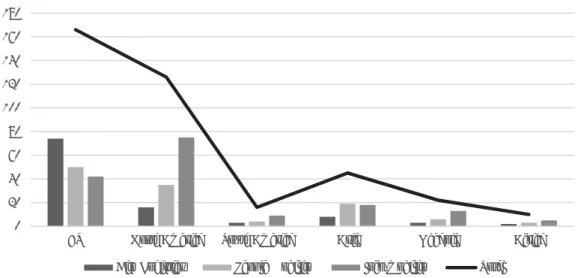
The data gathering process has been based on the taxonomic classification proposed by Neirotti et al. [11]: “city logistics”, “info-mobility”, and “people mobility”. To avoid the typical weaknesses of a single-case (holistic) model [28] such as lack of statistical significance and selection biases, 100 projects were collected and analyzed, for each of the three sub-domains listed earlier, for a total of 300 projects. The collection process has been conducted by searching, using the search engine Google, for the keywords: “smart city mobility”, “smart mobility”, “city logistics”, and “info mobility”. The result of this process allowed the authors to gather projects from multiple sources such as: project reports, company websites and press releases, white papers, and city council meetings. The multitude of different sources allow to confirm the validity [28] and enhance the credibility of the study [27]. Figure 1 shows the geographical distribution of the projects by continent (as several projects spans more than one nation), while Figure 2 shows their year of implementation.
Figure 1. Geographical distribution of the sample
0 20 40 60 80 100 120 140 160 180
EU North America South America Asia Oceania Africa
Continents
WMCAUS 2018
IOP Conf. Series: Materials Science and Engineering 471 (2019) 092082
IOP Publishing doi:10.1088/1757-899X/471/9/092082
4
3.2. Framework Design
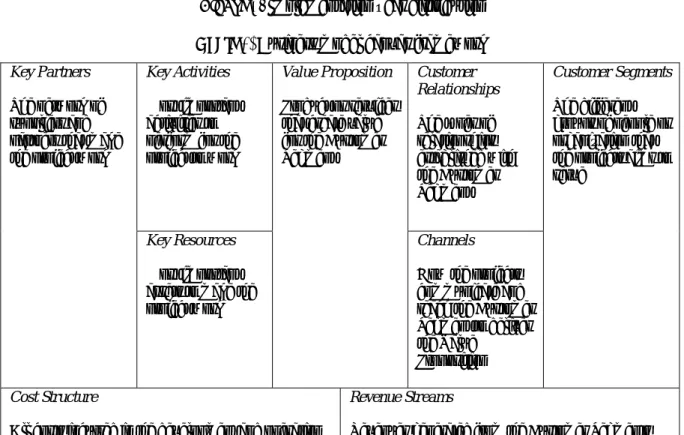
To analyze projects from multiple sources and on different application domains, the authors had to find a framework to use as a reference. Since the focus is on the value and benefit created by the projects, the authors initially identified tools for value composition and visualization from the business modelling literature, such as the business model matrix [23] or the business model canvas [18], the latter being used as the main tool in several studies focused on SC projects [24] [29]. Hence, the authors decided to use it as the reference framework for this study. In Table 1, the nine blocks of the business model canvas framework are presented and briefly explained. However, the business model canvas does not provide an important information on the implementation of SC projects, namely the project’s ownership as far as its characteristics may differ depending on who initiates and owns the project. To this end, the authors followed the classification model presented by [25] where the “project initiator” of a SC project can either be a public entity, a private organization or a mix of both.
Figure 2. Implementation year distribution
Table 1. Business model canvas framework Key Partners
The network of suppliers and partners that make the project work
Key Activities
Most important activities to perform for the project to work
Value Proposition
Product or services that create value for the Customer Segment Customer Relationships The types of relationships established with the Customer Segment Customer Segments The different groups of people or organization that the projects aims to serve
Key Resources
Most important assets to make the project work
Channels
How the projects communicate and reach the Customer Segment to deliver the Value
Proposition
Cost Structure
All costs incurred in the development and operation of the project
Revenue Streams
Revenues generated from the Customer Segments
0 10 20 30 40 50 Year of implementation
City Logistics People Mobility Info-Mobility Trasport and Mobility
WMCAUS 2018
IOP Conf. Series: Materials Science and Engineering 471 (2019) 092082
IOP Publishing doi:10.1088/1757-899X/471/9/092082
5
3.3. Analysis
First, each project has been analyzed individually, and its characteristics summarized into the framework starting by identifying its owner, its technology, the value and benefits provided, and its customer segments. After that, the remaining building blocks of the framework were completed. Finally, the authors started an iterative process of refinement to identify similarities between different projects characteristics and identified general concepts that captured the essence of these characteristics while discarding redundant information. This iterative effort allowed the author to reduce the variability while at the same time preserving the meaningful differences between projects.
4. Results
Figure 3 presents the distribution of project initiators for each sub-domain. Most of the projects are driven by an effort from the private sector, especially in the sub-domain City Logistics and Info-Mobility. In the sub-domain People Mobility, the presence of the public sector is stronger and more than 50% of all the projects are developed in partnership between the public administrations and private organizations.
Figure 3. Distribution of Project Initiators 4.1. City Logistics
Table 2 illustrates the reference business model canvas framework for City Logistics projects.
Reducing costs appears to be the main goal of a City Logistic project, as it is one of the benefits created by 97% of the projects in the sample. Environmental protection is also of paramount importance as 92% of the projects aim to reduce pollution and 80% to reduce urban traffic. Finally, 77% of the projects are aimed at improving the productivity of the clients’ operations. These findings are consistent with the literature contributions on City Logistics projects. [30] propose a classification of City Logistics measures and argue that the objectives of these measures are to either improve the operation’s productivity and decrease the operation’s costs, or to reduce pollution, emissions and traffic congestion. It is also important to understand who the main customers are. The main targets appear to be Public Entities, Private Organizations and Citizens. Around 70% of the projects have these three main customer targets, which implies that most City Logistics services are designed to serve multiple different segments. Logistics Providers are the target clients of 39% of the projects, while 15% are aimed to improve the quality of life of local communities. However, for a City Logistics project to successfully deliver these benefits, partnerships are key. The most important partners appear to be, unsurprisingly, the technology suppliers, who are in 55% of the projects, followed by Commercial Partners, and Logistic Firms, which are present in, respectively, 35 and 26% of projects. The public sector, on the other hand, is relatively unimportant as a partner, which does not come surprisingly as City Logistics projects are mostly privately developed.
0% 20% 40% 60% 80% 100%
City Logistics People Mobility Info-mobility
Project Initiator
WMCAUS 2018
IOP Conf. Series: Materials Science and Engineering 471 (2019) 092082
IOP Publishing doi:10.1088/1757-899X/471/9/092082
6
Table 2. Reference business model canvas framework for City Logistic projects Key Partners Technology Provider (55%); Commercial partners (35%); Logistic Firms (26%); University / research centers (10%); Public Entity (7%); Key Activities Delivery Management (90%); Build & Maintain platform/network (85%); Shipping (28%); Delivery Optimization (20%); Manufacturing (14%); Value Proposition Cost Savings (97%); Pollution Reductions (92%); Urban Traffic Congestion Reductions (80%); Productivity Improvements (77%); Customer Relationships Dedicated Personal Assistance (77%); Personal Assistance (20%); Automated Services (4%); Customer Segments Public Organizations (71%); Private Organizations (71%); Private Citizens (69%); Logistic Provider (39%); Communities (15%); Key Resources Distribution Network (81%); Warehouses (59%); Intellectual Property (40%); Software (30%); Vehicles (27%); Production facilities (16%); Channels Sales Force (57%); Web Sales (62%); Own Store (1%); Cost Structure
Research & Development (91%);
Selling, General & Administrative expense (100%);
Revenue Streams
Usage Fee (81%); Subscription Fee (56%); Licensing (12%); Asset Sales (11%);
Leasing\Lending\Renting (6%); Advertising (2%);
Finally, about how these projects generate revenues, Usage Fees (pay per use) are the most common -81% of projects-, followed by Subscription Fees in 56% and Licensing in 12% of the sample projects. This underlines a propensity to offer services under subscription mechanisms rather than with more direct forms of monetization. Finally, 11% of the projects generate revenues directly from asset sales and 6% from Leasing, Lending and Renting. Just 2% of the projects generate revenues from advertising. 4.2. People Mobility
Table 3 illustrates the reference business model canvas framework for People Mobility projects. Several differences can be noticed between People Mobility and City Mobility projects. First, People Mobility projects have a more varied field of application. While Cost Reduction and Pollution Reductions are the most pursued objectives (100% and 76% or the projects), similarly as it was for City Logistics projects, People Mobility projects have other several benefits. 76% of the projects propose mobility in restricted situations, such as restricted areas and during traffic bans. Travel comfort and safety are also of great importance, with respectively 76% and 58% of the projects focusing on them. Several projects also aim to solve the problem of parking on congested cities by lowering the number of parked vehicles (44%) and enforcing parking tolls without additional charges for the user (33%). Finally, by allowing shared mobility without vehicle ownership (33%), 16% of the projects have the goal of improving traffic flows. These findings are mostly consistent with the literature on smart mobility projects. [16] argues that the most important objectives of smart mobility projects are reducing cost, pollution, and traffic congestion, while increasing people safety and transfer time. From these results, it is possible to see how these objectives are all represented. However, another important aspect of mobility services emerges: travel
WMCAUS 2018
IOP Conf. Series: Materials Science and Engineering 471 (2019) 092082
IOP Publishing doi:10.1088/1757-899X/471/9/092082
7
comfort. Being comfortable, having the ability to bypass traffic bans and not having to worry about parking tolls are all important benefits provided by People Mobility projects.
Table 3. Reference business model canvas framework for People Mobility projects Key Partners Technology Provider (75%); Commercial partners (20%); Public Entity (6%); University / research centers (4%); Key Activities
Build & maintain platform/network (100%); Energy consumption Optimization (35%); Manufacturing (14%); Value Proposition Cost Savings (100%); Pollution Reduction (76%); Access traffic-restricted areas (76%); Mobility during traffic bans (76%); Travel Comfort (76%); Travel Safety (58%); Fewer parked vehicles (44%) Mobility without vehicle ownership (33%); Parking fees avoidance (33%); Traffic flow Improvements (16%); Customer Relationships Dedicated Personal Assistance (74%); Personal Assistance (26%); Customer Segments Private Citizens (99%); Communities (55%); Organizations (10%); Key Resources Intellectual Property (100%); Network (95%); Software (73%); Vehicles (46%); Production facilities (16%); Channels Web Sales (98%); Own Store (33%); Partner Store (32%); Sales Force (5%); Cost Structure
Research & Development (100%);
Selling, General & Administrative expense (100%);
Revenue Streams
Usage fee (93%); Subscription fee (85%); Advertising (44%);
People Mobility projects present several differences from City Logistics ones also about the Customer Segments, basically because public entities are not target customers. A reason may be that a large number of projects are developed in collaboration between vendors and the public sector, meaning that public entities find easier or more convenient to be involved directly in the development instead of purchasing a third-party service. Hence, the main customer segments are People, with 99% of the projects targeted toward private citizens, and Communities (55%), while only 10% of the projects have business Organizations has their main targets. Key partnerships, on the other hand, do not vary from those in City Logistics projects, with Technology Providers and Commercial Partners as the most important ones. Revenue Streams are also relatively similar to the ones observed in City Mobility projects. Most of the projects offer pay-per-use monetization (93%) but a large portion of projects also offer subscription models (85%). Differently from City Logistic projects, however, a consistent part of People Mobility projects (44%) has Advertising as a source of revenue.
4.3. Info-Mobility
Table 4 illustrates the reference business model canvas framework for Info-Mobility projects. As per People Mobility, the value created by Info-Mobility projects centres around improving travel speed and reducing delays (96% of the projects), improve travel safety (75%) and reduce travel costs (71%). These projects aim also to improve the user’s overall travel experience by aiding the user navigate the city, providing information about traffic, weather, and points of interest (88% of the projects), or informing the user on public transport routes and hours (23% of the projects). However, Info-Mobility technologies find applications also in more professional environments where they can be designed to help, similarly to City Logistic, the management of logistic fleets with the goal of reducing costs, improving
WMCAUS 2018
IOP Conf. Series: Materials Science and Engineering 471 (2019) 092082
IOP Publishing doi:10.1088/1757-899X/471/9/092082
8
productivity (57% of the projects) and help in manage the access to traffic restricted areas (20%). Differently from the other projects, however, pollution control is not of particular importance and Pollution Reduction is a goal of just 10% out of all Info-Mobility projects. These considerations are reflected on the main targeted Customer Segments. 44% of the projects targets Logistic Firms, while People, Public Transport Firms and Cities are the target of around 25% of the project each. This distribution also shows an important difference between Info-Mobility projects and the others: where both City Logistics and People Mobility projects target a wide array of segments at the same time, Info-Mobility projects have narrower scope and are primarily designed with a single customer segment in mind. Key partnerships also present some differences. Partnerships, in general, are less common, suggesting that many projects are developed without external help. Furthermore, while not of particular relevance in previous projects, Public Entities are an important partner in 25% of Info-Mobility projects, mostly because they several rely on data provided by Public Entities. Finally, it is possible to notice, again, a propensity for subscription monetization (71%) as a revenue source. Similar to People Mobility projects, advertising is also important (23%). However, Info-Mobility projects also introduce new forms of monetization: software licensing (26% of the projects), and the sale of user data to third parties (26%).
Table 4. Reference business model canvas framework for Info-Mobility projects Key Partners Public Entity (25%); Technology Provider (12%); Commercial partners (7%); University / research centers (2%); Key Activities
Build & maintain platform/network (100%); Routing Management (89%); Decision support systems (28%); Public transportation monitoring (25%); Shifts management (13%); Maintenance monitoring & scheduling (11%); Parking monitoring (5%); Value Proposition Delays reduction (96%); Easiness of city navigation (88%); Travel Safety (75%); Cost Savings (71%); Productivity Increased (57%); Easiness of city navigation (with Public Transport) (23%); Access traffic-restricted areas (20%); Pollution Reduction (10%); Customer Relationships Dedicated Personal Assistance (81%); Personal Assistance (19%); Customer Segments Logistic Firms (44%); Private Citizens (25%); Public Transport firms (23%); Cities (26%); Key Resources Intellectual Property (100%); Software (100%); Network (64%); Channels Sales Force (73%); Web Sales (33%); Cost Structure
Research & Development (100%);
Selling, General & Administrative expense (100%);
Revenue Streams
Usage fee (93%); Subscription fee (71%); Licensing (26%); Information reselling (26%); Advertising (23%);
5. Implications, Limitations and Future Works
With this work the authors address the shortcomings of academic literature on SC mobility projects, by providing a framework to analyze business models used in the design and development of SC mobility projects. This framework provides a common dictionary to describe the characteristics of SC mobility projects and to illustrate how they create and deliver value. Furthermore, this work provides an empirical dataset valid for statistical analysis. Scholar and academics can use this framework as a reference for the study and analysis of SC mobility projects and to understand the dynamics behind their
WMCAUS 2018
IOP Conf. Series: Materials Science and Engineering 471 (2019) 092082
IOP Publishing doi:10.1088/1757-899X/471/9/092082
9
implementation. This work relies on an extensive and comprehensive analysis of SC case studies from a number of different sources, each using its own format and dictionary, and without a common taxonomy. Hence, the framework can also be used to overcome these problems and to give scholars the ability to use it as a starting point for future research. Another objective of this study is to create a tool that could help both public administrations and private vendors with designing, developing and implementing SC mobility projects. On the one hand, the reference business model framework will help practitioners in public administrations develop their own smart mobility projects depending on the value that they want to provide and identify partners and stakeholders to develop and implement projects effectively and efficiently. On the other hand, it can also help as a guide to identify the best possible commercial solutions to generate the desired benefits. Finally, private vendors will be able to understand what customers are looking for, and which implementation strategy is better for delivering it which will allow them to design and develop SC mobility projects that create the right value to the right people. While the large number of case studies analyzed has helped decrease the impact of selection bias, [28] the study is still affected by it. In particular, Figure 1 shows that the overwhelming majority of projects have been implemented either in Europe or North America. However, this does and cannot imply a leadership of these two regions in SC mobility projects, but just reflect the limitations of the data gathering process due to the authors’ language abilities. Future research should address this limitation and collect additional case studies from currently under-represented regions in order to improve the framework. Finally, another possible stream of research is the application of the methodology presented in this study to other SC domains in order to expand and improve the understanding of the SC concept as a whole.
6. Conclusions
This work proposes a reference business model framework for SC mobility services based on a case study analysis of 300 internationally distributed SC mobility projects. After the collection of the sample of projects, the business model of each case has been analyzed on a common reference framework. The authors chosen the business model canvas [18] because of its ability to explain how a project generate and distributes value to the different project’s stakeholders. After an iterative process of synthesis and refinement to find similarities between different projects characteristics and identify general concepts that capture their essence, the article presents the reference business model framework for SC mobility projects. This framework has a twofold objective. On the one hand, it addresses the shortcomings in the literature regarding SC, and in particular, smart mobility projects, so that scholars will have a common structure and dictionary for future research. On the other hand, the framework has the goal of working as a guide for SC public administrators to design and develop more effective SC mobility solutions to fit their needs, and private organizations to better understand and exploit market trends and opportunities.
References
[1] United Nations, Department of Economic and Social Affairs, Population Division, “World Population Prospects: The 2017 Revision, Volume I: Comprehensive Tables”, 2017.
[2] United Nations, Department of Economic and Social Affairs, Population Division, “World Urbanization Prospects: The 2014 Revision”, 2015.
[3] United Nations Environment Programme, “Sustainable, resource efficient cities – Making it happen!”, 2012.
[4] H. Lee, M.G. Hancock, and M.C. Hu, “Towards an effective framework for building smart cities: Lessons from Seoul and San Francisco”, Technological Forecasting and Social Change, Vol. 89, 2014, pp.80-99.
[5] L.G. Anthopoulos, “The Rise of the Smart City”, In Understanding Smart Cities: A Tool for Smart Government or an Industrial Trick? Springer, Cham, 2017, pp. 5-45.
[6] R. P. Dameri, R. P, “Searching for smart city definition: a comprehensive proposal”, International Journal of Computers & Technology, Vol. 11, No. 5, 2013, pp. 2544-2551.
WMCAUS 2018
IOP Conf. Series: Materials Science and Engineering 471 (2019) 092082
IOP Publishing doi:10.1088/1757-899X/471/9/092082
10
[7] A. Caragliu, C. Del Bo, and P. Nijkamp. “Smart cities in Europe”, Journal of urban technology, Vol. 18, No. 2, 2011, pp. 65-82.
[8] F. V. Michelucci, A. De Marco, and A. Tanda “Defining the Role of the Smart-City Manager: An Analysis of Responsibilities and Skills”, Journal of Urban Technology, Vol. 23, No. 3, 2016, pp. 23-42.
[9] N. Komninos, H. Schaffers, and M Pallot, “Developing a policy roadmap for smart cities and the future internet”, In 45th Hawaii International Conference on Systems Sciences, Maui, HI, USA, October 2011.
[10] K. Su, J. Li, and H. Fu “Smart city and the applications”, In Electronics, Communications and Control (ICECC), 2011 International Conference, Ningbo, China, September 2011.
[11] P. Neirotti, A. De Marco, A. C. Cagliano, G. Mangano, and F. Scorrano, “Current trends in Smart City initiatives: Some stylised facts”, Cities, Vol. 38, 2014, pp. 25-36.
[12] R. Giffinger, and N. Pichler-Milanović, “Smart cities: Ranking of European medium-sized cities”, Centre of Regional Science, Vienna University of Technology, 2007.
[13] V. Albino, U. Berardi, R. M. Dangelico, “Smart cities: Definitions, dimensions, performance, and initiatives”, Journal of Urban Technology, Vol. 22, No. 1, 2015, pp. 3-21.
[14] N. Walravens, “Qualitative indicators for smart city business models: The case of mobile services and applications”, Telecommunications Policy, Vol. 39, No. 3-4, 2015, pp. 218-240.
[15] L. Anthopoulos, P. Fitsilis, and C, Ziozias, “What is the Source of Smart City Value?: A Business Model Analysis” International Journal of Electronic Government Research, Vol. 12, No. 2, 2016, pp. 56-76.
[16] C. Benevolo, R. P. Dameri, and B. D’Auria, “Smart mobility in smart city”, In Empowering Organizations, Springer, Cham, 2017, pp. 13-28.
[17] L. Staricco, “Smart Mobility: opportunità e condizioni”, Tema. Journal of Land Use, Mobility and Environment, Vol. 6, No. 3, 2013, pp. 342-354.
[18] A. Osterwalder, and Y. Pigneur, Business model generation: a handbook for visionaries, game changers, and challengers, John Wiley & Sons, 2010.
[19] T. Suzumura, S. Kato, T. Imamichi, M. Takeuchi, H. Kanezashi, T. Ide, and T. Onodera, “X10-based massive parallel large-scale traffic flow simulation”, In Proceedings of the ACM SIGPLAN 2012 X10 Workshop, Beijing, China, June 2012, pp. 1-4.
[20] A. De Marco, G. Mangano, F. V. Michelucci, G. Zenezini, “Using the private finance initiative for energy efficiency projects at the urban scale” International Journal of Energy Sector Management, Vol. 10, No. 1, 2016, pp. 99-117.
[21] A. De Marco, G. Mangano, G. Zenezini, A. C. Cagliano, G. Perboli, M. Rosano, S. Musso, “Business modeling of a city logistics ICT platform”, In Computer Software and Applications Conference (COMPSAC), Turin, Italy, July 2017.
[22] A. C. Cagliano, A. De Marco, G. Mangano, G. Zenezini, “Levers of logistics service providers’ efficiency in urban distribution”, Operations Management Research, Vol. 10, No. 3-4, 2017, pp. 104-117.
[23] N. Walravens, “Mobile business and the smart city: Developing a business model framework to include public design parameters for mobile city services”, Journal of theoretical and applied electronic commerce research, Vol. 7, No. 3, 2012, pp. 121-135.
[24] R. Díaz-Díaz, L. Muñoz, and D. Pérez-González, “The business model evaluation tool for smart cities: Application to smartsantander use cases”, Energies, Vol. 10, No. 3, 2017, pp. 262-292. [25] G. Perboli, A. De Marco, F. Perfetti, and M. Marone, “A new taxonomy of smart city projects”,
Transportation Research Procedia, Vol. 3, 2014, pp. 470-478.
[26] W. H. Johnson, “Roles, resources and benefits of intermediate organizations supporting triple helix collaborative R&D: the case of precarn”, Technovation, Vol. 28, No. 8, 2008, pp. 495-505
[27] P. Baxter, and S. Jack, “Qualitative case study methodology: study design and implementation for novice researchers”, The Qualitative Report, Vol. 13 No. 4, 2008, pp. 544-559.
WMCAUS 2018
IOP Conf. Series: Materials Science and Engineering 471 (2019) 092082
IOP Publishing doi:10.1088/1757-899X/471/9/092082
11
[28] R. K. Yin, Case study research and applications: Design and methods, Sage publications, 2017. [29] A. Malmström, J. Johansson, D. Chronér, S. Bouckaert, S. Martinez Garcia, M. Potts, G. Quetin, M. Riepula, P. Grace, M. Nilsson, et al., “FIRE Collaboration Models”. European Commission, Brussels, Belgium, 2015.
[30] A. De Marco, G. Mangano, G. and Zenezini, “Classification and benchmark of City Logistics measures: an empirical analysis”, International Journal of Logistics Research and Applications, Vol. 21, No. 1, 2018, pp. 1-19.