Evaluating Trilingual Language Teacher Training
Programmes for Minority Dominated Regions in
Xinjiang: Current practice and Challenges
Ping Zhang
School of Education
Bangor University
2016
Declaration and Consent
Details of the WorkI hereby agree to deposit the following item in the digital repository maintained by Bangor University and/or in any other repository authorized for use by Bangor University.
Author Name: …………Ping Zhang………..
Title: ……Evaluating Trilingual Language Teacher Training Programmes for Minority Dominated Regions in Xinjiang: Current practice and Challenges...
Supervisor/Department: ...Prof Enlli Thomas (School of Education) and Prof Anwei Feng (School of Education, The University of Nottingham Ningbo China)... Funding body (if any): ... Qualification/Degree obtained: ………The Doctorate in Education……….
This item is a product of my own research endeavours and is covered by the agreement below in which the item is referred to as “the Work”. It is identical in content to that deposited in the Library, subject to point 4 below.
Non-exclusive Rights
Rights granted to the digital repository through this agreement are entirely non-exclusive. I am free to publish the Work in its present version or future versions elsewhere.
I agree that Bangor University may electronically store, copy or translate the Work to any approved medium or format for the purpose of future preservation and accessibility. Bangor University is not under any obligation to reproduce or display the Work in the same formats or resolutions in which it was originally deposited.
Bangor University Digital Repository
I understand that work deposited in the digital repository will be accessible to a wide variety of people and institutions, including automated agents and search engines via the World Wide Web.
I understand that once the Work is deposited, the item and its metadata may be incorporated into public access catalogues or services, national databases of electronic theses and dissertations such as the British Library’s EThOS or any service provided by the National Library of Wales.
I understand that the Work may be made available via the National Library of Wales Online Electronic Theses Service under the declared terms and conditions of use
(http://www.llgc.org.uk/index.php?id=4676). I agree that as part of this service the National Library of Wales may electronically store, copy or convert the Work to any approved medium or format for the purpose of future preservation and accessibility. The National Library of Wales is not under any obligation to reproduce or display the Work in the same formats or resolutions in which it was originally deposited.
Statement 1:
This work has not previously been accepted in substance for any degree and is not being concurrently submitted in candidature for any degree unless as agreed by the University for approved dual awards.
Signed ……….. (Candidate) Date ………..
Statement 2:
This thesis is the result of my own investigations, except where otherwise stated. Where correction services have been used, the extent and nature of the correction is clearly marked in a footnote(s). All other sources are acknowledged by footnotes and/or a bibliography.
Signed ……… ………. (Candidate) Date ……….
Statement 3:
I hereby give consent for my thesis, if accepted, to be available for photocopying, for inter-library loan and for electronic storage (subject to any constraints as defined in statement 4), and for the title and summary to be made available to outside organisations.
Signed ………. (Candidate) Date ……….
NB: Candidates on whose behalf a bar on access has been approved by the Academic Registry should use the following version of Statement 3:
Statement 3 (bar):
I hereby give consent for my thesis, if accepted, to be available for photocopying, for inter-library loans and for electronic storage (subject to any constraints as defined in statement 4), after expiry of a bar on access.
Signed ………… ……… (Candidate) Date ………
Statement 4:
Choose one of the following options
a) I agree to deposit an electronic copy of my thesis (the Work) in the Bangor University (BU) Institutional Digital Repository, the British Library ETHOS system, and/or in any other repository authorized for use by Bangor University and where necessary have gained the required permissions for the use of third party material.
b) I agree to deposit an electronic copy of my thesis (the Work) in the Bangor University (BU) Institutional Digital Repository, the British Library ETHOS system, and/or in any other repository authorized for use by Bangor University when the approved bar on access has been lifted.
c) I agree to submit my thesis (the Work) electronically via Bangor University’s e-submission system, however I opt-out of the electronic deposit to the Bangor University (BU) Institutional Digital Repository, the British Library ETHOS system, and/or in any other repository
authorized for use by Bangor University, due to lack of permissions for use of third party material.
√
Options B should only be used if a bar on access has been approved by the University. In addition to the above I also agree to the following:
1. That I am the author or have the authority of the author(s) to make this agreement and do hereby give Bangor University the right to make available the Work in the way described above.
2. That the electronic copy of the Work deposited in the digital repository and covered by this agreement, is identical in content to the paper copy of the Work deposited in the Bangor University Library, subject to point 4 below.
3. That I have exercised reasonable care to ensure that the Work is original and, to the best of my knowledge, does not breach any laws – including those relating to defamation, libel and copyright.
4. That I have, in instances where the intellectual property of other authors or copyright holders is included in the Work, and where appropriate, gained explicit permission for the inclusion of that material in the Work, and in the electronic form of the Work as accessed through the open access digital repository, or that I have identified and removed that material for which adequate and appropriate permission has not been obtained and which will be inaccessible via the digital repository.
5. That Bangor University does not hold any obligation to take legal action on behalf of the Depositor, or other rights holders, in the event of a breach of intellectual property rights, or any other right, in the material deposited.
6. That I will indemnify and keep indemnified Bangor University and the National Library of Wales from and against any loss, liability, claim or damage, including without limitation any related legal fees and court costs (on a full indemnity bases), related to any breach by myself of any term of this agreement.
Abstract
Recent development in trilingualism and trilingual education in minority dominated regions in China has highlighted the importance of training qualified trilingual teachers to support the students to achieve additive trilingualism. While research has been carried out in the domains of policy studies, trilingual education models and practice across China in general, there has been relatively little research on trilingual teacher training, especially remote western regions such as Xinjiang Uygur Autonomous Region (XUAR). Adopting a case study approach, this research evaluates the English language teacher training programmes, in order to identify issues and effective models for English language teacher training, and discusses them in the light of wider pedagogical implications for trilingualism and trilingual teacher training in China.
This research adopted a multi-methods approach, in which the data were collected through survey questionnaires and interviews among the key stakeholders involved in the training programme, and further complemented by data through classroom observations. This study found that while no one seemed to disagree that Mandarin Chinese as the national official language but the second language (L2) for minority students is, and should be, strongly promoted because of its importance in every aspect of education in XUAR, it could also be the bottleneck and barrier which minority students face in learning English (their L3). This is due to the fact that many minority student trainees came to the university with a rather weak L2 which was nonetheless used as the medium of instruction for all subject teaching. The participating key stakeholders showed, on the whole, positive attitudes towards trilingual language teacher training. However, awareness of the importance of the minority language (their L1) during their trilingual language training needs to be raised, and its relationship with Mandarin Chinese and English during the trilingual teacher training process needs to be properly addressed.
The research incorporates the results of the current research and theoretical perspectives regarding the nature of additive trilingualism and inclusive practice. In particular, the study proposes that the notion of English language teacher training should be trilingual teacher training in minority-dominated regions of China. As the notion of trilingual teacher training suggests, all three languages should be taken into account in designing the curriculum for English language teacher training. Appropriate incorporation of L1 and L2 into the curriculum would not only enhance their bilingual competence in their home language and Mandarin Chinese, but also facilitate their learning of L3, English. Finally, recommendations are made for trilingual teacher training and limitations are also acknowledged.
Acknowledgements
I would like to express my most sincere gratitude and thanks to my supervisors, Professor Anwei Feng and Professor Enlli Thomas, for their invaluable guidance, continuous support and unfailing patience during all the stages of the research process. I have been inspired by their knowledgeable insight, their dedication and kindness to students. Every supervisory meeting with them helped me make significant progress and I could not have undertaken this research without their constant support and encouragement.
Sincere thanks to Dr Jean Ware (Director of Research), Dr Anne-Marie Smith (Chair of my Committee), Janet Thomas (Administrative Officer), Gillian Pritchard (School Manager) and all other research colleagues and staff of the School of Education for their invaluable support and assistance. Special thanks also to Julian Brasington (Head of the Study Skills Centre) and Gwyn Williams (Library Services Supervisor) for their considerable assistance and warm encouragement, which have been very much appreciated.
I would like to thank all the participants involved in this project in particular for participating in my study and for sharing their experiences with me. I also wish to thank the bilingual lecturers who helped me with data translation, for their contribution and generous help, and my other precious friends, for their love and encouraging words that inspired me to persevere.
My heartfelt gratitude and deepest affection goes to my husband, my daughter and my parents, for their patience and enduring love during these years of my study. They have given me a tremendous source of strength and confidence to continue with my study, and achieve what I have always dreamt about.
Finally, I am grateful to the school of Education at Bangor University, for providing Scholarships to fund my doctoral studies.
Contents
Declaration and Consent ... I Abstract ... IV Acknowledgements ... V Appendices list………IX List of Tables………....X List of Figures……….XI
Chapter One: Introduction ... 1
1.1 The context of the study ... 1
1.1.1 Background of the region and the researcher ... 1
1.1.2 Rationale for the study ... 3
1.2 Aims of the thesis ... 4
1.3 Organisation of the thesis ... 4
Chapter Two: Literature Review ... 6
2.1 Introduction ... 6
2.2 Bilingualism and multilingualism in the 21st Century... 6
2.3 Bilingual education and multilingual education... 7
2.4 The advantages and disadvantages of Bilingual Education and Bilingualism ... 9
2.5 Issues regarding Bilingual Education ... 11
2.6 Bilingual Education and identity ... 13
2.7 The spread/expansion of English and trilingual education ... 14
2.7.1 Trilingual education and additive Trilingualism ... 15
2.7.2 Factors affecting third language acquisition ... 17
2.8 Trilingual teacher training ... 18
2.8.1 Differences between bilingual and trilingual teacher training... 19
2.8.2 Principles in trilingual teacher training ... 20
2.9 The Research Context ... 21
2.9.2 Trilingual teacher training in XUAR ... 24
Chapter Three: Methodology ... 29
3.1 Introduction ... 29
3.2 Mixed methods ... 30
3.3 Positionality and Reflexivity ... 32
3.4 Research designs and methods ... 35
3.4.1 Method ... 35
3.4.2 Sampling ... 36
3.4.3 Procedures ... 37
3.4.3.1 The first pilot study. ... 37
3.4.3.2 Questionnaire ... 38
3.4.3.3 The second pilot study for the questionnaire ... 40
3.4.3.4 The main survey research ... 41
3.4.3.5 Interviews ... 43
3.4.3.6 Observations ... 44
3.5 Data analysis procedures ... 45
3.6 Ethical issues ... 45
3.7 Summary ... 46
Chapter Four: Data Presentation and Analysis ... 48
4.1 Introduction ... 48
4.2 Demographic Characteristics of the Participants ... 48
4.2.1 The students ... 48
4.2.2 The Teachers ... 54
4.2.3 Policy/ decision makers ... 56
4.3 Findings Concerning Policies ... 56
4.3.1 National policies ... 56
4.3.2 Regional policies in XUAR ... 59
4.3.3 University policy ... 66
4.4.1 Yuke experience ... 68 4.4.2 Curriculum design ... 70 4.4.3 Language learning ... 72 4.4.4 Language teaching ... 75 4.4.5 Language assessment ... 79 4.4.6 School environment ... 81
4.5 Perceptions and Attitudes ... 83
4.5.1 Students’ perceptions and attitudes ... 84
4.5.2 Teachers’ perceptions and attitudes ... 88
4.5.3 Policy makers’ perceptions and attitudes ... 90
Chapter Five: Discussion and Recommendations ... 93
5.1 Highlighting and discussing major findings ... 93
5.1.1 Policy aspect ... 93
5.1.2 School practice aspect ... 97
5.1.3 Attitude/ Perception ... 101
5.2 Recommendations and suggestions ... 103
5.2.1 Policy perspective ... 103
5.2.2 Practice perspective ... 104
5.3 Limitations of the current research... 108
5.4 Implications for Future Research on Trilingual Teacher Training ... 109
5.5 Closing Remarks ... 110
References ... 112
Appendices list
Appendix 1 Consent form... 132
Appendix 2 Institutional consent form...133
Appendix 3 Application for agreement of conducting research in TTU...134
Appendix 4 Agreement from the Dean of TTU...135
Appendix 5 Approval Letter from Ethics Committee...136
Appendix 6 Questionnaires for minority students (Uyghur version) ...137
Appendix 7 Questionnaires for minority students (Mandarin version) ...141
Appendix 8 Questionnaires for minority students (English version) ...145
Appendix 9 Interview questions for main research (Mandarin version)...152
Appendix 10 Interview questions for main research (English version)...154
Appendix 11 Observation sheet (University environment)...156
Appendix 12 Observation sheet (Classroom Observation) ...157
Appendix 13 Transcription sample (Mandarin version) ...162
List of Tables
Table 4.2.1 Grade status of 19-20 age group participants... 49
Table 4.2.2 The hometown of the participants (Southern or Northern XUAR)... 49
Table 4.2.3 Occupations of the participants’ parents... 51
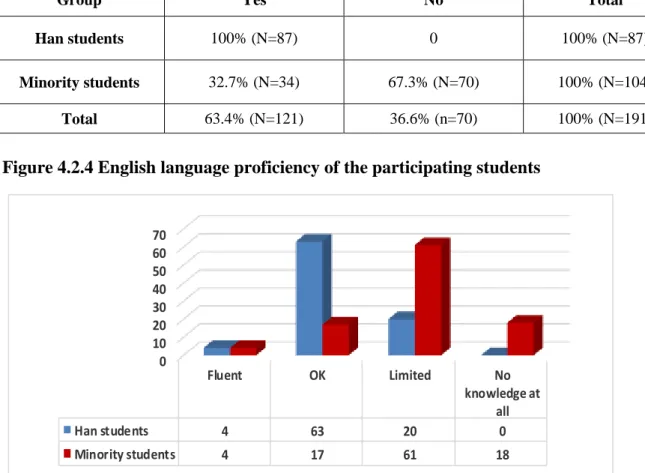
Table 4.2.4 Have Han and Minority students learned English? ... 54
Table 4.2.5 The ethnicity and professional titles of the teachers... 55
Table 4.3.1 Models of bilingual education in XUAR... 62
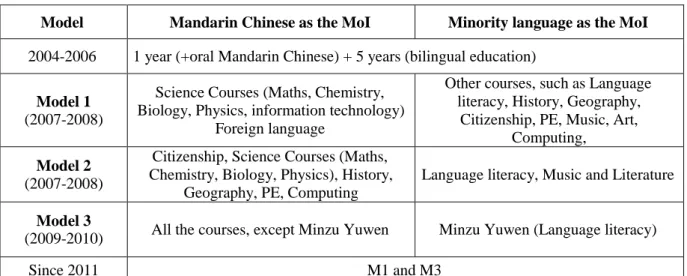
Table 4.4.1 The curricula for Han and minority students... 71
Table 4.4.2 Mandarin Chinese should be the medium language of instruction instead of minority language... 76
Table 4.4.3 Graduation requirements for Han and minority student... 79
Table 4.5.1 Trilingual and multilingual education should be promoted instead of enhancing Mandarin Chinese only... 90
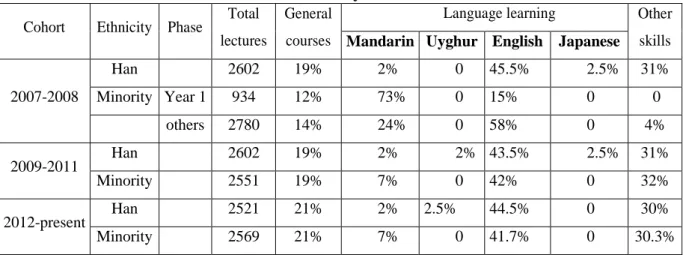
Table 5.1 Allocation of three languages in the curriculum for Han and minority students (2012-present) ... 100
List of Figures
Figure 4.2.1 The hometown of the participants (City, Town or rural area)... 50
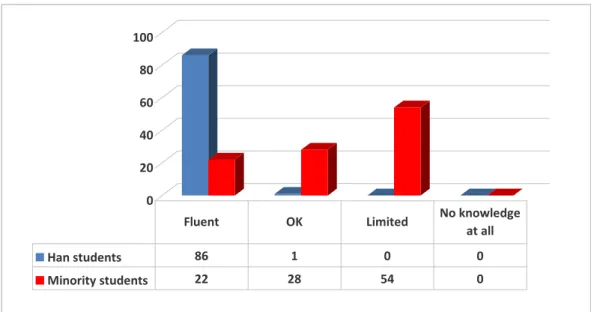
Figure 4.2.2 Mandarin Chinese proficiency of the participating students... 52
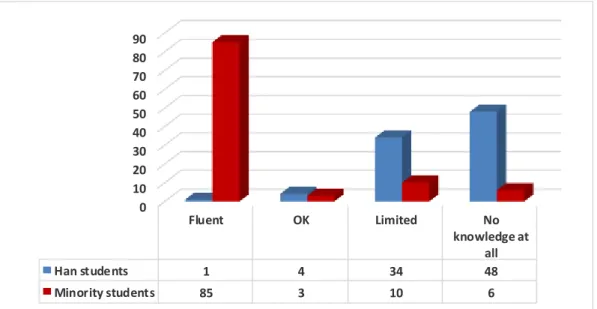
Figure 4.2.3 Minority language proficiency of the participating students... 53
Figure 4.2.4 English language proficiency of the participating students... 54
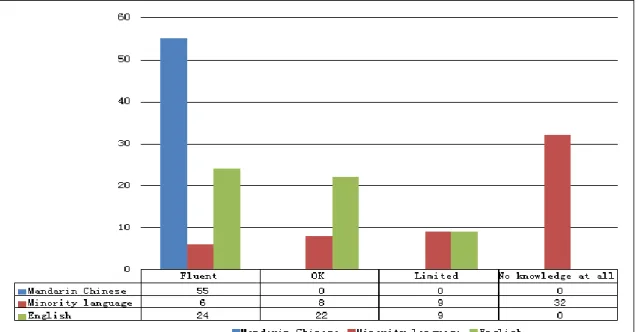
Figure 4.2.5 Language proficiency of the participating teachers... 55
Figure 4.4.1 Can you understand the lectures delivered in Mandarin Chinese? ... 70
Figure 4.4.2 Minority students’ difficulties in Mandarin Chinese... 73
Figure 4.4.3 Do you think more ethnic minority teachers are needed? ... ... ... 74
Figure 4.4.4 Teachers’ teaching method should be changed (Han and minority students) ... 75
Figure 4.4.5 Students’ views on whether more minority teachers are needed...77
Figure 4.4.6 Students’ views on whether they wish to have English test ...81
Figure 4.4.7 Wish to have more activities between Han and Minority students (from Han and minority students) ... 83
Figure 4.5.1 Acquiring their own language is a must for being a member of a minority group... 85
Figure 4.5.2 Han and minority students’ view on whether minority language should be promoted in university ...87
Figure 4.5.3 Minority students’ response to whether they want to learn minority language history and culture...87
Chapter One: Introduction
Research into trilingualism and trilingual education is an area which has gained recent attention in both research and practice in China, especially in minority dominated regions. The emphasis is placed mainly on issues related to trilingualism and trilingual education models across China in general. This research evaluates the English language teacher training programmes for minority-dominated regions in the specific context of Xinjiang Uygur Autonomous Region (XUAR hereafter), where tension exists between the political agenda and educational ideals, so as to identify issues and effective models for English language teacher training. It explores the pedagogical practices adopted in trilingual language teacher training in XUAR and discusses them in the light of wider pedagogical implications for trilingualism and trilingual teacher training in China.
1.1 The context of the study
1.1.1 Background of the region and the researcher
XUAR is a multilingual and multicultural region which inhabits 13 main officially recognized ethnic nationalities. Among these 13 ethnic nationalities, eight of them have their own oral and written language system (Han, Uyghur, Kazak, Mongolian, Uzbek, Kirgiz, Tajik, Tatar). Mandarin Chinese and Uyghur language are the two official languages in XUAR. Three out of the 13 main ethnic nationalities speak Mandarin Chinese (Han, Hui, Manchu), and 8 of them speak or can communicate in Uyghur without any difficulties (Uyghur, Kazak, Xibe, Mongolian, Uzbek, Tajik, Tatar, Daur) (China’s ethnic groups and religions, 2013). Despite its ethnic and language diversity, it is also necessary to point out that many ethnic minority groups generally inhabit in ‘the sparse oasis villages of the Gobi Desert’ in the Southern part of XUAR, whereas, ‘Han Chinese tend to live in cities and towns’ in the Northern part of XUAR (Ma, 2009, p.193). The mode of education at local schools were greatly influenced by its geographical distribution. It is obvious that great efforts need to be made in order to balance the educational development, including teaching resources and the recruitment of qualified teachers, between minority schools and Han schools in XUAR.
Bilingual education referring generally to teaching (in) minority home language (L1) and Mandarin Chinese (L2) has been carried out in this region since 1950 (Li. 2012), and English (L3) was added to the curriculum in 2001. In this sense, we can state in confidence that trilingual education in XUAR was developed on the basis on bilingual education principles, and thus, for this reason, trilingual education cannot be discussed or implemented effectively without the consideration of the context of bilingual education in this region.
I am an ethic Han Chinese, and was born and grew up in Urumqi, which is the capital city of this unique region (XUAR); Urumqi is located in the Northern part of XUAR. My first language is Mandarin Chinese, and I have never learned any minority language that was offered in the curriculum in schools from Kindergarten to University. Most of my ethnic minority friends can speak relatively fluent Mandarin Chinese, and some of them were educated through the medium of Mandarin Chinese, with Han students together following Han students’ educational system. What often puzzled me is that many of those ethnic minority friends who were taught through Mandarin Chinese preferred to use Mandarin Chinese to communicate with each other instead of their mother tongues, the minority languages. A Uyghur friend of mine once told me about the situation in her family, and expressed her concerns. She mentioned that her grandmother can only speak Uyghur, and has no Mandarin Chinese or English knowledge at all; meanwhile, her mother can speak Uyghur perfectly, a little Mandarin Chinese but no English at all. However, with regard to the third generation, like her, she received all her schooling through Mandarin Chinese in Han schools. She can speak perfect Mandarin Chinese, has a relatively good command of the English language, but speaks very little Uyghur. She has no knowledge of Uyghur written scripts except her name. She stated that she could only write her name in Uyghur, and struggled to communicate with her grandmother without her mother’s help to translate on some occasions. She was worried about the fourth generation of her family especially as her son, who was attending a so called bilingual school, might speak Mandarin Chinese with some English, but would have no knowledge of Uyghur at all, including both spoken and written forms. She expressed her worries about this kind of situation and questioned the bilingual/ trilingual education as implemented in XUAR. Personal stories such as this raised my interest in the area of bilingual and trilingual education.
After I had been trained to be an English language teacher for four years in XUAR, I served as an English language teacher in a teacher training university (TTU), which trains pre- and in-service teachers for this region. The students or the trainees in TTU were from both the Southern and the Northern parts of XUAR. I noticed through anecdotal evidence that most of the minority students in TTU had high motivation to learn Mandarin Chinese and were interested in learning English. However, the learning outcomes were not seen to be very satisfactory by both educators and students themselves. After more than three years learning Mandarin Chinese, many of them still could not pass MHK (‘Minzu Han Kao’ which means Mandarin Chinese proficiency test for Minority students) exams, which would directly cause the failure in obtaining the Bachelor degree or a certificate. Regarding English language learning, many minority students showed their interest in learning this language, and even
took private lessons which caused financial pressures, in order to learn English in a better way. However, many of them felt that they were still struggling.
During my teaching practice over the past years, I also noticed that the students who sat in the same class had very different language proficiency levels in terms of Mandarin Chinese, minority language and English. Within a class, some of the students had relatively good Mandarin Chinese proficiency with experiences of learning English language since they were in primary schools; some of them could not understand the instructions in Mandarin Chinese, and had no contact with English language at all before they entered this university. However, although I was trained to be an English language teacher in this particular region, a minority language module was never offered in the curriculum during the training. Due to the lack of minority language knowledge myself, I experienced difficulties during lecturing, especially when some complex grammatical structures needed to be explained to minority students; they could not understand fully either in Mandarin Chinese and English. At that time, it was my belief that if I could speak the minority language, it would be helpful for me to deliver the lectures more effectively.
Trilingual education can never be achieved without qualified trilingual language teachers. However, how could trilingual language teachers be nurtured? What are the issues in existing teacher training programmes? These questions motivated to embark on the doctoral research to find out the status quo of trilingual education and trilingual teacher training in XUAR, and through taking into account the context, identify issues regarding language policies and their implementation, the current practice that is in place and stakeholders’ attitudes and perceptions during trilingual training implementation.
1.1.2 Rationale for the study
In its promotion and development of bilingual education in XUAR, China, many have highlighted a serious problem, that is the lack of qualified and experienced bilingual teachers in XUAR (Aibiban, 2011; Li, 2012). Bilingual education in this context refers to teaching and learning the minority home language (L1) and Mandarin Chinese (L2). In 2002, English as a foreign language (L3) was added into the school curriculum; and the lack of qualified multilingual teachers is therefore an even more serious setback (Yuan, Cao and Lu, 2009; Luo and Cui, 2011). Research shows that most of the teachers have had little or no special training before taking up their role as English language teachers particularly in minority dominated regions where multilingual education should take place (Liu et al., 2008). Even though some of the in-service teachers may have received some kind of training for one or two years, they still face challenges in speaking fluently or teaching the languages effectively in the institutions they return to work in (Abuduwaili, 2009; Wu, 2009; Aibiban, 2011, Wang, 2012). However,
rare attempts have been made to study and develop trilingual language teacher training in XUAR according to the related literature.
Thus, it is essential to know the current practice and challenges in order to explore effective ways for professional development for teachers, particularly for improving pre- and in-service trilingual language teacher training. In XUAR, Teacher Training University (TTU hereafter) is the main university for pre- and in-service teacher training. The Foreign Language department in this University is put in charge of training English language teachers. Therefore, this department was the focus for the empirical research presented in this Thesis.
1.2 Aims of the thesis
This study aims to evaluate how (in)effective current policies and practices are, and what the issues are in English Language Teacher Training programmes for minority dominated regions in XUAR. Specifically, it aims to address the following three sub research questions:
(1) To what extent do current policies support effective English language teacher training programme for minority regions in XUAR?
(2) To what extent do school practices support effective English language teacher training programme for minority regions in XUAR?
(3) What are key stakeholders’ attitudes and perceptions of the languages in use and in education, and of English language teacher training?
The research aims to search for a model that is both pedagogically sound and socio-politically feasible, that is, balancing politics and educational ideals. Practically, the findings aims to contribute towards the means of the current practice from different perspectives, help develop the trilingual language teacher training and trilingual education in a more effective way and will also inform language policy-making and improve language planning in XUAR.
1.3 Organisation of the thesis
Chapter 2 provides a review of the literature relevant to pedagogy in the fields of multilingual education and multilingual teacher training. It discusses the concepts of bilingualism and multilingualism in the 21st century, tracing the development of bilingual education and multilingual education worldwide. Some of the issues regarding bilingual/ multilingual education have also been identified with reference to research literature. The need for quality multilingual teacher training is identified in order to promote multilingual education. In particular, the definition and model of additive trilingualism and trilingual education are highlighted as these would be adopted as the main framework for the research. The chapter also traces the development of multilingual education in China, critically
discusses the studies in terms of trilingual education and trilingual teacher training implementation in China, especially with regard to the context in XUAR.
Chapter 3 revisits the overarching research question together with three sub questions, outlining the research methodology used to address them. The chapter reviews the mixed-methods approach while exploring positionality and reflexivity which are two essential terms regarding this approach. The overall research design is explained, together with the research questions and the rationale behind the option of the mixed-methods approach. The detailed procedure for conducting the research is reported, including the results of two pilot studies and the revisions to the pilot instruments. The chapter also presents the methods and procedures used in the data analysis. Ethical considerations are also highlighted in this chapter.
Chapter 4 presents the findings of the study. It provides an overview of the profiles of the participating key stakeholders which are the students, the teachers and the policy makers involved in this teacher training programme. It presents the results based on three sub research questions related to current policies, school practice and key stakeholders’ attitudes and perceptions respectively. Attention is drawn to the issues and difficulties during the implementation of trilingual teacher training in TTU in XUAR.
Chapter 5 summarises the major findings of the current research and discusses them in light of the related research theories and literature presented in the previous chapters. The study proposes a model which is likely to be pedagogically practical and makes recommendations for training trilingual teachers and practice in the fields of multilingual education, especially in the context of XUAR based on detailed analysis and research findings. Theoretical perspectives regarding the nature of English teacher training in minority dominated regions in China and inclusive practice are explored. Finally, the contributions of the current research are highlighted and its limitations acknowledged, with suggestions and recommendations made for further research.
Chapter Two: Literature Review
2.1 Introduction
As discussed in the Introduction chapter, understanding of trilingualism and trilingual education in XUAR, where the empirical research was conducted, could not be achieved without discussion of bilingualism and bilingual education in this region. This literature review has, therefore, adopted an approach that gives a critical account of the literature from bilingualism and bilingual education to trilingualism and trilingual education, from worldwide related research to research which were carried out in China and then in XUAR. The review has been written with clear purposes, taking the key issues into consideration, for instance, research questions, the participants who took part in that research and the research context, so as to identify a theoretical framework for the research study.
The review begins by drawing on the phenomenon of bilingualism and multilingualism which has been seen as the norm for the 21st century. This is followed by an exploration of the literature relating to bilingual education and issues regarding bilingual education, with particular focus on identity. Then, with the spread/ expansion of the English language worldwide, research on trilingualism and trilingual education are discussed, including the concept of additive trilingualism in context together with factors which affect third language acquisition. Research on trilingual teacher training, including differences between bilingual and trilingual teacher training and the related principles, are also reviewed. Finally, a revision on research with regard to bilingual and trilingual education, and trilingual teacher training in China and in XUAR are discussed; Socio-linguistic background of XUAR, where the current research has been conducted, isalso presented.
2.2 Bilingualism and multilingualism in the 21st Century
In this increasingly globalized era, many individuals across the world have to cope with multiple languages on a daily basis. This is due to numerous factors, which include increased migrant mobility between the nations in the world, socioeconomic and geopolitical restructuring and revolutionary developments within the field of communication technologies (Abello-Contesse et al., 2013). With the rise of such new and complex language and cultural interactions, there is no doubt that both bilingualism and multilingualism constitute a major fact of life in the today’s world. According to the Ethnologue (2014, 17th edition), there is an estimated 7,106 languages which are spoken in 194 countries worldwide (Lewis et al., 2014). Furthermore, the governments of many countries officially recognize the multiple languages
spoken throughout the country. Thus, multilingualism is ‘a powerful fact of life around the world’ and not seen as the exception (Cenoz and Etxague, 2013, p.86). It would be difficult to find a country that is linguistically homogeneous; the majority of the countries and regions in the world boast a wealth of linguistic diversity (Skutnabb-Kangas and Heugh, 2012). However, with reference to the Ethnologue, 94% of the world’s population are reported to adopt approximately 5% of the world’s languages. For example, many languages such as Hindi, Arabic, Chinese, Bengali, Portuguese, Spanish and English are spoken by large populations in many different countries around the world (Bhatia and Ritchie, 2013). Despite the domination of these languages, bilingualism or multilingualism is currently the norm throughout the world and will become increasingly so in the future. It is not the aberration but a normal and unremarkable necessity for the majority of the people to be bilingual or multilingual in the world today, even for the people who were supposed to speak only a ‘big’ language (such as English) (Gorter, 2008).
Such a linguistic situation necessitates that many people live with bilingualism and multilingualism as the norm. David Crystal (2003) stated that two-thirds of the children in the world grow up in a bilingual or multilingual environment. Of the approximately 750 million people worldwide who speak English, over 235 million or 41% are bilinguals or multilinguals in English as well as some other language(s). The advantage of adding another world language to people’s linguistic repertoires is continuing to be recognized and emphasized; and the processes of globalization now in progress can only speed up the pace of bilingualism and multilingualism (Bhatia and Ritchie, 2013). Therefore, research in bilingual education and multilingual education is extremely important in order to ensure best practice, and has attracted the attention of many researchers and practitioners over the decades, and this will be discussed in the next section.
2.3 Bilingual education and multilingual education
To evaluate and develop an effective model for trilingual teacher training in the XUAR, which is the focus of the present study, it is necessary to review the scholarship and research in bilingual and multilingual education in general. For decades, Bilingual Education (BE) has been the most common term used to refer to using two or more languages in teaching and learning in most areas worldwide with distinctive linguistic, ethnic and cultural diversities. There is sufficient evidence to demonstrate that bilingual and multilingual education are enhancing ‘Education for all and other goals, and that these go a long way towards accommodating diversity’ (Skutnabb-Kangas and Heugh, 2012, p.vii). Despite the complexity of language use and pedagogical emphasis, BE usually refers to the regular use of two languages for teaching and learning within instructional settings (Abello-Contesse et al., 2013). Multilingual Education (ME), on the other hand, refers to ‘the use of two or more
languages in education provided that schools aim at multilingualism and multiliteracy’ (Cenoz, 2009, p.4). As the umbrella term, BE has been used for decades in the literature to cover both. It is defined ‘as a generic concept that refers to various types of educational programs which provide systematic instruction in two or more languages’ (Abello-Contesse et al., 2013, p4). According to this definition, ME is inclusion in the definition of BE, and as such, will be adopted as so in this chapter.
BE is a very complex phenomenon and it can be investigated from different perspectives including psycholinguistics, anthropology, linguistics, education and sociolinguistics. For instance, a psycholinguist can study the effects of BE in the way a bilingual person may obtain different languages whilst a sociolinguist may be interested in the vitality of languages with which they are in contact (Cenoz, 2009). It is also possible to investigate language use, language acquisition and language processing by studying individual learners at school, and in this case, schools are linked to the society and context in which they are located. Schools are not only shaped by society but can also have an important effect on society. Therefore, for BE studies, it is important to take into account the whole complexity of the society and the context where BE is being implemented (Cenoz, 2009). The challenge is to provide quality education with learners’ needs being borne in mind, whilst balancing these with contemporary political, cultural and social demands at the same time (Skutnabb-Kangas and Heugh, 2012).
Before exploring BE in context further, it is necessary to discuss the typology and models of BE more explicitly. The implementation of various BE models has increased rapidly in the last decade all over the world. Cenoz (2009) listed considerably more than 90 varieties of bilingual education by the inclusion of multilingual education. Ten different types of BE were portrayed by Baker (2011), and these to illustrate the different and often implicit aims of BE. These ten types of BE were categorized into three forms: the monolingual forms, the weak forms (leading to limited bilingualism) and the strong forms (leading to stronger levels of bilingualism) (Baker, 2011, pp.209-210). Monolingual forms of bilingual education that result in subtractive bilingualism, and it includes three types of programmes: structured immersion, mainstreaming/ submersion with withdrawal classes/ sheltered English and lastly, segregationist.
For various social, economic, political, educational, and cultural purposes, different nation states may carry out BE in either a ‘weak’ or ‘strong’ form (Baker, 2006). The ‘weak’ forms of BE are intended to promote strong dominance in the community’s majority language and achieve a cultural and social assimilation by shifting students’ language from their native minority language to the dominant majority language (Baker, 2006). Furthermore, it is treated
as a pathway to achieve the intended social and cultural assimilation. The type of programmes include transitional, mainstream with foreign language teaching and separatist. The basic aim of these ‘weak’ forms of BE remains for assimilation of language minorities rather than cultural pluralism and maintenance of their native languages, and it is not intended for genuine bilingualism or biliteracy (Baker, 2011).
The ‘strong’ forms of BE, on the other hand, aim at helping students achieve bilingualism, bi-literacy, biculturalism and multilingualism, and multiculturalism with an appreciation of human diversity (Baker, 2006; Baker, 2011; García, 2009). They are also intended to strengthen the use of minority languages and assert ethnic identities, thus promoting the notion of additive bilingualism and/or multilingualism. The strong forms of bilingual education include immersion, maintenance/ heritage language, two way/ dual language and mainstream bilingual. The aim of these types of programmes is bilingualism and biliteracy, with the societal and educational aim on maintenance, pluralism, enrichment and additive bilingualism as well (Baker, 2011). Furthermore, the varieties of ‘strong’ forms of bilingual education can differ in the amount of time allocated to both majority and minority languages in the classroom; however full bilingualism and biliteracy are expected to be the educational outcomes (Baker, 2011). For certain communities, strong forms of BE are perceived as a gateway to equality of educational opportunity, cultural transmission, chances for heritage continuity, and ethnic language revitalization (Fishman, 2001; Gardner, 2000; Wang, 2011; Hornberger, 2005).
2.4 The advantages and disadvantages of Bilingual Education and Bilingualism
BE is a controversial and debatable phenomenon and there are considerable on-going debates regarding the conflict and confusion surrounding what BE means, what goals are set for its target populations and a bilingual programme, and whether or not BE is or can be effective (García and Baker, 2007). Advocacy for BE varies according to the status and power of majority and minority languages and local politics. However, there is also a solid research base that provides support for the effectiveness and advantages of BE (García and Baker, 2007). This research base revolves around the advantages of BE for individuals from three different perspectives: cognitive, communicative and cultural (Baker, 2003).
Cognitive advantages
Research has shown that for bilinguals who have two well-developed languages, there are some cognitive advantages (Bialystok, 2001; Liu, 2010). Bilingualism provides options in reading and writing in two or more languages, giving more opportunities for different viewpoints and perspectives, widening the choice of literature for both academia and pleasure, and leading to a deeper understanding of traditions, heritage and history (Baker,
2003; Tse, 2001). It also helps bilinguals develop new ways of learning to know, learning to do and learning to be, and helps develop mutual respect and understanding (Skutnabb-Kangas and Heugh, 2012). Due to their bilingualism, bilinguals may be able to think more flexibly and creatively than monolinguals (Lu, 2009; Yao, 2013; Baker, 2003). Their progress in early cognitive development may also be accelerated through BE and ME. Therefore, a bilingual person is more likely to have enhanced executive function abilities (Hala, etc., 2010; Bialystok, 2011; Friesen and Bialystok, 2013) and more linguistic flexibility, which may leads to more creative thinking and awareness than a monolingual.
Communication advantages
BE and ME allows both languages (sometimes three languages or more) to develop fully or partially. In this way children are able to engage in wider communication, resulting in more alternatives in patterns of communication across cultural groups, generations and regions (Cummins, 2000). Being a bilingual or multilingual increases the opportunities of communicating with a wider variety of people in a wider community than a monolingual. This may lead to the development of new relationships with people of other nationalities and ethnic groups when they are travelling within a country as well as internationally (Bhatia and Ritchie, 2013). In addition, being able to transfer between two or more languages may lead to more sensitivity in communication. Research show that being bilinguals or multilinguals increase empathy and listening skills during conversation, therefore being more attuned to the communicative needs of others with whom they talk (Baker and Jones, 1998).
Cultural advantages
Apart from cognitive and communication advantages, BE and ME provide the opportunity to experience two or more cultures which are constituted across a wide spectrum of differences including histories, traditions, literatures, music, religious traditions, forms of entertainment, ideas and beliefs, ways of thinking and of interpreting the world, etc. (Cenoz, 2009; Baker and Jones, 1998). Educating ‘in and for diversity’ promotes tolerance, respect and equality for others (Skutnabb-Kangas and Heugh, 2012). It develops a broader enculturation, a more tolerated, sympathetic and appreciative view of different cultures (Francis and Reyhner, 2002; Cenoz, 2009). In the model of developmental maintenance BE, also termed heritage language education, students’ self-esteem may be raised (Cummins, 2000). Confidence in a student’s own ability and positive self-esteem interact in an important way with regard to achievement and success, as well as curriculum success (Baker, 2003; Lu, 2009; Yao, 2013). Rather than being token multicultural courses, bilingual education also offers deep insights into other cultures and heritage associated with the languages. People from different countries or ethnic groups foster understanding of differences in a much broader way. This avoids the stereotyping of different social groups, and fosters, instead, a more multi-perspective
viewpoint (Cenoz, 2009; Baker, 2003). However, being bilingual does not automatically lead to being bicultural, but provides the potential through BE and ME. Additionally, as Jiang (2003) suggested, bilingual education can help broaden learners’ opinions of the world and this can help the students become better equipped at intercultural competence to meet the requirements and/or challenges of globalization.
Whilst not an exhaustive list, in addition to the above noted advantages to being bilingual, the economic advantages to being bilingual are increasingly being claimed. In today’s world economy, the ease in international communications has resulted in a demand for bilinguals and multilinguals in many occupations (Baker, 2011). Bilingualism could well be of value when working locally for multinational and international corporations. In order to secure a job as a school teacher or in universities, to work in the mass media, to work in local government and increasingly in the civil service in countries such as Wales, Canada and the Basque Country, bilingualism has become an important requirement (Baker, 2003). Additionally, for those who need to travel or conduct their business abroad, languages have also become increasingly essential (Baker, 2011). Nowadays, the Mass Media, Tourism, Information Technology, the Internet, and the Economy sectors have been contributing towards the development of bilingualism (Baker, 2011). It has provided the potential benefits for bilinguals as well. According to Cenoz (2009), BE is also considered a necessary requirement for the survival and revitalization of minority languages.
2.5 Issues regarding Bilingual Education
Whilst BE has an increasing number of world-wide supporters, it is not without some virulent critics. In contrast to the positive effects of bilingualism found for cognition, communication and cultural advantages, some researchers have made the following counter-arguments: most immigrants succeed without bilingual education, as Baker (2003) made references to other critics in his review; the decline of the bilingual students’ interest in their own native language and culture(Liao and Yan, 2004; Xu, 2003); BE failed in California (Baker, 2003); and finally, there are also limitations to BE (Baker, 2003). BE is no absolute guarantee of educational success or effective schooling. It is only one ingredient of a wider important matrix of variables which interact and take effect in a complicated way to make schooling more or less effective among many (Baker, 2011) .
Bialystok (2009) has drawn attention to the negative effects of bilingualism on vocabulary size. It is argued that bilinguals generally manage to use a smaller size of vocabulary in each language than monolinguals (Oller and Eilers, 2002; Perani et al., 2003; Portocarrero, Burright and Donovick, 2007) (cited in Bialystok, 2009). It is also argued that bilinguals experience deficits in lexical access (Bialystok, 2009). In Bialystok’s (2009) research,
bilinguals obtained lower scores than monolinguals of the same age. Vocabulary size is usually considered to be a central measure of a bilingual’s progress in language development in both literacy and oral forms (Bialystok, 2009). However, others have argued that this vocabulary deficit is a natural outcome of bilingualism due to the Distributed Characteristic (Oller, 2005) of bilinguals’ knowledge. Bilinguals, it is said, must distribute their time and resources when learning about things in their world across two languages, never able to devote 100% of their time learning about everything through one language alone. Vocabulary, then, will develop at different rates in the bilingual’s or multilingual’s languages and at slower rates to monolinguals. Vocabulary and the language of the curriculum is often complex and specialized in BE. The students who have learned through BE sometimes report difficulty in communicating appropriately with the native speakers in local communities
(Baker, 2003).
A further concern noted by Baker (2003) that language learning in BE contexts can stop at the school gates in some cases. A minority language needs support not only in the classroom or within the school setting, but also outside of schools, such as at home or other social community. As soon as the students are outside the school gates, they may switch into the majority language, leaving the minority language at school. Extending a minority language learned at school to use in the community and alive outside the school gates is something that is vital and difficult to plan. In response to this concern, a research project was conducted on an international basis by the Center of Language and Communication Studies, Trinity College, Dublin in July 2001. The aim of this project was to assess how the students behaved in after schools activities with regard to language use outside of the formal school contexts; these students are being taught through a second language or a minority language. The findings demonstrated that language use in non-school organizations and activities impacted on the overall quality of minority language acquisition (Oriagain et al., 2008). Moreover, the best possible models and practice were recommended to encourage the teenagers to continue using the languages outside the formal school context in this project report (Oriagain et al., 2008; Thomas and Roberts, 2011; Thomas, Lewis and Apolloni, 2012; Thomas, Apolloni and Lewis, 2014).
Issues involved in BE are never purely linguistic, but are always unavoidably and strongly associated with society and politics (Wang, 2011; Baker, 2003). It is possibly unfair to attribute the presence of two or more languages within a community to the problems such as social unrest (Baker and Jones, 1998). In Feng (2007)’s writing, ‘concealed assimilation’ can be found in bilingual education for minority students in China. Mandarin Chinese is always placed before minority languages in importance in the educational system, often in the name of facilitating socioeconomic development, for instance, in the western region which is
Xinjiang. The ethnic minority students’ achievement is measured using majority language criteria, and ‘linguistic and cultural hegemony and ethnic harmony are clandestinely set as the aims in bilingual education’ (Feng, 2007, p.272). Thus, BE is interwoven with politics and society, and to some extent, it also plays a key role in establishing identity at a local, regional and national level (Baker and Jones, 1999), which will be discussed in next section.
2.6 Bilingual Education and identity
Bilingual education ‘takes its rightful place as a meaningful way to educate children and language learners in the world today’ (García, 2009, p.6). However, the reciprocal relationship between language and identity is always complex and the views regarding it are always contested and conflicting (Norton, 2013; Salaberry, 2009; Block, 2009). According to Del Valle (2009), when defining particular groups, language is not an essential factor in a collective identity compared with other relatively unchangeable characteristics, such as gender, to define particular groups. However, Baker (2011) states that language is a highly influential element and is regarded as one of the strongest boundary markers and symbols in differentiating a group, a culture, a regional or national identity.
There are also recent changes with regard to the way that identity can be viewed. No one does only purely own one label and an identity; people are always with multiple identities or sub-identities (Baker, 2011). If a bilingual child has both an Italian and a French parent and can speak each language fluently, the question is raised if he is Italian or French? He may be raised in France, but also ‘feel’ Italian, or raised in Italy but also ‘feel’ French. This raises the issue of multiple identities. People all have multiple identities. A man may have the identities of father, company executive, son and grandson, husband and lawyer. These identities are sometimes moved in and out of a selection of roles in different circumstances and contexts, with diverse supporting players and varied audiences; speaking two or more languages can contribute to the number of sub-identities of a person (Baker and Jones, 1998). For some individuals, their ethnic identity does not appear to be a problem; although they could speak more than one languages, they regard themselves as being identified with one ethnic or cultural group. At the other end of the spectrum, the situation may be different. Taking some immigrants for example, they sometimes may actively want to lose the identity of their home or heritage language (Baker and Jones, 1998). Between the two extreme examples discussed above, potential cases exist with regard to identity crisis and conflict.
Identity crises and conflicts are never static. As Baker (2011) notes, ‘our individual identity is not fixed’ (p.398). These identities may change and evolve gradually, with varying experiences, collaborations and interactions within and outside a language group. It is socially and daily developed, re-constructed and shifted by interpreting our sociocultural experiences
and by taking multiple roles in the society. Identity conflicts are not inevitably the result of language. It can be found in a poem, described like this:
‘I am a lost identity; I am a struggling soul… I don’t know who I am; I was born with a voice but lost it; I am told English is all that matters, I am told my identity doesn’t matter; I am persuaded my voice is worthless, I am taught to learn what is popular; I am told to ignore who I am…’
(Maganda, 2012, p.xi)
Globalization has made it possible to own two or more languages and not experience any form of identity conflicts. However, languages are clearly a contributing factor when such conflicts arise. Languages offer a person the opportunity to participate in different cultures, to think and act within two or more different ethnic groups, and to identify himself/herself with each or neither group. However, on the other hand, language is a channel that can cause identity conflict. For some bilinguals, ethnic identity, cultural identity and self-identity can be a problem (Baker and Jones, 1998). ‘Audibility’ is also an issue that needs to be considered which is defined as ‘a combination of the right accent as well as the right social and cultural capital to be an accepted member of a community of practice’ (Block, 2009, p.41). It is always associated with ‘right to speech’ and the ‘power to impose reception’ (Block, 2009, p.42). For many language minorities, it tends to be difficult to gain power and status and thereby hard in maintaining a continued language minority identity in some regions (Baker, 2011), such as Xinjiang in China. From this perspective, boundaries can be valuable to preserve minority language identity and maintain the heritage language.
Therefore, BE does not exist in a vacuum. It should be studied under the lens of a bigger sociocultural discourse, including language policy and planning, reform of assessment systems, school-based curriculum development and qualified bilingual or multilingual teacher training which will deliver the bilingual programme in a more effective and successful way.
2.7 The spread/expansion of English and trilingual education
Bilingualism is already the norm in many countries and learning a third language is becoming an increasingly common phenomenon (Gay et al., 2008). English is generally regarded as the main language of science and technology. The acquisition of English becomes a requirement to access academic books and journals which are mostly published in that language. Without a good knowledge of English, there will be the possibility that the scholars cannot keep up with the latest findings of research in their field (Cenoz and Etxague, 2013). It is the language of international communication and a tool that bring opportunities. According to 2010 data, English was the top language on the internet with 536.6 million users (Cenoz and Etxague,
2013). Therefore, English is frequently the second or third language of choice in many countries and areas.
The study of English as a third language is becoming more common. A special issue in the
International Journal of the Sociology of Language has illustrated the research on trilingual education in Europe, which is the usage of minority languages alongside the respective national language, and English is the most common as a third language (Cenoz and Gorter, 2005). Examples of this situation are Basque in the Basque Country, Swedish in Finland and Catalan in Catalonia (Cenoz, 2009). It is not only the case in some European contexts but also in some Asian countries, such as some minority regions in China. For other language speakers, learning a third language is not limited to learning a foreign language but implies learning the language and culture of a host country.
With the growing recognition of foreign language learning, research has recently shifted its focus to the process of third language acquisition. The aim of learning the mother tongue plus at least two additional languages has been proposed as a long-term objective for European citizens (EC, 2005) (cited in Cenoz and Etxague, 2013). As Jessner (1999) stated ‘the field of third language learning has established itself as a field in its own right, not just as a by-product of SLA research’ (p.203). Research on trilingualism and trilingual education has been conducted on several topics or areas during the past years, for example, the significance of trilingual education (Li and Tong, 2009), the differences between a trilingual and a bilingual (Gay et al., 2008), language transfer (Ni and Zhang, 2011) and a few trilingual approaches that were carried out in a practical way, such as when to use/ teach English in the real classroom setting (Liang, 2010).
2.7.1 Trilingual education and additive Trilingualism
According to Cenoz et al. (2001), third language acquisition (TLA)within the school context would ‘refer to learning an L3 as a subject’, and trilingual education could ‘refer to the use of three languages as the languages of instruction’ (p.3). However, there can be different forms of trilingual education according to different educational goals towards the different languages, the different approaches or models used as well as their different weight in the curriculum. A programme can choose to use two languages as mediums of instruction with the third as a subject rather than three languages altogether; this can still be regarded as a trilingual programme. Ytsma (2001) broadened the definition of trilingual education and provided 46 types of trilingual education, which illustrates the great diversity and complexity of education involving three languages. Trilingual education was further classified based on three criteria: the linguistic characteristics of the context, such as monolingual, bilingual or
trilingual areas; typological distances between the languages and sequence of the introduction of the three languages, either simultaneously or one after another independently.
Moreover, Adamson and Feng (2015) identified four models of trilingual education based on 11 teams’ empirical research across China namely the Accretive, Balanced, Transitional and Depreciative Models (p.243). The two former models of trilingual education (Accretive and Balanced models) promote additive trilingualism in students in order to help them become trilingual, and facilitate advantages in areas such as education and the economy, which result in positive or additive consequences. Additive trilingualism in the Chinese context is defined as ‘the development of very strong competences both in L1 (minority pupils’ home language) and L2 (Mandarin Chinese) and peer appropriate competence in L3 (a foreign language, usually English). Peer appropriate competence in L3 refers to oral proficiency and literacy in L3 comparable to that of the peers of the majority Han group’ (Feng and Adamson, 2015, p.8). In comparison, the two latter models, Transitional and Depreciative models, aim to achieve limited trilingualism or bilingualism (even monolingualism) and they are weak models. It is more likely to have subtractive consequences when a weak model is used in which students learn a second or third language, at the cost to competence in their first language or to their academic development.
Additive trilingualism could be achieved if the learning of three languages had no detrimental effect on any of the languages (Adamson and Feng, 2009). Within the school context, this means that three languages would have to be equally valued, and when taught in schools, they should form an integral part of the school curriculum. However, as the three languages would be introduced gradually and to differing degrees, additional support and strategies would be needed in the form of the development of written scripts in the minority languages together with provision of space in the school curriculum for all three languages. The three languages can be developed subsequently or in a more balanced approach. For example, L1 is taught as well as being used as the medium of instruction; L2 is taught as a subject in the early years of primary school, later to shift to use L2 as the medium of instruction around the third year with L1 still being taught as a subject. Alternatively, both L1 and L2 are taught as subjects and adopted as the medium of instruction from the early stages. The new language proficiency is being built upon the proficiency of the existing languages (Adamson and Feng, 2015, p.245). However, according to Adamson and Feng (2009, p.331), the low social status of minority languages would be one of the important barriers to additive trilingualism due to their lack of associated political and economic capital. To sum up, additive trilingual education aims for effective educational outcomes, with the potential benefits for students. It could potentially empower the students not only educationally, but also socially, politically and economically (Adamson and Feng, 2015).
2.7.2 Factors affecting third language acquisition
Various factors affect the learners’ third language acquisition (TLA). For example, the medium of instruction, proficiency in their mother tongue (L1) and in second languages (L2), language transfer, length of exposure to the target language context, typological distance, the order of language acquisition, attitudes and motivation, and the learning environment , are some of the contributory influences (Cenoz, Hufeisen and Jessner, 2001).
Among these factors, the medium of instruction (MoI) was considered to be an important factor, and was discussed by many scholars. Cummins (1988) pointed out that instruction through the students’ native language, being heritary or indigenous languages, had positive linguistic and academic outcomes. Some of the research findings in China also suggest adopting students’ mother tongue as MoI to learn a third language (Xiao, 2003; Duan, 2011; Ye, 2013). It showed that explanations given in students’ L1 facilitated their understanding and made them more motivated, thus leading to more effective outcomes. For example, the Philippines government encourages Mother Tongue-Based Multilingual Education; Malaysia has decided to shift from the teaching of science and maths through the English language to teaching in Malay from 2012. Additionally, the Hongkong Government policy is to encourage the use of Cantonese which is the mother tongue as the MoI, particularly at primary school level, believing that it is the best way for students to learn school subjects (Kirkpatrick and Chau, 2008;Wang and Kirrkpatrick, 2013). While some believe that it would be better to use L1 as the explanatory language when there are problems arose in comprehension (Mercer et al., 2007). Others point out that students’ L2 proficiency influence their L3 acquisition at the early stage and that a high level of proficiency in L2 can facilitate their L3 acquisition (Sanz, 2000; Sun and Liu, 2012). In Cenoz’s (1994, 2001) research, for Spanish and Basque bilingual students, either Spanish or Basque can be chosen to be the medium of instruction by the students. For example, Spanish-speaking students can choose to be instructed in Basque. The findings proved that the use of L2 (Spanish) as the language of instruction can have a positive linguistic outcomes on the acquisition of L3 (English) for both Basque and Spanish speaking students (Cenoz, 1994). In this instance, L2 is also an option for learning a third language. In some empirical research conducted in China, the findings show that ethnic minority students with high scores in L2 (Mandarin Chinese) always have advantages or achieve more in learning L3 (English) than those with low scores in L2 (Sun and Liu, 2012; Liu and You, 2014). However, it is not always the case. In Hu’s (2007) research, it shows that students who did very well in L2 might not perform well in L3. Thus, as a teacher in Hongkong pointed out, it is important to address MoI issues to help students with their language development and address it fairly, in order to avoid some students being disadvantaged (Wang and Kirrkpatrick, 2013).