Senior Theses Student Publications
4-25-2017
Is the Manipulation of Categorization Alone
Enough to Reduce Implicit Racial Bias?
Agona Lutolli
Lake Forest College, [email protected]
Follow this and additional works at:http://publications.lakeforest.edu/seniortheses Part of theSocial Psychology Commons
This Thesis is brought to you for free and open access by the Student Publications at Lake Forest College Publications. It has been accepted for inclusion in Senior Theses by an authorized administrator of Lake Forest College Publications. For more information, please contact [email protected].
Recommended Citation
Racial Bias?
AbstractResearchers have posited that implicit racial bias is rooted in social categorization, and could therefore be reduced by targeting categorization processes. Two models have shown promise: Common Ingroup Identity, whereby members of different groups come to see themselves as one group, and Dual Identity, whereby members of different groups maintain their group identities, while creating a superordinate identity. Because previous researchers often did more than instruct participants to categorize differently, however, one cannot be sure that the observed effects resulted from categorization changes. This study’s purpose was to determine whether manipulating the way people categorize social stimuli is sufficient to reduce bias, and if so, to identify which model is most effective. Categorization was manipulated by randomly assigning participants to complete one of four Go/No-Go reaction time tasks. Implicit bias was measured using the Implicit
Association Test. Results suggest that manipulating social categorization alone does not reduce implicit racial bias. Document Type Thesis Distinguished Thesis Yes Degree Name
Bachelor of Arts (BA)
Department or Program Psychology
Second Department or Program Neuroscience First Advisor Nancy Brekke Second Advisor Sergio Guglielmi Third Advisor Lukasz Konopka
Your thesis will be deposited in the Lake Forest College Archives and the College’s online digital
repository,Lake Forest College Publications. This agreement grants Lake Forest College the non-exclusive right to distribute your thesis to researchers and over the Internet and make it part of theLake Forest College Publicationssite. You warrant:
• that you have the full power and authority to make this agreement;
• that you retain literary property rights (the copyright) to your work. Current U.S. law stipulates that you will retain these rights for your lifetime plus 70 years, at which point your thesis will enter
common domain;
• that for as long you as you retain literary property rights, no one may sell your thesis without your permission;
• that the College will catalog, preserve, and provide access to your thesis;
• that the thesis does not infringe any copyright, nor violate any proprietary rights, nor contain any libelous matter, nor invade the privacy of any person or third party;
• If you request that your thesis be placed under embargo, approval from your thesis chairperson is required.
By signing below, you indicate that you have read, understand, and agree to the statements above.
Printed Name: Agona Lutolli
Thesis Title: Is the Manipulation of Categorization Alone Enough to Reduce Implicit Racial Bias?
Senior Thesis
Is the Manipulation of Categorization Alone Enough to Reduce Implicit Racial Bias?
by
Agona Lutolli
April 25, 2017
The report of the investigation undertaken as a Senior Thesis, to carry one course of credit in
the Department of Psychology
and one course of credit in the Neuroscience Program
___________________________________ ______________________________ Michael T. Orr Nancy Brekke, Chairperson
Krebs Provost and Dean of the Faculty
______________________________ Sergio Guglielmi
______________________________ Lukasz Konopka
Abstract
Researchers have posited that implicit racial bias is rooted in social categorization, and could therefore be reduced by targeting categorization processes. Two models have shown promise: Common Ingroup Identity, whereby members of different groups come to see themselves as one group, and Dual Identity, whereby members of different groups maintain their group identities, while creating a superordinate identity. Because previous researchers often did more than instruct participants to categorize differently, however, one cannot be sure that the observed effects resulted from categorization changes. This study’s purpose was to determine whether manipulating the way people categorize social stimuli is sufficient to reduce bias, and if so, to identify which model is most effective. Categorization was manipulated by randomly assigning participants to complete one of four Go/No-Go reaction time tasks. Implicit bias was measured using the Implicit Association Test. Results suggest that manipulating social categorization alone does not reduce implicit racial bias.
This thesis is dedicated to my loving mother, Mejreme Lutolli, for her endless support and endless hugs.
Acknowledgments
Firstly, I would like to acknowledge the Psychology Department for all their support throughout this process. A special thanks to Dr. Matthew Kelley, Dr. Sergio Guglielmi, and Dr. Nancy Brekke for allowing me to use class time to recruit participants. This project would not be possible without all of your help.
My gratitude also extends to Carlo Cerruti for so kindly clarifying some questions I had regarding his study.
My deepest thanks to Dr. Sergio Guglielmi (better known as “Googs) and Dr. Lukasz Konopka for serving on my thesis committee. Without your critical feedback my thesis would not be what it is today.
I would like to express my extremely sincere gratitude and appreciation to my best friend Lindsay Hartup, my cousins (more like sisters) Alketa and Fiona Lutolli for their constant encouragement and massive supply of love. Also, thanks to my brother, Parim Lutolli for reminding me “If anyone could do this it is you.”
Lastly it is a great pleasure to acknowledge my deepest thanks and gratitude to my committee chair, Dr. Nancy Brekke, for her endless supply of tissues, chocolates, and motivation. Thanks for seeing potential in me and challenging me everyday even though I tried to convince you that I was not cut out for this. Most importantly, thank you for making me realize my love for research and my desire to better society.
Is the Manipulation of Social Categorization Sufficient to Reduce Implicit Racial
Bias?
African Americans are now allowed to vote, go to school, and live in neighborhoods with Whites, and overt discrimination is no longer tolerated in U.S. society. However, that does not mean that prejudice no longer exists. Instead, prejudice now operates unconsciously and may be expressed inadvertently (Amodio, 2008; Amodio, 2014; Gaertner, 1993). Just the presence of a person from another group can activate implicit attitudes and stereotypes, even in the absence of explicit negative attitudes toward that group (Gaertner, 2016; Nelson, 2006).
Many researchers have tried to understand how implicit biases and stereotypes develop (e.g., Brewer, 1979; Hogg & Abrams, 1988; Messick & Mackie, 1989; Stephan, 1985; Tajfel 1978, and Turner, 1981). A common explanation traces their roots to social categorization, an inevitable aspect of human cognition that occurs because people are exposed to so many stimuli in their environment that they must organize massive
quantities of information. Amodio (2006) explains that once individuals have categorized the world around them, they start to make generalizations about members of the
categories they have created. These generalizations form the basis of stereotypes, which then have great behavioral, emotional, and cognitive consequences: they play a role when individuals are exposed to people who are, or are not, part of people’s ingroup.
According to Nelson (2006), prejudice begins at an individual level, but eventually, relationships between groups are influenced by the social categories that each individual has formed. Those intergroup interactions, lack thereof, often reinforce stereotypes and biases toward outgroup members.
Because implicit prejudice tends to occur below conscious awareness and categorization is an automatic process, it is difficult for people to reduce their biases (Cikara & Bavel, 2014; Jones & Foley, 2003; Nosek & Banaji, 2002; Todd,
Bodenhausen, Richeson, & Galinsky, 2011). However, since categorization plays such a prominent role in the formation of racial prejudice, researchers have attempted to
manipulate the ways in which perceivers categorize, in the hopes of reducing prejudice.
Reducing Implicit Racial Bias by Manipulating Social Categorization Processes:
Competing Models
Allport’s (1954) contact hypothesis states that the most effective way to decrease conflict (prejudice) among groups is to increase interpersonal contact. The
personalization model (Brewer & Miller, 1984) is based on Allport’s hypothesis; it suggests that exposure to an outgroup member will facilitate perceptions of his or her unique characteristics and enhance familiarity among members of the groups, thereby allowing the quality and quantity of interactions to increase. Ensari, Christian, Kuriyama, and Miller (2012) stress that the personalization model has five components: (1)
individuation, (2) decategorization, (3) other comparison, (4) empathy, and (5) self-disclosure.
Individuation. According to Ensari et al. (2012), this component of
personalization acknowledges the distinct identity of an individual outgroup member (e.g., a person’s traits or attributes), but does not require direct interaction or retrieval of the stereotypes linked to that outgroup. It results in an evaluation of each person based on his or her merits, not any of the stereotypes linked to that individual's group.
Decategorization. Ensari et al. (2012) noted that unlike individuation,
decategorization requires an individual to retrieve the stereotypes linked to the outgroup and then alter these cognitions. This alteration can be achieved by recalling the
stereotypes linked to that outgroup and distinguishing that individual from the outgroup stereotype.
Self-other comparison. Ensari et al’s. (2012) self-other comparison component
involves a bottom-up process. It requires people to evaluate the attributes of an outgroup member in relation to themselves. The evaluation allows people to compare themselves to outgroup members and acknowledge similarities that they may share (e.g., attributes and traits). According to Miller (2002), this process may promote empathetic
understanding because it involves constant conversation between the groups so that members might be able to step into each others’ perspectives.
Self-disclosure. Ensari et al’s. (2012) self-disclosure component involves
revealing intimate information about oneself to an outgroup member. This creates vulnerability on the part of the individual who is disclosing, but it also creates trust between the individuals. In addition, Miller (2002) mentioned that the new intimate relationship created by self-disclosure allows for the disconfirmation of negative stereotypes.
Empathy. Finally, Ensari et al. (2012) believed that understanding another
person’s condition from that person's perspective can reduce prejudice. This component of the personalization model has two parts: (1) emotional empathy, the ability of an individual to experience the same emotions as another person and (2) cognitive empathy, the ability to understand an individual’s perspective.
Gaertner (1993) proposed an alternative approach called the common ingroup identity model, which posits that intergroup bias and conflict can be reduced by factors that transform members’ cognitive representation from two separate groups into one common ingroup. This transformation is designed not to eliminate categorization, but to create a common ingroup; this recategorization is then expected to reduce intergroup bias and conflict. Gaertner (1993) based this hypothesis on Brewer’s (1979) analyses of social identity theory and self-categorization theory. First, Brewer stated that intergroup bias is related to admiring one’s ingroup and not necessarily devaluing an outgroup. Second, she argued, group formation allows members to relate to one another and distance themselves from members of an outgroup. Thus, circumstances that succeed at creating one group should lead to cognitive and motivational processes that produce positive attitudes toward former outgroup members.
More recently, Gonzalez and Brown (2003) proposed the dual identity model. Here the aim is for the two groups to maintain their group identities while invoking a superordinate identity. For example, according to this model, a person interacting with a racial outgroup member could be encouraged to acknowledge his or her racial group membership, but also to notice that the other-race person is a fan of the same sports team (i.e., they share a common ingroup). According to Gonzalez and Brown (2003), this allows the two groups to perceive commonality, while still maintaining membership in their original group. The maintenance of their original group membership is said to lead to less psychological stress than ignoring it because being integrated into a larger category can produce anxiety or fear in some individuals, especially minority group members who tend to identify more strongly with their ingroups.
Research Evidence
Although the personalization, common ingroup identity, and dual identity models specify different ways in which manipulating social categorization might reduce
prejudice, all three models have received some empirical support. Some illustrative examples follow.
Personalization model: Decategorization. Jones and Foley (2003) taught
fourth-grade students to decategorize in order to see whether it would decrease prejudice in classrooms. In the experimental (decategorization) condition, researchers presented a PowerPoint slideshow about race that included information about (a) anthropology (where the earliest human bones were found, human ancestry, how bodies adapt to their environment, levels of melanin and skin tones), (b) biology (the amount of genetic similarity across different cultures), and (c) “The Melting Pot” (to show that people in America have come from all over the world). In the control condition the experimenter read Oh, The Places You’ll Go!, by Dr. Seuss, to the students. Jones and Foley then gave all the children The Racial De-Categorization Scale. Children in the experimental condition were found to categorize less and hold less negative racial perceptions. This suggests that children can be taught material that decreases the salience or validity of boundaries between groups, which will then allow children to perceive similarities rather than differences when viewing themselves and others. Jones and Foley concluded that it may be beneficial to incorporate decategorization lessons into academic curricula.
Personalization model: Empathy. Todd et al. (2011) investigated the impact of
perspective taking on automatic interracial reactions and behaviors. Participants were assigned to one of three conditions: perspective-taking-other, perspective-taking-self, and
objective focus. All participants watched a 5-minute video of a Black and White man interacting at a car dealership, but the instructions they received before watching the video differed across conditions. Participants in the perspective-taking-other condition were given instructions to visualize what they thought the Black man was thinking, feeling and experiencing. Participants in the perspective-taking-self condition were instructed to imagine what they themselves would be thinking, feeling and experiencing if they were the Black man. Finally, participants in the objective condition were asked to remain emotionally detached. After watching the video, participants completed the Implicit Association Test (IAT), a test that assesses automatic racial associations. Their results showed that participants in the other and perspective-taking-self condition scored significantly lower on the IAT (indicating less pro-White bias) than participants in the objective condition. These findings show that adopting the perspective of a Black target in one context (i.e., the video) can affect individuals’ automatically activated interracial evaluations in another context (i.e., the IAT).
Common ingroup identity model: Recategorization. Crisp and Beck (2016)
tested Gaertner’s (1993) common ingroup hypothesis. They tried to get participants from an ingroup (students at Birmingham University) to relate to members of an outgroup (students from Aston University) and form a common ingroup. In order to facilitate a common ingroup identity, the researchers had students in the experimental condition write down up to five things that the students at the University of Birmingham and students at the University of Aston may have in common (e.g., clubs, sports, religion, or major) and then complete an ingroup favoritism measure. The control group, instead, had
to complete only the ingroup favoritism measure. At the end of the experiment, the experimental group was found to have significantly lower levels of ingroup favoritism.
Common ingroup identity model: Decategorization. Unlike Crisp and Beck
(2016), who studied real-life ingroups and outgroups, Gaertner, Mann, Murrell, and Dovidio (1989) created novel ingroups and outgroups, using the minimal group paradigm (Tajfel 1971). Previous research using this paradigm has shown that creating even arbitrary and virtually meaningless distinctions between groups (e.g., randomly assigning some members to the blue team and others to the green team) can trigger a tendency to favor one’s own group (Tajfel 1971). Gaertner et al. (1989) first created new ingroups by placing participants into three-person groups and giving them identity tags to differentiate them from the other groups. Each group was then given a decision making task, designed to induce intergroup interaction. Afterward, two of the three-person groups got to interact with one another and Gaertner et al. were able to test two strategies of manipulating social categorization directly: decategorization and recategorization.
In the one-group (recategorization) condition, members of each group were placed into a larger room and seated alternately (i.e., ABABAB) and were asked to create a new name for their now six-person group. In the two-group (control) condition,
members of each subgroup sat adjacent to one another (i.e., AAABBB) and kept their original group names. In the separate-individuals (decategorization) condition, each member was isolated after the initial subgroup interaction and was asked to create a nickname for him or herself to replace the former group name. After the intergroup interaction, participants in the one-group (recategorization) and separate-individuals
(decategorization) conditions exhibited less ingroup bias than those in the two-groups (control) condition.
Dual identity model: Maintenance of original group and creation of common
ingroup identity. Richeson and Nussbaum (2003) comapred two approaches,
colorblindness (decategorization) and multiculturalism (dual identity), in the hopes of finding the route that leads to more interracial harmony. The idea behind colorblindness is that racial categories should be disregarded and everyone should be treated as an individual. Thus, it is a decategorization strategy. Multiculturalism, instead, is a dual identity approach. It is based on the proposition that not only should group differences be acknowledged, they should be celebrated. The multiculturalism perspective assumes that if racial categories are ignored, non-whites may feel that their heritage is being
undermined, which could be detrimental to them. To manipulate participants’
perspectives, Richeson and Nussbaum (2003) randomly assigned participants to read a one-page summary that endorsed either the multicultural or the color-blind approach. Afterwards, participants were asked to write down five reasons why multiculturalism or colorblindness (depending on the summary they had read) is a positive approach to creating harmony among different ethnic groups. After they wrote their statements, they were given a list of responses that other participants had provided and were asked to circle the statements they agreed with. The participants then completed a measure of implicit bias (the IAT). These researchers found that participants in the multiculturalism condition showed less automatic racial bias compared to those in the colorblindness condition; this result demonstrates that the dual identity model is a more effective approach than common ingroup identity in promoting interracial harmony.
Glasford and Dovidio’s (2011) study also compared common ingroup and dual identity approaches. However, unlike Richeson and Nussbaum (2003) and other research groups, they were not interested in the responses of advantaged-group members toward disadvantaged-group members. Instead, they were interested in the disadvantaged-group members’ willingness to engage in intergroup contact while still maintaining motivation to support social change. Participants were given one of two news reports: (1) a report designed to increase the salience of a superordinate identity (American; i.e., common ingroup) or (2) a report designed to make both a common identity (American) and a subordinate (racial/ethnic) identity salient (i.e., dual identity). Participants then responded to questions assessing their willingness to engage in contact with Whites, optimism about the future of race relations, and social change motivation. Richeson and Nussbaum’s results revealed that the common ingroup manipulation increased optimism, but it also decreased social change motivation. On the other hand, the dual identity manipulation increased disadvantaged-group members' willingness to have contact with White people and their social change motivation. Overall, it appears that creating a dual identity is a more effective means of maintaining minorities’ willingness to have contact with White people.
Decategorization, common ingroup identity, and dual identity compared.
Cameron, Rutland, Douch and Brown (2006) tested three models: decategorization, common in-group identity, and dual identity, to see which would be more effective in changing children’s intergroup attitudes toward refugees. In all conditions they defined the term “refugee,” and provided the children with examples of who would be considered a refugee. Each of the interventions required a story to be told to the children. The story
involved an ingroup member who had close relationships with outgroup members (i.e., refugees), but other details varied across interventions.
For example, in the decategorization condition, participants were told a story illustrating specific characteristics that each refugee character had (e.g., Joe likes animals or Jill enjoys computer games) and were asked to remember those characteristics. In the common ingroup identity condition participants were told that the characters in the story attended their school. The text stressed the name of the school and names of teachers that the students had. Finally, in the dual identity condition the researchers stressed both the common ingroup identity (i.e., school) and the characters’ subgroup memberships (i.e., refugee and the same nationality as the participants). After the intervention, Cameron et al. (2003) asked the children to rate refugees on positive and negative traits from the Preschool Racial Attitude Measure- II (PRAM-II) and their results revealed that dual identity intervention was the most effective in reducing children’s negative outgroup attitudes toward refugees.
Limitations of Previous Research
All of the studies discussed were based on the idea that changing the way that people categorize outgroup members can reduce prejudice (or improve intergroup attitudes) and all of them had some success in doing so, but most of them did not manipulate categorization directly and in isolation. One exception was Gaertner et al’s (1989) study, but even that study had several limitations. For example, they used minimal groups (i.e., he randomly assigned people to a novel ingroup rather than studying real-life ingroups and outgroups). Although the minimal groups paradigm has been widely used and has revealed that merely dividing people into groups is sufficient to
trigger ingroup biases (Tajfel, 1971), it may be much more difficult to modify the ways people categorize preexisting ingroups than it is to get them to recategorize arbitrary groups. In addition, Gaertner et al. measured explicit biases by asking participants to rate their group members on multiple variables, and such ratings may be subject to social desirability biases and demand characteristics.
The remaining researchers’ categorization manipulations (Cameron et al., 2006; Crisp & Beck, 2016; Glasford & Dovidio, 2011; Jones & Foley, 2003; Richeson & Nussbaum, 2003; Todd et al., 2011) did not directly target categorization alone, but instead included interventions that allowed participants to interact with one another. Thus, one cannot be sure that categorization changes were the reason behind the changes in attitudes. For example, in Cameron et al’s (2006) comparison of the decategorization, common ingroup identity, and dual identity models, the researchers had children read friendship stories that included students from their school and refugees. The stories could have exposed the participants to similarities they may share with refugees, but that does not mean that they now view refugees as part of their ingroup. Also, since they were exposed to refugees’ positive traits, it is not a surprise that under all conditions the children reduced their negative outgroup attitudes; it is possible that these students came to associate positive traits with refugees because positive factors were included in the friendship story. A more direct test of the impact of categorization changes is needed.
Reducing Implicit Bias with the Go-No/Go Association Task (GNAT)
In order to know whether the manipulation of categorization itself is truly
reducing prejudice it must be clear that what is being manipulated is categorization only, there must be no other confounds present, and implicit bias must be measured. The one
study I am aware of that seems to come closest to this is an experiment by Cerruti and Shin (Lai et al., 2014; Intervention 15, Study 2) that investigated whether exposure to the Go/No-go Association Task (GNAT) (experimental condition) would reduce implicit bias when compared to a control condition (no exposure to the GNAT). Developed by Nosek and Banaji (2001), the GNAT is a computerized reaction time task, which presents participants with two stimuli on every trial (in Cerruti and Shin’s study, a photo of either a Black or a White person, and either a good or a bad word). Participants are then
instructed to either respond (click the space bar) or not respond (refrain from clicking the space bar) when a specific stimulus appears on the screen. For example, if the
instructions were to say “’Go’ when you see a black person paired with a positive word,” then participants should press the spacebar only if a black person’s photo appears on the screen at the same time as a positive word (e.g., Black person and "joy"). If any other pairing were to appear, the participants would be expected to withhold their response (i.e., not press the spacebar). The GNAT allowed Cerruti and Shin to control the category in which participants placed the Black or White targets. Moreover, by constructing the GNAT such that the majority of the trials consisted of Black targets paired with good words, these researchers were able to force participants to associate Black people with positive words. Consistent with the researchers' expectations, completing the GNAT reduced participants' levels of implicit racial prejudice.
However, the reduction in implicit prejudice these researchers observed may not have been because their participants changed the way they categorized. In fact, Cerruti and Shin were not testing categorization processes per se. Rather, they were interested to see if a learning paradigm known as evaluative conditioning could be used to reduce
implicit racial prejudice. This paradigm involves manipulating the evaluation of a stimulus by having that stimulus associated with another stimulus that an individual already likes or dislikes. The GNAT may have merely changed the valence of Black faces (stimuli originally viewed negatively) by pairing them with positive words. The constant pairing of Black faces with good words participants creates an association between Black faces and good words. However, this association does not necessarily mean that participants now view those Black faces as part of their ingroup.
The Proposed Research: Direct Manipulation of Categorization
Previous research suggests that changing the way in which perceivers categorize outgroup members may help to reduce prejudice, and that encouraging perceivers to recognize their dual identities may be the most effective way of doing so. However, much of that research either relied on broad manipulations that probably affected more than perceivers' categorization schemes, or failed to examine how manipulating
perceivers' categorization schemes impacts perceptions of real-life ingroups and outgroups. Recent research suggests that encouraging Whites to associate Blacks with positive attributes can reduce implicit racial bias, but it is unclear whether the same effects could be produced by simply encouraging Whites to categorize Blacks as ingroup members.
Accordingly, the purpose of the proposed research was to: (a) determine whether manipulating the manner in which people categorize social stimuli can, by itself, reduce implicit racial bias, and if so (b) to identify which type of categorization manipulation is most effective. Participants were randomly assigned to perform one of four different computerized categorization tasks (evaluative conditioning, common in-group identity,
dual identity, or a non-human categorization control), and then complete measures of both implicit and explicit racial bias.
I expected to replicate Cerruti and Shin's finding that completing the GNAT reduces implicit racial bias (Lai et al., 2014; Intervention 15, Study 2). Moreover, to the extent that modifying social categorization–in the absence of evaluative conditioning—is sufficient to reduce implicit bias, I expected to see reduced bias in all conditions but the non-human categorization control condition. I also had reason to suspect, based on previous research, that participants in the dual identity condition would show the greatest reduction in implicit bias because this approach allows participants to acknowledge their commonality with outgroup members but also hold on to their current ingroup
identification. However, I did not think the categorization manipulations would have any impact on participants’ levels of explicit prejudice, because social desirability biases already push people to deny their overt biases.
Method Participants
This study included 148 Lake Forest College students (28 male, 120 female). The racial/ethnic composition of the sample is presented in Table 1. Because the focus of the research was on reducing non-Blacks' implicit prejudice toward Blacks, I analyzed only the responses of non-Black participants (N = 143; 28 males, 115 females). All
participants in this study were volunteers, most of whom (N = 111) were solicited with the help of psychology professors who agreed to award students a small amount of extra credit for their participation. If students could not participate or felt uncomfortable participating, but still wanted extra credit, they were given an alternative assignment which entailed reading a brief article and writing a short summary of its contents. To help
ensure that students did not feel coerced to participate by their psychology professors, I did not inform faculty about which students participated until the very end of the semester, just in time for faculty to submit final grades. The remaining 38 participants were recruited by reaching out to Greek organizations on campus.
Overview
To determine whether manipulating racial categorization alone can reduce implicit racial bias, and examine possible differences in the effectiveness of different categorization manipulations, participants were randomly assigned to perform one of four different computerized categorization tasks (evaluative conditioning, common in-group identity, dual identity, or nonhuman categorization control). They then completed the IAT, a measure of implicit prejudice, followed by the Symbolic Racism 2000 scale (SR2K) a measure of explicit racial bias. Finally, participants were given a demographics questionnaire that asked about their sex, race, ethnicity, previous exposure to the IAT, political identity, and country of primary citizenship.
Procedure
Sessions were run in groups of one to three people. When participants arrived at the Social Psychology Lab (Hotchkiss room 8) they were seated at a Windows 7
computer (21-inch LED monitor; 1400 X 900 dpi). The entire experiment was presented on the computer, and was administered using MediaLab v2008.1.33 and DirectRT Precision Timing Software Version 2008.2.103.1115. Participants were presented with: (1) the consent form (see Appendix A), (2) the categorization task (labeled as the “Hit-or-Hold Game”), (3) the IAT (labeled as the “Group’em Game,” (4) a questionnaire that consisted of SRK2 scale (see Appendix B), a demographics questionnaire (see Appendix
C) and (5) the debrief form (see Appendix D). Over-the-ear headphones were also provided to reduce outside noise. The standard protocol was:
Hi. Thank you for participating in my study. Before you begin I will briefly explain what you will be doing. First you will read the consent form and if
you agree to participate in my study you will then play two reaction time games. These games will require that you use the “E”, “I” or spacebar (you will be
instructed when to use which key). After you complete the consent form a magenta screen will appear; this means Game One is loading. Please be patient. After you finish Game One, the magenta screen will appear again; this means Game Two is loading. Once you complete the two reaction time games you will be asked to answer some questions. If there is a question you feel uncomfortable answering feel free to leave it blank. If at any moment you feel uncomfortable during the game, you may leave. If any of the instructions are confusing feel free to ask me anything that would clarify that confusion. Whenever you are ready, put these headphones on and begin the experiment.
After the participants completed the experiment they were debriefed, and asked if they had any questions. They were reminded that because the experiment was still in progress they should not discuss it with anyone. Participants were also offered a printed copy of the consent form to take with them if they wished.
Experimental Conditions: Types of Categorization Tasks
The research design was a between-subjects experiment with one independent variable: type of categorization task. That independent variable had four levels
control) to which participants were randomly assigned. All categorization tasks consisted of different variations of a 100-trial Go-No/Go task that were designed to manipulate the way in which participants categorized stimuli. Direct RT was used to present stimuli and record reaction times. However, the various versions of the Go/No-Go task were used only to force participants to categorize in specific ways (by responding to the specific stimulus pairings required in a given condition) and the data were not analyzed to see how well participants actually performed on the task. Table 2 displays the distribution of trials by categorization condition.
Evaluative conditioning. Participants in this group completed the Go-No/Go
association task (GNAT) as used by Cerruti and Shin (Lai et al., 2014; Intervention 15; Study 2). The GNAT employs evaluative conditioning, a learning paradigm that changes the valence of one stimulus by pairing that stimulus with another (positively or negatively valued) stimulus. Participants in this group were instructed to respond (click the space bar) when they saw a photo of a Black person paired with a positive word (e.g., Black person and the word “joy”) and refrain if they saw any other pairing (White person + positive word, White person + negative word or Black person + negative word; see Figure 1). Cerruti and Shin administered the GNAT using Inquisit software. I
reprogrammed this task (and the Go-No/Go tasks for the other experimental conditions) utilizing DirectRT software but using Cerruti and Shin’s photos of Black and White individuals (retrieved from https://osf.io/lw9e8/). The distribution of trial pairings was provided by Cerruti (personal communication, September 18, 2016).
Common ingroup identity. In this condition, participants completed a Go/No-Go
Forest College) instead of race. They were presented with a series of stimuli, each
consisting of a photo of a person (White or Black) paired with a school label representing the participants’ own institution (Lake Forest College) or a rival institution (St. Norbert College). Participants were asked to “go” (press the spacebar) if the stimulus presented was affiliated with their ingroup (Lake Forest College) and withhold their response if the stimulus was affiliated with the outgroup (St. Norbert College) (see Figure 2).
Dual identity. In this condition, participants completed a Go/No-Go task
designed to make them categorize social stimuli on two dimensions: school affiliation and race. They were presented with the same photos as in the previous condition, but were instructed to “go” if the stimulus was a White person (paired with either the Lake Forest College logo or St. Norbert College logo) or a Lake Forest College student (paired with either a Black or White face) (see Figure 3).
Nonhuman categorization control. In this condition, participants were presented
with a series of stimulus pairings, each consisting of a photo of an animal (cat or dog) paired with a pet food brand label (Nature’s variety or Natural Balance). Participants were asked to “go” (press the spacebar) if the stimulus presented was a dog (paired with either Nature’s variety or Natural Balance logo) or was a Nature’s Variety logo (paired with either a cat or a dog) (see Figure 4). This condition was patterned after the dual identity condition because previous research (e.g., Richeson and Nussbau, 2003) showed that a dual identity manipulation was more effective at reducing implicit racial bias than decategorization or common ingroup manipulations. I presented participants with the same instructions as in the dual identity condition, but removed the critical stimuli (i.e., faces and school logos) and replaced them with stimuli that are unrelated to the
categorization of people (i.e., dogs, cats, and pet food logos). This condition served as a control in case mere exposure to the Go/No-Go training task improves performance on subsequent reaction time tasks and thereby improves performance on the IAT. In other words, if the dual identity manipulation is effective, participants in the dual identity condition should perform less prejudicially than participants in the nonhuman categorization control condition.
Dependent Measures
Implicit prejudice. After the participants completed the categorization task they
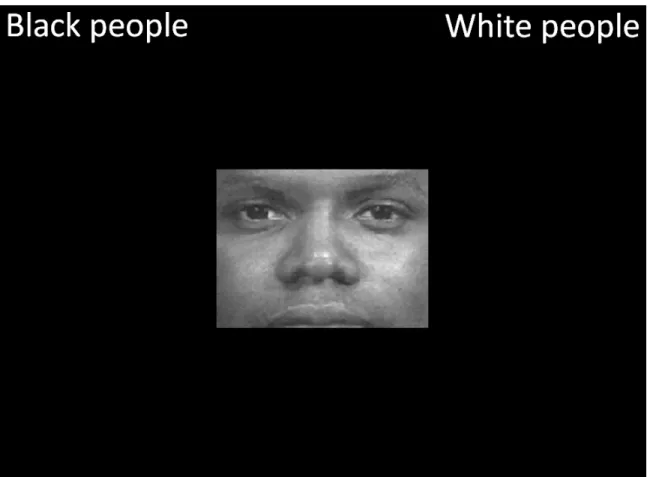
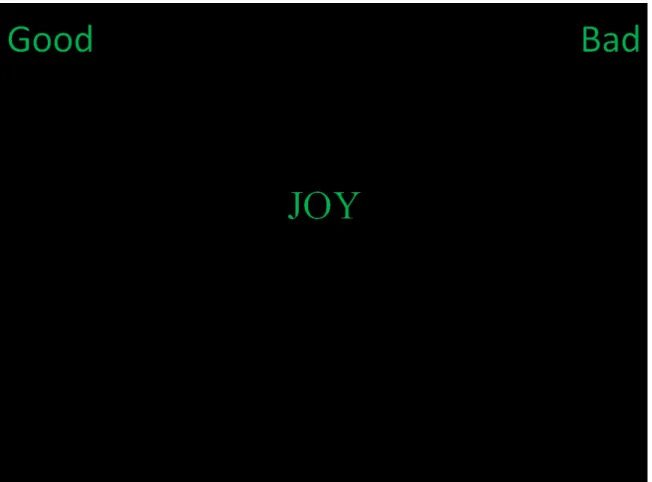
were asked to complete the main dependent measure: the IAT. The IAT is a computer-administered reaction time test that is thought to quantify the implicit attitudes that an individual possesses. Each IAT includes several blocks of trials. On each trial, either a word or a photo of a person’s face is presented, and participants have to categorize that stimulus appropriately by pressing a particular computer key. For example, in one block of trials the category “Black people” is in the upper left-hand corner of the screen and the category label “White people” is in the upper right-hand corner of the screen. When a picture of a person appears in the middle of the screen, participants have to note whether the person is Black or White by pressing a designated key on either the left or right side of the keyboard (see Figure 5). On another block of trials, the words “good” and “bad” appear in the upper left-hand and upper right-hand corners of the screen, respectively, and participants have to categorize each stimulus word (a good or bad word) into one of the two categories, “good words” or “bad words” (see Figure 6).
After these blocks of trials, participants are presented with combined trials that include both categories (Black and White) and both attributes (good and bad). For
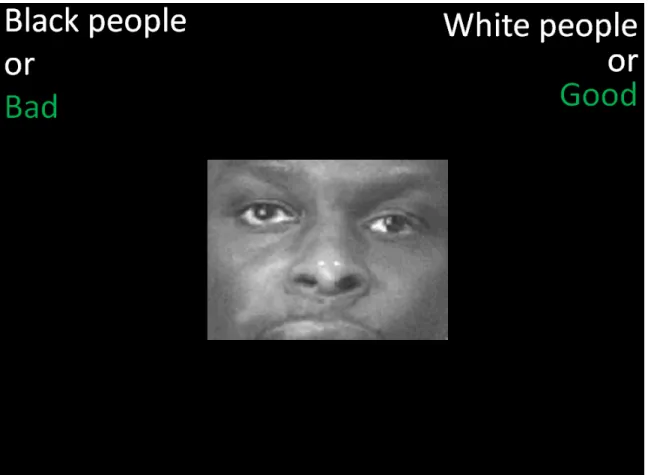
example, in a stereotype-consistent block, the words “Black” and “bad” are presented on the top left-hand corner and the words “White” and “good” are presented in the top right-hand corner. In the middle of the screen, either a photo of a Black or White person is presented or a good or bad word is presented (see Figure 7).The participant then has to place the stimulus in the appropriate category using the corresponding key. On
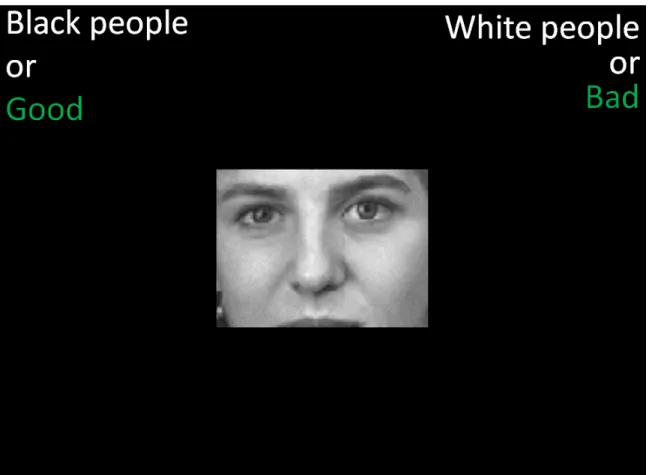
subsequent blocks, the pairings change and become counter-stereotypic. For example, the words “Black” and “good” are presented on the top left-hand corner and the words “White and “bad” are presented in the top right-hand corner (see Figure 8). These are the critical blocks that are used to compute the difference between the average reaction time of counterstereotypic trials and stereotypic trials. For example, if a participant responds more quickly on stereotypic “White and good” trials than on counter stereotypic “Black and good” trials, this shows that this participant tends to associate Whites with positive attributes and Blacks with negative attributes (i.e., is implicitly prejudiced against Blacks). In the present experiment, four different versions of the IAT were used to control for order effects (see Tables 3-6).
Bar-Anan and Nosek (2013) report that the IAT is widely used and has good psychometric properties. They compared seven indirect attitude measures (IAT, Brief IAT Go/No-Go association task, Single-Target IAT, Sorting Paired Features, Evaluative-Priming task, and Affective Misattribution Procedure) across three attitude domains (race, politics, and self-esteem) to see which is the most internally consistent and has the best test-retest reliability. They found that the IAT was the most internally consistent measure (Cronbach’s α = .88) of the six. The Brief IAT had the best test-retest reliability (r = .63), but the longer IAT came in second (r = .45).
Explicit prejudice. After the participants completed the IAT, they completed a
measure of explicit prejudice: the SRK2 (Henry & Sears, 2010) (see Appendix B). This scale is composed of items from both the Modern and Symbolic Racism Scales. Henry and Sears (2010) explain that Symbolic Racism is conceptualized as a unidimensional construct representing prejudice towards Blacks. This scale consists of four themes: (1) Blacks don’t work hard enough; they are responsible for their outcomes, (2) Blacks are making excessive demands, (3) racial discrimination has disappeared or is no longer a problem, and (4) Blacks have an undeserved advantage. Individuals who score high on this scale endorse four these themes. Henry and Sears (2010) report that the scale has good psychometric properties:
Internal consistency. The scale is internally consistent for White participants in multiple subsamples (Cronbach’s αs = .73 to .79).
Convergent and discriminant validity. Confirmatory factor analysis found separate factors for racial prejudice and conservative political dispositions. The SRK2 loaded on both factors equally, showing that it is a blend of both factors as the authors had intended.
Predictive validity. The SRK2 scale predicts racial policy preferences better than traditional racial attitudes and political predispositions.
Results
Computation of Prejudice Measures
Implicit prejudice: IAT-D scores. The IAT score, often referred to as the IAT
effect, is the average reaction time on counterstereotypic trials minus the average reaction time on stereotypic trials, divided by the standard deviation on both sets of trials
combined. Greenwald, McGhee, and Schwartz (1998) introduced a recommended scoring procedure that has been used in most studies of implicit bias. This scoring algorithm is presented in Table 7. IAT-D scores can range from -2 (prejudice in favor of Black people) to +2 (prejudice in favor of White people), with scores of zero indicating that the groups are equally favored. Based on their research, Greenwald, Nosek, and Banaji (2003) suggest that IAT-D scores can be interpreted as follows: 0.15 = slight bias, 0.35 = moderate bias, and 0.65 = strong bias.
Explicit prejudice: SR2K scale scores. Internal consistency reliability analysis
was run on the SR2K scale to see if the eight items were correlated with one another. Results revealed a high level of internal consistency (Cronbach’s α = .835; see Table 8). However, according to the item-total statistics, one item (“Some saw that Black leaders have been trying to push too fast. Others feel that they haven’t pushed fast enough. What do you think?”) was not highly correlated with the other items in the scale (corrected inter-item total correlation = .21). This is not surprising, given that this item was scaled on a 3-point scale, rather than a 4-point scale like the rest of the items. When this item was excluded, the internal consistency reliability of the scale increased (Cronbach’s α = .850; see Table 9). The remaining analyses thus did not include this item as part of the SR2K Scale. Scales on the remaining seven items were then averaged together to yield an SR2K Scale score for each participant that retained the original items’ 4-point metric. High scores in this scale indicated high self-reported prejudice toward Black people
Descriptive Statistics
Political identification. Across the sample, 55.4% of the participants identified as
liberal to some degree, and the remaining participants identified as conservative to some degree or neutral (see Figure 9).
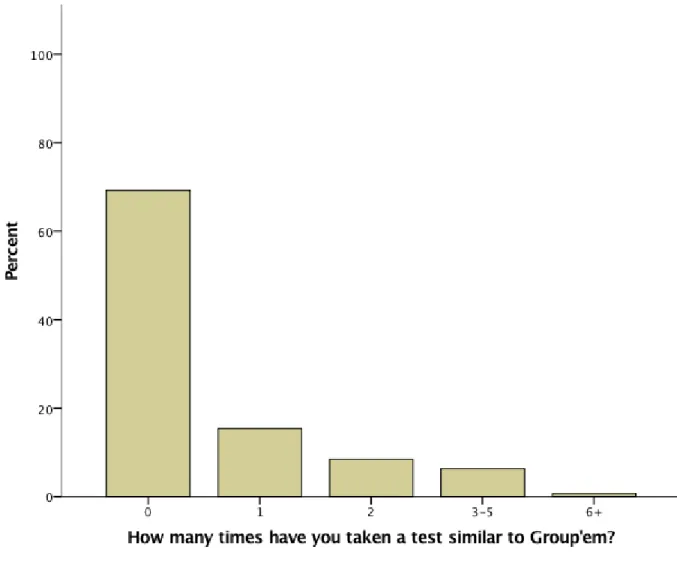
Prior exposure to the IAT. Participants’ exposure to the IAT (Group’em Game)
ranged from 0 to at least 6 times. The majority of the participants (69.59%) reported no prior exposure to the IAT (see Figure 10).
IAT scores. Overall, the observed IAT effect revealed a moderate automatic
preference for Whites over Blacks (M = 0.34, SD = .034). The distribution of scores was somewhat negatively skewed (skew = -0.07, SE = 0.02) and leptokurtic (kurtosis = 2.39, SE = 0.40) (see Figure 11). According to the Kolmogorov-Smirnov test of normality, the distribution of non-Black participants’ IAT scores did not deviate significantly from normal, D (143) = .037, p = .20.
SR2K scores. The distribution of scores was slightly negatively skewed (skew =
- 0.51, SE = 0.20) and kurtosis was not significant (see Figure 12). The Kolmogorov-Smirnov test of normality shows that the distribution of non-Black participants’ SRK2 scores deviates from normality, D (143) = .113, p = .000. It is not surprising to find that SRK2 scores are negatively skewed because it is unlikely that participants would explicitly report their prejudiced views.
The Impact of Categorization Condition on Prejudice
Implicit prejudice (IAT): Non-Black participants. Cerruti and Shin’s (Lai et
al., 2014; Intervention 15, Study 2) study of the impact of evaluative conditioning (with the GNAT) on IAT scores used a sample of non-Black participants. Thus, statistical
analyses in the present study were run first on all non-Black participants. A one-way between-subjects ANOVA was conducted to assess the effect of type of categorization (evaluative conditioning, common ingroup, dual identity, and non-human categorization control) on IAT-D scores. This test showed a small, but significant effect for
categorization condition, F (3,139) = 2.881, p = .038, d = .059. Since the one-way ANOVA was significant, post- hoc tests were run. Fisher’s least significant difference (LSD) tests indicated that the mean score for evaluative conditioning group (M = .20, SD = .31) is significantly lower than the common ingroup (M = .40, SD = .29) and dual identity (M = .40, SD = .32) conditions (see Table 10). However, evaluative conditioning did not significantly differ from the non-human categorization control. In other words, participants in the evaluative conditioning condition exhibited significantly less implicit bias on the IAT than participants in the dual identity or common ingroup identity conditions.
Explicit prejudice (SR2K): Non-Black participants. Because the type of
categorization affected participants’ levels of implicit bias (IAT score), I wanted to see if it also affected participants’ levels of explicit bias (SRK scale). A one-way between- subjects ANOVA was conducted again to compare the effect of type of categorization (evaluative conditioning, common ingroup, dual identity, and non-human categorization control) on explicit prejudice (SR2K score). Type of categorization had no impact on explicit bias. There were no significant mean differences across conditions, F (3, 139) = .571, p = .635, d = .012 (see Table 11).
Implicit Prejudice (IAT): White participants only. Although Cerruti and Shin
analyses, one could argue that including non-White participants of any sort in the present study would be problematic. Dual identity manipulations encourage participants to embrace multiple ingroups (e.g., school affiliation and race) and in my experiment this manipulation was designed with the assumption that the participant identified with both White people and Lake Forest College students (it instructed participants to respond [“Go”] if the stimulus person was White or was affiliated with Lake Forest). Thus, in order to see if the dual identity condition was effective, analyses had to be run on White participants only. A one-way between subjects ANOVA was run to compare the effect of type of categorization (evaluative conditioning, common ingroup, dual identity and non-human categorization control) on White participants’ implicit bias (IAT score). The test showed no significant mean differences across categorization conditions, F (3,103) = 1.003, p = .395, d = .028) (see Table 12).
Explicit prejudice (SR2K): White participants only. Even though the one-way
ANOVA showed that type of categorization did not affect implicit bias (IAT score) for White participants, it may have affected explicit prejudice (SR2K) scores. Therefore, a one-way between-subjects ANOVA that compared the effect of type of categorization (evaluative conditioning, common ingroup, dual identity, and non-human categorization control) on White participants’ explicit bias (SR2K score) was conducted. It revealed no significant differences across conditions, F (3,103) = 1.236, p = .300, d = .035 (see Table 13).
Discussion
The present research was able to replicate Cerruti’s and Shin’s results (Lai et al., 2014; Intervention 15, Study 2), which demonstrated that evaluative conditioning via the
GNAT reduces implicit racial bias in non-Black participants. This suggests that if participants are instructed to connect Black people and positive words, they will subsequently show less pro-White bias on the IAT. However, the reduction in implicit bias was not present when the analysis was run on White participants only. The cause of this discrepancy is unclear. One possibility is that it reflects sampling differences, but this would explain the results only if the non-White, non-Black participants (e.g., Asians) were much more susceptible to evaluative conditioning than were White participants. A more likely explanation is related to statistical power. Cerruti and Shin had a very large sample size and a power of above .90. When only White participants were included in the analyses, the power of the present study to detect an effect as large as that observed by Cerruti and Shin (d = .56) was only .60.
Regardless of the sub-sample analyzed (non-Blacks or Whites), however, this study showed that when the association induced by evaluative conditioning is removed and participants are strictly asked to respond [‘Go’] in response to the common ingroup identity or dual identity categorization manipulation, the effect is no longer present. These categorization manipulations alone were not sufficient to reduce racial bias. This means either that categorization alone does not work, or that categorization does work, but only under conditions that were not represented in the present research.
Manipulating Categorization Alone is Not Enough to Reduce Implicit Prejudice
Setting aside the question of whether evaluative conditioning is effective, the present results suggest that manipulating categorization alone using the common ingroup identity or the dual identity model is insufficient to reduce implicit racial bias. These results may not seem surprising, given the fundamental role of social categorization in the
life and mind of humans. According to Nelson (2006), one of the reasons people categorize social stimuli is because group living is crucial for human survival.
Evolutionarily speaking, forming groups allowed people to divide responsibilities among one another. That division of labor enriched everyone’s way of life.However, in order for it to work, people had to cooperate and trust the individuals they were working with; thus people spontaneously organized the world around them into "friends" and "foe."
Jones, Dovidio, and Vietze (2014) explain that social categorization is also functional at the individual level. People engage in social categorization because they are exposed to a multitude of stimuli every day. In order to process and comprehend
everything around them, they need to simplify their perceptions of the world. Social categorization helps people organize their perceptions of others and ultimately serves as a guide to behavior. Once people categorize an individual they see that that person has similar attributes to other members of their group. By seeing a person as a member of a social group, people can engage in top-down processing; they form ideas about what an individual is like by using the information they know about what people in that group are generally like. Eventually people can automatically determine if the individuals they encounter are a member of their ingroup or an outgroup. The members that people view as their ingroup they see as part of their community; they depend on and trust these individuals.
Social categorization is crucial for social survival; however, this would not be possible if our brains did not develop in a way that allowed people to make these
adaptations. In fact, infants are able to distinguish faces of different races by three months of age (Kelly et al., 2005). By adulthood categorization by race is automatic; within
approximately 100 milliseconds people can distinguish the race of an individual (Ito & Urland, 2003). Despite some people’s claim that they do not see race, research indicates that colorblindness is truly not possible in today’s society (Apfelbaum, Norton, & Sommers, 2012).
Amodio and Lieberman (2009) explain that the human brain has many systems that are sensitive to racial or ethnic cues. Many studies have focused on the fusiform face area (FFA). For example, Golby, Gabrieli, Chiao, and Eberhardt (2001) tested whether people remember faces of their own race better than other races. They placed their
participants in an fMRI and presented them with White and Black faces and measured the activation of the FFA and then tested how well people could recall the specific faces they were shown. They found that White participants exhibited greater FFA activation when they were presented with White faces and they had a better memory of the White faces than the Black faces. Black participants showed the same pattern of own-race bias (i.e., greater FFA activation and better memory for Black faces). The amygdala also plays a key role. It helps people react to novel and/or threatening stimuli (Amodio, 2008; Chekroud, Everett, Bridge, & Hewstone, 2014; Cikara & Van Baval, 2014; Jones et al., 2014). Jones et al. (2014) explain that this evolutionary adaption is functional, yet sometimes hinders humans today because signals of threat are sent to the amygdala at inappropriate times (e.g., the brain of a person who is not used to seeing Black faces may interpret that face as a threat).
All of this suggests that it is impossible to stop people from engaging in categorization. However, it is possible to change the dimension on which people categorize (Kurzban, Tooby, & Cosmides, 2001). This raises the question as to why
previous research (Cameron et al., 2006; Crisp & Beck, 2016; Gaertner et al., 1989; Glasford & Dovidio, 2011; Richeson & Nussbaum, 2003) was able to reduce implicit bias, but the current study was not. This finding may be due to the fact that these studies either employed minimal groups rather than real-life racial groups (Gaertner et al., 1989), or allowed the groups to converse with one another and develop friendships (Cameron et al., 2006; Crisp & Beck, 2016; Glasford & Dovidio, 2011; Richeson & Nussbaum, 2003). It may be that categorization alone is not enough, and the only way to reduce implicit prejudice is to have these contributing factors.
Minimal groups. Gaertner et al. (1989) randomly assigned participants to an
ingroup (using the minimal groups paradigm) rather than asking them to categorize a preexisting ingroup (e.g., Lake Forest College affiliation or White). Research has
demonstrated that the creation of minimal groups can induce a preference for the minimal ingroup. For example, Dunham (2011) showed children a red coin and blue coin, which then were hidden behind the experimenter’s back and shuffled. Afterward, the
experimenter brought his or her hands forward and asked the child to select a hand. Depending on the coin the child selected, the child was assigned to that group. Dunham’s results revealed a preference for the minimal ingroup on three of the four measures (explicit attitude, implicit attitude and resource allocation). However, even though such research has shown that minimal groups are successful at creating a preference for the ingroup, this does not mean that participants identify with their minimal ingroups as strongly as they do their preexisting ingroups. It could be that Gaertner et al.’s
participants had an easier time finding a common ingroup or decategorizing completely because they did not identify very strongly with the minimal groups to which they were
assigned. On the other hand, my participants were asked to either: ignore their race and only focus on school affiliation, or identify with their race but also include school
affiliation. This may be hard to do because research has shown that an individuals’ race is his or her most salient ingroup (Amodio, 2014; Cameron & Rutland, 2006; Glasford & Dovidio, 2011).
Additional information about outgroup members. Other studies made use of
existing racial groups rather than minimal groups, but went beyond manipulating categorization and provided new information about group members. For example, Cameron et al. (2006) wanted to change children’s attitudes toward refugees and did so by telling ingroup members (i.e., students at the same school) a friendship story about ingroup members forming close relationships with outgroup members (i.e., refugees). The story the children were told varied across conditions. Results showed that attitudes toward outgroup members were significantly more positive for children in the common ingroup or dual identity condition compared to the control (i.e., no story presented). The findings of Cameron et al. suggest that categorization alone may not be enough, and the reason the children’s negative attitudes toward refugees improved was because they were able to relate to the refugee kids. The children were exposed to lots of details about these characters (e.g., what they like to do). As a result, that they developed a sense of who those characters were as people, but do not necessarily mean the children dentify them as members of their ingroup. Dual identity is the model that does this most effectively because it allows the participant to develop a better sense of what it means to be a
member of that outgroup (i.e., refugee); this learning allows the participant to potentially reject any preconceived notions they may have had about that outgroup.
Manipulating Categorization Alone is Enough Under the Right Conditions
It is possible that manipulating categorization alone is never sufficient to reduce implicit racial bias, but there may be other reasons why these manipulations did not work. It could be that additional conditions need to be met in order for categorization
manipulations to reduce implicit bias. Some possibilities include: (1) participants must be motivated to reduce bias, (2) participants must feel that they are categorizing social stimuli, and (3) the manipulation must occur before participants reach an age at which race has become a salient group.
Were my participants motivated? Even if the IAT was an appropriate measure
of implicit bias, the lack of significant results may have been due to participants’ lack of motivation to control their bias. For example, previous research has shown that the amygdala responds to emotion (e.g., responds more to fearful than to neutral facial expressions) regardless of whether stimuli are presented for long periods of time or briefly (Davis & Whalden, 2001; Morris, 2006). Earlier research has shown that White people have negative associations with Black people. While one might expect greater amygdala activation when a White person sees a Black face compared to a White face, current studies have not observed these results (Hart, Whalen, Shin, McInerney, & Rauch, 2000; Phelps, O’Connor,
Cunningham, Johnson, Raye, Gatenby, Gore, and Banaji (2004) were puzzled by this and thought it might be because two separate neural processes are occurring: an automatic and a controlled process. They studied this possibility during event-related functional magnetic resonance imaging (fMRI) by exposing White participants to Black and White faces for 30 ms (automatic process condition) or 525 ms (controlled process
condition) and examining which brain regions were activated. After scanning, participants took the IAT and completed a self-report questionnaire (Modern Racism Scale and Motivation to Respond Without Prejudice Scale).
Their results showed that during the automatic process (30 ms presentation of faces), activation of the amygdala was greater for Black than for White faces. However, during the controlled process (525 ms presentation of faces), activation of the amygdala was significantly reduced. Regions of the frontal cortex (dorsolateral PFC, anterior
cingulate cortex, and ventrolateral PFC) were also more active for Black faces than White faces when presented for 525ms. They also found that amygdala activation was
correlated with participants’ IAT scores. That is, the more pro-White bias participants showed on the IAT, the greater their amygdala activity for Black faces relative to White faces in the 30-ms condition. Furthermore, activation in the ventrolateral PFC was correlated with attitudinal ambivalence (i.e., participants’ brains appear to fear Black faces, but participants’ self-reports show they have egalitarian tendencies), thus
suggesting that these participants were trying to control the prejudicial tendencies they have toward Black faces.
Cunnigham et al.’s (2004) study showed that there is a neural distinction between automatic and controlled processing of social groups. Fortunately, participants in the present study were presented with stimuli for 900ms, which means their controlled process was activated, giving them the opportunity to control their prejudicial tendencies. However, one limitation is that I did not measure participants’ levels of motivation. Therefore, it is possible that my manipulation of categorization could be effective, but my participants lacked the motivation to control their bias. With this in mind, future studies
should expose participants to White and Black faces for 30 ms and 525 ms to see if participants are motivated to control their implicit bias (i.e., have more activation of the frontal cortex when presented with Black faces compared to White faces for 525ms). Afterward, if the fMRI shows a participant has little motivation to control bias, then he or she should not be included in the study. Future studies should have a sample in which all of the participants are motivated and then incorporate the categorization manipulation to see whether categorization alone is truly enough.
Was my manipulation considered a social categorization task? Research
indicates that stereotyping is malleable and that individuals’ social goals play an important role in whether they exhibit prejudiced responses (Amodio, 2014). Wheeler and Fiske (2005), for example, used fMRI to investigate how social goals control
prejudiced responses. All participants viewed photographs of unfamiliar Black and White faces, and amygdala activation was recorded. However, the instructions that were given varied across conditions. Participants were placed in one of three conditions (socially neutral condition, social categorization, and social individuation). In the socially neutral condition, participants determined whether a dot was present somewhere on each face. This task was designed to encourage participants to process the photos as simple, nonsocial visual stimuli. In the social categorization condition, participants had to determine whether the person in each photo belonged to a particular social group (i.e., was the person over 21 years of age) Finally, in the social individuation condition,
participants were asked if the person in each photo would like a particular vegetable. This task was designed to make participants view each face as an individual by elaborating on personal characteristics (i.e., do they like the vegetable presented).
For the social neutral condition, Wheeler and Fiske's results revealed no difference in amygdala activity during the presentation of White and Black faces. In contrast, during the social categorization condition, there was a significant difference in left amygdala activity during the presentation of White faces versus Black faces. Finally, during social individuation, activity in the right amygdala was suppressed when a
participant was presented with Black faces. Accordingly, future studies should make sure that participants feel more connected to the stimuli and see the task as a social
categorization task. For example, one might use photos of actual Lake Forest College students to make the manipulation seem more real and reduce the likelihood that participants are just responding to neutral instructions. Also, the experimenter could stress that the faces present are people from their school (i.e., part of their team) without mentioning additional information about the individual or letting participants have direct contact with those individuals. Similarly, it could be helpful to stress which faces are the opponent faces (i.e., St. Norbert College), and to mention that they are the rival team, while still avoiding providing additional information about the person.
Was it too late for my participants? Developmental research suggests that
social categories (e.g., gender and race) are meaningful to young children and acquisition of social identity is a primary goal (Cameron & Rutland, 2006). However, Telzer,
Humphreys, Shapiro and Tottenham (2013) wanted to know neurologically at what age race becomes a salient ingroup for children. These researchers noted that neuroimaging studies have demonstrated that White adults show increased amygdala activation, even in the absence of conscious awareness, when presented with Black faces instead of White faces. They were also curious to see if this amygdala activation is present when Black
adults view Blacks faces. These researchers hypothesized that at a certain age, the bias (i.e., different levels of amygdala activation when presented with Black faces versus White faces) becomes prevalent. They tested their hypothesis using an fMRI to examine amygdala responses to race across childhood and adolescence.
Telzer et al.'s (2013) sample included children between the ages of four and 16.5 years. During the fMRI scan, participants were shown three faces and asked which faces were expressing the same emotion (the faces displayed were either happy, sad or neutral). Their results showed no difference in amygdala activation when presented with White or Black faces until the age of 14. Interestingly, the same effect was present when Black participants viewed Black faces, suggesting that the differentiation in amygdala activation may not be due to categorization, but instead due to how Blacks are seen in society. This study gives society two options for reducing implicit bias: (1) change the way society sees Black people, which is unlikely, or (2) change the way people
categorize at a young age (preferably before 14 years old). For this to be effective, children must be primed multiple times to categorize differently.
Practical Implications and Directions for Future Studies
Even if all of the conditions that are needed for categorization manipulations to be effective were met, at least two questions remain: would reductions in implicit bias generalize to real life settings, and would the reductions in implicit bias persist?
Does the reduction in implicit bias translate in to real life? The present
research, like most research in this area, relied on the IAT as a measure of implicit bias. The developers of the IAT report that the test has good predicative validity and support this claim with a meta-analysis of more than 100 studies (Greenwald, Poehlman,
![Figure 1. Instructions given to participants in the evaluative conditioning manipulation and sample trial pairing indicating when to respond [‘Go’].](https://thumb-us.123doks.com/thumbv2/123dok_us/10304108.2938809/66.918.109.760.107.596/figure-instructions-participants-evaluative-conditioning-manipulation-pairing-indicating.webp)
![Figure 2. Instructions given to participants in the common ingroup identity manipulation and a sample trial pairing indicating when to respond [‘Go’]](https://thumb-us.123doks.com/thumbv2/123dok_us/10304108.2938809/67.918.103.762.118.583/figure-instructions-participants-ingroup-identity-manipulation-pairing-indicating.webp)
![Figure 3. Instructions given to participants in the dual identity condition and a sample trial pairing indicating when to respond [‘Go’]](https://thumb-us.123doks.com/thumbv2/123dok_us/10304108.2938809/68.918.104.762.116.589/figure-instructions-participants-identity-condition-pairing-indicating-respond.webp)
![Figure 4. Instructions given to participants in the non-human categorization control condition and a sample pairing indicating when to respond [‘Go’]](https://thumb-us.123doks.com/thumbv2/123dok_us/10304108.2938809/69.918.112.756.113.594/figure-instructions-participants-categorization-control-condition-pairing-indicating.webp)