Particle therapy for prostate cancer: The
past, present and future
著者(英)
Hitoshi ISHIKAWA, Hiroshi Tsuji, Shigeyuki
Murayama, Mikio Sugimoto, Nobuo Shinohara,
Satoru Maruyama, Motohiro Murakami, Hiroki
Shirato, Hideyuki SAKURAI
journal or
publication title
International journal of urology
volume
26
number
10
page range
971-979
year
2019-07
権利
(C) 2019 The Authors. International Journal of
Urology published by John Wiley & Sons
Australia, Ltd on behalf of the Japanese
Urological Association.
This is an open access article under the terms
of the Creative Commons
Attribution-NonCommercial-NoDe rivs License,
which permits use and distribution in any
medium, provided the original work is properly
cited, the use is noncommercial and no
modifications or adaptations are made.
URL
http://hdl.handle.net/2241/00158695
doi: 10.1111/iju.14041
Creative Commons : 表示 - 非営利 - 改変禁止 http://creativecommons.org/licenses/by-nc-nd/3.0/deed.ja
Review Article
Particle therapy for prostate cancer: The past, present and future
Hitoshi Ishikawa,
1Hiroshi Tsuji,
2Shigeyuki Murayama,
3Mikio Sugimoto,
4Nobuo Shinohara,
5Satoru Maruyama,
5Motohiro Murakami,
1Hiroki Shirato
6and Hideyuki Sakurai
11
Department of Radiation Oncology, Faculty of Medicine, University of Tsukuba, Tsukuba, Ibaraki,2Hospital of the National Institute of Radiological Sciences, National Institutes for Quantum and Radiological Science and Technology, Chiba,3Division of Proton Therapy, Shizuoka Cancer Center Hospital, Shizuoka,4Department of Urology, Faculty of Medicine, Kagawa University, Takamatsu, Kagawa,5Department of Urology, Hokkaido University Graduate School of Medicine, and6Global Station for Quantum Medical Science and Engineering, Global Institution for Collaborative Research and Education, Hokkaido University, Sapporo, Hokkaido, Japan
Abbreviations & Acronyms
3DCRT = three-dimensional conformal radiotherapy ADT = androgen deprivation therapy
bRFS = biochemical relapse-free survival
CIRT = carbon-ion radiotherapy EPIC = Expanded Prostate Cancer Index Composite Instrument FACT-P = Functional Assessment of Cancer Therapy for Prostate Cancer Patients
FFF = freedom from biochemical or clinical failure
GI = gastrointestinal GU = genitourinary GyE = gray equivalents HRQOL = health-related quality of life
IMRT = intensity-modulated radiation therapy
JASTRO = Japanese Society for Radiation Oncology
PBT = proton beam therapy PFS = progression-free survival QOL = quality of life RP = radical prostatectomy RT = radiotherapy
SOBP = spread-out Bragg peaks TOI = Trial Outcome Index WPI = whole pelvis irradiation
Correspondence:Hitoshi Ishikawa M.D., Ph.D., Department of Radiation Oncology, Faculty of Medicine, University of Tsukuba, 1-1-1 Tennodai, Tsukuba, Ibaraki 305-8575, Japan. Email:
[email protected] This is an open access article under the terms of the Creative Commons Attribution-NonCommercial-NoDe rivs License, which permits use and distribution in any medium, provided the original work is properly cited, the use is non-commercial and no modifications or adaptations are made.
Received 18 March 2019; accepted 21 May 2019.
Online publication 8 July 2019
Abstract: Although prostate cancer control using radiotherapy is dose-dependent, dose–volume effects on late toxicities in organs at risk, such as the rectum and bladder, have been observed. Both protons and carbon ions offer advantageous physical properties for radiotherapy, and create favorable dose distributions using fewer portals compared with photon-based radiotherapy. Thus, particle beam therapy using protons and carbon ions theoretically seems suitable for dose escalation and reduced risk of toxicity. However, it is difficult to evaluate the superiority of particle beam radiotherapy over photon beam radiotherapy for prostate cancer, as no clinical trials have directly compared the outcomes between the two types of therapy due to the limited number of facilities using particle beam therapy. The Japanese Society for Radiation Oncology organized a joint effort among research groups to establish standardized treatment policies and indications for particle beam therapy according to disease, and multicenter prospective studies have been planned for several common cancers. Clinical trials of proton beam therapy for intermediate-risk prostate cancer and carbon-ion therapy for high-risk prostate cancer have already begun. As particle beam therapy for prostate cancer is covered by the Japanese national health insurance system as of April 2018, and the number of facilities practicing particle beam therapy has increased recently, the number of prostate cancer patients treated with particle beam therapy in Japan is expected to increase drastically. Here, we review the results from studies of particle beam therapy for prostate cancer and discuss future developments in this field.
Key words: biochemical relapse-free survival, carbon-ion radiotherapy, prostate cancer, proton beam therapy, toxicity.
Background of external beam RT for prostate cancer
Approximately 165 000 people develop prostate cancer per year in the USA, with 29 000 prostate cancer-related deaths per year.1 In Japan, the annual number of newly diagnosed patients increases every year, and prostate cancer is currently the cause of death of>12 000 patients.2 As recent advances in prostate cancer screening and treatment have led to an improvement in patient outcomes, the treatment goals have changed from merely tumor con-trol to preservation of the daily activities and QOL of patients as important end-points in comparisons of the various treatment options. In particular, it is important that treatment is as minimally invasive as possible for elderly patients.
According to recent large-scale comparative studies evaluating several end-points, such as prostate cancer-specific mortality rate, disease progression, metastasis and all-cause mortality rate, external beam RT produces outcomes comparable with those of surgery; RT has thus been established as a curative treatment for prostate cancer.3 Reports have shown that as the radiation dose used for prostate cancer is increased, a dose–response relationship is observed between the RT dose and tumor control.4,5Conversely, increasing the RT dose leads to con-cerns about adverse events in the rectum and bladder, and decreasing the RT dose and
volume in these organs decreases the incidence of adverse events, according to several studies that carried out dose– vol-ume histogram analyses.6–8Thus, if the RT dose to the pros-tate can be increased without increasing the irradiated volume in the rectum and bladder, treatment outcomes will improve.
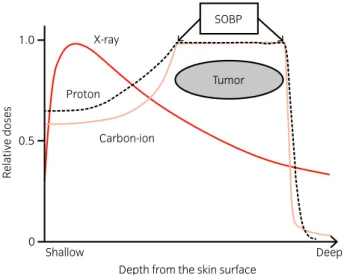
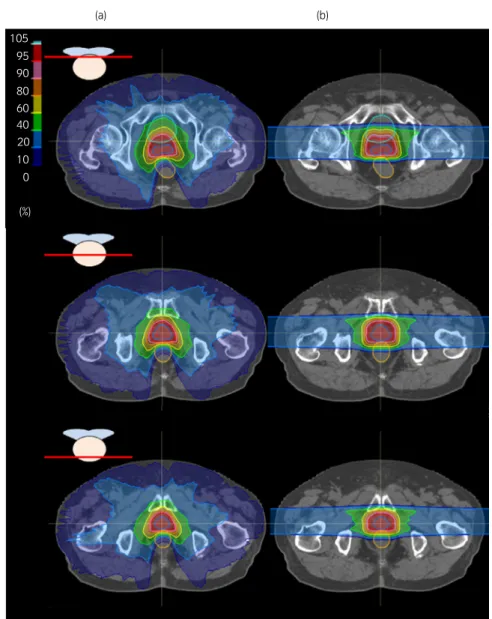
With X-ray-based RT regimens, a dose build-up effect occurs 1–2 cm from the body surface. After delivery of the peak dose, the deeper the rays penetrate into the body, the more gradual the decrease in the relative dose as the rays pass through the body. In contrast, charged particle beams differ from photon beams in that they create a better dose distribution in the target volume by specific beam modula-tions, such as a SOBP (Fig. 1).9–11Thus, the prescribed dose can be delivered to the lesion through a smaller number of beams with particle beam RT compared with photon beam RT, and consequently the irradiated volume and dose in the rectum and bladder in particle beam RT for prostate cancer can be decreased compared with photon beam RT, such as IMRT and volumetric-modulated arc therapy (Fig. 2).12 One reason why particle beam RT is useful for treating prostate cancer is that dose escalation using modern techniques has improved tumor control rates, especially bRF or bRFS rates, in photon beam RT series, and charged particles might be even more useful for safely escalating the RT dose.13–15
In this article, we review the results of previous particle beam RT studies compared with photon beam RT, and intro-duce ongoing studies and future prospects to establish high-quality evidence for particle beam RT for prostate cancer.
Scientific statements
Concomitant photon and proton beam RT:
1990s to early 2000s
The treatment outcomes of four randomized comparative trials carried out in the 1990s (two photon beam RT studies and two
studies on combination of PBT with photon beam RT) and a PBT study carried out at Loma Linda University are shown in Table 1.6,16–19At that time, the appropriate use of ADT com-bined with RT for prostate cancer was not yet established, and pelvic RT using photons was a standard treatment for latent lymph node involvement. PBT was therefore used as a RT boost to the prostate after pelvic RT. Shipleyet al.14 reported the results from thefirst randomized PBT study carried out at Massachusetts General Hospital Cancer Center. In their study, patients in the standard-dose group were treated with pelvic RT at 50.4 Gy/28 fr, followed by local photon beam RT at 16.8 Gy/8 fr (total dose 67.2 Gy/36 fr), and those in the high-dose group were treated with PBT at 25.2 GyE/12 fr together with pelvic RT (total dose 75.6 GyE/40 fr). Good local control was achieved in the high-dose PBT group, in which the 8-year local control rate was 73% compared with 59% in the stan-dard-dose photon beam RT group.14 Especially among the patients with poorly differentiated adenocarcinoma, the rate in the high-dose group was significantly better (84% vs 19%, P =0.0014). Furthermore, grade 3 rectal bleeding was seen in just 2.9% of the patients in the high-dose group. In contrast, the Radiation Therapy Oncology Group carried out a random-ized trial using photon beam RT (RTOG9413), designed as a 292 factorial study using ADT sequencing as one stratifi ca-tion factor and the radiaca-tionfield as the other factor. In a sec-ondary analysis, pelvic RT combined with neoadjuvant ADT was added for disease control of patients who had an estimated risk of lymph node involvement of >15%, according to the equation: percentages of positive lymph nodes =(2/3) PSA +[(GS 6)910] or T2c–T4 diseases, and showed an improvement in PFS compared with prostate-only RT; how-ever, despite using a 70.2 Gy dose (5.4 Gy lower than the aforementioned 75.6 Gy PBT dose), grade 3 GI toxicities were noted in 4.3% of patients15(Table 1).
The effect of a high-dose PBT boost after local photon beam RT on the outcomes of patients with stage T1–2 pros-tate cancer was evaluated in the PROG95-09 trial.16 A PBT boost of either 19.8 GyE/11 fr (standard-dose group) or 28.8 GyE/16 fr (high-dose group) was delivered to the pros-tate at a total dose of 50.4 Gy/28 fr after conformal photon beam RT. After a median observation period of 8.9 years, the 10-year biochemical failure rates were 32.4% in the standard-dose group and 16.7% in the high-standard-dose group (P<0.0001), but grade 3 GI and GU events were only noted in 1% and 2% of patients in the high-dose group, respectively. At almost the same time, long-term results from a randomized dose-escalation trial of photon beam RT for prostate cancer carried out at the MD Anderson Cancer Center were reported.6 In that study, the treatment outcomes of the stan-dard-dose (70 Gy/35 fr) group and high-dose (78 Gy/39 fr) group were compared (Table 1). The 10-year recurrence-free rate was 50% in the standard-dose group versus 73% in the high-dose group, showing that the higher dose produced bet-ter results (P=0.004). However, grade 3 GI and GU adverse events were observed in 7% and 5% of patients, respectively, in the high-dose group, indicating higher adverse event rates compared with those induced by the 79.2 GyE dose of the high-dose group in the ROG95-09 trial described above (Table 1).6
Shallow Deep
Depth from the skin surface
Relativ e doses Carbon-ion 1.0 0.5 0 Tumor SOBP Proton X-ray
Fig. 1 A schema of relative doses from the skin surface of photon and par-ticle beams. Dashed black and solid pink lines are the depth dose distribu-tions of proton and carbon-ion beams, respectively. The SOBP are created by adding the contributions of some pristine Bragg peaks. A depth dose curve of a photon beam is provided for comparison.
In Japan, to confirm the safety of localized PBT, phase II clinical studies were carried out at the National Cancer Cen-ter Hospital East, in which 30 patients were regisCen-tered over 2 years starting in 2001. Photon beam RT consisting of 50 Gy/25 fr was delivered to the prostate and bilateral semi-nal vesicles, followed by a PBT boost of 26 GyE/13 fr to the prostate alone. No grade 3 acute or late toxicities were observed, confirming the feasibility of high-dose RT with a PBT boost for prostate cancer.18
Local particle beam RT: Mainly in the 2000s
At Loma Linda University, high-dose PBT without photons was used to treat localized prostate cancer. Between 1991 and 1997, 911 cases were treated with localized PBT at a total dose of 74–75 Gy, and a 5-year bRFS of 82% was reported. No grade 3 adverse events were noted, and grade 2 toxicities included 3.5% GI and 5.4% GU events. Thus, the use of PBT alone seemed superior to photon beam RT alone or photon beam RT combined with PBT17(Table 1). In addi-tion, the morbidity rates for prostate cancer have beenevaluated based mainly on grade 2 GI and GU adverse events since then.
In Japan, three facilities–the National Cancer Center Hospi-tal East, Shizuoka Cancer Center and Hyogo Ion Beam Medi-cal Center – carried out a multicenter collaborative phase II clinical trial of local PBT, delivered at a total dose of 74 GyE/ 37 fr to 151 prostate cancer patients between March 2004 and March 2007. In that trial, no grade 3 adverse events occurred, and grade 2 late GI and GU toxicities were observed in 2.0% and 4.1% of patients, respectively.19Heavy ion RT using car-bon ions for prostate cancer has been carried out at the National Institutes of Radiological Sciences in Japan since 1995; the optimal RT dose and technique were established through two phase I/II dose-escalation studies of hypofractionated CIRT carried out there.20In the phase II trial, which was carried out between April 2000 and October 2003, a 66 GyE/20 fr dose fractionation schedule was used based on recommendations from previous studies, which resulted in grade 2 GI and GU toxicities in 1.7% and 5.1% of patients, respectively.21
At the beginning of the 21st century, during which the above results were published, new radiation technologies, 105 95 90 80 60 40 20 10 0 (%) (a) (b)
Fig. 2 Comparison of dose distribution between volumetric-modulated arc therapy and PBT. (a) In volumetric-modulated arc ther-apy using photons, a MLC aperture and dose rate can be simultaneously adjusted in the rotational beam of 360°to concentrate the radiation dose to the prostate. (b) However, PBT uses fewer beams to create a favorable dose distribution, thereby minimizing the irra-diated volumes in the bladder and rectum at low-to-moderate doses.
such as IMRT and image-guided brachytherapy, became widely available as definitive RT modalities for prostate can-cer. Furthermore, comparative studies and meta-analyses showed that ADT improved treatment outcomes, especially for intermediate- and high-risk prostate cancer, and the ideal duration and timing of concomitant ADT were deter-mined.22,23 The treatment outcomes of local high-dose RT combined with ADT were equal to or superior to those of local high-dose RT combined with pelvic or prostate RT, even for high-risk prostate cancer.22–24 Consequently, local RT combined with effective application of ADT according to prostate cancer risk stratification has become the main treat-ment for prostate cancer without evidence of metastasis.
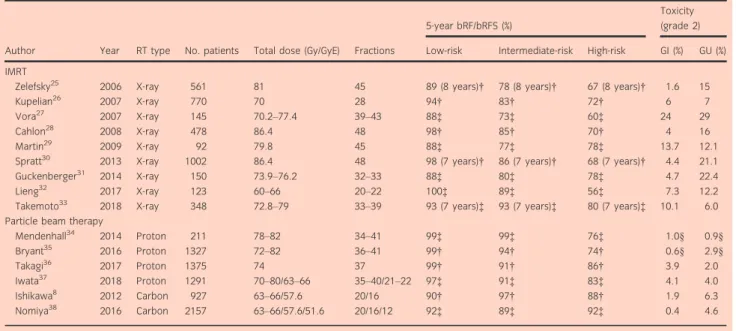
Table 2 summarizes the clinical outcomes after IMRT, PBT and CIRT, along with a comparison of the efficacies and safety parameters.8,25–38 PBT and CIRT outcomes in Japanese patients were reported recently in a multicenter col-laborative clinical study.37,38 Iwata et al. reported long-term outcomes from a multi-institutional survey of PBT for pros-tate cancer carried out by the Japanese Radiation Oncology Study Group. In their study, 1291 patients at seven facilities received PBT between January 2008 and December 2011, mainly using the standard fractionation for RT at total doses ranging from 70 to 80 GyE. After a median follow-up period of 69 months (range 7–107 months), the 5-year bRFS rates of the low-, intermediate- and high-risk patients were 97.0%, 91.1% and 83.1%, respectively, and grade 2 GI and GU adverse events were observed in 4.1% and 4.0% of patients, respectively.37 In another study, the treatment outcomes of 2157 patients who received CIRT at three facilities between 2003 and 2014 were analyzed.38Based on the results of clini-cal studies carried out at the National Institute of Radiologi-cal Sciences, dose fractionation schedules of CIRT have been changed from 20 sessions over 5 weeks to 12 sessions over
3 weeks step-by-step.8,21,39After a median observation period of 29 months, the 5-year bRFS rates of the low-, intermedi-ate- and high-risk patients were 92%, 89% and 92%, respec-tively, and the rates of grade 2 GI and GU adverse events were 0.4% and 4.6%, respectively.38 Furthermore, Okada et al.39 showed no significant difference in the 5-year bio-chemically relapse-free rates between 16 and 20 sessions groups (88.5% and 90.2%, respectively), and the decrease in the number of CIRT fractions did not increase the incidences of the late adverse events (Table 3).8,39,40Thus, particle beam RT was shown to achieve well-balanced treatment outcomes in terms of both efficacy and safety.
Comparisons of RT methods in terms of
HRQOL
Recent advances in RT technologies and techniques have improved the outcomes of prostate cancer. However, it is
dif-ficult to determine the optimal RT method simply by compar-ing bRFS and/or morbidity rates among individual treatments. Recently, HRQOL, which is measured using questionnaires, such as the FACT-P and EPIC, has become an increasingly important end-point in the evaluation of treat-ments for localized prostate cancer.41,42
Maruyama et al. reported long-term results of HRQOL assessments carried out at five time points (immediately before and immediately after the initiation of CIRT, and at 12, 36 and 60 months after completion of CIRT) using the FACT-P questionnaire.43 In their study, the absolute change in the FACT-P score was minimal, and the transient decrease observed in the TOI score returned to baseline at 1 year after CIRT. Their results suggested that the changes in the HRQOL score observed after CIRT was minimal compared with the results from a previous report on photon beam RT Table 1 Clinical outcomes of photon and PBT trials carried out in the 1990s
Author No. patients Period Total dose (Gy) Photon (Gy) Proton (GyE) End-point
Late toxicity
GI GU
WPI and local RT
Shipley14 202 1982–1992 75.6 50.4 (WPI) 25.2 (local) Local control (8 years)
73% 2.9% (G3)† NA
67.2 50.4 (WPI) + 16.8 (local) – 59% 0% (G3)† NA
Roach15 440 1995–1999 70.2 50.4 (WPI) + 19.8 (local) PFS (7 years) 40% 4.3% (G3) 3.0% (G3)
70.2 70.2 (local) 27% 0% (G3) 0% (G3)
Local RT
Zietman16 393 1996–1999 79.2 50.4 (local) 28.8 (local) bRF (10 years) 83% 24% (G2) 1% (G3) 27% (G2) 2% (G3) 70.2 50.4 (local) 19.8 (local) 67% 13% (G2) 0% (G3) 22% (G2) 2% (G3) Kuban6 301 1993–1998 78.0 78.0 (local) – FFF (10 years) 73% 26% (G2)
7% (G3) 13% (G2) 5% (G3) 70.0 70.0 (local) – 50% 13% (G2) 1% (G3) 8% (G2) 4% (G3) Schulte17 911 1991–1996 74–75 – 74.0–75.0 (local) bRF (5 years) 82% 3.5% (G2)
0% (G3)
5.4% (G2) 0% (G3) †As the details of three patients with grade≥3 rectal bleeding are unknown, the percentages in the table are based on the assumption that all three received high-dose RT using protons.
and brachytherapy (Table 4).43,44 Furthermore, a decrease in the TOI score was related to use of adjuvant ADT, onset of adverse events and biochemical recurrence.43 One likely rea-son why there was little effect on the HRQOL score might be the lower rates of adverse events and biochemical recur-rence after CIRT.
Gray et al. compared the bowel/rectal and urinary QOL after 3DCRT (n=123), IMRT (n=153) and PBT (n=95).45 During the immediate post-treatment period (2 months from the start of treatment for the IMRT cohort, and 3 months from the start of treatment for the 3DCRT and
PBT cohorts), patients in the IMRT, but not the PBT, cohort reported a clinically meaningful decrease in both bowel/rectal and urinary (irritation/obstruction and incontinence) QOL. In contrast, at 12 months, patients who received PBT, but not those who received IMRT or 3DCRT, reported a clinically meaningful decrease in urinary irritation/obstruction QOL.45 At the University of Florida (USA), 1243 patients treated with 76–78 Gy PBT were compared with 204 patients treated with nearly the same dose of IMRT (75.6–79.4 Gy) in terms of HRQOL based on the EPIC score. Urinary and sexual function did not differ during the treatment course when the Table 2 Comparison of IMRT with particle beam therapy for treatment of prostate cancer
Author Year RT type No. patients Total dose (Gy/GyE) Fractions
5-year bRF/bRFS (%)
Toxicity (grade 2) Low-risk Intermediate-risk High-risk GI (%) GU (%) IMRT
Zelefsky25 2006 X-ray 561 81 45 89 (8 years)† 78 (8 years)† 67 (8 years)† 1.6 15
Kupelian26 2007 X-ray 770 70 28 94† 83† 72† 6 7
Vora27 2007 X-ray 145 70.2–77.4 39–43 88‡ 73‡ 60‡ 24 29
Cahlon28 2008 X-ray 478 86.4 48 98† 85† 70† 4 16
Martin29 2009 X-ray 92 79.8 45 88‡ 77‡ 78‡ 13.7 12.1
Spratt30 2013 X-ray 1002 86.4 48 98 (7 years)† 86 (7 years)† 68 (7 years)† 4.4 21.1
Guckenberger31 2014 X-ray 150 73.9–76.2 32–33 88‡ 80‡ 78‡ 4.7 22.4
Lieng32 2017 X-ray 123 60–66 20–22 100‡ 89‡ 56‡ 7.3 12.2
Takemoto33 2018 X-ray 348 72.8–79 33–39 93 (7 years)‡ 93 (7 years)‡ 80 (7 years)‡ 10.1 6.0 Particle beam therapy
Mendenhall34 2014 Proton 211 78–82 34–41 99‡ 99‡ 76‡ 1.0§ 0.9§ Bryant35 2016 Proton 1327 72–82 36–41 99† 94† 74† 0.6§ 2.9§ Takagi36 2017 Proton 1375 74 37 99† 91† 86† 3.9 2.0 Iwata37 2018 Proton 1291 70–80/63–66 35–40/21–22 97‡ 91‡ 83‡ 4.1 4.0 Ishikawa8 2012 Carbon 927 63–66/57.6 20/16 90† 97† 88† 1.9 6.3 Nomiya38 2016 Carbon 2157 63–66/57.6/51.6 20/16/12 92‡ 89‡ 92‡ 0.4 4.6
†bRF rate.‡bRFS rate.§Grade 3.
Table 3 Late toxicity according to dose fractionation schedule after carbon-ion therapy
Author
Dose fractionation
(GyE/fr/weeks) No. patients
Median follow-up time (months)
Rectal toxicity (%) GU toxicity (%)
G0 G1 G2 G3 G0 G1 G2 G3
Ishikawa8 66.0/20/5 250 43.0 78.0 18.8 3.2 0 40.4 46.0 13.6 0
Ishikawa8 63.0/20/5 216 43.0 85.2 12.5 2.3 0 50.0 43.1 6.5 0.5
Okada39 57.6/16/4 198 59.3 88.9 9.6 1.5 0 58.6 39.4 2.0 0
Nomiya40 51.2/12/3 46 32.3 91.3 8.7 0 0 50.0 50.0 0 0
Table 4 TOI scores after different treatments for prostate cancer
Treatment No. patients
Median age
(years) Baseline
Time after treatment
1 month 12 months 36 months Mean TOI score43,44(change
from baseline)
RP 23 61 88.312.3 66.210.3 ( 22.1) 88.23.7 ( 0.1) NA Brachytherapy 44 67 86.96.0 68.67.7 ( 18.3) 85.87.3 ( 1.1) NA 3DCRT 23 69 85.39.1 77.618.1 ( 7.7) 84.113.7 ( 1.2) NA
comparisons between cohorts were controlled for age, pros-tate size, ADT use and baseline QOL, but the frequencies of
“moderate/big problems” with rectal urgency (P =0.02) and bowel frequency (P =0.05) were greater in the IMRT cohort.46 In fact, Fang et al. assessed the associations between toxicity and PBT compared with IMRT in prostate cancer patients using a case-matched analysis; the risks of late GI and GU toxicities were not different between the two groups. However, grade ≥2 acute GI toxicities were recorded in 13 (13.8%) patients treated with IMRT and four (4.3%) patients treated with PBT, and PBT was significantly associ-ated with a reduced risk of acute GI toxicities in univariate analysis (P =0.03).47 Based on these results, the HRQOL indicators in low- and intermediate-risk patients receiving PBT or IMRT are currently being compared (PARTIQoL trial: NCT01617161). That trial is thefirst to compare IMRT with PBT directly, and evaluation of the primary end-point, the EPIC mean bowel score at 24 months post-treatment, is scheduled for completion in December 2019.
To summarize these results, although no comparative study results are available at the present time, the current National Comprehensive Cancer Network guidelines on PBT state that, based on the results of many clinical studies, there is no clini-cal evidence supporting a benefit or disadvantage of PBT over IMRT in terms of treatment efficacy or long-term toxici-ties. The usefulness of PBT has been confirmed, and conven-tionally fractionated prostate PBT can be considered a reasonable alternative to X-ray-based regimens at clinics with the appropriate technology, physics and clinical expertise.
Future prospects
Particle beam RT for prostate cancer in Japan has changed considerably, and as of April 2018, it is eligible for insur-ance coverage. Of note, patients can receive particle beam RT without paying expensive fees, and the cost of this advanced medical treatment is similar to those of other RTs, such as IMRT and brachytherapy. The cost–benefit of parti-cle beam RT was previously considered inferior to that of photon beam RT, but with development of this treatment modality, particle beam RT might now provide a potential cost-effective treatment in Japan.48,49 However, to establish the routine use of particle beam RT worldwide, it is still necessary to further reduce the size and cost of the device for particle beam RT.
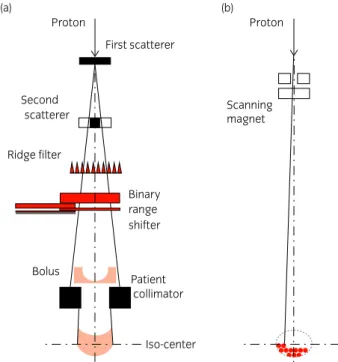
Furthermore, recent technological advances have led to changes in the beam delivery, position verification and radiation techniques of particle beam RT, which will not only improve treatment outcomes, but also reduce the cost and treatment time.50–53 In particular, image-guided inten-sity-modulated particle beam RT using a new beam deliv-ering method, known as pencil beam scanning, provides more highly conformal and precise treatments beyond what were available previously (Fig. 3).50,51 By further decreas-ing the irradiated volumes and doses in the rectum and bladder, the incidence of GI and GU toxicities is expected to decrease.
With an increase in the number of patients treated with parti-cle beam RT (Fig. 4), creating a system that allows treatment
of more patients while maintaining treatment quality is critical. To overcome this issue for the future, hypofractionation is a promising strategy, especially for prostate cancer treatment, based on radiobiological models.13 In fact, several studies of hypofractionated particle beam RT for prostate cancer have been carried out, and reported the same or lower incidences of adverse events as those seen with conventional photon beam RT using standard fractionation.8,21,38–40,54 Further confi rma-tion of the feasibility and efficacy of hypofractionated particle beam RT will enable an increase in patient volume and reduc-tion in the cost per patient. Currently, the JASTRO is carrying out a multi-institutional prospective study of hypofractionated particle beam RT, using PBT for intermediate-risk and CIRT for high-risk prostate cancer. Furthermore, another multi-insti-tutional study of IMRT for all prostate cancer risk groups is currently being carried out. Although the outcomes obtained from these prospective studies cannot be compared directly, JASTRO intends to evaluate the efficacies of the various RT modalities for prostate cancer.
Conclusions
Due to a lack of direct evidence, the superiority of particle beam RT over photon beam RT for prostate cancer has not been confirmed in terms of the rates of overall survival or bRFS as end-points. However, charged particles, such as
(b) (a) Proton Proton Second scatterer Ridge filter Bolus Patient Binary range shifter collimator Iso-center First scatterer Scanning magnet
Fig. 3 Different beam delivering methods for particle beam therapy. (a) The passive scattering method for particle beam preparation: after making a broad beam of charged particles by scatterers, the SOBP is made though the ridge filter. A binary range shifter changes the beam energy, and the com-pensation bolus is fabricated for each patient to make the distal configura-tion of the SOBP similar to the target. (b) The collimator defines the irradiation field. Pencil beam scanning method. Scanning magnets are used to three-dimensionally scan narrow beams through the target. The technique enables intensity-modulated particle therapy to reduce unnecessary doses to normal tissues compared with the passive scattering method.
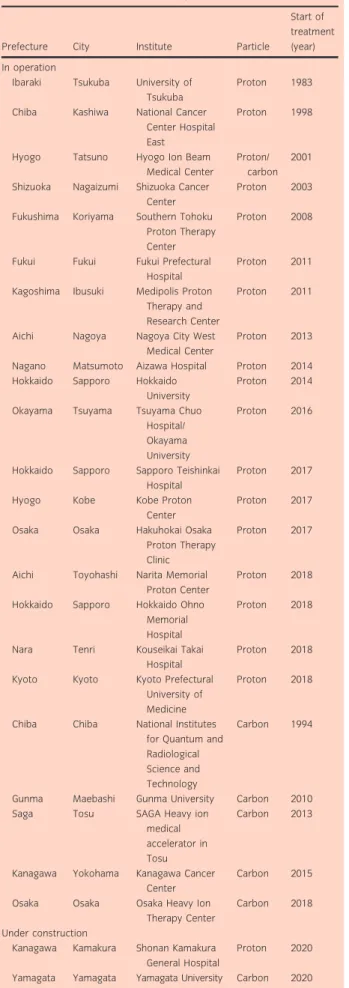
protons and carbon ions, reduce the irradiated volumes and doses in the organs at risk surrounding the prostate, and pre-vious studies have shown very low incidences of GI and GU toxicities after particle beam RT. Here, we reviewed treat-ment outcomes during different eras of particle beam RT, and the adverse events induced by particle beam RT have consis-tently been acceptable. Long-term observation in a large-scale randomized study is necessary for the most accurate evalua-tion of the efficacy of particle beam RT for prostate cancer, but particle beam RT seems a reasonable RT method deliver-ing a high RT dose safely. Durdeliver-ing 2015–2017, the JASTRO committee for particle beam RT discussed this matter. At that time, particle beam RT was still considered an advanced medical treatment, and it was expected that patients would not refuse randomization in clinical trials. Therefore, we are carrying out a multi-institutional prospective study of IMRT, PBT and CIRT, and registration of all studies will be com-pleted by April 2020. Together with the recent increase in the number of facilities offering particle beam RT in Japan (Table 5), data on treatment outcomes for various diseases including prostate cancer have accumulated, and are stored in a nationwide database. In addition, it is possible that the treatment devices will become smaller in size and less expen-sive in the near future. We are facing an important point at
which particle beam RT can be compared directly with not only IMRT, but also other alternative treatments, such as sur-gery or brachytherapy, from several points of view, such as recurrence, adverse events, QOL and cost.
Acknowledgments
This research was supported by AMED under grant number JP18ck0106241h0003. We thank Takeji Sakae who made a
figure for the pencil beam scanning method and gave us specific comments for a dose delivery system for particle therapy.
Conflict of interest
Mikio Sugimoto receives lecture fees from Janssen, Takeda and AstraZeneca. Nobuo Shinohara received research grants from Astellas and Ono, and honoraria from GlaxoSmithKline, Novartis, Pfizer, Ono, Takeda, Chugai and Bayer. Hiroki Shi-rato receives grants from Hitachi and Shimadzu Corporation, and has a licensed patent titled“Moving body pursuit irradi-ating device and positioning method using this device”and a licensed patent titled “Charged particle beam system” (US 14/524 495). Hitoshi Ishikawa, Hiroshi Tsuji, Shigeyuki Year 1994 1995 1996 1997 1998 1999 2000 2001 2002 2003 2004 2005 2006 2007 2008 2009 2010 2011 2012 2013 2014 2015 2016 2017 2018 7000 6000 5000 4000 3000 2000 1000 0
No.of treated patients
No.of institutes No.of patients Proton Carbon Total 2 2 61 47 15 76 82 129 126 168 153 211 167 214 194 277 193 266 222 337 276 520 320 794 383 1082 473 1276 626 1453 789 1712 981 1712 955 2233 1048 2469 1127 2884 1276 3237 1672 4567 1964 4777 2032 4863 1875 4473 2027 4651 2656 6203 42 58 47 83 73 115 244 474 699 803 827 923 781 1278 1421 1757 1961 2895 2813 2831 2598 2624 3547 2 2 2 3 3 4 4 5 5 5 5 5 6 6 7 9 9 11 13 14 15 18 23
Murayama, Satoru Maruyama, Motohiro Murakami and Hide-yuki Sakurai declare no conflict of interest.
References
1 Siegel RL, Miller KD, Jemal A. Cancer statistics, 2018.CA Cancer J. Clin. 2018;68: 7–30.
2 Cancer Information Service. Cancer Statistics in Japan. 2018. [Cited 28 Feb 2019.] Available from URL: https://ganjoho.jp/reg_stat/statistics/dl/index.html 3 Hamdy FC, Donovan JL, Lane JAet al. 10-Year outcomes after monitoring, surgery, or radiotherapy for localized prostate cancer.N. Engl. J. Med.2016;
375: 1415–24.
4 Hou Z, Li G, Bai S. High dose versus conventional dose in external beam radiotherapy of prostate cancer: a meta-analysis of long-term follow-up.J. Cancer Res. Clin. Oncol.2015;141: 1063–71.
5 Zaorsky NG, Palmer JD, Hurwitz MDet al. What is the ideal radiotherapy dose to treat prostate cancer? A meta-analysis of biologically equivalent dose escalation.Radiother. Oncol.2015;115: 295–300.
6 Kuban DA, Tucker SL, Dong Let al. Long-term results of the M. D. Ander-son randomized dose-escalation trial for prostate cancer. Int. J. Radiat. Oncol. Biol. Phys.2008;70: 67–74.
7 Kanai T, Endo M, Minohara Set al. Biophysical characteristics of HIMAC clinical irradiation system for heavy-ion radiation therapy.Int. J. Radiat. Oncol. Biol. Phys.1999;44: 201–10.
8 Ishikawa H, Tsuji H, Kamada Tet al. Carbon-ion radiation therapy for pros-tate cancer.Int. J. Urol.2012;19: 296–305.
9 Pugh TJ, Lee AK. Proton beam therapy for the treatment of prostate cancer. Cancer J.2014;20: 415–20.
10 Vargas C, Fryer A, Mahajan C et al. Dose-volume comparison of proton therapy and intensity-modulated radiotherapy for prostate cancer. Int. J. Radiat. Oncol. Biol. Phys.2008;70: 744–51.
11 Zelefsky MJ, Leibel SA, Gaudin PBet al. Dose escalation with three-dimen-sional conformal radiation therapy affects the outcome in prostate cancer.Int. J. Radiat. Oncol. Biol. Phys.1998;41: 491–500.
12 Lyons JA, Kupelian PA, Mohan DSet al. Importance of high radiation doses (72 Gy or greater) in the treatment of stage T1–T3 adenocarcinoma of the prostate.Urology2000;55: 85–90.
13 FowlerJF, Ritter MA, Chappell RJ et al. What hypofractionated protocols should be tested for prostate cancer?Int. J. Radiat. Oncol. Biol. Phys.2003;
56: 1093–104.
14 Shipley WU, Verhey LJ, Unzenrider JEet al. Advanced prostate cancer: the results of a randomized comparative trial of high dose irradiation boosting with conformal protons compared with conventional dose irradiation.Int. J. Radiat. Oncol. Biol. Phys.1995;32: 3–12.
15 Roach M 3rd, DeSilvio M, Valicenti Ret al. Whole-pelvis,“mini-pelvis,”or prostate-only external beam radiotherapy after neoadjuvant and concurrent hormonal therapy in patients treated in the Radiation Therapy Oncology Group 9413 trial.Int. J. Radiat. Oncol. Biol. Phys.2006;66: 647–53. 16 Zietman AL, Bae K, Slater JDet al. Randomized trial comparing
conven-tional-dose with high-dose conformal radiation therapy in early-stage adeno-carcinoma of the prostate: long-term results from proton radiation oncology group/american college of radiology 95-09.JAMA2010;303: 1046–53. 17 Schulte RW, Slater JD, Rossi CJ Jret al. Value and perspectives of proton
radiation therapy for limited stage prostate cancer.Strahlenther. Onkol.2000;
176: 3–8.
18 Nihei K, Ogino T, Ishikura Set al. Phase II feasibility study of high-dose radiotherapy for prostate cancer using proton boost therapy:first clinical trial of proton beam therapy for prostate cancer in Japan.Jpn. J. Clin. Oncol. 2005;35: 745–52.
19 Nihei K, Ogino T, Onozawa Met al. Multi-institutional phase II study of pro-ton beam therapy for organ-confined prostate cancer focusing on the incidence of late rectal toxicities.Int. J. Radiat. Oncol. Biol. Phys.2011;81: 390–6. 20 Akakura K, Tsujii H, Morita Set al. Phase I/II clinical trials of carbon ion
therapy for prostate cancer.Prostate2004;58: 252–8.
21 Ishikawa H, Tsuji H, Kamada Tet al. Carbon ion radiation therapy for prostate cancer: results of a prospective phase II study.Radiother. Oncol.2006;81: 57–64. 22 D'Amico AV, Manola J, Loffredo M et al. 6-month androgen suppression plus radiation therapy vs radiation therapy alone for patients with clinically localized prostate cancer: a randomized control trial. JAMA 2004; 292: 821–7.
Table 5 Particle beam RT facilities in Japan
Prefecture City Institute Particle
Start of treatment (year) In operation
Ibaraki Tsukuba University of Tsukuba
Proton 1983 Chiba Kashiwa National Cancer
Center Hospital East
Proton 1998
Hyogo Tatsuno Hyogo Ion Beam Medical Center
Proton/ carbon
2001 Shizuoka Nagaizumi Shizuoka Cancer
Center
Proton 2003 Fukushima Koriyama Southern Tohoku
Proton Therapy Center
Proton 2008
Fukui Fukui Fukui Prefectural Hospital
Proton 2011 Kagoshima Ibusuki Medipolis Proton
Therapy and Research Center
Proton 2011
Aichi Nagoya Nagoya City West Medical Center
Proton 2013 Nagano Matsumoto Aizawa Hospital Proton 2014 Hokkaido Sapporo Hokkaido
University
Proton 2014 Okayama Tsuyama Tsuyama Chuo
Hospital/ Okayama University
Proton 2016
Hokkaido Sapporo Sapporo Teishinkai Hospital
Proton 2017 Hyogo Kobe Kobe Proton
Center
Proton 2017 Osaka Osaka Hakuhokai Osaka
Proton Therapy Clinic
Proton 2017
Aichi Toyohashi Narita Memorial Proton Center
Proton 2018 Hokkaido Sapporo Hokkaido Ohno
Memorial Hospital
Proton 2018
Nara Tenri Kouseikai Takai Hospital
Proton 2018 Kyoto Kyoto Kyoto Prefectural
University of Medicine
Proton 2018
Chiba Chiba National Institutes for Quantum and Radiological Science and Technology
Carbon 1994
Gunma Maebashi Gunma University Carbon 2010 Saga Tosu SAGA Heavy ion
medical accelerator in Tosu
Carbon 2013
Kanagawa Yokohama Kanagawa Cancer Center
Carbon 2015 Osaka Osaka Osaka Heavy Ion
Therapy Center
Carbon 2018 Under construction
Kanagawa Kamakura Shonan Kamakura General Hospital
Proton 2020 Yamagata Yamagata Yamagata University Carbon 2020
23 Roach M 3rd, Lu J, Pilepich MVet al. Predicting long-term survival, and the need for hormonal therapy: a meta-analysis of RTOG prostate cancer tri-als.Int. J. Radiat. Oncol. Biol. Phys.2000;47: 617–27.
24 Bolla M, Van Tienhoven G, Warde Pet al. External irradiation with or with-out long-term androgen suppression for prostate cancer with high metastatic risk: 10-year results of an EORTC randomised study.Lancet Oncol.2010;
11: 1066–73.
25 Zelefsky MJ, Chan H, Hunt Met al. Long-term outcome of high dose inten-sity modulated radiation therapy for patients with clinically localized prostate cancer.J. Urol.2006;176: 1415–9.
26 Kupelian PA, Willpighby TR, Reddy CAet al. Hypofractionated intensity-modulated radiotherapy (70 Gy at 2.5 Gy per fraction) for localized prostate cancer: Cleaveland clinic experience.Int. J. Radiat. Oncol. Biol. Phys.2007;
68: 1424–30.
27 Vora SA, Wong WW, Schild SEet al. Analysis of biochemical control and prognostic factors in patients treated with either low-dose three-dimensional conformal radiation therapy or high-dose intensity modulated radiotherapy for localized prostate cancer. Int. J. Radiat. Oncol. Biol. Phys.2007;68: 1053–8.
28 Cahlon O, Zelefsky MJ, Shippy Aet al. Ultra-high dose (86.4 Gy) IMRT for localized prostate cancer: toxicity and biochemical outcomes. Int. J. Radiat. Oncol. Biol. Phys.2008;71: 330–7.
29 Martin JM, Bayley A, Bristow Ret al. Image guided dose escalated prostate radiotherapy: still room to improve.Radiat. Oncol.2009;4: 50.
30 Spratt DE, Pei X, Yamada Jet al. Long-term survival and toxicity in patients treated with high-dose intensity modulated radiation therapy for localized prostate cancer.Int. J. Radiat. Oncol. Biol. Phys.2013;85: 686–92. 31 Guckenberger M, Lawrenz I, Flenje M et al. Moderately hypofractionated
radiotherapy for localized prostate cancer: long-term outcome using IMRT and volumetric IGRT.Strahlenther. Onkol.2014;190: 48–53.
32 Lieng H, Pintilie M, Bayley Aet al. Long-term outcomes of a phase II trial of moderate hypofractionated image-guided intensity modulated radiotherapy (IG-IMRT) for localized prostate cancer.Radiother. Oncol.2017;122: 93–8. 33 Takemoto S, Shibamoto Y, Sugie Cet al. Long-term results of intensity-modulated radiotherapy with three dose-fractionation regimens for localized prostate cancer.J. Radiat. Res.2019;60: 221–7.
34 Mendenhall NP, Bryant C, Hoppe BS et al. Five-year outcomes from 3 prospective trials of image-guided proton therapy for prostate cancer.Int. J. Radiat. Oncol. Biol. Phys.2014;88: 596–602.
35 Bryant C, Smith TL, Henderson RHet al. Five-year biochemical results, tox-icity, and patient-reported quality of life after delivery of dose-escalated image guided proton therapy for prostate cancer.Int. J. Radiat. Oncol. Biol. Phys.2016;95: 422–34.
36 Takagi M, Demizu Y, Terashima Ket al. Long-term outcomes in patients treated with proton therapy for localized prostate cancer.Cancer Med.2017;
6: 2234–43.
37 Iwata H, Ishikawa H, Takagi Met al. Long-term outcomes of proton therapy for prostate cancer in Japan: a multi-institutional survey of the Japanese Radiation Oncology Study Group.Cancer Med.2018;7: 677–89. 38 Nomiya T, Tsuji H, Kawamura H et al. A multi-institutional analysis of
prospective studies of carbon ion radiotherapy for prostate cancer: a report
from the Japan Carbon ion Radiation Oncology Study Group (J-CROS). Radiother. Oncol.2016;121: 288–93.
39 Okada T, Tsuji H, Kamada Tet al. Carbon ion radiotherapy in advanced hypofractionated regimens for prostate cancer: from 20 to 16 fractions.Int. J. Radiat. Oncol. Biol. Phys.2012;84: 968–72.
40 Nomiya T, Tsuji H, Maruyama Ket al. Phase I/II trial of definitive carbon ion radiotherapy for prostate cancer: evaluation of shortening of treatment period to 3 weeks.Br. J. Cancer2014;110: 2389–95.
41 Frank SJ, Pisters LL, Davis Jet al. An assessment of quality of life follow-ing radical prostatectomy, high dose external beam radiation therapy and brachytherapy iodine implantation as monotherapies for localized prostate cancer.J. Urol.2007;177: 2151–6.
42 Whiting PF, Moore TH, Jameson CMet al. Symptomatic and quality-of-life outcomes after treatment for clinically localised prostate cancer: a systematic review.BJU Int.2016;118: 193–204.
43 Maruyama K, Tsuji H, Nomiya Tet al. Five-year quality of life assessment after carbon ion radiotherapy for prostate cancer.J. Radiat. Res.2017;58: 260–6.
44 Lee WR, Hall MC, McQuellon RPet al. A prospective quality-of-life study in men with clinically localized prostate carcinoma treated with radical prostatectomy, external beam radiotherapy, or interstitial brachytherapy.Int. J. Radiat. Oncol. Biol. Phys.2001;51: 614–23.
45 Gray PJ, Paly JJ, Yeap BYet al. Patient-reported outcomes after 3-dimen-sional conformal, intensity-modulated, or proton beam radiotherapy for local-ized prostate cancer.Cancer2013;119: 1729–35.
46 Hoppe BS, Michalski JM, Mendenhall NPet al. Comparative effectiveness study of patient-reported outcomes after proton therapy or intensity-modu-lated radiotherapy for prostate cancer.Cancer2014;120: 1076–82. 47 Fang P, Mick R, Deville Cet al. A case-matched study of toxicity outcomes
after proton therapy and intensity-modulated radiation therapy for prostate cancer.Cancer2015;121: 1118–27.
48 Konski A, Speier W, Hanlon Aet al. Is proton beam therapy cost effective in the treatment of adenocarcinoma of the prostate?J. Clin. Oncol.2007;25: 3603–8.
49 Schroeck FR, Jacobs BL, Bhayani SB. Cost of new technologies in prostate cancer treatment: systematic review of costs and cost effectiveness of robotic-assisted laparoscopic prostatectomy, intensity-modulated radiotherapy, and proton beam therapy.Eur. Urol.2017;72: 712–35.
50 Kase Y, Yamashita H, Fuji Het al. A treatment planning comparison of pas-sive-scattering and intensity-modulated proton therapy for typical tumor sites. J. Radiat. Res.2012;53: 272–80.
51 Tran A, Zhang J, Woods Ket al. Treatment planning comparison of IMPT, VMAT and 4pradiotherapy for prostate cases.Radiat. Oncol.2017;12: 10. 52 Landry G, Hua CH. Current state and future applications of radiological
image guidance for particle therapy.Med. Phys.2018;45: e1086–95. 53 Maeda Y, Sato Y, Minami H et al. Positioning accuracy and daily dose
assessment for prostate cancer treatment using in-room CT image guidance at a proton therapy facility.Med. Phys.2018;45: 1832–43.
54 Nakajima K, Iwata H, Ogino H et al. Acute toxicity of image-guided hypofractionated proton therapy for localized prostate cancer.Int. J. Clin. Oncol.2018;23: 353–60.