LATINO IMMIGRANT STUDENTS: EXPLORING THE RELATIONSHIP BETWEEN MIGRATION EXPERIENCE AND EDUCATION OUTCOMES
by
KARINA RAMOS
A DISSERTATION
Presented to the Department of Counseling Psychology and Human Services
and the Graduate School of the University of Oregon in partial fulfillment of the requirements
for the degree of Doctor of Philosophy
DISSERTATION APPROVAL PAGE
Student: Karina Ramos
Title: Latino Immigrant Students: Exploring the Relationship between Migration Experience and Education Outcomes
This dissertation has been accepted and approved in partial fulfillment of the requirements for the Doctor of Philosophy degree in the Department of Counseling Psychology and Human Services by:
Dr. Ellen H McWhirter Co-Chairperson Dr. Krista Chronister Co-Chairperson Dr. Melissa Donovick Core Member
Dr. Edward Olivos Institutional Representative and
J. Andrew Berglund Dean of the Graduate School
Original approval signatures are on file with the University of Oregon Graduate School. Degree awarded June 2015
DISSERTATION ABSTRACT Karina Ramos
Doctor of Philosophy
Department of Counseling Psychology and Human Services: June 2015
Title: Latino Immigrant Students: Exploring the Relationship between Migration Experience and Education Outcomes
The purpose of this study was to contribute to the literature on the educational outcomes and protective factors (i.e., support systems) in the lives of Latino immigrant youth, with a special emphasis on how these experiences relate to and are impacted by their migration experiences. Using the cultural-ecological theoretical framework and the Stages of Migration framework, this study utilized an existing data set to explore the relationships between migration stress, psychological distress, experiences of
discrimination, and awareness of discrimination in relation to educational outcomes in a sample of 281 Latino immigrant youth. These relationships were then examined to see if they differed as a function of perceived support, gender, and school type (i.e., middle school versus high school). Structural equation modeling was utilized to test the
hypothesized model that included migration stress, psychological distress, and education outcomes. The structural model showed very good fit. Results suggest that migration stress has a significant direct effect on psychological distress and on educational outcomes among Latino immigrant youth. Participants reporting high migration stress reported greater psychological distress and had poorer educational outcomes with respect to academic grades, educational aspirations, and educational expectations. Moderation
testing indicated the structural model did not vary as a function of perceived support, gender, or school. Implications for research and practice are discussed.
CURRICULUM VITAE
NAME OF AUTHOR: Karina Ramos
GRADUATE AND UNDERGRADUATE SCHOOLS ATTENDED: University of Oregon, Eugene
University of Missouri-Columbia, Columbia, Missouri Claremont McKenna College, Claremont, California
DEGREES AWARDED:
Doctor of Philosophy, Counseling Psychology, 2015, University of Oregon Master of Education, Educational and Counseling Psychology, 2009, University
of Missouri-Columbia
Bachelor of Arts, Psychology, 2005, Claremont McKenna College
AREAS OF SPECIAL INTEREST:
Latino undocumented immigrants in higher education Latino youth and resiliency
Access to mental health services for people of marginalized identities
PROFESSIONAL EXPERIENCE:
Pre-Doctoral Psychology Intern, Children’s Hospital Los Angeles, Los Angeles, California 2014-2015
Psychology Assessment Extern, Child Development and Rehabilitation Center, Eugene, Oregon, 2013-2014
Outreach Programming Specialist, University of Oregon Counseling and Testing Center, Eugene, Oregon, 2012-2014
Behavioral Health Counselor, Volunteers in Medicine, Springfield, Oregon, 2012-2013
Bilingual Parent Consultant, Early Steps Child and Family Center, Eugene, Oregon, 2011-2012
Child and Family Therapist, Child and Family Center, Eugene, Oregon 2011-2012
Career Counselor, University of Oregon Career Center, Eugene, Oregon, 2011-2012
Mental Health Counselor, Center for Community Counseling, Eugene, Oregon, 2010-2012
Bilingual Vocational Counselor, Womenspace, Eugene, Oregon, 2010-2011 GRANTS, AWARDS, AND HONORS:
Graduate Service Award, University Award, University of Oregon, 2014 César Chávez Doctoral Research Award, UO College of Education, 2014 Student Research Award, Dept of Counseling Psychology & Human Services,
2013
Clare Wilkins Chamberlin Memorial Research Award, UO College of Education, 2013
Thomas W. Vollmer Scholarship, UO College of Education, 2013 Student Scholarship, National Latino/a Psychological Association, 2012 Jean Twohig Scholarship, UO College of Education, 2012
Summer Research Award, UO Center for Latino/a & Latin American Studies, 2012
Student Research Award, Dept of Counseling Psychology & Human Services, 2011
Most Downloaded Article in Hispanic Journal of Behavioral Sciences in 2010, SAGE Publications, 2011
Lánzate Travel Award, Hispanic Association of Colleges and Universities, 2011 Melanie M. Merola O'Donnell Scholarship, 2011
Advocacy Council Scholarship, UO College of Education, 2011 Alumni Hall of Fame Scholar, Hispanic Scholarship Fund, 2011
Student Scholarship, Hispanic Association of Colleges and Universities, 2010 Lánzate Travel Award, Hispanic Association of Colleges and Universities, 2010 Melanie M. Merola O'Donnell Scholarship, 2010
Diversity Excellence Scholarship, University of Oregon, 2010 Promising Scholar Award, University of Oregon 2009
PUBLICATIONS:
McWhirter, E. H., Ramos, K., & Medina, C. (2013). ¿Y ahora qué? Immigration status barriers and Latina/o high school students’ future expectations. Cultural
Diversity and Ethnic Minority Psychology, 19, 288-297. doi: 10.1037/a0031814 Chaichanasakul, A., He, Y., Chen, H., Allen, K. G. E., Khairallah, T. S., & Ramos, K. (2011). Progressive Trends and Impact of the Journal of Career Development: A Citation Analysis. Journal of Career Development, 38, 456-478. doi:
10.1177/0894845310384262
Chaichanasakul, A., He, Y., Chen, H., Allen, K. G. E., Khairallah, T. S., & Ramos, K. (2011). Journal of Career Development: A 36-Year Citation Analysis (1972-2007). Journal of Career Development, 38, 440-455. doi:
10.1177/0894845310380223
Perez, W., Cortes, R., Ramos, K., & Coronado, H. (2010). “Cursed and blessed”: Examining the socio-emotional and academic experiences of undocumented Latina and Latino college students. New Directions for Student Services, 210(131), 35-51. doi: 10.1002/ss.366
Flores, L. Y., Ramos, K., & Kanagui, M. (2010) Applying the Cultural Formulation Approach to career counseling with Latino/as. Journal of Career Development, 37, 411-422. doi: 10.1177/0894845309345843
Perez, W., Espinoza, R., Ramos, K., Coronado, H., & Cortes, R. (2010). Civic engagement patterns of undocumented Mexican students. Journal of Hispanic Higher Education, 9, 245-265. doi: 10.1177/1538192710371007
Perez, W., Espinoza, R., Ramos, K., Coronado, H., & Cortes, R. (2009) Academic resilience among undocumented Latinos. Hispanic Journal of Behavioral Sciences, 31, 149-181. doi: 10.1177/0739986309333020
ACKNOWLEDGEMENTS
I would like to thank the many people who helped make this dissertation possible. First, I would like to thank my committee, Dr. Ellen McWhirter, Dr. Krista Chronister, Dr. Edward Olivos and Dr. Melissa Donovick for their invaluable feedback and
encouragement. I also want to thank Dr. Mark Van Ryzin for the advice he offered related to the statistical analyses I conducted and Dr. Krista Perrerira from the UNC Carolina Population Center for granting me permission to use her existing data set. Thank you as well to the people and programs that helped fund this research (i.e., the UO
College of Education, CPSY, and UO CLLAS).
Additionally, there were many others who helped me on a personal level. To my CPSY mentors and role models: Dr. Laura Ramzy (my forever mentor since day one), Dr. Christina Aranda and Dr. Paula Luginbuhl (my doctoral seminar dissertation mentors and role models), as well as Dr. Diana Peña and Dr. Lesley Graves – thank you for the years of mentorship and encouragement throughout this whole process. Also, thank you to Lindsey Brown and my writing buddies, Christine Ngo and Audra Horney, for their emotional support. Christine and Audra, scheduling writing sessions with you two helped me be productive and meet personal deadlines. I truly could not have done this without you! While I am on the writing subject, I also want to thank the University of Oregon’s Safe Ride program for the many rides they gave me late at night, after spending countless hours on campus working on my dissertation. Without your services, I would not have been able to write in the environment that I am most productive, so thank you!
On a personal level, I must also thank Dr. David Acevedo-Polakovich for almost ten years of mentorship! David, you have been so supportive and a part of every big
academic milestone I have reached. I have told you this before and I will say it again: I could not have done this without you. Thank you as well to Jenny, Vero, Reyna, the Quattlebaums, the Ristows, Dr. Lisa Flores, Dr. Suzanne Gascoyne, and Dr. Debra Wright – your support and kindness at various stages of my graduate training has been so meaningful. Thank you!
Last, but certainly not least, I want to thank the most important people in my life – mi familia. Mom, Dad, Vale, Yadis, Paco, & Carlos: I could not have done any of this without you! Thank you! Mamá y Papá, mil gracias por todo el amor y apoyo con el que me han bendecido. You two have been my life-long role models and my inspiration throughout this process. I love you! Thank you for making it possible for me to go to school, for always believing in me, and for helping me believe in myself. Lastly, thank you to my siblings. I love you all to the moon and back. Thank you for being my
cheerleaders when times were especially challenging and for supporting me in all I do. I am fortunate to have such a loving family as yourselves and to be blessed with so much emotional support and unconditional love. This milestone is just as much your
TABLE OF CONTENTS
Chapter Page
I. INTRODUCTION ... 1
II. LITERATURE REVIEW ... 6
Guiding Frameworks ... 6
Migration Experience and Psychological Distress ... 10
Discrimination and Educational Outcomes ... 16
Psychological Distress and Educational Outcomes ... 18
Discrimination and Psychological Distress ... 19
Social Support and Psychological Distress ... 21
Social Support and Educational Outcomes ... 23
Purpose of the Study ... 27
III. METHODS ... 31
Participants ... 31
Procedures ... 33
Measures ... 35
IV. RESULTS ... 41
Data Screening and Missing Data ... 41
Descriptive Statistics and Statistical Assumptions ... 42
Correlations ... 45
Model Testing ... 46
Chapter Page
Post Hoc Analyses ... 55
V. DISCUSSION ... 57
Major Findings in the Final Model ... 57
Implications for Practice ... 65
Implications for Research ... 69
Limitations ... 71
Strengths ... 75
Conclusion ... 76
LIST OF FIGURES
Figure Page
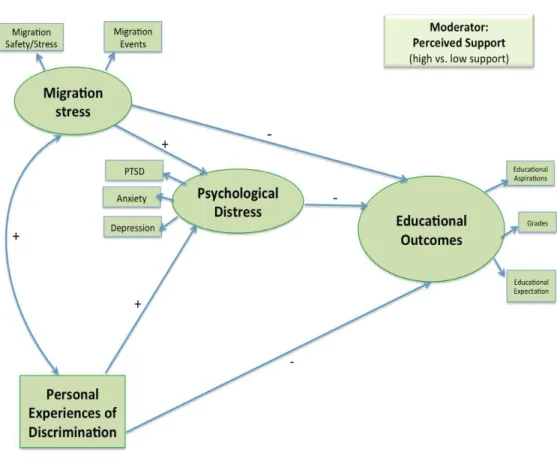
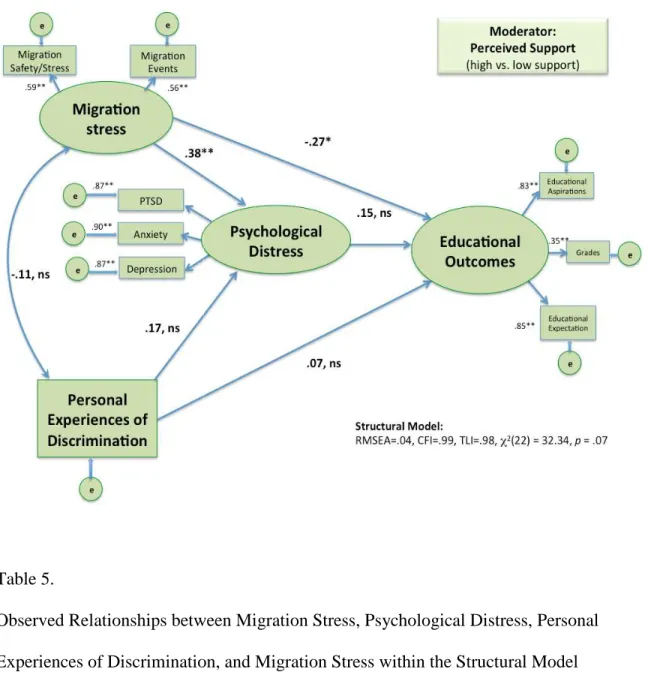
1. Overall Conceptual Model ... 30 2. Theoretical Model Tested. ... 50 3. The Final Structural Model ... 53
LIST OF TABLES
Table Page
1. Demographic Information ... 32 2. Means and Standard Deviations... 43 3. Correlations among Measured Variables for the Whole Sample... 48 4. CFA Loading Estimates for Each Individual Latent Construct and Correlations
Observed within the Measured Model ... 51 5. Observed Relationships between Migration Stress, Psychological Distress,
Personal Experiences of Discrimination, and Migration Stress within the
CHAPTER I INTRODUCTION
Latinos are the largest minority group in the U.S. (Fry & López, 2012), making up 16.5% of the total U.S. population at 50.7 million people, according to 2011 estimates (Fry & López, 2012; Motel & Patten, 2012). In the last ten years, the Latino population growth accounted for more than half of the nation’s population growth (Motel & Patten, 2012). As the Latino population continues to increase, the U.S. Census Bureau estimates that by the year 2036, a third of the nation’s population under the age of 18 will be Latino/a. Latinos also make up the largest immigrant group in the U.S. (Pew Hispanic Center, 2013a). The U.S. Census estimates that 37% of the Latinos living in the U.S. are foreign-born (Motel & Patten, 2012). Just like the Latino population is increasing, so is the number of immigrants in the U.S. (Pew Hispanic Center, 2013a, b). In the last ten years, there was a 30% increase in the number of foreign-born people living in the U.S. In the last five years alone, the number of foreign-born people living in the U.S. increased by 2.4 million (Pew Hispanic Center, 2013, a, b). In 2011, the immigrant population hit a record high in numbers, with 40.4 million immigrants living in the U.S. (Motel & Patten, 2012). The majority of immigrants (47%) come from Latin American countries (Motel & Patten, 2012; Pew Hispanic Center, 2013, a, b).
These overall trends mean that the Latino student population in the U.S. also continues to grow (Fry & López, 2012). According to the Census Bureau, a quarter of all students enrolled in public schools in 2012 were Latino/a (as cited in López & Fry, 2012). Also, for the first time ever, Latinos made up the largest minority group on both 2-year and 4-2-year college campuses in 2011 (Fry & López, 2012). Between 2011 and 2012,
Latinos made up 19% of the total college population between the ages of 18 and 24 (López & Fry, 2013). While college enrollment rates have increased among the Latino population, the same is not the case when it comes to attainment levels (Fry & López, 2012). Latinos obtain lower attainment levels than White, African American, and Asian American students in the U.S. (Motel & Patten, 2012; U.S. Census Bureau, 2012a). Of every 100 Latino elementary school students, only 61 obtained a H.S. diploma and 13 attained a bachelor’s degree (U.S. Census Bureau, 2012b). These rates were lower than those of African Americans, who graduated from high school and 4-year universities at rates of 84.2% and 19.8% respectively; White Americans, with high school and college graduation rates of 87.6% and 54.4% respectively; and Asian Americans, whose high school and college completion rates were higher than any other group at 88.9% and 54.4% respectively (Motel & Patten, 2012; U.S. Census Bureau, 2012a).
Small percentages of attainment rates are also observed among Latinos who are foreign-born. The Pew Hispanic Center (2014) reports that while 95% of foreign-born Latinos between the ages of 5 and 17 years old were enrolled in school in 2012, their educational attainment levels were much lower than that. Among all foreign-born Latinos ages 25 and older, only 24.7% graduated from high school. Also, in 2012, 12.3% of all foreign-born Latinos between the ages of 16 and 19 dropped out of school, compared to only 5.4% of U.S.-born Latinos, 3.4% of Whites, 5.6% of Blacks, and 1.3% of Asians (Pew Hispanic Center, 2014). And while 22.6% of foreign-born Latinos between the age of 18 and 24 years old were enrolled in college in 2012 (Pew Hispanic Center, 2014), college graduation rates indicated that only 10.6% of foreign-born Latinos ages 25 and older had a 4-year college degree in 2012 (Pew Hispanic Center, 2014).
Despite the growing numbers of Latino immigrants and their low attainment levels, immigrant children and adolescents have received less attention in the literature than their U.S.-born peers (APA Presidential Task Force on Immigration, 2012). Often described as a population that is overlooked and underserved (Ruiz deVelasco, Fix, & Clewell, 2000), few studies have simultaneously explored the impact that the migration experience, including migration stress, has on the educational outcomes and
psychological well-being of Latino immigrant youth, and how these relationships are impacted by support systems. A PsycNET search using the terms “migration,”
“immigrant,” “education,” “support” and “Latino” yielded two results (Khiya, Urrutia-Rojas, Mas, & Coggin, 2005; Viruell-Fuentes & Schulz, 2009), none of which focused on academics or educational outcomes. Using EBSCO Host ERIC, a search using the terms “migration,” “youth,” “immigrant,” and “Latino” yielded five results, with only one focusing on education (Stamps & Bohon, 2006). The four remaining articles focused on the migration experience and stressors experienced by immigrant youth (Gudiño, Nadeem, Kataoka, & Sheryl, 2011; Ko & Perreira, 2010; Perreira & Luke, 2007). A Google Scholar search on the phrases “migration stress,” “immigrant youth” (“youth” was also replaced with “children” and “adolescents” in separate trials to see if yielded additional results) “Latino” and “education” (or “academic”) yielded between 22-36 results. Of these, many did not explore educational outcomes, did not focus on Latinos, or did not focus on immigrants in the U.S.
While fewer studies have focused primarily on foreign-born youth, many tend to include immigrants as a small part of their sample size (Alfaro, Umaña-Taylor, & Bámaca, 2006; Alfaro, Umaña -Taylor, González-Backen, Bámaca, & Zeiders, 2009;
Altschul, 2011; Benner & Graham, 2011; Flores, Navarro, Smith, & Ploszaj, 2006; Gómez, Fassinger, Prosser, Cooke, Mejia, & Luna, 2001; Wentzel, Baker, & Rusell, 2012). Instead of simultaneously exploring migration stress, psychological distress, discrimination, support systems, and educational outcomes, these studies have tended to focus on only one or two of the variables of interest in this study. There is a clear gap in the literature with respect to the relationship between the migration experience and educational outcomes of this fast-growing Latino immigrant youth population.
The purpose of this study was to contribute to the literature on the educational outcomes and protective factors (i.e., support systems) in the lives of Latino immigrant youth, with a special emphasis on how these experiences relate to and are impacted by their migration experiences. Since all U.S. immigrants are, by nature of the word’s definition, born outside of the United States, this paper specifically uses the terminology “foreign-born” and “immigrant” interchangeably to refer to this population, in a manner consistent with major researchers whose work this study draws upon and in agreement with the terminology used within the field of psychology (APA Presidential Task Force on Immigration, 2012; Fulingi & Pereira, 2009; Ko & Perreira, 2010; Perreira, Mullan Harris, & Lee, 2006; Pew Hispanic Center 2009; 2013a; 2013b; Suárez-Orozco,
Pimentel, & Martin, 2009). The terms “immigrant” and “foreign born” are different from the term second/third generation, which refer to the children/grandchildren of immigrants (Perreira et al., 2006; Suárez-Orozco, Suárez-Orozco, Qin-Hillard, 2005; Suárez-Orozco, Bang, & Kim, 2011).
The study aimed to explore the relationships between the migration experience, psychological distress, support systems, and experiences of discrimination, as they all
relate to educational outcomes, the main variable of interest. More specifically, the purpose of this study was to contribute to the literature on the educational outcomes of Latino immigrant youth. In particular, this study tested a model predicting educational aspirations, educational expectations, and GPA in a Latino immigrant youth population. The model predicting academic outcomes included the following predictors: migration experience, psychological distress, support systems, and experiences of discrimination. I also examined whether psychological distress and awareness of discrimination mediated the relationships between migration stress, experiences of discrimination, and educational outcomes. Finally, I also explored whether support systems moderated the relationship between migration stress, psychological distress, experiences of discrimination,
CHAPTER II LITERATURE REVIEW
The literature review is organized as follows. First, I describe the frameworks that guided this research study. Next, I review relevant literature on the migration experience and psychological distress associated with the various stages of the migration process. Next, I describe the relationships between discrimination and educational outcomes, as well as the relationship between discrimination and psychological distress. Subsequently, I review literature on the relationships between support systems and psychological distress. Next, I describe the relationships between support systems and educational outcomes, such as academic achievement. Finally, I describe the research questions and the proposed model that I tested. Terminology is defined as it is introduced.
Guiding Frameworks
Two main frameworks guided this research. These were: (1) the cultural-ecological (also called social-cultural-ecological) theoretical framework, and (2) the Stages of Migration framework. The first theoretical framework, the cultural-ecological
framework, is an adaptation of Bronbenbrenner’s ecological perspective (Bronbenbrenner & Morris, 1998; Bronbenbrenner & Morris, 2006). An ecological framework proposes that lived experiences are a result of reciprocal interactions between individuals and the environments in which they live. Conceptualization takes place from the individual’s context of socialization, including their culture and how the context in which they live changes over time. According to the ecological framework, human experiences are a result of the interactions between people and their environments, and these vary as a function of culture, context, and individuals (Bronbenbrenner & Morris, 1998;
Bronbenbrenner & Morris, 2006). It is proposed that resources in children’s families, neighborhoods, schools, and community settings influence their daily experiences and developmental outcomes.
In the modified social-ecological framework developed by García Coll and colleagues (1996), an integrative conceptual model emphasizes the importance of discrimination, racism, prejudice, segregation, and oppression on the development of racial and ethnic minority children. This modified model emphasizes the interaction of culture, ethnicity, race, and social class, and “the processes and consequences that these relative positions engender” (pp. 1892, García et al., 1996) for the development of children of color. Using this the social-ecological framework, a focus is placed on the contexts that immigrants experience. Each context offers risks and protective factors that can either harm or enhance healthy adaptation strategies (APA Presidential Task Force on Immigration, 2012). Thus, understanding these factors can help to illuminate children’s immigration experiences and outcomes. According to the social-ecological theory, interactions between the individual and the environment take place within different systems (Bronfenbrenner & Morris, 1998; 2006). The microsystem refers to the people or institutions that individuals have direct contact with. These can include family members, peers, schools, and neighborhoods. The mesosystem refers to the connections between microsystems. Examples of these interconnections can include the relation between family experiences and school experiences or school experiences and neighborhood experience. The exosystem is made up of public policy (Bronfenbrenner & Morris, 1998; 2006). In the case of immigrant youth, it can refer to pathways to citizenship, mental health care, and educational policies. The macrosystems refers to the culture in which
immigrant live (Bronfenbrenner & Morris, 1998; 2006). It includes socioeconomic status, cultural context, and xenophobia. Within this modified model, it also includes social mechanisms such as racism, discrimination, and prejudice (García et al., 1996).
The second framework that guided this research is the Stages of Migration theoretical approach (Ornelas & Perrerira, 2011). Originally a 5-stage model developed by Sluzki (1979), it was later modified into a 3-stage model (Ko & Perreira, 2010; Potochnick & Perreira, 2010; Ornelas & Perreira, 2011) to document the three distinct stages of migration that immigrants experience (i.e., premigration, migration, and post migration stages). Among the various studies focusing on immigrant populations and the different theoretical frameworks available, the Stages of Migration framework is most frequently used as theory that guides other researchers’ work for its illumination of the many stressors associated with the migration experience (Ko & Perreira, 2010;
Potochnick, Perreira, & Fulingni, 2012; Potochnick & Perreira, 2010; Ornelas & Perreira, 2011; Suárez-Orozco, Todorova, & Louie, 2002; Zuniga, 2002). According to this model, traumatic events before, during, and/or after relocating can lead to psychological distress (Ko & Perreira, 2010; Ornelas & Perreira, 2011; Sluzki, 1979). For example,
pre-migration trauma or stressors might be related to the economic hardships experienced in their home countries and the reasons for the relocation. In the migration stage, the actual moving process can be a source of stress depending on the method by which people migrate (e.g., by plane, car, foot; Sluzki, 1979). For example, for some, the migration experience involves flying, driving, walking, or being smuggled across the border by trusted family or strangers (Ko & Perreira, 2010). Other migration experiences involve traveling alone, being robbed, assaulted, or raped, or spending time in detention centers
(Gudiño et al., 2011; Nazario, 2006; Perreira & Smith, 2007). Any traumatic events experienced during the migration trip can result in the development of psychological symptoms (Perreira & Ornelas, 2011). Finally, during the third stage, the post-migration stage, settlement stressors can include challenges in navigating life in the new country, including economic hardships, lack of social support, and social roles (Desjarlais, Eisenberg, Good, & Kleinman, 1995; Ko & Perreira, 2010; Sluzki, 1979).
Because the focus of this study was to understand how the immigration
experience may influence academic outcomes of young Latinos, and given these guiding frameworks for the research, I sought literature linking migration stress to educational outcomes. Various search engines, including PsycNET, Eric, and ProQuest Social Services Abstracts were used to identify existing research on immigrant youth. A combination of search terms were used including the following: “foreign born,” “immigrant” “migration,” “migration stress,” “education,” “educational outcomes,” “academic achievement,” “youth,” “adolescents,” “children,” “Latinos,” and “Hispanics.” Each time, the combination of search terms used yielded from 1-24 results, with no studies looking at all of the variables of interest of this study simultaneously. Instead, some focused solely on the relationships between the migration experience and psychological distress (Ko & Perreira, 2010; Suárez-Orozo et al., 2005); immigrant youth’s experiences of acculturative stress post-migration (Gil & Vega, 1996; Roffman, Suárez-Orozco, & Rhodes, 2003; Roche & Kuperminc, 2012; Suárez-Orozo et al., 2002; Williams & Berry, 1999); educational attainment level comparisons between Latino immigrants and their U.S.-born Latino peers (Conger, Schwartz, & Stiefel, 2007; Schwartz & Stiefel, 2006); or on the unique educational challenges that undocumented
immigrants face (Clark-Ibañez, Garcia-Alverdín, & Alva, 2012; Perez, Espinoza, Ramos, Coronado & Cortes, 2009; Perez, Cortes, Ramos, & Coronado, 2010).
Migration Experience and Psychological Distress
The number of immigrants in the U.S. rose to an all-time high in 2011, to 40.4 million (Pew Hispanic Center, 2013a,b). Of these, nearly half came from Latin American countries. Immigrants often experience psychological distress (APA Presidential Task Force on Immigration, 2012; Kosidou, Hellner-Gumpert, Fredlund, Dalman, Hallqvist, Isacsson, & Magnusson, 2012; López Levers & Hyatt-Burhart, 2011; Ramírez Hinojosa, 2005). Anxiety, depression, and posttraumatic stress disorder have been observed among immigrant populations (Duldulao, Takeuchi, & Hong, 2009). Stress, in particular, has been reported as a psychological difficulty among immigrants (APA Presidential Task Force on Immigration, 2012). Among the predictors of psychological distress is length of time in the U.S., such that immigrants who have lived in the U.S. for a longer time
experience more distress than newcomers (Ramírez Hinojosa, 2005). The literature on the relationship between age at migration and psychological distress is less conclusive. Some suggest that age at migration is associated with poor psychological well-being (Takeuchi, Hong, Gile, & Alegía, 2007), with immigrants who arrive as children being more likely to develop a mental disorder in their lifetime than those who arrive as adults. At the same time, others indicate that migrating at a young age can buffer a child’s vulnerability to stress (García Coll & Magnuson, 1997). While much of the literature has focused on the experiences of adult immigrants, recent research has started to explore the experiences of immigrant youth (Gudiño et al., 2011; Ko & Perreira, 2010; Morland, Birman, Dunn, Adkins, & Gardner, 2013; Potochnick & Perreira, 2010; Ornelas & Perreira, 2011;
Suárez-Orozco, Todorova, & Qin, 2006). Research that has focused on the challenges faced by immigrant children indicates immigrant youth often experience emotionally and physically traumatic migration journeys (Morland et al., 2013). When exposure to
violence is a part of their lived experiences, it is a predictor of negative mental health effects (Gudiño et al., 2011). Additionally, some experience psychological stress as a result of unplanned migrations (Ko & Perreira, 2010).
According to the American Psychological Association (2012), the migration experience itself can act as a catalyst for the development of psychological distress. The migration process is a stressful experience (Ko & Perreira, 2010; Perreira & Ornelas, 2011) associated with multiple adjustment stressors (Pérez Foster, 2001). The experience can involve stressors such as loss of support from extended family, discrimination,
financial struggles, displacement of homes (Portes & Rumbaut, 2001; Suárez-Orozco & Suárez-Orozco, 2001; Zuniga, 2002), language barriers, and unsafe and stressful
migration experiences (Ornelas & Perreira, 2011). Whether immigrants migrate with legal documents or without documentation, many describe it as a stressful experience (Ko & Perreira, 2010; Perreira & Ornelas, 2011). A study examining the migration
experiences of Latino immigrant parents found that the majority of them experienced stressors during their migration experience (Ornelas & Perreira, 2011). Most parents feared for their safety, half considered the migration experience to have been stressful, and 13% reported experiencing a traumatic event during their travels to the U.S. (Ornelas & Perreira, 2011).
Family separation is another common source of migration stress (Mendoza, Javier, & Burgos, 2007; Mitrani, Santisteban, & Muir, 2004; Ko & Perreira, 2010;
Ornelas & Perreira, 2011; Suárez-Orozco et al., 2002). Family separation can occur during the pre-migration stage, when parents move to the U.S. and leave their children behind under the care of extended family. It can also occur post-migration, when
immigrant children are separated from the extended family they were living with in their country of origin, in order to move to the U.S. and be reunited with their parents (Ko & Perreira, 2010). In a study exploring the migration experiences of foreign-born Latino parents, 41% of the parents reported they migrated to the U.S. without their children, suggesting family separation is a common occurrence. For many immigrants, the reunification process can take years (APA Presidential Task Force on Immigration, 2012). Of the 41% of parents who migrated to the U.S. without their children, 75% reported having been separated from them for at least one year, before being reunited with them again (Ornelas & Perreira, 2011). The average Latino immigrant parent was separated from their children for three years before reunification (Ornelas & Perreira, 2011).
Similar separation rates were found in another study focusing on the children of immigrants (Suárez-Orozco et al., 2002). In a study of 386 children of immigrants, Suárez-Orozco and colleagues observed that as many as 85% percent of children reported being separated from their parents at some point during the family’s migration
experience. Family separations varied from a few months to a few years (Suárez-Orozco et al., 2002). In cases in which separation occurred, children were at higher risk for developing depressive symptoms (Suárez-Orozco et al., 2002). In another study of 282 immigrant adolescents from China and various Latin American countries, findings indicated that nearly 75% of adolescents were separated from their parents before being
reunited during their migration process (Suárez-Orozco et al., 2011), with some
participants reporting they were separated from one or both parents for nearly their entire childhood. Findings also indicated that the longer children were separated from their parents, the more likely they were to endorse symptoms of psychological distress (Suárez-Orozco et al., 2011). Stressors during the migration process are associated with higher risks for developing depressive symptoms and anxiety (Potochnick & Perreira, 2010).
While the migration experiences of immigrant youth is understudied, research on their experiences post-migration indicates that they experience stressors associated with moving to a new country. Among the stressors are feelings of isolation due to language barriers (Ko & Perreira, 2010). Additionally, for immigrants who migrate without legal documentation, their undocumented status comes with added stressors (APA Presidential Task Force on Immigration, 2012; Ko & Perreira, 2010). Immigrant youth as young as 14 years old are able to understand that their legal status limits the opportunities available to them, including limitations with respect to academic aspirations and career goals (Ko & Perreira, 2010). In cases in which deportation occurs during migration, higher levels of psychological distress are observable (Thronson, 2010). Fear of deportation is not
exclusive to undocumented immigrants but affects those with documentation as well (Chaudry, Capps, Pedroza, Castañeda, Santos, & Scott, 2010; Perreira & Ornelas, 2011; Potochnick & Perreira, 2010).
Immigrant children often live with a parent or an extended family member who was born outside of the U.S. and lacks legal documentation (Chaudry et al., 2010). A mixture of citizenship and legal status within families occurs when not all family
members have the same legal status. For example, some family members might be U.S. citizens, others might be permanent legal residents, and some might be undocumented. In these “mixed” families, youth may experience a fear of family separation, even if they are not undocumented themselves, out of fear that their family member might be deported (Chaudry et al., 2010). This fear can take a toll on their psychological well-being
(Chaudry et al., 2010). Since 2009, nearly 400,000 undocumented immigrants have been deported each year (Pew Hispanic Center, 2013a). Estimates suggested that in 2012, one out of three Latino immigrants reported they personally knew someone who had been deported or detained by immigration officials (Pew Hispanic Center, 2013a). Children from mixed families appear to be at greater risk of anxiety and depression (Potochnick & Perreira, 2010).
Following their migration journey, immigrants experience acculturative stressors associated with their transition to life in the U.S (Roffman et al., 2003). Acculturative stressors can include difficulty learning a new language, coping with changes within their families, including possible changes with respect to family roles. Immigrants also
contend with experiences of discrimination and racism (Perreira & Ornelas, 2011). Experiences of discrimination have been associated with psychological distress
(Potochnick et al., 2012). Youth who experience discrimination report higher symptoms of anxiety and depression, more risky health behaviors, and lower academic motivation (González, Fabrett, & Knight, 2009). These findings suggest that stress associated with the migration experience might pose as a risk to the psychological well-being of
immigrant youth (Katsiaficas, Suárez-Orozco, Sirrin, & Gupta, 2013). Additional mental health problems that have been observed with immigrant populations include anxiety and
post-traumatic stress disorder (Loue, 1998; Potochnick et al., 2012). The experience of adjustment stressors suggests the complexity involved in moving to the U.S. (Pérez Foster, 2001). It appears that stress and the development of mental health problems may be associated with the migration and acculturation processes that immigrants experience (López Levers & Hyatt-Burkhart, 2011).
Much of the research available on the impact of migrating on an immigrant’s psychological well-being is based on studies that have focused on adult immigrant
populations (Alegría, Mulvaney-Day, Torres, Polo, Cao, & Canino, 2007; Díaz-Guerrero, 1995; Hovey & Magaña, 2002; Salgado de Snyder, 1987; Vega, Kolody,
Aguilar-Gaxiola, Alderte, Catalano, & Caraveo-Anduaga, 1998). Less is known about the migration experiences of immigrant youth, especially with respect to their psychological adjustment (Levitt, Lane, & Levitt, 2005). In one of a handful of studies with immigrant youth, psychological adjustment levels were compared among immigrant children and parents from Argentina, Columbia, Haiti and the West Indies. Correlations between stress, support, and adjustment were observed (Levitt et al., 2005). Higher levels of stress were correlated with lower psychological well-being, as documented by higher levels of depression and anxiety following their first year after migrating to the U.S. (Levitt et al., 2005). In this particular study, social support mediated the relationship between stress and psychological adjustment for parents to a greater degree than for children (Levitt et al., 2005).
Despite the negative impact that the various stages of the migration experience can have on the development psychological distress, there are gaps in the literature with respect to research that simultaneously explores migration experiences, including
migration stressors, and their relation to psychological distress and educational attainment levels among Latino immigrant youth. A PsycNET search using the terms “psychological distress,” “immigrant,” and “youth” yielded only four results. Of these, only two included Latinos in the sample (Kuperminc, Jurkovic, & Casey, 2009;
Kuperminc, Wilkins, Jurkovic, & Perilla, 2013), and none focused on educational variables. Still, we know mental health problems can increase the likelihood of having lower educational attainment levels (Fletcher, 2008). Given Latino immigrants’ lower educational attainment rates, the relationship between mental health problems and academic achievement, and the many stressors and multiple traumatic experiences that immigrants might experience, it is important to gain a better understanding of the lived experiences of Latino immigrant students in order to be better able to support their academic success and persistence.
Discrimination and Educational Outcomes
A national survey conducted in 2007 found that over half (54%) of Latinos in the U.S. believed discrimination was a major problem that prevented them from succeeding in this country (Pew Hispanic Center, 2009). Perceived discrimination has been linked with academic success (Alfaro et al., 2009; Benner & Graham, 2011). A study of Latino high school students found that experiences of discrimination were related to GPA. In particular, higher levels of experiences of discrimination were related to lower academic motivation, and in turn, lower GPAs among Latino males (Alfaro et al., 2009). In a longitudinal study of predominantly second and third generation Latino youth, higher levels of discrimination were associated with lower academic outcomes, such that Latino
youth with higher levels of discrimination obtained lower grades and had more school absences (Benner & Graham, 2011).
Similar findings have been obtained in research focusing on the experiences of adolescents from racial and ethnic minority backgrounds (Eccles, Wong, & Peck, 2006; Martínez, DeGarmo, & Eddy, 2004). In a longitudinal study exploring African American youth’s experiences, findings indicated that experiences of racial discrimination at school were negatively associated with grades, such that youth who reported higher levels of daily racial discrimination also obtained lower grades (Eccles et al., 2006). Similarly, in a study exploring academic success among Latino youth, higher levels of experiences of discrimination were associated with lower grades and a lower likelihood that the youth would stay in school (Martínez, DeGarmo, & Eddy, 2004). Most recently, a meta-analysis on the relationship between experiences of discrimination and outcomes among Latinos also noted a negative relationship between discrimination and a number of outcomes, including lower educational outcomes (Lee & Ahn, 2012) and psychological distress (Moradi & Risco, 2006).
Like discrimination, awareness of discrimination is also associated with
educational outcomes (APA Presidential Task Force on Educational Disparities, 2012). Some studies suggest that an increased awareness of discrimination by youth is correlated with a decrease in academic success (Hughes, Witherspoon, Rivas-Drake, & West-Bey, 2009; Portes & Rumbaut, 2001; Suárez-Orozco & Suárez-Orozco, 1995) and with youth being more susceptible to negative behavioral outcomes such as deviant behavior
(Hughes et al., 2009). Yet, others indicate that youth who are aware of social inequities and discrimination have better educational and occupational outcomes, suggesting that
awareness of discrimination can serve as a buffer (Diemer, 2009). Research also shows that awareness of prejudice and discrimination can also negatively influence
psychological well-being and contribute to psychological distress (Uba, 1994). Since mixed findings are documented in the literature, and since most of these previous studies utilized U.S.-born samples, this study specifically aimed to explore the impact of
awareness of discrimination in a sample of Latino immigrant youth. Psychological Distress and Educational Outcomes
A growing body of research supports a relationship between mental health well-being and psychological distress with educational outcomes (Fletcher, 2008; McLeod & Kaiser, 2004; McLeod, Uemura, Rohrman, 2012; Needham, Crosnoe & Muller, 2004). These studies find that youth who experience multiple indicators of mental health
problems, including psychological distress, perform less well in school and achieve lower educational outcomes (Fletcher, 2010; McLeod et al., 2012; McLeod & Kaiser, 2004; Needham et al., 2004). Depression, in particular, has been linked with lower educational outcomes (Basáñez, Warren, Crano, & Unger 2013; Hishinuma, Chang, McArdle, & Hamagami, 2012; Woodward & Fergusson, 2001; Zynchinski & Polo, 2012) and with a higher likelihood of failing classes (Needham et al., 2004). A study by Zynchinski and Polo (2012) explored the relationship between depressive symptoms and academic achievement in a sample of 131 low-income Latino youth, most of whom (84%) were born in the U.S. Results indicated that depression negatively impacted academic achievement, as measured by the students’ grade point average and scores on a
which depressive symptoms were linked lower educational outcomes, as measured by students’ grade point average (Hishinuma et al., 2012).
A significant relationship between depression and academic achievement has also been observed among foreign-born Latino youth. In a study exploring the relationship between psychosocial stress, internalized symptoms, and the academic achievement of 171 Latino high school youth (67% of who were foreign-born), results indicated a significant negative relationship between depression and academic achievement (Alva & de los Reyes, 1999). Specifically, higher symptoms of depression were correlated with lower grades, as measured by the students’ grade point average (GPA). Interestingly, symptoms of anxiety were not significantly associated with GPA in this population.
Since much of the research on the association of mental health with educational outcomes has primarily utilized measures of depression, McLeod and colleagues (2012) pointed to need for research to incorporate a broader array of emotional indicators besides depression as measures of psychological distress. Given that anxiety, depression, and posttraumatic stress disorder have been observed among immigrant populations (Duldulao et al., 2009), this study used these three indicators as to measure psychological distress.
Discrimination and Psychological Distress
Consistent with the social-ecological framework (García Coll et al., 1996), which emphasizes the importance of discrimination on the development of racially and
ethnically minority youth, discrimination and psychological distress were also explored in this study. Experiences of discrimination are often documented in research on
Ventuneac, Joseph, Payne, & Steele, 2007; Dietz, 2010; Ko & Perreira, 2010; Ornelas & Perreira, 2011; Potochnick et al., 2012). Immigrants experience discrimination in a myriad of settings (Ornelas & Perreira, 2011) such as in the work place (Dietz, 2010), school settings (Ko & Perreira, 2010) and in other community service agencies (APA Presidential Task Force on Immigration, 2012). Particularly in the context of the country’s current anti-immigrant climate, xenophobia affects Latino immigrants (APA Presidential Task Force on Immigration, 2012). Discrimination might be experienced based on legal status, skin color, English-speaking abilities, and socioeconomic status (López, Morin, & Taylor, 2010). In a study on the migration experiences of Latino immigrant parents, almost a third of the sample reported experiencing discrimination and being treated as less competent and being made to feel unwelcome post-migration
(Ornelas & Perreira, 2011).
Discrimination has a significant and negative influence on mental health (Brown, Williams, Jackson, Neighbors, Torres, Sellers, & Brown, 2000; Ornelas & Perreira, 2011; Torres, Yznaga, & Moore, 2011; Pascoe & Smart Richman, 2009; Williams, Neighbors, & Jackson, 2003). A meta-analysis exploring the relationship between perceived
discrimination and health found that perceived discrimination was associated with higher levels of stress (Pascoe & Smart Richman, 2009; APA Presidential Task Force on
Immigration, 2012) and mental health difficulties such as depression, distress, and anxiety (Brown et al., 2000; Williams et al., 2003). Higher reports of perceived discrimination are correlated with higher daily symptoms of depression and anxiety (Potochnick et al., 2012). In a study on Latino immigrant parents, discrimination was
associated with higher depressive scores on measures of depression (Ornelas & Perreira, 2011).
A recent study of Latino adults, which included adult samples of college students and non-college enrolled community members, found a strong relationship between discrimination and psychological distress. Over a third of the Latino adults in the sample (34%) experienced psychological distress (Torres, Driscoll, & Voell, 2012). Similar findings have also been reported in other studies with Latino college students. Torres found that among Latino college students, attributions of discrimination to ambiguous events were associated with increases in symptoms of depression (Torres, 2009). Social Support and Psychological Distress
Social support is a critical element in helping immigrants overcome the risks and adversity associated with their migration to the U.S. (Fernandez-Kelly, 1995; Perreira & Ornelas, 2011) and promoting healthy adolescent adaptation (Katsiaficas et al., 2013). Social support can take multiple forms and can be defined in a number of ways (Witkow & Fulingi, 2011). Generally, social support involves perceptions of supportive behaviors (Malecki & Demaray, 2006) and supportive actions from others, such as advice (Fulingi, 1997; Mackinnon, 2012; Plunkett & Bámaca-Gómez, 2003), reassurance (Mackinnon, 2012), and caring (Sands & Plunkett, 2005). In a study exploring the relationship between acculturative stress, perceptions of social support, and psychological well-being among racially/ethnically diverse adolescents of different generational levels, social support was found to mediate the relationship between acculturative stress and internalizing
symptoms of depression and anxiety, especially for immigrants (Katsiaficas et al., 2013). These findings suggest that social support acts as a protective factor against
psychological distress. Protective factors such as family, coping strategies, and social supports minimize the impact of acculturative stress (Gonzales, Knight, Morgan-López, Saenz, & Sirolli, 2002; Gonzales et al., 2009; Umaña Taylor & Alfaro, 2009). Similar findings have been noted in adult immigrant samples. For example, in a recent study on Latino immigrant adults, Perreira and Ornelas (2011) found that social support was inversely associated with depressive symptoms.
High levels of reported support have been associated with lower depressive symptomology (Brown et al., 2009; Falcón, Todorova, & Tucker, 2009; Hovey, 2000a; 2000b; Potochnick & Perreira, 2010). Existing literature suggests that family support is associated with mental health and well-being among Latino families. When people have a strong family base, they are less likely to experience depressive symptomology (Pérez, Araujo Dawson, & Suárez-Orozco, 2011). Latino youth who report more positive relationships with their parents are less likely to endorse symptoms of depression or anxiety (Potochnick et al., 2012). In a study exploring the migration experiences of adult Latino immigrants, social support acted as a buffer against depressive symptomology, with immigrants who reported higher levels of social support found to have lower levels of stress and fewer depressive symptoms (Ornelas & Perreira, 2011). Findings on Latino immigrant youth suggest that the higher students’ perceived parental and teacher support, the lower their reported internalizing symptoms (Potochnick & Perreira, 2010).
Positive social interactions with teachers, and in particular feeling respected by them, are also positively associated with increased well-being and lower levels
psychological distress. In contrast, negative social interactions at school were associated with higher levels of anxiety and depressive symptomology (Potochnick et al., 2012).
Many Latino immigrant youth cope by relying on supportive networks (Ko & Perreira, 2010).
Social Support and Educational Outcomes
A synthesis of the research on Latino immigrants strongly suggests that support systems act as protective factors, and that perceived support from support systems is positively related to academic achievement and engagement (Alfaro et al., 2006; Peguero & Bondy, 2011; Pérez et al., 2009; Plunkett, Behnke, Sands, & Choi, 2009). Parental, teacher, and peer support have been identified as protective factors of academic success (Alfaro et al., 2006; Peguero & Bondy, 2011; Pérez et al., 2009; Plunkett et al., 2009). In a longitudinal study exploring the relationship between support and school achievement among students of ethnically and racially diverse backgrounds, those who reported higher levels of support were more likely to obtain higher SAT scores and less likely to report feelings of loneliness (Levitt, Guacci-Franco, & Levitt, 1994). The relationship between perceived support and SAT scores was positively related for Latino youth at significant levels. These findings contributed to the growing body of literature on the important influence of social factors on academic outcomes (Levitt et al., 1994). In the sections that follow, the literature linking parental and teacher support to youth’s academic
achievement is reviewed.
Parental Support and Academic Outcomes. Immigrant parents cite being able to provide better educational opportunities for their children as one of the reasons for migrating to the U.S. (Suárez-Orozco, Suárez-Orozco, & Todorova, 2008), and they report aspirations for their children to graduate from college (Fuligni & Witkow, 2004). The critical role that parental support plays in the academic success of children is well
documented in the literature. Parental support is positively associated with academic success (Woolley, Kol, & Bowen, 2009), academic engagement (Garcia-Reid, Hamme Peterson, & Reid, 2013; Plunkett, & Bámaca-Gomez, 2003), and higher academic motivational levels (Alfaro et al., 2006; Anguiano-Viramontez, 2004; Kuperminc, Darnell & Alvarez-Jimenez, 2008; Plunkett, Henry, Houltberg, Sands, & Abarca-Mortensen, 2008). Like social support, parental support can also take many forms. Consistent with the literature, parents support is defined as meaningful, caring and supportive relationships that can include talking about school, future educational plans (Plunkett, & Bámaca-Gomez, 2003; Rothon, Goodwin, & Stansfeld, 2011; Witkow & Fulingi, 2011), and that make children feel that their parents care about them and expect them to do well (Garcia-Reid et al., 2013).
A study of 273 high school students of Mexican backgrounds examined the relationship between academic outcomes and parenting, and found a positive relationship between parental support and adolescents’ academic motivation (Plunkett & Bámaca-Gomez, 2003). Academic motivation consisted of the youth’s exerted efforts in school, the extent to which they finished homework on time, their liking their school in general, and the perceived importance of grades and education. Parents demonstrated their support by engaging in supportive interactions and monitoring their children’s education
(Plunkett & Bámaca-Gomez, 2003). Parental support is also associated with higher GPA outcomes (Suárez-Orozco et al., 2009).
With respect to academic motivation, a study of 310 Latino adolescents found that parental support was positively related to academic motivation for both boys and girls (Alfaro et al., 2006). Similar findings were observed in a sample of families of Mexican
origin (Plunkett et al., 2008), in which support, defined as caring, assisting, inspiring, or guiding youth on their academic activities, was associated with both academic motivation and grades (Plunkett et al., 2008).
In addition to the literature on support from parents, studies have also explored the role of family support in general. Academic support from family members is also positively associated with academic performance and GPA levels (Díaz Soto, 1989; Newman, Lohman, Newman, Myers, & Smith, 2000). A study exploring Puerto Rican elementary school-aged students found that students who reported high levels of family support obtained higher GPAs (Díaz Soto, 1989). Similarly, a qualitative study exploring the transition to high school among a sample of 29 low-income minority adolescents found that students who reported more support from their immediate family also reported higher GPAs than students with lower levels of family support (Newman et al., 2000).
Given that cultural factors characteristic of Latino families include a value for familismo, some of the literature has utilized measures of familism to assess family support (Esparza & Sanchez, 2008; Stein, Gonzalez, Cupito, & Supple, 2013). Familismo is a concept characterized by strong emotional ties with immediate and extended family, shared identity, and loyalty and obedience to family (Delgado-Romero, Galván, Hunter, & Torres, 2008; Marin & Marin, 1991; Santiago-Rivera, Arredondo, & Gallardo-Cooper, 2001). Familism may serve as a type of social support (Kuperminc et al., 2009). Esparza and Sanchez (2008) noted that higher familism values are associated with greater
academic efforts, and that for participants whose mothers had low educational attainment levels (high school or less), familism was positively associated with GPA.
Teacher Support and Academic Outcomes. Like the value of parental support, teacher support is also important to the academic success of students (Alfaro et al., 2006; Woolley et al., 2009). Teacher support can take many forms. Generally, teacher support involves caring feelings (Plunkett et al., 2008; Rosenfeld et al., 2000; Sands & Plunkett, 2005), encouraging, or inspiring youth toward current and future educational outcomes (Sands & Plunkett, 2005; Plunkett et al., 2008), demonstrating an interest in youth’s education outcomes (Alfaro et al., 2006), and providing emotional, informational, and tangible support (Malecki & Demaray, 2006; Rosenfeld et al., 2000; Suárez-Orozco et al., 2009). Teacher support is associated with students’ academic motivation (Alfaro et al., 2006; Newman et al., 2000). A study of 310 Latino adolescents found that teacher support is positively related to academic motivation for both boys and girls (Alfaro et al., 2006). Academic support from teachers is also positively related to academic
performance and academic satisfaction (Kao & Tienda, 1995; Plunkett et al., 2008). A study exploring academic support by significant others and its relation to academic resilience found that academic support from teachers was the strongest predictor of GPA for both males and females (Plunkett et al., 2008), more so than parental or peer support. Perceived support from teachers is also important in promoting academic success (Kao & Tienda, 1995; Plunkett et al., 2008). In a mixed-methods study examining the
significance of relationships with respect to the academic engagement and achievement of immigrant youth, supportive relationships at school were associated with academic performance, measured by GPA, among immigrants of Chinese and Latin American backgrounds (Suárez-Orozco et al., 2009).
Supportive networks, including supportive teachers and parents, appear to have a strong influence on the education aspirations and achievement levels among Latino students, including Latino immigrants (Alfaro et al., 2006; Altschul, 2011; Kao & Tienda, 1995; Levitt et al., 1994; Pérez et al., 2009; Plunkett & Bámaca-Gomez, 2003; Suárez-Orozco et al., 2009). Such a relationship is consistent with the guiding
frameworks of the study, however, less is known about whether this support moderates the relationships between migration stress, psychological distress, and academic achievement. Consequently, the present research aimed to explore this moderating relationship.
Based on prior research, I expected to find significant relationships between migration stress, psychological distress, discrimination, awareness of discrimination, and educational outcomes. I also expected that both psychological distress and awareness of discrimination would have mediating roles in the model. Lastly, based on prior research documenting the important role that support systems play with respect to educational outcomes, I hypothesized that these relationships would differ for immigrant youth, depending on the levels of support they perceived.
Purpose of the Study
The purpose of this project was to contribute to the literature on the educational outcomes of Latino immigrant youth. In particular, this study tested a model predicting educational aspirations, educational expectations, and GPA in a Latino immigrant youth population. Specifically, I explored whether migration stress, psychological distress, personal experiences of discrimination, and awareness of discrimination influenced
educational outcomes. I also examined the impact that stress associated with migrating to the U.S. had on the development of psychological distress.
This study also explored risk and protective factors (i.e., support systems) among immigrant youth. Using existing data, I examined whether psychological distress and awareness of discrimination mediated the relationships between migration stress,
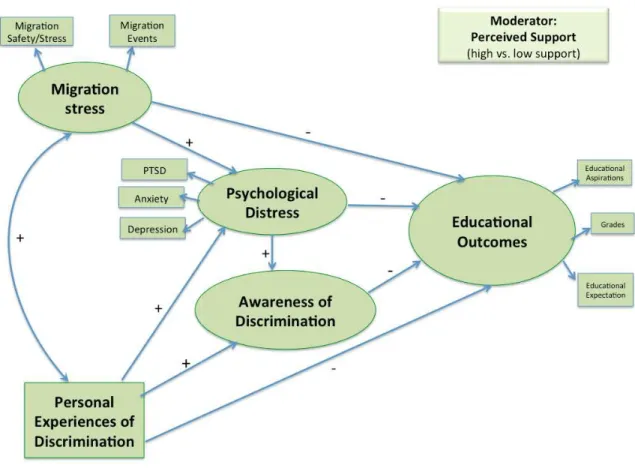
experiences of discrimination, and educational outcomes. The theoretical model tested in this study is depicted in Figure 1. I also tested a model to explore whether support
systems moderated the relationship between migration stress, psychological distress, experiences of discrimination, awareness of discrimination and educational outcomes. Of particular interest in this research study was to better understand: (1) the role that
perceived support (i.e., family support, teacher support, and social support) plays with respect to educational outcomes; and (2) the degree to which support systems moderate the relationship between educational outcomes and migration stress, discrimination, and psychological distress. I hypothesized that the impact of migration stress on educational outcomes and psychological distress would be lower for people who perceived more support.
Both the cultural-ecological and the Stages of Migration frameworks, along with the literature reviewed suggested the proposed model should work. This particular model has not been tested before. The study is unique in nature because it is the first to use a strictly foreign-born Latino youth population in exploring the relationships between the variables of interest. This study used existing data to address the following questions, all of which are reflected in the model depicted in Figure 1:
discrimination, and awareness of discrimination influence educational outcomes? 2. Does migration stress influence psychological distress?
3. Does psychological distress mediate the relationship between migration stress and educational outcomes, and between personal experiences of discrimination and educational outcomes?
4. Does awareness of discrimination mediate the relationship between psychological distress and educational outcomes?
5. Do personal experiences of discrimination influence psychological distress? 6. Does perceived support moderate the relationship between migration stress and
psychological distress, and between psychological distress and educational outcomes?
7. Does perceived support moderate the relationship between experiences of discrimination and psychological distress and between personal experiences of discrimination and educational outcomes?
Figure 1. Overall Conceptual Mediation Model
Note. Under conditions of high support, the following paths are expected to have coefficients of lower magnitude:
outcomes, (2) the path between migration stress and psychological distress, (3) the path between psychological distress and educational outcomes, and (4) the path between personal experiences of discri
the following paths are expected to have coefficients of
between migration stress and educational outcomes; (2) the path between migration stress and psychological distress, (3), the path between personal experiences of discrimination and psychological distress, and
Figure 1. Overall Conceptual Mediation Model
Under conditions of high support, the following paths are expected to have magnitude: (1) the path between migration stress and educational outcomes, (2) the path between migration stress and psychological distress, (3) the path between psychological distress and educational outcomes, and (4) the path between personal experiences of discrimination and educational outcomes. Under lower support, the following paths are expected to have coefficients of higher magnitude: (1)
between migration stress and educational outcomes; (2) the path between migration stress ess, (3), the path between personal experiences of discrimination
and (4) the path between personal experiences of
Under conditions of high support, the following paths are expected to have (1) the path between migration stress and educational outcomes, (2) the path between migration stress and psychological distress, (3) the path between psychological distress and educational outcomes, and (4) the path between
Under lower support, (1) the path between migration stress and educational outcomes; (2) the path between migration stress
ess, (3), the path between personal experiences of discrimination (4) the path between personal experiences of
CHAPTER III METHODS
The research design used in this study was a non-experimental, cross-sectional research design. An existing data set obtained from the Latino Adolescent Migration Health and Adaptation (LAMHA) Project was used.
Participants
A total of 281 Latino immigrant youth participated in the study. Of the 281, 45% were boys (N = 126) and 55% were girls (N = 152). Participants ranged in age from 12 to 19 years old (M = 14). Approximately three fourths (73%) of the participating youth were of Mexican origin, 22% were from Central American or Caribbean countries, and 4% were from South American countries. The majority of the participants were not U.S. citizens (95%), and more than half (65%) had lived in the U.S. for five years or less. Despite their limited number of years in the U.S., 70% of the youth had high levels of English language proficiency. When asked in which language they thought, 36% stated they thought in English and Spanish equally. Another 18% endorsed thinking more in Spanish than in English, and 15% reported thinking more in English than in Spanish. Identical statistics were noted when participants were asked in what language they spoke with friends (36% said both languages equally; 18% said more Spanish than English; 15% said more English than Spanish).
Demographics for their age at arrival indicated that most (66%) migrated to the U.S. between the ages of 6 and 12 years old (15% migrated before age 6, and 20% migrated at age 13 or older). A little more than half of the participating students (55%) lived with both biological parents at the time of the data collection. Approximately four
out of five participants stated that moving to the U.S. was the best thing for their family (82%) and for themselves (80%).
With respect to academic aspirations, 68% had aspirations of a post-secondary education. Specifically 37.9% aspired to obtain a graduate degree and 30.1% aspired to a bachelor’s degree. Compared to the high percentage reported for educational aspirations, their educational expectations were much lower, with only 56% of participants who actually expected to achieve their educational aspirations (see Table 1).
Table 1 Demographic Information Percentage N Gender Male 49% 138 Female 51% 144 Educational Aspirations Graduate degree 37.9% 107 Bachelor's degree 30.1% 85 Vocational/Trade school 5.7% 16 High school 17.4% 49
Less than high school 1.1% 3
Educational Expectations
Graduate degree 26.2% 74
Bachelor's degree 22.7% 64
Vocational/Trade school 11% 31
High school 26.6% 75
Year in School/School Type
Middle school 45% 127
High school 55% 155
Grades Obtained in School
Mostly A's and B's 42.9% 121
Mostly B's and C's 35.1% 99 Mostly C's 8.9% 25 Mostly C's and D's 4.6% 13 Mostly D's and F's 2.5% 7 Age at Arrival Before age 6 19.50% 53
6 years old to 12 years old 58.50% 159
13 years old or older 22% 60
Citizenship Status
Non-U.S. Citizen 95% 248
U.S. Citizen 5% 17
Procedures
The present study used data from the LAMHA Project, a population-based survey of mental health, migration, and acculturation among Latino immigrant youth and their parents in North Carolina.
The LAMHA research team collected survey data between August 2004 and November 2006 in a weighted sample of 281 parent-child dyads. Using a stratified random sampling, the LAMHA research team sampled Latino immigrant youth living in high-growth Latino communities in North Carolina. High-growth Latino communities were defined as communities which experienced ≥ 394% growth in their Latino
population between 1990 and 2000, and whose Latino population was of at least 5,000 people. Communities were divided into urban and rural strata, and high schools within these strata were randomly selected to participate in the study. For each high school selected in a community, its feeder middle school was also selected to participate. A total of 25 schools were invited to participate in the study from 4 different urban and 6
different rural school districts (n = 11 high schools, n = 14 middle schools). For each school selected, a roster of all its students who self-identified as “Hispanic/Latino” or students whose last names were of Hispanic/Latino origin was obtained. These youth were then contacted by the research team and screened for eligibility. The inclusion criteria for the study required that youth be foreign-born and that their parents be foreign-born as well. To be eligible for the study, the youth also had to be between the ages of 12 and 18 on October 1, 2004, and they had to be enrolled in any grade between 6th and 12th for the 2004-2005 academic year. Of the students who were identified to be eligible for inclusion, a number of them were randomly selected from each school. The number of students selected from each school was proportional to the size of the school’s Latino student population. The response rate was 69%, and those who declined to participate almost uniformly reported that they did not have enough time to participate.
The participants were administered a survey in their preferred language. No information is provided about the process by which measures were translated in cases in which the participant’s preferred language was Spanish. A research team member was present when the participants completed the survey to show them how to complete the measures. After completing a few pages together in an interview format, the participants
were allowed to fill out the rest of the survey on their own. When participants did not feel comfortable completing the survey on their own, the research team member read the complete survey to them. Specific data documenting the percentage of participants who completed the surveys in Spanish versus English was not avai