i
The Recipient Perspective:
A Mixed Methods Inquiry of Knowledge
Seeking Factors in Tacit Knowledge
Contexts
Jennifer Kennedy M.Sc., B.A.
iv
The Recipient Perspective:
A Mixed Methods Inquiry of Knowledge
Seeking Factors in Tacit Knowledge
Contexts
A Thesis submitted to Dublin City University Business School in Partial
Fulfilment of the Requirements for the Degree of Doctor of Philosophy
Jennifer Kennedy M.Sc., B.A.
Research supervisors:
Dr. Claire Gubbins
Prof. Finian Buckley
v
DECLARATION
I hereby certify that this material, which I now submit for assessment on the programme of study leading to the award of Doctor of Philosophy is entirely my own work, and that I have exercised reasonable care to ensure that the work is original, and does not to the best of my knowledge breach any law of copyright, and has not been taken from the work of others save and to the extent that such work has been cited and acknowledged within the text of my work.
Signed: ____________________ Date: ____________________ ID Number: 10211690
vi
DEDICATION
vii
ACKNOWLEDGEMENTS
I have many thanks to make as writing this dissertation has been a challenge which I could not have achieved without the support of many family, friends, and colleagues who provided advice, support, and guidance as I needed them. Thank you all.
I have a very supportive panel of advisors - my two supervisors, Dr. Claire Gubbins and Prof. Finian Buckley, and my second reader, Dr. Yseult Freeney. In particular I would like to extend my thanks and appreciation to my supervisor, Dr. Claire Gubbins, for her support, encouragement, and her ability to motivate me at times when I felt overwhelmed. She has been the guiding force which has shaped my progression as an academic writer and researcher. I have also been lucky to be guided by Professor Finian Buckley. His knowledge, advice, and patience have been invaluable especially toward the end of the process. I have also had the benefit of having very useful advice and feedback from visiting academics; Prof. Eugene Sadler-Smith, Prof. Robert Woods, and Prof. Denise Rousseau in particular were very generous with their time and advise.
This research was supported by Dublin City University under the PRTLI scholarship scheme. It was also made possible by the overwhelming support of the organisations, HR staff, and employees who took part in my research. In particular, thanks to St. Vincent’s Hospital and the Royal College of Physicians for their co-operation and help while I was collecting my data.
The PhD would be a very lonely journey without all the peers I have met along the way. I’ve been privileged to work alongside many wonderful people, too many to name here! However, particular thanks must go to Dr. Steven Kilroy – my first office mate, Dr. Brian Harman and Collette Real - my two second. Thanks also to Caroline McGroary for the many cups of tea, laughs, and strict adherence to the Pomodoro Technique while we were studying together in Saudi Arabia! However, I owe most thanks to my friend and colleague, Dr. Roisin Lyons. Her generosity, humour, and our many chats have made many days and nights pass more pleasantly (or in times of stress, less anxiously!), and she has been an invaluable pillar of support in all times of difficulty. Thanks Roisin, for your unwavering friendship and encouragement.
I am lucky to have many family and friends who have supported me in this and everything else in life. To my brothers and parents – thanks for your kind words of encouragement along the way. To my uncle Jon – for allowing such flexible work arrangements in order that I could conduct my research and lecture abroad. And to my grandma – for your texts, always having a sense of humour, and your unique perspective! To my parents-in-law for their generosity, kindness, and joie de vivre which helped me along the way. Most particularly, to my husband Jack, the best companion for all of life’s rollercoasters. Thank you for your love, optimism, and support throughout the last few years – coming home to you every day is always my greatest happiness and privilege.
viii
TABLE OF CONTENTS
DECLARATION ... v
ACKNOWLEDGEMENTS ... vii
TABLE OF CONTENTS ... viii
LIST OF TABLES ... xii
LIST OF FIGURES ... xii
ABSTRACT ... 1
: INTRODUCTION ... 2
1.1 Introduction ... 3
1.1.1 Aims and Objectives _________________________________________________ 5 1.2 Theoretical background ... 6
1.2.1 Organisational Knowledge _____________________________________________ 6 1.2.4 Brief Introduction to Knowledge Management ____________________________ 10 1.2.5 Knowledge Sharing: The Bi-Directional Perspective _______________________ 11 1.2.6 The Recipient Perspective: Knowledge Seeking and Acquisition ______________ 12 1.3 Summary: The Importance of this Study ... 13
1.4 Research Questions ... 14
1.5 Methodology ... 14
1.5.1 Research Development and Design _____________________________________ 14 1.5.2 Research Philosophy ________________________________________________ 16 1.5.3 Research Context ___________________________________________________ 16 1.5 Thesis Structure ... 18
: LITERATURE REVIEW ... 20
2.1 Introduction ... 21 2.2 Literature review ... 23ix
2.2.1 Tacit Knowledge ___________________________________________________ 23 2.2.2 Theoretical Perspectives of Tacit Knowledge Sharing ______________________ 24 2.2.3 Defining Tacit Knowledge Seeking _____________________________________ 28
2.3 Learning Outcomes of Knowledge Seeking ... 29
2.4 Factors Influencing Knowledge Seeking ... 30
2.4.1 Existing Literature on Knowledge Seeking _______________________________ 30 2.4.2 Individual Factors Effecting Tacit Knowledge Seeking and Sharing ___________ 34 2.4.3 Relational Factors Effecting Tacit Knowledge Seeking _____________________ 37 2.4.4 Proposed Conceptual Model __________________________________________ 39 2.5 Conclusions ... 40
: A QUALITATIVE INVESTIGATION OF THE INFLUENCERS OF
TACIT KNOWLEDGE SEEKING, ACQUISITION AND SHARING ... 42
3.1 Abstract... 43
3.2 Introduction ... 43
3.3 Theoretical framework ... 46
3.3.1 Tacit Knowledge ___________________________________________________ 46 3.2.2 Knowledge Sharing: the provider perspective _____________________________ 46 3.2.3 Knowledge Sharing: the recipient perspective _____________________________ 47 3.2.4 Individual and Social Factors Influencing Seeking, Acquisition and Sharing _____ 50 3.4 Research Questions ... 51
3.5 Methodology ... 52
3.6 Data Collection and Analysis ... 54
3.7 Findings and Discussion ... 57
3.7.1. Themes Influencing Tacit Knowledge Seeking ____________________________ 58 3.7.2 Themes Influencing Knowledge Acquisition ______________________________ 75 3.7.3 Factors Influencing Knowledge Sharing _________________________________ 85 3.8 Discussion and Conclusions ... 90
x
3.9 Research Limitations ... 95
3.10 Conclusions and Future Research ... 95
: DETERMINANTS AND OUTCOMES OF KNOWLEDGE SEEKING BY
JUNIOR DOCTORS IN IRELAND ... 98
4.1 Abstract... 99
4.2 Introduction ... 99
4.3 Theoretical Background and Hypotheses Development... 103
4.3.1 Knowledge Seeking ________________________________________________ 103 4.3.2 Learning Outcomes of Knowledge Seeking ______________________________ 104 4.3.3 Moderating Effects of Tacit Knowledge ________________________________ 106 4.3.3 Cognitive Factors __________________________________________________ 106 4.3.4 Relational Factors __________________________________________________ 109 4.4 Methodology ... 113 4.4.1 Research Context __________________________________________________ 113 4.4.2 Participants _______________________________________________________ 114 4.4.3 Measures ________________________________________________________ 115 4.5 Analysis and Results ... 119
4.5.1 Analytical Strategy _________________________________________________ 119 4.5.2 Missing Data and Screening __________________________________________ 119 4.5.3 Exploratory Factor Analysis __________________________________________ 120 4.5.4 Confirmatory Factor Analysis ________________________________________ 121 4.5.5 Common Method Bias ______________________________________________ 122 4.5.6 Structural Model ___________________________________________________ 124 4.5.7 Hypothesis testing _________________________________________________ 124 4.6 Findings and Discussion ... 130
4.6.1 Unsupported Results _______________________________________________ 133 4.7 Limitations ... 133
xi
4.8 Conclusions and Future Research ... 134
: DISCUSSION AND CONCLUSIONS ... 136
5.1 Introduction ... 137
5.1.1 Discussion of Research Questions _____________________________________ 137 5.2 Research Contributions ... 145
5.2.1 Theoretical Contributions ____________________________________________ 145 5.2.2 Methodological Contributions ________________________________________ 148 5.2.3 Practical Implications _______________________________________________ 149 5.3 Limitations and Future Research ... 150
5.3 Conclusions ... 153
BIBLIOGRAPHY ... 154
APPENDICES ... 182
APPENDIX A: Interview Schedule... 183
APPENDIX B: Ethical approval ... 188
xii
LIST OF TABLES
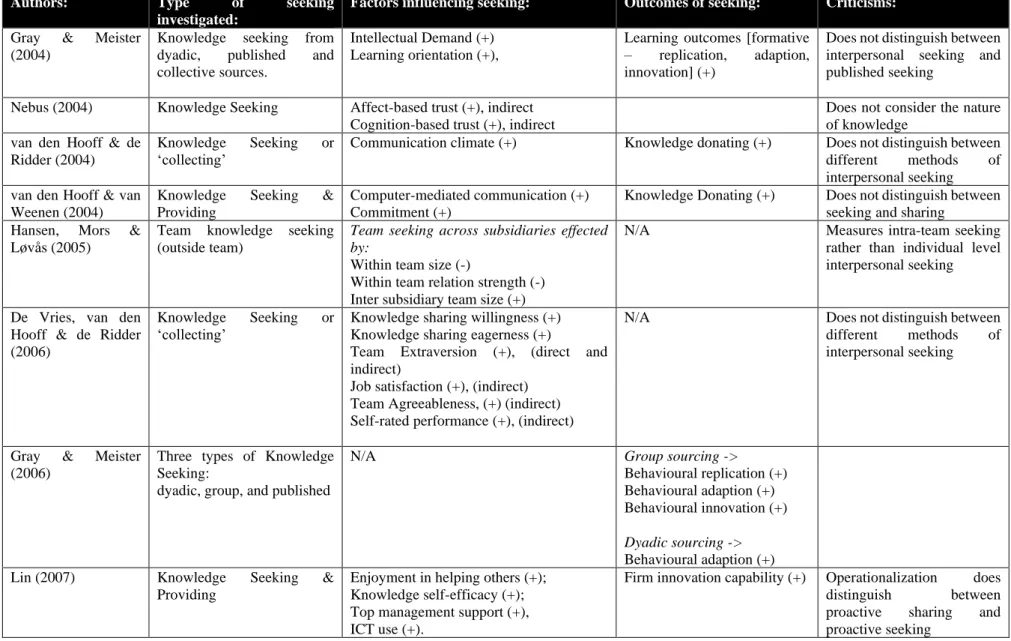
Table 2-1: Prior Literature Investigating Knowledge Seeking ... 32
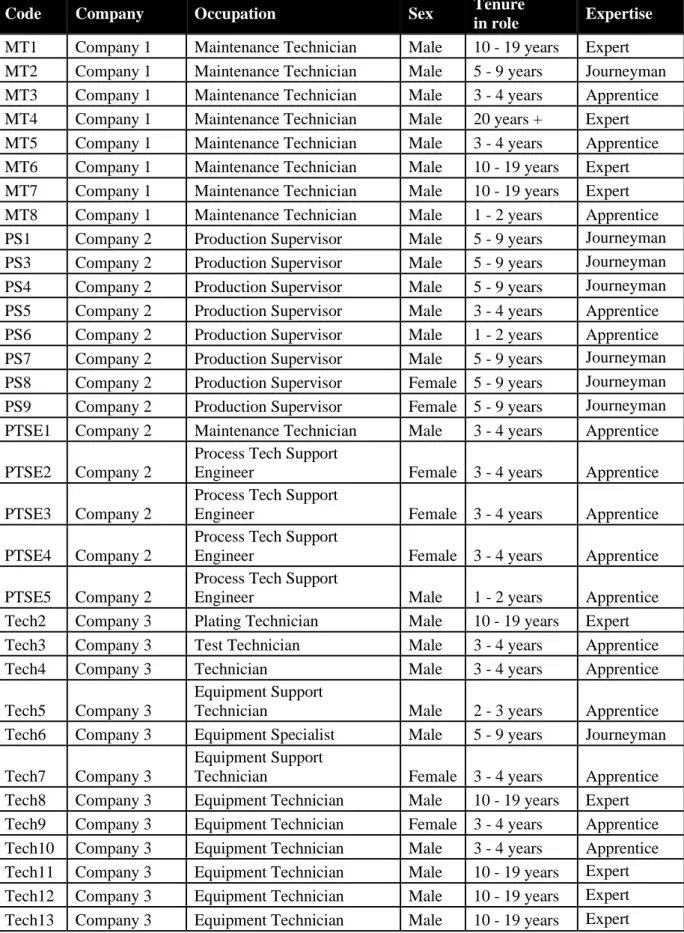
Table 3-1: Participant Characteristics ... 53
Table 3-2: Proficiency Scale of Tenure (adapted from Chi, 2006) ... 55
Table 3-3: Participants by Expertise ... 56
Table 3-4: Emergent Research Themes ... 57
Table 4-1: Demographic Characteristics (N = 238)... 114
Table 4-2: Scale Measure Reliability ... 120
Table 4-3 Descriptive Statistics and CFA Reliability Testing ... 123
Table 4-4 Direct Path Hypotheses Findings ... 125
Table 4-5: Hypothesis Summary for Mediation ... 126
Table 4-6: Interaction Hypotheses: the moderating effect of tacit knowledge ... 127
Table 4-7: Interaction Hypotheses: the moderating effect of tacit knowledge ... 128
LIST OF FIGURES
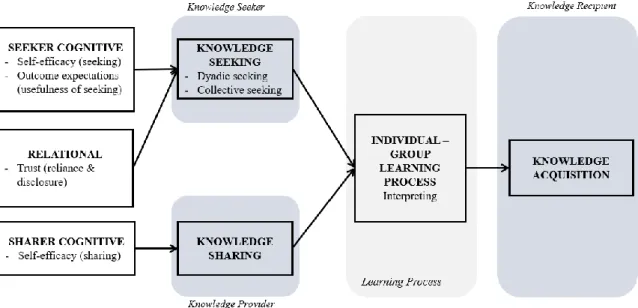
Figure 1-1: Research Process and Design ... 16Figure 2-1: Conceptual Model ... 40
Figure 3-1: Themes influencing knowledge seeking... 64
Figure 3-2: Themes influencing knowledge acquisition... 74
Figure 3-3: Themes influencing knowledge sharing ... 84
Figure 3-4: Model depicting Qualitative Findings ... 89
Figure 4-1: Conceptual Model with Hypotheses ... 113
Figure 4-2: Interaction effect of collective seeking and tacit knowledge on interpreting ... 128
Figure 4-3: Interaction effect of dyadic seeking and disclosure-based trust on interpreting 129 Figure 4-4: Structural Model ... 130
1
ABSTRACT
Tacit knowledge is an important source of competitive advantage to organisations. Sharing tacit knowledge among employees is vital to realising its benefits. Knowledge sharing requires the effective provision of knowledge and the useful acquisition of knowledge. More recently, knowledge seeking has been proposed as an additional recipient behaviour which encourages the provider to share their knowledge. Additionally, research has acknowledged the important role individual and social factors play in influencing the knowledge sharing. However, whether those factors equally effect recipient knowledge seeking and acquisition has been under-investigated. To address these gaps, this research investigates the individual and social factors which influence interpersonal knowledge seeking by knowledge workers engaged in highly tacit tasks within two separate contexts. In addition, knowledge seeking as a strategy for effective tacit knowledge acquisition is explored.
Study one uses interviews with 33 knowledge-workers to explore individual and social factors which influence their tacit knowledge seeking, acquisition and sharing. Study two surveyed 233 junior doctors to test direct and indirect relationships between individual and social factors and their tacit knowledge seeking and acquisition from consultant doctors. The key findings support the contention that the individual and social factors which effect knowledge seeking are not interchangeable with those that effect knowledge acquisition and sharing. Various individual and social factors effect knowledge seeking at different stages of this behaviour. Furthermore, findings indicate that knowledge seeking can enhance successful acquisition of tacit knowledge through the organisational learning process of interpreting. This is the first study to compare individual and social factors which influence behaviours of seeking, acquisition and sharing in one study. It is also the first to empirically examine the 4i framework, and specifically the mediating effect of interpreting to explain the relationship between knowledge seeking and acquisition. Both studies provide actionable insights to improve successful knowledge sharing practices for tacit tasks.
2
3 1.1 1.1 Introduction
Superior knowledge, used effectively, can provide competitive advantage and economic growth and is therefore a critical resource to the organisation (Little, Quintas & Ray, 2002, p. 124; Kreiner, 2002). This perspective is underpinned by the understanding that human knowledge and capabilities are the core of value creation in organisations (Kakabadse, Kouzmin, & Kakabadse, 2001). As knowledge is a unique resource it is difficult for competitors to imitate and is a primary concern for many organisations (von Krogh & Roos, 1996, p. 32–33).
Knowledge researchers have identified tacit knowledge as a particular form of knowledge that is difficult to imitate, substitute, and transfer (Ambrosini & Bowman, 2001), and therefore forms the basis of sustainable competitive advantage for the firm (Ambrosini & Bowman, 2001). As a result, tacit knowledge is a valuable resource that many organisations rely upon in the knowledge-based economy (Little, Quintas, & Ray, 2002; Gertler, 2003). This knowledge stored in the minds of the worker, is rooted in action and behaviour, and is difficult to communicate (Ambrosini & Bowman, 2001; Little, Quintas, & Ray, 2002, p. 43, Nonaka, 1994; Nonaka & von Krogh, 2009). Tacit knowledge is first acquired at the individual level (Polanyi, 1962; Kreiner, 2002; Wright & McMahan, 2011), and embodied in the organisation’s individuals and groups. Despite this, most knowledge research is conducted at an organisational level (Chen & Edgington, 2005), and knowledge-based view (KBV) studies have been criticised for emphasising the collective level of analysis to the neglect of individual-level variables (Minbaeva et al., 2009), leaving an opportunity for individual level studies (Endres et al., 2007). A recent review of knowledge sharing highlighted the lack of research examining the microfoundations of knowledge processes, and the importance in examining behaviours at the level of individuals and their interactions (Foss & Pederesen, 2019). Even in studies in which individuals are emphasized (such as Minbaeva et al., 2003), the actual measurement of knowledge processes still takes place at the subsidiary and MNC levels (Foss & Pederesen, 2019).
While knowledge sharing can occur at the individual, team, organisational or intra-organisational level, Argote and Ingram (2000) suggest that all types of knowledge sharing ultimately originate from individual interactions. Knowledge sharing behaviours are important to knowledge researchers as they are widely viewed as key to enabling organisations to create and mobilise its knowledge resources for competitive advantage and success (Argote & Ingram, 2000; Alavi & Leidner, 2001). Individual knowledge sharing is “…a relational act based on a sender-receiver relationship that incorporates communicating one’s knowledge to others as well as receiving others’ knowledge.” (Foss, Minbaeva, Pedersen, and Reinholt, 2009, p. 873). Therefore, the relationship between the provider and recipient is pertinent to successful knowledge sharing. This is especially
4
true of sharing tacit knowledge specifically which is learned through social interactions and practices (Nonaka & Von Krogh, 2009). In fact, the majority of tacit knowledge sharing takes place through social networking and informal interactions (Holste & Fields, 2010). Prior research suggests that in addition to the relationship between provider and recipient, the individual characteristics of the provider and of the recipient are pertinent to knowledge sharing (Minbaeva, 2007; Foss & Pedersen, 2019). Therefore, this thesis focuses on individual’s tacit knowledge, and the individual and social factors between the sender and receiver which influence the tacit knowledge sharing interactions.
Research which has shown that knowledge sharing consists of multiple phases, such as the decision to seek and the search process which precedes knowledge sharing by the provider (Hansen, Mors, & Løvås, 2005). Despite this, research which acknowledges and tests these separate phases is scarce (Gray & Meister, 2004; Hansen, Mors & Løvås, 2005). Empirical studies of knowledge sharing must distinguish between providers who share their knowledge and recipients who both seek and acquire this knowledge in order to address the duality of the knowledge sharing process. Despite this, much of the existing research examining individual’s knowledge sharing has either examined knowledge sharing by the provision of knowledge only or has not measured the various phases of knowledge sharing distinctly. This bias toward the “knowledge provider perspective” (Kim, Song, & Jones, 2011) has neglected to regard the role of the knowledge recipient to successful sharing. However, recipients of knowledge from the provider may first seek specific knowledge from specific providers, and also must acquire the knowledge that is shared or the knowledge sharing interaction will not be successful. Therefore, the shortcomings in existing “provider perspective” knowledge sharing research are problematic as they ignore the recipient. Specifically, how that recipient may seek out knowledge from providers and how they learn or acquire knowledge as a result of the sharing interaction. Consequently, much research has not shed light on whether the factors that explain one phase of knowledge sharing also explain other phases (Hansen, Mors, & Løvås, 2005; Tangaraja, 2015; 2016).
As one phase of the knowledge sharing process, knowledge seeking may help to explain how recipients best acquire knowledge from providers. Recent research has suggested that providers are more willing to provide knowledge when directly asked by other colleagues (Zhang et al., 2015), indicating knowledge seeking could be used as a strategy to acquire knowledge from reluctant providers. However, many studies that have examined sharing from one point to another have excluded the prior phase of knowledge seeking, or have not empirically disentangled the search from other phases of sharing. This is problematic as knowledge seeking by the recipient is likely to be motivated differently to sharing behaviours by the provider. Scholars therefore do not know much about the extent to which different factors explain knowledge seeking and sharing (Hansen et al., 2005). Therefore, there is a need for research that explores the extent to which different properties explain the seeking knowledge that the recipient needs separately to those properties which explain
5
providing knowledge to others (Hansen et al., 2005; Kim et al., 2011). Therefore, building on these research calls and recommendations, the purpose of this thesis is to identify and examine the individual and social factors which influence tacit knowledge seeking, and compare to those that influence knowledge sharing to better understand how these behaviours are differently enabled.
Additionally, while there has been extensive research on knowledge sharing from various perspectives, most studies to date have neglected the recipient perspective of knowledge acquisition instead targeting the knowledge provider perspective of sharing (Kim et al., 2011). When an individual has acquired knowledge, that person’s knowledge has expanded or the application of knowledge has been enabled (Alavi & Leidner, 2001). Therefore, knowledge acquisition is an important activity in knowledge management and specifically an important outcome of knowledge sharing to measure its success. Therefore, it is critical for research to understand how individuals acquire the knowledge they need, and what strategies recipient’s select to acquire that knowledge (Kim et al, 2011). Additionally, and aside from examining knowledge acquired, the learning process itself could represent a major source of differences between the tacit knowledge accumulated by different people (Armstrong & Mahmud, 2008). This thesis is informed by the 4i Organisational Learning Framework which offers an explanation of the processes through which people learn with and from others (Crossan et al., 1999). Furthermore, this thesis investigates knowledge seeking as a strategy for learning and acquiring knowledge more effectively, as it is an indirect learning behaviour (Gray & Mesiter, 2004) in which individuals attempt to learn from the experiences of others. Therefore, this thesis aims to identify and examine the role of knowledge seeking for learning and acquiring tacit knowledge from others.
In summary, given the importance of learning valuable tacit knowledge from others in the workplace, understanding how knowledge seeking is motivated and its acquisition outcomes will have broader theoretical and practical implications to existing research on knowledge sharing. This introductory chapter provides an overview of this dissertation. First, this chapter describes the aims and objectives of the study. Then the chapter will provide a brief overview of the theoretical backdrop, definitions and significance of research in the field. The overarching research questions driving this study will then be presented and the overarching methodology presented. Finally, the chapter will conclude with an overview of the structure of the thesis.
1.1.1 Aims and Objectives
This thesis consists of a conceptual review and two empirical studies. These three chapters aim to investigate the individual and social factors which effect knowledge seeking as distinct from knowledge sharing, and in the context of highly tacit knowledge. It also seeks to investigate the how knowledge seeking as a learning strategy can enable effective knowledge acquisition. To do so, Social Cognitive Theory (Bandura, 1986) is adopted to examine the link between the individual and
6
social factors which might explain knowledge seeking behaviours. Specifically, self-efficacy and outcome expectations are proposed as salient individual cognitive factors effecting knowledge seeking, acquisition and sharing behaviours. Additionally, Social Capital Theory (Nahapiet & Ghoshal, 1998) is examined to understand how social resources such as trust can be an important explanatory variable as to why people may seek and acquire knowledge from others. Finally, the 4i Organisational Learning framework (Crossan, Lane & White, 1999) is adopted to explain the learning process through which individuals who seek and share might best acquire knowledge. Specifically, the individual learning process of interpreting is examined. Two empirical studies are presented to explore these topics. Study 1 uses a qualitative research design in order to explore and compare how individual and social factors influence knowledge seeking, acquisition and sharing behaviours when solving non-routine problems in the workplace. Study 2 uses a cross-sectional quantitative research design to examine the cognitive and social factors which effect acquisition, and also assess the influence these factors had on interpreting, included as a mediating learning process to explain how knowledge seeking might lead to effective knowledge acquisition. By exploring and comparing the individual and social factors which effect knowledge seeking and learning (measured by both interpreting and acquisition) by the recipient, this research aims to understand which factors may enable knowledge seeking and consequently result in successful knowledge acquisition.
1.2 Theoretical background 1.2.1 Organisational Knowledge
The relationship between knowledge and an organisation has been conceptualised as the knowledge-based view of the firm (KBV) and views an organisation’s knowledge as “one of the most important resources” (Pan & Scarbrough 1999, p.359). Organisational knowledge literature suggests that knowledge can exist at multiple levels within the organisation, from individual, group and organisational levels (De Long & Fahey, 2000). A firm’s know-how or knowledge is embedded throughout the organisation in entities such as organisational culture and identity, routines, policies, and employees (Alavi & Leidner, 2001). The knowledge based-view of the firm argues that these knowledge assets may produce long-term sustainable advantage. Firms therefore must facilitate useful knowledge acquisition, creation, exploitation and transfer to manage their knowledge effectively (Little, Quintas, & Ray 2002, p124). Although knowledge can reside within multiple levels of the organisation, individual knowledge is of particular interest in this thesis. Lam (2000) defined individual knowledge as “that part of an organisation’s knowledge which resides in the brains and bodily skills of the individual” (p. 491). It involves all the knowledge possessed by the individual that can be applied independently to specific types of tasks and problems. Individual knowledge is more specialised and domain-specific as individuals have cognitive limits to store and process information (Lam, 2000). Organisational learning literature supports the notion that
7
knowledge in organisations resides within individuals. Simon (1991) suggests that “all organisational learning takes place inside human heads” (p. 176). Organisations learn through individuals, and individual learning is enabled or inhibited by factors within the organisational learning system (Argyris, 1980). Knowledge must reside at the individual level because cognition is a function of individuals, and cannot be performed by organisations (Huber, 1991).
Knowledge is commonly distinguished from data and information (Baumard, 1999 p.19-20; Zack, 1999). Zack (1999) defines data as a representation of observations or facts out of context, and information as placing data within some meaningful context. Knowledge represents an accumulation of information which we believe through experience, communication or inference. In other words, knowledge is a subjective interpretation of information. Equally, Baumard (1999) describes information as a method to create, increase, restructure or modify knowledge and knowledge is a representation of this information. Zack also differentiates between general knowledge (that is widely available knowledge) and context-specific knowledge. However, this assumed hierarchy from data to knowledge is criticised by Alavi and Leidner (2001) who argue that it is actually an inverse relationship. Knowledge must first exist to allow information to be processed, which occurs through the articulation and verbalisation of knowledge. When information is then fixated and standard it becomes data. This concludes that knowledge is the result of cognitive processing triggered by new stimuli and shaped by one’s needs and stock of knowledge.
Debates in definitions of knowledge have also addressed the conflict between knowledge as an object versus a state of knowing. Andriessen (2008) discusses the misuse of the propensity to use a “knowledge as stuff” metaphor, or “thingification” in talking about knowledge. Alavi and Leidner (2001) describe this as when knowledge is viewed as a thing or process to be stored and manipulated. Andriessen’s (2008) article describes the use of metaphors as an integral tool in defining and talking about knowledge management, but warns language describing “knowledge as a thing” can mislead. For instance, things are objective and neutral but knowledge is not something that can be “stored and retrieved” without some distortion or misinterpretation. The “thingification” of knowledge can hide the social or human element of knowledge. An alternative view of knowledge sees it as “a state or fact of knowing” (Alavi & Leidner, 2001). Davenport and Prusak (1998, p5) describe it as “a fluid mix of framed experience, values, contextual information, and expert insight that provides a framework for evaluating and incorporating new experiences and information. It originates and is applied in the minds of knower.” They argue that knowledge is valuable because it is rooted in action, experience, ground truth, is complex, and makes use of judgment, intuition, values and beliefs. Nonaka and Takeuchi (1995) echo this by defining knowledge as “justified true belief.” In other words, individuals justify the truth of their beliefs based on their interactions and experience. They also describe knowledge as an action, or potential action. Alavi and Leidner (2001) discuss knowledge as “personalised” information processed in the mind of the individual. Pan and
8
Scarbrough’s (1999) definition identify knowledge as a social construct and occurring within social networks and communities of practise. This suggests that knowledge can occur both in the mind of the individual and in the collective.
Additionally, many authors have tried to identify different components of knowledge. For example, Zack (1999) deconstructs knowledge into three forms: declarative, procedural, and causal. Simply put; knowledge “about” something is defined as declarative or explicit, “how to” knowledge can be described as procedural or tacit, and the knowledge of “why” something occurs is called causal knowledge. These forms of knowledge have more typically been described and investigated as tacit and explicit knowledge (Davenport & Prusak, 1998; Nonaka, 1994; Nonaka & Takeuchi, 1995; Nonaka & von Krogh, 2009).
1.2.1.1 Explicit Knowledge
Explicit knowledge is generally described as articulated and articulable knowledge (Saint-Onge, 1996; Zack, 1999). It is also called objective knowledge, verbal knowledge, and declarative knowledge (Ambrosini & Bowman, 2001). Hubert Saint-Onge explains explicit knowledge simply as “the words we speak, books we read, and data we compile.” Explicit knowledge is more easily codified, documented, transferred, shared and stored (Zack, 1999; Subashini, 2010, p.36.) It can be communicated in symbolic form from the possessor to the recipient, and the possession of this knowledge is not specific to a firm or person (Ambrosini & Bowman, 2001). Ambrosini and Bowman (2001) suggest that defining explicit knowledge is one way of highlighting what tacit knowledge is not. Nonaka and von Krogh (2009) suggest that explicit knowledge has a universal character which has relevance across contexts. Polanyi describes explicit knowledge as grounded in tacit knowledge; one can’t exist without the other. Subashini (2010) further argues that “explicit knowledge without tacit meaning loses its insight.” Tee and Karney (2010) claim that all knowledge, regardless of domain areas, contains a tacit characteristic. This indicates that explicit and tacit knowledge are not separate entities (Nonaka & Takeuchi, 1995), but complimentary (Subashini, 2010). However, Nonaka and colleagues (Nonaka & Takeuchi, 1995; Nonaka & von Krogh, 2009) suggest that explicit and tacit knowledge can be conceptually distinguished along a continuum, and that knowledge conversion explains the interaction between tacit and explicit knowledge. That is, aligned with other researchers, they claim that tacit knowledge is that which is not yet explicit (Linde, 2001; Nonaka & Takeuchi, 1995). Tacit knowledge becomes explicit through the process of externalisation, achieved through reflection and interactions between people (Nonaka & Takeuchi, 1995).
9 1.2.1.2 Tacit Knowledge
The importance of tacit knowledge specifically has been highlighted by Little, Quintas, and Ray (2002, p10). They argue that much of the knowledge upon which organisations rely is tacit and define tacit knowledge as one “that resides within the heads and motor neurone systems of employees and has not been codified or made explicit.” Baumard (1999, p2) describes tacit knowledge in broader terms, as something we know but cannot express. Polanyi’s (1967, cited in Ambrosini & Bowman, 2001) seminal definition simply states “we know more that we can tell.” Tacit knowledge has been recognised in the literature as personal knowledge; rooted in commitment, ideals, values and emotions, and as practical knowledge demonstrated in “know how”, action, procedures and routines. It can also be context specific, typically acquired on the job. (Ambrosini & Bowman, 2001; Little, Quintas, & Ray, 2002, p43). A simple example would be knowledge of wine tasting, or playing a violin (Nonaka & von Krogh, 2009). These definitions allude to one of the main characteristics and challenges of tacit knowledge; that it is difficult to formalise (Ambrosini & Bowman, 2001; Little, Quintas, & Ray 2002, p43),
Various authors attempt to break down the content of tacit knowledge into definable elements. Wagner (1987) investigated tacit knowledge within the individual and describes its components as managing self, managing tasks, and managing others. Managing self relates to self-motivation and organisation, such as knowing how to overcome procrastination. Managing tasks refers to the “know how” or procedural element of tacit knowledge that is often cited to in literature (Ambrosini & Bowman, 2001; Little, Quintas, and Ray, 2002, p43; Zack, 1999.) Finally managing others relates to capabilities and knowledge in social interactions. Wagner (1987) argues that most situations require each of the three kinds of tacit knowledge to lesser or greater degrees. Nonaka (1994) suggests that there are two components to tacit knowledge; cognitive (i.e. mental models, perspectives, beliefs, values) and technical (i.e. know-how, crafts and skills). Wagner’s managing self and others relates to the cognitive dimension of tacit knowledge, while managing tasks is related to the technical dimension of tacit knowledge. Matzler et al. (2008) provides a similar break down of the “tacit dimensions” into five categories of knowledge; embrained, encultured, embodied, embedded and encoded knowledge. Embrained knowledge or “knowledge that” refers to conceptual skills and cognitive ability. Encultured knowledge relates to the shared understanding, socialization and acculturation of tacit knowledge. In other words, these two categories comprise of the elements defined by Nonaka (1994) as cognitive. Embodied knowledge is action orientated and acquired through doing, and embedded knowledge is rooted in routine; similar to Nonaka’s technical tacit component. Finally, encoded knowledge is “codified” in codes of practice and can be made explicit through signs and symbols. Subashini (2010) notes that cognitive element (i.e. embrained and encultured knowledge) are often taken for granted and are difficult to communicate. Additionally, the various definitions illustrate that tacit knowledge can exist collectively through shared
10
interactions and understandings. Therefore, while tacit knowledge resides in individuals, social or collective knowledge can be created in the collective actions of a group (Aadne, von Krogh, & Roos, 1996).
In summary, the literature suggests that tacit knowledge resides in the human mind, is rooted in both action and ideals, is difficult to communicate and formalise and can exist at an individual and collective level (Aadne, von Krogh, & Roos, 1996; Ambrosini & Bowman, 2001; Little, Quintas, & Ray, 2002, p43, Nonaka, 1994; Nonaka & von Krogh, 2009). Recent literature has suggested that tacit knowledge should be conceptualised as a multifaceted term that relates to various levels of awareness (Asher & Popper, 2019). This is supported by scholars who have conceptualised tacit knowledge along a continuum, which classifies knowledge into subcategories based on the level of awareness (e.g. Ambrosini & Bowman, 2002). It starts from deeply embedded, unapproachable tacit knowledge, the next subcategory is partly describable using metaphors and stories, to end at the fully extractable tacit knowledge acquired through direct questioning (Ambrosini & Bowman, 2002). Therefore, despite the difficulty in communicating this knowledge, tacit knowledge can be “converted” to more explicit knowledge through processes of socialization and externalization (Nonaka & Takeuchi, 1995). This thesis supports the definition of tacit knowledge along a continuum from deeply embedded tacit knowledge to extractable tacit knowledge, aligned with Ambrosini and Bowman (2002).
1.2.4 Brief Introduction to Knowledge Management
The knowledge within a firm is only as useful as the firm’s ability to apply it, create it, and take action from it. Knowledge management is a process to help organisations achieve this (Alavi & Leidner, 2001). Pan and Scarbrough (1999) define knowledge management as “the capacity (or processes) within an organisation to maintain or improve organisational performance based on experience and knowledge” where knowledge is multi-layered and multi-faceted. Or more simply; “getting the right knowledge to the right people at the right time” (Liebowitz, 1999, p1-6). However, Kreiner (2002) states that “tacit knowledge needs to be managed in tacit ways” and suggests knowledge management comprises of explicit inputs of information and knowledge and tacit processes of mobilization, interpretation, and use. This indicates that collective and individual explicit knowledge can only be properly utilised by the worker using their own tacit knowledge. This indicates that tacit knowledge management specifically is unique to general knowledge management methods because tacit knowledge “is owned” by the knowledge worker rather than the organisation (Kreiner, 2002; Wright & McMahan, 2011) and is thus “invisible” to the organisation. This view criticises traditional knowledge management literature which has been dominated by information technology or technological perspectives (Davenport, De Long, & Beers, 1998; Gourlay, 2001). Instead, the role of the individual is increasingly recognised within the ‘people perspective’ or personalization strategies to knowledge in organisations (Hansen, 1999; Earl, 2001; Stenmark,
11
2001). This perspective views the connections between individuals as key to successfully managing knowledge (Brown & Duguid, 1991; McDermott, 1999) and is underpinned by human resource management literature which recognises the importance of managing ‘human capital’ or individual knowledge, skills, abilities and other characteristics residing in the minds of individuals (Wright & McMahan, 2011). In order to manage knowledge and the people who hold it, firms must recognise the importance of individual behaviours as employees can choose to withhold the knowledge and abilities that their firm requires (Wright & McMahan, 2011; Matzler et al., 2008).
While authors have proposed various processes required for managing knowledge, most are underpinned by the awareness that organisations must effectively utilise the knowledge resources that already exist within the organisation (Damodaran & Olphert, 2000; Davenport & Prusak, 1998; Spender & Grant, 1996). Organisations must also consider how to transfer expertise and knowledge from experts in possession of it to novices who need to know (Hinds, Patterson, & Pfeffer, 2001). Authors have identified multiple processes of interest to manage knowledge such as creation, storage/retrieval, transfer, application of knowledge, and acquisition or capture (Alavi & Leidner, 2001; Kakabadse, Kouzmin, & Kakabadse, 2001; Yahya & Goh, 2002). Organisational learning literature focuses on creation, retention and transfer of knowledge as central to supporting learning across all levels of the firm (Argote, 2012). However, of primary interest to this thesis is the knowledge sharing component, as it enables employees to contribute to the creation and retention of organisational knowledge, and ultimately the competitive advantage of the organisation (Jackson, Chuang, Harden, Jiang, & Joseph, 2006). Tacit knowledge sharing between employees allows organisations to exploit and capitalise on this knowledge-based resource (Davenport & Prusak, 1998; Cabrera & Cabrera, 2005).
1.2.5 Knowledge Sharing: The Bi-Directional Perspective
Individual knowledge sharing is a relational behaviour between provider and recipient, in which the provider must share their knowledge and the receiver must understand and acquire it (Argote & Ingram, 2000; Foss, Minbaeva, Pedersen, and Reinholt, 2009; Hansen, 1999). A central interest of this thesis is the duality or bi-directional nature of knowledge sharing. Past literature has viewed knowledge sharing as either unidirectional or bidirectional (Tangaraja et al, 2015). The uni-directional perspective claims that knowledge sharing only involves the dissemination of knowledge in a single direction from provider to recipient (e.g. Yi, 2009). Knowledge sharing viewed through the unidirectional perspective suggests the key player is the knowledge provider, and therefore the knowledge recipient is not an active player in the success of sharing efforts (Tangaraja et al., 2015). This may be most relevant to situations in which the provider is sharing knowledge to a document or an online repository rather than responding to a context-specific requirement or need for knowledge. For researchers interested in bi-directional tacit knowledge sharing, it is necessary to examine interpersonal interactions as tacit knowledge conversion occurs through socialization and
12
externalization processes which require social interaction (Nonaka & Takeuchi 1995). Therefore, research investigating the bi-directional perspective of knowledge sharing is more pertinent.
The bi-directional perspective views knowledge sharing as an exchange of knowledge between individuals, namely the provider and recipient (e.g. van den Hooff & de Ridder, 2004, Foss, Minbaeva, Pedersen, & Reinholt, 2009). The bidirectional perspective suggests active knowledge sources are both knowledge provider and knowledge recipient who share/exchange knowledge, therefore this process is not an individual acting in isolation but can occur beyond the individual level and involves at least two people (Tangaraja et al., 2015). However, research taking bi-directional perspective investigating the actions of exchanging knowledge have not reached a consensus regarding what recipient actions are involved in receiving knowledge. Research has considered various actions recipients can take such as the active processes of ‘collecting’, seeking, and more passive process of acquiring or ‘receiving’ knowledge as (e.g. van den Hooff & de Ridder, 2004; Hansen et al., 2005; Wilkesmann & Wilkesmann, 2011). However, these actions have been defined differently, are rarely researched together, and there remains conceptual disclarity as to how or if they overlap.
1.2.6 The Recipient Perspective: Knowledge Seeking and Acquisition
Increasingly, knowledge sharing literature has acknowledged knowledge seeking as a phase of knowledge sharing (Hansen et al., 2005). Despite this there is the lack of theory and empirical evidence on interpersonal knowledge seeking (Hansen et al., 2005). Indeed, there is still no theoretical framework of knowledge sharing which includes the prior step of knowledge seeking. This has resulted in a lack of clarity concerning how the recipient can shape their experience and learning outcomes within the knowledge sharing process. In addition, there is a lack of research explaining possible causal factors of knowledge seeking and how they may differ from related knowledge sharing processes (Hansen, Mors, & Løvås, 2005). Prior literature has suggested that four main elements are pertinent to the knowledge sharing; the characteristics of knowledge, characteristics of knowledge senders, characteristics of knowledge receivers, and characteristics of the relationships between senders and receivers of which increase the degree of knowledge transfer (Minbaeva, 2007). In the context of examining tacit knowledge seeking specifically, pertinent elements which may influence this behaviour include individual factors relating to the seeker and social factors influencing the relationship between seeker and provider. While a few studies have investigated some individual and social factors of seeking (e.g. Borgatti & Cross, 2004; Gray & Meister, 2004; 2006), most have failed to distinguish between information and knowledge (e.g. Borgatti & Cross, 2004), or do not examine the influence of tacit knowledge on these relationships (e.g. Gray & Meister, 2004; 2006). No previous study has examined the individual and social factors which influence of tacit knowledge seeking, acquisition and sharing within the same study. Doing so should clarify how these factors may influence the processes of seeking, acquisition and sharing
13
differently within the same workplace context. In response, this thesis adopts Social Cognitive Theory (Bandura, 1986) and Social Capital Theory (Nahapiet & Ghoshal, 1998) to understand, propose and investigate how individual and social factors may influence knowledge seeking behaviours.
Additionally, no other study has compared the individual and social factors influencing knowledge seeking with those that influence knowledge sharing and acquisition. Therefore, this thesis examines whether the factors which influence knowledge sharing might also influence knowledge seeking and acquisition as separate behaviours. This represents a significant contribution to the knowledge sharing field by questioning the relevance of prior research which has examined sharing as either a uni-dimensional concept or a combined concept entailing both seeking and sharing.
Another research problem of interest relates to the lack of research on recipient acquisition within the knowledge sharing process (Kim et al., 2011). Successful knowledge sharing is informed by the extent the recipient acquires and learns knowledge from the interaction. Therefore, investigating the value of knowledge seeking to acquiring tacit knowledge is valuable for further understanding of effective knowledge sharing interactions. Prior research has confirmed that knowledge seeking from various sources can lead to better learning outcomes and effectiveness (Gray & Meister, 2004; 2006; Wang et al., 2014; Kankanhalli et al., 2011) and allow seekers to resolve problems, accomplish more complex tasks, and make decisions more effectively (Gray & Meister, 2004; Gray & Durcikova, 2005). Despite this, there is a lack of research explaining how individuals acquire the knowledge they need, and what strategies recipient’s select to acquire that knowledge (Kim et al, 2011). No previous study has examined knowledge seeking as a learning strategy which may lead to effective acquisition. To examine how knowledge seeking behaviours may fit within the theoretical literature examining knowledge sharing and learning, this thesis adopts the 4i framework to understand, propose and investigate how seeking may impact individual learning through the process of interpreting.
1.3 Summary: The Importance of this Study
This research is justified on three grounds. Firstly, as noted in the preceding sections, there are many gaps in our understanding of knowledge seeking in the context of acquiring highly tacit knowledge. This study addresses these gaps and conducts a comprehensive investigation of tacit knowledge seeking to enhance understanding of the influencers of tacit knowledge seeking, the dimensions of knowledge seeking behaviour, and the relationship between knowledge seeking and knowledge acquisition. Secondly, the integrated qualitative and quantitative findings enable the presentation of practical recommendations which can be employed by organisations interested in better enabling their employees to acquire tacit knowledge. Thirdly, the study findings identify
14
additional avenues which have potential for researchers in this area. The findings can be further tested and built upon by researchers in other organisational settings and across cultures, which will further enhance our understanding of knowledge seeking when engaged in highly tacit tasks. 1.4 Research Questions
Overall the objective of this study is to address the lack of research on knowledge seeking and provide a more nuanced understanding of this concept. In doing so, it aims to provide scholars and practitioners with a better understanding of the individual and social factors which effect knowledge seeking as well as its learning outcomes of knowledge acquisition. Guided by this purpose, the study seeks to empirically address two questions which are central to clarifying and advancing understanding of the process of knowledge seeking:
RQ1: What factors influence the knowledge seeking behaviours of individuals engaged in tasks with high levels of tacit knowledge?
RQ2: How do knowledge seeking behaviours improve the learning outcomes of the recipient? 1.5 Methodology
1.5.1 Research Development and Design
Knowledge sharing literature has been dominated by quantitative studies. Following a systematic review of knowledge sharing literature, Sergeeva and Andreeva (2015) found 40 quantitative studies, 11 qualitative studies and only one with mixed methodologies. Research investigating interpersonal knowledge seeking specifically is still somewhat limited, but is also dominated by quantitative studies with the exception of a few qualitative studies (e.g. Cross & Borgatti, 2004; Tippmann et al., 2013; Yuan et al., 2011; Wan et al., 2015). However, mixed method studies enable researchers to develop an in-depth, holistic understanding of a phenomenon (Venkatesh, Brown, & Bala, 2013). Mixed methods studies can facilitate the realisation of many advantages. By combining quantitative and qualitative methods, these studies offset the weaknesses inherent in single method studies (Amaratunga et al., 2002; Creswell & Plano Clark, 2007). Mixed methods are viewed as a superior avenue to conduct research in three areas: (1) to answer research questions other methods cannot answer, (2) to develop stronger inferences from data, and (3) to present divergent views which force the re-examination of assumptions underlying the qualitative and quantitative components of a study (Teddlie & Tashakkori, 2003). Mixed methods can also facilitate both the generation of theory through qualitative methods and the confirmation of hypotheses and theory through quantitative methods (Teddlie & Tashakkori, 2003; Teddlie & Tashakkori, 2009). The primary disadvantage of mixed methods relates to the greater time and effort required (Teddlie & Tashakkori, 2003).
15
A mixed methods research design was chosen in this study due its applicability with the study’s aim and research questions. Figure 1.1 depicts the design of this research project. This study is a response to multiple calls by researchers (Gray & Meister, 2004; 2006; Hansen, Mors & Lovas, 2005; He et al., 2009; Wan et al., 2015; Zhang, 2020) for research to investigate knowledge seeking as an under theorised sub-process of knowledge sharing and explore the factors which influence it. It does so by developing a conceptual model of interpersonal knowledge seeking, which leverages several theories to conduct an investigation of knowledge seeking in the context of seeking highly tacit knowledge. The framework includes antecedents that have been employed in previous knowledge sharing studies, such as trust, self-efficacy, and outcome expectations. However, this study moves beyond prior studies by investigating useful knowledge acquisition as an outcome of knowledge seeking. In addition, the framework proposes interpreting as a mediating variable to explain the relationship between knowledge seeking and useful acquisition of knowledge, which is examined for the first time in the context of knowledge seeking. This first stage of the research therefore proposes a framework for understanding knowledge seeking in the context of exchanging tacit knowledge.
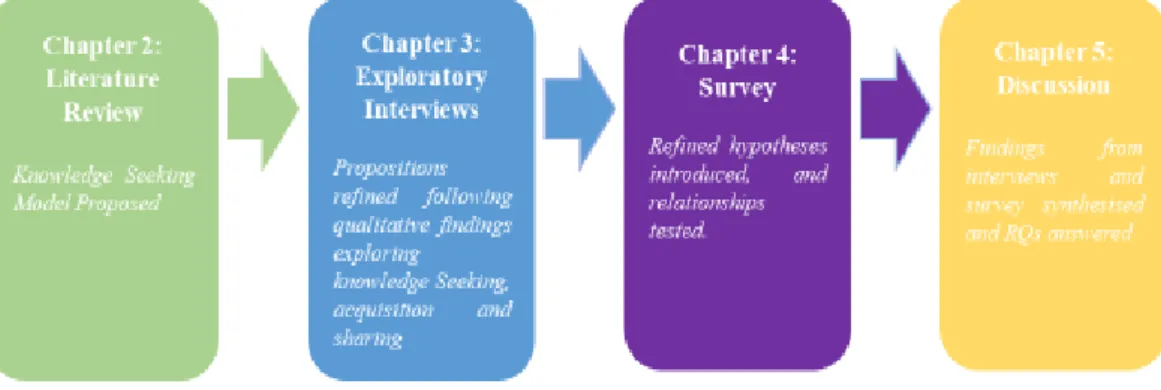
This study employs a mixed method approach in order to explore and test the proposed framework, which provides a more comprehensive understanding of the knowledge seeking construct in the context of highly tacit knowledge. Of particular relevance to this thesis is the assertion that through mixed methods, qualitative data can help the quantitative study during design by aiding with conceptual development and instrumentation and that quantitative analysis may complement the findings of qualitative methods by confirming or rejecting apparently significant data and relationships (Amaratunga et al., 2002). Therefore, in this thesis the mixed methods strategy follows a sequential design (Teddlie & Tashakkori, 2009) with two stages of data collection. The initial proposed framework is first refined through an explorative qualitative study in Chapter three. This study tested the assumptions of knowledge seeking as a distinct construct from the related processes of knowledge sharing and acquisition through an explorative qualitative study. Findings provided evidence of the individual and social factors which influence seeking and how they may be differentiated from those which influence acquisition and sharing. It also elucidated the differing dimensions of knowledge seeking, such as the motivation to seek and decisions of whom to seek from, thereby a more granular insight into the factors influencing interpersonal knowledge seeking for tacit knowledge. The second stage of the study is explanatory, and involves testing the relationships proposed in the conceptual framework using a survey in Chapter four. Following separate analysis of each, the quantitative and qualitative findings are integrated in Chapter five to provide in-depth explanations of the complex relationships effecting individual knowledge seeking in high tacit knowledge contexts.
16
Figure 1-1: Research Process and Design
1.5.2 Research Philosophy
This mixed method research design was underpinned by a pragmatist research philosophy. While paradigmatic positions are often assumed with quantitative (positivist) and qualitative (constructivist) methods, there is much debate regarding what paradigm is suitable for mixed methods studies. However, pragmatism is proposed as the most appropriate paradigm (Teddlie & Tashakkori, 2003). Pragmatism supports both singular and multiple realities which allows the researcher to test hypotheses and present multiple perspectives. Therefore, the pragmatism paradigm combines the ontological views of post-positivism and constructivism, assuming that singular and multiple realties can exist, as opposed to arguing for one reality. This perspective is a more flexible approach when compared with post-positivism and constructivism as it rejects a forced choice between existing paradigms with regard to logic, ontology, and epistemology. The epistemology of pragmatism supports the view that data can be collected by ‘what works’ to address research questions, rather than the distance and impartiality epistemology of post-positivism or the necessity of closeness advocated by constructivism (Creswell & Plano Clark, 2007). Pragmatism is a practical, applied research philosophy which uses a methodology of abductive reasoning to move iteratively from deductive to inductive reasoning (Venkatesh, Brown & Bala, 2013). This approach allows the research to provide meaningful insights into the phenomenon of interest. Adopting the pragmatist paradigm involves deciding on appropriate methods based on the research question, context, and practical considerations (Greene & Caracelli, 2003). Additional characteristics of pragmatism include the view that theories are instruments judged by how well they currently work, and advocating action over philosophy (Teddlie & Tashakkori, 2009). This thesis applies pragmatism as its research philosophy due to its flexibility and practical nature.
1.5.3 Research Context
The thesis investigated two different research contexts within Ireland, Study 1 took place within the manufacturing sector in Ireland across three multinational organisations, while Study 2
17
took place in the health care sector in Ireland across several hospitals. These industries were deemed appropriate contexts to study tacit knowledge as research has shown that intellectual capital or knowledge represents the majority of added value in services and manufacturing industries (Quinn, Anderson & Finkelstein, 1996).
In addition, the job roles of the populations investigated were appropriate for examining knowledge behaviours. Study 1 investigated technicians and engineers and production supervisors who were asked about their behaviours when engaged in non-routine problems solving tasks. Study 2 investigated junior doctors who were also asked to refer to specific tasks which consultant doctors chose prior to the study due to their tacit nature. These roles and job tasks are particularly relevant for investigating tacit knowledge as both the technicians and engineers investigated in Study 1 and the junior doctors investigated in Study 2 engage in knowledge-intensive work, and the tasks that were specifically investigated required experiential, context-specific, tacit knowledge in order to complete them effectively. Therefore, the employees investigated engaged in tasks that required them to rely on colleagues for knowledge to solve problems or complete tasks. The job specifics are important to acknowledge as they are likely to have an impact on seeking behaviours. For example, job characteristics theory suggests that in roles where seeking is key to completing a task, people may be “forced” or expected to seek (Foss, Minbaeva, Pedersen, & Reinholt, 2009; Hackman & Oldham, 1976) and this is likely to impact on their seeking behaviours (Sergeeva & Andreeva, 2015), therefore contextualising our understanding of who seeks knowledge.
The populations investigated compare with a variety of prior research on knowledge sharing which also focused on knowledge-intensive work, including professionals in pharmaceutical companies, life scientists, employees in high-tech firms, engineers within manufacturing sectors in the U.S, nurses in Canada (e.g. Andrews & Delahaye, 2000; Levin & Cross, 2004; Collins & Smith, 2006; Hsiao, Tsai, & Lee, 2006; Leiter, Day, Harvie, & Shaughnessy, 2007; Siemsen, Balasubramanian, & Roth, 2007). Research specifically focused on interpersonal knowledge seeking has examined consultants, frontline employees, project managers and supervisors (Cross & Borgatti, 2004; Gray & Meister 2004; Hansen et al., 2005). In addition, some knowledge sharing studies specified a focus on investigating knowledge sharing for completing a project together (Constant, Spoull & Kiesler, 1996; Barrett & Oborn, 2010) or collaborating (Andrews & Delahaye, 2000; Hsiao, Tsai, & Lee, 2006) similar to this research. However, this thesis represents a further contribution to existing research as it is the first to investigate the three sharing processes of knowledge seeking, acquisition and sharing within the same contexts. As this research examines all three behaviours in two separate industries, this provides more certainty regarding the applicability of findings to other knowledge-based work contexts. Additionally, this research exclusively focuses on tasks which require more tacit knowledge, and provides contextual consideration of the role tenure and expertise in the sampled populations play in differentiating knowledge seeking, acquisition and sharing.
18 1.6 Thesis Structure
The three studies presented in this thesis address the thesis research questions by proposing and examining individual and social factors which influence interpersonal knowledge seeking and may effect knowledge acquisition within a high tacit knowledge context from a conceptual, qualitative and quantitative perspective.
Prior to presenting these three studies, the theoretical background of organisational knowledge and knowledge sharing have been presented in this chapter (Chapter 1). This chapter illustrates the broad research gaps within the knowledge sharing field, the overall research objectives of this thesis, and specific research questions guiding this thesis. In addition, this chapter discussed the methodology underlying the research in terms of its design, philosophy, and chosen contexts.
Chapter 2 reviews the theoretical underpinnings of knowledge sharing and examines prior literature on knowledge seeking in order to propose a conceptual framework guiding the following studies. The literature review highlights the conceptual and measurement inconsistencies surrounding behaviours of knowledge seeking and acquisition within sharing literature. This study uses the 4i Organisational Learning Framework (Crossan et al., 1999) to understand how individuals may learn within the knowledge sharing process through seeking. It also introduces both Social Cognitive Theory (Bandura, 1986)) and Social Capital Theory (Nahapiet & Ghoshal, 1998) to investigate possible individual and social factors which may influence interpersonal knowledge seeking behaviours. From this, a conceptual framework is proposed to investigate knowledge seeking from others when engaged in tasks requiring tacit knowledge.
Following the review of knowledge seeking and propositions concerning individual and social capital factors which may influence knowledge seeking, Chapter 3 explores and distinguishes between those individual and social factors which influence seeking to those which influence acquisition and sharing. This study addresses the thesis research question “what factors influence the knowledge seeking behaviours of individuals engaged in tasks with high levels of tacit knowledge?”. To do so, analysis is presented from 33 semi-structured interviews with employees from three multinational organisations who must solve non-routine problems.
Chapter 4 empirically tests the specific propositions described in Study 1, which are fine-tuned based on the exploratory findings within Study 2. This study addresses the thesis research questions 1 and 2 using a cross-sectional design with a sample of 238 junior doctors in Ireland engaged in tacit tasks.
19
Finally, Chapter 5 concludes by synthesising and discussing the findings from Chapter 3 and 4 in light of the two research questions introduced in Chapter 1. The main theoretical, empirical and methodological contributions of the research are discussed, as well as the practical implications. The limitations of the studies and recommendations for future research will also be presented.
20
: LITERATURE REVIEW
Knowledge Seeking and its Individual and Social Antecedents –
A Review and Conceptual Model
21 2.1 Introduction
Sharing tacit knowledge can create a sustained competitive advantage for organisations (Grant, 1996) as it is rare, difficult to substitute, imitate and transfer (Grant, 1996; Nonaka, 1991). Knowledge sharing is defined as the provision or receipt of task information, know how, and feedback on a product or a procedure (Hansen, 1999). However, sharing tacit knowledge can be particularly difficult due to its less than articulable nature (Kogut & Zander, 1992). As tacit knowledge resides in the minds of individuals rather than organisations (Grant, 1996), it’s value is only apparent when individuals are motivated to share this type of knowledge with their peers (Hansen, Mors, & Løvås, 2005; Szulanski, 1996) and recipients are motivated to learn from the provider (Hurley, 2002). It is only when both provider and recipient take part in this two-way sharing process that tacit knowledge is effectively acquired. Despite this recognition of the particular value of tacit knowledge and the social complexity in sharing it, extant knowledge sharing literature has tended to focus on a concept of knowledge which does not distinguish between explicit and tacit knowledge. This is problematic as factors that enable the sharing and acquisition of explicit knowledge may not also enable the transfer of tacit knowledge..
Additionally, the knowledge sharing literature generally focuses on the uni-directional exchange of knowledge from the provider to the recipient (Hansen, Mors, & Løvås, 2005; Kim, Song, & Jones, 2011) i.e. the knowledge “provider”, “supply” or “push” perspective (Kim et al., 2011; Lin, Geng, & Whinston, 2005; McElroy, 2003). Research from this perspective focuses on exploring factors which increase the individual’s exposure to knowledge and expecting that acquisition will naturally follow. However, knowledge which is “pushed” or “shared” will not necessarily be successfully transferred or acquired if the “recipient” cannot or does not locate, access, and learn that which they require. Learning literature identifies that knowledge is only acquired from others in the workplace (Eraut, 2000; Le Clus, 2011) when people have the need, motivation or opportunity for learning (Marsick & Watkins 2001) and therefore control of learning rests primarily in the hands of the learner (Marsick & Watkins, 1997), who is trying to learn from an experience (Foley, 2004). It follows that simply “pushing” knowledge to the recipient may not be an effective approach to ensuring they acquire this knowledge for two reasons. First, they may not have a need for knowledge at that time, and second the recipient may not be motivated to learn from the knowledge provider. As a result, shifting the focus on how the recipient acquires knowledge may add insight into how to enable successful knowledge sharing.
The recipient perspective focuses on the need for employees to successfully acquire and learn from the knowledge that they seek (Argote & Ingram, 2000; Quigley, Tesluk, Locke, & Bartol, 2007). Knowledge search by the “recipient” is the logically prior phase of knowledge sharing (Hansen, Mors & Løvås, 2005) and an important but under-researched phase of the knowledge
22
sharing process (Hansen, Mors & Løvås, 2005; Hansen, Nohria & Tierney, 1999; Zhang, 2020). Consequently there are calls for theory and research on the knowledge seeking, “pull” or “recipient” perspective (Chatti, Jarke, & Frosch-Wilke, 2007; Hansen et al., 2005; Naeve, 2005; Kim et al., 2011; King, Chung & Haney, 2008; Lai & Graham, 2009).
While theories investigating knowledge seeking are notably absent, insight on tacit knowledge sharing and acquisition processes are garnered from existing theories with a particular focus on tacit knowledge, and the face-to-face interaction neccesary when sharing and learning tacit knowledge. These include the SECI (socialization externalization combination and integration) model (Nonaka & Takeuchi, 1995) and the 4i organisational learning framework (Crossan, Lane, & White, 1999). However, while the SECI model outlines the phases involved in tacit-explicit-tacit knowledge conversion, it is criticised for failing to explain the processes that enable this conversion and ensure that knowledge made explicit is understood and learned (Freyens & Martin, 2007; Gourlay, 2003; 2006; McIver, 2012). The 4i organisational learning framework focuses more on how knowledge is learned and so is a useful complement to the SECI model. However, due to a lack of empirical research investigating the on the 4i framework (Crossan, Maurer, & White, 2011), the processes enabling or impeding the 4i’s are insufficiently understood. Both the SECI and 4i and related research (Bartol & Srivastava, 2002; Hansen, Nohria, & Tierney, 1999; Levin and Cross, 2004; Nonaka, 1994; Osterloh & Frey, 2000; Yang & Farn, 2006; 2009) identify that socialization is central to tacit knowledge sharing and learning, however the enabling or impeding factors for socialization are unarticulated. Both models remain vague about the concrete underlying cognitive and social mechanisms (Kump, et al., 2015).
Two theoretical lens through which to more precisely investigate the cognitive and social processes behind tacit knowledge seeking are social cognitive theory (SCT) and social capital theory. Social cognitive theory suggests that both individual cognition and environmental factors including social factors are predictors of individuals’ behaviour (Bandura, 1986, 1997) (in this case knowledge seeking). One component of cognition, self-efficacy, suggests that expectations are major factors in determining affective and behavioural reactions in numerous situations, including behaviour (Bandura, 1986; Martinko, Henry, & Zmud, 1996). SCT identifies social interaction as an environmental factor predictive of individuals behaviour, however research to-date has not investigated this component of SCT (Chiu, Hsu, & Wang, 2006) or explored this component in any detail. Therefore, social capital theory, which describes the characteristics of social relationships and the resources embedded within these relationships that can be used to acquire knowledge (Nahapiet & Ghoshal, 1998), is useful for both exploring the social interaction component of SCT and the socialization process central to the SECI and 4i frameworks. Combined, these two theoretical lens can be used to investigate the pertinent cognitive and social interaction factors impacting tacit knowledg