S
trategic
P
lan
2013 - 2017
PHASE II IMPLEMENTATION OF THE
CIRCUMPOLAR BIODIVERSITY MONITORING PROGRAM
• Directorate for Nature Management, Trondheim, Norway
• Environment Canada, Ottawa, Canada
• Faroese Museum of Natural History, Tórshavn, Faroe Islands (Kingdom of Denmark)
• Finnish Ministry of the Environment, Helsinki, Finland
• Icelandic Institute of Natural History, Reykjavik, Iceland
• The Ministry of Housing, Nature and Environment, Greenland
• Russian Federation Ministry of Natural Resources, Moscow, Russia
• Swedish Environmental Protection Agency, Stockholm, Sweden
• United States Department of the Interior, Fish and Wildlife Service, Anchorage, Alaska CAFF Permanent Participant Organizations:
• Aleut International Association (AIA)
• Arctic Athabaskan Council (AAC)
• Gwich’in Council International (GCI)
• Inuit Circumpolar Council (ICC) – Greenland, Alaska and Canada
• Russian Indigenous Peoples of the North (RAIPON)
• Saami Council
This publication should be cited as: Barry, T., T. Christensen, J. Payne, M.Gill. 2013. Circumpolar Biodiversity Monitoring Program Strategic Plan, 2013-2017: Phase II Implmentation of the CBMP. CAFF Monitoring Series Report Nr. 8. CAFF International Secretariat. Akureyri, Iceland. ISBN 978-9935-431-27-1
Layout and editing: María Rut Dýrfjörð and Courtney Price (CAFF) Cover photo: Mark Marissink
For more information please contact: CAFF International Secretariat Borgir, Nordurslod
600 Akureyri, Iceland Phone: +354 462-3350 Fax: +354 462-3390 www.caff.is
CAFF Designated Area
We gratefully acknowledge the funding provided by the Nordic Council of Ministers
Caribou. Photo: bierchen/Shutterstock.com
Strategic Plan
2013 - 2017
Authors
2. Introduction ... 8
2.1 The need for coordinated Arctic biodiversity monitoring ...8
2.2 The benefits of a pan-Arctic, coordinated biodiversity monitoring program ...9
2.3 Arctic biodiversity monitoring: current status ...9
2.4 The Circumpolar Biodiversity Monitoring Program: past, present, future ... 11
3. Program coordination ...13
4. Implementation of the pan-Arctic Biodiversity Monitoring Plans ...14
4.1 Marine Biodiversity Monitoring Plan ... 14
4.2 Terrestrial Biodiversity Monitoring Plan ... 14
4.3 Freshwater Biodiversity Monitoring Plan ... 15
4.4 Coastal Biodiversity Monitoring Plan ... 15
4.5 Community based monitoring and citizen science ... 17
5. Traditional knowledge ...18
6. Data management ...18
7. Analysis and reporting ...19
7.1 The State of Arctic Biodiversity reports ... 20
7.2 Status of indicators/ Focal Ecosystem Component attributes ... 20
7.3 Headline Indicators ... 20
7.4 Scientific publications ... 20
7.5 Performance reports and work plans ... 21
7.6 Program review ... 21
7.7 Summaries and other communications material ... 21
8. Strategic capacity building ...23
9. Communications ...23
9.1 Goals and target audiences ... 23
9.2 Products ... 24
9.3 Coordination, roles and timeline ... 24
10. Milestones and anticipated costs ...24
FIgure 1. Distribution of current and historical monitoring coverage...10
Figure 2. CBMP takes an adaptive Integrated Ecosystem Approach to monitoring and data creation ...12
Figure 3. CBMP organisational chart ...13
Figure 4. Illustration depicting the ABDS and how clients can utilise the system to meet...18
Figure 5: A simplified overview of the steps involved in accessing, integrating, analyzing and presenting biodiversity information. ...19
List of tables
Table 1. Major activities and deliverables for the three existing monitoring plans ...16Table 2: Major data activities and deliverables ...19
Table 3: CBMP reports, target audiences, frequency and timing ...22
1. Executive summary
As the Arctic continues to experience a period of intense and accelerating change, with climate change at the forefront, it has become increasingly important to effectively and sustainably manage Arctic ecosystems. The Conservation of Arctic Flora and Fauna (CAFF – www.caff.is), Arctic Council working group, operates at the interface between science and policy and as such is positioned to develop common responses on issues of importance. In order to deliver informed policy advice to decision-makers, it is important that accurate, credible and timely information on current and predicted changes in the Arctic’s ecosystems are made available. To efficiently address this information CAFF created the Circumpolar Biodiversity Monitoring Program (CBMP – www.cbmp.is) which operates as an international network of scientists and local resource users working together to enhance Arctic biodiversity monitoring to improve detection, understanding, prediction and reporting of important changes facing Arctic biodiversity.
The development of the CBMP can be seen as a response to a number of Arctic Council recommendations that have called for improved and better coordinated, long-term Arctic biodiversity monitoring. The development and implementation of the CBMP has been further highlighted as an Arctic Council priority in the Kiruna (2013), Tromso (2009), Salekhard (2006), Reykjavik (2004), Inari (2002), Barrow (2000) and Iqaluit (1998) Declarations.
At the Arctic Environmental Ministers meeting in 2013 in Jukkasjärvi, Sweeden, the Ministers encouraged the Arctic Council to take a leading, coordinating role in the follow–up of the Arctic Biodiversity Assessment and encouraged Arctic States to implement its recommendations. They also stated that a targeted effort for the conservation and sustainable management of marine, terrestrial and freshwater habi tats will be needed. In this con text, ministers stressed the importance of implementing agreed biodiversity objectives in the Arctic, in particular the Strategic Plan for Bio diversity 2011-2020 and the Aichi
Biodiversity Targets, and in relation to this encouraged the development of joint work between the Arctic States, building on exis ting work (Chairs statement, 2013). This plan can be regarded as a direct follow up on these recommendations.
Also in a global perspective the continued implementation of CBMP comes at a critical time. Among others the recent
Conference of the Parties to the Conven tion on Biological Diversity (CBD) resulted in a strong recogni tion of the importance of Arctic biodiversity and of the Arctic Council work.
Enhanced coordination of Arctic biodiversity monitoring via the CBMP is yielding an improved ability to detect important trends, link these trends to their underlying causes, predict future trends and scenarios for Arctic biodiversity, and thereby provide more timely and credible information to support responsible decision making at multiple scales (local, regional, national and global). It is anticipated that this increased coordination will result in reduced costs, compared to the cost of multiple, uncoordinated approaches that stop at regional or national boundaries. While most Arctic biodiversity monitoring networks are, and will remain, national or sub-national in scope, there is immeasurable value in establishing circumpolar connections among monitoring networks. In addition, this coordination is resulting in more rapid uptake of new technologies and methodologies through this increased dialogue.
The first five-year CBMP implementation plan (Gill, et. al. 2008) focused on developing the strategy for building and maintaining a comprehensive and cost-effective pan-Arctic biodiversity monitoring program. This next generation CBMP strategic plan will focus on continuing to implement those strategies while allowing for greater emphasis on interpretation, integration and communication of biodiversity information resulting from the CBMP Monitoring Plans. This plan outlines ongoing efforts to establish and maintain steering groups to implement the monitoring plans and manage and provide that information for ongoing and future assessments of Arctic biodiversity.
In implementing the monitoring plans it is critically important to include Arctic peoples who spend vast amounts of time in these remote environments. Drawing on personal experience, information shared with others, knowledge handed down through generations, and their TEK, residents of the Arctic are often able to recognize subtle changes and offer insights into their causes.
All Arctic states, as well as a number of non-Arctic states and organizations, conduct monitoring of various elements of Arctic biodiversity. These efforts have largely been uncoordinated and limited in their geographic, thematic and temporal scope, and are not evenly spread across the Arctic.
In May 2013, Denmark/Greenland/Faroe Islands and the United States agreed to co-lead the CBMP after Canada‘s successful eight-year leadership. Co-leading such a high profile program comes with a few challenges, including considerable
collaboration and communication between the leads to ensure tasks are well coordinated and not duplicated. The co-leads have jointly agreed with the CAFF Secretariat to coordinate program elements in a fashion that is both efficient and economically feasible with respect to meetings and outside organizations.
Central to developing a pan-Arctic ecosystem-based understanding are the CBMP ecosystem-based Arctic biodiversity moni toring plans [Marine (Gill, et. al. 2011), Terrestrial (Christensen, et. al. 2013), Freshwater (Culp, et. al. 2012), and Coastal (planned)]. These umbrella monitoring plans use existing monitoring capacity and identify priority gaps in current capacity to facili tate improved and cost-effective monitoring, data management and reporting through enhanced integration and coordination. Although the CBMP consists of thematically developed monitoring plans, the objective of this 4-year work implementation plan is to ensure their harmonisation using a successfully-combined, pan-Arctic ecosystem-based approach that is incorporated into a single reporting framework.
The successful and sustainable implementation of the CBMP is dependent upon access to sufficient financial, organisational and institutional support. In order to generate this support, significant efforts within the CBMP are employed to develop the necessary strategic partnerships. This strategic capacity building is nested within the broader development by CAFF of a framework involving the key international and regional organizations and institutions of relevance to Arctic biodiversity.
2. Introduction
2.1 The need for coordinated Arctic biodiversity monitoring
The Arctic is experiencing a period of intense and accelerating change with climate change at the forefront (CAFF, ABA 2013). In the past century average temperatures have increased at almost twice the average global rate (IPCC 2007). Over the past thirty years, seasonal minimal sea ice extent in the Arctic has decreased by 45,000 km2/year (Post et. al. 2009). Along with later freeze and earlier break-up, the extent of terrestrial snow cover in the Northern Hemisphere has decreased and is expected to continue decreasing (Post, et. al. 2009). The magnitude of these changes are exerting major influences on Arctic ecosystems and the biodiversity they support (Frey, et. al. 2011). For example, marine net primary production has increased by an average of 20% across the Arctic between 1998 and 2009 and is strongly correlated with areas of summer sea-ice retreat ( Frey, et. al. 2011). In some areas, the peak of marine primary production is occurring 50 days earlier than average and this may present challenges for species that annually migrate to Arctic seas to take advantage of this high productivity (Frey, et. al. 2011). Furthermore, tundra biomass production has increased in many parts of the Arctic over the past thirty years and this increase is strongly correlated with areas proximal to coastal regions experiencing significant summer sea-ice retreat (Epstein, et. al. 2012).
These, and many other changes, challenge our ability to effectively and sustainably manage Arctic ecosystems. The Conservation of Arctic Flora and Fauna (CAFF – www.caff.is) working group operates at the interface between science and policy and as such is well positioned to develop common responses on issues of importance. In order to deliver informed policy advice to decision-makers, it is important that accurate, credible and timely information on current and predicted changes in the Arctic’s ecosystems are made available. Yet current monitoring capacity in the Arctic is fragmentary and incomplete, thereby limiting the ability to detect important trends in Arctic biodiversity (Gill, et. al. 2008). Thus, CAFF created the Circumpolar Biodiversity Monitoring Program (CBMP; www.cbmp.is) which operates as an international network of scientists and local resource users working together to enhance Arctic biodiversity monitoring to improve detection, understanding, prediction and reporting of important changes facing Arctic biodiversity.
The development of the CBMP can be seen as a response to a number of Arctic Council recommendations that have called for improved and better coordinated, long-term Arctic biodiversity monitoring [e.g. Arctic Biodiversity Assessment Report for Policy
Makers (CAFF, ABA 2013); the Oil and Gas Assessment (AMAP 2007) and the Arctic Climate Impact Assessment (ACIA 2005)]. The
development and implementation of the CBMP has been further highlighted as an Arctic Council priority in the Kiruna (2013), Tromso (2009), Salekhard (2006), Reykjavik (2004), Inari (2002), Barrow (2000) and Iqaluit (1998) Declarations.
At the Arctic Environmental Ministers meeting in Jukkasjärvi, Sweden, the Ministers encouraged the Arctic Council to take a leading, coordinating role in the follow–up of ABA and encouraged Arctic States to implement its recommendations. Ministers underli ned that strengthened global efforts to reduce climate change, the most serious threat to Arctic biodiversity, are essential and stressed the importance of mainstreaming biodiversity considerations in all relevant policy fields. They also stated that an targeted effort for the conservation and sustainable management of marine, terrestrial and freshwater habi-tats will be needed. In this con text, ministers stressed the importance of implementing agreed biodiversity objectives in the Arctic, including protected areas, in particular the Strategic Plan for Bio diversity 2011-2020 and the Aichi Biodiversity Targets, and in relation to this encouraged the development of joint work between the Arctic States, building on exis ting work (Chairs statement, 2013).
Also in a global perspective CBMP comes at a critical time. The recent Conference of the Parties to the Conven tion on Biological Diversity (CBD) resulted in a strong recogni tion of the importance of Arctic biodiversity and of the Arctic Council work. The Parties to the CBD, recognized that their 2010 goal to reduce the rate of loss of global biodiversity failed, established new 2020 targets (Aichi Biodiversity Targets1) to reduce the rate of loss of biodiversity by focusing efforts on the underlying
causes. In most cases, the rate of loss has not been adequately measured (Pereira, et. al. 2012)) and the Global Biodiversity
Outlook 3 (SCBD 2010) highlighted the need for increased mobilization of resources for the research and monitoring of
biodiversity to address this knowledge gap. At the same time, the Intergovernmental Panel on Climate Change (IPCC) has concluded that climate change related to increased greenhouse gas concentrations will result in major physical, ecological, social, and economic impacts (Pachauri, et. al. 2007). There is broad acknowledgement that the polar regions are continuing to experience rapid and dramatic changes as a result of a changing climate (Anisimov & Fitzharris 2001). The CBMP is now formally recognized by a number of global institutions2 and agreements3. The CBD (Nagoya CoP 2010 and Hyderabad CoP
2012) has formally called upon the CBMP to deliver Arctic biodiversity status and trends information in support of tracking the CBD’s 2020 Aichi Targets. The CBMP is also recognized as one of four regional Biodiversity Observing Networks (BONs) of the Group on Earth Observations – Biodiversity Observations Network. The CBMP approach is being promoted and adopted in other parts of the globe where new regional BONs are being considered. In addition, many Nations have developed Arctic strategies specific to their geographic region that incorporate or reference the need to improve biodiversity monitoring.
2.2 The benefits of a pan-Arctic, coordinated biodiversity monitoring program
Enhanced coordination of Arctic biodiversity monitoring via the CBMP is already yielding an improved ability to detect important trends, link these trends to their underlying causes, predict future trends and scenarios for Arctic biodiversity, and thereby provide more timely and credible information to support responsible decision making at multiple scales (local, regional, national and global). It is anticipated that this increased coordination will result in reduced costs, compared to the cost of multiple, uncoordinated approaches that stop at regional or national boundaries. While most Arctic biodiversity monitoring networks are, and will remain, national or sub-national in scope, there is immeasurable value in establishing circumpolar connections among monitoring networks. In addition, this coordination is resulting in more rapid uptake of new technologies and methodologies through this increased dialogue. For example, the development of the CBMP Marine Plan has already resulted in monitoring efficiencies and reduced overlap. While acknowledging the significant gains in our understanding of Arctic biodiversity change due to improved coordination of monitoring, coordination alone will not be sufficient to address all needs for information; new monitoring will be required to fill priority gaps including a greater use of remote sensing assets and modelling. Information on how the Arctic is responding to pressures such as climatic change and human activity is urgently needed to allow decision makers, whether in local Arctic communities, regional or national governments, or international venues, to make timely and effective decisions regarding resource management, conservation actions, and adaptive management.
2.3 Arctic biodiversity monitoring: current status
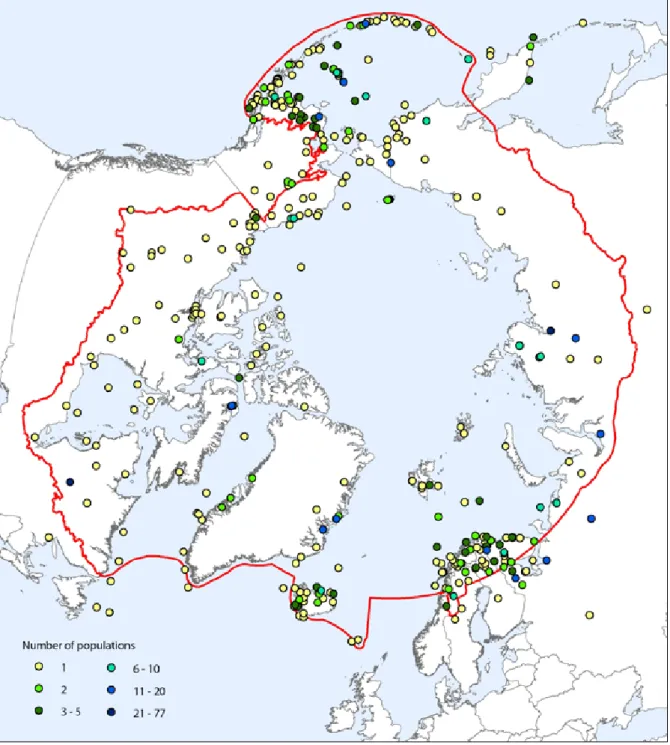
While all Arctic states, Arctic indigenous organisations as well as a number of non-Arctic states and organizations, conduct monitoring of various elements of Arctic biodiversity, these efforts have largely been uncoordinated, are limited in their geographic, thematic and temporal scope and are not evenly spread across the Arctic. In particular, areas in Northern Canada, Northern Greenland and Northern Russia have very limited biodiversity monitoring whereas areas in northern Scandinavia, Bering Sea, Aleutian Islands and Iceland have more intense, on-going biodiversity monitoring (Eamer, et. al. 2012) and in many cases, long-term datasets. Given that the area in question is 32 million km2 comprised of largely remote and extreme
ecosystems, not surprisingly, current monitoring efforts are seen as inadequate to confidently detect and attribute important changes in the Arctic’s ecosystems and the biodiversity they support. Indeed, recent issues regarding state finances and priorities have made it even more difficult to sustain existing monitoring efforts.
1 www.cbd.int/sp/targets.
2 See here for detailed list of CBMP partner organisations and institutions - www.caff.is/cbmp-partners.
3 African-Eurasian Migratory Waterbird Agreement (AEWA), Convention on Biological Diversity (CBD), Convention on Migratory Species (CMS), East Asia-Australasia Flyway Partnership and the Ramsar Convention on Wetlands.
FIgure 1. Distribution of current and historical monitoring coverage.
Until recently, limited biodiversity monitoring efforts in the Arctic were largely operating at the local to national scale, focused on answering specific questions or meeting mandates specific to a given geographic area or government jurisdiction. The International Polar Year (IPY) (2007-08), focus on international collaborative research and monitoring received a much higher profile with greater emphasis on key drivers of Arctic change. The CBMP’s implementation focus on coordination, coincides well with the IPY initiatives. The CBMP is continuing to gain momentum through the implementation and development of its pan-Arctic, biome-based monitoring plans (marine, freshwater, terrestrial and coastal).
While much work remains to truly integrate existing Arctic biodiversity monitoring, the CBMP monitoring plans are a major step forward. These plans identify sampling schemes (locations and frequency of monitoring) using standardized or harmonized monitoring methods, focused on a core set of focal ecosystem components and processes. These plans also focus on rescuing existing, long-term datasets and other information sources (e.g. Traditional Ecological Knowledge (TEK) – that is very relevant also in relation to describe current conditions; Paleoecology) to back-cast, establish historical baselines and thereby, better understand natural change and cycles and place current rates of change in context. There are also a great number of satellites, operating that collect immense amounts of data that could be used to better track changes in the distribution, extent and condition of Arctic ecosystems. The CBMP monitoring plans include efforts to better utilize these sources of information.
2.4 The Circumpolar Biodiversity Monitoring Program: past, present, future
In 2004, CAFF published a Framework Document (Petersen, et. al. 2004) whose development was led by Iceland. This document outlined the goals and objectives for the program and an action plan for improving coordination of Arctic biodiversity monitoring, data management and reporting. During this time, several pan-Arctic networks (Seabirds, Reindeer/ Caribou and Flora Groups) were established under the auspices of CAFF. In 2005, Canada assumed lead of the CBMP and the program was formally launched. Over the next two years, detailed planning and promotion of the program was conducted via a series of meetings and workshops across the Arctic. These detailed discussions led to the publication, in 2008, of the CBMP’s Five Year Implementation Plan (Gill, et. al. 2008).
Since 2008, the CBMP Arctic Marine Biodiversity Monitoring Plan (Gill, et. al. 2011), Arctic Freshwater Biodiversity Monitoring Plan (Culp, et. al. 2012) and Arctic Terrestrial Biodiversity Monitoring Plan (Christensen. et. al. 2013) have been published. A series of background papers and monitoring strategies in support of these plans have also been developed4. An Arctic Biodiversity Data Service (ABDS - www.abds.is) has been established to manage and make accessible CAFF CBMP data. A Strategy
for Facilitating and Developing Community-based Monitoring (Huntington 2008)) and A Strategy for Developing Indices and
Indicators (Gill, et. al. 2008) have also been developed and implemented. As a result, several indicators of Arctic biodiversity
change have been developed [(Arctic Species Trend Index (McRae, et. al. 2010; Eamer et al. 2012; Bohm et al. 2012; McRae et al. 2012); Protected Areas Indicator (CAFF 2010); Linguistic Diversity Index (CAFF 2010) and a Community-based Monitoring Handbook published (Gofman 2010)]. In addition, the CBMP, in collaboration with the U.S. National Oceanic and Atmospheric Administration, publishes the Arctic Report Cards5 (an annual summary of recent changes in the Arctic’s physical and
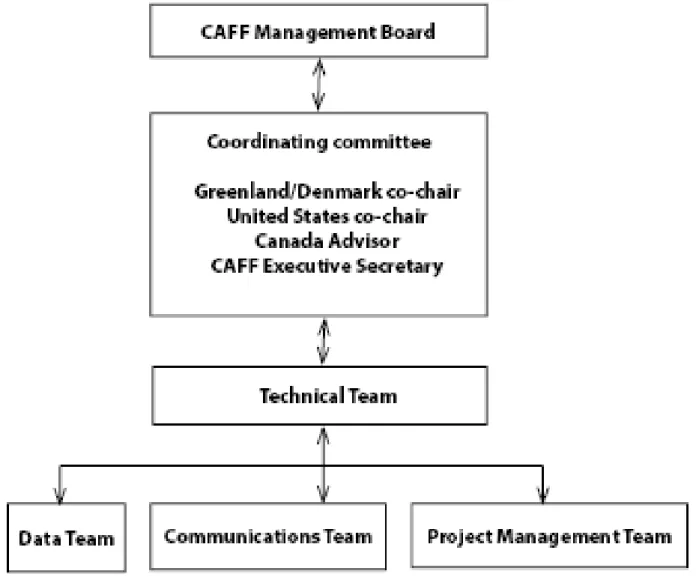
biological systems). A number of strategic partnerships with other Arctic Council Working Groups, global organizations and institutions have also been established to ensure that the outputs of the CBMP contribute to other Arctic, global and sub-global initiatives and processes. Collectively, these CBMP initiatives and program components involve over 80 organizations both inside and outside the Arctic6. A core technical team within the CAFF Secretariat (Program Officer, Data Manager, and Communications Officer) manage the day to day technical operations of the CBMP. With the new co-leads, the CBMP is now managed by a steering committee comprised of the co-Chairs from United States and Denmark/ Greenland, a Canadian advisor and the CAFF Executive Secretary. The daily operation of the program is conducted by the CBMP Technical team composed of the CAFF Secretariat and the support teams for the US and Danish/ Greenlandic co-Chairs (Chapter 3). The first five-year CBMP implementation plan (Gill, et. al. 2008) focused on developing and implementing the strategy for building and maintaining a comprehensive and cost-effective pan-Arctic monitoring program. This next generation CBMP strategic plan will focus on further implementing those strategies while continuing to interpret, integrate and communicate biodiversity information. Increased participation of TEK holders will be encouraged and focus on establishing greater capacity for community-based monitoring and industry participation will also be emphasized. This effort includes establishing or maintaining steering groups to develop implementation plans and coordinate monitoring efforts across the Arctic . In implementing the monitoring plans, it is critically important to include Arctic peoples (both Aboriginal and non-Aboriginal) who spend vast amounts of time in these remote environments. Drawing on personal experience, information shared with others and knowledge handed down through generations e.g. TEK residents of the Arctic are often able to recognize subtle changes and offer insights into their causes. It is likewise important to include TEK holders in the development and re-working of implementation plans as the CBMP moves forward.
To manage the resulting data output from these monitoring plans, the continued development of the Arctic Biodiversity Data Service will also be a continued focus to ensure effective discovery, access and use of Arctic biodiversity data. (See 6).
The successful and sustainable implementation of the CBMP is dependent upon access to sufficient financial, organisational and institutional support. In order to generate this support, significant resources within the CBMP are employed to
develop the necessary strategic partnerships. This strategic capacity building is nested within the broader development by CAFF of a framework involving the key international and regional organizations and institutions of relevance to Arctic biodiversity. Through Resolutions of Cooperation (RoC) established by CAFF with the relevant biodiversity related multilateral environmental agreements7 the CBMP has been recognised as playing an important role in facilitating more rapid detection, communication, and response to significant biodiversity related trends and pressures. Data from CBMP will aim to feed into other reporting processes e.g. the CBD and the European Environment Agency. Such recognition has helped raised awareness and contributes towards generating the support necessary to the CBMPs sustainable implementation Fundamental to the continued success of the program, is the continual development and maintenance of partnerships with national and sub-national monitoring networks with whom the CBMP’s network of network approach relies upon.
4 www.caff.is/publications/view_category/23-all-monitoring-documents 5 www.arctic.noaa.gov/reportcard/index.html
6 See here for detailed list of CBMP partner organisations and institutions - www.caff.is/cbmp-partners
7 African-Eurasian Migratory Waterbirds (AEWA), Convention on Biological Diversity (CBD), Convention on Migratory Species (CMS), East Asia-Australasia Flyway, Ramsar Convention on Wetlands
Figure 2. CBMP takes an adaptive Integrated Ecosystem Approach to monitoring and data creation. The figure shows relationships of the Expert/ Steering Groups to the CBMP and the networks that CBMP builds upon. Monitoring outputs (blue arrows) feed into the assessment and decision-making processes, ultimately also feeding back into the monitoring scheme to enable flexible and long term adaptive implementation. The CBMP follows steps required to establish an effective, efficient and adaptive monitoring program (Lindenmayer and Likens 2010)
3. Program coordination
In May 2013, Denmark/Greenland/Faroe Islands and the United States agreed to co-lead the CBMP after Canada‘s successful eight-year leadership. Co-leading such a high profile program comes with a few challenges, including considerable
collaboration and communication between the co-leads to ensure tasks are well coordinated and not duplicated. The sharing of duties also increases the visibility and potential funding of the CBMP through an increasing number of connections to outside programs. The co-leads have jointly agreed with the CAFF Secretariat to coordinate program elements in a fashion that is both efficient and economically feasible with respect to meetings and outside organizations. This includes maintaining strategic links (through RoCs) with current organizations and initiatives and growing linkages with organisations such as the Group on Earth Observations - Biodiversity Observation Network (GEO-BON) and the Global Biodiversity Information Facility (GBIF).
4. Implementation of the pan-Arctic Biodiversity Monitoring Plans
The CBMP organizes its efforts around the major ecosystems of the Arctic. The Arctic’s size and complex ity represents a significant challenge in detecting and describing changes in biodiversity. This requires an integrated, pan-Arctic, based approach that can effectively identify im portant trends in biodiversity. The CBMP has adopted an integrated ecosystem-based, network of networks approach to long term monitoring in its program design, organization, and operation.This ecosystem-based approach integrates information across ecosystems, species, and their interactions, and lends itself to monitoring many aspects of an ecosystem within the Arctic region. This ap proach considers the integrity of entire ecosystems and their interaction with other ecosystems. Although the complexity and scale exceed those of the single species approach, the benefits of an ecosystem-based approach are significant. It identifies important relationships, bridging ecosystems, habitats, and species and the impacts of stressors and drivers on ecological function. The resulting information contributes directly to providing decision makers with the ability to more rapidly adapt to changing conditions that enable effective conservation, mitiga tion, and adaptive actions appropriate to the Arctic.
Central to developing a pan-Arctic ecosystem-based understanding are the CBMP ecosystem-based Arctic biodiversity moni toring plans [Marine (Gill, et. al. 2011), Terrestrial (Christensen, et. al. 2013), Freshwater (Culp, et. al. 2012), and Coastal (planned)]). These umbrella monitoring plans use existing monitoring capacity and identify priority gaps in current capacity to facili tate improved and cost-effective monitoring, data management and reporting through enhanced integration and coordination. Although the CBMP consists of thematically developed monitoring plans, the objective of this 4-year work implementation plan is to ensure their harmonisation using a successfully-combined, pan-Arctic ecosystem-based approach that is incorporated into a single reporting framework. The interplay between terrestrial, freshwater, marine and coastal systems and the way this synergy shapes Arctic ecology and the goods and services that Arctic Biodiversity provides will help inform the decision-making process. A short review of the three existing and the fourth-planned monitoring plan, and their expected implementa tion within the coming four years are described below and in table 1.
4.1 Marine Biodiversity Monitoring Plan
Development of the CBMP-Marine Plan involved creating an inventory of current Arctic marine biodiversity monitor ing efforts and datasets and producing a background paper. The plan identified eight Arctic Marine Areas (AMAs) for the purposes of reporting and compari son, and selected Focal Ecosystem Components (FECs) to monitor at various trophic levels using spe cific parameters, methodologies, indicators and sampling designs drawn from existing monitoring capac ity and data. The Marine Plan represents broad agreement across Arctic nations on how to generate better results from existing collective monitoring efforts in Arctic marine ecosystems and is designed to provide comprehensive and timely circumpolar information for effective deci sion-making.
Implementation of the Marine Plan began in 2011 (Table 1). A Marine Steering Group provides overall direction, and management; and five expert networks have been established (Sea-ice Biota, Plankton, Benthos, Marine Fish and Marine Mammals) that are con cerned with determining marine biodiversity baselines, detecting changes and trends, and discerning the underlying reasons for such changes. CAFFs Circumpolar Seabird expert group (CBird) and the IUCN Polar Bear Specialist Group are also linked to the Plans implementation. The participating countries (Canada, Greenland, Iceland, Faroe Islands, Norway, Russia and US), Permanent Participants (Inuit Circumpolar Council) and other Arctic Council working groups (Protection of Arctic Marine Environment (PAME) and the Arctic Monitoring and Assessment Programme (AMAP)) have appointed members to the Steering Group and Ex pert Networks, as relevant.
All the groups have made progress against their work plans, a testament to the commitment and dedica tion of the experts and countries involved, given the limited resources available to their efforts8. Early products from the groups are being compiled as examples of pan-Arctic integration. The implementa tion plan for the coming four years is shown in Table 1.
4.2 Terrestrial Biodiversity Monitoring Plan
The CBMP-Terrestrial Monitoring Plan, finalized in 2013, is designed to provide a framework for the harmonization of existing Arctic monitoring data and coordination of future, long-term terrestrial ecosystem-based biodiversity monitoring. The goal of the plan is to improve the collective ability of Arctic Traditional Knowledge (TK) holders, communities, land managers, and scientists to detect, understand, and report on changes in Arctic terrestrial biodiversity and ecosystems. The plan focuses on terrestrial species and ecosystems in the high-arctic, sub-arctic, and low arctic high-latitude alpine regions adjacent to and continuous to the Arctic Biodiversity Assessment. Four terrestrial biotic groups were selected for status and trend monitoring: vegetation, birds, mammals and invertebrates. Best practices in monitoring design and available technology were used to develop a framework that is efficient and practical (given the size and isolation of the Arctic), scalable from individual study plots to regional needs, and allows for participation along a range of capacity and expertise. The plan is structured around 8 Annual performance reports with further details on the current status of implementation can be found here - www.caff.is/marine.
a set of focal ecosystem component attributes (e.g., caribou population abundance) that serve as indicators of terrestrial biodiversity status and trend. As with the marine and freshwater plans, a steering group will be established to develop an implementation strategy for the terrestrial plan. Implementation will be coordinated nationally through the development of Terrestrial Expert Networks and also via dynamic linkages to existing and potentially new site and species based networks for monitoring and assessment. The implementation phase of the Terrestrial Plan will begin in 2013 with a State of the Terrestrial
Arctic report planned for 2017. The implementa tion plan for the coming four years is shown in Table 1.
4.3 Freshwater Biodiversity Monitoring Plan
The CBMP- Freshwater Plan details the rationale and frame work for improvements related to the monitoring of freshwaters of the circumpolar Arctic, includ ing ponds, lakes, rivers and their tributaries and associated wetlands. National Freshwater Expert Networks (and the Freshwater Steering Group) are cooperating to accumulate existing and new data on biodiversity and a-biotic components that strongly affect biota for the purpose of undertaking circumpolar freshwater as sessments. The Freshwater Plan is composed of five projects that will be completed by the FENs and coordi nated by the Freshwater Steering Group who are seeking funding for these projects from their country authorities. Projects 1-3 will involve the collection of existing circumpolar fresh water data. In Project 4, sampling methodology will be contrasted across the Arctic nations to determine comparability of the freshwater data. Finally, Project 5 will involve national assessments of fresh water biodiversity, leading to a circumpolar assessment of status and trends in Arctic freshwaters for the 2016 State of Arctic Freshwater
Biodiversity report. The implementation for the coming four years is shown inTable 1.
4.4 Coastal Biodiversity Monitoring Plan
The CBMP - Coastal Plan is the final Arctic biodiversity monitoring plan to be developed. Arctic coastal ecosystems are under increasing pressure from climate change, resource development and pollution and determining the effects of these pressures on coastal ecosystems will be a challenging task. The Coastal Plan will cover the area defined by the 0-30 metre depth range including intertidal areas, river delta‘s and estuaries. Creating this Plan will require development of an inventory of current Arctic coastal biodiversity monitor ing efforts and datasets, production of a background paper and a series of international workshops to inform the Plans’ development.
Milestone Activities and deliverables Terrestrial Start Year Plan Start Year Freshwater Plan Start Year Marine Plan Start Year Coastal Plan 1. Plan published
a. Final plan endorsed by CAFF Board
and published 2013 (2012) (2011) 2016
b. Promotional materials (if needed) 2013 2013 (2011) ?
2. Governing structure activated
a. CBMP- Steering Group established 2014 2013 (2011) ?
b. National and/ or other potential
Expert Networks established 2014 2013 (2011) ?
3. Data management
a. Data nodes and hosts, web-entry and data standards established for each network (national or Circumpolar)
2014/
2015 2013 2012-2014 ?
b. Nodes linked to ABDS and web
portal analysis tools developed 2015 2013 2011 – 2013 ?
c. Metadata added to Polar Data
Catalogue 2013 2013 (2010) ? 4. Indicator (/ Focal Ecosystem Component Attributes) development
a. Existing data sets identified and
aggregated 2014/15 2013
Started
(2011 -2013) ?
b. Existing data sets analysed to
establish indicator baselines 2015 2014
Started
(2011 - 2013) ? c. Indicators updated based on
performance reports (annually) 2016 2016
Started (annually) ? 5. Establish coordinated monitoring in each country a. Recommended monitoring
protocol/ manuals developed Arctic
biodiversity monitoring networks 2014 2014
Started
(2011) ?
b. Monitoring stations selected within
each country 2015 2015
Started (2011-2015+)
? c. Arctic-based monitoring networks
adopt parameters and sampling approaches 2016 2016 Started (2011-2015+) ? 6. Reporting and communication
a. Annual performance reports and
work plans 2014 2013
Started (2012-2015+)
? b. Targeted State of the Arctic
Biodiversity report (initial
assessment of contemporary and historical data)
6. Reporting and communication
c. State of the Arctic Biodiversity
reports (update - incorporating new monitoring data) –and subsequently every five years
2020 2020 2020 ?
d. Selected indicator (Focal Ecosystem Component (FEC) Attribute) status reports – every two years (on ABDS).
2015
(first pilot) 2016 definedTo be
e. Scientific publications (on-going) 2014 2013 2013 ?
f. Mapping anticipated outputs to (1) the Aichi Targets and indicators; (2) Monitoring Plan attributes to the Essential Biodiversity Variables
2014 2014 2014 ?
g. Annual Arctic Report Cards 2014 2014 2014 ?
h. General communications 2013 2013 Started
(2011) ?
7. Program review
a. Review of parameters, sampling approaches, data management approach, analysis and reporting (second review four years after initial review and subsequently every five years)
2017 2016 2015+ ?
b. External independent review of parameters, sampling approaches, data management approach, analysis, and reporting (nine years after initial report and subsequently every ten years)
2020 2020 2015+ ?
4.5 Community based monitoring and citizen science
Community based monitoring (CBM) and citizen science can make significant contributions to circumpolar monitoring efforts. CBM refers to a range of observation and measurement activities that are undertaken by community members to learn about ecological and social factors affecting a community. Citizen science is the collection of observations on the natural
world often conducted by non-professional community members following recommended protocols. Many types of CBM and
citizen science approaches exist, such as those that aim to collect baseline data, or those designed to monitor for on-going changes (Danielsen, et al. 2009; Gofman 2010).
Community member participation and collaboration in the collection of research and monitoring data leads to greater investment in the effort itself and a greater understanding of the results. In addition to lowering costs and increasing the frequency of data collection and access to remote areas, recruiting and training willing volunteers to use scientific monitoring techniques offers additional benefits, such as strengthening partnerships between communities and scientists, improving knowledge exchange and building community awareness. Maximizing the contributions of circumpolar peoples to the CBMP Monitoring Plans will help ensure that the program is relevant and responsive to local concerns. The CBMP includes varying levels of complexity for data collection methods to engage participation in Arctic biodiversity monitoring across a range of capacity levels. The CBMP will make use of the best available information on biodiversity status and change. To this end, community-based knowledge will be incorporated into CBMP monitoring, analysis and reporting products where possible.
5. Traditional knowledge
Traditional knowledge (TK) is a systematic way of thinking applied to phenomena across biological, physical, cultural and spiritual systems. It includes insights based on evidence acquired through direct and long-term experiences, and extensive and multigenerational observations, lessons and skills. It has developed over millennia and continues to develop as a living process, and includes knowledge acquired today and to be acquired in the future and it is passed on from generation to generation (ICC 2013). Under this definition it is clear that Indigenous groups observe, interpret, and internalize change in their environment and address concerns as they arise based on the analysis of those observations. This knowledge remains in the hands of the community members. Children are taught from the beginning of life about the world around them through epistemology, which is based on a collective body of knowledge and training with keen senses. For example, modern day observations often note anomalies within an environment of uniquely interlinked systems.
The CBMP supports the inclusion of TK holder expertise from the inception of projects to the analysis of information gained, and to build a strong and diverse network of experts within both science and TK. Moving forward, the CBMP will work to ensure that knowledge from TK holders and scientists are integrated to the extent possible within CBMP. Employing a participatory approach to research may further aid in the success of this goal. Information will be gathered from diverse sources of knowledge and analysed together where possible.
6. Data management
CBMPs data management is focused on developing systems that facilitate improved discovery and access to existing and current biodiversity data and their integration among disciplines. Data management plans have been developed and are being implemented for each of the completed monitoring plans (Freshwater, Marine and Terrestrial). Over the next four years, focus will be upon implementing these plans as well as securing a sustainable business plan for the Arctic Biodiversity Data Service. A list of major data activities and deliverables for the three existing monitoring plans can be seen in Table 2. Key to accessing and making these data available will be the continued development of the Arctic Biodiversity Data Service (ABDS – www.abds.is). The ABDS framework under continual development has been launched and initial datasets/nodes made accessible. Work is now being focused on providing access to geo-referenced information from within partner networks and providing a common platform for data access, integration, harmonization, and delivery (Fig 4).
Table 2: Major data activities and deliverables
Milestone Activities and deliverables Timing
ABDS business plan Board approval February 2014
ABDS business plan Implementation 2014-2015
Data discovery/rescue
• Archiving, rescue and
integration of existing datasets (e.g. integration of ABA data)
• Building/linking to metadata inventories
• Develop and publish via PDC
• ABA integration completed by February 2014
• Data linking, building, rescuing will remain on-going as resources allow/opportunities emerge
Link to relevant portals
Identification and agreement on data sharing (eg. EU Eye-on-Earth, US Naval Military Arctic Portal, ArkGis etc).
on-going as resources allow/opportunities emerge
Distribution
• Continue/expand develop the
ABDS interoperability
• Provide access to data for offsite integration
• Conitune to build online streaming and downloading capacity
on-going as resources allow/opportunities emerge
State of the Arctic Biodiversity
reports Integration of data from the reports
2015+
(as the reports are completed)
7. Analysis and reporting
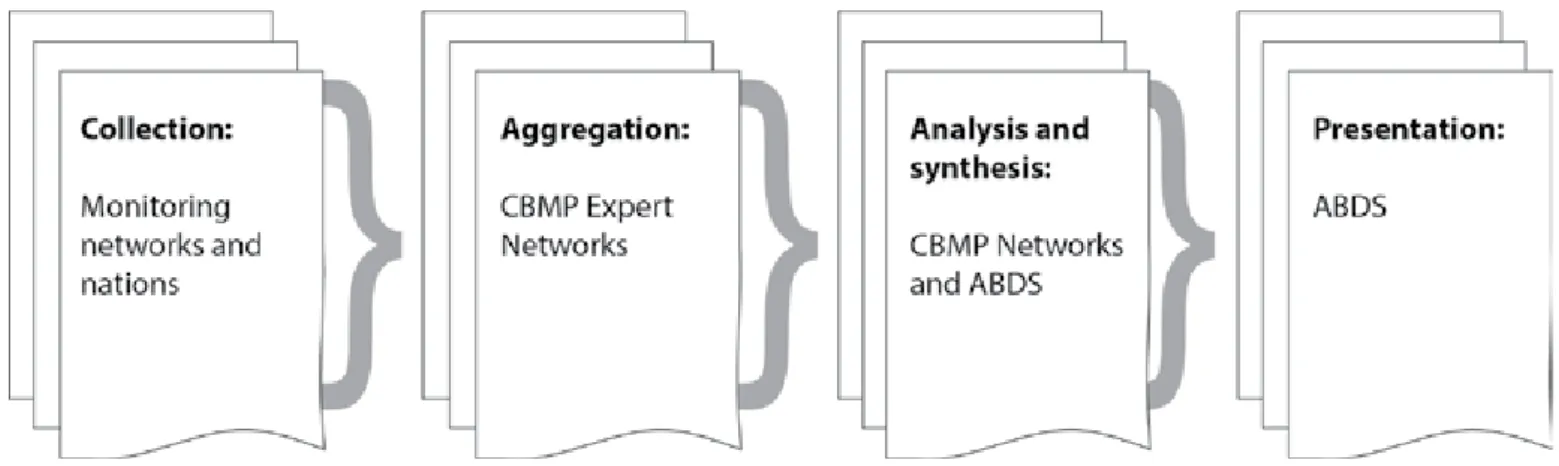
Table 3 lists the types of outputs that CBMP will produce and outlines the reporting formats that will be used to summarize activities related to the CBMP for each audience. Outputs and reporting types include general communications, performance reports and chosen indicators, status reports and scientific publications. An overview of the steps involved in accessing, integrating, analysing and presenting these products is shown in Figure 5 and the frequency with which these out puts will be produced is presented in Table 3. In part, the frequency and direction of these reports de pends upon the success of the initial State of Arctic Biodiversity reports and results that arise from its publication. The first State of Arctic Biodiversity reports created under the four monitoring plans will provide initial targeted assessments of Arctic ecosystems and the biodiversity they sup port, and where possible with an assessment of historical trends. A subsequent State of Arctic Biodiver sity report will be developed in 2020 followed by regular reports every five years. These reports will use monitoring data obtained from the national and international expert networks connected to the CBMP, to provide information on changes that have occurred since the initial assessment and previous reports.
Figure 5: A simplified overview of the steps involved in accessing, integrating, analyzing and presenting biodiversity information in an interoperable web-based data portal and an indication of the responsibilities at each step.
implementation of the terrestrial, freshwater, marine and coastal plans, including the manner in which these ecosystems shape Arctic ecology and the goods and services they provide. The Arctic Biodiversity Symposium scheduled for 2014 provides an opportunity to better define this integrated reporting approach for the CBMP and CAFF in general.
7.1 The
State of Arctic Biodiversity
reports
The first State of Arctic Biodiversity reports are targeted for production in 2015 - 2017, two to four years after the release of the Arctic Biodiversity Assessment (CAFF, ABA 2013). The ABA will provide the fundamental baseline in relation to described trends and the State of Arctic Biodiversity reports will:
1. Describe where possible current and/or historical baseline conditions for chosen Indicators/ FEC Attributes and spatial comparisons;
2. Evaluate temporal changes that have occurred since the baseline periods, and where possible historical trends; 3. Describe differences that have occurred spatially within the areas covered by each plans;
4. Analyse where possible how changes in biodiversity may be linked to human stressors; and
5. The results (e.g., trends, spatial differences and changes in variability) will be described and interpreted, to the extent possible, both statistically and from a biophysical perspective.
7.2 Status of indicators/ Focal Ecosystem Component attributes
Selected biodiversity Indicators/ FEC´s used to illustrate status and trends in biodiversity will be updated bi-annually and published on the, the ABDS (Chapter 5). This will allow users to see changes in biodiversity between State of Arctic Biodiversity reports. This reporting has already been started by the Marine Steering Group, with the Freshwater and Terrestrial Steering Groups scheduled to follow suit in 2016 and 2017.
7.3 Headline Indicators
Upon the developed FECs, CBMP has also chosen a suite of indices and indicators that provide a comprehensive picture of the state of Arctic biodiversity – from species to habitats to ecosystem processes to ecological services. These type of indicators are called “headline indicators”. CBMP will as capacity allows report on chosen headline indicators. Examples on these are:
►
Arctic Species Trend Index (ASTI) – this index illustrates broad trends in abundance using population data from diverse taxa across all regions of the Arctic.►
Arctic Red List Index – this index will illustrate the relative rate at which species in particular groups change in overall threat status (using IUCN Red List categories).►
Arctic Land Cover Change Index – this index will illustrate changes in land coverage by habitats and at various scales.►
Arctic Habitat Fragmentation Index– this index will measure habitat quality by tracking changes in the degree of habitat fragmentation across various regions and habitats.►
Arctic Human Well-being Index– this index will track the integrity of ecosystems and their ability to provide services for local communities7.4 Scientific publications
Scientific publications will be used to share the results of the status reports with the broader scientific commu nity. Additional scientific publications are expected to follow from the status assessments and may be specific to particular Indicators/ FEC attributes or sampling regions, or be multidisciplinary and/or multiregional in scope. These publications are intended to address the links between changes to the biotic and abiotic Indicators/ FEC attributes and pos sible driving mechanisms at a broader or more detailed scale than may be possible with the status re ports.
7.5 Performance reports and work plans
Performance reports and work plans will be submitted to the Arctic Council through CAFF on an annual basis. These reports will detail the steps that have been made to implement the various Monitoring Plans, and outline the implementation status of the CBMP. The work plans will outline work that is anticipated to be completed during the following year including the budget and deliverables. This process has already been started by the Marine Steering Group, and will begin for the other groups with the submission of a work plan.
7.6 Program review
Internal review and independent external review will be used to evaluate and adjust the CBMP and its four Monitoring Plans periodically. Internal review will occur in 2015 - 2017, and again in 2020 and subse quently every five years. This will involve the evaluation of the chosen parameters and attributes, sampling methods, data management and analysis and reporting. The results of this review will be used to update the Monitoring Plans and make any necessary adjustments to the outlined methodology. It is anticipated that in the start-up phase, the aggregation of existing data will help inform the optimal sampling frequencies and intensities required and the essential variables needed to allow for effective detection in change for indicators, ecosystem components and their services. Every decade beginning in 2020, there will be an additional independent external review of the program.
7.7 Summaries and other communications material
Summaries and non-technical communication material will be prepared for local community residents, partners, school children, collaborators and non-scientific audiences to make the results of the status as sessments and updates accessible (Chapter 8).
Table 3: CBMP r epor ts , tar get audienc es , fr equenc y and timing Primar y tar get audienc e A rc tic Council Na tional and r eg ional authorities Local communities Scien tific communit y O ther in terna tional or ganiza tions Par tners and collabor at ors
NGOs and the public Timing/ Frequenc y Typ e of rep or t Stat e of A rc tic Bio div ersit y repor ts , including sta tus repor ts X X X X X X X 2015 - 2017, 2020 (upda te), and subsequen tly ev er y fiv e y ears Sta tus of selec ted FEC A ttr ibut es X X X X X X X Bi-annually , star
ting with first
examples in 2015 Review of a ttr ibut e per for manc e, r evision of par amet ers , new t echniques , sampling appr oaches , da ta managemen t appr oach, analy sis and r epor ting X X X 2015 - 2017, 2020 (upda te), and subsequen tly ev er y fiv e y ears Scien tific output as scien tific publica tions , either b y discipline or multidisciplinar y X X X On-going Per for manc e r epor ts and w or k plans X X A nnually , Var ious summar ies and other c ommunica tions ma ter ial X X X X X X X On-going ,
8. Strategic capacity building
The successful and sustainable implementation of the CBMP is dependent upon access to sufficient financial, organisational and institutional support. In order to generate this support, significant efforts within the CBMP are employed to develop the necessary strategic partnerships. This strategic capacity building is nested within the broader development by CAFF of a framework involving the key international and regional organizations and institutions of relevance to Arctic biodiversity9.
Through RoCs with the relevant biodiversity related multilateral environmental agreements10 the CBMP has been recognised
as playing an important role in facilitating more rapid detection, communication, and response to significant biodiversity related trends and pressures. Such recognition has helped raise awareness and generate the support necessary to the CBMPs sustainable implementation.
The effectiveness of these efforts can be seen in how in CBMP has become recognized as one of the few examples of a multi-party biodiversity monitoring programme in an advanced stage of implementation. It has been endorsed by the Arctic Council and the UN Convention on Biological Diversity (CBD). It is the biodiversity component of the Sustaining Arctic Observing Networks (SAON) and the official Arctic Biodiversity Observation Network of the Group on Earth Observations Biodiversity Observation Network (GEOBON). There is also a growing awareness of the CBMPs potential to both contribute to and act as a model for other regional and global initiatives e.g. it is being used to model development of a terrestrial biodiversity monitoring program for the Antarctic.
In order to build upon existing partnerships and develop new strategic partnerships, a multi-sectoral approach has been adopted targeting the industrial, academic, public and global agreement sectors. Phase I of CBMP implementation focused primarily on engaging with the government, academic and global agreement sectors while focus is being expanded to address the industrial and public sectors. Additionally the majority of Arctic biodiversity monitoring networks are, and will remain, national or sub-national in scope and therefore ensuring effective connections with them will continue as a key focus for the CBMP.
Phase II of implementation will:
►
continue to promote support for existing monitoring while also working to promote the expansion of biodiversity monitoring to new and existing platforms (e.g. industry, local Arctic communities, International Network for Terrestrial Research and Monitoring in the Arctic (INTERACT), non-Arctic countries (including existing datasets) and organizations e.g. International Council for the Exploration of the Sea (ICES).►
Based on the framework of agreements made between CAFF and biodiversity relevant conventions and bodies, CBMP will build upon these and develop possible future partnerships as needed e.g. with the Intergovernmental Platform on Biodiversity and Ecosystem services (IPBES – www.ipbes.net).►
Continue to employ a multi-sectoral approach.9. Communications
The Arctic Council Communications Strategy and the CAFF Communications Plan (http:www.caff.is/communications) serve as the umbrella documents that organize CAFF and CBMP communications and outreach activities. This section also builds on chapter 6, where descriptions of outputs, user needs and venues have been identified in terms of CBMP assessments, indicators and scientific publications.
9.1 Goals and target audiences
The CBMP has the following goals for their communication efforts over the next four years:
►
Provide target audiences with timely, accurate, clear and complete information resulting from Arctic biodiversity monitoring data for use in policy and scientific decision-making.►
Increase the understanding and profile of the CBMP amongst target audiences, specifically at the international level, and work to incorporate biodiversity conservation across various sectors.►
Expand funding base and decision maker support for the CBMP.9 See here for detailed list of CBMP partner organisations and institutions - www.caff.is/cbmp-partners
10 African-Eurasian Migratory Waterbirds Agreement (AEWA), Convention on Biological Diversity (CBD), Convention on Migratory Species (CMS), East Asia-Australasia Flyway, Ramsar Convention on Wetlands
To achieve these goals while operating under limited resources, CBMP communications activities will actively target selected audiences for maximum results
►
Policy and decision makers that influence natural resource, land and wildlife management in the Arctic (local to global) (Senior Arctic Officials, Ministers, Ministries/departments of natural resources, environment, international community, Indigenous groups)►
Arctic scientific community (i.e., academia)►
Arctic residents with interest in biodiversity (i.e., monitoring volunteers, hunters, fishers/ gatherers, educators, information providers, media)►
Funders and potential funders►
Industry professionals operating in the ArcticMessages to these audiences will vary depending on the particular project that is being communicated, but will be rooted in science and catered to target audience needs, timing, appropriate level of knowledge, and language where possible.
9.2 Products
The CBMP will continue to contribute to the CAFF publication series with the development of; monitoring plans, state of Arctic biodiversity assessments, newsletters, annual reports, fact sheets, posters, films, brochures, websites, handbooks, strategies, press kits, framework documents and educational materials. In addition, the CBMP will continue to contribute to the communications efforts of strategic partnerships including further development of the ABDS, the Arctic Report Cards and indices/indicators.
These products will be showcased in the most appropriate and feasible venues as determined by the individual product’s subject matter, format and targeted audience. These venues include, but are not limited to, Arctic Council meetings, Arctic Environment Minister meetings, scientific conferences, media events, websites, workshops, presentations and partner activities.
9.3 Coordination, roles and timeline
A communications team will conduct communications activities. The team consists of a representative from the CAFF Secretariat and one representative from each of the Co-Chairmanship’s organizations. This team will meet as needed to discuss on-going work and an expansion of communications activities.
10. Milestones and anticipated costs
Countries inside and outside Arctic are already spending substantial amounts on biodiversity monitoring in the Arctic. The activities related to the CBMP’s Five Year Implementation Plan (Gill, et. al. 2008), including the CBMP Marine (Gill, et. al. 2011), Freshwater (Culp, et. al. 2012) and Terrestrial Plans (Christensen, et. al. 2013), and a series of background papers and monitoring strategies in support of these plans have contributed to a better coordination of existing efforts. Also on the data side, the Arctic Biodiversity Data Service (ABDS - www.abds.is) started the effort to gain a better accessibility to CAFF CBMP data that will be relevant for the future reporting to Arctic Council and relevant users of the data.
However a continued focus on better coordination of monitoring and integration and harmonization of collected datasets is needed to increase the value of the monitoring and the collected data. And future investments in such efforts are still needed to fill priority gaps and to to ensure that an increasing amount of the collected information will reach decision makers, local stakeholders, communities, and the interested public.
As table 4 outlines an average annual investment in CBMP over the next four years could continue to increase the value of the data collected.
Table 4. Major Milestones, description of activities, costs and investments.
Milestone Description ofActivities and Deliverables
Estimated
Annual Cost (USD) InvestmentCurrent
Additional Investment Needed 1. Program Office (Shared between CAFF secretariat, North Slope Science Initiative & Aarhus University)
Manage and coordinate overall program activities, including communication to CAFF board, technical program deliveries, general communication (not development projects) and some reporting, general Data Management (not development projects) and Web-based Portal. The activities relates to table 1 – 3.
Specific Components: Co-chairs, CAFF Executive Secretary,
Two Programme Officers, Communication Officer, Data Manager (on-going). 420K (Salary) +80K Travel and administration costs Denmark: $ 150k (for the first two years – salary + travels)
U.S.: $110k (for first year) CAFF Secr: App. 270k per year (salary + travels & admin costs) 2013 – 2015: 20k per year 2015 – 2017: 200K per year 2. Expert Monitoring Plans a) Implementation of Marine pan - (including activation of steering group governing structure (see table 1)
a) 2013: 341K 2014: 231 K 2015: 281K 2016: 261K 2017: 336 K a) Some costs related to CAFF/CBMP are covered under 1 (Programme office) a) 61K per country per year b) Implementation of Terrestrial pan - (including activation of steering group governing structure (see table 1)
b) 2013: 50K 2014: 450K 2015: 450K 2016:450K 2017: To be defined b)Some costs related to CAFF/CBMP are covered under 1 (Programme office) 2014: App: 80K for Implementation from NM
b) 60K per year per country
c) Implementation of Freshwater pan - (including activation of steering group governing structure (see table 1)
c) 2013: 350K 2014: 450K 2015: 450 K 2016: 450K 2017: To be defines c) Some costs related to CAFF/CBMP are covered under 1 (Programme office)
c) 65K per year per country
d) Develop coastal Plan, and following implementation (see table 1)
d) 180K (Salary) + 120K (O&M) per year for 2 years – includes travel, meeting, workshop and admin costs 2016 – 2017:To be defined d) Some costs related to CAFF/CBMP are covered under 1 (Programme office d) 180K (Salary) + 120K (O&M)
Milestone Activities and Deliverables
Estimated
Annual Cost (USD) InvestmentCurrent InvestmentNeeded
3. The Arctic Biodiversity Data Service
Establishment of Data
Management System and Arctic Biodiversity Data Service
20K (O&M) 20K per year
4. Headline
indicators Continue to maintain and develop new indicators as possible
50K (average) 25K (2013/14) 2014: 25K 2015 +: 40K 5. Communications Reports, Maintain website,
translations, plain language outreach, collateral materials in a number of languages (ongoing) printing costs etc.
50K (O&M) 50K 6. Community-based Monitoring Strategy Implementation To continue implementation of the CBM Strategy, there is a need to develop a Community-based Monitoring Registry (10K) and Community-based Monitoring Methodology Manual (25K)
35K (one-time cost) 2014: 35K
Literature cited
Anisimov O, Fitzharris B. 2001. Ch. 16: Polar Regions (Arctic and AntArctic). In: McCarthy JJ, Canziani SF, Leary NA, Dokken DJ, White KS, editors. Climate Change 2001: Impacts, Adaptation, and Vulnerability. Contribution of Working Group II to the Third Assessment Report of the Intergovernmental Panel on Climate Change. Intergovernmental Panel on Climate Change. Cambridge University Press, Cambridge, UK p. 801-841. http://snifferdogonline.com/reports/Global%20 Warming/climchange01/impacts/Working%20Group%20II%20-%20Impacts%20-%20Ch%2016.pdf
ACIA 2005. Arctic Climate Impact Assessment. Cambridge University press, New York.
AMAP 2007. Arctic Oil and Gas Assessment. Arctic Monitoring and assessment Programme, Oslo.
Bohm, M., McRae, L., Deinet, S., Gill, M., & Collen, B. (2012) The Arctic Species Trend Index – Tracking trends in Arctic vertebrate populations through space and time. CAFF Assessment Series No. 8. Conservation of Arctic Flora and Fauna, Iceland. CAFF 2010. Arctic Biodiversity Trends 2010 – Selected indicators of change. CAFF International Secretariat, Akureyri, Iceland.
ISBN: 978-9979-9778-3-4
Christensen, T., J. Payne, M. Doyle, G. Ibarguchi, J. Taylor, N.M. Schmidt, M. Gill, M. Svoboda, M. Aronsson, C. Behe, C. Buddle, C. Cuyler, A.M. Fosaa, A.D Fox, S. Heiðmarsson, P. Henning Krogh, J. Madsen, D. McLennan, J. Nymand, C. Rosa, J. Salmela, R. Shuchman, M. Soloviev, and M. Wedege. 2013. The Arctic Terrestrial Biodiversity Monitoring Plan. CAFF Monitoring Series Report No. 7. CAFF International Secretariat, Akureyri, Iceland. ISBN 978-9935-431-26-4
Culp, J.M., Goedkoop, W., Lento, J., Christoffersen, K.S., Frenzel, S., Gudbergsson, G., Liljaniemi, P., Sandoy, S., Svoboda, M., Brittain, J., Hammar, J., Jacobsen, D., Jones, B., Juillet, C., Kahlert, M., Kidd, K., Luiker, E., Olafsson, J., Power, M., Rautio, M., Ritcey, A., Striegl, R., Svenning, M., Sweetman, J., Whitman, M. (2012) The Arctic Freshwater Biodiversity Monitoring Plan. CAFF International Secretariat, CAFF Monitoring Series Report Nr. 7. CAFF International Secretariat. Akureyri, Iceland. ISBN 978-9935-431-19-6.
Danielsen, F., Burgess, N. D., Balmford, A., Donald, P. F., Funder, M., Jones, J. P. G., Alviola, P., Balete, D. S., Blomley, T., Brashares, J., Child, B., Enghoff, M., Fjeldså, J., Holt, S., Hübertz, H., Jensen, A. E., Jensen, P. M., Massao, J., Mendoza, M. M., Ngaga, Y., Poulsen, M. K., Rueda, R., Sam, M., Skielboe, T., Stuart-Hill, G., Topp-Jørgensen, E. and Yonten, D. (2009), Local Participation in Natural Resource Monitoring: a Characterization of Approaches. Conservation Biology, 23: 31–42. doi: 10.1111/j.1523-1739.2008.01063.x
Eamer, J., D.E. Russell, L. McRae, M. Bohm, S. Deinet, B. Collen and M.J. Gill. (2012) The Arctic Species Trend Index 2011: Update of the ASTI, an in-depth look at marine species and development of spatial analysis techniques. CAFF Assessment Series No. 9. Conservation of Arctic Flora and Fauna, Iceland, ISBN: 978-9935-431-16-5.
Epstein, H.E., D.A. Walker, U.S. Bhatt, P. Bieniek, J. Comiso, J. Pinzon, M.K. Raynolds, C.J. Tucker, G.J. Jia, H. Zeng, I.H. Myers-Smith, B.C. Forbes, D. Blok, M.M. Loranty, P.S.A. Beck, S.J. Goetz, T.V. Callaghan, G.H.R. Henry, C.E. Tweedie, P.J. Webber, A.V. Rocha, G.R. Shaver & J.M. Welker. (2012), Vegetation [in Arctic Report Card 2012].
Frey, K. E., K. R. Arrigo & R. R. Gradinger (2011), Arctic Ocean Primary Productivity [in Arctic Report Card 2011].
Gill, M.J., Crane, K., Hindrum, R., Arneberg, P., Bysveen, I., Denisenko, N.V., Gofman, V., Grant-Friedman, A., Gudmundsson, G., Hopcroft, R.R., Iken, K., Labansen, A., Liubina, O.S., Melnikov, I.A., Moore, S.E., Reist, J.D., Sirenko, B.I., Stow, J., Ugarte, F., Vongraven, D. And Watkins, J. (2011) Arctic Marine Biodiversity Monitoring Plan (CBMP-MARINE PLAN), CAFF Monitoring Series Report No. 3, April 2011, CAFF International Secretariat, Akureyri, Iceland. ISBN 1.978-9979-9778-7-2.
Gill, M.J., M.C. Raillard, C. Zockler & R.B. Smith (2008). Developing an Integrated and Sustained Arctic Biodiversity Monitoring Network: The Circumpolar Biodiversity Monitoring Program Five Year Implementation Plan. CAFF CBMP Report No. 14, CAFF International Secretariat, Akureyri, Iceland.
Gill, M.J. and Zockler, C. (2008) A Strategy for Developing Indices and Indicators to Track Status and Trends in Arctic Biodiversity. CAFF CBMP Report No. 12, CAFF International Secretariat, Akureyri, Iceland.
Gofman, V. (2010) Community-based monitoring handbook: lessons from the Arctic and beyond. CAFF CBMP Report No. 21, August 2010, CAFF International Secretariat, Akureyri, Iceland. ISBN 978-9979-9778-4-1.
Huntington, H. (2008) A Strategy for Facilitating and Promoting Community-based Monitoring Approaches in Arctic Biodiversity Monitoring. CAFF CBMP Report No. 13, CAFF International Secretariat, Akureyri, Iceland.
Intergovernmental Panel on Climate Change (IPCC). 2007. Summary for Policymakers. In: Climate Change 2007: The Physical Science Basis. Contribution of Working Group I to the Fourth Assessment Report of the Intergovernmental Panel on Climate Change. Solomon, S., D. Qin, M. Manning,Z. Chen, M. Marquis, K.B. Averyt, M. Tignor and H.L. Miller (eds.) Lindenmayer DB, Likens GE. 2010. The science and application of ecological monitoring. Biological Conservation 143:
1317-1328. doi: http://dx.doi.org/10.1016/j.biocon.2010.02.013
McRae, L., Zockler, C., Gill, M.J., Loh, J., Latham, J., Harrison, N., Martin, J., Collen, B (2010) Arctic Species Trend Index, 2010: Tracking Trends in Arctic Wildlife. CAFF CBMP Report No. 20, CAFF International Secretariat, Akuyeri, Iceland.
Meltofte, H. (ed.) 2013. The Arctic Biodiversity Assessment: Status and trends in Arctic biodiversity. Conservation of Arctic Flora and Fauna, Akureyri, Iceland
McRae, L., Böhm, M., Deinet, S., & Gill, M. & Collen, B. (2012): The Arctic Species Trend Index: using vertebrate population trends to monitor the health of a rapidly changing ecosystem, Biodiversity, 13:3-4, 144-156.
Pachauri RK, Reisinger A, editors. 2007. IPCC Fourth Assessment Report: Climate Change 2007. Contribution of Working Groups I, II and III to the Fourth Assessment Report of the Intergovernmental Panel on Climate Change. Intergovernmental Panel on Climate Change, Geneva, Switzerland. http://www.ipcc.ch/publications_and_data/ar4/syr/en/contents.html
Pereira HM, Navarro LM, Martins IS. 2012. Global biodiversity change: The bad, the good, and the unknown. Annual Rev