Cleveland State University
EngagedScholarship@CSU
ETD Archive2012
Educating Genetic Counseling Graduate Students
:Impact of Year of Training, Learning Styles, and
Use of Practice-Based Learning on Satisfaction with
the Learning Environment
Leslie H. Cohen Cleveland State University
Follow this and additional works at:https://engagedscholarship.csuohio.edu/etdarchive Part of theEducation Commons
How does access to this work benefit you? Let us know!
This Dissertation is brought to you for free and open access by EngagedScholarship@CSU. It has been accepted for inclusion in ETD Archive by an authorized administrator of EngagedScholarship@CSU. For more information, please [email protected].
Recommended Citation
Cohen, Leslie H., "Educating Genetic Counseling Graduate Students :Impact of Year of Training, Learning Styles, and Use of Practice-Based Learning on Satisfaction with the Learning Environment" (2012).ETD Archive. 69.
EDUCATING GENETIC COUNSELING GRADUATE STUDENTS: IMPACT OF YEAR OF TRAINING, LEARNING STYLES, AND USE OF
PRACTICE-BASED LEARNINGON SATISFACTION WITH THE LEARNING ENVIRONMENT
LESLIE H. COHEN
Bachelor of Arts in Psychology Miami University
May 1989
Master of Science in Genetic Counseling Northwestern University
March 1993
Submitted in partial fulfillment of requirements for the degree DOCTOR OF PHILOSOPHY IN URBAN EDUCATION:
LEADERSHIP AND LIFELONG LEARNING at the
CLEVELAND STATE UNIVERSITY December, 2012
This dissertation has been approved for the Office of Doctoral Studies, College of Education and Human Services
and the College of Graduate Studies by
________________________________________________________________________
Jonathan Messemer, Chairperson 11/26/2012
Counseling, Administration, Supervision, and Adult Learning
_____________________________________________________________
Karla Hamlen, Methodologist 11/26/2012
Curriculum and Foundations
_____________________________________________________________
Catherine Hansman, Member 11/26/2012
Counseling, Administration, Supervision, and Adult Learning
____________________________________________________________
Catherine Monaghan, Member 11/26/2012
Counseling, Administration, Supervision, and Adult Learning
_____________________________________________________________
Anne Matthews, Member 11/26/2012
ACKNOWLEDGEMENTS
As I reflect on my doctoral journey over the past five years, I could have never accomplished this feat without the love and support from several people in my life. My family and friends provided child care coverage, made sure I was taking time for myself, and providing emotional support during this dissertation process. I thank my sister, Beth Pollack, for being a second mom to my daughter, Eden, and watching her while I was attending evening classes. Much appreciation is extended to the ―aunties,‖ Lisa, Natalie, Stacey, Janet, Jill P. and Jill S. who provided emotional support and helped cover Eden during the evenings as well. Lastly, to Adam Johnson, who purposely scheduled his work meetings around my Wednesday night class so he could be in the rotation to watch Eden. The support my brother, Stuart, provided from afar also helped me through this journey. It truly took a village to help cover my responsibilities to my family so that I could achieve my goal, and for that I am truly thankful.
I would be remiss if I did not acknowledge the support I received from my work colleagues at University Hospitals‘ Center for Human Genetics. Without their support, I would not have been able to pursue my degree as the doctoral program required
flexibility in my work schedule. Much gratitude is extended to my classmates in Cohorts XXI and XXII, especially to Mark Polatajko and Kristy Tokarczyk, my Leadership and Lifelong Learning cronies. I am honored to be able to call Drs. Polatajko and Tokarczyk my colleagues and my friends. Words cannot express how helpful it was having the two of them by my side during the bulk of our coursework. Despite our varied backgrounds, the three of us were partners in crime and worked splendidly together. I knew I could count on Mark and Kristy to be there for me and get me through whenever times were challenging.
Lastly, I would like to thank my committee members for their support and assistance throughout the trials and tribulations of the dissertation process. Much
gratitude is extended to Dr. Jonathan Messemer, who recognized my potential in year two of the program. As my dissertation chair, he experienced the good, the bad, and the ugly with me. I thank Dr. Catherine Hansman, who served as my faculty advisor throughout the program as well as serving as a reader on my committee. To Dr. Catherine
Monaghan, I thank her for agreeing to serve on my committee while on sabbatical and providinginput as a reader. Heartfelt thanks go out to Dr. Karla Hamlen who stepped in at the last minute as my final methodologist. Her voice of reason and understanding of the hardships encountered during my dissertation process was greatly appreciated. I am forever grateful to Dr. Anne Matthews who served on my committee but has been much more than a committee member. She has been a mentor to me from the inception of my pursuit of this doctoral degree and has been supportive and encouraging the entire time. Her faith in me helped get me through the challenges encountered over the past two years. Sincere appreciation is extended to Dr. Christopher Burant who served as a
consultant on my dissertation out of the goodness of his heart. Without Dr. Burant‘s help, my dissertation could not have been completed as his assistance with my statistical analysis was critical, and he willingly provided his expertise and time when he owed me nothing. His encouragement of my work was priceless and came at a time in my
dissertation journey when that was much needed. Lastly, gratitude is given to Wanda Pruett-Butler, administrative coordinator of the doctoral program. Her guidance and support throughout my duration in the program wasinvaluable. To all my family, friends,
colleagues, and peers - I am so pleased and grateful to have had you by my side and to have your enduring support. I couldn‘t have accomplished this without you!
vii
EDUCATING GENETIC COUNSELING GRADUATE STUDENTS: IMPACT OF YEAR OF TRAINING, LEARNING STYLES,
AND USE OF PRACTICE-BASED LEARNING
ON SATISFACTION WITH THE LEARNING ENVIRONMENT LESLIE H. COHEN
ABSTRACT
Formal education of master level genetic counseling trainees has occurred since the 1970s; however, unlike other health care disciplines there has been no research conducted into their learning styles. Practice-based learning is widely utilized in the medical school setting; however, it is unknown how extensive this teaching modality is used in the genetic counseling training programs. Use of this experiential learning technique has proven to be perceived positively by trainees in other fields. Furthermore, assessments of student satisfaction within genetic counseling training programs have not been performed. The purpose of this study was to determine the variables that affect genetic counselor trainees‘ learning styles and factors that influence student satisfaction specifically related to the learning environment, including the perception of practice-based learning (PBL) techniques. Overall, trainees are satisfied with the varied teaching techniques used within the genetic counseling training programs. According to the data, programs do not significantly modify the amount of PBL utilized between first and second year of study. Learning styles were assessed through the Kolb Learning Style Inventory and one predominant style did not emerge among the study sample.
Additionally, there was no significant difference between first- and second-year trainees with regard to overall learning styles. Satisfaction with the learning environment was
viii
evaluated by the Genetic Counseling Training Learning Environment Scale which indicated trainees are satisfied with varied facets of their training programs. Structural equation modeling was used to determine which factors influence favorable ratings of the learning environment. The most significant finding from this study is that the perceived use of PBL instruction increased student satisfaction regardless of year of study. There was a slight increase in satisfaction for those with the converger learning style compared to the other three learning styles described by Kolb. Based on the results of this study, genetic counseling training programs have the opportunity to enhance student satisfaction by assessing the teaching techniques used within their respective programs.This study helps close the gap in the literature regarding educational practices in the genetic counseling profession and adds to the adult education literature.
ix
TABLE OF CONTENTS
LIST OF TABLES ... xv
LIST OF FIGURES ... xvi
CHAPTER I. INTRODUCTION TO THE STUDY ... 1
Statement of Problem ... 8
Purpose of Study ... 9
Research question ...9
Definition of Terms ... 10
Study Significance ... 11
II. REVIEW OF RELATED LITERATURE ... 13
Genetic Counseling ... 14
Education in Genetic Counseling ... 22
Adult Learning Theories ... 29
Theory of andragogy ...30
Transformational theory...31
Concept of critical reflection ...32
Experiential learning ...36
Learning Theories ... 38
x
Practice-Based Learning ... 45
Theoretical framework ...45
Effectiveness of practice-based learning in health care education ...46
Year of study and practice-based learning ...53
Learning Styles and Related Inventories ... 57
Kolb‘s experiential learning theory ...57
Gregorc‘s Mind Styles Model ...59
Felder – Silverman model ...60
Fleming and Mills‘ VARK model. ...62
Dunn and Dunn learning style ...62
Honey and Mumford ...63
Student Satisfaction ... 66
Assessment of learning environment ...71
Medical school learning environment scale ...71
Dental student learning environment survey ...74
Dundee ready education environment measure ...75
Adult learning and development student satisfaction scale ...77
III.METHODOLOGY ... 79
Purpose of Study ... 80
xi
Conceptual Framework ... 81
Population and Sample ... 84
Ethical Considerations ... 85
Instrumentation ... 86
Questionnaire ...86
Perceived use of practice-based learning ...87
Satisfaction with the learning environment ...87
Learning style...90
Data Collection ... 97
Data Analysis ... 97
Overview ...97
Structural Equation Modeling ... 100
Specification ...101 Model identification ...102 Data issues ...102 Measure selection...105 Model estimation ...105 Power ...108
Equivalent and near-equivalent models ...108
xii
IV.RESULTS ... 110
Descriptive Characteristics of Respondents ... 110
Age of participants ...111
Participants‘ race ...112
Participants‘ year of study ...112
Program affiliation ...112
Participants‘ grade point averages ...113
Participants‘ educational background ...114
General satisfaction with training and personal happiness ...115
Exploration of the Data ... 115
Program Instruction ...116
Teaching techniques... 116
Satisfaction with teaching techniques ... 117
Percent of time spent on practice-based learning ... 118
Genetic Counseling Training Learning Environment Scale ... 119
Results from the genetic counseling training learning environment scale...120
Year of study and GCTLES scores ...121
Learning Styles ... 122
xiii
Learning styles ...122
Kolb‘s four learning styles ... 122
Kolb‘s nine learning styles... 123
Year of study and learning styles ...125
Structural Equation Modeling ... 126
Initial structural equation model ...128
Final model ...130
Research Question and Hypotheses ... 134
Hypothesis 1...134 Hypothesis 2...134 Hypothesis 3...135 Hypothesis 4...136 Hypothesis 5...136 Summary of Results ... 136
V. FINDINGS, CONCLUSIONS, AND RECOMMENDATIONS... 138
Summary of the Study ... 138
Findings ... 142
Limitations of the Research ... 157
Recommendations for Future Research ... 160
xiv
Summary ... 164
REFERENCES ... 167
APPENDICES ... 183
A. INFORMED CONSENT FOR PARTICIPANTS ... 184
B. APPROVAL TO USE KOLB LSI ... 185
C. APPROVAL TO USE DENTAL SCHOOL LEARNING ENVIRONMENT SCALE ... 186
xv
LIST OF TABLES
1. Graduate Training Program University Affiliation...113
2. Grade Point Averages of Respondents ...114
3. Comparison of Means of Teaching Techniques Between First and Second Year Trainees ...116
4. Comparison of Means for GCTLES Subscales Between First and Second Year Trainees ...121
5. Frequency of Four Kolb Learning Styles by Year of Study ...123
6. Frequency of Kolb‘s Nine Learning Styles by Year of Study ...124
7. Data from Initial Model Respecification ...128
8. Final Model Goodness of Fit Indices ...132
xvi
LIST OF FIGURES
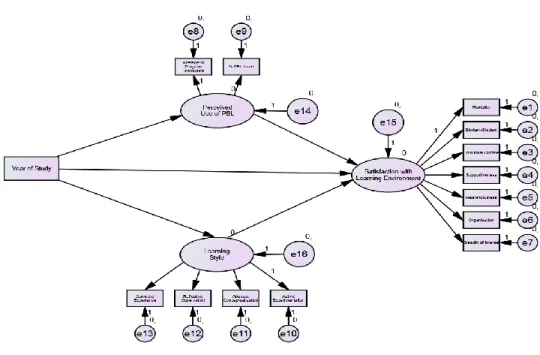
Figure 1. Conceptual Model ...81
Figure 2. Hypothesized Structural Model ...84
Figure 3. The Historical Four Kolb Learning Styles ...93
Figure 4. Nine Learning Styles of Kolb‘s LSI ...94
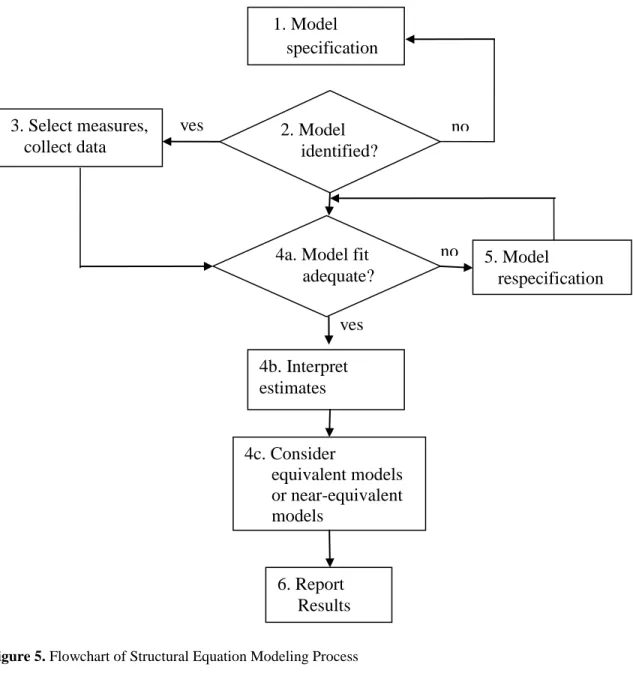
Figure 5. Flowchart of Structural Equation Modeling Process ...101
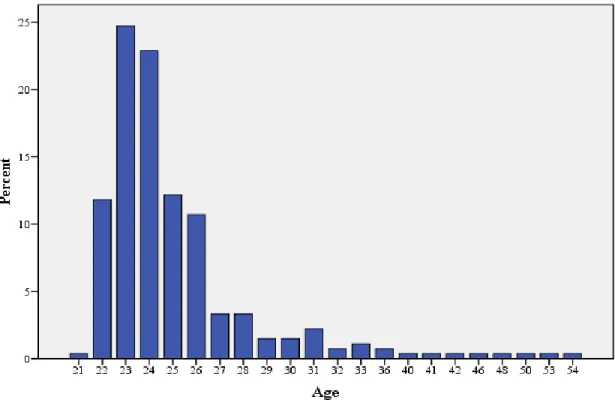
Figure 6. Ages of Respondents...111
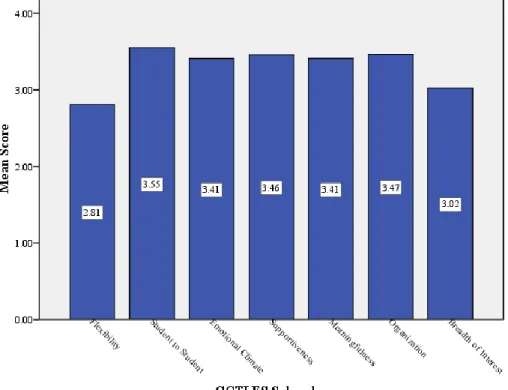
Figure 7. Average scores for each Genetic Counseling Training Learning Environment Subscale. ...120
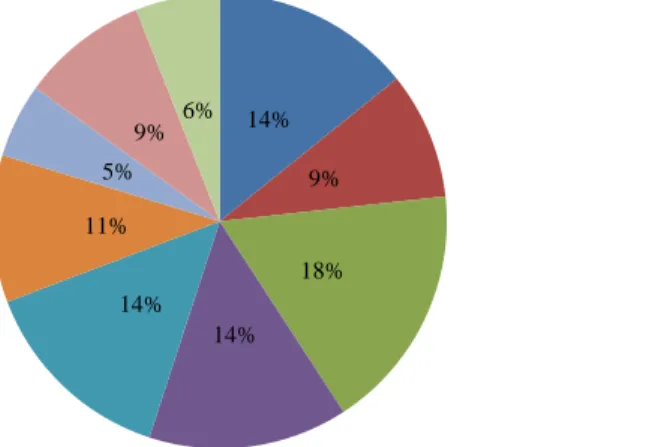
Figure 8. Overall Percentages of the Four Kolb Learning Styles. ...123
Figure 9. Overall Percentages of the Nine Kolb Learning Styles. ...125
Figure 10. Conceptual Structural Equation Model. ...126
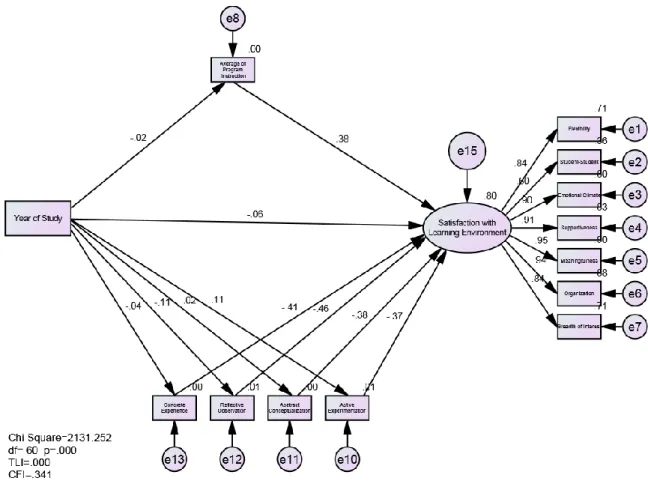
Figure 11. Initial Structural Equation Model (2a) Output ...127
Figure 12. Structural Equation Model 12. ...130
1
CHAPTER I
INTRODUCTION TO THE STUDY
Adult education has existed since colonial times albeit conducted mostly in an informal manner; however, formal efforts to educate adults date back to the 1600s (Stubblefield & Keane, 1994). In the 1900s, educational efforts were based on the presumption that adults learn in a similar manner as children and educators based their principles of learning on the basic psychology of learning. Many of these learning theories are rooted in concepts put forth by psychologists such as Maslow, Piaget, and Rogers. The five most common theories that represent learning are: humanism,
cognitivism, behaviorism, social learning, and constructivism. Depending on the theory, the motivation to learn may be internal to the learner or externally based. Humanistic theorists purport that learning is internally driven, whereas behaviorists contend that learning occurs by external influences (Gage & Berliner, 1988; Maslow, 1970; Merriam, Caffarella, & Baumgartner, 2007; Pavlov, 1957; Rogers, 1983; Skinner, 1954; Watson, 1930). However, other philosophies, such as cognitive learning, assert that learning is achieved by the individual making meaning out of their memory, understanding, and retention of information (Bruner, 1965; Köhler, 1929; Lewin, 1951). Social learning takes into account the role one‘s society and culture contributes to learning. Like the
2
other perspectives, the individual is central to the learning process; however, learning takes place by modeling behavior and social interactions (Bandura, 1986; Grusec, 1992). The last perspective is constructivism, and theorists who embrace this philosophy assert that individuals make or construct meaning from their experiences; however, learning is grounded in intrinsic forces and motivation (Dewey, 1938; Kuhn, 1970; Marquardt & Waddill, 2004; Merriam, Caffarella,& Baumgartner, 2007; Piaget, 1972). Although there are several perspectives on how people learn, these theories were not created with the adult learner in mind.
Although the concept of adult education began in the 1930s, a major shift in philosophy was seen in the 1970s which recognized that the adult learner is different from the juvenile learner. Several psychologists and theorists have put forth models as to how adults learn (Merriam, Caffarella,& Baumgartner, 2007). One of the earliest individuals to recognize the differences between the young and the older learner was Malcolm Knowles. According to Knowles (1988), there are four assumptions one makes in order to shift from the typical pedagogy to andragogy and these notions are on a continuum as a person matures. The four assumptions are: (1) one‘s personality becomes less dependent and develops into a self-directed person; (2) a person builds on his/her collection of experiences which acts as a resource for learning; (3) the motivation to learn is based upon a social readiness; and (4) there is a sense of timeliness that is not seen previously, in that what is being learned is now applicable to one‘s current situation, thereby having an increased sense of requiring the knowledge in order to perform a task or job.
3
Knowles‘ assumptions are echoed in many of the adult learning theories which can be divided into four areas; self-directed learning, experiential learning, critical reflection and adult learning styles (Brookfield, 1995). In the first model, self-directed learning, the adult learner is responsible for acquisition of information and is responsible for doing so at his or her own pace. In addition, the learner is responsible for evaluation of the learning process and to identify which resources are needed to achieve defined goals. The second model, experiential learning, focuses on the role experiences have on the learning process and that the accumulation of experiences leads to acquisition of knowledge. Critical reflection,the third model, is comprised of three interrelated
processes: (1) questioning and reorganizing ideas which have been assumed to be correct; (2) taking an alternate stance about a previously held concept; and(3) recognizing the cultural dominance of values and how that can actually help promote issues related to minorities (Brookfield, 1995). Others classify this latter model as transformational learning (Merriam, Caffarella,& Baumgartner, 2007). Transformational learning is another hallmark of adult learning theory. This learning theory is mainly attributed to Mezirow who believes that we learn by changing our frames of reference (Mezirow, 1997). Adult learners are often presented with a disorienting dilemma, in that previous held assumptions are called into question which leads to a need to modify our beliefs and values. Self-reflection is a critical component in achieving transformational learning which often needs to be done in the context of discourse (Cranton, 2002; Mezirow, 1996). Lastly, the adult learning styles model focuses on the understanding that adults vary their ability to learn in different situations through multiple modes of learning. One can appreciate that these adult learning theories incorporate some of the concepts from
4
the early learning perspectives; however, the adult learning theories recognize the differences in psychological development that occur in adulthood.
There are several learning style theorists and accompanying inventories which have been created to assess one‘s preferred learning style. Various learning theories focus on different aspects of learning such as experience, reflection, or organization of
information and have roots in both the traditional learning perspectives, as well as adult learning theories. Additionally, some theorists approach learning by the means of how individuals integrate information, for example whether one learns visually, aurally, or by reading (Coffield, Moseley, Hall & Eccelstone, 2004; Felder & Silverman, 1988;Fleming & Mills, 1992;Gregorc Associates, 2010; Hawk & Shah, 2007; International Learning Styles Network, 2008; Kolb, 1984; Kolb & Kolb, 2009;Mind-Styles, n.d.).
In order to enhance the learning experience of adult learners, it is purported by some that having an understanding of their learning styles can achieve this. Once these styles have been identified, curriculum can be developed which create an effective learning environment. Several inventories have been developed that assess both learning style and teaching style. By utilizing varied inventories, several aspects of learning can be evaluated. Hawk and Shah (2007) believe that it is important to incorporate more than one inventory when conducting research in this field. Based on their research, they assert that by assessing learning styles and subsequently employing correlated teaching
techniques there will be five outcomes for the adult learner: (1) increased satisfaction; (2) increased performance in the class; (3) deeper learning and retention; (4) enhanced learning styles within and beyond the class; and (5) even higher performance will be achieved when assessing with more than two inventories.
5
While some researchers contend that effective learning can be achieved by assessing learning styles, others do not support this assertion. Pashler, McDaniel, Rohrer and Bjork, (2009) argue that learners can acquire knowledge by several learning styles, thus it is not beneficial to focus on one specific style. In these authors‘ critique, they assert that studies have not supported the idea that learning outcomes are increased when students are taught to their learning style. Further criticism stems from the lack of cohesiveness and common vocabulary describing learning styles among those who contribute to this field (Coffield, Moseley, Hall & Eccelstone, 2004). Concerns have also been raised about the psychometric properties of the various learning style inventories which lead to questions about the utility of these measurements (Coffield, Moseley, Hall & Eccelstone, 2004: Pashler, McDaniel, Rohrer & Bjork, 2009). Although criticisms about incorporating learning styles into the classroom to attain effective teaching exist, the same researchers who criticize this practice also recognize there may be some benefit in evaluating learning styles. Specifically, that awareness of learning styles and engaging in dialogue about them can assist in promoting change in the educational setting
(Coffield, Moseley, Hall & Eccelstone, 2004).
Research into the learning styles of various professions has occurred throughout the years. Many studies have been conducted to determine if particular groups of students fall into one specific type of learning style (Alkhasawneh, Mrayyan, Docherty,
Alashram,& Yousef, 2008; Baker, Pesut, McDaniel, & Fisher, 2007; Breckler, Joun, & Ngo,2009; Contessa, Ciardiello, & Perlman,2005; French,Cosgriff, & Brown,2007; Hauer, Straub, & Wolf,2005; Katz& Heimann,1991; Lujan& DiCarlo,2006; Mammen, Fischer, Anderson, James, Nussbaum, Bower, et al, 2007; Meehan-Andrews, 2009;
6
Murphy, Gray, Straja, &Bogert,2004; Stutsky,1995; Suliman, 2006). It would stand to reason that if a specific learning style was prevalent in a particular profession, then perhaps training programs for this vocation could create a teaching environment which could enhance that learning style. Several studies have assessed the learning styles of allied health professionals and medical residents;however, no such research has been conducted in the field of genetic counseling.
Genetic counselors are allied health professionals who are currently trained in master‘s level graduate school programs throughout the United States and Canada. As this is a relatively new health care field, there is a lack of information regarding the instructional strategies employed in the training of these professionals. Many of the training programs are housed within medical schools; therefore, these programs may employ practice-based learning techniques as this modality is now mandated for medical schools. Practice-based learning (PBL) is grounded in self-directed learning, utilizes experiential learning, the student is central to learning and problems that reflect are used to enhance learning (Barrows, 1996). Practice-based learning or problem-based learning, used synonymously in this study, is the transfer of knowledge by incorporating problems or cases to provide context and meaning, a key theme in constructivist learning. Learning also occurs by collaboration with peers in small group settings, the teacher acts as a facilitator of learning rather than imparting knowledge to the student(s), and employs self-directed learning (Dolmans, de Grave, Wolfhagen, & van der Vleuten, 2005; Schmidt, Rotgans, & Yew, 2011). Several studies have documented the increased effectiveness of PBL in medical schools and other health care training; however, such an assessment has not been conducted in the genetic counseling training programs (Curtis,
7
Indyk , & Taylor, 2001; Enarson & Cariaga- Lo, 2001; Ogrinc et al., 2007; Shenouda, Swenson, & Fournier, 2003; Stuart, Sectish, & Huffman, 2005; Susarla et al., 2003; Thomas et al., 2005; Whitfield et al., 2002).
In addition, there have been no studies conducted to describe the learning styles of this cohort of trainees as has similarly been performed in other disciplines within health care. Overall, genetic counseling graduate trainees are largely an untapped group of individuals and little information has been captured regarding their training. The field of genetics is expanding; therefore, there is a need to increase the number of training
opportunities for these prospective professionals. For that reason, an assessment of how the field trains these graduate students not only provides useful information for the respective programs, but has the potential to enhance the education of future genetic counselors which would ultimately benefit consumers of genetic services.
Student satisfaction regarding the didactic portion of genetic counseling training is another area that has not been evaluated to date. One approach to measure student satisfaction is to assess students‘ perception of the learning environment which has been accomplished in other health care fields, although this type of assessment has not been conducted within the field of genetic counseling. Gaining an understanding of the satisfaction with the learning environment is critical as this perception impacts student attitudes, student satisfaction, and can allow program administrators to analyze the need for curricular changes (Clarke, 1984). Evaluation of the learning environment in the context of PBL has been conducted by investigators which demonstrate that use of PBL tends to enhance the overall satisfaction with the learning environment (Lancaster, et al, 1997; Lieberman, Stroup-Benham, Peel, & Camp, 2001).
8
Statement of Problem
Although formal training of genetic counselors has occurred since the 1970s through master‘s level training programs, there has been no research conducted into the learning styles of genetic counselors. The evaluation of learning styles of genetic
counseling trainees can bring the topic of learning styles to the surface so that discussions can ensue about what is occurring within the genetic counseling training programs.
Additionally, an assessment of student satisfaction pertaining to those enrolled in master-level genetic counseling training programs has not been conducted. Evaluating student satisfaction by assessing the perceptions of the learning environment could provide useful information, as well as determining the variables that influence learning environment scores. In addition, an assessment of the learning environment would be important to undertake as increased levels of overall satisfaction have been shown to increase professional attitude, retention in the field, and commitment to the field (Stith, Butterfield, Strube, Deusinger, & Gillespie,1998; Ziaee, Ahmadinejad, &
Morravedji,2004). Approximately 75% of genetic counselors have less than ten years of experience in the field (NSGC Professional Status Survey, 2012). Although there are likely more personal reasons than programmatic or organizational reasons with one‘s training program that influence why genetic counselors do not remain working in the field for many years, it is possible that increased levels of satisfaction with their training would increase retention in the field. While program directors cannot alter the personal reasons for their students‘ duration in the field, they can address satisfaction issues within their respective training programs. Institutional factors that have been previously
9
small group based and to incorporate experiential teaching techniques (Emmons, Sells, & Eiff, 2002; Henzi, Davis, Jasinevicius, Hendricson, Cintron, &Isaacs, 2005). Other aspects related to the learning environment, such as nurturance, support, flexibility of the curriculum, relevant instructional materials, can be assessed and potentially modified by program administrators (Henzi, Davis, Jasinevicius, Hendricson, Cintron, &Isaacs, 2005; Marshall, 1978).
Purpose of Study
The purpose of this study was to examine whether the learning styles of trainees in genetic counselor training programs, trainees‘ year of study, and trainees‘ perceived use of practice-based learninginfluence satisfaction with the learning environment.
Research question.
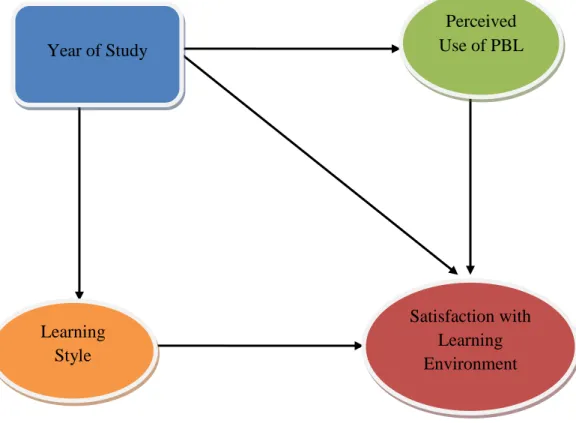
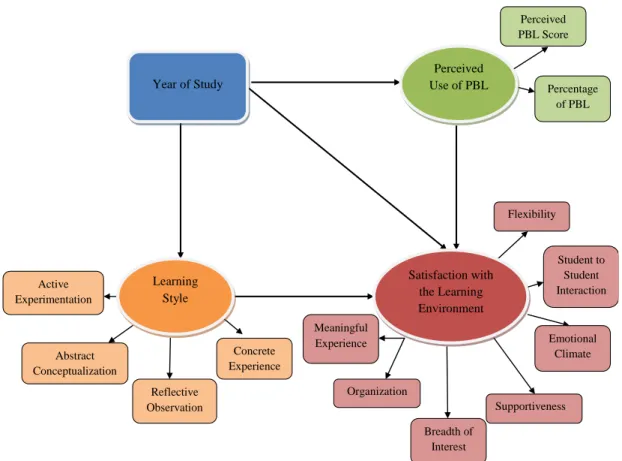
1. Do trainees‘ learning style, year of study, and perceived use of practice-based learning have effects on satisfaction with the learning environment? a. Hypothesis 1: The learning styles of genetic counseling trainees
have a direct impact on the satisfaction with the learning environment.
b. Hypothesis 2: Perceived use of practice-based learning has a direct impact on satisfaction with the learning environment.
c. Hypothesis 3: Genetic counseling trainees‘ year of study has a direct impact on learning styles.
d. Hypothesis 4: Genetic counseling trainees‘ year of study has a direct impact on perceived use of practice-based learning.
10
e. Hypothesis 5:Genetic counseling trainees‘ year of study has both a direct impact and an indirect impact through learning style and perceived use of practice-based learning on satisfaction with the learning environment.
Definition of Terms
The following definitions and terms will assist the reader in comprehending the information and terminology used throughout this study.
Adult learning. The field of study relating to how individuals who are considered adults gain knowledge.
Genetic counseling. “Genetic counseling is the process of helping people understand and adapt to the medical, psychological, and familial implications of the genetic contributions to disease‖ (Resta et al, 2006, p. 79).
Genetic counselor. An individual who has received a master‘s degree from a
graduate training program that is accredited by the American Board of Genetic Counseling.
Learning environment. ―The sum of the internal and external circumstances and influences surrounding and affecting a person's learning‖ (Learning environment, n.d.).
Learning styles. The manner in which adult learners prefer to integrate educational information.
Practice-based competencies. Distinct areas of skill that graduate programs accredited by the American Board of Genetic Counseling must provide its trainees so that an entry-level genetic counselor can demonstrate a minimum level of aptitude when providing clinical care (American Board of Genetic Counseling, 2008).
11
Practice-based learning. Self-directed learning that is aimed at continual improvement. Instructional methods include, but are not limited to, role plays, small group discussion, and case-based instruction.
Structural equation modeling. A statistical modeling method that combines regression and factor analysis. This analysis allows for determination of relationships between theoretical constructs and the end result is often depicted in a path model indicating the relationships between variables.
Student satisfaction. The degree genetic counseling trainees believe their training program fulfills their educational needs.
Teaching modalities. The instructional methods or techniques used in the classroom by program faculty to enhance learning.
Year of study. Classification used for study population that indicates whether a particular subject is in his/her first or second year of training within his/her graduate program.
Study Significance
The outcomes of this study can be applied in three different manners. First, this study helped close the gap in the literature regarding educational practices in the genetic counseling profession. Although there are several studies related to education of medical professionals, there are none which address the specific profession of genetic counselors. Furthermore, this study has the potential to impact the genetic counseling profession by informing faculty within the field to better understand their students‘ preferred learning styles. By performing an assessment of student satisfaction with regard to learning environment, the genetic counseling training programs have the opportunity to gain an
12
increased understanding of how to enhance the student experience. This in turn has the potential to ensure graduates from these training programs are more committed to the genetic counselor workforce and have increased retention in the field. Therefore, these data can offer program administrators further information about potential areas for improvement.
Second, from the adult learning viewpoint, this study provided the adult learners in the field of genetic counseling the ability to enhance their learning or knowledge by providing them with information about their preferred learning style(s). The results of this study also provided the participants of this study with an opportunity for critical reflection,a key principle of adult learning, relating to their learning styles. In addition, this study adds to the adult learning literature specifically that which relates to learning styles from the standpoint of another professional group, genetic counseling. Third, this study contributes to the adult education field by evaluating the use of practice-based learning in the training of a specific professional group. As practice-based learning incorporates self-directed learning, reflection, and experiential learning, concepts that arevital to adult education, the results from this study can bring to light these ideas from the context of a unique health profession. Lastly, this study has the potential to encourage further research in this area.
13
CHAPTER II
REVIEW OF RELATED LITERATURE
Genetic counseling is a relatively new field in health care, compared to other health disciplines as the formal education of genetic counselors began in 1969. As such, there is a paucity of literature regarding the training of genetic counselors. Additionally, there are no studies regarding learning styles of genetic counseling trainees or research into the teaching styles of their instructors. This chapter will provide the reader with a historical perspective regarding the field of genetic counseling and genetic counselors. The limited literature related to education of genetic counseling trainees will also be presented.
In order to provide a framework regarding learning styles, this chapter will also address learning theories, adult learning theories, and learning styles and related inventories. As student satisfaction is a variable being explored in this present study, a review of literature in this area will be addressed. A focus on studies that pertain to the education of health care students will be presented. Lastly, a review of the literature related to the learning environment and associated inventories will be presented with a focus on health care training.
14
Genetic Counseling
Concerns about passing on hereditary conditions date back as far as Biblical times. However, counseling provided to couples about the recurrence of hereditary conditions in their offspring, was formalized when several medical centers opened hereditary clinics in the 1940s (Resta, 1997). The term ―genetic counseling‖ was created in 1947 by Sheldon Reed, one of America‘s pioneering geneticists. Initially the
counseling was provided by physicians and while medical geneticists still provide genetic counseling services, in 1969 the first Master‘s level program was opened at Sarah
Lawrence College to train a new allied health professional, the genetic associate (Marks & Richter, 1976). These individuals were necessary to assist physicians in relating genetic information to patients as the field of genetics expanded. Genetic associates, now more commonly called genetic counselors, filled the workforce gap. Genetic counseling is the process of communicating scientific information to families who are at risk for hereditary conditions which is similar to the previous hereditary clinics. In addition, the process of genetic counseling explains testing options which are now available given the advances in the field of genetics.
The most cited definition of genetic counseling is one that was agreed upon by the Committee on Genetic Counseling of the American Society of Human Genetics in 1972. The definition is as follows:
Genetic counseling is a communication process which deals with the human problems associated with the occurrence, the risk of occurrence, of a genetic disorder in a family. This process involves an attempt by one or more appropriately trained persons to help the individual or family (1)
15
comprehend the medical facts including the diagnosis, the probable course of the disorder, and the available management; (2) appreciate the way heredity contributes to the disorder, and the risk of recurrence in specified relatives; (3)understand the options for dealing with the risk of recurrence; (4) choose the course of action which seems appropriate to them in view of their risk and their family goals and act in accordance with that decision; and (5) make the best possible adjustment to the disorder in an affected family member and/or to the risk of recurrence of that disorder (Fraser, 1974, p.637).
While this is the most often used definition of genetic counseling, it is lengthy and does not completely reflect the counseling component of the practice of genetic counseling (Resta et al, 2006). Therefore, the National Society of Genetic Counselors (NSGC), the professional society for master-level trained genetic counselors, sought to create a definition that was more succinct and could be applied to many consumers of genetic counseling services. In 2003, a task force created by the NSGC developed the following definition:
genetic counseling is the process of helping people understand and adapt to the medical, psychological, and familial implications of the genetic contributions to disease. This process integrates:
• Interpretation of family and medical histories to assess the chance of disease occurrence or recurrence.
• Education about inheritance, testing, management, prevention, resources and research.
16
• Counseling to promote informed choices and adaptation to the risk or condition (Resta et al, 2006, p. 79).
The above definition is thought to be more current and has the ability to be adapted to be used when presented to clients, policy makers, insurers, and several consumers of genetic counseling services. In addition, the authors of the definition contend that ―the NSGC definition forms the basis for assessing the field of genetic counseling for its relevance, its usefulness in counseling practice, and its value to society‖ (Resta et al, 2006, p.80).
As the field of genetics has expanded, the goals of the profession have similarly changed over time. Biesecker (2001) contends that there are two primary opinions about the goal of genetic counseling. The first relates to the prevention of birth defects and genetic conditions, whereas the second refers to enhanced psychological coping and adjustment to a genetic diagnosis. In the field‘s infancy, in the 1970s, testing options were limited and the main focus of the provision of genetic services was to prevent the birth of children affected with birth defects; however, this viewpoint is mired in the eugenics movement rather than being based in a client-centered perspective. Therefore, in the 1980s, those who studied the field of genetic counseling recognized that there was a shift toward providing information to clients so that they can make well-informed decisions about the genetic issues facing their families. At the same time, prenatal testing became available and one of the decisions presented to families was, and continues to be, reproductive options about an affected pregnancy (Biesecker, 2001). While the option of termination of pregnancy of affected pregnancies relates back to the prevention of birth defects and is often cited as a concern about the profession, current practice does not support this as a goal of genetic counseling. Rather, one goal of genetic counseling is to
17
help a family/couple adapt to their situation that best fits with their culture, religion, and morals.
As the definition and goals of genetic counseling have changed over time as advancements in genetics have been made, so too have the areas in which genetic counselors practice. It is generally understood that genetic counselors provide services throughout the life cycle (Bennett, Hampel, Mandell & Marks, 2003; Ciarleglio, Bennett, Williamson, Mandell, & Marks, 2003). In its inception, master-level trained genetic counselors primarily counseled clients of higher economic status regarding prenatal testing options. However, as genetic testing has evolved from the ability to detect chromosomal anomalies in utero to identification of hundreds of disease-causing
mutations in pregnancies, children and adults, genetic counselors work with clients of all ages. In the prenatal setting, genetic counselors help interpret findings from prenatal screening methods such as ultrasound studies or routine blood tests devised to identify at-risk pregnancies for chromosomal conditions or neural tube defects, such as spina bifida. Additionally, as research has identified deleterious effects of prenatal exposures to chemicals or medications, genetic counselors help clients understand the ramifications of these exposures on their fetus. According to the 2012 NSGC Professional Status Survey (2012), 29% of practicing genetic counselors work within the prenatal setting. This percentage is a 10% decrease from the 2010 Professional Status Survey and a 25% decrease from 2006. This steady decline is indicative of the evolution of the field into other areas of practice.
The second most common area of practice according to the 2012 Professional Status Survey is the field of cancer genetics with 25% reporting working in this area
18
(National Society of Genetic Counselors, 2012). In this setting, genetic counselors are responsible for assisting an individual to determine if he/she is at an increased risk to have a mutation within a cancer susceptibility gene, such as BRCA1 or BRCA2, based on one‘s personal or family history of cancer. Mutations in these genes predispose an individual to an increased risk for developing breast, ovarian, or prostate cancer. As molecular genetics researchers identify those genes implicated in the development of various cancers, the role genetic counselors play in assisting individuals to determine if they desire genetic testing for susceptibility cancer genes is increasing. In addition, ―genetic counselors are instrumental in working with multiple family members to help them formulate a decision that serves the family unit and not just the at-risk individual or the patient‖ (Ciarleglio, Bennett, Williamson, Mandell, & Marks, 2003, p. 1285).
Although cancer genetics is the predominant area for practice in adult genetics, with the discovery of genes that contribute to heart disease, neurological disorders, psychiatric illness, and other adult-onset disorders genetic counselors are finding themselves working with families and physicians who are facing these conditions.
Genetic counselors have been working with families in the pediatric setting for some time, and prior to the advent of cancer genetic counseling pediatric genetic counseling was the second most common area in which to practice. However, in 2012 13% of genetic counselors reported working in the pediatric setting (National Society of Genetic Counselors, 2012). In these cases, genetic counselors work with families to help understand the reason for their child‘s genetic condition, especially if a diagnosis has been made; the prognosis and management issues; and provide emotional support and information about community resources (Ciarleglio, Bennett, Williamson, Mandell,
19
&Marks, 2003). A subset of pediatric genetic counselors work with children who screen positive on newborn screening, which may result in a child affected with one of the several conditions for which is now screened. Some of these conditions have treatment available, such as changes to diet, whereas others are not treatable. Therefore, ―genetic counseling for affected children and families is integral in medical management, family planning, and emotional coping‖ (Ciarleglio, Bennett, Williamson, Mandell, & Marks, 2003).
Genetic counselors provide care under certain tenets which strive to embrace biomedical ethics. Specifically, master-level trained genetic counselors incorporate the principle of autonomy, under which falls informed consent, as well as a term which is used quite widely in the profession, that of ―nondirectiveness.‖ Nondirectiveness is a term grounded in the client-centered approach of counseling introduced by Carl Rogers. In 1942, Rogers described this counseling technique as
the non-directive viewpoint places a high value on the right of every individual to be psychologically independent and to maintain his
psychological integrity…In the field of applied science, value judgments have a part, and often an important part, in determining the choice of technique. (Djurdjinovic, 1998, p. 147)
This nondirective approach is applied in the genetic counseling milieu by the genetic counselor providing the information in an unbiased manner so that the counselor‘s biases are not divulged. The goal of nondirectiveness is to allow patients to come to their decision on their own without undue influence from the professional with whom they are interacting. In essence, the decision which is right for the genetic counselor may not be
20
right for the patient, and it would be unethical for the genetic counselor to potentially sway the patient‘s decision based on the professional‘s viewpoint.
As Resta (1997) points out, many genetic counselors believe that nondirective counseling is the profession‘s way of practicing in a manner which is the antithesis of eugenics. However, the founding fathers of the field of genetic counseling advocated nondirective counseling while at the same time supporting eugenics practices. The main issue geneticists had with eugenics movements were that they were ―based on racism and coercion;‖ however, the overall principle of eugenics was ―compatible with the goals of genetic counseling. Nondirectiveness was a reaction to the methodology of eugenics, not its principles‖ (Resta, 1997, p. 256). Even Fraser in 1974 questions the appropriate degree of directiveness provided by a genetic counselor and contends that most genetic counselors find a balance between simply presenting information and telling a client how to proceed in a given situation. As he states, ―most counselors would refrain from
directly telling a counselee what to do‖ but that the majority of genetic counselors would assist the counselee in weighing the various factors that should be considered when making a decision (Fraser, 1974, p. 649). However, some in the field question whether nondirective counseling is actually possible to achieve and whether the principle of nondirectiveness should define the practice of genetic counseling.
In addition, as the field of genetic counseling continues to evolve some question whether nondirective counseling is even appropriate. As Bennett, Hampel, Mandell and Marks (2003) state ―the traditional dogma that genetic counseling must be nondirective is being challenged in favor of a psychosocial approach that emphasizes shared deliberation and decision-making between the counselor and the client.‖ There are instances when
21
nondirective counseling is ineffective and it is more appropriate for a clinical or ethical recommendation to be made. For example, when a specific test or treatment is needed to diagnose or to treat a condition, the genetic counselor may need to make a clinical
recommendation. There are many ethical situations that can arise in genetic counseling, such as testing a minor for a late-onset genetic condition, and these situations may require a genetic counselor to make an ethical recommendation. In either circumstance,
nondirectiveness may not be the best approach. Instead, Elwyn, Gray and Clarke (2000) suggest that a shared decision making approach may be better. With this strategy, the two parties involved, in this case the client and the genetic counselor, both share
information about the decision at hand. The end result is a decision made that both parties agree upon after both have had an opportunity to share information. Shared decision making is client centered which still upholds the Rogerian philosophy; however, it allows a genetic counselor to provide a more active role in the decision making process than true nondirectiveness. Thus, while the field of genetic counseling continues to evolve and matures, its roots remain grounded in client centered care which will likely continue to be the underlying philosophy of the field. However, as Fraser (1974) aptly stated during the infancy of the profession ―training in the general techniques of counseling would be a useful part of the training of a genetic counselor‖ (p. 650).
Although the practice of genetic counseling dates back to the 1940s, formal practice did not occur until the 1960s. Subsequently, formal education of those
individuals who are now called genetic counselors began in the 1970s. The training of genetic counselors goes back 40 years and is complex given the nature of the field drawing from both the medical and psychological fields. Great strides have been made to
22
ensure that future genetic counselors have the breadth of knowledge required to practice in an ever-changing field within healthcare. While the education and areas required to achieve competency are well-laid out for genetic counseling trainees, there has been little research into how these individuals are educated.
Education in Genetic Counseling
A search of the literature revealed only a few articles related to education of genetic counselors. While there are several publications regarding genetics and education, the focus is not on the training of the professional but rather how the professional
educates the client about genetics information (Bedard, Huether, Shooner, Buncher &Warren, 2007; Stein, Fine & Pergament, 1994; Weil & Mittman, 1993). The majority of the articles which pertain directly to the training of master-level genetic counselors are historical perspectives of the development of the competencies which were adopted by the accrediting body, The American Board of Genetic Counseling, which began to accredit genetic counseling training programs in 1992 (Fiddler, Fine, & Baker, 1996; Scott, Walker, Eunpu, & Djurdjinovic, 1987).
Two articles provide insight into the creation of graduate training for genetic counselors. The first by Scott, Walker, Eunpu, and Djurdjinovic (1987) describes the history of the developments related to genetic counseling training programs. The authors provide details regarding ideal components of curricula as determined during three critical meetings held during 1974 and 1979. The authors describe the lack of
accreditation at that time for genetic counseling training programs which may have an impact on the effectiveness of training and ability to pass the professional certification examination. Lastly, the authors describe the requirements for continuing education for
23
genetic counselors. Admission requirements are also reviewed for the twelve master-level genetic counseling programs which were in existence at the time of the writing of that article. The authors showed foresight as they considered future issues facing the
profession, such as the need for additional programs based on the job market for genetic counselors. In addition, professional issues are contemplated, such as obtaining licensure, maintenance of continuing education, and career advancement.
In 1990, Walker, Scott, Biesecker, Conover, Blake, and Djurdjinovic provide a historical perspective of the creation of the genetic counseling training program. The authors summarize the conclusions from four workshops which were held in 1989 to determine guidelines for genetic counseling master degree training programs. From the workshops, the content of didactic training was established and that training should encourage life-long learning. Seven major areas were identified as critical to the training of genetic counselors, each consisting of several subtopics. The requirements for clinical training were determined which included primary involvement in at least 50 cases or 400 contact hours. One workshop debated the issue of doctoral degrees for genetic counselors and weighed the pros and cons of this degree in the field of genetic counseling which at the time was not an option. Workforce issues were also summarized since there were relatively low numbers of genetic counselors in the field at that time. However, there is no mention of how best to teach students enrolled in these programs and no teaching techniques are considered.
While these articles provide a historical viewpoint into the creation of genetic counseling graduate programs, a few have focused on the content that is included in the programs. Biesecker, Vockley, and Conover (1993) reported on the implications that
24
developing genetic technologies may have on training of genetic counselors and the importance of incorporating such developments into genetic counseling graduate training programs. They describe four areas in where programs should focus which include: human variation and diversity, genetic discrimination, potential new threats to nondirectiveness, and genetic screening implementation and policy development. Recommendations for inclusion into curricula for each area are presented. The authors recognize that the program directors face the challenge of training future professionals in a field which is continually changing; however, the authors do not provide suggestions for integrating new information into curricula.
In 1993, Smith (1993) reported on a survey of curriculum content in master-degree training programs in genetic counseling. Her study was conducted in 1991 at which time there were 17 training programs. The number of ―actual contact hours‖ was obtained for both didactic coursework and clinical field experience. Didactic coursework was divided into two categories: basic science and behavioral science and counseling, whereas fieldwork was divided into clinical practicum and laboratory practicum. Results from the study revealed an average of 1349 actual contact hours in the programs which are typically two years in duration. Fifty-eight percent of time was spent in clinical experience, 21% in didactic learning related to basic science, and 16% in didactic learning related to counseling. A few programs spent an additional 5% of time in laboratory practicum. This article compares its findings to a similar, unpublished study conducted in 1989. The author reported that there were increases in every area including 23% in basic science, 82% in psychosocial issues, 10% increase in clinical practica and the overall time spent in contact hours in these programs increased by 25%. While this
25
article presents a breakdown of how much time is spent in hands-on clinical training versus didactic learning, there is no description of how that didactic learning is occurring.
As the field evolved, so did the training programs. As such, it became clear that there should be a defined set of skills that genetic counseling trainees should acquire during their training. Fiddler, Fine, and Baker (1996) describe the process of developing practice-based competencies (PBCs) for the field of genetic counseling. The need for PBCs was derived when a new accrediting body, the American Board of Genetic Counseling (ABGC), was established in 1993. The ABGC accreditation committee assembled a Consensus Development Conference in 1994 to establish PBCs for genetic counseling training. They employed a ―case-based, narrative process‖ which enabled the participants to identify competencies which would be needed to handle real-life,
professional encounters. Once the initial competencies were identified, these were further refined and resulted in 27 core competencies within four domains.
In a subsequent article, Fine, Baker, and Fiddler (1996) elaborate on the outcomes of Fiddler, Fine and Baker (1996) regarding the development of practice-based
competencies (PBCs) for the field of genetic counseling. The four domains and 27 overall competencies for which an entry-level genetic counselor should be able to demonstrate are described. The four overarching domains are: communication skills; critical-thinking skills; interpersonal, counseling, and psychosocial assessment skills; and professional ethics and values. Within each domain there are several skills delineated which should be achieved in order to exhibit competency in that particular domain. The authors stated these PBCs will become the criteria used for program accreditation;
26
Incorporation of the PBCs should occur in all facets of training - didactic, clinical experience, laboratory activities, and other adjunct learning activities (e.g. journal club, grand rounds, case conferences).
A few articles have been written about the supervision aspect of the profession; however, these articles are not in reference to how a training program teaches supervision skills. Of the articles which evaluate genetic counseling training programs, the authors focus on one particular aspect of training. For example, Bedard, Huether, Shooner, Buncher and Warren (2007) describe the exposure genetic counseling trainees receive surrounding research. The authors examined the training genetic counseling graduate students receive related to research, as well as the level of interest genetic counselors have to conduct research. To assess the training provided, program directors from genetic counseling graduate programs were surveyed. It was found that the majority of programs utilize a thesis project to teach research methodology; however, other programs teach research through didactic courses or independent study. The second part of this study surveyed genetic counseling students and their perceptions of how much research is incorporated into their curriculum. Those students enrolled in a program with a thesis requirement felt better prepared to conduct research in the future compared to those who did not need to complete a thesis project. Many of the students responded that they would be interested in performing research upon graduation; therefore, the authors conclude that training programs should enhance research education. However, the authors do not address how this education should be conducted.
Stein, Fine and Pergament (1994) detail how one training program teaches its students to provide teratogen (fetal effects from chemical agent exposure) counseling.
27
The program incorporates teratogen training into all facets of the program including both didactic and experiential fieldwork. One five-week rotation was created as part of a student‘s graduate training to expose the student to many facets of teratogen counseling. Students are expected to participate in journal clubs pertaining to teratogen issues to further enhance their learning. While this article addressed an experiential learning opportunity, there is no adult learning theory presented and is mainly a descriptive article.
A few articles in the literature address the issue of teaching cross-cultural competence. Wang (1998) accounts her experience in creating a specific curriculum aimed at increasing multicultural awareness, whereas Weil and Mittman (1993) describe components necessary for a program to succeed in teaching its students about cross-cultural issues. Wang (1998) conducted a quantitative study that evaluated genetic counseling trainees‘ multicultural competence pre- and post- exposure to a multicultural curriculum. Subjects completed the Multicultural Awareness-Knowledge and Skills Survey (MAKSS) in either their first or second year of graduate school training to
determine if timing of when the curriculum had an impact on cross-cultural competence. Results indicated that first year students had a statistically significant increase in cultural awareness compared to the second year students. There was no statistically significant difference in scores on the MAKSS for presenting the materials in the beginning or end of one‘s training. Therefore, the author contends that the curriculum devised to enhance cross-cultural competence for genetic counseling students is successful and it does not matter when the information is taught, only that it is incorporated into a program‘s curriculum.
28
Weil and Mittman (1993) add to the growing literature regarding teaching cultural competency specifically related to the field of genetic counseling. In order to enhance a training program‘s curriculum to increase cross-cultural competency, they propose four components to include: consideration of the multicultural aspects of all psychosocial issues, information about specific cultures and groups, fieldwork training, and self-awareness and countertransference. The authors state that learning cross-cultural issues is not solely the responsibility of the program, but that the student should engage in life-long learning and ―self-exploration.‖
Thus, while there are a handful of articles which pertain to the education of genetic counselors, many of these are descriptive in nature. There are no articles which describe learning styles, satisfaction, or effective teaching mechanisms for those enrolled and involved with genetic counseling training programs. Similarly, the literature in this specific field does not address genetic trainees as adult learners and has not explored issues that relate to these learners. While graduate students are adults by nature of their chronological age, there are other characteristics that define adult learners such as returning to school to make a career change, delaying enrollment in higher education, being a single-parent, or having other financial responsibilities. These adult learners have been categorized as non-traditional students. Although it is unknown how many genetic counseling trainees would be considered non-traditional students, there are certain characteristics that define all adult learners. One such trait is that adult learners have the motivation to master knowledge in a specific area in order to achieve a specific goal. For genetic counseling trainees, this goal is to become proficient in the field of genetic counseling in order to practice their chosen career. To this end, thinking about genetic
29
counseling trainees in the context of adult learners could alter how these students are being educated and it would behoove instructors involved in the genetic counseling
training programs to be cognizant of the concepts derived from the field of adult learning.
Adult Learning Theories
Theories related to how adults learn are abundant; however, the theories can be divided into four areas which include self-directed learning, experiential learning, critical reflection and how learners learn (Brookfield, 1995). In the first model, self-directed learning, the adult learner is responsible for acquisition of information and is responsible for doing so at his or her own pace. In addition, the learner is responsible for evaluation of the learning process and to identify which resources are needed to achieve defined goals. Second, experiential learning focuses on the role experiences have on the learning process and that the accumulation of experiences leads to acquisition of knowledge. According to Brookfield (1995), critical reflection is comprised of three interrelated processes (1) by questioning and reorganizing ideas which have been assumed to be correct; (2) by taking an alternate stance about a previously held concept; and (3) by recognizing the cultural dominance of values and how that can actually help promote issues related to minorities. Others classify this category as transformational learning (Merriam, Caffarella,& Baumgartner, 2007). Lastly, understanding that adults vary their ability to learn in different situations has become an area of research. Having an
understanding of adult learning theories is important for educators involved in higher education so that the classroom is conducive to the adult learner and teaching modalities employed are consistent with the psychological underpinnings of the adult learner.
30
Theory of andragogy.One of the oldest theories of adult education is Knowles‘s concept of andragogy. This concept stemmed from the realization that adults did have the potential to learn; however, their needs were different than children (Merriam, 2001). Initially Knowles based his model on four assumptions: (1) one‘s personality becomes less dependent and develops into a self-directed person; (2) a person builds on his/her collection of experiences which acts a resource for learning; (3) the motivation to learn is based upon a social readiness; and (4) there is a sense of timeliness that is not seen previously, in that what is being learned now is applicable to one‘s current situation, thereby having an increased sense of requiring the knowledge in order to perform a task or job (Knowles, 1988). Later on, Knowles added two more assumptions: (1) internal motivators are more critical than external motivators and (2) there needs to be relevance as to why they are learning (Merriam, Caffarella, & Baumgartner, 2007).
In addition, Knowles also set forth ideals pertaining to the way adults learn. These include that the physical environment should be one which reflects the sense that adults are the students. For example, the chairs should be sized appropriately to an adult body habitus rather than a child‘s. In addition, the adult learner and the instructor may have more of a collaborative relationship as they are often of a similar age and at times the student may be older than the instructor. Therefore, there is a need for mutual respect between the adult learner and instructor. Lastly, because adult learners are assumed to be responsible individuals, they can also take responsibility for their learning and can
participate in the direction and/or planning of their learning (Merriam, 2001).
Initial criticism of Knowles‘ theory was based on the fact that these assumptions are specific to andragogy and that pedagogy is grounded in other assumptions; however,
31
critics believe these assumptions are not specific to adults. Therefore, Knowles later stated these assumptions are on a continuum from childhood to adulthood. However, further criticism has ensued as to whether the assumptions constitute a theory but rather should be considered a framework (Merriam, Caffarella, & Baumgartner, 2007).
Transformational theory.Jack Mezirow used concepts put forth by Kuhn (1970), Friere (1973/1981), and Habermas (1981/1984) in creating his theory which ―is the process of affecting change in a frame of reference” (Mezirow, 1997, p. 5). Kuhn addressed modification of new ideas from the standpoint of research; however, his thoughts revolved around the fact that ―crises are a necessary precondition for the emergence of novel theories‖ which can be applied to one‘s experiences (Kuhn, 1970, p. 77). A principle idea of Mezirow‘s theory is the concept of frame of reference which refers to ―structures of assumptions and expectations that frame an individual‘s tacit points of view and influence their thinking, beliefs, and actions‖ (Taylor, 2008).
According to Mezirow, these frames of references allow us to make sense out of new experiences and are based on assumptions made by previous experiences.
Transformational learning occurs when learners move toward a frame of reference that is more inclusive, discriminating, self-reflective, and integrative of experience‖ (Mezirow, 1997, p. 5). There are two major components of transformative learning: critical reflection and critical discourse. ―Critical reflection is the means by which we work through beliefs andassumptions (Cranton, 2002, p. 65). As Friere wrote, ―men relate to their world in a critical way. They apprehend the objective data of their reality…through reflection – not by reflex, as do animals‖ (Friere, 1973/1981, p. 3). His stance of critical thinking related to social issues and democracy; however, he believed ―a person must