Theses and Dissertations
1-12-2017
The Effects of Text-to-Speech on Reading
Comprehension of Students with Learning
Disabilities
Mary Cece Young
Illinois State University, [email protected]
Follow this and additional works at:https://ir.library.illinoisstate.edu/etd
Part of theElementary and Middle and Secondary Education Administration Commons,Other Education Commons,Reading and Language Commons, and theSecondary Education and Teaching Commons
This Thesis and Dissertation is brought to you for free and open access by ISU ReD: Research and eData. It has been accepted for inclusion in Theses and Dissertations by an authorized administrator of ISU ReD: Research and eData. For more information, please [email protected].
Recommended Citation
Young, Mary Cece, "The Effects of Text-to-Speech on Reading Comprehension of Students with Learning Disabilities" (2017).Theses
and Dissertations. 718.
THE EFFECTS OF TEXT-TO-SPEECH ON READING COMPREHENSION OF STUDENTS
WITH LEARNING DISABILITIES
Mary Cece Young 126 Pages
In this study, I implemented the use of technology to investigate the effectiveness of text-to-speech (TTS) on the reading comprehension of students with learning
disabilities (LD). In a freshman self-contained classroom, I used the classroom-based text and TTS on four participants during a 48-min English class period for 16 weeks. An A-B-A-B withdrawal design evaluated the effectiveness of TTS on reading
comprehension, the dependent variable, measured through accuracy of participants’ responses to reading comprehension questions from curriculum-based measures (CBMs). Following intervention, I assessed maintenance of the effect of TTS on reading
comprehension for 4 weeks. Additionally, I measured participants’ perspectives on the use of TTS when reading using a researcher-developed social validation survey. After visual analysis of the data, results showed a functional relation between the independent variable and participants’ increased reading comprehension accuracy as measured by CBMs. All participants scored higher on reading comprehension using TTS as the intervention when reading instructional passages. Results on participants’ oral reading
Lexile) showed that two of four participants increased their reading scores. Maintenance
results showed continued increase inreading comprehension accuracy on CBMs with
TTS compared to baseline performance. Social validation questionnaires revealed participants enjoyed using TTS to acquire information from literature. Lastly, major findings are discussed with implications for practice and recommendations for future research needed to increase the use of TTS in the classroom.
KEYWORDS: Assistive technology, Learning disabilities, Legislation, Secondary, Special education, Text-to-speech
THE EFFECTS OF TEXT-TO-SPEECH ON READING COMPREHENSION OF STUDENTS
WITH LEARNING DISABILITIES
MARY CECE YOUNG
A Dissertation Submitted in Partial Fulfillment of the Requirements
for the Degree of DOCTOR OF EDUCATION Department of Special Education ILLINOIS STATE UNIVERSITY
THE EFFECTS OF TEXT-TO-SPEECH ON READING COMPREHENSION OF STUDENTS
WITH LEARNING DISABILITIES
MARY CECE YOUNG
COMMITTEE MEMBERS: Carrie Anna Courtad, Chair Karen H. Douglas
i
and guiding me through this entire process. The completion of my dissertation is a reality, thanks to their countless hours of support.
Christine Paulson, my friend, gave me endless motivation, confidence, and advice
to keep me focused on my research. My mom, Mary Bayer, continually supported and listened to me throughout the program. My two amazing children, Richard and Ellie, showed patience while I worked on my research throughout their formative years. Their encouragement and sense of humor kept me going.
I wish to thank the Board of Education, colleagues, and administrators, for
supporting me and providing accommodations to conduct my research.
Most importantly, I wish to thank my committee chair, Dr. Carrie Anna Courtad,
for her encouragement, valuable wisdom, guidance, and support throughout my studies. I also wish to thank Drs. Karen Douglas and Yun-Ching Chung, my two other committee members, who provided expertise and insight in helping me complete this study.
ii CONTENTS Page ACKNOWLEDGMENTS i CONTENTS ii TABLES vii FIGURES viii CHAPTER
I. THE PROBLEM AND ITS BACKGROUND 1
Reading Difficulties for Students with Learning Disabilities 3
Accessing Information Through Technology 3
Text-to-Speech (TTS) Technology 5
Significance of the Problem 6
Summary 8
Purpose 8
Research Questions 9
Definition of Terms 9
II. REVIEW OF RELATED LITERATURE 12
Literature Search Procedures 12
Inclusion Criteria 13 Article Coding 14 Intervention Components 27 Methodological Features 27 Results 30
Students with Disabilities in the Intervention Studies 30
Reading Interventions without Technology 30
Reading comprehension intervention 31
Vocabulary intervention 31
iii
Reading comprehension intervention with technology 33
Vocabulary intervention with technology 33
Fluency and reading comprehension with technology 34
Fluency, vocabulary, and reading comprehension with
technology 34
Methodological Elements of the Intervention Studies 35
Quality Indicators for Single-Subject Research 35
Participants and settings 35
Dependent variables 36
Independent variables 36
Baseline phase 37
Internal and external validity 37
Generalization 39
Social validity 39
Summary 40
Quality Indicators for Group Studies 40
Essential Quality Indicators 40
Description of participants 41
Intervention/comparison conditions 41
Outcome measures 41
Data analysis 42
Desirable Quality Indicators 42
Summary 43
Synthesis and Conclusions 44
Implications for Future Research 47
Conclusions 49
III. METHOD 50
Research Design 50
iv
Threats to External Validity 51
Criteria for Changing Conditions 51
Participants 52 Setting 55 Materials 56 Classroom Textbook 56 Text-to-Speech (TTS) 57 Dependent Measures 57
Reading Comprehension Measures 57
Oral Reading Fluency (ORF) 58
Scholastic Reading Inventory (SRI) 59
Participants’ Perceptions of the Intervention 60
Procedures 60
Generalization 60
Training 61
Baseline Condition 61
Intervention Condition 62
Second Baseline Condition 63
Second Intervention Condition 64
Maintenance Condition 64 Postintervention Data 65 Reliability 65 Procedural Reliability 65 Interobserver Reliability 66 Data Analysis 67
Level Within Conditions 67
Level Between Conditions 68
Trend Within Conditions 68
Mean 69
Immediacy of Effect 69
Percentage of Non-Overlapping Data (PND) 69
Social Validity 70
v
Interobserver Reliability 72
Procedural Reliability 73
Reading Comprehension Performance 75
Participants’ Performance on CBMs 75 Vincent 76 Jack 77 Dianna 79 Donald 80
Oral Reading Fluency 86
Participants’ Performance on ORF 86
Vincent 86
Jack 86
Dianna 87
Donald 87
Pre/Postintervention Reading Achievement Data 88
Participants’ Reading Achievement Data 88
Vincent 89
Jack 89
Dianna 89
Donald 89
Social Validity Results 90
Participants’ Perceptions of TTS 90
Summary 92
V. SUMMARY, CONCLUSIONS, AND
RECOMMENDATIONS 93
Major Findings 94
Reading Comprehension Performance with Text-to-Speech 94
vi
Maintaining Reading Comprehension Performance 98
Generalization of Reading Comprehension Performance 99
Limitations 101
Implications for Future Research 103
Conclusions 105
REFERENCES 107
APPENDIX A: Social Validation Survey Likert Scale Asking Participants
Questions Regarding the Use of TTS 120
APPENDIX B: Pre-Baseline and Postintervention Data Recording Form 121
APPENDIX C: Pre-Baseline Training on the Use of TTS 122
APPENDIX D: Reading Comprehension and ORF Accuracy Recording Form 123
APPENDIX E: Procedural Reliability Checklist for Baseline, Intervention, and
vii
Table Page
1. Key Information from Reading Intervention Studies without Technology
for Secondary Students with Disabilities 16
2. Key Information from Reading Intervention Studies with Technology
For Secondary Students with Disabilities 22
3. Definitions of Horner et al.’s (2005) Quality Indicators 28
4. Definitions of Gersten et al.’s (2005) Quality Indicators 29
5. Participant Characteristics 54
6. Interobserver Agreement Data 73
7. Procedural Fidelity Data 74
8. Accuracy Percentages on Reading Comprehension CBMs 84
9. Mean Performance Score Percentages on CBMs by Component 85
10. ORF Scores in Pre-Baseline, Each Condition, and Postintervention 88
viii FIGURES
Figure Page
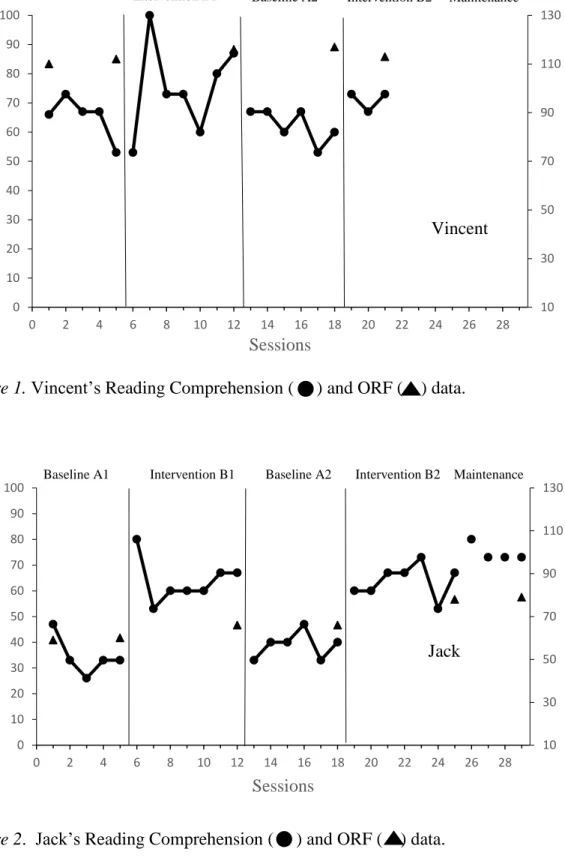
1. Vincent’s Reading Comprehension ( ) and ORF ( ) data 82
2. Jack’s Reading Comprehension ( ) and ORF ( ) data 82
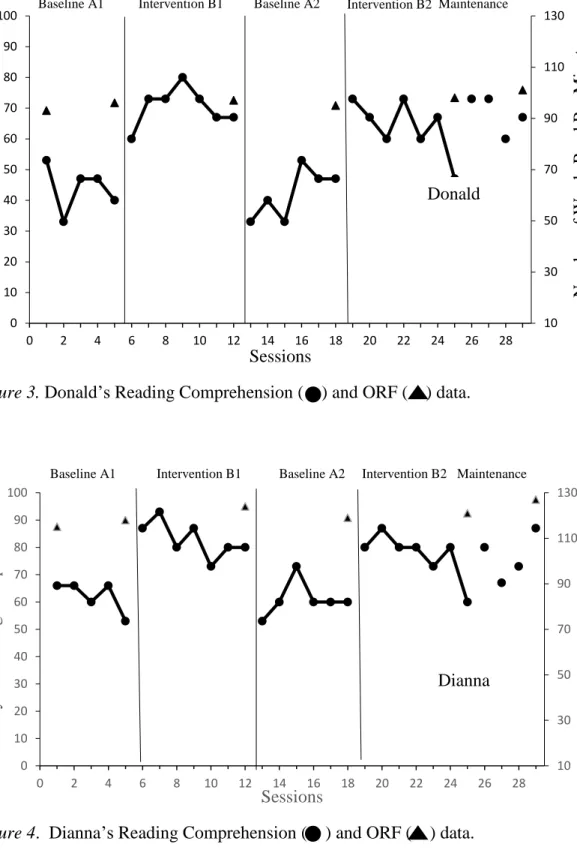
3. Donald’s Reading Comprehension ( ) and ORF ( ) data 83
4. Dianna’s Reading Comprehension ( ) and ORF ( ) data 83
1
The No Child Left Behind (NCLB) Act of 2001 created standards for educating all students, including individuals with disabilities. More specifically, students with disabilities are required to make progress in general education curriculum with
interventions from scientifically based research (Parette & Peterson-Karlan, 2007). Since NCLB, researchers have implemented and tested several instructional designs for reading interventions. Current research focuses on teaching interventions to elementary-aged students to improve reading skills (i.e., phonics, phonemic awareness, and alphabetic awareness) (Flynn & Swanson, 2012). As students progress in school, reading shifts from learning to read to reading to learn (Kim, Linan-Thompson, & Misquitta, 2012) and becomes more difficult for students with reading disabilities (Flynn & Swanson, 2012). Additionally, formal reading instruction in secondary schools rarely exists (Saenz & Fuchs, 2001). With changes in reading instruction and minimal experimental
methodological research for secondary reading interventions using technology, additional research to compensate for students’ reading deficits is an urgent priority (Anderson-Inman & Horney, 1997).
Reading is a necessary skill required to learn and affects educational outcomes, possible employment, and personal growth (Strangman & Dalton, 2005). Roughly 6 million secondary students are reading far below grade average and nearly 3,000 students
2
drop out of high school daily (Slavin, Cheung, Groff, & Lake, 2008). Struggling readers who do not learn to read in school are more likely to be unemployed, earn low incomes, and exhibit poor health as adults (National Center for Educational Statistics [NCES], 2013).
In the past decade, national reading research agendas included quality reading instruction for adolescents in the United States (Hauptli & Cohen-Vogel, 2013). Even with these agendas, data indicate that adolescents do not have the required skills to be proficient readers in high school (Vaughn & Wanzek, 2014). Recent National
Assessment ofEducational Progress (NAEP) data on adolescent readers indicates that
69% of eighth graders and 64% of twelfth graders do not meet proficient-level reading skills, and 26% and 27%, respectively, do not meet basic-level skills (NAEP, 2009).
Although several legislative actions have focused on evidence-based practice and inclusion of students with disabilities in the general education curriculum, reading scores are not improving. Results on national assessments of secondary students with
disabilities’ reading show only 31% scored at or above a basic level on the eighth-grade reading assessment (NCES, 2013). More startling is that between the years of 2002 and 2011, students with disabilities’ reading scores decreased but the scores of students without disabilities increased (NCES, 2013). In addition to the regression of reading scores, the number of students with disabilities included in general education classes has increased (Vaughn & Wanzek, 2014). Students in one of the largest groups receiving special education services have learning disabilities (LD) (Wanzek, Otaiba, & Petscher, 2014) and approximately 80% exhibit reading disabilities (Hudson, High, & Otaiba, 2007). Additional research shows that 90% of students with LD are not able to read
3
Reading Difficulties for Students with Learning Disabilities
Students with LD show increased outcomes after reading interventions that address their cognitive deficits (Vaughn & Wanzek, 2014). Whereas good readers have the cognition to identify and understand text structure, vocabulary, and conceptual density (Saenz & Fuchs, 2002), students with LD exhibit poor decoding, fluency (Elkind & Elkind, 2007), understanding of semantics (Nation, 2005), and an inability to access working memory (Roberts, Torgesen, Boardman, & Scammacca, 2008). Thus, students with LD require compensatory support (e.g., technology) to learn curriculum (Edmonds & Li, 2005; Tian & Okolo, 2007).
Research indicates secondary teachers typically instruct using whole-class
instruction (Salisbury, Brookfield, & Odom, 2005) even with students with disabilities in the same class. With whole-class instruction, students rarely apply concepts
independently (Salisbury et al., 2005). As a result, students with LD rely on teacher-directed instruction and are left without independent reading skills required to handle the literacy demands of adulthood (Flynn & Swanson, 2012). Without strong literacy skills, students with LD lack motivation to read and fall further behind their peers in learning content (Cardon, 2000; Slavin et al., 2008).
Accessing Information through Technology
While students with LD have been able to access information through technology for the previous three decades, this has not always played out in the classroom. In the 1980s, individuals with disabilities gained access to devices (i.e., technology) that were
4
necessary to participate in their communities (Wallace, Flippo, Barcus, & Behrmann, 1995). Subsequently, the Center for Applied Special Technology (CAST) developed digital tools to build literacy skills for students with disabilities for whom regular
curriculum did not work (Hall, Cohen, Vue, & Ganley, 2015; Hitchcock & Stahl, 2003). In 1986, the Education for All Handicapped Children Act (EHA; P.L. 95-142) provided $4.7 million in research and development tools to investigate the use of Assistive Technology (AT) in meeting educational goals (Malouf & Hauser, 2005).
In 1988, the Technology-Related Assistance Act (“Tech Act”, P.L. 100-407), an important law on the use of AT in educational settings for students with disabilities, was enacted (Bailey, Meidenbauer, Fein, & Mollica, 2005). For the first time in American history, the Tech Act defined AT devices and services (Bailey et al., 2005). An AT device is defined as “any piece of equipment or product system, whether acquired
commercially, off the shelf, modified, or customized, that is used to increase, maintain or improve the functional capabilities of individuals with disabilities” (20 U.S.C. &
1401[1]). AT service is defined as “any service that directly assists an individual with a disability in the selection, acquisition, or use of an AT device” (20 U.S.C. & 1401[2]). AT definitions were later put into the 1997 and 2004 reauthorizations of the Individual with Disabilities Education Act (IDEA). IDEA 2004 changed the language the involved the use of AT in the Individualized Education Plan (IEP) from requiring AT devices and services to mandating the consideration of AT. In 2008, IDEA’s revision required states to adopt the National Instructional Materials Accessibility Standards (NIMAS) to provide instructional materials outside of traditional print (i.e., paper based) to individuals who are blind and those with specific learning disabilities who have print disabilities
5
The prevalence of AT has increased with legislation from the Tech Act of 1998. In the 1970s, there were 100 AT devices commercially available and today, there are more than 29,000 AT devices available for individuals with disabilities (Poel, 2007). Despite this increase in the number of AT devices available, teachers are not typically using AT in the classroom. Many teachers lack trouble-shooting skills to appropriately use AT on a regular basis to compensate for reading deficits (Okolo & Diedrich, 2014). Although data showing that 67% of teachers reported that they believed AT increased access to curriculum and outcomes, only 33% of respondents could make print accessible on the computer (Okolo & Diedrich, 2014). Even with knowledge that AT has
educational benefits, teachers do not have time to manipulate text for students with disabilities to access curriculum (Vaughn, Reiss, Rothlein, & Hughes, 1999).
Text-to-Speech (TTS) Technology
To assist secondary students in accessing curriculum, students with reading disabilities need compensatory tools (e.g., text-to-speech, TTS). TTS is a compensatory tool that can provide students with reading support while allowing them access to text (Stodden, Roberts, Takahashi, Park, & Stodden, 2012). Furthermore, researchers found that technology promotes independence, increases self-worth, and increases productivity in students with LD (Edyburn, Higgins, & Boone, 2005) which can increase motivation and learning (Cardon, 2000). Researchers found reading intervention strategies using technological speech-synthesized tools (Lange, McPhillips, Mulhen, & Wylie, 2006) that were implemented at least once per week (Stodden et al., 2012), and allowed for repeated
6
reading of text resulted in reading gains for students with LD (Moorman, Boon, Keller-Bell, Stagliano, & Jeffs, 2010). More specifically, the use of TTS resulted in increased time spent reading, better outcomes on comprehension measures (Hecker, Burns, Elkind, Elkind, & Katz, 2002), and increased reading rates (Elkind, 1998). Research has found the lowest readers actually benefitted the most in comprehension (Moorman et al., 2010) and reading rates (Elkind, 1998) after using TTS.
Research indicates that when students with LD individualize TTS (e.g., rate of speed, voice selection, size of font), they exhibit educational benefits (Moorman et al., 2010, Tian & Okolo, 2007). By pronouncing the words aloud while simultaneously highlighting words, TTS allows readers to increase their reading speed to minimize the cognitive task of decoding, creating more energy to comprehend material (Elkind, Black & Murray, 1996). When computerized reading speed is set at a moderately faster rate (i.e., a 25% increase) than struggling readers’ present oral reading fluency, students increase comprehension (Coleman, Carter, & Kildare, 2011). Additionally, the readers’ voice selection and adjustment of the font size can increase readers’ focus when reading on the computer (Hecker et al., 2002). With previous research indicating positive outcomes, researchers need to conduct more reading interventions with technology for secondary students with reading disabilities to investigate the compensatory benefits of TTS when acquiring content in classroom settings.
Significance of the Problem
Students with LD experience several years of reading difficulties that involve deficits in making meaning from text. Achieving success in school requires using good reading skills to understand all content areas (Vaughn & Wanzek, 2014). When
7
widening between special and general education students, additional types of reading interventions need to occur to facilitate learning. Reading interventions that involve technology have been known to increase academic outcomes for secondary students with LD (Stetter & Hughes, 2011).
The NCLB Act and IDEA mandate that educators learn to use technology relevant to their students’ needs (Dyal, Carpenter, & Wright, 2009). The National Educational Technology Standards (NETS) and the Council for Exceptional Children (CEC)
Technology Specialist Standards established standards to train teachers on the use of AT when instructing students with disabilities (Parette & Peterson-Karlan, 2010; Smith & Allsopp, 2005). Even with these mandates and guidelines, teachers are not using technology to make content accessible (Okolo & Diederich, 2014). Adding to this dilemma is the fact that classroom curricula are still primarily based in print (Rose, Meyer, & Hitchcock, 2011). Teachers end up teaching to students who are able to read the text and do not meet the needs of those who can’t read the text (i.e., students with disabilities). This creates a Matthew Effect which causes the word-rich to get richer, and the word-poor to get poorer (Stanovich, 1986). To address this effect, teachers need to maximize students with disabilities’ motivation to read content. Technology is highly motivating to secondary students with LD and can potentially increase the amount of content they learn (Anderson-Inman, 2009; Bouck, Flanagan, Miller, & Bassette, 2012).
The current study is based on conclusions from my pilot study conducted in 2014. My pilot study investigated the effects of TTS on four students with LD in a freshman
co-8
taught English class. I found that the lowest readers benefitted the most from the TTS, which is similar to previous studies (Brown & Augustine, 2000; Dolan, Hall, Banerjee, Chun, & Strangman, 2005; Moorman et al., 2010). In addition, my pilot study results indicated that the participants with the lowest reading abilities outperformed peers whose reading abilities were not as low. With research suggesting that longer studies (e.g., one semester) and increased exposure to TTS (e.g., more than once per week) resulted in increased reading outcomes (Stodden et al., 2012), the current study implemented the use of TTS for one semester with increased intensity. My pilot study’s social validation questionnaire indicated that participants perceived TTS as helping them read to learn and were more likely to use TTS in the future. Students with LD minimally increased their oral reading fluency (ORF) and significantly increased their comprehension. With these findings, research needs to continue to investigate the effects of increased intensity of TTS on the lowest readers with disabilities.
Summary
TTS used as a reading intervention may increase the ability of students with LD to compensate for their reading deficits and, in turn, gain information from text (Tian & Okolo, 2007). Because secondary curriculum is primarily presented using traditional text (Rose et al., 2011), students with LD are not successful readers when learning secondary curriculum. Practitioners need to present curriculum differently to meet the cognitive learning needs of students with LD.
Purpose
This study aimed to extend previous research on the effects of reading
9
Kurzweil 3000, to provide reading material to students with LD through auditory and visual support. The researcher monitored participants’ performance in reading
comprehension through curriculum-based measurements (CBMs) to ensure improvement before measuring the effects on outcomes maintenance. The results provide additional empirical evidence on how to improve reading comprehension for students with LD while advancing the effects of TTS on reading outcomes.
Research Questions
The following research questions were addressed in this study:
1. Does Text-to-speech (TTS) increase the reading comprehension of freshman
students with learning disabilities (LD) as measured by curriculum-based measures (CBMs) from the classroom text in a self-contained classroom?
2. Does oral reading fluency (ORF) increase after participants use TTS?
3. To what extent are participants able to maintain reading comprehension
outcomes as measured by CBMs?
4. To what extent are participants able to generalize reading comprehension on
universal screening assessments (e.g., Lexile)?
5. How is the use of TTS perceived by the participants when acquiring
information from classroom text after increased intensity of TTS?
Definitions of Terms
Assistive Technology: Any product system, device, or equipment, whether
10
improve the functional capabilities of individuals with disabilities (Assistive Technology Act of 1998).
Bimodal Presentation: Refers to information that is presented with synchronous audio and visual formats. Bimodal reading is when someone reads the text while hearing the words at the same time (www.readspeaker.com).
Individuals with Disabilities Education Improvement Act (IDEIA): Passed in 2004, IDEIA refers to the refinement of IDEA to provide more seamless procedures and paperwork in special education; it mandates that all students with disabilities must participate in assessments conducted in school districts, and that special education teachers must be highly qualified to teach core subjects (Friend & Bursuck, 2012).
Kurzweil 3000: A technology software program that converts print into an electronic format that can be read aloud to the user and contains various features (e.g., highlighting, font size, voice selection, rate of speed) to help students acquire content (Moorman et al., 2010).
National Instructional Materials Accessibility Standard (NIMAS): A national electronic file standard that requires states to prepare material used solely for efficient conversion into specialized formats (IDEA, Section 674€(3)(B)).
No Child Left Behind (NCLB) Act: As the reauthorization of the Elementary and Secondary Education Act of 1965, NCLB mandates that all students be given equal access to a high-quality education by increasing academic standards and accountability for students to make adequate yearly progress, regardless of their income or disability (Friend & Bursuck, 2012).
11 (Harris & Hodges, 1995).
Reading Comprehension: A process that involves the reader’s previous learned knowledge about the world and involves strategies such as predicting, summarizing, identifying meanings of vocabulary, and reflecting on one’s comprehension skills (Bartoli & Botel, 1998).
Optical Character Recognition (OCR): The ability of a computer to recognize the characters in written or printed text.
Screen Reader. The use of software that reads text on a computer screen to a user. The “Tech Act” of 1988. The first law to define AT devices and services and
increased availability of AT to all persons and their families in the United States (Behrmann & Jerome, 2002).
Text-to-Speech (TTS). A computer software program that can convert printed text (e.g., worksheets, tests, notes, and textbooks) into digital format and then read the whole text from the beginning to the end or anywhere the user selects (Tian & Okolo, 2007).
12 CHAPTER II
REVIEW OF RELATED LITERATURE
This chapter includes an overview of the current literature on students with LD with reading disabilities in Grades 6 to 12 related to reading outcomes. The first section describes characteristics of secondary students with LD in reading. The second section describes how technology, when used as a reading intervention, can provide
compensatory assistance to students with LD when accessing secondary curriculum. Next, findings from major reviews for reading comprehension intervention studies
without technology are discussed. The next section presents findings from major reviews of reading comprehension intervention studies with technology. The chapter concludes with a discussion regarding conclusions made from synthesizing the studies’ results on secondary students with LD in reading.
Literature Search Procedures
I conducted a comprehensive search of the literature using four methods: (a) keyword searches in subject indexes, (b) searches in refereed journals, (c) reference
searches in previously published literature, and (d) consultation. First, I conducted
computer searches of key electronic databases: Education Full Text, Educational Resources Information Center (ERIC), CINAHL, MEDLINE, PsycINFO, and SAGE Journals. I used the following descriptors and keywords, in both abbreviated and varied versions, to identify studies in peer-reviewed journals that focused on reading
13
education, and struggling reader. I used truncation of the following terms:
comprehend*, learning disab*, and reading disab* to locate the greatest possible number of empirical studies. Second, to locate the most recent literature, I conducted a hand-search of 10 refereed journals from 2011 through 2015. I examined the following journals: Annals of Dyslexia, Exceptional Children, Journal of Learning Disabilities, Journal of Special Education, Journal of Special Education Technology, Learning Disability Quarterly, Learning Disabilities Research and Practice, Reading Research Quarterly, Reading and Writing Quarterly, and Remedial and Special Education. I selected these journals because reading interventions both with and without technology have been published in the journals. I searched within each journal from the years 2011 through 2015 using the key terms. I chose these years based on the latest literature review on secondary students with reading difficulties (Wanzek et al., 2013). Third, I conducted a reference search which involved reviewing the reference lists and footnotes from pertinent studies and previous literature reviews (Ciullo & Reutebuch, 2013;
Swanson et al., 2014; Wanzek et al., 2013) to locate articles that were not found using the previous search methods. Fourth, I sent an electronic message to a prominent author in the field of reading interventions asking if there were any articles in press that focused on reading interventions for secondary students with disabilities.
Inclusion Criteria
I established criteria to determine which studies to include in this review. The selected studies were based on the following criteria: (a) published in a peer-reviewed
14
journal in English, (b) included participants with LD or reading disabilities (i.e., scored below expected grade level in reading achievement or below 30% on standardized reading tests) or included additional participants if data were disaggregated for
participants with LD or reading disabilities, (c) included an intervention in a middle or high school (i.e., Grades 6 through 12) or when more than 50% of the participants were in Grades 6 through 12, (d) had an experimental, quasi-experimental, single-group, or single-case research design, (e) was conducted in the United States, and (f) had a dependent measure of reading outcomes. If a study did not clearly report the reading outcomes of students with disabilities or LD, the study was not included. I selected the single-case and group design research to broaden my search on reading interventions for students with LD in Grades 6 through 12.
This process yielded 15 articles relevant to reading interventions for students with disabilities in secondary schools. I adapted the quality indicators of rigorous research by using Horner et al.’s (2005) and Gersten et al.’s (2005) guidelines for single-case and group designs, respectively. I used quality indicators to determine the methodological strengths and weaknesses of the studies. Quality indicators can assist practitioners with information to advance research through replicating studies with different groups in different settings (Jitendra, Burgess, & Gajria, 2011).
Article Coding
Researchers code articles to compare essential information and findings among studies in a literature review (Wilson, 2009). I coded the studies based on three different factors: (a) essential information in each study, (b) dependent variables, and (c) reading interventions with and without technology. First, the essential information from each
15
information based on a previous synthesis (Chung, Carter, & Sisco, 2012). Second, I coded studies by dependent variables (i.e., vocabulary, comprehension, fluency, and phonics) in each study to make accurate comparisons among outcomes. Furthermore, I organized the studies according to the presence or absence of technology used as a reading intervention. By doing this, I focused on the effects of reading interventions without technology (see Table 1) and with technology (see Table 2) for students with LD in Grades 6 through 12.
16 Tabl e 1 K ey In for mat ion f ro m R e ad ing In tervent ion S tud ie s w it ho ut T ec hn ol og y f or Second ar y St ud ent s w it h Di sa bi li ti es Stud y a P ar ticip an ts /Sc h o o l L e v el In d ep en d en t Var iab le Dep en d en t V ar iab le Desig n Fin d in g s Gen er alize Sk ill s R ea d in g Co m p re h en sio n I n te rv en ti o n ( n = 1) V au g h n e t al. (2 0 1 5 ) 77 (51 M, 2 6 F) 7 4 w ith L D 3 w it h E D High Su p p le m e n tal R E W AR DS P lu s p ro g ram ; co llab o rativ e strateg ic read in g str ateg y f o r 5 0 m in p er d ay f o r 1 6 0 d ay s o v er 2 y ea rs ; t h ree tr ea tm e n t g ro u p s: T1 Rea d in g w it h o u t DOP T2 Rea d in g w it h DOP T3 DOP w it h o u t rea d in g Sco res o n Gate s-Ma cGin it ie rea d in g co m p re h en sio n ; stu d e n t en g a g e m en t u sin g en ro ll m e n t s ta tu s R an d o m ize d co n tr o l tr ial w it h p re - a n d p o sttes t In cr ea se w as sig n if ica n t f o r SW D in tr ea tm en t g ro u p s co m p ar ed to c o m p ar is o n g ro u p o n Gate s – Ma cGin it ie rea d in g co m p re h en sio n No t r ep o rte d (T able Cont inues )
17 Stu d y a P ar ticip an ts /Sc h o o l L e v el In d ep en d en t Var iab le Dep en d en t V ar iab le Desig n Fin d in g s Gen er alize Sk ill s V o ca b u la ry In terven tio n ( n = 1 ) Har ris , Sch u m a k er , & Desh ler ( 2 0 1 1 ) 2 3 0 ( 1 6 M, 8 F) 1 6 w ith L D 2 w it h E D 1 w it h I D 4 w it h OHI 1 w it h A U Hig h W o rd Ma p p in g (W M) , L INC in g (VL ), an d T est o n ly ( T O) less t h an 1 se m e ster Sco res o n Mo rp h o lo g ical An al y si s T est f o r Vo ca b u lar y R an d o m ly ass ig n ed SW D an d NSW D in a co m p ar is o n -g ro u p In cr ea se w as sig n if ica n t f o r SW D in V L g ro u p o n th e W o rd Kn o w led g e T est an d s ig n if ica n t fo r SW D in t h e W M g ro u p o n th e Mo rp h o lo g ical An al y si s T est; No d if fer e n ce f o r T O g ro u p No t r ep o rte d (T able Cont inues )
18 Stu d y a P ar ticip an ts /Sc h o o l L e v el In d ep en d en t Var iab le D ep en d en t V ar ia b le Desig n Fin d in g s Gen er alize Sk ill s F lu en cy a n d R ea d in g C o mp re h en sio n I n terven tio n s ( n = 2 ) Vau g h n et al. (2 0 1 1 ) 182 64 SW D Mid d le T 1 R E W AR DS w o rd stu d y , fl u e n c y , v o ca b u lar y , co m p re h en sio n T2 W o rd s tu d y , fl u en c y , v o ca b u lar y , co m p re h en sio n sp ec if ic to stu de nts ’ nee ds C Ty p ical sch o o l-b ased in ter v e n tio n s fo r 1 y ea r Sc o re s o n W JI II ( le tt er w o rd id en ti fic ati o n a n d re ad ing p assa g e co m p re h en sio n ); T O W RE f o r w o rd re ad ing e ff ic ie n c y ; an d T A K S R an d o m ass ig n m e n t to tw o tr ea tm e n t o r o n e co m p ar is o n g ro u p w ith p re - an d p o sttes t No s ig n if ican t in cr ea se ex is ted b et w ee n SW D in th e tr ea tm en t co n d itio n s a n d th e co m p ar is o n g ro up No t r ep o rte d (T able Cont inues )
19 Stu d y a P ar ticip an ts /Sc h o o l L e v el In d ep en d en t Var iab le Dep en d en t V ar iab le Desig n Fin d in g s Gen er alize Sk ill s Vau g h n et al. (2 0 1 2 ) 41 (29 M, 1 2 F) 9 w it h L D Mid d le T Ind iv id u a l in ter v e n tio n in sm al l g ro u p f o r 5 0 m in p er d ay fo r 1 y ea r d u ri n g an elec ti v e p er io d C Par ticip ated in an elec tiv e (i.e ., ar t, m u sic, p h y sical ed u ca tio n ) Sco res o n W JI II w o rd r ea d in g a n d co m p re h en sio n ; T OW R E ; A IMS w eb fl u en c y ; Gate s-Ma cGin it ie co m p re h en sio n ; T OSR E C s ile n t r ea d in g L o n g it u d in a l, ran d o m ized tr ial w it h t w o tr ea tm e n t stu d e n ts f o r o n e co m p ar is o n stu d e n t w it h p re - an d p o sttes t In cr ea se w as sig n if ica n t f o r stu d e n ts w ith L D in th e tr ea tm e n t g ro u p o n Gates -Ma cGin it ie, W JI II L etter -W o rd , an d o n T OW R E P h o n e m ic Dec o d in g No t r ep o rte d (T able Cont inues )
20 Stu d y a P ar ticip an ts /Sc h o o l L e v el In d ep en d en t V ar ia b le Dep en d en t V ar iab le Desig n Fin d in g s Gen er alize Sk ill s F lu en cy , R ea d in g C o mp reh en sio n , a n d V o ca b u la ry In terven tio n s ( n = 2) Seif er t & E sp in (2 0 1 2 ) 2 0 w ith L D (1 1 M, 9 F) Hig h Rea d in g inte rv e n ti o n s o f te x t re ad in g , v o ca b u la ry le ar n in g , an d a co m b in ati o n o f te x t an d v o ca b u la ry i n sh o rt -ter m s tu d y Sco res o n r ea d in g fl u en c y , v o ca b u lar y , an d co m p re h en sio n W ith in -s u b jec t In cr ea se w as sig n if ica n t f o r stu d e n ts w ith L D in v o ca b u lar y a n d rea d in g f lu e n c y ; n o sig n if ica n t in cr ea se in co m p reh e n sio n No t r ep o rte d (T able Cont inues )
21 Stu d y a P ar ti cip an ts/Sc h o o l L e v el In d ep en d en t Var iab le Dep en d en t V ar iab le Desig n Fin d in g s Gen er alize Sk ill s W an ze k , Vau g h n , R o b er ts , & Fletch er ( 2 0 1 1 ) 1 3 5 w it h L D Mid d le Su p p le m e n tal read in g in ter v e n tio n fo r 5 0 m in p er d ay fo r 1 y ea r w it h 1 0 to 1 5 s tu d en ts p er class ; T RE W AR DS P lu s P ro g ram i n p lace o f an elec ti v e C Ty p ical sch o o l-b ased in ter v e n tio n s Sco res f ro m W JI II w o rd id en ti ficati o n , w o rd attac k , an d r ea d in g p ass ag e co m p re h en sio n ; T OW R E o n d ec o d in g ef ficien c y ; T A K S f o r co m p re h en sio n R an d o m ized trea tm e n t an d co n tr o l g ro u p s w it h p re - a n d p o sttes t In cr ea se in s co res o n si g h t w o rd rea d in g f lu e n c y , an d s m a ll in cr ea ses o n p h o n e m ic d ec o d in g , fl u en c y , an d p ass ag e co m p re h en sio n Ov er ti m e; fo u r m o n th s a fter p o sttes t N o te. A U = a u ti sm ; C = co n tr o l g ro u p ; D OP = d ro p o u t p rev en tio n ; E D = e m o tio n all y d is tu rb ed ; F = fe m ale ; I D = in tell ec tu al d is ab ilit y ; L D = lear n in g d is ab ilit y ; M = m ale; MB L = m u ltip le b aseli n e d esig n ; N S W D = n o n s tu d en ts w it h d is ab ilit ies; R T I = resp o n se to in ter v en tio n ; SW D = st u d en ts w it h d is ab ilit ies; T = tr ea tm en t g ro u p ; T A KS = T ex as A ss ess m e n t o f K n o w led g e a n d Sk il ls ; T OSR E C = T est o f Sil en t R ea d in g E ff icie n c y a n d C o m p reh e n sio n ; T OW R E = T est o f W o rd R ea d in g E ff ic ien c y ; O HI = o th er h ea lt h i m p air e d ; W JI II = W o o d co ck -J o h n so n I II T ests o f A ch iev e m e n t. a A to tal o f six s tu d ie s w er e su m m ar ized .
22 Ta ble 2 K ey I nformat ion f rom Re ading Inte rv enti on Studi es w it h T ec hnology for Se condary Students w it h Disabi li ti es Stu d y a P ar ticip an ts /Sc h o o l L e v el In d ep en d en t Var iab le Dep en d en t V ar iab le Desig n Fin d in g s Gen er alize Sk ill s Rea d in g C o mp reh en sio n I n ter ven ti o n s ( n = 2 ) Ma rin o et al. (2 0 1 4 ) 341 (17 4 M, 1 6 7 F) 5 7 w ith L D Mid d le 1 4 s ess io n s o f fo u r b lo ck s; P retest sco re; su m o f UD L g a m e fea tu res; co m p leted lev els ; L D w ith UDL f ea tu res a n d lev el co m p letio n Sco res o n resear ch er - cr ea te d scien ce u n it p re - p o sttes ts ; su rv e y Mix ed m et h o d s u si n g p re - an d p o sttes t w it h b et w ee n an d w it h in su b jec t f ac to rs In cr ea se fo r SW D in p o sttes t sco res b u t n o t si g n if ican t; n o in cr ea se o f scien ce k n o w led g e af ter u sin g UD L g a m e en h a n ce m en ts ; SW D felt s k il ls im p ro v ed Ov er ti m e (T able Cont inues ) (T able Cont inues )
23 Stu d y a P ar ticip an ts /Sc h o o l L e v el In d ep en d en t V ar iab le D ep en d en t V ar ia b le Desig n Fin d in g s Gen er alize Sk ill s Stetter & Hu g h e s (2 0 1 1 ) 9 w it h L D (4 M, 5 F) Hig h Sto ry m ap p in g (C A I) f o r 8 w ee k s; th ree tr ea tm e n t g ro u p s: T I – Sto ry Ma p In ter v e n tio n T2 -Delay ed Stor y Ma p In ter v e n tio n T3 -B aselin e Sc o re s o n d ail y Sto ry m ap co m p re h en sio n q u iz ze s an d o n G ate s-Ma cGi n itie co m p re h en sio n MB L w it h su rv e y In cr ea se in sco res o n Gate s-Ma cGin it ie at p o sttes t f o r all th ree tr ea tm e n t co n d itio n s; n o in cr ea se o n d ail y q u iz sco res Ov er ti m e w it h m ai n ten a n ce (T able Cont inues )
24 Stu d y a P ar ticip an ts /Sc h o o l L e v el In d ep en d en t Var iab le Dep en d en t V ar iab le Desi g n Fin d in g s G en er ali ze Sk ill s V o ca b u la ry In terven tio n s ( n = 2 ) Ken n ed y , Desh ler , & L lo y d (2 0 1 5 ) 278 (13 3 M, 1 4 5 F) 3 0 w ith L D Hig h C o n te n t A rea P o d ca sts ( C A P s) w it h E I; C A P s w ith KM S; C A P s w ith E I + KM S; an d in str u ctio n a l v id eo s as E I w it h o u t v is u al (VM ) fo r 3 w ee k s Sco res o n resear ch er cr ea ted v o ca b u lar y te sts u si n g MC a n d OE q u esti o n s; satis fac tio n su rv e y R an d o m ass ig n m e n t tr ea tm e n t a n d co n tr o l u si n g p re - an d p o sttes t d esig n w it h b et w ee n -su b jec t f ac to rs fo r SW D In cr ea se w as sig n if ica n t o n p o sttes t sco res f ro m L D in E I + KM S g ro u p w it h e x p licit in str u ctio n O v er ti m e w it h m ai n te n a n ce W o o d , Mu st ian , & C o o k e (2 0 1 2 ) 8 ( 5 M, 3 F) 4 w it h OHI 1 w it h E D 3 w it h L D Mid d le P ee r T u to rin g (C A I) f o r 1 4 w ee k s Sco res o n ac q u is itio n o f v o ca b u lar y a n d g en er aliza tio n o f v o ca b u lar y E x p er im e n tal si m u lta n eo u s tr ea tm e n ts In cr ea se in v o ca b u lar y sco res o n resear ch er - cr ea ted m ea su res O v er ti m e (T able Cont inue s ) (T able Cont inues )
[Type a quote from the
document or the summary of an interesting point. You can position the text box anywhere in the document. Use the
Drawing Tools tab to change the formatting of the pull quote text box.]
25 Stu d y a P ar ticip an ts /Sc h o o l L e v el In d ep en d en t V ar iab le D ep en d en t V ar ia b le Desig n Fin d in g s Gen er alize Sk ill s F lu en cy a n d R ea d in g C o mp re h en sio n I n terven tio n s ( n = 3 ) Fit zg er ald , Miller , Hig g in s, P ier ce , & T an d y (2 0 1 2 ) 5 w it h L D (3 M, 2 F) Mid d le W o rd Id en tifi ca tio n S tr a teg y o n lin e le ss o n s to im p ro v e rea d in g d ec o d in g s k ills f o r 4 m o n th s Sc o re s o n W JI II co m p re h en sio n an d f lu en c y Mu ltip le p ro b e ac ro ss p ar ticip an ts In cr ea se in W JI II fl u en c y an d co m p re h en sio n an d W IS -C B M in o ral rea d in g , co m p re h en sio n , an d C B T Ov er ti m e w it h m ai n ten a n ce Hall, C o h e n , Vu e, & Gan le y (2 0 1 5 ) 73 (14 4 M, 1 4 0 F) 6 4 w ith L D M id d le S tr a teg ic R ea d er (SR ) w ith o n li n e C B M fo r 1 1 to 1 2 w ee k s Sc o re s o n G ate s-M ac G init ie ; CB M in flue n c y a n d co m p re h en sio n ; su rv e y Mix ed m et h o d s u sin g p re - an d p o stt es ts w it h q u alitati v e d esig n In cr ea se w as sig n if ica n t f o r SW D o n th e Gates -MacGi n it ie u si n g SR o n li n e; sig n if ica n tl y m o re en g a g ed No t r ep o rte d Me y er & B o u ck (2 0 1 4 ) 3 w it h L D (2 M, 1 F) Mid d le N a tu ra l R ea d er, T T S fo r 1 5 s ess io n s; le ss th an 1 s e m es ter Sc o re s o n f lu en c y , co m p re h en sio n , an d ti m e to co m p le te ta sk s; su rv e y MB L ac ro ss p ar ticip an ts No d if fer en ce i n fl u en c y , co m p re h en sio n , o r task co m p le tio n ; felt T T S m ad e rea d in g ef fic ien t Ov er ti m e (T ab le C on ti nu es )
26 Stu d y a P ar ticip an ts /Sc h o o l lev el In d ep en d en t Var iab le Dep en d en t V ar iab le Desig n Fin d in g s Gen er alize Sk ill s F lu en cy , V o ca b u la ry, a n d R ea d in g C o mp reh en sio n I n terven tio n s ( n = 2 ) R etter , An d er so n , & Kier an (2 0 1 3 ) 1 3 w ith R D (1 1 M, 2 F) Hig h iP ad 2 a p p licatio n s w it h S ec o n d C h a n ce R ea d in g P ro g ra m f o r 1 2 w ee k s Sc o re s o n SRDT f o r v o ca b u la ry a n d co m p re h en sio n ;J a m esto w n T est fo r flue n c y P re - an d p o stx p er im e n tal In cr ea se in co m p re h en sio n an d v o ca b u lar y w it h iP ad ; n o d if fer e n ce b et w ee n iP ad a n d f lu en c y No t r ep o rte d Sto d d en , R o b er ts , T ak ah ash i, P ar k , & Sto d d en (2 0 1 2 ) 1 0 4 w it h L D Stu d y 1 ( n =3 5 ) Stu d y 2 ( n =6 9 ) Hig h K u rz w eil 3 0 0 0 T T S f o r 3 0 m in p er w ee k f o r 1 s e m e ster Stud y 1 -Sco res o n W JI II co m p re h en sio n a n d v o ca b u la ry ; Stud y 2 -Sc o re s o n N elso n D e n n y T est in co m p re h en sio n , v o ca b u la ry , a n d f lu en c y Mix ed m et h o d s, rep ea ted m ea su res d esi g n 1 -I n cr ea se in v o ca b u lar y ; n o d if fer e n ce in rea d in g co m p re h en sio n ; 2 -I n cr ea se w as sig n if ica n t in v o ca b u lar y , co m p re h en sio n an d r ead in g r ate No t r ep o rte d N o te. C A I = co m p u ter as sis te d in str u ct io n ; C B M = cu rr icu lu m -b ased m ea su re m e n t; C B T = cu rr icu lu m -b ased tes t; E D = e m o tio n all y d is tu rb ed ; E I = ex p licit i n str u ctio n ; F = f e m al e; KM S = m n e m o n ic str ateg y ; L D = lear n in g d is ab ilit y ; M = m ale; MB L = m u ltip le b aseli n e d esig n ; M C = m u ltip le ch o ice; OE = o p en -e n d ed q u esti o n s; O HI = o th er h ea lt h i m p air ed ; SR DT = Stan fo rd R ea d in g D iag n o stic T est; T T S = tex t-to -s p ee ch ; U DL = u n iv er sal d esig n f o r lear n in g ; W IS -C B M = W o rd I d en tif icatio n S tr at eg y C u rr ic u lu m -b ased Me as u re m en t a A to tal o f n in e st u d ies w er e su m m ar ized .
27
Intervention Components
The studies in this review included at least one of the following reading
intervention components: vocabulary, phonics, fluency, and comprehension. Vocabulary interventions create semantic representations that interact with orthographic information contributing to visual word recognition (Harris et al., 2011) and phonics interventions stress letter-sound correspondences to help read and spell words (Harris & Hodges, 1995). Fluency interventions help readers read a text rapidly and accurately without word identification problems (Harris & Hodges). Reading comprehension interventions ask students to interact with text using prior knowledge and strategies such as predicting, questioning, summarizing, reflecting, and identifying vocabulary in context (Bartoli & Botel, 1988). In this review, studies were categorized by reading interventions with or without technology and grouped according to these dependent variables.
Methodological Features
In addition to coding the articles, I reviewed the studies’ evidence of quality indicators established by Horner et al. (2005) and Gersten et al. (2005) for single-case and group design studies, respectively. Single-case studies were considered based on 21 components in the following areas: (a) participant and setting descriptions, (b) dependent variables, (c) independent variables, (d) baseline phase, (e) experimental control, (f) external validity, and (g) social validity (see Table 3). Group designs were considered based on 10 components in the following areas: (a) description of participants, (b) description and implementation of intervention and comparison conditions, (c) outcome measures, and (d) data analysis (see Table 4).
28 Table 3
Definitions of Horner et al.’s (2005) Quality Indicators Participants and settings
Participants were described based on their ages/grades, genders, race/ethnicity, specific disabilities, and diagnoses to allow for replication.
Methods existed for specifically stating the selection of the participants. Physical settings were clearly described for precise replication.
Dependent variable (DV)
Reading outcomes were operationally defined in quantifiable terms. Each reading outcome was quantifiably measured.
Each measurement of reading outcomes was valid and accurately described to permit replication.
Reading outcomes were repeatedly measured throughout the duration of the study. Data collection occurred on the reliability or interobserver agreement (IOA) of the DVs, and IOA calculations qualified as meeting the minimum standard (i.e., 80%).
Independent variable (IV)
The description of the IVs was provided in exact detail to allow for replication.
The experimenters systematically introduced the IV instead of allowing the IV to occur by itself.
The fidelity of implementation for the IV was conspicuously measured. Baseline phase
Baseline phase included at least three data points showing repeated measures to help determine future performance.
Baseline conditions were described in exact detail to be replicated. Internal validity/experimental control
Design provided at least three demonstrations of the effects gathered from three different data points.
Design provided information on threats to internal validity. Results documented a pattern that exhibits experimental control. External validity
Intervention effects on reading outcomes were replicated across participants or settings. Social validity
Reading outcomes were established as socially valid.
Reading outcomes that resulted from the IVs were important. Implementing the IVs were practical and cost efficient.
Implementation of the intervention occurred in natural settings with typical personnel. Note. Definitions were adapted from Chung et al. (2012, p. 279) and Horner et al. (2005, p. 174).
29 Table 4
Definitions of Gersten et al.’s (2005) Quality Indicators
Essential Qualities
Participants
Researchers provided enough information to determine the participants had learning or reading difficulties.
Researches used appropriate procedures to increase the chances that characteristics of participants were similar across conditions.
Researchers gave enough information characterizing the interventionists and indicated that the characteristics were similar across conditions.
Intervention and Comparison Conditions
Researchers clearly described and specified the types of interventions. Researchers clearly described and assessed the fidelity of implementation. Researchers described the nature and type of instruction provided in comparison conditions.
Outcome Measures
Researchers used multiple measures to evenly align measures with interventions and generalization.
Researchers measured outcomes on the effect of interventions at appropriate times. Data Analysis
Researchers analyzed data with techniques that matched research questions and the limit of analysis.
Researchers used inferential statistics and calculated effect sizes to report on the studies.
Desirable Qualities
Researchers provided data on attrition rates among intervention samples and documented severe attrition.
Researchers provided internal consistency, test-retest, and inter-rater reliability for
outcome measures. Data collectors were blind to study conditions and equally familiar to examinees across study conditions.
Researchers provided for extended measures on outcomes after the posttest.
Researchers provided evidence on criterion-related and construct validity on measures provided.
Research team assessed features of fidelity implementation and examined the quality of implementation.
Researchers documented the nature of instruction provided in comparison conditions. Researchers reported on the nature of the intervention through an audio or videotape excerpt.
Researchers presented results in a coherent way.
30
Results
Students with Disabilities in the Intervention Studies
The total sample of students involved in these 15 studies was 1,731 who met the criteria for participating in reading interventions. There were 583 males and 520 females described in 80% (n = 12) of the studies. The remaining 20% of the studies (n = 3) did not specify whether the participants were male or female. This group of students ranged in age from 10.2 years to Grade 12 and were enrolled in either middle (n = 999) or high (n = 732) schools. Students with disabilities (n = 567; 35%) were dispersed across the 15 studies. Students with disabilities were identified as having LD (n = 423; 75%), ED (n = 10; 2%), OHI (n = 16; 3%), MR (n = 1; .1%), ADHD/ADD (n = 7; 1%), TBI (n = 2; .3%), LEP (n = 40; 7%), HI (n = 1; .1%), AU (n = 2; .3%), and SL (n = 1; 1%), or were reported as having disabilities without specifying the categories within special education (n = 64; 11%). Race/ethnicity was reported for 1,166 students (67%) or nearly all studies (n = 13; 87%), of whom 620 were Caucasian, 372 were African-American, 163 were Hispanic, 9 were Asian, 1 was American Indian, and 1 was Bi-racial. Free and reduced lunch was reported for nearly all studies (n = 11; 73%). Participants had a reading level at least one or more grade level below their nondisabled peers and/or performed in the bottom 30% on standardized tests in reading.
Reading Interventions without Technology
Two groups of reading interventions were included in this review: one group without technology and one with technology. The reading intervention studies without technology are presented in Table 1 which shows six (40%) reviewed studies by reading intervention focus without the use of technology and includes descriptive information. I
31
organized the studies according to their dependent variables which focused on one, some, or all of the following: vocabulary, phonics, fluency, and comprehension. Out of these six studies, one study had a dependent variable of comprehension, one of vocabulary, two of fluency and comprehension, and two of fluency, comprehension, and vocabulary.
Reading comprehension intervention. One study (Vaughn et al., 2015) focused on reading comprehension without technology as an intervention. The researchers studied the effects of reading interventions and assessed drop-out rates among students with LD in Grades 9 and 10. They used interventions focused on comprehension and engagement over 2 years and assessed reading comprehension and student engagement. Results showed that students with disabilities exhibited a significant increase on the Gates-MacGinitie reading comprehension test after treatment.
Vocabulary intervention. In Harris et al. (2011), the first author taught high school students with and without LD a morphemic analysis strategy for analyzing the meanings of words. Vocabulary interventions focused on teaching two different
vocabulary strategies to derive meaning from words. Results indicated that the students using Word Mapping exhibited higher scores on morphological analysis tests and created meanings for new words, a crucial skill when learning new material.
Fluency and reading comprehension intervention. Two studies focused on fluency and reading comprehension as interventions without technology. Vaughn et al. (2011) hired six reading intervention teachers to teach Tier 3 reading interventions to students in Grades 7 and 8 for 1 year of 50-min daily interventions. Trained teachers explicitly instructed reading using standardized and individualized interventions with narrative and expository text. Individualized procedures relied on students’ mastery of
32
content to adjust the pace of the curriculum. Results indicated that both treatment groups performed higher on decoding, fluency, and comprehension compared to the control
group. Vaughn et al. (2012) hired two interventionists who implemented a 1-year
intensive reading intervention in small groups focusing on fluency and comprehension. The researchers used data to inform decision making for the groups of two to four students. Teachers created and adjusted lessons based on individualized needs obtained from diagnostic assessments and CBMs. Findings showed that participants exhibited moderate increases in word reading skills and significant increases in comprehension.
Fluency, vocabulary and reading comprehension intervention. The last group used fluency, vocabulary, and reading comprehension as interventions. Seifert and Espin (2012) provided instruction to 20 high school students with LD on three types of reading interventions using a high school Biology textbook. The researchers investigated if there was an immediate effect on the ability of students with LD to improve comprehension. Results indicated that the reading of the text and combined interventions had a positive effect on fluency and vocabulary. Wanzek et al. (2011) implemented a 1-year
supplemental reading intervention for 50 min per day to middle school students with LD. Reading groups were composed of 10 to 15 students engaged in multicomponent reading interventions. Results indicated significant improvements in participants’ word fluency and small effects for decoding fluency and comprehension. The literature on reading interventions without technology contained evidence that students made greater reading gains when taught in small groups, received explicit instruction, and given frequent feedback on coursework. Additionally, reading interventions administered daily over the course of at least one semester indicated students increased reading outcomes. In
33
addition to reviewing literature on reading interventions without technology, I reviewed studies that implemented reading interventions with technology.
Reading Interventions Using Technology
Reading interventions with technology include essential information to allow the researcher to draw conclusions among the studies. In nine (60%) studies, a total of 1,046 students were involved in research using technology to increase reading skills. I
categorized the studies based on the dependent variables used to measure reading outcomes.
Reading comprehension intervention with technology. There were two studies that used technology as a reading intervention to assess reading comprehension. Marino et al. (2014) examined how science material, when using computerized game features, could assist middle school students with LD in learning curriculum. Results indicated an increase for students with disabilities in posttest scores but no increase of science
knowledge after using Universal Design for Learning (UDL) game enhancements. Stetter and Hughes (2011) examined whether computer-assisted instruction (CAI) using Story Mapping could effectively teach reading skills to high school students with LD. Participants in all three treatment conditions increased scores on Gates-MacGinitie comprehension at posttest. The current study used a multiple baseline design that staggered the introduction of the intervention resulting in greater reading outcomes as compared to Marino et al.’s study which used a mixed-methods design using pre- and posttests, resulting in minimal gains.
Vocabulary intervention with technology. Two studies targeted vocabulary as a dependent variable. Kennedy et al. (2015) used content area podcasts (CAPs) and
34
explicit instruction to improve high school students’ vocabulary. Using a random assignment treatment and control design, the researchers showed that participants
increased vocabulary significantly on posttest scores. Wood et al. (2012) used peer tutors to help middle school students with disabilities acquire vocabulary. Findings showed that participants increased vocabulary scores on researcher-created measures.
Fluency and reading comprehension with technology. Three studies used fluency and reading comprehension as dependent variables. Fitzgerald et al. (2012) used online modules to teach The Word Identification Strategy to middle school students with LD who were enrolled in an online charter school. Participants increased fluency and comprehension as shown on the Woodcock Johnson III and CBMs. Hall et al. (2015) used Strategic Reader, UDL strategies, and CBMs to evaluate the effectiveness of reading interventions on middle school students with LD. Results indicated that participants significantly increased their fluency and comprehension on the Gates-MacGinitie after using Strategic Reader online. Meyer and Bouck (2014) used Natural
Reader, a TTS software program, with middle school students with LD to access
grade-level expository text. Results indicated no difference in fluency, comprehension, or task completion after using TTS for 15 sessions.
Fluency, vocabulary, and reading comprehension with technology. Two studies used fluency, vocabulary, and reading comprehension as dependent variables. Retter et al. (2013) used a combined instructional approach with iPad2 applications and the Second Chance Reading Program to instruct high school students in vocabulary, fluency, and comprehension skills. Participants increased comprehension and vocabulary with the iPad2 but there was no correlation between iPad2 use and fluency. Stodden et
35
al. (2012) conducted a two-part study using Kurzweil 3000, a TTS intervention, to teach high school social studies content for 30 min weekly to increase fluency, vocabulary, and comprehension. The first study indicated an increase in participants’ use of vocabulary but there was no difference in comprehension. Results showed significant increases in vocabulary, comprehension and reading rate in the second study.
Methodological Elements of the Intervention Studies
In literature reviews, examining the methodological elements of empirical studies allows researchers to compare studies. Additionally, I used quality indicators to evaluate studies in this review. Four single-subject and eleven group design studies are discussed in relation to Horner et al.’s (2005) and Gersten et al.’s (2005) quality indicators,
respectively.
Quality Indicators for Single-Subject Research
Since NCLB (2002), students with disabilities are required to be taught using evidence-based practice. Reviews must be conducted to determine if existing research meets methodological rigor to be able to provide practitioners with quality instruction to improve student outcomes. Horner et al. (2005) developed quality indicators to guide reviewers’ consideration of methodological strengths and weaknesses present in single-subject studies. The following categories include information on the four single-single-subject studies presented in this review.
Participants and settings. All four single-subject design studies (100%)
reported participant descriptions that included age/grade, gender, specific disabilities, and race/ethnicity. Researchers from three of four studies (75%) specifically stated the instruments and procedures used to determine students’ diagnoses. In addition,
36
researchers from all four studies (100%) specifically stated the inclusion and exclusion criteria for participation in their studies.
Researchers provided information on the types of settings in which the reading interventions would occur (e.g., special or general education settings, computer lab, and/or community settings) in all identified studies (100%). The researchers provided information on the class size (n = 3 studies; 75%) and physical features or instructional models (n = 3 studies; 75%). One of four studies (25%) was conducted in the school’s computer lab, two of four studies (50%) took place in a special education setting (e.g., resource room), and one of four studies (25%) occurred through the charter school’s Internet platform either in the child’s home or local library. The specific class subject (e.g., science or social studies) was mentioned in all four studies (100%).
Dependent variables. The four single-subject studies showed many different dependent variables to measure students’ progress. Measurement of dependent variables assessed participants’ behavior after receiving interventions. Measurements assessed one of these areas or a combination them: phonics, fluency, comprehension, and/or
vocabulary skills through the use of pre- and posttest measurements and/or researcher-created questions. All studies (100%) operationally defined the measurements and procedures. Three of four (75%) studies presented interobserver agreement (IOA) data for reading interventions that were above the standard criterion (i.e., 80%) on 20% to 30% of the probes. Mean IOA scores ranged from 97% to 100%.
Independent variables. In the included studies, researchers used independent variables to provide treatment to students with disabilities to cause a change in their reading skills. Four out of four studies (100%) provided adequate descriptions of the