OpenBU http://open.bu.edu
Theses & Dissertations Boston University Theses & Dissertations
2016
Using Mezirow's Transformative
Learning Theory to understand
online instructors' construction of
the virtual teaching experience
https://hdl.handle.net/2144/17109BOSTON UNIVERSITY SCHOOL OF EDUCATION
Dissertation
USING MEZIROW’S TRANSFORMATIVE LEARNING THEORY TO UNDERSTAND ONLINE INSTRUCTORS’ CONSTRUCTION
OF THE VIRTUAL TEACHING EXPERIENCE
by
SARAH J. DHILLA B.A., Boston University, 2008 Ed.M., Boston University, 2013
Submitted in partial fulfillment of the requirements for the degree of
Doctor of Education 2016
© 2016 by
SARAH J. DHILLA All rights reserved
Approved by
First Reader _____________________________________________________ Joel H. Scott, Ph.D.
Clinical Assistant Professor of Higher Education Administration
Second Reader _____________________________________________________ Allen Gregg Harbaugh, Ph.D.
Clinical Assistant Professor of Education
Third Reader ____________________________________________________ Jay A. Halfond, Ph.D.
iv
“It doesn’t matter to me if my classroom is a little rectangle in a building or a little rectangle above my keyboard. Doors are rectangles; rectangles are portals. We walk through.”
v
DEDICATION
To my husband, Murt,
vi
ACKNOWLEDGMENTS
I would like to express the deepest appreciation to my advisor and committee chair, Dr. Joel Scott. You have been a tremendous mentor for me. Thank you for
encouraging my work and allowing me to grow as a researcher and teacher. Without your dedication, guidance and support this dissertation would not have been possible.
I would also like to thank my committee members, Dr. Jay Halfond and Dr. Gregg Harbaugh, for their insightful comments and discerning questions. You’ve helped me broaden my research from various perspectives. And thank you to Dr. Phil Tate, who introduced me to the importance of pedagogy and whose enthusiasm for excellence in teaching has had lasting effect.
A special thanks to my family and friends. Words cannot express how grateful I am for your endless patience and support. And to my husband, Murt, who picked me up after long days on campus, read over countless drafts and let me cover our walls in post-it notes without complaint. None of this could have happened without his loving support.
vii
USING MEZIROW’S TRANSFORMATIVE LEARNING THEORY TO UNDERSTAND ONLINE INSTRUCTORS’ CONSTRUCTION
OF THE VIRTUAL TEACHING EXPERIENCE SARAH J. DHILLA
Boston University School of Education, 2016
Major Professor: Joel H. Scott, Ph.D., Clinical Assistant Professor of Higher Education Administration
ABSTRACT
This qualitative study examines expert instructors’ lived experienced with online pedagogy in order to (1) understand how teaching in a virtual environment influences pedagogical style, academic identity and student-instructor interactions and (2) to explore how the virtual teaching experience evolves as faculty continue to teach online. None of the existing empirical research has focused on accomplished instructors’ online teaching experiences and, as a result, there is very little information concerning how to sustain faculty approval, retain skilled instructors, provide adequate online teaching support and maintain a successful online learning enterprise over time (Coppola, et al., 2002; Bolliger & Wasilik, 2009; Betts, 2014).
Using a constructivist design, this study employed interviews and content analysis techniques to explore the following research questions: 1) What challenges do
experienced online faculty face when they teach in the virtual learning environment? 2) What new challenges have emerged as a result of their continued online teaching experience? 3) How do experienced instructors approach and address these challenges? Thirty-one self-identified experienced online instructors from across the nation and a
viii variety of institutions participated.
Findings show that continued online teaching experience has a profound impact on the way instructors perceive their pedagogical practice, their place in the academy and their role in students’ online learning experiences. The online environment presents instructors with a multitude of challenges. These challenges are complex and involve pedagogical issues as well as philosophical dilemmas that force instructors to reconsider their assumptions about teaching, learning and authority in the classroom. Wrestling with these issues puts instructors in a vulnerable position as they search for pragmatic
solutions and simultaneously renegotiate their long-held academic assumptions and beliefs.
The practical and philosophical challenges instructors experience in regards to their developing digital pedagogical practice, their changing relationship with students, and their evolving online academic identity are discussed as well as findings related to vulnerability in the online environment. Implications for online faculty development, limitations and areas for improvement are also considered.
ix
TABLE OF CONTENTS
LIST OF TABLES ... xiii
LIST OF FIGURES ... xiv
GLOSSARY ... xv CHAPTER 1. INTRODUCTION ... 1 1.1. Rationale ... 1 1.2. Research Question(s) ... 5 1.3. Theoretical Framework ... 6 1.4. Importance ... 7
CHAPTER 2. LITERATURE REVIEW ... 10
2.1. Introduction ... 10
2.2. The Growth of Online Education ... 10
2.3. Doubts about the Efficacy of Online Education ... 12
Retention ... 12
Perceived Efficacy and Learning Outcomes ... 15
2.4. Factors That Lead to Successful Online Learning Experiences... 18
2.5. Faculty Development ... 22
2.6. Faculty Perceptions of Online Education ... 24
Intrinsic Motivators ... 24
Extrinsic Motivators... 25
Intrinsic Inhibitors ... 26
Extrinsic Inhibitors... 27
x
2.8. Mezirow’s Transformative Learning Theory... 30
The Importance of Meaning Structures ... 31
The Transformative Learning Process ... 32
CHAPTER 3. PLAN OF INQUIRY ... 36
3.1. Research Design... 36 3.2. Sample Selection ... 39 3.3. Sample Frame ... 41 3.4. Data Collection ... 46 Interviews ... 46 Content Analysis ... 48 3.5. Data Analysis ... 48 3.6. Coding Process... 49 3.7. Trustworthiness ... 51 3.8. Ethical Issues ... 51 CHAPTER 4. FINDINGS ... 53 4.1. Typology Overview ... 53 4.2. Becoming a Novice ... 61
Discord: Conflicts between Meaning Schemes and Online Experiences ... 61
Rational Discourse ... 74
Acceptance and Assimilation: Advancing to Become a Novice ... 77
4.3. Transitioning from Novice to Journeyman ... 81
Discord: Conflicts between Meaning Schemes and Online Experiences ... 81
xi
Rational Discourse ... 92
Acceptance and Assimilation: Advancing to Become a Journeyman ... 100
4.4. Transitioning from Journeyman to Master ... 102
Discord: Conflicts between Meaning Schemes and Online Experiences ... 102
Rational Discourse ... 112
Acceptance and Assimilation: Advancing to Become a Master... 120
4.5. Transitioning from Master to Expert ... 124
Discord: Conflicts between Meaning Structures and Online Experiences ... 124
Rational Discourse ... 131
Acceptance and Assimilation: Advancing to Become an Expert ... 135
CHAPTER 5. DISCUSSION AND CONCLUSION ... 139
5.1. Summary of Findings ... 139
Challenges Related to Pedagogical Practice ... 140
Challenges Related to Interactions with Students ... 141
Challenges Related to Academic Identity ... 143
5.2 Discussion ... 144
Continued and Comprehensive Pedagogical Support ... 147
Social Support ... 149
Institutional Support... 150
5.3. Limitations ... 152
5.4. Areas for Future Research ... 153
xii
Digital Scholarship... 154 APPENDIX A. INTERVIEW GUIDE ... 157 APPENDIX B. PARTICIPANTS ... 159 APPENDIX C. SUPPORTING ONLINE INSTRUCTORS - A RESOURCE
REFERENCES ... 165 CURRICULUM VITAE……….. 175
xiii
LIST OF TABLES
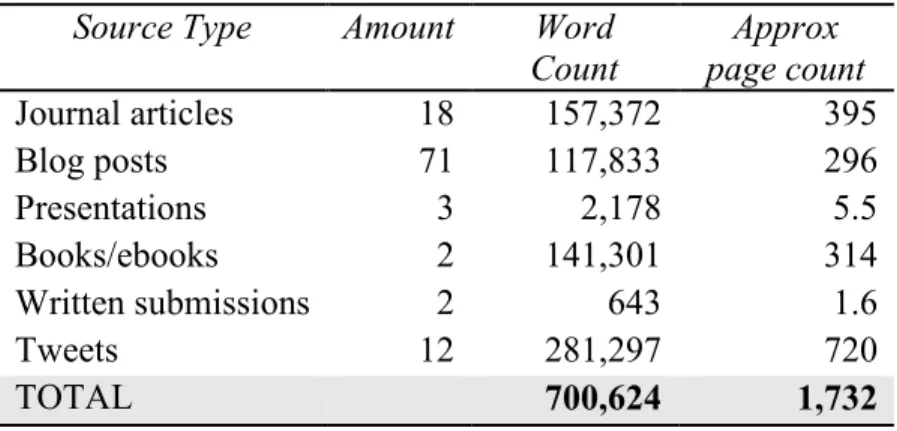
Table 1. Content Analysis Source Summary……….38
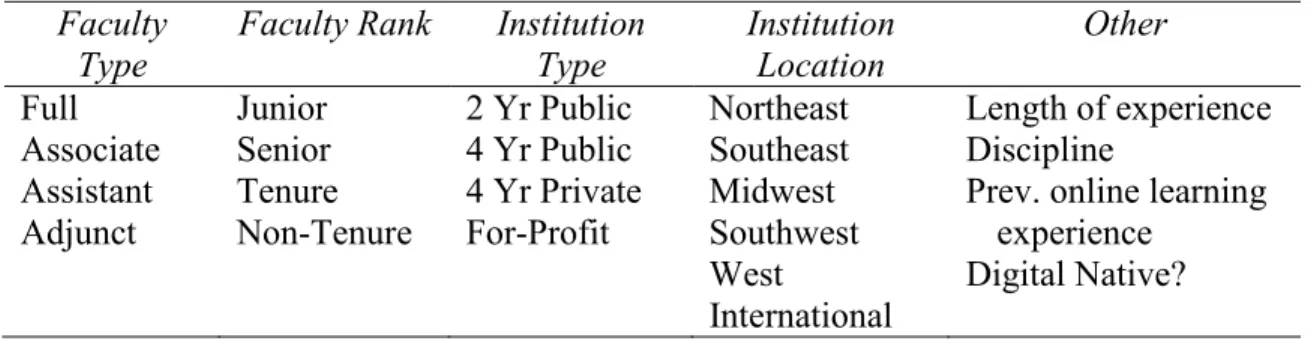
Table 2. Participant Selection Criteria ... 40
Table 3. Complete List of Study Participants ... 42
xiv
LIST OF FIGURES
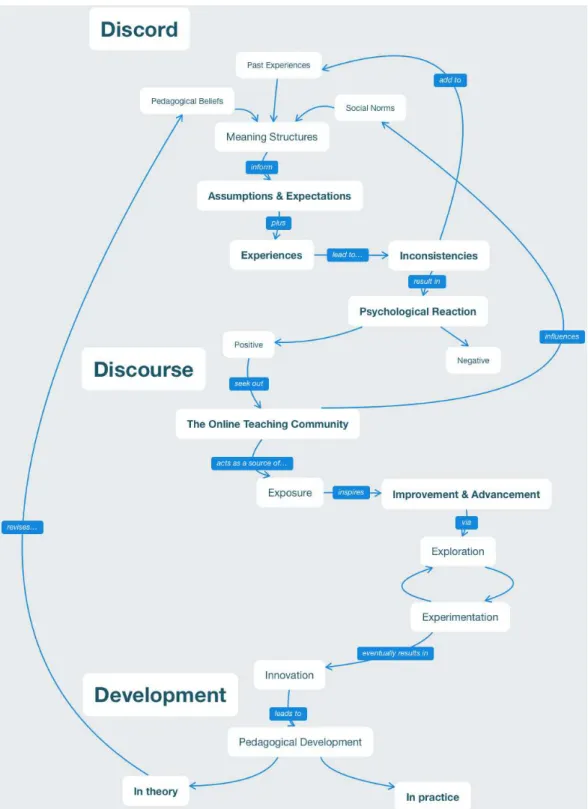
Figure 1. Visual Depiction of the Coding Process………. 50 Figure 2. The transformative process of online instructors. ... 60
xv GLOSSARY
Frame of reference: “the structures of assumptions through which we understand our experiences.” They selectively shape and delimit expectations, perceptions, cognition, and feelings (Mezirow, 1997, p. 5).
Habits of mind: broad, abstract, orienting, habitual ways of thinking, feeling, and acting influenced by assumptions that constitute a set of cultural, political, social educational, and economic codes (Mezirow 1997, pp. 5-6).
Meaning perspective: a collection of smaller meaning schemes and that provide “criteria for judging or evaluating right and wrong, bad and good, beautiful and ugly, true and false, appropriate and in- appropriate”(Mezirow 1991a, p. 44). They are larger in scope and constitute a learner’s worldview.
Meaning schemes: smaller components “made up of specific knowledge, beliefs, value judgments, and feelings that constitute interpretations of experience” (Mezirow 1991a, pp. 5-6).
Meaning structures: culturally defined frames of reference that are comprised of a leaner’s meaning schemes and meaning perspectives (Taylor, 1998).
Perspective transformation: explains how adults revise their meaning structures (Taylor, 1998).
Transformative learning: “the process of using a prior interpretation to construe a new or revised interpretation of the meaning of one ‘s experience in order to guide future action” (Mezirow 1996, p. 162).
CHAPTER 1. INTRODUCTION 1.1. Rationale
Higher education is in a period of transition. Sixty years ago, young white males dominated college campuses across the United States, but the demographics of the student body have changed. Today’s average college student is more likely to be Hispanic, over the age of 25, enrolled part-time, and female (NCES, 2013). Such trends challenge many of the Euro-American academic traditions that have dominated higher education, and this “new normal” is forcing colleges and universities to undergo a paradigm shift. New student populations have different backgrounds, expectations, interests, and needs than the young white men of the nineteenth and twentieth centuries; as a result, they attend college in a different way. Today’s students want the flexibility to study at a time that fits their non-traditional schedules, to work in a way that suits their learning styles, and the ability to take classes at a pace that corresponds with their lifestyles (Layne, Boston, & Ice, 2015).
Colleges and universities are responding to these changing expectations in a variety of ways, offering part-time programs, evening courses, and extended graduation timelines. However, among all of the alterations to the traditional residential model, online learning has consistently proven to be one of the most popular options (Richardson & Swan, 2003). As the number of nontraditional students has continued to increase, university leaders have quickly kept pace by expanding online offerings to meet the rising demand; an unprecedented 7.1 million students took at least one online course in 2014—up from 1.6 million in 2002, for an annual growth rate of over 13%—and the
number of online enrollments continues to grow at a rate that far exceeds the rate of overall enrollments in higher education (Allen & Seaman, 2014).
However, the swift expansion of online learning has given some academics pause. Critics question the efficacy of virtual courses, citing statistical findings that indicate retention rates for online courses are lower than their face-to-face counterparts (Boston, Ice, & Gibson, 2011; Boston, Ice & Burgess, 2012; Layne et al., 2015). And skeptics point out that research examining online efficacy in terms of learning outcomes has produced equally concerning results; although many studies have determined that online courses are as effective as their face-to-face counterparts, others have found that online courses produce significantly lower learning outcomes and are an inadequate educational option (Johnson, Aragon, Shaik, 2000; Johnson, Hornik, Salas, 2008). Despite the
criticisms and uncertainty, students continue to enroll in record numbers and institutions continue to expand their online offerings to meet the ever-increasing demand (Schulte, 2010).
This unbridled growth has prompted researchers to empirically examine successful online learning enterprises in an effort to understand which aspects of the online experience lead to positive learning outcomes. Several of such studies highlight how online faculty play an integral role in producing positive learning experiences (Selim, 2004; Conceição, 2006; Doherty, 2006; Fish & Gill, 2009). Reisetter and Boris (2004) found that the instructor’s online persona and level of engagement play a crucial role in promoting positive learning outcomes. Similarly, Nwankwo (2013) concluded that student-instructor interactions and instructor presence in the online learning environment
had a statistically significant impact on students’ course completion rates.
Furthermore, researchers have established that faculty approval of online learning is crucial to the success of such programs. Bolliger and Wasilik (2009) determined that faculty support is a necessary factor in creating high-quality online courses. Likewise, Brooks (2003) concluded that negative faculty attitudes toward online learning thwart program acceptance, development, and support.
University leaders are not confident that they have the approval of the faculty. A 2012 national poll of 2,800 college and university leaders showed that only 30% of chief academic officers believe that faculty accept the legitimacy of the online learning
enterprise (Changing Course, 2013). And the research confirms their doubts; the Babson Group found that 58% of faculty nationwide are fearful of teaching in the virtual learning environment and have pessimistic views of online education (Changing Course, 2013).
This conflicting research comes at a time when many institutions are looking to enact new policies to support their burgeoning online learning enterprises. Although studies have shown that university leaders need the backing of skilled online faculty to produce high-quality online courses, they do not know how to gain faculty buy-in or provide the support that experienced online instructors need (Giannoni & Tesone, 2003; Alexander, Perreault, Zhao, & Waldman, 2009; Bolliger & Wasilik, 2009; Major, 2010; Betts, 2014). The existing literature on faculty perceptions of online learning thoroughly documents the challenges that novice instructors face as they begin to teach in virtual learning environments, but such research has yet to specifically examine the experiences of expert online instructors (Coppola, Hiltz, & Rotter, 2002; Conceição, 2006; Fish &
Gill, 2009).
More seasoned instructors have a different online experience than their newly trained peers, having overcome many of the initial obstacles they encountered when they first began to teach online (Giannoni & Tesone, 2003; Conceição, 2006; Ulmer, Watson, & Derby, 2007). They have experience with different technologies and techniques and have developed a more advanced online teaching practice, which presents new issues itself, yet none of the existing empirical research has focused on accomplished
instructors’ online teaching experiences. As a result, there is very little data concerning how to sustain faculty approval, retain skilled instructors, provide adequate online teaching support, and maintain a successful online learning enterprise over time (Coppola, et al., 2002; Bolliger & Wasilik, 2009; Betts, 2014). The online faculty literature and university leaders would benefit from research answering the following questions:
• How does the online teaching experience change over time?
• How can university leaders motivate online faculty to continue teaching in the virtual learning environment?
• What types of institutional support do experienced online instructors need to persist?
• What steps can university leaders take to mitigate faculty burnout?
Without further research aimed at richly understanding faculty perceptions and experiences with online education, colleges and universities are missing invaluable data and using anecdotal evidence to base their future policy decisions. At best, this may result
in minor missteps and potentially wasted institutional funds as institutions experiment with unproven policy approaches. At worst, universities are vulnerable to ill-informed policies that fail to adequately support online faculty and lead to substandard online courses, reinforcing online learning as an inferior educational option.
By examining the online teaching experience from the perspective of instructors who have been teaching in virtual learning environments for several years, this study will extend the existing literature and provide university leaders with further knowledge to create institutional policies that support and retain a strong online faculty and maintain a thriving online learning enterprise.
1.2. Research Question(s)
This constructivist study will focus on faculty who have several years of experience teaching in a virtual learning environment and examine their lived experiences with online pedagogy to understand the following guiding research question: What challenges do experienced online faculty face when they teach in the virtual learning environment?
• How has teaching online influenced their pedagogical style?
• How has becoming an online instructor impacted their academic identity? • How has the virtual learning environment affected their interactions with
students? Secondary Questions:
• What new challenges have emerged as a result of their continued online teaching experience?
experienced in the virtual learning environment?
• How do experienced instructors approach and address these new challenges? ◦ How do they use their previous teaching experience (both face-to-face and
online), pedagogical knowledge, and technical abilities to address these challenges?
◦ What strategies did they employ at first and how effective were they? ◦ What strategies do they use now?
◦ In their opinion, what still needs to be fixed?
◦ What other factors influence how they approach their online teaching practice?
1.3. Theoretical Framework
Using Mezirow’s transformative learning theory as a framework, this study qualitatively analyzed faculty perceptions of the online teaching experience and aimed to understand how faculty use their previous teaching experiences, assumptions, and
expectations as frames of reference to construct new or revised interpretations of their role as an online instructor (Mezirow, 1991; Merriam, 2002).
Much of the existing online learning literature takes a functionalistic or technical approach to understanding instructors’ online experiences. Transformative learning theory offers a different perspective that considers instructors to be adult learners who continually transform their meaning structures related to online learning through an ongoing process of critical reflection (Baran, 2011). By providing “a comprehensive and complex description of how learners construct, validate and reformulate the meaning of
their experiences,” Mezirow’s framework allows for deeper exploration of how instructors incorporate their previous teaching experiences into their current online practice and analyze the subtleties of instructors’ learning processes as they wrestle with pedagogical problems, seek to improve their online teaching practices, and adapt to the constant changes in the virtual learning environment (Cranton, 1994, p.22).
1.4. Importance
Understanding the online teaching experience from the perspective of expert instructors will help university leaders provide more effective faculty development and online pedagogy training. Faculty are crucial to the success of an online program. The existing literature shows that having the support of a skilled online faculty leads to higher-quality courses, improved learning outcomes, and a superior virtual learning experience (Betts, 1998; Bolliger & Wasilik, 2009). Despite their pivotal role, literature studying the experiences of expert online faculty is nascent (Coppola et al., 2002; Giannoni & Tesone, 2003; Betts, 2014). By exploring the online teaching experience from the perspectives of expert instructors, university leaders will be able to identify the challenges they face, recognize the aspects that motivate them to persist, provide the support they need to teach well, and create institutional policies that fully support a strong online faculty and successful online learning enterprise.
Such research is important because recent studies indicate senior administrators have consistently misunderstood the factors that motivate faculty to teach online and are not providing the institutional support that online instructors need (Giannoni & Tesone, 2003; Betts, 2014). Furthermore, researchers have discovered that faculty are motivated
to teach online primarily by intrinsic factors and have little interest in the extrinsic rewards that administrators commonly offer (Rockwell, Schauer, Fritz, & Marx, 1999; Giannoni & Tesone, 2003). Thus, examining instructors’ perspectives will help university leaders understand how faculty interpret their virtual teaching experiences and create more effective online learning policies that align with and encourage instructors’ intrinsic motivations.
Delving into the experiences of expert online instructors is informative for instructional designers who work closely with faculty in the early stages of course development. Teaching is not static; it is a practice that is always evolving as instructors reflect, improve, and innovate. Subsequently, instructional designers need to understand how the virtual teaching experience has evolved over time to support faculty as their online teaching practices develop (Conrad, 2004). By doing so, instructional designers can help new faculty overcome common technical, pedagogical, or experiential issues and help novice instructors reach higher stages of expertise more quickly. Furthermore, the continued assistance of instructional designers will make online faculty feel supported and provide a sense of connection to the institution’s online enterprise.
Studying expert instructors’ experiences with online learning may also help university leaders enlist more faculty for their growing online enterprises. Researchers highlight how fear of the unknown is one of the greatest obstacles in recruiting faculty to teach online (Rockwell et al., 1999; Jones, Lindner, Murphy, & Dooley, 2002; Bolliger & Wasilik, 2009). Faculty worry about how their traditional courses will translate to the online learning environment, the degree of transitional support, whether they will be able
to connect with students in a purely computer-mediated environment, and how they will adapt to the virtual environment (Conceição, 2006; Fish & Gill, 2009; Major, 2010). Fortunately, several studies have shown that faculty perceptions of online learning improve as they begin to teach online and become more familiar with the virtual learning environment (Giannoni & Tesone, 2003; Conceição, 2006; Major, 2010). This has led researchers to believe that sharing expert instructors’ experiences with other faculty will help dispel some of their hesitations about teaching online and encourage them to be more accepting of online learning (Coppola et al., 2002; Ulmer et al., 2007; Bolliger & Wasilik, 2009).
Together, effective institutional policies, targeted technological developments, and improved faculty perceptions will enable universities leaders to cultivate a strong and skilled faculty that is capable of extending high-caliber online learning opportunities to an ever-growing number of students. And such policies cannot come soon enough. The demand for online learning has never been stronger and is forecasted to increase in the coming years. According to industry experts, another 5 million students will enroll in online courses over the next five years and will make up 45% of the total higher education enrollments by 2020 (Eduventures, 2013).
As online students become increasingly discerning about their educational
options, faculty will play an important role in providing the rigorous and engaging online learning experiences they expect. Having policies that provide online faculty with the support and infrastructure they need to teach well and provide high-caliber online learning opportunities will be critical to the success of online learning enterprises.
CHAPTER 2. LITERATURE REVIEW 2.1. Introduction
The purpose of this study is to understand expert instructors’ perceptions of the online teaching experience. The following sections examine how the growth in online education has led to increased interest in the experiences of online faculty. Although some of these topics may seem ancillary to an inquiry focusing on faculty perceptions, they are an important part of the broader online education narrative. An examination of these issues illuminates many of the unacknowledged external factors that have a subtle but strong influence on online instructors.
The first section of this chapter chronicles the growth of online learning and examines research assessing the efficacy of online courses as compared to their
traditional/residential equivalents. The second section analyzes literature regarding best practices in the virtual learning environment and the importance of online faculty. The third addresses faculty development for online instructors. The fourth section delves into the research focused on faculty perceptions of the online teaching experience and
explains how this inquiry will extend the existing literature. The final section explains how Mezirow’s Transformative Learning Theory will be used as a guiding framework to further understand the online faculty experience.
2.2. The Growth of Online Education
For the past thirteen years, the Babson Consortium Survey Group has tracked the growth of online education in the United States. In addition to collecting online
2,800 colleges and universities to ask for their opinion regarding the nature and extent of online education. Published annually, these nationwide reports have provided the higher education enterprise with a de facto barometer of the state of online education (“Grade Level,” 2014). The data shows that the growth rate of online enrollments has consistently exceeded the growth rate of all higher education enrollments over the past decade
(“Going the Distance,” 2011). As of 2014, 7.1 million students were enrolled in an online course and made up over one-third of the total higher education enrollments (Allen & Seaman, 2013; Straumsheim, 2014).
Trends in the survey data also show that online learning is becoming more mainstream. Public and private nonprofit institutions have seen their online enrollments steadily increase over the past twelve years while for-profits have recently experienced a decline. Furthermore, the proportion of university leaders who report that online learning is “critical” to their institution’s long-term strategic goals has reached 70.8%, up from less than 50% in 2002. Likewise, the proportion of university leaders who do not see online learning as crucial has dropped to 11.2% (Allen & Seaman, 2013; “Grade Level,” 2014).
As online enrollments have increased, so have perceptions about the quality of online education. In 2013, a national study (n=2,820) examining recent trends in online education in the United States reported that 77% of university leaders believe that online learning outcomes can be “as-good-as” or “superior” to those produced by face-to-face instruction. But faculty remain resistant. Only 30.2% of university leaders believe that their faculty accepts the legitimacy of online learning; this rate is lower than the rate
reported in 2004 (Allen & Seaman, 2013). Although these statistics are promising for the future of online education, the accelerated growth of online courses has skeptics
questioning the quality of online learning options.
2.3. Doubts about the Efficacy of Online Education
Several studies found that attrition rates for online courses tend to be much higher than their campus-based counterparts (Rovai, 2003; Bos & Shami, 2006; Diaz & Cartnal, 2006). Patterson and McFadden (2009) conducted a quantitative analysis of course completion data for comparable face-to-face and online graduate classes and determined that attrition rates were six to seven times higher for online courses. Given these alarming statistics, researchers have set out to examine the factors that influence attrition rates in online courses.
Retention
Online retention studies tend to focus on three types of variables: personal, institutional, and circumstantial. Studies that focus on personal variables attempt to identify student attributes that predict success or failure in online courses. Research regarding institutional variables examines course attributes and curricular techniques that impact retention. Circumstantial studies focus on external factors that affect student performance in online courses, such as familial, financial or work-related responsibilities.
Personal
The majority of the online retention research has focused on personal variables. These studies analyze the demographics of the virtual student body in an effort to identify which attributes have the greatest influence on online attrition rates. Previous research
indicates that females tend to be more successful in online courses than males (Rovai, 2001; Whiteman, 2004) and older students were more likely to persist in online courses than traditional-aged (18–22 year old) students (Muse, 2003; Whiteman, 2004). Learning style has an impact, too. Doherty and Maddux (2002) evaluated the learning styles of online students at four Nevada community colleges and concluded that students with sequential learning styles were more likely to persist than global learners.
Researchers have also examined the attributes of students who have failed to persevere. Doherty (2006) determined that the majority of students who withdrew from online courses had scheduling or time-management issues. These same students reported that they were attracted to online courses because they were juggling multiple demands; thus, the students who lacked the necessary skills to excel in the virtual learning
environment were self-selecting into online courses and dropping out when they fell behind.
Institutional
Studies focusing on institutional variables have shown that high-quality course design can promote student retention. Dietz-Uhler, Fisher, and Han (2008) found that the design of an online course can effectively lower attrition rates by making the online learning experience more accessible, interactive, and engaging. Prendergast (2003) similarly concluded that online courses that are not perceived to be high-quality, stimulating, or worth students’ time tend to have higher dropout rates.
Studies have also found that feeling disconnected from classmates can also contributed to higher attrition rates (Link & Sholtz, 2000). Similarly, Doherty (2006)
determined that communication with the instructor was an important factor in student retention; frequent and fast feedback had a positive impact on student persistence.
Boston, Ice, and Burgess (2012) discovered that transfer credit was a consistent indicator of reenrollment when a student dropped out and students who received transfer credit were far more likely to persist than those who do not.
Circumstantial
Research focused on circumstantial variables (e.g., socio-economic conditions, institutional interactions, life situations) has shown that online students face different demands than their campus-based peers and, as a result, attend college in a different way (Layne et al., 2015). Boston, Ice, and Gibson (2012) analyzed institutional
enrollment/disenrollment /reenrollment data from a six-year period (n of 20,569) and determined that online students are more likely to enter a program with transfer credits than their campus-based counterparts and tend to disenroll after completing only two courses. They surmise online students may take a more “casual, on demand” approach to education and their initial attempts to enroll in an online program are more exploratory in nature as they tentatively assess their educational options (p. 9). Although their findings are compelling, the sample was restricted to a single for-profit institution that targets students in the military; thus, the results may not be generalizable to the broader student population. To date, researchers have been able to identify attributes of successful online students, but enrollment behavior is not yet well understood because it is likely
influenced by complex life factors that do not fit in quantifiable constructs (Boston et al., 2012).
Perceived Efficacy and Learning Outcomes
In addition to retention, students’ academic performance has also been used to gauge the quality of online learning outcomes. Several meta-analyses of the existing literature have been conducted to assess whether online courses are as effective their residential counterparts (Allen, Mattrey, Bourhis, Titsworth, & Burrell, 2004; Bernard, Abrami, Lou, Borokhovski, Wade, Wozney, & Huang 2004; U.S. Department of Education, 2009; Johnson, Aragon, & Shaik, 2000; Means, Toyama, Murphy, & Baki, 2013). The most extensive was conducted in 2009 by the U.S. Department of Education. Over a thousand empirical studies conducted from 1996 through July 2008 were analyzed and researchers concluded that, on average, students in online learning environments outperformed their peers receiving face-to-face instruction as measured by course grades (U.S. Department of Education, 2009). This aligns with the findings of earlier meta-analyses: Students in online learning courses tend to do slightly better than students in campus-based classes. However, three of the four major analyses reported variable findings and their average effect sizes were significantly heterogeneous; examinations of moderating factors also failed to produce a homogenous solution (Allen et al., 2004; Bernard et al., 2004; U.S. Department of Education, 2009). Furthermore, these large-scale analyses are limited in that they only examine the delivery medium and fail to consider several variables (e.g., the skill-level of the instructor, the quality of the learning materials, the difficulty of the course content, the frequency of online interactions, etc.). Findings should not be construed to establish that online learning is more effective than face-to-face instruction. Rather, it is the combination of elements in the online learning
environment that have proven effective (U.S. Department of Education, 2009). Because of these limitations, some critics question the validity of their findings.
In fact, many researchers believe that there is no significant difference between online and face-to-face instruction in terms of learning outcomes. Johnson, Aragon, Shaik, and Plama-Rivas (2000) compared the academic performance of graduate students in an online course with that of students taking the equivalent on-campus course by using a blind review process to assess the quality of major course assignments. They found no significant difference between the two cohorts and the grade distribution across the two courses was statistically equivalent. Fallah and Ubell (2000) used a similar blind review process to compare midterm exam scores between graduate students in an online course and their peers in a traditional campus-based course and saw little to no difference in learning outcomes. Freeman and Capper (1999) compared the learning outcomes of business students who participated in role-play simulations in a face-to-face setting to those who completed the same simulation in an online environment and found no difference in student learning outcomes. Thomas Russell (2010)—the director emeritus of the Office of Instructional Telecommunications at North Carolina State University— even created a Web site titled “No Significant Difference” that presents the results of over 350 research papers and reports that show no significant difference between the learning outcomes of online and face-to-face students.
Other studies have shown that online students perform worse than their face-to-face peers. Brown and Liedholm (2002) compared the exam scores of students who took a microeconomic course online to those who took the course on campus and discovered
that the online students performed significantly worse. Xu and Jaggers (2013) analyzed a large administrative dataset (n = 125,218) from Washington State’s 34 community colleges and found robust negative estimates for online students in terms of retention and course grade, contradicting the notion that there is no significant difference between online and face-to-face instruction.
Consequently, assessing the efficacy of online learning is complicated. Attrition rates and learning outcomes are blunt measures of success that fail to capture the idiosyncrasies of virtual environments and the diverse aptitudes of the online student body. As a result, research concerning the effectiveness of online learning remains inconclusive.
Even more concerning is the epistemological problem inherent in much of the aforementioned research. The vast majority of online efficacy studies gloss over potentially advantageous differences in the online learning environment in an effort to make it more comparable to face-to-face instruction. Trying to make online learning as good as face-to-face instruction discourages innovation and will likely lead to less-than-optimal learning outcomes because the full potential of the online paradigm is not recognized (Swan, 2003). In an effort to understand the anomalies of the online
environment, researchers have begun to examine different online programs to ascertain what separates successful programs from non-successful ones.
2.4. Factors That Lead to Successful Online Learning Experiences At the most basic level, all students must interact with the course content when they enroll in an online course. Studies have shown that simplicity in the structure and design of online courses has a significant impact on how students access course content. Without face-to-face communication, it is easy for students to become confused and get lost in complex online course structures, making interaction with the course content more difficult, thus researchers have concluded that simple and standardized course designs help facilitate student-to-content interactions and have a positive impact on students’ perceptions of online learning (Swan, 2001; Lee, 2008). Armstrong (2011) discovered that students eschew complex or cumbersome course features in favor of Google, Wikipedia, and other mainstream sources. And Palmer and Holt (2009) similarly found that students avoid clunky custom courseware and opt to use one of the many external communication mediums they already have at their disposal. These findings align with Lee’s (2008) conclusion that the perceived usefulness of a system and the perceived ease of use positively impact how students approach online learning— higher levels of
perceived usefulness resulted in higher levels of learning and positive online educational experiences.
Course consistency—the standardization of design, structure, and navigation across courses—also impacts how students perceive their online learning experiences. Swan (2001) established that greater consistency among course modules increased student satisfaction and perceived levels of learning. One reason for this may be that course consistency allows students to store and retrieve course-related content more
effectively (Richardson & Swan, 2003). Palmer and Holt (2009) similarly concluded that students most highly valued elements of the online learning environment that enabled them to access course information, retrieve lecture notes, and access class-related resources. Thus, consistency within the online learning environment improves students’ impressions of online learning because it allows them to easily access course content and, as a result, helps improve their overall learning outcomes.
Several studies also highlight that frequent interactions between classmates have a positive impact upon students’ perceptions of online learning. Swan (2001) found that students who reported higher levels of engagement with their peers also reported higher levels of learning and satisfaction with their online learning experience. Similarly, Swan (2003) determined that when a greater percentage of the course grade was based on discussion, students were more willing to engage with their classmates, thought that they learned more, and were more satisfied with the course overall.
Faculty are crucial. Although course design and communications are important, several studies highlight how faculty play a critical role in shaping student satisfaction and producing positive learning outcomes in online learning environments (Swan, 2001; Picciano, 2002; Richardson & Swan, 2003; Armstrong, 2011). Online students who interacted with the instructor regularly reported higher levels of learning and overall satisfaction with the course (Swan, 2001). Furthermore, students’ impressions of their online learning experiences were directly related to the frequency of feedback from the instructor; more frequent feedback was correlated with higher levels of student
from the instructor improved students’ sense of self-efficacy, which increased their motivation and level of engagement and improved overall learning outcomes.
Not only is the amount of interaction important but the quality of interaction matters too. Richardson and Swan (2003) conducted a survey-based study with a
correlational design to explore the role of social presence in the virtual environment and its relationship to students’ perceptions of their online learning experiences. They established that higher social presence scores positively correlated with students’ self-reported level of learning. Similarly, Dziuban and Moskal (2001) found a correlation between the quality of interactions and students’ perceptions of the online learning experience; in-depth interactions led to greater student satisfaction.
Research concerning immediacy behaviors has shown that when online instructors use highly immediate behaviors such as being open and willing to disclose information, giving frequent compliments, and using plural pronouns (“us” or “we”) instead of individual pronouns (“you” or “I”), they can bring about positive attitudinal changes in their students, increase motivation, and improve student satisfaction
(Christophel & Gorham, 1995). And the opposite holds true as well. Armstrong (2011) reported that students who perceived the instructor to be lacking in terms of technological skill were more likely to feel that the instructor was “missing” from the educational dialogue and, as a result, the students were less engaged and tended to have more negative perceptions of their online learning experience.
When online instructors were slow to respond to student inquiries regarding course-related issues, students perceived a lack of connection and community and, thus,
were more likely to feel isolated (Vonderwell, 2003). Lack of communication with the instructor also left some students feeling “disoriented” in the complex online learning environment, lowering their sense of self-efficacy, lessening learning outcomes, and leading to negative online learning experiences (Bates and Khasawnehb, 2007).
Vesely, Bloom, and Sherlock (2007) discovered that students look to instructors for more than just feedback. Students rely on the instructor to provide a cognitive framework to help them access and interact with the course content. Furthermore, Bates and Khasawnehb (2007) found that students reported higher levels of learning when the instructor provided training on how to use the online learning system at the beginning of the course. Moreover, students expect instructors to drive class discussions and build a classroom community (Song et al., 2004; Vesely et al., 2007). The research clearly indicates that the quantity, quality, frequency, and type of student-instructor interaction is directly related to students’ perceptions of their online learning experiences and online faculty play a crucial role in shaping online learning outcomes.
Faculty approval. Faculty must also be supportive of online education for their institution’s online learning enterprise to thrive. Anecdotal evidence from early adopters of online education indicates that faculty approval is necessary to build and grow
successful online programs (Panda & Mishra, 2007; Alexander et al., 2009). Several empirical studies show that faculty support is crucial to the adoption and implementation of online learning (Brooks, 2003; Fortino & Wolf, 2007; Bollinger & Wasilik, 2009; Major, 2010; Betts, 2014). Furthermore, Alexander, Perreault, Zhao, and Waldman (2009) discovered that negative faculty attitudes toward online education thwart program
acceptance and development. From their influence in the virtual classroom to their impact on the online enterprise as a whole, it is evident that faculty are critical to the success of online learning.
2.5. Faculty Development
Faculty development has long been a part of the professoriate. Originally undertaken as an independent pursuit, faculty development has become more organized and specialized over the past sixty years. Sorcinelli, Austin, Eddy, and Beach (2006) describe five distinct periods in the history of faculty development efforts. The 1950s and 1960s focused on improving research. In the 1960s and 1970s, attention shifted to developing teaching skills, followed by an expansion of formal faculty development programs in the 1980s. By the 1990s, improving student learning outcomes became the main concern. Today, faculty development efforts are focused on using technology and the Internet to improve instruction in face-to-face and virtual learning environments.
Several recent faculty development books provide guidance for administrators looking to organize and implement faculty development programs (Sorcinelli, Austin, Eddy, & Beach, 2005; Gillespie & Robertson, 2010; Cook & Kaplan, 2011; Schroeder, 2012). However, none of them dedicate more than a chapter to using technology; nor do they address faculty development for online instructors in any meaningful depth. Journal articles provide more detailed research regarding online faculty development. Articles have been published about the various types of development programs available for online instructors—including workshops, short courses, and local/regional programs (Skeff, Stratos, Mygdal, DeWitt, Manfred, Quirk, Roberts, Greenberg & Bland, 1997)
and the different kinds of content each program offers—ranging from how to use a particular course management system to learning how to make podcasts (Grant, 2004). When tracked over time, it is apparent that the focus has shifted from specific
technological tools and particular teaching techniques to interdisciplinary pedagogical strategies and broader instructional design options (Lavoie & Rosman, 2007), which has come in response to faculty demands for more applicable instruction for online learning (Pankowski, 2004; Hinson & LaPrairie, 2005; Lowenthal & Thomas, 2010).
The existing literature also contains numerous articles that describe faculty development programs at specific universities (Kidney & Frieden, 2004; Koehler, Mishra, Hershey, & Peruski, 2004; Lowenthal & Thomas, 2010; Fetters & Duby, 2011; Dittmar & McCracken, 2012; Orozcco, Fowkles, Jerzak, & Musgrove, 2012). Scores of institutions have implemented a variety of programs aimed at achieving distinct
development goals and, as a result, it is difficult to compare programs or assess what parts of these programs may (or may not) be working well (Meyers, 2013). And the lack of stringent evaluations of these programs is even more disconcerting. Without such evaluations, faculty developers at other institutions cannot make well-informed decisions regarding which program or intervention will work best for their faculty. Furthermore, many of the programs described in the literature have been based on well-established theoretical frameworks (e.g., adult learning theories from Knowles and Mezirow), however they are not clearly cited or described. Faculty developers need to change what they are currently doing and build a better understanding of what types of development activities are needed, which programmatic elements work best, and why they work well.
To do so, they have to understand the online teaching experience from the faculty’s perspective to create the programs and support structures that online instructors need to provide high-quality online courses and persist in the virtual learning environment.
2.6. Faculty Perceptions of Online Education
In an effort to better support online faculty, researchers have begun to explore the online teaching experience from the perspective of virtual instructors. They have
examined instructors’ assumptions, expectations, opinions, and perceptions as they enter the virtual learning environment, documenting the motivators and barriers they face as they acclimate. The following sections examine the incentives and inhibitors—both intrinsic and extrinsic—that faculty commonly encounter as they transition to teaching online.
Intrinsic Motivators
Faculty frequently report that teaching online is satisfying because it presents an intellectual challenge (Rockwell et al., 1999; Conceição, 2006; Panda & Mishra, 2007). The online learning environment provides faculty with the opportunity to experiment with new technologies and explore new pedagogical approaches (Betts, 1998; Rockwell et al., 1999; Bower, 2001; Panda & Mishra, 2007). Major (2010) found that teaching online presented new challenges that changed the way faculty approached and thought about teaching. Although difficult, faculty reported that working through these challenges was rewarding because it improved both their online and face-to-face teaching practices.
Faculty are also motivated to teach online because Web-based programs afford educational access to a more diverse student body (Betts, 1998; Rockwell et al., 1999;
NEA, 2000; Huang & Hsiao, 2012). Online education is an opportunity to reach student populations that have historically been marginalized by the traditional four-year
residential model (Giannoni & Tesone, 2003) and embrace a greater diversity of student perspectives in class discussions (Conceição, 2006).
Online faculty also appreciate the way in which the virtual environment alters the traditional classroom dynamic. For example, the online environment gives students space to think, reflect, and refine their responses, leading to higher-quality discussions (Huang & Hsiao, 2012). Furthermore, the asynchronous nature of the online learning
environment provides an equal opportunity for all students to participate as compared to face-to-face setting where a few students tend to dominate class discussions (Conceição, 2006).
Extrinsic Motivators
Perceptions of online education tend to be more favorable if faculty have institutional support. When faculty prepare to teach online, pedagogical coaching and technical support are crucial elements that help them persist (Giannoni & Tesone, 2003). Faculty commonly feel overwhelmed when they begin to teach online, thus time release for course development and support from their program director or chair has a positive impact as well (Bollinger & Wasilik, 2009; Betts, 2014). Such incentives are not universal, though. Rockwell, Schauer, Fritz, and Mark (2000) found that faculty are motivated by different types of incentives depending on their appointment status, academic discipline, and years of experience. Senior faculty ranked extrinsic rewards
lower in favor of intrinsic incentives while junior faculty members ranked external motivators higher than intrinsic ones.
Intrinsic Inhibitors
Many faculty refuse to teach online because they believe that online education is inferior and they do not want to participate in the cheapening of students’ academic experiences (Ulmer, 2007; Bollinger & Wasilik, 2009). According to a national survey of university leaders, faculty acceptance remains one of the biggest obstacles to the adoption and expansion of online learning in higher education (Allen & Seaman, 2013).
Even if faculty are open to online education, new instructors worry that they lack the technical skills necessary to teach online and are intimidated by the online learning environment (Rockwell et al., 1999). Faculty are also concerned about their changing role in the online environment (Coppola et al., 2002). Several studies have documented the cognitive, managerial, and affective transitions faculty go through as they begin to teach online (Berge, 1995; Paulson, 1995; Rossman, 1999; Anderson, Rourke, Garrison, & Archer, 2001).Coppola, Hiltz, and Rotter (2002) investigated the changing roles of online faculty through semi-structured interviews with 20 faculty members who had prepared and delivered an online course. Participants felt that their cognitive role in the online learning environment was deeper, demanding, and more complex; their affective role required them to continually find and try new techniques to effectively convey their emotion; and their new managerial role demanded greater attention to detail, structure, and student monitoring. In short, participants had to change both their approach and their attitude to teach effectively in the virtual environment.
Faculty in other studies report having a difficult time accepting their new online role. They oppose relinquishing their expert status to be “a guide on the side” (Conrad, 2004; Conceição, 2006) and resent that they receive little to no recognition for their additional efforts (Fish & Gill, 2009).
Instructors who have successfully transitioned to online report that they miss the in-person interactions (Conrad, 2004; Conceição, 2006; Huang & Hsiao, 2012).
Asynchronous communication tools lack the immediacy, spontaneity, and visual cues faculty rely on to connect with students, thus many faculty feel that there is a sense of distance between the instructors and students (Huang & Hsiao, 2012). The online teaching experience can be overwhelming, underappreciated, and unrewarding (Conceição, 2006).
Extrinsic Inhibitors
Many faculty cite workload issues as one of the biggest barriers to teaching online (Schifter, 2000; Bollinger & Wasilik, 2009). Online instructors find the course
preparation process to be arduous (Visser, 2000; Fish & Gill, 2002). Conceição (2006) conducted a phenomenological study to investigate the meaning of the online teaching experience from the perspective of novice online instructors. The author found that faculty struggle to construct their online courses because all of the course content must be mapped out, learning materials must be developed, lectures must be recorded, and
assignments must be finalized before the course begins. Throughout her analysis, Conceição showcased a number of impactful quotes from study participants to convey their sense of fear, frustration, and insecurity as they prepared to transition and began to
teach in the online environment. This enhanced the richness of her descriptions, adding an authentic and emotional dimension to her work—something that is nascent in the online learning and faculty development literature.
Workload issues only increase when instructors begin teaching in the virtual environment. Online faculty report that it takes intense cognitive effort to stay engaged in conversations with students, keep the class focused, and pursue a comprehensive class-wide discussion (Conceição, 2006). And teaching online requires intense affective effort to be attentive and personable and emotionally engage with students (Richardson & Swan, 2003; Conceição, 2006). New faculty also find the nonstop nature of the online environment to be overwhelming and struggle to keep up with the dramatic change in pace (Conceição, 2006; Huang & Hsiao, 2012).
When faculty disconnect from the online learning environment, the course activity does not stop. Students continue to send messages and discussions carry on; faculty return to find an astounding number of course communications to attend to. This intensifies their stress levels and leads them to feel inundated and overwhelmed
(Conceição, 2006). The text-based communication is a challenge for many faculty because it requires significantly more reading and writing than face-to-face courses (Conceição, 2006; Huang & Hsiao, 2012). Many faculty also describe the asynchronous text-based environment as one that creates a more fragmented discussion and puts an unnatural distance between them and the students (Huang & Hsiao, 2012).
2.7. The Importance of Expert Instructors
Although the existing literature thoroughly describes the online teaching experience from the perspective of novice online instructors, it fails to capture the experiences of expert instructors who have extensive knowledge of digital pedagogies and the virtual learning environment due to their considerable online teaching
experiences. This leads to questions such as:
• What is the online teaching experience like for expert instructors? • What challenges do these experienced online faculty face? • What new challenges have emerged as a result of their continued
online teaching experience?
• How do experienced instructors approach and address these new challenges?
• How have they persisted despite these difficulties?
Researchers acknowledge the online teaching literature is limited and have called for more in-depth studies (Schifter, 2000; Giannoni & Tesone, 2003) that include
institutional diversity (Alexander et al, 2009; Bollinger and Wasilik, 2009; Fish & Gill, 2009; Huang & Hsiao, 2012) and focus on changes in the online teaching experience over time (Coppola et al., 2002; Betts, 2014). This inquiry will address those shortcomings by taking a qualitative approach to understanding the evolution of the online teaching experience from the perspective of expert instructors from a variety of institutions, academic disciplines, and professional backgrounds. This study seeks to present a more comprehensive account of the online teaching experience and provide an insightful
examination of the ways in which faculty attend to and are transformed by challenges in the online learning environment.
2.8. Mezirow’s Transformative Learning Theory
Transformative learning theory was utilized as a framework to explore and understand how online faculty use their previous teaching experiences to inform their current online teaching practice and confront emerging challenges in the virtual learning environment. Developed by Jack Mezirow in the late 1980s, transformative learning theory describes “the process of using a prior interpretation to construe a new or revised interpretation of the meaning of one’s experience in order to guide future action”
(Mezirow 1996, p. 162). It seeks to explain the change in learners’ meaning structures as they encounter, cope with, and overcome conflicting experiences, broadening their worldview (Imel, 1998). Mezirow’s theory provided a rich framework from which to view instructors’ learning processes and development over the course of their online teaching experiences because it provides “a comprehensive and complex description of how learners construct, validate, and reformulate the meaning of their experience" (Cranton, 1994, p. 22).
Centrality of experience, critical reflection, and rational discourse are common themes mentioned in Mezirow’s theory (Taylor, 1998). Learners’ experiences, being socially constructed, are central to transformative learning. Through critical
self-reflection, learners come to questions “the integrity of assumptions and beliefs based on prior experience” and this reflection “is most essential for the transforming of our meaning structures” (Taylor, 1998, p. 16). This reflection is carried out via rational
discourse “where experience is reflected upon and assumptions and beliefs are questioned, and where meaning schemes and meaning structures are ultimately transformed” (Taylor, 1998, pp. 17-18).
At the core of transformative learning theory is empowerment of the learner (Baran, 2011). According to Evans and Nation (1993), “the definition of empowerment involves three major ideas: the notion of choice, of control of one’s life, and of
emancipation from ways of thinking which for the particular individual have limited both choice and control” (p. 91). It is through the critical reflection and rational discourse of transformative learning that learners are empowered to be “mature and autonomous person[s]” (Evans & Nation, 1993, p. 91). For Mezirow, transformative learning is the core of adult education, where the goal is to “help the individual become a more autonomous thinker by learning to negotiate his or her own values, meanings, and purpose rather than uncritically acting on those of others” (Mezirow, 1997, p. 11).
Thus, viewing instructors through a transformative learning perspective helps frame our understanding of online faculty and the continuous changes they experience throughout their online teaching careers. It also enables us to view online faculty as learners as they transform their meaning of structures related to online learning through an “ongoing process of critical reflection, discourse, and acting on one’s beliefs” (Taylor, 1998, p. 19).
The Importance of Meaning Structures
According to Mezirow, learners have two types of meaning structures: meaning schemes and meaning perspectives. Meaning schemes are smaller elements “made up of
specific knowledge, beliefs, value judgments, and feelings that constitute interpretations of experience” (Mezirow 1991a, p. 5–6). These schemes influence learners’ behaviors and views, such as how an individual acts around a homeless person or how voters think of Democrats or Republicans. They also change frequently as learners encounter new experiences (Taylor, 1998).
Meaning perspectives are larger in scope and constitute a learner’s personal paradigm. They are formed from a collection of smaller meaning schemes and “provide criteria for judging or evaluating right and wrong, bad and good, beautiful and ugly, true and false, appropriate and inappropriate” (Mezirow 1991a, p. 44). Together, these
structures act as culturally defined frames of reference through which learners understand their experiences (Mezirow, 1997, p.5). Thus, changing learners’ meaning structures will change their reactions and behaviors (Cranton, 1994, p. 730). This process of
transformation is at the heart of Mezirow’s theory. The Transformative Learning Process
Through his research concerning the experiences of adult women who returned to college after a long interlude, Mezirow (1978) was able to identify ten phases of
perspective transformation. They are:
1. Experiencing a disorienting dilemma, 2. Undergoing self-examination,
3. Conducting a critical assessment of internalized assumptions and feeling a sense of alienation from traditional social expectations,
4. Relating discontent to the similar experiences of others—recognizing that the problem is shared,
5. Exploring options for new ways of acting,
6. Building competence and self-confidence in new roles, 7. Planning a course of action,
8. Acquiring the knowledge and skills for implementing a new course of action,
9. Trying out new roles and assessing them, and
10. Reintegrating into society with the other perspective (Cranton, 2006, p. 20).
These phases can be categorized into four essential stages: (1) experiencing a disorienting dilemma, (2) engaging in critical reflection, (3) participating in rational discourse, and (4) achieving greater autonomy. Together, they make up the transformative learning process.
Disorienting dilemma.The process starts when learners encounter a disorienting dilemma that exposes a discrepancy between their previously held assumptions and what they have just experienced (Cranton, 2002). This “catalyst for transformation” may be a single impactful event or a series of incidents that occur over time (Mezirow, 1997). Either way, the incompatibility of experiences causes learners to question the integrity of their previous assumptions and beliefs and casts doubt on their current meaning
structures.
Critical reflection.With their basic assumptions challenged, learners are compelled to critically reflect on their previous experiences and long-held beliefs. As
they do so, learners become aware of their previous presuppositions and revise their meaning schemes to accommodate the contradictory experience. This expands their frames of reference, alters their perspective, and encourages a receptivity to alternative ideas (Cranton, 2002).
Rational discourse. This receptiveness allows for open, reflective, and rational discourse. Such dialogue requires a trusting social context where all participants actively take part in the discussion (Cranton, 1994; Mezirow, 2000). When learners come together and engage in rational discourse, critical reflection is put into action. Experiences are reflected on, assumptions are questioned, views are revised, and meaning schemes and structures are ultimately transformed (Cranton, 2004). This dialogue enables learners to validate their new perspectives and develop well-informed judgments regarding their new knowledge or beliefs (Mezirow, 1997).
Greater autonomy. At the end of the transformative learning process, learners are more autonomous thinkers (Mezirow, 1997). They have become more critical in
assessing their assumptions, better at recognizing alternate perspectives, and more effective at collaborating with other learners to assess and arrive at new judgments (Mezirow, 1997). With their newfound agency, learners are able to “live the new
perspective” and fully complete the transformative learning process (Baumgarten, 2001, p. 17).
Although the results are dramatic and profound, it is important to note that transformative learning is a process that occurs over time. Learners’ meaning-making becomes increasingly clarified as they gradually “refine or elaborate [their] meaning
schemes, learn new meaning schemes, transform meaning schemes, and ultimately transform [their] meaning perspectives” (Mezirow, 1991). Transformative theory
describes this change by describing how learners’ personal paradigms evolve and expand as they encounter new experiences throughout life. Mezirow’s theory is useful in this study to better understand (1) how online instructors encounter and approach challenges in the virtual environment; (2) how they critically reflect on their previous teaching-related assumptions, beliefs, and experiences; (3) how they choose to engage in rational discourse with their peers; and (4) how their transformed meaning perspectives impact their online teaching practice.
CHAPTER 3. PLAN OF INQUIRY 3.1. Research Design
This qualitative inquiry aims to examine expert instructors’ lived experienced with online pedagogy to (1) understand how teaching in a virtual environment affects pedagogical style, academic identity, and student-instructor interactions and (2) to explore how the virtual teaching experience evolves as faculty continue to teach online. Using a constructivist design, this study employs interviews and content analysis techniques to explore the following research questions:
1. What challenges do experienced online faculty face when they teach in the virtual learning environment?
2. What new challenges have emerged as a result of their continued online teaching experience?
3. How do experienced instructors approach and address these challenges?
Qualitative research aims to elicit richly detailed and descriptive data from a purposefully selected group of participants to better understand a phenomenon about which little is known (Lincoln & Guba, 1985; Strauss & Corbin, 1990). A qualitative approach is well suited to this study because it seeks to obtain an in-depth understanding of the online teaching experience from the perspective of expert instructors, who have been given little to no voice in the existing online literature.
A constructivist design is used because the paradigm focuses on understanding and interpreting “the world of human experience” (Cohen & Manion, 1994, p. 36).