t
t
•• PE ~ 1120 ." .D47 ~ 2013 ., Doc.1
JIMMA UNIVERSITY COLLEGE OF SOCIAL SCIENCES AND LAW
DEPARTMENT
OF FOREIGN LANGUAGE AND LITERATURE
(GRADUATE PROGRAM)
THE IMPLEMENTATION
OF LANGUAGE SKILLS INTEGRATION
IN ENGLISH AS A FOREIGN LANGUAGE (EFL) CLASSES:
JIMMA COLLEGE OF TEACHERS'
EDUCATION IN FOCUS
BY:
DESTA KEBEDE
A THESIS PRESENTED TO THE DEPARTMENT OF ENGLISH
LANGUAGE AND LITERATURE
IN PARTIAL FULFILLMENT
OF THE
REQUIREMENTS
FOR THE DEGREE OF MASTER OF ARTS IN
TEACHING ENGLISH AS A FOREIGN LANGUAGE
JUNE, 2013
JIMMA, ETHIOPIA
~
•.
j\~ ~ ~~•..
'~'7"
t
••
~•.
THE IMPLEMENTATION
OF LANGUAGE SKILLS INTEGRATION
••
IN ENGLISH AS A FOREIGN LANGUAGE (EFL) CLASSES:
••
JIMMA COLLEGE OF TEACHERS'
~
EDUCATION IN FOCUS
I
~,~~
/PO(
BY:
~
DESTAKEBEDE
••.
••
••
••
••
••
••
J~E,2013
~
JIMMA, ETHIOPIA
••
••
•.••.•••.••.••
....t
JIMMA ~IVERSITY
COLLEGE OF SOCIAL SCIENCES AND LAW
DEPARTMENT OF FOREIGN LANGUAGE AND LITERATURE
(GRADUATE PROGRAM)
A THESIS PRESENTED TO THE DEPARTMENT OF ENGLISH
LANGUAGE AND LITERATURE IN PARTIAL FULFILLMENT OF THE
REQUIREMENTS FOR THE DEGREE OF MASTER OF ARTS IN
TEACHING ENGLISH AS A FOREIGN LANGUAGE
THE IMPLEMENTATION
OF LANGUAGE SKILLS INTEGRATION
IN ENGLISH AS A FOREIGN LANGUAGE CLASSES: JIMMA COLLEGE
OF TEACHERS' EDUCATION IN FOCUS
A THESIS PRESENTED TO THE DEPARTMENT OF ENGLISH
LANGUAGE AND LITERATURE IN PAE.TIAL FULFILLMENT OF THE
REQUIREMENTS FOR THE DEGREE OF MASTER OF ARTS IN
TEACHING ENGLISH AS A FOREIGN LANGUAGE
(TEFL MA PROGRAM)
BY:
DESTA KEBEDE
ADVISOR:
GETACHEW SEYOUM (PhD)
JUNE, 2013
JIMMA, ETIDOPIA
THE IMPLEMENTATION
OF LANGUAGE SKILLS INTEGRATION
IN
ENGLISH AS A FOREIGN LANGUAGE CLASSES: JIMMA COLLEGE
OF TEACHERS'
EDUCATION IN FOCUS
A
THESIS PRESENTED TO THE DEPARTMENT OF ENGLISH
LANGUAGE AND LITERATURE IN PARTIAL FULFILLMENT OF THE
REQUIREMENTS
FOR THE DEGREE OF MASTER OF
ARTS IN
TEACHING ENGLISH AS A FOREIGN LANGUAGE
(TEFL MA PROGRAM)
APPROVED BY BOARD OF EXAMINERS
Gei'r
7lc{
;
1
.
fJJI
S
e
Jj0
MI>'
~
Advisor Signature
Examiner (External) Signature Date
Examiner (Internal) ~~~
~v~~LJ
>
-
~
ChairmanIModerator Signature Date
Acknowledgments
First, I would like to express my heartfelt gratitude to my advisor Dr. Getachew Seyoum for his constructive/fruitful comments, detailed advice and professional guidance. Without his continuous follow-up and encouragement, the completion of this thesis would have been inconceivable.
Next, I would like to extend my thankfulness to Amanuel Raga (MA, Ass. Prof., PhD Student),
Melkamu Dumessa (MA, PhD Student), Mahammadthair Abduselam (MA, PhD Student), Tekle Ferede (MA, PhD Student), Fikadu Fufa (MSc, PhD Student), Gemmechis Teshome (MA) and Bekalu Ferede (MA) (lecturers at Jimma University) who were always ready to give me their warm-hearted encouragement and support.
Furthermore, I wish to acknowledge the contribution of Jimma Teachers' College EFL teachers and students for their co-operation in responding to the questionnaire and interview of this thesis
and the teachers I observed their classes in particular.
Moreover, words cannot express my feelings about the patience, encouragement and cooperation of my wife J alane who has sacrificed her interest and comfort in shouldering the burden and challenge of taking care of our child Dureti.
Above all, I praise and thank My God the Almighty on his throne for his indescribable help from my birth till today.
Table of Contents Topics Page Acknowledgements iv Table of Contents v List of Figures .ix List of Tables x Abstract. xi CHAPTER ONE 1 INTRODUCTION 1
1.1. Background of the Study 1
1.2. Statement of the Problem 3
1.3. Objectives of the Study 6
1.3.1. Main Objective 6
1.3.2. Specific Objective : 6
1.4. Significance ofthe Study 6
1.5. Scope of the Study 7
1.6. Limitations ofthe Study 7
CHAPTER TWO 9
REVIEW OF RELATED LITERATURE 9
2.1. Definition of Integrated Language Skills Teaching 9
2.2. Rationale for Integrated Language Skills Teaching 9
2.2.l. Real-World Rationale for Integrated Language Skills Teaching l O
2.2.2. Pedagogic Rationale for Integrated Language Skills Teaching 11
2.3. Theoretical Bases for Integrated Language Skills Teaching 11
2.4. Types of Integrated Language Skills Teaching 13
2.4.1. Content-Based Language Teaching 13
2.4.1.1. Theme-Based Language Teaching Model 14
2.4.1.2. Adjunct Language Teaching Model. 14
2.4.2. Task-Based Language Teaching 15
2.4.2.1. Definition of Language Learning Tasks 15
2.4.2.2. Types of Language Learning Tasks 16
2.4.2.2.1. Pedagogic/academic Tasks 16
2.4.2.2.2. Reallactual- World Tasks 17
2.4.3. A Hybrid of Content-Based and Task-Based Language Teaching 17
2.5. Advantages of Integrated Language Skills Teaching 18
2.7. Roles of Teachers and Students in Integrated Language Skills Teaching 21
2.7.1. Roles of Teachers in Integrated Language Skills Teaching 22
2.7.2. Roles of Students in Integrated Language Skills Teaching 23
2.8. Factors That Impede Integrated Language Skills Teaching 24
CHAPTER THREE 26
RESEARCH DESIGN AND METHODOLOGY 26
3.1. Research Method 26
3.2. Source of Data and Population of the Study 26
3.2.1. Sample and Sampling Technique 26
3.3. Instruments and Procedure of Data Collection 29
3.3.1 Questionnaire 30 3.3.2. Observation 31 3.3.3. Interview 32 3.3.4. Document Analysis 32 3.4. Methods of Data Analysis 33 CHAPTER FOUR 34
RESULTS AND DISCUSSION 34
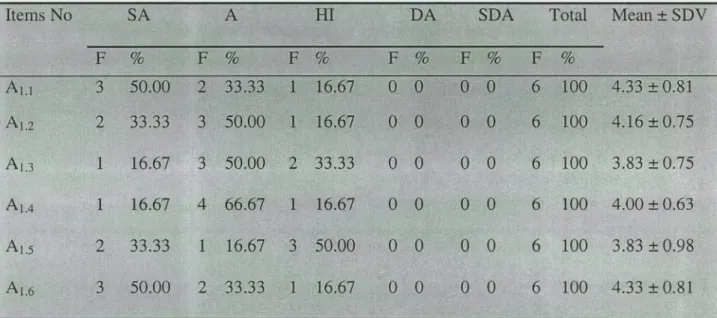
4.1. Teachers' Responses 34
4.3. Content Analysis 48
CHAPTER FIVE
51
CONCLUSIONS AND
RECOMMENDATIONS
51
5.1. Conclusions 51
5.2. Recommendations 54
References 56
Appendices 64
Appendix A:Questionnaire to be filled in by Instructors 64
Appendix B: Questionnaire to be filled in by Students 68
Appendix C: Afan Oromo Version of Students' Questionnaire 71
Appendix D: Classroom Observation Checklists 75
Appendix E: Summary of Classroom Observation Checklist Results 77
Appendix F: Interview with Instructors 78
List of Figures
Figures Page
Figure 1:Age of teacher respondents 27
Figure 2: Qualification of teacher respondents 28
Figure 3:Teaching experience of teacher respondents 28
List of Tables
Tables Page
Table 1: Teachers' responses about their knowledge on the theoretical orientations of
language skills integration in EFL classes 34
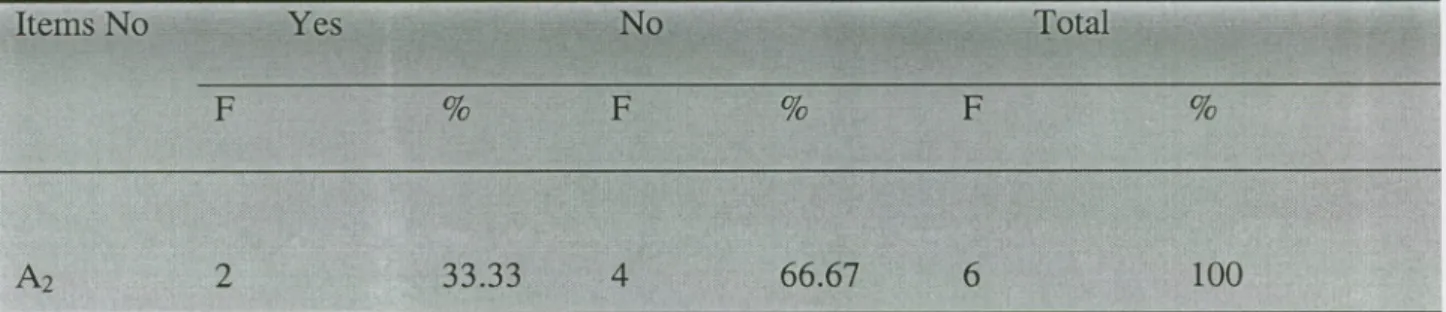
Table 2: Teachers' responses to whether or not they have taken adequate prelin-service
training about integrated language skills teaching 36
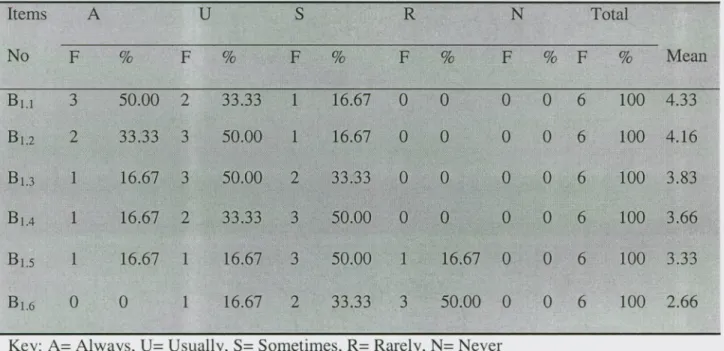
Table 3: Teachers' responses on the experience of teaching integrated language skills in
EFL classes 37
Table 4: Students' responses on whether or not they learn integrated language skills inEFL
classes 43
Table 5: Students' responses on their interest and motivation to learn integrated language
skills inEFL classes 44
Table 6: Students' responses on the integrated language skills learning inEFL classes....45
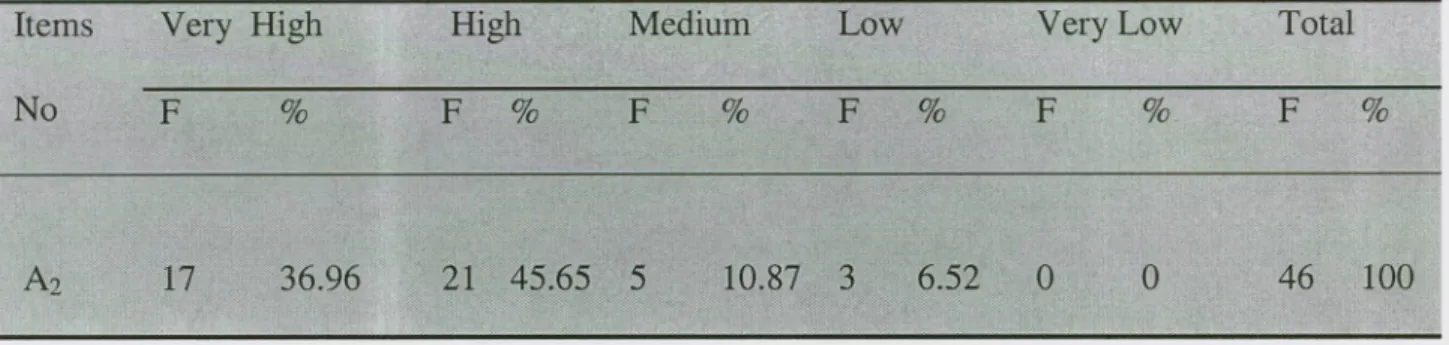
Table 7: Students' responses on factors that impede the implementation of language skills
Abstract
The purpose of this study is to assess to what extent language teachers integrate language skills in teaching and learning English at JCTE. The study particularly, found out teachers' knowledge on the theoretical orientations of language skills integration, examined to what extent teachers practically implement integrated language skills in EFL classes and identified the major factors that might hinder the implementation of language skills' integration in EFL classes. To this end, the study employed descriptive survey method, which involves both quantitative and qualitative data gathering tools to enrich data. Accordingly, JCTE was selected through availability sampling. Then, all the 6 EFL instructors along with 46 EFL students which sum up to 52 were selected through purposive sampling as respondents for the study. To collect the necessary data for the study, two sets of questionnaire were employed as the main data collecting tools. Besides, classroom observation, interview and content analysis were utilized to supplement and substantiate the data gained through the questionnaire. To analyze the quantitative data, frequency, percentage, mean and standard deviation were utilized. The qualitative data were
analyzed thematically.
The results of the study reveal that the instructors were not capable enough on the knowledge and the theoretical orientations of language skills integration in EFL classes. In addition, it was found that the teachers lacked practical skills on the implementation of language skills integration in EFL classes. Furthermore, the study revealed that: instructors did not teach two language skills in integration in speaking, writing, reading and listening lessons; that is, they hardly taught four language skills in integration in these lessons, they rarely used communicative activities and project work, some of the instructors could not effectively play their managerial roles and most of them hardly used various teaching aids and equipment, most instructors frequently used whole class organization at the expense of pair and/or group organizations, a number of hindrances which related to the College, the students and the instructors directly or indirectly impeded the implementation of language skills integration in EFL classes. Generally, the study indicated that the module did not create a fertile ground for integrated language skills teaching/learning in EFL classes. That is, the organization and balance between the macro and micro skills of the language skills development in the module was not appropriate to the learners and learning situation. Thus, the skills integration and the development of discourse and fluency skills were not given sufficient attention.
Finally recommendations were drawn based on the above findings. The points of the recommendations include: the instructors' use of communicative activities and project work when they teach integrated language skills, the students' awareness on the advantages of integrated language skills learning, the effectiveness of the organization and balance between the contents of language skills in the module, the importance of in-service training in the form of workshops, symposia, experience sharing and seminars for the professional growth of teachers. Teacher training institutions (colleges and/or universities) should train teachers on both the theoretical and practical aspects of integrated language skills teaching in EFL classes.
CHAPTER ONE
INTRODUCTION1.1. Background of the Study
Skills are the building blocks and effective elements of the language learning process. In order to make the comprehensive and complex process of language learning simple and effective, skills integration is a suitable means of teaching language. It is a well known fact that the four language skills are rarely used alone in everyday life. Integrating language skills help language learners to develop their ability in using two or more of the four skills within real contexts and also in their actual life. All language skills are crucial in teaching and learning process and combination of the language skills has a positive effect on the student success (Selma and Selen, 2010).
In natural language learning, skills integration is inevitable and in the language classroom skills need to be practiced in integration. According to (Cunningsworth, 1984, p. 46), with the actual language use, one skill is rarely used in segregation; that is various communicative situations in real life involve integrating two or more language skills at a time. For example, a person reads a letter and reacts to it by writing after reading, and may probably talk about it after writing it.Two or more language skills are commonly integrated in daily speech. According to (Hinkel, 2006, p. 113), communication will be meaningful if it happens in integrated language skills, not isolated one. That is, communication does not run well if people use only one language skill at a time. Thus, language skills in the classroom should also be integrated in the language teaching process as it is in real life. Therefore, in order to provide more focused and significant learning situation, teachers must integrate the language skills: speaking, writing, listening and reading while teaching and practicing the language.
For the past three decades, ELT experts already found a whole language approach which is
related to teaching four skills. This approach was established in 1980s and began to be
implemented in the 1990s and the 2000s by US educators (Hinkel, 2006; Selma and Selen,
whole) and teaching/learning (reading, writing, listening and speaking should be integrated into learning). According to Richards and Rodgers (2001), whole language instruction is a theory of language instruction that was developed to help young children and has also been extended to middle levels, secondary levels and tertiary levels of the teaching of English as a second/foreign language.
The development of the movement towards the integration of the language skills is widel y practiced in many countries of the world nowadays and is centered in Canada, USA and UK, but it has tentacles circling the globe. That is to say, the issues in language skills integration using an international perspective are expanding and that it has taken hold in the UK, the USA, the Canada, and elsewhere (David, 1994; Oxford, 2001; Brown, 2001).
The Education and Training Policy of the Government of Ethiopia, established in 1994, outlined the prescribed medium of instruction for primary, secondary, and tertiary education in Ethiopia. At the primary level (grades 1-8), the student's mother tongue (Afan Oromo, Amharic, Tigrinya, etc.) is used as an instructional medium, with English being taught as a subject. At the secondary level, the medium of instruction changed to English, which continues to tertiary levels (Tadesse, 2012). That is, some colleges and all universities in the country are supposed to use English as their medium of instruction; they ought to produce documents, conduct research, publish materials, hold meetings, and write minutes and reports, etc. in English. Hence, the increasing use of English in most government and business sectors in Ethiopia, demands a mastery of the integrated skills of language from the students coming out of Colleges and Universities (Negash, 2006 as cited in Abraham, 2012).
Consequently, our students' good command of integrated skills of the language plays a dominant and longstanding role in their academic success. As a result, implementation of skills integration in EFL class is important, as it is communicative, learner-centered, realistic, and meaningful in EFL teaching and learning.
The interest of focusing on this integration of language skills emanates from various reasons. In the first place, to the best of the researcher's knowledge, it is one of the significant areas
skills. Secondly, as a language teacher, there is no room to entertain discrete language skills purely one over the other. Besides, most educators agree that students are beneficiaries when they are engaged in the integrated tasks rather than the segregated skill.
However, EFL teachers at Jimma College of Teachers' Education may not be fully implementing integrated skills due to the following reasons. Firstly, the background (learning experience) of students at high school level. That is, mostly they learned skills in a discrete way. Secondly, there is scarcity of instructional materials especially modules and inadequacy of the content of the module to implement integrated language skills. Thirdly, though teachers have participated in different short and long term training that help them to apply integrated skills, still they do not seem to fully implement integrated skills because of the influence of traditional (discrete/segregated) methods of teaching language skills.
1.2. Statement of the Problem
Much has been said about the segregated ways of teaching and learning language skills. There are several researches conducted in the areas of listening, speaking, reading and writing on each without considering their interdependence effect on teaching language. But little attention is given to what extent language teachers implement by integrating skills in general and Jimma College of Teachers' Education language teachers in particular.
According to Wang (2000), integrating the four skills emphasizes the focus on realistic language and can therefore lead to the students' all-round development of communicative competence in English.
There is also a general consensus about the need for integrated language skills teaching in Ethiopia. For instance, integrated language skills teaching is selected to be the language teaching practice at tertiary level. In this regard, the language curriculum prepared for college of teachers' education, which is produced by the Ministry of Education (Institute for Curriculum Development and Research (ICDR)) and regional education bureau (Oromia Educational Bureau), clearly shows that skills integration would provide students with opportunities of
practicing macro and micro skills of the language and make them confident and effective users of the target language. Thus, college students should learn language skills in integration.
Even though language skills' integration is assumed to be practiced in the college of teachers' education, to the best of the researcher's knowledge, there is no systematically collected evidence on Jimma College of Teachers' Education which shows how much the integrated language skills teaching is being practically implemented in classrooms as planned. The researcher believes that, to make the best pedagogic decisions for the students, a systematic study on the implementation of language skills' integration at tertiary level is important.
Hence, there are few local studies on integrated language skills teaching in the Ethiopian context. The first study done by Endalkachew (1995), aimed to see the feasibility of integrated-teaching of listening and speaking at grade eleven level; and by designing tasks that unify listening and speaking skills, he proved the feasibility of teaching listening and speaking skills at a time at grade eleven level. The other researcher, Nasise (1999) intended to see the distribution and ratio of integration of skills in grade ten English for Ethiopia Books (1) and (2). She also observed some classroom teaching practices in Yekatit 12 and Menilik II schools. Nasise's study shows that the integration of more than two skills was rarely seen in the textbooks, and most English teachers failed to integrate language skills in the classrooms observed. The third researcher, Alemayehu (2008), on the other hand, conducted experimental research on plasma and non-plasma teaching of integrating language skills in the teaching of English; he analyzed the contents of grade nine students' textbook and teachers' guide and also he observed some classroom teaching practices in three government secondary schools in Addis Ababa namely, Wro. Kelemework, Entoto Amba and Yekatit 66 primary and secondary school. His study shows that there was a gap between the teachers' theoretical knowledge of integrated-skills teaching assumptions and their practical skills of teaching language skills in integration in the classrooms.
Though these three researchers attempted to look in to the importance of integrated language skills in EFL classrooms, none of them attempted to look at the extent to which language teachers integrate language skills and devise tasks in classrooms at tertiary (college or/and university) level. The purpose of this study is, therefore, to assess whether and how often
teachers implement integrated language skills in EFL classrooms with reference to Jimma College of Teachers' Education and to recommend some possible ways of overcoming related problems.
Accordingly, the study basically differs from the above studies in that it will use descriptive research method, it will be conducted on tertiary (college or/and university) level and not only on the importance of integrated language skills but also assess the implementation of language skills' integration in teaching and learning English as a Foreign Language in the light of: (i) teachers' knowledge on the theoretical orientations of language skills integration in EFL classes (ii) the practical implementation of language skills' integration in EFL classrooms and (iii) the factors that impede the implementation of language skills' integrations in EFL classes.
In order to avoid the complaints and misleading information in the areas of skill integration, a closer and thorough investigation regarding to what extent language teachers teach language skills integratively is needed.
It is with this belief that the present researcher planned to carry out a study on the implementation of language skills integration in English as a foreign language classes at Jimma College of Teachers' Education. Apart from this, the study is hoped to bridge the accessible research gap that exists in our country in the area.
This study, therefore, was undertaken to assess to what extent language teachers integrate language skills in teaching and learning EFL at Jimma College of teachers' education. To this effect, the researcher formulated the following leading research questions to be answered in the course of the study:
1. To what extent teachers have adequate knowledge on the theoretical orientations of language skills integration in EFL classes?
2. How often is the integration of language skills' teaching practically implemented in EFL classrooms?
3. What are the factors that impede the implementation of language skills' integrations in EFL classes, if any?
1.3. Objectives of the Study
1.3.1. Main Objective
The main objective of this study is to assess the extent to which language teachers integrate language skills in teaching and learning English at Jimma College of Teachers' Education. It also sheds some light on teachers' knowledge of language teaching integratively.
1.3.2. Specific Objectives
Based upon the main objective, this research is intended to achieve the following specific objectives:
1. To find out teachers' knowledge on the theoretical orientations of language skills integration in teaching English as a Foreign Language classes
2. To examine the extent to which teachers practically implement integrated language skills in English as a Foreign Language classroom
3. To identify the major factors that might hinder the implementation of language skills' integration in English as a Foreign Language classes.
1.4. Significance of the Study
The implementation of language skills integration in EFL classes has high merits in the field of language teaching and learning. Accordingly, the findings of the study could have the following significances:
1. The finding of the study would enable EFL teachers of Jimma College of Teachers Education to improve their teaching practices by effectively implementing language skills integratively. To this end, all the teacher-educators, the trainees and the instructional materials producers could be
2. The finding might help English language teachers to revise their method of teaching English language at tertiary levels, and thus make the necessary improvement in the implementation of the integrated language skills teaching.
3. The result of the study would be significant for the university as its results might inform the implementation of language skills integration in EFL classes in the years to come.
4. It could also serve as a spring board for the future researchers for it provides some insights into the area.
1.5. The Scope of the Study
This study strictly limits itself to the implementation of language skills integration in EFL classes. The study was also restricted only to year one English Department students male twenty and female twenty six and six EFL instructors teaching at Jimma College of Teachers' Education located some 352kms Southwest of Addis Ababa and about 2.5kms Northeast of Jimma City Center. The college was preferred, as it was believed to implement integrated language skills when compared to other schools found in Jimma. The study only attempted to the integration of language skills rather than involving discrete skills like speaking, writing, listening, and reading skill. This makes it possible to see teachers' direct involvement in integrated language skills teaching.
1.6. Limitations of the Study
The quality of the research work would have increased if it had covered a large population from different areas. However, due to different constraints, this research was limited only to Jimma College of Teachers' Education. As a result, conclusions deduced or generalized from such a narrow context and recommendations provided might not serve the case of all Teachers Training Colleges throughout the Oromia Region and the entire country. Because, research conducted only on one college cannot represent the realities in other colleges.
1.7. Acronyms and Definitions of Operational Key Terms
CBL T -Content Based Language Teaching
CL T -Communicative Language Teaching
EFL -English as a Foreign Language
ESP -English for Specific Purpose (e.g. for medicine, business, engineering, law, agriculture)
ICDR -Institute for Curriculum Development and Research
JCTE- Jimma College of Teachers' Education
TEFL -Teaching English as a Foreign Language
TBL T-Task Based Language Teaching
Integrated Language Teaching- A language teaching approach where the four primary skills of listening, reading, speaking and writing are interwoven during instruction (Oxford, 2001).
Segregated Language Teaching- A language teaching approach which capitalizes on discrete language items where the four skills of listening, reading, speaking and writing are not properly woven together in an instruction; where the lesson consists merely of segregated skills in parallel threads that do not touch, support, or interact with each other (Oxford, 2001).
Integrated skills -Language skills (reading, writing, speaking, etc.) used together for communication.
Task-Based learning- An approach in which learners work together to solve a problem, complete a task, create a product and etc. Learning which occurs through social activity.
Primary language skills (macro skills) -Skills like, speaking, reading, listening and writing.
Sub-skills (micro skills) - Skills such as grammar, vocabulary, spelling, pronunciation, etc. which contribute to success with the primary skills.
CHAPTER TWO
REVIEW OF RELATED LITERATURE
2.1. Definition of integrated language skills teaching
In Communicative Language Teaching (CLT), the term 'integrated language skills teaching refers to the connection of two or more macro language skills (listening, reading, speaking and writing) and micro skills or language elements (grammar and vocabulary) in language teachingllearning process (Harmer, 1991; Oxford, 2001; Ur, 1996). The term integrated language skills teaching are also usually considered as synonymous with reinforcement. That means the learning of one skill leads to the learning of another skill(s). For instance, speaking may be pursued by related writing or reading in language teachingllearning process (Byrne, 1986; Brown, 2001).
Thus, as opposed to segregated or isolated language skill teaching, in integrated language skills teaching, two or more language skills are interwoven and presented to learners in context (Atkins et al., 1996; Oxford, 2001). The main focus of integrated-skills teaching is the teaching of language use for communicative purposes rather than teaching language forms devoid of context (Furuta, 2002).
2.2. Rationale for integrated language skills teaching
Integrated language skills teaching is a common language teaching practice in many countries of the world these days. Language skills integration is the popular concept these days throughout the world. The current trend in language skills teaching practice is also towards integrated language skills teaching in many countries (Oxford, 1994).
In the past two decades we have seen a movement away from narrow methods to broader integrated approaches in language teaching, approaches that encourage the teaching of all four skills within the general framework of using language for learning as well asfor communication (Snow, ascited in Celse-Murcia, 1991).
Oxford (1994, p. 265) further confirms that "skills integration is expanding and that it has taken clutch in the UK, Canada and elsewhere". Mainly there are two reasons for integrated language skills teaching to be expanded and implemented widely in countries. These reasons could be categorized as 'real-world rationale for integrated language skills teaching and 'pedagogical rationale for integrated language skills teaching (Harmer, 1991; Miller & Gildea, 1987 & Oxford, 1996).
2.2.1. Real-world Rationale for Integrated language skills Teaching
In real life communication situations outside the classroom, we rarely use only one skill without the other. Rather, we use two or more skills at a time (Atkins et al., 1996; Harmer, 1991).
For instance, we both listen and speak when we talk with a person on a telephone. We may also read an article about a film or a concert in a newspaper/a magazine. So as to discuss the significant issues in the article we read with someone else who sits next to us (Mcdonough and Show, 2003). Another example which shows integrated language skills use in the real-world communication outside the classroom is that a director of a company may want to deliver a speech about annual objectives of a company. The director may need to refer past documents to write a short note. Then, the director may deliver his/her speech by referring the note he/she prepared (Phillips and Walters, 1995). In these cases and in many other instances, we use two or more language skills in our day to day communication (Crook, 2001).
Therefore, language skills should be interwoven with each other and taught in a classroom. That is to say, language teaching in a classroom should reflect the integration of skills in real-world communication (Harmer, 1991). In this regard Byrne (1986, p. 130) further argues that "we should be looking for opportunities to knit skills jointly, because this is what happens in actual life. Similarly, Mcdonough (2003, p. 203) states that "skills integration will hopefully show learners that skills are rarely used in isolation outside the classroom and that they are not distinct as such, but that there is considerable overlap and similarity between some of the sub-skills involved."
2.2.2. Pedagogic Rationale for integrated language skills teaching
In an academic context, there are pedagogic reasons for integrated language skills teaching. In a lecture type of lesson, which is a common type of lesson in several schools, students are anticipated to listen to the information provided by their instructors, and to take notes so that they read it later on for detailed understanding. The students need to ask their instructors for clarification of point(s) which they do not understand while they are attending a lecture. They may also read a text connected to the lecture they attended in the classroom. Therefore, integrated language skills teaching in schools help students cope with their academic work, which demands of them to use two or more skills at a time (Lyndon, 1981; Yohannes, 2010).
In any high school/college lesson there will be listening (to the teacher or the students), speaking (by the teacher and the students), reading and probably some writing. Thus, whether it is outside or inside the classroom, the macro skills are always integrated (Atkins et al., 1996).
Being multi-language skills users at a time enables students to be successful in their current and/or future academic learning; and two or more skills performance at a time can be achieved through integrated language skills teaching (Lazaraton, 2001). According to Blanton (1992), whatever activities are spun of the text, they must be in their combination call on students to employ all modes of communication (reading, writing, listening, speaking) and to immerse themselves in language and language operation of the sort that will better prepare them for the academic road ahead.
2.3. Theoretical Bases for Integrated language skills teaching
According to (Brown, 1994; Richards & Rogers, 2001; Stem, 1983), any language teaching practice in English Language Teaching (ELT) must ultimately be related to theories. This means that any language teaching practice in ELT is rooted in explicit or implicit theories. This claim also clutch true in integrated language skills teaching practice. Therefore, it is hardly controversial to note that in a systematic investigation and discussion of integrated language skills teaching, it would be appropriate to look at theories (at least some theories) which the integrated language skills teaching is based on.
In integrated language skills teaching process, learners are viewed to be active information processors (learners apply their mental power in order to distill the input information presented to them). That is, in integrated skills teaching/learning process, it is believed that learners analyze, synthesize, evaluate and judge the input information presented to them before they reach conclusion(s) (Atkins et.al, 1996; Spanos, 1989). From this we understand that integrated language skills teaching are underpinned in the cognitive theory of learning.
Alternatively, integrated language skills teaching intends to help students use the combined skills in their day to day communication situations, whether in a classroom or outside a classroom (Harmer, 1991; Oxford, 2001; McCarthy &
o
'Keeffe, 2004). From this we could infer that integrated-skills teaching are grounded in the linguistic theory of language, which states/claim language to be a means of interpersonal interaction and a means of expressing functional meanings (Atkins et.al, 1996; Brown, 1994; Field, 1998; Richards and Rogers, 2001; Stern, 1983; Short, 1989). According to Mcdonough and Show, (1993), if one of the jobs of the teacher is to make the students 'communicatively competent' in second language, it will involve more than being able to perform in each of the four skills separately. Thus, by giving learners tasks which expose them to these skills in combination, it is possible that they will get a deeper understanding of how communication works.From this, it follows that integrated language skills teaching is rooted m the theory of communicative competence, which claims communicative competence to include four competencies, namely, grammatical/linguistic competence (knowledge of the structure or form of the language), sociolinguistic competence (knowledge of when to use language in appropriate context), strategic competence (knowledge of how to 'repair' or 'mend' communication breakdown) and discourse competence (knowledge of understanding both spoken and written language beyond sentences level (Brown, 1994; Hinkel, 2001; Widdowson, 1978).
2.4. Types of Integrated language skills teaching
There are two broader kinds of integrated language skills teaching viz. content based language teaching and task-based language teaching. Alternatively, a hybrid of content-based and task-based language teaching can be possible (Celce-Murcia, 1991; Oxford, 2001). Theme based and task based are actually used at many educational levels (David, 1994).
2.4.1. Content-based Language Teaching
Content-based Language instruction is the most frequent mode of language skills integration. The main goal is communicative competence in the target language (the language being learned), and a secondary goal is content knowledge such as sociology, mathematics or science. The term 'content' has had many different interpretations in different language teaching methods. In Grammar translation method, content was defined as the grammatical structures of the target language (L2); but in audiolingualism method, content was assumed to be the grammatical structures and vocabulary of second language. In this method language content means language forms (Brown, 2001). On the other hand, the more recent communicative approaches to the teaching of English (Communicative Language Teaching method, Community Language Learning method and so forth) define content as functions or the communicative purposes for which students use the target language (for example, greeting, invitation). In these methods, the term 'content' also refers to the use of subject matters for second/foreign language teaching purposes (Cunningsworth, 1995; Rubin, 1975; Hauptamann, 1988; Donna, 1988; Edwards, 1984; Celce-Murica, 1991). In content-based language teaching, a theme/topic of a subject matter serves as a basic building block to unify language skills. That is, language skills are interwoven around a common topic/theme in content-based teaching (Atkins et al., 1996; Brown, 2001; Robson, 2002). Content-based language teaching includes two major models of language teaching viz. theme-based language teaching model and adjunct language teaching model (Byrne, 1988; Brown, 2001).
2.4.1.1. Theme-Based Language Teaching Model
In a theme/topic-based language teaching model, language skills is linked with the study of a theme or a topic, which could be a broader theme/topic (for instance, global warming) or a narrow theme/topic (e.g. firewood). The theme provides a context for language use in integrated language skills teaching. That is, the language skills 'revolve' around a common theme/topic; and the theme serves as 'catalyst' to join two or more language skills (Brinton, 1989; Blanton, 1992; Cunningsworth, 1995; Hauptamann, 1988; Edwards, 1984; Brown, 2001).
Theme-based language teaching is applicable at all grade levels (lower, intermediate and advanced grade levels); and it is suitable for heterogeneous sets of learners. Thus, it is the most helpful and widespread form of content-based language teaching nowadays (Richards and Rodgers, 1986; Brown, 2001).
2.4.1.2. Adjunct Language Teaching Model
The adjunct model is content-based approach in which students are currently enrolled in a language class and content lessons. This model is usually implemented in post secondary settings where such linking or 'adjuncting' between language and content departments is feasible. A key feature of the adjunct model is the coordination of objectives and assignment between language and content instructors (Brinton, 1989; Donna, 1988; Alemayehu, 2008; Brown, 2001).
Accordingly, in the adjunct language teaching model, a language teacher/ instructor works in collaboration with a content course (subject matter) teacher in such a way that the content course teacher may provide information pertaining to the language forms, language skills students need to develop and so on for the language teacher. Then, the language teacher helps the students develop the skills which help them learn the content course (Mohan, 1986; Snow & Genesee,
1988; Brown, 2001).
The adjunct language teaching model is rarely used at lower grade levels; rather, it is more limited to higher institutions (universities and colleges). It is also suitable for advanced students who have a higher language proficiency level (Hauptamann, 1988; Edwards, 1984; Blanton,
O
D~3656
fr'J
1992). All content based language teaching models pressure the content chosen to link the language skills to be interesting for students, and to relate with students' language proficiency levels, culture and background (Murphy, 1991; Blanton, 1992; Nunan, 1989; Donna, 1988; Oxford, 2001; Celce-Murica, 1991).
2.4.2. Task-based Language Teaching
The Task-Based Approach actually represents a practical means to accomplish the integration of skills if used with the appropriate materials and procedures. In addition, these approaches integrate the four skills to promote effective communication because people usually develop these skills interlinked. It is rare to acquire a macro skill in isolation in real life. Using a language, though it is a first language, implies a strong and inevitable connection between skills (Almarza, 2000; Asato, 2003; Furuta, 2002; Larsen, 2000; Su, 2007; Doughty & Pica, 1986; Brown, 2001).
Thus, in task-based language teaching, tasks help unify two or more language skills together (Byrne, 1986; Long and Crookes, 1992; Hauptamann, 1988; Edwards, 1984; Nunan, 1989; Parrott, 1993). Here, it is important to ask two basic questions: (a) what are language learning tasks? And (b) what are the different kinds of tasks which could be used to integrate language skills?
2.4.2.1. Definition of Language Learning Tasks
Many scholars (for example, Nobuyoshi and Ellis, 1998; Nunan 1989; Richards, 2001) characterize language learning tasks to be 'activities' that make learners use the target language (L2) in meaningful communication. Nunan (1989, p. to) in particular defines a communicative task as task which "involves learners in manipulating, comprehending, interacting in the target language while their attention is principally focused on meaning rather than form."
Communicative tasks are basically different from activities and exercises (for example, repetition and substitution drills) that make learners practice the target language forms (Jing, 2006; Nubuyoshi and Ellis, 1994; Brown, 2001).
According to Nunan (1989), in analytic terms, tasks have four components, namely, goals (implicit/explicit outcomes of tasks), inputs (verbal and non-verbal data presented to learners; for instance a reading passage, pictures), activities (what learners actually do with the input; for example, reading, discussing) and teachers' and learners' roles.
Teachers of English generally acknowledge the close links among the four strands of the language skills namely speaking, listening, writing and reading. In the situation of the current study, the integration of language skills is defined as the process in which each language skill is learned in terms of the others. Learning to listen, talk, read, and write always involves something-some content to talk, listen, write or read about. The training of language skills cannot be left to chance. The combination of language skills can best be achieved through involving students in hands-on communicative language learning activities. The active participation of students in communicative language learning activities enhances the integration of the language strands.
2.4.2.2. Types of Language Learning Tasks
According to (Nunan, 1989, Richards, 2001 and Brown, 2001), there are two broad types of language learning tasks that could be used to integrate language skills on the continuum of language learning tasks.
2.4.2.2.1. Pedagogic/academic Tasks
Pedagogic/academic tasks are tasks based on second language acquisition theory (theory of second language acquisition is the reference point to select pedagogic tasks); and it is believed that pedagogic tasks stimulate second language learning/acquisition process (Nunan, 1989; Richards, 2001; Brown, 2001).
Pedagogic/academic tasks demand learners to engage in tasks which the learners are unlikely to perform outside classrooms. However, while learners are carrying it out, they might build up language skills which they probably transfer to perform real/actual-world tasks (Nunan, 1989).
Pedagogic/academic tasks could be information gap tasks, jigsaw tasks, problem-solving tasks and so on (Parrott, 1993; Hauptamann, 1988; Edwards, 1984; Brown, 2001).
2.4.2.2.2. Real/actual-World Tasks
Real/actual -world tasks' are identified via leamer's needs analysis. In other words, real/actual -world tasks are tasks that are brought into a classroom after the learners' needs had been analyzed in terms of target task(s) they want to perform outside a classroom; and the learners perform tasks (for example, reading technical manual, reporting an experiment) which are directly related to their need of tasks in the real world (Richards, 2001; Long and Crookes, 1992).
Here, it is important to notice two main points. First, in integrated language skills teaching both pedagogic/academic and real/actual world tasks could be used as a 'nucleus' around which language skills might be combined. That is, two or more language skills could be derived out of both pedagogic and real world tasks and presented in combination to students so that they learn two or more language skills at a time (Nunan, 1989). Second, tasks that are used as a 'glue' to unify language skills together need to relate to learners' background, goal, culture and linguistic competence (Nunan, 1989; Hauptamann, 1988; Edwards, 1984;Richards, 2001; Brown, 2001).
2.4.3. A hybrid of Content-based and Task-based Language Teaching
Although it may be appropriate to view content-based language teaching and task-based language teaching as two broader integrated-skills teaching models on the continuum of integrated-skills teaching, the distinction between content-based language teaching and task-based language teaching does not mean that we cannot use a blend of content-based and task-based language teaching (0' Malley &Chamot, 1990). Indeed, language skills may be organized both around tasks and topics in a unit and/or lesson. In this case, a hybrid of content-based language teaching and task-based language teaching could be used to teach language skills in combination (Hauptamann, 1988; Cunningsworth, 1995; Davies, and Pearse, 2002 and Edwards, 1984).
2.5. Advantages of Integrated Language Skills Teaching
In language teaching, we can use integrated language skills for several benefits. First, integrating language skills offers more purposeful and meaningful learning at all proficiency levels. In
addition, it contributes to consistent teaching and to better communication (Oxford, 1990). It also brings variety into the classroom. Teachers enrich classroom instruction by integrating language skills cooperatively (Selma and Selen, 2010). By integrating the language skills, students learn to manage the language and they can easily transfer the acquired knowledge of the other areas. Practicing of all four skills promotes language learning and affects the second language knowledge of learners positively. When the language skills are integrated in language teaching, language learning comes nearer to the way we do in real life (Seedhouse, 1999;
Almarza, 2000; Oxford, 1994 and 2001).
It is further believed that integrated language skills teaching helps students develop their communicative competence (grammatical/linguistic competence, strategic competence,
sociolinguistic competence and discourse competence) (Atkins et aI., 1996). Integrated language
skills teaching provides authentic language learning environment for teaching/learning process,
help students to learn language skills in better way, makes students be successful academically,
helps students become critical thinkers (to analyze, synthesize and evaluate information), creates
motivation in students by avoiding a routine practice of forms of the language, which creates
dullness in students, brings student centered and humanistic approach to language teaching in a
classroom (Selma and Selen, 2010).
By immersing learners in topics and tasks which demand the use of two or more language skills
at a time, integrated language skills teaching exposes the learners to authentic language and
enables them to interact naturally with the intended language. That is to say, it helps learners
acquire/learn second language by exploiting its full meaning potential (Byrne, 1986;
McDonough and Show, 2003). Integrated language skills teaching also assist students to develop: (a) their communicative skills, and (b) their thinking (cognitive) ability
(Cunningswroth, 1984; Peregoy, 1997; Oxford, 2001). The learners are not only sharpening their communicative skills, but also deepening their understanding of the course they learn. In
other words, by learning to integrate the skills, the students not only develop their ability to express themselves but also they develop their thinking power- they get mental training (Atkins et al., 1996).
Additionally, by engaging learners in meaningful tasks and interesting topics/themes that demand the learners to use two or more language skills at a time, integrated language skills teaching could create an authentic language learning environment (positive cooperation and interaction among learners and among teachers and learners) in a classroom. In other words, integrated language skills teaching provides authentic language learning situation, which is described by dynamic and positive student-to-student and teacher-to-students interaction in a classroom (Peregoy, &Boyle, 2001; Richards, 1985; Brown, 2001).
Besides, integrated language skills teaching address learners' 'affective factors' versus motivation, outlook and positive self-esteem (Atkins et al., 1996; Rivers, 1981; Byrne, 1991; Nunan, 1989). Integrated language skills teaching engage learners in meaningful communication process through tasks and topics which are selected based on the students' experience, background, culture and so forth. In doing so, it could provoke motivation in students. The motivation that is provoked through integrated language skills teaching in students, in turn, creates a willingness to ask questions, to think how to learn, to accept correction, to take responsibility and so on. It also indirectly facilitates students' success, confidence, independent study, positive approach (to learning, peers, school and so on) and growth towards self-fulfillment (Atkins et al., 1996; Scarcella & Oxford, 1992; Harmer, 1991 and 2001; Oxford, 2001; Brown, 2001).
According to Brown (2001, p. 234), integrating the main language skills and the subsidiary skills has the following advantages. Namely: the language becomes not just an object of academic interest but a real means of interaction among people, skill integration allows mutually supportive growth in all the main skills and the subsidiary skills, learners rapidly gain a true picture of the richness and complexity of the language for communication, in an integrated language skill arrangement, language instruction promotes the learning of authentic content,
is highly motivating to students of all ages and backgrounds, teachers are given the power and the opportunity to track student's progress in many skills at the same time, skill integration seeks to make the components of development (language, cognition and social awareness) together so that second language learning is an integral part of social and cognitive development in school settings and etc.
2.6. Techniques of Integrating Language Skills inLesson(s)
In integrated language skills teaching/learning process, language skills should be sequenced and chained/unified within a framework of a lesson or sequence of lessons (Atkins et al., 1996).
There are different ways of unifying language skills around a common topic or task in lesson(s). However, according to McDonough and Show (2003), the common and convenient skill integration pattern in a unit and lesson(s) is from receptive skills (listening and reading) to productive skills (writing and speaking).
Skills can best be integrated in a model where the practice of receptive skills of listening and reading leads into practice of the productive ones of speaking and writing. Such integration can be achieved through the use of a body of information the learner read or listen to, a discourse expressing the body of information and later reproduce at least some of its content in spoken and lor written language (Cohen, 1990; Burgess, 1994).
For that reason, skills can be integrated around a topic in a lesson and taught in a classroom in such a way that first, a listening text may be given for students. Then, the students may be asked to argue the major issues in the listening text after they perform listening task(s). After this, the students may be asked to read an article which relates to the listening text they heard in the classroom and take a short note. In this technique, and in many other cases, students could learn two or more language skills in a lesson or sequence of lessons (Burgess, 1994).
Alternatively, a task may be used as a nucleus around which language skills could be organized in lesson(s) and taught in classrooms. A jigsaw task, for instance, could be used to chain skills in a lesson and teach in a classroom in such a way that first students could be asked to read
disordered paragraphs and arrange them in their correct order. Then, the students might be asked to discuss whether they accept the views in the text or not. After this, the learners could be asked to write a similar passage to the passage they discussed. In this way, and in many other instances, it is possible to combine two or more language skills around tasks in lesson(s) and teach students two or more language skills at a time (Nunan, 1989; Parrott, 1993).
For the time being, it is important to notice two points here. First, the receptive-productive skills sequence for integrating skills in lesson(s) is not the only pattern of language skills integration. In fact, language skills could also be integrated in productive-receptive pattern in lesson(s). For example, In pre-reading and pre-listening activities, students may begin with a discussion/speaking and then move on to reading or listening (Atkins et al., 1996; Parrott, 1993). The relative importance of the language skills, the view taken of the best ordering of the skills, the level of students and so forth determine the pattern of skills integration in a lesson (B yrne, 1986; Davies and Pearse, 2002). Second, for lesson(s) to reflect the desirable characteristic of integrated language skills teaching, the lessons should facilitate language learning/acquisition process, create motivation, cooperation and so forth in classroom (Nunan, 1989).
2.7. Roles of Teachers and Students in Integrated language skills teaching
Using an integrative approach in a communicative classroom requires a teacher to make more effort in choosing materials and designing activities in comparison with the traditional English teaching.
According to Richards and Rogers (2001), any language teaching practice reflects the roles of teachers and learners. Teachers' and learners' roles refer to the part that teachers and learners are expected to play in language teachingllearning process (Nunan, 1989). An integrated skill teaching, in particular, presupposes that teachers and learners have crucial roles in integrated language skills teachingllearning process (Atkins et al., 1996). Teachers' and students' roles are one of the major determinant factors for effective integrated language skills teaching in schools (Oxford,2001).
2.7.1. Roles of Teachers in Integrated language skills teaching
The basic role of the English teacher is to help students to deal with the skills integration process,
not only as a means of developing communicative skills in English, but also to help them achieve deeper understanding of the course content of their other subjects (Atkins et al., 1996).
Therefore, English language teachers should play their essential roles in helping students deal
with the skills integration process. They should organize students into different groups and/or
peers, monitor students' involvement in skills learning process, advise students, participate in
student group/pair discussion, if it is necessary, and so forth (Harmer, 1991 and 2001; Edge,
1993; Hedge, 2000; Oxford, 2001; Richards and Rogers, 2001; Wright, 1987). English language
teachers are also responsible for developing, applying and evaluating suitable lesson(s) which
reflect(s) integrated language skills teaching. They are also responsible for adapting existing
material(s) for integrated language skills teaching purpose, if it is necessary (Oxford, 2001). In
integrated language skills teaching process, Oxford (2001) further advises English language
teachers to: identify the various ways (for example, task-based, content-based) of language skills integration in a classroom, evaluate the extent to which skills are interdependently taught, choose and use appropriate teaching aids that promote the integrated teaching of language skills and teach language learning strategies that could enhance the performance in multiple skills (Wills,
2.7.2. Roles of Students in Integrated-skills teaching
Teachers' and students' roles in integrated skills teaching are complementary (Oxford, 2001) and integrated-skills teaching presupposes that students also have crucial roles in integrated skills
teaching (Oxford, 2001; McDonough and Show, 2003; Atkins et al., 1996).
Nunan (1989, pp. 84-85) gives a metaphorical expression about the roles of students In a communications lessons.
For instance, the terms play and players hold out a rich potential for developing a metaphor concerning language learners. As a player, one must participate actively. At the same time one must concentrate by over serving what others do.
Players take part in all of the interaction configurations which are important in a communicative language course: as in pairs, individuals, in small groups and in whole group display.
Metaphorical expression about students' roles In a communicative language course has also relevance to the roles that students should play in integrated language skills teaching/learning process. Thus, in integrated language skills teaching, students should actively negotiate and interact in group/pair work. That is, they should contribute their own experiences, opinions and feelings in pair/group discussions. Learners are also expected to: (a) ask questions and answer questions (b) show interest and effort, and (c) use different learning strategies and learning styles (Harmer, 2001; Atkins et al., 1996). Moreover, students should take responsibilities for their own learning (they should be 'manager' of their own learning); and they should be motivated (Edge,
2.8. Factors that Hinder Integrated language skills teaching
In describing factors which hinder integrated language skills teaching, it is possible to look at
factors from the point of view of teachers' factors, school's factors and learners' factors (Cohen and Manion, 1993; Edge, 1993; Frazee, 1995; Oxford, 2001; Richards, 2001).
According to (Frazee, 1995), English teachers may not have adequate knowledge and skills asto how to teach language skills in integration. Thus, they may not play their 'managerial roles' (they may not act as facilitator, organizer, consultant and so on) in classroom. English teachers may
further think that it is logistically simpler to teach language skills in isolation than to teach two or more language skills at a time. They may also believe that it is instructionally impossible to teach more than one language skills at a time (Richards, 2001; Wright, 1987).
Skill segregation is reflected in traditional ESLIEFL programs that offer classes focusing on
segregated language skills. Why do they offer such classes? Perhaps teachers and administrators
think it is logistically easier to present courses on writing divorced from speaking/on listening
isolated from reading. They may think that it is instructionally impossible to concentrate on more
than one skill at a time.
Furthermore, there may not be conducive conditions in schools for effective integrated language
skills teaching to occur in classrooms. For instance, there may not be enough instructional materials and equipment, such as books, newspapers, magazines, photocopy machine, overhead projector, computers, audiocassettes, video cassettes and so on in schools. Moreover, the presence of a large number of students in small/narrow classroom and unsuitable seating's (the
types of chairs, tables and desks) may restrict integrated language skills teaching (Edge, 1987;
Richards, 2001).
Furthermore, learners' factors, for instance, lack of motivation, lack of language proficiency,
negative attitude towards their teachers and/or peers and so forth may hamper integrated language skills teaching (Edge, 1987; Oxford, 2001; Richard, 2001).
Still, the testing system, whether teacher made test or national examination, could impede integrated language skills teaching. In principle, integrated language skills teaching demands integrative-tests; however, in practice, if only discrete point tests which measure only a single language skill (for example, a test that assesses only reading skill and/or a test that assesses only grammar skill) at a time are used to measure learners' performance in language skill, the discrete point tests may have a negative washback effect on integrated language skills teaching/learning process (Brown, 1994; Heaton, 1988).
In a nutshell, it is worth noticing the fact that the impediments that have been discussed so far are not inclusive factors that impede the integrated language skills instruction.
CHAPTER THREE
RESEARCH DESIGN AND METHODOLOGY
The main purpose of this study was to assess the implementation of language skills integration in teaching and learning English as a Foreign Language (EFL) at Jimma College of teachers' education. The design of the research, source of data, sample of the population and sampling techniques, instruments and procedures of data collection, and method of data analysis are stated hereunder.
3.1. Research Design
In this research, descriptive survey research design involving both qualitative and quantitative techniques was employed. These techniques were chosen because they could provide information concerning the status of the current practices of the implementation of language skills integration in teaching and learning English as a Foreign Language (EFL) in the College. Besides, they help to draw valid conclusions.
3.2. Source of Data and Population of the Study
The sources of data were English language teacher-educators and first year EFL students m Jimma College of Teachers' Education. According to the information from the College, in the 201212013 academic year, there were 6 EFL teacher-educators, 46 first year EFL students in the College. The populations of the study were therefore, 6 EFL teacher-educators and 46 EFL students which sum up to 52 as the study population.
3.2.1. Sample and Sampling Technique
The study was conducted in Jimma College of Teachers' Education. There is only one
Government College of Teachers' Education in Jimma Town, so availability sampling was used to select the respondents. The reason behind using the availability sampling technique is because the College is relatively near to the residence of the researcher and is accessible to collect the data for the study.
According to the information from Jimma College of Teachers' Education, there were only 6 EFL teacher-educators and three batches of (first year, second year and third year) students in EFL Department. Among these three batches, all first year students and all the 6 EFL teacher-educators were selected through purposive sampling. The reason behind using purposive sampling technique was that they were the only batch taking the course communicative English, a course in which the study was focused on, during the 201212013 academic year second semester. The course communicative English is designed with the view providing students with opportunities of practicing both macro and micro language skills. Since the total number of first year EFL students in the College was only forty six (46), they were purposefully included in the study so as to administer the students' questionnaire. The researcher believes that this population (46) could be manageable and might be adequate to provide data that would allow him to make valid conclusions. The information about the demographic characteristics of teacher and student respondents is shown below using Fig. 1,2,3 and 4 respectively.
3 2 = Q) -0 g 2
=
en -~ o w-
=
§ 1 :z: O-+---,--~ 18-25 26-30 31-40 41-50 Age (year) :> 50Fig. 1 Age of teacher respondents
The demographic information regarding the age of teacher respondents indicates that, 3 of the respondents fall in the age between 26-30 years; whereas 2 and 1of the respondents fall in the age between 31-40 and 41-50 respectively.
4 -2
a5
:.3-=
=
=
=
-."
~ '15 2 jg E=
=
1 o BA/B.Ed MA/M.Ed QualificationFig. 2 Qualification of teacher respondents
As can be seen from Fig. 2, in terms of qualification, there were two categories of teachers in the
department: first degree (B.NE.Ed.) and second degree (M.AIM.Ed.). In the first category, 2
teacher- respondents with B.AJB.Ed. qualification had the academic rank of assistance lecturers.
Those in the second category (4) with M.AJM.Ed. had the academic rank of lecturers.
Generally, the demographic information regarding qualifications indicated that more than half of the instructors in the department had qualification of M.AIM.Ed.
3 ~ Q.) -g 2 a
=
-en ~ '5 W-
E=
1 ==
1-5 6-10 11-15 16-20 r> 20Teaching exprience (year)
Fig. 3 Teaching experience of teacher respondents
The data in Fig. 3 indicates that 2 of the teacher respondents taught English for 6-10 years while
3 and 1 of them taught for 11-15 and above 20 years at high school as well as at college level respectively.
14 en .•...• 12 c Q) "0 C
8..
10 en Q) •... -en.•...• 8 c Q) "0 :=I 6 .•...• en '+-0 •... 4 Q) ..0 E ::J 2z
0 15-20~~
I
~
Male
_
~
C
8888?
]
Female
21-25 Age (year) 26-30Fig.4 Age and sex of the student respondents
As Fig.4 depicts, 27(58.69%) falls between the age of 15-20 years and these accounts for the majority of the student respondents. The next age classification of the student respondents which takes the 15(32.61%) is between the age 21-25 years. The left of the student respondents' age which is 4(8.70%) lies between 26-30 years. Regarding the sex of student respondents, Fig. 4 above also reveals that 20(43.48%) of the student respondents were males and 26(56.52%) of them were females.
3.3. Instruments and Procedure of Data Collection
The study primarily used quantitative data to identify, analyze and draw a general conclusion on the existing conditions of implementation of language skills integration in the process of teaching and learning English as a Foreign Language at Jimma College of Teachers' Education.
Besides, qualitative data were employed as supplementary to the study with the information gained from open-ended questionnaire, observation, semi-structured interview and document analysis (content analysis of the teaching material or module).
3.3.1. Questionnaire
The questionnaire is used commonly to gather data for descriptive survey. Sharma (2000) and Kothari (2006) state that a questionnaire enables a researcher to collect data from large groups of individuals within a short period of time; and it is also easy to administer to a number of subjects in one place at a time. Thus, a set of close and open-ended questions for both students and teachers, which was prepared based on the objectives of the study and the review of related literature, were designed and administered as a main data collecting tool to obtain the necessary data from the respondents for the study. Open-ended questions were included to give the respondents an opportunity to express their views. The questionnaire was translated for the students into their L, (Afan Oromo) to avoid language problems so that they can understand and respond to the items easily. To obtain necessary information for the study, the questionnaire was divided in to four parts: part one background information, part two teachers' knowledge on the theoretical orientations of language skills integration in EFL classes, part three teachers' integrated language skills teaching experiences and part four factors that impede the implementation of language skills' integrations in EFL classes at Jimma College of Teachers' Education. It was prepared based on the five points Verbal Frequency Scale ranging from 'Always' to 'Never' and the five points Likert Scale ranging from 'Strongly agree' to 'strongly disagree'. Furthermore, the administration of the questionnaire was carried out in the presence of the student researcher to clear up any possible misunderstanding the respondents might face in filling in the questionnaire and to ensure 100% return.
As it is known, Cronbach Alpha (a) which is an index of reliability and ranges between zero and one is most common reliability statistics used to measure internal consistency or reliability of the instrument. Thus, the students' responses to the questionnaire were entered into SPSS Version 16.0 computer software and checked for reliability and the Cronbach's Alpha statistical technique was used to check each item's reliability. Accordingly, 15 items with (a
=
0.85), which is good to be used as an instrument for data collection were duplicated and used because professionals have a rule of thumb for describing internal consistency or reliability using Cronbach alpha as (0.7- 0.8 acceptable, 0.8- 0.9 good and above 0.9 excellent) (Dornyei, 2007).Since the numbers of instructors was very low, the internal consistency or reliability of teachers' questionnaire was not employed.
3.3.2. Observation
Observation is one method of data collection and it is a systematic, purposeful, and selective way
of watching and listening to an interactive phenomenon as it occurs (Kumar 2005, p.119).
According to Allwright (1988), observation gives the primary account of situations under study; and when combined with other data collection tools, it allows for a holistic interpretation of the
situations. Hence, to obtain first hand information concerning the implementation of language
skills integration, the researcher prepared a classroom observation checklist in order to collect
additional data and substantiate the results obtained through semi-structured interview,
close/open-ended questionnaire and content analysis of the teaching material/module. The
checklist has four parts focusing on: teachers' roles during integrated language skills teaching, students' roles during integrated language skills teaching,