1
Determinants of Indian Urban Drinking Water PPP Project Performance: Applying AHP D T V Raghu Rama Swamy1, Piyush Tiwari2 and Anil Sawhney3
Abstract
Purpose – The purpose of this paper is to understand factors that affect the performance of projects being implemented on public-private partnership frameworks, with specific reference to urban drinking water sector in India.
Design/methodology/approach – A listing of factors that have a bearing on project performance have been developed based on a review of the literature. Through a survey, seven factors that are relevant to the Indian context are determined. Interviews were then conducted across a cross section of government agencies, financial institutions/ development agencies, private sector operators and consultants to understand the relative importance of these attributes. A multi-criteria decision making Analytical Hierarchy Process (AHP) tool has been used to develop relative weights of these parameters.
Findings – Ranking and relative weights of the factors in descending order are stakeholder consent and support for water PPP projects (22.1%), appropriate project structure (17.4%), availability of realistic baseline information (16.2%), reasonable water tariffs (13.9%), public sector capacity (13.0%), well developed market (9.5%) and water sector regulator (7.9%). There are differences amongst perception of various stakeholder groups.
Research limitation/ implications – Water sector has not matured, and with the advent of newer formats, there could be significant changes in the sector. A number of projects available for study are limited. This exercise could be undertaken periodically and updated in relation to experiences in other infrastructure sectors.
Practical implication – This analysis provides inputs to policy makers and project proponents for structuring more sustainable urban drinking water PPP projects, and have relevance to a wider group of stakeholders.
Originality/value – Indian infrastructure PPP market is attracting increased attention from researchers, though not much in urban drinking water sector. This paper aims to contribute towards that research. Keywords Urban Drinking water, Public Private Partnerships, Critical success factors, India, AHP Paper type Research Paper.
1. Introduction
India’s urban growth has been a well-researched phenomenon (McKinsey, 2010) and has been exerting tremendous pressure on city administrators, policy makers, the private sector and other stakeholders to provide commensurate services (Tiwari et al., 2015). The process of urbanization entails a profound transformation in the contemporary societies, rapidly increasing their aspirations. While Indian cities urbanized due to a myriad of reasons, urban migration itself added 20 million to cities, the attractiveness of living in large cities is not sustaining due to severe pressure on the delivery of civic services (Tiwari et al., 2015). It is likely that India will have a combination of a few large cities, and proliferation of numerous medium to large urban agglomerations, . though only less than one-third of the population lives in urban areas, a small proportion in comparison to the Western and developed world (73% in Europe, 80% in Latin America and Caribbean, 82% in North America) (United Nations, 2014).
1 Professor and Director, School of Infrastructure, RICS School of Built Environment, Amity University
2 Associate Dean and Professor in Property, Faculty of Architecture Building and Planning, Melbourne School of Design, University of Melbourne
2
Traversing the path of increased urbanization is expected to be accompanied by profound changes in aspirations of a better quality of life.
Provision of basic services has been vested with the urban local bodies in India as per XII Schedule of the Constitution of India. While urban population has increased rapidly, service delivery standards of basic services, particularly water supply, municipal solid waste management, etc., have not kept a similar pace. Most of these services are delivered below the country’s accepted normative standards and way below international and best in class city benchmarks (Ahluwalia 2011). City managers, administrators and policy makers have been making concerted efforts to improve the service standards through conceptualization and implementation of urban development projects. The government of India, in the last decade or so, has launched multiple urban renewal programmes such as, Jawaharlal Nehru National Urban Renewal Mission, Atal Mission for Rejuvenation and Urban Transformation (AMRUT), Smart Cities Mission, etc. that focus on enhancing the quality of basic services.
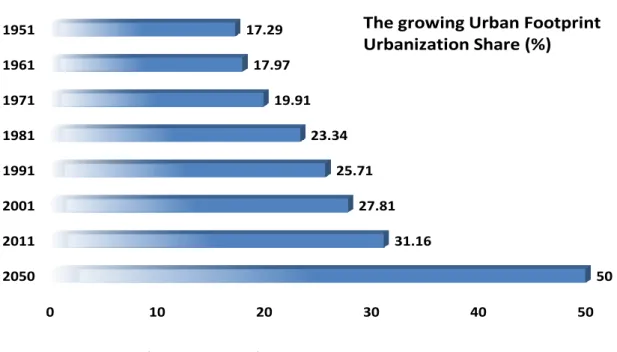
Figure 1 the Growing Urban Footprint Urbanization Share (%)
Source: Census of India, (McKinsey, 2010)
Access to water services has been argued by many as fundamental to living, and the same has been upheld by judiciary including the Supreme Court of India and the High Court of Allahabad. The Water Resources Group estimates that if the current pattern of demand and supply continue in India, about half of the demand for water will be unmet by 2030 (Aggregate water demand - 1498 billion m3, growth
rate 2.8% CAGR, supply - 744 billion m3, aggregate gap as a % of demand 50% ) (Water Resources Group, 2009). In order to provide adequate water supply to its citizens, Indian cities are estimated to require USD 71.3 billion (INR 3209 billion) and an amount of USD 121.3 billion (INR 5460 billion) at 2009-10 prices for operation and maintenance ( Ahluwalia 2011). In a separate assessment, Government of India has estimated that about USD 1 trillion is required for finance India’s infrastructure needs, with nearly 50% of that expected to be contributed by the private sector (Planning Commission GoI, 2012). Availability of water is becoming an increasing concern in the country. Based on Falkenmark water stress index, barring three water basins, rest of the twenty-two major river basins in India are facing water scarcity. While on one hand availability of quantum of water is a concern, income inequality across different economic sections of the society is affecting the uniform access to clean drinking water. Less than two-thirds of Indian urban population has access to treated tap water; in other words, nearly
0 10 20 30 40 50 2050 2011 2001 1991 1981 1971 1961 1951 50 31.16 27.81 25.71 23.34 19.91 17.97
17.29 The growing Urban Footprint Urbanization Share (%)
3
40% of the urban population depends on other sources for their drinking water needs. Very few Indian cities/ pockets in a city have access to continuous pressurized piped water supply. Most cities get water about two to three hours per day (Ministry of Urban Development, 2011). Recently submitted Mihir Shah Committee report, to the Indian Prime Minister’s Office, proposed a range of initiatives for better balance between demand and supply management of water. It promulgated multi-stakeholder approaches that bring government and non-government players together in a transparent and inclusive manner. Linkages with private sector are seen as crucial for an efficient, sustainable water service provision. The proposed National Water Commission (NWC) would have an Urban and Industrial water division that incubates newer business, revenue models for efficient delivery of services. (Shah, 2016). The conventional mode of water supply project delivery is through government conceptualized, financed, and constructed projects with financial assistance from multilateral/ bilateral agencies such as World Bank, Asian Development Bank (ADB), Japan International Cooperation Agency (JICA), etc., and national financial institutions such as Life Insurance Corporation of India (LIC) and Housing and Urban Development Corporation Limited (HUDCO). As city administrators keep exploring the opportunity to augment their resources—financial, technical, institutional—public-private partnership (PPP) format of project implementation is gaining ground.
Adoption of PPPs is seen as an important policy instrument in Indian infrastructure arena (Planning Commission GoI 2012, Ahluwalia 2011, Kelkar 2015). Private investment was 37% of total infrastructure spend in XI Five Year plan (between 2006-11) and Government of India had set a target of achieving a private share of 48% in XII Five Year Plan (2012-17). While more than 1200 PPP projects are at various stages of development, with an estimated investment of USD 109 billion (INR 7200 billion at 2015 rates), those in transport sector (roads, ports, airports) have been the most successful. Urban infrastructure projects (water, sanitation and municipal solid waste management) have the lowest share in total number of projects and investments (Planning Commission GoI 2012, Kelkar 2015).
In addition to technological, governance and institutional initiatives to improve drinking water services, implementation modes through PPPs were expected to supplement city finances and efficiency improvements.
A few cities commenced their efforts to develop water supply projects under PPP framework in the early to mid-1990s, following Government of India’s economic liberalization programs. Initial projects focused on basic water supply and encouraged significant private finance infusion. Not many of these are successful; cited reasons for the same include poor project development, structure and general opposition to private participation. In the next decade, there was a shift to other components of water supply, notably distribution services with financing requirements from private sector kept to a minimum (through the adoption of management contract models). The mid-2000s also witnessed an upswing in Indian infrastructure market with the entry of a large number of local contractors and international operators into the sector. Urban local bodies started configuring a diverse range of PPP arrangements including management contracts, build - operate- transfer projects and a hybrid mix of the same. The table below sets out the progress of Indian drinking water sector PPP initiatives.
Table 1: PPP Initiatives in Urban Drinking Water Sector in India Time Period Project Configuration Characteristics/ Outcome 1990’s Projects initiated after economic
liberalization
Focus on Bulk water
Tiruppur Industrial water supply project developed
Poor enabling frameworks Poor project preparation. ULBs lack financial resources Lack of public and political support
4 Early 2000s Focus shifted to distribution projects.
KUWASIP/Nagpur pilots built positive momentum
Management contract model explored
Government funding for capital investment
Private sector sought to improve efficiencies
2005-2010 Over 15 projects awarded
JNNURM funds seen as a leverage Increase in the number of domestic and international operators
Range of PPP options explored
Continued project opposition, especially in larger cities like Delhi, Mumbai
Second tier cities exploring PPPs Shift of focus to service delivery, tariff issues being addressed, competitive selection process, increased ownership of cities 2010 onwards Lull in water PPP transactions, following
slowdown across other infrastructure sectors
Continued ULB fiscal stress, as user charges are set to recover only O&M expenses
Projects with private investment became unattractive
Source: (World Bank, 2014), Expert Interviews
Investments in infrastructure sector declined in recent years that lead to an estimated shortfall in private investment to the tune of 43% during 2012-13 (Economic Survey, 2015). To revitalize infrastructure investments in India, Government of India has launched multiple programs. Most of them have a component to attract private sector participation. The correlation between application and performance of PPP projects across infrastructure sectors including water has been a mixed bag (Parker and Kirkpatrick, 2005) (Kayaga, 2008). Various research initiatives have been exploring the reasons of such performance across infrastructure sectors and geographies.
This study focuses on identifying those attributes that determine the success or impact performance of urban drinking water PPP projects in India, use an analytical tool to compare relative importance attached by sector stakeholders to various attributes and arrive at a hierarchy that could provide guidance on structuring such projects.
2. Literature Review
Water, transportation, energy, and telecom infrastructure are essential to the growth and survival of nations. (Carnis and Yuliawati, 2013). However, provision of such infrastructure in most cities to acceptable standards is a major area of concern. (Guasch et al., 2008)(Servenand Calderon 2004b, 2008 and 2010). While many reasons exist for such sub optimal provision of services, low spending on infrastructure and inordinate delays in implementation/ operations & maintenance of ongoing projects has affected the performance (Ahluwalia, 2011).
To address challenges of such infrastructure, governments of several countries have begun to initiate long-term contractual agreements based on PPPs (Grimsey and Lewis, 2002)
(Li et al., 2005),
(Mahalingam, 2010), (Ménard and Peeroo 2011).
. These are seen as one of the mechanisms by the government to fast track project implementation and deliver services efficiently to citizens. (Chou et al., 2012)(Russell et al., 2006). Conventional modes of project delivery include cities’ assuming design, planning, financing, construction/ rehabilitation and operations and maintenance activities. Under PPP frameworks, project proponents have passed on a significant share of these activities to the private sector. Many countries have used PPPs because they improve operational efficiency, enable the innovation of technological and managerial skills (Chowdhury et al., 2011)(Hwang et al., 2013) and areperceived as a governance strategy to reduce inefficiency and to improve urban services
(Gopakumar, 2010).
Advantage of PPPs in harnessing the innovative capability and capital of the private sector has been recognized (Chou et al., 2012; Russell et al., 2006). PPP allows a government5
to benefit from the participation by outsourcing risk to private entities. Government can hence focus on policymaking, planning, and regulation (Farquharson et al., 2011).
As more governments commenced utilizing PPP modalities in their projects, there was a consequent attention to measuring the success of such projects. Typical measures of project success include managing time and cost overruns, attaining set quality and service level standards. The performance of a project affects multiple stakeholders viz. project proponents, service providers and the general public (or users of the services). Definition of success would need to meet the objectives of these shareholders (Mallak et al., 1991). Many a time, these stakeholders have conflicting motivations, which means achieving one’s objectives may hamper those of others (Jepsen and Eskerod 2009), (Mills and Weinstein 2000). Even though such a large scale usage of PPP projects is witnessed in infrastructure projects, success and applicability of PPP frameworks have been a point of debate for policymakers and researchers alike (Guasch and Straub 2006), (Johnston, 2010). Many empirical assessments indicated mixed success of PPP projects (Parker and Kirkpatrick, 2005)(Kayaga, 2008)(Raisbeck et al., 2010). Some of the reasons cited for suboptimal performance of PPPs in infrastructure sectors include inequitable risk allocation (Jamali 2004), regulatory lacunae (Casarin et al., 2007), objection from stakeholders (Hall et al., 2005), weak contract structures and need for renegotiations (Guasch et al., 2008), nation specific issues (Chen and Doloi, 2008) and sector specific challenges (Ameyaw and Chan, 2013).
Various factors influence the performance of PPP projects, identification of the same with an intention to influence project outcomes has been of interest to various policy makers and project proponents. A listing of attributes/ critical success factors/ factors of project performance by different researchers is set out in the table below.
Table 2: PPP Project Performance impacting factors Select Literature Attributes/ Critical Success Factors Factor (Guasch and Straub 2006) Contract design and need for renegotiations (Chan et al., 2010) Favourable legal environment
Appropriate risk allocation and risk sharing.
Commitment and responsibility of public and private sector. Stable macroeconomic condition
Availability of financing (Spackman, 2002),
(Pongsiri, 2002)
Regulation
Lack of appreciation of projects and ideological opposition (Jamali, 2004a) Precise articulation of purposes of partnership
Clear delineation of targets and goals. Transparent mapping of all costs Revenue and profitability. Risks and roles of partners Realistic targets
Measurable output based performance targets (Hardcastle, C., Edwards,
P.J., Akintoye, A. and Li 2005)
Strong and good private corporation. Appropriate risk allocation.
Available financial market.
Effective procurement project implementability Government guarantee
Favourable economic conditions (Samii et al., 2002) Strength of partnership
Knowledge sharing
6
(Athena Infonomics, 2012) Strong public sector capacity to identify, structure and monitor PPP projects
Private sector capacity Community participation
Financial and commercial viability Risk sharing.
Social inclusion Sustainability
(Kelkar, 2015) Availability of land, clearances Project structure
Stakeholders support of project objectives Equable risk sharing.
Contact management and renegotiation flexibility
(Zhang, 2005) Economic viability
Appropriate risk-allocation Sound financial package
Reliable concessionaire with strong technical strength Favourable investment environment
(Ameyaw and Chan 2016) Commitment of partners Strength of consortium Asset quality/ social support Political environment National PPP Unit
In India, transport sector, particularly highways and ports, witnessed a large-scale adoption of PPPs; however, the rate of adoption of the same in municipal services (water and wastewater) is limited (Planning Commission GoI, 2012). Less than thirty projects have been implemented in urban water sector with private sector participation (Swaroop, 2011). The reasons for soliciting private participation, particularly in the water sector, in addition to higher efficiency and better value for money offered by the private sector, is also driven by the need for finances (World Bank, 2014).
Private investment in the water sector has been a well-accepted mechanism, with nearly USD 70 billion of investments committed for over 800 water projects in low and middle-income countries (Ménard and Peeroo 2011). Choosing private sector over public sector for delivering an essential service such as water has always been controversial, especially when it involves adjustments to user charges. ,Across the world, the success of urban sector PPPs in lower than that of other infrastructure sectors, particularly that of transport/ highways (Liu et al., 2014). A similar trend is witnessed in India (Planning Commission GoI, 2012).
While the literature on PPPs in general is quite vast, that on water PPPs is limited in comparison. Most literature focussed on performance of water projects being implemented under PPP modalities in relation to those that are managed by state owned entities. Studies undertaken by World Bank indicates that water PPPs are viable options in developing countries with an increase in efficiency (Marin, 2009); though there were staff reductions, no perceptible increase in investments and no systematic tariff increases (Gassner et al., 2009). A review of the literature on PPPs for infrastructure sector in general and water sector, in particular, also indicates the similarity of critical success factors that affect performance (Ameyaw and Chan, 2013)(United nation, 2005)(Li et al., 2005)(Jamali, 2004b)(Christie, 2000) (Meng et al., 2011). Obtaining the commitment of government and other stakeholders, structuring the project for financial sustainability, having a strong private partner, the presence of a regulatory entity, and the ability of government sector emerge as some of the major commonly cited critical success factors. Most of these factors appear to be independent of sectors being studied.. While developing any project, context specific factors have a role to play, accordingly the proponents address more granular
7
issues as well, in addition to these broad attributes. There could range from physical, administrative and statutory approvals to creating a financial structure, payment guarantee mechanism, etc.
Most research on factors that determine outcome of water PPP projects involves listing of factors followed by prioritization based on probability and impact. In the Indian context, delay in financial closure and overruns have highest dependency on project success, while many others have weak links to the outcome (Iyer and Sagheer, 2010).
This research focusses on the factors that affect performance of urban drinking water PPP projects in India and arrive at relative importance of the same through a multi criteria decision making method.
3. Research Methodology
This research develops from the previous works on the identification of critical success factors that affect the performance of PPP projects and adapt the same to the context of urban Indian drinking water sector. As a first step, review of national and international literature that analyses critical success factors influencing the performance of PPP projects and in particular urban drinking water sector was undertaken. As the above variables are chosen based on literature in the international market, certain modifications are required in order to suit the Indian context. These parameters have been discussed with experts in a pilot survey to understand their relevance and applicability in the Indian water PPP context. Seven critical success factors have been arrived at based on these interactions. The factors are discussed in detail in Section 4 of this article. A list of the potential participants for the main survey has also been generated at this stage.
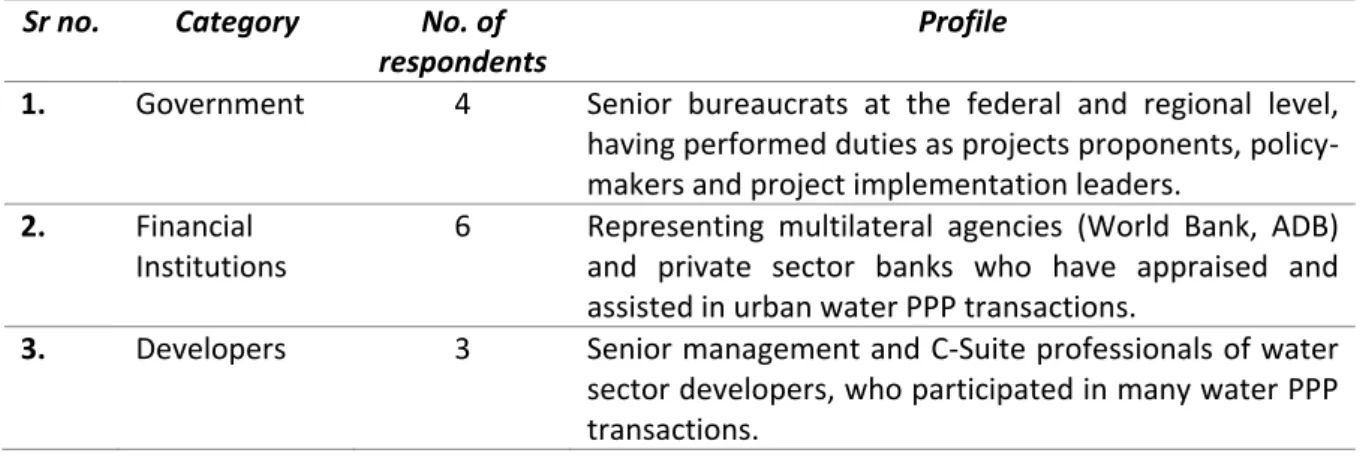
A structured questionnaire was developed to collect empirical data containing pair-wise comparisons amongst these seven factors. Four major stakeholder groups who actively participate in the design, structuring, development, operations and maintenance of water PPP projects are the government, private sector, financial institutions and consultants. Practitioners were identified from each of these groups who were involved in at least two water PPP contracts and have been involved for a significant time in the project concerned so as to have a holistic understanding of the issues. Seven experts each from Government and financial institutions and eight experts each from the developer and consultant groups were identified based on the PPP projects being implemented, and based on interactions during the pilot survey. The questionnaires were sent to these thirty urban water practitioners. Responses were received from twenty-six of them. Five responses were later discarded as they do not meet the consistency levels required by the process. The table below indicates the profile of respondents
Table 3: Profile of Participants
Sr no. Category No. of
respondents
Profile
1. Government 4 Senior bureaucrats at the federal and regional level, having performed duties as projects proponents, policy-makers and project implementation leaders.
2. Financial Institutions
6 Representing multilateral agencies (World Bank, ADB) and private sector banks who have appraised and assisted in urban water PPP transactions.
3. Developers 3 Senior management and C-Suite professionals of water sector developers, who participated in many water PPP transactions.
8
4. Consultants 8 Advised both the government and private sector in water PPP transactions in India. Two of them have worked with the government and in private sector employment as well. They are recognized as thought-leaders in the sector.
The questionnaire is administered on an MS Excel platform, wherein the participants of the survey were asked to indicate which of the attribute is more important than the other, in the context of urban drinking water PPP project in India. As next step, the participants were asked to indicate the degree of importance/dominance of the chosen attribute over the other on a nine-point scale ranging from 1 (equal importance) to 9 (absolute importance). Each participant made 21 pairwise comparisons.
9
Common informal methods of setting priorities include judgements by individuals, prevalent traditions and management preferences. More structured methods include economic evaluations and multi-criteria decision-making processes. Water services, similar to most infrastructure sectors, have a multitude of qualitative parameters that need to be factored in, require the support of a diverse group of stakeholders and rarely offers itself for pure engineering/ logical solutions. A tool that addresses most of the traits and yet provides a rigorous mechanism to evaluate preferences would be suitable for such an analysis. A multi-decision making technique, Analytical Hierarchy Process (AHP) developed by Saaty (Saaty 1980, 2004), provides such an option. Application of AHP has been quite diverse and spread across sectors including transportation, construction and real estate, logistics, infrastructure financing, municipal infrastructure etc. Functional areas that were investigated using AHP include planning, choosing a best option, resource allocations, conflict resolution, risk management etc. (Vaidya and Kumar, 2006)(Li and Zou, 2008) (Zhang and Zou, 2007),(Gupta and Tiwari 2016).) Application of AHP in PPP projects also spread across facets from risk assessment at different stages of project life cycle (Li and Zou, 2008) to evaluating relative importance of various design capabilities in a bidding process (Raisbeck and Tang, 2013)
AHP is used in this research to understand the relative importance that sector experts ascribe to various factors that influence the outcome of urban PPP drinking water projects.
AHP process essentially consists of developing a pairwise comparison matrix, normalizing the same, and obtaining the corresponding rating by averaging each row. Consistency ratio is calculated to assess the coherence of judgements. AHP method’s process and the mathematical premises are given by Saaty (Saaty, 1980).
All the returned questionnaires were checked for their consistency, and weightages of the seven factors were derived from individual responses. Responses of five participants were discarded as their assessed consistency ratio is above 0.1, which is generally not acceptable. In order to arrive at an overall ranking of the seven factors in order of importance, the average of respondent weightings needs to be taken. This average factor has been arrived at in three methods – arithmetical average of aggregated individual weights, the geometric mean of aggregated individual responses, and geometric of weighted (by respective consistency ratio) individual responses.
In the first method, individual analysis of each participant is undertaken, their ranking and weights are determined, and subsequently the weights are averaged to arrive at a cumulative ranking/weightages of factors. In second and third methods, individual responses are geometrically averaged (i.e. to arrive at a cumulative comparison matrix), then priority weights of factors are derived subsequently. As each participant has a different coherence level, measured by consistency ratio, a simple geometric mean does not factor significance of each response. Hence, in the third method, cumulative comparison matrix is developed weighted by the consistency ratio. It is found that all the three methods provided similar results in terms of ranking; though factor priority weights vary marginally.
Results of all three methods are presented for the overall ranking of urban drinking water PPP project factors. Findings from the simple geometric mean (second method) are presented for stakeholder wise analysis.
4. Determinants of PPP Project Performance
Literature review presented broad categories of critical success factors and attributes that affect the performance of PPP projects. These attributes are spread across the entire ecosystem comprising project conceptualization and configuration, institutional strengthening, stakeholder cooperation, the presence of a sound business case, transparent bidding procedures, presence of a regulatory authority and large private sector market. These were grouped into different categories and the same were discussed with a cross section of experts in all stakeholder categories. Based on their feedback, seven factors were identified for further research in the Indian context. The same are set out in the figure below.
10
Figure 2 Seven factors that affect performance of urban water PPP projects in India Consent and support for
water PPP projects
Independent state water sector regulator
Public sector capacities to manage water PPP
contracts
Water Tariffs based on economic principles
Realistic baseline information and service
delivery standards Well-developed market
for water services
• Political will and buy-in at various stages of project implementation,
• Citizen group(s) support and appreciation of PPPs
• Mutual trust and collaborative attitude between contracting parties
• Cross functional team with requisite experience and skills
• Institutional structures for enabling decision making / enforcement
• Insulation from Government control
• Effective planning, monitoring/ oversight and enforcement capacity
• Multi-disciplinary team - technical, managerial, legal skills
• Institutionalizing knowledge and experience gained
• Balance principles of access with equity and environmental concerns
• Acceptable to both public and political leaders
• Incentivize efficient use
• Updated baseline information on water assets and users, GIS maps
• Establishing service standards based on mutual consent of contracting parties
• Transparent and publicly accessible Information for tracking service standards
• Adequate number of private players
• Credible firms with relevant/ demonstrated experience
• Understanding PPP models and willingness to perform under such frameworks
Appropriate project structure for water PPP
transaction
• Attractive revenue model and business case
• Equitable Risk allocation
11
Stakeholder consent and support for water PPP projects encompasses the relationship between different categories of project participants - political representatives and parties, user and citizen groups and contracting parties (project proponents and private sector operator). Water sector project configurations including the technical design, financial and implementation structure take longer time frames. India has a three-tier governing system with the federal government, state government and urban local bodies forming the three layers. Each of the layers has a directly elected political representative – Members of Parliament, Members of Legislative Assembly and Ward level corporators respectively. In addition, there are indirectly elected/nominated political representatives. It is noticed in many instances that political stakeholders (such as ward level corporators, members of the legislative assembly, and members of Parliament/federal government, etc.) who were part of project decisions or were consulted during various project stages, were no longer present during the subsequent stages of project implementation, as newer representatives are elected. This would lead to a situation of renewed efforts to gather their buy-in. Support of such stakeholders through the project lifecycle is seen as one of the factors of PPP project success. Citizen groups, though are consulted during project design stage, play an active role in Indian water PPP projects during project construction/ rehabilitation, operations and maintenance stages. Their understanding of the project concept and their concurrence to a particular format is an important facet of sustainable operations. Project activities and subsequent documents reflect the sharing of roles and responsibilities of contracting agencies and is perceived to be integral to stakeholder support ecosystem.
Having an independent state water sector regulator, with appropriate team and structure emerges as one of the factors that can affect project performance. India has independent regulators in other infrastructure sectors such as telecom, energy and airport, but do not have regulators in the water sector. Water, being a concurrent subject under the Constitution of India, and with the responsibility for the provision of services vesting with urban local bodies, in accordance with 74th Amendment, regulators may need to be regional. It is expected that such regulators, when formed, would be at state level and not with every urban local body. Regulatory team is expected to be isolated from the functioning of government and has cross-functional capabilities to take appropriate decisions and enforce implementation of the same.
Sustainable PPP project operations depend on the breadth and depth of private sector market for water services. The system is to be characterized by the presence of a number of players with relevant financial and technical experiences that have been demonstrated in other geographical markets. With a wide range of PPP formats (that have different contractual structures, configurations and documents) being implemented in India, ability of private sector to understand nuances of different formats, and their willingness to perform under such frameworks characterize the maturity of private sector water market. Government being the project proponent in infrastructure sectors, its ability to plan, design, finance, execute and maintain assets or deliver services becomes important when undertaking PPP projects. As their role in PPP projects morph into a policy making, planning and regulatory body (Supply et al., 2011), they would require better monitoring/ oversight and enforcement capacity.. The presence of a multi-disciplinary team (having technical, managerial, commercial and legal capabilities) and to transfer the knowledge/experience gained through institutional mechanisms is seen as a factor of PPP project performance.
Most water assets are typically buried under the ground; many Indian cities do not have updated information on the extent and condition of such assets. Management information systems are quite rudimentary in capturing and communicating service standards, asset information. Realistic and reliable baseline information about water system on generally used information technology platforms is required for planning of any new projects and to operate and maintain the existing system. Indian cities are known to have manual cadastral maps, which are not updated real time. It is anecdotally mentioned that the person who knows most about the system (connections, size, and type of pipelines, the condition of
12
the same) is the valve operator of each area! The presence of a system that can track such information in a transparent manner, and make that accessible to the public is seen as a determinant for assessing the right costs and managing stakeholders.
The primary objection to water PPPs arises due to the apprehension of increasing tariffs, post a private operator takes over the system. Business models of most projects hinge on user charges and buoyancy in taxation system including user charges. Most cities/ parastatal agencies that manage water services in the country have set tariffs to recover the operations and management expenses; it is assumed that government would finance capital expenditure. However, when projects are offered to the private sector, capital costs (if incurred by the private sector- for instance under a build, operate and transfer (BOT) or a concession contract) needs to be recouped, either from governmental sources or an increase in tariffs. A tariff system that balances principle of access with equity and environmental concerns, which is generally acceptable to contacting and non-contacting stakeholders viz. political leaders and citizen groups and that incentivizes efficient use is perceived to affect PPP project performance. Project development and the culmination of various preparatory activities into an executed contract are based on configuring an appropriate project structure. This framework encompasses all the elements of the project scope across the lifecycle, addresses risks in an equitable manner, provides for an acceptable revenue model and business case, and operates within the prevalent legal and contractual framework. Project structure, customized for the local context, is seen as one of the key factors of PPP project success.
Together these seven factors provide a comprehensive insight into the overall project performance. 5. Survey Findings
Based on the AHP outputs, the ranking of the seven factors in descending order is as follows: a. Stakeholder consent and support for water PPP project
b. Appropriate project structure for water PPP transaction c. Realistic baseline information and service delivery standards d. Water tariffs based on economic principles
e. Public sector capacities to manage water PPP contacts f. Well-developed market for water services
g. Independent state water sector regulator
The following figure presents the factors, and the relative weights arrived under the three methods - the arithmetic mean, geometric mean and modified geometric mean. It is found that all the three methods arrive at a similar ranking scale, indicating the robustness of the exercise.
13
As a group, the water sector practitioners indicate that obtaining stakeholder support to a project at all stages is vital to the success of PPP frameworks. “role of the community is limited as it may be difficult to involve them during the governance or monitoring of the projects, however they must be a part of the entire project governance” (Athena Infonomics, 2012). Numerous projects in the county have run into difficulties due to the opposition from different stakeholders, many times, at different points in time, and hence in different stages of project implementation. Lack of stakeholder support had led to many face offs in Indian water PPP projects. A fair campaign followed by involving stakeholders in project control and evaluation helps mitigate potential opposition.
Configuring an appropriate project structure scored as the second most important factor. This factor consists of all roles, responsibilities and risk mitigation measures distributed between the public and private partners.. “A profitable water supply project is a prerequisite for a candidate project to be successfully executed as a PPP project (Chan, Albert P.C.Ameyaw, 2016). “Failure or success of securing private finance is dependent on fair risk allocation and a sound contractual structure” (Wang et al.,
2000). The business model that is adopted, transaction process that is undertaken, the participation of private sector and successful conclusion of the agreement are essential elements of project structure. Lack of information severely hampers decision-making ability and forces stakeholders to become risk averse. Consequently, either the parties will “price” the risk or withdraw from the transaction. “High risk of asset condition uncertainty given that approximately 80 per cent of water systems are fixed underground” (Infrastructure Canada, 2004). Having a reliable baseline information, and having a knowledge of pre-determined, measurable service standards will enable the stakeholders to make a realistic assessment of their roles and responsibilities. Clarity in information and expectation would ensure more informed participation and as a corollary, sustainable project performance.
21.0% 17.2% 16.3% 14.2% 12.6% 10.3% 8.3% 22.1% 17.4% 16.2% 13.9% 13.0% 9.5% 7.9% 22.7% 17.4% 16.5% 13.9% 12.8% 9.2% 7.5% 0.0% 5.0% 10.0% 15.0% 20.0% 25.0% STAKEHOLDER CONSENT PROJECT STRUCTURE BASELINE INFORMATION WATER TARIFFS PUBLIC SECTOR CAPACITY WELL-DEVELOPED MARKET WATER SECTOR REGULATOR
Overall Ranking and Weights
14
Water tariffs being set on economic principles emerges as the fourth important factor. This has been the primary source of discontentment and opposition to the PPP process in the water sector. Apart from the asymmetries and inequalities that exist in the citizen groups, increasing water charges has been a sensitive point of discussion. While this factor overlaps with project structure, this has been a bone of contention between societal groups and project proponents. In India, configuring a PPP project with implicit tariff increase is not common. Various alternative fixed and performance payment mechanisms are being configured for private sector, so as to minimize the tariff risk.
Public sector capacity to manage water PPP contracts appears in the bottom half of the factors ranking. “Research (Chan, Albert P.C.Ameyaw, 2016) has often criticized the experience and competence of public partners in PPP procurements, prompting Carrillo et al. (2008) to suggest that governments must design and implement capacity building programmes to enhance public sector skills and knowledge to manage PPP projects”(Chan, Albert P.C.Ameyaw, 2016). Ensuring the commitment and support of stakeholders and configuring structures would entail capacity augmentation of the public sector. While public sector do engage consultants to assist in configuration, increased capacity augments decision making process.
The participants have ranked well-developed markets for water services and independent state water regulatory at the bottom amongst the seven factors studied. In India, water regulation is being debated, as currently very few privately operated projects (in relation to the number of cities) are present. One school of thought is to set up regulators once a critical mass of projects under PPP frameworks come into existence (provision of drinking water falls under the ambit of third tier of government, whose operational jurisdiction is with the respective state government. Hence the challenge in having a unified central overseeing authority); else the regulator would primarily be monitoring a government agency. Regulation of technical standards is undertaken through central statutory agencies, while regulation of project features is being practised through the contract entered between public and private developers. The presence of a strong private sector water market is also not considered very important, as rest of factors would provide a fillip to private sector development. The private sector in India comprises national players, international operators with Indian subsidiaries and joint ventures between the two for project specific opportunities. Given the opportunities available and expansion plans of most private sector operators, it is assumed that private sector would participate if other factors are addressed, and this is not seen as a constraint for success of PPP projects.
The table below sets out the relative importance attached to various factors. Table 4: Overall Ranking and Relative Weights Rank Relative weight
(%)
Ratio (to least ranked factor)
Stakeholders consent 1 22.1 2.80
Project structure 2 17.4 2.20
Baseline information 3 16.2 2.06
Water tariffs 4 13.9 1.77
Public sector capacity 5 13.0 1.65
Well-developed market 6 9.5 1.21 Water sector regulator 7 7.9 1.00
Stakeholder consent and support is found to be important by a significant margin from the rest of the factors. Appropriate project structure and realistic baseline information are grouped closer, so are water
15
tariffs and public sector capacities. Similarly, the two least important among the research set of factors are bunched closer.
The output indicates that practitioners perceive a significant difference between various factors. 6. Stakeholder-wise analysis
The table sets out stakeholder-wise findings of the research. Consistency ratio of each stakeholder and relative weights of each factor are provided.
16
Table 5: Stakeholder wise Responses
Sr. no . Respondents Cons isten cy Ratio Stakeholder consent Water sector regulator Well-developed market Public sector capacity Baseline information Water tariffs Project structure Government 1 G1 0.09 12.5 6.1 13.8 8.5 23.3 15.6 20.2 2 G2 0.09 11.1 3.4 6.2 17.1 33.4 12.4 16.4 3 G3 0.09 30.6 2.4 22.6 5.7 17.1 9.2 12.4 4 G4 0.05 17.7 14.4 23.4 12.8 8.9 16.9 5.9 Financial Institutions 5 F1 0.1 30.8 5.2 9.6 4.8 8.6 36.7 4.3 6 F2 0.09 10.9 4.9 5.8 13.1 9.9 38.6 16.8 7 F3 0.02 21.0 10.7 5.8 18.2 14.8 6.4 23.1 8 F4 0.09 23.8 9.5 2.5 6.4 17.3 21.9 18.6 9 F5 0.1 17.8 11.6 14.6 14.3 26.2 5.5 10.0 10 F6 0.02 25.6 10.1 4.0 15.5 2.6 6.2 36.0 Developers 11 D1 0.1 26.6 10.3 15.1 16.5 6.7 6.5 18.3 12 D2 0.08 19.8 6.9 7.3 19.1 18.6 10.7 17.6 13 D3 0.08 23.7 22.2 2.6 12.7 10.9 5.9 22.0 Consultants 14 C1 0.09 10.8 10.8 10.8 10.8 10.8 10.8 10.8 15 C2 0.02 9.2 3.7 16.5 20.3 19.8 7.2 23.3 16 C3 0.02 35.9 4.7 3.1 23.0 15.3 7.3 10.7 17 C4 0.1 11.4 15.3 5.6 8.6 21.0 14.1 24.0 18 C5 0.02 31.0 3.5 19.9 5.3 8.2 12.2 19.9 19 C6 0.1 40.8 3.5 8.4 6.1 24.4 13.6 3.2 20 C7 0.02 12.2 4.4 8.9 10.2 22.0 12.8 29.5 21 C8 0.05 18.8 5.8 13.4 13.4 8.7 22.1 17.8
17
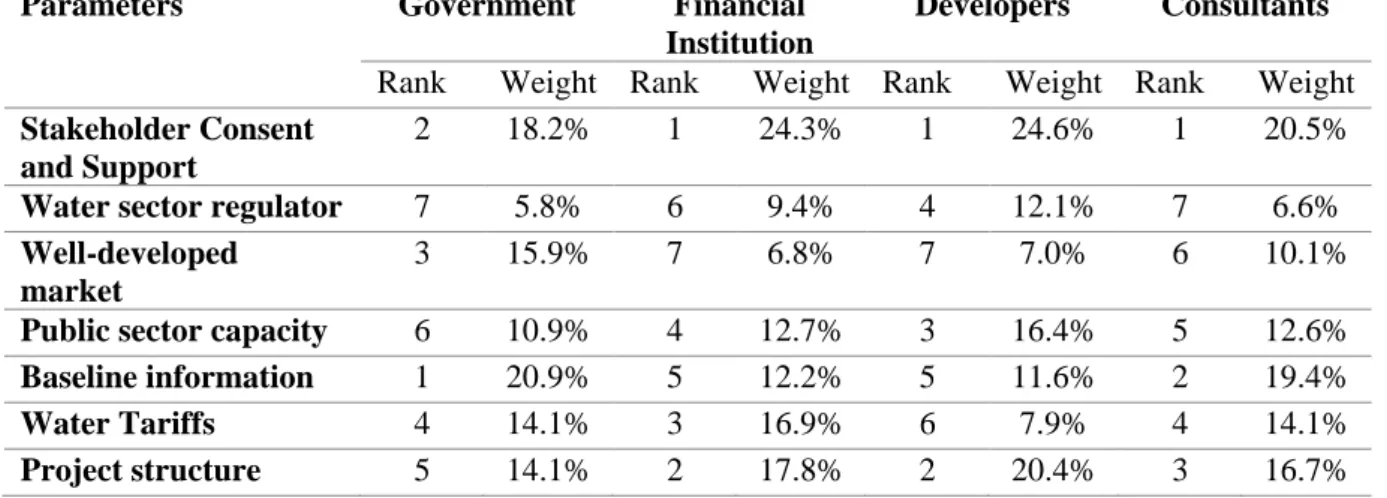
Ranks of various factors as indicated by the particular shareholder group and the relative weights of the respective factors are presented.
Table 6: Stakeholder wise Ranking and Relative Weights
Parameters Government Financial
Institution
Developers Consultants Rank Weight Rank Weight Rank Weight Rank Weight Stakeholder Consent
and Support
2 18.2% 1 24.3% 1 24.6% 1 20.5%
Water sector regulator 7 5.8% 6 9.4% 4 12.1% 7 6.6%
Well-developed market
3 15.9% 7 6.8% 7 7.0% 6 10.1%
Public sector capacity 6 10.9% 4 12.7% 3 16.4% 5 12.6%
Baseline information 1 20.9% 5 12.2% 5 11.6% 2 19.4%
Water Tariffs 4 14.1% 3 16.9% 6 7.9% 4 14.1%
Project structure 5 14.1% 2 17.8% 2 20.4% 3 16.7%
Stakeholder support and consent has been viewed as the most important factor by all stakeholder groups, except government stakeholders, who consider reliable baseline information as the most important factor. The adoption of PPPs in Indian infrastructure sector was low till the early 2000s, then rapidly grew at euphoric pace till late 2000s. The economic slowdown, coupled with country-specific issues in terms of delays in land acquisition, permits and clearances, over-leveraging by the private sector and consequent stress on financial institutions have resulted in a growing mistrust between government and the private sector. Government and private sector have been extremely risk-averse leading to a very negligible number of projects being developed in the recent past. It is widely acknowledged that there is a need for the more cohesive functioning of parties, for the sector to revive and revitalize. This explains the importance attached to stakeholder consent and support.
Government players, however, perceive that they are not entirely to be blamed for the current imbroglio in India. There is an effort to get ecosystem back on track; as part of the same governments are attempting to improve data availability for better decision making. The result of this research exercise is in consonance with such view. Government, stakeholders, however, consider stakeholder consent and support as a second most important factor.
Government stakeholders perceived the relative importance of rest of the factors quite differently from the other three stakeholder groups. The well-developed private sector, which private sector considers not-so-important, emerges as third-most important one for the government. With a limited number of participants in most tenders for projects based on PPP framework (of late the number of financial bids received are typically between one or two in most projects), government stakeholders are justified in assuming that private sector market is not deep/mature enough. In contrast, private sector perceives that the projects are not structured appropriately with most of the risks being passed on to them, leading to their non-participation in tenders. This explains their rating of project structure at second rank, and their market strength as a least important factor.
Private sector, however, considers that government stakeholders need sufficient capacity and ranks the public sector capacity as relatively important. Government stakeholders do not consider this aspect important enough.
18
Realistic water tariffs emerge as the third/fourth most important parameter for all stakeholder groups except developer group. Government, financial institutions and consultants appear to be concerned about citizen opposition (or from political representatives), while developers would have factored that in project structure. Recent transactions in water PPPs do not pass on tariff risk to the private sector, rather retain the same with Government project proponent. The private sector is paid on performance benchmarks, typically absolute amounts (which are often the bid parameters). This partly explains their perceived lack of importance for water tariffs.
The presence of water sector regulator is perceived in a similar fashion by the stakeholder groups— except the developer group which considered that parameter to be moderately important, other stakeholder groups consider this factor not so relevant. Regulatory experiences in the Indian context are considered positive by the private sector, as they are no longer dependent on political and bureaucratic favours, rather have a body to air their concerns in a logical manner.
The perception of government and consultant groups appears to be similar barring one parameter (well-developed market), as they tend to work together in most transactions. Similarly, financial institutions and private sector rankings appear to be similar barring their perception on water tariffs. It is to be noted that financial institutions also include multilateral agencies who do not directly finance private sector. All the stakeholder groups have indicated a significant (almost three-fold) difference between the respective most important and least important factors. In all the groups, the top rated factor is perceived to be significantly important than the second most important factor. The weightage for the least important is less ranging between 5.8% and 7%. The category wise analysis indicates the similarities and the differences amongst the various stakeholder groups. This also sets out elements where the group can function together and in which factors their motivations need to be differently handled.
7. Limitations
Water sector in India is evolving and has not reached a mature stage, as is evident by a limited number of PPP projects attempted in relation to other sectors. Moreover, no particular PPP format has found widespread acceptance, and cities continue to experiment with a diverse range of contractual options. With the number and scale of Indian cities, many such projects are expected to be implemented. This exercise could be undertaken periodically and updated in relation to experiences in other infrastructure sectors. The process adopted for the research (multi criteria decision making tool – AHP) aims to quantify human views in a structured manner. AHP does not always provide an accurate assessment due to the manner in which pairwise comparison are made and alternatives evaluated. In situations when an alternative that is similar to another alternative is present, it is observed that there could be an implicit rank reversal (Belton and Gear, 1983) (Dyer, 1990) (Ishizaka and Labib, 2009). In order to overcome the limitations of the original AHP method, many improvements have been suggested by researchers such as Fuzzy AHP method.
8. Conclusion
This research provides a basis for understanding the factors that affect the performance of PPPs projects in urban drinking water sector in India. It is found that stakeholder consent and support for water PPP projects (22.1%), appropriate project structure (17.4%), availability of realistic baseline information (16.2%) and reasonable water tariffs (13.9%) emerge as top four factors for successful project implementation in the Indian context. There are differences amongst perception of various stakeholder groups. While government stakeholders consider the availability of baseline information as crucial for
19
developing projects, all the other three stakeholder groups consider that stakeholder consent and support as the most important parameter. The presence of well-developed market and independent regulator are perceived to be the least important amongst the factors investigated. The findings provide and insight into how the overall ranking of the factors look like and the difference amongst various stakeholders. Factors identified for this research converges with the extant literature for PPPs in general, while highlighting the nuances of relative importance in the Indian context. A sector / geographic specific factor that is prominent is the availability of realistic baseline information, which is a challenge in many developing countries. This impacts project planning and structuring significantly, and can lead to potential disputes (water PPP in Mysore, a city in South India is a case in point wherein there is a huge difference in project pipeline data pre and post award of PPP project). Another factor that is considered important in international context, but received lower weightage is the need for a water regulator. Project stakeholders seemed to have adjusted to regulation through contract for many infrastructure sectors in India and do not perceive this as an additional challenge.
Relative importance of factors in water sector do not align with that of other infrastructure sectors in India. For instance in many infrastructure sectors particularly in highways sector, factors that seem to matter most are delays in land acquisitions, clearances (public sector capacity), risk sharing, project structure and contract renegotiations (Kelkar, 2015) (Iyer and Sagheer, 2010). This indicates that sector specific variations need to be considered while planning for projects.
There is limited specific research on relative merits of PPPs in water sector and those managed by state owned enterprises in India. However, the extant literature and the survey feedback do not point out any major factor that impede the conventional government sponsored implementation method, though the inefficiencies in terms of sub optimal performance in relation to best in class performance remains (Ministry of Urban Development, 2011).
These inputs would be relevant to the policy makers in configuring better projects that meet the aspirations of all stakeholder groups.
References
Ahluwalia, I. (2011), “High Powered expert committee report on estimating the investment requirements for Urban Infrastructure services”, World, p. 284.
Ameyaw, E.E. and Chan, A.P.C. (2013), “Identifying public-private partnership (PPP) risks in managing water supply projects in Ghana”, Journal of Facilities Management, Vol. 11 No. 2, pp. 152–182.
Athena Infonomics. (2012), “Public Private Partnerships in India: Lessons from Experiences”, pp. 1– 24.
Belton, V. and Gear, T. (1983), “On a short-coming of Saaty’s method of analytic hierarchies”,
Omega, Vol. 11 No. 3, pp. 228–230.
Carnis, L. and Yuliawati, E. (2013), “Nusantara: Between sky and earth could the PPP be the solution for Indonesian airport infrastructures?”, Case Studies on Transport Policy, Vol. 1 No. 1-2, pp. 18–26.
Casarin, A.A., Delfino, J.A. and Delfino, M.E. (2007), “Failures in water reform: Lessons from the Buenos Aires’s concession”, Utilities Policy, Vol. 15 No. 4, pp. 234–247.
Chan, Albert P.C.Ameyaw, E.E. (2016), Critical Success Factors for Public-Private Partnership in Water Supply Projects, Facilities, Vol. 34, available at:https://doi.org/10.1108/F-04-2014-0034. Chan, A.P.C., Lam, P.T.I., Chan, D.W.M., Cheung, E. and Ke, Y. (2010), “Critical Success Factors
20
for PPPs in Infrastructure Developments: Chinese Perspective”, Journal of Construction Engineering and Management, Vol. 136 No. May, pp. 484–494.
Chen, C. and Doloi, H. (2008), “BOT application in China: Driving and impeding factors”,
International Journal of Project Management, Vol. 26 No. 4, pp. 388–398.
Chou, J.S., Ping Tserng, H., Lin, C. and Yeh, C.P. (2012), “Critical factors and risk allocation for PPP policy: Comparison between HSR and general infrastructure projects”, Transport Policy, Vol. 22, pp. 36–48.
Chowdhury, a N., Chen, P.-H. and Tiong, R.L.K. (2011), “Analysing the structure of public-private partnership projects using network theory”, Construction Management and Economics, Vol. 29 No. 3, pp. 247–260.
Christie, M. (2000), “Implementation of Realism in Case Study Research Methodology Authors”,
International Council for Small Business Annual Conference Brisbane Australia Retrieved April, Vol. 2, pp. 1–36.
Dyer, J.S. (1990), “Remarks on the Analytic Hierarchy Process”, Management Science, Vol. 36 No. 3, pp. 249–258.
Economic Survey. (2015), “Eco Survey Annexures1-22.Pdf”.
Farquharson, E., Encinas, J., Yescombe, E.R. and Torres de Mästle, C. (2011), How to Engage with the Private Sector in Public-Private Partnerships in Emerging Markets, World Bank
Publications, available at:https://doi.org/10.1596/978-0-8213-7863-2.
Gassner, K., Popov, A. and Pushak, N. (2009), “Does Private Sector Participation Improve Performance in Electricity and Water Distribution?”, Trends and Policy Options, available at:https://doi.org/10.1596/978-0-8213-7715-4.
Gopakumar, G. (2010), “Transforming water supply regimes in India: Do public-private partnerships have a role to play?”, Water Alternatives, Vol. 3 No. 3, pp. 492–511.
Grimsey, D. and Lewis, M.K. (2002), “Evaluating the risks of public private partnerships for infrastructure projects”, International Journal of Project Management, Vol. 20 No. 2, pp. 107– 118.
Guasch, J.L., Laffont, J.J. and Straub, S. (2008), “Renegotiation of concession contracts in Latin America. Evidence from the water and transport sectors”, International Journal of Industrial Organization, Vol. 26 No. 2, pp. 421–442.
Guasch, J.L. and Straub, S. (2006), “Renegotiation of infrastructure concessions: An overview”,
Annals of Public and Cooperative Economics, Vol. 77 No. 4, pp. 479–493.
Gupta, A. and Tiwari, P. (2016), “Investment risk scoring model for commercial properties in India”,
Journal of Property Investment & Finance, Vol. 34 No. 2, pp. 156–171.
Hall, D., Lobina, E. and Motte, R. (2005), “Public resistance to privatisation in water and energy”,
Development in Practice, Vol. 15 No. 3, pp. 286–301.
Hardcastle, C., Edwards, P.J., Akintoye, A.and Li, B. (2005), “Critical Success Factors for Ppp / Pfi Projects in the Uk Construction Industry : a Factor Analysis Approach”, Construction
Management and Economics, Vol. 23 No. 5, pp. 459–471.
Hwang, B.G., Zhao, X. and Gay, M.J.S. (2013), “Public private partnership projects in Singapore: Factors, critical risks and preferred risk allocation from the perspective of contractors”,
International Journal of Project Management, Elsevier Ltd and IPMA, Vol. 31 No. 3, pp. 424– 433.
21 Development”.
Ishizaka, A. and Labib, A. (2009), “Analytic Hierarchy Process and Expert Choice: Benefits and limitations”, OR Insight, Vol. 22 No. 4, pp. 201–220.
Iyer, K.C. and Sagheer, M. (2010), “Hierarchical Structuring of PPP Risks Using Interpretative Structural Modeling”, Journal of Construction Engineering and Management, Vol. 136 No. 2, pp. 151–159.
Jamali, D. (2004a), “Success and failure mechanisms of public private partnerships (PPPs) in developing countries”, International Journal of Public Sector Management, Vol. 17 No. 5, pp. 414–430.
Jamali, D. (2004b), “A Public-Private Partnership in the Lebanese Telecommunications Industry. Critical Success Factors and Policy Lessons”, Public Works Management & Policy, Vol. 9 No. 2, pp. 103–119.
Jepsen, A.L. and Eskerod, P. (2009), “Stakeholder analysis in projects: Challenges in using current guidelines in the real world”, International Journal of Project Management, Vol. 27 No. 4, pp. 335–343.
Johnston, J. (2010), “Examining ‘tunnel vision’ in Australian PPPs: Rationales, rhetoric, risks and ‘rogues’”, Australian Journal of Public Administration, Vol. 69 No. SUPPL. 1.
Kayaga, S. (2008), “Public–private delivery of urban water services in Africa”, Proceedings of the ICE - Management, Procurement and Law, Vol. 161 No. 4, pp. 147–155.
Kelkar, D.V. (2015), “Report of the Committee on Revisiting and Revitalising Public Private Partnership model of Infrastructure”, p. 83.
Li, B., Akintoye, A., Edwards, P.J. and Hardcastle, C. (2005), “Critical success factors for PPP/PFI projects in the UK construction industry”, Construction Management and Economics, Vol. 23 No. 5, p. 13.
Li, J. and Zou, P.X.W. (2008), “Risk identification and assessment in PPP infrastructure projects using fuzzy analytical hierarchy process and life-cycle methodology”, Australasian Journal of Construction Economics and Building, Vol. 8 No. 1, pp. 1–15.
Liu, J., Love, P.E.D., Smith, J., Regan, M. and Sutrisna, M. (2014), “Public-Private Partnerships: a review of theory and practice of performance measurement”, International Journal of
Productivity and Performance Management, Vol. 63 No. 4, pp. 499–512.
Mahalingam, A. (2010), “PPP Experiences in Indian Cities: Barriers, Enablers, and the Way
Forward”, Journal of Construction Engineering and Management, Vol. 136 No. 4, pp. 419–429. Mallak, L.A., Patzak, G.R. and Kurstedt, H.A. (1991), “Satisfying stakeholders for successful project
management”, Computers and Industrial Engineering, Vol. 21 No. 1-4, pp. 429–433.
Marin, P. (2009), Public-Private Partnerships for Urban Water Utilities A Review of Experiences in. McKinsey. (2010), India ’ S Urban Awakening : Building Inclusive Cities , Sustaining Economic
Growth, Urban.
Ménard, C. and Peeroo, A. (2011), “Liberalization in the Water Sector : Three leading models”,
Handbook of Liberalization, Rolf Kunneke and Matthias Finger, pp. 310–327.
Meng, X., Zhao, Q. and Shen, Q. (2011), “Critical Success Factors for Transfer-Operate-Transfer Urban Water Supply Projects in China”, Journal of Management in Engineering, Vol. 27 No. October, pp. 243–251.
22
and Stakeholder Perspectives.”, Journal of General Management, Vol. 25 No. 3, pp. 79–93. Ministry of Urban Development, G. (2011), Summary of SLB Indicators.
Parker, D. and Kirkpatrick, C. (2005), “Privatisation in Developing Countries: A Review of the Evidence and the Policy Lessons”, Journal of Development Studies, Vol. 41 No. 4, pp. 513–541. Planning Commission GoI. (2012), “The Planning Commission Approach to the 12 th Plan The
Challenges of Urbanization in India”, Planning Commission GoI, pp. 1–4.
Pongsiri, N. (2002), “Regulation and public‐private partnerships”, International Journal of Public Sector Management, Vol. 15 No. 6, pp. 487–495.
Raisbeck, P., Duffield, C. and Xu, M. (2010), “Comparative performance of PPPs and traditional procurement in Australia”, Construction Management and Economics, Vol. 28 No. 4, pp. 345– 359.
Raisbeck, P. and Tang, L.C.M. (2013), “Identifying design development factors in Australian PPP projects using an AHP framework”, Construction Management and Economics, Vol. 31 No. 1, pp. 20–39.
Saaty, T.L. (1980), “The Analytic Hierarchy Process”, Education, pp. 1–11.
Saaty, T.L. (2004), “Decision making — the Analytic Hierarchy and Network Processes
(AHP/ANP)”, Journal of Systems Science and Systems Engineering, Vol. 13 No. 1, pp. 1–35. Samii, R., Van Wassenhove, L.N. and Bhattacharya, S. (2002), “An innovative public-private
partnership: New approach to development”, World Development, Vol. 30 No. 6, pp. 991–1008. Shah, M. (2016), “A 21st Century Institutional Architecture for India ’ s Water Reforms Report
submitted by the Committee on Restructuring the CWC and CGWB Table of Contents”, No. July, available at:
http://wrmin.nic.in/writereaddata/Report_on_Restructuring_CWC_CGWB.pdf.
Spackman, M. (2002), “Public-private partnership: Lessons from the British approach”, Economic Systems, Vol. 26 No. 3, pp. 283–301.
Supply, U.W., Project, M., Urban, F. and Utilities, W. (2011), “The World Bank Urban Water Supply and Sanitation Report on Service Delivery Institutional Options”, No. November.
Swaroop, A. (2011), “Trends in Private Sector Participation in the Indian Water Sector : A Critical Review”, No. September, pp. 1–16.
Tiwari, P., Nair, R., Rao, J., Ankinapalli, P., Hingorani, P. and Gulati, M. (2015), “India ’ s Reluctant Urbanization”.
United nation. (2005), “The Millenium Development Goals Report 2005”, United Nations, p. 32. United Nations. (2014), World Urbanization Prospects: The 2014 Revision, Highlights
(ST/ESA/SER.A/352), New York, United, available at:https://doi.org/10.4054/DemRes.2005.12.9. Vaidya, O.S. and Kumar, S. (2006), “Analytic hierarchy process: An overview of applications”,
European Journal of Operational Research, Vol. 169 No. 1, pp. 1–29.
Wang, S.Q., Tiong, R.L.K., Ting, S.K. and Ashley, D. (2000), “Evaluation and management of foreign exchange and revenue risks in China’s BOT projects”, Construction Management and Economics, Vol. 18 No. 2, pp. 197–207.
Water Resources Group. (2009), “Charting Our Water Future”, Water, Vol. June No. 3, pp. 1–32. World Bank. (2014), “Running Water in India’s Cities: A Review of Five Recent Public-Private
23
Zhang, G.. b and Zou, P.X.W.. (2007), “Fuzzy analytical hierarchy process risk assessment approach for joint venture construction projects in China”, Journal of Construction Engineering and Management, Vol. 133 No. 10, pp. 771–779.
Zhang, X. (2005), “Critical Success Factors for Public–Private Partnerships in Infrastructure Development”, Journal of Construction Engineering and Management, No. 131, p. 12.