Acta Universitatis Ag riculturae Sueciae
Doctoral Thesis No. 2020:66
Faculty of Landscape Architecture, Horticulture
and Crop Production Science
Julia Darlison
Microbial community dynamics
Microbial community dynamics in the
phyllosphere of leafy vegetables
Julia Darlison
Faculty of Landscape Architecture, Horticulture and Crop Production Science
Department of Biosystems and Technology Alnarp
Acta Universitatis agriculturae Sueciae 2020:66
Cover: Illustrations by Julia Darlison, graphic design by Olof Lindén and Julia Fors
ISSN 1652-6880
ISBN (print version) 978-91-7760-650-5 ISBN (electronic version) 978-91-7760-651-2
© 2020 Julia Darlison, Swedish University of Agricultural Sciences Alnarp
Abstract
Microbes interact with the phyllosphere creating a plant microbiota holobiont. From a food safety aspect the phyllosphere is especially important in leafy vegetables which are generally consumed raw. Plant-microbe interactions are complex, but well-known ecological concepts can be applied to explain the dynamics.
The microbial communities in the phyllosphere of spinach, rocket and Swiss chard were studied in field and greenhouse studies in this thesis. We examined the impact of nitrogen fertiliser application to plants on the microbiota in the phyllosphere. The influence of nitrogen fertiliser on establishment of an invading human pathogen, Escherichia coli O157:H7 gfp+ and the role of the plant species and plant cultivar were investigated. We explored the succession of microbial communities on leafy vegetables. To identify the microbial communities, culture-independent methods (Illumina MiSeq after DNA extraction from the leaf surface) and culture dependent methods (viable count and identification of bacterial isolates with 16S rRNA sequencing) were used in combination with plant physiological measurements and weather monitoring.
Plant species, environmental factors and annual variations had selective effects on the microbial communities in the phyllosphere. Increasing nitrogen supply reduced microbial diversity, as did harvesting the leaves. The concept of prevention of invasion by high diversity was not confirmed for bacterial communities in the phyllosphere. Phyllosphere microorganisms are also of interest for possibly developing new efficient and sustainable methods in agriculture and horticulture, however, before microbiomes can be exploited, more knowledge is needed about how plants and microbes interact with the environment, management and post-harvest procedures.
Keywords: phyllosphere, microbiome, microbial community, metagenomics, food safety, E. coli O157:H7 gfp+, leafy vegetables, nitrogen fertiliser, ecology concepts Author’s address: Julia Darlison, Swedish University of Agricultural Sciences, Department of Biosystems and Technology, PO Box 103, 230 53 Alnarp, Sweden
Microbial community dynamics in the
phyllosphere of leafy vegetables
Abstract
Mikroorganismer interagerar med fyllosfären och skapar en så kallad holobiont, ett uttryck för den gemensamma metaorganism som en växt och dess mikrober utgör. Bladgrönsaker kan kontamineras av humanpatogena bakterier och då de konsumeras råa blir deras fyllosfär viktigt för livsmedelssäkerheten. Mikroorganismer från fyllosfären kan möjligen användas för att utveckla nya effektiva och hållbara metoder för växtodling. Samspelet mellan växter och mikroorganismer som förekommer naturligt är komplext, men i den här avhandlingen används välkända ekologiska koncept för att klargöra dynamiken hos de mikrobiella samhällena.
Mikrobiella samhällen i fyllosfären av spenat, rucola och mangold studerades i fält och i växthus. Vi undersökte effekten på mikrobiomet och på etableringen av en humanpatogen, Escherichia coli O157:H7 gfp+ av en ökande kvävegödselgiva. Växtartens och växtsortens roll samt successionen av mikrobiella samhällen på bladgrönsaker granskades. Molekylära (Illumina Miseq efter extrahering av DNA från bladytan), mikrobiologiska metoder (viable count, identifiering av bakteriella isolat med 16S rRNA gensekvensering) i kombination med växtfysiologiska mätningar och väderdata användes för att studera mikroorganismerna.
Växtslaget, växtplatsen samt årlig variation hade en selektiv effekt på de mikrobiella samhällena i fyllosfären. Stigande kvävegödselgiva och skörd av bladen var faktorer med stor negativ inverkan på den mikrobiella mångfalden. Att en hög mångfald förhindrar etableringen av en invaderande mikroorganism kunde inte bekräftas för de bakteriella samhällena i fyllosfären. För att kunna utnyttja mikrobiomet inom växtodling måste vi veta mer om hur växten och dess mikrober påverkas av miljön, odlingsbetingelser och efterskördshantering.
Keywords: fyllosfär, mikrobiom, metagenomik, livsmedelssäkerhet, E. coli
O157:H7 gfp+, bladgrönsaker, kvävegödsel, ekologikoncept
Author’s address: Julia Darlison, Swedish University of Agricultural Sciences, Department of Biosystems and Technology, PO Box 103, 230 53 Alnarp, Sweden
Dynamiken hos mikrobiella samhällen i
bladgrönsakers fyllosfär
To Alexander and Arthur.
Dedication
List of publications ... 11
Abbreviations ... 13
1. Introduction ... 15
2. Background ... 17
2.1 Dynamics in microbial community composition ... 17
2.1.1 Microbial communities associated with plants ... 18
2.1.2 The phyllosphere as a microbial habitat ... 19
2.2 Food safety with regard to leafy vegetables ... 20
2.3 Factors influencing microbiota along the horticultural value chain 21 2.3.1 Crop ... 21
2.3.2 Preharvest ... 22
2.3.3 Postharvest ... 27
2.4 Procedures for investigating microbial communities associated with the phyllosphere ... 28
2.4.1 Artificial inoculation ... 29
2.4.2 Microbial community analysis ... 29
2.4.3 Calculation and statistical analysis of amplicon sequencing 31 3. Aims and objectives ... 33
4. Materials and methods ... 35
4.1 Experimental sites, plant material and sampling techniques ... 35
4.2 Field experiments with nitrogen fertilizer (Paper I) ... 36
4.3 Escherichia coli O157:H7 gfp+ inoculum preparations (Papers II and III) ... 38
4.3.1 Canopy inoculation of E. coli O157:H7 gfp+ ... 38
4.4 Greenhouse experiment with plant cultivar and inoculation with E.
coli O157:H7 gfp+ (Paper II) ... 39
4.5 Greenhouse experiment with nitrogen fertiliser and inoculation with E. coli O157:H7 gfp+ (Paper III) ... 40
4.6 Monitoring microbial communities throughout the production chain (paper IV) ... 41
4.7 Analyses ... 42
4.7.1 Plant and soil analyses ... 42
4.7.2 Culture dependent microbial analysis ... 43
4.7.3 Culture-independent microbial analysis ... 44
4.8 Statistical analysis ... 44
5. Results and discussion ... 45
5.1 Plant species (Papers I-III) ... 45
5.2 Site (Paper I-IV) ... 47
5.3 Time (Paper I, III and IV) ... 49
5.4 Resources (Papers I and III) ... 52
5.5 Concluding remarks and future perspectives ... 53
6. Conclusions ... 57
References ... 59
Popular science summary ... 83
Populärvetenskaplig sammanfattning ... 87
This thesis is based on the work contained in the following papers, referred to by Roman numerals in the text:
I. Darlison, J.*, Mogren, L., Rosberg, A.K., Grudén, M., Minet, A., Liné, C., Mieli, M., Bengtsson, T., Håkansson, Å., Uhlig, E., Becher, P.G., Karlsson, M., Alsanius, B.W. (2019). Leaf mineral content govern the microbial community structure in the phyllosphere of spinach (Spinacia oleracea) and rocket (Diplotaxis tenuifolia). Science of the Total Environment, 675, pp. 501-512.
II. Darlison, J.*, Mieli, M., Bengtsson, T., Hartmann, R., Mogren, L., Vågsholm, I., Karlsson, M., Alsanius, B.W. (2019). Plant species affects establishment of E. coli O157:H7 gfp+ on leafy vegetables. Journal of Applied Micobiology, 127 (1), pp. 292-305
III. Alsanius, B.W.*, Darlison, J., Grudén, M., Hartmann, R., Rosberg, A.K., Karlsson, M., Becher, P.G., Mogren, L. Impact of nitrogen fertilisation on the microbial community structure and occurrence of E. coli O157:H7 gfp+ on leafy vegetables grown under greenhouse conditions. (manuscript)
IV. Rosberg, A.K.*, Darlison, J., Mogren, L., Alsanius, B.W. (2020) Commercial wash of leafy vegetables do not significantly decrease bacterial load but leads to shifts in bacterial species composition. Food Microbiology, 94 (2021)
Paper I and IV are open access. Paper II was reproduced with the permission of the publisher.
* Corresponding author
The contribution of Julia Darlison to the papers included in this thesis was as follows:
I. Performed the experimental work during the second repetition of the experiment together with the co-authors. Performed the molecular work. Evaluated the data. Wrote the manuscript with the input of the co-authors.
II. Planned, performed and supervised the experimental and laboratory work together with co-authors. Evaluated the data. Wrote the manuscript with the input of the co-authors.
III. Performed the experimental work during the second repetition together with the co-authors. Performed the molecular work. Partly participated in writing of the manuscript.
AESC Bile aesculine
BBCH Biologische Bundesanstalt, Bundessortenamt
und Chemische Industrie
BIOM Biological observation matrix
DNA Deoxyribonucleic acid
EHEC Enterohaemorrhagic E. coli
HUS Haemolytic uraemic syndrome
ITS Internal transcribed spacer
LB Luria Bertani
LED Light-emitting diode
MA Malt extract agar
NGS Next generation sequencing
OTU Operational taxonomic unit
PCR Polymerase chain reaction
PCR-DGGE Polymerase chain reaction and denaturing gradient gel electrophoresis
RNA Ribonucleic acid
rRNA Ribosomal ribonucleic acid
STEC Shiga-toxin producing Escherichia coli
T-RFLP Terminal restriction fragment length polymorphism
TSA Tryptic soy agar
UV Ultra violet
VBNC Viable but non-culturable
VOCs Volatile organic compounds
The holobiome concept of evolution considers a plant or animal and its associated microorganisms to be a macro-organism rather than a single organism (Jefferson, 1994). It is acknowledged that a host’s life and fitness is strongly affected by its microbial symbionts (Kiers and Van Der Heijden, 2006). A plant and its associated microbiota can be regarded as a holobiont (Zilber-Rosenberg and Rosenberg, 2008). The aerial habitat of a plant is called the phyllosphere and the microbes found on the surface are known as epiphytes. Diverse microbial communities make up the epiphytes, including many genera of bacteria, fungi, oomycetes, viruses and rarely also archaea and nematodes (Lindow and Brandl, 2003, Vorholt, 2012, Koskella, 2013). However, the most abundant colonisers of leaf surfaces are bacteria, which can be found in densities of up to 108 cells per cm2 (Beattie and Lindow, 1995, Andrews and Harris, 2000, Hirano and Upper, 2000, Leveau, 2006). The phyllosphere is an unpredictable environment. Compared with the rhizosphere microbiome the phyllosphere microbiome is less diverse and more dynamic. Interactions between plants and microbial communities are complex. With food crops another dimension is added when the farm-to-fork chain needs to be considered.
Leafy vegetables are an important source of minerals and vitamins and an essential part of the human diet. They are often consumed raw or minimally processed (Goodburn and Wallace, 2013), particularly leafy vegetables such as baby leaf spinach, rocket or Swiss chard. Consumption of ready-to-eat products has increased in popularity during recent decades (Olaimat and Holley, 2012). As a result, production of spinach worldwide increased from 9.5 million tonnes in 2000 to almost 27 million tonnes in 2018 (FAO, 2020). Outbreaks of foodborne illness have been frequently linked to consumption
1. Introduction
of minimally processed leafy vegetables, with 29 major outbreaks reported in North America and Europe between 2000 and 2016 (Mogren et al., 2018).
The development of next generation sequencing (NGS) has increased interest in microbiome research. The technology is culture-independent and high-throughput, enabling identification and comparison of entire microbial communities, so-called metagenomics (Morgan and Huttenhower, 2012, Rausch et al., 2019). Improving plant growth and health using microbiome strategies is a future ambition within plant microbiome research. Controlling the existing plant microbiome or inoculation of microbes to strengthen plant growth and disease control are possible strategies (Brown and Saa, 2015). Interest among researchers and the industry in the potential for plant microbiota manipulation is being driven by societal demands for more sustainable food production systems, pesticides being removed from the market and countries not supporting genetically modified crops (Gibbons et al., 2016). However, the evidence to date indicates that introduced microorganisms do not persist in the phyllosphere or rhizosphere at functionally meaningful abundances (Weller, 1988, Gibbons et al., 2016, Sessitsch et al., 2018). More knowledge on the mechanisms behind assembly, activity and persistence are therefore necessary (Cordovez et al., 2019). Functional stability of microbial communities is often characterised by diversity. Consequently, the primary challenge in microbial ecology is to understand how diversity responds to environmental disturbances and how ecosystem function is affected by the relationship (Gibbons et al., 2016).
This thesis investigated the impact of nitrogen fertiliser on the microbial community in the phyllosphere of leafy vegetables and the effect of introduction of a human pathogen to the phyllosphere. The results were assessed using a community ecology approach.
2.1 Dynamics in microbial community composition
Selection, drift, dispersal, and speciation are the fundamental processes in community structure and dynamics (Vellend, 2010, Vellend, 2016). Selection is the deterministic difference in fitness between individuals of different species, drift refers to random changes occurring in the relative abundance of species, dispersal represents the movement of species across space and speciation is the creation of new species (Vellend, 2010). Across ecosystems, selection has been shown to be the predominant process structuring communities of free-living bacteria (Hanson et al., 2012, Lindström and Langenheder, 2012, Pontarp et al., 2012). However, neutral or stochastic events (drift) have also been found to affect structuring of communities (Ofiţeru et al., 2010, Fodelianakis et al., 2020). For aquatic microbes, it has been found that the structure of bacterial communities is primarily affected by selection (Logares et al., 2018).
Despite the high abundance of microorganism in the phyllosphere, little is known about the ecological processes regulating their dynamics (Maignien et al., 2014). Seasonal variations (Redford and Fierer, 2009, Jumpponen and Jones, 2010, Dees et al., 2015), geographical site (Knief et al., 2010), and plant species (Redford et al., 2010, Izhaki et al., 2013, Kembel and Mueller, 2014) have been identified as regulators of the phyllosphere microbial community composition. However, these regulators have been found to be responsible for less than half the variation in community structure (Knief et al., 2010, Kembel and Mueller, 2014). This suggest that stochastic processes, such as dispersal, drift and colonisation history have an important impact in structuring phyllosphere communities (Maignien et al., 2014).
2.1.1 Microbial communities associated with plants
Understanding of the structure of microbial communities associated with plants has progressed recently because of advances in sequencing technologies, focusing mostly on the dominant bacterial and fungal communities (Guttman et al., 2014, Lebeis, 2015). Comparison of aboveground (e.g. phyllosphere) and belowground (e.g. rhizosphere) plant microbiomes provides insights in to the differing surrounding environments (Lebeis, 2015). In the phyllosphere, limited nutrient availability and physical disturbance create microbiomes with higher variability and lower diversity compared with the rhizosphere (Redford and Fierer, 2009, Bodenhausen et al., 2013). In the rhizosphere, there is higher diversity and lower variability due to the stable environment and vast amount of inactive microbes (Tringe et al., 2005, Lennon and Jones, 2011). However, the phyllosphere is still considered to host microbiomes with high diversity (Rastogi et al., 2013). The phyllosphere was the focus of this thesis work.
The symbiotic relationship between plants and their associated microbiota can be divided into three distinct types: commensalism, where the microbes benefit but the plant is generally unaffected; mutualism, where the microbes and the plant both benefit (through promotion of plant health); and parasitism, where the microbes have a negative impact on plant health. However, these definitions refer to effects on plants excluding possible effects of microbe-microbe interactions (Lebeis, 2015). Microorganisms associated with plants are commonly harmless to humans (Berg et al., 2014). If a human pathogen contaminates a plant, it must compete for space and nutrients with a diverse microbial community well adapted to the conditions of the habitat (Brandl, 2006a, Cooley et al., 2006).
Biologically diverse plant communities are less prone to establishment of invading species than communities with low diversity (McGrady-Steed et al., 1997, Levine, 2000, Kennedy et al., 2002, Fargione and Tilman, 2005), a phenomenon known as the diversity invasion effect (Mallon et al., 2015b). Studies on soil microbial communities have shown that both microbial diversity and resource availability can be major factors determining the persistence of Escherichia coli O157:H7 gfp+ (Van Elsas et al., 2007, Franz et al., 2008b, van Elsas et al., 2012). Although high diversity is an important barrier against invading species, when resource availability is suddenly increased, invading species have the opportunity to grow even in highly diverse communities (Liu et al., 2012, Mallon et al., 2015a, Mallon et al.,
2015b). Thus, nutrient availability and accessibility can be assumed to be crucial modifiers of microbial community composition in plants.
Species richness in phyllosphere microbial communities is generally high (Vorholt, 2012). The bacterial phyla Actinobacteria, Bacteroidetes, Firmicutes and mainly Proteobacteria, especially the classes Alphaproteobacteria and Gammaproteobacteria, dominate the phyllosphere of annual and perennial plant species (Redford and Fierer, 2009, Redford et al., 2010, Rastogi et al., 2012, Horton et al., 2014, Kembel et al., 2014, Singh et al., 2019, Stone and Jackson, 2020). Ascomycota typically dominate the fungal communities in the phyllosphere, particularly the genera Aureobasidium, Cladosporidium and Taphrina (Jumpponen and Jones, 2009, 2010, Ottesen et al., 2013, Coince et al., 2014, Singh et al., 2019). Findings published since 2014 have been made using Illumina, whereas studies on the phyllosphere microbial community composition prior to 2014 used 454 pyrosequencing. More details about microbial community analysing techniques in section 2.4 of this thesis.
2.1.2 The phyllosphere as a microbial habitat
The term phyllosphere is used to describe the external surface of a leaf, as a habitat for microorganisms (Last, 1955, Ruinen, 1956). The leaf epidermis is coated by the cuticle layer, separating the leaf from the air, protecting it from the atmosphere and restricting loss of water and solutes from internal tissues (Kerstiens, 1996). The cuticular surface is exposed to frequent, rapid and repeated changes in irradiation, temperature and water stress, which together with limited nutrient availability make the phyllosphere a harsh habitat. Microbes living in the phyllosphere therefore need to have a high degree of plasticity to cope with the changing conditions (Hirano and Upper, 2000, Leveau, 2006). Biofilm formation or conversions to a non-culturable state are possible physiological adaptations to handle the fluctuating conditions (Morris et al., 1997, 1998, Beattie and Lindow, 1999, Melotto et al., 2014).
The nutrient sources for phyllosphere microorganisms are mainly sugars and inorganic nutrients exported to the leaf surface through leaching (Tukey, 1970, Aruscavage et al., 2010, van der Wal and Leveau, 2011), or guttation (Singh, 2014). In addition, volatile organic compounds (VOCs), such as methanol emitted by the leaf act as carbon sources (Knief et al., 2012). The available literature focuses mainly on sugars. The sugars leached from the
leaf surface are mainly glucose, sucrose and fructose (Mercier and Lindow, 2000). Since water stimulates leaching, at leaf sites or structures where water is retained, more nutrients will be available to microbes (Leveau and Lindow, 2001), although with possible differences depending on the specific structure of the leaf.
2.2 Food safety with regard to leafy vegetables
All leaf vegetables, i.e. vegetables where the leaves (and stem) are intended to be consumed raw, are considered leafy vegetables (FAO, 2008). In Sweden, ready-to-eat leafy vegetables were introduced in 2005 by one of the largest supermarket chains (ICA). In that year, approximately 600,000 bags were sold. By 2016, that number had increased to almost 40 million (Söderqvist, 2017), an increase of nearly 6600 %.
Bacterial pathogens can contaminate leafy vegetables during any step in the production chain, and there is no step such as boiling that eliminates pathogens before consumption. The production chain is described in detail in section 2.3 of this thesis. Furthermore, the protective barrier of leafy vegetables cells usually becomes damaged during washing and cutting, releasing nutrients that may facilitate bacterial growth (Brackett, 1994) and internalisation of bacterial pathogens (Brandl, 2008). Potential contamination can never be eradicated in a field setting where wild animals, grazing ruminants, birds and insects are natural inhabitants (Hancock et al., 2001, Wahlström et al., 2003, Jay et al., 2007, Söderlund et al., 2012, Laidler et al., 2013, Swirski et al., 2014, Söderqvist et al., 2019). In a field of leafy vegetables, one contamination event of E. coli O157 may pose human health risks. The infectious dose of E.coli O157 is very low (<100 bacterial cells) (Teunis et al., 2004). Infection by E. coli O157:H7 can cause a range of symptoms from mild discomfort to bloody diarrhoea and can lead to kidney failure due to haemolytic uraemic syndrome (HUS) (Folkhälsomyndigheten, 2018, WHO, 2018).
There are several possible factors that explain why leafy vegetables are now recognised as possible vehicle for transmission of zoonotic diseases. First the fresh produce industry has expanded greatly, with intensification and centralisation of production, distribution of produce over wider and longer distances, increased imports of produce and minimal processing of produce (Brandl, 2006b). Second, consumer habits have changed, e.g.
consumption of meals outside the home has increased, salad bars have become more popular and overall consumption of fresh fruits and vegetables has increased. Third, the population of at-risk groups (elderly, immunocompromised) is now larger and pathogens with low infectious dose are emerging (Brandl, 2006b), although enhanced epidemiological surveillance and improved methods to identify and track pathogens responsible for outbreaks are available (Tauxe, 1997). In the European Union, E. coli O157 is the most frequently identified serotype identified in
Shiga-toxin producing E. coli (STEC) infection (EFSA, 2013).
Enterohaemorrhagic microorganisms are not naturally associated with plants (Alsanius, 2014), but they are transmitted and cause outbreaks of illness when consumed (EFSA, 2013). Food safety for fresh produce cannot be achieved by one risk mitigation measure. However, a hurdle approach combining several mitigation interventions that would be insufficient on their own could achieve control of pathogens in fresh produce (Leistner, 2000, Mogren et al., 2018, Söderqvist et al., 2019).
2.3 Factors influencing microbiota along the horticultural
value chain
Microorganisms are always present on the leaves of horticultural plants, but the microbial community composition changes on its way through the horticultural value chain (Handschur et al., 2005, Jackson et al., 2015). During pre- and postharvest of leafy vegetables, management strategies related to worker hygiene, manure and irrigation application are followed to ensure produce safety (Alegbeleye et al., 2018, Mogren et al., 2018). 2.3.1 Crop
Leaf structure in combination with the amount of available nutrients and water will determine the fate of a bacterium on a leaf surface (Monier and Lindow, 2003, Mogren et al., 2018, Doan et al., 2020b). Spinach, rocket and Swiss chard initially form cushion- and rosette-like plants with leaf positions close to the soil surface when produced as baby leaves. The spatial arrangement of leaves affects light quality exposure for individual leaves (Alsanius et al., 2019). Studies have shown differences in the number of bacteria between individual leaves (Hirano et al., 1982, Hirano and Upper, 1983, Alsanius et al., 2017). In addition, plant species is reported to affect
the microbial community on leaves (Knief et al., 2010, Redford et al., 2010, Izhaki et al., 2013, Dees et al., 2015, Ortega et al., 2016). Plant morphological properties, such as density of trichomes, leaf topography, leaf position and angle as well as cuticle morphology and composition affect the moisture of a leaf surface (Monier and Lindow, 2003, Doan et al., 2020b). In addition, the presence of stomata, veins, and surface appendages such as hydathodes and trichomes alters nutrient availability on the leaf (Leveau and Lindow, 2001, Miller et al., 2001). Both non-glandular and glandular trichomes can be present on leaves. Non-glandular trichomes are metabolically inactive whereas glandular trichomes produce bioactive compounds (e.g. flavonoids, sesquiterpenes, and sesquiterpene lactones) (Aschenbrenner et al., 2013, Aschenbrenner et al., 2015). Some of these bioactive compounds show antimicrobial action (Spring et al., 1982, Rowe et al., 2012). Topographical properties vary with leaf age and axis (abaxial and adaxial) (Doan et al., 2020a). Decreasing bacterial richness and evenness in the phyllosphere following senescence have been reported (Stone and Jackson, 2020).
2.3.2 Preharvest
Site characteristics and seasonal changes influence the microbial communities on leaves (Jumpponen and Jones, 2009, Redford and Fierer, 2009, Knief et al., 2010, Sylla et al., 2013, Williams et al., 2013, Copeland et al., 2015, Dees et al., 2015, Ding and Melcher, 2016). However, the structure and formation of bacterial communities on leaves are better understood than those of fungal communities (Rastogi et al., 2013, Vacher et al., 2016).
Climate parameters
Season has been identified as a factor influencing the microbial communities in the phyllosphere (Ailes et al., 2008, Dees et al., 2015, Ding and Melcher, 2016, Stone and Jackson, 2020). Several factors might be involved in shaping seasonal differences, since the leaf microclimate is affected by parameters such as leaf surface temperature, spectral irradiance, wind speed, and humidity (Chelle, 2005). Overall, long-term seasonal patterns have a stronger effect on bacterial community composition and diversity than short-term changes such as rainfall events (Copeland et al., 2015, Stone and Jackson, 2020).
The phyllosphere is exposed to fluctuating external conditions. There is varying intensity of exposure to solar ultraviolet (UV) radiation, including UV-A (315–400 nm wavelength) and UV-B (280–320 nm) which affect phyllosphere microorganisms. In particular, UV-B wavelengths are inhibitory to organisms (Pfeifer, 1997). Negative impacts of UV radiation on individual microbial species and on complex microbial communities inhabiting a number of different plant species have been demonstrated (Newsham et al., 1997, Paul et al., 1997, Sundin and Jacobs, 1999, Hirano and Upper, 2000, Jacobs and Sundin, 2001). Pigmentation that protects against UV radiation and repair mechanisms for UV-induced damage are therefore quite common among phyllosphere bacteria (Goodfellow et al., 1976, Dickinson, 1986, Kim and Sundin, 2000, Sundin et al., 2000, Lindow and Brandl, 2003, Zhang and Sundin, 2004, Jacobs et al., 2005). Colonisation of protected sites that are physically shaded, such as the base of trichomes, the abaxial leaf surface and lower in the canopy, can also be a strategy employed by microbes to avoid exposure to strong UV radiation (Beattie and Lindow, 1995, Sundin and Jacobs, 1999, Alsanius et al., 2017).
In the boundary layer surrounding the leaf, the microclimate temperature typically exceeds the air temperature (Vacher et al., 2016). Leaf temperature has an impact on the development of microorganisms (Bernard et al., 2013). There is substantial variation between perennial tree species and also between leaves of the same canopy of a particular species, but the temperature in all cases is usually higher than the temperature of the ambient air (Stokes et al., 2006, Leuzinger and Körner, 2007, Pincebourde and Woods, 2012). It is unknown whether the same applies to annual plants with smaller canopies. The stomata play a major role in regulating leaf surface temperature as does the wind speed (Pincebourde and Woods, 2012). In the boundary layer, wind speed is reduced due to surface friction, irrespective of plant species (Morris, 2001).
For microbial inhabitants of the phyllosphere sufficient water availability is essential (O'Brien and Lindow, 1989, Beattie and Lindow, 1995, Hirano and Upper, 2000, Aung et al., 2018). In general, microorganisms do not take up water actively, but rely on osmotically active substances in the cytoplasm to maintain positive turgor (Kempf and Bremer, 1998). Microorganisms thus have to concentrate in areas where trace amounts of water and nutrients are available on the leaf (Monier and Lindow, 2003, Monier and Lindow, 2004). High atmospheric humidity has been shown to have a positive effect on
microorganisms of the phyllosphere in field settings (Talley et al., 2002) and also under controlled laboratory conditions(Huber and Gillespie, 1992, Monier and Lindow, 2005). One previous study found that populations of Pseudomonas syringae increased in moist conditions and decreased in dry conditions (Hirano and Upper, 2000), but a recent study found that bacterial diversity was not significantly affected by rainfall events (Stone and Jackson, 2020).
Several studies have indicated correlations between increased precipitation and the concentration of faecal indicator organisms or pathogens in water reservoirs (Shehane et al., 2005, Dorner et al., 2007, Ensink et al., 2007, Schilling et al., 2009, Holvoet et al., 2014b, Park et al., 2014). Contaminated water could wash onto the field (Charron et al., 2004) and due to rainfall soil particles can splash onto the leaves (Madden et al., 1996, Franz et al., 2008a, Cevallos-Cevallos et al., 2012) possibly transferring enteric bacteria from the soil or from surface runoff (Mootian et al., 2009, Monaghan and Hutchison, 2012). Pathogens can also be deposited on the soil surface and the plant canopy by contaminated irrigation water, with high levels of pathogens in irrigation water generally coinciding with high temperatures (Isobe et al., 2004, Shehane et al., 2005, Holvoet et al., 2014b). In a temperate climates it has been found that the amount of pathogenic bacteria surviving in contaminated soils decreases rapidly during hot, dry and long daylight conditions, but that contaminating bacteria show greater persistence in the cooler, wetter and lower light conditions of the early and late growing season (Monaghan and Hutchison, 2012).
Irrigation
Leafy vegetables have a shallow root system and need to be irrigated on a regular basis, e.g. with 5 mm irrigation water per event and irrigation every three days under sunny and warm conditions in Scandinavia. Poor irrigation water quality (reclaimed water, surface water, non-treated and treated sewage water) is one of the main determining factors for transmission of human pathogens to leafy vegetables (Mogren et al., 2018). Bacterial cells arriving in droplets on the leaf surface, via rain or irrigation, can move with the droplets and aggregate at sites of the leaf surface where water remains for the longest time during subsequent drying (Monier and Lindow, 2003). Bacterial richness and diversity have been found to be higher on lettuce irrigated by sprinkler than by drip irrigation, possibly due to more available
water on lettuce plants, with bacteria present in the water or from splashes of soil (Williams et al., 2013).
Wildlife activity
Domestic animals can contaminate crops but are most often excluded from crop growing areas. However, birds and wild animals can only be controlled to a limited extent (Harris et al., 2003, Lowell et al., 2010). Animals can act as vectors of human pathogens such as E. coli O157:H7, Salmonella, Campylobacter and Salmonella (Moncrief and Bloom, 2005, Gil et al., 2015).
Manure
In both conventional and organic farming, manure is added as an important source of nitrogen and contributor to soil organic matter content (Paulsen et al., 2013, Xie et al., 2014, Möller, 2018). To ensure that the manure does not harbour human pathogens and thus comprise food safety, preventative measures such as composting are used (Nicholson et al., 2005, Bernal et al., 2009). Correct processing of manure is important to achieve the desired quality of compost (Koller, 2011, Termorshuizen and Alsanius, 2016). If manure is insufficiently composted, pathogens can be transmitted to the soil in which field crops are grown (Guan and Holley, 2003).
Fertiliser
To maintain the nutritional status of cropping systems, inorganic and organic fertilisers are applied (Tei et al., 2020). Fertilisation, especially nitrogen fertilisation, generates a great benefit in vegetable production and is sometimes applied in excess of crop demand. Vegetable crops often have short growing seasons and a shallow rooting system, which leads to relatively low nutrient use efficiency (Greenwood et al., 1989, Thompson et al., 2007, Thompson et al., 2020) and subsequent negative environmental impacts due to nitrogen losses to the environment (Gallardo et al., 2020).
Availability of nitrogen is a decisive factor for plant growth, as it is an essential component of proteins, nucleic acids, phytohormones, chlorophyll, secondary metabolites and co-enzymes. Plants take up nitrogen as either nitrate (NO3-) or ammonium (NH4+) ions, and it is the element required in the largest amount by plants after carbon (Hawkesford et al., 2012). However, over-fertilisation of nitrogen has been related to reduced cell wall strength due to rapid growth, more allocation of nitrogen to cell walls and reduced
macronutrient and micronutrient absorption (Reeve, 1970, Wright and Cannon, 2001, Onoda et al., 2004, Gutiérrez‐Rodríguez et al., 2013). In general, changes in nutrient availability affect leaf anatomy, composition and mechanical properties (Sams, 1999, Wright et al., 2001, Wright and Westoby, 2002, Newman et al., 2005, Read and Stokes, 2006). Thin leaves are found on plants that have high nitrogen concentrations, and those plants often have the highest growth rates (Lambers and Poorter, 1992).
Photosynthesis is the main physiological process in plant leaves and the majority of leaf nitrogen is represented by the nitrogen invested in the Calvin cycle and thylakoid proteins (Stocking and Ongun, 1962, Chapin et al., 1987, Evans, 1989). The nitrogen content is correlated to the photosynthetic capacity and carbon assimilation rate of a leaf, but there may be variations between plant species (Natr, 1972, Field and Mooney, 1986, Evans and Seemann, 1989, Broadley et al., 2001). Because of lower stomatal conductance, limited availability of nitrogen indirectly limits carbon assimilation by e.g. lettuce leaves (Broadley et al., 2001). In general, lower carbon availability limits the size of bacterial aggregates in the phyllosphere (Wilson and Lindow, 1994a, Wilson et al., 1995, Mercier and Lindow, 2000, Leveau, 2006).
Controlled environments
Greenhouses, polytunnels and plant factories are examples of controlled environments where plant performance and the structure and function of the associated microbiota can be affected by a reduced amplitude of fluctuations in the crop environment (Alsanius et al., 2019). Environmental conditions such as temperature, relative humidity and carbon dioxide (CO2) concentration can be adjusted in controlled environments. By influencing light transmission, reflection, absorption, and diffusion within the canopy, conditions on crop level are also altered (Díaz et al., 2006, Hemming, 2009, Stamps, 2009). Ultraviolet light is normally filtered out by greenhouse cover materials, whereas good transmittance of UV-A and sometimes UV-B light is possible with some plastic films. However, it is possible to supply UV light with specialist lamps (Raviv and Antignus, 2004, Waaijenberg, 2004, Von Zabeltitz, 2011). In circumpolar regions (>60° N latitude) and also at lower latitudes, greenhouse production is dependent on artificial light to secure production, quality and profitability all year around (Alsanius et al., 2019). Photosynthesis is directly affected by the spectral distribution of the light and consequently the carbon sources on the leaves available to the microbes are
also affected (McCree, 1971, Massa et al., 2015, Alsanius et al., 2019). Increases or decreases in available compounds caused by use of artificial light, such as red and blue LED light, change the microbial carrying capacity of the leaf and determine which microorganisms are favoured (Alsanius et al., 2019).
2.3.3 Postharvest
Harvesting conditions and human and mechanical handling during harvesting can have an impact on the microbial safety of plant produce. Transmission of food-borne illnesses by fresh produce has been reported quite frequently so the hygiene of workers involved in the production processes is crucial (Brackett, 1999).
Harvesting leaves interrupts the water flow continuum since the leaves are detached. Respiration by the harvested leaves leads to an increase in temperature and to dehydration, particularly if the surrounding air has low relative humidity. Leaves should therefore be cooled as soon as possible after harvesting. Leafy vegetables are very perishable and their appeal to consumers is diminished if there are any signs of decay. Furthermore, organic nutrients are lost from the leaves during decay favouring microbial growth (Paull, 1999, Mogren et al., 2018).
The equipment used during the processing chain following harvest is recognised as a possible source of contamination (Lehto et al., 2011, Castro-Ibáñez et al., 2017). In Sweden, no inactivation or preservation treatments are used during processing of ready-to-eat vegetables. Sanitisers, such as chlorine, ozone and H2O2, and the use of electrolysed water are not permitted under Swedish legislation. Addition of sanitiser can be an option, but in many EU countries it is not supported or tolerated nor is it accepted by consumers (Holvoet et al., 2012). In the Swedish processing industry, potable water is used for washing and but spent process water is re-used to reduce the volume of effluent wastewater, which can lead to increased microbial load (Grudén et al., 2015). During washing, dirt, tissue fluids from cut or damaged surfaces, foreign materials, and microorganisms are partly removed (Castro-Ibáñez et al., 2017). Contamination and cross-contamination during washing of fresh produce have been demonstrated (Buchholz et al., 2012, Holvoet et al., 2012, Holvoet et al., 2014a). After washing and before packaging, the produce is dried (Grudén et al., 2015). The final procedure in the processing chain is packaging. For antimicrobial
protection of ready-to-eat vegetables, packaging must take place immediately after drying under controlled hygienic conditions (FAO, 2008). For each product, the correct combination of packaging material, produce weight and gas composition within a package needs to be determined, to extend shelf-life and ensure produce quality and safety (Jacxsens et al., 2003). An unbroken cold chain during processing and storage is a key determinant of produce safety (Mogren et al., 2018).
2.4 Procedures for investigating microbial communities
associated with the phyllosphere
Characterisation of plant-associated microbial communities previously relied on culture-dependent methods (e.g. viable counts, pure cultures). However, due to lack of knowledge on the growing conditions of microbes in their natural habitat it is difficult to develop media for cultivation that resemble the conditions accurately. To overcome problems related to selective cultivation and isolation of microbes from natural samples culture independent methods were favoured (Ercolini, 2004). Since the introduction of culture-independent methods (e.g. polymerase chain reaction and denaturing gradient gel electrophoresis (PCR-DGGE), terminal restriction fragment length polymorphism (TRFLP), massive parallel sequencing) the ability to quantify and identify community members based on short marker genes (i.e. 16S, 18S, ITS) has improved dramatically (Lebeis, 2014). While culture-dependent methods are biased in the taxa they can identify and may underestimate community diversity (Pace, 1997), important information on isolated microbes can be gained (Bakker et al., 2013). Unsuccessful culturing does not always mean that cells are not alive. Microbes can exist in a viable but non-culturable (VBNC) or slow-growing state or may simply be difficult or impractical to culture (Emerson et al., 2017). In contrast, culture-independent methods can overestimate the diversity by containing sequencing errors and making no differentiation between live and dead cells, which leads to misinterpretations of the results (Lebeis, 2014). Therefore a combination of culture-dependent and culture-independent methods is often recommended (Lebeis, 2014, Schlaeppi and Bulgarelli, 2015), to reveal the entire community (Bomar et al., 2011) and to genetically and physiologically characterise isolated microbial strains for functional annotation (Knief, 2014). Furthermore, it is possible to use RNA to target the metabolically
active members of microbial communities. However, RNA is more complicated to process than DNA with regards to sample preparations, extraction methods, RNA preservation and retrotranscription, affecting the RNA signal (Emerson et al., 2017). Sections 2.4.2 and 2.4.3 describe culture-independent analysis after DNA extraction.
2.4.1 Artificial inoculation
By artificially inoculating microorganisms onto plants, it is possible to understand more about the cuticular surface as a microbial habitat. To perform artificial inoculation, plants are either immersed in a defined suspension of microorganisms or the suspension is sprayed onto the surface (Leveau, 2006). Preparation of the inoculum and inoculum density are factors that can contribute to the performance of microorganisms in the phyllosphere (Wilson and Lindow, 1994b). Low inoculum density represents reality more accurately, whereas high inoculum density allows experimental feasibility (Solomon et al., 2003, Erickson et al., 2010).
Microbial bioreporters such as green fluorescent protein (gfp) have generated insights into microbial perception of the cuticular surface (Joyner and Lindow, 2000, Leveau and Lindow, 2001, Miller et al., 2001, Axtell and Beattie, 2002). Studies with bioreporters have also provided insights into the behaviour of enteric pathogens in the phyllosphere, e.g. forming microcolonies and aggregates in the vein area of leaves (Leben, 1988, Brandl and Mandrell, 2002, Monier and Lindow, 2004).
2.4.2 Microbial community analysis
Sanger sequencing is the conventional DNA sequencing technology. The methods behind Sanger (Applied Biosystems, Foster City, CA, USA) and next-generation sequencing (NGS) are similar, as in both cases fluorescent nucleotides are added one by one by DNA polymerase onto a growing DNA template strand. The fluorescent tag identifies the incorporated nucleotide. The main difference between the methods is that only one DNA fragment can be sequenced at a time by the Sanger method, while next generation sequencing is characterised by massive parallel sequencing in the same machine, where numerous samples are sequenced side-by-side (Illumina, 2019). Illumina sequencing (Illumina, San Diego, CA, USA) and SOLiD (Applied Biosystems, Foster City, CA, USA) are currently the most widely used methods (Madigan et al., 2015). Illumina sequencing was the chosen
method in this thesis. The Illumina HiSeq and MiSeq platforms enable characterisation of microbial community composition and structure through in-depth, paired-end sequencing of amplified fragments of the 16S rRNA gene, the internal transcriber region (ITS), and other marker genes (Holm et al., 2019). The MiSeq and HiSeq platforms are optimised for different throughputs and turnaround times. The MiSeq platform is a benchtop sequencer with low run times that is intended for targeted sequencing or sequencing of small genomes, generating 15-25 million paired sequence reads up to 300 bp long. The HiSeq platform is engineered for whole genome sequencing of human samples and is capable of generating 300 million 250 bp reads (Reuter et al., 2015, de Muinck et al., 2017, Holm et al., 2019). The Illumina technology yields shorter read lengths but compensates by merging paired-end reads generated from the same amplicon to obtain longer sequences (Gloor et al., 2010, Rodrigue et al., 2010, Zhou et al., 2011, Degnan and Ochman, 2012). Phylogenetic sequencing of microbiomes is obtained by barcoded amplicon sequencing of samples, often targeting the small subunit ribosomal RNA (16S rRNA) gene (Pace, 1997, Hamady et al., 2008, Liu et al., 2008). Several pipelines are available to decode the sample source of each sequence read by its barcode (McMurdie and Holmes, 2013). This is followed by similarity clustering to determine operational taxonomic units (OTUs, also referred to as taxa) (Li and Godzik, 2006, Huang et al., 2010) that share > 97% similarity (Guttman et al., 2014, Lebeis, 2015). However, for sequence-based OTU definition, there are several alignment and clustering algorithms available, each of which has sources of bias and method error tolerance (Quince et al., 2011).
Using the 16S rRNA gene is a cost-effective and efficient strategy for microbiome analysis. However, PCR-based phylogenetic marker protocols are sensitive with possible biases introduced through sample preparation and sequencing errors (Rausch et al., 2019). In addition, depending on the choice of database and classifiers, taxonomic classification is limited to genus level and only limited functional information is generated with 16S rRNA gene amplicon sequencing (Langille et al., 2013, Walsh et al., 2018). To achieve more accuracy, shotgun metagenomics can be used for classification at species and strain level and the functional relationship between host and microbiota can be examined (Jovel et al., 2016, Walsh et al., 2018). However, extensive use of shotgun metagenomics for microbiome analysis has been hindered by the relatively high costs and more demanding
bioinformatics requirements (Morgan and Huttenhower, 2012, Walsh et al., 2018).
2.4.3 Calculation and statistical analysis of amplicon sequencing Many suitable research design and statistical aspects used in microbial ecology can be found in research into the quantitative ecology of higher organisms (e.g. animals and plants). Data from metagenomic sequencing can be concentrated to tables where the columns are samples, the rows indicate a taxonomic group or gene function and the table is filled with numerical information on OTU occurrences. Tables like these are common in research on the ecology of higher organisms, and therefore many of the statistical tools are transferable (Thomas et al., 2012).
A common analysis for phylogenetic sequencing experiments is not sufficient, due to the complexity of the experiments (McMurdie and Holmes, 2013). Pre-processing of OTU abundance data by filtering, normalisation and other transformations is common practice and necessary for analysis (Allison et al., 2006). However, there are vast variations between studies and results are often difficult to reproduce (McMurdie and Holmes, 2013). Even when microbiome samples are sequenced at the same time on the same DNA sequencing machine, the differences in the resulting total number of sequences, or library sizes, per sample can be large (McMurdie and Holmes, 2014). To deal with the differences in library sizes it is common procedure to transform the results into a relative scale, where recorded individual signals are scaled to obtain the same measured signal across objects (Paliy and Shankar, 2016). Another approach is to rarefy the results, whereby all samples are fitted to the same, smallest size by discarding sequences from larger libraries. Rarefication has been a recommended method for comparing alpha diversity between samples (Lundin et al., 2012), but it requires exclusion of valid data and is therefore not suitable for biological count data (McMurdie and Holmes, 2014). The current advice is to remove rare OTUs that are possibly artefacts (Bálint et al., 2016), although there is no consensus concerning the threshold below which an OTU is considered rare (Pauvert et al., 2019).
The main methods available to quantify and compare communities objectively are analyses of alpha diversity and beta diversity (Whittaker, 1960). Analysing alpha diversity is a common first approach to assess differences in amplicon sequencing data. The structure of an ecological
community in terms of its richness (number of taxonomic groups), evenness (distributions of abundances of groups) or both is summarised with alpha diversity metrics (e.g. Chao1, Shannon and Simpson) (Willis, 2019). Beta diversity metrics (e.g. Jaccard, Bray-Curtis and UniFrac) measure the difference in community composition between samples. Unlike Jaccard (based on shared presence) and Bray-Curtis (based on abundance) dissimilarities, UniFrac incorporates phylogenetic information to detect biologically meaningful patterns of variation (Lozupone and Knight, 2005, Lozupone et al., 2011, Rausch et al., 2019).
Detection of OTUs that are shared or distinct between experimental conditions is often a goal in amplicon-based microbiome analysis (Wang et al., 2016). The shared microbes are described as the core microbiome and are defined as the OTUs common among microbial communities from related but different conditions (Turnbaugh et al., 2007, Hamady and Knight, 2009). A core microbiome can be defined based on membership, composition, phylogenetic and functional redundancy, persistence and connectivity (Shade and Handelsman, 2012). The most commonly used method is the membership method, which is based on presence and absence of OTUs among the microbiomes compared (Wang et al., 2016).
Against the above background, the aim of this thesis was to investigate microbial community composition in the phyllosphere of field-grown and greenhouse-grown leafy vegetables. The main focus was on the impact of nitrogen fertilisation and on the behaviour of an inoculated foodborne pathogen not adapted to the phyllosphere habitat. Specific objectives were to determine i) the effect of nitrogen fertilisation on the microbial communities in the phyllosphere of field-grown leafy vegetables during two consecutive years; ii) the impact of the plant species and cultivar on the bacterial community in the phyllosphere and establishment of E. coli O157:H7 gfp+; iii) the effect of nitrogen fertilisation on establishment of E. coli O157:H7 gfp+; and iv) changes in the microbial community in the phyllosphere along the production chain. These objectives were addressed in Paper I-IV, which are appended to this thesis.
The hypotheses addressed in Papers I-IV were as follows:
• Nitrogen fertilisation modifies the microbiota in the phyllosphere of leafy vegetables (Papers I and III)
• Plant species has a selective effect on establishment of E. coli O157:H7 gfp+ (Paper II)
• Association of E. coli O157:H7 gfp+ to leaves of different cultivars is similar (Paper II)
• Nitrogen fertilisation is an important factor for attachment of E. coli O157:H7 gfp+ in the phyllosphere of leafy vegetables (Paper III) • The phyllosphere microbial community composition changes with
production step (Paper IV)
• Season is a driver of microbial community composition of the phyllosphere (Paper IV)
• Natural contamination with E. coli can occur at any point in the production chain (Paper IV)
• Commercial washing of leafy vegetables reduces the bacterial load compared to unwashed (Paper IV)
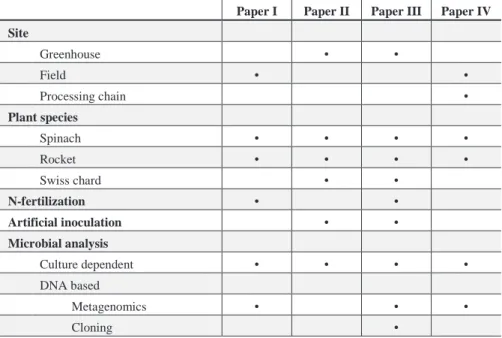
Table 1. Overview of the material and methods used in each paper respectively.
Paper I Paper II Paper III Paper IV Site Greenhouse • • Field • • Processing chain • Plant species Spinach • • • • Rocket • • • • Swiss chard • • N-fertilization • • Artificial inoculation • • Microbial analysis Culture dependent • • • • DNA based Metagenomics • • • Cloning •
4.1 Experimental sites, plant material and sampling
techniques
Experiments were conducted in the field, the greenhouse and the laboratory. The field experiments (Papers I and IV) were carried out on a commercial farm in Teckomatorp in Southern Sweden (55°52’N, 13°05’E). The greenhouse experiments (Papers II and III) were carried out at the Swedish University of Agricultural Sciences (SLU), Alnarp, Sweden (55°39’N, 13°04’E). The model plants were baby leaf spinach (Spinacia oleracea) and
4. Materials and methods
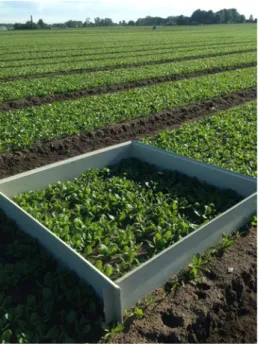
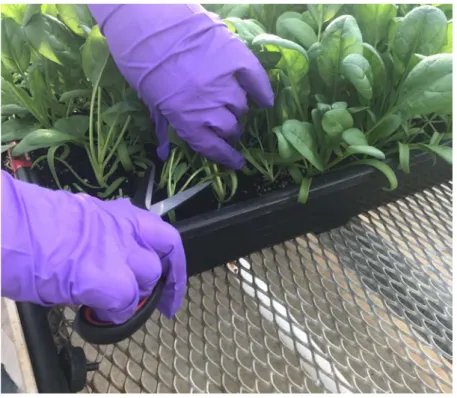
perennial wall-rocket (Diplotaxis tenuifolia) in all experiments but with the addition of Swiss chard (Beta vulgaris) in the greenhose studies. For analysis of the microbiota in the phyllosphere, plants were harvested at 1.5 cm above the ground using sterile scissors as shown in Figure 4 (Papers I-IV). Replicate samples in the field were the harvested leaves from 1 m2 areas, shown in Figure 2, in the commercial crops (Papers I and IV). Replicate sample in the greenhouse were separate growing trays (0.52 m x 0.42 m x 0.09 m) shown in Figure 1 (Papers II and III). All samples were analysed at the laboratory at SLU in Alnarp, Sweden, unless otherwise stated.
Figure 1. Spinach growing in trays in the greenhouse. (Photo: Julia Darlison)
4.2 Field experiments with nitrogen fertilizer (Paper I)
In Paper I, experiments were carried out to compare the effects of four different nitrogen fertiliser regimes (control; suboptimal (40.5 kg ha-1); commercial (81 kg ha-1); excess, (121.5 kg ha-1)) on the microbiota in the phyllosphere. When the first true leaves of the crop were 2 cm long, Axan© (Yara, Sweden), a commercial nitrogen fertiliser based on ammonium-nitrate (NH4NO3) and with moderate amounts of sulphur (NS 27-4), was applied. Fungicide-treated seeds of spinach (cultivar 2157) and rocket (cultivarTricia) were sown in rows (120 m x 1.3 m) at a seed density of 1000 and 1500 seeds m-2, respectively. Crop development was monitored using the BBCH scale for leafy vegetables (not forming heads) (Meier, 1997). Prior to sowing, a basic dose of nitrogen (33 kg N ha-1, 300 kg NPK; 11:5:18) was provided. One row per crop was subjected to each fertiliser regime. The experiment was conducted in two consecutive years (2014 and 2015). During both years, the crops were sown in early May and harvested when they had reached marketable baby leaf sizes, which occurred in early June (spinach) or mid-June (rocket). In the first year, spinach was grown for 27 days and in the second year for 29 days. In both years, rocket was grown for 36 days. The leaves were placed in plastic bags after harvest and directly placed in cool boxes. The leaves were kept in cool boxes during transportation to the laboratory for analysis of the associated microbiota.
Figure 2. One replicate in the field was 1 m2 of harvested leaves, marked by the frame. The picture is from sampling for Paper IV, one week before harvest. (Photo: Anna Karin Rosberg)
4.3
Escherichia coli
O157:H7
gfp+
inoculum preparations
(Papers II and III)
Escherichia coli O157:H7 gfp+ was inoculated onto growing spinach, rocket and Swiss chard (in Papers II and III). E. coli O157:H7 gfp+ is a non-pathogenic strain (eae-gene positive, verotoxin-1 and -2 negative), is resistant to ampicillin and can be induced to fluoresce when grown on Luria-Bertani (LB) agar (L3022-1kg, Sigma-Aldrich, ST-Louis MO, USA) when supplemented with 0.1% L-arabinose.
The inoculum of E. coli O157:H7 gfp+ was prepared as explained in detail in Papers II and III. In brief, it was cultured from a cryo culture (stored at -80 °C) using LB broth supplemented with 100 µg mL-1 ampicillin and incubated overnight at 37 °C on a rotary shaker (Minispin Rotary Shaker, VWR International AB, Stockholm, Sweden). The suspension was centrifuged (AvantiTM J-20 Centrifuge, Beckman Coulter Corporation, Brea CA, USA) at 3000 x g at 4°C for 10 min. The pellet obtained was washed with 0.85 % sodium chloride (NaCl) solution and one more time with 0.085 % NaCl solution. The desired optical density was 1.0 at 620 nm (ExpertTM spectrophotometer, AsysHi Tech, Eugendorf, Austria) corresponding to 9.7 log CFU mL-1, and 0.085 % NaCl solution was used to adjust the cell density to that level. The final density was adjusted to log 8.7 CFU mL-1 in 150 mL 0.085 % NaCl solution in spray flasks for the greenhouse inoculation (Paper II and III).
4.3.1 Canopy inoculation of E. coli O157:H7 gfp+
Growing trays of baby leaves were transferred to a greenhouse chamber approved for experiments with genetically modified organisms (REK 2011/1072; ID202100-2817v28). Using the spray flasks the E. coli O157:H7 gfp+ inoculum solution were distributed evenly across six trays of baby leaves of different plant cultivars (Paper II) or different nitrogen fertiliser regimes (Paper III). Approximately 25 mL of bacterial suspension was distributed with spray puffs to each tray. The inoculation process was repeated three times for spinach and Swiss chard and five times for rocket during the growing period. Based on a scale used to identify the phenological development stages of plants (BBCH) and expansion of the first true leaves from 2 to 9 cm length (Meier, 1997), rocket was inoculated more often due to its longer growing period than spinach and Swiss chard. The density of inoculum applied to the plant surface was checked by spreading 100 µL of
the inoculum solution on LB agar supplemented with 100 µg mL-1 ampicillin and 0.1 % L-arabinose. The harvested leaves were placed in plastic bags and immediately transferred to the laboratory.
4.4 Greenhouse experiment with plant cultivar and
inoculation with
E. coli
O157:H7
gfp+
(Paper II)
Greenhouse conditions and the sowing procedure for spinach, rocket and Swiss chard are described in detail in Paper II. Three cultivars each of spinach, rocket and Swiss chard with six replicates per cultivar, were sown, using wholesale seeds provided by a grower of baby leaves and retail seeds available at the local garden centre. The desired plant density was 220 plants per tray. To avoid lower density due to low germination 350 seeds were sown per tray. The plant species were placed together, but the different cultivars were mixed. The plants were inoculated as described in section 4.3.1. At each spraying, spinach, rocket and Swiss chard plants received on average log 8.6, log 8.8 and log 8.9 E.coli O157:H7 gfp+, respectively. Sampling was performed once per plant species. The plants were harvested 72 h after final inoculation, when they had reached marketable size, which occurred after 26 (spinach), 28 days (Swiss chard) and 33 days (rocket).
Figure 3. Rocket growing in trays in the greenhouse. (Photo: Julia Darlison)
4.5 Greenhouse experiment with nitrogen fertiliser and
inoculation with
E. coli
O157:H7
gfp+
(Paper III)
Spinach was sown with 400 seeds per tray, while rocket and Swiss chard were sown with 500 seeds per tray. All trays were placed in the greenhouse, under conditions as described in Paper III. The plant species were placed together, but the different fertiliser regimes were mixed.
Spinach, rocket and Swiss chard received on average log 8.17, log 8.14, and log 8.49 E.coli O157:H7 gfp+, respectively, per spraying, as described in section 4.3.1. Two replicate experiments were conducted for each crop. Spinach was grown for 25 days in March 2014 and for 25 days in February 2015. Rocket was grown for 35 days in April 2014 and for 39 days from mid-February to mid-March in 2015. Swiss chard was grown in September and October 2014 for 27 and 28 days during the two runs of the experiment. Harvest took place 72 h after final inoculation.
Figure 4. Harvest of the leaves in the greenhouse using sterile scissors. (Photo: Anna Karin Rosberg)
4.6 Monitoring microbial communities throughout the
production chain (paper IV)
Spinach and rocket were sown as commercial crops as described in section 4.2. Leaf samples were collected from the commercial production fields in spring and autumn 2016. The growing season for leafy vegetables in the geographical area is from April to October. Due to crop rotation, sampling was carried out in different fields on the spring and autumn sampling occasions. For each of the two seasons, there were five sampling occasions throughout the production and processing chain: (i) approximately one week before harvest (O1); (ii) at harvest (O2); (iii) after washing of the produce (O3); (iv) at the end of shelf life of the washed and stored product (O4); and at the end of shelf-life of unwashed leaves from the same batch (O5). The O5 samples acted as the control for comparison to washed and stored leaves. Six replicate subplots (each 1 m2) in the commercial crop were sampled for
O1 and O2 as described in section 4.1. For the remaining sampling points (O3, O4 and O5), spinach and rocket were harvested by machine according to standard procedures on the farm and transported to nearby washing and packing facilities. One bag was considered one replicate, with bag weight varying between 70 g and 200 g, depending on the intended distributor. Harvested leaves were stored at 4 °C until the start of washing. Washing was conducted with potable water (i.e. free from sanitising agent) following the procedure described by Grudén et al. (2015). The leaves were then packed according to standard procedures in the facility, in bags of permeable film. Both washed and unwashed leaves were stored at 4 °C in the facility during their shelf-life. Special care was taken to ensure that the O3-O5 samples corresponded to the same production lot as O1 and O2.
4.7 Analyses
Detailed information about the analyses performed can be found in Papers I-IV.
4.7.1 Plant and soil analyses
Four days prior to harvest leaf temperature (FLIR i7, FLIR Systems Inc., Wilsonville OR, USA) and chlorophyll fluorescence (PAM-2500 fluorometer, Heinz Walz GmbH, Effeltrich, Germany) (non-destructive analyses) were measured, as described in Papers I-III. Fresh weight of each replicate, leaf area (cm2) (LI-3100 Area meter, LI-COR Inc., Lincoln NE, USA), and dry weight (after desiccation, Labonco freeze dry/shell freeze systems, Kansas City KS, USA) of 20 randomly chosen leaves per replicate were then determined (Papers I-III). After drying at 70 °C, nutrient content (nitrogen (N), phosphorus (P), potassium (K), magnesium (Mg), calcium (Ca), sodium (Na), sulphur (S), manganese (Mn), iron (Fe), copper (Cu), zinc (Zn), boron (B), aluminum (Al)) of the leaves was analysed (destructive methods) at Eurofins Food & Agro Testing Sweden AB (Kristianstad, Sweden) (Papers I and III). An AutoAnalyzer 3 HR (Seal Analytical, Norderstedt, Germany) was used to analyse nitrate content in the leaves (Papers I-III). Soil samples for analysis of the content of total nitrogen, ammonium and nitrate were collected at cardinal point during the experiment (Eurofins Food & Agro Testing Sweden AB, Kristianstad, Sweden).
4.7.2 Culture dependent microbial analysis
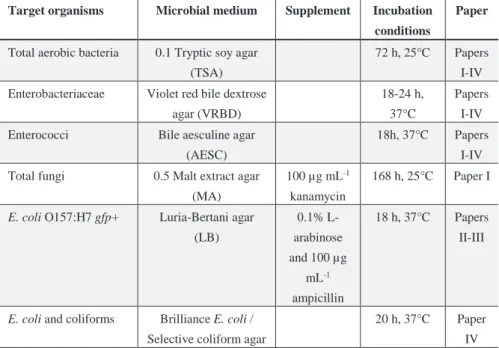
Microbiota extracted from the phyllosphere of each replicate as described in Papers I-IV were used for viable counts (Papers I-IV) and pure cultures (Paper I and III). Microbial media used for enumeration of microorganisms and incubation conditions are listed in Table 2. The isolates obtained were identified by 16S rRNA gene sequencing, checked and manually edited using BIOEDIT Sequence Alignment editor ver. 7.2.5 (Hall, 1999). This was followed by uploading in the Blast® database at the National Center for Biotechnology Information (NCBI). CLUSTALX 2.1 (Larkin et al., 2007) was used to align the sequences and MEGA 6.06 to construct a phylogenetic tree (Paper II) with the maximum-likelihood approach based on the Tamura-Nei method involving bootstrapping with 500 replicates (Tamura and Tamura-Nei, 1993, Tamura et al., 2013).
Table 2. Microbial media used for viable counts, supplement added and incubation conditions.
Target organisms Microbial medium Supplement Incubation conditions
Paper
Total aerobic bacteria 0.1 Tryptic soy agar (TSA)
72 h, 25°C Papers I-IV Enterobacteriaceae Violet red bile dextrose
agar (VRBD)
18-24 h, 37°C
Papers I-IV Enterococci Bile aesculine agar
(AESC)
18h, 37°C Papers I-IV Total fungi 0.5 Malt extract agar
(MA)
100 µg mL-1
kanamycin
168 h, 25°C Paper I
E. coli O157:H7 gfp+ Luria-Bertani agar (LB) 0.1% L-arabinose and 100 µg mL-1 ampicillin 18 h, 37°C Papers II-III
E. coli and coliforms Brilliance E. coli / Selective coliform agar
20 h, 37°C Paper IV
4.7.3 Culture-independent microbial analysis
From each replicate, microbial DNA was extracted as described in papers I, III and IV. The bacterial communities (Papers I, III and IV) and fungal communities (Paper I) were analysed at LGC Genomics GmbH (Berlin, Germany), using 300 bp paired-end read Illumina MiSeq V3. The primers 799F and 1115R (Papers I and III) and 785F and 1064R (Paper IV) were used to target the 16S rRNA gene. To target the ITS region of the fungal communities, the primers ITS7F and ITS4R were used (Paper I). The bioinformatics service at LGC Genomics GmbH carried out the pre-processing on the data generated and produced OTU count tables in BIOM format.
The diversity of Pseudomonas spp. was identified at genus level, using Sanger sequencing and cloning of DNA extracted from the leaves of spinach, rocket and Swiss chard (Paper III).
4.8 Statistical analysis
Statistical analyses were performed in R Studio (RStudioTeam, 2015) (Papers I, II and IV) and Minitab (18.1,2017) (Paper III).
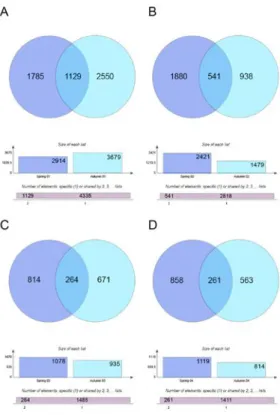
The results of viable counts were log-transformed and analysed using ANOVA (Papers I, II, IV) or s generalised linear model (GLM) together with agronomic data and run as a covariate (Paper III), followed by Tukey post hoc test (p<0.05). Step-wise regression and GLM were used to assess the prevalence of E. coli O157:H7 gfp+ (Paper II). A risk assessment was performed to investigate the associated human infection risk of the log CFU E. coli O157:H7 gfp+ (Paper II) (Cornick and Helgerson, 2004). The results from amplicon sequencing (Papers I, III-IV) were analysed using the BIOM file and the package phyloseq (McMurdie and Holmes, 2013). The Metagenomics Core Microbiome Exploration Tool (MetaCoMet) (Wang et al., 2016), was used to create Venn diagrams (Papers I, III and IV). More detailed descriptions of the statistical analyses used are provided in Papers I-IV.
Microbial community dynamics and occurrence of human pathogens in the phyllosphere of leafy vegetables were examined in detail in this thesis, since leafy vegetables have quickly emerged as an important food commodity and have frequently been associated with outbreaks of food-borne illness (Castro-Ibáñez et al., 2017, Carstens et al., 2019, Coulombe et al., 2020). Research on microbial communities has increased and improved with the development of culture-independent methods. Alongside the food safety perspective, the microorganisms living in association with plants are of interest for the possibility of developing new efficient and sustainable methods in agriculture and horticulture. More knowledge on microbial communities in the phyllosphere is required in order to exploit their potential. It has been suggested that to understand and be able to manipulate community organisation, knowledge of regulation of an organism via antagonists or resources is necessary (Meyer and Leveau, 2012). To structure the results of this thesis, patterns of microbial community structure and dynamics were analysed in relation to plant species, site, time and resources.
5.1 Plant species (Papers I-III)
Plant species has been identified previously as a major factor shaping phyllosphere microbiomes (Knief et al., 2010, Izhaki et al., 2013, Dees et al., 2015, Ortega et al., 2016). In this thesis, plant species was confirmed as an important factor phyllosphere microbial composition in leafy vegetables grown in the field (Paper I) and in the greenhouse (Papers II and III). Similarly, Ortega et al. (2016) compared the phyllosphere bacterial community of 14 different plant species in different climate settings under greenhouse conditions and found plant species to be the most important
5. Results and discussion
driver of phyllosphere microbiome structure and function. However, more recent findings in a study on the bacterial communities on nine wild herbaceous plant species suggest that plant species is not as important as previously anticipated and that the bacterial phyllosphere colonisers are generalists (Massoni et al., 2020). Plant species was found to affect the richness and composition of phyllosphere microbiota in a study with replicated, randomised experimental blocks within field sites in a natural environment (Wagner et al., 2016). A stronger interaction between plant genotype and the environment has been found in other studies (Agler et al., 2016, Hamonts et al., 2018). The effect of plant species on the associated microbiome may be altered by environmental variation, or only certain groups of microbes may be affected by host genetic variants.