POUR L'OBTENTION DU GRADE DE DOCTEUR ÈS SCIENCES
acceptée sur proposition du jury: Prof. D. Kuhn, président du jury Prof. D. Foray, directeur de thèse
Prof. F. Lissoni, rapporteur Prof. C. Fink, rapporteur Dr G. De Rassenfosse, rapporteur
collaborations, knowledge spillovers and regulation
THÈSE NO 7257 (2016)
ÉCOLE POLYTECHNIQUE FÉDÉRALE DE LAUSANNE
PRÉSENTÉE LE 19 DÉCEMBRE 2016
AU COLLÈGE DU MANAGEMENT DE LA TECHNOLOGIE CHAIRE EN ÉCONOMIE ET MANAGEMENT DE L'INNOVATION PROGRAMME DOCTORAL EN MANAGEMENT DE LA TECHNOLOGIE
Suisse 2016 PAR
iii First and foremost I would like to express my sincere gratitude to my advisor Dominique Foray. He has been supportive and has given me the freedom to explore all the topics I found interesting. I appreciate all his contributions of time and ideas to make my Ph.D. experience productive and stimulating.
Besides my advisor, I would like to thank the members of my thesis committee Prof. Carsten Fink, Prof Francesco Lissoni, Dr. Gaetan de Rassenfosse for their useful comments. A great thank also to Prof. Daniel Khun for offering to act as president of the committee.
I want to express how grateful I am to my fellow chair-mate, present and past: Dr. Fabiana Visentin, Camille Aouinait, Charles Ayoubi, Stefano Baruffaldi, Marianna Marino, Viviana Munoz Tellez de Kieffer ,Claudia Pellegrin and Markus Simeth, for the stimulating discussions, the work together and the for all the fun we had in these years.
Special thanks to the people without whom it would not be possible to conduct this research: Dr. Julio Raffo, Dr. Michele Pezzoni, Gianluca Tarasconi, Dr. Ernest Miguelez, Dr. Argyro Nikiforou, and Dr. Antoine Vernet.
I gratefully acknowledge Prof. Chris Tucci for the help in the moment of distress and for having always a smile to share and in general to all the Professors working at CDM, with whom I always have a great relation.
Big thanks for all the people currently working or that passed by CDM and more generally by EPFL for all the time we spent together: Joana Pereira (for the crazy time we spent together organizing events), Maryam Jahromi (for the funny lunch breaks), Viet Anh Nguyen, Philipp Moser, Giovanni Liotta, Ksenia Melnikova, Quentin Cavillier, Maxime Audoin, Corinne Dubois, Albina Khairullina, Olivier Waeber, Mervegül Kirci, Mohamad Razaghi, Amin Dehdarian, Reinier Verhoog, Dr. Alan Cabello, Dr. Tilo Peters, Dr. Deep Parker, Dr. Olov Isaksson, Dr. Ariel Zeballos, Dr. Victoria Nuguer, Dr. Toni Männistö, Florian Lücker, Dr.Pinar Uysal, Dr.Chiara Forlati, Allan Cabello, Joana Comas, Iro Katsifou, Dr. Shuangqing Liao, Simone Voldrich, Dr. Mary Jean Bürer, Dr. Heidi Gautschi, Dr. Lorenzo Massa, Dr. Gianluigi Viscusi, Dr. Emilio Raiteri, Dr. Orion Penner, Romana Brabcova, Nandkumar Kollara, Carole Rentsch, Beat Mueller, Dr. Luis Franjo, Dr. Serhiy Stepanchuk, Nettra Pan, Shira Foy, Dr. Grani
iv Rujeerapaiboon, Soroosh Shafieezadeh-Abadeh, Nicolas Sommer, Giuseppe Chindemi and my French class: spending these years with you was a pleasure. You have been able to create a fantastic work environment.
I want to thank my two good friends: Abhik to have shared with me the most difficult period of my Ph.D. and Giada...for all. Wherever the life brings you, I will always keep you in my heart.
My sincere thanks also go to Cyrielle Blanc, Celine Cordey, Cristina Martinucci and Alexandra von Schack for their administrative support, for the French help and for the fantastic emotional encouragement.
A special thanks to my friends in Lausanne: Veronica, Sara, Rosa, Michele, Gaetano, Julie, Riccardo, Stanislao, and the rest of the group for the chilos of pizza, for the never-ending fun and for helping me to remember that there is also a world outside Epfl.
An immense hug to the friends of my life: Bubino, Bonny, Ualles, Mele, Arh, Pufa, Roby, Vane, Peve, Manu, Pietro, Laura, Fede and all the others. You have always been there and you always will be.
Huge thanks go to my second family: Lucia, Francesca, Vittorio, Gabriele e Mario for being always so nice with me.
Finally, but first in my heart, thanks go to mum, dad and Gianluca for their unconditional and infinite love and support. You are the most important people in the world and I dedicate this thesis to you.
v This thesis aims to provide new insights into the evolution of the medical device sector (MedTech). After the analysis of the history of the sector, I examine the key points that in the past 60 years, have led the industry to grow impressively, and I proceed to an analysis of the present situation. The scope of the thesis is to understand if what has stimulated the success of the sector at the beginning is still important, and if the introduction of new elements has positively changed the evolution of the sector.
The thesis is composed of three works. The first work (chapter 2) is co-authored by Dominique Foray and Michele Pezzoni. I analyze how the network structure of inventors in the Swiss regions can influence regional innovation performance within MedTech. I aim to contribute to the existing literature related to the debate on the importance of inventors’ co-location for the creation of innovation. I claim that an increased degree centrality of MedTech inventors in the regional technological community is positively associated with the number of MedTech patent applications in the focal region. Moreover, the presence of MedTech inventors in the main component of the regional technological community is positively associated with the number of MedTech patent applications in the region. However, local connections are not enough to promote innovation. In fact, the results show that intense cross-regional linkages of MedTech inventors increase the number of MedTech patent applications in the region. The effect is amplified when this network structure is combined with a high degree of centrality of MedTech inventors. Thus, it is not only important that an inventor be well connected within her region, but also that she be exposed to external knowledge in order to increase her possibility of achieving high performance in MedTech within that region. Finally, I want also to understand how MedTech is open to other technological domains. I find that the average degree centrality and cross-regional linkages of academic inventors and inventors specialized in technologies complementary to MedTech affect regional innovation outcomes.
The second work (chapter 3) is developed in collaboration with Dominique Foray. I aim to study the impact of external technologies on the MedTech sector. I start analyzing the literature of knowledge spillovers, and I do a comprehensive review of the extant measures of knowledge spillovers. I argue that the classical measures based on patent ‘backward citations’ should be carefully interpreted. The reason as to why this type of index needs a prudent interpretation is linked to the characteristics of different technologies in terms of the speed at
vi propose a new formulation of the classical measure of backward citations.
The third work (chapter 4) is developed in collaboration with Fabiana Visentin. I aim to understand the effects of the MedTech regulation that entered into force in Europe in 1993. I argue that the regulation has two effects. The first effect is related to the level of radicalness in the innovation. I claim that after the introduction of the regulation, and consequently with the tightening of the requirements to fulfill, firms became more careful and less motivated to propose radical innovations. At the same time, standardization of the requirements across European countries gives to firms the possibility of widening their market.
Keywords: patents, networks, inventors’ centrality, academic inventors, medical devices, regulation, radical, incremental, diffusion, knowledge spillover measures
vii Lo scopo di questa tesi è di proporre nuove intuizioni relativamente all’evoluzione del settore degli strumenti medicali (MedTech), valutando se ció che ha stimolato il successo del settore all’inizio sia importante per lo sviluppo attuale e se l’introduzione di nuovi elementi ne abbia cambiato l’evoluzione.
Dopo aver analizzato la storia del settore, vengono esaminati i punti chiave che negli ultimi 60 anni hanno portato il MedTech a cresere in misura esponenziale e infine si conclude con l’analisi della situazione attuale.
La tesi è composta da tre articoli. Il primo è stato sviluppato in collaborazione con D. Foray e M. Pezzoni. In questo lavoro analizzo come la stuttura della rete professionale di inventori nelle regioni svizzere influenzi la prestazione innovativa regionale nel MedTech. Lo scopo è di contribuire al dibattito sull’importanza della prossimità degli inventori per l’ innovazione. I risultati mostrano che un aumento della centralità degli inventori MedTech all’interno della loro comunità tecnologica è associata positivamente al numero di brevetti di dispositivi medicali nella regione di riferimento. Inoltre, anche la presenza di inventori MedTech nella componente principale della propria comunità tecnologica potrebbe essere associata positivamente con il numero di brevetti MedTech nella regione di riferimento. Ciononostante, le connessioni locali da sole non sono sufficenti per promuovere l’innovazione. Infine un’ alta connessione tra gli inventori di tecnologie affini a MedTech influenza positivamente la performance innovativa della regione.
Il secondo articolo è stato scritto in collaborazione con D. Foray. Lo scopo è di studiare piú in dettaglio l’impatto delle diverse tecnologie sul settore dei dispositivi medicali. Inizio analizzando la letteratura relativa ai flussi di conoscenza e proseguo proponendo una revisione delle misure piú frequentemente utilizzate. Voglio dimostrare che le classiche misure basate sull’uso delle citazioni dei brevetti dovrebbero essere interpretate con cautela. La ragione di ció è legata alla diversa velocità alla quale una nuova tecnologia riesce ad essere capita e impiegata da un altro settore. Propongo una nuova formula che utilizza le citazioni di brevetto che sia in grado di catturare l’effetto delle diverse caratteristiche delle tecnologie.
Il terzo lavoro è stato scritto in collaborazione con F. Visentin. Lo scopo è di capire entrambi gli effetti della regolamentazione entrata in vigore in Europa nel 1993 sull’innovazione
viii Dopo l’introduzione della regolamentazione e in seguito ad un inasprimento dei requisti da soddisfare, le aziende siano diventate piu’ prudenti e meno motivate a proporre innovazioni completamente radicali. Il secondo effetto è relativo alla espansione geografica del mercato dei dispositivi medicali. Infatti la standardizzazione dei requisiti in tutta Europa ha dato la possibilità alle aziende di ampliare il prorio mercato.
Parole chiave: brevetti, rete di inventori, centralità, inventori accademici, dispositivi medicali, regolamentazione, radicale, incrementale, misure di flussi di conoscenza
ix
Acknowledgments... iii
Abstract ... v
Sommario ... vii
Chapter 1: Introduction ... 1
1.1 Motivation and thesis roadmap ... 1
1.2 Background Literature ... 4
1.3 Thesis Contributions ... 10
Chapter 2: Does the centrality of specialized inventors foster regional innovation? The case of the Swiss medical device sector ... 13
2.1 Introduction ... 13
2.2 Theoretical framework and contribution ... 15
2.3 The Swiss medical device sector ... 19
2.4 Data and Variables ... 20
2.5 Results ... 25
2.6 Conclusions ... 28
Chapter 3: How traditional medical technologies integrate ICT: A new methodological approach ... 31
3.1 Introduction ... 31
3.2 General Purpose Technologies and medical device innovations ... 32
3.3 The data ... 34
3.4 Measures of GPT propagation with the “Generality” index ... 35
3.5 It seems that ICT entered medical technologies at a glacial pace ... 36
3.6 Qualitative overview of the problem ... 40
3.7 Are backward citations still the right method to measure GPTs, generality and knowledge spillovers? ... 43
3.8 Our methodological proposition - 1: Measuring the speed of adoption ... 44
3.9 Our methodological proposition - 2: Application ... 50
3.10 Conclusion ... 59
Appendix ... 60
Appendix 3.1: The patent technological classifications ... 60
Appendix 3.2: Existing measures for technological spillovers ... 62
Chapter 4: The Effects of Regulation Change on Innovation: The Case of the European Medical Device Sector ... 67
4.1 Introduction ... 67
4.2 The effects of regulation on innovation ... 70
x
4.5 Analysis ... 81
4.5.1 Dependent variables for innovative content and the geographical diffusion of an invention ... 82
4.5.2 Econometric specifications... 85
4.5.3 Controls included in the econometric exercises ... 87
4.6 Results ... 90 4.7 Conclusions ... 94 Appendixes ... 96 Appendix 4.1 ... 96 Appendix 4.2 ... 97 Appendix 4.3 ... 98 Chapter 5: Conclusions ... 101 References ... 103 Curriculum Vitae ... 113
1 1.1 Motivation and thesis roadmap
The medical device sector in Switzerland has performed an extraordinary transformation since its early days in the sixties1. The seeds of transformation were planted by six Swiss surgeons located in the region of Basel and Biel, who visualized a revolution in the treatment of bone fractures. Their vision concerned not only the definition of new methods to fix broken bones, but also the creation of an organization that would involve companies, medical schools and doctors: the Association for the Study of Internal Fixation and Fractures (ASIF, or briefly, AO). Historically, the reason as to why these surgeons felt the need to collaborate and create something new in the field of orthopedics was related to increasing changes in the culture and lives of people in the 1950s. The economic boom made cars affordable to a higher number of people. At the same time, there was increasing interest in the practice of sports, such as skiing, soccer or motor sports. Cars and new sports led inevitably to an increased rate of unpredictable accidents. Social concern related to the exponential increase in accidents led, as a consequence, to the origination of a new stream of medicine, such as trauma surgery and sports medicine, as well as to the creation of accident insurance. The fact that insurance was forced to pay for the medical care and disabilities generated by accidents pushed insurance companies to establish collaborations with surgeons. The efficiency of surgical procedures had a high impact on the costs of rehabilitation; thus, surgeons were provided with instruments and, even in a few cases, were supported by hospital structures. The increasing need for the development of new techniques led to the creation of a spontaneous network of innovative surgeons. In Switzerland, regional origins have great significance, as well as personal relations among members of the same organization. For this reason, in 1958, the AO was created by a group of friends, Müller, Bandi, Schneider, Willenegger, and Allgöwer, with the aim of developing and teaching new techniques and practices in Swiss, and later, European medical schools and hospitals. The environment in which members of the AO were working was characterized by a strong sense of fraternity, high harmony, high importance of face-to-face interactions, high levels of trust, and very low
2 competition. The driving force of the AO was to develop new efficient solutions and to build a network of practitioners working in different places with the same standardized methods.
Subsequent to AO’s creation, surgeons felt the need to set up a commonly financed laboratory. Their searches were concentrated in the region of Grison and culminated with the decision to establish the AO research laboratory in Davos. The region provided a structure to the AO for free because it wanted to incentivize the use of this structure for medical purposes. At this point, surgeons needed specialized suppliers in order to produce top-quality standard tools and devices. Müller contacted a young engineer, R. Mathys, who owned a small metal processing factory near Basel. He was convinced about shifting his production plan in order to produce only medical technologies. The collaboration between visionary surgeons and engineers was very productive, and after two years of trials, failures and experiments, Mathys succeeded in becoming the first company to enter the new fast-growing medical device market. Banks also played a key role in the emerging ecosystem: after two years of development without any products to sell, Mathys accumulated a debt of CHF 300,000, which worried the local bank supporting him. However, surgeons used their prestige and reputation to convince the local bank to extend credit to Mathys. Thanks to the extended support of the local bank, Mathys, together with the AO, soon achieved incredible success, which involved converting the medical world everywhere on the planet to a new technique that they collectively controlled.
Later, surgeons contacted a second firm to develop the same kinds of tools and instruments, led by Straumann, a professor at the University of Stuttgart. He was already known for developing sophisticated alloys, and he was a specialist in metallurgy. At the same time, the surgeons created their own company based in Davos, called Synthes, which was in charge of R&D, training and promotion of the new techniques all over the world. Afterwards, a spin-off of Straumann entered the market to develop specific manufacturing processes (Foray, 2014).
Nowadays, it is common sense to expect that devices used on or in the human body have to be tested to assure their safety. In the 1960’s, the risk perceived by a device producer when introducing a new product into the market was more related to acceptance by surgeons than to the fulfillment of general safety requirements. Orthopedic devices had experienced reputational issues concerning a lack of standardized material. Some tools were built by more experienced craftsman, which were not touched by corrosion, while other tools had a much shorter duration and quality. There was no quality control, and thus, in order to earn more money, some craftsmen employed a lower percentage of steel than agreed. For this reason, it was not an uncommon practice for surgeons to develop personal instruments by themselves. Albin Lambrotte was a surgeon and also an instrument maker. Gerhard Kuntscher, a surgeon, met
3 Ernest Phol, an engineer, to develop instruments. Some surgeons decided to pursue a double degree in medicine and engineering in order to have the skills needed to develop tools. But without any standards, it is impossible to create a discipline. Thus, the very first clinical trials were developed by the AO, which takes documentation of all the trials, with the aim of standardizing procedures and making them more replicable in order to avoid the production of poor-quality tools.
After the creation of Synthes, the ethical problem of surgeons who were earning money from the commercialization of tools surfaced. Thus, one of the rules for AO members who were also stakeholders in Synthes was related to the income generated by the trade of medical instruments: it stated that each Swiss franc had to be reinvested in R&D.
Indeed, the AO developed a very fine-grained policy concerning intellectual property rights: patents protecting the inventions of special instruments and implants developed by AO surgeons or manufacturers were all transferred to Synthes that granted the right to exclusive production and marketing of the AO equipment. Synthes also produced the new activity-specific public goods (R&D, training and quality standards). Thanks to the AO and the entrepreneurial spirit of the SMEs, the emerging ecosystem was remarkable in building connections to integrate the dispersed knowledge and to realize the entrepreneurial discovery process, as well as in producing a private institution. Synthes was founded to solve the coordination problems arising from early growth of the new activity, support capability formation and reward pioneers in such a way that spillovers were maximized.
Again, and in spite of the complex coordination problems, this was a successful process without any policy interventions. It involved the structuring of entrepreneurial knowledge that was initially dispersed and fragmented (among surgeons and engineers). It also involved the creation of private institutions to solve important coordination problems that arose as the new activity started to grow.
Why did I start with this story? I did so because this is a story about the relevance of: networks, knowledge spillovers, and (the absence of) regulation as essential determinants of R&D, creativity and innovation in the medical device industry. In my thesis, I will take these three topics - networks, spillovers, and regulation - to empirically explore their influence on the present dynamics of innovation in the medical device industry.
The reason I became so passionate about this sector, to the point that I wanted to dedicate my efforts to it in my PhD thesis, is that medical devices are not only a group of instruments and techniques developed to help people with injuries. Rather, they represent the products of a social evolution. The core engine of the AO was the network connecting surgeons,
4 patients and industries. The changes happening in that historical period led to more sophisticated surgical procedures to address the increasing probability of accidents: people truly perceived its necessity in order to feel safe. At the same time, the industry had developed the technology necessary to support surgeons, and these surgeons were ready to open their minds and try something new. The same revolution could not have happened 10 years before. All of the small pieces of this big system formed the basis for what is the medical device sector now. For example, the network of inventors of medical devices is still one of the core forces for the growth of the sector. This sector is still looking outside, into other new fields such as ICT, to ameliorate the tools. Further, additional changes such as the quality control of their instruments have formed the basis of the current regulations.
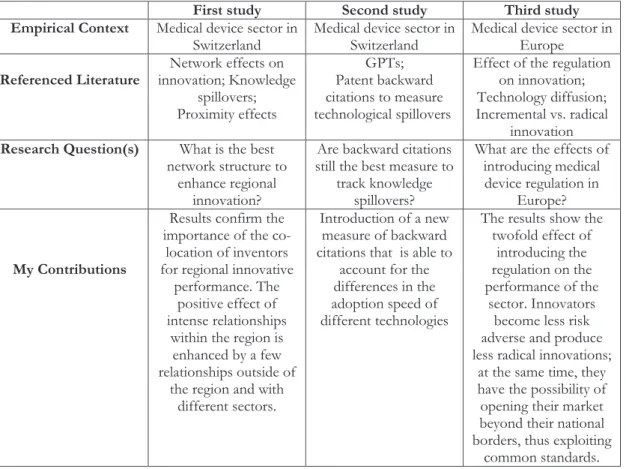
In the next paragraph, I review the main strands of literature that have helped me develop the three parts of my thesis. In the last paragraph of this introduction, I summarize the findings and the contributions of the thesis.
In the subsequent chapters, I present three studies that theoretically and empirically describe the current evolution of this sector. Each study is thought to bring new insights into the story of this sector.
1.2 Background Literature
1.2.1 Collaboration networks and innovation
The first study of my dissertation focuses on one of the main aspects of the medical device sector: the inventors’ networks. In the first chapter of the introduction, I reported the story of AO’s creation to show how, since the very beginning, the driving force of innovation in the sector was represented by a network of people. This network was composed of people with very different backgrounds, such as engineers, craftsmen and surgeons. What they all had in common was geographical proximity, a common culture, and the willingness to change something. In my first study, I analyze the importance of the network in recent years. My aim is to understand what kinds of collaborations contribute to the evolution of the sector, and if the composition and role of the network have changed over time. Specifically, I investigate if the network is still composed of people with different skills, and if the geographical connotation of these collaborations still persists.
The impact of professional collaboration networks on regional innovation is a relevant topic in the innovation literature. Previous empirical findings have suggested that innovation exhibits a pronounced tendency to cluster spatially (Feldman and Kogler, 2010). In the 1990s,
5 several works documented the importance of geographic proximity in fostering knowledge flows among co-located agents (Feldman and Audretsch, 1999; Jaffe at al., 1993). Storper and Venables (2004) explain the beneficial effects of geographical proximity in knowledge exchanges among individuals with an increased likelihood of face-to-face contact. In order to explain the beneficial effects of clustering on innovation, the literature relies on the concept of localized knowledge spillovers (Döring and Schnellenbach, 2006; Feldman and Audretsch, 1999; Jaffe et al., 1993; Zucker et al., 1998). The existence of localized knowledge spillovers is strictly connected with the inventors’ social and professional connections (Breschi and Lissoni, 2001; Powell et al., 1996). The concept of localized knowledge spillovers has been revisited by supporting the idea that a large part of the knowledge flowing among agents cannot be considered as a pure externality. On the contrary, flows are mainly regulated by economic transactions, such as work contracts, markets for technologies, and research collaborations among individuals, firms and institutions. The diffusion of knowledge through these mechanisms feeds the creativity of individuals and enhances innovation opportunities (Burt, 2004; Cowan and Jonard, 2004). However, it is difficult to think that knowledge networks, being social and not territorial constructs, are enclosed within regional borders (Ter Wal and Boschma, 2009; Asheim and Isaksen, 2002). Transcending cross-regional borders with external linkages brings new ideas, new information and fresh knowledge into the region (Breschi and Lenzi, 2012; Bresnahan et al., 2001; Bathelt et al., 2004; Grabher, 1993; Rosenkop and Nerkar, 2001). The lack of external linkages, and the consequent isolation of inventors within a region, might lead to a convergence toward homogenous, redundant knowledge circulating within the region and resulting in the decline of innovation (Bathelt et al., 2004; Burt, 2004; Neal, 2010; Uzzi, 1997). External linkages are not only intended in geographic terms, but are also related to the technology domain. A growing strand of literature currently considers a large part of new knowledge generation as the result of recombining existing knowledge from different fields (Antonelli et al., 2010; Kogut and Zander, 1993; Mccann and Ortega-Argilés, 2013; Youtie et al., 2008; Weitzman, 1998). In any case, it is difficult for focal firms to absorb and interpret knowledge from distant domains. For this reason, firms tend to explore only closely related technological domains and pursue incremental innovations (Rosenkopf and Nerkar, 2001). However, firms need to look for new knowledge in different technological domains in order to refresh existing information and develop new assets (Gavetti and Levinthal, 2000). In co-invention networks, inventors specialized in different technological domains are expected to have more chances to exchange knowledge when they are intensively connected. From the point-of-view of the analysis of regional innovative performance, a higher connectivity of inventors leads to higher chances of
6 contributing to regional knowledge recombination (Feldman and Audretsch, 1999). Moreover, the importance of the exchange of knowledge between complementary sectors has been emphasized by the concept of related variety. The fact that complementary technologies are accessible locally increases the probability of regional growth (Bishop and Gripaios, 2009; Boschma and Iammarino, 2009; Boschma et al. 2012; Frenken et al., 2007; Quatraro, 2010).
The importance of creating an intense regional network of collaborations, together with the insertion of cross-regional and cross-domain connections is the focus of my first study.
1.2.2 Technological spillovers and innovation
The second study of my dissertation goes more into the details in terms of the interaction of the medical device sector with other technologies. In the first section of the introduction, I argued how important precision mechanics were in building the first orthopedic tools. Nowadays, the technologies that help MedTech grow are not the same as in the 1960s. MedTech has evolved, as well as other technologies. From the beginning of the 21st century, MedTech and Information and Communication Technologies (ICTs) have shown very intense interaction in terms of technological knowledge exchange.
ICTs help MedTech in the creation of tools with completely new features. For instance, ICTs allow patients to save measurements, keep track of past values of their medical tests, and receive reminders for medications. All of the data collected are visible automatically by the physician, who can immediately intervene, if needed (Jog et al., 2015). Measurement devices can be implanted into the tissue (Yazdandoost and Kohno, 2007) and can transmit wireless data collected. ICTs can also be integrated into medical devices, such as infusion devices. In this case, the data of a patient are collected and aggregated in a dataset. The dataset is then put in a cloud that connects several hospitals. Taking the information anonymously, the software is able to compare the values related to different patients with similar conditions and provide suggestions on best practices. These are just some examples of the possible applications of ICTs in MedTech, but the advantages that the interaction of ICTs with MedTech has brought over the years are countless, particularly related to the level of the quality of health services at low cost.
In the literature, ICTs are recognized as General Purpose Technologies (GPTs). The central feature of a GPT is the horizontal propagation throughout the economy and the complementarity between its inventions and the development of related applications by other sectors. Most often, GPTs do not offer the complete innovative outcome, but the recombination of GPTs with complementary technology enables the creation of new innovative solutions (Bresnahan and Trajtenberg, 1995). The interesting effects of GPTs on the growth of the entire
7 economy have led scholars to look for ways to measure the process of knowledge flows. The willingness to capture technological knowledge spillovers dates back to 1979, when Griliches proposed one of the first attempts to build technological indicators using the indirect R&D of a sector to prove that it affects the cross-sectors’ knowledge exchange.
The first method that uses patent data was proposed by Scherer (1982). He built a matrix that counts the exchanges of technologies between the producer and user sectors. He used patents, surveys and R&D data. Later, Putnam and Everson (1994) proposed a similar idea, the Yale matrix. A second method is the creation of a citation function. In the literature, there are different versions of the citation function. The very first one was proposed by Caballero and Jaffe (1993) and was partly redefined by other scholars in subsequent years (Hall et al., 2001; Jaffe and Trajtenberg, 1996; Popp, 2002). In general, the probability that a patent cites another patent is a function of three variables: the diffusion process, the obsolescence rate, and a parameter built on the characteristics of the two patents. The advantage related to this approach concerns the elimination of some of the noises affecting the citation probability (i.e., the examiner, the cohort effect, the country effect, etc.). Finally, another measure very frequently used is an index based on patent backward citations, which is the measure I try to improve with my study. A patent is a legal document that offers exclusive rights to the owner and to the inventors in exchange for public disclosure of the invention. In order to prove the novelty and non-obviousness of an invention, its technological content must be compared with previous existing knowledge. The applicant and the examiner list the existing literature (patent and non-patent literature) in order to have a benchmark to judge the effective novelty of the invention. In the literature, this measure is called the ‘index of backward citations’. Many attempts have been developed to demonstrate that patent citations are a good measure of knowledge flow.
Jaffe, Trajtenberg, and Henderson (1993) describe the reasons for why patent citations are a good proxy to trace spillovers. Citations can be introduced either by the inventors or by the patent examiner. While the citations listed by the inventors should be an actual measure of the awareness of the knowledge owned, or at least of part of it, the citations added by the patent examiner are references to prior art that could be unknown by the inventors. Consequently, citations are a ‘very noisy measure for spillovers’. However, at the same time, they are a conservative measure: if some significant results appear, they must be correct because they were able to emerge, despite the noise generated by the references added by the patent examiner. In the same vein, Hall et al. (2001) and Duguet and MacGarvie (2005) add empirical proof to the use of backward citations, undergoing surveys to explain the origins of the citations they insert in their patents. In both works, the authors find confirmation concerning the capability of
8 backward citations to reflect the inventors’ knowledge, even if the validity changes with the source and the destination of the knowledge transmitted. Breschi and Lissoni (2004) explain that even if patent citations are added both by the inventor and the examiner, they are both valid. The reason is that inventors can have a strategical reason not to disclose the prior art, while examiners fill this gap. Recently, Jaffe and De Rassenfosse (2016) have proposed a comprehensive overview of the uses and pitfalls related to the measure of backward citations.
My work aims to propose a new version of the last measure, the backward citation. This analysis is inspired by the fact that different technologies require different time periods to be understood, and that this variance should be captured in the measure.
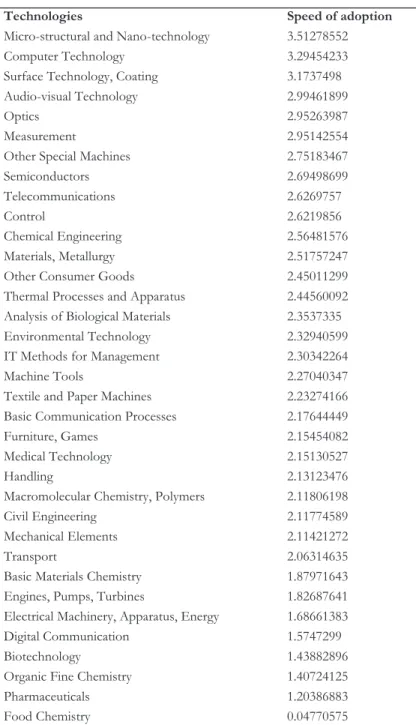
More specifically, I argue that the faster the adoption of a new technology z, the faster this new technology z becomes “common knowledge”, and it is no longer cited. Consequently, it becomes invisible in terms of backward citations.
1.2.3 Regulations and innovation
The third study of the thesis analyzes the effect of the introduction of a regulation in a sector that was auto-regulated until the 1990s. As I mentioned in the first section of the introduction, when the revolution of the orthopedics sector started, there were no rules for setting a quality threshold for instruments, nor did any rules exist to assure safety for patients. Only few attempts had been conducted by the AO to ensure the standardization of materials. The situation changed at the beginning of the 1990s in Europe, with the introduction of a regulation that mandated the safety requirements to be fulfilled by any medical tool before entering into the market. This regulation, the “Council Directive 93/42/EEC on Medical devices”, takes the place of all individual regulations existing at the national level (if any) and was recognized by all European countries. The effects of introducing this regulation are still the cause of significant debates (Ashford et al., 1985; Blind, 2008; Herzlinger, 2006; Rothwell, 1980; Stewart, 1981; Verhoeven et al., 2016). Some scholars see regulations as a barrier to evolution. Technological innovation positively contributes to economic growth. It represents the engine of the economic development process, proving new solutions and opportunities for industries and consumers. More broadly, it improves the social welfare by assuring greater consumer abundance and by providing new care for diseases. For these reasons, any limitations can only produce negative effects. Other scholars, instead, are more concerned about the side effects of technological innovation and argue that regulations are necessary to guarantee controlled development, which can also be seen as a stimulus for innovation (Porter and Linde, 1995).
9 Others are more inclined to understand “what tradeoff our society is willing to make” (Eads, 1980, p. 51) between social and economic benefits and the risk of an unconditional technological evolution. In fact, regulation has the difficult task of finding a trade-off between risks and benefits, and in doing so, it has to take into account the social and economic implications of its decisions. In the specificity of the medical device sector, it is particularly hard to understand the policy implications of innovation. In past years, the development and complexity of new devices have required a careful assessment of the quality and safeness of tools. This has led to the creation of connections among agents: public health, clinical specialties, epidemiology and academic disciplines, with the aim of producing evidence that a specific device is safe and efficient (Faulkner and Kent, 2001). However, regulations are seen by firms as one of the core factors that influence the innovation process. In particular, regulation can influence the degree of novelty in innovative outcomes. To measure the degree of novelty, innovation can be grouped into two types: incremental or radical.
An incremental or continuous innovation does not bring a fundamental change to the treatment, nor a crucial change to the product. It requires a short development cycle and, due to the very low degree of change, its acceptance by the market and by the regulation is almost sure. Radical innovations are generally defined as breakthroughs, compared to those inventions that do not depart from the traditional path, but simply add a few elements of novelty to the existing ones (Anderson and Tushman, 1990; Ashford and Hall, 2011). A radical innovation changes the treatment paradigm, with the consequence of providing a completely new product. Since this innovation is completely new, the reaction of the market is difficult to forecast, as well as the response of the regulatory pathway. Therefore, I argue that after the introduction of the regulation, MedTech firms feel more risk adverse and are less likely to put completely radical innovations on the market. It is likely that the biggest percentage of R&D expenses are used to modify and ameliorate existing tools, while only a smaller amount of resources is devoted to the invention of a new tool completely from scratch. This innovative behavior will protect firms from the rejection of tools by the regulation and will also promote easier acceptance by the market, due to the fact that the new tool is an amelioration of a previous one, already in use.
Nevertheless, the regulation also sets the standardization of requirements, where beforehand there were different rules (or none). This led to the second aspect of the analysis: the geographical extension of the inventions. I argue that the normalization of conditions to satisfy in order to introduce a tool to the market has led firms to be more open to foreign markets. Beforehand a company was focused only on its own country, because it was sure that its products could be sold there. Now the regulation “Council Directive 93/42/EEC” is the same
10 for all of Europe; thus, the firm can sell everywhere with the certainty of having fulfilled all of its requirements.
1.3 Thesis Contributions
The first work is positioned in the debate related to the importance of the co-location of innovative agents on the introduction of an innovation. Many scholars have stressed the importance of being in the same place in order to innovate. However, the mechanisms through which spillovers operate have remained a “black box” for a long time. A growing strand of literature has criticized the idea that agents belonging to the same spatial cluster benefit from costless knowledge externalities simply because they are there. Precisely, it has been shown that geographical proximity is not the only determinant of knowledge flows among agents, and its effect is largely reduced when other variables, such as co-invention network characteristics, are included in the analysis (Bettencourt et al., 2007; Breschi and Lissoni, 2001; Breschi and Lissoni, 2009).
My work aims to shed light on this argumentation. The results show that being located in the same place is not the only factor raising the chances of establishing a direct collaboration between MedTech inventors. The results also show that close collaborations are enhanced by the high intensity of their external linkages. This sheds new light on the importance of external linkages. In fact, the outcomes suggest that the capability of a region to benefit from cross-regional linkages is influenced by its internal network structure. The implications of this work are directed toward policy-makers aiming to enhance the regional innovation in a specific sector. These findings support the argument of smart specialization, in that a so-called "pipeline strategy", implemented to capture extra-regional knowledge, will not succeed if indigenous capabilities have not been formed. In other words, a pipeline strategy cannot be viewed as a substitute for internal capability failures (Foray, 2014).
The second work speaks to the literature on technological knowledge spillovers. The importance of knowledge spillovers for economic growth is universally recognized. The way in which technological knowledge spillovers can be measured has been a hot topic in the economic literature. The aim of this work is to propose a new method that can capture technological spillovers, taking into account the different speed of adoption for each technology. The results show how the speed of adoption of a technology can influence the measure of knowledge spillovers using backward citations. The implications of this work are relevant for the literature that aims to grasp technological spillovers between different fields. The results suggest that it is important to carefully analyze the dynamic behavior of different technologies in order to capture
11 the existing connections more precisely. The correct evaluation of the intensity of technological spillovers between sectors has implications for policy-makers whose intent is to understand the potential for modernization that would allow a traditional industry to improve its operational efficiency or product quality, as well as to experience a transitional move from traditional practices targeting old, declining markets to new technologies for entering new, emerging markets. The capability to grasp such a phenomenon in the most precise way enhances the possibility of having a policy that better fits the real needs of the society.
The third work adds new insights to the literature on the effects of social regulation on the innovation of the industrial sector. This literature claims that public intervention favors innovation activities (Porter and van der Linde, 1995), but extant empirical evidence provides contradictory results regarding the positive or negative effects of introducing new rules (Blind, 2012). One of the most difficult tasks of policy-makers is to propose a regulation that assures users’ safety, and at the same time, minimizes the side effects on the economic outcomes of firms. Unique to this third study is the fact that, in considering the regulation effects on innovation activities, I look at the technical content of each invention. Specifically, I consider the technologies embodied in an invention. The results show that, after the regulation change, innovators tend to replicate extant technology combinations instead of introducing new ones. This result thus indicates that innovators become more risk adverse toward novelty. At the same time, a stringent regulation at the European level imposes the standardization of products to all European countries. If innovators can rely on uniform rules that their products have to satisfy, they are incentivized to extend their target markets. When policy-makers introduce a strict regulation, they think about the health and security of the final users. However, they should also consider the ‘side-effects’ for the economy. A more stringent regulation might discourage inventors from introducing new risky solutions.
12 First study Second study Third study Empirical Context Medical device sector in
Switzerland Medical device sector in Switzerland Medical device sector in Europe
Referenced Literature innovation; Knowledge Network effects on spillovers; Proximity effects GPTs; Patent backward citations to measure technological spillovers
Effect of the regulation on innovation; Technology diffusion; Incremental vs. radical
innovation
Research Question(s) What is the best network structure to
enhance regional innovation?
Are backward citations still the best measure to
track knowledge spillovers?
What are the effects of introducing medical device regulation in
Europe?
My Contributions
Results confirm the importance of the co-location of inventors for regional innovative
performance. The positive effect of intense relationships
within the region is enhanced by a few relationships outside of
the region and with different sectors.
Introduction of a new measure of backward citations that is able to
account for the differences in the adoption speed of different technologies
The results show the twofold effect of
introducing the regulation on the performance of the
sector. Innovators become less risk adverse and produce less radical innovations;
at the same time, they have the possibility of opening their market beyond their national borders, thus exploiting
common standards.
13
inventors foster regional innovation? The case of the
Swiss medical device sector
(with Dominique Foray and Michele Pezzoni)
2.1 Introduction
Empirical findings suggest that innovation exhibits a pronounced tendency to cluster spatially (Feldman and Kogler, 2010). During the 1990s, several works documented the importance of geographic proximity in fostering knowledge flows among co-located agents (Feldman and Audretsch, 1999; Jaffe et al., 1993). From this point of view, knowledge spills over among co-located firms or individuals simply because they are there, without being regulated by economic transactions or by formal contractual agreements among actors. The concept of localized knowledge spillovers, used to define the beneficial effect of co-location, has become popular and has served as a starting point, both for policymakers aiming to design regional innovation policies and for researchers aiming to combine geography and innovation.
Storper and Venables (2004) explain the beneficial effects of geographical proximity in knowledge exchanges between individuals with an increased likelihood of face-to-face contacts. According to the authors, face-to-face contacts facilitate the transmission of tacit and contextual knowledge among agents. Bathelt et al. (2004) use the term “buzz” to describe the beneficial co-presence of individuals in the same city or region.
However, the mechanisms through which spillovers operate have remained a “black box” for a long time. A growing stream of literature has criticized the idea that agents belonging to the same spatial cluster benefit from costless knowledge externalities simply because they are there. Precisely, it has been shown that geographical proximity is not the only determinant of knowledge flows among agents, and its effect is largely reduced when other variables, such as co-invention network characteristics, are included in the analysis (Bettencourt et al., 2007; Breschi and Lissoni, 2001; Breschi and Lissoni, 2009).
This paper aims to contribute to the current discussion by assessing how the regional level of connection regarding technologically specialized inventors and academic inventors impacts regional innovation outcomes. It focuses on the Swiss medical device sector (MedTech). The analysis considers both the structure of the network related to the regional community of inventors and the cross-regional linkages (Bathelt et al., 2004). The inventors are classified according to their technological specialization in the medical device technology sector, in
14 technologies complementary to medical devices, and academic inventors. The analysis considers two measures of the inventors’ level of connection: degree centrality and the intensity of cross-regional collaborations calculated for each class of inventors.
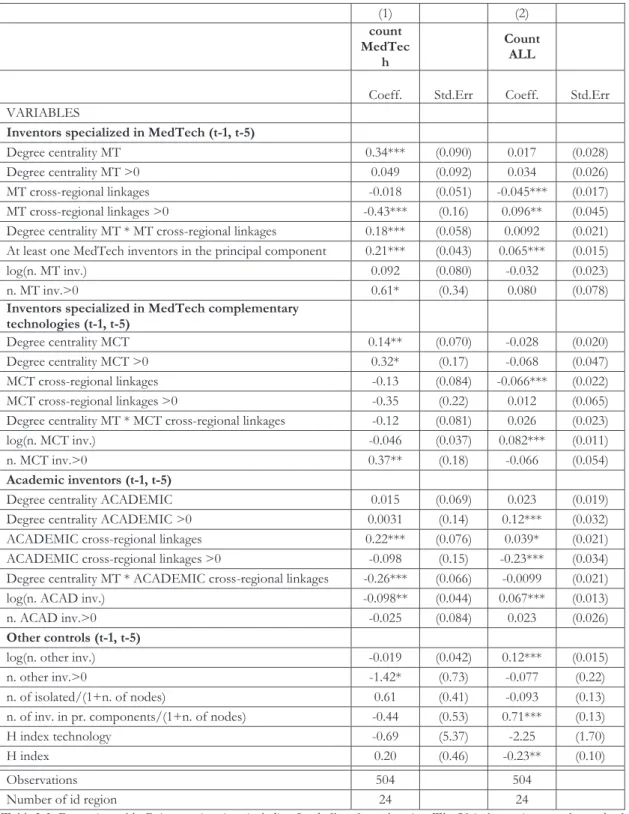
The results show that the average degree centrality of the regional technological community specialized in the medical device sector positively correlates with regional innovation. Its effect is amplified when specialized inventors also have intense cross-regional collaborations. Moreover, regional innovation is affected by the position in the network of inventors specialized in complementary technologies that serve as the building blocks of medical device inventions, and by the cross-regional collaborations of the academic inventors.
These findings are relevant for the creation of regional innovation policies. This study shows that the level of connection, within and outside of the region, of different groups of inventors has different effects on the production of new knowledge in a specific technology. Precisely, this study suggests to policymakers which groups of inventors and which types of connections should be incentivized in order to foster regional innovative performance in the medical device sector.
This paper speaks to four streams of literature. The first stream of literature relies on the empirical works that have investigated the impact of network structure on regional innovation outcomes (Bettencourt et al., 2007; Lobo and Strumsky, 2008). Part of this literature has focused on the test of the “small world” hypothesis. The “small world” is a particular network structure characterized by an ecosystem of clusters connected by long ties (Newman, 2000). The results of these analyses are mixed (Breschi and Lenzi, 2012; Fleming et al., 2007).
A second stream of literature to which this paper speaks focuses on the importance of cross-regional collaborations, showing that their presence impacts the innovation activity of the local technological community (Bathelt et al., 2004; Owen-Smith and Powell, 2004).
A third stream of literature relies on the idea that innovation is the result of a recombination of existing knowledge in complementary domains (Kogut and Zander, 1993). Technological domains that are highly connected with other domains offer greater possibilities for innovation than less connected domains (Fleming, 2001; Galunic and Rodan, 1998; Mccann and Ortega-Argilés, 2013; Youtie et al., 2008).
Finally, the paper relies on the stream of literature studying the role of academic inventors in the co-invention network (Anselin et al., 2000; Balconi et al., 2004; Lissoni, 2010). The paper is organized as follows. Section 2 describes the theoretical framework and the contribution of this work to the existing literature. Section 3 provides details on the Swiss
15 medical device sector. Section 4 presents the methodology and the econometric model. Section 5 discusses the results. Section 6 concludes.
2.2 Theoretical framework and contribution
The spatial clustering of economic activities leads to several benefits such as increased trust bewteen actors, reduced costs, and higher efficiency of the labor market (Agrawal et al., 2006; Feldman and Kogler, 2010). In order to explain the beneficial effect of clustering on innovation, the literature relies on the concept of localized knowledge spillovers (Döring and Schnellenbach, 2006; Feldman and Audretsch., 1999; Jaffe et al., 1993; Zucker et al., 1998). The existence of localized knowledge spillovers is strictly connected with the inventors’ social and professional connections (Breschi and Lissoni, 2001; Powell, 1996). The concept of localized knowledge spillovers has been revisited by supporting the idea that a large part of the knowledge flowing among agents cannot be considered as a pure externality. On the contrary, flows are mainly regulated by economic transactions, such as work contracts, markets for technologies, and research collaborations among individuals, firms and institutions. The diffusion of knowledge through these mechanisms feeds the creativity of individuals and enhances innovation opportunities (Burt, 2004; Cowan and Jonard, 2004).
In this framework, the co-invention network is a proxy for inventors’ collaborations and possible contractual agreements among actors. The nodes in this network are the inventors who appear in the patent application documents, and two inventors are connected if their names appear in the same patent application. The idea that the properties of the co-invention network affect the diffusion of knowledge among inventors has already been investigated in several works (Ahuja, 2000; Boschma and Frenken, 2010; Breschi and Lissoni, 2009; Gomes-Casseres et al., 2006; Singh, 2005).
This paper highlights the characterization of the nodes of the co-invention network. Inventors are grouped along two dimensions: their technological specialization (Feldman and Audretsch, 1999) and their location, inside or outside of the focal region (Bathelt et al., 2004). The analysis starts by assessing the impact of the level of connection involving the inventors specialized in MedTech on regional innovation outcomes in the MedTech sector. A higher level of connection of the inventors specialized in MedTech is expected to enhance the probability of knowledge flows from other inventors, creating benefits for their innovative activity.
The connectivity of inventors in the regional technological community is measured according to two indices. The first index is membership to the largest connected component of the co-invention network. As discussed by Owen-Smith and Powell (2004), membership to the
16 largest connected component is a sufficient signal that allows members to benefit from access to the information available within the local technological community. This work relies on the same idea applied to membership to the largest connected component of the co-invention network of inventors specialized in MedTech.
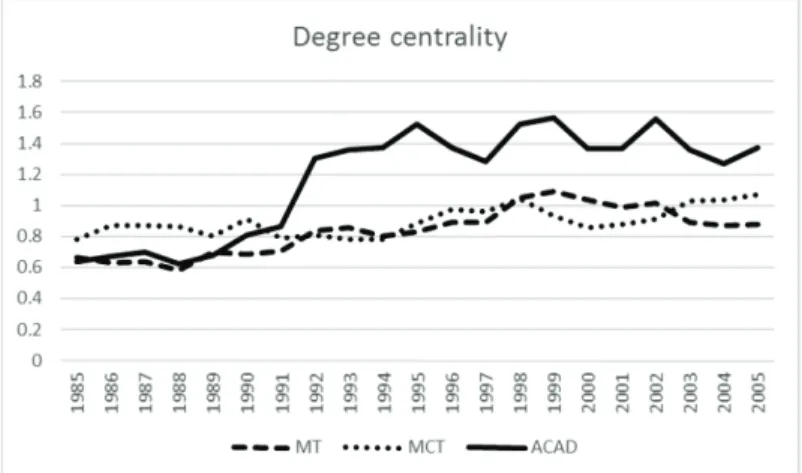
The second index, degree centrality, measures the intensity of connection in the regional technological community (Miguélez and Moreno, 2013; Giuliani, 2005). Degree centrality consists of the count of direct connections from the focal inventor to the other inventors in the network. Direct connections are the most important channels of knowledge flows, considering that the probability of knowledge flows between two inventors decays sharply when their distance in the social network increases (Breschi and Lissoni, 2001; Vanhaverbeke et al., 2009).
The consequent hypothesis is that high levels of connectivity involving MedTech inventors might enhance regional inventive outcomes in the MedTech sector. This hypothesis is split into two subcomponents, according to the measures of connectivity used.
HP1a: An increased average degree centrality of MedTech inventors in the regional technological community correlates positively to the number of MedTech patent applications in the focal region.
HP1b: The presence of MedTech inventors in the principal component of the regional technological community correlates positively with the number of MedTech patent applications in the region.
It is difficult to think that knowledge networks, being social and not territorial constructs, are enclosed within regional borders (Ter Wal and Boschma, 2009; Asheim and Isaksen, 2002). Going through the cross-regional borders with external linkages brings new ideas, new information and fresh knowledge into the region (Breschi and Lenzi, 2012; Bresnahan et al., 2001; Bathelt et al., 2004; Grabher, 1993; Rosenkop and Nerkar, 2001). The lack of external linkages, and the consequent isolation of inventors within a region, might cause convergence toward homogenous redundant knowledge circulating within the region and leading to the decline of innovation (Bathelt et al., 2004; Burt, 2004; Neal, 2010; Uzzi, 1997; ). Owen-Smith and Powell (2004) empirically test the impact of the presence of pipelines in the Boston biotechnology community. Ponds et al. (2010) and Maggioni et al. (2007) show the importance of cross-regional networks in the process of regional innovation. Miguélez and Moreno (2013) find that the more inventors within a region collaborate with inventors outside of the region, the greater the return on innovation.
Bathlet et al. (2004) propose a model of local-buzz and global pipelines, where they discuss the importance of external linkages for the local cluster. Following the same reasoning,
17 another hypothesis formulated in this paper is that cross-regional linkages do not suffice in introducing new knowledge that is beneficial for MedTech innovation outcomes. Inventors who are intensively connected with cross-regional collaborations also have to be central in the local community of inventors in order to foster the knowledge production process. They can absorb and interpret non-redundant knowledge from outside of the region, but they also benefit from intense connections within the regional technological community (Cohen and Levinthal, 1990). Inventors who are expected to foster the development of a technology within a region have to be both embedded in their local network and connected with long ties outside of the region. This idea is at the foundation of the smart specialization approach for regional innovation (Foray, 2014; Mccann and Ortega-Argilés, 2013; Miguélez and Moreno, 2013).
Thus, the second hypothesis follows:
HP2: Intense cross-regional linkages of MedTech inventors increase the number of MedTech patent applications in the region; however, the effect is amplified when it is combined with a high degree of centrality of MedTech inventors.
The third hypothesis formulated in this paper regards the role of academic inventors and the role of inventors specialized in technologies that are complementary to MedTech. Academics play a fundamental role, both in the production of basic research and in the production of applied research outcomes (Agrawal and Henderson, 2002). Empirical works have shown that academic inventors are frequently involved in collaboration with industry (Azoulay et al., 2009; Calderini et al., 2007). However, there are relevant differences between academic and industrial researchers. First, the research interests of academic inventors have a border scope when compared to industrial researchers (Fleming et al., 2001). Second, Balconi et al. (2004) show that academic inventors are more central and better connected than non-academic inventors. In particular, their role is to connect the non-academic communities of inventors that otherwise would be disconnected. In this sense, academic inventors act as brokers in the knowledge network (Lissoni, 2010). The presence of well-connected academic inventors in the regional network is expected to enhance inventive MedTech outcomes, increasing the probability that different technological communities are connected by academic inventors. Moreover, academic inventors might act as brokers in the geographical dimension, having more chances to generate new long-distance connections across regional borders. The nature of their professional activity favors the generation of cross-regional collaborations through participation in conferences, consulting activity, or collaborations with colleagues located in other universities (Lissoni and Sanditov, 2006). Academic inventors are particularly important in explaining
18 innovation outcomes in the medical device sector. This sector is characterised by strong interactions among different actors such as academics, surgeons and firms (Mina et al., 2007). This analysis includes the measures of academic inventors’ degree centrality and cross-regional linkages.
A growing stream of literature currently considers a large part of new knowledge generation as the result of recombining existing knowledge (Antonelli et al., 2010; Kogut and Zander, 1993; Mccann and Ortega-Argilés, 2013; Youtie et al., 2008; Weitzman, 1998). It is difficult for focal firms to absorb and interpret knowledge from distant domains. For this reason, firms tend to explore only closely related technological domains and pursue incremental innovations (Rosenkopf and Nerkar, 2001). However, firms need to look for new knowledge in different technological domains in order to refresh existing information and develop new assets (Gavetti and Levinthal, 2000). In co-invention networks, inventors specialized in different technological domains are expected to have more chances to exchange knowledge when they are intensively connected. A higher connectivity of inventors leads to higher chances of contributing to regional knowledge recombination (Feldman and Audretsch, 1999). The importance of the exchange of knowledge with complementary sectors is the core aspect of the concept regarding related variety (Bishop and Gripaios, 2009; Boschma and Iammarino, 2009; Boschma et al. 2012; Frenken et al., 2007; Quatraro, 2010). The fact that complementary technologies are accessible locally increases the probability of regional growth.
The medical device sector involves a range of complementarity competencies and technologies (Ramlogan et al., 2007). The interdisciplinary nature of MedTech, as described by Rosenberg (1994), suggests that innovation in MedTech is the result of recombining knowledge flowing from the following technological domains: measurement instruments, pharmaceuticals, chemical engineering, machine tools and special machines. This analysis tests whether the degree centrality and cross-regional linkages of the inventors specialized in technologies, which are the building blocks of MedTech inventions, play a role in boosting regional innovation outcomes. The third hypothesis follows:
HP3: The average degree centrality and cross-regional linkages of academic inventors and inventors specialized in technologies complementary to MedTech affect positively regional innovation outcomes.
The relevant role played by academic inventors and inventors specialized in MedTech complementary technologies might affect HP2. Following the reasoning of HP2, the cross-regional linkages of academic inventors and inventors specialized in MedTech complementary technologies might substitute for the MedTech inventors’ cross-regional linkages. As a result, academic inventors and inventors specialized in complementary technologies may be left with
19 the responsibility of connecting the local community of inventors to inventors outside of the region.
2.3 The Swiss medical device sector
This work focuses on the medical device sector in Switzerland. This sector is an exceptional success by any measures. It consist of 1,450 firms involved in the production and commercialization of medical devices (Swissmedic, 2014). The market of medical devices represents 2.3% of the Swiss GDP, with 14 billion CHF per year, accounting for 5.2% of Swiss exports. Six percent of Swiss firms have more than 250 employees, while half of them have fewer than 10 employees. The first 10 largest firms employ 14,017 workers. The whole sector consists of 52,000 full-time employees. The growth rate of sales ranged between 6% and 10% in the period 2011-1014 (Medical Cluster, 2014).
The literature identifies four main features of MedTech. First, MedTech depends on complementary technologies from other sectors (Ramlogan et al., 2007). Switzerland develops many types of medical devices such as robotics, ortho-dental, and orthopedics. There are 9 medical clusters in Switzerland. The Leman Lake cluster has relied on the mechanical precision and watch industries since 1700. The Neuchatel cluster benefits from the local competencies in the industries of precision mechanics and microelectronics. In the north of Switzerland is the cluster of Jura, where there is a business incubator for life science companies. The Basel cluster is the biggest European life-science cluster. In Solothurn, orthopedic devices are the core product. In Bern, medical device firms have the possibility to collaborate with universities of applied science, centers of biomedical engineering, and research centers. The cluster of Aargau is particularly attractive for the cheap-skilled labor market, and for this reason, the average percentage of people employed in R&D is more than the double the Swiss average. The Zurich cluster hosts the Swiss Federal Institute, a university, and a large number of successful spin-offs. Finally, Ticino hosts the headquarters of many multinational companies active in the MedTech sector.
Second, innovation in MedTech tends to be incremental due to the intrinsic uncertainty of the innovation process (Gelijns et al., 1998). MedTech is a sector regulated by strong directives that aim to maximize the safety and welfare of patients by minimizing the risk related to the use of new devices. Every new product must fulfill strict requirements, quality assessment, and clinical trials to enter the market (Chai, 2000).
20 Third, Rosenberg et al. (1995a, 1995b) show how applied research conducted in laboratories within firms is more relevant than basic research conducted in universities. On average, Swiss medical device companies spend more than 11% of their revenues on R&D.
Finally, MedTech innovation depends on the interaction of individuals, firms, and institutions. Companies need to collaborate with each other in order to develop new products, as shown in the Tuttlingen cluster by Halder (2002). Based on a survey conducted by the Swiss Cluster2 in 2013, 70% of manufacturers engage in collaborations to develop new products. This evidence is supported by the Swissmedic Report, showing that 73% of collaborations are made directly with the buyer and can also involve suppliers, universities or other manufacturers in minor percentages (Swissmedic, 2014). In particular, academics and surgeons play a fundamental role as developers, since they are aware of the potential demand for new devices and the actual needs of the final users (Mina et al., 2007).
2.4 Data and Variables
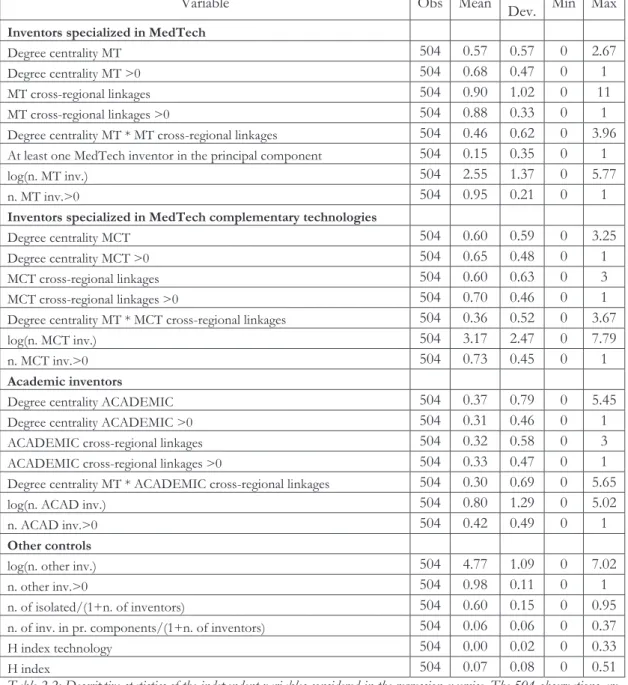
The study sample includes 24 Swiss regions. Each region corresponds to a territorial unit identified by a NUTS3 code (Sonn and Storper, 2003). The dataset includes all patent applications to the European Patent Office (EPO) from 1985 to 2005, for which at least one of the inventors is located in a Swiss region. The MedTech applications are classified according to the technological classification adopted at EPO3. The study sample is a balanced panel of 504 observations, i.e., 24 regions observed for 21 years. A patent is assigned to a region if at least one of the inventors listed in the patent application reports an address located in that region. In case two inventors of the same patent report two addresses located in different regions, full credit of the patent is assigned to both regions.
The count of patent applications classified as MedTech is a proxy for innovative activity of the region in the MedTech sector (Ahuja, 2000). The source of patent data is the CRIOS-Patstat database, which provides a reclassification of patents, according to the disambiguated inventors’ identity (Pezzoni et al., 2014; Tarasconi and Coffano, 2014). It relies on an elaboration of the Patstat dataset released by the EPO4.
2 The Swiss Cluster is an organization that groups together all agents in the value chain of the network involving
Swiss medical technology. The aim of the organization is to facilitate the creation of collaborations among its members. To find out more details about the Swiss Cluster, see: http://www.medical-cluster.ch/
3A medical device patent is defined as a patent that has the first four digits of the International Patent Classification
(IPC) equal to: A61B, A61C, A61F, A61H, A61L, A61M, and A61N. Medical devices related to animals and to transport or accommodations are not considered. Moreover, the number of patents in these subcategories is negligible.
21 The 24 regions included in our analysis include 38,041 distinct inventors, of which 3,196 are specialized in MedTech technology. These inventors filed 54,193 patent applications at EPO, 5,739 of which are classified as MedTech patent applications.
The inventors are classified into three groups, according to their technological specialization, and whether they are academics or not:
x inventors specialized in MedTech technologies (MT)
x inventors specialized in MedTech complementary technologies (MCT) x Academic inventors (ACAD)
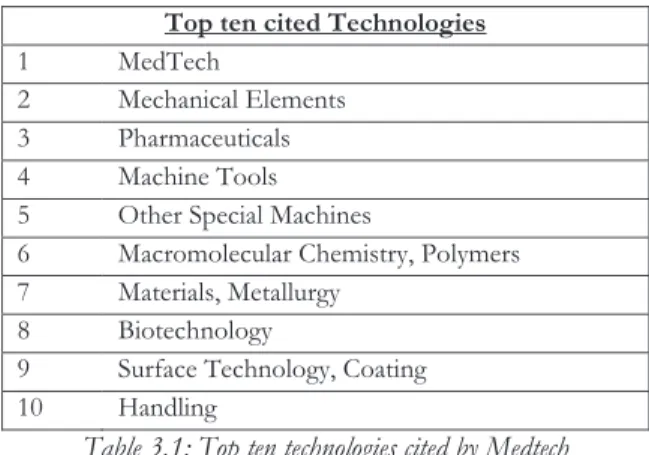
The specialization of each inventor is defined according to the predominance of specific technologies in the inventor’s stock of patent applications. Precisely, an inventor is defined as specialized in MedTech technologies (MT) in year t if she invented at least one MedTech patent during the years from t-1 to t-5. An inventor is defined as specialized in MedTech complementary technologies (MCT) if she is not specialized in MedTech, but she invented at least one patent in a technological domain complementary to MedTech. The definition of complementary technologies is based on an analysis of backward citations of MedTech patents. The backward citations of MedTech patents are considered during the time span t-1 to t-5. Complementary technologies are all of the IPC classes of the patents cited by at least one MedTech patent. The most cited complementary technologies are: measurement, instruments, pharmaceuticals, chemical engineering, machine tools and other special machines (Schmoch, 2008). Not surprisingly, many of these technologies are both the building blocks of MedTech technology and the technologies in which Switzerland is historically specialized. Finally, the inventors not included in the two preceding categories are classified as inventors specialized in other technologies (Other inv.) not relevant for MedTech inventions.
An inventor is classified as an academic inventor (ACAD) if she has published one scientific article reporting an affiliation with a Swiss university. Academic inventors are identified using the approach proposed by Dornbusch et al. (2012). First, all of the publications attributed to authors with a Swiss university affiliation during the time span 1985-2005 have been collected from the Scopus database (a bibliographic database by Elsevier). The authors are selected based on their affiliation with university departments in scientific fields that are relevant for MedTech inventions, such as engineering, chemistry, biology, and medicine. Then, the names of the inventors are matched with those of the authors of the scientific articles5. Finally, the resulting
5 The procedure applied allows to identify academic inventors who report on the patent document an address that is