The Egyptian Journal of Hospital Medicine (2009) Vol., 37 : 630-643
630
Effect of Coconut Oil Administration on
Some Hemostatic Changes
Associated with Obesity in Rats
Fatma Ahmed Mohamed, Nehal Mohammad Bahgat, Gehane M. Hamed, and Rania S.A. Eisa *
Physiology Department, Faculty of Medicine, Ain Shams University
Abstract
In the last few decades, coconut oil was claimed to have some beneficial health effects, attributed mainly to its medium chain triglycerides. It was, thus, intriguing to investigate the potential benefit of coconut oil in alleviating the prothrombotic tendency often encountered in obese individuals. The present study was carried out on 44 rats, of both sexes, aged 10 days at the start of the study. 31 out of 44 rats were offered high caloric diet (the cafeteria diet) for induction of obesity. Rats were allocated into the following groups: Group1: Control rats (C) (n=13 rats), comprising rats fed on the standard chow diet all-over the study period (24 weeks). Group2: Cafeteria diet-fed rats (Caf) (n=16 rats), comprising rats fed on cafeteria diet until the end of the study period and Group3: Cafeteria diet/coconut oil-fed rats (Caf/Coco) (n=15 rats), comprising rats fed on cafeteria diet with coconut oil starting from the 16th week till the end of the study period. At the end of the study, the BMI was assessed in the 3 studied groups and blood samples were collected for determination of platelet count and aggregation, prothrombin time (PT), activated partial thromboplastin time (APTT), fibrin degradation products (FDPs), and plasma lipid profile. The encountered results revealed that the mean BMI of the cafeteria diet-fed rats was significantly higher than the BMI of control rats, and that the mean BMI of rats receiving cafeteria/coconut oil diet for 9 weeks was significantly decreased compared to their matched caf group. The PT, APTT and platelet count were all non significantly different in the three studied groups. Platelet aggregation, on the other hand, was significantly increased in the caf group compared to the control group, and significantly decreased in the caf/coco group compared to both the caf group and the control group. The plasma FDPs levels were not significantly different in the 3 studied groups. The lipid profile was insignificantly different in the 3 studied groups except in the caf/coco group which revealed a significant elevation of total cholesterol and HDL-c HDL-compared to HDL-caf group. The present findings, thus, point to the possible benefiHDL-cial effeHDL-ct of coconut oil feeding on obesity - induced enhanced platelet aggregation.
{* From M.Sc. Thesis, Physiology department}
Introduction
The prevalence of obesity is increasing worldwide, although the proportion varies from country to country and between geographical areas within a country (WHO, 1998). Obesity is known to predispose to a number of cardiovascular risk factors, including hypertension, elevated cholesterol and impaired glucose tolerance
(WHO report, 2000). Also, Obese individuals are known to be susceptible to thrombotic diseases, though the underlying mechanism is still unknown (Yamamoto et
al., 2005).
In many areas of Sri Lanka, the coconut tree and its products have for centuries been an integral part of life, and it has come to be called the "Tree of life". However, in the last few decades, the relationship between coconut fats and health has been the subject of much debate. Around 92% of these fats are saturated fats, which led to the belief that coconut fats are 'bad for health', particularly in relation to ischemic heart disease. Yet, since most of the saturated fats in coconut oil are medium
Effect of Coconut Oil Administration on Some …
631
chain fatty acids whose properties and metabolism are different from long chain triglycerides (LCT), they are now believed to be not as 'bad for health' as other saturated fats (Amarasiri and Dissanayake, 2006). In fact, the medium-chain fatty acids and monoglycerides found primarily in coconut oil were found to have miraculous healing power (Kabara, 2000). The author added that it is rare in the history of medicine to find substances that have such useful properties and still be without toxicity or even harmful side effects.A link between coconut oil and obesity has been postulated. Thampan (1994) stated that any health condition is made worse if the metabolic rate is slower than normal because cells cannot heal and repair themselves as quickly. The author added that increasing metabolic rate, therefore, provides an increased degree of protection from both degenerative and infectious illnesses. Medium chain fats present in coconut oil were found to stimulate thermogenesis to a greater degree than does excess energy intake as LCT) (Binnert et al., 1998). Further, excess energy derived from medium chain triglycerides (MCT) was reported to be stored with a lesser efficiency than is excess energy derived from dietary LCT (Hill et al., 1989 and Noguchi et al., 2002),
resulting in greater loss of adipose tissue. Thus, MCT might be considered as agents that aid the prevention of obesity or potentially stimulating weight loss (St-Onge et al., 2003).
It was, thus, intriguing to investigate the effect of coconut oil feeding on the hemostatic changes associated with obesity, aiming at alleviating the prothrombotic tendency often encountered in obese individuals.
Materials and Methods:
Animals:The present study was carried out on
44 rats, of both sexes, aged 10 days at the start of the study (Rodriguez et al., 2001a). Rats were purchased from the Institute of Ophthalmology in Giza, and maintained in the Physiology Department animal house under standard conditions of boarding.
NB: Rats were separated into male and female cages at the age of 40 days to prevent mating.
Experimental protocol:
Rats included in the present study were divided into 2 main categories: control rats and rats rendered obese by being fed high caloric diet (the cafeteria diet). All animals received standard rat chow in the first week for acclimatization to the new facilities, the cafeteria diet being started on the second week.
Rats were allocated into the following groups:
Group1: Control rats (C) (n=13 rats), comprising rats fed on the standard chow diet all-over the study period (24 weeks).
Group2: Cafeteria diet-fed rats (Caf) (n=16 rats), comprising rats fed on cafeteria diet, for induction of obesity till the end of the study period.
Group3: Cafeteria diet/coconut oil-fed rats (Caf/Coco) (n=15 rats), comprising rats fed on cafeteria diet for 15 weeks, thereafter they were fed cafeteria diet mixed with coconut oil (cafeteria/ coconut oil diet) till the end of the study period. The diet formulae supplied to the three studied groups were as follows:
A)Standard chow diet
All rats in the period of acclimatization were fed on the formula AIN-93G (Reeves et al., 1993). Control rats were maintained on this formula till the age of 3 months. From the age of 3 months till the end of the study, control rats were fed on the formula AIN-93M (Reeves et al., 1993)
which provided 18% of energy as protein, 76% of energy as carbohydrate, and 6% of energy as lipids, by dry weight.
Fatma Ahmed… et al
632
B) The cafeteria diet
This diet was composed of the following items: patè, chips, chocolate, bacon, biscuits and standard chow diet, in a proportion of 2:1:1:1:1:1 (Berraondo et al., 2000). The 6 food items were crushed to a powder form and mixed thoroughly. The powder was then placed in a container and given to the animals.
C) The modified cafeteria diet with coconut oil
This diet consisted of a mixture of cafeteria diet and coconut oil (purchased from Morgan factory) in a ratio of 75 gm cafeteria diet and 25gm coconut oil (Zulet et al., 1999). This diet was supplied to rats in group 3 (Caf/Coco) for 9 weeks.
The three food formulae adopted in the present study were analysed in the National Nutrition Institute (NNI), according to AOAC 2003, to confirm their conformity to the cited diet characteristics. The energy provided by each diet formula, and by each of its different components, was found to be as follows:
Diet Energy / 100 gm diet % of energy as CHO % of energy as protein % of energy as fat Control diet 418.98 71.19 15.28 13.53 Cafeteria diet 571.54 32.76 8.19 59.05
Cafeteria/Coconut oil diet 642.1 24.44 5.34 70.22
The served amount of food was 10gm/rat at the start, and was increased gradually over the whole study period, reaching 25 gm/rat at the end of the study. Every day, the amount of food remaining from the previous day was weighed to monitor the daily food consumption.
The body weight of rats in the different groups was assessed weekly to monitor the progress in weight gain of each group.
Experimental Procedures:
On the day of sacrifice, overnight fasted rats were weighed and anesthetized by intraperitoneal injection of thiopental sodium (40 mg/Kg, b.w.), then the body height was measured. A midline abdominal incision was made. The abdominal aorta was exposed and cannulated with a catheter and three blood samples were collected into 3 plastic tubes, one of which contained 3.2% trisodium citrate (9 volumes of blood + 1 volume citrate), the 2nd tube contained a drop of heparin, and the 3rd tube contained EDTA.
The citrated blood sample was centrifuged at 1000 rpm for 5 min., platelet rich plasma (PRP) was pippetted off, and kept in a plastic tube for assessment of platelet aggregation. The rest of the sample was centrifuged at 3000 rpm for 15 min. for
separation of platelet poor plasma (PPP). A part of the PPP was used in the assessment of platelet aggregation as described by Born (1962) and O’Brien(1963), and the rest kept in a plastic tube at room temperature for performance of the following coagulation tests (within 4-6 hours) :
1-Prothrombin time (PT), as described by
Neofotistos et al. (1998), using kits (Neoplastine CI Plus) supplied by Diagnostica Stago.
2-Activated partial thromboplastin time (APTT), as described by Contant et al. (1983), using kits (C.K.Prest) supplied by Diagnostica Stago.
3-An aliquot of the PPP was stored frozen for determination of fibrin degradation products (FDPs), as described by Mirshahi et al. (1986), using kits supplied by Diagnostica Stago.
Effect of Coconut Oil Administration on Some …
633
The heparinized blood sample was centrifuged at 3000 rpm for 15 min. and the separated plasma was used for determination of plasma levels of:1-Triglycerides, as described by Fossati and Prencipe (1982), using kits supplied by Biolabo SA.
2-Total cholesterol, as described by Allian et al. (1974), using kits (CHOD-PAP) supplied byGreiner Diagnostic Gmbh. 3-HDL-C, as described by Lopes-Virella (1977), using kits supplied by Greiner Diagnostic Gmbh.
LDL-C, was calculatedasfollows:LDL-C = (TC) – (HDL-C + TG/5) (Friedewald et al., 1972).
The blood sample taken on EDTA was used for determination of platelet count, using coulter T- 660, depending upon electronic counting, according to the method described by Coulter (1956).
The body mass index (BMI) was calculated as follows: BMI = body weight in gm / square height in cm².
The height of rats was measured as the distance (in cm) between the nose and the anus, using an ordinary ruler. The body weight (in gm) was determined by the use of the ordinary animal scale.
Statistical analysis
All statistical data and significance tests were performed by using SPSS (Statistical Program for Social Science) statistical package (SPSS Inc) version 10.0
(Armitage P and Berry G, 1987). Statistical significance was determined by one-way ANOVA (analysis of variance) for differences between means of different groups; further analysis was made by LSD
(least significance difference) multiple-range test to find intergroupal differences; a probability of P< 0.05 was considered statistically significant. Chi-square test was used for comparison of qualitative variables.
RESULTS:
Changes in body weight and BMI in the different studied groups:
Figure (1) shows the progressive increase in body weight in the three studied groups, assessed weekly, throughout the study period up to the 8th week, the mean body weight of the cafeteria diet-fed rats was significantly lower than control rats. Starting from the 11th week to the 15th week, the mean body weight of cafeteria diet-fed rats was higher compared to the control rats. After the 15th week, cafeteria diet-fed rats were subdivided into cafeteria diet fed group (caf) and cafeteria/coconut oil diet fed group (caf/coco). Mean body weights of the three studied groups were comparable from 16th to the 21st week. Then, mean body weight of the caf/coco group was significantly lower than control and caf groups at the 23th week and from caf group at the 22th and 24th weeks.
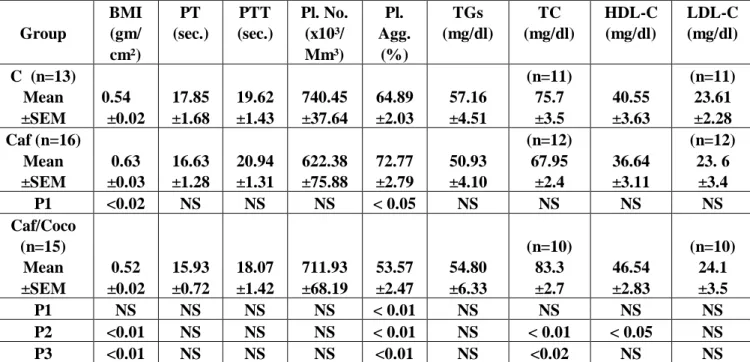
As regards the BMI, which was calculated at the end of the study period, it was found that the mean BMI of the cafeteria diet-fed rats was significantly higher than the mean BMI of control rats (P<0.02). On the other hand, the mean BMI of caf/coco oil fed rats was significantly decreased compared to their matched cafeteria diet-fed rats (P<0.01). However, it was insignificantly different from control group (table 1 and figure 2).
Fatma Ahmed… et al
634
Fig. (1) The mean body weights (gm), assessed weekly, of control, cafeteria diet-fed and cafeteria/coconut oil diet-fed rats throughout the period of the study.
0 50 100 150 200 250 300 350 1 2 3 4 5 6 7 8 9 10 11 12 13 14 15 16 17 18 19 20 21 22 23 24 week gm C Caf Caf/Coco
Fig. (2): Changes in BMI (gm/cm²) in Control (C), Cafeteria diet-fed (Caf) and Cafeteria/Coconut oil diet-fed (Caf/coco) groups.
0 0.1 0.2 0.3 0.4 0.5 0.6 0.7 BMI C Caf Caf/coco gm/cm2 C Caf Caf/Coco
a = Significant difference from the control group, calculated by LSD at P < 0.05 for unpaired data. b = Significant difference from the cafeteria/coconut oil diet-fed group, calculated by LSD at P < 0.05
for unpaired data.
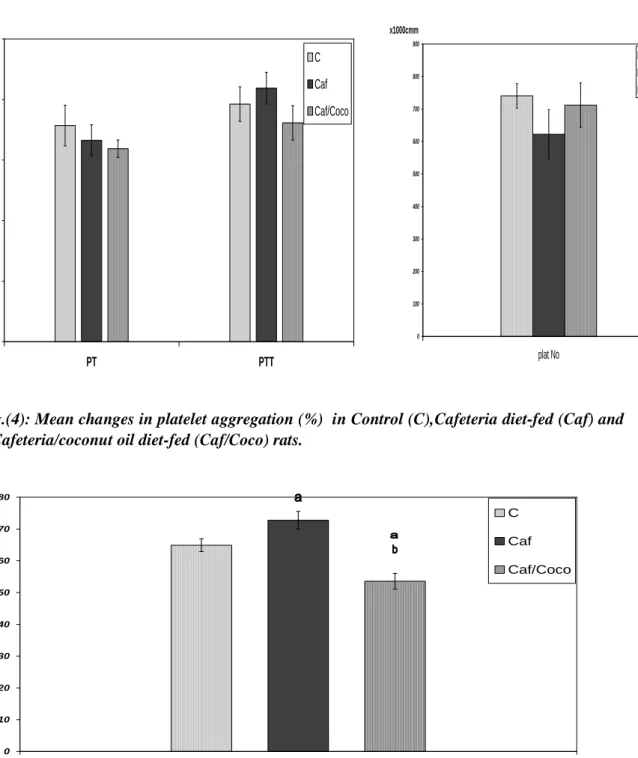
Changes in the Hemostatic parameters: Prothrombin time (PT), partial thromboplastin time (PTT) and platelet count were all non-significantly different in the three studied groups. Table (1); Figure (3).
Platelet aggregation, on the other
hand, was significantly increased in the cafeteria diet-fed group compared to the control group (P<0.05), and significantly decreased in the cafeteria/coconut oil diet-fed group compared to the cafeteria diet-diet-fed group (P<0.001) as well as the control group (P<0.01) (table 1 and figures 4 & 5).
Fatma Ahmed… et al
632
As regard the plasma fibrin degradation products (FDPs), although the levels were not significantly different in the 3 studied groups, yet the number of observations of the higher levels (>5<20 and ≥20 µg/ml) was greater in the cafeteria diet-fed and cafeteria/coconut oil diet-diet-fed groups compared to the control group (table 2).epsioCa qi shsams lq qi segnqhC
Total cholesterol and HDL were significantly elevated in caf/coco oil fed rats compared to cafeteria diet fed rats (P < 0.01 & P<0.05 respectively). However, plasma TG and LDL-C levels were comparable in the three studied groups (table 1).
Table 1: Body mass index (BMI, gm/cm²), Prothrombin time (PT, sec), Partial thromboplastin time (PTT, sec), Platelet number (Pl. no., x10³/mm³), Platelet aggregation (Pl. agg., %), Triglycerides (TG, mg/dl), Total Cholesterol (TC, mg/dl), High density lipoproteins cholesterol (HDL-C, mg/dl) and Low density lipoproteins cholesterol (LDL-C, mg/dl) in the 3 studied groups.
P1 : Significance of difference from control rats, calculated by LSD at P < 0.05 for unpaired data
P2 : Significance of difference from untreated cafeteria fed diet rats calculated by LSD at P < 0.05 for unpaired data
P3: Significance by 1-way ANOVA among the 3 studied groups NS : No significant difference
Table (2):Plasma FDPs in the 3 studied groups
pegr <5 μg/ml 5-20 μg/ml >20 μg/ml P1 P2 P3 C (n=13) Numb. Of rats 9 1 3 NS % 69.3% 7.7% 23% Caf (n=16) Numb. Of rats 7 5 4 NS % 43.75% 31.25% 25% Caf/Coco (n=15) Numb. Of rats 6 3 6 NS NS % 40% 20% 40%
P1: Significance of difference compared to C group, calculated by chi square test. P2: Significance of difference compared to Caf group, calculated by chi square test.
Group BMI (gm/ cm²) PT (sec.) PTT (sec.) Pl. No. (x10³/ Mm³) Pl. Agg. (%) TGs (mg/dl) TC (mg/dl) HDL-C (mg/dl) LDL-C (mg/dl) C (n=13) Mean ±SEM 0.54 ±0.02 17.85 ±1.68 19.62 ±1.43 740.45 ±37.64 64.89 ±2.03 57.16 ±4.51 (n=11) 75.7 ±3.5 40.55 ±3.63 (n=11) 23.61 ±2.28 Caf (n=16) Mean ±SEM 0.63 ±0.03 16.63 ±1.28 20.94 ±1.31 622.38 ±75.88 72.77 ±2.79 50.93 ±4.10 (n=12) 67.95 ±2.4 36.64 ±3.11 (n=12) 23. 6 ±3.4 P1 <0.02 NS NS NS < 0.05 NS NS NS NS Caf/Coco (n=15) Mean ±SEM 0.52 ±0.02 15.93 ±0.72 18.07 ±1.42 711.93 ±68.19 53.57 ±2.47 54.80 ±6.33 (n=10) 83.3 ±2.7 46.54 ±2.83 (n=10) 24.1 ±3.5 P1 NS NS NS NS < 0.01 NS NS NS NS P2 <0.01 NS NS NS < 0.01 NS < 0.01 < 0.05 NS P3 <0.01 NS NS NS <0.01 NS <0.02 NS NS
Fatma Ahmed… et al
636
P3: Significance of difference between the 3 groups, calculated by chi square test. NS : No significant difference
Fig (3): Mean changes in Prothrombin time (PT, sec.) and Partial thromb-oplastin time (PTT, sec.), Platelet count (plat co, /1000) in Control (C), Cafeteria diet-fed (Caf) and Cafeteria/coconut oil diet-fed (Caf/Coco) rats. 0 5 10 15 20 25 PT PTT sec C Caf Caf/Coco 0 100 200 300 400 500 600 700 800 900 plat No x1000cmm C Caf Caf/Coco
Fig.(4): Mean changes in platelet aggregation (%) in Control (C),Cafeteria diet-fed (Caf) and Cafeteria/coconut oil diet-fed (Caf/Coco) rats.
0 10 20 30 40 50 60 70 80 Plat Agg % C Caf Caf/Coco
a = significant difference from the control group, calculated by LSD at P < 0.05 for unpaired data. b = significant difference from the cafeteria/coconut oil diet-fed group, calculated by LSD at P < 0.05 for unpaired data.
Effect of Coconut Oil Administration on Some …
637
(a)(b) (c)
Fig.(5): Platelet aggregation tracings of control (a), cafeteria fed (b), and cafeteria/coconut oil diet-fed rats (c)
Effect of Coconut Oil Administration on Some …
640
Discussion
The present study was carried out on a rat model of obesity, started in early life. Obesity was induced by feeding suckling rats a high caloric diet (the cafeteria diet). This diet was reported to be a palatable hypercaloric and hyperlipidic diet that can induce voluntary hyperphagia and fast body weight gain (Lowell et al., 2000 and Rodriguez et al., 2001b).
It is worth-mentioning that the increase in body weight of the cafeteria diet–fed rats (Caf) showed slowness at the beginning compared to the control group, the mean body weight being lower than that of the control rats. Thereafter, there was a catch up period from the ninth week on, where the weight gain of the cafeteria diet– fed rats became faster, and the mean body weight became greater than the mean body weight of the control group till the end of the experimental period. The initially observed slower weight gain in the cafeteria diet–fed rats may be explained by reduced food intake observed at the beginning of the period of the study. This initial decrease in food intake could have resulted from one or more of the many causes reported to contribute to decreased food intake, e.g. diet palatability, high energy content of the diet
(Menaker and Navia, 1973), low protein content of the diet (Rothwell and Stock, 1988), and the high fat content of the diet, which has been reported to stimulate the release of cholycystokinin which decreases feeding mainly by activation of the melanocortin pathway of the hypothalamus
(Guyton & Hall, 2006). The lack of marked weight gain in the cafeteria diet-fed rats is likely to be due to diet-induced thermogenesis (DIT), reported to be caused by increased fat content of the diet (Matsudaet al., 1997), or increased energy content of the diet (Rothwell and Stock, 1986), both of which are present in cafeteria diet. Rothwell and Stock (1982) explained cafeteria-diet induced thermogenesis by hypertrophy and hyperplasia of brown adipose tissue. Later on, Christoffolete and Moriscot (2004) explained DIT in rats fed
cafeteria diet by increased total brown fat mitochondria, uncoupling protein percentage and total brown fat uncoupling protein.
Although weight gain of the cafeteria diet-fed rats was not marked, yet there was significant increase in BMI in this group, compared to the control group, indicating increased body adiposity (Guyton & Hall, 2006). The higher adiposity with cafeteria diet feeding was, also, reported by
Rodrígue et al. (2004) and Matute et al. (2007). Increased adiposity in response to cafeteria diet feeding was reported to be related more to an increase in the amount of visceral fat rather than an increase in subcutaneous depot (Rodrígue et al., 2004). The significant increase in BMI in the cafeteria diet-fed rats, without parallel marked overweight could be explained by reduced rate of increase in body length, observed in this group compared to the control group, resulting in a higher ratio between body weight and body length. The reduced rate of body length increase could be a manifestation of reduced growth hormone (GH) secretion in cafeteria-diet fed rats. Decreased GH secretion in cafeteria-diet fed rats was reported by DeSchepper et al. (1998) as well as by Zhou et al. (1998).
The later demonstrated lower GH release from normal pituitary cells incubated in serum from overfed rats than after incubation with serum from non obese rats.
Addition of coconut oil to the cafeteria diet resulted in significant decrease in body weight of rats after 9 weeks, despite the high energy content of the diet. BMI was also significantly decreased, becoming even lower than the control value. Food intake of rats in this group was observed to be comparable to that of the cafeteria diet fed rats and control rats, which make increased energy expenditure induced by coconut oil feeding in these rats is the most likely explanation of the significant decrease in their body weights and BMI.
Weight lowering effect of coconut oil has been reported in previous literature
Fatma Ahmed… et al
641
(Binnert et al., 1998 and St-Onge et al., 2003), and was attributed to its high content of medium-chain triglycerides (MCT). MCT were found to be digested very quickly and used for energy production, much like carbohydrates, and, therefore, they do not circulate in the bloodstream like other fats, and they do not supply fat to fat cells or contribute to weight gain (Crozier et al., 1987). Studies have shown that MCT in coconut oil boost metabolism, and increase fatty acid oxidation (St-Onge et al., 2003), thus contributing to decreased body weight and BMI (Tsujiet al., 2001).
As regards the hemostatic mechanisms, the changes in both PT and APTT in the caf and caf/coco groups were statistically non-significant compared to the control group. However, though platelet count was not significantly different in the 3 studied groups, yet platelet aggregation was significantly enhanced in the caf group compared to the control group, and was significantly decreased in the Caf/coco group compared to both the control and the caf groups. Plasma FDPs level was comparable in the 3 studied groups.
The significant enhancement in platelet aggregation observed in the cafeteria diet-fed rats, despite insignificant change in platelet count point to altered platelet function. The impact of obesity on platelet aggregation has long been recognized in both human and animal studies. Sonhee et al .(2004) reported that platelet aggregation was enhanced and tended to have shorter lag time in obese males compared to non obese males. Also,
Anfossi et al. (2004) found that central obesity induced platelet resistance to the antiaggregating effects of prostacyclin and NO, due to impaired cyclic nucleotide synthesis and action; the main effectors of platelet antiaggregation. The authors added that this accounts for platelet hyperactivity in obesity. Also, platelets from obese individuals were found to express leptin receptors, which mediated enhanced
platelet aggregation to ADP after pretreatment with leptin (Corsonello et al., 2002).
Platelet aggregation was found to be significantly decreased in coconut/cafeteria diet -fed rats compared to cafeteria diet-fed rats as well as control rats. This favorable effect could be due to decreased body adiposity and decreased leptin level which was reported to be involved in increased platelet activation in obese individuals. This finding disagree with the findings of
Podbielski et al. (1989) and Pronczuk et al. (1991) who reported increased platelet factor 4 and platelet activation with coconut oil feeding.
Concerning the plasma lipid profile, the encountered results disagree with of earlier reports of Pagliassotti et al. (1996) and Anurag and Anuradha (2002) that high calorie diet- feeding and obesity result in dyslipidemia.. Lack of dyslipidemia in the present study may be explained by the early start of the high calorie diet (3rd week of rats’ lives). Serisier et al. (2008) reported that younger animals were better able to balance energy needs with energy consumption and added that young animals didn’t exhibit significant changes in triglycerides and free fatty acid concentrations compared to older animals.
When coconut oil was added to the diet, a significant increase in total cholesterol and HDL-cholesterol, compared to the caf group, was observed. These findings disagree with those of Kaunitz and Dayrit (1992), and Kasai et al. (2003), who reported hypocholesterolemic effect of coconut oil. This difference could be due to addition of coconut oil to cafeteria diet in the present study, whereas in other studies, coconut oil was administrated with standard rat chow. The present findings, however, agree with those of Pronczuk et al. (1991),
who reported increased total cholesterol upon coconut oil feeding. Fortunately the results encountered in the present study,
Effect of Coconut Oil Administration on Some …
640
demonstrated that the increase in plasma cholesterol was mainly in the beneficial HDL-C fraction rather than the LDL-C fraction which agree with Nevin and Rajamohan (2004).It could, thus, be concluded that
administration of hypercaloric
hyperlipidemic diet early in life resulted in increased body adiposity with reduced rate of increase in body length, and altered platelet function leading to enhanced platelet aggregation. Coconut oil supplementation in
diet induced significant decrease in body weight and adiposity, as well as platelet aggregation. These favorable effects were obtained after 9 weeks of starting coconut oil supplementation despite continued cafeteria diet feeding. These findings make coconut oil feeding a recommended tool of weight lowering to avoid the suffering of long term dietary restriction. It could also help in alleviating the platelet dysfunctions encountered in obese individuals.
Acknowledgment: The authors acknowledge the valuable advice and kind assistance of Dr. Ghada ZAS, National Nutrition Institute (NNI), in preparation of diet formulae used in the present study.
Abbreviations:
APTT (Activated partial thromboplastin time ), BMI (Body mass index), BW (Body weight), Caf (Cafeteria diet-fed), Caf/coco (Cafeteria/coconut oil diet-fed), DIT (Diet induced thermogenesis), FDP (Fibrin degradation products),GH (Growth hormone),HDL (High density lipoproteins) , LCT (Long chain triglycerides), LDL (Low density lipoproteins).MCT (Medium chain triglycerides),PT (Prothrombin time), TC ( Total cholesterol),TG (Triglycerides)
References:
1. Allian CC, Poon LS, Chan CSG, Richmond W and Fu PC (1974):
Enzymatic determination of total serum cholesterol. Clin Chem., 20/4: 470
2. Amarasiri WA and Dissanayake AS (2006): Coconut fats. Ceylon Med J., 51(2): 47-51.
3. Anfossi G, Russo I, Massucco P, Mattiello L, Doronzo G, De Salve A, Trovati M (2004): Impaired synthesis and action of antiaggregating cyclic nucleotides in platelets from obese subjects: possible role in platelet hyperactivation in obesity. Eur J Clin Invest., 34: 482-489.
4. Anurag P and Anuradha CV (2002): Metformin improves lipid metabolism and attenuates lipid peroxidation in high fructose-fed rats. Diabetes Obes Metab., 4: 36–42.
5. Armitage P and Berry G (1987): The planning of statistical investigations. In Statistical methods in medical research. 2.ed. Oxford, Blackwell, p. 179-85.
6. Berraondo B, Marti A, Duncan JS, Trayhurn P and Martínez JA (2000): Up-regulation of muscle UCP2 gene expression by a new 3-adrenoceptor agonist, trecadrine, in obese (cafeteria) rodents, but down-regulation in lean animals. Int J Obes., 24(2): 156-163.
7. Binnert C, Pachiaudi C, Beylot M, Hans D, Vandermander J, Chantre P, Riou JP and Laville M (1998): Influence of human obesity on the metabolic fate of dietary long- and medium-chain triacylglycerols. Am J Clin Nutr., 67(4): 595-601.
8. BORN, GVR. (1962b). Aggregation of blood platelets by adenosine diphosphate and its reversal. Nature, 194, 927-929.
9. Christoffolete MA and Moriscot AS (2004): Hypercaloric cafeteria-like diet induced UCP3 gene expression in skeletal muscle is impaired by hypothyroidism. Brazilian Journal of Medical and Biological Research,37: 923-927.
10. Contant G, Gouault-heilmann M and Martinoli JL (1983): Heparin inactivation during blood storage: its prevention by blood collection in citric acid, theophylline,
adenosine, dipyriadamole-C.T.A.D.
mixture. Thromb. Res., 31: 365-374.
11. Corsonello A, Malara A, Ientile.R and Corica F (2002): Leptin Enhances Adenosine Diphosphate-Induced Platelet Aggregation in Healthy Subjects. Obesity Research,10: 306–306.
12. Coulter WH (1956): Paper presented at National Electronics Conference, Chicago, IL, October 3. Quoted from Mohamed B. (1996): A study on the hematologic effects of exposure to electromagnetic fields. M.D. Thesis, Physiology Department, Faculty of Medicine, Ain Shams University.
13. Crozier G, Bois-Joyeux B, Chanez M, Girard J, Peret J. (1987): Metabolic effects induced by long-term feeding of medium-chain triglyceridesd in the rat. Metabolism, 36: 807-814.
14. DeSchepper JA, Smitz JP, Zhou XL, Louis O, Velkeniers BE, and Vanhaels LT (1998): Cafeteria diet induced obesity is associated with a low spontaneous
Fatma Ahmed… et al
641
growth hormone secretion and normal plasma insulin like growth factor I concentrations. Growth Hormone & IGF Research, 8 (5): 397-401.15. Fossati P and Prencipe L (1982): Serum triglycerides determined colorimetrically with an enzyme that produces hydrogen peroxide. Clin Chem., 28: 2077-2080.
16. Friedewald WJ, Levy RJ, Fredrickson DS (1972): Estimation of the concentration of low density lipoprotein cholesterol in plasma without the use of preparative ultracentrifuge. Clin Chem.,18: 499.
17. Guyton AC and Hall JE (2006): Dietary balances; Regulation of Feeding; Obesity and Starvation; Vitamins and Minerals. In Guyton AC and Hall JE (eds). Text Book of Medical Physiology (11th edn). El SEVIER Saunders. Chapter 71. pp:865-880 18. Hill JO, Peters JC, Yang D, Sharp T,
Kaler M, Abumrad NN and Greene HL (1989): Thermogenesis in humans during
overfeeding with medium-chain
triglycerides. Metabolism,38(7): 641-8.
19. Kabara J (2000): Health Oils From the Tree of Life (Nutritional and Health Aspects of Coconut Oil). Indian Coconut Journal,31(8): 2-8.
20. Kasai M, Nosaka N, Maki H, Negishi S, Aoyama T, Nakamura M, Suzuki Y, Tsuji H, Uto H, Okazaki M, Kondo K (2003): Effect of dietary medium- and long-chain triacylglycerols on accumulation of body fat in healthy humans. J Clin Nutr.,12(2): 151-60.
21. Kaunitz H, Dayrit CS (1992). Coconut oil consumption and coronary heart disease. Philippine Journal of Internal Medicine, 30:165-171.
22. Lopes-Virella MF., StoneP., Ellis S. and Colwell JA (1977): Cholesterol determination in high-density lipoproteins separated by three different methods: Clin Chem., 23: 882-884.
23. Lowell BB and Spiegelman BM (2000):
Towards a molecular understanding of adaptive thermogenesis. Nature, 404: 652– 660.
24. Matsuda J, Hosoda K, Itoh H, Son C, Doi K., Tanaka T, Fukunaga Y, Inoue G, Nishimura H, Yoshimasa Y, Yamori Y and Nakao K (1997): Cloning of rat uncoupling protein-3 and uncoupling protein-2 cDNAs: their gene expression in rats fed high-fat diet. FEBS Letters, 418: 200-204.
25. Matute P, Echarri PP, Martinez N, Marti JA, Aliaga AM and Maria J (2007):
Eicosapentaenoic acid actions on adiposity and insulin resistance in control and high-fat-fed rats: role of apoptosis, adiponectin and tumour necrosis factor-[alpha]. British Journal of Nutrition, 97(2): 389-398.
26. Menaker L and Navia JM (1973):
Appetite Regulation in the Rat Under Various Physiological Conditions: The Role of Dietary Protein and Calories1 J.
Nutr.,103: 347-352.
27. Mirshahi M, Soria J, Soria C, Perrot JY and Boucheix C (1986): A latex
immunoassay of fibrin/fibrinogen
degradation products in plasma using monoclonal antibody. Thromb Res., 44: 715-728.
28. Neofotistos D, Oropeza M and Ts`ao CH (1998): stability of plasma for add-on PT and APTT tests. Am J Clin Pathol., 109(6): 758-763.
29. Nevin KG and Rajamohan T (2004):
Beneficial effects of virgin coconut oil on lipid parameters and in vitro LDL oxidation. Clin Biochem., 37: 830-835.
30. Noguchi O Takeuchi H, Kubota F, Tsuji H and Aoyama T (2002): Larger diet-induced thermogenesis and less body fat accumulation in rats fed medium-chain triacylglycerols than in those fed long-chain triacylglycerols. J Nutr Sci Vitaminol (Tokyo), 48(6): 524-9.
31. O'Brien JR. (1963): :Some effects of adrenaline and anti-adrenaline compounds on platelets in vitro and in vivo. Nature, 200: 763.
32. Pagliassotti MJ, Prach PA, Koppenhafer TA, Pan DA (1996): Changes in insulin action, triglycerides, and lipid composition during sucrose feeding in rats. Am J Physiol Regul Integr Comp Physiol.,271: R1319–R1326.
33. Podbielski FJ, Bridenstine RT and Wissler RW (1989): Plasma platelet factor 4 response in rhesus monkeys fed coconut oil. Appl Pathol.,7(4):241-8.
34. Pronczuk A, Patton GM , Stephan ZF and Hayes KC (1991) : Species variation in the atherogenic profile of monkeys: Relationship between dietary fats, lipoproteins, and platelet aggregation. Lipids 26, 213-222
35. Reeves PG, Nielsen FH and Fahey GC (1993): AIN-93 Purified Diets for Laboratory Rodents: Final Report of the American Institute of Nutrition Ad Hoc Writing Committee on the Reformulation of the AIN-76A Rodent Diet. J. Nutr., 123:
1939–1951
36. Rodriguez AM, Quevedo-Coli S, RocaP and Palou A (2001(a): Sex-Dependent Dietary Obesity, Induction of UCPs, and Leptin Expression in Rat Adipose Tissues. Obesity Research, 9: 579–588.
37. Rodriguez E, Monjo M, Rodriguez-Cuenca S, Pujol E, Amengual B, Roca B, Palou A (2001(b): Sexual dimorphism in the adrenergic control of rat brown adipose tissue response to overfeeding. Pflugers Arch., 442: 396–403.
38. Rodrígue E, Ribot J, Rodríguez AM and Palou A (2004): PPAR-
γ
2 Expression in Response to Cafeteria Diet: Gender- and Depot-Specific Effects.Obesity Research, 12: 1455–1463.Effect of Coconut Oil Administration on Some …
642
39. Rothwell NJ and Stock MJ (1982): Effects of Early Overnutrition and Undernutrition in Rats on the Metabolic Responses to Overnutrition in Later Life. J. Nutr., 112: 426-435.
40. Rothwell NJ and Stock MJ (1986): Brown
adipose tissue and diet-induced
thermogenesis. In: Brown Adipose Tissue (Trayhurn P & Nicholls D, eds.), Edward Arnold, London. pp:.269-298.
41. Rothwell NJ and Stock MJ (1988): The Cafeteria Diet as a Tool for Studies of Thermogenesis. J. Nutr.,118: 925-928.
42. Serisier S, Gayet C, Leray V, Le Bloc'h J, Ouguerram K, Magot T, Nguyen P (2008): Hypertriglyceridaemic insulin- resistant obese dog model: effects of high-fat diet depending on age. J Anim Physiol Anim Nutr (Berl)., 92(4): 419-25.
43. Sonhee CP, Yiwen LS, Lydia CM, Sylvia AM and Judith RM (2004): Effect of Male Sex and Obesity on Platelet
Arachidonic Acid in Spontaneous
Hypertensive Heart Failure Rats.
Experimental Biology and Medicine, 229: 657-664.
44. St-Onge MP, Ross R, Parsons WD and Jones PJ (2003): Medium-chain triglycerides increase energy expenditure and decrease adiposity in overweight men. Obes Res., 11(3): 395-402.
45. Thampan PK (1994): Facts and Fallacies about Coconut Oil. Asian and Pacific Coconut Community, p.8.
46. Tsuji H, Kasai M, Takeuchi H, Nakamura M, Okazaki M and Kondo K (2001): Dietary medium-chain
triacylglycerols suppress accumulation of body fat in a double-blind, controlled trial in healthy men and women. J Nutr., 131(11): 2853-9.
47. World Health Organisation Report (1998): Obesity: preventing and managing the global epidemic. Report of a World Health Organisation consultation on obesity.
48. World Health Organisation Consultation Report (2000): Obesity: preventing and managing the global epidemic. World Health Organ Tech Rep Ser.,894: i-xii, 1– 253.
49. Yamamoto K, Kojima T, Adachi T, Hayashi M, Matsushita T, Takamatsu J, Loskutoff DJ and Saito H (2005). Obesity enhances the induction of plasminogen activator inhibitor-1 by restraint stress: a possible mechanism of stress-induced renal fibrin deposition in obese mice. Journal of thrombosis and haemostasis, 3(7): 1495-1502.
50. Zhou X, De Schepper J, De Craemer D, Delhase M, Gys G, Smitz J and Hooghe-Peters EL (1998): Pituitary growth hormone release and gene expression in cafeteria-diet-induced obese rats. Journal of Endocrinology, 159(1): 165-172.
51. Zulet MA, Barber A, Garcin H, Higueret P and Martínez JA (1999): Alterations in
Carbohydrate and Lipid Metabolism
Induced by a Diet Rich in Coconut Oil and Cholesterol in a Rat Model. Journal of the American College of Nutrition, 18(1): 36-42.
Fatma Ahmed… et al
643
صخلملا
يبرعلا
ٗف خًُسهن خجدبصًنا فضُنا فقٔ خيكيَبكيي ٗف داشيغزنا ضعث ٗهع ذُٓنا صٕج ذيص ءبطعإ شيصأر
ٌاشئفنا
ذًذي ذًدأ خًطبف
-ذجٓث ذًذي لبَٓ
ميًج
-ذيبد دًٕذي ٌبٓيج
-ٗسيع ذيسنا حلاص بيَاس
يجٕنٕيسفنا ىسق
تطنا خيهك
-سًش ٍيع خعيبج
ا داشذيغزنا خذ اسذن شذذجنا ازذْ ٖشجا
خًُذسهن خجدبذصًنا فضذُنا فذقٔ خذيكيَبكيي يذف سذذذر ٗذزن
,
ارا فذفك خذنٔبذي ٔ
داشيغزنا ِزْ يف ٍسذر ساذدا يف ذُٓنا صٕج ذيص واذخز ا ٍي حدبفز ا كبُْ ذَبك
.
ٗهع خ اسذنا ِزْ ذيشجا ذق ٔ
44
ءبضيجنا ةسبجزنا ٌاشئف ٍي
,
ّذينبزنا دبذعًٕجًنا ٗذنا ىًٓيذسير ىذر ٍيزذنا
:
خذعًٕجي
نا ٌاشذذئفنا
خطثبذذض
,
بْدذذذعٔ
31
اسأذذف
,
شذذذجنا حشذذزف لإذذط ٖدبذذعنا ٌاشذذئفنا ءازذذغث بٓزيزذذغر ذذذًر ٔ
.
خذذيَبضنا خذذعًٕجًنا
ساذذدع سٕٓذش خذعثسا حذذًنٔ حدعٕذنا ذذعث َٗبذضنا إجذ عا ٍذي خذياذث داشعذسنا ينبذع ءازغث بٓزيزغر ىر ٌاشئف ٍي خَٕكي
بٓث خًُ
,
ٍيزيعشف ٍيزعًٕجي ٗنا بًٓيسير ىر ىص
:
ي
داشعسنا ينبع ءازغث بٓزيزغر دشًز ا خعًٕج
,
بْدذع ٔ
31
اسأذف
,
ٖشخلأا خعًٕجًنا ٔ شذجنا حشزف خيبَٓ ٗزد
,
بْدذذع ٔ
31
اسأذف
,
ٗذف داشعذسنا ينبذع ءازذغهن ذذُٓنا صٕذج ذذيص فيذضا
لا إج عا ٍي ءاذزثا بٓئازغ
31
بضيا شذجنا حشزف خيبَٓ ٗزد ٔ
.
ذهزك شذشكي ٍيذيعر دبذعًٕجًنا اذيًج ٗذف ىر ذق ٔ
يذئضجنا ٍيزذ لاثٕجئشص ٍذيص ٔ ٍيجئشذصٔشث ٍذيص بذضيا ٔ ىذسجنا خ
وذذنا بذيلاخ دذذع ٔ بذيصلاجنا ٌْٕد ٖٕزسي شيذير ٗنا خفبضعبث ٍيشجيفنا شيسكر جرإَ ٖٕزسئ خيٕيذنا خئبفصنا اًجرٔ
خفهزخًنا
.
نا خهزكشذشٕي داص داشعذسنا ٗنبذع ءازذغنبث بٓزيزغر ذًر ٗزنا ٌاشئفنا ٌا جئبزُنا دشٓظا ذق ٔ
خذنعد دار حدبذيص بذٓيف ىذسج
خطثبضنا خعًٕجًنبث خَسبيي خيئبصدا
,
ذذيص خفبذضا ذذعث خيئبذصدا خذنعد دار خذجسذث ىذسجنا خذهزك شذشكي ذيَ بًُيث
حذًن ٌاشئفنا حزْ ءازغ ٗنا ذُٓنا صٕج
9
داشعسنا ٗنبع ءازغث حازغًنا خعًٕجًنا اي خَسبيًنبث كنر ٔ ايثب ا
.
يكيَبكيي ٗف داشيغزهن خجسُنبث ٔ
فضُنا فقٔ خ
,
وذذنا ظذهجر دبذ بيق يذف خيئبصدا خنعد دار داشيغر كبُْ ٍكر ىن
(
ٍذيص
ٍيجئشذذصٔشجنا
-يذذئضجنا ٍيزذذ لاثٕجئشضنا ٍذذيص
-ٍيشذذجيفنا شيذذسكر جرإذذَ
)
داشعذذسنا ٗنبذذع ءازذذغث حازذذغًنا ٌاشذذئفنا ٗذذف
ذُٓنا صٕج ذيص خفبضا ٌٔذث ٔا خفبضبث
,
خطثبضنا خعًٕجًنبث خَسبيي
,
نا اذًجر داص بًُيث
ٌاشذئفنا ٗذف خذيٕيذنا خئبفذص
صٕذج ذذيص خفبذضا ٖدا ذذق ٔ خطثبذضنا خذعًٕجًنبث خذَسبيي خيئبذصدا خذنعد دار حدبذيص داشعذسنا ٗنبع ءازغنبث حازغًنا
ٍيرشخعا ٍيزعًٕجًنبث خَسبيي خيٕيذنا خئبفصنا اًجر يف خيئبصدا خنعد ٔر يَ ٗنا ءازغهن ذُٓنا
.
ث خيئبصدا خنعد ٔر شييغر ٖا سذذي ىن
خذفبضكنا خذضفخُي ٌْٕذذنا ٔ خيصلاضنا ٌْٕذنا ٖٕزسي ٗف خصلاضنا دبعًٕجًنا ٍي
,
بفبذضي داشعذسنا ٗنبذع ءازذغث ٖزذغزر ٗزنا خعًٕجًنا ٗف خفبضكنا خينبع ٌْٕذنا ٔ ٗهكنا لٔشيزسينٕكنا ٖٕزسي داص بًُيث
ٗنبع ءازغث حازغًنا خعًٕجًنبث خَسبيي خيئبصدا خنعد دار خجسذث ذُٓنا صٕج ذيص خينا
داشعسنا
.
فضذُنا فذقٔ خيكيَبكيي ٗهع بيجه شصكر خًُسنا ٌا ذككر خ اسذنا حزْ جئبزَ ٌإف ازٓث ٔ
,
خئبفذصنا فئبذظٔ ٗذهع شيصأذزنبث
بٓعًجر حدبيضث خيٕيذنا
,
شيصأذزنا ازذْ مذهيي ءازذغنا ٗذنا ذُٓنا صٕج ذيص خفبضا ٌا ٔ
.
صٕذج ذذيص خفبذضا ٌٕذكي ذذق ازذٓث ٔ
يهير ٗف حذئبف ءازغنا ٗنا ذُٓنا
خيٕيذنا خئبفصنا فئبظٔ ٍسذر ٗف بضيا ٔ ذئاضنا ٌصٕنا م
.