Ron and Kathy Assaf College of Nursing Student
Theses, Dissertations and Capstones Ron and Kathy Assaf College of Nursing
1-1-2019
Use of Evidence-Based Test Development in
Pre-Licensure Nursing programs: A Descriptive Study
of Faculty Beliefs, Attitudes and Values
Richild Berrick
Nova Southeastern University
This document is a product of extensive research conducted at the Nova Southeastern UniversityCollege of
Nursing. For more information on research and degree programs at the NSU College of Nursing, please click
here.
Follow this and additional works at:https://nsuworks.nova.edu/hpd_con_stuetd Part of theNursing Commons
All rights reserved. This publication is intended for use solely by faculty, students, and staff of Nova Southeastern University. No part of this publication may be reproduced, distributed, or transmitted in any form or by any means, now known or later developed, including but not limited to
photocopying, recording, or other electronic or mechanical methods, without the prior written permission of the author or the publisher.
This Dissertation is brought to you by the Ron and Kathy Assaf College of Nursing at NSUWorks. It has been accepted for inclusion in Ron and Kathy Assaf College of Nursing Student Theses, Dissertations and Capstones by an authorized administrator of NSUWorks. For more information, please [email protected].
NSUWorks Citation
Richild Berrick. 2019.Use of Evidence-Based Test Development in Pre-Licensure Nursing programs: A Descriptive Study of Faculty Beliefs, Attitudes and Values.Doctoral dissertation. Nova Southeastern University. Retrieved from NSUWorks, College of Nursing. (56) https://nsuworks.nova.edu/hpd_con_stuetd/56.
The Use of Evidence-Based Test Development in Pre-Licensure Nursing Programs: A Descriptive Study of Faculty Beliefs, Attitudes and Values
Presented in Fulfillment of the Requirements for the Degree of Doctor of Philosophy in Nursing Education
Nova Southeastern University
Richild A. Berrick 2019
NOVA SOUTHEASTERN UNIVERSITY HEALTH PROFESSIONS DIVISION
RON & KATHY ASSAF COLLEGE OF NURSING
This dissertation, written by Richild A. Berrick under direction of her Dissertation Committee, and approved by all of its members, has been presented and accepted in partial fulfillment of requirements for the degree of
DOCTOR OF PHILOSOPHY IN NURSING EDUCATION
DISSERTATION COMMITTEE
________________________________________ _____________ Julia Aucoin, DNS, RN-BC, CNE Date
Chairperson of Dissertation Committee
________________________________________ ______________ Erin E. Killingsworth, PhD, RN, CNE Date
Dissertation Committee Member
_________________________________________ ______________ Sarah Ransdell, PhD Date
NOVA SOUTHEASTERN UNIVERSITY HEALTH PROFESSIONS DIVISION
RON & KATHY ASSAF COLLEGE OF NURSING
Certification
We hereby certify that this dissertation, submitted by Richild A. Berrick, conforms to acceptable standards and is fully adequate in scope and quality to fulfill the dissertation requirement for the Doctor of Philosophy in Nursing Education degree.
Approved:
___________________________________________________ ____________ Stephanie La Manna PhD, MPH, ARNP, FNP- C, AGACNP-BC Date
Associate Professor
Program Director PhD & DNP Programs Ron and Kathy Assaf College of Nursing
___________________________________________________ ____________ Marcella M. Rutherford, PhD, MBA, MSN, RN Date
Copyright by Richild A. Berrick, 2019 All Rights Reserved
v Abstract
Background: Effective testing in pre-licensure nursing programs is a challenge in nursing education. Implementing evidence-based test development is essential to successful assessment of students’ competence and preparation for licensure.
Purpose: Identifying the beliefs, attitudes and values of nursing faculty will contribute to the use of best practices in student assessments, ultimately contributing to increased retention of competent students and increasing the workforce within the healthcare industry.
Theoretical Framework: This study is based on Rokeach’s theory of beliefs, attitudes
and values.
Methods: A quantitative descriptive research methodology was used in this study using survey data collection. A purposive, non-probability, convenience sample was the sampling strategy. The instrument utilized was developed and validated in a previous study and additional researcher-developed items were added. These additional items were field tested for readability and structure by current nursing educators.
Results: The results revealed that nursing faculty are not consistent with utilizing
evidence-based test development practices within their nursing programs. The beliefs and attitudes identified from the data indicate a concern with the understanding and
confidence towards evidence-based practices. Several challenges were identified in implementing test development practices such as addressing linguistic and cultural biases, faculty time constraints, and utilization of test banks.
Conclusions: Identifying faculty beliefs, attitudes, and values of evidence-based test development practices offers insight into the challenges facing nursing faculty, nursing
vi
programs and nursing students. These challenges affect and influence the retention and persistence of nursing students in prelicensure programs which ultimately affects diversity in the nursing workforce.
vii Table of Contents Title Page ... i Signatures ... ii Certification ... iii Copyright ... iv Abstract ... v
Table of Contents ... vii
List of Tables ... x
Chapter One ... 1
Problem and Domain of Inquiry ... 1
Problem Statement ... 4
Purpose of the Study ... 5
Research Questions ... 5
Significance of the Study ... 6
Nursing Education ... 6 Nursing Practice ... 6 Nursing Research ... 7 Public Policy ... 8 Philosophical Underpinnings ... 9 Theoretical Framework ... 11 Assumptions ... 15 Definitions of Terms ... 16 Chapter Summary ... 17 Chapter Two... 19 Review of Literature ... 19
Evidence-Based Practice in Nursing Education ... 20
Testing in Nursing Education ... 23
Course Testing ... 25
Standardized Testing ... 28
NCLEX-RN® ... 31
Guidelines for Test Development ... 34
Bloom’s Taxonomy ... 34
Taxonomy Development ... 37
CRESST Criteria ... 46
Key Principles in Test Development ... 50
Bias in Testing ... 52
Cultural Bias ... 53
Linguistic Bias ... 55
Nursing Faculty Preparation in Test Development ... 57
viii
Gaps in the Literature... 61
Chapter Summary ... 61 Chapter Three... 63 Methods... 63 Research Design... 63 Research Assumptions ... 64 Setting ... 65 Sampling Plan ... 65 Sampling Strategy ... 66 Eligibility Criteria ... 67
Determination of Sample Size: Power Analysis ... 67
Protection of Human Subjects ... 68
Risk and Benefits of Participation ... 68
Data Storage ... 69 Procedures ... 69 Instrumentation ... 70 Research Instrument... 71 Validity ... 76 Reliability ... 77
General Statistical Strategy ... 78
Data Cleaning... 79
Descriptives... 80
Reliability Testing ... 80
Limitations ... 80
Threats to Internal Validity ... 80
Threats to External Validity ... 81
Chapter Summary ... 82 Chapter Four ... 83 Results ... 83 Data Cleaning... 83 Descriptives... 84 Description of Sample... 84 Reliability Testing ... 87 Research Questions ... 88 Research Question 1 ... 88 Research Question 2 ... 91 Research Question 3 ... 93 Chapter Summary ... 99 Chapter Five ... 100
ix
Summary of Findings ... 100
Research Question 1 ... 100
Integration of the Findings with Previous Literature ... 101
Research Question 2 ... 103
Integrations of the Findings with Previous Literature ... 104
Research Question 3 ... 106
Integrations of the Findings with Previous Literature ... 107
Implications of the Findings ... 108
Implications for Nursing Education ... 109
Implications for Nursing Practice ... 110
Implications for Nursing Research ... 112
Implications for Public Policy ... 112
Limitations ... 113
Recommendations for Future Research ... 114
Chapter Summary ... 115
References ... 117
Appendices ... 133
A. Cover Letter to Deans and Directors ... 133
B. Participant Letter Consent ... 134
C. IRB Approval Letter... 136
D. Survey Instrument ... 137
E. Permission Letter to Use Original Survey ... 148
x List of Tables
Table Page
1 Twelve Steps for Effective Test Development ... 38
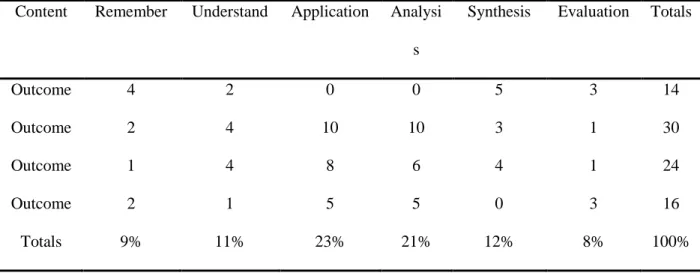
2 Sample Exam Blueprint ... 41
3. Frequencies and Percentages of Sample Demographic Data ... 85
4. Scales Reliability ... 88
5. Descriptive Statistics for Faculty Use of Best Practices in Test Construction ... 89
6. Descriptive Statistics for Faculty Beliefs, Attitudes, and Values of Evidence-Based Test Development ... 90
7. Descriptive Statistics for Faculty Use of Best Practices in Test Revision ... 92
8. Means for Faculty Beliefs, Attitudes, and Values of Evidence-Based Test Development of ASN and BSN Faculty ... 94
9. t-Test (Independent Samples) for Test Construction Subscale ... 96
10. t-Test (Independent Sample) for Faculty Beliefs, Attitudes, and Values in Evidence-Based Test Development Subscale ... 97
Chapter One
The Problem and Domain of Inquiry
The process of assessment is an integral component of nursing education and practice. Effective assessment of student learning and competence provides information about the quality of education provided. Nursing programs are accountable to their stakeholders and society regarding effective preparation of graduate nurses for their practice roles (Siegel, 2015). There are many assessment methods used in nursing education to acquire important information about student learning; however, the most frequently used strategy is the administration of examinations. Through effective testing, educators are able to make important decisions about students, courses, and curriculum. These tests are often weighted most heavily when calculating the students’ grades in the course, which often become high stakes for the student.
According to the National League for Nursing’s (NLN) Fair Testing Guidelines for Nursing Education (2012), there is an ethical obligation for nursing faculty to ensure that tests and all decisions made using information collected from these tests are valid and supported by sound evidence. Suskie (2009) explained that assessments need to be accurate, unbiased, and fair to all students. When an examination is biased, students perform differently based on variables that are unrelated to their knowledge and abilities. A biased test contains construct-irrelevant variances, such as item writing flaws, that may be confusing to students and can affect performance on the item. A test is fair when it is free of bias and students of equal ability are equally likely to answer it correctly
(Klisch, 1994). Therefore, it is imperative that nursing programs use unbiased, objective, and impartial assessments to afford all students an equal opportunity for success.
Nursing professional licensing standards require graduates to pass a comprehensive, primarily computer-adaptive examination. The National Council Licensure Examination for Registered Nurses (NCLEX-RN®) is not only used for licensure, but the scores are also used to determine accreditation status; it is used as the basis for program learning outcomes for all undergraduate nursing schools (Accreditation Commission for Education in Nursing, 2017). All state boards of nursing recognize the NCLEX-RN® as the exam that indicates whether newly graduate nurses have the minimal
requisite knowledge and skills to provide patient care (Clarke, 2017). Currently, the National Council for State Boards of Nursing (NCSBN) determines what content will be included in the NCLEX-RN® and sets the nationally recognized passing standard
(NCSBN, 2017). Most nurse educators are of the opinion that the best way to prepare students for the NCLEX-RN® is to mirror their course assessments with the licensure
exam, which includes test format, content areas, and level difficulty. Because of the importance of effective preparation for nursing students to pass the NCLEX-RN®, increasing the quality of faculty-developed tests to accurately reflect knowledge gained and facilitate success on the licensure exam is a priority for stakeholders such as graduates, health care organizations, and nursing programs (Yeom, 2013).
Undergraduate pre-licensure nursing programs require nursing students to pass many high-stakes tests and assessments. Implementing standardized testing into the nursing curriculum has become popular in nursing programs to determine student progression and graduation. These commercial standardized tests are being utilized as a
form of high-stakes testing across the country. Academic progression and the prediction of passing the NCLEX-RN® are often dependent on the outcomes of these standardized tests. The use of standardized tests does not negate faculty responsibility to provide effective summative assessments throughout the course (Aucoin, 2008; Randolph, 2017; Richards & Stone, 2008). Teacher-developed tests are critical in the effective evaluation and preparation for these standardized assessments, the NCLEX-RN®, and clinical practice.
Effective assessment prepares nursing students for their professional practice. The application of critical thinking and nursing concepts in a dynamic healthcare industry is an expectation of graduate nurses. Management of complex clinical situations while providing competent care is the responsibility of the graduates of nursing programs (Morrison & Free, 2001). Tests that are designed to assess student outcomes related to providing safe and competent nursing care must, therefore, be written according to discipline-specific guidelines (Morrison & Free, 2001).
It has been discussed that the educational preparation of nurse educators has focused on clinical expertise rather than educational methodology and that many
educators enter into academia without the necessary knowledge or expertise in teaching. Schmeiser and Welch (2006) also discussed the demand of educators to be vigilant in test design and focus on improving test and item development. Several authors have
postulated that there are many variables that have impacted issues with effective test construction, some of which include the use of poorly constructed test banks, faculty inexperience, and lack of educational preparation. Based on these variables,
of item writing guidelines in nursing examinations are common and persist (Bosher, 2003; Clifton & Schriner, 2010; Cross, 2000; Masters et al., 2001; Tarrant, Knierim, Hayes, Ware, 2006; Tarrant & Ware, 2008). Such violations often lead to poor student performance and poor retention in nursing programs, which, in turn, contribute to the nursing shortage. Therefore, effective test development practices by nursing faculty contribute to the successful preparation of students for success on the licensure examination and enhance quantity and diversity of the workforce.
Problem Statement
Developing reliable and valid assessments of student learning has long been an issue in nursing education. Faculty members often rely on test banks and other resources for their assessment tests (Nadeem, van der Vleuten, & Alfaris, 2012). Understanding and implementing effective test development in nursing education continue to be a challenge since most nurse educators were prepared as clinicians or managers, and not as teachers. Additionally, most nursing faculty, depending on their educational preparation, may have not received formal training in assessment practices and test development (Walloch, 2006). Therefore, they have minimal experience with test development, item writing, and other forms of assessment. Ultimately, effective testing plays an important role in
curriculum and program planning, student placement, academic advancement, and educational research. If these results are influenced by nursing faculty’s inability to effectively develop tests, then their validity is clearly reduced. There is little in the literature regarding how faculty perceive test development best practices and their ability to prepare the students with effective use of evidence-based methodology in test
motivating evidence-based test development practices will outline the variables impacting effective test construction and educational preparation.
Purpose of the Study
Very little empirical data are available concerning faculty beliefs regarding test construction in nursing education. Understanding teacher attitudes and beliefs about testing methodology issues may lead to a reduction in the frequency of questionable test development and improvement. Improving test development practices can ultimately increase the successful progression of nursing students within nursing programs and effectively prepare them for nursing practice. The purpose of this study was to describe the beliefs, attitudes, and values of nursing faculty regarding the utilization of test development best practices in undergraduate nursing programs.
Research Questions
This study aimed to uncover the beliefs, attitudes, and values of nursing faculty regarding evidence-based test development practices. As a result of the current challenges in test development processes in nursing education, the following research questions guided this investigation:
1. What features of test construction are utilized by nursing faculty in pre-licensure programs?
2. What features of test revision are utilized by nursing faculty in pre-licensure programs? 3. What are the differences in test development practices in pre-licensure programs
Significance of the Study
This study is especially significant to nursing students, nursing faculty, administrators of nursing programs, colleges and universities, state board of nursing administrators, and administrators of healthcare institutions. The data gathered have significant implications to add to the body of nursing by enhancing nursing education, practice, research, and public policy. An essential component of this study was to reinforce nursing faculty’s accountability and responsibility in how to best assess
NCLEX-RN® readiness and content mastery in a fair and effective manner, by ensuring that students are evaluated effectively on faculty-developed tests. This study highlights the current practices of nursing faculty regarding evidence-based test development and its effects on assessment processes.
Nursing Education
Providing additional research in evidence-based test development and faculty’s beliefs and attitudes regarding its use offers insight into interventions to create a positive change in professional development about test construction practices. This research may ultimately contribute to increasing the retention of qualified students to meet academic expectations of graduate nurses in the community. Effectively describing the challenges faculty face in the utilization of best practices in test development and construction may lead to a more active stance on the use of these practices to enhance student assessments to achieve learning outcomes in undergraduate nursing programs.
Nursing Practice
The nursing shortage is a critical issue in the United States. The shortage is expected to get even worse since the demands for registered nurses (RN) are outstripping
the supply. According to the American Association of Colleges of Nursing (AACN, 2017), there will be more than 1.09 million new positions for RNs through 2024. Demands for RNs in acute care will increase by 36% through 2020, and a lack of more than 260,000 RNs will affect the U.S. healthcare system by 2025. Furthermore, because of the increase in the average age of RNs, it is expected that there will be an additional loss of a large number of RNs to retirement over the next 20 years. As a result of the shortage, nurses often need to work long hours under stressful conditions and maintain high patient-nurse ratios. These environments contribute to nurses’ making mistakes and medical errors. In addition, insufficient staffing decreases patient safety, increases work-related stress and injuries for nurses, and causes nurses to leave the profession (AACN, 2011).
One of the strategies identified to resolve the problem of the nursing shortage is to expand nursing enrollment and retain nursing students while ensuring that they meet competencies to begin their nursing careers as entry level RNs. Retaining qualified students in nursing programs is important to meet the local and global need for registered nurses. Effective assessment practices will ultimately lead to retention of students and success on the NCLEX-RN®, leading to increased RNs in various practice environments. This study may provide a step forward in addressing the retention of nursing students and the evidence-based practices in educational assessment which may ultimately contribute to the increase in the nursing workforce.
Nursing Research
Research is a systematic process of investigation that uses disciplined methods to answer questions or solve problems with the main aim of expanding a body of knowledge
(Powers & Knapp, 1995). Nursing education research is designed to develop knowledge about issues of importance to faculty and students utilizing this methodological approach. Essentially, research enables nurse educators to describe the characteristics of a particular nursing education situation about which little is known (Polit & Beck, 2012). The
development and utilization of nursing education knowledge are essential for continued improvement in student nurse preparation for practice. Nurse educators increasingly are expected to adopt research-based or evidence-based education practice using research findings to inform their decisions, actions, and interactions with students.
This study was conducted to address a critical gap in the nursing literature
regarding faculty beliefs, values, and attitudes related to evidence-based test development practices in nursing education. Using a conceptual model with a contemporary social psychology focus, the study describes these beliefs and attitudes which greatly impact effective assessment of student learning and preparation for practice. This ultimately contributes to the body of nursing research by uncovering why the expectations of utilizing evidence-based test development in nursing education continue to not be met.
Public Policy
Lack of gender, ethnic, and generational diversity has been addressed by the National League for Nursing (NLN), focusing on the belief that the diverse patient population should have a nursing workforce that is as diverse in providing care (Phillips & Malone, 2014). Nursing programs are continually faced with the challenge of
recruiting and retaining a diverse population. Diversity issues continue to affect many nursing programs across the nation. As the cultural landscapes change across the country, nursing schools face the challenge of recruiting and retaining students of various cultural
backgrounds. While today’s nursing students are more diverse and nontraditional, testing practices in nursing programs have changed little in the past 20 years. Recently, nursing education experts have called for a radical change in student assessment methods (Benner, 2012; Benner, Sutphen, Leonard, & Day, 2010; Halstead, 2011; Kantor, 2010; Oermann & Gaberson, 2016). Researchers have clearly demonstrated that poorly constructed examinations penalize not only diverse and nontraditional students but all students and impact progression and retention in nursing programs (Bosher & Pharris, 2009; Carrick, 2011; Clifton & Schriner, 2010; Downing, 2005; Tarrant et al., 2006; Tarrant & Ware, 2012). Poorly constructed examinations continue to impact the success on the NCLEX-RN®. Poor outcomes on the NCLEX-RN® negatively affect the nursing programs, the nursing workforce, and the healthcare industry.
This study contributes to the understanding of the beliefs, values, and attitudes of nursing faculty related to evidence-based test development practices. This may improve the quality of teacher-developed tests and, ultimately, decrease the bias towards minority students and students who speak English as a second language, thereby creating equal opportunity for success and increasing diversity in the nursing workforce.
Philosophical Underpinnings
Paradigms, also considered worldviews, have a general philosophical orientation about the world and the nature of research that a researcher brings to a study. Worldviews arise based on discipline orientations and the types of beliefs held by individual
researchers. Every research study must be grounded in the philosophical understandings about the world. Paradigms provide an empirical structure for exploring natural science to make sense of the nature of reality and the basis of knowledge (Creswell & Clark,
2007). In quantitative research, the post-positivist assumptions have represented the traditional form of research. This worldview is sometimes called the positivist/post-positivist research, the scientific method, empirical science, and post-positivism. Post-positivism represents the thinking after Post-positivism, challenging the traditional notion of the absolute truth of knowledge and recognizing that we cannot be positive about our claims of knowledge when studying the behavior and action of humans (Budd, 2001). The post-positivist traditions come from 19th-century writers such as Comte, Mill,
Durkheim, Newton, and Locke (as cited in Smith, 1983) and, more recently, from writers such as Phillips and Burbules (2000).
Epistemology (the nature of knowledge), ontology (the nature of reality), and the philosophy of science are paradigms of underpinning philosophical assumptions that influence the practice of research (Samdahl, 1999). The post-positivist epistemology is one of modified dualism/objectivism. This is the acceptance that all discovery is subject to interpretation; independence is not possible, but objectivity is seen as the goal during the discovery process. External validity demonstrates this objectivity. The ontological stance of post-positivism is critical realism. Critical realism is the belief that all observation is fallible and has error, and all theory can be revised. It posits that cause and effect relationships do exist, but it is not always possible to understand these relationships entirely. This ontological position believes that the research can be used to promote change and the researcher must be careful of value contaminating research (Mertens, 2014).
The most important assumptions of post-positivism that apply to this quantitative research study are as follows:
1. Data, evidence, and rational considerations shape knowledge in this research study. Researchers collect information on instruments based on measures completed by the participants or by observations recorded by the researcher. 2. This research seeks to develop relevant, true statements that serve to explain a
situation of concern or describe the causal relationship of interest.
3. Subjective internal states such as feelings, attitudes, perceptions, and beliefs can be operationalized and objectified by translating them into numerical data. 4. Objectivity is an essential aspect of competent inquiry within this study.
Methods and conclusions of this research study must be examined for bias such as reliability and validity.
Research methods can be traced back, through methodology and epistemology, to an ontological position. It is impossible to engage in any form of research without
committing to ontological and epistemological positions. The differing ontological and epistemological positions of researchers often lead to different research approaches towards the same phenomenon. The quantitative methodology and post-positivist paradigm were applied to this research study (Scotland, 2012).
Theoretical Framework
The purpose of a theoretical framework is to organize the variables and
relationships between the variables. The researcher can visualize the aspects of the study and the ways in which each variable will be measured and will interrelate (Morse & Niehaus, 2009). Selecting the appropriate theoretical frameworks is important to guide resolution of issues that may be identified, develop the research design, and establish a perspective for interpretation in order to suggest recommendations for the improvement
in nursing education. The framework for this study is based upon Rokeach’s (1968) theory of beliefs, attitudes, and values.
The concepts of beliefs, attitudes, and values have been examined by many
theorists. The beliefs, attitudes, and values theory by Rokeach contains constructs that are important and applicable to this research study. This theory is a cognitive consistency theory, which indicates that a person’s beliefs, attitudes, and values must be in harmony with each other and which further explicates what the importance of this is while trying to persuade an individual. This theory utilizes a psychological perspective which
examines how an individual’s psychological characteristics affect and directly influence his or her behavior (Sereno, 2012). Its constructs are applicable to this study as they propose a solution to the attitude-behavior discrepancy issue. All three components of this theory are interconnected and will ultimately determine the behavior of the individual.
The first component of the theory is beliefs which are described as perceptions that something exists or that it is true. Beliefs are further classified as central beliefs and peripheral beliefs. Rokeach (1968) suggests that central beliefs are harder to change because of the centrality of their existence within the individual and are of more importance in determining behavior. Peripheral beliefs have lesser importance and are easier to change. In this particular study, the beliefs of the faculty related to evidence-based test construction will be influential in determining their potential or actual adherence to the best practices.
Attitude is the second construct of the theory. Attitudes are described as positive or negative feelings towards people, ideas, or things (Sereno, 2012). The important
element of this concept as it relates to this study is whether attitudes predict behavior and the relationship between the attitudes of the nursing faculty and their adherence to the best practices required to effectively construct valid and reliable tests.
The final concept within the theory is an individual’s values. Values are considered beliefs that are important to a person that help guide their lives and are the most important construct of this theory. Values are the most important concept in this theory since by affecting a person’s values, true persuasion occurs because these are beliefs that a person aims to live by. By changing the values of a person, all the attitudes displayed as a result of these closely held values must change; therefore, a number of the beliefs that are related to the attitudes displayed also change. Ultimately, the three
variables involved—beliefs, attitudes, and values—form a functionally integrated system where a change in one part will affect all the other parts (Eckhardt, 1970). In
understanding the values of the nursing faculty, the relevance and importance of best practices will result in determination of the use of best practices.
A study conducted by Clark-Goff and Eslami (2016) using Rokeach’s theoretical framework focused on teachers’ beliefs about English language learning and teaching. The study identified the beliefs and attitudes that teachers brought to the classroom. These beliefs were strong predictors of their behavior towards students who are English language learners (ELL). Because of the diversity of the student population and the high demands of high-stakes testing, the study demonstrated the importance of understanding mainstream teacher beliefs and how these beliefs can be altered. The study utilized surveys to collect the quantitative data from 354 participants, some of whom were then solicited for qualitative data through semi-structured focus group interviews. The
participants selected for the qualitative component of the study were determined by the survey data obtained. The study found after implementing coursework addressing diversity and English language teaching methodology, the teachers showed greater acceptance of children and parents with native languages. Understanding the impact of those beliefs was critical in effectively teaching this diverse population.
Another study utilizing the Rokeach’s theory of beliefs, attitudes, and values was conducted on neonatal nurses and their perceptions and choices based on their values related to caring for certain types of patients. Raines (1994) utilized Rokeach’s
theoretical framework to identify values influencing the nurses’ behaviors in hypothetical clinical situations. This descriptive study utilized a random sample of 331 members of the National Association of Neonatal Nurses. The instrument was a researcher-developed survey which focused on identifying the members’ values based on three hypothetical case scenarios. Results of this survey indicated that nurses had a hierarchy of beliefs and values that guided their practice.
Rokeach’s belief system is a conceptual model with a very simple premise: Human beings have differing beliefs, attitudes, and values of differing intensity and complex connections that determine their importance and behavior. These constructs rooted in Rokeach’s theory are important in the educational research of faculty beliefs, attitudes, and values of evidence-based test construction practices. Beliefs, attitudes, and values are all organized together to form a functionally integrated cognitive system, so that a change in any part of the system will affect other parts, and will culminate in behavioral change (Rokeach, 1968).
Assumptions
According to Rokeach’s beliefs, attitudes, and values theory, one’s belief system, including the substructures of values and attitudes, is a disposition to action and major determinants of behavior. Based on the assumptions of this theoretical framework, beliefs teachers hold will influence their perception and judgments, which in turn, will affect their behavior in their role as educators. All teachers hold beliefs, however defined and labeled, about their work, their students, their subject matter, and their roles and responsibilities. It is also assumed that understanding the belief structures of nursing faculty is essential to improving their professional practices.
Another assumption based on Rokeach’s theory is if the belief system regarding test development is identified then it gives nursing education a point of reference to begin to understand the attitude-behavior discrepancy related to evidence-based practice. Identifying the attitudes and values of nursing faculty related to the professional task of test development can determine methods to address the issue. The connection between what nurse educators believe and the performance of certain educational tasks is the basis of this investigation.
There are three major assumptions made by the researcher regarding this study. The first assumption is that the faculty participants would answer the survey truthfully. The nurse educators are participating voluntarily and would be assured of anonymity and confidentiality. The faculty participants could also withdraw from the study at any time without ramifications. No participants withdrew from the study. The second assumption is that there would be a valuable number of responses to the survey disseminated to nursing faculty. In a similar study completed by Killingsworth (2013), the response was
sufficient and produced rich data in order to validate the findings. The final assumption by this researcher was that the responses would provide a significant range of diverse beliefs, attitudes, and values as it relates to the study constructs. These responses make a considerable contribution to the research problem identified and to the body of
knowledge in nursing education.
Definition of Terms
The following terms discussed in this section are directly related to this research and are used consistently throughout this document. These definitions allow for more concrete understanding of the study and add to its relevance.
Beliefs
Theoretical definition: a cognitive act or state in which a proposition is taken to be true. A belief is the state of mind in which a person thinks something to be the case, with or without there being empirical evidence to prove with factual certainty.
Philosophers use the term to refer to personal attitudes associated with true or false ideas and concepts that do not require active introspection and circumspection (Nespor, 1987).
Values
Theoretical definition: elements of an individual’s belief system that measure choices, whether consciously or not. Values are used to rationalize behavior of self or others. They emerge from a combination of one’s background, experiences, and evolving sense of self (Rokeach, 1968).
Attitudes
Theoretical definition: a psychological construct, a mental and emotional entity that inheres in or characterizes a person. Attitudes are complex and are an acquired state
through one’s experiences. Attitudes are an individual’s predisposed state of mind regarding value and are precipitated through a responsive expression toward a person, place, thing, event, or character (Richardson, 1996).
Pre-Licensure Nursing Program
Theoretical definition: according to the American Nurses Association, an educational pathway that culminates in one’s being able to sit for the NCLEX-RN® licensure examination (Schmidt & MacWilliams, 2011).
Operational definition: Associate degree in nursing (ADN) is a two-year degree offered by community colleges and hospital-based schools of nursing in Florida.
Bachelor of science in nursing (BSN) is a four-year degree offered at colleges, universities, and the few remaining diploma programs in Florida.
Chapter Summary
Retaining qualified students in nursing programs is important to meet the local and global need for registered nurses. Increasing the culturally and ethnically diverse nursing workforce is of paramount importance to meeting the needs of the current healthcare population. Healthcare organization leaders surmise that communication among healthcare professionals, quality of patient care, and overall safety will be enhanced by more diversity in the nursing profession. However, the retention of ethnically diverse nursing students remains low in nursing schools nationwide. The increased attrition of nursing students has been attributed to issues of bias in assessment practices (Andrews & Roberts, 2003; Bosher, 2003; Hicks, 2011).
Successful progression and graduation of nursing students are highly impacted by students’ ability to meet the benchmarks of many high-stakes tests, including course
exams and standardized tests, within the nursing curricula. It is an obligation of nursing faculty to ensure that tests are fair, valid, and reliable to effectively assess student learning. The majority of nurse educators have minimal formal education or training in teaching and testing strategies. As a result, many assessment tests administered in nursing schools are poorly constructed (Clifton & Schriner, 2010; Cross, 2000; Masters et al., 2001).
Test development best practices and evidence-based guidelines must be utilized in assessment preparation in order to give all students a fair and equal opportunity for successful progression and graduation. Effective test development of quality nursing examinations also prepares nursing students for the NCLEX-RN® which ultimately leads to the increase in the quality, quantity, and diversity of registered nurses (Clifton & Schriner, 2010). Understanding the beliefs, attitudes, and values of nursing faculty regarding evidence-based test development is key to increasing the implementation of effective testing practices in nursing programs.
This chapter presented a discussion of the current challenges in the
implementation of evidence-based practice in test development within nursing education; provided an overview of the effects on culturally diverse students; identified nursing workforce issues; explored the retention, progression, and graduation issues within nursing education programs; and established the impact of high-stakes testing in nursing curricula. The following chapter provides a thorough discussion of the theoretical and empirical literature related to this research study.
Chapter Two
Review of Literature
The development of valid and reliable tests in nursing education has been a continuing challenge. Faculty-developed tests can be erroneous, biased, and ineffective, a factor which significantly hinders the progression status of nursing students throughout their nursing programs (Dibattista & Kurzawa, 2011). This study focused on uncovering the beliefs, values, and attitudes that educators place on using evidence-based test development practices to effectively create tests that will assess students’ competence and prepare them for clinical practice.
The most popular form of summative assessment in nursing education is testing (Popham, 2009). These classroom tests vary from teacher-developed to commercially-developed for purchase. Although classroom testing in nursing education is a dominant assessment technique, the focus on evidence-based test development practices has received scant attention in the nursing literature. Nurse educators have a professional responsibility and obligation to ensure that their test development practices are valid and reliable measures of student learning. It is the understanding of the beliefs, values, and attitudes of nursing faculty which may contribute to improving the testing practices within nursing education programs. A review of the literature will be presented in this chapter to provide information over five sections that correspond to the concepts and issues in current testing practices in nursing education.
Keywords, Databases, and Resources
The literature review included the following key words: test development, test items, multiple choice, test questions, nursing education, evidence-based nursing education, evidence-based practice, test bias, cultural bias, standardized testing, test construction guidelines, testing best practices, testing in nursing, assessments in nursing, faculty attitudes in test development, and faculty beliefs. The primary electronic
databases used in the search were: the Cumulative Index to Nursing and Applied Health Literature (CINAHL); EBSCOHost; Education Full Text; ProQuest Nursing and Allied Health; ProQuest Dissertations; Educational Resources Information Center (ERIC); Academic Search Premier; and Education Research Complete. References frequently cited in relevant articles were reviewed, as were works by the key expert authors who developed the theoretical frameworks and taxonomies of test development guidelines. Other resources included Nova Southeastern University’s library. The review is limited to approximately 75 English language articles.
The following section will comprehensively focus on literature supporting current best practices in test development. The discussion will also include current testing
methodology and taxonomy, standardized testing, the NCLEX-RN® licensure examination, issues in test development, and identified linguistic and cultural biases.
Evidence Based Practice in Nursing Education
The Institute of Medicine (IOM) cited evidence-based practice (EBP) as one of the five essential core competencies for healthcare educational programs. According to the IOM, using EBP means the integration of the best research with clinical expertise and patient values to achieve optimal health outcomes (Long, 2003). Regardless of discipline,
EBP is a core competency for all healthcare clinicians. Nurses, specifically, are required to adhere to accepted standards of practice and professional performance. These
standards mandate the use of EBP interventions and integration of findings into clinical practice. EBP requires nurses to access and appraise evidence before integrating it into practice (Mehrdad, Joolaee, Joulaee, & Bahrani, 2012). The focus of EBP has routinely been on the clinical care of patients and its integration into effective care.
Within the previous decade, EBP has also infiltrated nursing education. In
academia, the focus of EBP has primarily been from the perspective of establishing active research within nursing courses and stimulating a research culture among nursing
students. Currently, both baccalaureate and master’s level nursing education programs have shifted the paradigm from an historical focus on preparing nurses who are
generators of research to evidence users who effectively translate research findings into clinical practice (Fiset, Graham, & Davies, 2017). The American Association of Colleges of Nursing (AACN), the association that guides baccalaureate and graduate nursing education curricula, identified scholarship for evidence-based practice as an essential of baccalaureate education. A priority for nurse educators has been to focus on developing positive attitudes towards EBP by role modeling and developing the necessary skills to integrate evidence into nursing courses (AACN, 2008).
The use of EBP to effectively prepare nurses for the dynamic healthcare
environment is a priority for nursing programs. Shifting the focus from teaching EBP to implementing it in nursing education practices is critical. Integrating empirical research in instructional strategies, student assessment processes, and curricular development increases the retention and success of nursing students nationwide (Fiset, Graham, &
Davies, 2017). According to the National League for Nursing (NLN), the academic nurse educator must achieve identified competencies to promote excellence in this role. There are expectations of the complex faculty role as a specialty area of practice. One of the competencies is the use of assessment and evaluation strategies. This competency describes the responsibility of the nurse educator to “use a variety of strategies to assess and evaluate student learning in classroom, laboratory and clinical settings, as well as domains of learning” (NLN, 2005, p. 3).
Increasing importance has been placed on improving student learning and retention in nursing education programs; however, there is little evidence about whether nurse educators are aware of using research and how much research based strategies are being used in the academic environment (Whorley, 2018). Understanding the attitudes and barriers towards the integration of research by nursing faculty can potentially
influence the effectiveness of methodology. This can ultimately have a positive effect on the preparation of the nursing workforce. Utilizing EBP in nursing education is a way to improve nursing education practices and student outcomes. In meeting these practices, educators can ensure that graduates are fully prepared to meet the workplace
requirements which is critical to the nursing profession and, most importantly, to the safety and optimal health of patients. Testing in nursing supports the identification and reporting of student progress, evaluating student learning, identifying individual and group challenges in learning, and providing important data regarding curriculum and course efficacy (Oermann & Gaberson, 2016). The types of testing in nursing education significantly impact nursing students’ success and progression (Poindexter, Hagler, &
Lindell, 2015). Implementing EBP related to the types of testing in nursing education is a vital component of preparation for professional practice.
Testing in Nursing Education
A significant amount of attention in nursing education is focused on classroom assessment. It is customary for nurse educators to use faculty-developed tests to assess the progress of nursing students in the didactic portion of the nursing programs. A major focus of the testing practices is to effectively prepare students to pass the NCLEX-RN® and successfully achieve licensure. More importantly, it is the professional responsibility of nursing faculty to prepare students for safe and effective practice. In addition to
licensure and safe practice, nursing programs must meet accreditation standards related to student and program outcomes (Siegel, 2015). The Commission on Collegiate Nursing Education (CCNE) is an autonomous accrediting agency which strives to ensure the quality and integrity of baccalaureate, graduate, and residency programs in nursing. Recognized by the United States Secretary of Education as a national accrediting agency, the CCNE sets forth accreditation criteria related to standards which include the mission and governance, institutional commitment and resources, curriculum and teaching-learning practices, and assessment and achievement of baccalaureate program outcomes. Specific criteria related to the effectiveness of the nursing program and its outcomes are the program’s NCLEX-RN® pass rate and their nursing student completion rates, which
is the outcome of the program’s assessment and testing practices (CCNE, 2017). The Accreditation Commission for Education in Nursing (ACEN) is another accrediting agency which provides designated accreditation for different types of nursing transition to practice education programs. ACEN’s role supports the interests of all nursing
programs (e.g., diploma, ASN, BSN, MSN) and continually monitors these programs through state and licensing rules. The agency also provides oversight of the preparation of students by nursing programs for transition into the nursing profession (ACEN, 2017).
The National League for Nursing (NLN) has also established core competencies for the academic leader in nursing education. Specifically, core competency number three focuses on the use of assessment and evaluation strategies in nursing programs. The NLN expects nurse educators to “use a variety of strategies to assess and evaluate student learning in classroom, laboratory and clinical settings, as well as all domains of learning” (NLN, 2012a, para. 5). The NLN also offers the certified nurse educator (CNE)
certification in order to “distinguish academic nursing education as a specialty area of practice and an advanced practice role within professional nursing” (NLN, 2012a, para. 1). A major content area of the CNE examination is the focus on effectively using assessment and evaluation strategies. Incorporating current research in assessment and evaluation practice and creating effective assessment instruments to evaluate outcomes are significant skills nursing faculty must demonstrate (NLN, 2011).
Based on the NLN requirements for nurse educators and the CCNE and the ACEN’s program accreditation criteria, the centrality of nursing assessments and testing in nursing programs significantly contributes to the success and efficacy of a nursing program. It is this reality that reinforces the need for EBP in test development and
assessment practices in nursing education. The following sections will focus on the types of testing in nursing education, which include course testing, standardized testing, and preparation of the NCLEX-RN® licensure examination.
Course Testing
Whereas nursing courses remain testing oriented, an increasing number of
publications discussing testing techniques recognize the implications on effective student assessment (Aucoin, 2005; Clifton & Schriner, 2010; Duty, Christian, Loftus, & Zappi, 2016; Siegel, 2015; Su, Osisek, Montgomery, & Pellar, 2009; Tarrant & Ware, 2008). Faculty-developed assessment tests are the primary method of student assessment in undergraduate nursing programs. In many instances, it is the sole method of didactic assessment. This is the reason the faculty-developed tests must be well constructed to assess higher cognitive levels and critical thinking (Siegel, 2015). Nursing faculty must be efficient in understanding the complexity of assessment in the classroom and
ultimately create effective assessment tests. However, most nursing faculty have not received formal training in test development and effective assessment construction within their educational preparation programs (Walloch, 2006).
Assessment and instruction methods are interrelated and are impacted by the educator’s beliefs and values of the process. Effective assessment is significantly affected by how nursing faculty plan and deliver their instruction. The incongruence between the assessment and the teaching methods continues to raise concerns (Kantar, 2014). A teaching methodology is often misaligned with testing practices, which ultimately affects the student assessment data obtained. Nursing faculty continue to be saturated with course content and instruct at a knowledge cognitive level, but they implement higher cognitive level testing with their students. This leads to a disconnect between instruction and assessment and errors in the validation of students’ ability to meet course objectives (Oermann & Gaberson, 2016).
An analysis was completed by Clifton and Schriner (2010) in a baccalaureate nursing program involving the faculty-developed final examinations. There were a total of 256 tests selected for evaluation. The researchers randomly selected 20 items from each test for analysis. The intention of the faculty was to assess the students’ ability to apply and analyze concepts; however, the test items selected were evaluated at a
knowledge and comprehension cognitive level. In addition, 63% of the number of items analyzed were labeled as being extremely below the cognitive level necessary for that course. Most of the conclusions were based on the poorly written items and the weak and implausible distractors within the question. The subject of implausibility of distractors in test development has a significant effect on the validity and reliability of the examination (Rodriguez, 2005). The use of textbook test-banks is another concern in test development for course examinations. Faculty members often rely on the course textbook test-bank in order to develop their course exams. Research conducted by Masters and colleagues (2001) focused on the review of nursing textbook test-banks. The study focused on analyzing the test-banks for their adherence to item development guidelines by Bloom’s taxonomy of cognitive levels (1956) and Haladyna and Downing’s (1989) multiple choice question guidelines. The authors analyzed approximately 3,000 items and discovered that over 2,000 violated item development best practices. Most of the items were categorized as low level knowledge questions which are not effective in assessing and preparing nursing students for the NCLEX-RN® examination. No more recent studies were found in the literature regarding test bank analysis. Textbook test-bank items are seldom validated for proper psychometric properties and often contain many biases and best practice errors. Many of the items are also labeled with an incorrect cognitive level.
Faculty’s heavy reliance on test-banks to develop nursing tests can cause invalid assessment of nursing competence and impact progression and retention of nursing students (Downing, 2005; Tarrant, Knierim, Hayes, & Ware, 2006; Tarrant & Ware, 2011).
According to Notar, Zuelke, Wilson, and Yunker (2004), faculty-developed tests have historically been incompetently designed as compared to the reliability and validity of items on the NCLEX-RN® and other standardized achievement exams. In a study by Cross (2000), 110 instructor-developed final exams were randomly selected from 66 nursing programs in the United States. The analysis revealed that over half of the items developed by the faculty for the course exam were poorly written and erroneously leveled based on Bloom’s taxonomy. In a dissertation by Killingsworth (2013), a descriptive correlational design was used to analyze faculty’s use of best practices in test
construction. The researcher investigated faculty in baccalaureate nursing programs in over 30 states. The data revealed that many educators do not always use best practices in test construction. Participants reported using course objectives, class objectives, and specific objectives to develop their tests. The data also revealed that peer review and the use of the NCLEX-RN® test plan for test development were used the least. Assessment of linguistic and cultural bias was the least used in the test revision process, with item analysis based on difficulty being the most used practice. Many of the course test construction practices reported by the participants did not include blueprinting, item analyses, peer review, use of current EBP, and identification of linguistic bias consistently.
The impact of fallacious test items has been discussed substantially in nursing education literature. The impact of poor course testing and its effects on student success must be a priority of academic leaders. Faulty test development practices penalize all students and have a major impact on the effective preparation for clinical practice. Tarrant and Ware (2008) determined that issues with poorly developed test items in nursing courses had a negative impact on the higher achieving students more than the borderline students. Bosher and Pharris (2009) and Clifton and Shriner (2010) also discuss the impact of ineffective test development practices on diverse and nontraditional students. Progression and retention of these students are significantly influenced by substandard assessment practices. Improving the quality of faculty-developed tests is a topic that must be addressed by administrators, educators, and nursing organizations.
Standardized Testing
Standardized national tests have become very popular within nursing education programs as a predictor of NCLEX-RN® performance. Nursing programs integrate these
standardized tests to protect and predict their NCLEX-RN® pass rates (Randolph, 2017; Richards & Stone, 2008). However, the effectiveness of these standardized assessments continues to stir up controversy. In many nursing programs these standardized tests are considered high stakes by requiring the nursing students to achieve a minimum score in order to progress or graduate. Some of the more popular standardized testing exit exams are Health Education Systems Incorporated (HESITM) HESI E-2, Assessment
Technologies Institute (ATITM) Comprehensive Predictor Exam, Kaplan Readiness Test, NLN End of Program, and Mosby Assess Test. Meeting the benchmark for these
and sit for the NCLEX-RN® licensure exam (Nilbert & Morrison, 2013). In addition to the exit exams, the predictive precision of the standardized course content tests are also utilized throughout nursing curricula. Standardized course content tests are utilized at the end of individual courses in order to assess the students’ comparability nationally. These course tests are often also assigned an assessment (grade) percentage for the class, thereby determining the progression of the student from term to term (Richards & Stone, 2008).
In 2012, the NLN responded to the increasing concern of the significant reliance nursing programs had on standardized testing as a graduation requirement. The
organization developed the NLN Vision: Fair Testing Imperative in Nursing Education and NLN Fair Testing Guidelines in order to address the arguable use of standardized high-stakes testing. The NLN’s Chief Executive Officer, Dr. Beverly Malone, expressed concern regarding eligibility denial of students to taking the NCLEX-RN® based solely on standardized exams and deemed it unfair to students and possibly harmful to the nursing profession (NLN, 2012b). The NLN offered recommendations for test
development and implementation based on evidence on testing practices from nursing and other disciplines. Although the NLN suggests multiple sources and approaches for assessment of knowledge and clinical abilities critical to evaluating students’ abilities in addition to high-stakes testing, many nursing programs continue to utilize standardized testing in decision making regarding progression and graduation (NLN, 2012b).
Preparing students effectively is crucial to the performance on national
standardized tests. A survey completed by the NLN on assessment and grading practices in nursing programs established that the most important factor guiding faculty decisions
on strategies to use in assessment of student learning outcomes is the NCLEX-RN® pass rates (NLN, 2012b). To emulate the NCLEX-RN® exam, nursing faculty believe that utilizing multiple choice questions on course exams is the most effective form of assessment. With such high-stakes testing being administered in nursing programs, it is imperative that these tests contain quality question items that are reliable and valid as a means to assess student learning. A general guideline of the NLN Fair Testing Guideline for Nursing Education describes the ethical responsibility of the nursing faculty to establish validity of their tests as well as the decisions based on these tests. The NLN further emphasizes the need for substantial evidence and consistency to ensure fairness for all test takers within their programs (NLN, 2012b).
Effective test development in nursing education is imperative for the preparation of students for standardized tests and the NCLEX-RN®. Quality items are essential in identifying strengths and weaknesses in students and their ability to meet course and program objectives. However, quality items are difficult to write, and poorly developed test items are often misinterpreted and fail to assess the students’ abilities effectively. The construction of reliable and valid exams challenges even the most experienced nurse educators (Nadeem et al., 2012). According to DiBattista and Kurzawa (2011), most college faculty have very little formal education or training in teaching and testing strategies, and this fact also significantly applies to nurse educators. Graduate nursing programs provide minimal coursework on student assessment and effective item writing, so nursing faculty are often ill-prepared to successfully navigate the test development process, thus contributing to the challenge of poorly constructed tests in pre-licensure nursing programs. Essentially, the utilization of unreliable and invalid test items in test
development has a significant effect on the successful preparation of nursing students for standardized exams and the NCLEX-RN®.
NCLEX-RN®
The NCLEX-RN® tests the mastery of entry-level practice requirements for all
pre-licensure nursing students. It is a standardized exam that each state board of nursing uses to determine whether a candidate is prepared for entry level nursing practice. The examination content and behaviors are differentiated by several areas considered client needs, including (a) management of care-20%; (b) safety and infection control-12%; (c) health promotion and maintenance-9%; (d) psychosocial integrity-9%; (e) basic care and comfort-9%; (f) pharmacology and parenteral therapies-15%; (g) reduction of risk potential-12%; and (h) physiological adaptation-14% (NCSBNa, 2016). Each of these areas within the NCLEX test plan can guide nurse educators to focus on curriculum development and student success.
The exam plan also consists of integrated processes which include the nursing process, caring, communication and documentation, teaching/learning, and culture and spirituality. The NCLEX-RN® exam items encompass all eight client needs categories and integrated processes and are based on a practice analysis survey distributed to entry level nurses. The practice analysis focuses on 142 job activities performed and the current practice of the entry level nurse. The results of the survey and the job activities identified guide content distribution of the client need categories on the NCLEX-RN®.
The passing scores are based on a minimum of 60 items to a maximum of 250 items, most of which are at the application or above cognitive level based on Bloom’s taxonomy for the cognitive domain (Clifton & Schriner, 2010; NCSBN, 2016b). Fifteen
additional items are added to the candidates’ exam as research items for future use, bringing the total minimum number of items to 75 and the maximum number of items to 265 answered by the candidate. Item formats within the examination include multiple choice, multiple response questions, Hot Spot items, fill-in-the blank calculation items, and drag-and-drop/ordered response items. All item types may have additional audio visual components such as charts, tables, graphics, sound, and video (NCSBN, 2016a; Wendt & Kenny, 2009). The exam is administered through computer adaptive testing which utilizes an algorithm to tailor the difficulty of each item to the candidate’s ability. The computer continuously evaluates the candidate’s ability and selects items that he or she should find challenging. The computer must be 95% confident in the candidate’s ability based on the number of items they have answered for the candidate to pass the exam (Sanders, 2018).
First time NCLEX-RN® pass rates are used to measure nursing program quality and curriculum effectiveness. Nurse educators have the responsibility and accountability to effectively prepare students to pass the NCLEX-RN® as well as effectively prepare safe and competent nurses. Essentially, nursing students who have successfully
completed a nursing degree should be qualified to achieve licensure through the NCLEX-RN® examination which measures minimal competency to practice nursing. This minimal competence should be achievable by utilizing valid and reliable assessment practices throughout the nursing programs (Tarrant & Ware, 2008).
The NCSBN is the organization established to protect the public by ensuring that all licensed nurses are competent to practice (NCSBN, 2016a). The NCSBN focuses on developing the NCLEX-RN®, an exam which has both psychometric integrity and
defensibility and is continually updated. The updates are intended to ensure that entry level nursing practice is able to meet the dynamic healthcare environment. Prior to 1994, the NCLEX-RN® licensure exam was administered by paper and pencil biannually. Today, the NCSBN uses the computerized adaptive testing (CAT) method for the
licensure exam. As stated previously, candidates receive a minimum of 75 questions to a maximum of 265 with a maximum time for testing of 6 hours. Once the computer has determined that the candidate, with 95% certainty, has scored either above or below the standard, the session will be ended. If the candidate fails the exam, the NCSBN stipulates that there must be at least 45 days between the original attempt and the retake (Carrick, 2011).
Each state board of nursing establishes its own rules and regulations regarding retesting. In Florida, for example, the candidate must take a review course if the
candidate has failed the NCLEX-RN® three times. After six attempts, the candidate must complete an additional nursing program before being eligible to retest (Florida Board of Nursing, 2018). In a study by Griffiths, Papastrat, Czekanski, and Hagan (2004), 21 participants who had failed the NCLEX-RN® at least once were asked to identify the factors they believed contributed to their outcome. The factors identified were poor program preparation, inadequate study habits, lack of knowledge on how to prepare, lack of confidence, poor test-taking skills, overwhelming family responsibilities, and
employment. In an additional study by Aucoin and Rodgers (2000), an additional factor identified was demanding scheduling factors faced by the students. There are
multifaceted components to examine when nursing students who graduate from a nursing program and fail the NCLEX-RN®. Effective preparation and assessment of students can
minimize the risks of these students’ failing the licensure exam. Nursing faculty must implement evidence-based assessment strategies and instructional methodology to prepare these students to pass the NCLEX-RN® on the first attempt.
Guidelines for Test Development
High-stakes consequences are often attached to tests in nursing education. These consequences affect students, course faculty, nursing programs, healthcare communities and institutions, accrediting agencies, and licensing boards (Clifton & Schriner, 2010). The purpose of these tests is to provide data from which conclusions regarding students’ achievement of learning objectives and competence are determined. Effective test development plays a significant role in providing valid data to reach these conclusions. Researchers have gathered and outlined best practices for test development for which many have been validated through systematic research. This section of the study will delineate best practices and evidence related to research-based guidelines for test development.
Bloom’s Taxonomy
A widely used framework which classifies statements based on the learning expectations of students is the taxonomy of educational objectives (Anderson &
Krathwohl, 2001). Originally, the framework was designed as an avenue of encouraging the exchange of test items among faculty at various educational institutions in order to develop banks of test items, each measuring the same educational objective. This idea originated at the University of Chicago by Benjamin S. Bloom. As the associate director of the board of examinations, Bloom had the expectation to help decrease the intensive labor process of comprehensive examination preparation by university faculty. A number