PDF hosted at the Radboud Repository of the Radboud University
Nijmegen
The following full text is a publisher's version.
For additional information about this publication click this link.
http://hdl.handle.net/2066/159470
Please be advised that this information was generated on 2017-12-06 and may be subject to
change.
Early proactive
palliative care in
general practice
identification, communication,
and structured planning
Early proactive
palliative care in
general practice
identification, communication,
and structured planning
Printing: Gildeprint Drukkerijen, Enschede, the Netherlands Graphic design: Nicolet Pennekamp
ISBN/EAN: 978-90-9029818-4
© B. Thoonsen 2016. All rights reserved. No part of this book may be reproduced, stored in a retrieval system, or transmitted, in any form or by any means without the prior permission of the holder of the copyright.
Early proactive palliative care in general practice
identification, communication, and structured planning
Proefschrift
ter verkrijging van de graad van doctor aan de Radboud Universiteit Nijmegen
op gezag van de rector magnificus, volgens besluit van het college van decanen in het openbaar te verdedigen op vrijdag 16 september 2016
om 14.30 uur precies door
Bregje Anne Thoonsen geboren op 24 september 1972
Promotoren
Prof. dr. K.C.P. Vissers Prof. dr. C. van Weel
Copromotoren
Dr. Y.M.P. Engels Dr. C.M. GrootManuscriptcommissie
Prof.dr. Y.F. Heijdra Prof.dr. B.G.M. van Engelen Prof.dr. B. Aertgeerts (KU Leuven)Paranimfen
Dr. A.M. Schillings Dr. I.K. VeldhuijzenAls je weet dat je dood gaat kun je twee fouten maken: doen alsof er niets aan de hand is of doen alsof het leven al voorbij is.
Rene Gude
General practitioners prized palliative care as one of the few remaining ‘old fashioned’ aspects of primary care, as much an art as science, based on relationships, and something that should not be at risk of reduction to a checklist or form.
Kirsty Boyd
Contents
Chapter 1
General introduction 9Chapter 2
Early identification of palliative care patients in general practice: 25 development of RADboud indicators for PAlliative Care needsBr J Gen Pract. 2012 Sep;62(602):e625-31
Chapter 3
Early identification of and proactive palliative care for patients 81 in general practice, incentive and methods of a randomisedcontrolled trial
BMC Fam Pract. 2011 Nov 3;12:123
Chapter 4
Training general practitioners in early identification and 97 anticipatory palliative care planning: a randomised controlled trialBMC Fam Pract. 2015 Sep 22;16(1):126
Chapter 5
Training general practitioners contributes to the identification 121 of palliative patients and to multidimensional care provision:secondary outcomes of an RCT
BMJ Support Palliat Care. 2016;0:1-8
Chapter 6
Timely identification of palliative patients and anticipatory care 141 planning by GPs: practical application of tools and a training
programme
BMC Palliat Care. 2016 Apr 5;15(1):39
Chapter 7
Discussion 161Chapter 8
Summary 181 Samenvatting 186 Dankwoord 190 Publication list 192 Curriculum Vitea 193Until 2010, palliative care was mainly restricted to terminal, reactive care, and to patients with cancer. The GP, being the most appropriate professional to coordinate palliative care for home-dwelling patients, needed tools to be able to identify his palliative patients early in time, and asked for training in proactive palliative care planning. My thesis contains several studies, aiming to meet these needs.
Mr Roos 80 years old, known for years with congestive heart failure (CHF), visits the depart-ment of cardiology every 2 weeks to get rid of the overload of fluid. Ten years ago he got an implantable cardioverter defibrillator (ICD). He has big faith in the cardiologist and the nurses of the department. Together with his wife he lives in a semidetached house with a big garden. In the past year, he visited his general practitioner (GP) twice: once because he suffers from little pains in his hands and once because of some spots on his skin. (This case illustrates throughout the introduction different aspects of a palliative care trajectory for patient and his family.)
the definition of palliative Care
In this thesis the definition of the World Health Organisation (WHO) is used. In 2002, the WHO launched an adapted definition of palliative care: an approach that improves the quality of life of patients and their families facing the problems associated with life-threatening illness, through the prevention and relief of suffering by means of early identification and impeccable assessment and treatment of pain and other problems, physical, psychosocial and spiritual.1 The WHO is not explicit what ‘early identification’ means, and gives no guide-lines for how such multidimensional, anticipatory care can be provided. This thesis tries to find answers for these challenges.
palliative Care in a historiCal Context
During the crusades (1096-1272), sick pilgrims and citizens received care in hospices (xeno-dochia) and houses. These hospices and houses disappeared later on as a result of the development of modern medicine and the fact that hospitals came into being.2
‘Modern’ palliative care started with the body of thoughts and work of Cicely Saunders, as a reaction on the curative focus of medicine. In the sixties of the previous century, she founded the first ‘modern’ hospice in England, a place where holistic care of the terminal patient was provided, where also the family felt welcome, and where the patient could die peacefully.3 In the next decades, several other hospices were founded, not only in Great Britain, but also in the United States and Australia. It took some more time before hospices were built in other European countries.
For the first time in 1973, the term ‘palliatieve zorg’ was used in Dutch medical literature, as a translation of ‘palliative care’, this was introduced in the same year by the Canadian
physician Balfour Mount.4,5 Mount was inspired by Cicely Saunders and Elisabeth Keble Ross. In 1969, Elisabeth Keble Ross, an American psychiatrist, published a book titled ‘On death and dying’. In this book, with the subtitle ‘what the dying have to teach doctors, nurses, clergy, and their own families’, for the first time structural attention was given to the emo-tions of terminal patients and their families.6
palliative Care in the netherlands
Until 1988, care for the dying was provided by GPs, nursing home physicians, or by the medical specialist. In the Netherlands palliative care is not a different specialty; every physician, also including the GP, is expected to provide this care.7 Following other countries, in 1988 the first hospice, ‘bijna-thuis-huis Nieuwkoop’ was founded.5 At that time, coopera-tion and informacoopera-tion transfer between primary and secondary care was not organised in a structured way, and 24/7 accessibility of general practitioners was not guaranteed. These gaps in continuity of care, in combination with a lack of knowledge and skills regarding end-of-life care of GPs contributed to a growing criticism on as well the content as the organisation of palliative care. With this growing dissatisfaction the first specialistic pallia-tive care teams were established in hospitals, as well as consultation teams in primary care.8 The latter provide 24/7 telephone advice and support about palliative care aspects to pro-fessional caregivers. As these consultation teams were initiated by and belonged to the comprehensive cancer centres (IKNL), they historically were cancer-oriented and mainly demand-driven. They advice GPs who seek help when they were confronted with problems in the terminal stage of life of their patients with cancer.9
The role of GPs in palliative care provision
Palliative care is an essential aspect of the care provided by GPs. GPs are generalists, have an important role in the continuity of care, are context-oriented and demand-driven.10 Almost each inhabitant of the Netherlands is registered on the patient list of a specific GP; this GP is responsible of the generalistic care of the patient. By having this role, the GP theoretically knows what health issues the patient has as well as the patient’s context. By this central position in the health care system and the above mentioned characteristics, the GP is the professional who coordinates and provides palliative care for home-dwelling patients.11-14
As diagnosis of incurability of a life-limiting disease usually takes place in the hospital, the medical specialist might be the appropriate physician to define a patient as palliative. How-ever, also medical specialists experience barriers to adapt the focus from curative to a pallia-tive intent.12,15 For this reason, in combination with suboptimal information transfer, GPs lose touch with these patients. To facilitate GPs in catching sight of these patients again and in taking responsibility again, tools might be helpful.
Epidemiology in general practice
Around the period I started my PhD-trajectory, the standard practice size was about 2350 patients per full time equivalent GP.16 In 2006, yearly mortality in the Netherlands was about 135,000 of which 77,000 people (57%) died of a malignant or (other) chronic disease. This means, that in a norm general practice per year a mean of 11 patients dies non-acutely and in theory could be considered to be palliative patients in their final phase of life.17,18 This number is expected to further increase in the next decades as a result of the aging popula-tion and longer life expectancy.19
In the Netherlands, 75% of the population prefers to die at home, but 31% actually does,20 which is relatively high in comparison to other countries.21
Do not harm
The Hippocratic Oath is an oath historically taken by physicians. Although it is inaccurate that ‘Primum non nocere’ (First do no harm) is part of it, it does state that a physician will take care of the sick, will do no harm, will promote health, and will relieve suffering.22,23 Of course, this also concerns GPs. ‘Primum non nocere’ is an important starting point of general practice,10 which also can be explained as protecting against unnecessary treatments. Examples of this are waiting for the natural cause of a self-limiting disease or discontinua-tion of or deciding not to start investigadiscontinua-tions or treatment with a curative intent in case of an inevitable lethal disease. A prerequisite to meet this core value is consensus between GP, patient and his family regarding the disease and its consequences. To reach this, the GP needs to timely recognise and realise that solely curative treatment will have no positive effects anymore. At that moment, ‘relief of suffering’, as part of the Hippocratic oath, is the primary goal of care: palliative care.
Challenges GPs meet in providing palliative care
GPs consider palliative care a fascinating and important aspect of their profession, but also consider early identification of those patients that might profit of palliative care as well as their own coordinating role a challenge.14,24,25 In 2009, the Dutch College of General Practitioners (NHG) published their point of view on palliative care, called ‘Huisarts en pal-liatieve zorg, fijn dat u er bent dokter’ (‘General practitioner and palliative care, nice that you are here doctor’), aiming to contribute to the quality and further professionalisation of the care for the dying and their family.26 In this point of view, several recommendations regarding palliative care planning, continuity of care and GP training are provided.
The most recent Dutch GP competences profile of 2009 contains some attention for pallia-tive and terminal care.27 Every GP is supposed to have some knowledge and experience in palliative care, and knows the bio psychosocial model. Knowledge and experience varies
between GPs, as it is also related to experience with and interest in palliative care. Factors that contribute to experience are the length of time of practicing as a GP, and the age division of patients in the practice. GPs stated to be unsure about their competences in palliative care.24 If they come across specific problems when providing palliative care, they can ask for advice by phone from a consultation team, or from a GP who has had a specialised training in palliative care. About 1% of all practicing GPs in the Netherlands has completed such a specialised training.28
With respect to the continuity of GP care, a lot has changed in the past decades. Until the 70s, a GP almost always worked in a single-handed practice; in that period only 2% worked in a group practice. Thirty years later, in 2005, 42% of the GPs worked in a group practice.29 As a solution for the high 24/7 availability burden, another large organisational change in general practice started: out-of-hours GP cooperative.30 This development challenged 24/7 continuity of palliative care within practices.
Reactive versus anticipatory care
GPs mainly work demand-driven: a patient asks for a consultation because he has a symp-tom, problem or question, and the GP has the knowledge and skills to provide an answer. However, already in 1970 van den Dool introduced anticipatory health care: by monitoring of a population at risk, some chronic diseases can be detected in an early stage. This type of anticipatory care was introduced as part of the daily practice of GPs,31,32 but forty years later anticipatory care in patients who suffer from an advanced or end-stage chronic, life-limiting disease still hardly takes place. In order to be able to provide anticipatory palliative care the GP needs identification of those patients in need of it, to have insight in the possible future scenarios, and knowledge how to discuss these with the patient.
In summary, the challenges that GPs face in providing palliative care are mainly experienced in early identification of palliative care patients and an anticipatory approach of care.
At home Mr Roos still enjoys his garden although he cannot maintain it as he would like. The grass is growing everywhere. His son builds him a little green house where he can stand up straight. Years ago, before his heart attack, he arranged it all by himself. But as years went by he suffers more and more from his dyspnoea. Sometimes he is scared to choke and to leave his wife and children behind without saying goodbye.
identifiCation of the palliative patients
The WHO definition of palliative care states that early identification of the patient in need for it can improve the quality of palliative care.1 Such early identification might not only con-tribute to relieving existing problems, but also to anticipating on possible future problems, needs and wishes of the patient. Yet, despite the worldwide acceptance of this aspect of the
WHO definition, early identification was a first challenge, as no scientifically sound tools or guidelines existed to facilitate it.33 Although quite some studies about prognostication of mortality, survival or prognosis of patients with cancer or a chronic, life-limiting disease had been published, they don’t provide an answer to the question which patients are in need of palliative care:34-41 The latter is more related to having lost resilience, or having an increased risk to deteriorate or die.
Palliative care models
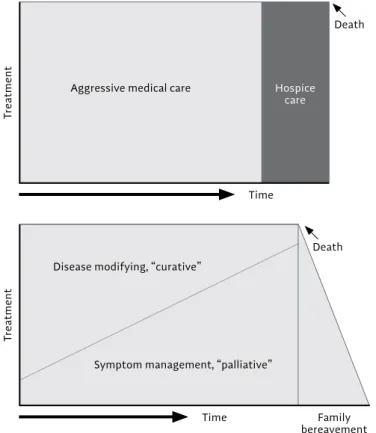
In line with the WHO definition, Lynn and Adamson developed a new palliative care model, as an alternative for the, at that moment current model in which a clear boundary in time existed between curative and palliative care.42 In the new model palliative care needs already exists simultaneously with curative care. (Figure 1)
However, this alternative model is a simplification; it does not take account of the different disease trajectories.43 (Figure 2)
treatment
time Family
bereavement death disease modifying, “curative”
symptom management, “palliative”
treatment
time
death
Hospice care
Aggressive medical care
figure 2 - trajectories of late-life illness62
short period of evident decline
Function
High
Mostly cancer specialist palliative care input available
death
time low
onset of incurable cancer often a few years, but decline usually over a few months
long term limitations with intermittent serious episodes
Function
High
Mostly heart and lung failure
death
time low
sometimes emergency
hospital admissions 2-5 years, but death usually seems ‘sudden’
prolonged dwindling
Function
High
Mostly frailty and dementia
death
time low
onset could be deficits in functional
Three main trajectories can be distinguished:
1. Patients with cancer often start with a longer quite stable period, and after this a rela-tively fast decline until death.
2. Patients with chronic organ failure, like chronic obstructive pulmonary disease (COPD) or CHF have a long period of slow functional decline, with acute exacerbations of their disease and a sudden death, often during an exacerbation.
3. (Older) patients with frailty or dementia have a long period of slow functional decline until death.
Such a general description of disease trajectories can be helpful for physicians in deciding when to start palliative care, but also has its limitations. The time between diagnosis of a life-threatening disease and death can vary between weeks and decades. In the period fol-lowing diagnosis, there is not always a need for extra care. Besides, often patients deny having a life-limiting disease, and are learning how to live with it. Starting palliative care or talking about the end of life in this stage often seems unrealistic, and in some cases even undesirable. It even might cause medicalisation and might be superfluous.
On the other hand, difficulties in predicting mortality, prognosis, and survival might also cause a prognostic paralysis of the physician, caused by concerns to take away hope or to burden the patient and relatives.44
The right moment?
Taking these deliberations into account: what might be the correct moment to start pallia-tive care? (Figure 3)
As an attempt to answer this question, the developers of the Gold Standards Framework (GSF) published for several chronic diseases a number of aspects on their website, that could be used as a trigger to start talking with a patient and family about end-of-life decisions and wishes.45 In 2008 the ‘surprise question’ was introduced; a question a physician asks himself: ‘Would I be surprised if this patient were to die in the next 12 months?’46 In the period that I started my PhD-trajectory, neither the GSF nor the surprise question were validated; no single scientific publication about the GSF was available.
Early identification of patients that might benefit from palliative care enables to merge pal-liative care with disease-oriented treatment. It has been shown that palpal-liative care improves satisfaction with care, and decreases acute interventions, like hospitalisations.47-50 Besides, it increases the percentage of patients that die at home, which is the preferred place to die of the majority of the Dutch population.51
proaCtive palliative Care planning
A next challenge concerns the second part of the WHO definition1: the prevention and relief of suffering by means of early identification and impeccable assessment and treatment of pain and other problems, physical, psychosocial and spiritual. To reach this aim, a thorough assessment of actual symptoms and needs as well as possible future scenarios is needed, in which as well the person, his disease and his social context are considered. Palliative care programmes appear to decrease distress and to increase patient and family caregiver satis-faction. Important elements of proactive palliative care planning are: discussing expected disease scenarios and advantages or disadvantages of several options for interventions, expected dying scenarios, advance care planning like treatment restrictions,52-54 family strength and burden, and an assessment of physical, psychological, social and existential problems and needs.55,56 Structured palliative care showed to increase the chance to die at home,57,58 to decrease unexpected transfers,59 length of hospitalisation and aggressive interventions, which appears to be cost-effective.47,59 All these aspects contribute to the quality of the limited remaining life of patients and their families.
In our opinion, proactive palliative care planning is not limited to a single conversation with the patient, but asks for a series of conversations in the course of the palliative care trajectory. The above-mentioned aspects of proactive palliative care are discussed during these meetings with the patient and his family caregiver, in which plans, wishes and needs can be adapted to new insights over time as often as needed.
As for patients with chronic diseases and cancer often the medical specialist remains responsible for the disease-oriented treatment until an advanced stage of their disease, it
figure 3 - What is the moment to start palliative care? a modified figure of lynn and Adamson42
time death Karnofsky-score Palliative care Follow-up care informal caregiver intensity ‘interfererence’ general practitioner High low
diagnosis stable phase terminal phase
Moment of identification ? ? ?
is a challenge for GPs to early identify the need for palliative care and to provide structured care planning for these patients simultaneously.13
As mentioned before, GPs work mainly demand-driven and provide reactive care. Proactive palliative care planning needs other habits and appeals to other skills. It does not follow a clear protocol, and asks professional creativity or out of the box thinking and acting. By recognising patterns of disease scenarios, the GP will be facilitated to set out a proactive policy or treatment plan, anticipating on possible complications.60,61
Mr Roos is still very fond of Ms Roos. Last year they celebrated their 60 years of marriage. They both loved it. Ms Roos is very concerned about the health of her husband. Almost every night she is afraid to go to bed. What if... he is so afraid, he is choking, he stops breathing, and he is going to die. She herself has difficulties walking because of osteoarthritis. Lately, she feels a little depressed. And she feels guilty that the care for her husband feels like a burden.
outline of this thesis
The aim of this thesis was to study training general practitioners in early identification and proactive palliative care planning of patients in need of palliative care from different perspectives.
The following sub-questions will be studied.
1. Can we systematically develop a tool for GPs for early identifying patients with CHF, COPD, and cancer respectively, who could benefit from proactive palliative care planning? 2. Does training of GPs in early identification and proactive palliative care planning improve
the outcome of palliative patient with CHF, COPD and cancer as compared to untrained GPs?
3. What are the long-term effects of training GPs in early identification and proactive pal-liative care planning in the number of identified palpal-liative patients and the content of the provided palliative care, as compared to untrained GPs, and what is the effect of the identification tool?
4. How do palliative care specialist consultants and trained GP’s evaluate the training in early identification and proactive palliative care planning?
In chapter 2 we report the development of the RADboud indicators for PAlliative Care needs to identify those patients with cancer, COPD or CHF that might profit of a palliative care approach. In chapter 3 we report the incentive for and methods of the randomised controlled trial (RCT) to study the effect of a training in early identification of and proactive palliative care for GPs. Chapter 4 reports the results of the RCT: Training general practitioners in early identification and proactive palliative care planning. Chapter 5 describes the effect of
training general practitioners in early identification of their palliative patients and chapter 6 describes how GPs and specialist consultants evaluated several aspects of the training and its impact on their daily practice.
Finally, in the general discussion and conclusions we summarise our findings and place these in perspective of the contemporary situation and give some direction of future research (Chapter 7).
After a period in which he weekly went to hospital day care for management of fluid overload, in a shared decision making process of Mr Roos and his wife, the GP, the cardiologist, it was decided to inactivate the implantable cardioverter defibrillator (ICD), and to extend home care. The next day’s Mr Roos became tired, dead tired, and very short of breath. Medications don’t provide relief anymore. He bides farewell to his wife, his children and his life. In the end he was sedated to relief his intractable symptoms and died at home amidst his wife and children.
referenCes
1. http://www.who.int/cancer/palliative/definition/en
2. Vissers KC: Palliatieve zorg als ‘heelkunst’. Journal of social internvention: Theory and practice 2008, 17 (1):5.
3. Clark D: From margins to centre: a review of the history of palliative care in cancer. The Lancet Oncology 2007, 8(5):430-438.
4. Mount BM: The problem of caring for the dying in a general hospital; the palliative care unit as a possible solution. Canadian Medical Association journal 1976, 115(2):119-121.
5. Bruntink R: Een goede plek om te sterven; palliatieve zorg in Nederland, een wegwijzer Zutphen Plataan 2002.
6. Kubler - Ross E: On death and dying. New York: The macmillan company 1969.
7. Veldhuijzen van Zanten-Hyllner M. L. L. E.: Palliatieve zorg. In. Edited by Volksgezondheid wes. Den Haag; 2011.
8. van den Muijsenbergh M: Palliatieve zorg door de huisarts. Ervaringen van huisartsen, patienten en naaststaanden. Leiden: Leiden; 2001.
9. Teunissen SC, Verhagen EH, Brink M, van der Linden BA, Voest EE, de Graeff A: Telephone consul-tation in palliative care for cancer patients: 5 years of experience in The Netherlands. Supportive care in cancer: official journal of the Multinational Association of Supportive Care in Cancer 2007,
15(6):577-582.
10. Dutch college of General Practitioners Kernwaarden huisartsgeneeskunde. In. Edited by Nederlands Huisartsen Genootschap. Utrecht 2011.
11. Murray SA, Boyd K, Sheikh A, Thomas K, Higginson IJ: Developing primary palliative care. BMJ (Clinical research ed) 2004, 329(7474):1056-1057.
12. Hanratty B, Hibbert D, Mair F, May C, Ward C, Capewell S, Litva A, Corcoran G: Doctors’ perceptions of palliative care for heart failure: focus group study. BMJ (Clinical research ed) 2002, 325(7364): 581-585.
13. McGrath P: Care of the haematology patient and their family-the GP viewpoint. Australian family physician 2007, 36(9):779-781, 784.
14. Groot MM, Vernooij-Dassen MJ, Crul BJ, Grol RP: General practitioners (GPs) and palliative care: perceived tasks and barriers in daily practice. Palliative medicine 2005, 19(2):111-118.
15. Yohannes AM: Palliative care provision for patients with chronic obstructive pulmonary disease. Health and quality of life outcomes 2007, 5:17.
16. https://www.lhv.nl/uw-beroep/visie-op-huisartsenzorg/kerncijfers-huisartsenzorg
17. Centraal Buro Statistiek: http://statline.cbs.nl/Statweb/publication/?DM=SLNL&PA=37296NED &D1=0-2,19-28,52-58,68&D2=56&VW=T. In.; 2010.
18. van der Velden LFJ, Francke, A.L., Hingstman, L., Willems, D.L.: Sterfte aan kanker en andere chronische aandoeningen. Kenmerken in 2006 en trends vanaf 1996. In. Utrecht: Nivel; 2007. 19. Centraal Buro Statistiek:
20. van der Velden LF, Francke AL, Hingstman L, Willems DL: Dying from cancer or other chronic diseases in the Netherlands: ten-year trends derived from death certificate data. BMC palliative care 2009, 8:4.
21. Gomes B, Higginson IJ: Where people die (1974-2030): past trends, future projections and implica-tions for care. Palliative medicine 2008, 22(1):33-41.
22. https://nl.wikipedia.org/wiki/Eed_van_Hippocrates
23. Nederlandse artseneed. In. Edited by KNMG OO, NFU. Nederland; 2003.
24. Mitchell GK: How well do general practitioners deliver palliative care? A systematic review. Palliative medicine 2002, 16(6):457-464.
25. Groot MM, Vernooij-Dassen MJ, Verhagen SC, Crul BJ, Grol RP: Obstacles to the delivery of primary palliative care as perceived by GPs. Palliative medicine 2007, 21(8):697-703.
26. Dutch college of General Practitioners: Huisarts en palliatieve zorg. fijn dat u er bent, dokter. In. Utrecht: NHG; 2009.
27. Concilium voor huisartsopleiding: http://uitdepraktijk.huisartsopleiding.nl/images/pdf/Compe-tentieprofiel-en-Eindtermen-Versie-29-9-2009-definitief-CHO.pdf. In. Edited by Genootschap NH. Utrecht 2009.
28. Middelburg-Hebly CvT, I. Jansen-Segers, M. Frohleke, B. Jansen-Landheer, M. Huijgens, P.: Pallia-tieve zorg in beeld. Utrecht: IKNL; 2014.
29. Jabaaij LH, L.: Alleen is maar alleen: huisartsen steeds vaker samen. Huisarts & Wetenschap 2007, 50(5):1.
30. Smit M: Spanning in de huisartspost. In: Medisch Contact. 2011: 2.
31. van den Dool CWA: Surveillance van risicogroepen; anticiperende geneeskunde. Huisarts & Weten-schap 1970, 13:59.
32. van Weel C: Mogelijkheden tot anticiperen in de huisartsgeneeskunde. Huisarts & Wetenschap 1975, 18:402-405.
33. Qaseem A, Snow V, Shekelle P, Casey DE, Jr., Cross JT, Jr., Owens DK, Dallas P, Dolan NC, Forciea MA, Halasyamani L et al: Evidence-based interventions to improve the palliative care of pain, dyspnea, and depression at the end of life: a clinical practice guideline from the American College of Physicians. Annals of internal medicine 2008, 148(2):141-146.
34. Glare P: Clinical predictors of survival in advanced cancer. The journal of supportive oncology 2005, 3(5):331-339.
35. Glare PA, Sinclair CT: Palliative medicine review: prognostication. Journal of palliative medicine 2008, 11(1):84-103.
36. Glare P, Sinclair C, Downing M, Stone P, Maltoni M, Vigano A: Predicting survival in patients with advanced disease. European journal of cancer (Oxford, England : 1990) 2008, 44(8):1146-1156. 37. Maltoni M, Caraceni A, Brunelli C, Broeckaert B, Christakis N, Eychmueller S, Glare P, Nabal M,
Vigano A, Larkin P et al: Prognostic factors in advanced cancer patients: evidence-based clinical recommendations – a study by the Steering Committee of the European Association for Palliative Care. Journal of clinical oncology: official journal of the American Society of Clinical Oncology 2005,
38. Zapka JG, Moran WP, Goodlin SJ, Knott K: Advanced heart failure: prognosis, uncertainty, and decision making. Congestive heart failure (Greenwich, Conn) 2007, 13(5):268-274.
39. Oga T, Nishimura K, Tsukino M, Sato S, Hajiro T: Analysis of the factors related to mortality in chronic obstructive pulmonary disease: role of exercise capacity and health status. American journal of respiratory and critical care medicine 2003, 167(4):544-549.
40. Marti S, Munoz X, Rios J, Morell F, Ferrer J: Body weight and comorbidity predict mortality in COPD patients treated with oxygen therapy. The European respiratory journal 2006, 27(4):689-696. 41. Llobera J, Esteva M, Rifa J, Benito E, Terrasa J, Rojas C, Pons O, Catalan G, Avella A: Terminal cancer.
duration and prediction of survival time. European journal of cancer (Oxford, England: 1990) 2000,
36(16):2036-2043.
42. Lynn J, Adamson DM: Living well at the end of life. Adapting health care to serious chronic illness in old age. In. Edited by health WR; 2003.
43. Murray SA, Kendall M, Boyd K, Sheikh A: Illness trajectories and palliative care. BMJ (Clinical research ed) 2005, 330(7498):1007-1011.
44. Murray SA, Boyd K, Sheikh A: Palliative care in chronic illness. BMJ (Clinical research ed) 2005,
330(7492):611-612.
45. National Gold Standards Framework Centre England [http://www.goldstandardsframework.org. uk/OneStopCMS/Core/SearchResults.aspx?SearchQuery=prognostic%20indicator%20guidance] 46. End of life care strategy, promoting high quality care for all adults at the end of life. In. London:
Department of Health; 2008.
47. Brumley RD, Enguidanos S, Cherin DA: Effectiveness of a home-based palliative care program for end-of-life. Journal of palliative medicine 2003, 6(5):715-724.
48. Abarshi E, Onwuteaka-Philipsen B, Donker G, Echteld M, Van den Block L, Deliens L: General practitioner awareness of preferred place of death and correlates of dying in a preferred place: a nationwide mortality follow-back study in the Netherlands. Journal of pain and symptom management 2009, 38(4):568-577.
49. Brumley R, Enguidanos S, Jamison P, Seitz R, Morgenstern N, Saito S, McIlwane J, Hillary K, Gonzalez J:
Increased satisfaction with care and lower costs: results of a randomised trial of in-home pallia-tive care. Journal of the American Geriatrics Society 2007, 55(7):993-1000.
50. Bakitas M, Lyons KD, Hegel MT, Balan S, Brokaw FC, Seville J, Hull JG, Li Z, Tosteson TD, Byock IR et al: Effects of a palliative care intervention on clinical outcomes in patients with advanced cancer: the Project ENABLE II randomised controlled trial. Jama 2009, 302(7):741-749.
51. van den Akker PL, K; Waar wilt u doodgaan? Keuzen en overwegingen. In. Tilburg: VPTZ; 2005. 52. Rainone F, Blank A, Selwyn PA: The early identification of palliative care patients: preliminary
processes and estimates from urban, family medicine practices. The American journal of hospice & palliative care 2007, 24(2):137-140.
53. McAlister FA, Stewart S, Ferrua S, McMurray JJ: Multidisciplinary strategies for the management of heart failure patients at high risk for admission: a systematic review of randomised trials. Journal of the American College of Cardiology 2004, 44(4):810-819.
54. Schofield P, Carey M, Love A, Nehill C, Wein S: ‘Would you like to talk about your future treatment options’? Discussing the transition from curative cancer treatment to palliative care. Palliative medicine 2006, 20(4):397-406.
55. Payne S, Smith P, Dean S: Identifying the concerns of informal carers in palliative care. Palliative medicine 1999, 13(1):37-44.
56. Chochinov HM: Dying, dignity, and new horizons in palliative end-of-life care. CA: a cancer journal for clinicians 2006, 56(2):84-103; quiz 104-105.
57. Enguidanos SM, Cherin D, Brumley R: Home-based palliative care study: site of death, and costs of medical care for patients with congestive heart failure, chronic obstructive pulmonary disease, and cancer. Journal of social work in end-of-life & palliative care 2005, 1(3):37-56.
58. Jordhoy MS, Fayers P, Saltnes T, Ahlner-Elmqvist M, Jannert M, Kaasa S: A palliative-care interven-tion and death at home: a cluster randomised trial. Lancet (London, England) 2000, 356 (9233):888-893.
59. Wiese CH, Vossen-Wellmann A, Morgenthal HC, Popov AF, Graf BM, Hanekop GG: Emergency calls and need for emergency care in patients looked after by a palliative care team: Retrospective interview study with bereaved relatives. BMC palliative care 2008, 7:11.
60. Verhagen C: Scenario denken in palliatieve zorg. In. Nijmegen Radboud UMC; 2008.
61. Kirchhoff KT, Hammes BJ, Kehl KA, Briggs LA, Brown RL: Effect of a disease-specific planning intervention on surrogate understanding of patient goals for future medical treatment. Journal of the American Geriatrics Society 2010, 58(7):1233-1240.
62. Shipman C, Gysels M, White P, Worth A, Murray SA, Barclay S, Forrest S, Shepherd J, Dale J, Dewar S et al: Improving generalist end of life care: national consultation with practitioners, commis-sioners, academics, and service user groups. BMJ (Clinical research ed) 2008, 337:a1720.
2
Early identification of palliative
care patients in general practice:
development of RADboud
indicators for PAlliative Care needs
Bregje Thoonsen
Yvonne Engels
Eric van Rijswijk
Stans Verhagen
Chris van Weel
Marieke Groot
Kris Vissers
Background
According to the World Health Organisation (WHO) definition, palliative care should be initiated in an early phase and not be restricted to terminal care. In the literature, no validated tools predicting the optimal timing for initiating palliative care have been determined.
Aim
The aim of this study was to systematically develop a tool for GPs with which they can iden-tify patients with congestive heart failure (CHF), chronic obstructive pulmonary disease (COPD), and cancer respectively, who could benefit from proactive palliative care.
Design
A three-step procedure, including a literature review, focus group interviews with input from the multidisciplinary field of palliative healthcare professionals, and a modified Rand Delphi process with GPs.
Method
The three-step procedure was used to develop sets of indicators for the early identification of CHF, COPD, and cancer patients who could benefit from palliative care.
Results
Three comprehensive sets of indicators were developed to support GPs in identifying patients with CHF, COPD, and cancer in need of palliative care. For CHF, seven indicators were found: for example, frequent hospital admissions. For COPD, six indicators were found: such as, Karnofsky score ≤50%. For cancer, eight indicators were found: for example, worse prognosis of the primary tumour.
Conclusion
The RADboud indicators for PAlliative Care needs (RADPAC) is the first tool developed from a combination of scientific evidence and practice experience that can help GPs in the identifi-cation of patients with CHF, COPD, or cancer, in need of palliative care. Applying the RADPAC facilitates the start of proactive palliative care and aims to improve the quality of palliative care in general practice.
introduCtion
In the UK and in the Netherlands, the large majority of deaths are due to circulatory disease, respiratory disease, or cancer.1,2 In a substantial number of these cases, death resulted after a protracted end stage that may often last over a year: the palliative stage. Most patients prefer to spend the final phase of their lives primarily at home and also prefer to die there,1,3 making the GP the most appropriate healthcare professional to initiate, provide and coor-dinate palliative care.4-7 Yet, only a minority of these palliative patients die at home.3,8,9 According to the World Health Organisation (WHO) definition, palliative care should be initiated in an early phase and not be restricted to terminal care.10 However, to date, pallia-tive care is often restricted to physical symptom relief in the terminal phase, including emer-gency visits by the GP,11 transfers,12 and unplanned hospital admissions.13,14 Consequently, too many patients die in another place than preferred.15,16 By recognising the needs of pallia-tive cancer and non-cancer patients earlier, proacpallia-tive care planning (including assessment and treatment of the physical, psychological, spiritual, and social consequences of the patient’s situation and condition) might improve the quality of their remaining life. Never-theless, early identification of patients who can benefit from palliative care is challenging. In patients with chronic obstructive disease (COPD) or congestive heart failure (CHF), but also in patients with advanced cancer, disease trajectories can last many years. Therefore, it is difficult to mark on the gradual slope of the different disease trajectories the moment when palliative care could be beneficial alongside or instead of disease-oriented therapies (Figure 1).6,17-20 In published studies, unidentified palliative care patients with (non-cancer) chronic diseases received fewer drugs for palliation than patients with cancer, while the symptom burden was at least comparable.21,22 Furthermore, end-of-life issues and preferred place of death are more frequently discussed with cancer patients than with patients with life-threatening non-cancer diseases.22,23 Particularly with regard to non-cancer chronic
time death Karnofsky-score Palliative care Follow-up care informal caregiver intensity ‘interfererence’ general practitioner High low
diagnosis stable phase terminal phase
Moment of identification ? ? ?
diseases, clinicians do not know when to initiate or how to communicate a palliative care approach.6,24-26 For GPs in the UK, there are financial incentives for participating in the system for performance management and payment, including the timely inclusion of patients in the palliative care register.27 Palliative care providers, including GPs, report that the most important gap is the lack of prognostic indicators and clinical triggers for initiating pallia-tive care.28 As physicians tend to overestimate the survival of their patients,29,30 the use of the single surprise question: ‘Would I be surprised if the person in front of me died in the next six months or one year?’ as a prompt to initiate discussions about end-of-life needs and preferences is regarded as inappropriate. Small et al. suggest making it more explicit for patients with CHF and COPD.31 In 2008, in the UK’s Department of Health published an end-of-life care strategy, in which identifying people approaching end of life is one of the key subjects.32 This strategy is partly based on the Gold Standards Framework (GSF). GPs in the UK are familiar with this GSF, which includes a prognostic indicator guide.33 Yet the indicators used in the GSF are not evidence-based. To date, the study has been unable to identify any validated tools predicting the optimal timing for initiating palliative care,34 although a great deal of research has focused on predicting mortality, survival, and prog-nostication.35-43 Therefore, the aim of this study is to systematically develop a tool to identify patients with CHF, COPD and cancer respectively, based on the combination of evidence and practice-based knowledge. This tool could be used in regular patient contacts to help identify patients in need of palliative care and thus serve as a starting point for (proactive) palliative care.
Methods
Design
A three-step procedure was used to develop sets of indicators for the early identification of patients with CHF, COPD and cancer who could benefit from palliative care.
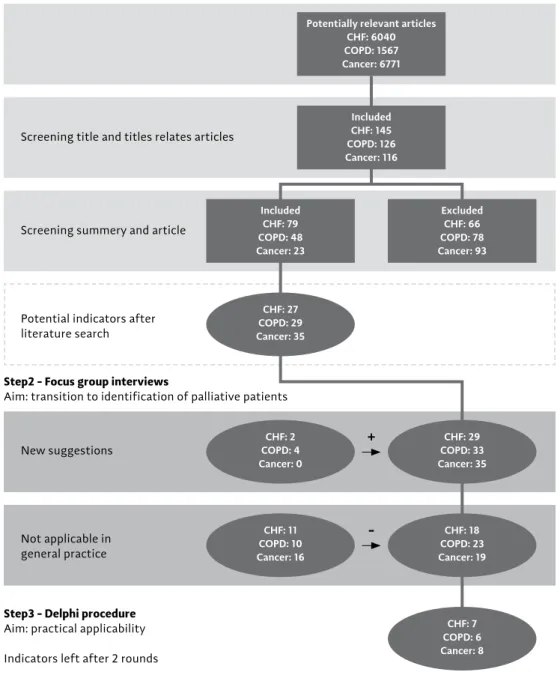
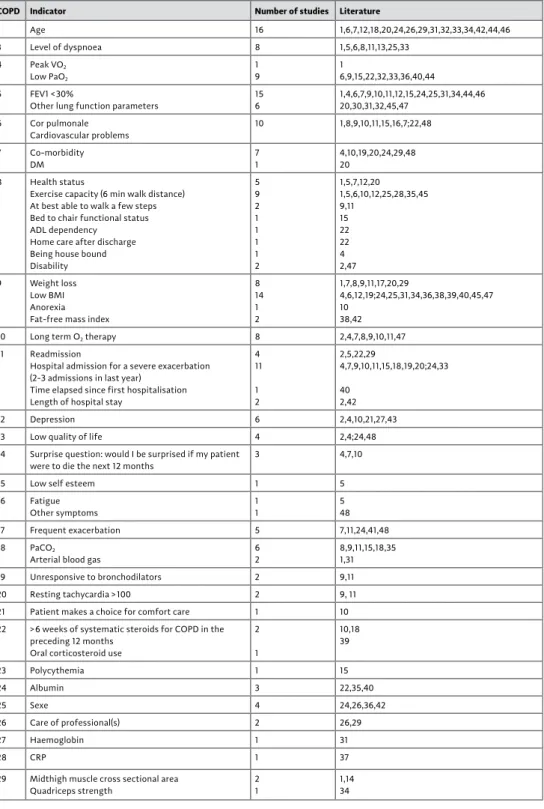
Firstly, a structured Pub Med literature review was performed (Box 1; Figure 2, step 1). The cross references and the Oxford Textbook of Palliative Medicine, and relevant national and international websites were checked. Inclusion criteria used were English language, human research and patients aged >18 years. The titles and abstracts of the articles found in relation to potential indicators for identifying palliative patients were examined. A potential indicator was defined as ‘a characteristic, factor, or aspect suggested as a possible indicator predicting or influencing prognosis, survival, or transition from a curative to a palliative trajectory in CHF, COPD and cancer’. If an abstract mentioned potential indicators, the full text was read. Information was collected on study design, population, research question, outcome and extracted potential indicators (Additional file 1).
Secondly, as it was expected that the indicators found in the literature search would mainly concern prognostication or survival and not early identification of palliative patients, three focus group interviews were organised. These focus groups respectively discussed CHF, COPD and cancer (Figure 2, step 2) with GPs and experts in the respective fields, all with a focus on palliative care. The focus group interview was led by an experienced moderator, to discuss the applicability of each indicator for early identification and to suggest additional indicators based on clinical experience. The panel prepared themselves by performing a web-based survey enabling them to consider their own strategy for identifying patients who might benefit from palliative care. During the focus group interview, an inventory was made of their indicators and these were compared to those found in literature. When con-cordance existed between an indicator found in literature and that suggested by the group, this indicator was accepted. If this concordance did not exist, a discussion followed to reject or accept it as a possible indicator. A possible indicator was rejected or accepted if a majority of the experts did or did not agree, respectively, on its usefulness. All experts had at least five years’ experience in the respective fields of CHF, COPD or oncology.
Box 1 - search strategy
“Heart Failure”[Mesh] And (“Palliative care”[Mesh] or “Mortality”[Mesh] or “Prognosis”[Mesh] or “survival”[Mesh] or “Health status indicators”[Mesh] or Prognostication[tw] or end of life care[tw] or “Advance care Planning”[Mesh]) And (“humans”[Mesh terms] And english[lang] And “adult”[Mesh terms] And (“1”[PdAt] : “2008/07/01”[PdAt]))
“Pulmonary disease, chronic obstructive”[Mesh] And (“Palliative care”[Mesh] or “Mortality”[Mesh] or “Prognosis”[Mesh] or “survival”[Mesh] or “Health status indicators”[Mesh] or Prognostication[tw] or end of life care[tw] or “Advance care Planning”[Mesh]) And (“humans”[Mesh terms] And english[lang] And “adult”[Mesh terms] And (“1”[PdAt] : “2008/07/01”[PdAt]))
“neoplasms”[Mesh:noexp] And (“Palliative care”[Mesh] or “Mortality”[Mesh] or “Prognosis”[Mesh] or “survival”[Mesh] or “Health status indicators”[Mesh] or Prognostication[tw] or end of life care[tw] or “Advance care Planning”[Mesh]) And (“humans”[Mesh terms] And english[lang] And “adult”[Mesh terms] And (“1”[PdAt] : “2008/07/01”[PdAt]))
step1 - literature search
Aim: exploration in literature of potential indicators
step2 - focus group interviews
Aim: transition to identification of palliative patients
step3 - delphi procedure
Aim: practical applicability indicators left after 2 rounds
screening title and titles relates articles screening summery and article Potential indicators after literature search CHF: 11 COPD: 10 Cancer: 16 new suggestions not applicable in general practice
+
-Included CHF: 145 COPD: 126 Cancer: 116 Potentially relevant articles
CHF: 6040 COPD: 1567 Cancer: 6771 Included CHF: 79 COPD: 48 Cancer: 23 Excluded CHF: 66 COPD: 78 Cancer: 93 CHF: 27 COPD: 29 Cancer: 35 CHF: 2 COPD: 4 Cancer: 0 CHF: 18 COPD: 23 Cancer: 19 CHF: 29 COPD: 33 Cancer: 35 CHF: 7 COPD: 6 Cancer: 8
figure 2 - results of the different components in the development of the rAdboud indicators
Thirdly, a modified Rand Delphi process was performed to select those indicators that are appropriate and useful in general practice.44 GPs with palliative care expertise were invited to participate in this written procedure, and each was asked to propose another GP with no special interest and expertise. They were asked to rate each concept indicator on a nine-point Likert scale with regard to timing (appropriate to determine the moment at which patients might benefit from starting proactive palliative care) and usefulness in general practice. Scales ran from 1 = extremely inappropriate/extremely unuseful to 9 = extremely appropriate/extremely useful. Additionally, they had the opportunity to refine the descrip-tion of each concept indicator. After the first round, median ratings, as well as personal ratings of each concept indicator were calculated and sent back with the invitation to rate and respond to the indicators again. The rounds were repeated until consensus was reached. The study ran from December 2007 to August 2008.
Analyses
All focus group sessions were audio-taped, transcribed, and analysed. Analysis of the Delphi process was based on the Rand Appropriateness Method.45 Median ratings of each concept indicator with respect to usefulness ‘for appropriate timing’ and ‘in general practice’ were calculated. Criteria for keeping a concept indicator in the final set were: (1) median rating ≥7 for as well appropriateness as usefulness, and (2) difference between maximum and mini-mum rating ≤4 in the second Delphi round.44,46,47 The summary statistics were fed back to the participants at each round, along with their initial ranking. The analyses were performed using SPSS (version 16.0).
results
Figure 2 represents the results of the different components in the development of the RADboud indicators for PAlliative Care needs (RADPAC).
Focus group interviews
In total, 25 experts participated in the focus group interviews in which the potential indica-tors were discussed: five GPs, five medical specialists (a cardiologist in the focus group about CHF, two lung specialists in the focus group about COPD, and two oncologists in the focus group about cancer), four nursing home physicians, four psychologists, one nurse practitioner, three nurses, one priest, and two theologians. The main reason for rejecting indicators was the limited clinical utility of indicators in general practice. Rejected indica-tors were not used in the Delphi process.
Delphi process
Thirty-eight GPs were invited to participate in the modified Rand Delphi process, 15 of whom accepted, 11 with and four with no special interest or expertise in palliative care.
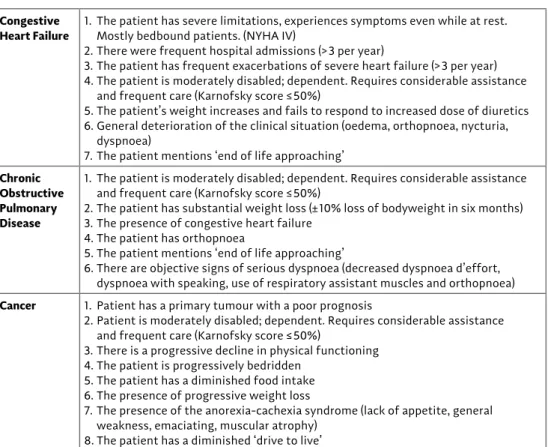
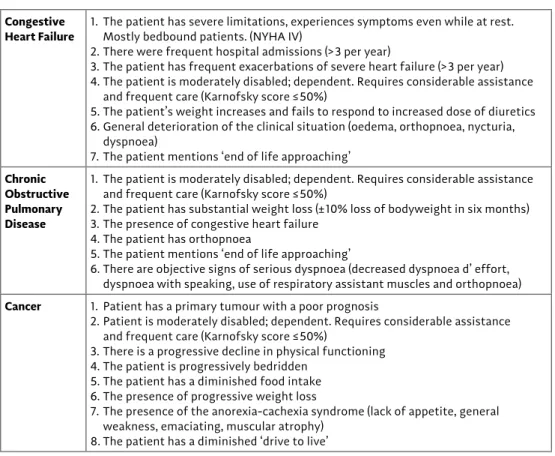
Responses were received from seven of the first type of GPs and three GPs from the other category. All respondents agreed to be involved in the second Delphi round as well. In the second round, eight out of 10 responded, consisting of seven GPs with special interest and expertise and one GP without. The RADPAC indicators presented in Table 1. For all diseases, a Karnofsky score of 50% or lower appeared to be an indicator. Also, signals given by the patient that the end of life is near, or a diminished ‘drive to live’ were considered important signs for all three diseases. Weight loss was rated high for COPD and cancer and, conversely, gaining weight for CHF. Additional indicators for COPD were the presence of CHF, orthopnoea and dyspnoea. With regard to CHF, a New York Heart Association (NYHA) IV score, frequent hospital admissions, and frequent exacerbations of severe heart failure were included. For cancer, having a primary tumour with poor prognosis and the anorexia-cachexia syndrome were considered relevant signs.
table 1 - the rAdboud indicators for PAlliative care needs (rAdPAc)
Congestive
heart failure 1. the patient has severe limitations, experiences symptoms even while at rest. Mostly bedbound patients. (nYHA iV)
2. there were frequent hospital admissions (>3 per year)
3. the patient has frequent exacerbations of severe heart failure (>3 per year) 4. the patient is moderately disabled; dependent. requires considerable assistance and frequent care (Karnofsky score ≤50%)
5. the patient’s weight increases and fails to respond to increased dose of diuretics 6. General deterioration of the clinical situation (oedema, orthopnoea, nycturia, dyspnoea)
7. the patient mentions ‘end of life approaching’
Chronic obstructive pulmonary disease
1. the patient is moderately disabled; dependent. requires considerable assistance and frequent care (Karnofsky score ≤50%)
2. the patient has substantial weight loss (±10% loss of bodyweight in six months) 3. the presence of congestive heart failure
4. the patient has orthopnoea
5. the patient mentions ‘end of life approaching’
6. there are objective signs of serious dyspnoea (decreased dyspnoea d’effort, dyspnoea with speaking, use of respiratory assistant muscles and orthopnoea)
Cancer 1. Patient has a primary tumour with a poor prognosis
2. Patient is moderately disabled; dependent. requires considerable assistance and frequent care (Karnofsky score ≤50%)
3. there is a progressive decline in physical functioning 4. the patient is progressively bedridden
5. the patient has a diminished food intake 6. the presence of progressive weight loss
7. the presence of the anorexia-cachexia syndrome (lack of appetite, general weakness, emaciating, muscular atrophy)
disCussion
Summary
This study developed the RADPAC: three comprehensive sets of indicators to help GPs iden-tify patients with CHF, COPD, or cancer in need of palliative care. A three-step procedure was used, including a literature review, focus group interviews with input from the multi-disciplinary field of palliative healthcare professionals, and a modified Rand Delphi process with GPs.
Strengths and limitations
Review of literature in this new field was carried out thoroughly, but as indicators are not a MESH term, proxies of this term had to be used. For the focus groups, a purposive sampling strategy and thus a variety of expertise and experience in palliative care and general practice was captured. The knowledge and experience of those GPs who took part in the Delphi process was not measured, although we did include GPs with special training in palliative care as well as GPs with no special interest.
Whether the RADPAC will support GPs in the early identification of patients who might benefit from palliative care is unknown. RADPAC is under study in a randomised controlled trial (RCT) including 158 GPs in the Netherlands. Data on this study will be published sepa-rately. The RADPAC was developed for use in general practice. The different professionals who participated in the expert panel sessions reflect the multidisciplinary approach of palliative care. The involvement of GPs in the focus group interviews and in the Delphi process increases the chance that the RADPAC will be used in general practice.48
Comparison with existing literature
Several lists are available that encourage physicians to identify patients who could benefit from palliative care.20,49-51 However, this study is the first to present indicators of the pallia-tive care trajectory developed from a combined practice experience and scientific evidence base. Despite different development strategies, RADPAC has much in common with the prognostic indicator guide of the Gold Standards Framework (GSF-PIG).33 In the UK, the GSF has been adopted by many GPs and seems to have value in daily practice to improve end-of-life care.52 The GSF-PIG was developed by consulting different professional representatives while RADPAC used a three-step procedure. Yet both approaches have resulted in very similar indicators, which strengthen their validity. As RADPAC and GSF-PIG were developed in different health care settings, it may also indicate that both instruments address generic palliative care guidance for general practice.
The three sets of indicators in the RADPAC might improve different aspects of palliative care. A recent study showed that GPs who are aware of the patient’s preferred place of death tend to have a palliative care goal and use palliative care services more often.16 The need for timely exploration of care preferences and a focus on palliative care in order to improve its quality was important. Early introduction of palliative care for patients with lung cancer appeared to improve quality of life and survival time.53 Early identification creates more opportunities for better symptom management and communication about the full content of palliative care and end-of-life care, such as preferred place of death and advanced care planning. GPs who used advanced care planning reported a higher percentage of death at home,54 positively enhanced patients’ hope.55
RADPAC is not intended to be a strict calculator. It has been developed to consider starting palliative care in patients at an earlier stage in highly prevalent chronic and life-threatening diseases. This study have provided the GPs concrete sets of indicators to consider whether the patient has ‘palliative care needs,’ besides diagnosing and treating their current health problems. As specific indicators developed for the identification of palliative care patients in a hospital setting will not be applicable in primary care, the emphasis in the selection of indicators lies in the usefulness and applicability in primary care. Indicators like hypercapnia for patients with COPD,56 hyponatremia for CHF,57,58 and percentage lymphocytes for patients with cancer35,38 are not useful for early identification in general practice and have not therefore been selected. Despite its explicit invitation to consider ‘early identification of palliative patients’, the RADPAC still identifies rather late in the illness trajectory. This might be explained by the fact that when this research started, early identification in the Netherlands was not common practice. Although ‘early identification’ was explained by text and Figure 1, participants may still struggle with concepts like ‘end-of-life’ care, ‘pallia-tive care’ and ‘terminal’ care. As health care systems, insights, and procedures change over time, the RADPAC should be updated.
The RADPAC contains solely somatic indicators. Although GPs known for their holistic approach, and also a psychologist and spiritual caregiver, were represented in the focus group panel, they may have been influenced by the medical specialists and by the given input of literature. The decision to identify a patient as in need of palliative care could be influenced by other factors than medical ones, such as culture, attitude, and moral ideas of a society, financial recourses and restrictions. This multifactorial character of the decision, combined with the subjective professional view, may mean that the RADPAC and the GSF-PIG is not sufficient enough to standardize this decision.
Implications for practice and research
This study, developing the RADPAC, is the first scientific study to translate an important part of the WHO definition for palliative care, namely early identification, to clinical practice in a scientifically sound way. The RADPAC can help GPs identify palliative care patients within their larger population of patients with CHF, COPD, or cancer. Applying the RADPAC is an opportunity to enable proactive care and thus improve the quality of primary palliative care. The validity and effect of the RADPAC will be further investigated in an RCT to inves-tigate whether early identification and proactive palliative care planning coordinated by the GP will help improve the quality of palliative care. These results will be published sepa-rately. As the RADPAC only contains somatic indicators, special attention will be devoted to other domains, such as psychosocial, financial and spiritual domains, in an update.
aCknowledgeMents
The research group would like to thank all those who participated in the various focus groups and the GPs who participated in the Delphi process. This project was financially supported by a grant of the Netherlands Organisation for Health Research and Develop-ment–ZonMw, The Hague. Project number 1150.0002
referenCes
1. van der Velden LF, Francke AL, Hingstman L, Willems DL: Dying from cancer or other chronic diseases in the Netherlands: ten-year trends derived from death certificate data. BMC palliative care 2009, 8:4.
2. Franks PJ, Salisbury C, Bosanquet N, Wilkinson EK, Lorentzon M, Kite S, Naysmith A, Higginson IJ:
The level of need for palliative care: a systematic review of the literature. PalliatMed 2000,
14(2):93-104.
3. Gomes B, Higginson IJ: Where people die (1974-2030): past trends, future projections and impli-cations for care. Palliative medicine 2008, 22(1):33-41.
4. Murray SA, Boyd K, Sheikh A: Palliative care in chronic illness. BMJ (Clinical research ed) 2005,
330(7492):611-612.
5. McGrath P: Care of the haematology patient and their family – the GP viewpoint. Australian family physician 2007, 36(9):779-781, 784.
6. Hanratty B, Hibbert D, Mair F, May C, Ward C, Capewell S, Litva A, Corcoran G: Doctors’ perceptions of palliative care for heart failure: focus group study. BMJ (Clinical research ed) 2002, 325(7364): 581-585.
7. Groot MM, Vernooij-Dassen MJ, Crul BJ, Grol RP: General practitioners (GPs) and palliative care: perceived tasks and barriers in daily practice. Palliative medicine 2005, 19(2):111-118.
8. Weitzen S, Teno JM, Fennell M, Mor V: Factors associated with site of death: a national study of where people die. Med Care 2003, 41(2):323-335.
9. Davies E, Linklater KM, Jack RH, Clark L, Moller H: How is place of death from cancer changing and what affects it? Analysis of cancer registration and service data. BrJCancer 2006, 95(5):593-600. 10. http://www.who.int/cancer/palliative/definition/en
11. Worth A, Boyd K, Kendall M, Heaney D, Macleod U, Cormie P, Hockley J, Murray S: Out-of-hours palliative care: a qualitative study of cancer patients, carers and professionals. The British journal of general practice: the journal of the Royal College of General Practitioners 2006, 56(522):6-13. 12. Van den Block L, Deschepper R, Drieskens K, Bauwens S, Bilsen J, Bossuyt N, Deliens L:
Hospitalisa-tions at the end of life: using a sentinel surveillance network to study hospital use and associated patient, disease and healthcare factors. BMC health services research 2007, 7:69.
13. van den Block L, Deschepper R, Bilsen J, van Casteren V, Deliens L: Transitions between care settings at the end of life in belgium. JAMA 2007, 298(14):1638-1639.
14. Klinkenberg M, Visser G, van Groenou MI, van der WG, Deeg DJ, Willems DL: The last 3 months of life: care, transitions and the place of death of older people. Health Soc Care Community 2005,
13(5):420-430.
15. Meeussen K, van den Block L, Bossuyt N, Bilsen J, Echteld M, van Casteren V, Deliens L: GPs’ aware-ness of patients’ preference for place of death. Br J Gen Pract 2009, 59(566):665-670.
16. Abarshi E, Onwuteaka-Philipsen B, Donker G, Echteld M, Van den BL, Deliens L: General practitioner awareness of preferred place of death and correlates of dying in a preferred place: a nationwide mortality follow-back study in the Netherlands. J Pain Symptom Manage 2009, 38(4):568-577.
17. Goodlin SJ, Hauptman PJ, Arnold R, Grady K, Hershberger RE, Kutner J, Masoudi F, Spertus J, Dracup K, Cleary JF et al: Consensus statement: Palliative and supportive care in advanced heart failure. JCard Fail 2004, 10(3):200-209.
18. O’Leary N, Murphy NF, O’Loughlin C, Tiernan E, McDonald K: A comparative study of the palliative care needs of heart failure and cancer patients. EurJHeart Fail 2009, 11(4):406-412.
19. Jaarsma T, Beattie JM, Ryder M, Rutten FH, McDonagh T, Mohacsi P, Murray SA, Grodzicki T, Bergh I, Metra M et al: Palliative care in heart failure: a position statement from the palliative care workshop of the Heart Failure Association of the European Society of Cardiology. European journal of heart failure 2009, 11(5):433-443.
20. Curtis JR: Palliative and end-of-life care for patients with severe COPD. The European respiratory journal 2008, 32(3):796-803.
21. McKinley RK, Stokes T, Exley C, Field D: Care of people dying with malignant and cardiorespiratory disease in general practice. The British journal of general practice: the journal of the Royal College of General Practitioners 2004, 54(509):909-913.
22. Edmonds P, Karlsen S, Khan S, Addington-Hall J: A comparison of the palliative care needs of patients dying from chronic respiratory diseases and lung cancer. Palliative medicine 2001, 15(4): 287-295. 23. Block van den L, Bilsen J, Deschepper R, Van der KG, Bernheim JL, Deliens L: End-of-life decisions among cancer patients compared with noncancer patients in Flanders, Belgium. JClinOncol 2011,
24(18):2842-2848.
24. Mulcahy P, Buetow S, Osman L, Coster G, Bray Y, White P, Elkington H: GPs’ attitudes to discussing prognosis in severe COPD: an Auckland (NZ) to London (UK) comparison. FamPract 2005, 22(5): 538-540.
25. Gott M, Gardiner C, Small N, Payne S, Seamark D, Barnes S, Halpin D, Ruse C: Barriers to advance care planning in chronic obstructive pulmonary disease. PalliatMed 2009, 23(7):642-648. 26. Barnes S, Gott M, Payne S, Seamark D, Parker C, Gariballa S, Small N: Communication in heart failure:
perspectives from older people and primary care professionals. Health SocCare Community 2006,
14(6):482-490.
27. QoF guidance NHS. In.; 2011.
28. Shipman C, Gysels M, White P, Worth A, Murray SA, Barclay S, Forrest S, Shepherd J, Dale J, Dewar S et al: Improving generalist end of life care: national consultation with practitioners, commis-sioners, academics, and service user groups. BMJ (Clinical research ed) 2008, 337:a1720.
29. Gripp S, Moeller S, Bolke E, Schmitt G, Matuschek C, Asgari S, Asgharzadeh F, Roth S, Budach W, Franz M et al: Survival prediction in terminally ill cancer patients by clinical estimates, labora-tory tests, and self-rated anxiety and depression. JClinOncol 2007, 25(22):3313-3320.
30. Glare P, Virik K, Jones M, Hudson M, Eychmuller S, Simes J, Christakis N: A systematic review of physicians’ survival predictions in terminally ill cancer patients. BMJ 2003, 327(7408):195-198. 31. Small N, Gardiner C, Barnes S, Gott M, Payne S, Seamark D, Halpin D: Using a prediction of death in the next 12 months as a prompt for referral to palliative care acts to the detriment of patients with heart failure and chronic obstructive pulmonary disease. Palliative medicine 2010, 24(7):740-741.