Telecommunications
Research Group
University of Colorado
Broadband Demand Study
Final Report
Michele Jackson
Tom Lookabaugh
Scott Savage
Douglas C. Sicker
Donald Waldman
University of Colorado at Boulder
November 15, 2002
Table of Contents
Introduction ...3
Findings Relative to Research Questions...4
Background on Broadband ...12
Estimating Consumer Preferences for Internet Access Service ...28
Small Business and Home Office Demand for Internet Access Service ...52
US Government use of Broadband...62
Telework and the Demand for Broadband Services ...73
Introduction
Broadband penetration exceeds 10% of the U Spopulation and continues to grow. But the rate of growth is itself particularly important to several constituencies. A general debate continues over the status of broadband adoption, the criticality of intervention, and which intervention policies would be effective. While much attention has historically been paid to the supply side of broadband, understanding and influencing the demand side of broadband is a key to understanding both status and appropriate policy.
This report examines a number of key attributes of demand for broadband. From a grounding in the definition and received knowledge on broadband demand, the report goes on to report research in consumer demand for broadband, small business and small office / home office demand, government use of broadband, telework, and international experience with broadband adoption. The research includes a new consumer survey including conjoint analysis of demand attributes and original interview based research on telework and its relation to broadband.
Key findings of the research include affirmation of the criticality of price in promoting the next stage of broadband adoption, the unexpected salience of reliability as a valued attribute, the importance of access speed, and the relatively lesser importance of ease of installation and security. The question of content and applications is complicated, with no killer application emerging but also no clear mandate to discover one. While the U. S. government could play a leadership role in adopting
broadband, it does not appear to be in this role yet and may be most effectively involved by including broadband in its broader effort to incorporate information and communication technologies. Telework is a valid beneficiary of broadband, but, importantly, teleworkers are increasingly not technophiles and value broadband indirectly through the specific benefits it can bring to their productivity without being required to pay attention to the technology itself.
The report is organized into several sections. The next section of the report summarizes findings relative to the original research questions of the project. Following is a summary of the current state of the public debated on broadband demand and policy. We then report our consumer survey on broadband demand, followed by analysis of survey data on small business and small office / home office use of broadband. We next analyze government use of broadband, then report our analysis of a set of semi-structured interviews with teleworkers.
Findings Relative to Research Questions
In this section, we address the original research questionsof the project.
1. Why do residences and small businesses (less than 50 employees) that currently subscribe to narrowband Internet access services, and that are located in areas where broadband service is currently available, not subscribe? To what extent do the following inhibit subscription rates:
- and -
2. For each of the items above, what are possible actions that would remove or ameliorate the barrier or concern?
a. Awareness of service availability.
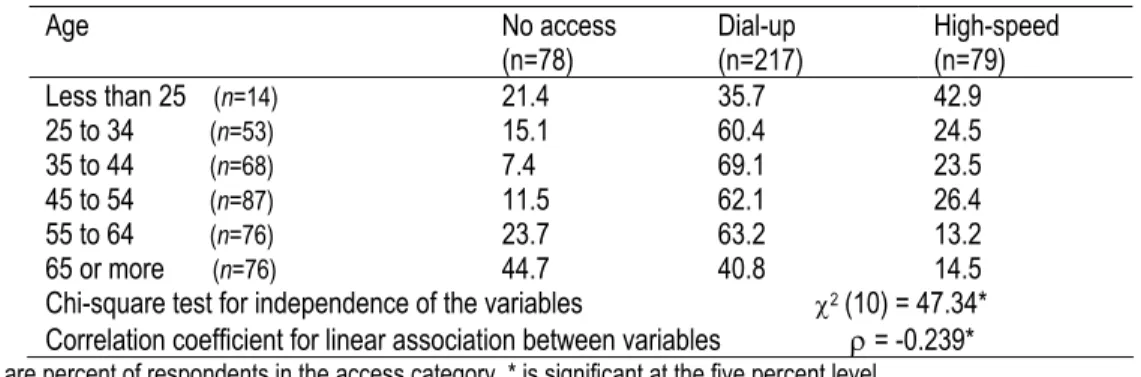
We had mixed results on awareness. In our consumer survey, awareness of high-speed service availability is relatively high for cable modem and DSL technology. When asked “which ways of getting high-speed access are available in your neighbourhood,” 15.3 percent of respondents replied “not sure” for cable modem, 30 percent for DSL, 64.7 percent for fixed wireless, and 68.2 percent for satellite. 80.6 percent of respondents with dial-up Internet access (i.e., latent high-speed users) have high-speed service available in their neighbourhood. Our telework survey suggested some confusion about availability of broadband (or even more fundamentally, exactly what broadband
is). This confusion is also seen in some of our secondary research (various proponents of broadband don’t agree on the definition and surveys suggest various user communities have a diffuse understanding of the concept). These findings suggest that promoting awareness of service availability has some benefit, but it should be accompanied by substantial effort to clarify what broadband is and what it should mean to users (the benefits).
b. Price of the service.
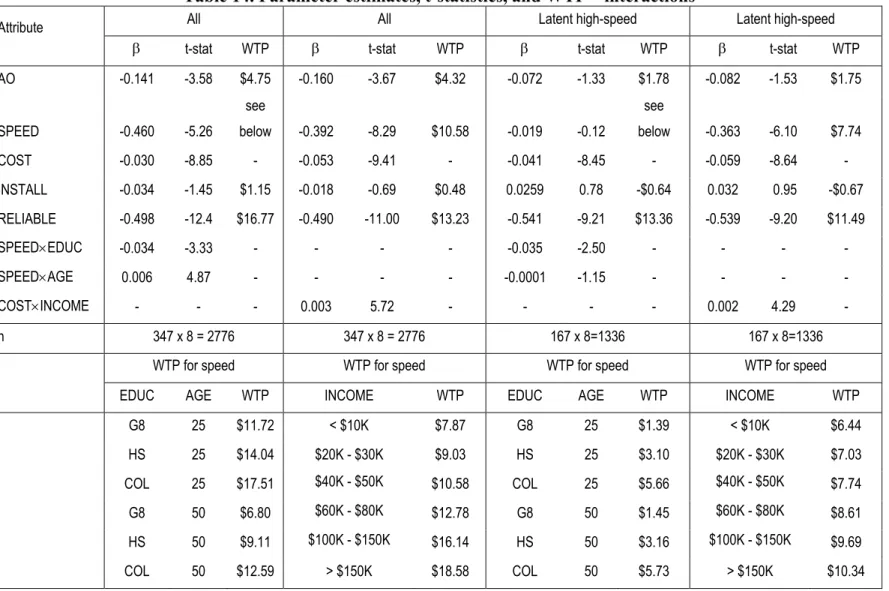
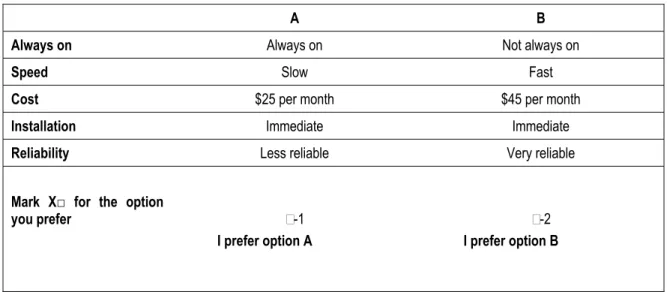
Price is consistently a very important issue. In our consumer survey, the monthly cost of Internet access is very important for all survey respondents, but respondents with dial-up access place more importance on price than other attributes. Econometric estimates of marginal utilities show that dial-up users, and latent high-speed users, weight cost more heavily in their indirect utility functions than high-speed users. Our small business / SOHO analysis shows price to be the single largest perceived barrier to purchase of broadband service. Our telework research suggests that many teleworkers are responsible for part of their technology costs; price becomes an issue both for the teleworker and for the organization bearing the remainder of the costs. And our secondary research consistently
suggests price is a critical issue and that significant price elasticity exists. These findings suggest (1) that actions intended to increase the perceived benefits of broadband can help (by justifying the price paid) and (2) it is not really feasible to ignore supply side issues to the extent they influence price.
c. Price differential between broadband and
narrowband services and perceived value differential.
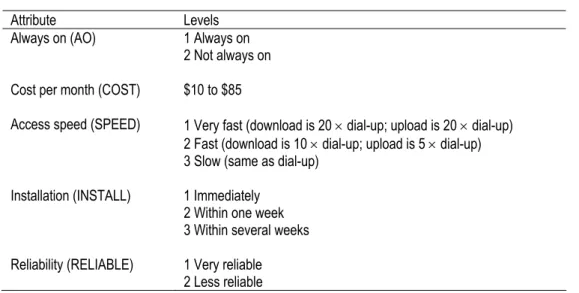
Our consumer survey suggests the price differential between dial-up and high-speed access, ($17.51 and $40.76 per month, respectively) is relatively high given many dial-up users place relatively low value on the “always on” attribute. Consumer surplus (i.e., willingness to pay, or WTP, less actual price paid) provides some understanding of perceived value. Econometric estimates of WTP suggest that latent high-speed users are willing to pay $26.35 to $35.19 for a very reliable high-speed service.1 High-speed users, who tend to be “younger”, more educated, and with higher income, are willing to pay $68.95 to $138.22 for a very reliable high-speed service. Assuming dial-up users currently have a reliable service, and given the mean price of high-speed access of $40.76, high-speed users clearly perceive greater value in high-speed access than
1 These figures are calculated by taking the monthly cost ($17.51) for low speed, very reliable, dial-up service that is not always on, and where installation is not important. Estimates of latent high-speed user’s WTP are then incrementally added to this benchmark service to reflect a move from not always on to always on, and slow speed to fast, and fast to very fast.
latent high-speed users. Several strategies are available to attract the next wave of adopters: publicise and promote the benefits of broadband to the public; targeted education and promotion towards latent high-speed users (for instance, through one-stop shops that trial access, subsidized/free trials of broadband in the home, etc.; given that high speed users tend to be highly satisfied with their service once purchased, opportunities to trial the service at low or no cost should be particularly powerful); increase actual and/or perceived service reliability (this would place latent high-speed user’s value closer to the range of actual monthly prices); and “version” Internet access by the reliability (or speed) attribute by identifying speed and latent high-speed groups (according to age, income, education, etc). For instance, provision of a “high-price”, very reliable, high-speed service will satisfy high-value (high-WTP) customers, while a “low-price”, less reliable, high-speed service will be a more attractive value proposition to latent high-speed users. Once latent high high-speed users experience high-speed service, and become more skilful in using speed and always on functionality, then some users within this group may self-select into the high-price/high-value service according to their revised WTP.2
2 Versioning sells different quality services to different market segments at different prices. By creating low-quality (low-value) and high-low-quality (high-value) versions the firm can sell a good, which effectively costs the same to produce, at a higher price to consumers with significantly higher WTP. Whilst there is a social cost to reducing quality to satisfy the self-selection constraint, in many cases, the output effect appears to outweigh the quality reduction effect. Effectively, versioning can raise both firm profitability and societal welfare when new
(low-d. Concern about technical difficulty of installation.
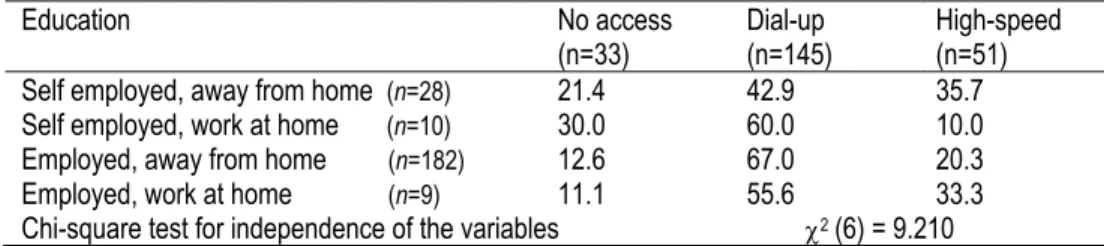
Our consumer survey suggests that while many respondents state that installation is an important attribute of Internet access, they generally do not value it when trading-off other attributes in the utility maximization decision; similar our analysis of Small Business/SOHO data rates installation cost (a proxy for difficulty of installation) low as a barrier to purchase or as a reason for selecting a particular broadband provider. It appears that users are relatively willing to accept a “one time cost” in terms of installation difficulty – while there may be problems with installation, these do not appear This suggests that no particular action is required regarding ease of installation, but, ease of installation may nonetheless be subsumed in critical initiatives to increase ease-of-use and reliability discussed next.
e. Concern about technical difficulty of maintaining the service
f. Concern about delivered service meeting the advertised speeds and functionality (including availability, reliability, performance, ability to support multiple PCs, etc.)
g. Concern about service longevity based on recent industry bankruptcies, consolidations etc.
value) markets are served that would not be served in the absence of this pricing strategy.
In our consumer survey, e., f., and g. all refer to the same attribute – reliability of service. Both survey data and marginal utility estimates indicate that reliability of service is the most important attribute of Internet access. Consumers are WTP between $13.25 (Latent high-speed) and $39.12 (With high-speed) for more reliable service. Our analysis of small business/SOHO data found that “low service reliability” is second only to price as a barrier to purchase of broadband. Further, our telework research suggests that teleworkers are increasingly not technophiles; they receive relatively little technical support from their organizations, and yet they are critically dependent on their technology (including their network connection). There appears to be an important potential to increase demand by using technical means to increase reliability, changing users’ perceptions about reliability through advertising and education, service level agreements, and tiered access plans that differ according to service reliability (see d. above), and by structuring access to broadband services so as to increase reliability (for example, packaging technical support with broadband access to provide an integrated “high reliability” service to teleworkers).
h. Concern that the “always connected” nature of broadband services may introduce additional security concerns, or added complexity in implementing security measures
In our consumer survey, security aspects were eliminated from the questionnaire during pre-testing, so this question is not directly addressed. There were no comments about security in the 100
or so answers to the open ended question “please add any comments that would help us understand your answers to this survey?” Similarly, security was infrequently an issue in our semi-structured teleworker interviews. This is consistent with our secondary research, which suggests that consumers do not see increased security issues with “always on” as a substantial concern for them
beyond their already existing concerns with, say, virus protection – the real cost is borne by businesses subject to distributed denial-of-service attacks. Similarly, security concerns rated low in our small business/SOHO analysis (well below monthly cost, service reliability, and equipment cost) as a barrier to broadband purchase, though concerns increase somewhat with the size of business. This finding does not support any strong initiatives to change perceived security risks in order to stimulate demand.
Separately, we note that “always on” is the third most important attribute in our consumer survey with WTP ranging from $0.91 (With dial-up) to $17.29 (With high speed). The low WTP for latent users is interesting; it suggests little appreciation for the impact of “always on” on lifestyle. By contrast, teleworkers have a clearer understanding of the benefit of “always on.” Some of us speculate that “always on” may be a key but unperceived driver for the “stickiness” of broadband – the tendency for users to be satisfied and less likely to give up broadband once they have it. If this is true, it suggests the value of efforts to increase awareness of the benefits of “always on” and the potency of free or low cost trial
use (in which users experience “always on” and develop an appreciation).
i. Perceived, or real, absence of interesting content or applications that need broadband access speeds
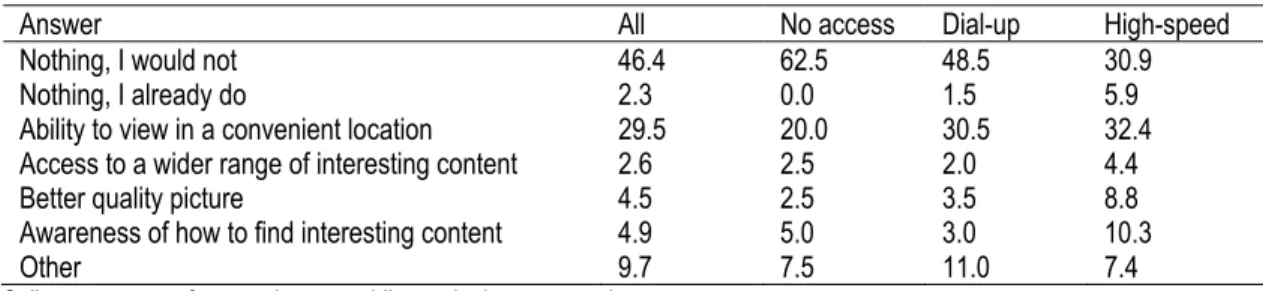
From our consumer survey, some insight into the relationship between high-speed demand and the provision of entertainment content in particular is gleaned from the survey question “what would need to change for you to use the Internet to view entertainment video such as a full-length movie or TV show?” There appears to be some resistance to using the Internet to view entertainment video, but this resistance declines from no access, to dial-up, to high-speed users. Excluding respondents who “would not use their PC and the Internet to view entertainment content”, the most important reason is the “ability to view in convenient location (for instance, your TV in your living room).” “More awareness of how to find interesting content”, and “access to a wider range of content” are less important reasons for “change” across the whole sample, but are relatively more important to high-speed users. Clearly, more research is required on this issue. Given content is currently being designed for high-speed access on a user-pay basis, future research should consider conjoint panels that focus on content attributes and prices (similar to that used in cable TV markets) rather than access attributes. Our telework research suggests that as fewer and fewer teleworkers can be classified as technophiles, attraction to applications becomes secondary to reliable provision of basic work
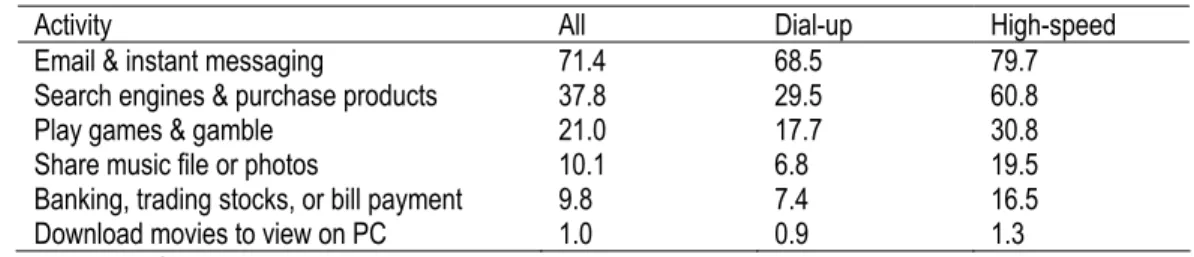
functionality. Our secondary research shows that while proponents of broadband consistently tout a variety of interesting applications, consumer usage continues to be dominated by email and web browsing (just as with dial-up access). There are encouraging trends among broadband users towards more time on line and some more time using applications that benefit from broadband (particularly games), but there is no evidence of a “killer app” emerging nor is the search for such an application necessarily the best strategy. Instead, we would recommend an emphasis on promoting the generic benefits of broadband (especially, for example, through trial exposure) and broad support for the evolution of multiple applications that can differentiate broadband.
j. Limitations in the actual speed of existing services (i.e., are existing services really “broadband enough”?); what upstream and downstream speeds would make a difference in subscription rates, and at what pricing?
In our consumer survey, after reliability, speed is the next most important attribute. Consumers are WTP between $8.22 (Lower income) to $32.15 (With high-speed) to increase speed from dial-up (slow) to fast for downloads but relatively slower for uploads (fast), and from fast to very fast for uploads and downloads (very fast). Our teleworker survey suggests that while speed is not in itself a salient issue, it is important through its manifestation in file download times; we would expect that the ratio of typical file size to bandwidth will strongly influence teleworker sensitivity to speed. Our small business/SOHO analysis shows
speed, always on, and email and instant messaging applications as all being cited as critical (and quite similar in criticality) whereas e-commerce, streaming media, integrated services, remote access, and videoconferencing were all perceived as substantially less critical. Our secondary research also suggests an interesting trend towards broadband users increasingly becoming sources of content; ultimately this could reflect itself in more sensitivity to upstream speeds. Overall, these findings suggest sensitivity to speed; it should be possible to tier the market on speed and expect some migration over time towards higher speed services, although our tools were not sufficient to distinguish particular speed/price points beyond the slow, fast, and very fast characterizations (we need to limit the number of choices in each attribute in order to get statistically reliable conjoint analysis across multiple attributes).
k. Inability to access the Internet via broadband speeds at other than the primary home or office location
In managing the scope of our consumer questionnaire, we needed to eliminate this from the questionnaire during pre-testing, so this question is not directly addressed. Regarding the relationship between home and office broadband access, our secondary research is in conflict; some authors suggest that broadband access at work may serve as a substitute for broadband access at home (for example, noting that most streaming media is actually consumed in the work place), while others suggest that broadband
access at work can serve to familiarize consumers with the advantages of broadband (we have recommended in several instances above the value of trial exposure for users). We did not uncover any particular information on the relationship between broadband access in home or office and access in other locations (e.g., mobile access or access while traveling); a general observation, though, would be that the tendency of users to become adapted to broadband once they use it should make them more desirous of broadband in locations other than home or office (in other words, while it might be hard to get a current dial-up user to value mobile and remote broadband access, it should be disproportionately easier to get a home or office broadband user to value mobile and remote broadband access.)
3. To what extent is the U.S. Government currently a subscriber of broadband services, and could increased Government use of broadband motivate higher subscription rates among residences and businesses?
Initial results at ascertaining Government connectivity are moderate, creating only a general view. We believe follow up surveys could shed some more light on this topic. However, based on conversations with officials within US agencies, it is not clear that the government understands the relevant concepts. We found a great deal of information indicating that the government is indeed looking at ways of improving efficiency and reduced costs through the use of Information and Communication Technology (ICT). However, these efforts do not focus
specifically on broadband services per se. We did find the terms “broadband”, “high speed” and “high rate” in numerous federal reports concerning such things as telework, work process, ecommerce and egovernment. We also found a number of reports and proposed legislation that mentioned the role of broadband as a general driver of economic growth. While we do believe that government should look at the role of broadband, we also believe that this is just one part of a much bigger effort; that of understanding how all of ICT can help government be more efficient and cut costs. Nonetheless, it may be worthwhile for industry to demonstrate to government why they should look more closely at the role of broadband. For example, the conclusions reached in this document could be used as a launching point for more in depth investigation by a government agency, such as GAO.
As for Government driving broadband internally and externally, they are moving in the right direction. Instead of finding the killer app, they are slowly developing accessible, reliable and user-friendly services and applications to better serve their own and their citizen’s needs. We recommend to developers focus on current ICT projects that will most likely evolve into useful bundled applications and services, rather than attempt to identify the next best thing. We also recommend that government continue to focus on telecommuting, improved online business process, and accessible portals.
4. What are the potentials for broadband to support telecommuting/telework practices? What are the
major indicators of broadband adoption for telecommuting/telework?
Our key findings from our telework research are:
Finding 1: “Telework” is just “work.” Respondents do not distinguish telework from “normal work.” They do not segment their work into “office” work and “home” work. Nor do they consider themselves unusual or experimental in terms of their work practices.
Finding 2: Teleworkers divide their work into “tasks” and “relationships.” Both of these need support.
Task work involves things an individual does alone, including writing, research, data analysis, and so forth. Relationship work involves those things that must be done with others, including meeting with team members and with clients, mentoring, and supervising.
Finding 3: Telework is a continuum. The traditional view that juxtaposes office work to telework is outdated. The extension of the workday beyond “office hours” means that it is more realistic to think of teleworking as a continuum ranging from workers who perform all or most of their work in the office to those that perform all or most of their work at other locations (at home, on the road, at clients’ sites).
Finding 4: Teleworkers in “non-tech” companies largely are responsible for creating their work environments, including acquiring technological equipment and support. Most respondents were given no additional support in terms of equipment or technical assistance, as compared to traditional office workers. Technology companies tended to provide
more resources; employees of these companies noted they were given laptops and even software to use to telecommute more efficiently (such as instant messaging).
Finding 5: Formal telecommuting policies and statements of expectations are largely nonexistent. Even when policies exist (usually in tech companies), they may not be effective in guiding action.
Finding 6: Most organizations provide little to no support for their teleworkers. Teleworkers indicated that they learned “on the job” how to telework. Organizations sometimes supplemented the experience with literature or short training seminars, but not at the outset of the job. The idea of “economic” or “organizational” support—in which the organization helps the employee by shouldering some of the burden of working away from the office— did not resonate with the respondents. They had not considered that possibility.
Finding 7: Technology is a core attribute of telework. Results confirmed our expectation that technology is an essential component of telework. Respondents consistently indicated that without the ability to access documents, databases, intranets, etc. they could not do their job.
Finding 8: Teleworkers use established technologies, but will adopt innovative technologies if they meet communication and information needs.
Finding 9: Dial-up connections dominate. With only a few exceptions, our respondents connected through traditional dial-up phone lines rather than through
broadband. Several connected though toll free lines, several through an extra business line, and one through satellite (we do not know if this connection was broadband). Not all had broadband service available in their area. For those who did, the decision not to subscribe was the result of a cost-benefit analysis, with cost-benefit having to be measured in terms of increased work productivity. While they acknowledged that slower connections meant wasted time or lower productivity, they would argue they were getting by on what was available.
Finding 10: Few respondents knew what “broadband” was. Many had no broadband service. Most referred to it or understood it as high speed internet access. “DSL” was sometimes used as a replacement. Employees of technology companies were somewhat more confident in their definitions.
Finding 11: Requirements of teleworking practices potentially can drive broadband adoption.
Respondents are committed to making their arrangements work. These commitments are consistent with the opportunities afforded by broadband, either because broadband can solve current inefficiencies, or because it can meet perceived requirements.
These led to several specific recommendations: 1. Make broadband affordable to teleworkers
specifically.
2. Emphasize improved productivity and efficiency, rather than increased content.
3. Further investigate technology for supporting relationships.
4. Package excellent technical support with broadband access.
5. Work with access providers or organizational consultants to develop a “turn-key” telework package.
6. Emphasize the reliability and stability of broadband access, rather than its ability to support new and innovative work practices. 7. Finally, make broadband easier to understand.
Background on Broadband
A large community of interested parties – in industry,government, and academia – is debating the current status of broadband, its direction, and appropriate policies. While in this report we offer some original primary research on drivers of broadband demand, in this section we will examine the broader context of the current broadband debate.
The Definition of Broadband
Broadband is usually thought of as related to data rate, but, in fact, there is both disagreement on what data rate might define broadband and on whether data rate is the defining characteristic at all.
The United States Federal Communications Commission (FCC) generates substantial statistical data on broadband as well as advocating policy initiatives, so its definition is particularly important. Even here, though, we find variations. The FCC originally defined broadband to mean greater than 200 kbps information carrying capacity in both directions3 but then added other descriptive terms such as ‘high-speed services’ (at least 200 kbps in at least one direction), ‘advanced services’ (at least 200 kbps in
3 U. S. Federal Communications Commission, First Advanced Telecommunications Report, CC Docket No. 98-146, Released February 2, 1999, <http://www.fcc.gov/Bureaus/Common_Carrier/Orders/19 99/fcc99005.txt>, p. 20)
both directions and thus a proper subset of high-speed services) and ‘broadband services’ (a larger subset of services that end users can access with asymmetric capabilities and speeds that are less than 200 Kbps, but are generally also considered high-speed, such as greater than 128 Kbps in a wireless environment or 144 Kbps in a wireline environment)4. But note how FCC Chairman Michael Powell addresses the definition of broadband in a late 2001 speech:
Oddly enough a clear, uniformly accepted definition evades us. It is accepted that whatever broadband is, it is fast (the Commission has defined it as 200kbs). We have very forceful debates about how fast is fast enough. I submit, however, that broadband is not a speed. It is a medium that offers a wide potential set of applications and uses. With the telephone, we knew what the “killer app” was. It was voice. The “broad” in broadband should be recognized as meaning more than the “fat, fast pipe.” It should represent the nearly infinite possible uses and applications that might be developed and that a consumer might use. I think broadband should be viewed holistically as a technical capability that can be matched to consumers’ broad communication, entertainment, information, and commercial desires.
4 U. S. Federal Communications Commission, Notice of Inquiry Concerning Advanced Telecommunications Capability, CC Docket No. 98-146, Released February 18, 2000.
< http://hraunfoss.fcc.gov/edocs_public/attachmatch/FCC-00-57A1.pdf >, p. 2
I start by trying to come together on what are the indispensable components of broadband functionality. It is, to my mind, (1) a digital architecture, (2) capable of carrying IP or other multi-layered protocols, (3) that has an “always on” functionality, and (4) that is capable of scaling to greater capacity and functionality as uses evolve and bandwidth hungry applications emerge.
I also believe that we should conceptualize broadband capability as a function that can ride on many different electronic platforms. Broadband is not a copper wire. It is not a coaxial cable. It is not a wireless channel. It is all of these things. The capability can ride on many platforms (and should) in order to tailor solutions to consumer patterns and interests.5
Returning to bit rate based definitions, the OECD (a collector of statistics and commentator on international broadband policy) uses a slightly higher rate for downstream, 256 kbps, but allows as low as a 64 kbps upstream rate6.
The Canadian National Broadband Task Force suggests that the minimal bit rate for broadband should be substantially above 200 kbps, relying on tables such as the following7:
5 Powell, Michael K. “Remarks of Michael K. Powell, Chairman Federal Communications Commission at the National Summit on Broadband Deployment,”
Washington, D.C., October 25, 2001.
<http://www.fcc.gov/Speeches/Powell/2001/spmkp110.ht ml.>, pp. 2-3)
6 Organization for Economic Co-operation and
Development, The Development of Broadband Access in OECD Countries, October 29, 2001.
<http://www.oecd.org/pdf/M00020000/M00020255.pdf>, p. 6
7 Canadian National Broadband Task Force, The New National Dream: Networking the Nation for Broadband Access, Submitted to Canadian Minister Tobin on June
Application Minimum Bit Rate Desirable Bit Rate Tele-working 110 kbps 7000 kbps Video Conferencing 110 kbps 800 kbps Tele or E-Learning 110 kbps 7000 kbps Tele-medicine 110 kbps 7000 kbps Video Telephony 70 kbps 200 kbps Near Video-on-Demand 1000 kbps 7000 kbps Movies-on-Demand 1000 kbps 7000 kbps Audio-on-Demand 110 kbps 700 kbps Telegames 40 kbps 600 kbps Home Shopping 40 kbps 7000 kbps Electronic Banking 40 kbps 400 kbps Electronic Newspaper 40 kbps 2000 kbps Digital TV 1000 kbps 7000 kbps From this they conclude that some important applications
require a rate higher than 200 kbps and that most benefit
from a rate higher than 200 kbps. More ambitiously, others note that High Definition Television requires yet higher bit rates (19 Mbps) and that emulation of workplace networking would require the same 10 or 100 Mbps access that workers typically enjoy through a direct Ethernet connection in the office – so claim a better definition of broadband would be 100 Mbps8.
Chairman Powell calls out a particular technical characteristic other than bit-rate, “always on” connectivity. Another technical characteristic that is occasionally required of broadband is low latency – this is important in two-way human communication and in online interactive gaming. And others have also adopted application
18, 2001. <
http://broadband.gc.ca/Broadband-document/english/table_content.htm>, p. 32
8 TechNet. A National Imperative: Universal Availability of Broadband by 2010. January 15 ,2002.
< http://www.technet.org/news/newsreleases/2002-01-15.64.pdf>, p. 6
oriented definitions of broadband similar to Chairman Powell’s9.
Notwithstanding this profusion of definitions, we will for the most part consider broadband in the sense of the FCC’s “high speed lines” (at least 200 kbps in at least one direction), the definition most consistent with calling DSL and cable modem deployments broadband. But this is not a trivial choice; not all applications will run at these rates and so not everything that we can imagine doing with broadband will be achievable under this definition.
The Current Status of Broadband
Broadband is built on top of the phenomenon of internet access, so it is worthwhile to first review basic internet usage. Most Americans use the internet: the Department of Commerce reports 143 million Americans (54% of the population) as users as of September, 2001, while the UCLA Center for Communication Policy in their 2001 survey estimates a higher percentage: 72.3%.10
9 See, for example, the application based definition in National Research Council, Broadband: Bringing Home the Bits. Washington, D.C.: National Academy Press, 2002,
<http://books.nap.edu/books/0309082730/html/index.html
>, pp. 78-80, and the commentary regarding business definition of broadband in Kneko Burney, “The Big Comeback: Excerpts from ‘Business Broadband in a Changed Economy’,” In-Stat MDR, May 2002, that U S business decision makers don’t seem to associate broadband with a particular bit rate definition but rather as encompassing high-speed networks of many varieties and concludes that businesses no longer see a natural separation between local area and wide area networks. 10 See United States Department of Commerce. A Nation Online: How Americans are Expanding Their Use of the
Internet. February 2002. <http://www.ntia.doc.gov/opadhome/digitalnation/index.ht
ml> and The UCLA Center for Communication Policy, The UCLA Internet Report 2001: Surveying the Digital Future: Year Two, November, 2001.
Moreover, the use has expanded from affluent and technology savvy segments to slower to adopt segments such as rural and minority populations (as measured by a decrease in the Gini coefficient of disparity used by economists).11 And we can expect a number of the remaining non-users to start using the internet in the next twelve months, indeed, if we extrapolate from current rates of adoption by non-users and the current user base, 96% of the population would be using the internet by 2006 – a penetration comparable to that of basic telephone service.12
While the majority of the population already experiences the internet, a much smaller fraction has broadband access. There is variation in estimates of current broadband penetration, but two salient sources include the Department of Commerce’s estimate that 20% of internet users (and hence about 11% of the population) were broadband users as of September, 2001 and the FCC’s own semi-yearly statistics collection on number of high speed lines:13
< http://www.ccp.ucla.edu/pdf/UCLA-Internet-Report-2001.pdf>, p. 17
11 ibid, Department of Commerce, p. 85.
12 Ibid, UCLA, noting that 44.4% of non-users in their 2001 survey plan to go online in the next year, up from 40% in their 2000 survey (p. 28).
13 See U. S. Federal Communications Commission, High Speed Services for Internet Access: Status as of December 31, 2001, July 2002, <
http://www.fcc.gov/Bureaus/Common_Carrier/Reports/FC C-State_Link/IAD/hspd0702.pdf>, p. 2, and its predecesors.
0 2,000,000 4,000,000 6,000,000 8,000,000 10,000,000 12,000,000 14,000,000 2H99 1H00 2H00 1H01 2H01 H igh S p ee d Line s Total Coaxial Cable ADSL Other W ireline Fiber
Satellite or Fixed Wireless
A somewhat larger fraction – better than 40% – of small business internet users have broadband access and an even larger fraction – 85% – of medium and larger businesses have connectivity at their main offices.14 Is the adoption of broadband unusually slow? In the first half of 2002, both the technology industry and various government organizations identified a problem with the rate of broadband adoption. These themes have now become much more muted. Key points regarding the “abnormality” of adoption are:
14 For small businesses, 38% of 250 small businesses surveyed at the beginning of May, 2002 for Women Impacting Public Policy subscribe to high speed internet access (the sample size is sufficient for an accuracy of +/- 6% at the 95% confidence level (KRC Research, Small Business Solutions: Utilizing the Internet and High Speed Access, prepared for Woman Impacting Public Policy, May, 2002). Cahners In-Stat notes that 87% of larger enterprises have broadband connectivity at their main office versus 86% for middle size companies and 56% for smaller companies (Cahners In-Stat Group, “Moving Towards Broadband Ubiquity in U.S. Business Markets,” Report No: BB0101UB, April, 2001, <http://www.instat.com/catalog/downloads/whitepaper_bb ubiquity.asp >, p. 14).
- Changes in the rate of increase of adoption.
- Availability of broadband relative to demand.
- Rate of adoption of broadband relative to other examples of adoption.
Changes in Rate of Increase of Adoption A useful set of figures on broadband adoption comes from the FCC15:
First Half 2000 57% growth Second Half 2000 62% growth First Half 2002 36% growth Second Half 2002 33% growth
The substantial decline in growth rates between 2002 and 2001 has been a cause for alarm.
What expectation should we have on fractional growth rates for a diffusion process? Fractional growth rates are the most commonly cited growth statistics (the change in the last period divided by the amount at the beginning of the period; usually these are stated in percentage terms as in the FCC statistics above; a constant fractional growth rate implies exponential growth). If diffusion is occurring in a finite population, saturation will ultimately occur and certainly by that point growth rates will have declined precipitously. More interestingly, though, take the simplest mathematical model for diffusion, the famous “logistic curve” or “S-shaped diffusion curve” given by
)
exp(
1
)
(
*t
N
t
N
φ
η
−
−
+
=
15 See note 11.where N(t) is the number of adopters at time t, N* is the ultimate number of adopters at saturation, η locates the curve in time and φ gives the rate of adoption.16 The fractional growth rate for this curve is given by
)
exp(
1
)
exp(
)
(
)
(
1
t
t
dt
t
dN
t
N
η
φ
φ
η
φ
−
−
+
−
−
=
,a function that declines continuously: note the limits:
φ
=
−∞ →dt
t
dN
t
N
t)
(
)
(
1
lim
and0
)
(
)
(
1
lim
→∞=
dt
t
dN
t
N
tIn other words, a diffusion process following the classic S-shaped curve exhibits continuously declining fractional growth rates. (A more intuitive statement might be that an S-shaped curve appears to exhibit classic exponential growth at its very beginning with fractional growth rate
φ
, but is in fact continually falling in growth rate as it moves on towards zero fractional growth rate at saturation.) This doesn’t tell us, for example, whether the amount of decrease in growth rates observed should have been expected (in fact the decline in growth rates is substantially higher than is experienced by the best fit logistic curve), but it does suggest that the fact of declining growth rates alone is not sufficient to suggest an abnormal diffusion process.In the second half of 2002, the whole issue of declining growth rates has become muted. For example,
16 Stoneman, Paul. The Economics of Technological Diffusion. Oxford, UK: Blackwell Publishers, 2002, p.12
promotion for a recent (and frequently cited) marketing study includes the quote17:
"But I don't know why commentators constantly complain about the lack of broadband adoption in the US. The residential sector grew over 80% between 2000 and 2001," says Mr. Macklin [an eMarketer analyst]. "I'd characterize that as significant."
An October, 2002 Wall Street Journal article on Comcast’s cable modem business states18:
After a disappointingly slow start that staggered an expectant Internet industry salivating to serve customers with high-speed connections, broadband usage has been accelerating to the point where it is reaching critical mass.
The FCC has opined that the rate of adoption of advances services is satisfactory19 and the Office of Technology Policy in the Department of Commerce describes demand in its September report as “robust” (see quote in following section).
Availability of Broadband Relative to Demand
A second point of concern emphasized in the first half of 2002 is the discrepancy between availability of broadband (cited as being available to almost all the population) and
17 eMarketer, “Broadband Demand and Dial-Up Access,” August 2002,
<http://www.emarketer.com/products/report.php?2000121&PHP SESSID=8c7dcd92dac8aa833d2f36a46b2a6724>
18 ibid, Wall Street Journal.
19 FCC, “Third Report on the Availability of High Speed and Advanced Telecommunications Capacity,” February 7, 2002.
actual subscription rates (in the 10% range). Evidence of widespread availability undermined explanations that there are few adopters simply because broadband is not available, and turned the focus to understanding whether demand drivers are abnormally low (the subject of much of this report).
However, the sense that low demand relative to availability is a cause for concern has also declined throughout 2002. Compare, for example, the following quote (from a speech by Bruce Mehlman, Assistant Secretary for Technology Policy, U S Department of Commerce, in March of 2002)20:
THE CHALLENGE for those of us who see broadband as critical to U.S. competitiveness is that, despite availability to a majority of American homes, and notwithstanding fast subscribership growth, only a fraction of American consumers have chosen to subscribe so far - just 10% by some estimates, although a few leading markets have seen up to 30% take rates.
with the following quote from the report “Understanding Broadband Demand” issued by Assistant Secretary Mehlman’s office in September of 200221:
We have found that demand for broadband is robust, although as with most new technologies, broadband
20 Mehlman, Bruce. BROADBAND: The Sky’s The Limit and It’s Not Falling (Yet). Before the Nortel Public Polcymakers Luncheon. 4 March 2002.
<http://www.ta.doc.gov/Speeches/BPM_020304_Sky+Limi t.htm>).
21 Office of Technology Policy, U.S. Department of Commerce, “Understanding Broadband Demand: A Review of Critical Issues,” September 23, 2002.
supply currently exceeds demand (in all but the most rural markets).
The first quote suggests that the discrepancy between supply and demand is a cause for concern while the second suggests it is to be expected. (Indeed, there are many historic diffusion processes in which simple availability of an innovation has not been the limiting factor in adoption rate.)
Throughout 2002, there has been a tendency to imply that low subscription rates relative to availability indicate that only demand side issues are salient. Simply put, widespread availability of broadband is not the same as widespread availability at prices that stimulate demand, so that it is incorrect to assume that low subscription rates relative to availability imply there are no supply side issues or opportunities.
Rate of adoption of broadband relative to other examples of adoption
More and more commentators (particularly in the U S government administration) are comparing the rate of adoption of broadband relative to other consumer oriented technological innovations. The FCC was early in emphasizing this point; the following figure is typical and is drawn from data collected by FCC staff22.
22 Greg Guice, FCC, private communication, September 10, 2002.
0% 10% 20% 30% 40% 50% 60% 70% 80% 90% 100% 187 6 1886 1896 1906 1916 1926 1936 1946 1956 1966 1976 1986 1996 Years Per ce n t Telephone (1) B/W Television (3) Color television (4) Cable (5) VCR (6) Cellular (7) CD Players (8) DBS (9) Electricity (2) 1 2 3 4 5 6 8 7 9
The observation that the penetration of broadband is “faster than that of any other consumer technology” is now a standard part of FCC discussions of the matter.23 The obvious implication of these statements is that there is nothing “abnormal” about broadband adoption rates; if anything, things are going rather well and it is therefore unclear how much intervention is required to fix a problem.
These analogies do suffer from weaknesses. Senator Lieberman’s staff point out several24:
- It seems very liberal to compare adoption processes as diverse as the original adoption of telephony, the adoption of cellular telephony, and so on, with broadband; surely there could be many factors that distinguish the circumstances of adoption and would preclude us from concluding by comparison whether broadband adoption is fast or slow.
- But if one is going to use such comparisons, we should note that the rate of adoption for 23 Ibid, Office of Technology Policy.
24 Office of Senator Joseph I. Lieberman, “Broadband: A 21st Century Technology and Productivity Strategy,” May 28, 2002.
technologies has apparently been accelerating over time (at least in most cases); wouldn’t this suggest that a normal adoption for broadband should be quite fast by historical standards? Further, since broadband is enhancing an activity which has already largely been adopted (internet access), one would expect faster penetration than would apply in completely new applications such as the telephone or VCR.
In addition, broadband penetration is still low; somewhere between 10% and 15% of the population, so that it is hard to meaningfully compare the elapsed time so far in broadband with the entire adoption curves of other innovations.
In summary, growth in broadband use continues. Growth clearly slowed in 2001, and although the fact of slowing growth is not in itself evidence of abnormality, the amount of decline was surprising. Nonetheless, the tone of the debate has moved from being alarmed over declining growth rates towards calling growth in broadband “robust” and comparing it favorably to previous innovations.
Is the Rate of Broadband Adoption Optimal?
If broadband has some attractive characteristics, then “problems” with the adoption process might be sufficient alone to motivate aggressive intervention by stakeholders. However, if the adoption process is thought to be normal (apparently an increasingly common perception as discussed above), then more scrutiny falls on the potential benefits of adoption and whether they are sufficient to motivate attempts to drive the process “faster than normal.”Purported benefits of broadband generally consist of:
- National economic benefit and international competitiveness
- Specific applications
- Industry-specific benefits
National economic benefit and international competitiveness
Economic benefit arguments revolve around identifying applications enabled or enhanced by broadband and estimating their impact on economic growth. The most frequently cited study (by Crandall and Jackson25) uses estimates of consumer price elasticity for broadband to determine economic surplus benefit to consumers and to producers, and then cross check this by attempting to estimate the specific economic benefit of enabling particular classes of applications. The authors then calculate the net present value of accelerating broadband benefits from a leisurely 25 year adoption of broadband to a duration more on the order of 5-10 years, finally arriving at a net present value of $420 billion of consumer benefit and $80 billion of producer benefit from acceleration. In helping to explain this, they note the importance of network externalities:
A skeptic, on reading this, will necessarily have doubts – how could speeding up the adoption of a technology have such massive benefits? The key lies in the substantial
25 Crandall, Robert W. and Charles L. Jackson. The $500 Billion Opportunity: The Potential Economic Benefit of Widespread Diffusion of Broadband Internet Access. July 2001, Criterion Economics, LLC. <http://www.criterioneconomics.com/documents/Crandall_
Jackson_500_Billion_Opportunity_July_2001.pdf>, p. 54
benefits that ubiquitous broadband can convey to consumers. Once virtually everyone has the service, the network effects from developing new services become very large. Moving these benefits forward a few years can create very large benefits – even when evaluated from today’s perspective.
An alternative approach is taken by Pociask; he focuses on jobs created directly and indirectly by investment in broadband infrastructure: he estimates 166,000 jobs created in broadband service providers, 71,700 jobs created in equipment providers, and 974,000 indirect jobs created elsewhere in the economy using the notion of a “multiplier” between direct jobs created and indirect jobs created.26
Most references to economic studies on the benefit of broadband are to these two reports; there do not appear to have been substantive additional attempts to quantify numerically the economic benefit of broadband adoption. International competitiveness is a theme in many countries’ discussions of broadband. In the United States, the observation is often made that in spite of its leadership in developing the internet and broadband technology, the U S is not the fastest adopter of broadband and other countries who currently have higher penetration or may achieve higher penetration in the future may acquire substantial and persistent economic advantages.
26 Pociask, Stephen. Building a Nationwide Broadband Network: Speeding Job Growth. TeleNomic Research, LLC, Herndon, VA. February 25, 2002. <
Specific applications
Another common approach by proponents of broadband is to list a set of appealing applications and suggest that increased access to these applications should motivate efforts to accelerate broadband deployment.
Application Taxonomy
Typical emphasized broadband applications are:
• Entertainment Video and Audio
• Games
• Education
• National Security and Digital Government
• Teleworking
• Telehealth
as well as other miscellaneous applications. We review each here.
Entertainment Video and Audio
Since streaming audio and video at better than novelty quality are simply not feasible over narrowband, it is not surprising that broadband users are much more prolific in their consumption of streaming media (for example in a September 2001 study by McKinsey, 57% of broadband users compared to 33% of narrowband users streamed audio and 37% of broadband versus 11% of narrowband users had streamed video at least once in the prior month27). But after experimenting, many broadband users do not become habitual consumers of streaming
27 McKinsey & Co., The Broadband Opportunity, September 2001, p. 10.
audio and video.28 Video is worse than audio: although audio quality over broadband is comparable with other high quality audio sources available to consumers, current typical broadband rates of ADSL and cable modems and the ability of PC’s to process video without interfering with other tasks are impediments to the consumption of streaming video.29 Other issues with widespread adoption of consumer streaming media include:
• the fact that the typical decoding device (a PC) is often not located where consumers want to enjoy streamed content (necessitating adoption of appropriate home networking and distributed devices by consumers)
• well publicized issues over copyright, fair use, piracy, and availability of highly desirable (“Hollywood”) content to users, requiring political, legal, commercial, and technical issues to be addressed.
Downloaded audio (as opposed to streaming audio) continues to be a very popular in spite of the suspension of access via Napster – access has moved to other peer-to-peer applications and most downloaders report
28 According to a 2001 study by Arbitron and Coleman “Online media are not yet generating habitual use. The challenge of converting streaming audio trial into habitual use is not unique. It is also true for other Internet media, as 37% of [broadband users] have ever used downloaded audio, 24% have ever watched streaming video, and 46% have ever used downloaded video. The “used in last week” levels for each of these media are 12%, 5% and 3%, respectively.” (Rose, Bill and Warren Kurtzman, Broadband Revolution 2 – The Media World of Speedies. Arbitron Webcast Services and Coleman Insights. <http://www.arbitron.com/downloads/broadband_2.pdf>, p. 18)
increasing download activity – and downloaded video has been increasing in popularity. Broadband should be attractive to heavy downloaders since it reduces the download time substantially, but this trend will likely be strongly affected by the outcome of commercial and legal struggles that could substantially reduce downloading as a motivator for broadband usage, especially in the near term.
Although streaming media entertainment content is frequently touted as the necessary ingredient for increased adoption of broadband, it is not clear how quickly the problems above can be resolved nor whether it can be as strong a driver for broadband demand if content owners are able to charge profit maximizing prices. On the other hand, it appears there will likely be continued experimentation with streaming media content and business models, particularly as broadband penetration increases (and hence so does the market for content uniquely created or packaged for broadband). A salient example in this direction is Real Networks subscription service targeting broadband users with an assortment of games, music, sports, and news clips; the service had signed up nearly a million users by September, 2002 at $9.95 each.30
Games
Games are a success story for broadband usage: online time spent on entertainment grows from 14% of total time for narrowband to 32% for broadband, with 59% of broadband entertainment in the form of games.31
30 Peter Grant, “Comcast Posts Strong Growth In Cable-Modem Subscribers,” The Wall Street Journal, October 29, 2002.
31 McKinsey & Company, ibid, p. 45.
Broadband enables more convenient download of games and, importantly, low latency connections that allow networked game play of so called “twitch games.” Current generation of game consoles are intended to permit connection to broadband, allowing networked games to be played on home video game consoles in addition to PC’s.32
Education
Increasing the availability and effectiveness of education is an attractive societal and governmental policy goal. A key and unresolved challenge, though, will be whether sources of educational content and business models can be found which produce effective education at a price that broadband consumers are willing to pay (a similar problem to finding a successful business model for providing entertainment content other than the “for free” Napster model). Currently, willingness to pay for online education is substantially below what traditional creators of such content expect to charge based on their normal distribution channels.33 Moreover, traditional avenues for education (particularly colleges) have other value to students than efficiency of education; the “brand name” of the institution may also be quite valuable. Current college
32 “Console Wars,” The Economist, June 20, 2002. 33 Sage Research reports that 14.3% of consumers expressed a willingness to pay for continuing school education online but “…the most common amount of money consumers are willing to pay per college credit is $50 – far less than what they would be charged by online universities today. So how will universities develop sustainable business models? Most likely they will need sheer numbers of students in order to achieve profitability” (Sage Research, Customers at the gate: Mounting Demand for Broadband-enabled Services, February 2002.)
students, while avaricious broadband users, do not seem attracted to a cyberspace only education.34
National Security and Digital Government
The national security motivation for broadband relies on the implication that a broadly deployed broadband network would increase bandwidth available to communicate between government agencies and with the public in times of crisis and could lead to a more robust network infrastructure overall (itself less vulnerable to attack due to the diversity of high bandwidth connections between information sources and sinks), as well as implicitly supporting training of security oriented employees and communication between security functions.35
A democratic society that benefits from a high flow of information between the government and the citizenry can exploit broadband both to improve the flow of information to the public (already a success story) and to involve the public in government (where less progress has been made).36
These applications, as a rule, are not uniquely enabled by broadband versus narrowband, but broadband is helpful to the extent it increases individuals’ use of the internet (and hence their likelihood and effectiveness in dealing with political and government issues) and also its facilitation of any corresponding multimedia content.
34 Pew Internet and American Life Project, The Internet
Goes to College, September 15, 2002 35 ibid, Mehlman, Bruce.
36 UCLA Center for Communication Policy, ibid, p. 18.
Teleworking
Teleworking is often advocated as a way to improve quality of life for employees (although there is some debate over whether the advantage to the employee of flexibility offsets the intrusion of work into location and times previously reserved for other activities) and as a way to reduce traffic congestion and time wasted in commuting to workplaces. The simplest way that broadband can support teleworking is by making the worker’s network performance independent of whether they are located at home or at an office. However, this requires a bandwidth substantially higher than typical current broadband connections as the actual performance typically lies between a narrowband connection (56 kbps) and what a user might experience at work (10,000 kbps). A second and critical distinction relative to narrowband is the “always on” character of a broadband connection, which promotes the kind of multi-tasking between online activities, phone, and other tasks that a worker would be used to in an office environment. Indeed, a substantial fraction of broadband users do telecommute at least part of the time, broadband seems to have been helpful in their integrating work, home, and community life, and they tend to see broadband as beneficial to their work.37 Elsewhere in this report we describe new primary research in understanding how teleworkers relate to broadband technology.
Telehealth
The role of broadband in health care revolves around two main applications:
37 Ibid, Pew Internet Life Project, pp. 18-19.
• facilitating remote diagnosis and treatment and collaboration between physically separated health specialists
• high quality in-home monitoring of and interaction with patients.
Consumers themselves are unlikely to drive investments in telehealth and, with increasing cost pressure within the health provider industry, we should expect the success of broadband applications of telehealth to depend primarily on whether they reduce operating costs of hospitals and clinics.
Miscellaneous
Ecommerce is an important application in both narrowband and broadband, but broadband users are more active shoppers and tend to be happier with online shopping.38
Internet telephony to date has largely emerged in three applications: in the core of newer long distance networks (largely invisible to voice customers of these networks), as a desktop telephone solution in new buildings in which a single local area network serves both telephones and computers, and as a PC application in which low voice quality is offset by the opportunity to avoid high international tolls. Telephony could be more universally integrated into broadband links, but the pace of this will be limited both by the fact that a functioning installed network already satisfies most telephony requirements (which are only slowly growing), by the business interests of current
38 Ibid, McKinsey & Company, p. 10.
telephony providers, and by the pace of evolution of the regulatory framework for voice services.
An extension of telephony that would strongly benefit from broadband is video telephony – of interest since first demonstrated in the 1960’s. However, substantial uncertainty remains about how and when this will emerge as an important application and the extent to which broadband will enable it.39
E-appliances can be thought of as internet enabling many more devices to be attached to the internet – for example refrigerators, lights, security systems, etc. To the extent such networked devices need to communicate beyond the local environment, the “always on” characteristic of a broadband connection will be very helpful. Higher bit rates will usually be much less important since much of the information exchanged between such appliances will not require large bit rates (with the potentially important exception of streaming media such as a monitoring camera within a security system being viewed from a remote location).
Even a potentially compelling application can end up having little actual effect on broadband demand if it is not available over the “flavor” of broadband that most subscribers purchase. One reason is differences in bandwidth already discussed, but another is active choices by service providers to restrict access to certain
39 See Kraut, Robert E. and Robert S. Fish, “Prospects for Videotelephony,” in Finn, Kathleen et al., eds., Video-Mediated Communication, Mahwah, NJ: Lawrence Erlbaum Assoc., 1997, for a balanced discussion of the potential for videophones.
applications.40 This may be for reasons of meeting traffic engineering expectations (and the related economic expectations) when resources are shared – a cable based operator may be sharing bandwidth among multiple subscribers – or may related to a desire by the service provider to control revenue generation associated with a particular application. An example of the latter would be cable companies’ restrictions on the delivery of streaming video via cable modems; we might anticipate similar concerns by phone companies regarding offering of multiple additional phone lines by an ISP over a DSL connection.
Beyond the Killer Application
Part of the angst over broadband deployment rests on the lack of an identified killer application, and indeed part of the justification for creating taxonomies of potential applications of broadband is the search for such an application. A killer application is one so compelling and so dependent on a particular infrastructure that the application by itself can motivate the necessary infrastructure investment. But killer applications are easier to determine in hindsight than to predict. To the extent a killer application exhibits substantial network externalities this will be even more true – the adoption rate can be expected to be quite low for some period (during which time the role as a killer application will not be validated by evidence) until a critical mass is reached, at which point adoption proceeds much more rapidly than a similar application without network externalities.
40 Jonathan Kim, “Cable Firms Faulted for Restrictions on Internet Service,” Washington Post, June 28, 2002, Page E03.
Although it simplifies (and may accelerate) adoption dynamics for broadband to have a single clear killer application, it may not be necessary. The current dominant driver for broadband adoption is simply accessing the web and performing mostly current applications more quickly and with the convenience of “always on.”41 And user satisfaction with broadband after adopting it for these reasons is quite high.42 A pragmatic approach to the question of a killer application might be to support broad innovation in applications and rely on “natural selection” to find applications that ultimately end up playing a substantial role in infrastructure investments, in the meantime relying on “better web access” as a motivator.
Indeed, it is not clear that the most important applications will be in the area of high value “content,” an assumption frequently made and captured in the phrase “content is king.” While it is true that most users view the internet primarily as a source of content and information – the most popular metaphor for the internet is “library”43 – the highest popularity application is actually a communication application – email – for both narrowband and broadband users.44 Communication applications tend to exhibit high network externalities and could end up driving most broadband bit traffic.45 Examples include various types of messaging, a shift to carrying voice traffic on broadband
41 Ibid, Pew Internet Life Project, pp. 2-3.
42 Arbitron and Coleman note that 86% of home broadband users were “extremely” or “very satisfied” in 2001, remaining consistent with 85% in 2000 (ibid, Arbitron & Coleman, p. 8).
43 Ibid, Pew Internet Life Project, p. 17.
44 Ibid, Department of Commerce, p. 31 and UCLA, p. 17. 45 Odlyzko, Andrew. “Content is not King,” January 3, 2001,
<http://www.dtc.umn.edu/~odlyzko/doc/history.communica tions2.pdf>
connections, and the sourcing by individuals of content such as pictures and video (the manifestation of individuals’ interest in “publishing” on line can already be seen in the rising popularity of online diaries known as web logs or “blogs” and indeed, broadband users are already showing a greater propensity to create and manage their own content than do narrowband users).46 Rather than viewing a dichotomy between content and communication, another perspective would be to consider content as a pyramid with a low volume of content that is valuable to a very large population at the top (“Hollywood” content and mass media) and with a potentially very large amount of content that is valuable to a few at the bottom (person-to-person communication). In between lay various intermediate combinations, such as specialized training material, local government information, and multi-person collaborative work. The societal impact of each layer of content in the pyramid is the product of the amount of content times the average number of individuals for whom each instance of content is valuable. It is not clear whether this product will be higher at the top of the pyramid, at the bottom of the pyramid, in between, or indeed whether it is necessarily true that any particular layer of the pyramid will dominate the others. Again, a pragmatic approach would be to encourage the formation of content at all layers of the pyramid, and in particular content that is enhanced or enabled by broadband connectivity (content that includes large file sizes, various types of streaming media, or relies on always on connectivity).
46 ibid, Pew Internet Life Project, p. 3.
A particular implication of content creation by a large number of users is the question of symmetry versus asymmetry in broadband. To the extent users create substantial amounts of content and embrace streaming, email, and peer-to-peer distributed storage networking to share content, the need for symmetric high speed access will increase. This can be an issue both with particular choices of technology (e.g., the asymmetry implicit in ADSL) and the network traffic engineering and business models of service providers.
Industry-specific benefits
The technology and telecommunications industry have seen precipitous reversals of fortune since peaking at the turn of the century. A more rapid rate of adoption of broadband would benefit many participants in these industries. To the extent aggressive developments in these industries are thought to have played a substantial role in productivity gains for the economy as a whole in the 90’s, a case can be made for minimizing disruption during the current downturn so that continued productivity gains will be achievable via technology and communications industries in the future.
← Number of Messages →
Mass media Group communication Person-to-person communication