A New Perspective for the Rationality of Fossil Fuel Divestment - the Interaction between
the Shifting of Capital Flow and Stranded Assets
by Yiping Zhang
A thesis
presented to the University of Waterloo in fulfilment of the
thesis requirement for the degree of Master of Environmental Studies
in
Sustainability Management
Waterloo, Ontario, Canada, 2020
Author's Declaration
I hereby declare that I am the sole author of this thesis. This is a true copy of the thesis, including any required final revisions, as accepted by my examiners.
Abstract
In recent years, fossil fuel divestment has shown increasing popularity among individual and institutional investors. Investors adopt this strategy due to two types of consideration, which are moral and financial concerns. Out of moral concerns, investors want to shift the capital flow to help limit the fossil fuel companies’ business development and capital expansion, and out of financial concerns, investors want to avoid the financial risks coming from the stranded asset. However, the effectiveness of fossil fuel divestment as one of the climate actions is debated and challenged. The previous studies mainly focused on assessing the financial performance and carbon intensity of divestment or divest-reinvest portfolios to answer the question of “whether divestment can fulfill both financial and moral obligations”, and these studies received mixed findings.
This study supports the rationality of fossil fuel divestment and reinvestment movements by supporting the two concepts, shifting of capital flow and stranded assets, which respectively relate to the moral and financial concerns. The direction of “causation” between these two concepts is also explored. The study focuses on the fossil fuel industry and the green energy industry, and the research sample selects 70 green energy companies from Nasdaq Clean Edge Green Energy Index (CELS) and 90 fossil fuel companies from Carbon Underground 200. Firstly, by applying the production theory and the Cobb-Douglas production function, two models are built with various factors of production or various financing methods with Ordinary Least Squares regression (OLS) on panel data of the two industries from 2013 - 2018. Secondly, the Granger Causation test is employed to explore the interaction between the various input factors of production and the industrial output, which supports the two concepts, shifting of capital flow and stranded asset. The interactions between these two concepts and the two concerns are also discussed. In addition, lagged OLS is employed to tackle the potential endogeneity issue in the regression model.
The findings of this study are in line with previous studies. The descriptive statistics show that the green energy industry can be a growing industry, while the fossil fuel industry can be a mature and probably, declining industry. The transition to a low-carbon
economy may accelerate this process. The regression identifies the factors which have significant influences on the output of the fossil fuel industry and the green energy industry. The Granger Causation test discovers the “bi-directional causality” (or “bi-directional feedback”) between the “market demand & industrial output” and the “various factors of production (model one) and various financing methods (model two)”, proving the two concepts of shifting of capital flow and stranded assets. Besides, the study explains the bi-directional interaction between these two concepts and finds that the shifting of capital flow precedes (contributes to, helps to predict) the stranded assets. At the same time, the stranded assets also precede (contributes to, helps to predict) the shifting of capital flow.
This study provides support to the rationality of carbon divestment from a new perspective. Compared to previous research, this study is not to explore the effectiveness of divestment from the perspective of market performance data, but to support the effectiveness by explaining the mechanism of this strategy. Besides the academic value, the models built in this study also have practical values. The two models, which are respectively built with various factors of production and various financing sources, are referable for the low-carbon economy transition and the development of responsible investment products.
Acknowledgements
I would like to show my gratitude to my supervisor, Olaf Weber, who provided the data source I need, recommended the valuable reference literature to support this study, and suggested the preferable analysis methods. My supervisor also helped me with the review and refinement of this thesis. Besides, I would like to thank Jeffrey Wilson to be the committee member and Michael O. Wood to be the reader.
Table of Contents
List of Figures...ix
List of Tables...xi
List of Equations...xii
List of Models...xiii
1. Introduction...1
2. Literature Review...7
2.1. General Concepts: Sustainability and CSR...7
2.2. New Moral Concerns of the Financial Industry...8
2.2.1. The Role-changing of the Financial Industry...8
2.2.2. Implementation of Sustainable Development out of Moral Reasons...9
2.2.3. Socially Responsible Investing (SRI) and Impact Investing...11
2.3. New Financial Concerns of the Financial Industry...14
2.3.1. The Transition to Low-carbon Economy and the Financial Stability...14
2.3.2. Tools for Managing New Financial Risks...16
2.4. The Effectiveness of Fossil Fuel Divestment...17
2.4.1. Influence on Policy...17
2.4.2. Influence on Social Norms...18
2.4.3. Influence on the Economy...20
2.4.4. Conclusion and Suggestion on Divestment...22
2.5. Identifying the Goals of Fossil Fuel Divestment...23
2.5.1. Moral Responsibility: Carbon Footprint...23
2.5.2. Financial Responsibility: Risk-adjusted Return...24
2.5.3. Industrial Impact: Aggregate-supply of the Energy Economy and “Real Economic Factors”...25
2.6.1. Cobb-Douglas Production Function...26
2.6.2. The Interaction between CSR and CFP...26
3. Objectives, Research Questions, & Hypothesis...28
3.1. Objectives...29
3.2. Research Question & Hypothesis...30
4. Methods...32
4.1. Step 1: Data - Universe & Time Period...33
4.1.1. Fundamental Data of Companies - North American Financial Market...33
4.1.2. Time Period...34
4.2. Step 2: Data - Sources...34
4.2.1. Nasdaq Clean Edge Green Energy Index (CELS)...34
4.2.2. Carbon Underground 200 (2017)...36
4.2.3. The Linkage between the Two Indexes...37
4.2.4. Fundamental Information...37
4.3. Step 3: Data - Processing...38
4.3.1. Organizing the Constituent - Green Energy Companies...38
4.3.2. Organizing the Constituent - Fossil Fuel Companies...41
4.4. Step 4: Variables - the “Real Economic Factors”...43
4.5. Step 5: Modeling - Two Models Based on the Production Theory...48
4.5.1. Step One - To Develop the Optimal Model that Explains the Production 49 4.5.2. Step Two - To Study the Two Concepts of Shifting of Capital Flow and Stranded Assets...52
4.5.3. Multiple Linear Regression on Panel Data...54
5. Results...56
5.1. Descriptive Statistics...56
5.2.1. Model One - Input Assets Model...60
5.2.2. Model Two - Financing Sources Model...69
5.2.3. Year Effect...77
5.3. Granger Causality Test...78
5.3.1. Lag the “Various Factors of Production”...78
5.3.2. Lag the “Industrial Output”...81
5.3.3. Comparison between the Lagged Models with Lagged “Various Factors of Production” & Lagged “Industrial Output”...84
5.4. Weakness of This Study - Endogenous Issue...85
6. Conclusions...87
References...94
List of Figures
Figure 4-1 Steps of Methodology...33
Figure 5-1 Descriptive Statistics for Each Variable...56
Figure 5-2 Line Charts - Grouped Median of Each Variable from 2013 - 2018...57
Figure 5-3 OLS - Model One - Levene's Test of Equality of Error Variances - Green Energy Companies...60
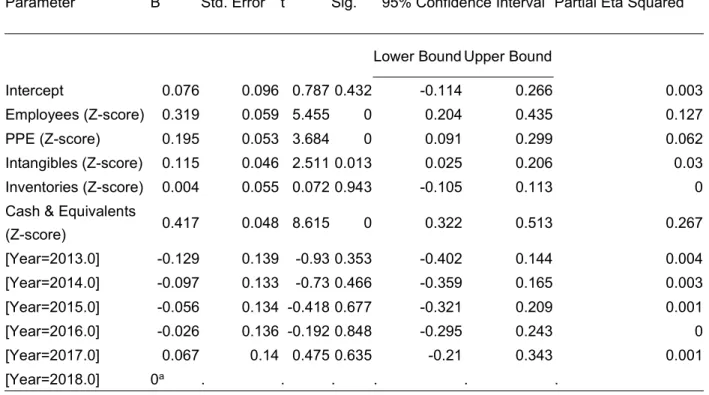
Figure 5-4 OLS - Model One - Parameter Estimates - Green Energy Companies...61
Figure 5-5 OLS - Model One - Tests of Between-Subjects Effects - Green Energy Companies...62
Figure 5-6 OLS - Model One - Standardized Parameter Estimates - Green Energy Companies....63
Figure 5-7 OLS - Model One - Levene's Test of Equality of Error Variances - Fossil Fuel Companies ...63
Figure 5-8 OLS - Model One - Parameter Estimates - Fossil Fuel Companies...65
Figure 5-9 OLS - Model One - Tests of Between-Subjects Effects - Fossil Fuel Companies...65
Figure 5-10 OLS - Model One - Standardized Parameter Estimates - Fossil Fuel Companies...66
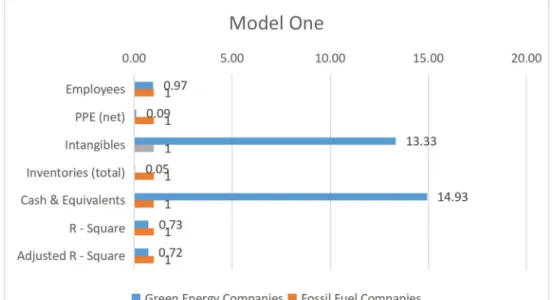
Figure 5-11 Model One - Comparison of Regression Coefficients (the coefficients for the fossil fuel industry are set as “1”, compared with the green energy industry)...68
Figure 5-12 OLS - Model Two - Levene's Test of Equality of Error Variances - Green Energy Companies...69
Figure 5-13 OLS - Model Two - Parameter Estimates - Green Energy Companies...70
Figure 5-14 OLS - Model Two - Tests of Between-Subjects Effects - Green Energy Companies....71
Figure 5-15 OLS - Model Two - Standardized Parameter Estimates - Green Energy Companies..71
Figure 5-16 OLS - Model Two - Levene's Test of Equality of Error Variances - Fossil Fuel Companies...72
Figure 5-17 OLS - Model Two - Parameter Estimates - Fossil Fuel Companies...73
Figure 5-18 OLS - Model Two - Tests of Between-Subjects Effects - Fossil Fuel Companies...74
Figure 5-20 Model Two - Comparison of Regression Coefficients (the coefficients for the fossil fuel industry are set as “1”, compared with the green energy industry)...76 Figure 5-21 Lagged OLS - Lag the “Various Factors of Production” - Model One - Levene's Test of Equality of Error Variances - Fossil Fuel Companies...78 Figure 5-22 Lagged OLS - Lag the “Various Factors of Production” - Model One - Parameter Estimates - Fossil Fuel Companies...79 Figure 5-23 Lagged OLS - Lag the “Various Factors of Production” - Model Two - Levene's Test of Equality of Error Variances - Fossil Fuel Companies...80 Figure 5-24 Lagged OLS - Lag the “Various Factors of Production” - Model Two - Parameter Estimates - Fossil Fuel Companies...80 Figure 5-25 Lagged OLS - Lag the “Industrial Output” - Model One - Levene's Test of Equality of Error Variances - Fossil Fuel Companies...81 Figure 5-26 Lagged OLS - Lag the “Industrial Output” - Model One - Parameter Estimates - Fossil Fuel Companies...82 Figure 5-27 Lagged OLS - Lag the “Industrial Output” - Model Two - Levene's Test of Equality of Error Variances - Fossil Fuel Companies...83 Figure 5-28 Lagged OLS - Lag the “Industrial Output” - Model Two - Parameter Estimates - Fossil Fuel Companies...83
List of Tables
Table 4-1 The Composition of the Sample of Green Energy Companies...40
Table 4-2 The Composition of the Sample of Fossil Fuel Companies...41
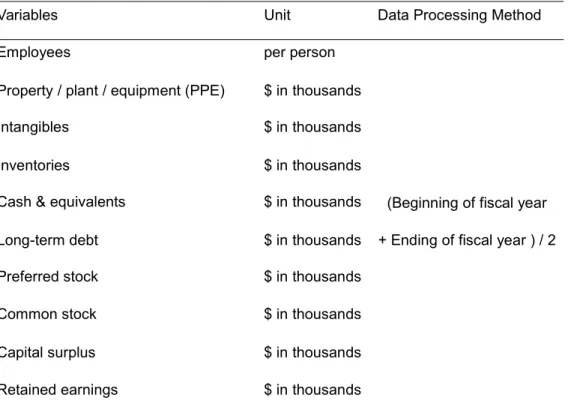
Table 4-3 Data Processing Method for the Statement of Financial Position...47
List of Equations
Equation 2-1 The Cobb-Douglas Production Function with Two Factors...26
Equation 4-1 Processing Method when the Observation Value is Negative...48
Equation 4-2 The General Functional Form of Production Function...49
Equation 4-3 The Linear Function of Production Function...49
Equation 4-4 The Cobb-Douglas Production Function...49
Equation 4-5 The Simplified Version of the Cobb-Douglas Production Function...50
Equation 5-1 Model One - Built with Various Production Factors in the Form of Assets - Green Energy Companies...61
Equation 5-2 Model One - Built with Various Production Factors in the Form of Assets - Fossil Fuel Companies...64
Equation 5-3 Model Two - Built with Various Production Factors in the Form of Financing Sources - Green Energy Companies...70
Equation 5-4 Model Two - Built with Various Production Factors in the Form of Financing Sources - Fossil Fuel Companies...73
List of Models
Model 4-1 Model One - The Production Function Built with Various Assets...51
Model 4-2 Model Two - The Production Function Built with Various Financing Methods (Equity & Liabilities)...51
Model 4-3 The Linear Model Form - Model One...51
Model 4-4 The Linear Model Form - Model Two...51
Model 4-5 Model for Granger Causality Test...52
1. Introduction
Divestment is a socially motivated movement among private wealth owners to withhold their capital from companies related to business behaviors contributing to social and ecological harm by selling listed company stock, debt, and private equities (Ansar et al., 2013). Divestment has been applied in previous social movements such as the anti-apartheid boycott opposing the violations of human rights of the Apartheid system in South Africa from the 1960s to the 1990s. There are other examples, such as divesting from sin stocks (Fabozzi, & Oliphant, 2008; Hong & Kacperczyk, 2009) related to publicly traded companies producing alcohol, tobacco (Cogan, 2000; Wander & Malone, 2004), or are involved in gambling.
More recently, investing in fossil fuel companies has increasingly become controversial because the business activities of these companies contribute to the climate crises, and these companies are also spending money to curb climate actions and policies (Fossil Free, 2014, Supran & Oreskes, 2017). Fossil fuel divestment is one of the social and financial campaigns aiming to pressure fossil fuel companies to decrease the exploration of fossil fuel reserves and to force them to make transformative changes in their business activities. The divestment movement also puts pressure on governments to introduce legislation, such as banning future drilling and levying carbon taxes (Ansar et al., 2013). In addition to attracting the increasing attention of the press and media, a series of divestment-related events have attracted increasing awareness among stakeholders (Dordi & Weber, 2019). These stakeholders include individual and institutional investors, policymakers and campaign initiators, and financial institutions such as banks, insurance companies, security companies, and fund companies.
In recent years, investors, both individual and institutional, have shown a growing demand for socially responsible investment (SRI) portfolios. The US SIF Foundation (2018) calculated that in 2018, responsible investment increased more than 18 times compared to the amount in 1995, with a 13.6 percent compound annual growth rate. Asset managers manage $3,032 Billion for individual/retail investors and $8,601 Billion for institutional investors. Fossil fuel divestment is a subset of SRI and has also shown increasing popularity among institutional investors (Henriques & Sadorsky, 2018). Investors include universities (Linnenluecke et al., 2015), communities (McKibben,
2013), pension funds (Ansar et al., 2013), religious organizations, and charitable foundations (Howard, 2015; Milne, 2015; Usborne, 2014) in North America and European countries.
Investors choose to adopt fossil fuel divestment mainly due to two types of considerations: moral/ethical concerns and financial concerns. Divestment can be socially motivated and shows strong moral and ethical appeals. The fossil fuel divestment movement is also recognized as “norm entrepreneur” and “moral entrepreneur” (Fossil Free, 2014). Fossil Free, an organization that works on “a global movement to end the age of fossil fuels and build a world of community-led renewable energy for all” (Fossil Free, n.d.), believes that combating climate change should be a social norm. Because of moral concerns, investors, along with society, should take actions to address climate change.
The reasons are as follows. Fossil fuel burning is responsible for two-thirds of CO2
emissions, making it one of the leading causes of climate change (Henriques & Sadorsky, 2018). The Intergovernmental Panel on Climate Change (IPCC) found that the consumption of fossil fuel reserves has to be limited to 20 percent or less (McGlade & Ekins, 2015; Meinshausen et al., 2009) to mitigate climate change. Since the business model of fossil fuel producers is a contradiction to this climate mitigation goal, some socially responsible investors chose to divest to limit these companies’ operation and capitalization capacity.
Financially, there are also incentives for fossil fuel divestment. According to Carbon Tracker Initiative (2011), to control the probability of temperature increase exceeding 2°C to 20 percent, the budget for CO2 emissions needs to be less than 565 Gt from 2010 to 2050. The climate emergency may lead to the announcement of more stringent climate policies for this the 2°C target, which could result in up to 80 percent of declared reserves related to the world's largest fossil fuel company becoming stranded assets. This means that the book value of these declared reserves will be significantly reduced. Both the fossil fuel industry and the investors who invested in this industry will have to face the malignant asset impairment.
intensely debated and challenged. The doubts and criticisms can be summarized into the following points (Braungardt et al., 2019). Firstly, the nature of carbon emission makes both, fossil fuel producers and consumers, responsible for climate change. Policies driven by divestment do not take the consumers’ moral responsibility into account, although fossil fuel consumption has a carbon footprint. Secondly, divestment has the potential to change the social norm, but so far, it is not accepted by the majority. It can be irrational to apply this subjective norm to each citizen in society. Consequently, the divestment decision of institutional investors can be overoptimistic on their beneficiaries’ moral needs. Thirdly, since the capitalization of the fossil fuel industry in the world is massive, according to the present performance, divestment decisions among socially responsible investors are not likely to have a significant impact on the capital market as well as the fossil fuel industry. Hence, the effect of decreasing GHG emissions by divestment is questioned (Ansar et al., 2013).
Hereby, the research question is developed: Is there an interaction between the concepts of “shifting of capital flow” away from the fossil fuel industry and “stranded assets”, which are the two concepts that justify the fossil fuel divestment strategy in the moral and financial perspective? The sub-questions are as follows. (a) Can we explain the respective market demand and output of products for the fossil fuel industry and the green energy industry with various factors of production or various financing methods? (b) What is the interaction between the “industrial output and demand” and “various factors of production and various financing methods”, and which one is the preceding factor? (c) Can we explain the direction of causation between the concepts shifting of capital flow and stranded assets, and will this also help to explain the linkage between moral concern and financial concern in the divestment strategy of individual and institutional investors?
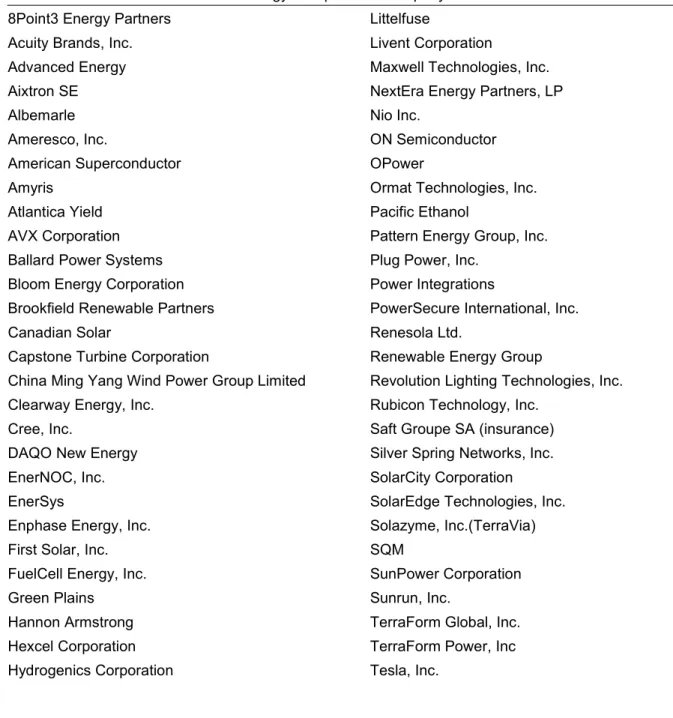
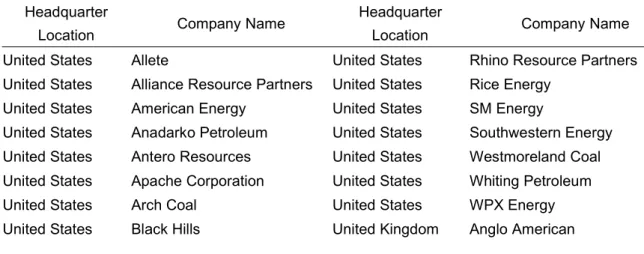
To answer these questions, 70 green energy companies from Nasdaq Clean Edge Green Energy Index (CELS) and 90 fossil fuel companies from Carbon Underground 200 are selected as the research sample. Based on this data, the study builds models based on the production theory with Ordinary Least Squares regression (OLS) on panel data of the fossil fuel industry and the green energy industry from 2013 - 2018. Two types of models with various factors of production and various financing methods for the two industries are constructed. Secondly, the interaction between the “market demand and industrial output” and the “various factors of production and various financing methods” is explored with the Granger Causation test, which also helps to explain the
cause and effect relation between the two concepts shifting of capital flow and stranded assets. In addition, lagged OLS is employed to tackle the potential endogeneity issue in the regression model, which is a method employed in social science for causal identification on panel data (Bellemare et al., 2015).
The findings of this research are as follows. Firstly, the descriptive statistics show the changes in the quantity level of some industry indicators for the fossil fuel industry and the green energy industry, including the labor, the asset form of various production factors, the acquisition of various financing sources, and profitability. On the whole, the indicators of the fossil fuel industry show large fluctuations or a downward trend. In contrast, the indicators of the clean energy industry show a relatively stable and rising trend. According to these indicators, the study suggests that the green energy industry is a growing industry, while the fossil fuel industry is a mature and probably, declining industry. The transition to a low-carbon economy may accelerate the growth of green industries and the decline of the fossil fuel industry, making the differences in development patterns of the two industries more obvious.
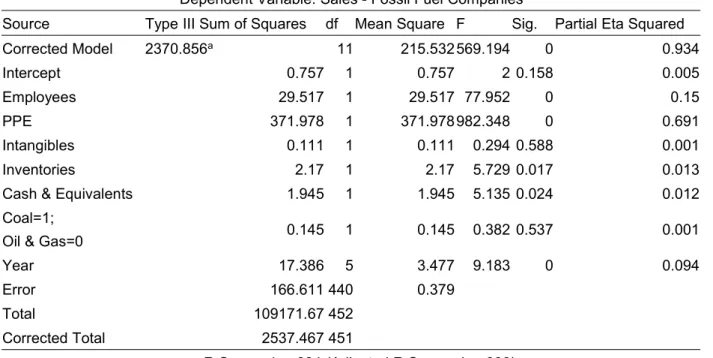
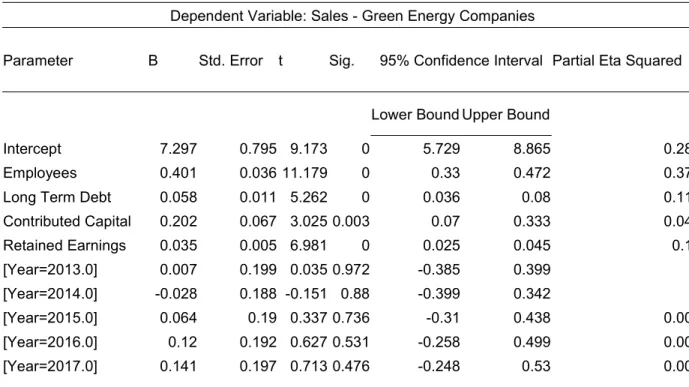
Secondly, two regression analyses are used based on the production theory and the Cobb-Douglas production function. The independent variables in the first model represent the input factors in the form of assets, while the independent variables in the second model represent the financial sources of these input factors. The findings are as follows. This study identifies the factors which have significant influences on the output of the fossil fuel industry and the green energy industry. In model one, the factors such as Employees, Property & Plant & Equipment (PPE), and Cash & Equivalents have significant influences on the sales of both the fossil fuel industry and the green energy industry. Besides, the factor of Inventories is significant to the fossil fuel industry, and the factor of Intangible is significant to the green energy industry. In model two, all the factors are significant to the sales of both industries, including Employees, Long-term Debt, Contributed Capital (combined with preferred stock, common stock, and capital surplus), and Retained Earnings. The standardized coefficients also rank the significant factors according to the influence they have on the sales of the two industries. The
R-squared (R2) and the adjusted R-squared shows that these models have a better
explanatory ability for the sales of fossil fuel companies (at around 0.9) compared to those of green energy companies (at around 0.6). The reason is that there can be omitted significant factors influencing the industrial output in the models for the green energy industry. For example, the external impacts, such as the support from the social
and financial movements on low-carbon economy transition, may be one of the factors. Furthermore, the study found that coal companies have a lower capacity of output (sales) with the same condition of financing sources compared to oil & gas companies. This study assumes that coal companies are relatively weak at the capacity of capital utilization, making these companies more vulnerable to changes in the accessibility to financial capital. This finding is in line with the finding that divestment announcements may have more impact on coal companies compared to oil and gas companies (Ansar et al., 2013). Finally, the year has a significant negative coefficient in the two models for the fossil fuel industry in 2015 and 2016. This finding matches the decrease in stock prices in the fossil fuel industry as well as the decrease in demand for fossil fuel products in these two years.
Thirdly, the Granger Causation test is employed to the fossil fuel industry, with the purpose of discovering the interaction between “the market demand & industrial output” and “the various factors of production (model one) and various financing methods (model two)”. A “bi-directional causality” (or “bi-directional feedback”) was found in this study, which supports the two concepts shifting of capital flow and stranded assets. This study also explores the bi-directional interaction between these two concepts and finds that the shifting of capital flow precedes the stranded assets. At the same time, the stranded assets also precede the shifting of capital flow.
The academic contributions of this study are providing support for the concepts of shifting of capital flow and stranded assets. They are corresponding to the motivations related to moral and financial concerns in the fossil fuel divestment strategy as well as other social and financial movements addressing the low-carbon economy transition. Previous studies mainly focused on assessing the financial performance and carbon intensity of divestment or divest-reinvest portfolios to answer the question of “whether divestment can fulfill both financial and moral obligations”. Since the positive influence of fossil fuel divestment is challenged and remains controversial, as mentioned above, this study provides support to the rationality of carbon divestment from a new perspective. The outcomes of this study also have several practical values. On the one hand, the justified moral and financial concerns related to the carbon divestment strategy helps
institutional investors to make invest-reinvest decisions. This study also supports policymakers and campaign initiators to curb the fossil fuel industry while supporting the green energy sector. On the other hand, since the first model is built with various input factors of production in the form of assets, and the second model is built with the acquisition of various financing sources, the regression coefficients of the two models have reference value for the low-carbon economy transition and the development of responsible investment products. The standardized coefficients suggest which factor of production has a great contribution to the output of the two industries. Besides, the regression coefficients for Contributed Capital and Long-term Debt, which respectively represent financing through equities and financing through debts, can help the investors to assess if their investment portfolios contribute more to the development of the green industry or the development of the fossil fuel industry.
The structure of this paper is as follows: the literature review section provides a detailed background of this study, followed by the methodology section with the introduction of the methods applied to this study. Then, the results of the analysis are presented. Finally, the discussion section concludes this study with findings, contributions, limitations, and outlook of future research.
2. Literature Review
This section starts with the introduction of some general concepts, such as sustainability and corporate social responsibility (CSR). Next, this section discusses the new moral and financial challenges, concerns, and obligations brought to the global financial sector coming from the demand for social and environmental sustainability and the transition to the low-carbon economy. Then, fossil fuel divestment, as one of the social and financial movements supporting the low-carbon economy transition, will be discussed. The pro-and-con arguments and goals of this divestment strategy will be explained. Finally, the theories employed in this study will be introduced. The details of the methodology of this study will be explained in the Methods section.
2.1.General Concepts: Sustainability and CSR
According to Brundtland (1987), sustainability is defined as developing without compromising the needs of future generations while meeting the needs of the present generation. Sustainable development considers the welfare of the present and future generations, which includes satisfying the present needs as well as safeguarding the Earth’s life-support system to enable satisfying future needs (Griggs et al., 2013).
Corporate social responsibility (CSR) is a vehicle to achieve sustainable development (Moon, 2007; Weber et al., 2014), as CSR is the commitments and practices of companies to combine social and environmental sustainability with their main businesses. The concept of CSR “has had a long and diverse history in the literature” (Carroll, 1999, p. 291). In the evolution process of this concept, CSR emphasized different aspects: complying with policies related to social benefits in the 1950s (Bowen, 1953); fulfilling social responsibility to achieve long-term business success in the 1960s (Davis, 1967); balancing objectives within multiple interest groups and helping the society to achieve its basic goals in the 1970s (Johnson, 1971; Steiner, 1971); searching for opportunities from social problems for financial benefits and business success in the 1980s (Drucker, 1984); and, the combination of Stakeholder Theory, Business Ethics Theory, and Corporate Social Performance in the 1990s (Carroll, 1999). Carroll (1991) also framed this concept into the Pyramid of CSR, including economic, legal, ethical, and philanthropic responsibilities, which are the four types of CSR.
2.2.New Moral Concerns of the Financial Industry
This section will discuss the new moral concerns of the financial industry in the process of low-carbon economy transition. The transition requires the role-changing of the financial sector, bringing three aspects of moral considerations. These three aspects are: the sector has realized its ability and responsibility of influencing the financial capital flow; the existing and upcoming introduction of environmental regulations are expecting this sector to engage in combating the climate change; and, the stakeholders of this sector pressure the sector to consider the potential reputational consequences if a financial institution refuses to adopt this new moral obligation. Besides, the growing demand for the socially responsible investing (SRI) and the impact investing pushes the financial industry around the world to adjust their business and to meet the clients’ requirements of both the good financial performance as well as the positive society and the environment influence.
2.2.1. The Role-changing of the Financial Industry
The financial industry has contributed to some controversial aspects. For example, narrow development, the opposite of “broad-based development” which enables to widely spread the benefits across society, becomes a major cause of conflict because such development cannot reduce poverty and exacerbates the initial inequality. The financial industry exacerbated the conflict, in the way such as intensifying high income-inequality and land-inequality between indigenous people and agrarian elites in agrarian society, enabling using state banking system for financing personal gain, and enabling the accumulation of wealth with fraud under weak financial regulation (Addison et al., 2001). Another example is high-leverage financial instruments, such as hedge funds, private equity-leveraged buyouts, high-leverage and subprime mortgage banking, and high-leverage banking de-coupled from the real economy and have contributed to global economic crises (Nielsen 2010). Besides, banks also provide financial support, such as loans to businesses or projects with highly negative impacts on the environment and society. These businesses include arm trade, pipelines, and big dams (Baranes, 2009).
The change of mindsets is needed for financial institutions. This change requires the financial industry to go back to its primary role: to serve the activities related to economy, trade, and human. For example, finance should not aim at short-term interests, or economic turmoils will occur, such as financial crises that took place in South-East Asia, Russia, Mexico, Argentina, and the United States sub-prime mortgages defaults (Baranes, 2009).
The financial industry has been making efforts to integrate sustainability into the business. Take banking as an example. Out of concerns related to risk, opportunities, and costs, banks integrated sustainability into their policies, strategies, products, services, and processes. Sustainability integrates into the new banking strategy and is recognized as a value driver, a public mission, and a requirement of clients (Weber 2005). For example, by applying the sustainability criteria to the credit rating process, banks can improve the predictive validity, showing an increase in correct risk classification and a decrease in wrong predictions (Weber et al., 2010). Another example is social finance, such as social banking, impact investment, and micro-finance. These new financing methods are with the purpose of achieving positive social impacts by investing or lending to companies that have positive social and environmental contributions. There is proof that social finance is contributing to both financial and social returns (Weber & Duan, 2012).
2.2.2. Implementation of Sustainable Development out of Moral
Reasons
This section discusses three moral reasons that promote the financial industry to undertake growing moral obligations, which also encourage or pressure the role changing of this industry.
Firstly, the financial sector has the ability and responsibility of contributing to social and financial sustainability by influencing the financial capital flow to financed projects or borrowers in certain industries. Some projects, such as pipelines and big dams mentioned above, which are with highly negative environmental influences, requires substantial financial capital, making financial institutions being crucial in the process of
construction (Baranes, 2009). Banks, as one of the financing sources and the lending institution for these projects, do not have direct pollution to the environment. However, the increasing belief is that the lending practices of banks which support projects with negative environmental impacts are responsible for such business activities (Sarokin & Schulkin, 1991; Gray & Bebbington. 2001). Current environmental regulations have already made banks liable for their borrowers’ environmental damages, and banks gradually realize their roles and capacities in the financial capital allocation process. To minimize the risks of negative consequences coming from these environmental criteria, banks are integrating environmental concerns into the lending decision-making processes (Evangelinos & Nikolaou, 2009).
Secondly, the introduction of environmental regulations expects the financial sector to integrate environmental sustainability into the business. Here, two examples of climate finance and SRI movements are discussed. According to the definition of United Nations - Climate Change (n.d.), climate finance has the following characteristics: local, national or transnational financing; public, private, and alternative sources of financing; and, to support mitigation and adaptation actions for climate change issues. The efforts related to climate finance are in line with the Paris Agreement (as discussed later), which aims at shifting the financial capital flows to the development of low greenhouse gas emissions as well as climate-resilient. Therefore, there is a new responsibility for the financial sector to reallocate financial capital. It was estimated that to meet the goal of the Paris Agreement, the global renewable energy industry needs $1 trillion annually (Zuckerman et al. 2016), and the financial sector can be essential to engage in this process. Also, the financial industry's participation in combating climate change by climate finance is based on financial considerations, which will be discussed in the next section. The climate finance is an inside-out business strategy of the financial sector to tackle the regulation pressures, and Socially Responsible Investment (SRI) movements are the outside-in pressure that pushes the financial sector to make a change. The purpose of SRI movements is not limited to pressuring individual corporate polluters by methods such as fossil fuel divestment and shareholder activism. The SRI movements are promoting a framework that enables a more systemic change by promoting various investment codes of conduct. Some of these investment codes of conduct, such as the Climate Principles and the Carbon Disclosure Project, are for tackling climate change issues; and some of the codes, such as the United Nations Principles for Responsible Investment, are for propagating SRI in a general aspect (Richardson, 2009).
Thirdly, the pressure from stakeholders on social and environmental issues leads to the reputational risk of financial institutions. Brown and Whysall (2010) believe that reputation and trust are crucial to the finance and banking sector, and the financial institution is likely to rapidly become dysfunctional once the trust is weakened. Therefore, the maintenance of a good image of a financial institution relates to the interest of all this institution’s stakeholders. Hoepner and Wilson (2012) conducted a structured literature review on the importance of Social, Environmental, Ethical, and Trust (SEET) issues on banks, and how these issues can influence the risk management, reputation and performance. As the concerns in social and environmental aspects (climate change in particular) have been growing rapidly in the banking sector, and the previous global financial crisis has already led to ethical and trust problems, the SEET issues in banking and other financial institutions require the efforts. Various international initiatives have been developed for the sustainability of the economy along with environment and society, including the UN Environmental Programme Finance Initiative, the UN Principles for Responsible Investment (PRI), and the Equator Principles.
To conclude, out of moral considerations, motivations, or pressure, the financial sector is gradually incorporating social and environmental sustainability into the business by adopting the new moral obligations in the new macro environment for this industry.
2.2.3. Socially Responsible Investing (SRI) and Impact Investing
Richardson (2008, p.130) summarized the various definitions of Socially Responsible Investing (SRI) based on the SRI associations’ website, including definitions from the Association for Sustainable and Responsible Investment in Asia, European Social Investment Forum, Responsible Investment Association Australasia, UK Social Investment Forum, Canadian Social Investment Organization, and US Social Investment Forum. The Canadian Social Investment Organization defines SRI as, “the integration of environmental, social and governance (ESG) factors in the selection and management of investments”, while the US Social Investment Forum define SRI as, “an investment process that considers the social and environmental consequences of investments, both positive and negative, within the context of rigorous financial analysis”. Richardson (2008) pointed out that these definitions are boilerplate statements, being unclear, and could rationalize several market behaviors. This has the potential of leading to shallow marketing and green-washing, as well as to mislead socially responsible
investors to believe that they have made positive impacts on the society with their investment methods.
Even so, Socially Responsible Investing (SRI), along with Impact Investing, is still recognized as an effective practice of combining social and environmental sustainability into finance and meets the moral demands of responsible investors. The reason is that both SRI and impact investing are incorporating non-financial factors, such as environmental and social factors, into investment analysis, with the mission of generating positive out-comings to society and the environment. There are differences between these two terms in two aspects. Firstly, screening methods are different. SRI applies negative screening, which is a passive strategy that avoids investing in companies and industries which violate ethical, environmental, or social criteria, and to make sure the investment portfolio does not bring negative influences on the society and environment. In comparison, impact investing applies positive screening, incorporating companies and industries that are generating positive social and environmental impact. Secondly, as to the expectation of financial returns, investors of SRI expect the maximization of financial return while achieving a positive influence on the society and environment. In contrast, the expectation of impact investors on financial return varies. Some of them require the maximization of financial performance, while others require the maximization of social and environmental impacts (Net Impact, n.d.). Therefore, it can be seen that SRI managers have more fiduciary obligations to fulfill for the investors compared to managers of impact investing.
Here is an example with regard to the fossil fuel industry and the clean energy industry. The fossil fuel industry can be considered as “immoral”, as fossil fuel burning is
responsible for two-thirds of CO2 emissions and is recognized as a major cause of
climate change, while the clean energy industry is seen as “moral”, as the clean energy can be the alternative to traditional fossil energy with less pollution. The SRI screening process may remove the fossil fuel companies from a portfolio, while the impact investing screening process may add the green energy companies into a portfolio. There is a growing demand for investment methods that contributes to social and environmental sustainability. Nowadays, clients want a desired impact along with their investments, pushing big financial companies around the world to take action to adjust their business and cater to this increasing demand (Kennedy, 2018, September 27).
Banks and asset managers are making efforts trying to meet the requirements from investors who want their investment to be both profitable and have a positive influence on society and the environment.
Financial institutions want to get involved in the big emerging market of impact investing. In addition to SRI methods, impact investing also tries to enable investors to achieve both positive financial returns as well as positive contributions to address social and environmental challenges (Bugg-Levine & Emerson, 2011). Michael Baldinger, head of sustainable and impact investing of UBS (UBS) Asset Management with 30 years of experience in the financial industry, pointed out that the impact investment has a $250 billion market (by the end of 2017), and it is growing fast. He said, “As an industry, we've had to rethink everything we do - impact and sustainability is the Silicon Valley of finance, and we want to be the Google.” Jackie VanderBrug, a managing director of U.S. Trust, Bank of America's (BAC), also pointed out that 76 percent of the millennial believes that their social, political and environmental values can be expressed with their investment decisions (Kennedy, 2018, September 27).
To conclude, the demand for sustainable development requires a change in the role of the financial industry. There is a business case for finance to be combined with social and financial sustainability. As stated above, the SRI and impact investing can be good methods to reallocate financial capital among industries with positive and negative screening methods, with the purpose of fulfilling both positive financial returns and positive social and environmental outcomes. However, due to the “boilerplate statements” of the SRI definitions among different peak SRI associations, the various investors’ expectations on financial and social/environmental returns, and the complexity of assessing the non-financial factors, there are risks while rationalizing different market behaviors, which may potentially lead to shallow marketing, green-washing, and other misleading business behaviors. To achieve effective finance interventions for complex sustainability problems, Wiek and Weber (2014) propose that financial sectors should first identify their roles related to sustainability problems and then develop intervention strategies to mitigate the issues identified. This brings the challenges of building casual links between finance and social/environmental concerns, as the prior condition of the effective intervention. Related to this study, the rationality of divestment and re-investment strategies will be supported by discovering the causal links between the two concepts, shifting of capital flow and stranded assets, which will be discussed later in this paper.
2.3.New Financial Concerns of the Financial Industry
Besides the moral concerns bring the new moral obligations to the financial industry, the transition to the low-carbon economy also challenging financial stability by bringing new threats and financial risks. This section discusses what challenges the low-carbon economy transition and upcoming environment or climate regulations will bring to the global financial sector. Also, some tools for managing these new financial risks will be introduced.
2.3.1. The Transition to Low-carbon Economy and the Financial
Stability
The Paris Agreement is a landmark agreement for combating climate change issues among the 190 parties of the United Nations Framework Convention on Climate Change (UNFCCC) at COP 21 (or the Paris Climate Conference) on December 12, 2015. The Paris Agreement is the first universal, legally binding agreement on climate change issues, proposing a common cause to all nations in the form of countries’ national commitments. The central aim is to mitigate the threat of climate change by limiting global warming, keeping the global temperature rise in this century well below 2 degrees Celsius compared to the pre-industrial levels, as well as pursuing efforts to limit the global temperature rise to 1.5 degrees Celsius. This agreement not only aims at claiming all nations make efforts to combat climate change but also to adapt to the impacts (United Nations, Climate Change, n.d.). Along with the high carbon intensity industries, the financial sector worldwide also confronts challenges in the adaption process.
Under such a circumstance, the financial sector from different nations is supposed to undertake new obligations, since the allocation of financial capital flows, as one of the functions of the financial sector, should be consistent with this global agreement. The financial sector should not only adjust the business to cater to the low GHG emission requirements (moral obligation) but also increase the resiliency to the potential negative impacts because of climate change (financial obligation). This increase in
climate-resiliency is essential to the financial sector. Mark Carney, the governor of the Bank of England, warned that climate change risks could be the danger to the stability of the financial industry in some speeches and publications (Carney 2015). In this section, two types of threats related to climate change the financial sector has to confront are discussed, which justify the financial concerns of this sector. These two threats are “the low-carbon economic transition” and “the existing and upcoming environment/climate regulations”.
The first concern is the pressure from the low-carbon economic transition. Taking Canada as an example, in response to the Paris Agreement, Canada has developed Mid-century and Long-term goals to achieve the GHG reduction. The transition to the decarbonization economy does not merely apply to the fossil fuel industry. There will be transitions in most of the Canadian industries. In this process, new pressures are placed on the financial industry. One of the pressure is that, as the high carbon intensity industries are pressured to reduce GHG emissions, additional expenses such as dealing with pollution and receiving fines occur. New regulations may also limit the production of high carbon emission industry, such as the fossil fuel industries. All these disadvantages negatively impact the profitability of these industries, which then exposes the investors and lenders of these industries to accumulating financial risks (Weber & Kholodova, 2017). Although it remains controversial whether the climate change risks will lead to the systematic risk, some systematic influences of climate change due to the transition to the low-carbon economy may occur in the form of rapid changing of companies’ valuation and the depreciation of assets (Ansar et al., 2014; Carbontracker, 2015). Besides, the existing and upcoming environment or climate regulations bring new challenges to the resiliency of the financial sector. Climate finance comes into existence as an essential part of the solution to tackle climate change from the financial industry. The financial sector is increasingly aware that climate change will transit into new kinds of financial risks, which can be a threat to investment portfolios but can also be an opportunity for increasing returns. A business case is created that investors should take action to tackle threats of climate change that come from the legal system which regulates greenhouse gases (Richardson, 2009).
Therefore, it is necessary for financial institutions to assess the threat that climate change risks will bring to their business and evaluate the potential losses they may
encounter. The role changing of the financial industry requires new explorations of the high-resilient business models. Before constructing the new business model, there should be management tools enabling the identification and assessment of climate-related factors, which can be derived into climate-related risks or opportunities.
2.3.2. Tools for Managing New Financial Risks
The Task Force on Climate-related Financial Disclosures (TCFD), an organization that develops voluntary and consistent climate-related financial risk disclosures for companies, helps companies to provide better information to stakeholders such as investors, lenders, and insurers. TCFD also helps companies understand the expectations of disclosure from financial markets when it comes to climate-related risks (TCFD, n.d.). The financial impacts of climate-related risks are mainly in the following aspects: revenue, expenditure, assets & liabilities, and capital & financing. The TCFD creates a list of indicators helping the organizations in various sectors to identify the factors which have the most relevant financial impacts on their business (TCFD, 2017). The identification of factors needs to be combined with scenario analysis. Wiek et al. (2006) pointed out that transition management related to sustainability management requires scenario construction. Therefore, the creating of climate change scenarios is required in the case of the low-carbon economy transition.
Here are the two examples of adopting TCFD indicators and the scenario analysis approach for climate-related risks management. The UN Environment Programme (UNEP) Finance Initiative (UNEPFI) initiated a year-long pilot project on implementing the TCFD recommendations. This project aimed to develop models and metrics for transition and physical assessment, which enables a scenario-based and forward-looking assessment and disclosure related to climate-related risks and opportunities. Sixteen leading global banks participated in this project and committed to publishing their first TCFD disclosure by mid-2019 (UNEP Finance Initiative 2019). Besides, Weber and Oyegunle (2019) conducted a MICMAC Analysis in combination with the scenario analysis approach. The MICMAC Analysis is a cross-impact matrix-multiplication method, enabling to explore the direct and indirect interrelational impacts of the various risk indicators proposed by TCFD. This study identified the most
important factors while measuring the climate-related risk for the Canadian financial industry.
2.4.The Effectiveness of Fossil Fuel Divestment
The introduction section provided a brief overview of divestment and fossil fuel divestment. In this section, the debates on the effectiveness of applying divestment to mitigate climate change, which leads to opposite views, will be discussed. Braungardt et al. (2019) provide an overview of these arguments from public media and academic papers and organized these arguments into pro-and-con groups. In this paper, the influences of divestment are categorized into three categories: political, social, and economical. Out of these three aspects, this article will explain the mechanism of divestment while addressing climate change.
2.4.1. Influence on Policy
According to Fossil Free, an organization that works on “a global movement to end the age of fossil fuels and build a world of community-led renewable energy for all” (Fossil Free, n.d.), divestment is identified as a moral and political strategy instead of an economic one. Since fossil fuel divestment has a strong ethical driven factor, moral appeals among individual or institutional wealth owners can be a significant incentive to push forward climate actions and climate policies.
The presence of public support driven by moral concerns can promote climate action and lead to the implementation of climate policy. The enhancement of moral intuitions on climate change can encourage this process (Markowitz & Shariff, 2012). Grassroots activists are capable of attracting the attention of the media and arouse the concerns from the public, pushing the development of social norms. This bottom-up process can be the foundation that enables the top-down actions in the forms of international cooperation and coordination as well as international agreements (Gunningham, 2017). Fossil fuel divestment also has the potential to stigmatize the fossil fuel companies and
weaken the industry’s influence on policy. Brulle (2014) analyzes the funding dynamics and finds that some big fossil fuel companies are exploiting various activities to deny climate science as well as to curb the implementation of climate policies, such as lobbying, contributing to political candidates, and working with the media. For example, a case study investigates the Australian coal disclosure and highlights aggressive efforts during the engagement of the fossil fuel industry, which tries to sabotage the legitimacy of the divestment movement and discredit the campaigners and investors. These activities reflect that the industry is highly serious about this issue (Ayling, 2017). Therefore, the divestment strategy is capable of contending with the power of this industry and undermining the industry’s control over climate actions and policies.
However, although divestment can put pressure and limitations on the industry, we should also understand the systemic nature of carbon emissions. This systemic perspective links the producers and the consumers of fossil fuels, arguing that the fossil fuel industry should not take all the blame because of the consumers’ reliance on this industry’s product. MIT hosted a debate on the divestment strategy and Frank Wolak, a professor of economics at Stanford University, pointed out that the reason for the fossil fuel production is the demand for consumption: “It’s because we demand them, to heat our homes, to drive our cars, to fly in our airplanes.” “Divestiture does nothing to address that problem.” “As long as demand is still there for the fossil fuels, the greenhouse-gas emissions will exist, regardless of who owns the assets (MIT News, 2015)”
Based on this production-and-consumption nature, some divestment strategy opponents believe there can be more effective and efficient climate actions or policies which take the systemic nature into consideration. Some other strategies, including pricing the carbon emission with the carbon tax, carbon budget, and carbon trade, can also be effective, and even better, strategy to tackle climate change (Schifeling & Hoffman, 2019).
2.4.2. Influence on Social Norms
While fossil fuel divestment campaign is being driven by the moral concerns of socially responsible investors with the purpose of pressuring the industry and government to take positive action, this campaign is changing social norms and how citizens view the
fossil fuels industry.
By engaging in the divestment campaign through litigation, fossil fuel divestment is turning into duty in investment decisions, especially for institutional investors. A widely mentioned case is a lawsuit filed by the student-organized Climate Justice Coalition alleging “mismanagement of charitable funds” and “intentional investment in abnormally dangerous activities” against the president as well as the fellows of Harvard College. The reason is that the school did not divest the endowment fund from fossil fuel companies (Braungardt et al., 2019; Franta, 2017; Richardson, 2017). Franta (2017) explores the potential of incorporating litigation into divestment campaigns in the future and points out the opportunity of developing standards of choice that helps to assign climate liability. There should not be excuses to keep investing in the fossil fuel industry because of a lack of choices, and financial returns should not be only the duty of public and charitable institutions.
Divestment campaigns also create opportunities to engage the young generation and educate them to become “lifelong climate activists”. Bratman et al. (2016) studies the fossil fuel divestment campaign among universities and argues that this campus movement has the potential to shift the expressed value from the economic value of the fossil fuel industry to an emerging paradigm of climate justice, which is mainly attribute to student activism. The review of press releases and news reports on student-led fossil fuel divestment in American higher education shows the positive impact of engaging youth on sustainable development. By aligning with sustainable culture and social justice, institutions of higher education can play a key role in the divestment campaign (Healy & Debski, 2017).
However, fossil fuel divestment has not reached a consensus globally, and it has not become a necessity to develop stringent climate actions and policies to tackle climate change. Awareness may not lead to real actions. Public support is not strong enough to make the implementation of climate actions and policies a necessity. Although the divestment campaign has the potential to impact the social norms, so far, it is still a subjective norm and may not apply to society as a whole. This brings to the question: why should a norm which is not supported by the majority of citizens be employed under the pressure of a sub-group in society without involving the democratic process? All citizens need to comply with it when this social norm is translated into concrete
regulatory policies (Braungardt et al., 2019).
Firstly, this social norm brings challenges to institutional investors, such as university endowments and pension funds. Is it reasonable to divest while representing all the related individuals who have different attitudes on divestment or climate change? Bowen (2015. para. 3) is also not optimistic on the university divestment decisions by pointing out “taking an institutional stand on political issues of many kinds threatens the primary educational mission of the university, which is to be avowedly open to arguments of every kind and to avoid giving priority to partisan or other political viewpoints”.
Secondly, individuals may criticize the fossil fuel industry for being accountable to climate change and some institutional investors who do not divest. However, these people are not considering their responsibility in the divestment process, and one of the issues is that these people themselves are fossil fuel consumers or the beneficiary of the fossil fuel industry. Here are the questions. Will all beneficiaries or stakeholders of institutional investors accept the possible sub-optimal financial returns because of the reduced investment universe due to divestment? Will the students and faculties at a university accept the lack of funding to provide services or to support the research because of the financial losses caused by the divestment strategy? Therefore, the application of fossil fuel divestment probably has wider unfavorable effects and consequences which should not be ignored.
2.4.3. Influence on the Economy
The direct economic effect of divestment is to curb the fossil fuel industry’s capacity to increase exploration, production, and capitalization. Socially responsible investors choose to divest from this industry for two financial purposes: to depress the value of fossil fuel company stocks and to avoid the risks.
The first purpose is out of moral concerns, as the depreciation of these companies’ stocks has the potential to drive the industry to transition. Divestment announcements, such as campaigns, pledges, and endorsements, has the ability to impair the share price of this industry, thus showing that the divestment decisions of socially responsible
investors have impacts on the divested fossil fuel companies (Dordi & Weber, 2019). Companies which are highly dependent on equity will be significantly influenced by stock price when the investors divest (Baker et al., 2003). Fossil fuel companies can be one of these types (Braungardt et al., 2019). An estimation in 2014 shows that there are 1,469 oil and gas companies trading on the stock exchange globally (Evans, 2014). Furthermore, Wolak (MIT News, 2015) pointed out that the fossil fuel industry has a total global capitalization of $60 trillion (at that time).
The second purpose is out of financial concerns, as the stringent climate policies in the future will limit the use of fossil fuels, and therefore depreciate the value of fossil fuel related assets. Since the investments related to fossil fuels decrease in value, these assets will become stranded assets and leading to a burst of trillion-dollar worth “carbon bubble”, which has the potential of plunging the world into another economic crisis (Howard, 2015). According to an estimation in 2016 (Dietz et al., 2016), if following the “business as usual” strategy, the expected climate VaR (value at risk) for the global financial assets is 1.8 percent, which is equivalent to US$2.5 trillion, with a tail of 16.9
percent (US$24.2 trillion) at the 99th percentile. Another study in 2018 (Mercure, 2018)
estimated the carbon bubble might lead to a global loss range of US$1–4 trillion, which is comparable to the 2008 financial crisis, if there is no climate action to tackle this issue. Therefore, to avoid the burst of carbon bubble, the decarbonizing process should be initiated as soon as possible.
A “divest-reinvest” strategy can also support low-carbon technologies and accelerate the transition process. While discussing the opportunity of renewables technology, economist Nicholas Stern believed that the most effective strategy is not limited to merely divestment from the fossil fuel industry. It is also recommended to invest in companies that are taking positive actions to tackle climate change (The Guardian, 2015). Divest-reinvest is described as an investment strategy which combines exclusionary decision with reinvestment (Hunt & Weber, 2019). This strategy aims at shifting the capital from carbon-intensive industries to positive climate solutions, such as developing renewables, which accelerates the transition to a green economy.
However, is there any proof that divestment is an optimal climate action with significant economic impacts on climate mitigation? Ansar et al. (2013) studied various institutional funds such as university endowments, public pension funds, and sovereign wealth
management funds in different fund markets such as the US, UK, Canada, Australia, and the European Union. They found that the financial effect of divestment on GHG emission is limited. The reasons are as follows. Firstly, the capital that has the potential to be divested are low in quantity compared to the capitalization of fossil fuel companies, making the share prices of this industry less likely to be affected over the long term. It does not contradict the finding that divestment announcement can impair the share price (Dordi & Weber, 2019) since this finding is not applicable to assess long-term (more than ten days) effects. Secondly, investors who are motivated by financial benefits will replace socially responsible investors to hold divested shares. Oil and gas stocks are also among the best in liquidity. In comparison, coal stocks are less liquid. Divestment announcement may, therefore, have more impact on coal stock prices compared to oil and gas stocks.
2.4.4. Conclusion and Suggestion on Divestment
This section assessed the arguments on fossil fuel divestment and divided these views into three aspects, which relate to political, social, and economic concerns. It can be concluded that divestment, as effective climate action, faces the following challenges. (a) The systematic nature of carbon emission makes both fossil fuel producers and consumers responsible for climate change. Policies driven by divestment do not take into account the moral responsibility of consumers. (b) Divestment has the potential to change the social norms, but so far, it is not widely accepted. It can be irrational to apply this subjective norm to every citizen in society. The divestment decision of institutional investors can be overoptimistic on their beneficiaries’ moral needs. (c) Since the capitalization of the fossil fuel industry in the world is massive, divestment decisions among socially responsible investors are not likely to have a significant impact on the capital market. The effect of decreasing GHG emissions by employing this investment strategy is also questioned.
Fossil fuel divestment is frequently compared with the anti-apartheid divestment movement in South Africa (Ansar et al., 2013; Braungardt et al., 2019; Hunt et al., 2017). This analogy may not be appropriate because of the massive global capitalization of the fossil fuel industry. As discussed, fossil fuel divestment has two types of reasons: ethical and financial. Therefore, the balance between the moral and financial concerns should be considered by both individual and institutional investors while developing the
divestment strategies, especially the institutional investors as they are responsible for a group of beneficiaries’ or stakeholders’ interests.
Although sub-optimal financial returns can be acceptable to some socially responsible investors whose major purposes are to achieve the social-ethical goals (Renneboog et al., 2007), other investors may care more about the profitability. Bloomberg New Energy Finance (NEF) suggested that fossil fuel investment has four attributes, which are overall scale, liquidity, value growth, and dividend yield (Bullard, 2014). These advantages make fossil fuel investments favorable and become the imperatives of institutional investors. The representative role of these institutions makes the balance of moral and financial responsibility more essential, and sub-optimal financial performance may be, therefore, not acceptable. Braungardt et al. (2019) pointed out that if the divestment decision leads to financial loss and impacts the primary task of these institutions, additional ethical questions will be raised.
2.5.Identifying the Goals of Fossil Fuel Divestment
This section introduces three indicators to access the effectiveness of fossil fuel divestment, that is moral, financial, and industrial impacts. These three types of impacts are matched with three indicators, which are carbon intensity, financial return, and the aggregate-supply of the energy economy. Several previous studies focused on assessing the carbon intensity and financial return of the divestment strategy by
comparing these two indicators between divested portfolios and
conventional/benchmark portfolios. These studies received mixed results. In this study, a new indicator, which is industrial impacts, is introduced to the assessment. This new indicator is based on Cobb–Douglas production function. It is related to the “real economic factors” that will affect the aggregate supply/production of the industry, which are the fossil fuel industry and the green energy industry in this case.
2.5.1. Moral Responsibility: Carbon Footprint
Wackernagel and Rees (1997) applied the concept of the ecological footprint as a biophysical measurement while investing in natural capital to compensate for the net
loss of this capital. The concept of carbon footprint can also be applied to assess the carbon intensity of investment. For example, according to the European emission trading scheme, carbon footprint helps to disclose the annual equivalent carbon emission output of a company, which enables investors to evaluate the carbon intensity of their investments (Hunt and Weber, 2019).
Socially responsible investors adopt the fossil fuel divestment strategy because the business model of fossil fuel companies contradicts with the objective of mitigating climate emergency, and they believe that withholding the capital of these companies is a good measure to fulfill the moral responsibility. Since the main purpose of divestment is to decrease carbon emission to tackle climate change, it is necessary to assess whether divested portfolios show significant decreases in the carbon intensity.
2.5.2. Financial Responsibility: Risk-adjusted Return
The risk-adjusted return is the criteria while comparing the financial performance of socially responsible investment (SRI) portfolios with the conventional ones. These SRI portfolios are designed with the criteria of environmental, social, and governance (ESG), including community involvement, corporate governance, diversity, employee relations, natural environment, human rights, and product quality (Henriques & Sadorsky, 2018). Henriques & Sadorsky (2018) found that the risk-adjusted returns of socially responsible investments could out-perform or under-perform compared to benchmark/conventional portfolios, but the differences were not significant. However, reduced risks (or reduced volatility) could be found in theses socially responsible investments.
According to portfolio theory (Markowitz, 1952), because the fossil fuel divestment strategy requires excluding the investment in some carbon-intensive industry, the risk-adjusted return of this strategy is expected to be lower than the conventional investments due to the reduced investment universe. If there are no financial reasons to narrow the investible universe, the risk-adjusted return of divested portfolios is not likely to reach the conventional benchmark.
investible universe while being in line with the moral consideration. This means selecting capital related to positive climate actions. Renewable and clean energy can be one of these positive alternatives. This divest-reinvest strategy helps to reallocate the financial capital, curbing the development of carbon-intensive industry and promoting the growth of green energy industry. It is suggested that SRI funds can effectively exclude companies with bad behaviors by applying social screening, which helps to improve these funds’ financial performance (Barnett & Salomon, 2003). The application of Environmental, Social, and Governance (ESG) criteria during the divest-reinvest process can maintain the investment universe and, therefore, maintain the financial performance. Another study also finds that there is no showing of risk-adjusted out-performance among fossil fuel stocks, and these stocks provide limited contributions to diversification (Trinks et al., 2018).
2.5.3. Industrial Impact: Aggregate-supply of the Energy Economy and
“Real Economic Factors”
According to the economic definition, aggregate supply is the total quantity of goods and services produced by an economy in a given time period. The shift of Short-run aggregate-supply curve (SRAS) and Long-run aggregate-supply curve (LRAS) are both attribute to the “real economic factors”, which are labor, capital, natural resources, and technology. Divestment and reinvestment mainly influence the capital flow among different industries in society as a whole. In this study, the indicators for the industrial impact of the divestment campaign derives from these “real economic factors” which have the ability to influence the aggregate supply/output of an industry. Quantifying these indicators will provide a new perspective on how divestment and reinvestment strategy can curb the carbon-intensive industry while supporting the green one, which can be important in the process of the low-carbon economy transition.
2.6.Theories
This section introduces the Cobb-Douglas production function, as the models in the study are built based on this function. The study on the interaction between corporate social responsibility (CSR) and corporate financial performance (CFP) is also mentioned.
Since this study supports the concepts of shifting of capital flow and stranded assets by exploring the interaction between various factors of production and the industrial output of the fossil fuel industry as well as the green energy industry, the study on the interaction between CSR and CFP has the reference value. The details of the model building will be discussed in the Methods section.
2.6.1. Cobb-Douglas Production Function
The models in this study are based on the production function and the Cobb-Douglas production function. The production function comes in various forms, and this study employs the Cobb-Douglas production function, as this is the most popular one. Cobb and Douglas (1928) introduced their production function, which discovers the relation between the input factors and industrial output. The input factors include two types, which are labor and capital, and the output is the total production enabled by different types of input factors. This function was developed with the data of the U.S. manufacturing industry form