Scholarship@Western
Scholarship@Western
Electronic Thesis and Dissertation Repository
8-20-2018 10:00 AM
Optimization Modeling and Machine Learning Techniques
Optimization Modeling and Machine Learning Techniques
Towards Smarter Systems and Processes
Towards Smarter Systems and Processes
Abdallah Moubayed
The University of Western Ontario Supervisor
Dr. Abdallah Shami
The University of Western Ontario Co-Supervisor Dr. Hanan Lutfiyya
The University of Western Ontario
Graduate Program in Electrical and Computer Engineering
A thesis submitted in partial fulfillment of the requirements for the degree in Doctor of Philosophy
© Abdallah Moubayed 2018
Follow this and additional works at: https://ir.lib.uwo.ca/etd Part of the Electrical and Computer Engineering Commons
Recommended Citation Recommended Citation
Moubayed, Abdallah, "Optimization Modeling and Machine Learning Techniques Towards Smarter Systems and Processes" (2018). Electronic Thesis and Dissertation Repository. 5573.
https://ir.lib.uwo.ca/etd/5573
This Dissertation/Thesis is brought to you for free and open access by Scholarship@Western. It has been accepted for inclusion in Electronic Thesis and Dissertation Repository by an authorized administrator of
The continued penetration of technology in our daily lives has led to the emergence of the concept of Internet-of-Things (IoT) systems and networks. An increasing number of enterprises and businesses are adopting IoT-based initiatives expecting that it will result in higher return on investment (ROI) [1]. However, adopting such technologies poses many challenges. One challenge is improving the performance and efficiency of such systems by properly allocating the available and scarce resources [2, 3]. A second challenge is making use of the massive amount of data generated to help make smarter and more informed decisions [4]. A third challenge is protecting such devices and systems given the surge in security breaches and attacks in recent times [5].
To that end, this thesis proposes the use of various optimization modeling and machine learning techniques in three different systems; namely wireless communication systems, learning management systems (LMSs), and computer network systems. In par-ticular, the first part of the thesis posits optimization modeling techniques to improve the aggregate throughput and power efficiency of a wireless communication network. On the other hand, the second part of the thesis proposes the use of unsupervised machine learning clustering techniques to be integrated into LMSs to identify unengaged students based on their engagement with material in an e-learning environment. Lastly, the third part of the thesis suggests the use of exploratory data analytics, unsupervised machine learning clustering, and supervised machine learning classification techniques to identify malicious/suspicious domain names in a computer network setting.
The main contributions of this thesis can be divided into three broad parts. The first is developing optimal and heuristic scheduling algorithms that improve the per-formance of wireless systems in terms of throughput and power by combining wireless
The second is using unsupervised machine learning clustering and association algorithms to determine an appropriate engagement level model for blended e-learning environments and study the relationship between engagement and academic performance in such en-vironments. The third is developing a supervised ensemble learning classifier to detect malicious/suspicious domain names that achieves high accuracy and precision.
Keywords: Device-to-device communication, Machine-to-machine communication, Het-erogeneous networks, LTE/LTE-A, Wireless Resource Virtualization, Optimization, Mixed Integer Non-Linear Programming, Machine Learning, Data Analytics, e-Learning, Secu-rity, DNS, Typosquatting.
The following thesis contains material from previously published papers and manuscripts submitted for publication that have been co-authored by Abdallah Moubayed, Dr. Ab-dallah Shami, Dr. Hanan Lutfiyya, Dr. Ali Bou Nassif, Dr. Karim Hammad, and MohammadNoor Injadat. All the research, developments, simulations, and work pre-sented here were carried out by Abdallah Moubayed under the guidance of Dr. Abdallah Shami and Dr. Hanan Lutfiyya. Original manuscripts which make up parts of Chapters 2-8 in this thesis were also written by Abdallah Moubayed.
Publications
[J1]A. Moubayed, A. Shami, and H. Lutfiyya, “Wireless Resource Virtualization With Device-to-Device Communication Underlaying LTE Network,” inIEEE Transactions on Broadcasting, vol. 61, no. 4, pp. 734-740, 2015.
[J2]A. Moubayed, K. Hammad, A. Shami, and H. Lutfiyya,“Dynamic Spectrum Management Through Resource Virtualization with M2M Communications”, Accepted in IEEE Communi-cations Magazine, 2018.
[J3]A. Moubayed, M. Injadat, A. Shami, H. Lutfiyya, A. Bou Nassif, “e-Learning: Challenges & Research Opportunities Using Machine Learning & Data Analytics”, Accepted inIEEE Ac-cess, 2018.
[J4] A. Moubayed, A. Shami, and H. Lutfiyya,“Student Engagement Level in e-Learning Environment-Clustering Using K-means”, Submitted to American Journal of Distance Edu-cation, 2018.
[C1] A. Moubayed, A. Shami, and H. Lutfiyya, “Power-Aware Wireless Virtualized Resource Allocation with D2D Communication Underlaying LTE Network”,2016 IEEE Global Commu-nications Conference (GLOBECOM’16), Washington, DC, USA, 2016.
[C2]A. Moubayed, M. Injadat, A. Shami, and H. Lutfiyya, “Relationship between Student En-gagement and Performance in e-Learning Environment Using Association Rules”,IEEE World Engineering Education Conference (EDUNINE’18), Buenos Aires, Argentina, 2018.
[C3] A. Moubayed, M. Injadat, A. Shami, H. Lutfiyya,“DNS Typo-squatting Domain Detec-tion: A Data Analytics & Machine Learning Based Approach”, Accepted in2018 IEEE Global Communications Conference (GLOBECOM’18), 2018.
In the name of Allah, the most merciful, the most beneficent. First, all praise is due to Allah (swt) as we seek His help and forgiveness. I thank Allah for giving me the strength and clarity to complete this thesis. Without His guidance, I would not have been able to complete it.
Second, I would like to express my deepest gratitude to my supervisors, Dr. Abdallah Shami and Dr. Hanan Lutfiyya for their endless support, motivation, and mentorship they provided me throughout my doctoral studies. The dedication they showed and the guidance they offered me was both inspiring and integral for the completion of this thesis. Without them, this thesis would not have been completed.
Third, I would like to thank my examination committee, namely Dr. Xianbin Wang, Dr. Roy Eagleson, Dr. Michael Bauer, and Dr. Abdelouahed Gherbi. Thank you for taking the time to review and examine my thesis. I would also like to thank my Masters thesis supervisors Dr. Mohamed-Slim Alouini and Dr. Tareq Al-Naffouri for carefully guiding me on my first steps in my research career. Also, a huge thank you to Dr. Chadi Abou Rjeily, Dr. Wissam Fawaz, Dr. Raymond Ghajar, and all my undergraduate studies instructors for teaching me the true meaning of being an engineer. Additionally, I would like to thank Ms. Stephanie Tigert, Ms. Michelle Wagler, and all the administrative staff at Western University for providing me with all the help throughout this journey.
Fourth, I would like to express my deepest love and gratitude to my family: my fa-ther, Jalal Moubayed, for teaching me to always reach for the stars; my mofa-ther, Najwa Al Tal Moubayed, for providing me with endless love and affection; my eldest sister, Hiba Moubayed Alaya, for setting the bar so high and always challenging me to surpass it; my older sister, Hamsa Moubayed, for always believing in me and making me feel like I accomplished some-thing; and my two gorgeous nephews, Omar and Ziad Alaya, for being two bundles of joy that make me believe I can one day be a good father despite the many sleepless nights they caused. I love you all endlessly.
Fifth, I would like to thank my fianc´ee, the love of my life, and soon to be wife, Dana Al-Wattar, for loving me unconditionally, bearing with me despite my complaints throughout the past four years, supporting me in achieving my dreams, and driving me to become a better man. Despite the distance separating us, our bond strengthens day after day. I love you today and everyday till eternity.
Sixth, I would like to thank all of my amazing friends that I have had the chance to meet at Western University: Anas Saci, Emad Aqeeli, Khaled Alhazmi, Karim Hammad, Moham-madNoor Injadat, Mohammad Abu Sharkh, Mohamed Khalil, Mohamed Hussein Abdelwahab
Suarez, Mohamad Almustafa, Fadi Salo, Tamer Mohamed, Fuad Shamieh, Khaleel Sunba, Mon-agi Alkinani, and all the amazing people I have met at Western University. You have all made this journey more exciting and enjoyable.
Finally, I would like to thank all my friends around the world for their continuous sup-port. Specifically, I extend my thanks to Malek Takkoush, Saadeddine Daouk, and Abdelkarim Khinkarly for continuously putting a smile on my face from across the globe. Also, I would like to give a special thanks to my childhood friend and brother George Wakim for his continuous calls and endless energy. A friendship of almost 22 years that has lasted the test of time and distance that will never be broken. Moreover, I would like to thank my amazing friend and little sister Rima El Hassan for her constant encouragement. You have made me appreciate the feeling of being a role model and an older brother and have always been there for me when I needed it.
Without all of you, I could not have achieved what I have achieved so far.
Abdallah Moubayed
the chance to meet you, I have learned many things about you and from you through the stories and lessons you passed on to your son Jalal Moubayed.
To the memory of my late grandmother Aisha Saade Tal. I deeply miss you and I hope you are proud of me.
Page
Certificate of Examination . . . ii
Abstract . . . iii
Acknowledgements . . . vi
List of Tables . . . xiv
List of Figures . . . xv
List of Abbreviations . . . xvii
List of Symbols . . . xx 1 Introduction . . . 1 1.1 Motivation . . . 3 1.2 Thesis Objectives . . . 6 1.3 Thesis Organization . . . 7 1.4 Thesis Contributions . . . 9 1.4.1 Contributions of Chapter 3 . . . 9 1.4.2 Contributions of Chapter 4 . . . 9 1.4.3 Contributions of Chapter 5 . . . 9 1.4.4 Contributions of Chapter 6 . . . 10 1.4.5 Contributions of Chapter 7 . . . 10 1.4.6 Contributions of Chapter 8 . . . 10 2 Background . . . 11 2.1 Introduction . . . 11 2.2 Optimization Modeling . . . 11 2.2.1 Types . . . 13
2.3 Machine Learning & Data Analytics . . . 20
2.3.1 Machine Learning: . . . 20
2.3.2 Data Analytics: . . . 48
2.3.3 Applications . . . 53
derlaying LTE Network . . . 59 3.1 Introduction . . . 59 3.2 Related Work . . . 60 3.3 System model . . . 63 3.3.1 General Model . . . 63 3.3.2 Channel Model . . . 64 3.4 Problem Formulation . . . 65
3.4.1 Subproblem 1: Cellular Users’ Resource Allocation Problem: . . . 67
3.4.2 Subproblem 2: D2D Users’ Resource Sharing Problem: . . . 68
3.5 Heuristic Algorithm . . . 70
3.5.1 Heuristic 1: Cellular Users’ Resource Allocation Problem: . . . 70
3.5.2 Heuristic 2: D2D Users’ Resource Sharing Problem: . . . 70
3.6 Simulation Parameters & Results . . . 73
3.6.1 Parameters . . . 73
3.6.2 Results . . . 73
3.7 Conclusion & Future Research Directions . . . 77
4 Power-Aware Wireless Virtualized Resource Allocation with D2D Commu-nication Underlaying LTE Network . . . 78
4.1 Introduction . . . 78
4.2 Related Work . . . 80
4.3 System Model . . . 82
4.4 Problem Formulation . . . 83
4.4.1 Subproblem 1a-CU resource allocation problem: . . . 85
4.4.2 Subproblem 1b-CU power allocation problem: . . . 85
4.4.3 Subproblem 2a-D2D resource sharing problem: . . . 87
4.4.4 Subproblem 2b-D2D power allocation problem: . . . 88
4.5 Heuristic Algorithm . . . 89
4.5.1 Cellular Users’ Power Allocation Heuristic: . . . 89
4.5.2 D2D Pairs’ Power Allocation Heuristic: . . . 90
4.6 Simulation Parameters & Results: . . . 90
4.6.1 Parameters . . . 90
4.6.2 Results: . . . 91
4.7 Conclusion . . . 94
Communications . . . 95
5.1 Introduction . . . 95
5.2 Multi-RAT HetNets: Architecture, Technologies, & Challenges . . . 97
5.2.1 Architecture . . . 98 5.2.2 Technologies . . . 98 5.2.3 Challenges . . . 98 5.3 Related Work . . . 102 5.4 System Model . . . 105 5.4.1 General Model . . . 105 5.4.2 Channel Model . . . 107 5.5 Problem Formulation . . . 108 5.6 Decomposition-based Algorithm . . . 110
5.7 Greedy-based Heuristic Algorithm . . . 113
5.7.1 Heuristic 1: Cellular Users’ Resource Allocation Problem: . . . 113
5.7.2 Heuristic 2: M2M Users’ Resource Sharing Problem: . . . 113
5.8 Simulation Parameters & Results . . . 115
5.8.1 Parameters . . . 115
5.8.2 Results . . . 116
5.9 Conclusion & Future Research Directions . . . 121
6 Student Engagement Level in e-Learning Environment: Clustering Using K-means . . . 122 6.1 Introduction . . . 122 6.2 Introduction to e-Learning . . . 125 6.2.1 Definitions: . . . 125 6.2.2 Characteristics: . . . 127 6.2.3 Types: . . . 128 6.2.4 Approaches . . . 130 6.2.5 Challenges: . . . 131
6.3 Unsupervised Machine Learning for e-Learning Personalization . . . 135
6.4 Related Work . . . 137
6.4.1 Engagement Levels: . . . 138
6.4.2 Engagement Metrics: . . . 138
6.4.3 Contribution: . . . 139
6.5 System Model . . . 139
6.6 Dataset Description & Engagement Metrics Used . . . 142
6.6.1 Data Preprocessing: . . . 142
6.6.2 Data Transformation: . . . 143
6.7 Experiment Results & Discussion . . . 145
6.7.1 Experiment Setup: . . . 145
6.7.2 Results & Discussion: . . . 146
6.8 Implications & Limitations . . . 153
6.8.1 Implications . . . 153
6.8.2 Limitations . . . 154
6.9 Conclusion & Future Research Directions . . . 154
Environment Using Association Rules . . . 156
7.1 Introduction . . . 156
7.2 Background . . . 157
7.2.1 E-learning: . . . 157
7.2.2 Association Rules: . . . 158
7.3 Related Work & Contribution . . . 161
7.3.1 Student Engagement: . . . 161
7.3.2 Academic Performance Prediction: . . . 162
7.3.3 Impact of Engagement on Academic Performance: . . . 163
7.3.4 Contribution: . . . 163
7.4 System Model . . . 164
7.5 Dataset Description . . . 166
7.5.1 Data Preprocessing: . . . 166
7.5.2 Data Transformation: . . . 167
7.6 Experiment Results & Discussion . . . 168
7.6.1 Experiment Setup . . . 168
7.6.2 Rules: . . . 169
7.7 Conclusion . . . 170
8 DNS Typosquatting Domain Detection: A Data Analytics & Machine Learn-ing Based Approach . . . 172
8.1 Introduction . . . 172
8.2 DNS Vulnerabilities & Challenges . . . 174
8.3 Previous & Potential Methodologies . . . 176
8.3.1 Previous Methodologies . . . 176 8.3.2 Potential Methodologies . . . 177 8.3.3 Query Level: . . . 177 8.3.4 Traffic Level: . . . 179 8.4 Proposed Approach . . . 180 8.4.1 Proposed Approach . . . 180
8.4.2 Application of the Proposed Approach . . . 182
8.4.3 Complexity of Proposed Approach . . . 182
8.4.4 Contributions . . . 183
8.5 Dataset Description . . . 183
8.5.1 Data Preprocessing: . . . 183
8.5.2 Data Transformation: . . . 184
8.6 Experiment Results & Discussion . . . 185
8.6.1 Experiment Setup . . . 185
8.6.2 Results & Discussion . . . 186
8.7 Conclusion & Future Research Directions . . . 192
9.1 Introduction . . . 194
9.2 Summary of Contributions . . . 195
9.3 Future Research Directions . . . 197
9.3.1 Technical Challenges: . . . 198 9.3.2 Economical Challenges: . . . 199 9.3.3 Regulatory Challenges: . . . 199 9.3.4 Social Challenges: . . . 200 References . . . 201 Curriculum Vitae . . . 234 xiii
Section Page
2.1 Student studying hours and whether they passed (1) or not (0) . . . 26
2.2 Summary Of ML Algorithms . . . 48
2.3 DataSets 1 and 2 . . . 50
2.4 SUMMARY OF APPLICATIONS THAT USE ML & DA . . . 58
3.1 Simulation Parameters & Values . . . 73
4.1 Simulation Parameters & Values . . . 91
5.1 Simulation Parameters & Values . . . 116
5.2 Performance Gain Results . . . 121
6.1 Sample of Original Dataset . . . 143
6.2 Engagement Metrics Description . . . 144
6.3 Sample Transformed Dataset . . . 144
6.4 Centroid Means For Two Level Clustering Model . . . 147
6.5 Centroid Means For Three Level Clustering Model . . . 148
6.6 Centroid Means For Five Level Clustering Model . . . 150
6.7 Silhouette Coefficient of the clustering models . . . 152
7.1 Engagement Metrics Description . . . 168
8.1 Domain Features Description . . . 185
8.2 Correlation Between Extracted Features and Domain Class . . . 188
8.3 Performance Evaluation of Classifiers With All Features . . . 188
8.4 Performance Evaluation of Classifiers With The Highest Correlation Features . . 189
8.5 Centroid Means For Two Level Clustering Model . . . 190
Section Page
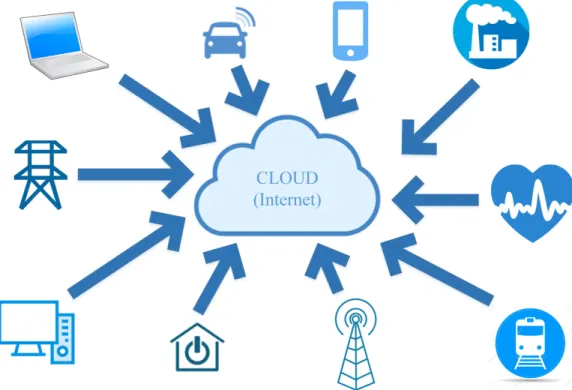
1.1 Sample of future connected systems . . . 1
1.2 Predicted Growth of Internet of Things Devices [6] . . . 2
1.3 Predicted Growth of Mobile Data Traffic [7] . . . 3
1.4 United States Frequency Allocation Chart as of 2016 [8] . . . 4
1.5 Predicted Growth of Massive Open Online Courses [9] . . . 5
1.6 Number of new malware specimen (in millions) [10] . . . 6
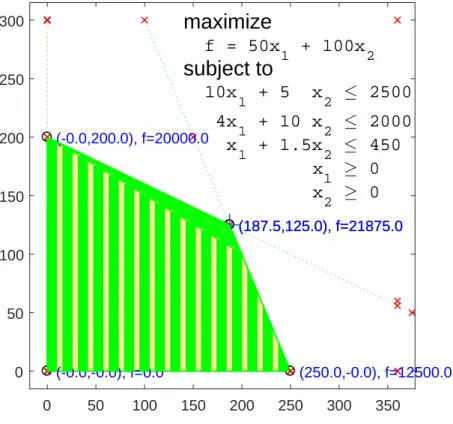
2.1 Different Constrained Optimization Model Types . . . 12
2.2 Linear Programming Model Example . . . 15
2.3 Integer Linear Programming Model Example . . . 16
2.4 Different Machine Learning Categories and Algorithms . . . 21
2.5 Linear Regression Hyperplane . . . 22
2.6 Polynomial Regression . . . 24
2.7 Logistic regression curve showing probability of passing vs studied hours . . . 27
2.8 Support Vector Machine Classifier . . . 27
2.9 Artificial Neural Network Classifier . . . 29
2.10 Decision Tree Example . . . 31
2.11 K-means Algorithm . . . 35
2.12 Difference between PCA and Linear Regression . . . 39
2.13 RL Model . . . 45
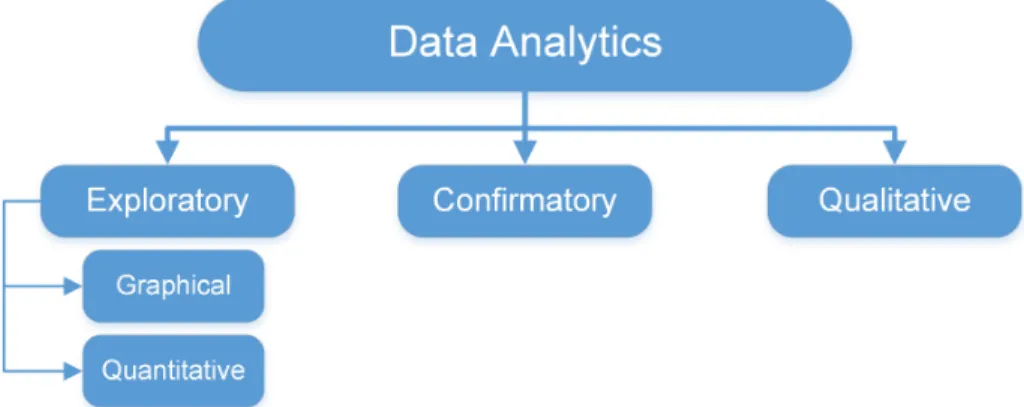
2.14 Different Data Analytics Categories and Algorithms . . . 49
2.15 Dataset 1 . . . 50
2.16 Dataset 2 . . . 50
2.17 Qualitative Data Analysis Process . . . 53
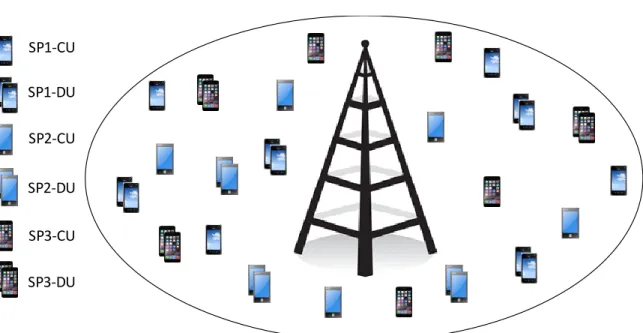
3.1 System Model: Cellular users and device-to-device users belonging to different service providers within a single LTE cell . . . 63
3.2 Cellular Users’ Sumrate for different SPs . . . 74
3.3 D2D Pairs’ Sumrate for different SPs . . . 75
3.4 System Sumrate for different SPs . . . 76
3.5 Access Probability of different SPs . . . 76
4.1 Projected Global Energy Consumption [11] . . . 79
4.2 Average Cellular Users’ Allocated Power . . . 92
4.3 Average D2D Users’ Transmission Power . . . 92
4.4 Normalized eNodeB Cumulative Cellular Transmission Power . . . 93
4.5 Normalized Average D2D Pairs’ Transmission Power . . . 93
5.1 Challenges in Multi-RAT HetNets . . . 99
5.2 System Model . . . 106
5.3 Illustrative Example . . . 107
5.5 Cellular Users’ Sumrate for different SPs . . . 117
5.6 M2M Pairs’ Sumrate for different SPs . . . 118
5.7 System Sumrate for different SPs . . . 119
5.8 RB Access Ratio for different SPs . . . 120
6.1 e-Learning Overview . . . 125
6.2 Challenges in e-Learning . . . 131
6.3 LMS Analytical Module . . . 141
6.4 Two Level Clustering Model: Number of Content Reads and Number of Forum Reads vs Average Time for Assignment Submission . . . 147
6.5 Three Level Clustering Model: Number of Content Reads vs Average Time for Assignment Submission . . . 149
6.6 Five Level Clustering Model: Number of Content Reads vs Average Time for Assignment Submission . . . 151
7.1 LMS Analytical Module . . . 165
8.1 DNS Vulnerabilities and Challenges . . . 174
8.2 Possible Methodologies . . . 177
8.3 Proposed Approach . . . 181
8.4 Probability Density Function of Domain Length For Labeled Dataset . . . 187
8.5 Probability Density Function of Number of Unique Characters For Labeled Dataset187 8.6 Probability Density Function of Number of Unique Characters For Unlabeled Dataset Using K-means Clustering . . . 191
8.7 Probability Density Function of Number of Unique Characters For Unlabeled Dataset Using Ensemble Learning Classifier . . . 192
5G Fifth Generation
ANN Artificial Neural Networks
BIP Binary Integer Programming
BS Base Station
CAPEX Capital Expenditure
CDA Confirmatory Data Analytics
CLASSE Classroom Survey of Student Engagement
CNN Convolutional Neural Networks
CR Cognitive Radio
CSI Channel State Information
CU Cellular User
D2D Device-to-Device
DA Data Analytics
dB Decibels
DGA Domain Generated Algorithmically
DNS Domain Name System
DRX Discontinuous Reception
EDA Exploratory Data Analytics
eNodeB Evolved Node B
GSM Global System for Mobile
HetNet Heterogeneous Network
IEC International Electrotechnical Commission
IETF International Engineering Task Force
ITU International Telecommunication Union
ILP Integer Linear Programming
INLP Integer Non-Linear Programming
InPr Infrastructure Provider
IoT Internet of Things
IP Internet Protocol
KNN K-Nearest Neighbors
LMS Learning Management System
LP Linear Programming
LR Logistic Regression
LTE Long Term Evolution
LTE-A Long Term Evolution-Advanced
M2M Machine-to-Machine
MCS Modulation and Coding Scheme
MILP Mixed Integer Linear Programming
MINLP Mixed Integer Non-Linear Programming
ML Machine Learning
MOOC Massive Open Online Course
MNO Mobile Network Operator
MVNO Mobile Virtual Network Operator
NB Naive Bayesian
NCTA National Cable & Telecommunications Association
NLP Non-Linear Programming
NP Non-Polynomial
OFDMA Orthogonal Frequency Division Multiple Access
OS Operating System
OPEX Operating Expenditure
PCA Principal Component Analysis
QDA Qualitative Data Analytics
QoS Quality of Service
RA Resource Allocation
RAT Radio Access Technology
RB Resource Block
RL Reinforcement Learning
RNN Recursive Neural Networks
ROI Return On Investment
SINR Signal-to-Interference and Noise Ratio
SLA Service Level Agreement
SP Service Provider
SQUAD Suggestion, Question, Unclassified, Answer, Delivery
SVM Support Vector Machine
TTL Time To Live
Tx Transmission/Transmitter
UE User equipment
UMTS Universal Mobile Telecommunications System
WEKA Waikato Environment for Knowledge Analysis
WiMAX Worldwide Interoperability for Microwave Access X
WRV Wireless Resource Virtualization
α Constant Path Loss Exponent
a(i) Average distance between data point iand the other data points within the same cluster
B RB Bandwidth (typically 180 KHz)
b(i) Average distance between data point iand the other data points belong-ing to the nearest cluster
bm(c,d)
(
1, If D2D PairdShares RBs Assigned to CU c
0, Otherwise
bm(c,mtc)
(
1, If M2M Pairmtc Shares RBs Assigned to CU c
0, Otherwise
C Set of CUs
Cm Set of CUs Belonging to SP m
D Set of D2D Pairs
Dm Set of D2D Pairs Belonging to SPm
dmax Maximum Distance Between D2D Pairs (in m)
d(i,j) Distance Between User iand Userj
fc Carrier Frequency (in MHz)
G(BS,i) Channel Gain Between BS and User i
Gm,l(BS,c) Channel Gain Between BS and CU cBelonging to SP m at RBl Gm,l(BS,d) Channel Gain Between BS and D2D pair dBelonging to SPm at RBl Gm,l(BS,mtc) Channel Gain Between BS and M2M pair mtc Belonging to SP m at
Resource Block l
G(i,j) Channel Gain Between User iand User j
Gm,l(c,d) Channel Gain Between CU cand D2D pairdBelonging to SPm at RBl Gm,l(c,mtc) Channel Gain Between CU c and M2M Pair mtc Belonging to SP m at
RB l
to SPm at RBl
Gm,l(mtc,mtc) Channel Gain Between Users forming M2M pairmtcBelonging to SPm at RBl
γcm SINR of CUcBelonging to SP m
γdm SINR of D2D pairdBelonging to SP m
γmtcm SINR of M2M pairmtc Belonging to SP m
γth,cm Minimum Threshold SINR of CU cBelonging to SP m γth,dm Minimum Threshold SINR of D2D pairdBelonging to SP m γth,mtcm Minimum Threshold SINR of M2M pairmtc Belonging to SP m
hb Base-station Antenna Height
K(i,j) Normalization Constant
Km Set of Users Belonging to SPm
L Set of RBs
Lc Number of RBs Assigned to CUc
LdB(d) Distance-dependent Macroscopic Path Loss at Distanced
MSP Set of SPs
|M| Total Number of SPs
M T C Set of M2M Pairs
M T Cm Set of M2M Pairs Belonging to SPm
N0 Noise Figure and Thermal Noise Desnity (per Hz)
NRBm Minimum Number of RBs Assigned to SPm
nmc Number of RBs Assigned to CUc Belonging to SP m
PBS Transmission Power of BS
PBS,cm Transmission Power From BS to CUc Belonging to SP m Peqm(BS,c) Transmission Power From BS to CUc Belonging to SP m
Assuming Equal Distribution Among Users
P LdB,(BS,i)(d) Total Path Loss Between BS and Useri at Distanced(in dB)
pd Transmission Power of D2D Paird
pmd Transmission Power of D2D PairdBelonging to SP m
pd,th Maximum Transmission Power of D2D Paird
pmtc Transmission Power of M2M Pairmtc
pu Transmission Power of Useru
rc,achm Achieved Rate of CUc Belonging to SP m
rc,thm Minimum Threshold Rate of CUc Belonging to SPm
rdm Rate of D2D pairdBelonging to SP m
rd,achm Achieved Rate of D2D pairdBelonging to SP m rm
d,th Minimum Threshold Rate of D2D pairdBelonging to SP m
rmtcm Rate of M2M pairmtc Belonging to SP m
rmtc,thm Minimum Threshold Rate of M2M pairmtc Belonging to SP m ρmmin Minimum Ratio of RBs Assigned to SPm
s(i) Silhouette coefficient of pointi
s Silhouette coefficient of the entire dataset
T Number of Time Slots
xm(c,l)
(
1, If CU cBelonging to SP m is Assigned RBl
0, otherwise
Chapter 1
Introduction
Recent years has seen an explosion in the evolution and penetration of technology in our daily lives. The use of smart-phones, mobile-connected wireless devices, social networks, and sensors has grown substantially. This has resulted in increased dependency on technology and connected devices in our daily lives. This includes the way we communicate, how we learn, and how we travel from one place to the other. The National Cable & Telecommunications Association (NCTA) predicted that the number of connected devices will approximately reach 50 billion devices as shown in Figure 1.2 [6]. Moreover, Cisco projected that the number of mobile-connected devices will reach 11.6 billion by the year 2021 [7].
Figure 1.2: Predicted Growth of Internet of Things Devices [6]
However, adopting such devices will pose several challenges. One challenge is how to properly allocate available resources to improve the efficiency and performance of such systems given the scarcity of available resources [2, 3]. Another challenge is the how to make use of the massive amount of data generated [4] . A third challenge is how to protect these devices [5].
To that end, this thesis proposes the use of various optimization modeling and machine learning techniques in three different types of systems; namely wireless communication systems, learning management systems (LMSs), and network systems. In particular, the first part of the thesis posits optimization modeling techniques to improve the aggregate throughput and power efficiency of a wireless communication network. On the other hand, the second part of the thesis proposes the use of unsupervised machine learning clustering techniques to be integrated into LMSs to identify unengaged students based on their engagement with material in an e-learning environment. Moreover, the impact of the identified engagement levels is also studied using unsupervised association rules techniques. Last but not least, the third part of the thesis suggests the use of exploratory data analytics, unsupervised machine learning clustering, and supervised machine learning classification techniques to identify malicious/suspicious domain names in a computer network setting.
1.1
Motivation
The emergence and increased adoption of mobile-connected devices has led to a dramatic growth in both the demand for communication resources as well as in the amount of data streams generated and collected. Estimates given by Cisco project that the number of mobile-connected devices will reach 11.6 billion by the year 2021 [7]. Moreover, the projection states that the global monthly demand for mobile data traffic will reach 49 Exabytes as shown in Figure 1.3 [7]. This increase in mobile data traffic demand has resulted in an increased demand for spectrum access. This is because radio resources are needed for mobile communication. However, as illustrated in Figure 1.4, it has become increasingly difficult to provide spectrum for new services or expanding existing ones with most of the spectrum already being assigned [8]. However, studies conducted in the USA have shown that there is unexploited capacity in the spectrum as it is not being efficiently utilized [12]. Therefore, it is important to introduce new paradigms and architectures that can efficiently use the available radio resources to enable the proper communication of the different devices.
7.00 11.00 17.00 24.00 35.00 49.00 2016 2017 2018 2019 2020 2021 Year 0 5 10 15 20 25 30 35 40 45 50 55
Mobile Data Traffic (Exabytes/month)
THIS CHART WAS CREATED BY DELMON C. MORRISON JUNE 1, 2011
UNITED
STATES
THE RADIO SPECTRUM
NON-FEDERAL EXCLUSIVE
FEDERAL/NON-FEDERAL SHARED FEDERAL EXCLUSIVE
RADIO SERVICES COLOR LEGEND
ACTIVITY CODE
PLEASE NOTE: THE SPACING ALLOTTED THE SERVICES IN THE SPECTRUM SEGMENTS SHOWN IS NOT PROPORTIONAL TO THE ACTUAL AMOUNT OF SPECTRUM OCCUPIED.
ALLOCATION USAGE DESIGNATION SERVICE EXAMPLE DESCRIPTION
Primary FIXED Capital Letters Secondary Mobile 1st Capital with lower case letters
U.S. DEPARTMENT OF COMMERCE National Telecommunications and Information Administration
Office of Spectrum Management JANUARY 2016
* EXCEPT AERONAUTICAL MOBILE (R) ** EXCEPT AERONAUTICAL MOBILE
ALLOCATIONS
FREQUENCY
ST ANDARD FREQUENCY AND TIME SIGNAL (20 kHz) FIXED MARITIME MOBILE Radiolocation FIXED MARITIME MOBILE FIXED MARITIME MOBILE MARITIME MOBILEFIXED AERONAUTICALRADIONA
VIGA TION Aeronautical Mobile AERONAUTICAL RADIONAVIGATION
MaritimeRadionavigation (radiobeacons) Aeronautical Mobile AERONAUTICALRADIONA VIGA TION Aeronautical Radionavigation (radiobeacons)
NOT ALLOCATED RADIONAVIGATION
MARITIME MOBILE FIXED Fixed FIXED MARITIME MOBILE 0 kHz MARITIME RADIONA VIGA TION (radiobeacons) 0 9 14 19.95 20.05 5961 70 90 110 130 160 190 200 275285 300 Radiolocation 300 kHz FIXED MARITIME MOBILE ST ANDARD FREQUENCY AND TIME SIGNAL (60 kHz) Aeronautical Radionavigation (radiobeacons) MARITIME RADIONAVIGATION (radiobeacons) Aeronautical Mobile Maritime Radionavigation (radiobeacons) Aeronautical Mobile Aeronautical Mobile
RADIONA VIGA TION AERONAUTICAL RADIONA VIGA TION MARITIME MOBILE Aeronautical Radionavigation MARITIME MOBILE MOBILE
BROADCASTING(AM RADIO)
MARITIME MOBILE
(telephony)
MOBILE
FIXED STANDARD FREQ.
AND TIME SIGNAL (2500kHz) FIXED AERONAUTICALMOBILE (R) RADIO-LOCATION FIXED MOBILE AMA TEUR RADIOLOCA TION MOBILE FIXED MARITIME MOBILE MARITIME MOBILE FIXED MOBILE BROADCASTING AERONAUTICAL RADIONA VIGA TION (radiobeacons)
MOBILE (distress and calling)
MARITIME MOBILE(ships only) AERONAUTICAL RADIONA
VIGA
TION
(radiobeacons)AERONAUTICAL RADIONA
VIGA
TION
(radiobeacons) MARITIME MOBILE
(telephony)
MOBILE except aeronautical mobile
MOBILE
except aeronautical mobile
MOBILE
MOBILE
MARITIME MOBILE
MOBILE (distress and calling)
MARITIME MOBILE
MOBILE except aeronautical mobile BROADCASTING
AERONAUTICAL RADIONAVIGATION(radiobeacons)
Non-Federal Travelers Information Stations (TIS), a mobile service, are authorized in the 535-1705 kHz band. Federal TIS operates at 1610 kHz.
300 kHz 3 MHz
Maritime Mobile
3MHz 30 MHz
AERONAUTICAL MOBILE (OR)
FIXED
MOBILE
except aeronautical mobile (R)
FIXED MOBILE
except aeronautical mobile
AERONAUTICALMOBILE (R)
AMATEUR MARITIME MOBILE
FIXED
MARITIMEMOBILE
FIXED
MOBILE
except aeronautical mobile (R)
AERONAUTICAL
MOBILE (R)
AERONAUTICAL
MOBILE (OR)
MOBILE
except aeronautical mobile (R)
FIXED ST ANDARD FREQUENCY AND TIME SIGNAL (5 MHz) FIXED MOBILE FIXED FIXED AERONAUTICAL MOBILE (R) AERONAUTICAL MOBILE (OR) FIXED MOBILE
except aeronautical mobile (R)
MARITIME MOBILE AERONAUTICAL MOBILE (R) AERONAUTICAL MOBILE (OR) FIXED AMA TEUR SA TELLITE AMA TEUR AMA TEUR BROADCASTING FIXED MOBILE except aeronautical mobile (R) MARITIME MOBILE FIXED AERONAUTICAL MOBILE (R) AERONAUTICAL MOBILE (OR) FIXED BROADCASTING FIXED STANDARD FREQUENCY AND TIME SIGNAL (10 MHz) AERONAUTICAL MOBILE (R) AMA TEUR FIXED Mobile except aeronautical mobile (R) AERONAUTICAL MOBILE (OR) AERONAUTICAL MOBILE (R) FIXED BROADCASTING FIXED MARITIME MOBILE AERONAUTICAL MOBILE (OR) AERONAUTICAL MOBILE (R) RADIO ASTRONOMY FIXED Mobile
except aeronautical mobile (R)
BROADCASTING
FIXED
Mobile
except aeronautical mobile (R)
AMA
TEUR
Mobile
except aeronautical mobile (R)
FIXED ST ANDARD FREQUENCY AND TIME SIGNAL (15 MHz) AERONAUTICAL MOBILE (OR) BROADCASTING MARITIME MOBILE AERONAUTICAL MOBILE (R) AERONAUTICAL MOBILE (OR) FIXED AMA TEUR SA TELLITE AMA TEUR SA TELLITE FIXED 3.0 3.025 3.155 3.23 3.4 3.5 4.0 4.063 4.438 4.65 4.7 4.75 4.85 4.995 5.005 5.06 5.45 5.68 5.73 5.59 6.2 6.525 6.685 6.765 7.0 7.1 7.3 7.4 8.1 8.195 8.815 8.965 9.04 9.4 9.9 9.995 10.005 10.1 10.15 11.175 11.275 11.4 11.6 12.1 12.23 13.2 13.26 13.36 13.41 13.57 13.87 14.0 14.25 14.35 14.99 15.01 15.1 15.8 16.36 17.41 17.48 17.9 17.97 18.03 18.068 18.168 18.78 18.9 19.02 19.68 19.8 19.99 20.01 21.0 21.45 21.85 21.924 22.0 22.855 23.0 23.2 23.35 24.89 24.99 25.01 25.07 25.21 25.33 25.55 25.67 26.1 26.175 26.48 26.95 26.96 27.23 27.41 27.54 28.0 29.7 29.8 29.89 29.91 30.0
BROADCASTING MARITIME MOBILEBROADCASTING FIXED FIXEDMARITIME MOBILE FIXED
STANDARD FREQUENCY AND TIME SIGNAL (20 MHz) Mobile Mobile FIXED BROADCASTING FIXED AERONAUTICAL MOBILE (R) MARITIME MOBILE AMA TEUR SA TELLITE AMA TEUR FIXED Mobile
except aeronautical mobile (R)
FIXEDAERONAUTICAL
MOBILE (OR)
MOBILE
except aeronautical mobile
FIXED AMA TEUR SA TELLITE AMA TEUR STANDARD FREQ. AND TIME SIGNAL (25 MHz)
LAND MOBILE MARITIME MOBILE LAND MOBILE
FIXED
MOBILE
except aeronautical mobile
RADIO ASTRONOMYBROADCASTING MARITIME MOBILE LAND MOBILE
MOBILE
except aeronautical mobile
MOBILE
except aeronautical mobile
FIXED
LAND MOBILE
FIXED
MOBILE
except aeronautical mobile
FIXED FIXED MOBILE FIXED AMA TEUR SA TELLITE AMA TEUR
LAND MOBILE FIXED
FIXED MOBILE FIXED AMA TEUR MOBILE
except aeronautical mobile (R)
AMA TEUR FIXED BROADCASTING MARITIME MOBILE MOBILE except aeronautical mobile 300 325 335 405 415 435 495 505 510 525 535 1605 1615 1705 1800 1900 2000 2065 2107 2170 2173.5 2190.5 2194 2495 2505 2850 3000 30 MHz 300 MHz FIXED
MOBILE LAND MOBILE MOBILE LAND MOBILE MOBILE LAND MOBILE MOBILE FIXED FIXED FIXED FIXED FIXED FIXED
LAND MOBILE LAND MOBILE Radio astronomy FIXED MOBILE FIXED MOBILE LAND MOBILE MOBILE FIXED FIXED LAND MOBILE LAND MOBILE FIXED MOBILE LAND MOBILE FIXED MOBILE AMATEUR BROADCASTING (TELEVISION ) FIXED MOBILE RADIO ASTRONOMY MOBILE FIXED AERONAUTICAL RADIONA VIGA TION MOBILEMOBILE FIXEDFIXED BROADCASTING (TELEVISION) BROADCASTING (FM RADIO) RADIONAVIGATIONAERONAUTICAL
AERONAUTICALMOBILE (R)AERONAUTICAL AERONAUTICALMOBILE (R)
MOBILE AERONAUTICAL MOBILE AERONAUTICAL MOBILE (R) AERONAUTICAL MOBILE (R) MOBILE-SA TELLITE (space-to-Earth) MOBILE-SA TELLITE (space-to-Earth)
Mobile-satellite (space-to-Earth) Mobile-satellite (space-to-Earth) SPACE RESEARCH (space-to-Earth)SPACE RESEARCH (space-to-Earth)SPACE RESEARCH (space-to-Earth)SPACE RESEARCH (space-to-Earth)
SP
ACE OPERA
TION
(space-to-Earth)SPACE OPERA
TION
(space-to-Earth)SPACE OPERA
TION
(space-to-Earth)SPACE OPERA
TION (space-to-Earth) MET. SA TELLITE (space-to-Earth)MET. SA TELLITE (space-to-Earth)MET. SA TELLITE (space-to-Earth)MET. SA TELLITE (space-to-Earth) FIXED MOBILE AMA TEUR- SA TELLITE AMA TEUR AMA TEURFIXED MOBILE MOBILE-SA TELLITE (Earth-to-space) FIXED MOBILE FIXED LAND MOBILE FIXED LAND MOBILE RADIONA VIGA TION-SA TELLITE
MARITIME MOBILE MARITIME MOBILE MARITIME MOBILE
MOBILE except aeronautical mobileFIXED
LAND MOBILE
MARITIME MOBILE
MOBILE except aeronautical mobile
MARITIME MOBILE (AIS)
MOBILE except aeronautical mobile FIXEDFIXED
Land mobile
FIXED
MOBILE
FIXED
MOBILE except aeronautical mobile
Mobile
FIXED
MOBILE except aeronautical mobile
FIXED MOBILE
LAND MOBILE
MARITIME MOBILE (distress, urgency
, safety and calling)
MARITIME MOBILE (AIS)
MOBILE except aeronautical mobile FIXED Amateur AERONAUTICALMOBILE (R) MOBILE-SA TELLITE (Earth-to-space) BROADCASTING (TELEVISION) FIXED AMA TEUR
Land mobileFixed
30.0 30.56 32.0 33.0 34.0 35.0 36.0 37.0 37.5 38.0 38.25 39.0 40.0 42.0 43.69 46.6 47.0 49.6 50.0 54.0 72.0 73.0 74.6 74.8 75.2 75.4 76.0 88.0 108.0 117.975 121.9375 123.0875 123.5875 128.8125 132.0125 136.0 137.0 137.025 137.175 137.825 138.0 144.0 146.0 148.0 149.9 150.05 150.8 152.855 154.0 156.2475 156.7625 156.8375 157.0375 157.1875 157.45 161.575 161.625 161.775 161.9625 161.9875 162.0125 163.0375 173.2 173.4 174.0 216.0 217.0 219.0 220.0 222.0 225.0 300.0 FIXED Fixed Land mobile LAND MOBILE LAND MOBILE 300.0 328.6 335.4 399.9 400.05 400.15 401.0 402.0 403.0 406.0 406.1 410.0 420.0 450.0 454.0 455.0 456.0 460.0 462.5375 462.7375 467.5375 467.7375 470.0 512.0 608.0 614.0 698.0 763.0 775.0 793.0 805.0 806.0 809.0 849.0 851.0 854.0 894.0 896.0 901.0 902.0 928.0 929.0 930.0 931.0 932.0 935.0 940.0 941.0 944.0 960.0 1164.0 1215.0 1240.0 1300.0 1350.0 1390.0 1392.0 1395.0 1400.0 1427.0 1429.5 1430.0 1432.0 1435.0 1525.0 1559.0 1610.0 1610.6 1613.8 1626.5 1660.0 1660.5 1668.4 1670.0 1675.0 1695.0 1710.0 1761.0 1780.0 1850.0 2000.0 2020.0 2025.0 2110.0 2180.0 2200.0 2290.0 2300.0 2305.0 2310.0 2320.0 2345.0 2360.0 2390.0 2395.0 2417.0 2450.0 2483.5 2495.0 2500.0 2655.0 2690.0 2700.0 2900.0 3000.0 300 MHz AERONAUTICAL RADIONA VIGA TION FIXED MOBILE RADIONA VIGA TION SA TELLITE MOBILE SA TELLITE (Earth-to-space) ST ANDARD FREQUECY AND TIME SIGNAL - SA TELLITE (400.1 MHz) MET. AIDS (Radiosonde)
MOBILE SAT (S-E) SPACE RES. (S-E) Space Opn. (S-E)
MET . SAT. (S-E) MET . AIDS (Radiosonde)
SPACE OPN. (S-E)
MET-SA T. (E-S) EAR TH EXPL SAT. (E-S)
Earth Expl Sat(E-S) Earth Expl Sat(E-S)
EARTH EXPL SA T. (E-S) MET-SA T. (E-S) MET . AIDS (Radiosonde) Met-Satellite (E-S) Met-Satellite (E-S) METEOROLOGICAL AIDS (RADIOSONDE) MOBILE SA TELLITE (Earth-to-space) RADIOASTRONOMY FIXED MOBILE FIXED MOBILE
SPACE RESEARCH (space-to-space)
RADIOLOCA TION Amateur LAND MOBILE FIXED LAND MOBILE LAND MOBILE FIXED LAND MOBILE MeteorologicalSatellite (space-to-Earth) LAND MOBILE FIXED LAND MOBILE FIXED
LAND MOBILELAND MOBILE LAND MOBILE
FIXEDBROADCASTING (TELEVISION)
FIXED BROADCASTING (TELEVISION)
LAND MOBILE(medical telemetry and medical telecommand)
RADIO ASTRONOMY BROADCASTING
(TELEVISION) BROADCASTING (TELEVISION) MOBILE FIXED MOBILE FIXED MOBILE FIXED MOBILE FIXED
MOBILELAND MOBILE
FIXED LAND MOBILE AERONAUTICAL MOBILE LAND MOBILE AERONAUTICAL MOBILE FIXED LAND MOBILE FIXED LAND MOBILE FIXED MOBILE RADIOLOCA TION FIXED FIXED LAND MOBILE FIXED MOBILE FIXED LAND MOBILE FIXED FIXED LAND MOBILE FIXED MOBILE
FIXEDFIXEDRADIONAVIGATIONAERONAUTICAL
RADIONA VIGA TION-SA TELLITE (space-to-Earth)(space-to-space) EARTH EXPLORATION-SATELLITE(active) RADIO-LOCATION RADIONA VIGA TION-SATELLITE (space-to-Earth) (space-to-space) SPACE RESEARCH (active) Space research(active) Earth exploration-satellite (active)
RADIO-LOCATION SPACE RESEARCH (active) AERONAUTICALRADIO - NAVIGATION Amateur AERONAUTICAL RADIONA VIGA TION FIXED MOBILE RADIOLOCA TION FIXED MOBILE ** Fixed-satellite (Earth-to-space) FIXED MOBILE **
LAND MOBILE (medical telemetry and medical telecommand)
SPACE RESEARCH(passive) RADIO ASTRONOMY EAR TH EXPLORA TION - SA TELLITE (passive)
LAND MOBILE(telemetry and telecommand) LAND MOBILE(medical telemetry and medical telecommand Fixed-satellite (space-to-Earth) FIXED (telemetry andtelecom
mand)
LAND MOBILE
(telemetry & telecommand)
FIXED
MOBILE **
MOBILE (aeronautical telemetry)MOBILE SA
TELLITE (space-to-Earth) AERONAUTICAL RADIONA VIGA TION-SA TELLITE (space-to-Earth)(space-to-space) MOBILE SA TELLITE (Earth-to-space) RADIODETERMINA TION-SA TELLITE (Earth-to-space) MOBILE SA TELLITE (Earth-to-space) RADIODETERMINA TION-SATELLITE (Earth-to-space) RADIO ASTRONOMY MOBILE SA TELLITE (Earth-to-space) RADIODETERMINA TION-SATELLITE (Earth-to-space) Mobile-satellite (space-to-Earth) MOBILE SA TELLITE(Earth-to-space) MOBILE SA TELLITE (Earth-to-space)
RADIO ASTRONOMYRADIO ASTRONOMY
FIXED MOBILE ** METEOROLOGICAL AIDS (radiosonde) METEOROLOGICAL SA TELLITE (space-to-Earth) METEOROLOGICAL SA TELLITE (space-to-Earth) FIXED MOBILE FIXED MOBILE SP ACE OPERA TION (Earth-to-space) FIXED MOBILE MOBILE SA TELLITE (Earth-to-space) FIXEDMOBILE
SPACE RESEARCH (passive)RADIO ASTRONOMY METEOROLOGICAL
AIDS (radiosonde) SPACE RESEARCH (Earth-to-space) (space-to-space) EARTH EXPLORATION- SATELLITE (Earth-to-space) (space-to-space) FIXED MOBILE SPACE OPERA TION (Earth-to-space) (space-to-space) MOBILE FIXED SPACE RESEARCH (space-to-Earth) (space-to-space) EARTH EXPLORATION- SATELLITE (space-to-Earth) (space-to-space) SPACE OPERATION (space-to-Earth) (space-to-space)
MOBILE(ling of sight only including aeronautical telemetry, but excluding flight testing of manned aircraft) FIXED
(line of sight only)
FIXED
SPACE RESEARCH (space-to-Earth) (deep space)
MOBILE**Amateur FIXED MOBILE** Amateur RADIOLOCA TION RADIOLOCA TION MOBILE FIXED Radio- location Mobile Fixed BROADCASTING - SA TELLITE Fixed Radiolocation Fixed Mobile Radio- location BROADCASTINGSATELLITE FIXED MOBILE RADIOLOCA TION RADIOLOC A TION MOBILE MOBILE AMA TEUR AMA TEUR Radiolocation MOBILE FIXED Fixed AmateurRadiolocation MOBILE SA TELLITE (space-to-Earth) RADIODETERMINA TION-SATELLITE (space-to-Earth) MOBILE SA TELLITE (space-to-Earth) RADIODETERMINA TION-SATELLITE (space-to-Earth) FIXED MOBILE** MOBILE** FIXED
Earth exploration-satellite(passive) Space research(passive)
Radio astronomy
MOBILE**
FIXEDEXPLORATION-SATELLITEEARTH (passive) RADIO ASTRONOMY SPACE RESEARCH(passive) AERONAUTICAL RADIONA VIGA TION METEOROLOGICAL AIDS Radiolocation Radiolocation RADIOLOCATION MARITIME RADIO-NAVIGATION MOBILE FIXED BROADCASTING BROADCASTING
Radiolocation Fixed(telemetry) FIXED (telemetry andtelecom
mand)
LAND MOBILE (telemetry & telecommand)
AERONAUTICAL RADIONA VIGA TION AERONAUTICAL RADIONA VIGA TION AERONAUTICAL RADIONA VIGA TION AERONAUTICAL RADIONA VIGA TION AERONAUTICAL RADIONA VIGA TION
Space research(active) Earth exploration-satellite (active) EARTH EXPLORATION-SATELLITE(active)
Fixed FIXED FIXED MOBILE ISM – 24.125 ± 0.125 ISM – 5.8 ± .075 GHz 3GHz Radiolocation Amateur AERONAUTICAL RADIONA VIGA TION (ground based) RADIOLOCA TION Radiolocation FIXED-SA TELLITE (space-to-Earth) Radiolocation FIXED AERONAUTICAL RADIONA VIGA TION MOBILE FIXED MOBILE RADIO ASTRONOMY
Space Research (passive)
RADIOLOCA TION RADIOLOCA TION RADIOLOCA TION METEOROLOGICAL AIDS Amateur FIXED
SPACE RESEARCH (deep space)(Earth-to-space)
Fixed FIXED-SA TELLITE (space-to-Earth) AERONAUTICAL RADIONA VIGA TION RADIOLOCA TION Radiolocation MARITIME RADIONA VIGA TION RADIONA VIGA TION Amateur FIXED RADIO ASTRONOMY BROADCASTING-SA TELLITE Fixed
MobileMobileFixed FIXED MOBILE
SPACE RESEARCH(passive)
RADIO ASTRONOMY
EAR
TH EXPLORA
TION
-SATELLITE (passive) FIXED
FIXED MOBILE FIXED-SA TELLITE (space-to-Earth) FIXED MOBILE MOBILE AERONAUTICAL RADIONA VIGA TION
Standard frequencyand time signal(Earth-to-space)satellite
FIXED FIXED MOBILE** FIXED MOBILE** FIXED SA TELLITE (Earth-to-space) Amateur MOBILE BROADCASTING-SA TELLITE FIXED-SA TELLITE (space-to-Earth) MOBILE FIXED MOBILE INTER-SA TELLITE AMA TEUR AMA TEUR-SA
TELLITERadio- location
Amateur RADIO- LOCA TIONFIXED INTER-SA TELLITE RADIONA VIGA TION RADIOLOCA TION-SA TELLITE (Earth-to-space) FIXED-SA TELLITE (Earth-to-space) MOBILE-SA TELLITE (Earth-to-space) MOBILE INTER-SA TELLITE 30 GHz Earth exploration-satellite (active)
Space research (active)
RADIOLOCA TION RADIOLOCA TION AERONAUTICAL RADIONA VIGA TION (ground based) FIXED-SATELLITE(space-to-Earth) FIXED RADIONA VIGA TION-SA TELLITE (Earth-to-space) AERONAUTICAL RADIONA VIGA TION AERONAUTICAL RADIONA VIGA TION RADIONA VIGA TION-SA TELLITE (space-to-Earth)(space-to-space) AERONAUTICAL RADIONA VIGA TION FIXED-SA TELLITE (Earth-to-space) Earth exploration-satellite (active) Space research Radiolocation EARTH EXPLORATION-SATELLITE(active) SPACE RESEARCH (active) RADIOLOCA TION Earth exploration-satellite (active) Radiolocation Space research (active) EARTH EXPLORATION-SATELLITE(active) SPACE RESEARCH (active) RADIOLOCA TION Radiolocation Space research(active) EARTH EXPLORATION-SATELLITE(active) SPACE RESEARCH (active) RADIOLOCATION AERONAUTICAL RADIONAVIGATION Earth exploration-satellite (active) Radiolocation Space research(active) EARTH EXPLORATION-SATELLITE(active) SPACE RESEARCH (active) RADIOLOCATION RADIONAVIGATION Earth exploration-satellite (active) Space research (active) EARTH EXPLORATION-SATELLITE (active) SPACE RESEARCH (active) MARITIME RADIONA VIGA TION RADIOLOCA TION MARITIME RADIONA VIGA TION RADIOLOCA TION MARITIME RADIONA VIGA TION Amateur RADIOLOCA TION MOBILE FIXED-SA TELLITE (Earth-to-space) FIXED FIXED-SA TELLITE (Earth-to-space) FIXED FIXED-SA TELLITE (Earth-to-space)(space-to-Earth) FIXED FIXED-SA TELLITE (Earth-to-space)(space-to-Earth) MOBILE FIXED-SA TELLITE (Earth-to-space) MOBILE FIXED MOBILE FIXED FIXEDFIXED
SPACE RESEARCH (Earth-to-space)FIXED
MOBILE-SA TELLITE (space-to-Earth) FIXED Mobile-satellite (space-to-Earth) FIXED-SA TELLITE (space-to-Earth) FIXED Mobile-satellite (space-to-Earth)
METEOROLOGICAL SATELLITE (space-to-Earth)
FIXED-SA TELLITE (space-to-Earth) FIXED Mobile-satellite (space-to-Earth) FIXED-SA TELLITE (space-to-Earth) FIXED-SA TELLITE (Earth-to-space) MOBILE-SA TELLITE (Earth-to-space) FixedFIXED
Mobile-satellite(Earth-to-space)(no airborne)
FIXED SA TELLITE (Earth-to-space) EAR TH EXPLORA SATELLITE (space-to-Earth)
Mobile-satellite(Earth-to-space)(no airborne)
FIXED EAR TH EXPLORA TION- SATELLITE (space-to-Earth) FIXED-SA TELLITE (Earth-to-space) SATELLITE (space-to-Earth) FIXED
Mobile-satellite(Earth-to-space)(no airborne)
FIXED-SA TELLITE (Earth-to-space) EARTH EXPLORA TION-SA TELLITE (space-to-Earth)
Space research (deep space)(space-to-Earth)
SPACE RESEARCH (deep space)(space-to-Earth)
FIXED
SP
ACE RESEARCH (space-to-Earth)
FIXED Earth exploration -satellite (active) Radio-location Space research (active) EARTH EXPLORATION-SATELLITE (active) RADIO-LOCATION SPACE RESEARCH (active) Radiolocation RADIOLOCA TION RadiolocationRadiolocation Radiolocation Meteorological Aids Earth exploration - satellite (active) Radio-location Space research (active) EARTH EXPLORATIONSATELLITE (active) RADIO-LOCATION SPACE RESEARCH (active) Radiolocation Radiolocation Amateur-satellite Amateur Radiolocation RADIOLOCA TION RADIOLOCA TION FIXED EAR TH EXPLORA TION-SA TELLITE (passive)
SPACE RESEARCH (passive)
EARTH EXPLORA
TION-SA
TELLITE (passive)
SPACE RESEARCH (passive)
FIXED-SA TELLITE (space-to-Earth) FIXED FIXED-SA TELLITE (space-to-Earth) FIXEDFIXED FIXED-SA TELLITE (Earth-to-space) Space research (active) EARTH EXPLORATION -SATELLITE (active) SPACE RESEARCH (active) AeronatuicalRadionavigation EARTH EXPLORATION SATELLITE (active) RADIO -LOCATION SPACE RESEARCH Radio-location Space research RADIO - LOCATION Space research FIXED-SATELLITE (Earth-to-space) Space research Radio - location FIXED-SA TELLITE (Earth-to-space) Mobile-satellite (Earth-to-space)
Space researchMobile-satellite (space-to-Earth)
FIXED-SA
TELLITE (Earth-to-space)
Mobile-satellite (Earth-to-space)
Space researchMOBILE
SP ACE RESEARCH FixedFIXED SP ACE RESEARCH Mobile FIXED-SA TELLITE (Earth-to-space) AERONAUTICALRADIONA VIGA TION AERONAUTICAL RADIONA VIGA TIONRADIOLOCA TION
Space research (deep space)(Earth-to-space)
RADIOLOCA TION RADIOLOCA TION EARTH EXPLORATION- SATELLITE (active) RADIO-LOCATION SPACE RESEARCH (active) Earth exploration-satellite (active) Radio-location Space research (active) Radiolocation FIXED-SA
TELLITE (Earth-to-space)FIXED
FIXED-SA TELLITE (space-to-Earth) SPACE RESEARCH(passive) EAR TH EXPLORA TION -SATELLITE (passive) FIXED-SA TELLITE (space-to-Earth) FIXED-SA TELLITE (space-to-Earth) MOBILE-SA TELLITE (space -to-Earth) Standard frequency and time signal satellite (space-to-Earth) FIXED-SA TELLITE (space-to-Earth) MOBILE-SA TELLITE (space-to-Earth) FIXED EAR TH EXPLORA TION -SATELLITE (passive)
SPACE RESEARCH(passive)FIXED
MOBILE** EARTH EXPLORATION- SATELLITE (passive) MOBILE** FIXED SP ACE RESEARCH (passive) RADIO ASTRONOMY MOBILE FIXED FIXED MOBILE FIXED MOBILE EAR TH EXPLORA TION -SA TELLITE - (passive) SPACE RESEARCH(passive) RADIO ASTRONOMY Earth exploration -satellite (active) RADIONA VIGA TION FIXED-SA TELLITE (Earth-to-space) FIXED
Standard frequency and time signal satellite (Earth-to-space) FIXEDFIXED EARTH EXPLORATION -SATELLITE (space-to-Earth) SPACE RESEARCH (space-to-Earth) MOBILE INTER-SATELLITE Inter-satellite FIXED INTER-SA TELLITE FIXED-SA TELLITE (Earth-to-space) FIXED-SA TELLITE (Earth-to-space) RADIOLOCA TION MARITIME RADIONA VIGA TION AERONAUTICAL RADIONA VIGA TION INTER-SA TELLITE Inter-satellite Earth exploration -satellite (active) FIXED FIXED-SA TELLITE (Earth-to-space) FIXED Space research Radiolocation Radiolocation Radiolocation RADIOLOCA TION RADIOLOCA TION Earth exploration-satellite (active) 3.0 3.1 3.3 3.5 3.6 3.65 3.7 4.2 4.4 4.5 4.8 4.94 4.99 5.0 5.01 5.03 5.15 5.25 5.255 5.35 5.46 5.47 5.57 5.6 5.65 5.83 5.85 5.925 6.425 6.525 6.7 6.875 7.025 7.075 7.125 7.145 7.19 7.235 7.25 7.3 7.45 7.55 7.75 7.85 7.9 8.025 8.175 8.215 8.4 8.45 8.5 8.55 8.65 9.0 9.2 9.3 9.5 9.8 10.0 10.45 10.5 10.55 10.6 10.68 10.7 11.7 12.2 12.7 13.25 13.4 13.75 14.0 14.2 14.4 14.5 14.7145 14.8 15.1365 15.35 15.4 15.43 15.63 15.7 16.6 17.1 17.2 17.3 17.7 17.8 18.3 18.6 18.8 19.3 19.7 20.2 21.2 21.4 22.0 22.21 22.5 22.55 23.55 23.6 24.0 24.05 24.25 24.45 24.65 24.75 25.05 25.25 25.5 27.0 27.5 29.5 30.0 MOBILE FIXED-SA TELLITE (space-to-Earth) FIXED-SA TELLITE (space-to-Earth) FIXED-SA TELLITE (Earth-to-space) Earth exploration -satellite (active) Amateur-satellite(space-to-Earth) FIXED-SA TELLITE (Earth-to-space) FIXED - SATELLITE(Earth-to-space) MOBILE - SATELLITE (Earth-to-space) Standard Frequency and Time Signal Satellite (space-to-Earth) FIXED MOBILE RADIOASTRONOMY SP ACE RESEARCH (passive) EAR TH EXPLORA TION -SATTELLITE (passive) RADIONA VIGA TION INTER-SA TELLITE RADIONA VIGA TIONRadiolocation FIXED FIXED MOBILE Mobile Fixed BROADCASTING MOBILE SP
ACE RESEARCH (passive)
EAR
TH EXPLORA
TION-SA
TELLITE (passive) SPACE RESEARCH (passive)
EAR TH EXPLORA TION-SA TELLITE (passive) EAR TH EXPLORA TION-SA TELLITE (passive) SPACE RESEARCH (passive) MOBILE FIXED MOBILE SATELLITE (space-to-Earth) MOBILE- SATELLITE RADIO NA VIGA TION RADIONAVIGA TION-SATELLITE FIXED-SATELLITE(space-to-Earth)
AMA TEUR AMA TEUR-SA TELLITE SPACE RESEARCH (passive) RADIO ASTRONOMY EARTH EXPLORATION-SATELLITE (passive) MOBILE FIXED
RADIO- LOCATION
INTER-SA TELLITE RADIO-NAVIGATION RADIO- NAVIGATION-SATELLITE AMA TEUR AMA TEUR - SA TELLITE RADIO LOCA TION EAR TH EXPLORA TION- SATELLITE (passive)
SPACE RESEARCH(passive)
SPACE
RESEARCH (passive) RADIOASTRONOMY MOBILE
FIXED RADIO ASTRONOMY INTER-SATELLITE RADIONA VIGA TION RADIONA VIGA TION-SATELLITE SPACE RESEARCH (Passive) RADIO ASTRONOMY EARTH EXPLORATION-SATELLITE (Passive) MOBILE FIXED MOBILE FIXED MOBILE FIXED FIXED-SATELLITE (space-to-Earth) RADIOLOCA TION AMA TEUR AMA TEUR-SA TELLITE Amateur
Amateur-satelliteEARTH EXPLORA
TION-
SATELLITE (passive)
MOBILE
SP
ACE RESEARCH
(deep space) (space-to-Earth) MOBILE
MOBILE SATELLITE (space-to-Earth) SPACE RESEARCH (Earth-to-space) FIXED-SATELLITE (space-to-Earth) BROADCASTING-SATELLITE INTER- SA TELLITE EAR TH EXPLORA TION-SA TELLITE (passive)
SPACE RESEARCH (passive)
FIXED MOBILE** SPACE RESEARCH (passive) EAR TH EXPLORA TION-SATELLITE (passive) RADIONA VIGA TION
RADIO- LOCATION
SPACE RESEARCH
(deep space) (Earth-to-space)
Radio- location Space research (deep space) (Earth-to-space)
Radiolocation RADIOLOCA TION EAR TH EXPLORA TION -SATTELLITE (active) RADIO LOCATION SPACE RESEARCH (active)
Earthexploration -sattellite (active) Radio location Space research (active) EAR TH EXPLORA TION -SATELLITE(passive) FIXED MOBILE SPACE RESEARCH (passive) FIXED MOBILE FIXED-SA TELLITE (space-to-Earth) EAR TH EXPLORA TION SATELLITE(Earth-to-space)
Earth explorationsatellite
(space-to-Earth) FIXED-SATELLITE (space-to-Earth) FIXED MOBILE BROADCASTING-SATELLITE BROADCASTING
FIXED- SATELLITE(space-to-Earth)
FIXED MOBILE BROADCASTING BROADCASTING SA TELLITE FIXED MOBILE** FIXED-SA TELLITE (Earth-to-space) RADIO ASTRONOMY FIXED-SA TELLITE (Earth-to-space) MOBILE-SA TELLITE (Earth-to-space) MOBILE MOBILE-SA TELLITE (Earth-to-space) MOBILE-SA TELLITE (Earth-to-space) MOBILE FIXED FIXED MOBILE FIXED-SA TELLITE (Earth-to-space) FIXED MOBILE FIXED-SA TELLITE (Earth-to-space) MOBILE-SA TELLITE (Earth-to-space) FIXED MOBILE FIXED-SA TELLITE (Earth-to-space) EAR TH EXPLORA TION-SA TELLITE (passive)
SPACE RESEARCH (passive)
INTER- SATELLITE INTER- SATELLITE EAR TH EXPLORA TION-SA TELLITE (passive)
SPACE RESEARCH (passive)
FIXED MOBILE EAR TH EXPLORA TION-SA TELLITE (passive) SP
ACE RESEARCH (passive)
INTER- SATELLITE FIXED MOBILE INTER- SATELLITE EAR TH EXPLORA TION-SA TELLITE (passive)
SPACE RESEARCH (passive)
MOBILE FIXEDRADIO- LOCA
TION
INTER- SATELLITE
FIXED
MOBILE
INTER- SATELLITEINTER- SATELLITE
EAR TH EXPLORA TION-SA TELLITE SP ACE RESEARCH FIXED MOBILE ** INTER- SATELLITE MOBILE BROADCASTING FIXED- SATELLITE (space-to-Earth) Space research (space-to-Earth) MOBILE Amateur RADIO ASTRONOMY RADIOLOCA TION
Space research (space-to-Earth)
Amateur RADIOLOCA TION Space research(space-to-Earth) AMA TEUR RADIOLOCA TION FIXED-SATELLITE (Earth-to-space) MOBILE-SATELLITE (Earth-to-space) Space research (space-to-Earth) FIXED MOBILE FIXED-SATELLITE (Earth-to-space) FIXED MOBILE EARTH EXPLORATION-SATELLITE (active) SPACE RESEARCH (active) RADIO-LOCATION RADIO- LOCATION
MOBILE FIXED FIXED MOBILE RADIO ASTRONOMY RADIO-LOCATION RADIO-NAVIGATION RADIO- NAVIGATION-SATELLITE RADIO ASTRONOMYSPACE RESEARCH (passive) EAR TH EXPLORA TION-SATELLITE (passive) SP ACE
RESEARCH (passive)FIXED
MOBILE SP ACE RESEARCH(passive) EAR TH EXPLORA TION-SATELLITE (passive) SP ACE RESEARCH (passive) EAR TH EXPLORA TION-SATELLITE (passive) SP ACE RESEARCH (passive) INTER-SATELLITE FIXED MOBILE Amateur FIXED-SATELLITE (space-to-Earth) MOBILE-SATELLITE (space-to-Earth) Radio astronomy FIXED MOBILE INTER-SATELLITE EAR TH EXPLORA TION-SATELLITE (active) RADIO ASTRONOMY Radio astronomy Amateur - satellite Amateur FIXED MOBILE RADIO ASTRONOMY
SPACE RESEARCH(passive)
RADIO ASTRONOMY EAR TH EXPLORA TION-SATELLITE (passive) FIXED MOBILE RADIO ASTRONOMY RADIOLOCA TION EARTH EXPLORA TION-SATELLITE (passive) FIXED RADIO ASTRONOMY FIXED-SATELLITE (space-to-Earth) MOBILE- SATELLITE (space-to-Earth) FIXED MOBILE FIXED MOBILE FIXED-SATELLITE (space-to-Earth) INTER-SA TELLITE EAR TH EXPLORA TION- SATELLITE (passive)
SPACE RESEARCH(passive) INTER-SATELLITE SPACE RESEARCH(passive)
EAR TH EXPLORA TION- SATELLITE (passive) EAR TH EXPLORA TION- SATELLITE (passive) INTER-SATELLITE SPACE RESEARCH(passive)
EAR
TH EXPLORA
TION-
SATELLITE (passive)
SPACE RESEARCH(passive) FIXED MOBILE MOBILE SATELLITE INTER-SATELLITE SPACE RESEARCH(passive)
EAR TH EXPLORA TION- SA TELLITE (passive)
RADIOASTRONOMYFIXED
MOBILE
FIXED-SATELLITE
(Earth-to-space)
RADIO
ASTRONOMY
SPACE RESEARCH (passive)
FIXED FIXED-SA TELLITE (Earth-to-space) RADIO ASTRONOMY MOBILE FIXED MOBILE FIXED-SATELLITE (space-to-Earth) EAR TH EXPLORA TION- SATELLITE (passive)
SPACE RESEARCH(passive)
FIXED-SA
TELLITE
(space-to-Earth)RADIO-NAVIGA
TION
RADIO-NAVIGATION-SATELLITE RADIO-LOCATIONRADIOLOCA TION RADIOASTRONOMY Radioastronomy SP
ACE RESEARCH(passive)
RADIOASTRONOMY FIXED MOBILE MOBILE-SA TELLITE (Earth-to-space) RADIO ASTRONOMY RADIONA VIGA TION-SA TELLITE RADIO NA VIGA TION FIXED FIXED-SA TELLITE (Earth-to-space) NOT ALLOCA TED MOBIL-ESA TELLITE (space-to-Earth) RADIOLOCA TION RADIOLOCA TION MOBILE FIXED-SA TELLITE (space-to-Earth) Amateur FIXED FIXED-SA TELLITE (space-to-Earth) MOBILE MOBILE-SATELLITE (space-to-Earth) MOBILE FIXED MOBILE FIXED FIXED FIXED 30.0 31.0 31.3 31.8 32.3 33.0 33.4 34.2 34.7 35.5 36.0 37.0 37.5 38.0 38.6 39.5 40.0 40.5 41.0 42.0 42.5 43.5 45.5 46.9 47.0 47.2 48.2 50.2 50.4 51.4 52.6 54.25 55.78 56.9 57.0 58.2 59.0 59.3 64.0 65.0 66.0 71.0 74.0 76.0 77.0 77.5 78.0 81.0 84.0 86.0 92.0 94.0 94.1 95.0 100.0 102.0 105.0 109.5 111.8 114.25 116.0 122.25 123.0 130.0 134.0 136.0 141.0 148.5 151.5 155.5 158.5 164.0 167.0 174.5 174.8 182.0 185.0 190.0 191.8 200.0 209.0 217.0 226.0 231.5 232.0 235.0 238.0 240.0 241.0 248.0 250.0 252.0 265.0 275.0 300.0 30GHz 300 GHz Amateur- satellite Amateur-satellite Amateur-satellite RADIO ASTRONOMY RADIOASTRONOMY RADIOASTRONOMY RADIOASTRONOMY BROADCASTING SATELLITE SPACE RESEARCH(space-to-Earth) RADIONA VIGA TION-SATELLITE RADIO-NAVIGA
TION-SATELLITE Space research (space-to-Earth)Space research(space-to-Earth)
RADIOASTRONOMY RADIOASTRONOMY
ISM - 6.78 ± .015 MHz ISM - 13.560 ± .007 MHz ISM - 27.12 ± .163 MHz
ISM - 40.68 ± .02 MHz
3 GHz
ISM - 915.0± .13 MHz ISM - 2450.0± .50 MHz
3 GHz
ISM - 122.5± 0.500 GHz This chart is a graphic single-point-in-time portrayal of the Table of Frequency Allocations used by the FCC and
NTIA. As such, it may not completely reflect all aspects, i.e. footnotes and recent changes made to the Table of Frequency Allocations. Therefore, for complete information, users should consult the Table to determine the current status of U.S. allocations.
For sale by the Superintendent of Documents, U.S. Government Printing Office Internet: bookstore.gpo.gov Phone toll free (866) 512-1800; Washington, DC area (202) 512-1800
Facsimile: (202) 512-2250 Mail: Stop SSOP, Washington, DC 20402-0001
ISM - 61.25± 0.25 GHz ISM - 245.0± 1 GHz AERONAUTICAL MOBILE AERONAUTICAL MOBILE SATELLITE AERONAUTICAL RADIONAVIGATION AMATEUR AMATEUR SATELLITE BROADCASTING BROADCASTING SATELLITE EARTH EXPLORATION SATELLITE FIXED FIXED SATELLITE INTER-SATELLITE LAND MOBILE LAND MOBILE SATELLITE MARITIME MOBILE SATELLITE MARITIME RADIONAVIGATION METEOROLOGICAL METEOROLOGICAL SATELLITE MARITIME MOBILE MOBILE MOBILE SATELLITE RADIO ASTRONOMY RADIODETERMINATION SATELLITE RADIOLOCATION RADIOLOCATION SATELLITE RADIONAVIGATION RADIONAVIGATION SATELLITE SPACE OPERATION SPACE RESEARCH STANDARD FREQUENCY AND TIME SIGNAL STANDARD FREQUENCY AND TIME SIGNAL SATELLITE
MOBILE SA TELLITE (space-to-Earth) FIXED MOBILE BROADCASTINGSATELLITE RADIO ASTRONOMY MOBILE FIXED RADIONA VIGA TION Radiolocation FIXED RADIO ASTRONOMY MOBILE LAND MOBILE Radiolocation FIXED-SATELLITE (space-to-Earth) FIXED SA TELLITE (space-to-Earth) RADIOLOCA TION RADIO ASTRONOMY RADIO ASTRONOMY RADIO ASTRONOMY MOBILE MOBILE FIXED FIXED RADIO ASTRONOMY RADIO ASTRONOMY RADIO ASTRONOMY RADIO ASTRONOMY Radiolocation Radiolocation Radiolocation Radiolocation RADIO ASTRONOMY FIXED-SA TELLITE (space-to-Earth)
SPACE RESEARCH(space-to-Earth) AERONAUTICALMOBILE (R)
MOBILE **
SP
ACE OPERA
TION (Earth-to-space)
Figure 1.4: United States Frequency Allocation Chart as of 2016 [8]
The second challenge which is the result of the rapid growth of connected devices usage is the massive amount of data that can be generated by such devices. For example, data col-lected from 40 houses with smart plugs as part of the Distributed Event-Based Systems Grand Challenge (DEBS ’14) resulted in 4 billion events in one month [4]. Moreover, it is expected that every person will generate approximately 1.7 MB of data every second [13]. Hence, such devices have become one of the main drivers of data growth along with social networks and other sources [13, 14]. Among the sources of data growth is the data being generated through online learning websites and learning management systems (LMSs) as part of e-Learning envi-ronments. Statistics show that online course websites such as Coursera, edX, and Udacity have more than 81 million students combined with around 10 thousand courses being offered by more than 600 universities [9]. Figure 1.5 shows the growth rate of the number of courses offered on Massive Open Online Course (MOOC) websites. Moreover, it has been estimated that there are almost one thousand event log entries per student every month and around 60,000 course visits every month for online courses [15]. This gives us an idea of how big the data streams are expected to be with online courses specifically and the field of e-learning in general being a main contributor to the “Big Data” concept. Moreover, the different types of collected data
2012 2013 2014 2015 2016 2017 2018 Year 0 1000 2000 3000 4000 5000 6000 7000 8000 9000 10000 Number of Courses
Figure 1.5: Predicted Growth of Massive Open Online Courses [9]
pose a challenge as it is more difficult to deal with a variety of data types simultaneously [16]. One example is the healthcare use cases presented in [17, 18] where the data collected from the connected mobile devices and sensors as well as the electronic health records all emphasize the variety problem. Thus, a need to analyze and extract useful information from the collected data has risen in order to take more informed decisions and have more efficient systems. These systems can become more intelligent and responsive to users as they better cater to their needs. A third challenge is the security and privacy of future networks. The adoption of tech-nologies and architectures such as cloud computing and software defined networks (SDNs) has presented a new set of challenges, especially security ones. For example, McAfee reported that 52% of the respondents surveyed for their report indicated that they tracked a malware infec-tion to a Software-as-a-service (SaaS) applicainfec-tion [19]. Moreover, it was reported that more than 6.1 million DDoS campaigns occurred in 2017 with the Melbourne IT registrar attack and DreamHost attack being the most prominent [20]. This is especially damning given that the number of new malware specimen is increasing year on year [10, 21]. As Figure 1.6 shows, it can be seen that up to 7.41 million new malware specimens were projected for the year 2017. This
0.13 0.89 1.58 2.09 2.57 2.64 3.38 5.99 5.14 6.83 7.41 2007 2008 2009 2010 2011 2012 2013 2014 2015 2016 2017 Year 0 1 2 3 4 5 6 7 8
Number of new malware specimen (in millions)
Figure 1.6: Number of new malware specimen (in millions) [10]
is mainly due to the different vulnerabilities of the components and protocols used for current networks. Therefore, it is crucial to make use of the data collected, analyze it, and extract use-ful information that can be used to protect networks against attacks and malicious/suspicious behavior.
1.2
Thesis Objectives
This thesis can be decomposed into three distinct blocks. It proposes the use of vari-ous optimization modeling and machine learning techniques in three different types of systems. The first block focuses on wireless communication systems. The second block concentrates on e-learning environments and learning management systems (LMSs). Finally, the third block considers the security of network systems.
The first part of the thesis proposes more efficient spectrum management schemes that combine different technologies and concepts together. In particular, Chapters 3 and 4 present a framework in which wireless resource virtualization (WRV) is combined with device-to-device
(D2D) communication underlaying a Long Term Evolution (LTE) wireless network. The goal is to achieve higher aggregate throughputs using lower transmission powers. This framework is further extended in Chapter 5 by considering WRV with machine-to-machine (M2M) commu-nication underlaying an LTE-Advanced network. The aggregate throughput of this framework is evaluated to study its impact on the spectrum utilization and management.
The second part of the thesis focuses on an e-learning environment. Within such an envi-ronment, the use of unsupervised machine learning clustering techniques is proposed to identify unengaged students based on their perceived online engagement with course material. This is done in an attempt to provide students with a more personalized learning experience. The proposed work can help instructors better communicate with seemingly unengaged students to discuss and tackle any possible issues that may be hindering the student’s performance or lowering his/her motivation and engagement. This is further extended by exploring the impact of the identified engagement levels using unsupervised association rules techniques.
Finally, the third part of the thesis explores the different vulnerabilities and security challenges of a computer network. More specifically, it explores the vulnerabilities of the do-main name system (DNS) protocol. In particular, one vulnerability is studied, namely the DNS typosquatting. To that end, exploratory data analysis is first performed to get a better under-standing of several domain name-related features. Moreover, the use of unsupervised clustering and supervised machine learning classification techniques is suggested to identify suspicious domain names in a computer network setting.
1.3
Thesis Organization
The thesis is composed of nine chapters.
Chapter 1 gives a brief introduction about the evolution of technology and the chal-lenges posed by future technology-dependent systems. Moreover, the importance of adopting optimization modeling and machine learning techniques to improve a variety of systems and processes is highlighted. Additionally, the thesis contributions are summarized and outline is provided.
Chapter 2 provides a detailed background about optimization modeling techniques in-cluding the different optimization categories and the variety of applications and fields in which they are used. Furthermore, a thorough description of the different types of machine learning and data analytics algorithms is given along with a brief summary of the applications and use cases in which they are proposed.
![Figure 1.3: Predicted Growth of Mobile Data Traffic [7]](https://thumb-us.123doks.com/thumbv2/123dok_us/9777582.2469491/24.918.205.719.535.994/figure-predicted-growth-mobile-data-traffic.webp)
![Figure 1.4: United States Frequency Allocation Chart as of 2016 [8]](https://thumb-us.123doks.com/thumbv2/123dok_us/9777582.2469491/25.918.156.795.108.527/figure-united-states-frequency-allocation-chart.webp)
![Figure 1.5: Predicted Growth of Massive Open Online Courses [9]](https://thumb-us.123doks.com/thumbv2/123dok_us/9777582.2469491/26.918.180.727.121.578/figure-predicted-growth-massive-open-online-courses.webp)
![Figure 1.6: Number of new malware specimen (in millions) [10]](https://thumb-us.123doks.com/thumbv2/123dok_us/9777582.2469491/27.918.196.743.126.579/figure-number-new-malware-specimen-millions.webp)