Calhoun: The NPS Institutional Archive
Theses and Dissertations Thesis Collection
2005-09
Analysis of recruit attrition from the U.S.
Marine Corps Delayed Entry Program
Bruno, Michael G.
Monterey, California. Naval Postgraduate School
NAVAL
POSTGRADUATE
SCHOOL
MONTEREY, CALIFORNIA
THESIS
Approved for public release; distribution is unlimited ANALYSIS OF RECRUIT ATTRITION
FROM THE U.S. MARINE CORPS DELAYED ENTRY PROGRAM
by
Michael G. Bruno September 2005
Thesis Advisors: Mark J. Eitelberg
Stephen L. Mehay
i
REPORT DOCUMENTATION PAGE Form Approved OMB No. 0704-0188 Public reporting burden for this collection of information is estimated to average 1 hour per response, including the time for reviewing instruction, searching existing data sources, gathering and maintaining the data needed, and completing and reviewing the collection of information. Send comments regarding this burden estimate or any other aspect of this collection of information, including suggestions for reducing this burden, to Washington headquarters Services, Directorate for Information Operations and Reports, 1215 Jefferson Davis Highway, Suite 1204, Arlington, VA 22202-4302, and to the Office of Management and Budget, Paperwork Reduction Project (0704-0188) Washington DC 20503.
1. AGENCY USE ONLY 2. REPORT DATE
September 2005
3. REPORT TYPE AND DATES COVERED
Master’s Thesis
4. TITLE AND SUBTITLE: Analysis of Recruit Attrition from the U.S. Marine Corps Delayed Entry Program
6. AUTHOR(S) : Michael G. Bruno
5. FUNDING NUMBERS
7. PERFORMING ORGANIZATION NAME(S) AND ADDRESS(ES)
Naval Postgraduate School Monterey, CA 93943-5000
8. PERFORMING
ORGANIZATION REPORT NUMBER
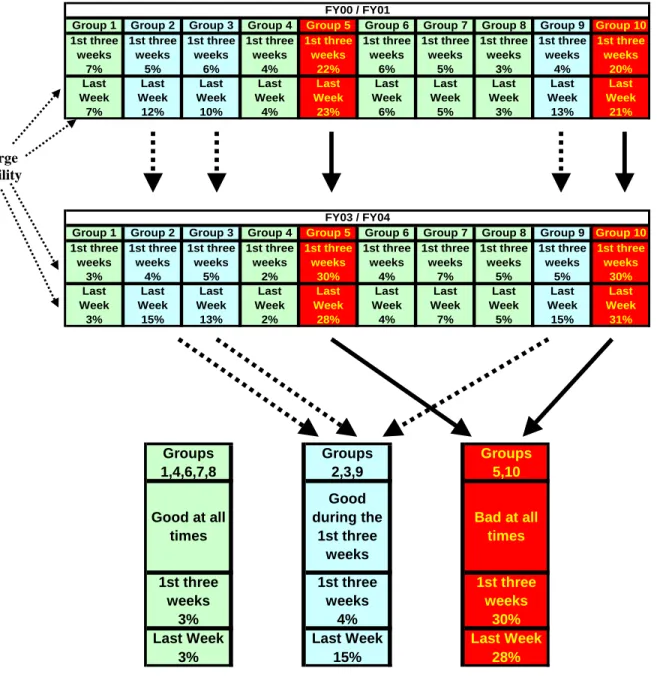
9. SPONSORING /MONITORING AGENCY NAME(S) AND ADDRESS(ES)
N/A
10. SPONSORING/MONITORING AGENCY REPORT NUMBER
11. SUPPLEMENTARY NOTES The views expressed in this thesis are those of the author and do not reflect the official policy or position of the Department of Defense or the U.S. Government.
12a. DISTRIBUTION / AVAILABILITY STATEMENT Approved for public release; distribution is unlimited
12b. DISTRIBUTION CODE
13. ABSTRACT (maximum 200 words)
The Marine Corps expends much effort and money annually in recruiting qualified applicants to fill its ranks; however, an average of one out of every five enlistees leaves the Delayed Entry Program (DEP) even before attending boot camp. This thesis uses binary probit models to analyze four years of enlistment data obtained through the Total Force Data Warehouse (TFDW) from five of the six Marine Corps Districts (MCDs). The study first investigates whether the discharge probability of new recruits varies by the day of the month in which the recruit signs an enlistment contract. Building on this relationship, the thesis then analyzes attrition prediction variables to differentiate enlistees who exhibit a disproportionately high attrition risk from those who do not. Results show that a recruit’s attrition risk does increase dramatically with the approach of the monthly deadline. Additionally, recruits who exhibit a high attrition risk can be identified using current enlistment criteria. If high-risk enlistees can be identified, proactive measures can be taken to reduce their discharge probability. With the information provided by this thesis, the Marine Corps can target high-risk enlistees and thereby dramatically lower its DEP attrition.
15. NUMBER OF PAGES
157
14. SUBJECT TERMS Delayed Entry Program, Attrition, Goal Setting, Quality, Marine Corps, Manpower, Recruiting, Human Capital
16. PRICE CODE 17. SECURITY CLASSIFICATION OF REPORT Unclassified 18. SECURITY CLASSIFICATION OF THIS PAGE Unclassified 19. SECURITY CLASSIFICATION OF ABSTRACT Unclassified 20. LIMITATION OF ABSTRACT UL
NSN 7540-01-280-5500 Standard Form 298 (Rev. 2-89) Prescribed by ANSI Std. 239-18
ii
iii
Approved for public release; distribution is unlimited
ANALYSIS OF RECRUIT ATTRITION FROM THE U.S. MARINE CORPS DELAYED ENTRY PROGRAM
Michael G. Bruno
Major, United States Marine Corps B.A., Marquette University, 1989
Submitted in partial fulfillment of the requirements for the degree of
MASTER OF SCIENCE IN MANAGEMENT
from the
NAVAL POSTGRADUATE SCHOOL September 2005
Author: Michael G. Bruno
Approved by: Mark J. Eitelberg Thesis Co-Advisor
Stephan L. Mehay Thesis Co-Advisor
Kenneth H. Doerr
Thesis Co-Advisor
Thomas J. Hughes, VADM (Ret)
iv
v
ABSTRACT
The Marine Corps expends much effort and money annually in recruiting qualified applicants to fill its ranks; however, an average of one out of every five enlistees leaves the Delayed Entry Program (DEP) even before attending boot camp. This thesis uses binary probit models to analyze four years of enlistment data obtained through the Total Force Data Warehouse (TFDW) from five of the six Marine Corps Districts (MCDs). The study first investigates whether the discharge probability of new recruits varies by the day of the month in which the recruit signs an enlistment contract. Building on this relationship, the thesis then analyzes attrition prediction variables to differentiate enlistees who exhibit a disproportionately high attrition risk from those who do not. Results show that a recruit’s attrition risk does increase dramatically with the approach of the monthly deadline. Additionally, recruits who exhibit a high attrition risk can be identified using current enlistment criteria. If high-risk enlistees can be identified, proactive measures can be taken to reduce their discharge probability. With the information provided by this thesis, the Marine Corps can target high-risk enlistees and thereby dramatically lower its DEP attrition.
vi
vii
TABLE OF CONTENTS
I. INTRODUCTION...1 A. PURPOSE...1 1. Background ...1 2. Cost...2 3. Research Questions...2B. SCOPE AND METHADOLOGY...3
C. ORGANIZATION OF THE STUDY...4
II. LITERATURE REVIEW ...7
A. PREVIOUS WORK IN RECRUITING AND ATTRITION...7
1. Ogren (1999) ...7
2. Quester and Murray (1986) ...9
3. Zeelenburg (1999) ...10
4. Kearl and Nelson (1992) ...11
B. THE “HOCKEY-STICK” PHENOMENON AND GOAL SETTING...12
1. The Hockey-stick Phenomenon ...12
2. Goal Setting ...14
III. DATA COLLECTION, ACCURACY, AND METHODS...17
A. DATA COLLECTION ...17
B. ACCURACY ...18
1. Component Code Changes ...19
2. Prior Service, Non-Graduates, and Recontracts...20
3. Waivers ...20
a. Duplicate Entries...20
b. Waiver Level and Type...21
c. Weight Waivers ...23
4. Education Code ...23
5. Missing Data ...24
C. METHODS ...25
1. Methods to Identify Suitable Variables ...26
2. Variables ...28
3. Interactions...28
4. Groups...29
IV. TESTING FOR THE HOCKEY-STICK PHENOMENON...33
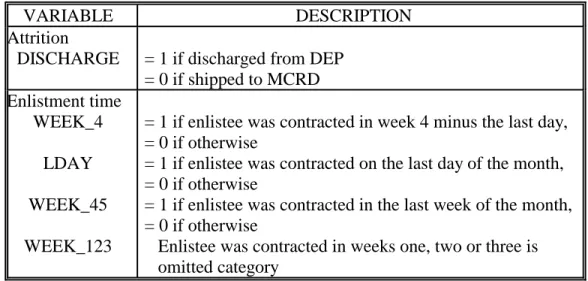
A. THEORETICAL MODEL...33 1. Specification...33 B. VARIABLES ...34 1. Definitions...34 2. Explanation of Variables...34 a. Enlistment Time ...34 3. Hypothesized Relationship...35
viii
C. RESULTS ...35
1. Base Case ...35
2. Probit Models ...35
3. Descriptive Statistics...36
D. EVALUATION OF BASIC REGRESSIONS ...36
1. Variables ...36
2. Preliminary Conclusions ...37
V. HIGH ATTRITION RISK ENLISTEES – THE BASE MODEL...39
A. THEORETICAL MODEL AND METHODOLOGY...39
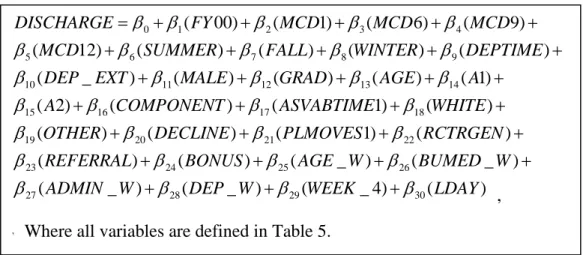
B. MODEL SPECIFICATION...39
C. VARIABLES ...40
1. Definitions...40
2. Descriptive Statistics...42
3. Explanation of Variables and Hypothesized Relationships ...43
a. Year...43
b. Command ...43
c. Season...44
d. Time Spent in the DEP ...45
e. Gender, Education Code, and Age ...46
f. AFQT Score and Component ...46
g. Enlistment Date in Relation to ASVAB Date...46
h. Race Variables...47 i. Pool Moves ...47 j. Enlistment Source ...48 k. Enlistment Incentives...48 l. Waiver Variables ...49 m. Enlistment Time ...49 4. Omitted Variables...49 a. Recruiter Characteristics ...49
b. Time Spent with Enlistees...49
c. Component Code Changes ...50
d. Enlistee Characteristics ...50
e. ASVABL Location...50
D. CONTROL AND TREATMENT GROUPS ...50
E. RESULTS FOR COMBINED FY00/01 MODEL...51
F. EVALUATION OF COMBINED FY00/FY01 MODEL ...52
1. Goodness-of-Fit ...52
2. Base Case ...53
3. Interpretation of the Variables ...54
a. Year...54
b. Command ...54
c. Season...54
d. Time Spent in the DEP ...55
ix
f. Age, AFQT, Component, and Enlistment Time in
Relation to ASVAB ...56 g. Race ...57 h. Pool Moves ...57 i. Source Variables ...57 j. Education Code ...58 k. Enlistment Bonus...58 l. Waivers ...58 m. Enlistment Time ...59
VI. HIGH ATTRITION RISK ENLISTEES – FURTHER RESULTS USING INTERACTIONS...61
A. CONCEPTS USED TO CREATE INTERACTIONS...61
B. BACKGROUND FOR THIS CHAPTER...61
C. CREATION OF GRADUATE VARIABLES ...62
1. Treatment of AGE and ASVABTIME...62
2. Adding AFQT...63
3. Adding Component and Time of Month Variables ...64
4. Reevaluating YNG, OLD, AFQT ...65
D. CROSS-VALIDATING GRADUATE INTERACTION ATTRITION RATES THROUGH THE USE OF A HOLDOUT SAMPLE ...65
1. Cross-Validation Inconsistencies and Solutions...69
2. Categorizing Interaction Variables ...72
E. FINAL GRADUATE REGRESSIONS...73
1. Discussion...73
2. Models ...74
3. Variable Interpretations...75
a. CAT1 Graduate Enlistees ...75
b. CAT2 Graduate Enlistees ...76
c. CAT3 Graduate Enlistees ...80
F. CREATION OF SENIOR VARIABLES...88
G. CROSS-VALIDATING SENIOR INTERACTION ATTRITION RATES THROUGH THE USE OF A HOLDOUT SAMPLE ...89
1. Cross-validation Inconsistencies and Solutions ...93
2. Categories ...94
H. FINAL SENIOR REGRESSIONS ...95
1. Discussion...95
2. Models ...95
3. Variable Interpretations...97
a. CAT1 Senior Enlistees ...97
b. CAT2 Senior Enlistees ...97
c. CAT3 Senior Enlistees ...99
VII. SUMMARY, CONCLUSIONS, AND RECOMMENDATIONS ...107
A. SUMMARY ...107
1. The Price of Doing Business...107
x
3. Recruiter-caused Discharges...108
B. CONCLUSIONS AND IMPLICATIONS ...109
1. Cost...109
2. The Cost of High-risk Enlistees ...112
3. Discharge-reducing Variables...115 a. Waivers ...115 b. Bonus...116 c. Time in DEP...117 C. RECOMMENDATIONS...117 1. Options ...117
a. Differences in High-risk Enlistees ...117
b. Option 1 ...118 c. Option 2 ...119 2. Data ...122 3. Additional Research...122 4. Final Remarks ...122 APPENDIX A ...125 APPENDIX B ...127 APPENDIX C ...129 APPENDIX D ...131 APPENDIX E ...133 APPENDIX F ...135 LIST OF REFERENCES ...137
xi
LIST OF FIGURES
Figure 1. Hypothesis Overview...4
Figure 2. Sample Selection...18
Figure 3. Cross-validation of Groups ...31
Figure 4. Intersecting ASVABTIME and AGE ...63
Figure 5. Interacting ASVABTIME/AGE with AFQT ...64
Figure 6. Effect of Reducing USMC Discharge Rate Through Focus on CAT2 and Last- Week CAT3 Enlistments ...114
xii
xiii
LIST OF TABLES
Table 1. Consolidating Waiver Information ...21
Table 2. Descriptions of Model Variables ...34
Table 3. Descriptions of the Base-Case Individual...35
Table 4. Probit model results for FY00/01 and FY03/04 data...36
Table 5. Descriptions of Base Model Variables ...40
Table 6. Descriptive Statistics for Base Model Variables ...42
Table 7. Probit Model Results For Combined FY00/01 Data...51
Table 8. Descriptions of the Base-Case Individual...53
Table 9. Initial Graduate Group Breakdown...65
Table 10. High School Graduate Group Consolidation ...68
Table 11. Graduate Percent Cross-Validation...72
Table 12. Consolidated Graduate Interactions ...73
Table 13. CAT3 Graduate Enlistments by Week...74
Table 14. Regression Results For FY00/01 and FY03/04 Models ...75
Table 15. CAT2 Graduate Enlistments ...76
Table 16. CAT1/CAT2 Graduate Attrition Rate Comparisons...80
Table 17. CAT3 Graduate Enlistments ...82
Table 18. CAT1/CAT3 Graduate Attrition Rate Comparisons...88
Table 19. Initial Senior Group Breakdown...89
Table 20. High School Senior Group Consolidation ...92
Table 21. Senior Percent Cross-validation...94
Table 22. Consolidated Senior Interactions ...95
Table 23. CAT3 Senior Enlistments by Week...95
Table 24. Regression Results For FY00/01 and FY03/04 Senior Models...96
Table 25. CAT2 Senior Enlistments ...97
Table 26. CAT1/CAT2 Senior Attrition Rate Comparisons...99
Table 27. CAT3 Senior Enlistments ...100
Table 28. CAT1/CAT3 Senior Attrition Rate Comparisons...106
Table 29. Estimate of Hours Needed to Enlist One Recruit ...110
xiv
xv
ACKNOWLEDGMENTS
This thesis has been an exhaustive journey through Marine Corps recruiting operations. Trying to reduce DEP attrition has been far from easy. It has involved countless hours poring over charts and tables, analyzing numbers and trends, and reworking incorrect data. In short, much of this work has been as one professor put it “like a detective searching for a needle in a haystack”. Aside from calling me “old faithful” due to my spouting of numbers and percentages each evening, my wife and children have been nothing but supportive of this work. Without their understanding, and love, the late nights, weekends, and long days would not have been possible.
Aside from my wife and family, I would like to thank my three advisors for their patience, guidance, and wisdom. Each added an important element to this study in accordance with his specialty and sometimes in areas foreign to us all. I believe we have produced a useful product for the Marine Corps and the other armed services as well. Hopefully this work lays important groundwork for additional studies of this type.
Professor Sam Buttrey, although not listed as an advisor, assisted tremendously. He provided guidance, direction, practical assistance, and downright devious creativity without which this already lengthy study would probably have been impossible.
Finally, because this thesis involved so many skills to include, multivariate analysis, economics, cost benefit analysis, goal setting, marketing, and briefing, I believe I probably bothered every professor in the Graduate School of Business and Public Policy at one time or another. I would like to thank them all for entertaining my scheduled visits and also my many drive by shootings.
In addition to the above Naval Postgraduate School acknowledgements, I would be remiss if I did not thank the numerous non-technical advisors to this exhaustive study. MSgt Judd Mansel, USMC, provided immediate, wise, and insightful assistance on a monthly, weekly, and sometimes even daily basis. CW04 Carl Mayfield, USMC did so as well. LtCol John Christie, USMC (ret) redirected my efforts early on with his always candid, yet accurate feedback. Finally, CW03 Kevin Bedard, USMC (ret) was also forced to listen to my ideas on an all too frequent basis.
xvi
I. INTRODUCTION
A. PURPOSE
The Marine Corps spends large amounts of money recruiting qualified applicants to fill its ranks; however, an average of one out of every five enlistees never even ships to boot camp. To understand one important aspect of DEP attrition, this study investigates whether the discharge probability varies by the day of the month of enlistment. This particular relationship is explored because recruiters are evaluated based on a monthly goal and the attrition risk of accessions may be higher near the end of the month, when recruiters are often scrambling to meet that goal.
Building on the relationship between recruiting day-of-month and discharge probability established in the first part of the thesis, the analysis then identifies attrition prediction variables that differentiate enlistees who exhibit a disproportionately high attrition risk from those who do not. The ultimate goal of the study is to design a policy that produces an immediate and long-term net gain in shipments to recruit training. The proposed policy has been designed to minimally impact recruiting operations and standards.
1. Background
Recruiting activity centers around two main aspects: contracting and shipping. Contracting, also known as production, involves all activities to enlist an applicant into a DEP. Shipping involves the enlistee’s actual shipment from the DEP to recruit training.
The DEP for all military services was instituted to assist the All-Volunteer Force during the 1970s. In this program, enlistees may be scheduled for shipment to a recruit depot up to 365 days in advance, hence leaving them in civilian life for up to a year before their active duty commitment begins. During this period enlistees are called “poolees” because of their presence in a recruiter’s pool of applicants awaiting shipment to training. In the Marine Corps, as in all the other services, the DEP’s primary purpose is to allow the recruit depots to properly plan and fill their platoons. While the program
is also designed to prepare enlistees for recruit training, poolees are not legally bound to honor any commitment to the Marine Corps. Discharge from the DEP is therefore relatively easy.
One could argue that it would be better to discharge an enlistee from the DEP than to spend any additional money on what is likely to be a substandard Marine. While this is undoubtedly true, it is not relevant to the attrition issue treated in this study. Given the severe consequences of missing their targets, Marine recruiters go to great lengths to accomplish their recruiting goals each month. This includes interviewing and enlisting various types of applicants who are not fully sold on being a Marine, applicants who will probably test positive for drug use on urinalysis, and applicants who have a variety of undisclosed moral and medical problems. The issue, then, is not that enlistees are discharged while in the DEP, but that recruiters waste valuable time and effort processing, enlisting, and dealing with substandard applicants who then ultimately attrite.
2. Cost
While the actual time and monetary cost of a discharge is difficult to estimate, there can be no denying that pool discharges are bad business. From the time a recruiter wastes on an enlistee who never ships to training, to the time spent searching to enlist someone to fill a discharged enlistee’s place, many costs must be considered to fully understand and evaluate the impact of this problem. An estimate of the cost of a pool discharge is presented later in the thesis.
3. Research Questions
Primary research questions focus on reasons for DEP discharge that can be affected by policy change. Secondary research questions focus on identifying and isolating subgroups that demonstrate a disproportionately high attrition risk.
• Primary
• How does the attrition rate of all enlistees vary over the course of a month? Is there a greater attrition rate at the end of the month?
• Can a feasible policy be developed to reduce end-of-month attrition?
• Secondary
• Are there subgroups that exhibit exceptionally high discharge probabilities at all times of the month?
• Are there subgroups that exhibit exceptionally high discharge probabilities only at the end of the month?
• Do the identified subgroups exhibit the same characteristics in an independent holdout sample?
• What would be the immediate and long-term impact on production of a proposed policy change?
B. SCOPE AND METHADOLOGY
While the problem of DEP attrition will never be completely solved, it is assumed that a significant proportion of discharges occur because of factors that are associated with recruiter performance. While recruiters cannot possibly foresee all discharges, they do gamble and enlist a considerable percentage of high-risk individuals who then eventually do attrite. It is these applicants that must be identified as early in the recruiting process as possible. If this can be accomplished, a policy can be developed to increase the efficiency of the Marine recruiter, decrease attrition from the DEP, and, ultimately improve contracting.
The majority of enlistees into the DEP ship to recruit training. Of those who do not, a small percentage are discharged for reasons that cannot be foreseen (death, pregnancy, pursuit of higher education, etc.). Most discharges, however, are given for reasons that probably can be anticipated. A significant percentage of these high-risk enlistees can possibly be identified through the use of current enlistment criteria and a policy can be developed to proactively lower their attrition risk.
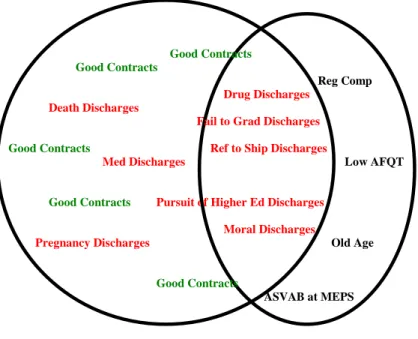
Figure 1 illustrates the pool of enlistees of the Marine Corps DEP to include good contracts and discharges. It graphically depicts the hypothesis of the thesis: that a large percentage of discharges can be identified upon enlistment through the use of enlistment criteria.
Figure 1. Hypothesis Overview
To investigate the hypothesis that discharge probability increases for enlistees who are recruited at the end of the month, two years of recruiting data (FY00/01) from five of the six MCDs were collected. These data were drawn from TFDW and analyzed using probit linear regression models. The testing of two different years of enlistment data (FY03/04) from the same commands cross-validated findings from the initial analysis.
C. ORGANIZATION OF THE STUDY
The remainder of this thesis discusses methodology, results, recommendations, and conclusions. The next chapter examines previous analyses on attrition from the DEP and reviews current literature in order to establish the foundation for the direction and methods used in this study. Chapter III outlines the methodology used to create variables and ensure accuracy of the data. It explains in detail the difficulties encountered throughout the study and the solutions that were applied. Finally, it clarifies the methodology used to identify the different groups, which form the basis for the proposed policy.
Drug Discharges
Med Discharges
Ref to Ship Discharges
Moral Discharges Death Discharges
Pregnancy Discharges
Pursuit of Higher Ed Discharges
Low AFQT
ASVAB at MEPS Reg Comp
Old Age Fail to Grad Discharges
Good Contracts
Good Contracts
Good Contracts Good Contracts
Chapter IV discusses the base regression models used to test the study’s hypothesis regarding end-of-month enlistees. Chapter V examines regressions used to isolate different groups of enlistee. Chapter VI outlines in detail the process of separating each data set into groups. Chapter VII summarizes the findings of the thesis and presents conclusions and recommendations.
II.
LITERATURE
REVIEW
A. PREVIOUS WORK IN RECRUITING AND ATTRITION
Although previous research has examined DEP attrition, to the author’s knowledge, no study has investigated the relationship between enlistment time (in relation to monthly goals) and an individual’s discharge probability. Additionally, once factors predicting discharge have been discovered in prior studies, few prescriptions have been offered to reduce discharge rate. The following discussion outlines previous studies that most closely relate to the methodology and subject of the thesis.
1. Ogren (1999)
In an NPS Master’s thesis, Margery Ogren (1999) looked at the effects of personal background characteristics and local area economic conditions on an individual’s probability of discharge from the DEP. Her thesis was based on binary logistic models, regressing DEP attrition on the explanatory variables gender, educational level, dependent status, Armed Forces Qualification Test (AFQT) score, race, ethnicity, moral waiver status, and county-level unemployment rates. Ogren’s (1999) sample consisted of all individuals joining the DEP for all services, from October 1989 through June 1996. This dataset, from the Defense Manpower Data Center (DMDC), was merged with county-level unemployment data provided by the Bureau of Labor Statistics (BLS). Her total population consisted of over 1.1 million individuals who entered the DEP of all services during this time. Of these, 167,134, or 15 percent, never entered basic training.
Ogren’s (1999) results indicated that gender and educational level had a strong effect on the attrition behavior of individuals in the DEP. In particular, females and high school seniors had much higher DEP attrition rates than did males and individuals who enlisted after high school directly from the work force. Additionally, individuals with a moral waiver were found less likely to leave the DEP.
Ogren (1999) determined that the Marine Corps experienced the highest attrition rate of all the services and that the longer a person spent in the DEP, the higher the probability of discharge. Across all services, blacks and Hispanics were less likely to
attrite. Higher county-level unemployment rates indicated only a small, negative effect on an enlistee’s probability of discharge.
Although it is a good beginning to understanding DEP attrition, Ogren’s (1999) study produces only marginally usable data to actually solve the discharge problem. Women constitute such a small percentage of total enlistments that any policy change involving female recruitment would not have a significant practical impact on overall enlistment. Further, any limitation or restriction on the enlistment of women would likely have negative consequences for service diversity goals that far outweigh the benefits. Similarly, the implications of findings about blacks and Hispanics do not form a useful basis for any proposals to reduce attrition.
Time in DEP increases the probability of discharge, which is probably intuitive and also not amenable to policy change. If an individual is a high school graduate and spends no time in the DEP simply because he is out of a job and wants to ship to recruit training, he will have no probability of discharge. Conversely, if an individual is enlisted immediately on becoming a high school senior and is scheduled to ship 360 days later (out of necessity), then it is obvious that he or she will have a much greater probability of discharge. The only way to accurately evaluate the time spent in the DEP would be to analyze its relationship with a combination of DEP attrition and Marine Corps Recruit Depot (MCRD) attrition.
The information that Ogren (1999) presents concerning the higher discharge rates of seniors guided the treatment of those applicant pools in the current research, and supports the idea that seniors and high school graduates should be analyzed in separate data sets. The average time in DEP for a senior is simply so much greater than the time in DEP spent by a graduate that evaluating both groups together would lead to inaccurate conclusions.
Even though Ogren’s (1999) findings that moral waivers decrease the probability of discharge are not useful to the search for factors that impact this problem, this discovery does provide insight toward a possible policy to reduce attrition. While enlisting only those applicants who require a moral waiver is clearly not a feasible solution to solve the attrition problem, this finding does indicate that recruiters, who
interview applicants with moral problems, do evaluate the whole applicant before they make the decision to spend inordinate amounts of time gathering the necessary documentation to submit a waiver. If the applicant does not indicate a strong desire to be a Marine and has moral issues that will require a waiver, the average recruiter will probably not spend time submitting tedious paperwork. Therefore, if the recruiter submits a moral waiver and the applicant enlists, his or her probability for discharge is likely to be very low.
The finding that moral waivers decrease DEP attrition is useful information since this same thought process could be applied to a group of enlistees who demonstrate an unusually high probability of discharge. Requiring submission of tedious and time-consuming documentation for a relatively small segment of enlistees who exhibit a disproportionately high attrition probability could make recruiters evaluate these applicants in a different light. If an individual who fits a certain high discharge profile does not demonstrate a strong desire to be a Marine, and a recruiter must submit a waiver, the recruiter will probably not process this applicant for enlistment.
2. Quester and Murray (1986)
Quester and Murray (1986) studied Navy DEP attrition of recruits who entered this service in FY 1983-84, also through the construction of a logit model. Additionally, they analyzed actual Navy recruit cohorts from FY 1983-1984. The analysis regressed DEP attrition on the explanatory variables of gender, educational level, dependent status, age, AFQT score, program enlistment, recruiting area, and numbers of months in the DEP. The data were collected from the Navy’s Personalized Recruiting for Immediate and Delayed Entry System (PRIDE). The study’s total population consisted of 171,328 enlistees. Of these, 147,521 entered the DEP, while 20,743 were “Direct Ships” (entered active duty the same month as enlisted) and therefore had little chance of discharging from the DEP.
Quester and Murray (1986) determined that a ten-percent increase in the time spent in the DEP increased a person’s attrition probability by 12 percent. Further, the authors found that women and older recruits were more likely to be discharged than were
male and younger recruits. Finally, they concluded that the effects of AFQT were inconclusive in predicting DEP attrition.
In addition to the above, this analysis determined that individuals with a ship date in May were more likely to attrite than those scheduled in other months. Conversely, a ship date in October was found to have the lowest probability of discharge. Although interesting, it would be difficult to use these findings as the basis for discovering variables that identify enlistees with a high attrition risk. Even if some month’s enlistees had a high probability of attrition, it would be difficult to implement any type of policy limiting enlistment during these times. The Quester and Murray (1986) discovery, that time of year affects discharge probability, however, does guide the approach of the current research in treating seasonality as a control variable.
Finally, corresponding to intuitive reasoning, Quester and Murray (1986) determined that, as the ratio of recruits in the DEP per recruiter increased, so did DEP attrition. It was suggested that this was caused by less time for the recruiter to prepare each recruit for boot camp.
Although the population of Quester and Murray’s (1986) analysis is smaller than the previous reference and it analyzes only the Navy, many of its findings were statistically significant. The findings with respect to discharge for female and older recruits seem to be supported by other later studies, as does the finding of increased attrition as the ratio of recruits per recruiter increases. Many of the findings of this analysis have been considered in the formulation of the model in this thesis.
3. Zeelenburg (1999)
Although time in DEP is a variable that is unsuitable for policy change, it is probably the phenomenon most closely related to personnel attrition as studied within the field of Organizational Behavior. According to Simonson (1992), “When looking back at purchase decisions, consumers often regret the choices they have made”. Widely studied and analyzed, a number of theories have been put forward about why and when employees separate from their employers. DEP attrition is notably different, however, in that recruits decide to leave the program after they have made a commitment to join, but
before they have had any real experience of the organization. Therefore, theories that involve characteristics of the workplace and feelings of regret that result from comparing current outcomes to what might have been, would not be applicable to analyzing DEP attrition. “Regret and rejoicing stem from comparisons of obtained decision outcomes with forgone decision outcomes” (Zeelenburg 1999). When an enlistee chooses not to honor a commitment, the psychological factors involved more closely resemble buyer's remorse: the well-known cognitions of regret that often occur immediately after a major purchase, or other commitment. “Regret is a negative, cognitively based emotion that we experience when realizing or imagining that our present situation would have been better, had we decided differently” (Zeelenburg, 1999).
While related to DEP attrition, both the turnover literature and the literature on buyer's remorse at best provide explanatory theories of recruit behavior, and as such they cannot directly inform the current research. This thesis is primarily focused on establishing the existence of a certain kind behavior among recruiters (the “hockey-stick” phenomenon, described below) and prescribing policies to remedy that behavior.
4. Kearl and Nelson (1992)
Kearl and Nelson (1992) studied Army DEP attrition, validating and adding to the findings of previous literature. These authors also used a logit model and based their results on two years of Amy enlistments from FY1986 through FY1987. Their data set consisted of 241,420 observations and excluded prior service and reserve enlistments.
Kearl and Nelson (1992) estimated the effects of personal characteristics, economic conditions, and recruiting incentives on DEP attrition. Because of the unique behavior of high school seniors and non-high school graduates, the authors chose to analyze these individuals in separate data sets. Kearl and Nelson (1992) also realized that DEP length affected enlistee behavior. Because of this, they divided their observations based on this characteristic. Data sets were not only separated on the basis of education but also with the belief that entrants who remained in the DEP for more than four months behaved differently than those who did not. The resulting study evaluated five different groups of enlistees: high school seniors with a short DEP length; high school seniors with
a long DEP length; high school graduates with a short DEP length; high school graduates with a long DEP length; and non-high school graduates.
Kearl and Nelson (1992) determined that individuals with dependents had the lowest attrition risk of any enlistee, while an increase in age also increased discharge probability. As in other studies, the authors found that high school graduates and men had a much lower attrition risk than did seniors.
Recruiting incentives also affected DEP loss. An increase of one month of DEP time increased the probability of discharge by 3.5 percentage points. Kearl and Nelson (1992) determined that enlistment bonuses decreased the probability of discharge, while two-year terms of enlistment significantly increased attrition rates. High AFQT scores had a small effect on attrition. The higher the AFQT score, the lower the attrition risk. The authors found that AFQT was not statistically significant.
B. THE “HOCKEY-STICK” PHENOMENON AND GOAL SETTING 1. The Hockey-stick Phenomenon
Although no previous studies have investigated the increase in DEP attrition for enlistees signed at the end of the month, ample evidence exists to support this phenomenon. The “hockey-stick” effect is an explanation for behavior that occurs in the presence of a deadline-sensitive goal. Often called the “end of the month rush,” this event is cited frequently in business literature. As Lee (1997) states:
The company has orders pushed on it from customers periodically because salespeople are regularly measured, sometimes quarterly or annually, which causes end-of-quarter or end-of-year order surges. Salespersons who need to fill orders may “borrow” ahead and sign orders prematurely. The U.S. Navy’s study on recruiter productivity found surges in the number of recruits by the recruiters on a periodic cycle that coincided with their evaluation cycle. The “hockey stick” phenomenon is quite prevalent. (p.96)
Another study on Navy recruiting done by the same author warns of the hockey-stick effect due to the implementation of a new plan, which “measures monthly recruiter performance against a uniform standard.”(Lee, 1986, p.1385) Lee states: “any future analysis will encounter many of the problems inherent in the analysis of sales force
productivity in the private sector.” (Lee, 1986, p. 1386) Based on its prevalence in civilian sales organizations and the author’s own experience, a possible “hockey-stick” effect on DEP attrition seemed worthy of investigation.
But why, exactly, are enlistees signed during the last-week expected to exhibit a higher attrition rate than individuals enlisted during other times of the month? Aside from just making sense and being supported by the existing literature, numerous scenarios can be described to explain this effect.
Throughout the month, recruiters frequently interview individuals who have recently smoked marijuana. These applicants are ineligible for enlistment for approximately 30 days, since they are administered a urinalysis on the day of enlistment. Although recruiters continue the interview, they place the applicant on a “next month” pending list if the individual is otherwise screened and sold on being a Marine. But, as the last few days of the month draw near and the recruiter (substation, station, district, region, and nation) struggles to achieve the recruiting goal, pressure to enlist an applicant of this sort increases, depending upon risk. If the individual were interviewed during the third week of the month and smoked marijuana within a few days of the interview, he would probably not be scheduled for enlistment during the current month because of his extremely high attrition risk. But, if the individual were interviewed during the first week of the month, smoked marijuana within a few days of the interview, and is therefore approaching a 30-day required wait, it is easy to see why recruiters would take a chance. These types of individuals are frequently enlisted at the end of the month and then are promptly discharged again, when the results of the urinalysis are returned during the first few days of the next month.
Pressure to achieve the monthly goal also causes other types of discharge. Applicants who screen well but are not completely sold on being a Marine are frequently pressured to enlist during the final days of the month. These enlistees do not discharge immediately, but the longer they remain in the DEP, the more buyers’ remorse they are likely to experience. Conversely, if this type of individual immediately ships to recruit training, the probability of subsequent attrition from active duty is extremely high.
It is relatively easy to imagine medical, moral, and education problems being undisclosed by enlistees or intentionally withheld by recruiters in their struggle to achieve a monthly goal. This pattern of behavior is the basis for the hockey-stick effect, which is investigated in this thesis.
2. Goal Setting
If we can establish that recruitment behavior at the end of the month causes a marked increase in the discharge probability of enlistees, we must further find some strategy for resolving the issue. Even if a major cause of DEP attrition is recruiter performance and the overarching desire to make a quota, what sort of incentives or goals can be assigned to change this behavior?
As the existence of deadline-oriented goals lead to hockey-stick behavior, an initial place to look for improving the situation is the goal-setting literature itself. According to goal-setting theory, “people with specific hard goals (often called stretch goals) perform better than those with vague goals such as ‘do your best’ or specific easy goals.” (Latham, 2004, p. 126) Additionally, “the psychological outcomes of setting and attaining high goals include enhanced task interest, pride in performance, a heightened sense of personal effectiveness and, in most cases, many practical life benefits such as better jobs and higher pay”. (Latham, 2004, p. 126) With the investigation of end-of-month recruiter performance and the discovery that the attrition rate of enlistees increases during this period, a possible solution would be to assign a more difficult goal.
But, recruiting goals are already so challenging and concrete that a stretch mission would probably not produce the desired result. As an example, a recruiter who writes two or three contracts each month (a normal mission) is considered successful, whereas a recruiter who writes four or more contracts consistently is considered almost heroic. Therefore, adhering to current goal-setting philosophy, and assigning a “stretch” goal of, say, five contracts each month to every recruiter, would really not be feasible. With the assignment of such a ridiculous goal, recruiters would simply give up and not really strive to achieve it in the first place. A goal of four would be treated in a similar fashion and a goal of three would not really be a stretch goal at all.
With the realization that higher goals would probably not improve performance, and due to the lack of meaningful incentives because of the nature of recruiting, it was decided to focus on the increased attrition probability of applicants who were enlisted at the end of the month. In exploring this avenue, it became apparent that the discharge probability of an enlistee was an unquantifiable characteristic and, therefore, no feasible method could be developed to verify that recruiters had indeed enlisted applicants who would eventually ship to recruit training.
In recognizing the requirement to somehow quantify discharge probability in a concrete fashion, and through the exploration of a goal-setting solution, the research shifted its focus to an inductive process of identifying the most problematic categories of recruits. If quantifiable and concrete characteristics could be identified that have a strong correlation with the attrition rate of enlistees, a straightforward policy could be proposed to reduce DEP discharges by limiting or further qualifying the recruitment of candidates in those categories.
III. DATA
COLLECTION,
ACCURACY, AND METHODS
A. DATA COLLECTION
As stated earlier, two separate data sets were obtained from the Marine Corps TFDW. The initial data set consisted of all enlistments from 1 October 1999 through 30 September 2001 from five of the six Marine Corps Districts (MCDs). The second sample consisted of all enlistments from 20 May 2002 through 20 May 2004 from the same five commands. Its purpose was to function as a “holdout” sample to test the validity of the model.
One district (8MCD) was omitted because of the limits in an Excel spreadsheet. Two years of enlistments from six Marine Corps Districts would have exceeded the 65,536 Excel cell limit for a single spreadsheet. To download the data from all six districts would have required two separate spreadsheets. Since both samples consisted of ample data to represent a typical Marine Corps enlistee, the author did not believe it necessary to create two spreadsheets.
While the dates of the first sample encompassed two full fiscal years, the second sample did not. The date difference between the first and the second sample was due to the desire to use the most recent two years of Marine Corps recruiting data for the holdout sample. If the dates for the second sample had been from 1 October 2002 through 30 September 2004 (the actual fiscal years), the enlistees from 20 May 2004 through 30 September 2004 would not have had an opportunity to ship or to discharge. Because of the collection date (20 May 2005), only applicants who had enlisted before 20 May 2004 would have had their true disposition reflected in the Marine Corps enlistment system. It is for this reason that the holdout sample consisted of enlistments from 20 May 2002 through 20 May 2004.
Figure 2 graphically depicts the timing of enlistments in the two samples. Sample 1 is the original sample. Since the date of data collection was 20 May 2005 and the last enlistment date of this sample was on 30 September 2001, these enlistees would all have had the opportunity to either ship or discharge. But, had the dates for the second, most recent, sample mirrored these dates, enlistees would not have had sufficient time to either
ship or discharge. Individuals who enlisted from 20 May 2004 through 30 September 2004 would have had 365 days to either ship or discharge, which would have placed these individuals past the data collection date (20 May 2005). To circumvent this difficulty and still use the most recent data available, the second sample consisted of enlistments that occurred between 20 May 2002 and 20 May 2004.
Figure 2. Sample Selection
Finally, the Marine Recruiting Services migrated from the Automated Recruit Management System (ARMS) to the Marine Corps Recruiting Information Support System (MCRISS) in FY02. Thus, data from the migration time period were not included.
B. ACCURACY
After collection, the data were evaluated to ensure accuracy. Missing or obviously incorrect entries were deleted and numerous variables were created to accurately describe the characteristics of enlistees in the Marine Corps DEP. The following discussion summarizes the treatment of data and the difficulties encountered in the process of creating the samples used in the subsequent analysis.
20 May 2002 20 May 2004
(Sample 2)
Sample 2 = Enlistees have until 20 May 2005
to either ship or discharge
1 Oct 1999 30 Sept 2001
30 Sept 2004
Not included because enlistees have from 20
May 2005 to 30 Sept 2005 to either ship or
discharge (Sample 1)
1. Component Code Changes
Component code changes (individuals who changed their component from regular to reserve or the opposite) were not coded as discharges since these enlistees merely decided to switch from one component to the other and did not really discharge. Although it is a common belief that enlistees who change from a regular to reserve component have a higher attrition risk, there was no way to verify this information. The variable (COMP_CHANGE_FLAG) that TFDW provides to highlight this statistic is inaccurate.
If an individual changes from a regular to a reserve component or the opposite, he receives a “ZKC” for his discharge code. This identifies the enlistee as a Component Code Change. At this time, the enlistee also receives a “Y” under the variable COMP_CHANGE_FLAG. If at some later time this same enlistee discharges from the DEP, he would receive a different discharge code, deleting the old “ZKC” in the process. With the COMP_CHANGE_FLAG variable, an observer would know that the discharged enlistee had changed from one component to the other.
Although this system sounds satisfactory, the author noticed that there were 603 records in the original FY00/01 data set that had no discharge code whatsoever but were labeled “Y” under COMP_CHANGE_FLAG. When the TFDW staff was questioned about this anomaly, they verified that if a record had a “Y” coded under COMP_CHANGE_FLAG, this entry should either have had a “ZKC” or another code listed under its discharge code. The explanation provided by TFDW was that the discharge code for the 603 records probably had some values at one time. Users later found out that they may have discharged the wrong person, so they called the MCRISS helpdesk and requested the record to be corrected. The MCRISS helpdesk then blanked out the discharge code but did not blank out the value entered under COMP_CHANGE_FLAG. Because of this explanation, the author ignored the variable COMP_CHANGE_FLAG
Finally, even if the variable COMP_CHANGE_FLAG had provided accurate information, it still would not have been appropriate for use in this thesis. While an enlistee changing from a reserve to regular component would probably not be considered
a sign of decreasing motivation to be a Marine, the reverse change would potentially indicate this phenomenon. The variable COMP_CHANGE _FLAG only indicated a component code change and not the direction of the change. To most accurately identify the effect of a component code change, the variable needs to accurately indicate a change from reserve to regular or a change from regular to reserve.
2. Prior Service, Non-Graduates, and Recontracts
Prior service contracts were deleted from the data set. Enlistees who have been in the military at a previous time spend almost no time in the DEP and therefore exhibit a very low overall attrition rate. Prior Service entrants do not represent a typical enlistment. Non-graduates were deleted from the data set because they represent a small and unique segment of the recruiting market and were thus uninteresting to this study. No separate variable was created for applicants who had recontracted. These individuals had been previously enlisted into the DEP but had failed to ship to recruit training. Since the same amount of recruiter work had to be done to re-enlist an applicant who had previously discharged, these individuals were treated as separate enlistments. It should be noted that for this study, recontracted applicants who failed to ship to recruit training a second time would be counted as discharges twice.
3. Waivers
a. Duplicate Entries
The inclusion of waiver information produced an additional record for each person with a waiver, causing many duplicate entries. To correct this problem, the data were rearranged to list all waivers by type and level, by Social Security Number (SSN). The data were then coded in such a fashion that only one waiver of each type was retained. So, as an example, if an enlistee received a District level and a Region level dependency waiver, he or she was counted as having received only one dependency waiver. Variables were created to reflect receipt of different types of waivers. Previously, this same individual had two records in the data set, one reflecting each
waiver. After making the correction, the individual had only one record and variables representing each type of waiver. Table 1 shows the original and corrected records for a hypothetical enlistee.
Table 1. Consolidating Waiver Information
b. Waiver Level and Type
Waiver information is categorized by both waiver level and type. From examining the data and the author’s own experience, the seven main waiver types include: drug, moral, BUMED (Bureau of Medicine), weight, age, administrative, and dependency. Also, from examining the data and the author’s experience, waivers can be reviewed at four different levels of command: Marine Corps Recruiting Command (MCRC), Region, District, or RS.
As observed in the literature review, waivers are important to this analysis not because of their possible use to isolate a “good” contract from one that is prone to discharge but due to their potential for preventing discharges. While at first glance it would seem that an enlistment waiver should increase the probability of discharge, exactly the opposite is usually true. Rather than allowing a substandard individual to enlist, most waivers force the recruiter to truly evaluate a potential applicant and decide if he or she is worthy of additional effort. In this study, waiver information is important because of the time it takes a recruiter to submit the paperwork for the waiver and not really because of the “type” of waiver itself.
The issue was how best to code waiver information to accurately differentiate waivers that absorb recruiter time from waivers that did not. Should waivers
NAME SSN DIST WVR.LVL.1 WVR.DESC.1 WVR.LVL.2 WVR.DESC.2 JOHNSON 555996684 12MCD REGION DEPENDENT
JOHNSON 555996684 12MCD DISTRICT DEPENDENT
ORIGINAL DATA ENTRY
NAME SSN DIST DEPENDENT WAIVER
JOHNSON 555996684 12MCD YES
be classified only by type, (seven different variables), by level (four different variables), or by both waiver level and type (28 different variables)? Or, should waivers be coded in some other manner? To resolve the problem and to accurately demonstrate the effect of enlistment waivers, the author used his knowledge of key points about the data to develop a classification scheme for waivers.
Moral and drug waivers increase in severity as reviewing levels become higher. The significance of this information is that an RS-level moral or drug waiver takes virtually no time while a MCRC-level waiver of this type is extremely tedious. To accurately describe the effects of these two types of waivers, eight separate variables would have had to be created. These eight variables would have described the effect of this type of waiver at all levels of review (MCRC, Region, District and RS level for both moral and drug waivers).
Unlike moral and drug waivers, other waiver types are more alike in the time required for preparation of paperwork, regardless of level. BUMED waivers are granted only at the MCRC level and are time-consuming to prepare. Age and dependency waivers take the same amount of time no matter what their level and are reviewed mainly at the District and Region levels. Administrative waivers consist of education and criteria waivers, which are both usually reviewed only at the MCRC level. Education waivers review a questionable enlistee’s education paperwork, while criteria waivers are submitted when an enlistee falls short of certain minimum test scores needed for some Military Occupational Specialties (MOSs). Finally, although weight waivers are typically reviewed only at one or two levels, and therefore require the same amount of time to prepare, they constitute a special case and are discussed in detail below.
Because of the above distinction, it was decided not to include moral and drug waivers in this analysis. While previous studies (Ogren, 1999) have shown that moral waivers decrease attrition risk, creating eight additional variables to accurately reflect the effects of each type and level of omitted waiver was considered unnecessary.
c. Weight Waivers
During the course of the thesis and upon running countless models, it was discovered that weight waivers dramatically decrease attrition risk more than any other waiver. While other waivers decrease discharge probability by a significant 3 to 7 percentage points, weight waivers decrease attrition risk by more than triple this amount. At first, it was believed that the incredibly low attrition risk of these enlistees resulted from recruiters having a more quantifiable goal to attain (get these individuals to lose weight by their ship date). However, upon closer examination it was discovered that many weight waivers are granted to individuals directly before they ship. They are in essence shipping weight waivers and not contracting ones. Consequently, these waivers would exhibit a strong negative correlation with discharge probability. Enlistees who receive these waivers do so on the day they actually ship to recruit training. Since a weight waiver has very little to do with DEP attrition (because it is granted on ship day), a variable to represent these waivers was not included in this study.
The four waiver types that were included as dummy variables in this thesis (BUMED, age, dependency, and administrative) are more uniform than moral and drug waivers in the time it takes to prepare them. Additionally, these waivers are granted upon enlistment and not on ship day. For these reasons, these variables are believed to accurately demonstrate the effects of recruiter prescreening on attrition risk.
4. Education Code
Because of the widely differing characteristics of high school graduates and seniors, two sub-samples were created for these groups. This produced a total of four different samples (FY00/01 graduates and seniors and FY03/04 graduates and seniors). It was at this time that a data error was discovered, because senior enlistment percentages were only 30 percent for one sample and 20 percent for the other. After a discussion with Marine Corps Recruiting Command, it was confirmed that the education code of some applicants who had enlisted as seniors had been incorrectly changed to “graduate” based on the education level on their ship date. This problem was most pronounced in the FY03/04 sample, but affected the FY00/01 sample as well.
To resolve this difficulty, the education status of enlistments was recoded. First, it was assumed that the education codes of the existing seniors were correct. The ages of these enlistees (17 and 18 years old) tended to confirm this assumption. Additionally, average discharge probabilities for these enlistments were much higher than for the “graduate” data set, again indicating that the existing education codes for the originally coded “seniors” were, indeed, correct.
Graduate data sets were then analyzed on the basis of enlistment, ship, and discharge date, as well as DEP time. Individuals who enlisted in June, and shipped or discharged in June, and spent 335 to 365 days in the DEP were separated and assumed to be seniors. For July, both June and July shippers and discharges were included, based on a 305 to 365 day DEP time. Each month of the year was analyzed in this fashion, and the seniors were identified. Finally, the new data sets of “graduate-coded” seniors were analyzed on the basis of age. All “graduate coded” seniors with an age greater than 19 were returned to the graduate data set.
The final FY00/01 and FY03/04 data sets consisted of approximately 50 to 60 percent graduate contracts and 40 to 50 percent senior contracts. These percentages corresponded to commonly known graduate and senior recruiting practices. Ages of seniors were largely 17, 18, and 19, while the ages of graduates were mostly 18 and older. The final testament to the accuracy of the redefined data concerned the discharge probabilities of the seniors and graduates. Average discharge probabilities for the new seniors were approximately 22 percent while graduates exhibited an 11 percent discharge rate. Although not totally accurate, the newly created graduate and senior samples are believed to be a good representation of the true graduates and seniors enlisted by the Marine Corps during this time.
5. Missing Data
As mentioned previously, enlistment data migrated from ARMS to MCRISS during FY02. Although the actual transition period was avoided, it was still believed that the FY00/01 data were inaccurate, aside from the senior/graduate issue discussed above. The relative scarcity of contract data from the 4th District, as well as the low overall
accessions from all districts, lead the author to believe that enlistment data had somehow been lost. Enlistments from the 1st, 6th, 9th and 12th MCD ranged from 2,500 to 3,500 per year (each approximately 2,500 to 3,000 short), whereas enlistments from the 4th amounted to only 800.
Although enlistments from one district were extremely low and accessions from the other commands seemed to be missing as well, some key points must be mentioned. First, all prior-service and non-graduate observations were deleted from the sample, thereby accounting for some of the missing information. Second, when inaccurate data entries were encountered for a given variable, the entire enlistment record was deleted. Because of these decisions, enlistment samples were understandably lower than expected.
But the fact remains that enlistments for the FY00/01 sample were low for the 4th MCD as well as the other commands and therefore it must be assumed that some records were lost. Deletions of observations are believed to have been entirely random due to the computer error during the migration from ARMS to MCRISS. With over 26,000 data entries remaining in the FY00/01 sample, there is ample variation in the variables contained in the data set. Additionally, as seen in Chapter VI of this thesis, the signs and effects of key variables from the FY00/01 data set validated with those from the FY03/04 sample.
In contrast to the FY00/01 data, the holdout sample did accurately represent true enlistments from each Marine Corps District. Accessions for all districts in this data set ranged from 4,000 to 5,000 each year, which, when prior service, non-graduate, and inaccurate data deletions are taken into account, reflect normal enlistment levels. Because of the positive validation results between the two data sets (see Chapter VI below) the author is confident that the conclusions presented in this thesis are well supported.
C. METHODS
Once the data were correctly coded and the increase in discharge probability of end of the month contracts was established, a method was needed to differentiate enlistees based on attrition risk. As discussed previously, if the attrition risk of
individuals remained a mystery, then recruiters would inevitably continue to enlist questionable applicants in their struggle to achieve their monthly goals. The following is a discussion of the methods used to identify categories of enlistee that exhibited different probabilities of discharge. An even more detailed account of this process is provided in Chapter VI. While it is necessary to summarize the entire method at this point, important data from base regressions are first discussed in Chapters IV and V. Without the background provided by these two chapters, the detailed discussion of the methods used to identify high-risk enlistees would be difficult to follow.
1. Methods to Identify Suitable Variables
To distinguish enlistees based on their attrition risk, only variables that were “concrete” (accurate beyond any question) could be used. As an example, although probably a differentiating characteristic, drug use was unsuitable for the purpose of this analysis. Not only could applicants potentially remain quiet about actual drug use but recruiters could also fail to properly screen. Conversely, the time between when an individual took the ASVAB and when he actually enlisted, (ASVABTIME) was a variable that affected discharge probability, but could not be changed, hidden, or remain undisclosed. The date an individual takes the ASVAB is recorded by a testing officer and the subsequent enlistment date is recorded by several official agencies. This time period is therefore accurate. Variables such as ASVABTIME were considered “concrete” and therefore also appropriate in identifying individuals with a high attrition risk, while variables that reflected any type of questionable data were not.
Accuracy was, however, not the only criterion necessary for variable selection. It was preferable that the characteristics chosen to identify high-risk individuals also applied to a sufficiently large group of enlistments to actually make a difference. If a variable could be found that identified enlistees that exhibited a high probability of discharge, but the Marine Corps only enlisted 10 of these individuals during a two year time period, then it would make little sense to propose a policy to qualify the enlistment of these substandard accessions.
Variables that were used to identify high attrition risk enlistees had to meet two additional requirements. When examined in isolation or in conjunction with something else, variables had to be statistically significant and also exhibit sufficient variation. If for instance, the attrition risk of individuals of all ages was virtually the same, then the age variable might not be able to be used to differentiate enlistees based upon their probability of discharge. If, however, the opposite was true and enlistees with different ages exhibited different discharge probabilities, then this variable could be used. Also, if a variable proved to be statistically insignificant, then this variable might not be able to be used to differentiate enlistees, based on their probability of discharge. As in the above discussion of variation, if this variable did prove to be statistically significant, then of course it could be used.
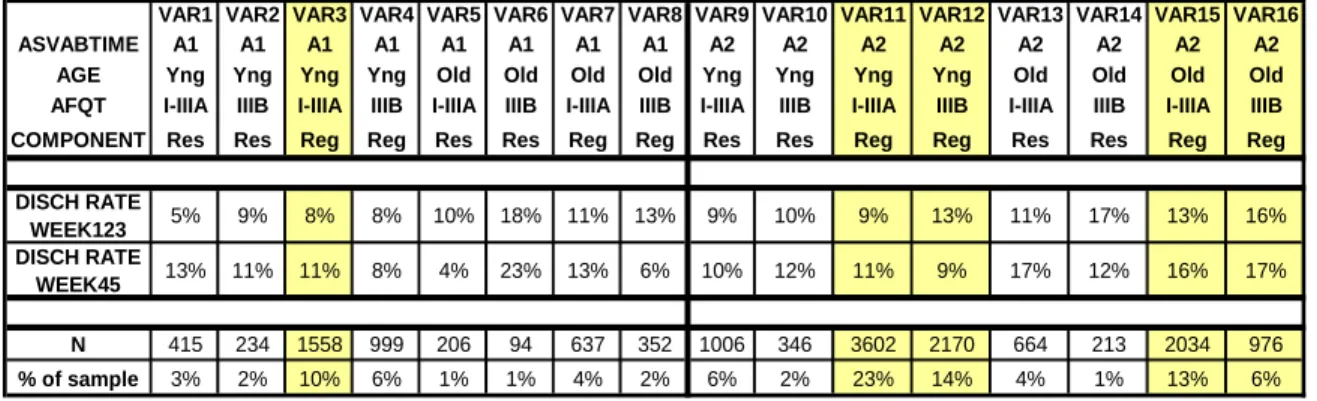
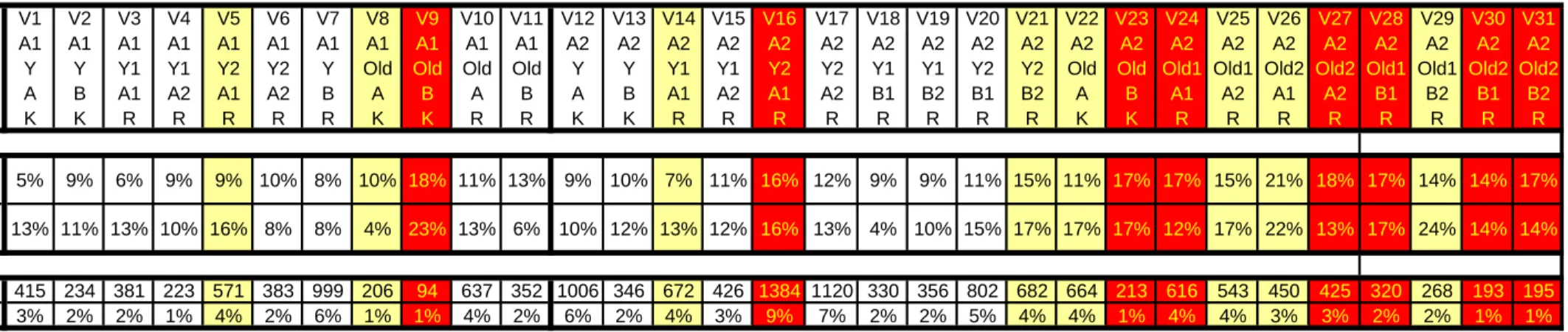
But while variation and statistical significance in individual variables were necessary features, more analysis could possibly yield different information. It is, for instance, conceivable that a variable like AFQT has no statistical significance when examined in isolation. It is also conceivable that individuals of all ages exhibit the same discharge probability. However, it is possible that the effect of age differs by AFQT. So, for example, a variable that combines individuals who are 23 and older and who score below 49 on the ASVAB could prove to be statistically significant and have a much higher attrition risk than a group of enlistees who are younger than 23 and who score higher than 50 on the ASBVAB. And this could be true even though AFQT score is not significant and the attrition risk of all ages is the same. So, if variables exhibited no variation or statistical significance when examined independently and when combined with other variables, then these variables could not be used for further analysis.
Finally, in addition to the above criteria, the variables chosen could not be too complicated or politically impractical. The author did not believe that the Marine Corps would be willing to adopt any policy based upon race or on criteria that were too confusing. For example, qualifying the enlistment of all 17-year-old minorities who took the ASVAB exactly 22 days from enlistment during only the month of September, in the 4th Marine Corps District, would be a difficult as well as a questionable policy to implement.