Security Application
Nur Farhan Binti Kahar
Submitted in partial fulfillment of the requirements of the
Degree of Doctor of Philosophy
Supervisor: Prof. Ebroul Izquierdo
School of Electronic Engineering and Computer Science
Queen Mary University of London
United Kingdom
STATEMENT OF ORIGINALITY
I, Nur Farhan Binti Kahar, confirm that the research included within this thesis is my own work or that where it has been carried out in collaboration with, or supported by others, that this is duly acknowledged below and my contribution indicated. Previously published material is also acknowledged below.
I attest that I have exercised reasonable care to ensure that the work is original, and does not to the best of my knowledge break any UK law, infringe any third party’s copyright or other Intellectual Property Right, or contain any confidential material.
I accept that the College has the right to use plagiarism detection software to check the electronic version of the thesis.
I confirm that this thesis has not been previously submitted for the award of a degree by this or any other university.
The copyright of this thesis rests with the author and no quotation from it or information derived from it may be published without the prior written consent of the author.
Signature:
ABSTRACT
This thesis focuses on the design and implementation of a novel security domain surveillance system framework that incorporates multimodal information sources to assist the task of event detection from video and social media sources. The comprehensive framework consists of four modules including Data Source, Content Extraction, Parsing and Semantic Knowledge. The security domain ontology conceptual model is proposed for event representation and tailored in conformity with elementary aspects of event description. The adaptation of DOLCE foundational ontology promotes flexibility for heterogeneous ontologies to inter-operate. The proposed mapping method using eXtensible Stylesheet Language Transformation (XSLT) stylesheet approach is presented to allow ontology enrichment and instance population to be executed efficiently. The dataset for visual semantic analysis utilizes video footage of 2011 London Riots obtained from Scotland Yard. The concepts person, face, police, car, fire, running, kicking and
throwing are chosen to be analysed. The visual semantic analysis results demonstrate succesful persons, actions and events detection in the video footage of riot events. For social semantic analysis, a collection of tweets from twitter channels that was actively reporting during the 2011 London Riots was compiled to create a Twitter corpus. The annotated data are mapped in the ontology based on six concepts: token, location, organization, sentence, verb, and noun. Several keywords related to the event that has been presented in the visual and social media sources are chosen to examine the correlation between both sources and to draw supplementary information regarding the event. The chosen keywords describe actions running, throwing, and kicking; activity attack, smash and loot;
event fire; and location Hackney and Croydon. An experiment in respect to
concept-noun relations are also been executed. The ontology-based visual and social media analysis yields a promising result in analysing long content surveillance videos and lengthy text corpus of social media user-generated content. Adopting ontology-based approach, the proposed novel security domain surveillance system framework enables a large amount of visual and social media data to be analysed systematically and automatically, and promotes a better method for event detection and understanding.
TABLE OF CONTENTS
STATEMENT OF ORIGINALITY...2 ABSTRACT...3 TABLE OF CONTENTS...4 LIST OF FIGURES...9 LIST OF TABLES...12 LIST OF ABBREVIATIONS...13 INTRODUCTION...14 1.1.Problem Statement...151.2.Proposed Solution and Approach...16
1.3.Objectives...17
1.4.Contribution of the Thesis...17
1.5.Thesis Outline...19
1.6.Publications...20
SURVEY OF RELATED RESEARCH...21
2.1.Surveillance Application...22
2.2.Knowledge Representation...24
2.2.1 Requirements of a Knowledge Representation...24
2.2.2 Logical Representation...25
2.2.3 Ontology...27
2.3.Ontological Engineering...28
2.3.1 Ontology Engineering Methodology...29
2.4.Syntactic Information Extraction...34
2.4.1 Object Detection Approaches...35
2.4.2 Object Detection using Haar-based Cascade Classifier...36
2.4.2.1 Features...37
2.4.2.2 Integral Image...38
2.4.2.3 Learning Classification Functions using AdaBoost...39
2.4.2.4 The Attentional Cascade...41
2.4.3 Person Detection using Histograms of Oriented Gradients...42
2.4.4 Video Annotation using ViPER-GT...43
2.4.5 Language Processing using GATE...44
2.5.Meta Data Mapping...45
2.5.1 Formats and Languages...45
2.5.1.1 XML...45
2.5.1.2 RDF and OWL...46
2.5.2 XML Data to OWL Ontologies Transformation...47
2.6.Semantic Reasoning and Knowledge Retrieval...49
2.6.1 Rule-based Systems...49
2.7.Summary...49
A FRAMEWORK FOR AUTOMATED MEDIA ANALYSIS IN A SECURITY DOMAIN...50
3.1.Related Work...51
3.2.Outline of the proposed framework...52
3.3.Data Source Module...54
3.4.1 Visual Analysis...56
3.4.1.1 Person Detection using Histogram of Oriented Gradient...57
3.4.1.2 Face Detection using Haar feature-based Cascade Classifier 58 3.4.1.3 Manual Annotation using ViPER-GT...60
3.4.2 Textual Analysis...62
3.4.2.1 Text Annotation...62
3.5.Parsing Module...65
3.5.1 XML and OWL Model...65
3.5.2 Parsing Framework...66
3.6.Semantic Knowledge Module...68
3.6.1 Ontology...68 3.6.2 Rules...68 3.6.3 Reasoner...69 3.6.4 Reasoning...70 3.6.5 Semantic Queries...71 3.7.Summary...72
SECURITY DOMAIN ONTOLOGY...73
4.1.Semantic Knowledge Module...74
4.1.1 Ontology Development Methodology...75
4.1.2 Requirement Analysis...79
4.1.3 Development...81
4.1.3.1 DOLCE Foundational Ontology...81
4.1.3.2 Security Domain Ontology Conceptual Model...84
4.1.3.4 Properties of Concepts...97
4.1.4 Implementation...101
4.2.Summary...102
VISUAL SEMANTIC ANALYSIS...104
5.1.Dataset...105
5.2.Visual Analysis...106
5.2.1 Person Detection...106
5.2.2 Face Detection...108
5.2.3 Action Recognition and Object Detection...110
5.3.Parsing Framework Implementation...111
5.3.1 Textual File Generation...111
5.3.2 Text to XML Data Conversion...113
5.3.3 XML to RDF/XML Mapping and Ontology Population...114
5.4.Formal Representation of Event...115
5.4.1 Examples of Scenario...116 5.4.2 Representation of Situations...117 5.5.Semantic Reasoning...120 5.5.1 Rule-based Classification...120 5.5.2 Rules Implementation...120 5.6.Knowledge Retrieval...124
5.6.1 Querying Formal Representations...124
5.7.Visual Semantic Retrieval Results...125
5.7.1 Query Results for Running...125
5.7.3 Query Result for “PersonisKickingACar’...128
5.8.Discussion...129
5.9.Summary...129
SOCIAL MEDIA ANALYSIS...130
6.1.Social Media for Event Reporting...131
6.2.Dataset...133
6.3.Ontology for Social Media Analysis...133
6.4.Text Annotation using GATE...135
6.5.Ontology Population...137
6.6.Rule-based Inference and Queries...138
6.7.Social Semantic Analysis Results...141
6.7.1 Query results for Running, Throwing and Kicking actions...142
6.7.2 Query results for Attack, Smash and Loot activities...143
6.7.3 Query results for Fire event...145
6.7.4 Query results for location Hackney and Croydon...147
6.8.Discussion...150
CONCLUSION...152
REFERENCES...159
APPENDIX...170
LIST OF FIGURES
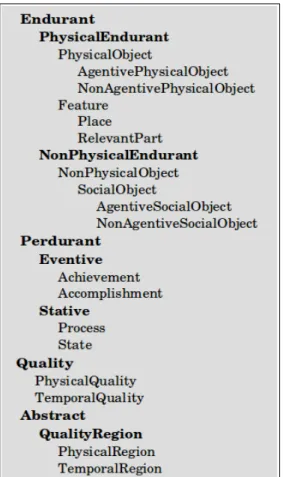
Figure 2.1: Taxonomy of DOLCE basic categories...34
Figure 2.2: Object detection approaches...35
Figure 2.3: Haar-like features...37
Figure 2.4: Integral image...38
Figure 2.5: Integral image computation...39
Figure 2.6: Schematic depiction of the detection cascade...42
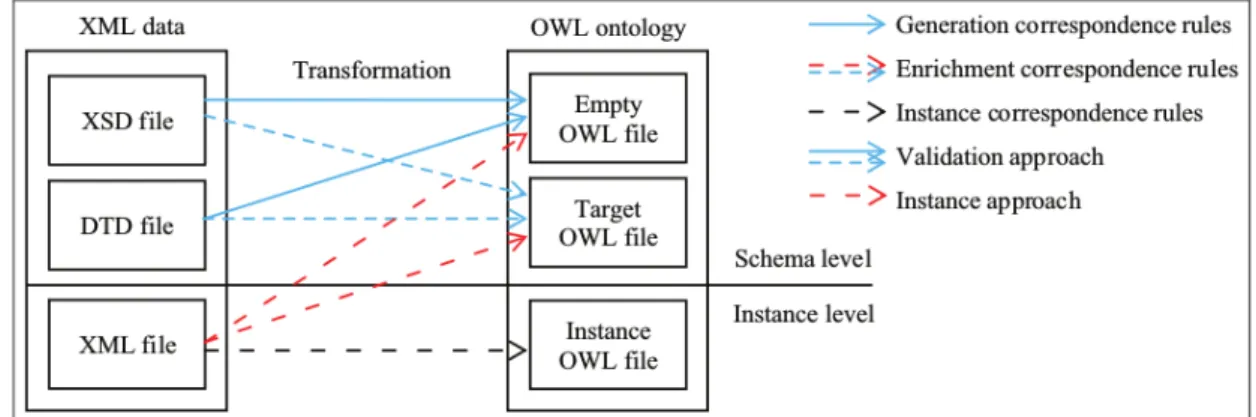
Figure 2.7: Approach and rules for XML to OWL transformation...48
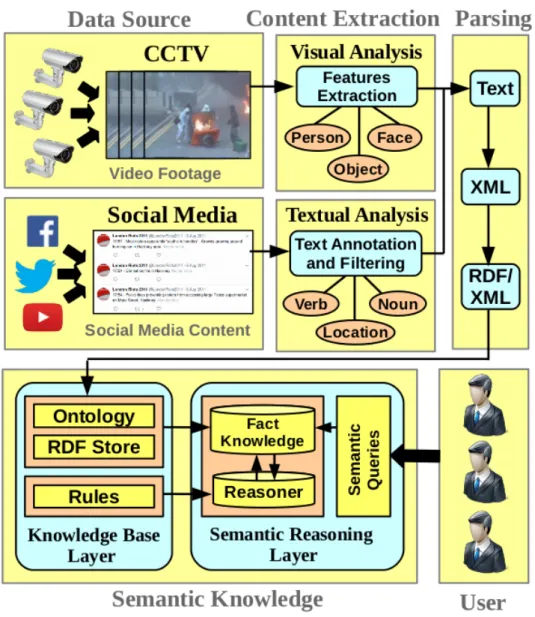
Figure 3.1: Security domain surveillance system framework...54
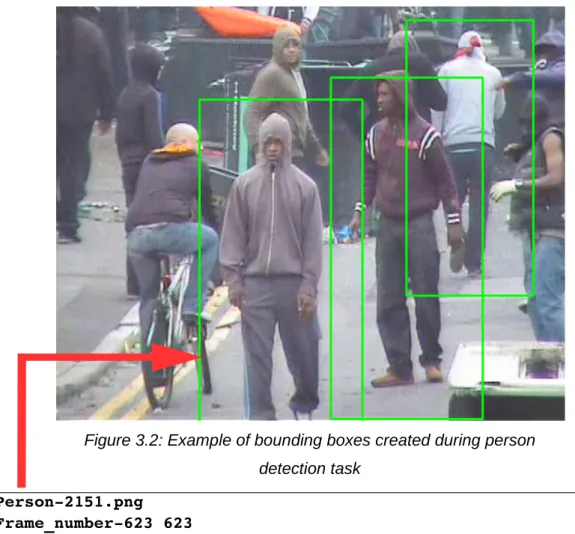
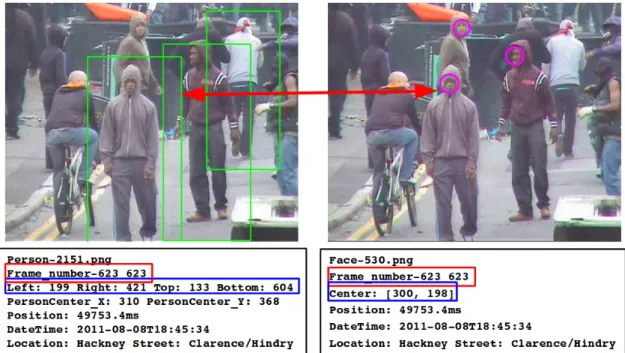
Figure 3.2: Example of bounding boxes created during person detection task. 58 Figure 3.3: Example of marked face during face detection task...60
Figure 3.4: Example of ViPER-GT annotation...61
Figure 3.5: Excerpt of descriptor file from ViPER-GT annotation...61
Figure 3.6: Textual data annotation pipeline using GATE software...62
Figure 3.7: Fragment of an XML document instance...66
Figure 3.8: Types of element indicated by labels in RDF documents...66
Figure 3.9: Sequence in the parsing process...67
Figure 3.10: Main components of the Pellet reasoner...69
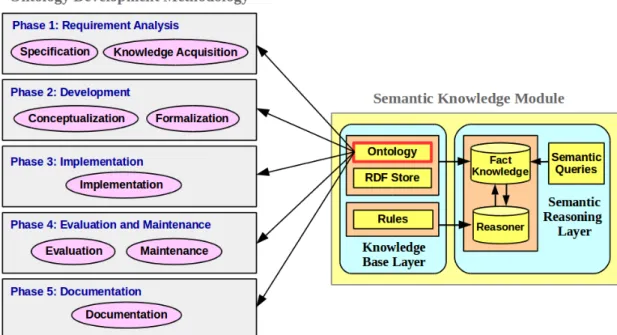
Figure 4.1: Ontology development methodology phases...74
Figure 4.2: Elementary aspects of event description...76
Figure 4.3: DOLCE's top categories...82
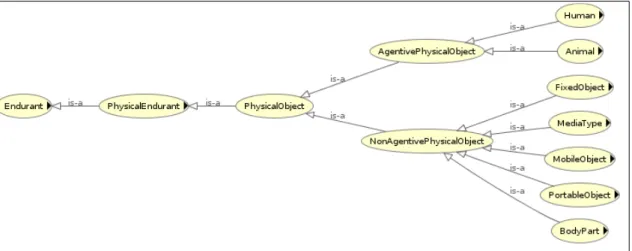
Figure 4.4: Physical object class hierarchies...85
Figure 4.6: Media broadcast through social media sources...87
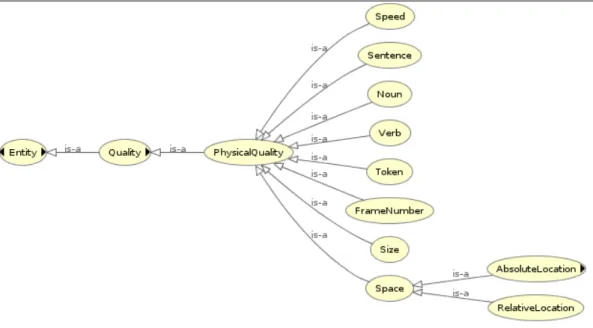
Figure 4.7: Physical quality concepts representing physical endurants...88
Figure 4.8: Location/Space class hierarchies...89
Figure 4.9: Time class hierarchies...90
Figure 4.10: Class hierarchies representing Perdurant entities...93
Figure 4.11: Class hierarchies representing the concept of Stative...93
Figure 4.12: Class hierarchies representing the concept of Eventive...93
Figure 4.13: Class hierarchies representing the concept of EventType...93
Figure 4.14: Property assertions for Person-2151...97
Figure 4.15: Correlation between two images using instance properties...98
Figure 4.16: The relationship between Person-X and Face-X linked through object property ‘hasFace’ and ‘isPerson’...99
Figure 4.17: Object and data properties in security domain ontology...100
Figure 5.1: Visual semantic analysis framework...105
Figure 5.2: The 2011 London Riots scenario...106
Figure 5.3: Example of people detection based on HOG person detector...107
Figure 5.4: Excerpt of recorded meta data from person detection process...107
Figure 5.5: Example of face detections using Haar feature-based cascade classifier...108
Figure 5.6: Excerpt of recorded meta data from face detection process in Figure 5.5 (left)...108
Figure 5.7: Video capture timestamp extracted during video processing...109
Figure 5.8: Actions and objects annotation from CCTV footage...110
Figure 5.10: ‘Throwing’ in XML generated by ViPER-GT annotation tool...112
Figure 5.11: Excerpt of Person.xml...113
Figure 5.12: Excerpt of XSLT stylesheet for XML to RDF/XML transformation ...115
Figure 5.13: Ontology population of Person instances and its properties...115
Figure 5.14: Event scenario captured from CCTV footage of a riot event...116
Figure 5.15: Sequence of Running_1 based on query results...126
Figure 5.16: Sequence of Running_27 based on query results...126
Figure 5.17: Attack sequences obtained from rule-based inference process. .127 Figure 5.18: Kicking action extracted using queries to the knowledge base...128
Figure 6.1: Social media semantic analysis framework...131
Figure 6.2: Photos of 2011 London Riots and social media shared contents produced by social media users...132
Figure 6.3: Example of Tweeter posts during 2011 London riots...134
Figure 6.4: Textual data annotation and ontology population pipeline...135
Figure 6.5: Annotation categories and tags from Twitter corpus...136
Figure 6.6: Extracted annotation sets from a sentence in the Twitter corpus. .138 Figure 6.7: Locations severely affected by the riot based on query result...149
LIST OF TABLES
Table 2.1: Ontology engineering phases...31
Table 2.2: Comparison of ontological commitments...33
Table 2.3: Comparison of approaches based on the XSD Schema...47
Table 4.1: Informational aspect representation...86
Table 4.2: Experiential aspect representation...88
Table 4.3: Spatial aspect representation...89
Table 4.4: Temporal aspect representation...90
Table 4.5: Structural aspect representation...94
Table 4.6: Criminal activity concepts from Kaggle dataset...95
Table 4.7: Causal aspect representation...96
Table 4.8: Domain and range of object properties...100
Table 4.9: Security domain ontology metric...102
Table 6.1: SPARQL query for concept retrieval...141
Table 6.2: Query results for running, throwing and kicking actions...142
Table 6.3: Query results for attack, smash and loot activities...143
Table 6.4: Query results for looting activity...144
Table 6.5: Query results for the token Fire...146
LIST OF ABBREVIATIONS
CCTV - Closed-circuit TelevisionBSIA - British Security Industry Authority FOL - First Order Logic
DL - Description logic
HOG - Histograms of Oriented Gradients
ViPER-GT - Video Performance Evaluation Resource - Ground Truth GATE - General Architecture for Text Engineering
XML - eXtensible Markup Language OWL - Web Ontology Language
XSL - eXtensible Stylesheet Language
XSLT - eXtensible Stylesheet Language Transformation RDF - The Resource Description Framework
NLP - Natural Language Processing
ANNIE - A Nearly-New Information Extraction POS - Part-of-Speech
NE - Named Entities
JAPE - Java Annotation Patterns Engine SAX - Simple API for XML
SWRL - Semantic Web Rule Language
SPARQL - SPARQL Protocol and RDF Query Language
DOLCE - Descriptive Ontology for Linguistic and Cognitive Engineering RDFS - Research Description Framework Schema
CHAPTER 1
INTRODUCTION
Recent developments in multimedia technologies have led to the generation of vast quantities of multimedia data from a variety of sources and sensors. This trend has, in turn, originated a wave of research addressing automation of related information mining and understanding. However, there is still a significant gap in the automated understanding of very large volumes of raw, multimodal data capturing single real-world events through different sources including closed-circuit television (CCTV), mobile devices and social media. This problem becomes critical in a forensic context for key security applications. As a consequence, the need for an automated understanding of information for crime detection and prevention is of paramount relevance [1].
1.1. Problem Statement
Globally, hundreds of millions of CCTV cameras have been installed for surveillance purposes, producing enourmous quantities of big data in the form of video footage. In the United Kingdom, The British Security Industry Authority (BSIA) estimate that there are up to 5.9 million CCTV cameras with approximately 500, 000 surveillance cameras running in London alone [2] [3]. One of the biggest challenges when reviewing the video for investigations, is thus the sheer volume of video footage which may need to be examined. For example, typically it may take a trained officer or analyst using traditional methods (a notepad and the pause/rewind buttons) 1.5 to 2 hours to review just an hour of raw video footage [4]. This leads to large resource consumption and cost. The problem is particularly prominent in police forces where the issue is amplified by a spike in the number of video inputs through increased use of body-worn cameras and more publicly submitted videos.
Compounding the scale of the problem, social media has also recently been used for surveillance purposes through leveraging information shared by its users to gather updates about situations in various locations at different times. As of the first quarter of 2018, Twitter averaged 336 million monthly active users [5] and Facebook records over 2.19 billion monthly active users worldwide [6]. Thus with so much potential, this approach is also facing the same issues, i.e. the sheer scale of vast quantities of textual data produced by social media users hinders the process of ascertaining critical and useful information for investigations. Furthermore, the different format in visual and social media data discourages comprehensive event information analysis to be done simultaneously for both resources. The challenges of interpreting the data are compounded by increment in the volumes of data needing to be reviewed in situations such as riots, where wide scale public involvement across potentially large areas takes place. Therefore, related initiatives recognize the need for better software tools for helping officers to identify relevant events from multimodal resources especially in the security domain.
1.2. Proposed Solution and Approach
One of the trends that has become prevalent recently is leveraging the ontology-based approach to represent and formally specify the knowledge related to a domain [7]. Ontologies provide a common understanding of domains that can be communicated between people and application systems. An ontology-based system involves two different sub-systems, low-level and high-level processing. In low-level processing, the raw data is processed by low-level processing algorithms, i.e. algorithms usually generating feature descriptions, sets of symbolic descriptors which summarizes characteristics of data in a quantitative way. Alternatively, high-level processing is related to data interpretation and reasoning with data. High-level processing is usually built on top of the low-level processing algorithms, taking features descriptors as input and generating abstract, qualitative descriptions about the content of the data. High-level processing makes use of domain-level representation where events are typically subject to discussions and interpretations by humans and may be very complex, with a variety of aspects need to be considered.
The research work leading to this thesis proposes and implements a novel integrated framework to support the modelling and semantic reasoning of event information from multimodal resources. The aim of this research is to develop an automated surveillance system for event detection and understanding, utilizing visual data from CCTV footage and social media user-generated content. This synergised approach requires analysis of low-level visual and textual processing, event representation and high-level semantic reasoning. This semantic platform is innovative, as it integrates semantic and reasoning into a coherent operational software framework to support automated semantic analysis of surveillance domain datasets. The proposed system will help the forensic analyst to detect events from a vast collection of video and textual data using event-based semantics.
1.3. Objectives
1. To research, design and implement a novel security domain surveillance system framework to effectively assist the task of event detection from video and social media data sources. (See Chapter 3)
2. To build an event conceptual model for security domain ontology to support knowledge representation and semantic reasoning of multimedia data. (See Chapter 4)
3. To implement an automated and manual feature extraction approach to extract the visual content descriptions from video footage and textual user-generated content from social media platform for ontological analysis. (See Chapter 2, 3, 5 and 6)
4. To develop and implement the parsing process to execute inter-level data transformation between lower-level syntactic data and higher-level semantic concepts. (See Chapter 3 and Chapter 5)
5. To validate the proposed innovative framework by implementing rule-based semantic reasoning on conceptual knowledge and information retrieval from the domain ontology. (See Chapter 5 and Chapter 6)
1.4. Contribution of the Thesis
The contribution of this thesis lays in the development and implementation of a novel ontology-based security domain surveillance system which supports analysis of the vast collection of visual data as well as social media user-generated content to achieve high-level interpretation and understanding of events. The research work is described as the following:
1. Design and implementation of an ontology-based security domain surveillance framework that incorporates multimodal information sources, including visual information from CCTV footage and textual information from the social media platform. The comprehensive
framework consists of four modules which includes Data Source, Content Extraction, Parsing and Semantic Knowledge. These modules administrate data processing from data source level to semantic output. The functionalities and processes of each module are elaborated in Chapter 3.
2. The development of an event conceptual model for security domain ontology through an implementation of ontology development methodology and the conceptualization classification extension in accordance with six elementary aspects which underpin functional requirements of an event model. The event model is built upon the foundational ontology DOLCE and provides support for ontology integration and reuse (See Chapter 4).
3. To support visual analysis, implementation of automated object detection to detect person and face features, as well as manual feature annotations to extract additional salient features from video footage are introduced. These research work are first introduced in Chapter 2, Section 2.4 and later demonstrated in Chapter 5. The Histogram of Oriented Gradient (HOG) method is used for person detection and Haar feature-based cascade classifier is used for face detection. Manual video annotation is executed using Video Performance Evaluation Resource (ViPER) tool.
4. The implementation of text processing and analysis of social media user-generated content to extract important information shared by social media users during the event. This topic is initially detailed in Chapter 2, Section 2.4.5 and subsequently executed in Chapter 6. Text annotation is executed using General Architecture for Text Engineering (GATE) annotation tool.
5. A mapping method is proposed to bridge the gap between lower-level syntactic data of extracted features represented in Extensible Markup Language (XML) and higher-level semantic concepts expressed in Web
Ontology Language (OWL) using eXtensible Stylesheet Language Transformation (XSLT) stylesheet approach. The mapping method allows ontology enrichment and instance population to be executed efficiently for a better event representation. This task is first detailed in Chapter 3, Section 3.5 and later substantiated in Chapter 5, Section 5.3. 6. Construct semantic rules using Semantic Web Rule Language (SWRL) and execute queries using SPARQL Protocol and RDF Query Language (SPARQL) to perform rule-based semantic reasoning and knowledge retrieval for both visual and social media analysis. These tasks are demonstrated in Section 5.5 to 5.7 and Section 6.6, both in Chapter 5 and 6 respectively.
7. Evaluation of the proposed framework using CCTV footage and social media user-generated content of real riot events is presented in Chapter 5 and Chapter 6. The experimental result and analysis validate the proposed security domain surveillance system framework as well as distinguished its strength and weaknesses.
1.5. Thesis Outline
This thesis presents a detailed literature review, novel system development, analysis and implementation as follows:
Chapter 2 provides a literature review and theories on the related research topic, including knowledge representation, ontology engineering methodology, information extraction approaches, meta data mapping and semantic reasoning.
Chapter 3 presents a framework for automated media analysis in a security domain surveillance system which highlights four main modules; the data source, content extraction, parsing and semantic knowledge module. The purpose and task of every module and submodule are also presented and discussed.
Chapter 4 elaborates on security domain ontology engineering, which demonstrates the definition of the domain event model, development methodology and conceptualization classifications based on foundational ontology.
Chapter 5 demonstrates visual analysis framework validation and presents the experimental results and analysis on feature extractions, XML to OWL parsing, rules generation, semantic reasoning and queries to verify its efficiency.
Chapter 6 presents social media semantic analysis framework validation on a Twitter corpus of 2011 London Riots, which involves text annotation process, ontology population, rules generation, semantic reasoning and queries to extract useful information from social media posts.
Chapter 7 concludes with a summary of the main contributions throughout the thesis, plus research recommendations and future work.
1.6. Publications
1. N. F. Kahar and E. Izquierdo, "Ontology-based analysis of CCTV data," 7th Latin American Conference on Networked and Electronic Media (LACNEM 2017), Valparaiso, 2017, pp. 62-67.
2. F. Sobhani, N. F. Kahar and Q. Zhang, "An ontology framework for automated visual surveillance system," 2015 13th International Workshop on Content-Based Multimedia Indexing (CBMI), Prague, 2015, pp. 1-7.
CHAPTER 2
SURVEY OF RELATED RESEARCH
This chapter presents a literature review and theories on the related research topic as a foundation for the following chapters. The chapter begins with discussion on current issues in surveillance application, knowledge representation requirements, ontological engineering methodologies and implementation of foundational ontology to facilitate ontology development. Subsequently, object detection and language processing approaches for low-level analysis and metadata mapping for inter-low-level data transformation is presented. Finally, semantic reasoning and knowledge retrieval are implemented for high-level processing.
2.1. Surveillance Application
Today, CCTV surveillance has become a prominent aspect of day-to-day life as an approach to crime prevention, traffic monitoring, and home security. According to the IHS, there were 245 million professionally installed video surveillance cameras active and operational globally in 2014 [8] increasing to 350 million in 2016 [9]. The British Security Industry Authority (BSIA) estimated that there are up to 5.9 million CCTV cameras in the UK alone [2], with approximately 500,000 in London [3].
Current state-of-the-art surveillance systems are based either on the statistical analysis of image features, or on the hard-coded interpretation of object identification [10]. The complexity range of situations is very wide, ranging from the mere detection of movement that sets off an alarm, to an integral control system that monitors the scene with different sensors, diagnoses the situation and plans a series of consistent actions [11]. However, although there is a huge amount of CCTV data gathered, its problematic that there is no efficient way to analyse it. The enormous collection burden and efficient analysis of data can impact the timely process of justice, resulting in a major drawback especially for a security-related domain.
In addition to the visual surveillance approach, recent years have also witnessed a rapid increase in social media usage, which has also become an important source for reporting real-world events [12]. This trend has also led to a substantial body of research in the generic field of visual information retrieval with applications to several domains of science and technology [13], [14], [15], [16], [17]. The substantial amount of useful information produced by the public’s collective intelligence is highly beneficial for surveillance purpose. Shared information in the form of text posts, photographs, and videos gives valuable multi-perspective information that can communicate a coherent story about an event in real time. The large volume of information shared by social media
users facilitates event detection and understanding which is ultimately useful for investigations by security forces. As of the first quarter of 2018, the social networks, Twitter averaged at 336 million monthly active users [5] and Facebook records over 2.19 billion monthly active users worldwide [6]. Thus enormous data is being generated at a very rapid rate.
Research on event detection using social media data has been carried out for multiple purposes using various algorithms and approaches. The current literature includes emergency management during a large-scale event [18], real-time identification of small-scale incidents [19] and emergency situation awareness during disaster and crisis [20]. By harvesting additional information about incidents from social media, these studies contribute to enhancing situation awareness through early incident indicator identification, the exploration impact, and incidents’ evolution monitoring. In [21], real-time earthquake event detection is performed through the investigation of the real-time interaction of events in Twitter and consequently, an implementation of algorithms to monitor tweets and to detect earthquakes. Abnormal topics and event detection within various social media data sources, such as Twitter, Flickr and YouTube are presented in [22].
However, to the best of our knowledge, to date, there have been no attempts to perform semantic analysis of visual-social media content for surveillance applications. Common approaches often only focus on single sources of information. For instance, some works either do not consider additional, external information beyond photos and videos at all, or only do so to a limited degree [13]. In relation to semantic analysis implementation, previous research on ontology-based approach for social media analysis focus in domains such as crisis management [23], [24] criminal digital evidence [25], sentiment analysis [26], business [27] and urban planning [28]. On the other hand, research on automated video analysis using ontologies has been carried out in [29], [30],
[31], [32] and produces promising results. There is thus a growing need for an automated event detection and understanding which focuses on surveillance applications leveraging a synergy of both visual and social media information sources.
2.2. Knowledge Representation
Knowledge representation is the field of artificial intelligence that focuses on the formalism design [33], [34] where the knowledge about a specific domain is expressed epistemologically and computationally with an objective of solving complex problems. Knowledge representation makes complex software easier to define and maintain than procedural code and can be used in expert systems. Knowledge representation goes hand in hand with automated reasoning because one of the primary purposes of explicitly representing knowledge is to be able to reason about that knowledge, to make inferences, assert new knowledge, etc. Virtually all knowledge representation languages have a reasoning or inference engine as part of the system.
2.2.1 Requirements of a Knowledge Representation
Discussions on properties of a good knowledge representation system for any domain in [35] clearly stated that the following properties should be possessed:
1. Representational Adequacy
• the ability to represent all the different kinds of knowledge that might be needed in that domain.
2. Inferential Adequacy
• the ability to manipulate the representational structures to derive new structures (corresponding to new knowledge) from existing structures.
3. Inferential Efficiency
• the ability to incorporate additional information into the knowledge structure which can be used to focus the attention of the inference mechanisms in the most promising directions.
4. Acquisitional Efficiency
• the ability to acquire new information easily. Ideally, the agent should be able to control its own knowledge acquisition.
Knowledge representation can be broken down into four fundamental components for analysis purposes. The first component is the lexical part that determines symbols or words that are used in the representation’s vocabulary. Next is the structural or syntactic part, that describes the constraints on how the symbols can be arranged. The semantic part establishes a way of associating real-world meanings with the representations and finally, the procedural part is the one that specifies the access procedures that enables ways of creating and modifying representations and answering questions using them.
2.2.2 Logical Representation
In mathematical logic, propositional logic is the logic whose formulae are made of atomic propositions like A, B, having always one of the values true or false (truth values), and logical connectives like negation (¬A), and (A∧B), or (A∨B)
and implication (A→B) [36]. Propositional logic is sound (only deriving correct results), complete (able to derive any logically valid formula) and decidable (the algorithms for deciding whether a formula is valid end in finite time). Predicate logic is the logic which adds predicates (like P(x,y)) which represent relations, i.e. produce true or false for a combination of values of the terms x and y; quantifiers: existential ∃ ("there exists") and universal ∀ ("for all"); and terms made of variables and functions, like f(x), g(y,z). Thus, predicate logic can form formulas like ∀x∃y(P(x)→Q(f(y))).
First order predicate logic [37] is the logic where the quantifiers can range only over elements of sets. In higher order logics, quantifiers can range over sets, functions and other objects. So, for example, the sentence that "every set of real numbers has a minimum" cannot be expressed in first order logic, because the quantification ranges over sets, not set elements. First order predicate logic is sound and complete; however, it is not decidable. It is semi-decidable, i.e. valid formulas can be proven, but non-valid formulas may need infinite time to construct a counter-example of infinite size. There are known algorithms that can prove valid theorems in first order predicate logic, namely the tableaux
algorithm, however, if the theorem is not valid, the algorithm may not end in finite time.
The ultimate knowledge representation formalism in terms of expressive power and compactness is First Order Logic (FOL) [38]. There is no more powerful formalism than that used by mathematicians to define general propositions about the world. However, FOL has two drawbacks as a knowledge representation formalism: ease of use and practicality of implementation. First order logic can be intimidating even for many software developers. Languages which do not have the complete formal power of FOL can still provide close to the same expressive power with a user interface that is more practical for the average developer to understand. The issue of practicality of implementation is that FOL in some ways is too expressive. With FOL it is possible to create statements (e.g. quantification over infinite sets) that would cause a system to never terminate if it attempted to verify them. Thus, a subset of FOL can be both easier to use and more practical to implement. This was a driving motivation behind rule-based expert systems [39]. IF-THEN rules provide a subset of FOL but a very useful one that is also very intuitive. The history of most of the early artificial intelligence knowledge representation formalisms; from databases to semantic nets to theorem provers and production systems can be viewed as various design decisions on whether to emphasize expressive power or computability and efficiency.
Description Logics (DLs) [40], [41], [42] are a family of knowledge representation languages that can be used to represent the knowledge of an application domain in a structured and formally well-understood way. The name description logics is motivated by the fact that, on the one hand, the important notions of the domain are described by concept descriptions, i.e., expressions that are built from atomic concepts (unary predicates) and atomic roles (binary predicates) using the concept and role constructors provided by the particular DL. On the other hand, DLs differ from their predecessors, such as semantic networks and frames, in that they are equipped with a formal, logic-based semantics.
2.2.3 Ontology
An ontology is a “formal specification of a shared conceptualization” [43]. Ontology is a conceptual model in a domain which is used to represent the concepts and relationship through them, which contains a description of the specific domain [33]. One of the main advantages of using ontologies is their way to represent and share knowledge by using a common vocabulary. As providers of a format for exchanging knowledge, ontology promotes interoperability, knowledge reuse, and information integration with automatic validation. They separate declarative and procedural knowledge, making the modularity of the knowledge base easier [44]. Ontologies allow information to become not only human but also machine readable and processable.
Multimedia ontologies have been designed in order to serve one or more of the following tasks:
• Annotation – tagging or labelling multimedia content
• Analysis – ontology-driven semantic analysis of multimedia content
• Retrieval – context-based image retrieval
• Personalization – recommendation and filtering of multimedia content based on user preferences
• Algorithms and processes control – modelling multimedia procedures and processes
• Reasoning – personalization and retrieval for creating autonomous content applications.
An ontology consists of four main components to represent a domain. They are: • Concept represents a set of entities within a domain
• Relation specifies the interaction among concepts
• Instance indicates the concrete example of concepts within the domain • Axioms denote a statement that is always true
2.3. Ontological Engineering
Constructing a domain model, or ontology is an important step in the development of knowledge-based systems. The advantages of such domain models have been widely canvassed, and include enabling the sharing of knowledge, the re-use of knowledge, and the better engineering of knowledge-based systems with respect to acquisition, verification, and maintenance [45].
At present, the construction of ontologies is very much an art rather than a science. The movement from the ontological art to the ontological engineering lead researchers to propose different methodologies, in order to develop ontologies for different purposes in different fields. In the context of ontology development methodologies, a considerable number of surveys have been conducted in the literature [46]. An ontology methodology describes the necessary activities that should be carried out, how to carry out every activity, the order of these activities and the required techniques that should be used to implement and maintain the ontology [47].
2.3.1 Ontology Engineering Methodology
Considerable effort has been channelled into the aim of proposing methodologies for ontology development in the literature thus far. The most widely known methodologies are overviewed below.
Uschold and King [48] proposed a methodology for building ontologies based on four primitive activities: identify the purpose, building the ontology, evaluation, and documentation. The building activity includes three sub-activities: ontology capture, ontology coding and integrating existing ontologies. In addition, the authors of this study add that these activities should include a set of techniques, methods, principles, and guidelines for each stage, as well as indicating what relationships exist between the stages. However, the methodologies for carrying out the evaluation activities are not covered [49].
Similarly, Gruninger and Fox [50] proposed another methodology called TOVE (TOronto Virtual Enterprise). TOVE proposes six activities starting from motivation scenario, informal competency question, terminology, formal competency question, axiom and ending with completeness theorem. The approach includes defining an ontology’s requirements, defining the terminology of the ontology, specifying the definitions and constraints on the terminology and finally testing the competency of the ontology by providing completeness theorems with respect to the competency questions. In TOVE, building the ontology is based on competency questions [51]. However, some activities such as knowledge acquisition, documentation, and maintenance are not explicitly stated in TOVE [46].
METHONTOLOGY is an alternative methodology proposed by Fernández et al. [52], which is considered to be a complete methodology for ontology building [51]. The authors propose to have reduced the existing gap between ontological
art and ontological engineering by identifying a set of activities to be conducted during the ontology development process, proposing the evolving prototype of ontology life cycle and defining METHONTOLOGY, a well-structured methodology to build ontologies from scratch. In METHONTOLOGY, building ontology from scratch is composed of seven activities, which are specification, knowledge acquisition, conceptualization, integration, implementation, evaluation, and documentation. This methodology provides a clear guidance in which the process of carrying out every activity is defined clearly [46]. Furthermore, the ontology life cycle proposed in METHONTOLOGY provides an accurate description of every activity [53]. The definition of the ontology development process is based on IEEE Standard 1074-1995 [54].
The methodology for building ontology in public administration from scratch is proposed by [53]. The development of this methodology is based on [52] and [50]. This methodology is composed of three main sub-processes specification, concretization, and implementation. The orders of these sub-processes are very important, since the output of each subprocess will be used as an input for the next one. This methodology considers the graphical representational (in the subprocess concretization), which is not explicitly considered in the aforementioned methodologies.
Similarly, De Nicola et al. [51] proposed another methodology for building ontology based on the software engineering Unified Process (UP), a highly scalable and customizable methodology. The new methodology called UPON stands for UP for Ontology. Following UP approach, there are cycles, phases, iterations and workflows in UPON. Each cycle consists of four phases (inception, elaboration, construction, and transition) and each phase is further subdivided into iterations. During each iteration, five workflows take place which is requirements, analysis, design, implementation, and test. It is noteworthy to point out that, UPON provides a clear and accurate description for each of the
workflows that are involved in the process of building ontology based on UP. Based on the aforementioned analysed methodologies, Table 2.1 summarizes the activities that involved in the ontology development life cycle [55]. The common ontology development life cycle from ontology engineering perspective involves around the following phases:
Table 2.1: Ontology engineering phases
Phase Activities
Requirement Analysis
Specification Identifying ontology specification [56]:
• The purpose of the ontology
• The scope of the ontology
• Target users of the ontology
• Ontology usage scenarios
• User requirements
• Ontology requirements - equipment and software
Knowledge Acquisition
Acquiring informal information related to knowledge and problem-solving process of subject matter experts using
observation. Document analysis and structuring techniques.
Development Conceptualization Developing knowledge representation in a semi-formal format using graphical representation
Formalization Changing the semi-formal knowledge representation to formal knowledge representation
Integration Identifying any appropriate existing ontology that can be integrated into the ontology being developed
Implementation Implementation Transforming human-readable
representation into a machine-readible representation
Evaluation Maintenance
Evaluation and Maintenance
Evaluating and assessing the developed ontology in meeting the required
specifications. Identifying individuals to update and maintain the developed ontology.
Documentation Documentation Includes writing the necessary documentation to facilitate the use, reuse, and maintenance of the ontology, as well as, for enhancing the clarity of the ontology.
2.3.2 Foundational Ontology
A foundational ontology, sometimes also called ‘upper-level ontology’, defines a range of top-level domain-independent ontological categories, which form a general foundation for more elaborated domain-specific ontologies [57]. Foundational ontologies are ultimately devoted to facilitate mutual understanding and inter-operability among people and machines. This includes understanding the reasons for non-interoperability, which may in some cases be much more important than implementing an integrated system relying on a generic shared “semantics”. The role and nature of foundational ontology building require more painful human labour, yet immense benefit can be gained from the results and methodologies of disciplines such as philosophy, linguistics, and cognitive science.
The advantage of using a foundational ontology is it facilitates ontology development since one does not have to reinvent the wheel concerning basic categories and relations during the development process [58]. The foundational ontology also serves as modelling guidance for ontology development and
improves overall ontology quality and interoperability. Existing Upper Ontologies includes UFO (Unified Foundational Ontology), BFO (Basic Formal Ontology), DOLCE (Descriptive Ontology for Linguistic and Cognitive Engineering), SUMO (Suggested Upper Merged Ontology), YOMATO (Yet Another More Advanced Top-level Ontology), GFO (General Formal Ontology), PROTON (PROTo Ontology) and Cyc. Table 2.2 shows the comparison between foundational ontological commitments as discussed in [59].
Table 2.2: Comparison of ontological commitments
Foundational Ontology
Language(s) Modularity Applications
DOLCE First Order Logic, KIF, OWL
Not divided into modules
Multilingual information retrieval, web-based systems, and services, e-learning
BFO OWL SNAP and
SPAN modules Mainly in the biomedical domain
GFO First Order
Logic and KIF, OWL
Abstract top level, abstract core level, basic level
Mainly in the biomedical domain SUMO SUO-KIF, OWL Divided into SUMO itself, MILO, and domain ontologies Linguistics, representation, reasoning
Cyc CycL, OWL “Microtheory”
modules
Natural language processing, network risk assessment, terrorism management
PROTON OWL Lite Three levels including four modules
Semantic annotation within the KIM platform, knowledge management systems in legal and telecommunications domain, media research and analysis, research
intelligence, Business Data Ontology for Semantic Web Services.
As reflected by its acronym, DOLCE has a clear cognitive bias, in the sense that it aims at capturing the ontological categories underlying natural language and human common sense. DOLCE is an ontology of particulars, in the sense that its domain of discourse is restricted to them. The fundamental ontological distinction between universals and particulars can be characterized by means of the primitive relation of instantiation: particulars are entities that cannot have instances; universals are entities that can have instances. In linguistic, ‘proper nouns’ are normally considered to refer to particulars, while ‘common nouns’ to universals. For example, ‘Varenne’, the Italian racehorse, is an instance of ‘horse’, but it cannot be instantiated itself [60]. DOLCE’s abstract concepts are aimed at generalizing the set of concepts that may be encountered in different domains [61]. The taxonomy of the most basic categories of particulars assumed in DOLCE is depicted in Figure 2.1. Implementation of DOLCE’s basic categories in security domain ontology modeling are presented comprehensively in Chapter 4, Security Domain Ontology.
2.4. Syntactic Information Extraction
The development of high-powered computers, the availability of high quality and inexpensive video cameras, and the increasing need for automated visual
analysis has induced a great deal of interest in object detection and tracking of objects. Detection of moving objects in video streams is the first relevant step of information extraction in many computer vision applications, including video surveillance, people tracking, traffic monitoring, and semantic annotation of videos [62].
2.4.1 Object Detection Approaches
There are many methods and approaches to detect objects reported in the literature. Methods such as Haar-wavelets as used by [63] for face detection are very fast but not that robust. Models based on Local Binary Patterns (LBP) are more suitable for face detection. More recent algorithms are Histogram of Oriented Gradient (HOG-features) [64] are far more robust which is more suited for complex objects such as pedestrians. For an even better accuracy, detectors based on Integral Channel Features (ICF) by [65] which combines the integral images for speed with multiple channels (both colour and gradient features) can be used. Another possibility is to use local features such as SURF, SIFT or FAST, incorporated with a bag of words approach. This approach has been used with success to recognize signs in a building, paintings and such like, while walking around with a camera. This approach will not result in a bounding box around the object, instead generating a number of matches between an object library and the object to classify. Other approaches for object detection [62] are shown in Figure 2.2 and described below.
Feature Based Object Detection
In feature based object detection, standardization of image features is important. One or more features are extracted, and the objects of interest are modelled in terms of these features. Features may be shape, size or the colour of objects.
Template Based Object Detection
If a template describing a specific object is available, object detection becomes a process of matching features between the template and the image sequence under analysis. There are two types of object template matching, fixed and deformable template matching.
Motion Based Object Detection
Viola, Jones, and Snow [66] use motion information for detection of pedestrian. They use different motion filters for effective detection of pedestrians. A large variety of motion detection algorithms had been proposed such as frame differencing, optical flow and Gaussian mixture.
Classifier Based Object Detection
In classifier-based object detection, the separation of the video objects from the background is treated as a classification problem. A classifier with a set of parameters was built up based on the knowledge of the interest object. For complex objects, multiple classifiers needed to be integrated, which was called cascade classifiers or boosted classifiers. The basic idea of these cascade classifiers is that several weak classifiers are used to cover different features of the object and combined to reach a better classification globally. The limitation of this method is, more object features need to be embedded to train the object model under different environment and light conditions.
2.4.2 Object Detection using Haar-based Cascade Classifier
Object Detection using Haar feature-based cascade classifiers is an effectiveobject detection method proposed by Paul Viola and Michael Jones in their 2001 paper, “Rapid Object Detection using Boosted Cascade of Simple Features”. They propose a machine learning based approach where a cascade function is trained from thousands of positive and negative images before it can be used to detect objects in other images.
2.4.2.1 Features
Viola and Jones face detection procedure classifies images based on the value of simple features [67]. Haar-like features shown in Figure 2.3 are used for this purpose. Viola and Jones proposed a few motivations for using features rather than the pixels directly. A primary factor is that features can act to encode ad-hoc domain knowledge that is difficult to learn using a finite quantity of training data. The feature-based system also operates much faster than a pixel-based system.
Three kinds of features are being used to perform the image classification. The value of two-rectangle feature is the difference between the sum of the pixels within two rectangular regions. The regions have the same size and shape and are horizontally or vertically adjacent (See Figure 2.3). A three-rectangle feature
computes the sum within two outside rectangles subtracted from the sum in a center rectangle. Finally a four-rectangle features computes the difference between diagonal pairs of rectangles.
2.4.2.2 Integral Image
In order to compute these features very rapidly at many scales , an intermediate representation for the image which is called integral image are being introduced. The integral image can be computed from an image using a few operations per pixel. Once computed, any one of these Haar-like features can be computed at any scale or location in constant time.
The integral image at location x,y contains the sum of the pixels above and to the left of x,y, inclusive:
where ii(x,y) is the integral image and i(x,y) is the original image. Refer to Figure 2.4. Using the following pair of recurrences:
(where s(x,y) is the cumulative row sum, s(x, -1) = 0, and ii(-1, y) = 0) the integral image can be computed in one pass over the original image.
Using the integral image, any rectangular sum can be computed in four array references. Refering to Figure 2.5, the value of integral image at location 1 is the sum of the pixels in rectangle A. The value at location 2 is A+B, at location 3 is A+C, and at location 4 is A+B+C+D. The sum within D can be computed as 4+1-(2+3). Since the two-rectangle Haar-like features as shown in Figure 2.3 involve adjacent rectangular sums, they can be computed in six array references, eight in the case of three-rectangle features, and nine for four-rectangle features.
Given a feature set and a training set of positive and negative images, any number of machine learning approaches could be used to learn a classification function. However, despite having an efficient feature computation technique, computing hundreds of thousands of rectangles features associated with each image sub-window is still prohibitively expensive. Therefore, in order to select critical visual features which could be combined to form an effective classifier, a variant of AdaBoost is used both to select the features and to train the classifier.
2.4.2.3 Learning Classification Functions using AdaBoost
In its original form, the AdaBoost learning algorithm is used to boost the classification performance of a simple learning algorithm. It works by combining
a collection of weak classifications functions to form a stronger classifier. In the language of boosting the simple learning algorithm is called weak learner. For example, the perceptron learning algorithm searches over the set of possible perceptros and returns the perceptron with the lowest classification error. The learner is called weak because we do not expect even the best classification function to classify the training data well. In order for the weak learner to be boosted, it is called upon to solve a sequence of learning problems. After the first round of learning, the examples are re-weighted in order to emphasize those which were incorrectly classified by the previous weak classifier. The final strong classifier takes the form of a perceptron, a weighted combination of weak classifiers followed by a threshold.
AdaBoost is an aggressive mechanism for selecting a small set of good classification functions which nevertheless have significant variety. Drawing an analogy between weak classifiers and features, AdaBoost is an effective procedure for searching out a small number of good “features” which nevertheless have significant variety. One practical method for completing this analogy is to restrict the weak learner to the set of classification functions each of which depend on a single feature. In support of this goal, the weak learning algorithm is designed to select the single rectangle feature which best separates the positive and negative examples. For each feature, the weak learner determines the optimal threshold classification function, such that the minimum number of examples are misclassified. A weak classifier (h(x, f, p, θ))
thus consists of a feature (f), a threshold (θ) and a polarity (p) indicating the direction of the inequality:
Here, x is a 24 x 24 pixel sub-window of an image. AdaBoost learning algorithm is presented in detail in [63].
2.4.2.4 The Attentional Cascade
Viola and Jones also propose an algorithm for constructing a cascade of classifiers which achieves increased detection performance while radically reducing computation time [67]. The key insight of this cascade of classifiers is that smaller, more efficient boosted classifiers can be constructed which reject many of the negative sub-windows while detecting almost all positive instances. Simpler classifiers are used to reject the majority of sub-windows before more complex classifiers are called upon to achieve low false positive rates.
Stages in the cascade are constructed by training classifiers using AdaBoost. Starting with a two-feature strong classifier, an effective face filter can be obtained by adjusting the strong classifier threshold to minimize false negatives. The initial AdaBoost threshold, 12
∑
t=1
T
αt , is designed to yield a low error rate on the training data. A lower threshold yields higher detection rates and higher false positive rates. Based on performance measured using a validation training set, the two-feature classifier can be adjusted to detect 100% of the faces with a false positive rate of 50%.
The overall form of the detection process is that of a degenerate decision tree, or “cascade” (see Figure 2.6). A positive result from the first classifier triggers the evaluation of a second classifier which has also been adjusted to achieve very high detection rates. A positive result from the second classifier triggers the third classifier, and so on. A negative outcome at any point leads to the immediate rejection of the sub-window. The structure of the cascade reflects the fact that within any single image an overwhelming majority of sub-windows are negative. As such, the cascade attempts to reject as many negatives as possible at the earliest stage possible. While a positive instance will trigger the evaluation of every classifier in the cascade, this is an exceedingly rare event.
Much like a decision tree, subsequent classifiers are trained using those examples which pass through all the previous stages. As a result, the second classifier faces a more difficult task than the first. The examples which make it through the first stage are “harder” than typical examples. The more difficult examples faced by deeper classifiers push the entire receiver operating characteristic (ROC) curve downward. At a given detection rate, deeper classifiers have correspondingly higher false positive rates.
2.4.3 Person Detection using Histograms of Oriented
Gradients
Histograms of Oriented Gradients (HOG) is a type of “feature descriptor”. The intent of a feature descriptor is to generalize the object in such a way that the same object or person produces as close as possible to the same feature descriptor when viewed under different conditions. This makes the classification task easier. The HOG person detector was introduced by Dalal and Triggs in their paper “Histograms of Oriented Gradients for Human Detection” [64].
The HOG person detector uses a “global” feature to describe a person rather than a collection of “local” features. Thus, the entire person is represented by a single feature vector, as opposed to many feature vectors representing smaller parts of the person. The authors also trained a Support Vector Machine (SVM)
to recognize HOG descriptors of people. The HOG person detector uses a sliding detection window which is moved around the image. At each position of the detector window, a HOG descriptor is computed for the detection window. This descriptor is then shown to the trained SVM, which classifies it as either “person” or “not a person”.
2.4.4 Video Annotation using ViPER-GT
The Video Performance Evaluation Resource Ground Truth (ViPER-GT) toolkit allows annotation of a video with metadata, mainly for use as ground truth for performance evaluation [68]. This includes information describing the file, such as date of filming and keywords about its content. It also includes concrete features, such as scene breaks and bounding boxes around people. This can be used for any number of purposes. In this study, ViPER-GT is used to support a media database application, for instance, to track the movement of a person in a video. ViPER-GT can be used to go through the video frame by frame and mark up the movement by hand. ViPER-GT tool lets the user define boxes around people and its architecture allows integration with other tools. ViPER-GT is designed for editing visual annotation, such as rectangles denoting locations of people on screen. Shapes include points, bounding boxes and oriented rectangles, ellipses, polygons and circles, and annotation types without a visual element, including text strings, numbers, and Boolean values are also supported.
Data elements are combined together into objects called descriptors. This allows a person type to be defined, which has a text string (the person's name), a bounding box (their location in the frame), and any other number of attributes. Descriptors usually refer to a single object, event or other things in the file that is worthy of evaluation, but they may also have more abstract purposes, such as indicating keyframes. In addition to these types, all files have a single descriptor that gives metadata about the media file as a whole, including frame
rate, file name, image size in pixels, and an optional comment. ViPER-GT also maintains a set of descriptors associated to various source media files. The user can have one annotation file that describes several different media files, although it is often useful to have a one-to-one mapping of a media file to annotation file. The ViPER toolkit uses a simple data format (XGTF), to describe video content [69].
2.4.5 Language Processing using GATE
General Architecture for Text Engineering (GATE) is an infrastructure for developing and deploying software components that process human language [70]. Since one of the module in this study is focusing on analysing textual data from social media platform (Twitter), GATE is implemented to process Twitter corpus. In general, the core functions of GATE include:
• modelling and persistence of specialised data structures • measurement, evaluation, benchmarking
• visualisation and editing of annotations, ontologies, parse trees, etc. • a finite state transduction language for rapid prototyping and efficient
implementation of shallow analysis methods
• extraction of training instances for machine learning • pluggable machine learning implementations
On top of the core functions, GATE includes components for diverse language processing tasks, e.g. parsers, morphology, tagging, Information Retrieval tools, Information Extraction components for various languages, and many others. GATE Developer and Embedded are supplied with an Information Extraction system (ANNIE) which has been adapted and evaluated very widely. ANNIE is often used to create RDF or OWL metadata for unstructured content (semantic annotation).
GATE as an architecture suggests that the elements of software systems that process natural language can usefully be broken down into various types of components, known as resources. Components are reusable software chunks with well-defined interfaces and are a popular architectural form, used in Sun’s Java Beans and Microsoft’s .Net, for example. GATE components are specialised types of Java Bean, and come in three flavours:
• Language Resources (LRs) represent entities such as lexicons, corpora or ontologies;
• Processing Resources (PRs) represent entities that are primarily algorithmic, such as parsers, generators or ngram modellers;
• Visual Resources (VRs) represent visualisation and editing components that participate in GUIs.
2.5. Meta Data Mapping
Semantic web (OWL/RDF) worlds and eXtensible Markup Language (XML) [71] [72] have different data models, different semantics and use different query languages to access them. XML covers the syntactic level but lacks support for efficient sharing of conceptualizations. The Web Ontology Language (OWL) [73] [74] in turn, supports the representation of domain knowledge using classes, properties and instances for the use in a distributed environment as the World Wide Web. Therefore, it is crucial to develop tools and methodologies that will enable bridging the gap between them.
2.5.1 Formats and Languages
2.5.1.1 XML
XML is a simple, very flexible text format derived from SGML (ISO 8879) [75]. It was designed to flexibly structure information using markup. XML is a suitable language for exchanging a wide variety of data on the Web [76]. An XML