POSITIVE PEER PRESSURE THAT ADOLESCENT BOYS EXPERIENCE AT A SINGLE-GENDER HIGH SCHOOL IN GAUTENG
by
LEONIE KOEKEMOER
submitted in accordance with the requirements for the degree of
MASTER OF EDUCATION
in the subject
PSYCHOLOGY OF EDUCATION
at the
UNIVERSITY OF SOUTH AFRICA
SUPERVISOR: PROF G. BESTER
ii
DECLARATION
Name: Leonie Koekemoer Student number: 35483768
Degree: Master of Education in Psychology of Education
POSITIVE PEER PRESSURE THAT ADOLESCENT BOYS EXPERIENCE AT A SINGLE-GENDER HIGH SCHOOL IN GAUTENG
I declare that the above dissertation is my own work and that all the sources that I have used or quoted have been indicated and acknowledged by means of complete references.
________________________ ____________________
iii
UNIVERSITY OF SOUTH AFRICA
POSITIVE PEER PRESSURE THAT ADOLESCENT BOYS EXPERIENCE AT A SINGLE-GENDER HIGH SCHOOL IN GAUTENG
SUMMARY:
The purpose of the empirical study is to determine the nature of the peer pressure that boys experience at a single-gender school.
A literature study was conducted on single-gender education as opposed to co-education as well as the phenomenon of peer pressure during adolescence and the factors that might influence peer pressure.
An empirical investigation was conducted involving 221 adolescent boys. The results showed that boys in single-gender schools experience more positive than negative peer pressure. No significant differences were found between the peer pressure of boys at a single-gender school and those at a co-educational school. Motivation and relationship with peers were identified as the two most important variables relating to peer pressure.
Guidelines for parents, teachers, and adolescents were discussed to promote positive peer pressure and to minimise negative peer pressure. These guidelines included strategies to motivate adolescents and to promote positive peer relationships.
KEY TERMS:
Adolescents; Adolescence; Adolescent development; Peer groups; Peer pressure; Peer interaction; Peer relations; Peer acceptance; Behaviour; Self-concept; Parent-child relationships; Single-gender education; Co-educational schooling; Motivation; Stress; Academic performance; Extra-curricular participation; Relationship with peers
iv
ACKNOWLEDGEMENTS
First and foremost, I thank my heavenly Father for the opportunity, courage, strength and guidance that made this study possible. “I can do everything through Him who gives me strength” (Philippians 4:13).
My sincere gratitude and appreciation to the following people that made the successful completion of this study possible:
• My promoter, Professor Garfield Bester, who guided me with positive criticism, persistent motivation, and endless patience towards producing high quality work. His sacrifices, goodwill, dedication, and compassion are truly appreciated.
• My parents, Berthilda and Leon Koekemoer, for their continued support, and endless love. With your continued prayers and encouragement, this impossible task became possible.
• My in-laws, Dawid and Alta Muller, for their constant motivation, loving interest and prayers.
• My partner, Dewald, you have undertaken this journey with me, encouraged me when I struggled, celebrated with me in my successes, believed in me when I withered and provided me with more love and support that I could ever need or deserve.
• My friends, for your patience, unconditional love, support, and sacrifices during my studies.
• Tanya-Lee Stewart for her meticulous language editing. Your positive criticism, suggestions, and revisions have made this dissertation far better in its entirety.
• Belinda Cuthbert for the language editing, technical editing, and attention to referencing.
v
DEDICATED TO THE SONS OF KING EDWARD VII SCHOOL 'Sons of this place, let this of you be said: That you who live are worthy of your dead’
vi
If you can keep your head when all about you Are losing theirs and blaming it on you, If you can trust yourself when all men doubt you,
But make allowance for their doubting too; If you can wait and not be tired by waiting,
Or being lied about, don’t deal in lies, Or being hated, don’t give way to hating, And yet don’t look too good, nor talk too wise:
If you can talk with crowds and keep your virtue, Or walk with Kings—nor lose the common touch, If neither foes nor loving friends can hurt you,
If all men count with you, but none too much; If you can fill the unforgiving minute With sixty seconds’ worth of distance run, Yours is the Earth and everything that’s in it, And—which is more—you’ll be a Man, my son!
vii
TABLES OF CONTENTS
CHAPTER ONE
INTRODUCTION AND OVERVIEW
1.1 AWARENESS OF THE PROBLEM ... 1
1.1.1 Adolescence ... 1
1.1.2 Peer pressure ... 2
1.1.3 Rationale of the study ... 6
1.2 FORMAL STATEMENT OF THE PROBLEM ... 7
1.3 AIM OF THE STUDY ... 8
viii
CHAPTER TWO
SINGLE-GENDER EDUCATION
2.1 INTRODUCTION ... 11
2.2 DEFINING SINGLE-GENDER AND CO-EDUCATIONAL SCHOOLING . 13 2.3 HISTORY OF SINGLE-GENDER EDUCATION ... 14
2.4 APPROACHES TO SINGLE-GENDER EDUCATION ... 17
2.4.1 Feminism and girls’ disadvantage in schools ... 17
2.4.2 Achievement and the gender gap ... 17
2.4.3 Gender disadvantage revisited: Boys’ underachievement ... 18
2.5 ADVANTAGES OF SINGLE-GENDER EDUCATION ... 19
2.5.1 General advantages of single-gender education ... 19
2.5.2 Advantages for girls ... 21
2.5.3 Advantages for boys ... 21
2.6 DISADVANTAGES OF SINGLE-GENDER EDUCATION ... 22
2.7 NEUTRAL FINDINGS RELATED TO SINGLE-GENDER EDUCATION . 23 2.8 RESEARCH RELATING TO SINGLE-GENDER EDUCATION ... 25
2.8.1 Overview ... 25
2.8.2 Achievement ... 27
2.8.3 School subjects ... 28
2.8.4 Attitude ... 29
2.8.5 Sexism and gender stereotyping ... 30
2.9 PARENTAL CHOICE OF SCHOOL ... 31
2.9.1 General reasons for parents’ choice of school ... 31
2.9.2 Reasons why parents choose single-gender schools ... 32
ix
CHAPTER THREE
PEER PRESSURE DURING ADOLESCENCE
3.1 INTRODUCTION ... 37 3.2 ADOLESCENT DEVELOPMENT ... 39 3.2.1 Physiological development ... 39 3.2.2 Cognitive development ... 41 3.2.3 Affective development ... 43 3.2.3.1 Dimensions of self-concept ... 43
3.2.3.2 Self-concept during adolescence ... 44
3.2.3.3 Self-concept and peer pressure ... 45
3.2.4 Moral development ... 45
3.2.4.1 Kohlberg's model of moral development ... 46
3.2.5 Social development ... 48
3.2.6 Conclusion with regard to adolescent development and the theoretical 51 framework for this investigation ... 51
3.3 THE PEER GROUP ... 52
3.3.1 Definition of the peer group... 52
3.3.2 Types of peer groups ... 53
3.3.2.1 Pairs ... 53
3.3.2.2 Cliques ... 53
3.3.2.3 Big groups/crowds ... 53
3.3.3 Functions of a peer group ... 53
3.3.3.1 Social interactions and communication ... 54
3.3.3.2 Security, confidence, and support ... 54
3.3.3.3 Social skills and roles ... 54
3.3.3.4 Development of self-concept ... 54
3.3.3.5 Social acceptance and credibility ... 55
x
3.3.3.7 Social status and popularity ... 55
3.3.3.8 Competition ... 55
3.3.3.9 Social mobility ... 55
3.3.3.10 Emancipation ... 56
3.3.4 Factors that influence the formation of different peer groups ... 56
3.3.4.1 Socio-economic status... 56
3.3.4.2 Values and value systems ... 56
3.3.4.3 Age ... 56
3.3.4.4 Gender ... 57
3.4 PEER PRESSURE ... 57
3.4.1 Description of peer pressure ... 57
3.4.2 Peer pressure mechanisms ... 58
3.4.2.1 Adolescents engage in high status behaviour ... 60
3.4.2.2 Adolescents engage in behaviour that match the social norms of a valued group 60 3.4.2.3 Adolescents engage in behaviour that is reinforced by their peers ... 61
3.4.3 Typical behaviour related to negative peer pressure ... 61
3.4.3.1 Smoking ... 62
3.4.3.2 Alcohol use and abuse ... 62
3.4.3.3 Drugs ... 63
3.4.3.4 Delinquent behaviour and crime... 64
3.4.3.5 Poor Academic performance ... 64
3.4.4 Typical behaviour related to positive peer pressure ... 65
3.4.4.1 Academic performance ... 66
3.4.4.2 Extra-curricular participation ... 67
3.4.4.3 Pro-social behaviour ... 68
3.4.4.4 Family relationships... 68
3.5 FACTORS THAT INFLUENCE TYPICAL PEER PRESSURE ... 69
3.5.1 Gender ... 69
3.5.2 Age ... 70
3.5.3 Cognitive functioning and academic performance ... 71
xi
3.5.5 Parent-Child relationship ... 72
3.5.5.1 Behaviour functioning ... 73
3.5.5.1.1 Parenting styles ... 73
3.5.5.1.2 Parental discipline techniques ... 74
3.5.5.1.3 Parent-child bonding ... 74
xii
CHAPTER FOUR
RESEARCH DESIGN AND DATA COLLECTION
4.1 INTRODUCTION ... 78 4.2 HYPOTHESES ... 78 4.2.1 Hypothesis 1 ... 79 4.2.2 Hypothesis 2 ... 80 4.2.3 Hypothesis 3 ... 80 4.2.4 Hypothesis 4 ... 81 4.3 RESEARCH DESIGN ... 82 4.3.1 The sample ... 82 4.3.2 Measuring instruments ... 84
4.3.2.1 Section 1: Biographical details ... 85
4.3.2.2 Section 2: The measurement of motivation, stress, self-concept, and peer relationships ... 85
4.3.2.2.1 Motivation ... 85
4.3.2.2.2 Stress ... 86
4.3.2.2.3 Self-concept ... 86
4.3.2.2.4 Relationship with peers ... 86
4.3.2.3 Section 3: The measurement of positive and negative peer pressure ... 87
4.3.2.3.1 Academic performance ... 88
4.3.2.3.2 Extra-curricular participation ... 89
4.3.2.3.3 General behaviour ... 89
4.3.2.3.4 Peer conformity ... 90
4.3.2.3.5 Family involvement ... 90
xiii
CHAPTER FIVE
ANALYSIS OF THE RESULTS
5.1 INTRODUCTION ... 94
5.2 ITEM ANALYSIS OF THE QUESTIONNAIRE ... 94
5.3 SUMMARY OF RELIABILITY OF THE SUBSECTIONS IN THE QUESTIONNAIRE ... 102
5.4 NORMS FOR POSITIVE AND NEGATIVE PEER PRESSURE SCORES 103 5.5 TESTING OF HYPOTHESES ... 104 5.5.1 Hypothesis 1 ... 104 5.5.2 Hypothesis 2 ... 105 5.5.3 Hypothesis 3 ... 107 5.5.4 Hypothesis 4 ... 110 5.6 SUMMARY OF RESULTS ... 111
xiv
CHAPTER SIX
EDUCATIONAL IMPLICATIONS AND RECOMMENDATIONS
6.1 INTRODUCTION ... 114 6.2 RECOMMENDATIONS RELATED TO THE FACTORS THAT DISCRIMINATE BEST BETWEEN THOSE BOYS WHO EXPERIENCE POSITIVE PEER PRESSURE AND THOSE BOYS WHO EXPERIENCE NEGATIVE PEER PRESSURE... 115
6.2.1 Motivation ... 115 6.2.2 Relationship with peers ... 117 6.3 RECOMMENDATIONS REGARDING MINIMISING NEGATIVE PEER PRESSURE ... 119 6.4 LIMITATIONS OF THE INVESTIGATION AND RECOMMENDATIONS FOR FURTHER RESEARCH... 120
REFERENCES ... 122
APPENDIX 1 ... 140
xv
LIST OF TABLES
TABLE 2. 1 THE CHARACTERISTICS OF A SCHOOLS ... 33
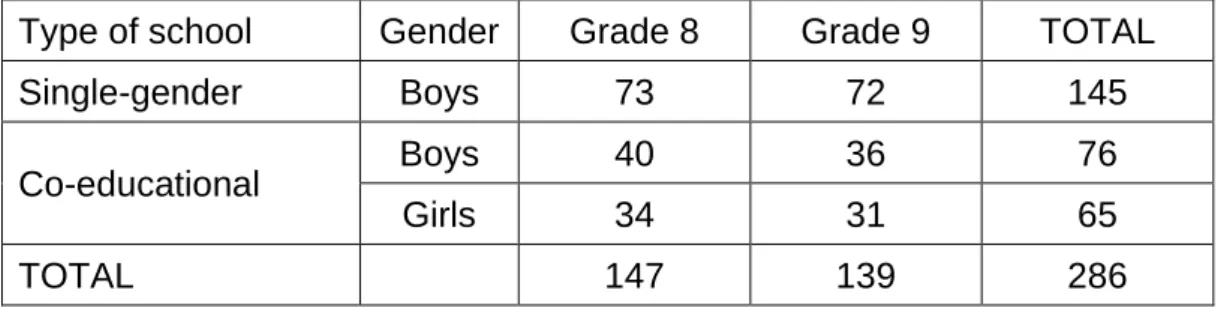
TABLE 4.1 LEARNERS PER TYPE OF SCHOOL AND GENDER, PER ... 84
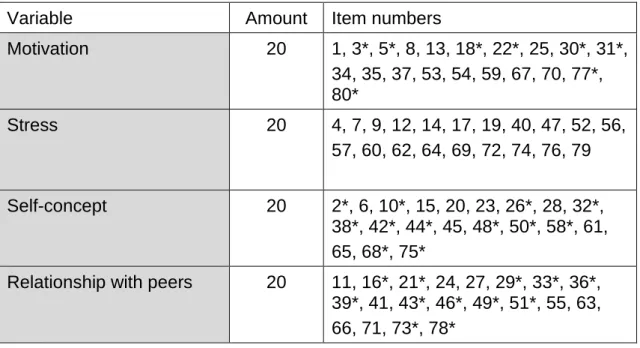
TABLE 4.2 ITEMS FOR EACH VARIABLE IN SECTION B ... 87
TABLE 4.3 ITEMS FOR EACH VARIABLE IN SECTION C ... 91
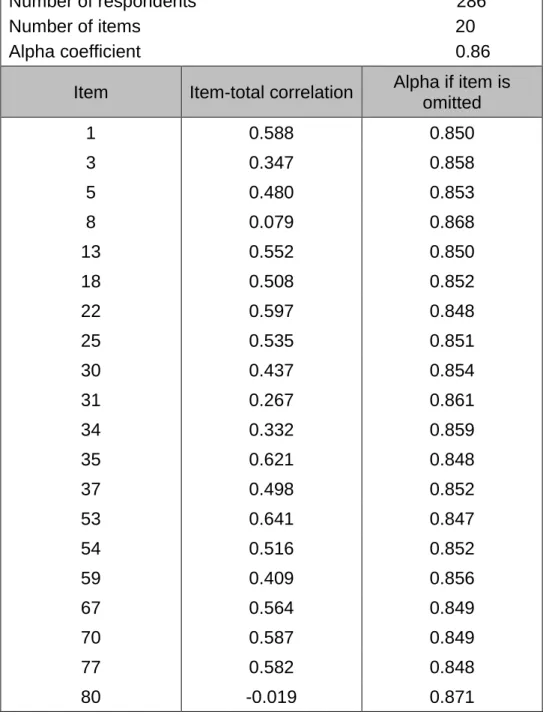
TABLE 5. 1 ITEM ANALYSIS FOR ITEMS MEASURING MOTIVATION ... 95
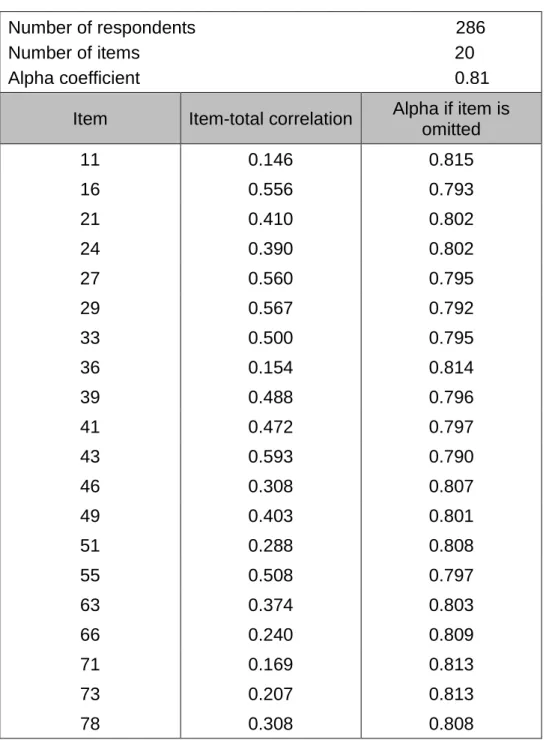
TABLE 5.3 ITEM ANALYSIS FOR ITEMS MEASURING STRESS ... 96
TABLE 5.4 ITEM ANALYSIS FOR ITEMS MEASURING SELF- ... 97
TABLE 5.5 ITEM ANALYSIS FOR ITEMS MEASURING RELATIONSHIP .. 98
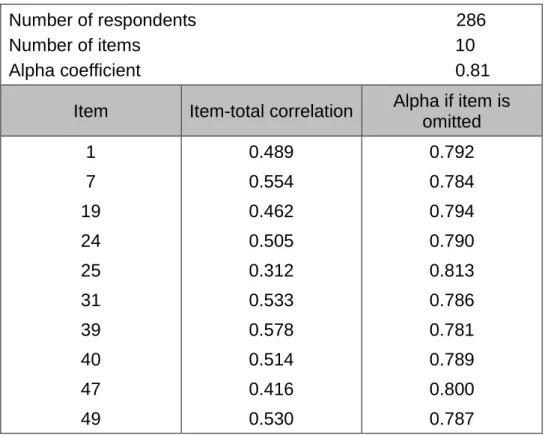
TABLE 5.6 ITEM ANALYSIS FOR ITEMS MEASURING PEER ... 99
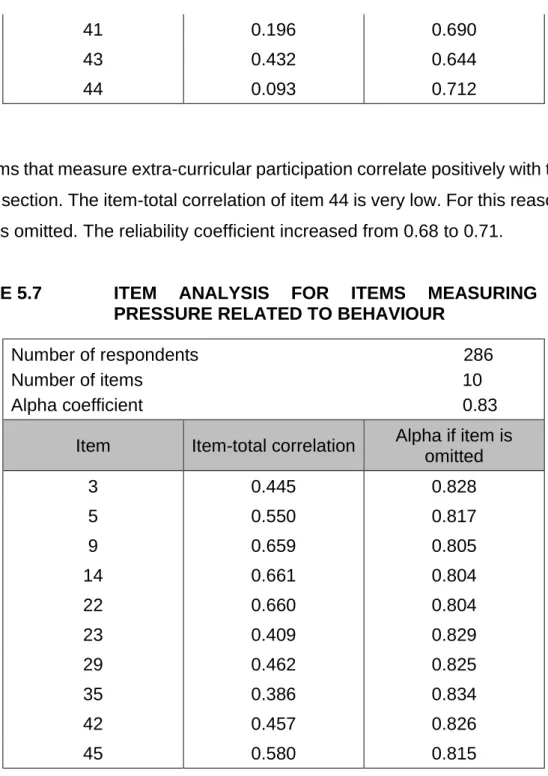
TABLE 5.7 ITEM ANALYSIS FOR ITEMS MEASURING PEER ... 99
TABLE 5.8 ITEM ANALYSIS FOR ITEMS MEASURING PEER PRESSURE RELATED TO BEHAVIOUR ... 100
TABLE 5.9 ITEM ANALYSIS FOR ITEMS MEASURING PEER PRESSURE RELATED TO FAMILY INVOLVEMENT ... 101
TABLE 5.10 ITEM ANALYSIS FOR ITEMS MEASURING PEER PRESSURE RELATED TO PEER CONFORMITY ... 101
TABLE 5.11 RELIABILITY COEFFICIENTS FOR EACH SECTION ... 102
TABLE 5.12 STANINES FOR POSITIVE AND NEGATIVE PEER PRESSURE 103 TABLE 5.13 CORRELATION COEFFICIENTS BETWEEN THE SOCIO-AFFECTIVE VARIABLES ... 104
xvi
TABLE 5.14 COMPARISON OF POSITIVE AND NEGATIVE PEER
PRESSURE EXPERIENCED BY BOYS IN A SINGLE-GENDER SCHOOL ... 106 TABLE 5.15 COMPARISON OF THE POSITIVE PEER PRESSURE
EXPERIENCED BY BOYS IN A SINGLE-GENDER SCHOOL AND BOYS IN A CO-EDUCATIONAL SCHCOOL ... 108 TABLE 5.16 COMPARISON OF THE NEGATIVE PEER PRESSURE
EXPERIENCED BY BOYS IN A SINGLE-GENDER SCHOOL AND BOYS IN A CO-EDUCATIONAL SCHCOOL ... 109 TABLE 5.17 DISCRIMINANT ANALYSIS USING ITEMS RELATING TO PEER PRESSURE AS INDEPENDENT VARIABLES ... 111
xvii
LIST OF ABBREVIATIONS
A.D.: Anno domini
AISD: Austin Independent School District
NYFERA : New York Foundation For Educational Reform & Accountability PPI: Peer Pressure Inventory
1
CHAPTER ONE
INTRODUCTION AND OVERVIEW
1.1 AWARENESS OF THE PROBLEM
Adolescence is the period of psychological and physiological transition between childhood and adulthood. The beginning of adolescence, around the onset of puberty, is characterised by dramatic changes in hormone levels, which results in significant changes to the adolescent's physical appearance. This developmental period is also characterised by the continued development of social abilities and behaviour.
1.1.1 Adolescence
Adolescence can be a time of turmoil and turbulence, of stress, and emotional insecurity. Rebellion against authority and convention is to be expected and tolerated for the sake of learning and growth (Ginott, 2003:24). According to Blakemore (2008:268), this is due to the many changes experienced concurrently, including physical maturation, drive for independence, increased importance of social and peer interactions, and brain development (Casey, et al., 2010:225). Hence, some adolescents may have a difficult time coping with the changes that occur. During this period of maturation, adolescents may experience intense feelings of despair, anxiety, hopelessness, anger, impatience and oppression (Bezuidenhout & Dietrich, 2004:69).
The onset of adolescence marks a change in patterns of social behaviour. One of the most obvious changes in adolescence is that the social core around which the adolescent’s world revolves, shifts from the family to the peer group. In order to establish greater independence from their parents, adolescents must orient themselves towards their peers more than they did in the earlier stages of their development (Burnett & Blakemore, 2009:52).
Adolescents spend an increasing amount of time each day in the company of their peers. Omoegun (1995, as cited in Oni, 2010:12) suggested that adolescents have a tendency to want to associate with members of their own age group (peers). As a
2
result, the decisions of the peers also influence the decisions of individuals within the group.
Peer groups serve a number of important functions throughout adolescence, providing a temporary reference point for a developing sense of identity. Peer groups provide adolescents with a source of information about the world outside of the family and about themselves (Gentry & Campbell, 2002:21).
It is through the identification with peers that adolescents start to define how they differ from their parents and begin to develop their own sense of moral judgement and values (Kingery, Erdley & Marshall, 2011:219).
Peer groups serve as powerful reinforcers during adolescence as they become the source of popularity, status, prestige, and acceptance. Peer acceptance, in turn, plays an important role in adjustment from adolescence and into adulthood. The pursuit of peer acceptance is manifested in the way they dress, speak, walk, and in their general interests, all of which can be viewed as an attempt to “fit in” with the group. Consequently, peers often receive the blame for the onset of risky behaviours ranging from substance abuse to teen pregnancies (Bourne, 2001:4). Peer group involvement tends to be at its highest during adolescence. Conformity and concerns relating to acceptance are at their peak when compared to other stages of development (Santrock, 2001:57). Since peer acceptance is very important to many adolescents, it enables them to join a particular peer group and identify with the behaviours and attitudes of that group. Consequently, adolescents are often willing to conform to pressure from their peers in order to be accepted. 1.1.2 Peer pressure
Peer pressure involves changing one’s behaviour to meet the perceived expectations of others and can further be defined as social pressure forces a person to choose certain actions, adopt certain values, or otherwise conform in order to be accepted (Castrogiovanni, 2002:4).
We can link several interrelated factors to peer pressure during the adolescent years. Fourie (2001:213) measured several factors such as age, gender, academic
3
performance, the number of children in the family, extra-mural participation, self-concept, and parent-child relationships. The findings were that self-concept is the most important, correlating negatively with peer pressure. Adolescents with a high self-concept do not rely on the approval or acceptance of their peers and therefore experience less peer pressure.
With regard to age, a number of studies have found that peer pressure increases slowly from early adolescence and reaches its peak in Grade 9, after which it slowly starts to decrease. Adolescents in Grade 8 generally experience more peer pressure than adolescents in Grades 10 to Grade 12 (Berndt, 1982:1448; Seifert & Hoffnung, 1987:468; Wall et al.,1993:412; Schuld, 1999:140; Fourie, 2001:187-186; Bester & Fourie, 2006:167; Steinberg & Monahan, 2007:1541).
There is a direct link between an adolescent's quality of interaction with their parents and the quality of their peer group relationships. Conger and Galambos (1997:123) and Fuligni and Eccles (1993:628) found that adolescents who have a good relationship with their parents are less likely to conform to peer pressure. This was confirmed by Fourie (2001:212), who found that high peer pressure could be associated with poor parent-child relationships.
More peer pressure is experienced by adolescents whose parents demonstrate a high level of parental control over issues such as choice of friends, dating partners, problematic behaviour, or drug use. In families where the parenting styles are either indulgent or disciplinarian, adolescents experienced high peer pressure. However, adolescents experience less peer pressure in situations in which the parents have an authoritative parenting style where parents and adolescents negotiated family decisions. These findings suggest that we can use earlier parent-child relationships to help predict adolescents’ experience of peer pressure in late adolescence (Geary, 2011:36).
Ide et al. (1981:483) found that the peer group could influence adolescents’ academic performance in either a positive or negative manner. Fourie (2001:188) established that the higher the peer pressure, the lower the academic performance and that adolescents who are academically stronger have more successful peer
4
relationships and are more readily accepted by the peer group. Consequently, they experience less peer pressure to gain acceptance.
The majority of research examining peer influence is focused on anti-social, deviant, and health-risk behaviours. Research in these behavioural domains has continued over the last decade and highlights the role of peers in alcohol use, smoking, and aggressive and/or illegal behaviours (Brechwald & Prinstein, 2011:166). Negative peer pressure strongly influences adolescents and encourages negative behaviour such as using illicit drugs, drinking, and cheating on a test. Adolescents often resort to delinquent behaviour in order to receive approval from their peer groups and fulfil their need to be accepted (Cullingford & Morrison, 1997:73; Vargas, 2011:311). Despite negative peer pressure, the possibility of positive peer pressure also exists. Peer relationships or friendships can improve school performance in several ways. Peer pressure may have a positive influence on academic performance, extra-curricular participation and general behaviour (Schuld, 1999:1). Brown et al. (1986:529) tells us that peer group influence tends to encourage adolescents to perform better academically rather than promote bad academic performance. Adolescents with close friends, who perform well academically, are more inclined to improve their academic performance, Brechwald and Prinstein (2011:174) found that peers influenced adolescents’ academic achievement and intrinsic motivation in a school context. Consequently, the presence of positive peer relationships can enhance the overall atmosphere of the classroom and encourage higher levels of both class participation and academic achievement (Spavin, 2007:28).
Adolescents who experience higher levels of validation from their peers, also receive more positive feedback on class participation and school success. Having friendships within a peer group that provides help, guidance, and communication, support adolescents in their efforts to excel at homework and class work. Higher levels of trust in friendships could lead adolescents to attend school more regularly, while lower levels of conflict and alienation in the peer group would serve as less of a distraction in terms of academic participation (Wentzel & Caldwell, 1997, as cited in Spavin, 2007:6).
5
Adolescents may experience peer pressure as a positive force that encourages them to participate in extra-curricular activities. Vest and Simpkins (2012, as cited in Brown, 2013:80) suggested that gaining popularity or visibility within the peer group could be the motivating factor that emboldens adolescents to pursue certain extra-curricular activities. Bohnert et al. (2010:576) reported that continuous involvement in extra-curricular activities, especially sports, increases the number of nominations an adolescent would receive as a close friend to other members of the peer group.
Adolescents tend to attribute a set of behaviours or traits to peers who take part in specific extra-curricular activities, for example, chess players could be labelled nerdy, while rugby players could be labelled popular or unintelligent. Subsequently, peer status becomes an important factor in an adolescent's choice of extra-curricular activities. It seems that adolescents choose to participate in a specific extra-curricular activity based on the peer status attached to the activity (Brown, 2013:80-81).
Adolescents can also experience peer pressure as a positive force in their general behaviour. Ellis and Zarbatany (2007, as cited in Brechwald & Prinstein, 2011:173) found that peer groups with greater centrality are more potent sources of influence in terms of pro-social behaviour. Pro-social behaviours are often referred to as compassionate, empathetic, or ethical behaviour. According to the literature, it seems that peer socialisation processes provide potential protection from maladaptive outcomes and are more likely to promote pro-social behaviour as opposed to deviant behaviour (Adamczyk-Robinette et al., 2002, as cited in Brechwald & Prinstein, 2011:167). A study conducted by Choukas-Bradley et al. (2015:2209) indicated that high status peers (adolescents who represent idealised identities) might be especially influential on other adolescents’ pro-social behaviours. The research indicated that participants conformed more strongly to the pro-social norms when they believed they were interacting with high status peers. Previous studies, in which gender and group pressure were examined, indicated that boys and girls experience peer pressure differently. Boys experience both negative and positive peer pressure more strongly, especially in terms of deviant behaviour, and involvement with family and school respectively (Berndt, 1982;
6
Brown et al., 1986; Taylor & Wong, 1996; Steinberg & Monahan, 2007). 1.1.3 Rationale of the study
Since the different genders experience peer pressure differently, we can assume that there is the possibility that group dynamics may differ when only boys are present, such as at a single-gender boys’ school, compared to mixed-gender groups.
Single-gender education may also cause a difference in peer pressure, both positive and negative. Such an assertion, however, is speculative as no research could be found on how single-gender education influences peer pressure or to determine whether peer pressure would increase or decrease in the absence of the opposite gender.
There is a vague indication that differences in group pressure may be expected when taking into consideration the advantages of single-gender education for boys. According to the Austin Independent School District (AISD, 2011:10), single-gender schools are beneficial to boys. Such a setting can potentially boost their confidence in their ability to learn because they are not being compared to girls, who are generally seen to be academically stronger than boys. Boys are also able to develop strong bonds of friendship and camaraderie with peers and teachers so that the impact of positive role models can exert its maximum potential effect on general behaviour. Kirner (2013:2) found single-gender education to be beneficial because adolescents who are grouped by gender, perform better academically, and have better peer interactions without the distraction and social pressures of the opposite gender. Goff and Johnson (2008:21) used brain-based research to support the concept of single-gender schools and found that boys’ brains function best in situations that encourage competition; therefore, single-gender schools should be beneficial to boys as their competitive nature would encourage them to participate in extra-curricular activities and perform well academically.
Most of the research found in the literature focuses on negative peer pressure in a co-educational setting (Brown, 1990; Harter, 1998; Rubin et al., 1998 and Mayeux et al., 2008, as cited in Brechwald & Prinstein, 2011).
7
Some of these studies only include boys but does not state whether the boys attended a co-educational or single-gender school. A multi-faceted approach to peer pressure, both positive and negative, and in single-gender and co-educational schools should, therefore, be considered.
1.2 FORMAL STATEMENT OF THE PROBLEM
Information obtained from various research studies has shown that, over the last 50 years, the relationship that an adolescent has with peers, has replaced their relationships with adults in terms of providing foundational values and behavioural influence. Recent research indicates that friends play a key role in both negative and positive behaviour (Oni, 2010:14). While typical behaviour related to negative peer pressure includes alcohol use, drug use, crime, delinquent behaviour and poor academic performance (Oni, 2010:15; Brechwald & Prinstein, 2011:166), only a limited amount of research related to positive peer pressure has been done focusing on pro-social behaviour, academic performance, family relationships and extra-curricular participation (Snell & Hirschstein, 2005:378-379; Lingard et al., 2009:150; Brechwald & Prinstein, 2011:166).
No research has been done on negative and positive peer pressure in single-gender schools as compared to co-educational schools. This gap in the literature gives rise to the question of how peer pressure is experienced in a single-gender school. This was the general aim of the investigation. The peer pressure experienced at a co-educational school needs to be taken into account for comparison purposes. The general aim as mentioned above gave rise to the formal problem statements of this investigation:
Problem statement 1: Which variables relate to positive and negative peer pressure experienced by adolescents?
Problem statement 2: Is the peer pressure experienced by adolescent boys in a single-gender school more positive than negative in nature?
Problem statement 3: Do adolescent boys in a single-gender school differ from boys in a co-educational school with regard to negative and positive peer pressure?
8
Problem statement 4: Are there specific factors that discriminate best between those boys who experience positive peer pressure and those who experience negative peer pressure?
1.3 AIM OF THE STUDY
The main purpose of the study is to determine the nature of the peer pressure that boys experience at a single-gender school compared to the peer pressure experienced by boys at a co-educational school, to identify the variables that relate to negative and positive peer pressure and, lastly, to determine whether boys experience more negative or positive peer pressure in the absence of girls.
A literature study will be conducted with the aim of:
• conceptualising single-gender education in order to differentiate between single-gender and co-educational schooling;
• determining the considerations that cause the need for single-gender schools;
• exploring single-gender education, its advantages and disadvantages, respective examples of which include improved academic achievement and better sensitivity to and awareness of gender differences in learning, and propagating and reinforcing gender stereotypes;
• analysing the phenomenon of peer pressure and how adolescents experience pressure related to peer group involvement, school involvement, family involvement and conformity to peer group norms; and
• conceptualising factors that influence negative and positive peer pressure such as self-concept, age, gender, socio-economic status, and parent-child relationships.
An empirical investigation will be conducted with the aim to:
• explore the factors that relate to positive and negative pressure, such as self-concept, age, gender and relationship with peers;
• determine whether boys in single-gender education differ from boys in co-educational schools with regard to positive and negative peer pressure;
9
• determine whether boys in single-gender schools experience more positive or more negative peer pressure than boys in co-educational schools; and
• determine the factor(s) that discriminate best between those boys who experience positive peer pressure and those who experience negative peer pressure.
1.4 PROGRAMME OF THE INVESTIGATION
Chapter 2 will provide a literature study pertaining to single-gender education in which the history of single-gender education will be explored and the reasons for their establishment and present-day existence will be investigated. The main aims of single-gender schools will be discussed, specifically outlining that single-gender schools were initially opened during the twelfth century to educate boys from aristocratic backgrounds. The different approaches to single-gender education will then be discussed, which include feminism, the gender gap, and boys’ underachievement. Based on the available literature the various advantages and disadvantages of single-gender education will be discussed.
Chapter 3 will explore literature relating to peer pressure during adolescence. Firstly, adolescent development will be discussed, focusing on the various changes that adolescents undergo during this developmental stage. Secondly, the relationship between adolescent development and peer pressure will be examined. This will be followed by defining and identifying peer pressure, including what a peer group is, what peer groups offer adolescents, and the nature of adolescent peer relations. Next, the factors relating to negative peer pressure (such as smoking, alcohol use, drugs and delinquency) and positive peer pressure (such as academic performance, extra-curricular participation and pro-social behaviour) will be discussed. Lastly, factors that influence peer pressure such as gender, age, self-concept, and parent-child relationships will be considered.
Chapter 4 will contain the research design of the empirical investigation and hypotheses that relate to the research problem will be formulated, based on the findings from the literature study. This chapter will discuss the manner in which the sample was selected while the development of a questionnaire to measure peer
10
pressure will be explored. Lastly, the research procedure that was followed during the empirical investigation will be presented.
Chapter 5 will provide an analysis of the results of the empirical investigation. This includes the way in which the hypotheses were statistically tested and conclusions drawn after the testing of each hypothesis.
Chapter 6 will deal with the educational implications of the research findings. The implications will focus on guidelines for teachers and parents, after which the contribution and limitations of the study will be discussed and suggestions for further research will be provided.
11
CHAPTER TWO
SINGLE-GENDER EDUCATION
2.1 INTRODUCTION
As mentioned in the previous chapter, the aim of the current study is to determine how boys at single-gender schools experience peer pressure. It is, therefore, imperative that a thorough analysis of single-gender education is done. Definitions from the available literature (Rundell, 2002; Riordan, 2008:3; AISD, 2001:7; Kirner, 2013:1), will be presented in order to differentiate between single-gender and co-educational schooling.
The history and rationale of single-gender education will be explored and their present-day existence will be investigated. The main aims of single-gender schools will be discussed, specifically outlining that single-gender schools were initially established during the twelfth century to educate boys from aristocratic backgrounds in order to educate and discipline the ‘elite male mind’ (Ivinson & Murphy, 2007:17). Single-gender schools for girls were only instituted in the first half of the nineteenth century. The curriculum in these girls’ schools was mainly concerned with refining the girls to make them more marriageable (Unterhalter, 2006:191). Although this is not true in today’s society, single-gender schools still exist and, therefore, the current vision and mission of single-gender schools should be investigated.
The different approaches to single-gender education will then be discussed (Lee & Marks, 1994:98; Thompson & Ungerleider, 2004). The feminist view on single-gender education explores the concerns for girls and how they are disadvantaged by the co-educational school setting. Feminists believe that girls do not have equal access to education. Feminists believe that the co-educational school environment is masculinised. Achievement of boys and girls in certain subjects can create a gender gap in co-educational schools (Thompson & Ungerleider, 2004). There is a concern about boys’ performance in subjects that are typically seen as ‘female-orientated’ subjects, such as consumer studies, drama, art, music, and languages. There is also a concern about how girls perform in subjects that are considered to
12
be ‘male-orientated’ subjects, such as science, mathematics, and information technology. According to the proponents of gender education, the single-gender school setting addresses the achievement gap in these subjects, as they are no longer seen to be subjects that belong to the opposite gender.
With a topic such as single-gender education, there will always be proponents who will emphasise the advantages of single-gender education and opponents who will criticise it. In the literature, it is evident that there are several advantages to single-gender education with proponents believing that single-single-gender education can address issues relating to gender inequality and academic performance. The literature study of Lee and Marks (1990), Riordan (1998) and Gurian et al. (2009, as cited in Dickey, 2014:18), has certainly pointed to a number of possible advantages, which include improved academic achievement, greater awareness of and sensitivity to gender differences in learning, improved fairness in curriculum as well as more access to opportunities for learners to pursue academic, extra-curricular, and vocation-orientated activities.
These aspects will be discussed in more detail while the opposing research will also be analysed. On one hand, the critics of single-gender education argue that these schools are unconstitutional institutions that propagate and reinforce gender stereotypes (Berger, 2012:35). It is also believed that learners who have to re-enter a co-educational environment from a single-gender environment are more likely to struggle to adapt and interact with a mixed-gender group, which is a truer reflection of society. Opponents to single-gender education also maintain that segregating learners based on gender, will have the same harmful effects as racial segregation and believe it to be inconsistent with the societal and educational goals of diversity (Riordan, 2008).
On the other hand, proponents of single-gender education argue that single-gender schools improve learners’ academic achievement as it focuses on gender-specific learning styles (Lee, 1997, cited in Datnow & Hubbard, 2002; Riordan, 1998; Sax, 2005, 2007, as cited in AISD, 2001:12). It is, therefore, important to determine what literature and previous research indicates in terms of the academic achievement of learners in single-gender schools. Smithers and Robinson (2006:8), Spielhagen (2011:5-6) and Friend (2007:58) studied the academic achievement of learners in
13
co-educational schools and learners in single-gender schools in countries such as Canada, New Zealand, the United Kingdom, and the United States of America. These research findings will be discussed in more detail in section 2.7.
Since it is also of importance to ascertain which aspects of single-gender education earlier researchers have focused on, the available literature makes it evident that there are four general, and often intersecting, aspects which researchers use to compare single-gender education and co-educational schooling (NYFERA, 2006:2; Howe, 2010). These four fields are achievement, school subjects, attitude, and gender stereotyping. Each will be discussed in depth in this chapter.
Based on the available literature there are various advantages and disadvantages of single-gender education and co-educational schooling and, therefore, it is important to determine why parents choose specific schools. Although Miriam David (1997, as cited in Jackson & Bisset, 2005:195) states that very little of the research based on the parental choice of school has been concerned with gender, parents tend to take into account various factors when choosing a school. These factors include:
• good time management;
• monitoring the progress of learners;
• good parent-child relationships;
• creating learning environments that are safe and positive;
• a clear mission and focus on academics; and
• high expectations from learners to perform well in academic, sport, or cultural activities.
These aspects will be discussed in more detail later in this chapter.
2.2 DEFINING SINGLE-GENDER AND CO-EDUCATIONAL SCHOOLING
For the purpose of the current research, single-gender education and co-educational schooling will be defined in order to establish the differences between the two types of educational settings. Firstly, the term ‘single-gender education’ refers to primary and secondary educational settings where male and female
14
learners attend classes or school exclusively with learners of their own gender (Riordan, 2008:3; AISD, 2011:7; Kirner, 2013:1).
Conversely, co-education, also known as "mixed-sex education" or "mixed-gender education", is the educational integration of male and female learners in the same environment and classes (AISD, 2001:7). According to the Oxford advanced learners’ dictionary of current English (Rundell, 2002), co-educational schooling refers to having male and female learners taught together in the same classes or school rather than being segregated by gender.
It is evident from the above-mentioned definitions that single-gender schooling refers to an educational setting where boys and girls are segregated based on gender. Co-educational schools, on the other hand, are educational settings where boys and girls attend the same school and classes and there is no segregation based on gender.
2.3 HISTORY OF SINGLE-GENDER EDUCATION
For centuries, the Church controlled education and the first schools were attached to monasteries and cathedrals. Christian theologians followed Greek educational system during the 5th century A.D., which believed that learners had to learn to think before they could apply knowledge (Ivinson & Murphy, 2007:16). Therefore, the purpose of education during that period was not intended to address social and economic needs but rather to improve the mind.
A need for single-gender education arose during the 12th century A.D. as a result of the Hellenic view that education was intended for the aristocracy and professional men who needed to ‘be free to think’. Subsequently, this need was met by establishing public schools and the first universities (Ivinson & Murphy, 2007:16). The 14th century A.D. saw the introduction of the first grammar schools for boys whose curriculum was based on the trivium, namely the study of grammar, rhetoric, and logic. At this time there was still no institutional education provided for girls as the purpose of education was to educate and discipline the ‘elite male mind’ (Ivinson & Murphy, 2007:17).
15
The introduction of education for the masses in Britain during the 19th century A.D. included many single-gender schools. Even though the United Kingdom started establishing co-education for primary schooling (for 5 to 10-year-olds) in the 1920s, single-gender schools were still found in some parts of the country, including London, until as late as the 1960s (Unterhalter, 2006:190).
In the first half of the nineteenth century, it was mostly boys who were sent to school among the middle and upper classes. Girls usually received a more limited education at home, alongside younger brothers and sisters through governesses. Many boys attended local, day grammar schools. A fair number of these had begun as foundations for both genders but progressed to accommodating only boys. Others attended private boarding schools, the elite of which later formed the public schools that fostered appropriate sorts of hegemonic, classed, and Christian masculinity. Girls' were instructed mainly in ‘accomplishments’, which were aimed at making them more marriageable. During this period the same schooling system was applied in South Africa and other British colonies (Unterhalter, 2006:191), although by 1919, less than a quarter of secondary schools in South Africa provided single-gender education (Ivinson & Murphy, 2007:23).In the 1850s, middle-class women began to contest the social construction that restricted their roles (Manthorpe, 1985). They demanded an education system that would equip them with the necessary skills to support themselves should the need arise, or should they choose to do so. However, in their struggle for access to the elite curriculum, single-gender education for women was proposed because it mirrored that of boys’ schools. Women's' access to education threatened the social order and the heterosexual regime that underpinned it (Watson, 1997, as cited in Ivinson & Murphy, 2007:21). It was feared that women were not just attempting to democratise contemporary relations between husbands and wives, male, and female partners, but, more importantly, that they were attempting to undermine the way in which future generations would view patriarchal relations in social and educational spheres (Arnot & Weiler, 2005:200). Dale’s research in 1969, 1971, and 1974 (Ivinson & Murphy, 2007:24) is generally heralded as a key influence on the move away from single-gender schooling. The research argued that the natural state for secondary education was co-educational schooling and challenged previous
16
essentialist views about gender. A drastic decline in single-gender schools were caused by the introduction of comprehensive schools in 1965.
During the 1970s, in the United States of America, girls failed to gain access to mathematics and sciences in the same way boys did because of the polarisation in subject choices in co-educational schools. This caused major concern over the effectiveness of co-education in terms of equal educational opportunities for girls and renewed an interest in the likelihood that single-gender education could offer equality in an unequal world (Ivinson & Murphy, 2007:25).
Although there was a drastic increase in single-gender public education in the United States in the twentieth century (United States Department of Education, 2008), the United States of America has had a long-standing tradition of co-educational public schools (Bigler & Signorella, 2011:17). Conversely, single-gender education was more common and popular in countries such as Australia, New Zealand, Belgium, South Africa, and the United Kingdom. South Africa, as with most of Britain's colonies, developed its schools according to the British education model in the mid to late nineteenth century (Morrell, 2000:221). The United States of America was influenced by certain factors to continue with their tradition of co-education and, as a result, the only single-gender co-education on offer was private schooling (Bigler & Signorella, 2011:18).
Title IX of the Education Act Amendments of 1972 placed several limitations and restrictions on education because of the statement:
“No person in the United States shall, on the basis of sex, be excluded from participation in, be denied the benefits of, or be subjected to discrimination under any education programme or activity receiving federal financial assistance.” (U.S. Department of Education, 2008).
In 2008, revisions were made to Title IX in connection with the No Child Left Behind Act (United States Department of Education, 2008), which endorsed government funding for pioneering educational programmes including single-gender education (single-gender schools and single-gender classes offered within co-educational schools).
17
2.4 APPROACHES TO SINGLE-GENDER EDUCATION
According to Lee and Marks (1994:98) and Thompson and Ungerleider (2004), the interest in single-gender education appears to have developed within the contexts of three general domains, namely feminism, and girls’ disadvantage in schools, achievement and the gender gap, and boys’ academic underachievement.
2.4.1 Feminism and girls’ disadvantage in schools
Lee and Marks (1994:98) stated that the concerns of feminists about equality and access to education for girls have drawn attention to the disadvantages that girls experience in schools. Consequently, researchers began to explore ways of removing such alleged barriers to academic success and improving the effects of a masculine educational environment on girls’ academic success. As a result, single-gender girls’ schools were considered.
Most of the research in this area seeks to examine the effects of single-gender education specifically on girls’ sense of well-being and their attitudes towards school in general. Researchers attempted to assess the benefit of single-gender schooling for girls, focusing on psychological constraints such as self-esteem, confidence, comfort, and self-efficacy (Thompson & Ungerleider, 2004).
2.4.2 Achievement and the gender gap
Thompson and Ungerleider (2004) stated that educators, policy-makers, and researchers were led to explore the possible benefits of single-gender education as awareness and acknowledgement of sexism and gender inequalities in the classroom context became more prevalent and as female retention and achievement improved. Researchers focused mainly on single-gender education as a means of improving girls’ achievement in subjects, such as science, mathematics, and information technology that typically seen as male-orientated subjects. Thompson and Ungerleider (2004) found that a substantial portion of the research conducted in this field, focused specifically on increasing girls’ academic achievement in these subject areas. They also identified concerns relating to boys’ academic achievement in subjects that are typically seen as female-orientated subjects, but the concerns were to a much lesser extent.
18
The idea of using single-gender schooling to increase the academic achievement of boys and girls in subjects that are considered to belong to the ‘other’ gender, has received a great deal of support from governments, especially in countries such as England and Wales. These countries started publishing school exam results that indicated consistent and superior achievements by learners graduating from gender schools (Thompson & Ungerleider, 2004). Some countries view single-gender schooling as a way of balancing extreme imbalances in enrolments in subject areas regarded as belonging to the “other” gender within the co-educational schooling system.
2.4.3 Gender disadvantage revisited: Boys’ underachievement
Concern about boys’ underachievement became prevalent during the late 1990s in countries such as the United Kingdom, Australia, Canada, and the United States of America. This was prompted by the publication of exam results that indicated that the average scores for girls were often much higher than those of boys. Unfortunately, a change in the focus of concern from girls to boys is more apparent in the media than within academic literature (Thompson & Ungerleider, 2004). The idea of boys’ underachievement has been challenged by many with researchers such as Thompson and Ungerleider (2004) and Martino and Meyenn (2002:304) who discuss what Martino and Meyenn have termed “the moral panic” about boys’ underachievement.
The debate pertaining to boys as the ‘new disadvantaged’ is seen as a backlash against feminism and the perception of boys failing at school.Gorard (1999:236) argued that boys fail to match girls’ academic achievements regardless of how they are taught since most boys lack independence and are less developed linguistically during their early years of schooling. Gorard (1999:236) added that these barriers to learning in the early years of schooling often accompany them throughout their educational life cycle.
Very little research has been done on single-gender schooling that focuses primarily on the underachievement of boys, which is surprising since the issue is so prominent presented in the international media.
19
2.5 ADVANTAGES OF SINGLE-GENDER EDUCATION
Gurian et al. (2009, as cited in Dickey, 2014:18) stated that single-gender schools are successful in educating both girls and boys and encourages gender equality. Single-gender education is seen as an alternative method to co-educational schooling in terms of improving academic performance. Educators can implement gender-specific strategies to address the unique challenges that male and female learners face in attempting to make their educational and social experiences in school more successful.
2.5.1 General advantages of single-gender education
Supporters of single-gender education have pointed to potential advantages for both boys and girls (Lee, 1997; Riordan, 1998) that include:
• Improved academic achievement;
• Sensitivity to, and awareness of gender differences in learning;
• Teaching that incorporates research on differences in brain development between the genders;
• Increased fairness in curriculum and access to learner opportunities;
• Reduced strength of youth-culture values;
• Provision of same-gender role models;
• Improved peer interactions;
• More leadership opportunities;
• Increased opportunities for learners to pursue academic, extra-curricular, and career-orientated activities without the pressure of gender stereotypes; and
• More same-gender bonding and community.
Some proponents of single-gender education believe that there are significant and biologically-based differences in the way girls and boys learn, and that educational instruction is more effective when it is specifically designed with these differences in mind, such as seen with single-gender education (Gurian et al., 2001, as cited in AISD, 2001:10). These proponents argue that single-gender education is more effective than co-education since the instruction takes gender-specific learning styles and trends into account. For example, gender differences in hearing can be
20
accommodated when teachers speak more loudly in male classrooms than in all-female ones (Sax, 2007, as cited in AISD, 2001:7). In addition to the general advantages that learners and teachers experience, single-gender education proponents point to specific benefits for the different role players, such as both boys and girls, the teachers, and other staff members who teach and interact with them (Kirner, 2013:10-11).
Additionally, Protheroe (2009:32) argued another positive finding in that separate schools could address and correct disparities between male and female learners. Schools segregated by gender would benefit male learners with lower levels of academic achievement and would help reduce the achievement gap. Furthermore, a targeted curriculum could increase both nationwide assessment scores and pass rates.
Brain-based research done by Goff and Johnson (2008:21) was used to support the concept of single-gender effective education strategies. Their report describes schools that are normally organised for educational experiences such as reading, listening, talking, and responding. It goes on to suggest that such environments are best suited to female learners, while boys’ brains function best in situations that encourage competition. They assumed that the poor behaviour from male learners could be associated with a lack of engagement in the classroom, which may also contribute to higher rates of suspensions and low attendance rates in special-needs education classes for male learners.
Leonard Sax (2009, as cited in AISD, 2001:9) like Goff and Johnson (2008), is an avid proponent of creating separate learning institutions based on innate biological differences between male and female learners (Sax, 2007, 2009, as cited in AISD, 2001:9). He has written various books on the successes of single-gender schools for both boys and girls and has conducted research to prove his theories. Sax (2007, 2009, as cited in AISD, 2001:10) reasons that boys and girls must learn in environments that cater to their different learning styles. Similarly, Berger (2012:35) stated that if one teaches the same subjects to girls and boys in the same way, it will result in girls who believe mathematics to be difficult and boys who believe that art and poetry are ‘just for girls’.
21 2.5.2 Advantages for girls
Some educators believe that female-only classrooms are more supportive of girls’ academic achievement, particularly in subjects such as mathematics, science, and technology, than classrooms that include boys (Shapka & Keating, 2003:943). Proponents of single-gender education also noted that girls tend to become more competitive, less shy, and take risks in a single-gender setting.
Outside the classroom, girls embrace sports like hockey and soccer more enthusiastically and with less worry of the possibility of being labelled as tomboys (AISD, 2001:9). Other advocates note advantages that include a decrease of gender bias in teacher-learner interactions, less sexual harassment from boys, increased enrolment of girls in subjects they often avoid in co-educational settings, and improved self-concept (Riordan, 2008:45).
2.5.3 Advantages for boys
Research conducted by the International Boys School Coalition (AISD, 2001:9-10), found that boys-only schools can provide a stimulating learning environment where boys are encouraged to fully participation in all activities. Such single-gender schools for boys promote self-expression, a respect for the various paths to manhood and provide an atmosphere in which boys can discover sensitive gender and sex-related issues (AISD, 2001:10). Educational programmes designed to meet the developmental needs of boys offer many advantages, including:
• An increase in confidence in their ability to learn when they are not being compared to girls;
• The incorporation of books and other materials related to the curriculum that interest boys into all aspects of the school’s programme;
• Opportunities to be taught and coached by those who want to work with boys;
• Opportunities to grow at their own pace and can behave as boys for as long as they need, protected from society’s pressure to get involved with girls before they are ready; and
• The development of strong bonds of friendship and camaraderie with peers and teachers so that the impact of positive male role models can have its fullest effect.
22
2.6 DISADVANTAGES OF SINGLE-GENDER EDUCATION
Some researchers, such as Berger (2012) who addressed the issue of negative stereotyping of learners in single-gender settings, argued that single-gender schools are unconstitutional institutions that propagate and reinforce gender stereotypes. The study further referred to a recent court case in which women were not permitted to join a military institution. The United States Supreme Court ruled that the organisation’s gender-acceptance criteria was unethical and violated Title IX. The study concluded that single-gender schools unlawfully remove resources from all learners in need (Berger, 2012:35).
Opponents to single-gender education, such as the authors of The PseudoScience of Single-gender Schooling (2009) reasoned that single-gender education reinforces negative stereotypes and that there is very little evidence of increased academic achievement for boys or girls (Halpern et al., 2011:1706). These proponents argue against using brain-based research to justify the segregation of learners based on gender. They state that, while certain gender differences (e.g. in brain activation patterns, auditory thresholds, memory performance) have been reported in adults, none of these differences are substantial enough to justify different educational methods. They also maintain that learners from a single-gender environment who re-enter a co-educational environment, are more likely to struggle to adapt and interact with the mixed-gender group.
Proponents of co-educational schooling do not approve of single-gender education. They state that, when advocates of single-gender schooling claim that there is scientific proof that girls’ and boys’ brains operate differently, that is really just a form of disguised stereotyping of men and women. (These scientific claims being that girls are more co-operative and boys are more competitive.) (ACLU, 2009: 4). Some critics claim that single-gender schools do not prepare children for the real co-educational world of work and family in the way that co-educational schools do (Sax, 2005, as cited in AISD, 2011:14). Learners, especially girls, need the opportunity to express themselves in front of a mixed-gender classroom during their school years to develop a positive self-concept that will enable them to compete in
23
a mixed-gender environment later in their lives (Sax, 2005, as cited in AISD, 2011:17).
Opponents of single-gender education also argue against single-gender education by maintaining that it:
• has the same harmful effects as racial segregation;
• is inconsistent with societal and educational diversity; and
• does not prepare learners to interact meaningfully in a mixed-gender society or with members of the opposite gender (Riordan, 2008:13).
2.7 NEUTRAL FINDINGS RELATED TO SINGLE-GENDER EDUCATION
Smithers and Robinson (2006:8) studied and based their data on the academic achievement of learners in co-educational and single-gender learning environments in Canada, New Zealand, the United Kingdom, and the United States of America. They determined that there were no reliable findings that suggested single-gender education was either more or less beneficial for learners than co-education. In addition, they noted that both types of schools produced learners who were academically successful. Subsequently, they stated that it was impossible to predict learner achievement based solely on gender-segregated or mixed-gender settings. Spielhagen (2007:59-62) conducted an evaluation of single-gender classrooms in a public middle school that offered gender-segregated classes in the sixth, seventh and eighth grades. At the beginning of the school year, administrators selected teachers who would educate learners in the new single-gender environment while others would continue teaching co-educational classes. This caused conflict among teachers since the administrators forced teachers into single-gender classrooms regardless of whether they supported the concept or not. Findings suggested that single-gender education was partially effective in improving learner achievement. Furthermore, Spielhagen (2007:64) found that younger learners were more likely to prefer single-gender education. She also reviewed teachers’ perspectives on the single-gender classroom initiatives and found mixed responses. While some teachers expressed support for single-gender classes, others did not agree with segregating learners by gender and requested that the practice be abandoned. Spielhagen (2011:4) continued her attempts to determine how effective
single-24
gender classrooms were in educating learners. A later mixed-method study involved quantitative and qualitative data collection consisting of three phases. During the first phase, she conducted a focus group with teachers to measure their initial attitudes and perceptions of single-gender classrooms. In the second phase, she analysed quantitative data from surveys that were completed at the beginning of the year. Finally, she administered follow-up teacher surveys at the end of the school year.
Findings from this study suggest that single-gender classrooms affect both teachers’ perceptions and the level of learner achievement. Spielhagen (2011:5-6) determined that, throughout the school year, teachers’ perceptions of single-gender classrooms altered from enthusiastic to blasé. Results from the final survey also suggested that teachers believed that male and female learners processed information differently. Although this finding seems to support the notion of separate classrooms based on gender, some teachers in her study nevertheless supported the idea of returning to co-educational learning environments. Many participants noted that as the school year progressed, both male and female learners’ behaviour became increasingly negative in the single-gender classrooms. As a result, teachers suggested that, rather than the school assigning learners to single-gender classrooms, parents should be allowed to make the decision. This would decrease the disruptive behaviour from learners who do not want to work in a single-gender environment.
Friend (2007:58) also reported mixed results from single-gender schools and argued that schools with the highest achievement improvements were institutions that specialised in supporting learners from low socio-economic backgrounds. Nonetheless, she argued that educators should not use deficiency, in this case lower socio-economic backgrounds, as a reason to separate learners from their peers. Furthermore, she stated that even though males are supposedly weaker in reading while females are weaker in mathematics, they do not require separate schooling to meet their needs.
Overall, researchers presented an assortment of positive, negative, and mixed research results pertaining to the effectiveness of single-gender schools. Researchers who argued for it, stated that single-gender schools had the capability
25
to reduce the achievement gap between male and female learners. Those who argued against it, voiced concerns that single-gender schools reinforced stereotypes. Lastly, those who presented mixed results could not give a definite answer about whether single-gender schools were beneficial or not.
2.8 RESEARCH RELATING TO SINGLE-GENDER EDUCATION
2.8.1 Overview
There has been substantial research and debate about whether single-gender schooling yields academic and/or social advantages for girls or boys.
Several explanations have been given for differences between single-gender and co-educational settings in educational processes and, ultimately, in learner outcomes. The dominant presence of boys in the classroom is one of the most commonly discussed differences between the two types of settings. Most studies have indicated that boys contribute more to classroom interaction (for example, by calling out answers), they dominate in hands-on activities such as laboratory work, tend to be more disruptive and experience more negative interaction with teachers as a result of their misbehaviour (Smyth, 2010:47). From this perspective, the presence of boys in the classroom is seen to have a negative effect on girls’ academic engagement and achievement.
Other researchers have pointed to the distraction characteristic of co-educational settings for adolescents (NYFERA, 2006:2). Several studies have explored the way in which schools serve as a place for the creation of masculinity and femininity. Furthermore, that the manner in which certain subjects such as mathematics and physical sciences may be deemed as masculine, could lead to anxiety and pressure for girls in terms of selecting these subjects and their subsequent academic performance in them (Mendick, 2005, as cited in Smyth, 2010:52).
Dale (1969, as cited in Smyth, 2010:54) conducted one of the first large-scale studies of single-gender education in a British-specific context. His research suggested that co-educational schooling provided the ideal context for adult life for both genders. With regard to academic performance, he further found that girls’ educational progress was not disadvantaged by co-education, although the
26
research findings did indicate certain disadvantages, especially in subjects like mathematics and physical science. A number of studies conducted in Britain in the 1970s and 1980s indicated that girls tended to have higher academic achievement levels in single-gender schools (Deem, 1984, as cited in Smyth, 2010: 49).
Steedman (as cited in NYFERA, 2006:4) used data from the National Child Development Survey pertaining to young people born in 1958 and found that their examination results revealed very little as to whether the learners attended co-educational or single-gender schools. Similarly, other studies conducted in the United Kingdom found no significant advantage for girls in their educational achievement once intake differences among schools were taken into consideration (Smyth, 2010:49).
More recent studies indicated slightly different conclusions on the effects of single-gender education. Spielhofer et al. (2004, as cited in Smyth, 2010:50) found that the average academic achievement levels for boys do not differ significantly between single-gender and co-educational schools, but that there are some performance advantages for lower-achieving boys in single-gender schools. Conversely, it was found that girls attending single-gender school had an advantage across a range of achievement outcomes, with the greatest advantages being identified in physical science achievement.
A number of research studies conducted in the United State of America, where single-gender education was limited to the private school sector, have indicated that co-educational schooling had a negative effect on girls’ academic achievement because of peer pressure to prioritise relations with the opposite gender rather than schoolwork (Coleman, 1961, as cited in Smyth, 2010:52).
Bryk, Lee, and Holland (1993, as cited in Smyth, 2010:52) used a range of control variables, including social background, prior achievement, etc., in their studies and identified various positive outcomes for girls’ academic achievement as well as for social and personal development in single-gender girls’ schools.
Gilson (as cited in NYFERA, 2006:6) found no differences in mathematics achievement between single-gender and co-educational school girls, while by comparing single-gender schools with co-educational schools, Riordan (1998)