THE ROLE OF PROCUREMENT PROCESSES ON THE EFFECTIVENESS OF THE PUBLIC PROCUREMENT SYSTEM IN TANZANIA
LWITIKO JOEL MWANDOBO
A DISSERTATION SUBMITTED IN PARTIAL FULFILMENT OF THE REQUIREMENTS FOR THE MASTER OF BUSINESS ADMINISTARTION
(LOGISTIC AND TRANSPORT MANAGEMENT) OF THE OPEN UNIVERSITY OF TANZANIA
CERTIFICATION
The undersigned certifies that he has read and hereby recommends for acceptance by the Open University of Tanzania a dissertation entitled "The Role of Procurement Processes on the effectiveness of Public Procurement System in Tanzania" in partial fulfilment of the requirements for the degree of Master of Business Administration (Logistic and Transport) of the Open University of Tanzania.
... Dr.Omari K. Mbura
(Supervisor)
COPYRIGHT
This dissertation is copyright material protected under, the Copyright Act 1999 and other international and national enactments in that behalf on intellectual property. It may not be reproduced by any means in full or part, except for short extracts in fair dealing, for research or private study, critical scholarly review or discourse without the written permission of the author or the Open University of Tanzania in that behalf.
DECLARATION
I, Lwitiko Joel Mwandobo declare that this submission is my own work and that it has not been presented and will not be presented to any other University for a similar or any other degree award.
... Signature
... Date
DEDICATION
With my heart, this dissertation is dedicated to my lovely wife, Mrs. Tumaini E. Lwitiko and our children, Gerald, Gabriel and Getrude for their understanding and patience throughout the study.
ACKNOWLEDGEMENTS
My foremost gratitude goes to the Almighty God for his guidance in undertaking this study. It is through God's will that made this vital assignment possible.
Secondly, I am highly indebted to my supervisor Dr. Omar K. Mbura, for his tireless support on mentorship and constructive academic criticism. He provided abundance guidance as he particularly read draft after draft of my dissertation. Many thanks are extended to Dr.Salim who taught me research methodology and techniques. The knowledge gained proved a positive impact to this study.
I feel indebted to my employer for tolerance and human kind for allowing to pursue the masters programme. I know, somewhere there were inconviences because of the pursuance of this programme. This particulary appreciation goes to my supervisor, Mr. Deogratius B. Kumalija and colleagues under the department for their valuable support and the encouragement they provided to me during the entire process of the study.
Undertaking and accomplishment of this study was, in many ways, made possible by the tireless support of my family and friends in and outside the Open University of Tanzania. I thank them all for their warmth, solidarity and patience, especially during the final stages of the research. In particular I thank my lovely wife, Mrs. Tumaini E. Lwitiko. May Almighty God bless you all.
ABSTRACT
The study was triggered by the fact that the government has made number of efforts in
addressing weaknesses in the public procurement process. However there still
complaints that public procurement processes are characterized by delays, poor quality
and non cost effective delivery. This study sought to analyze procurement processes in
achieving effectiveness of the public procurement system. The study focused on
procuring entities based in Dar es Salaam due to budget constraints and existence of
major procuring entities in terms of procurement volume. Explanatory research design
was used to analyse the procurement proceses. The study used structured questionnaires
and interviews as primary tools for data collection. A total of 119 respondents out of the
expected 155 respondents returned the survey instruments. The study revealed that
procuring entities do not conduct market survey for establishing cost estimates,
inadequate users cooperation with PMU staff and poor solicitation documents due to
inadequate technical specifications, schedule of requirements, and drawings and poor
terms and conditions of contract. The weak evaluation critieria and inadequate tender
evaluations, and delays in contract awards are hampering efficient procurement process
which results to ineffective procurement system. Furthermore weak controls in
procurement contracts for payments to delivery of substandard goods or services and
delays of due payments to suppliers or contractors and generally poor contract
management were noted. The study recommends that procuring entities should conduct
market survey for cost estimates of major procurements and enhance cooperation
TABLE OF CONTENTS CERTIFICATION ... ii COPYRIGHT ... iii DECLARATION ... iv DEDICATION ... v ACKNOWLEDGEMENT ... vi ABSTRACT ... vii
LIST OF ABBREVIATIONS AND ACRONYMS ... xiii
LIST OF TABLES ... xiii
LIST OF FIGURES ... xiii
CHAPTER ONE ... 1
1.0 INTRODUCTION AND BACKGROUND OF THE STUDY ... 1
1.1 Introduction ... 1
1.1.1 Background of Public Procurement Reform in Tanzania ... 1
1.1.2 The Background of the Study ... 4
1.2 Statement of the Problem ... 5
1.3 Research Objectives ... 7
1.4 Research Questions ... 8
1.5 Relevance of the Study ... 8
1.6 Organization of the Study ... 9
CHAPTER TWO ... 10
2.0 LITERATURE REVIEW ... 10
2.1 Overview ... 10
2.2.1 Procurement ... 10
2.2.2 Public Procurement ... 11
2.2.3 Public Funds ... 11
2.2.4 Procurement Process ... 12
2.2.5 Value for Money ... 12
2.3 Theoretical Analysis of the Study ... 13
2.3.1 Principles of Public Procurement System ... 13
2.3.2 Procurement Legal Framework in Tanzania ... 17
2.3.3 Procurement set up Within Procuring Entity ... 18
2.3.4 Procurement Complaints Review Mechanism ... 20
2.3.5 Procurement Methods in Public Procurement... 22
2.3.6 Procurement Process ... 24 2.3.6.1 Tendering Process ... 27 2.3.6.2 Contract Management ... 31 2.4 Empirical Studies ... 33 2.4.1 General Studies ... 33 2.4.2 Studies in Africa ... 34 2.4.3 Studies in Tanzania ... 35 2.5 Research Gap ... 37 2.6 Conceptual Framework ... 38 CHAPTER THREE ... 42 3.0 RESEARCH METHODOLOGY ... 42 3.1 Overview ... 42
3.3 Survey Population ... 43
3.4 Area of the Study ... 44
3.5 Sampling Design ... 44
3.5.1 Sampling Frame ... 44
3.5.2 Sampling Technique ... 45
3.6 Variables and Measurement Procedures ... 46
3.7 Methods of Data Collection ... 46
3.7.1 Primary Data Collection ... 47
3.7.2 Secondary Data Collection ... 47
3.8 Data Reliability and Validity ... 48
3.9 Data Processing and Analysis ... 48
CHAPTER FOUR ... 49
4.0 DATA PRESENTATION, ANALYSIS AND DISCUSSION OF THE FINDINGS ... 49
4.1 Introduction ... 49
4.2 Characteristics of the Respondents ... 49
4.3 Findings, Analysis and Discussion ... 51
4.3.1 Procurement Planning Process and Effectiveness of Public Procurement System ... 52
4.3.1.1 Cost Estimate/Budget for Procurement Requirements ... 53
4.3.1.3 Use of Procurement Method as per Procurement Plan ... 56
4.3.1.4 Proper Planning of Tender Board Meetings ... 56
4.3.1.5 Timely Approval and Issuance of the General Procurement Notice to the Public... 57
4.3.1.6 Publication of General Procurement Notice in PPRA's Website, PE's
Website and Local Newspapers For Public Access ... 58
4.3.2 Tendering Process and Effectiveness of the Public Procurement System ... 59
4.3.2.1 Timely and Appropriate Submission of Procurement Requirements ... 59
4.3.2.3 Advertisement of Tender Opportunities ... 63
4.3.2.4 Adequacy of the Tender Board Quorum ... 65
4.3.2.5 Timely Tender Evaluation ... 66
4.3.2.6 Conducting Due Diligence Prior to Award of Tender ... 68
4.3.2.7 Adhering to the Original Tender Validity Period ... 69
4.3.2.8 Adherence to Tender Evaluation Criteria ... 71
4.3.2.9 Verification of Succesful Bidder's Price to the Market ... 73
4.3.3 Contract Management and Effectiveness of the Public Procurement System . 75 4.3.3.1 Appointment of Contract Manager ... 75
4.3.3.2 Preparation of Contract Documents ... 77
4.3.3.4 Procurement Records Keeping... 86
4.3.3.3 Contract Execution and Monitoring ... 82
CHAPTER FIVE ... 89
5.0 SUMMARY OF THE FINDINGS, CONCLUSION AND RECOMMENDATIONS ... 89
5.1 Introduction ... 89
5.2 Summary of the Findings ... 89
5.3 Implications of the Results ... 94
5.4 Conclusion ... 95
5.5.1 Improvement of Procurement Processes ... 97
5.5.2 Procurement Capacity to the Public Entities ... 99
5.6 Limitations of the Study ... 101
5.7 Area for Future Studies ... 102
REFERENCES ... 103
LIST OF TABLES
LIST OF FIGURES
Figure 2.1: Procurement Legal Frame Work within Procuring Entities ... 18
Figure 2.2 : Procurement Complaints Review System in Tanzania ... 21
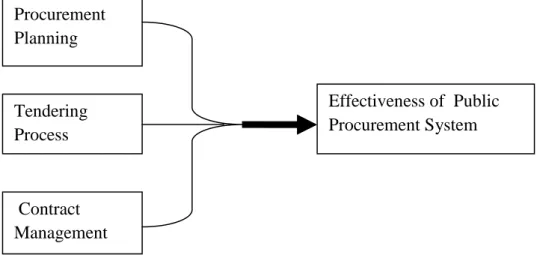
Figure 2.3: Conceptual Framework for the study ... 38
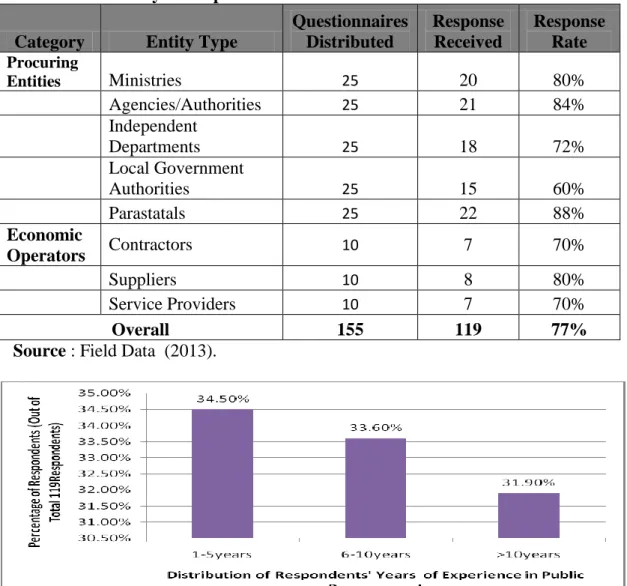
Figure 4.1:Distribution of the Respondents' Years Experience ... 50
Figure 4.2 : Respondents' Opinions on Procurement Planning Process ... 53
Figure 4.3: Crosstabulations to Cost Estimates Basing on Market Survey ... 54
Figure 4.4: Submission Of Appropriate And Timely Procurement Requirements .... 60
Figure 4.5: Response on Adequacy of the Bidding Documents ... 61
Figure 4.6: Crosstabulation on Adequacy of Bidding Document ... 62
Figure 4.7: Response on Publishing Procurement Opportunities in Appropriate Media ... 64
Figure 4.8: Response on Delays by Tender Board Quorum ... 66
Figure 4.9: Respondents' Opinions to Tender Evaluation Completion on Time Figure 4.10: Respondents' Opinions on Conducting Due Diligence to Suppliers, Contractors and Service Providers ... 69
Figure 4.11: Respondents' Opinions on Bid Validity Period ... 70
Figure 4.12: Respondents' Opinions on Compliance to Tendering Evaluation criteria by PEs ... 72
Figure 4.13: Respondents' Opinions on Tendering Evalauation Criteria by Suppliers ... 73
Figure 4.14: Respondents' opinions on Bidders' price against market price... 74
Figure 4.16: Respondents' Opinions on Preparation of Contract Documents and Its Implementation ...78 Figure 4.17: Respondents' Opinions on Preparation of Contract Documents ...78 Figure 4.18: Crosstabulations on Sufficeint Provisions for Controlling Delays of
Works or Goods Delivery ... 79 Figure 4.19: Crosstabulations on Provision of Adequate Controls on Effecting
Payments To Suppliers or Contractors ... 80 Figure 4.20: Respondents' opinions on Contract execution and Monitoring ... 82 Figure 4.21: Crosstabulation on Preparation of Inspection reports for Goods
and Progress reports for Works ... 86 Figure 4. 22:Maintainance of procurement records within PEs... 87 Figure 4.23: Crosstabulations on Responses from PEs on Procurement Records ....88
LIST OF ABBREVIATIONS AND ACRONYMS AO Accounting Officer
CPAR Country Procurement Assessment Report CTB Central Tender Board
CUIS Common Use Items and Services
EPC European Policy Committee of European Commission GN Government Notice
GOJ Government of Jamaica MOF Ministry of Finance
NPPPU National Public Procurement Policy Unit PCCB Prevention and Combating Corruption Bureau PEs Procuring Entities
PMU Procurment Management Unit PPA Public Procurement Act
PPAA Public Procurement Appeals Authority PPRA Public Procurement Regulatory Authority PPU Procument Policy Unit
PSPTB Procurement and Supplies Proffessional and Technicians Board OECD Organisation for Economic Cooperation and Development RTT Republic of Trindad and Tobago
SPB State Procurement Board of South Austarlia SPSS Statistical Package for Social Science
CHAPTER ONE
1.0 INTRODUCTION AND BACKGROUND OF THE STUDY 1.1 Introduction
This chapter introduces the study on the role played by procurement function in the public expenditure management and various public procurement reforms in Tanzania. The need for procurement processes in achieving effective public procurement system are discussed. The reasons for why many governments in developing countries pay attention to public procurement are also presented. Furthermore, this chapter covers the background of the study, statement of the research problem, objectives of the research, research questions, relevance of the study and organisation of the study.
1.1.1 Background of Public Procurement Reform in Tanzania
The public procurement has a tremendous impact on the economic, social, political and legal environment (RTT, 2005). The public procurement of services, goods and works on average, accounts to an estimate of 15 per cent of the gross domestic product (GDP) worldwide (OECD, 2008). According to annual report of PPRA (2013), PEs expenditure on procurements represent 41 per cent of the total Government budget for the financial year 2010/2011. This is after collecting awarded contracts from 80 per cent of the PEs.
The Government of Tanzania has realized the importance of public procurement to the economic development of the country and its contribution to poverty reduction as well as good governance. As part of its effort to improve public procurement system,
in 1996 Crown Agent was engaged as consultant to study the country’s procurement system and assess its adequacy. Based on the Crown Agents report, the Government enacted the Public Procurement Act No. 3 of 2001 (PPA, 2001) and its Regulations. This Act provided for the establishment of the Central Tender Board as the central coordinating body for public procurement activities within the government. The same Act established Public Procurement Appeal Authority (PPAA) to deal with resolution of complaints and disputes arising from the government procurement process. Under this procurement regime, CTB was mandated to regulate procurement activities and procuring entities were allowed to do procurement up to a certain threshold and those that were above the threshold provided in the regulations CTB has to process the procurement on behalf of the PEs.
The shortcoming of this arrangement was that, CTB was perfroming procurement functions and working as regulator while there was no other regulatory body to monitor it. There were also no time limits to process procurement actions. In 2002, the World Bank engaged a consultant to carry out a country procurement assessment. The Country Procurement Assessment Report (CPAR, 2003) came up with a number of recommendations for improving procurement system.THese recommendations include the establishment of procurement journal, amendment of PPA 2001 to PPA 2004 and its Regulations of 2005, and the establishment of Public Procurement Regulatory Authority, and Public Procurement Appeals Authority.
Furthermore, the Tanzanian procurement system established Government Procurement Service Agency to handle procurement of Common Use Items System through framework agreement used by procuring entities. Furthermore, the
Government has recently enacted PPA, 2011 to address some of the weakneses noted under the PPA,2004. The new regulations are under preparation by the Ministry of Finance. It should be noted that most procurement procedures are unchanged as per regulations of 2005. However, the legal power and functioning of some institutions like PPRA, PPAA and organs within procuring entity such as PMU, AO, TB, Governing Bodies are clearly stipulated in the new Act. Furthermore, a function of complaints review by PPRA has been shifted to PPAA.
To ensure that public entities comply with the Public Procurement Act and attain value for money in spending public funds, the Government created control system that consists of Controller and Auditor General office for overall control on enforcement of Public Finance Act, 2001 on public expenditure and PPRA on overall control on procurement functions to public entities using public funds. Also, there are established Internal Audit Units in every public procuring entity for monitoring and periodic audits, and advising on the best use of public funds accordingly on finance and procurement procedures.
The Ministry of Finance and Economic Affairs has other units namely; Technical Audit Unit and Government Asset Management Unit responsible for monitoring performance of construction projects and verification of assets acquired by public entities respectively. Finally, there is established Prevention and Combating Corruption Bureau as oversity body and mandated to prosecute any wrongdoings in spending public funds and entrusted authorities by public officers on matters related to corruption.
1.1.2 The Background of the Study
Public procurement process is a function that includes all stages of the process of acquiring property, works and services, involving the use of public funds to accomplish speficified public goals. It begins with the identification of the need to completion of the contract. The needs are evaluated, scope of works, products, or services identified, form of delivery and methodology for making contractual choices determined, contractual arrangement entered into and works or services performed (RTT, 2005).
Efficient public procurement system is a part of the requirement of the public expenditure management in modern budget systems. The sound procurement policy and practice can reduce the costs of public expenditure; produce timely results, stimulate the development of private sector; and reduce waste, delays, corruption and government inefficiency (Djurovic-Todorovic and Djordjevic, 2009). On the other hand, the inefficient use of public funds can be generated from problems across the entire procurement process from the definition of the needs and creation of the bidding documents, to a lack of transparency and competition in the process followed for announcements, bidding, evaluation and award of contracts, to poor contract supervision (OECD, 2005).
Public procurement process is bound to be executed within stipulated legal framework while advancing government goals (Murray,1999). The procuring entities may have internal objectives such as cost, efficiency and timely delivery of services or goods. On the other hand, the entities has to serve the goals of the general public who are tax payers and may happen that all of them have conflicting goals (Schapper
et al, 2006). This makes the procurement process more complex to the procuring entities for attaining expected objectives. As a result, many PEs are suffering from huge losses due to poor management in the procurement processes (Shirima, 2009). The prourement process mainly encompasses procurment planning, tendering and contract management (OECD, 2010).
Theprocurement planning and tendering processes had impact on duration taken to execute works, services or goods to be delivered as well as quality and cost of the acquired goods, works or services. The contract management phase enables public entites to get desired quality of deliverables, at the targeted time and within budget. There is need for paying attention to procurement processes such as procurement planning, tendering and contract management, and needs holistic approach. Procurement planning and tendering processes play a pivotal role of the procurement process for having smooth contract management and ultimately delivering expected outputs. Thus, inorder to have sound procurement system, efficient procurement processes are of paramount importance to procuring entities.
1.2 Statement of the Problem
Effective and efficiency procurement process have positive results to social impacts which include improved prospects of achieving other government objectives, increased access by local market to government contracts, enhanced reputation for government institutions, and improved social services such as better roads, airports, schools, clean water, reliable electricity, hospitals (Erridge, 2005). A poor public procurement process results in higher cost to the government and the public. It results to delays in executing projects or delivery of goods or services which result to
cost escalation, poor project execution and delays the delivery of benefits to the beneficiary of the procurement requirement (Shirima, 2009). It also results to poor workmanship of works contracts, delivery of substandard goods, delays of benefits anticipated by benificiaries and foster element of corruption in the procurement process (Sarfo, 2011).
The assessment on effectiveness of the procurement process revealed that 43.8 per cent of contract assessed do not have adequate provision for administering quality, time, cost and scope (CPAR, 2007). It revealed that 62 per cent of contracts assessed had incomplete records. The sound record keeping of procurement process plays an important role for easier contract management and more effective as without complete records may result to difficulties in dealing with disputes or claims raised by suppliers or contractors and consuming a lot of time for settling it (Alex, 2007). However the PPA (2004) provides guidance to procuring entities on standard processing times in the tendering process, complaints review mechanisms, selection of appropriate procurement methods as well as procedures for managing procurement proceedings and contract management for goods or works. On other hand, PPRA as an oversight body on procurement functions in the country has been issuing various guidelines and circulars for interpretation of the PPA and its regulations in order to expedite execution of the procurement process.
Despite of all these efforts made to streamline public procurement processes in the country, still there are complaints that procurement processes are ineffective and do not provide value for money. There are opinions that, procurement processes are among other things that hinder in realizing value for money to procurements made
to public sector (Shirima, 2009). The procurement processes had a problem on PEs attempting to modify legal provisions through solicitation documents or evaluation teams using criteria other than those stipulated in the solicition documents issued to prospective bidders. Futhermore, there is also a problem of PEs failing to observe issues like bid validity period and thus awarding tender beyond stipulated time (Mamiro, 2010).
Limited studies have been conducted to assess the elements of procurement processes resulting to poor performance of procurement functions. This created the need for undertaking further studies on procurement process in public procurement towards sound procurement processes from submission of the procurement requirements, procurement planning, tendering and contract administration. It is an opinion of the researcher that, these public outcries and weaknesses noted on procurement processes need a thorough study. This entailed to analyse the role of procurement processes from initiation of procurement to contract management.
1.3Research Objectives
The main objective of this study was to analyze the role of procurement processes towards achieving effectiveness of public procurement. The specific research objectives were:
i) To examine the extent to which procurement plan affects effectiveness of public procurement system;
ii) To examine the extent to which tendering process leads to effective public procurement system; and
iii)To examine the extent to which contract management contributes to effective public procurement system.
1.4Research Questions
The study was guided by the following questions:
i) To what extent does procurement plan affect the effectiveness of public procurement system?
ii) To what extent does tendering process leads to effective public procurement system?
iii)How does contract administration contribute to effectiveness of public procurement system?
1.5Relevance of the Study
This study has a significant impact to many stakeholders including various institutions of the Government, private sectors, academicians and the researchers. To the Government insitutions like procuring entities who form part of these study, will use the findings of this study as a tool towards improving their current procurement practices in achieving targets of the their organisations.
For the policy makers like Ministry of Finance and Economic Affairs through their Directorate of Procurement Policy, PPRA, PPAA, Procurement and Supplies Proffessional and Technicians Body (PSPTB), Government Procurement Service Agency (GPSA) and similar bodies, this study will act as a trigger in improving public procurement policies and regulations where appropriate. Again, to academicians and other researchers, this study will motivate them in carrying out
further studies for the purpose of contributing in their findings regarding the analysis of procurement processes towards the effectiveness of public procurement system. Above all, this study is a partial fulfilment of the requirements for the award of the Masters of Business Administration (MBA) in Logistic and Transport Management.
1.6Organization of the Study
The study is structured in five chapters. Chapter One presents the introduction part of the study which covers the background, statement of problem, research objectives, specific objectives, research questions, significancy of the study and its limitations. Chapter Two presents the literature review on theoretical analysis and empirical studies. The theorectical analysis covers pillars of public procurement, the procurement legal framework, institution set within procuring entities, complaints review mechanism, competitive procurement methods, and procurement processes in the public procurement system.
The empirical studies review is presented on some practical studies which have been done similar or relevant to this study in Africa and Tanzania. Chapter Three presents a brief description of the research design and methodology used for undertaking this study. Chapter Four presents the data analyses and discussion of the key findings of the study on the procurement processes. Chapter Five presents a last part of the study. It provides conclusions and recommendations. Also, it presents recommended areas for future studies.
CHAPTER TWO 2.0 LITERATURE REVIEW 2.1 Overview
This chapter presents the literature review related to the topic under the study. It attempts to define different concepts as used in the study. It also reviews both theoretical and empirical studies conducted by other proffessionals in the context of procurement processes and its challenges in the public sector.
2.2 Definitions of Concepts
To make this study understandable and meaningful, an effort has been made to briefly define some of the concepts pertinent to the study. The concepts are used in different discussions of this study.
2.2.1 Procurement
Procurement means buying, purchasing, renting, leasing or otherwise acquiring any goods, works, services by a procuring entity spending public funds on behalf of the ministry, department or regional administration of the Government or public body and includes all functions that pertain to the obtaining of any goods, works, or services including description of reguirements, selection and invitation of tenders, preparation and award of contracts (PPA, 2004). Procurement is all about purchasing the right quality of material at the right time, in right quantity, from the right source and at the right price. Thus, public procurement means acquisition of goods, services and public works in a timely manner that results in the best value to the government and the people (Baily,1998). In this study, the term procurement was used in the same sense.
2.2.2 Public Procurement
Public procurement means procurement made by procuring entity using public funds to acquire goods, works and services required to satisfy certain needs in the right quantitity, time, quality and price. It involves management of the acquisition of goods, works and services to achieve value for money through professional, auditable and transparent framework (Alex, 2007). It ranges from the purchase of routine supplies or services to formal tendering and placing contracts for large infrastructure projects by a wide and diverse range of contracting authorities (NPPPU, 2005).
According to Mamiro (2010), public procurement process stretches from procurement planning, budget allocation, bid inviataion, bid evelauation, contract award, and contract management. The public procurement has both economic and social benefits which are reflected in the legal framework of procurement functions and it has a crucial role of integrating social and economic sustainable benefits to stimulate employment strategy (Wickenberg, 2004). PEs follow PPA (2004) and its regulations (2005) and are subject to government audits in their use of public funds. The same views were used in this study.
2.2.3 Public Funds
Public funds mean monetary resources appropriate to procuring entities through budgetary processes, including the Consolidated funds, grants, loans, and credits put at the disposal of the procuring entities by local or foreign donors and revenues generated by the procuring entities (PPA, 2004). Public money in this context, includes money received by a public body regardless of source, or money received
by a non-public body from a public body. The underlying philosophy is that once a body is spending public money there follows an obligation on that body to account for value for money, which by definition encompasses efficient and effective delivery of the property or services for which public money is spent (RTT, 2005).
A procuring entity refers to a public body or any other body or unit established and mandated by the government to carry out public functions (PPA, 2004). This means any Ministry, Department,Local Government Authority, Statutory Body, Executive Agency, Public Company or any other agency in which the Government owns controlling interest, that is at least 51 percent and/or in which the Government is in a position to direct the policy of the entity. In this study , the same views were taken into consideration.
2.2.4 Procurement Process
Procurement process means successive stages in the procurement cycle, including planning, choice of procedures, measures to solicit offers from tenderers, examination and evaluation of those offers, award of contract and contract management (PPA, 2004). In other words, the procurement process spans a life cycle from identification of the need, through the selection of suppliers, to post-contract award management, including disposal (Sarfo, 2011). The study used the same views in discussing on the procurement process.
2.2.5 Value for Money
According to Msita (2007), value for money is defined as the optimum combination of the whole-life cost and quality (fitness for the purpose) to meet the users'
requirement. The users' requirement among others includes quality of acquired goods, timely delivery, customer satisfaction, reasonable price and quality of people undertaking procurement functions (Kakwezi and Nyeko, 2010). Value for money, needs continous improvement in the efficiency of internal processes and systems and requires public entities to maintain structures that avoid unnecessary costs (Mamiro, 2010). In this study value for money was used in the same context.
2.3 Theoretical Analysis of the Study
This study focused on procurement processes towards the effectiveness of public procurement system. The public procurement system entails institutional set up and legal framework in executing procurement processes.
2.3.1 Principles of Public Procurement System
According to the World Bank (2000) and PPA (2004), the public procurement system is based on the four suggested basic principles of maximizing economy and efficiency; promoting competition and encouraging maximum participation by suppliers, contractors and consultants; fair and equitable treatment of all suppliers, service providers and contractors; encouraging national manufacturing, contracting and service industries; integrity, and achieving transparency and accountability in the procurement process.
Maximizing economy and efficiency in procurement process is concerned with purchasing of goods/services to the required quality of intended purpose in the required time and at the right price (Arrowsmith, 2010). In other words it is termed as value for money (VfM). The principle of economy and efficiency requires the
usage of funds allocated in way that envisaged goals will be attained while on the other side achieving desired results on the procurement process with minimum resources involved. Broadly, the term value for money is concerned with the economy, effectiveness and efficiency of a product, work or service in the procurement process (Mamiro, 2010).
In general terms, economy refers to minimising the costs of resources used without compromising quality. Efficiency refers to maximising the output for a given level of input, and effectiveness refers to actual outcomes compared to intended outcomes (Bucharest, 2003). Secondly, it refers to promoting and encouraging competition among eligible suppliers, contractors or service providers in acquisition of goods, works and services by PEs provides better value in terms of lower price and acceptable quality in the procurement process (EPC, 2007). This principle plays the role of minimizing opportunities for corruption and collussive activities through the elimination of environment that do not allow many eligible suppliers or contractors to participate in public procurement offerings (GOJ, 2010). The issue of selecting procurement method and setting requirements on particular tender has to be guided by this principle. The type of procurement method selected has repercussion on the effectiveness and efficiency of the procurement process.
Thirdly, ensuring fairnes and equity in procurement proceedings is an important pillar in public procurement. This is attained by PEs through taking into account the best interests of a public authority, in giving all eligible suppliers, contractors, and service providers equal opportunities to compete in providing goods or executing works or providing services (PPA, 2004). It requires that comparable situations
should not be treated differently and that different situations are not treated similarly otherwise the differences or similarity in treatment can be justified objectively (Weller et al, 2011).
The Act requires that all payments due to suppliers, contractors or service providers are made promptly in accordance with terms of the procurement contract so as to maintain credibility and creditworthiness of a public authority. Where not suppliers or contractors not paid on time interests must be charged for compensation of loss of value and the same be applied to suppliers or contractors delaying delivery of works or goods by imposing liquidated damages. Fourthly, the importance of integrity, accountability, and transparency in procurement process forms other basic principles of public procurement.
The principle of transparency is concerned with the legality, openness and publicity of public procurement awarding procedures adopted by PE. Timely and proper notices of procurement processes carried out as well as equal criteria and conditions known in advance and providing a room for accessing information on procurement proceedings contribute to attainment of transparency (Mlinga, 2008). The transparency principle requires that information regarding the procurement process be in the public domain. Potential suppliers of property and services should have full access to information on the procurement requirements, rules and decision-making criteria. Bids are opened publicly and award decisions are published (RTT, 2005). For effective public procurement system, there is a need of ensuring competition and equal access, probity, and accountability by making the public procurement processes as transparent as possible, requiring the pubic disclosure of all relevant
information (Jones, 2007).
Accountability is defined as situation where the government or PEs and individual officials on the one hand and suppliers, contractors or service providers on the other hand must be accountable for the correct and complete execution of their tasks and duties and the decisions and actions being made in their areas of responsibility. The records explaining and justifying all decisions and actions made should be created and archived (Wiehen and Olaya, 2006).
The principle of integrity requires that the procurement process are honest and in compliance with the respective laws, regulations and guidelines that the best available, most suitable technical expertise is employed in a non discriminatory manner, fair and open competetion resulting to a quality product , service or works execution at fair price that take into consideration of expected goals by PE and the public at large (Ibid). The procurement has to be carried out without any influence of corruption which can be in the form of bribes, personal interests, political reasons or any other grounds favouring one firm to be awarded the contract (Arrowsmith, et al, 2010).
Lack of integrity in the procurement process, prevents PEs in achieving value for money and results to delay of the procurement process due to delayed decision and complaints which may be lodged by suppliers, contractors or service providers involved on the particular procurement. For procurement to achieve its goals, integrity need to be excercised through professionalism in undertaking procurement proceedings. Professionalism is a discipline whereby educated, experienced and
responsible procurement officers make informed decisions regarding procurement operations (Sarfo, 2011). For the purpose of this study, principle of efficiency, economy, transparency, accountability and fairness as well as integrity of the procurement processes in public procurement was a major concern. The extent to which these procurement processes adhere to the hallmarks of public procurement aforementioned has a vital role in attaining the effectiveness of public procurement system. The procurement system operations depends on legal framework which includes policy, law, regulation, complaints review and institutional set of procurement functions within PEs.
2.3.2 Procurement Legal Framework in Tanzania
The legal framework of the procurement system in Tanzania since the enactment of PPA(2004) has the PPRA as an oversight body of all related procurement functions. PPRA oversees through monitoring procurement proceedings. Also, it carries out procurement contract, and performance audits, investigations where appropriate and development of procurement guidelines such as standard bidding documents and request for proposals as well as evaluation guidelines.
Furthermore, there is established PPAA with the function of resolving complaints and disputes arising from the procurement process. This is an authority which provides an opportunity for aggrieved contractors or consultants, suppliers or service providers to appeal for review of the tender processes. Where misprocurement is revealed, PPAA may recommend among other things termination of procurement proceedings, payment of compensation for any reasonable costs incurred by the supplier or contractor. It has final decision unless unsatisfied party appeals to the
court of law. On other hand, PE has overall responsibility of initiating, processing and managing its own procurements. Therefore, PPAA and PPRA exercise its mandate based on procurement reports from PEs. PPAA and PPRA has independent powers on procurement process but PE has to report to both authorities where required as provided under the PPA ( 2004).
2.3.3 Procurement set up Within Procuring Entity
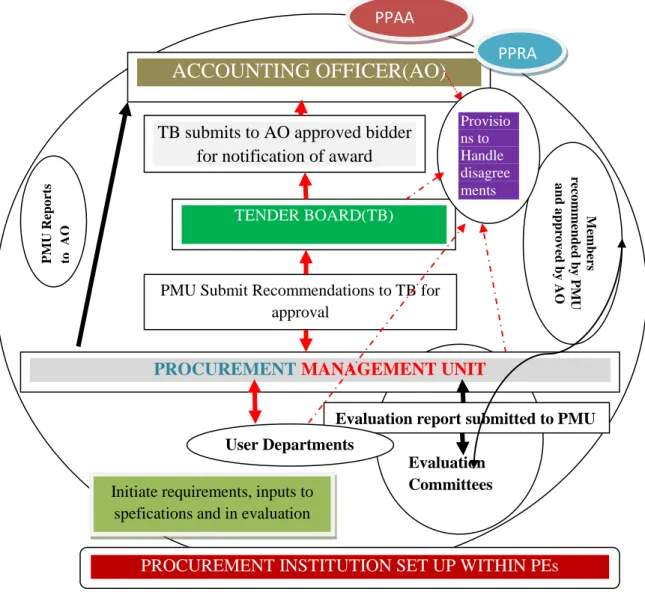
Figure 2.1: Procurement Legal Frame Work within Procuring Entities Source: Mlinga (2006)
ACCOUNTING OFFICER(AO)
TB submits to AO approved bidder for notification of award
TENDER BOARD(TB)
PMU Submit Recommendations to TB for approval
Evaluation Committees
PROCUREMENT MANAGEMENT UNIT
Evaluation report submitted to PMU User Departments
Initiate requirements, inputs to spefications and in evaluation
PROCUREMENT INSTITUTION SET UP WITHIN PEs
PM U Re p o rts to AO Mem b er s re co m m en d ed b y P MU a n d a p p ro v ed b y AO Provisio ns to Handle disagree ments PPRA PPAA
To ensure compliance with the PPA(2004), PEs has legal organs established under the Act for executing procurement functions. These organs include AO, Tender Boards, PMU, user department and Evaluation Committee. According Section 38 of the PPA (2004), these organs have to work independently while dealing with procurement functions and usually evaluation committees are appointed on ad hoc basis for specific tender evaluation. The functioning and responsibilities of these organs in the procurement process are as indicated in the Fig.2.1.
The Act stipulates responsibilities of each organ and its limit of jurisdiction. The user department has a duty of assisting PMU throughout the procurement process to point of contract placement. Also, it has the responsibility of providing technical inputs to statement of requirements, technical specifications, certifying payment to suppliers, contractors or service providers, preparing any report required by PMU, Tender Board or the AO, reporting any departure from terms and conditions of awarded contract as well maintaining and archive records of contract management. Furthermore, user department prepares work plan for procurement based on approved budget and submits it to the PMU. The PMU has overall responsibility to manage all procurement of the PE except adjudication and award of contract, prepares advertisements of tender, prepares tender and contract documents, preparation of procurement plan, recommends procurement procedures and act as a secretariat to the Tender Board.
The Tender Board is mandated to adjudicate recommendations from PMU and award of tenders, review applications for variations, addenda or amendments to ongoing contracts, approving procurement procedures as well as tendering and contract
documents. Section 31 of the Act, gives powers to Tender Board that no PE shall advertise, invite, award or sign contract unless it has been approved by the Tender Board. Pursuant to Section 33 of PPA (2004), AO has overall responsibility for the execution of the procurement process including communicating award decision, certifying availability of funds, signing contracts, ensuring the implementation of awarded contract adheres to the terms and conditions of the contract. Also, the AO is mandated to appoint TB for tenure as provided in the Act, PMU staff on permanent basis and evaluation committee on ad hoc basis to carry out tender evaluation for specific procurement. The Head of PMU reports to the AO on his or her daily procurement proceedings. The procurement process commences with the user departments by submitting its requirement to the PMU. The PMU prepares documents and adverts, issues and receive bids. The evaluation committee is proposed by HPMU and approved by AO.
The committee recommends award of tender to the PMU after completion of tender evaluation. The HPMU reviews evaluation reports and submit its recommendations to the Tender Board for adjudication. Once approved by the Tender Board, the HPMU prepares a briefing on the decision and submit to the AO for approval. The AO where satisfied himself or herself with the Tender Board decision communicates award of tender. Therefore, this indicates clear distribution of responsibilities for each organ established under the Act of 2004 within procuring entities.
2.3.4 Procurement complaints Review Mechanism
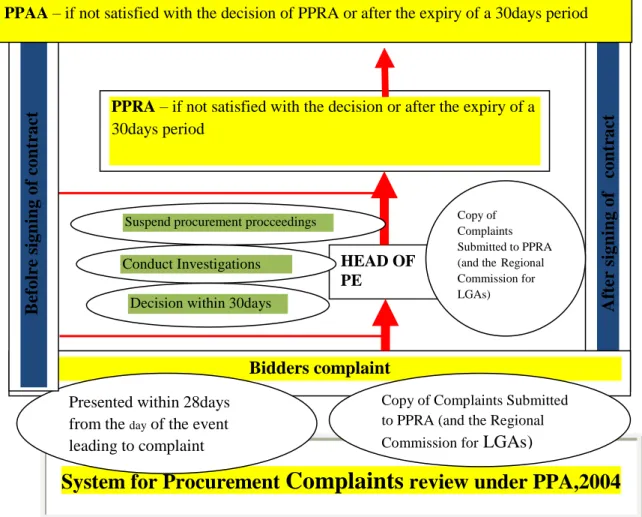
The legal and regulatory framework of the country procurement system provide for procurement complaints resolution. Section 79,80,81 and 82 of PPA, 2004 provides
procedures to be followed by the bidder when aggrieved by any decision in the tendering process as shown in Figure 2.2.
Figure 2.2 : Procurement Complaints Review System in Tanzania
Figure 2.2 : Procurement Complaints Review System in Tanzania Source: Mlinga (2006).
This is a three tier appeal system which involves PPAA, PPRA and AO. However, with the new enactment of PPA,2011, the tier for resolving complaints has been reduced to two tier system whereby the PPRA has been exempted in the process. However, the complaints review mechanism has time limit. This has an impact on delays of the procurement process. The time taken to review the tender decision will result to increase lead times of the expected goods or works.
System for Procurement
Complaints
review under PPA,2004
Af te r sign in g of c on tr ac t
PPRA – if not satisfied with the decision or after the expiry of a 30days period
HEAD OF PE
Bidders complaint
Presented within 28days from the day of the event
leading to complaint
Copy of Complaints Submitted to PPRA (and the Regional Commission for LGAs)
Copy of Complaints Submitted to PPRA (and theRegional Commission for LGAs)
Suspend procurement procceedings
Conduct Investigations Decision within 30days
B efolr e sign in g of c on tr ac t
2.3.5 Procurement Methods in Public Procurement
In public procurement, default procurement method is competitive tendering except otherwise, as provided in the Act and its regulations. For Tanzania, the basis for selecting the type of procurement method are provided in the PPA (2004) under Regulations 65 -71. These include competitive methods, restricted competitive method, single source procurement method, competitive quotations and minor value procurement (direct quotations). Each procurement method selected has impact on achieving effectiveness of public procurement process. However, default procurement methods used as per law are two open competitive methods which include International Competitive Bidding and National competitive bidding.
International Competitive Bidding(ICB) requires PEs to advertise the invitation for bids to all eligible and qualifies prospective bidders in international and national media such as international journal and newspapers, dg-market and local newspapers. Furthermore, the bid prices are quoted in foreign currencies in whole or partly in local currency. According to the PPA, 2004, the Intenational Competitive Bidding requires maximum processing time of 126 days where there is no prequalification and 146 days where it involves prequalification of prospective bidders. Time provided covers just part of the procurement process from the preparation of solicitation documents to contract signature.
The other known competitve tendering method is National Competitive bidding (NCB). The NCB is used where the goods, works or services are available locally at prices below the international markets. Both local and foreign suppliers or
contractors are eligible to participate in the tendering process. The only difference between ICB and NCB is the limitation of invitation in local media only such as newspapers and PPRA journal. Also, payment to selected bidders may be made wholly in Tanzanian Shillings. The procurement processes for NCB is the same as for ICB with exception to maximum processing times provided in the Act.The Act provides indicative maximum processing times for NCB as 111 days and 137days without and with prequalification time respectively. According to Shirima (2009), where NCB is used as a method of procurement, the procurement of process of getting supplier or contractor may require 120 days and the duration can be reduced if the PEs conduct the process more efficiently.
Generally the method of procurement that the PE can choose to use for a particular procurement requirement depends on the nature and size of a procurement in terms of value, its procurement element and the urgency with the goods, works or services to be procured (Worldbank, 2003). Competitive bidding is a default procurement method, thus is inevitable by the procuring entity. This is due to the fact it provides open and fair procedures and adheres to hallmarks of the public procurement which includes transparency, accountability, fairness as well as economy.
The purpose of competitive tendering is to achieve value for money in the public money spent through the level of competition in a single tender. The two methods described above have very long procurement process as evidenced the maximum time given. Furthermore, the time for no objection from donors or bank has not been included. This is another area of outcry of the procuring entities when dealing with donor funded procurements.
2.3.6 Procurement Process
The procurement process adopted in the public sector needs to be consistent and transparent in such way that its decisions are clearly made and well documented (Mlinga, 2008). According to PPA(2004), procurement process starts where the need of the procurement arises through planning, choice of procurement method, tendering (implementation of the procurement plan), contract award, and contract management.
2.3.6.1 Procurement Planning
Preparation of procurement plan and budget as well as packaging of procurement in a manner that will speed up implementation is an area that faces a lot of challenges (Shirima, 2009). Planning is a process that consists of many steps and the bottom line is that, planning is not concerned with future decisions but rather with the future impact of decisions made today (Thai, 2004). Furthermore, procurement planning involves the process of identifying which business needs can be best met by procuring goods, works or services outside the organisation.
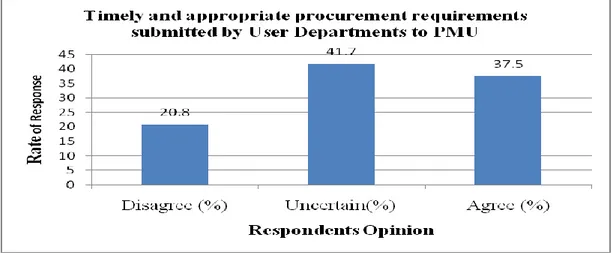
This process involves where to procure, how to procure, what to procure, how much to procure, and when to procure (Garret and Rendon, 2005). This concurs with the study by Boma (2007) which revealed that procurement plan describes which product will be acquired from suppliers, when and how they will be acquired. This process requires user departments to support the PMU by timely and appropriate submission of the procurement requirements. Also, PEs are required to conduct regular market survey on prices of various procurement requirements for establishing realistic budget/cost estimate.
The preparation of procurement plan is a mandatory requirement under Section 45 of PPA(2004) for procuring entities for the purpose of avoiding emergency procurements and splitting to defeat the use of appropriate procurement method wherever possible. Furthermore, procurement plan enables aggregation of its requirements wherever possible, both within the PE and between PEs to obtain value for money and reduce procurement costs and make use of framework contract wherever appropriate to provide an efficient, cost effective and flexible means to procure works, services or suppliers that are required continuously or repeated over the a set of period time.
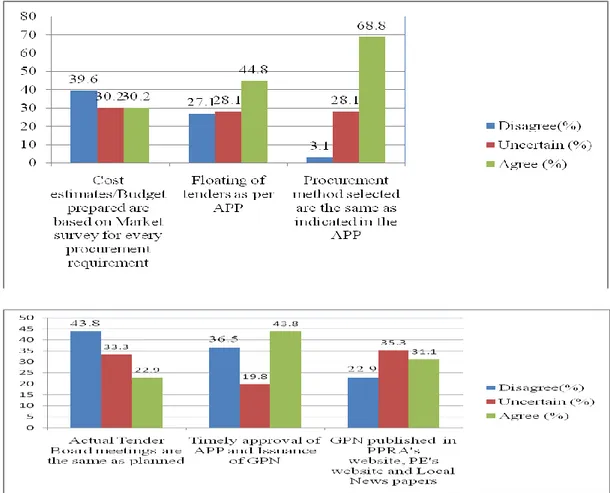
The annual procurement plan addresses all the need of user departments within the procuring entities. It indicates the appropriate procurement methods to be used for each procurement, and finds the best way of minimizing the cost of the procurement process without compromising the quality of the material required as well as meeting users delivery time line (Mlinga, 2008). Frequent changes of the procurement methods indicated in the approved procurement plan, is an indication of poor procurement planning process thus resulting to ineffective procurement process.
Procurement plan preparation commences with the identification of the need for procurement arising from the government budget, which indicates the total sum of money allocated for procuring entities in fulfilling its objectives and set targets in a given financial year. In compiling such plans, a PE shall establish the appropriate method of procurement to be employed for each requirement as set out in the regulations and the time scale for each procurement shall then be calculated on the
basis of the standard processing times, as set out in the regulations, allowing any necessary margin for delays in transmission of documents or clarification of tenders. From this timescale, the start dates and critical points in the procurement process shall be set out in the procurement plan.
In order to maximize economy and efficiency in its procurement or disposal, a procuring entity may group goods, works, or services of a broadly similar or related nature, or pool assets for the purposes of common disposal into single tender or number of tenders of a size and type that will be likely to attract the most prospective bidders provided that is practicable and will not cause unreasonable delay in the procurement process(ibid). Moreover, procurement plan needs to organise TB meetings in a minimum number so as to minimize transactions costs for tender proceedings and avoid some delays caused by inadequate TB members qorum due to frequent absence of some members (PPA, 2004). Furthermore, the procurement plan needs publication through all approved media so that transparency and competition can be improved. This includes publishing through newspapers, websites of PPRA and PEs website (PPA, 2004). Also, timing of the publication of the procurement plan makes the procurement processes more effective and suppliers are provided with ample time for preparation to work with PEs.
The paucity of procurement plan in PEs is a major weakness which may result to deviation from using appropriate procurement method. Thus, triggering inefficency of the whole procurement process or may warranty ad hoc unjustifiable emergency procurement (Basheka, 2008). The effect of poor procurement planning is escalation of cost due to changes of prices, emergency procurement, contract variations as well
interests charges over time and overrun of time in implementation phase (Vafaisee, 2010). Preparing proper procurement plan provides a good basis for effectiveness of other procurement processes in the public procurement system which reduce delays, and ensure compliance with procurement law in acquiring goods, works or services in the public sector.
2.3.6.1 Tendering Process
The extent to which contracting of services provides benefits to the public entity, and the community is more dependent on the efficient and effectiveness of the competitive tendering process. The tendering stage is the critical part of the procurement process for achieving value for money in the procurement cycle. The subactivities of the tendering process are hereby summerized.
First is the preparation of the bidding documents. This is a requirement of the procurement law under Regulation 47 of GN. 97 of 2005 that, there must be genuine intention by AO to proceed with the procurement process or by inclusion in the procurement plan. This is a responsibility of the procurement officers to prepare tender documents in collaboration with the user department as privided under Section 35 and 36 of the PPA (2004). Furthermore, the law requires the PMU to submit the completed tender document to the Tender Board (TB) for approval prior to issuing to prospective bidders (Section 30).
The efficiency and effectivenes of the procurement process will solely depend on how frequenct TB members are available for adjudication and granting of approvals. The tender document contains all the necessary information for invitation of bids
(adverts), evaluation criteria, and terms and conditions of the future contract. The prepared tender document put in place procedures for the management of the contract, which includes contract variations including change control, cost monitoring, ordering procedures, payment procedures, payament procedures and reporting. According to (Garrett and Rendon, 2005), this is a stage where documents needed to support solicitation process are prepared. It involves documenting program requirements and identifying potential sources.
The poorly prepared solicitation documents has several negative effects to procurement process, thus resulting to delays of delivery of the goods, works or services required. The negative effects include among others selection of unqualified contractor, supplier or service provider which in turn results to poor performance by failing to deliver the goods, works or service on time, at right cost, and quality prescribed. Also, delays and cost overrun of the procurement process may occur due to querries or addenda arising from ambigous specification, terms of reference, weak terms and conditions of the contract setforth in the bidding document or request for proposal for consultancy services. According to PPA(2004), the appropriate specifications, schedule of requirements and drawings submitted by users minimizes all the risks aforementioned. Also, adequately prepared bidding documents can minimize cancellation of tenders and lodging of complaints, hence contributing to effective procurement process.
The second process is the evalaution of bids. Procuring entities issue approved tender advertisement on media presecribed by the governing procurement guidelines.
Usually, the PPA (2004) requires advertising tender opportunities in newspapers of wider circulation and PPRA's website and journal, PE's website, and other media as deemed appropriate. The PMU issues prepared bidding documents, register all submitted bids and convene public opening ceremony meeting. The minutes of opening submitted bids are maintained and archived in respective procurement file. The PMU recommends the composition of the tender evaluation committee with consideration of their experience, expertise and skills on the procurement at hand for evaluation (Section 37) to the Accounting Officer for approval.
It is normal practice to appoint some members of the committee from user department and procurement specialists with adequate knowledge and skills on the tender floated. Lack of skills and knowledge governing the procurement at hand to the appointed evaluation commitee may have detrimental effect to completion of evaluation tasks and submission of inadequate tender evaluation report to the PMU (Jones, 2007). However, the PPA (Section 37) allows PEs to compose evaluation committee with external members where required skills or experience are not available from within. Dedicated, energetic, and ethical employees are always hard to find, and hiring individuals with special skills is even harder ( Lan at el, 2005).
The adequacy and proper tender evaluation enables PEs to select the appropriate suppliers or contractors which provide assurance for better performance of the contract and reduce unnecessary complaints (Mamiro, 2010). For observing fairness and ethical procurement processes, evaluation committees needs to adhere to evaluation criteria setforth in the bidding documents issued (PPA, 2004).
The approval process is yet another stage to be followed. From initialization of the procurement process to delivery of goods, works or services require various approval from different approving authorities within and outside the PE. For tendering process, the PPA (2004) requires approval of AO for procurement requirements which were not included in the approved annual procurement plan, procurement method chosen, draft tender advertisement and bidding document by the Tender Board. Also, in the same tender one needs to obtain approval of evaluation committee members by AO and tender evaluation report by Tender Board and granting acceptance of award of tender to the successful bidder by AO.
Furthermore, where tender award decision requires negotiation procedures then, the approval of issues to be negotiated is required, where the minimum and maximum limits of negotiation are set and approval of recommended members of negotiation committee shall be obtained from the Tender Board by PMU and approval on the same after completion of negotiation prior to granting acceptance of award of tender by AO. This bureaucratic procedures on procurement process approval has repercussion on cost to the PE as a result of inflation and interest rate on delayed payments as well delaying benefit of the project or procurement required to the government and taxpayers (Sarfo, 2011). As a result, may hinder achieving effectiveness of public procurement system.
The other stage is award of contract and contract signature. According to the PPA(2004), procurement process provide 7days for completion of award and contract signature. At this phase, there will be some negotiations where required and obtaining no objection where the procurement is donor funded. However, improper
tender evaluation has bad repercussion in attaining envisaged effectivenes and efficiencies of the procurement processes. It is at this stage where the evaluation report may not be approved by the Tender Board or donors and instructing re -evaluataion or re -tendering depending on the deficiencies noted in the evaluation. The same can be done by the AO and donors where not satisfied by decision of the Tender Board and PE respectively. Hence, procurements may result to back and forth which may delay the procurement process and service delivery. Also, it is an area prone to complaints from agrieved bidders.
In general terms, where award of contract is granted by the Tender Board and AO, PEs through PMU has to communicate award decision to the sucessful bidder and unsuccessful bidders participate in the subject tender for the purpose of transparency as one of the key pillars of public procurement. The transparency of the procurement process adds confidence to the unsuccessful bidder and trust in participating in the future procurement opportunities thus attracting more prospective bidders resulting to firm competition which results to awarding tender at competitive prices (Arrowsmith at el, 2010).
2.3.6.2 Contract Management
Contract management commences after contract signature and all precedence conditions of the contract such as performance security or bond are finalized. The process enables both parties to the contract to meet their obligations in order to deliver the objectives required in the contract. Contracts are in most cases complex, involves multiple actors, may last long and may consume alot of resouces if not properly managed (OECD, 2011). It is concerned with the mechanics of the
relationships between the buying agency and supplier for development and implementation of procurement contract. This corresponds to the requirement of the law (Regulations 97 of 2005) which recognize the entry of force of the contract when written letter of acceptance has been issued to the supplier or contractor, or written procurement contract has been sign between parties.
The PEs through Contract Manager are responsible for effective management and monitoring of scope, quality and timely delivery of goods or services, process and timely completion of works at acceptable quality in accordance with the terms and conditions of each contract (Procurement Regulations 121 of 2005). The competence of the contract manager in managing procurement contracts are indispensable attaining the best results of the procurement contract. Regulations 117 - 127 of GN.97 of 2005 provide guidance on management of contracts entered on issues like, treatment of variations orders, time extension of the contract, inspection and acceptance of goods, enforcement of penalties where non peformance has been experienced and certifying of paymenets to suppliers, contractors or service providers.
Contract administration ensures that each party's performance meets the contractual requirements. The process includes activities such as measuring contractors' or suppliers' performance, managing contract change control process, disputes resolution, measuring and reporting's contractors performance, and conducting risk management (Garrett and Rendon, 2005). The better contract performance depends on the terms and conditions of the contract and willingness to implement it accordingly. The adequacy of clauses such as disputes resolutions, price fluctuation
and adequate controls for effecting payments improves performance of the contract. Therefore, it eliminates issuing of payments to suppliers or contractors to undelivered or substandard goods or works. The procurement law requires procuring entities to carry out inspection of goods upon delivery and its inspection and acceptance reports should be prepared as basis for certifying and issuing payments to suppliers.
On other hand, the procurement law requires preparation of progress report for works executed by contract manager for monitoring performance of contractors in terms of time, quality of works and cost. Also, it forms a basis for granting time extension where requested by contractors. Furthermore, for delayed works contractors has to pay liquidated damages and procuring entities are obliged to pay
interests on delayed payments to contractors or suppliers. Poor contract management leads to undefined roles and responsibilities, lack of the
satisfactory level of performance, delivery of poor quality product or works, and untimely decision or approval on contractual issues (Alex, 2007).
2.4 Empirical Studies
This section provides various studies undertaken within and outside Tanzania especially in Africa in relation to the topic under study. The study compares various outcomes and scrutinized findings for establishing a research gap.
2.4.1 General Studies
Generally, procurement oriented problems arising from planning, and tendering plays a key role in delaying various procurements during contract management.