FIRST YEAR STUDENT TEACHERS’ PERCEPTIONS OF THEIR CONSTRUCTIVIST CLASSROOM LEARNING ENVIRONMENTS IN ACCOUNTING 1 AND IMPLICATIONS FOR TEACHER EDUCATORS.
by
MEDSON MAPUYA
Submitted in fulfillment of the requirements of the Degree
MASTER OF EDUCATION in the
Faculty of Humanities
at the
Central University Of Technology, Free State
Supervisor: Prof S.N Matoti (EdD) Co-supervisor: Prof G. Alexander (PhD) BLOEMFONTEIN
DECLARATION
I, Medson Mapuya, do hereby solemnly declare that this dissertation on the “First year student teachers’ perceptions of their constructivist classroom learning environment in Accounting 1 and implications for teacher educators” is my own original work and that it has never been presented or submitted to another university for any academic purposes and rewards. I further declare that all the sources used and quoted in the dissertation have been acknowledged by means of complete references.
………. Medson Mapuya
ACKNOWLEDGEMENTS
I would like to begin by acknowledging the one above, my heavenly father. Thank you for the life, for the energy, the determination and the opportunity to embark on this study and to complete it. I would not have done it without your blessings. Thank you Lord. May thy name be honored and praised through this study, which is a living testimony of your never-ending ability in our lives.
I would also like to take this opportunity to thank the following people without whom this research study would not have been possible:
My supervisors;
Firstly Professor Matoti. Thank you for your guidance and detailed feedback throughout the entire study. Thank you for your patience with me during the times when I seemed to be losing it and for your positive contributions in my entire academic career. Thank you for being both a mother and a supervisor to me.
Secondly, Professor Alexander for all the feedback, guidance and encouragement. It was through your combined efforts that I managed to accomplish this academic task. I feel greatly honored and privileged for the opportunity to learn from you. I am really proud to have been groomed and guided by professionals of your credentials and caliber in the field.
I would also like to extend my sincere gratitude to Dr Rambuda, for his advice and continuous support throughout the duration of the study, especially with the editing and corrections of the final draft before submission. Thank you for your time and patience.
DEDICATION
I dedicate this research study to my mother and my late father, who never had a chance to see me grow and become who I am today and to my family. They have been my source of inspiration throughout the entire study and they kept me going.
ABSTRACT
This mixed methods study was carried out at Central University of Technology, Free State, Welkom Campus. Its aim was to investigate the perceptions of first year student teachers about their constructivist classroom learning environments in Accounting 1 and implications of such perceptions for teacher educators. The ultimate goal was to develop strategies to improve and enhance a positive constructivist classroom learning environment. The study is grounded in constructivism and viewed the learning environment from the socio-ecological approach paradigm. The population was all the first year Bachelor of Education (B.Ed.)Accounting students. Convenience sampling was used to select a study sample of 112 students. Data was collected using a questionnaire called the Constructivist Learning Environment Survey (CLES). The CLES was adopted and adapted for use in this study as it had already been tested for reliability and validity by its developers. Students’ responses of their perceptions were measured on a 5 point Likert-type scale in seven categories. Semi-structured interviews were used to supplement questionnaire data.
The quantitative data revealed positive perceptions of students in aspects regarding learning to speak out, learning to communicate, an interest in accounting and teacher support in Accounting. The study further revealed that students were not satisfied with some aspects in the learning to learn category. Although they were partially satisfied with the learning about the world and learning about accounting aspects, the qualitative findings showed that more needed to be done to improve their satisfaction and create positive perceptions. It was revealed that the students remained alienated and marginalized from the designing and planning of their academic activities and the overall classroom instruction.
The findings pointed to the need for teaching staff to move away from standardized lectures to customized instruction which acknowledges that every student in the classroom has different needs and abilities. The study recommends that lecturers should strive towards promoting constructivist learning environments in their classrooms where constructivist ideas and principles are encouraged. To this effect, they need to be equipped with the necessary skills and competencies to create social constructivist classrooms and learning environments.
TABLE OF CONTENTS
CHAPTER 1: OVERVIEW OF THE STUDY
1.1 INTRODUCTION 1
1.2 BACKGROUND TO THE STUDY 6
1.2.1 Transition and Adjustment Problems 8
1.2.2 Strategies Towards Creating an Academically Enabling Learning Environment
12
1.3 STATEMENT OF THE PROBLEM 15
1.4 AIMS OF THE STUDY 16
1.5 RESEARCH QUESTIONS 16
1.6 RESEARCH OBJECTIVES 17
1.7 RATIONALE OF THE STUDY 17
1.8 SIGNIFICANCE OF THE STUDY 18
1.9 SCOPE OF THE STUDY 19
1.10 METHODOLOGICAL LIMITATIONS OF THE STUDY 20
1.11 SPECIAL ETHICAL CONSIDERATIONS 21
1.12 DEFINITION OF CONCEPTS 22
1.13 CHAPTER OUTLINE 23
CHAPTER 2: LITERATURE REVIEW
2.1 INTRODUCTION 26
2.2 CONCEPTUAL FRAMEWORK 26
2.2.1 The Rationale for Developing a Theoretical Framework 27
2.2.2 Theoretical Framework 28
2.2.3 Approach Used to Discuss Theoretical Framework 29
2.3.1 The Relationship Dimension 31
2.3.2 The Personal Development Dimension 32
2.3.3 The Systems Maintenance and Systems Change Dimension 34
2.3.4 Conceptualisation of the Socio-Ecological Model as Envisaged
by the Researcher
36
2.4 REVIEW OF LITERATURE ON THE EFFECTS OF STUDENTS’
PERCEPTIONS OF THE LEARNING ENVIRONMENT ON ACADEMIC SUCCESS
36
2.4.1 Purpose Served by Knowledge of the Learning Environment. 37
2.4.2 Effects of the Students’ Perceptions of the Learning
Environment on Academic Success
39
2.4.2.1 Positive Perceptions 39
2.4.2.2 Attitude and Achievement 39
2.4.2.3 Lecturers 41
2.4.2.4 Motivational Effects 41
2.5 LEARNING THEORIES 44
2.5.1 The Social Cognitive Theory 44
2.5.2 The Social Constructivism Theory (Sociocultural Theory) 46
2.5.2.1 Scaffolding 52
2.5.3 Assumptions of Social Constructivism and its Relevance in the Current Study
54
2.5.4 Conceptualisation of Constructivist Learning Environments as
Envisaged by the Researcher
58
2.5.5 Conceptual Framework of the Study 60
2.5.6 Justification for the Theory of Social Constructivism 62
2.6 THE FRAMEWORK FOR TEACHER TRAINING AND DEVELOPMENT IN SOUTH AFRICA
63
2.7 THE APPLICABILITY OF THE SOCIAL CONSTRUCTIVISM
APPROACH TO TEACHING AND LEARNING OF ACCOUNTING AT FIRST YEAR LEVEL
66
CHAPTER 3: RESEARCH DESIGN AND METHODOLOGY
3.1 INTRODUCTION 70
3.1.1 DEFINITIONS OF RESEARCH DESIGN AND
METHODOLOGY
70
3.2 RESEARCH DESIGN 71
3.3 THE RATIONALE FOR MIXED METHODS 73
3.4 POPULATION AND SAMPLING OF THE STUDY 76
3.4.1 Population 76
3.4.2 Sampling 77
3.4.3 The Study Sample 78
3.4.4 The Sampling Technique (Convenience Sampling) 78
3.5 DATA COLLECTION TOOLS 80
3.5.1 Questionnaires in Social Research and in Relation to the Current Study
80
3.5.2 Constructivist Learning Environment Questionnaire 84
3.5.2.1 Rationale for Constructivist Learning Environment
Questionnaire
84
3.5.3 Focus Group Interviews 86
3.6 RELIABILITY AND VALIDITY OF THE CONSTRUCTIVIST LEARNING
ENVIRONMENT QUESTIONNAIRE 90 3.6.1 3.6.2 Reliability Validity 91 94
3.7 DATA ANALYSIS PROCEDURE 95
3.7.1 Analysis of Data from the Questionnaire 95
3.7.2 Analysis of Data from the Focus Group Interviews 96
3.7.3 Techniques Used for Data Analysis 97
3.7.3.1 Data Analysis Techniques for the Qualitative Data 97
3.7.3.2 Content Analysis 98
3.7.3.4 Triangulation 98
3.7.4 Data Analysis Techniques for the Quantitative Data 99
3.7.4.1 Univariate Analysis 99
3.7.4.2 Descriptive Statistics 100
3.8 DEPENDENT AND INDEPENDENT VARIABLES 100
3.9 SPECIFIC STEPS WITH REGARD TO THE RESEARCH
PROCEDURE
101
3.10 SPECIAL ETHICAL CONSIDERATIONS 103
3.10.1 Informed Consent 104
3.10.2 Voluntary Participation/Self Determination 105
3.10.3 Confidentiality 106
3.10.4 Access and Acceptance 107
3.10.5 Minimization of Harm/No Harm to Participants 107
3.11 CONCLUSION 108
CHAPTER 4: PRESENTATION, ANALYSIS AND DISCUSSION OF DATA
4.1 INTRODUCTION 109
4.2 PRESENTATION, ANALYSIS AND DISCUSSION OF QUANTITATIVE
DATA
109
4.2.1 Biographical Data 109
4.3 STUDENTS’ PERCEPTIONS OF ACCOUNTING 112
4.4 PRESENTATION, ANALYSIS AND DISCUSSION OF QUALITATIVE
DATA FROM THE FOCUS GROUP INTERVIEWS WITH STUDENTS 128
4.5 NARRATIVE ANALYSIS AND INTERPRETATION OF STUDENTS’
RESPONSES TO QUESTIONS
135
4.5.1 Relationship Dimension 137
4.5.2 Personal Dimension 143
4.5.3 System Maintenance Dimension 153
4.5.4 Constructivist Ideas 160
4.6 SUMMATION: DATA DISCUSSION AND FINDINGS 164
CHAPTER 5: DISCUSSION OF FINDINGS, RECOMMENDATIONS AND CONCLUSION
5.1 INTRODUCTION 166
5.2 RESEARCH FINDINGS 166
5.2.1 How do First Year Accounting Students Perceive their
Classroom Learning Environments?
167
5.2.2 What are the Implications of Students’ Perceptions for Teacher Educators?
167
5.3.1 What are the Constructivist Design Features and Principles that are being Used by the Lecturers to Improve the Teaching and Learning Environment of First Year Students?
168
5.3.2 To What Extent are these Constructivist Ideas and Principles Implemented in the Accounting Classroom?
169
5.3.3 Do these Strategies Assist the Students in Understanding Accounting 1?
169
5.3.4 How are Students’ Perceptions of their Learning Environment
Connected to their Academic Performance and Motivation to Succeed?
170
5.4 RECOMMENDATIONS 171
5.4.1 Staff Development and Training 172
5.4.2 Improved Technology and E-Learning 173
5.4.3 Compulsory Contact Sessions with Student Instructor 175
5.5 A LECTURER PERSPECTIVE 176
5.5.1 Approach to Teaching and Learning (Classroom Activities) 177
5.5.2 Regular Feedback from Students 178
5.5.3 More Exercises/Additional Work outside the Classroom 178
5.7 RECOMMENDATIONS FOR FURTHER RESEARCH 179
5.8 CONCLUSION 180
5.9 REFERENCES 181
LIST OF FIGURES AND TABLES
LIST OF FIGURES
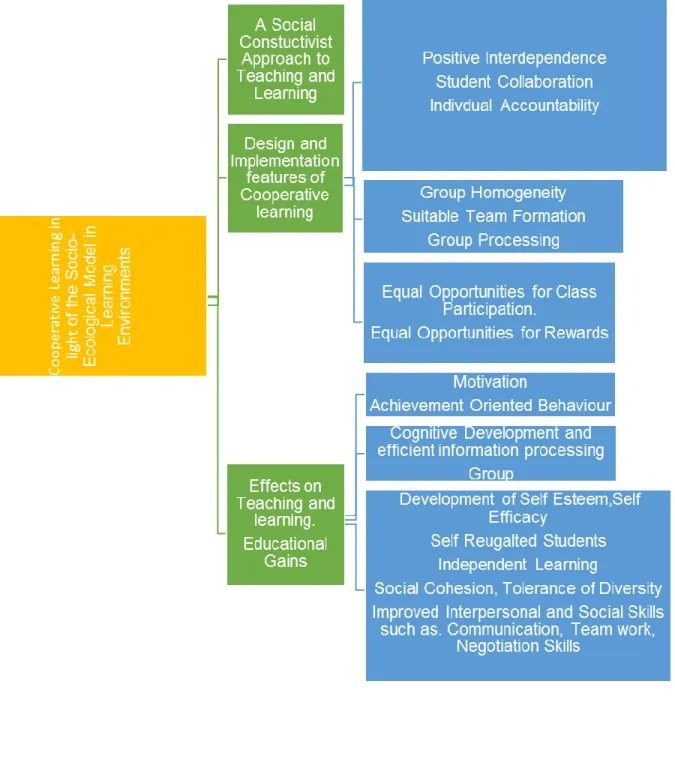
Figure 2.1 Conceptualization of the Socio-Ecological Model in Learning
Environments as Envisaged by the Researcher
36
Figure 2.2 Conceptualization of Constructivist Learning Environments
as Envisaged by the Researcher
59
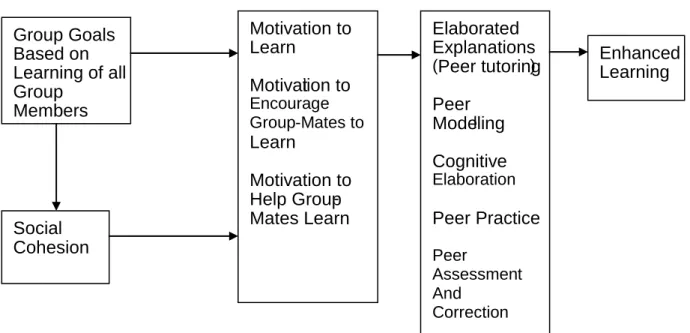
Figure 2.3 The Perceived Ways through which Cooperative Learning
Improves Learning
61
Figure 4.1 Pie Chart Representing Means on Learning about the World. 113
Figure 4.2 Bar Graph Representing Means on Learning about
Accounting
116
Figure 4.3 Bar Graph Representing Means on Learning to Speak Out. 118
Figure 4.4 Graphical Representation of Means on Learning to Learn 120
Figure 4.5 Diagrammatical Presentation of Means on Learning to
Communicate
123
LIST OF TABLES
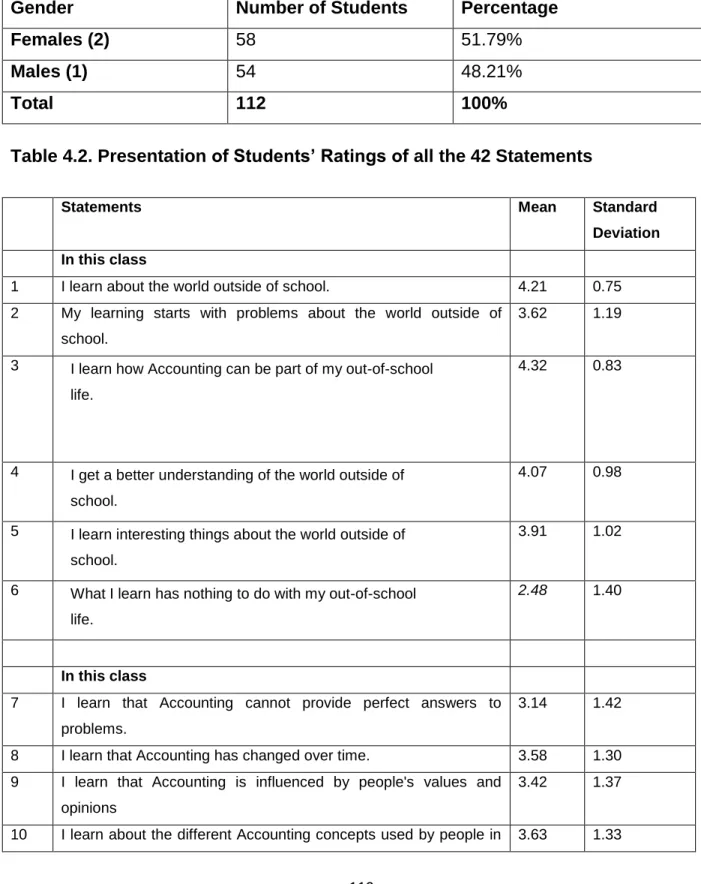
Table 4.1 Sample Profile of the Respondents (N=112) 110
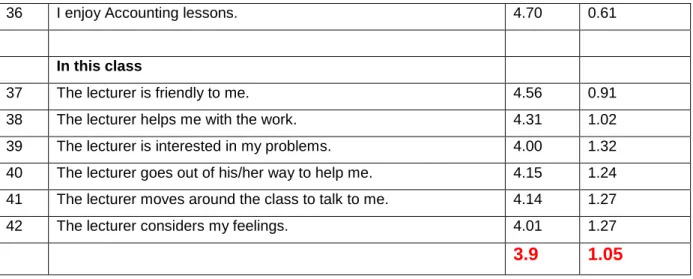
Table 4.2 Presentation of Students’ Ratings of all the 42 Statements 110
Table 4.3 A. Learning about the World (Real Life, Personal Voice) 113
Table 4.4 B. Learning about Accounting (Uncertainty) 115
Table 4.5 C. Learning to Speak Out( Critical Voice) 118
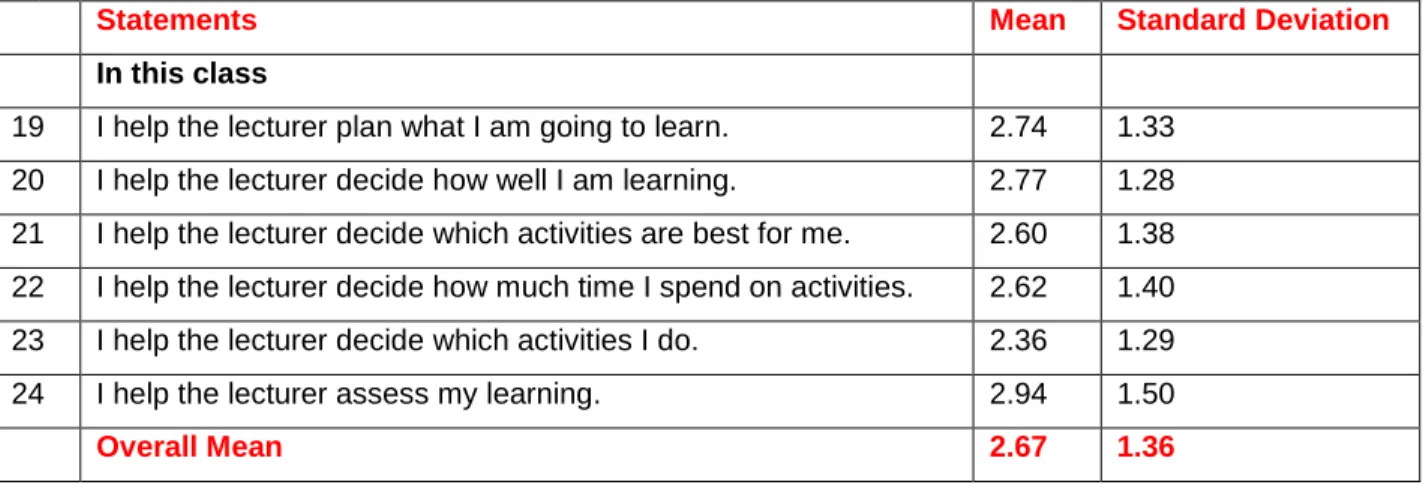
Table 4.6 D. Learning to Learn (Shared Control) 120
Table 4.7 E. Learning to Communicate (Student Negotiation) 122
Table 4.8 F. Attitude in Learning Accounting( Commitment) 124
Table 4.9 G. Lecturer Support in Learning Accounting 125
Table 4.10 Summary of Descriptive Statistics 126
Table 4.11 Focus Group Interview Questions and Themes that Emerged 128
Table 4.12 Presentation of Participants in the Focus Group Interviews 135
LIST OF APPENDICES
Appendix 1 Constructivist Learning Environment Questionnaire 205
Appendix 2: Re: Application for Permission to Conduct a Research Study at the Central University of Technology, Free State, Welkom Campus
211
Appendix 3: Consent Letters from Students 213
Appendix 4. Questions for the Semi-Structured Interviews that were
Asked to Students
214
CHAPTER 1
OVERVIEW OF THE STUDY 1.1 INTRODUCTION
This chapter presents an overview of this study on the perceptions of first year student teachers’ perceptions of their constructivist classroom learning environment in Accounting and the implications for teacher educators.
As argued by Hodgson, Lam and Chow (2010), from secondary school, first year students need to adjust from highly structured and supportive learning environments which promote learning dependence to a complex learning environment at university which emphasizes autonomous learning. To this effect, Millet (2015) warns that the perceptions of students about their learning environment has a huge impact on their transition into university life and their overall development and academic progression. The educational implications of this transition phase in the academic lives of first year students is emphasized by Hodgson et al. (2010) who assert that a successful transition during first year at university can have a significant influence on the students’ academic success in their studies. These sentiments are also endorsed by Millet (2015), who argued that the dynamics of adjusting into the social, academic and learning environment constitute the difference between a negative and positive experience at university for most first year students and how they ultimately perceive the learning environment.
The term learning environment is used to refer to a few contextual aspects or elements of the teaching and learning process. Firstly, it refers to the social atmosphere or climate in which teaching and learning takes place (Arisoy, 2007; Millet, 2015 and Rankin, 2005). Secondly, it is the physical setting of the classroom and its social norms (Litmanen, Loyens and Lonka, 2014). Lastly, it refers to the physical activities in the classroom, the teaching strategies used in the teaching and learning process, the type of learning in which students are engaged and the assessment methods used to evaluate teaching and learning (Doppelt, Christian and Schunn, 2008; Cleveland and
Fisher, 2014). Thus, the term learning environment looks at and evaluates the psychology, sociology and pedagogy of the various contexts in which teaching and learning takes place and how these contexts affect the students’ achievement in both the cognitive and effective domains.
Researchers on students’ perceptions about learning environments are in agreement that these perceptions influence the students’ academic performance, course satisfaction and completion. They are also unanimous that if students perceive the learning environment and their lecturers to be supportive of their learning needs and educational well-being, they are more likely to thrive in challenging situations (Dahlin, Fjell and Runeson, 2010; Fraser and Killen, 2003; Gibbs and Simpson, 2004 and Gijbels and Dochy, 2006). On the other hand, research findings on teaching strategies indicate that a constructivist approach can be used to provide support to students at any level and promote their learning. The available literature suggests that constructivist learning environments represent most of the students’ perceived ideal learning contexts (Dopplet, et al. 2008 and Radovan and Makovec, 2015).
Dopplet et al. (2008) and Radovan and Makovec (2015) argue that a constructivist learning environment is characterized by students’ awareness in learning about the world around them and a comprehensive understanding of the relationship between what they learn in the classrooms and the reality in their lives. It also creates and offers students opportunities to speak out, express themselves openly, and learn from each other. In a constructivist learning environment, students are empowered and encouraged to be actively involved in their learning processes. Killen (2016) summarizes it all by noting that the basic precept of constructivist learning environments is that knowledge is obtained and understanding is realized through active construction and reconstruction of mental frameworks. Constructivism promotes critical thinking skills of students which lead to creativity. Thus students who have been exposed to constructivist learning environments are in a superior position to design, create and invent new ideas, solutions and products.
Evidence in support of the above approach to teaching and learning as advocated by Dopplet et al. (2008); Killen (2016) and Radovan and Makovec (2015) is also found in
the studies of Johnson and Johnson, (2009a); Slavin, (2009) and Snowman and McCown, (2012) who discovered that cooperative group work among students was ideal for promoting student learning towards the realization of social, academic and personal outcomes. This approach to teaching and learning adequately accommodates the various learning needs and interests of different students in the classroom. It is also praised for providing a less threatening but rather more encouraging and accommodating learning environment, which is a significant success factor in the academic lives of students.
These research findings necessitate the need for a paradigm shift on viewing the learning environment from lecturer-centered to student-centered perspectives as advocated by Nel, Nel and Hugo (2012). Such a call emphasizes and testifies the need and importance of creating sustainable constructivist learning environments in educational institutions, starting at classroom level. As such, understanding the perceptions of students about their classroom environments, the kind of support they get from their lecturers as well as their perceived relevance of course content to their lives and career plays an important role in designing intervention strategies to support their learning. Educational institutions and lecturers therefore need to be conscious of such perceptions to enable them to create a quality classroom learning environment which is supportive, encouraging and focused on learning.
As noted by Killen (2016), the differences in the academic success of students can be greatly determined by a mismatch between teaching styles used by the lecturers in the classrooms and the individual students’ learning styles. This mismatch usually results from a lack of the lecturers’ understanding of the students’ envisaged classroom and learning environment. Students will be highly disadvantaged if the teaching styles of their lecturers do not match the way they would like to learn and how they prefer to be taught. Thus, to assist and accommodate all students and to enable them to reach their fullest academic potential, it is imperative for the lectures to obtain and understand their perceptions regarding an ideal classroom environment that best suits them. Since these students are unique and may have different perceptions, it is important for the lecturers
to be well conversant with the various teaching styles and vary their approach accordingly.
In light of the above, Kreber and Cranton (2000) argue that educators and lecturers need to constantly reflect on their teaching in terms of what they teach, how they teach it and why they teach in those specific ways. On the other hand, students also need to reflect deeply on their learning. In this regard, Hattie (2009) advises lecturers to view and reflect on their teaching through the eyes of their students. To this effect, Killen (2016) suggests that obtaining evaluative comments from students can be an effective way of getting feedback from them as well as their perceptions on what happens in classrooms. This investigation was thus, partly informed and inspired by Killen’s (2016) sentiments above, as it also obtained feedback from the students to reflect on the reality in the classrooms and the students’ perceptions.
Establishing and enhancing positive classrooms and learning environments motivate students and enhance conditions in which students can reach their full academic potential. Killen (2016) warns that the learning environment in which teaching and learning take place is more than the physical place in which it occurs. He argues that it encompasses the interactions and relationships between the educator and the students as well the shared expectations and standards for learning and behavior in the classrooms. Creating constructivist learning environments can be achieved through the use of cooperative learning.
Cooperative learning is a technique used by lecturers to help student’s process information more quickly by making them work in groups to accomplish a common learning goal. It is an instrumental teaching strategy to create and enhance a constructivist classroom environment. Individual group members are responsible for learning the information given, and also for helping their fellow group members master the same content (Ginsburg-Block, Rohrbeck, Lavigne and Fantuzzo, 2008; Johnson and Johnson, 2009 and Loyens and Gijbels, 2008). Cooperative learning has been applied successfully in various learning areas. Research findings prove that it has been very effective in creating positive classroom environments and in achieving positive
results in different subjects and grades. (Alijanian, 2012; Loyens and Gijbels, 2008 and Van Wyk, 2010).
It is also important to note that the South African education system is based on the precepts of social constructivism, as pronounced in the National Curriculum Statements
(Grades R – 12) and the Curriculum Assessment Policy Statement (2015) of
Accounting. Student educators therefore need to be exposed to constructivist learning environments for them to be effective in their classrooms upon completion of their studies. They need first-hand experience to have a comprehensive understanding of constructivism in practice as well as its educational implications.
Education literature has identified the need for educators to understand teaching strategies in order to improve the quality of learning through the provision of supportive classrooms and learning environments. According to Tebabal and Kahssay (2011), the purpose of teaching at any level of education is to bring a fundamental change in the student or learner. To achieve this, the lecturers or educators need to use and implement effective teaching and learning strategies in their classrooms and make sure that the teaching and learning conditions are favorable. Munyaradzi (2013) notes that to facilitate the process of knowledge translation, educators should apply appropriate teaching methods that best suit the specific objectives and level exit outcomes. Traditionally, teacher-directed teaching strategy with its different methods have been used for teaching and learning over learner-centered strategies.
Lecturers and educators need to have a sound understanding and knowledge of teaching and communication tools and strategies that enable them to develop individual learning methods such as discovery learning and social interactive activities to stimulate and enhance peer collaboration in the classrooms. Danladi (2006) explained education as a process of teaching and learning in which students acquire practical knowledge, values and skills for effective participation in society. He argued that the process of acquiring the relevant knowledge, attitudes, values and skills must be made as concrete as possible for easy learning. This implies that considering the perceptions of students on their learning environments as well as the teaching strategies used by the lecturers play a significant role in achieving meaningful and effective learning.
Based on literature review and the research findings obtained, the researcher made some recommendations in the conclusion to the stakeholders involved in the teaching and learning of accounting at Central University of Technology, Free State and how they can improve classroom environments to positively influence the academic performance of students. This investigation paved the way for further research on strategies that can be implemented to create sustainable constructivist classrooms and learning environments. The recommendations and suggestions advanced can be used as a basis for further research aimed at addressing the identified factors.
1.2 BACKGROUND TO THE STUDY
The national and global statistics about the drop out and course completion rates among first year students at universities referred to in this investigation do not specifically implicate accounting education among first year students in Higher Education institutions. However, it is important to note that the teaching and learning of accounting either as a main or complementary subject at university does not take place in a vacuum. It is located in a wider context of the learning environment and will therefore be affected by all the other variables such as students’ perceptions of their learning environments, just like the other modules.
From a global research perspective, Hamilton and Hamilton (2006) lament the fact that while an increasing number of students enroll for studies in universities across the globe, a significant percentage of them do not stay for the second year. An investigation by Hamilton et al. (2006) revealed that 20% to 25% of first year students do not come back for the second year of their studies at university. In the same breath, Grayson and Grayson (2003) established that 20% to 30% of first year students drop out of university in the following year. Boute, Pancer, Pratt, Adams, Birnie-Lefcovitch, Polivy and Wintre (2007) later suggested that this high dropout rate can be attributed to hostile learning environments at the university and the adjustment problems experienced by students in the transition process.
From a general South African perspective, Makola (2016) notes that students enroll for a qualification at a university with the intention of successfully completing it within the
given record time. However, the completion rates among students are racially unbalanced and biased, with Statistian-General Lehohla in particular warning that black students will continue to drop out of the education system until there is adequate support structures to assist them (Raborife, 2017).
To this effect, he argues that the reality is that the South African university education system has a very high drop-out rate. Lehohla as reported by Raborife (2017) observed a downward trend on the course completion rates of black and coloured students and an upward one on the Indian, white and Asian students. This observation illuminates the earlier findings by the Council on Higher Education (2013) which revealed that the completion rates of white students has an average of 50%, higher than that of African students. Makola (2016) notes that this has necessitated the development and implementation of intervention programs by universities, whose effectiveness has not been well documented to date (Council on Higher Education, 2012)
Nationally, the re-registration of students at institutions of higher learning after the first year and their level of persistence in their studies tend to be very low. Seepe (2005) reveals that only one in five South African students who registered for a three-year qualification at a university in the year 2000 graduated in 2005. An alarming 50% of those students are drop outs who fell out of the Higher Education system, while only 16% of the students who registered in 2000 for the first time completed their degrees in 2005 and graduated in record time.
The classroom learning environment of students has a significant bearing on their persistence and course completion rates. As such, Makola (2016) notes that investigations which are aimed at developing and testing the perceptions of students and to provide some insights into the above statistics are of high significance to the higher education community. This view is endorsed by Pollard (2014) who argues that getting continuous feedback from students about their learning experiences in the classrooms add value to the education process. It encourages and promotes research among academic staff and improves both the learning experience and learning environment of students.
The above statistics need to be understood and evaluated in the context of some of the challenges faced by first year students. According to Naong, Zwane, Mogashoa and Fleischmann (2009) and Pieterse (2015), being at a university immediately after high school poses a number of challenges to students. Most of these students exit high school at the age of eighteen or nineteen years to enroll at institutions of Higher Education. Their enrolment at university usually implies that they have to go away from home, the security, comfort, care and familiarity of family life for most students. It also means leaving behind the support of familiar educators, friends and surroundings. This happens to be a very challenging time in their lives, which coincides with the change from late adolescents to young adulthood and taking more responsibility of one’s destiny, future and career.
Consequently, students often experience a host of challenges in their first year of Higher Education. If these challenges and adjustment problems are not effectively and adequately dealt with, through a supportive teaching and learning environment, most first year students face the prospects of failing and dropping out of the system. At university level, lecturers can assist these students by establishing and finding out their learning styles and how they would prefer to be taught. This will reveal the kind of support they need from both the lecturers and the university to promote their learning. This call is also endorsed by Makola (2016) who asserts that research on learning styles and academic performances demonstrate the learning environments that complement the learning styles of students in promoting their academic success.
1.2.1 TRANSITION AND ADJUSTMENT PROBLEMS
Noting the significant differences and sharp contrasts between high school and university learning environments, it becomes important for all the stakeholders involved in university education to have a sound understanding of the adjustment problems and factors experienced by first year students. Among others, this understanding will contribute towards creating and enhancing a successful transition process for all first year students by giving them the necessary support to deal with these challenges.
Friedlander, Reid, Shupak and Cribbie (2007) contend that it has been widely acknowledged that adjustment during the first year of studies at university is a significant indicator of academic success. Yet this change and transition from the high school learning environment to the one in the universities is often a serious challenge for most first year students (Kariuki, 2006 and Lourens and Smit, 2003). Similarly, Millet (2015) argues that the transition from high school to university is a complex phenomenon on its own which requires students to adjust to new academic and social systems.
In this regard, Hodgson et al. (2010) observed that first year students in most universities across the world experience a number of adjustment problems in their new learning environments. From a South African perspective, this observation is supported by Naong et al. (2009) and Pieterse (2015) who concur that many first year students who enroll and register at universities in South Africa face numerous challenges in their studies such as not being fully prepared and equipped with life and study skills, they found tertiary education very challenging and stressful.
At high school, they receive constant support, supervision and motivation from their subject and class teachers and even parents (Millet 2015 and Naong et al. 2009). This creates a sense of stability, security and dependence among learners. Coming from such a supportive and nurturing academic and learning background, Naong et al. (2009) argue that human beings have a general tendency to experience emotional insecurity in new and unfamiliar environments. This also applies to first year students who would have just joined the university environment to become part of a bigger family. Wangeri, Kimani and Motweleli (2012), discovered that most of them find themselves in unfamiliar surroundings and new learning environments at university where they are forced to adjust to new teaching styles of different lecturers. The feeling of emotional insecurity cited by Naong et al. (2009) usually culminated in confusion, tension, anxiety and a sense of helplessness.
Wangeri et al. (2012) make reference to the fact that the academic, physical and social environment of the university is intimidating to most first year students. Research findings on challenges experienced by these first year students are unanimous that
such challenges include absent mindedness, homesickness, loneliness, a decline in academic performance, depression and increased interpersonal conflict (Millet 2015). In addition, Hodgson et al. (2010) maintained that first year students coming from rural backgrounds experienced challenges such as unfamiliar institutional culture, new learning environments and lecturers who speak in a second language using different accents and paces.
Diversity among first year students has also been established as an important variable which influences students’ learning experiences and perceptions of the overall learning environment. According to Mudhovodzi, (2012), there has been a steady increase in the number of students attending university world-wide. This increase in the student population brings a high degree of diversity among students. To this effect, Rothman, Kelly-Woessner and Woessner (2011) allude that this diversity among students is manifested in different cultural backgrounds, skills and levels of cognitive development and identities. This diversity further complicates the transition process of students and their adjustment into new social and learning environments.
It is important to note that these challenges, including but not limited to teaching strategies that do not support and complement the learning styles of students and acknowledge their learning dependence background from high school fail to promote and support their learning (Naong et al. 2009). Understanding how first year students perceive their learning environments is therefore important towards creating and designing supportive learning environments which promote and encourage them to reach their full academic potential and to complete their studies in record time.
Additionally, investigations conducted by Bitzer (2003) and Bojuwoye (2002) into challenges and adjustment problems faced by first year students at South African universities cite poor quality of the learning environments in some university classrooms as one of the most prominent factors for first year students’ failure and drop out. To assist first year students to overcome such a challenge, Makola (2016) calls upon universities to create and offer students a supportive learning environment and community which promotes their learning and academic success. Respectively, an investigation conducted by Swoope (1995) concluded that the increased retention of
students in American universities was a result of the students’ satisfaction with the academic, learning and social environment within the university. Hence, it is imperative that lecturers consult the students to inform them of their choice of teaching strategies and obtain their perceptions about the learning environment.
The perceived learning environment has some important implications on the academic success of students in their studies (Fisher, 2008 and Genn, 2001). It affects both their motivation and academic success. The educational gains of intrinsic motivation on goal attainment and academic achievement has been well documented by Church, Elliot,
and Gable (2001); Gibbs and Simpson (2004) and Gijbels and Dochy (2006). As such,
Dahlin et al. (2010) postulate that the academic success of students is positively related to how they perceive their learning environment and experiences together with the support they get from both their lecturers and their classmates. Dopplet, et al. (2008) also earlier subscribed to this assumption by alluding that the attainment of academic outcomes is a product of the numerous elements of the learning environments in which teaching and learning take place and how these elements are perceived by students. Most recently are the investigations of Radovan and Makovec (2015) which corroborate the claims that students’ perceptions of their learning environment directly affect their motivation to learn, which in turn, predicts their ultimate academic success. Research findings demonstrate that the development of a student goal orientation approach to studies depends on how the students perceive certain characteristics of their learning environment (Church, et al. 2001). According to Nie and Lau (2010) and Urdan (2004), several elements of the teaching and learning process and the lecturer’s overall approach to classroom activities which are related to a constructivist understanding of learning, affect the students’ achievement of goal orientation behavior and self-regulation.
An investigation by Greene, Miller, Crowson, Duke and Akey (2004) which examined how the students’ perceptions of their learning environment affected their motivation and goal setting revealed that the classroom climate and manner in which the teaching and learning process takes place play an important role in determining the students’ motivation and their academic success. In another study, Lizzo, Willson and Simons
(2002) discovered that the student’s perceptions of their learning environment can be a significant indication of study enjoyment, attainment of learning outcomes and course
completion. A similar investigation by Radovan and Makovec (2015) produced
compelling evidence which endorses the idea that the students’ perceptions of their learning environment can positively influence motivation to learn and the students’ overall satisfaction of the course.
In this investigation by Radovan and Makovec (2015), it was established that when students perceive in having a greater sense of control over their learning environment and the entire teaching and learning process, they are bound to set themselves intrinsic goals and demonstrate a sense of self-efficacy. It was also revealed that students become more intrinsically motivated when they perceive their learning environment to be promotive of their autonomy and self- direction (which is the personal development dimension) and when they find their education to be useful and relevant to their lives. The latter explains the inclusion of section A in the Constructivist Learning Environment Questionnaire which was used in this study. This section contains statements on the students’ perceptions of learning about the world in their classrooms.
1.2.2 STRATEGIES TOWARDS CREATING AN ACADEMICALLY ENABLING LEARNING ENVIRONMENT
Based on their study findings, Radovan and Makovec (2015), recommend the use of teaching strategies that promote and increase student engagement while acknowledging and considering their individual learning needs and interests. To achieve this envisaged constructivist learning environment, emphasis should be put on teaching strategies that are founded on the basic principles of open dialogue, peer collaboration, authentic classroom activities and tasks and active construction of knowledge which is relevant and meaningful to the students. A cooperative learning approach has thus been found to be ideal towards the realization of such a learning environment. It provides for some level of lecturer-controlled didactic to achieve educational goals while empowering students to be in control of their learning at the same time.
However, it is important to note that the perceptions of students about their learning environments and their perceived quality of learning are multi-faceted concepts which are often a result of a number of complex factors. It is complicated by the fact that more than one variables operate concurrently to influence their learning experience and the outcome of teaching and learning. Thus the explanations to students’ academic performance in any learning area has to be approached from different perspectives. One of such factors is establishing how students perceive the teaching strategies used by their lecturers and how such strategies promote constructivist learning environments. The term teaching strategy refers to a combination of teaching methods and techniques used by educators to attain the desired outcomes of a learning program (Jacobs, Vakalisa and Gawe, 2012 and Visser and Vreken, 2013). Various teaching strategies have been adopted and used to create supportive learning environments, to achieve specific lesson objectives and broad educational goals and promote social and cognitive constructivism. Co-operative learning is one of such techniques that have gained recognition in the teaching and learning domain. The educational gains and implications of cooperative learning will be discussed briefly below.
Co-operative learning is an approach to teaching and learning which uses small heterogeneous groups for the purpose of mutual help in the mastery of a specific learning task. The underlying assumption of co-operative learning is that by working together in small groups of four to five students and by supporting and helping each other master the various aspects of specific tasks, students will be more motivated to learn, will learn more than if they were to work individually and forge stronger interpersonal relationships than they would by working individually (Du Plessis, Conley
and Du Plessis, 2011; Jacobs et al. 2012 and Snowman and McCown, 2012).
Co-operative learning arrangements have been found to be far more superior in fostering constructivist learning environments and increasing motivation as opposed to competitive learning arrangements where students compete with each other to obtain the rewards made available for successful completion of classroom tasks (Johnson and Johnson, 2009a and Slavin 2009). Snowman and McCown (2012) note that in the vast majority of studies they have considered, forms of co-operative learning have proved to
be more effective than non-cooperative rewards structures at raising the levels of variables that contribute to motivation, raising achievement and producing positive social outcomes.
According to Ginsburg-Block, et al. (2008), an analysis of fifteen studies that measured the effect of co-operative learning as a teaching strategy on the motivational levels of elementary grade students found moderate to strong effects in eleven of the studies. The various features of co-operative learning, especially positive interdependence, are highly motivating because they stimulate and promote achievement oriented behavior such as regular class attendance, hard work, getting assistance from group friends, and acknowledging other group friends’ efforts. Ginsburg-Block et al. (2008), point out that learning is seen as an obligation and a valued activity because the group’s success is based on it and one’s group friends will reward it.
While most of the reported effects of co-operative learning as a teaching strategy have been positive towards stimulating academic performance, Shachar and Fischer (2004) note that negative results have also occasionally appeared. In a case study of eleventh grade students whose chemistry classes used co-operative learning, a decline in learner motivation was reported. The researchers attributed this finding to students being dissatisfied with the learning pace because of an upcoming high-stakes test. Should this explanation be correct, it will be justifiable to say that the usefulness of a teaching strategy or technique will depend on the context in which it is used.
Gillies (2004) discovered that students in cooperative learning groups who worked on problem solving activities that required them to use all six cognitive processes represented in Bloom’s taxonomy, scored significantly higher on a subsequent achievement test but received no training in the group interaction. In another separate study, Slavin (2009), it was found that the maths scores of middle and high school students were considerably higher when teachers used cooperative learning programs than when they used a textbook or computer based instruction.
A team of researchers, Veemans and Cesareni (2005) examined whether pairs of students trained to interact in a specified way would use the acquired skills more
frequently to solve maths problems than would student pairs not taught such skills. Although students who received training made significantly more high level, elaborative responses when asking for and giving assistance on the maths task than did students who were not trained, they did so less frequently than they had before the training. Researchers also found that students who had prior experience with co-operative learning scored higher on the maths task than students who had no prior co-operative learning.
It is in view of the identified unavoidable challenges that Naong et al. (2009) suggests that first year students require support during the transition phase. This view is also supported by Green (2004) who points out that the primary goal of universities should be to promote and improve the successful transition of students to higher education and promote their academic success. To this end, Naong et al. (2009) proposed training students in adopting new learning styles, interpersonal skills such as communication and group work. Ensuring that they perceive their new learning environment at university as conscious of their needs as first year students and academically enabling should therefore be the driver of all initiatives to address these challenges.
1.3 STATEMENT OF THE PROBLEM
The performance of first year students in accounting is not satisfactory as shown by the results. Based on the second semester results of 2016, the average class performance in Economics and Management Sciences Education Option: Accounting FET I (Accounting 1) assessment was 51% while it was 69% in Economics and Management Sciences Education Option: Business Management FET I (Business Management 1) and 67% in Economics and Management Sciences Education Option: Economics FET I (Economics 1). This is a very low class average as compared to the other two major subjects which form part of the programme. Furthermore, in the final end of year examination of 2016, there were 21 students who sat for the re-evaluation examination in Accounting 1, only three students in Economics 1 and none in Business Management 1. Nationally, this problem is highlighted in the statistics given by Raborife (2017); Seepe (2005); the National Council on Higher Education (2013) and the sentiments of
Makola (2016) about the course completion rates and drop-out rates of South African students in universities.
It is also important to point out that Economics and Management Sciences Education Option: Accounting FET I is compulsory at first year level and is one of the three major course requirements for all the Bachelor of Education degrees (FET): Specialization; Economic and Management Sciences at Central University of Technology, Free State. Thus this particular module is important to all the B.Ed. (EMS) students. This is a cause for concern and necessitated the researcher to undertake this study to investigate the perceptions of first year student teachers’ perceptions of their constructivist classroom learning environment in Accounting and the implications for teacher educators.
1.4 AIMS OF THE STUDY
This study sought to achieve two broad overarching aims. Firstly, it was to assess the perceptions of Accounting 1 students about their teaching and learning environment experiences. Secondly, this study aimed at proposing or developing strategies to improve and enhance a positive constructivist learning environment.
1.5 RESEARCH QUESTIONS
The study sought to answer the following research questions:
1.5.1 Main Research Questions
The main research questions posed in this study are:
1. How do first year Accounting students perceive their classroom learning environments?
2. What are the implications of students’ perceptions for teacher educators?
1.5.2 Sub Research Questions
From the main research questions posed above, the following sub research questions have been developed in this study:
1. What are the constructivist design features and principles that are being used by the lecturers to improve the teaching and learning environment of first year students?
2. To what extent are these constructivist ideas and principles implemented in the Accounting classroom?
3. Do these strategies assist the students in understanding Accounting 1?
4. How are students’ perceptions of their learning environment connected to their academic performance and motivation to succeed?
1.6 RESEARCH OBJECTIVES
The following are the objectives of this study, which are aligned to the research questions presented above:
1. To establish and describe the perceptions of B.Ed. students about their classroom learning experience in Accounting.
2. To determine the implications of student perceptions for lecturers and teacher educators and how these perceptions are connected to the students’ academic performance and their motivation to succeed.
3. To identify constructivist design features and principles that are used by the lecturers to improve the teaching and learning environment of first year students and find out if these constructivist ideas and principles are implemented in the accounting classroom.
4. To determine the extent to which constructivist ideas and principles are implemented in accounting classrooms.
5. To develop strategies which lecturers can use to promote active learning and improve the academic performance of first year accounting students at Central University of Technology, Free State.
1.7 RATIONALE FOR THE STUDY
The rationale for undertaking this study was to investigate and provide detailed descriptions of how first year accounting students at Central University of Technology,
Free State perceive their learning environment. Additionally, this study also sought to determine the implications of student perceptions for lecturers and teacher educators and how these perceptions are connected to the students’ academic performance and their motivation to succeed.
In terms of the reality in the accounting classroom learning environment, as perceived by the students, the researcher wanted to identify constructivist design features and principles that lecturers can use to improve the teaching and learning environment of first year students. He also sought to determine if these constructivist ideas and principles are implemented in the accounting classroom. Lastly, the purpose of this study was also to identify the best strategies which lecturers can use to promote active learning and improve the academic performance of first year accounting students at Central University of Technology, Free State.
1.8 SIGNIFICANCE OF THE STUDY
Establishing the perceptions of first year students about their learning environment can provide lecturers and institutions of higher learning with some important insights into the institutional and pedagogical factors behind the low course completion and high failure rates among students as reported by the Council on Higher Education, (2010 and 2013); Makola (2016); Raborife (2017) and Seepe (2005). It will enable them to manipulate and modify institutional and pedagogical variables that affect how students perceive their learning environment and ultimate academic performance. It will empower lecturers with relevant supportive strategies which they can implement in their classrooms.
The primary beneficiaries of this study are the students and the lecturers. This study may enhance and improve the lecturers’ understanding of the perceptions of first year B.Ed. students about their experiences and on learning accounting in a constructivist environment. Additionally, it may also enable the lecturers to establish and ascertain the views of these students on what happens in the accounting classrooms, their involvement in learning and what they think needs to be done to improve their learning. This benefit may contribute towards enabling them to employ the relevant teaching
strategies in the subject. Lecturers may be able to design their teaching and learning activities around a method and an approach that has the potential to get the best out of students while empowering them to be independent and self-regulated scholars. This may result in much more improved and positive results in accounting which have been quite elusive in most cases.
Such a contribution is also acknowledged by Principe (2005) who allude that the perceptions of students about their learning environment significantly affects their motivation in the course. In turn, motivation determines student effort and the ultimate academic performance. The existing theory and research on motivation suggests that intrinsic and extrinsic motivation of students function together with their sense of efficacy to influence engagement and change perceptions about the learning experience (Bandura, 1998 and Gillet, Vallerand and Lafreniere, 2012). It is not sufficient for students to be simply present in class for them to do well academically. They need to be more motivated towards teaching and learning. It is this desire to be in the classroom which is linked with high levels of academic attainment.
1.9 SCOPE OF THE STUDY
The scope of this study is the first year accounting B.Ed. students at Central University of Technology, Free State. It falls under the broad field of Educational Psychology and specifically under Curriculum Studies. This is because it involves an evaluation of the learning environment and experience as perceived by the students. It further deliberates on the kind of approach to teaching and learning that can be used to enhance and promote the academic success of students. It deals with subject didactics and pedagogy.
The target market of this research study are the stakeholders in accounting education at Central University of technology, Free State. While the names of people who participated in this study will be withheld and regarded as confidential due to the ethical considerations and protocols observed, the findings of this research shall be made known to all the students and the lecturers. It is anticipated that the research findings will be used to improve, revolutionize and modify future classes, to create supportive
and motivating learning environments and encourage students to be self-regulated. The findings will also be used to advise lecturers and universities on how to get the best results out of their students and improve pass and course completion rates.
The research findings may not be used for any other purpose other what it is intended for. For instance, the comments expressed by the students in the focus group interviews and the open-ended section of the questionnaire will not be used to criticize the lecturers or universities, but to revolutionize the learning environment to benefit everyone involved. Furthermore, the students will not be penalized in any way for any negative feedback about their learning experiences.
1.10 METHODOLOGICAL LIMITATIONS OF THE STUDY
As noted by Gay, Mills and Airasian (2011), a limitation in a research study refers to some aspect of the study which the researcher cannot control but believe may negatively affect the research findings. While sample size is not a substantial methodological limitation in qualitative research, it is important to note that Gay et al. (2011) believe that a less than ideal sample size as one of the most common limitations in most studies.
This study only reflects the views and perceptions of the 112 first year B.Ed. students about their learning experiences in the Accounting 1 classroom at Central University of Technology, Free State, Welkom Campus. Therefore, the study findings cannot be generalized to other faculties and departments within Central University of Technology, Free State and other universities in South Africa. Furthermore, the convenience sampling technique used by the researcher automatically left out some students outside the study population and sample which could have enriched the study findings. This concern is also raised by Creswell (2012); Johnson and Christensen (2014) and McMillan and Schumacher (2010). Nevertheless, the purpose of this study was not to generalize the study findings to other areas, but to accurately describe the perceptions of the Accounting 1 students about their teaching and learning experiences.
Thus, despite these methodological limitations, the contribution of the research findings in this study towards providing some significant insights into some of the pedagogical
and institutional issues that affect students in universities still remain largely undiminished. The findings provide some important information about the perceptions of students on their learning experiences and the educational implications of a paradigm shift within the domain of teaching strategies. The study findings still provide an indication of what students regard and view as key issues in promoting and supporting their learning. Thus the educational gains and contributions of this study are therefore still regarded as highly phenomenal, especially in the context of first year students who would have just enrolled at the university and require adequate academic support structures to succeed.
It is therefore recommended that future studies must be conducted on larger samples in universities across the country to confirm the relevance, applicability and replicability of the research findings reported in this study. These investigations also need to use multiple data collection instruments to corroborate and supplement each other.
1.11 SPECIAL ETHICAL CONSIDERATIONS
Of central concern to social research is issues of ethical considerations that the researcher needs to observe and uphold. Such ethical issues include privacy and confidentiality, informed consent, voluntary participation, minimization of risk to participants and the protection of vulnerable individuals (Babbie, 2013; Cohen, Manion,
and Morrison, 2011;Crow, Wiles, Heath and Charles, 2006;Denzin and Lincolin, 2008;
Fraenkel and Wallen, 2009; Lewis and Lindsay, 2000 and de Vos, Strydom, Fouché and Delport, 2011).
Participation in the study was entirely voluntary and no financial benefits were accrued to any individuals as a result of their participation. The study participants were informed of their right to withdraw from the study without any penalties anytime they felt they could no longer carry on. Lastly, it was also deemed important to protect and promote the well-being of the students who participated in this study in every sense and possible way, including but not limited to privacy and confidentiality.
The upcoming section presents the operational definitions of the key concepts used in the study, which according to Thomas, Nelson and Silverman (2015), offer observable
phenomenon as opposed to a synonym definition. It is an observable phenomenon that allows the researcher to test empirically whether the predicted outcomes can be supported.
1.12 DEFINITION OF CONCEPTS
According to Thomas, et al. (2015), operationally defining certain terms is one of the important steps towards the successful implementation of a research project. This allows the researcher and the reader of the research report to evaluate the research findings adequately. Imenda and Muyangwa (2006), also support this by alluding that the researcher should ensure that any terms that are to be defined in the precise sense in which they are used are stated. Therefore, definitions made in this section are operational and convey observable behavior in different settings and contexts. These definitions have been derived from the literature that deals with the study phenomenon. The contextual definitions and explanations provided in this section are for the following concepts; perceptions, learning environment and teaching strategies as they are used in the study.
1.12.1 Perception
The applicable meaning of perception in this study is the one offered by Pieterse (2015) and Zikmund (1997). Pieterse (2015) define it as the way individuals receive and interpret their experiences. On the other hand, Zikmund (1997) offers a more comprehensive explanation by defining it as enduring dispositions to consistently respond to various aspects of the world, person, event or objects in a given manner. It is used in this study to denote the views of ACT12ES students and what they think about their learning environment based on their personal experiences.
1.12.2 Learning Environment
The contextual meaning of learning environment as it is used in this study was derived from Arisoy (2007); Cleveland and Fisher (2014); Doppelt, et al. (2008) and Litmanen et al, (2014). It is used in this study to refer to the lecture halls and classrooms in which
the teaching and learning of Accounting takes place and the learning atmosphere in these venues.
Litmanen, et al. (2014), define learning environment as the physical setting of the classroom and its social norms, atmosphere and characteristics. Arisoy (2007) perceive it briefly as the social atmosphere in which learning takes place. Both Cleveland and Fisher (2014) and Doppelt, et al. (2008) are unanimous in that it refers to the physical activities in the classroom, the teaching strategies used in the teaching and learning process, the type of learning in which students are engaged and the assessment methods used to evaluate teaching and learning. They further argue that the term learning environment looks at the psychology, sociology and pedagogy of the various contexts in which teaching and learning take place and how these contexts affect the students’ achievement in both the cognitive and effective domains.
It was also interchangeably used with the term classroom learning environment, which was defined by Rakici (2004) as the space or place where students and lectures interact with each other using a wide range of tools and information resources to pursue learning activities. Rakici (2004) assume that the quality of the classroom learning environment and the psycho-social interactions determines the students’ perceptions and learning experience as well as their attainment of academic goals.
1.12.3. Constructivist Learning Environment
This is a student-centered learning environment which empowers students through the use of the underlying principles and assumptions of social constructivism in teaching and learning activities (Arisoy, 2007 and Rakici, 2004). This is the envisaged learning environment for the Accounting 1 students to be able to achieve academic success in their studies.
1.12.4 Teaching strategies
This refers to a combination of teaching methods and techniques that the educator uses in teaching (Jacobs et al. 2012 and Visser and Vreken, 2013). In the current study, it refers to the various methods which the lecturer uses to execute the Accounting lesson.
CHAPTER OUTLINE
Chapter Outline will summarize what all the other chapters will do. As such, this study comprises of the following chapters:
CHAPTER 1. OVERVIEW OF THE STUDY
This is an introductory chapter of the study which presents the background to the study, the statement of the research problem as identified from the background of the study. It then continues to address the aims, research questions, research objectives, purpose of the study and its significance. It also covers the scope of the study, its methodological limitations and the special ethical considerations that were considered.
CHAPTER 2. LITERATURE REVIEW
This chapter presents an analysis and synthesis of literature on learning environments and students’ perceptions of learning environments. The theoretical and conceptual frameworks underlining the study are also discussed in this chapter. It also offers an explanation of the various elements in the learning environment and how they influence the students’ perceptions of the learning environment.
CHAPTER 3. RESEARCH DESIGN AND METHODOLOGY
This chapter provides an explanation of the overall approach that was used to carry out the study and all the steps and processes followed from planning of the study, data collection and data analysis.
CHAPTER 4. PRESENTATION, ANALYSIS AND DISCUSSION OF DATA
In this chapter, the data collected is presented and the research findings are discussed in light of the literature review conducted.
CHAPTER 5. DISCUSSION OF FINDINGS, RECOMMENDATIONS AND CONCLUSION
This is the last chapter of the study in which the researcher provides a summary of the research findings and makes conclusions. Based on the study findings discussed in
chapter 4 and the conclusions made thereafter, the researcher also makes some recommendations in this chapter on the various strategies that can be used to create and enhance supportive learning environments.