i
The Scottish Independent Review
of the Use, Safety and Efficacy of
Transvaginal Mesh Implants
in the Treatment of
Stress Urinary Incontinence and
Pelvic Organ Prolapse in Women
Interim Report
ii Contents Preface iv Executive Summary vi Chapter 1 Introduction 2 Background 2
Remit of the Independent Review 3
Remit of the Expert Group 4
What are medical devices? 5
Approach to the Review: evidence, its limits and interpretation 7
Chapter 2 The clinical use of mesh for stress urinary incontinence and pelvic organ prolapse
8
Clinical indications 8
Guidance for surgery 9
Mesh products 10
Chapter 3 Womens’ experiences 11
Telling the story 11
Evidence availability 11
Methods 12
Results 12
Interpretation 15
Chapter 4 Assessing the safety and effectiveness of vaginal mesh surgery for stress urinary incontinence and pelvic organ prolapse in Scotland
22
Operations provided in Scotland for stress urinary incontinence and pelvic organ prolapse
22
Problems after surgery for stress urinary incontinence and pelvic organ prolapse
26
Problems following operations for stress urinary incontinence 28 Summary of findings for stress urinary incontinence 30 Problems following operations for pelvic organ prolapse 31 Summary of findings for pelvic organ prolapse 33 What does all this mean for women and doctors? 34
Key messages 35
Chapter 5 Review of the evidence from safety reviews and systematic reviews
36
Evidence availability 36
Methods 38
Safety reviews of mesh implants 38 Systematic reviews of effectiveness of mesh in stress urinary
incontinenece and pelvic organ prolapse
44
Systematic reviews of adverse outcomes in stress urinary incontinenece and pelvic organ prolapse
51
Conclusions 55
iii implantation for the treatment of stress urinary
incontinence in women: Clinicians’ view
Clinicians’ views 57
Conclusions 63
Chapter 7 Legal Judgements 64
Evidence availability 64
Methods 64
Results 64
Interpretation 66
Chapter 8 Adverse event reporting 67
Situation 67
Background 67
Assessment 69
Feedback to clinicians and patients 69 Resources to report mesh adverse events – staff and follow-up 70
Legislation 70
Summary 72
Chapter 9 The Conclusions and recommendations of the Independent Review
73
Chapter 10 Chairman’s concluding remarks 76
Appendix A Remit of the Independent Review of transvaginal mesh implants
78
Appendix B Independent Review group members 80
Acronyms 81
References 82
Annex A Using routinely available health data to examine the
provision of, and outcomes following, surgery for SUI and POP in Scotland: Technical Report
*
Annex B Evidence review tables *
iv
Preface
This Independent Review (IR) into the use of transvaginal mesh in surgery for incontinence and pelvic organ prolapse came about because of growing public concern about the number of women experiencing serious complications. This was linked with under-reporting of adverse events and a poor understanding as to why these complications have occurred. Women felt that their voice had not been heard as they raised concerns about the side effects a number of them had suffered. Many of them eventually felt that the only way to bring this to the attention of the “powers that be” was to lodge a petition bringing the issue to the attention of the Petitions Committee of the Scottish Parliament. At that Committee the then Cabinet Secretary for Health and Wellbeing, Alex Neil MSP, promised an Independent Review and asked NHS Scotland to suspend transvaginal mesh procedures pending the outcome of this review.
From the outset, we were charged with listening to and valuing the views of patients, both those with a good result and those with a poor result, including those living with significant impacts on their day to day life. We were asked to review the best available research evidence, statistics and both patient and expert opinion to find out the nature and scope of the problem.
We have tried to do this by involving women who have undergone such surgery; the local clinical experts in this surgery; clinical experts from around the UK; the Scottish Public Health Network for an objective review of the research literature; the Information Services Division of National Services Scotland, for an objective epidemiological review of the
information from routine data; MHRA, the statutory regulatory body; the professional bodies, including the Royal College of Obstetricians and Gynaecologists (RCOG), the standard setting body for the profession; and input from the Chief Medical Officer’s office and the Division of the Scottish Government Health and Social Care Directorate which deals with medical devices. We have been very ably supported throughout by a member of that latter Division.
During this Independent Review we heard evidence from women who are disabled as a result of the surgery they had undergone. They also felt that they had not been listened to, or even believed which only increased their distress. We also heard of lives transformed and improved by the same surgery with statistical and research evidence showing poor outcomes to be in the minority of procedures done. We also acknowledged that adverse events could not be totally excluded from any surgery, as any surgery carries a risk. What we have tried to do is to take an objective view of both the results of the research and of the information review but also what they did not tell us, what was missing, what the patient stories can tell us and what the experience of clinicians in practice can tell us.
We found some concerning features about how new techniques are introduced into routine practice, how and for how long they are followed up, how women are informed of the risks and benefits so that they can give true informed consent and also how adverse events are reported and to what extent.
Our conclusions focus on the need for improved governance around both the introduction of new procedures or techniques and also of how women are assessed and treated, both initially and in the event of any side effects following surgery. Reporting of adverse events is another area where we feel that a tighter, more explicit practice is required and we suggest ways the government should consider to ensure this area is improved. We
v
differentiate between the use of mesh in the treatment of stress urinary incontinence and when it is used in the repair of pelvic organ prolapse. We see the need for an Expert Group to oversee the implementation of an improved way of working, and of organising services. We are aware that some of our conclusions have wider implications and see the need to embed this in the Patient Safety and Clinical Governance strands of the NHS.
As Chairman, I hope that this report goes some way towards ensuring above all that patient voices continue to be heard, believed and valued and that women with these conditions can be assured that the treatment which they receive within the NHS is evidence based, audited and likely to produce a good result while keeping to a minimum the possibility of an adverse effect.
The following report sets out what we did, how we did it, what we concluded and why and what we consider should be done as a result.
This Report was the work of many people and disciplines. I am extremely grateful for all their contributions. Readers of this report may notice differences in styles in the chapters arising from this collaborative process.
vi
Executive Summary
This report outlines the work of the Independent Review (IR) of the use, safety and efficacy of transvaginal mesh implants in the treatment of stress urinary incontinence (SUI) and pelvic organ prolapse (POP) in women. It is an interim report as the publication of further pieces of work are awaited, including: Opinion of the European Commission and its Scientific Committee on Emerging and Newly Identified Health Risks Opinion (SCENIHR) and PROSPECT (PROlapse Surgery: Pragmatic Evaluation and randomised Controlled Trials). However as the main programme of work has been completed the IR has been able to draw conclusions and make recommendations.
The work has taken several months and is the product of individuals with a range of skills and interests including patients, clinicians, statisticians, public health experts, researchers, regulators, scientists and legal advisers.
The deliberations of the IR have been based on considering published evidence, patient stories and the opinion of clinical experts. In addition an epidemiological study has been conducted using routinely reported Scottish hospital inpatient data.
The IR meetings have also assessed verbal evidence from different experts, including patients, to reach consensus conclusions. It is expected that these will improve the quality of care in a field that crosses primary, secondary and specialist care and can have lifelong effects on women’s quality of life.
Some conclusions are specific to improving care in the use of transvaginal mesh. Others are intended to benefit patients in general. All conclusions are described below:
Conclusion 1
Robust clinical governance must surround treatment, the decision to use mesh and the surgical approach used. To support decision making, management of the individual patient should take place in the context of multi-disciplinary team assessment, audit and review. The use of a comprehensive information system will underpin this. The Expert Group should address this with NHS planners, including an assessment of any
administrative support required for the clinical teams.
Conclusion 2
Evidence of involvement in multi-disciplinary team working, engagement in audit activity and recording and reporting of adverse events should be an important part of consultant
appraisal and thus statutory revalidation of medical staff. The Expert Group should work with Medical Directors as Responsible Officers to include this in the conduct and supervision of appraisal. In addition the Scottish Government should consider the alternative methods for the capture of adverse events set out in chapter 8 to
vii Conclusion 3
Informed consent is a fundamental principle underlying all healthcare. There has been extensive work done by the Expert Group which preceded the establishment of the
Independent Review, with leadership by both patients and clinicians. This has resulted in an SUI information leaflet and consent form. Following on from this the Independent
Review concludes that additional work is required to ensure that this work is
extended to include POP procedures and that the SUI leaflet is reviewed in the light of this work and other recent developments. This should be addressed by the Expert Group as a matter of urgency. Other points highlighted by the Independent Review include the provision of adequate time for discussion and reflection. Patients should be provided with information enabling them to report adverse events if these occur.
Conclusion 4
The Independent Review does not consider that current research studies on safety and effectiveness will provide evidence on long term impact of mesh surgery. The lack of extended long term follow up and related outcome data, including information on quality of life and activities of daily living, should be addressed. The Independent Review
recommends the Expert Group highlights this knowledge gap to funders of health research and the research community. Opportunities for routine audit should be explored by the Expert Group in conjunction with NHS Scotland.
Conclusion 5
Good information, as stated before, is essential to good patient care.The experience of the Independent Review has been that there are many gaps although there is information both in a professionally led database (the BSUG database) and routine NHS information (SMR01 and SMR00). It is recommended that the Expert Group works with ISD, BSUG and others to ensure that an information system is developed which is universal, robust, clinically sound and focused on fostering good patient outcomes. Work already underway on consistent coding by ISD will be vital to this endeavour.
Conclusion 6
The Independent Review expressed serious concern that some women who had adverse events found they were not believed, adding to their distress and increasing the time before any remedial intervention could take place. Improving awareness of clinical teams of the possible symptoms of mesh complications together with good communication skills, (including good listening and empathy) is an essential part of good clinical care. The Independent Review concluded that the Expert Group should review the training and information available to clinical teams and find ways of incorporating patient views in multi-disciplinary working. It should also continue oversight of the mesh Helpline.
viii Conclusion 7
A review of the different sources of evidence available to and considered by the
Independent Review (patient experience, clinical expert opinion, research evidence and epidemiological evidence from routine information) has led us to express concern in this Interim Report at the use of the transobturator rather than the retropubic approach for routine surgery for stress urinary incontinence using mesh. The clinical governance
arrangements that we have recommended will allow an individual case to be considered in the context of a multi-disciplinary assessment, including patient views. We await the final publication of key research reports but wish to register these concerns and to
recommend that the Expert Group in the following months before the publication of the final report explore further appropriate pathways to ensure the techniques chosen take the differential patient and clinical experience, as well as research evidence into account.
Conclusion 8
Similar concern is expressed, both for effectiveness and adverse events, at the use of transvaginal mesh in surgery for pelvic organ prolapse. The clinical governance
arrangements that we have recommended will allow an individual case to be considered in the context of a multi-disciplinary assessment, including patient views. We await the final publication of key research reports but wish to register these concerns and to
recommend that the Expert Group in the following months before the publication of the final report explore further appropriate pathways to ensure the techniques chosen take the differential patient and clinical experience, as well as research evidence into account.
2
Chapter 1:
Introduction
1.1 Background
Stress urinary incontinence (SUI) and pelvic organ prolapse (POP) are conditions affecting a significant number of women and can result in a reduced quality of life for many.
Synthetic polypropylene mesh is a permanent implantable medical device used in a number of operations to correct SUI and POP. Between 2000 and 2014, up to 1,500 women
suffering from SUI and 350 suffering POP had synthetic mesh implant surgery each year in Scotland.
Concerns about the safety of mesh devices were raised by women experiencing
complications. Some women adversely affected by these implants have experienced very serious complications, altering their lives forever.
The former Cabinet Secretary for Health and Wellbeing, Alex Neil MSP, first met with a group of women adversely affected by the use of mesh to treat these conditions in May 2013. Following this meeting, the Cabinet Secretary asked that a Working Group be set-up to address the issues affecting women who have undergone transvaginal mesh surgery.
The Transvaginal Meshes Working Group (TMWG) was initiated to develop a clearer understanding of the issues affecting women who had suffered complications from mesh surgery. A review of the remit of this working group led to greater clinical representation to review current clinical practice and make recommendations for change. The Expert Group was formed in December 2013.
The Expert Group was established to look at ways of improving clinical practice, including developing pathways of care for women experiencing complications and to improve the consent process to ensure women are better informed of the risks and benefits of all procedures available to treat these conditions.
1.1.1 Opinion on the Safety of Mesh Devices
It is clear that a number of women have suffered serious, life changing complications following transvaginal mesh implant surgery. It is also evident that many women have benefitted from these procedures. However, due to the way these procedures are coded, it is not possible to provide accurate data on the number of mesh procedures where
complications have occurred. This lack of information, allied with the fact that adverse events have been under-reported, has led to opinion being divided on the safety of transvaginal mesh procedures.
Many women have experienced a positive outcome following a transvaginal mesh implant procedure. No procedure is without risk and therefore many people, including the broad clinical community consider that polypropylene mesh should continue to be used in these procedures as it presents an acceptable level of risk, supported by a number of studies, including research by the UK regulator for medical devices, the Medicines and Healthcare product Regulatory Agency (MHRA). Many women have experienced a positive outcome and because of this, combined with less successful outcomes associated with alternative surgical procedures, consider that they are the most effective way to treat these distressing conditions.
3
There is broad consensus that work to improve clinical governance of these procedures is required, including improving pathways of care and the informed consent process; work which has been taken forward by the Expert Working Group.
The Scottish Mesh Survivors Group (SMSG) brought together women affected by
polypropylene mesh to campaign to have these procedures suspended until the six points of their petition had been met. This group campaigned to suspend these procedures as they consider the severity of the complications, which can occur years after the procedure, present an unacceptable level of risk. Similar campaigns exist elsewhere, including: US, Canada, Europe, New Zealand and Australia.
Some women experiencing complications reported that they were not believed, adding considerable distress to their situation. This fact, combined with the absence of accurate data on the number and severity of complications occurring, allied with under-reporting of these adverse events, has understandably led to many people concluding that these procedures should not continue.
1.1.2 The Public Petition Committee of the Scottish Parliament
On 1 May 2014, a public petition was lodged on behalf of the Scottish Mesh Survivors Group. The petition called on the Scottish Parliament to urge the Scottish Government to:
1. Suspend use of polypropylene Transvaginal Mesh (TVM) procedures;
2. Initiate a Public Inquiry and/or comprehensive independent research to evaluate the safety of mesh devices using all evidence available, including that from across the world;
3. Introduce mandatory reporting of all adverse incidents by health professionals; 4. Set up a Scottish Transvaginal Mesh implant register with view to linking this up with
national and international registers;
5. Introduce fully Informed Consent with uniformity throughout Scotland’s Health Boards; and
6. Write to the MHRA and ask that they reclassify TVM devices to heightened alert status to reflect ongoing concerns worldwide.
In the light of growing public concern about the number of women experiencing
complications, linked with under-reporting of adverse events and a poor understanding as to why these complications have occurred, the Scottish Government considered that an
Independent Review of transvaginal mesh surgery was necessary to establish the facts. The former Cabinet Secretary for Health and Wellbeing, Alex Neil MSP, announced the Independent Review on 17 June 2014 and the acting Chief Medical Officer, Dr Aileen Keel, wrote to all health boards requesting that they consider suspending routine use of synthetic mesh for these procedures until the Review has reported its findings.
1.2 Remit of the Independent Review
The published remit of the Independent Review is to evaluate both the efficacy and the extent and causes of adverse incidents and complication rates associated with stress urinary incontinence and for pelvic organ prolapse. The Independent Review recognises that these are different conditions, each managed by several different procedures and will take account of this.
4
The Independent Review includes members of both the clinical and patient community and has the means both of identifying and determining the causes of issues where this is possible, finding and implementing solutions.
1.2.1 Purpose
1. To determine the safety of vaginal mesh implants for both stress urinary incontinence and pelvic organ prolapse in Scotland and to compare it to international standards. Information on how many women are experiencing complications and possible reasons for these complications will be examined.
2. To determine the relative efficacy of surgery for stress urinary incontinence and pelvic organ prolapse with and without the use of mesh or tapes.
1.2.2 Scope
In determining the appropriate course of action on this issue, the Group is able to consider: • The available data on procedures using mesh implants for pelvic floor surgery,
including data on efficacy and complications compared to alternative surgical and non-surgical treatments.
• Identifying best practice standards in management of SUI and POP.
• Any issues that may lead to clinical practice not conforming to best practice standards.
• Reported safety issues with devices, including improvement in reporting adverse events.
• Barriers to regular prospective auditing of results of surgical procedures. • Short, medium and long-term patient follow-up.
• Identification of best practice in managing both treatment failure and complications, and resources to do so.
• Whether the information provided to patients before undergoing these procedures should be updated.
The full remit and membership of the Independent Review is set out at Appendix A and B.
1.3 Remit of the Expert Group
The Scottish Government led Expert Group first met in February 2014 and has a remit to develop a clearer understanding of the issues affecting women who had suffered
complications from mesh surgery. The working group includes clinical and patient
representation to review current clinical practice and make recommendations for change. The following areas are currently being considered by the Expert Group:
Informed Consent – a minimum standard of information to be provided to women considering surgery.
New Care Pathways –specifically for women who may require complex surgery; and for those who have suffered complications.
The Group has produced a new Patient Information and Consent Booklet for stress urinary incontinence1 which was published June 2014 on the Scottish Government website. This
1
5
Booklet clearly demonstrates the risks associated with this procedure and the alternatives available before women make a decision on whether they wish to proceed.
Whilst overlapping with the Expert Group, the Independent Review has a distinct remit and constitution. The Expert Group suspended its activities during the period of the
Independent Review’s main work programme and re-formed in August 2015.
1.4 What are Medical Devices?
A medical device means: any instrument, apparatus, appliance, software, material or other article, whether used alone or in combination, including the software intended by its
manufacturer to be used specifically for diagnostic and/or therapeutic purposes and necessary for its proper application, intended by the manufacturer to be used for human beings for the purpose of:
diagnosis, prevention, monitoring, treatment or alleviation of disease,
diagnosis, monitoring, treatment, alleviation of or compensation for an injury or handicap,
investigation, replacement or modification of the anatomy or of a physiological process,
control of conception,
and which does not achieve its principal intended action in or on the human body by pharmacological, immunological or metabolic means, but which may be assisted in its function by such means.
Medical devices in the UK are regulated by the MHRA, an Executive Agency of the Department of Health.
MHRA regulates devices placed on the market by the manufacturer, but the healthcare services or clinical procedures they are used for is not within its remit.
CE marking
Apart from the very lowest risk products, medical devices are certified by independent conformity assessment organisations called Notified Bodies who are designated and monitored as competent to undertake conformity assessment activities this function by the member states competent authorities. Once Notified Body certification is obtained and their other obligations under the Medical Devices Regulations are being met the manufacturer can put the CE marking on the device and place it on the EU market.
The MHRA as the Competent Designating Authority in the UK oversees UK Notified Bodies, for example, the British Standards Institute a list of which may be obtained from the MHRA website at:
https://www.gov.uk/government/publications/medical-devices-uk-notified-bodies/uk-notified-bodies-for-medical-devices.
The MHRA conduct regular audits of Notified Bodies quality assurance processes, monitor their certification and sample witness their compliance assessments of manufacturers to ensure that they operate to high standards:
The MHRA conduct regular audits of Notified Bodies including their quality assurance processes, certification activities and compliance with the medical device regulations.
6
MHRA also witness their assessor’s competency during routine assessments of manufacturers to ensure that they operate to high standards.
https://www.gov.uk/government/publications/notified-bodies-for-medical-devices/notified-bodies-for-medical-devices
A CE Mark is applied by the manufacturer and means that the device meets the relevant regulatory requirements and when used as intended, works properly and is acceptably safe. In order to be in compliance with the requirements of the Medical Device Regulations and obtain Notified Body certification manufacturers should be able to support their safety and performance claims for the device. This involves appointing a Notified Body who oversees the process, to demonstrate verify that they the devices meet the relevant
essential requirements laid down in the regulations for things such as including for example biocompatibility, toxicity, technical specifications, clinical data, sterilisation, right through to packaging and labelling and quality management systems.
Classification system
There are a vast range of products falling within the broad definition of medical devices; hence, the level of conformity assessment to which a device is subjected to varies according to the degree of its inherent risk.
The aim is to balance the burden of regulatory control relative to the perceived risk whilst at the same time protecting public safety. It is the stated intended purpose of the device, assigned by the manufacturer, which determines the class in which a device is categorised. The classification of devices is therefore a risk-based system. ‘General’ medical devices are grouped into four classes as follows:
Class I - generally regarded as low risk;
Class IIa - generally regarded as medium risk;
Class IIb - generally regarded as medium to high risk; and Class III - generally regarded as high risk.
Medical devices are classified according to general specific criteria, which include duration of use, whether the device is invasive via a body orifice or surgically invasive, whether devices are implantable, whether or not they are considered to be active (i.e. have a power source), particularly invasiveness, duration of continuous contact, nature of the tissue contact, and distinction between non-active and active devices. For transvaginal use, Polypropylene mesh, used in urogynaecological surgery is a class IIb device, while meshes containing or which are entirely made of biological material (outside the remit of this
Review) are Class III devices.
Classification of medical devices varies across the world and while there is some read across with the United States, there is not equivalence. Therefore a direct comparison between US and EU criteria is not possible. The FDA classifies mesh devices as Class II and this remains the case as of 21 Sep 2015.
http://www.fda.gov/AboutFDA/Transparency/Basics/ucm194438.htm
http://www.accessdata.fda.gov/scripts/cdrh/cfdocs/cfpcd/classification.cfm?id=otn
In Sept 2011 the FDA’s Obstetrics and Gynecology Devices Panel recommended that surgical mesh for transvaginal POP be reclassified from class II to class III and require
7
premarket approval. In April 2014 the FDA issued two proposed orders to reclassify mesh devices and a decision on these orders is awaited.
From a European perspective the current position is that reclassifying these medical
devices would not confer any material difference as they are already in the medium to high risk devices as non-active implantable devices.
1.5 Approach to the Independent Review: evidence, its limits and
interpretation
The Independent Review’s approach was set out in the first meeting in August 2014 – “to be conducted in an atmosphere of trust and openness, where transparency would underpin open discussion in the knowledge that participants may do so in confidence”.
The aim has been to discuss the scientific evidence from the literature, understand the data from Scottish information sources, hear patients’ and clinicians’ opinions, appreciate the work of bodies such as the Chief Scientist Office, the NHS Incident Reporting and
Investigation Centre and NHS Central Legal Office, and base the conclusions on the best analysis of all the material.
As with any review of evidence and the deliberative work to gain an understanding of complex real world situations, there are limitations to this work. In part this is because the reports on some important research work have not yet been published and has led the Review to publish an Interim Report. Once other evidence strands become available, notably the Opinion of the European Commission and its Scientific Committee on Emerging and Newly Identified Health Risks Opinion (SCENIHR) and the results of the PROSPECT (PROlapse Surgery: Pragmatic Evaluation and randomised Controlled Trials) study, the Independent Review will be able to conclude its final Report. In addition, it is expected the conclusions directed to the Expert Group and researchers will continue to improve our knowledge base. What is most important is listening to and working with patients and health professionals. In order to support understanding and transparency, this Report has included the full analysis and review of evidence so others can follow our interpretations.
8
Chapter 2:
The clinical uses of mesh for stress urinary
incontinence and pelvic organ prolapse
2.1 Clinical indications
2.1.2 Stress Urinary Incontinence
Stress urinary incontinence (SUI) is the condition where urine leaks with coughing, sneezing, laughing or with lifting and exercise. A woman’s bladder and urethra (water pipe/outlet of urine) are supported by pelvic floor muscles and ligaments. If the support is weakened, for example by childbirth, then stress urinary incontinence may occur. The problems can be mild, moderate or severe and can lead to a considerable loss in quality of life. There are several non-surgical and surgical treatment options for women with SUI. Non –surgical options include:
Physiotherapy, including pelvic floor exercises; Diet; Stopping smoking; Pharmaceutical treatment; Continence pessaries; Absorbent products; Catheterisation; and No treatment.
Surgical options include:
Colposuspension (otherwise known as bladder neck suspension); Urethral injection therapy;
Suprapubic sling;
Retropubic transvaginal mesh tapes;
Transobturator transvaginal mesh tapes; and Single incision mini-slings.
There are two main types of vaginal mesh tape procedure for SUI. They are:
Retropubic mesh tape procedure
This was the first mid-urethral tape procedure introduced and the synthetic material is inserted through a small incision on the anterior vaginal wall, emerging through two small incisions in the lower abdomen above the pubic bone.
Transobturator mesh tape procedures
This procedure was developed to minimise the potential for bladder and bowel injuries associated with the retropubic mesh tape procedure. The synthetic material is inserted through a similar incision on the anterior vaginal wall, emerging through a small incision in each groin area.
Single incision mini-slings are miniature slings delivered via a single vaginal incision through the obturator muscles.
9 2.1.3 Pelvic Organ Prolapse
The pelvic organs (uterus, vagina, bladder and bowel) are supported by the pelvic floor muscles, fascia and ligaments. There is rarely a single cause for a prolapse, although the following are often involved: childbirth, menopause, ageing, other pelvic problems and / or surgery, long term coughing, constipation, repeated heavy lifting or manual work and being overweight. Prolapse may arise in the front wall of the vagina (cystocele), back wall of the vagina (rectocele and enterocoele) or the uterus / top of the vagina (uterine prolapse or vault in women who have had prior hysterectomy). Many women have prolapse in more than one compartment at the same time, or may experience prolapse in different
compartments over a period of time. The effects can be mild, moderate or severe. There may be local discomfort with the feeling of dragging, heaviness, or a need to push the prolapse back; or there may be effects on the urinary, bowel and sexual functions for a woman.
There are several non-surgical and surgical treatment options for women with POP. Non –surgical options include:
Physiotherapy, including pelvic floor exercises; Diet;
Stopping smoking; Vaginal pessary; and No treatment.
Surgical options include:
Anterior colporrhaphy: repair front wall without mesh;
Posterior colporrhaphy without mesh; repair posterior wall without mesh Anterior colporrhaphy with implant; repair of ant wall prolapse with implant,
usually mesh
Posterior colporrhaphy with implant: repair of post wall prolapse with implant, usually mesh
Vaginal hysterectomy;
Vaginal colpopexy/hysteropexy; vaginal vault support without mesh
Vaginal colpopexy/hysteropexy with implant: approach suspension with mesh; Sacrocolpopexy / Sacrohysteropexy: Abdominal approach suspension with mesh (this procedure is outwith the remit of this Review)
2.2 Guidance for surgery (NICE and professional bodies)
As part of the surgical training for gynaecologists, urologists and urogynaecological sub-specialists there is a need to be familiar with the range of procedures to offer as treatment when discussing symptoms with patients. These procedures include the options noted above, some of which will be initially tried in General Practice before a referral to a
specialist. The specialist will be aware of the range of professional advisory documents on the procedures to offer. In NHSScotland it is obligatory to use the guidance from the National Institute for Health and Care Excellence’s (NICE) interventional procedures programme. This programme includes a range of procedures from 2005 – 2009 for both SUI and POP 2. In addition NICE published a detailed clinical guideline in 2013 on urinary
2
10
incontinence management in women3 which can be used when arranging services in NHSScotland. The professional societies including British Society of Urogynaecology (BSUG4), the British Association of Urological Surgeons (BAUS5) and the Royal College of Obstetricians and Gynaecologists (RCOG6) provide specialist training and professional guidance, plus a method of recording activities and patient information and consent information.
2.3 Mesh products
Transvaginal mesh used can be one of a range of type: absorbable synthetic; biological (usually made from cow or pig tissue), non-absorbable synthetic or a combination of the different products. Non absorbable synthetic (permanent) mesh is usually made from polypropylene. There are a range of methods to use mesh, including:
Mesh-inlay: the mesh is cut to the desired shape and size and placed through a single incision inside the vagina.
Mesh-kit: pre-shaped mesh is placed using introduction needles or trocars that may require external skin incisions at several points.
The International Urogynaecological Association (IUGA) /International Continence Society (ICS) definitions list can be accessed at the following web address:
http://c.ymcdn.com/sites/www.iuga.org/resource/resmgr/iuga_documents/iugaics_terminolo gyprosthese.pdf 3 http://www.nice.org.uk/guidance/cg171 4 http://bsug.org.uk/ 5 http://www.baus.org.uk/ 6https://www.rcog.org.uk/
11
Chapter 3:
Women’s experiences
3.1
“Telling the Story”
In Scotland, the story of those women whose experiences of mesh implant surgery was poor was first told in newspaper reports. These stories were characterised by the histories of painful and debilitating complications; often experienced several years after the original SUI or POP; of being told by clinicians that their experiences were rare; not being believed when they sought help; of further surgery; of loss of quality of life; and even that it was no longer worth living. This review was put in place in the light of such personal experience by women for whom mesh surgery had not been a success.
However, these stories at not the only ones that came to be told. Other stories of good outcomes and everyday lives restored also came to light. Experiences of women for whom mesh surgery had been successful. It can be acknowledged that there are fewer of these, but that is perhaps not surprising when it is considered that for many women, successful surgery is not something that they feel the need to discuss, especially when it is about a delicate subject, or they simply want to move on.
Without detailed, qualitative research evidence, it is hard to fully understand these differing experiences from women who have had similar mesh surgery. Such research does not – as yet– exist and to undertake such research is beyond the scope of this review. However, some insight at least is possible into aspects of the experiences; though it does need to be understood that interpreting such data must be done with some care.
3.2 Evidence availability
As the UK MHRA safety review noted, what evidence exists from the personal experiences of women who have had SUI and POP surgery using mesh tends to be that which highlights the realities of long-term, life changing adverse outcomes [UK1]. Data on those women for whom their outcomes were successful, or where the surgery did not give a lasting cure are less easy to identify. In other words, what evidence does exist is presenting only one side of the overall picture.
We have been able to identify three sources of data relating to the personal experiences and reported outcomes amongst some of the Scottish women who have received mesh implants. These data are drawn from three sources: (1) from personal, written statements by women in regard of their mesh surgery, sent to the Cabinet Secretary for Health, Wellbeing and Sport; the collected experiences of those women who are associated with the Scottish Mesh Survivors Group (SMSG); and the experiences of women within the ongoing PROSPECT (PROlapse Surgery: Pragmatic Evaluation and randomised Controlled Trials) trial of POP surgery. Of these, only the third source of data have been collected as part of a formal research process and this means that drawing firm “scientific” conclusions from this evidence is difficult. For example, the evidence is such that we cannot be sure that we have not heard the same story more than once, captured in each of the three types of data. This is unavoidable. By not over-interpreting the evidence, such bias as could arise from this ‘double-counting’ should be limited.
In exploring this evidence we are not seeking to establish a rigorous set of scientific
findings. Rather, we are seeking to throw some light on these patient experiences and draw out what insights it can offer.
12
3.3 Methods
The quality of the data available is such that a formal set of qualitative and quantitative statistical analyses would be unhelpful. Each source of data have its own limitations which have a bearing on how it can be interpreted.
Patient stories – all written responses to the Cabinet Secretary were reviewed and a sample of these, representing the balance of experiences were turned into anonymised patients stories. Whilst women were asked to provide such written responses, the specific content of them was very much left up to the women themselves. As a consequence it is not possible, for example, to know when the surgery occurred or the type of mesh used in all cases. All the women whose stories are included have given consent for this.
Analysis of SMSG data – All women who are in contact with the SMSG were asked to complete a questionnaire concerning their experiences. All completed questionnaires were made available to the Independent Review and the data they contained was transcribed to allow a descriptive analysis to be completed. For questions which provided either “yes/no” or categorical data a simple extraction scheme was used. For more qualitative data, a coding frame was developed by the data analyst and agreed by the author.
PROSPECT trial qualitative data – Personal experience data from women undergoing the PROSPECT trial has been collected at one year and two years post surgery. These data have only recently become available and only a very preliminary analysis is included in the review. This has simply calculated the number of positive versus negative comments at the two post-surgery time intervals.
3.4 Results
3.4.1 Patient stories
In total nine patent stories were developed from the written submissions to the Cabinet-secretary. Five of these describe adverse outcomes and four positive ones. These are contained in Table 3.1 at the end of this chapter.
These stories speak for themselves. However, it is clear that women have experienced both very positive outcomes as well as very negative ones. They also show a remarkable
intensity associated with their experience. Irrespective of the outcome, women do feel passionately about the impact that mesh procedures have on their quality of life.
3.4.2 Analysis of Scottish Mesh Survivors Group data
The SMSG questionnaire was circulated to approximately 80 women, though no precise record was made of this. This provides an approximate response rate of 77.5% (95% CI: 67% - 85%) completed questionnaires. No demographic data were collected, which focussed on details of the mesh procedure and the women’s subsequent experiences. The dates of the mesh procedures ranged from 1999 to 2014, with two thirds (66%) taking place between 2008 and 2012. Some 10% of women had multiple mesh implants (n=5, two procedures, n=1, three procedures),
13
The questionnaire asked what was the reason for which the mesh was used. Data in
answer to this question was provided by 61 (98%) of the responders. These data are shown in Figure 3.1 below.
Figure 3.1 Reasons women reported for undergoing mesh procedures
(Data labels = n of reason, % of responders)
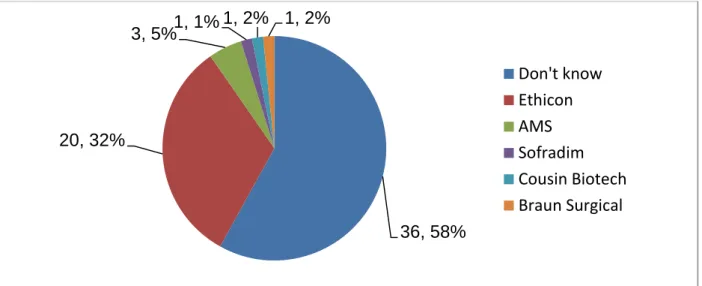
As Figure 3.1 highlights, the largest proportion of procedures were for SUI alone (54%), followed by SUI and POP procedures (21%). Single POP procedures accounted for 1 in 5 procedures (20%). Of the 62 responders, over half of them do not know what mesh product was fitted (58%) and just under one third aware that they had received the Ethicon™
product. This is shown in Figure 3.2.
Figure 3.2 Types of mesh product used in the procedure
(Data labels = n of reason, % of responders)
Before survey the women commented on the information they had received and about informed consent. Only 10 of responders answered the question about the information they were given, pre-operation about mesh (35% of the responders). Most (n=7) said that it was
33, 54%
12, 20% 13, 21%
1, 2% 2, 3%
Stress Urinary Incontinence (SUI)
Pelvic Organ Prolapse (POP) SUI & POP
Hernia Repair
SUI, POP, and Hernia Repair
36, 58% 20, 32% 3, 5% 1, 1% 1, 2% 1, 2% Don't know Ethicon AMS Sofradim Cousin Biotech Braun Surgical
14
inadequate and three women said they were given no information. Almost all of the women (n=61/62, 98%) said their consent to mesh surgery was not informed. One woman said she had been denied access to her patient records by the NHS Board responsible.
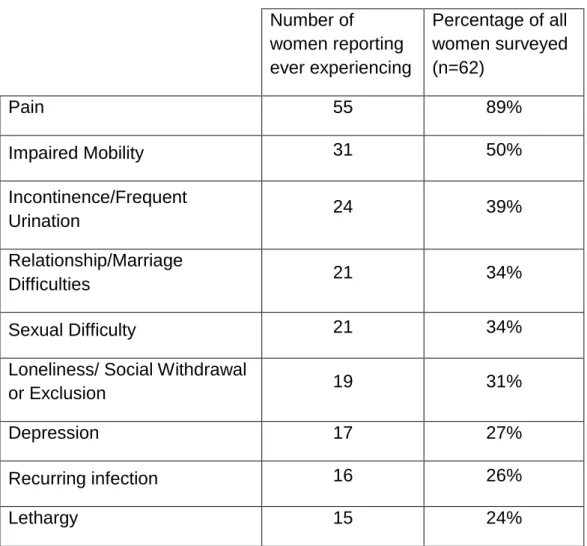
The questionnaire asked the women to describe how the mesh had affected them. From this it has been possible to identify the symptoms they experienced post mesh surgery. These self-reported health states, are shown in Table 3.2 below.
Table 3.2 Self-reported health state / symptoms experienced after mesh surgery
Number of women reporting ever experiencing Percentage of all women surveyed (n=62) Pain 55 89% Impaired Mobility 31 50% Incontinence/Frequent Urination 24 39% Relationship/Marriage Difficulties 21 34% Sexual Difficulty 21 34%
Loneliness/ Social Withdrawal
or Exclusion 19 31%
Depression 17 27%
Recurring infection 16 26%
Lethargy 15 24%
Overall, some 74% (n=46/62) of the women reported that their symptoms were still current. Only a small proportion of these reported that their symptoms had improved / resolved over time (7%). Symptom severity was reported to have been unchanged by 72% and over a fifth reported their symptoms were getting worse (22%).
The questionnaire also asked the women about their experiences of healthcare. This question provided an opportunity for a wide range of issues to be raised. These may be summarised as:
65% of women described their surgeon’s aftercare. Of these 70% (n=28/40) indicated that their surgeon was not open to the idea that mesh was the cause of their symptoms;
15
77% of women reported that they had repeatedly told a clinician about their symptoms or asked for a referral, of these, 40% (n=19/48) indicated that their case had not been followed up;
82% of women reported on their current status, of these 33% (n=17/51) were not receiving ongoing care; and of the 66% who were ongoing care, some 38% (n=13 /34) were critical of the treatment they were currently receiving; and
32% of respondents made a comment indicating they had lost faith in medical professionals or the healthcare system.
More widely smaller numbers of women mentioned issues such as: concerns over the processes of medical device manufacture and regulation; and the lack of financial support available from the public sector.
These women consider that there is no capacity in Scotland for full removal of mesh as no surgeons are trained. They also acknowledge that, for some of them, partial removal can leave some mesh and enhance erosion into organs.
3.4.3 PROSPECT Data
As part of the PROSPECT trail, women were asked at one and two years about their personal experiences. These data were collected using a questionnaire developed specifically for inclusion in the research. Only the additional comments have been made available to the Independent Review for preliminary analysis. No demographic detail was provided and it should be noted that this study includes experiences of women from other parts of the UK.
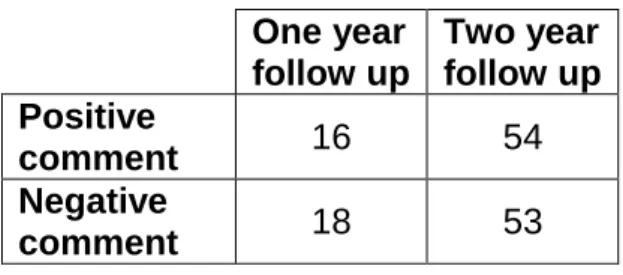
Table 3.3 Positive and negative patient comments at one and two years within the PROSPECT trial.
As can be seen, whilst there is an increase in the number of comments between follow up at year one and year two, the number of positive and negative comments are roughly equal. A simple Chi2 test shows these differences are not significant (p = 0.844, ns).
Clearly, a more detailed analysis of these comments, notably seeking to understand the content of them more fully, will be undertaken by the PROSPECT trial team in due course.
3.5 Interpretatio
n
The data we have regarding the experiences of women who have undergone mesh surgery is limited and needs to be handled in a manner which does not over analyse it. We also have to be careful in interpreting the data and in framing any conclusions from it.
Ideally, it would have been helpful to be able to undertake formal research into the
experiences of these women, those with both positive and adverse outcomes. This did not prove to be appropriate in the context of the Independent Review and may have been
One year follow up Two year follow up Positive comment 16 54 Negative comment 18 53
16
difficult to undertake. What data we have, whilst is has been considered in a scientific manner, is not without its potential sources of bias and this has been taken into account in the analyses underlying this chapter.
Long-term, adverse outcomes in mesh surgery for SUI and POP are real and can profoundly affect the everyday lives of some women. For many of the women who have been so affected, they report that they were not able to give informed consent, were unaware of the type of mesh device implanted, and have lost confidence in medial follow up, even though some are still experiencing unpleasant and debilitating symptoms that reduce their capacity for everyday life.
However, for other women, there are positive outcomes which have occurred. These have been experienced as strongly as have adverse outcomes. Where the data have captured something of the positive stories from women as well as those of adverse outcomes, they seem to be broadly equal in number.
Finally, it can be noted that the largest proportion of women who have had mesh surgery have not shared their personal experiences. Theirs are the silent voices, the absent evidence is the most difficult to interpret. For some, this silence is evidence for successful treatment and reflects that fact that these women have had positive outcomes. For others, it is a sign that – at best – the surgery has not worked, but these women have chosen not to seek further intervention as this was their “last, best hope”. Finally, there are some for whom this is evidence that there are women in Scotland who are still “suffering in silence”. In the absence of specific research to hear these stories, this must remain an absence of evidence for which no single interpretation is possible.
17 Table 3.1 Patient stories
Adverse experiences
I watched and listened intently to [the Scottish Parliament’s] Question Time this morning and heard you say that those of us who have approached our GP regarding the implant should tell what reaction we got. I would like to let you know what my experience has been.
In June 2003 I received [a TVT] implant. By 2008 I was having some problems and must say that they were investigated, but was told that they did not know the cause. These problems have got worse but I never associated them with the implant until I read Marion Scott's article in Sunday Mail in April 2013.
When I visited the GP to discuss her reaction was "You are just scaremongering like the mothers’ who questioned the MMR Vaccine and did I not realize all the trouble we caused the Medical Profession". Reluctantly she referred me to the consultant who had
performed my operation and I met with him on 8th August 2013. Only remark I took away from that appointment was "We don't know everything".
On 23rd January 2014 I wrote the consultant to ask to be referred to X at Southern General in Glasgow. His reply said that he had forwarded my letter to my GP. At 3.10pm this afternoon I checked with Appointments Dept at Southern General and no request has been received.
I have no way of ever finding out what, if any, damage the implant has done. If a record of how patients are treated is going to be set up I would like my experience to be added.
I am writing to inform you that I have read about your concerns surrounding the TVT mesh implant! I have had two attempts at this surgery and have been left with on-going complications. I am now in the process of being re-referred to my gynaecologist! This has led to 4 separate surgical procedures with no avail and now I have been left with severe problems. I had requested after the first tape erosion to have the procedure done the old fashioned way with skin graft but was refused point blank.
I am pleased there is finally someone listening to us ladies on this matter. Let me know if I can do anything to help you with this matter or if I can do anything about it for myself. I'm only too happy to help.
I am a 51 year old female who until recently enjoyed a long career as a senior theatre nurse. That all changed, however, when in November 2013 I began to suffer pain in my groins and legs which was diagnosed as being mesh related.
18
I had mesh inserted in 2010 and again in 2011. The reason for this email is to make you aware of the problems I am having at the moment with the DWP. I was assessed by ATOS on 25th November 2014 as I was receiving ESA and they sent report to DWP who then decided that I was fit to work. I was then taken off ESA and put on JSA. Having never signed on in my life I have found this extremely traumatic and upsetting.
I appealed the decision and have now got to the stage where my case should go in front of a tribunal. However, another decision maker at the DWP has reassessed my claim and again taken the evidence of the ATOS assessment, basically disregarding all the evidence I produced (and there was a ton of that!!) and has recommended that the tribunal not go ahead.
I feel as if I'm fighting a losing battle with this. According to the letter I was sent I "believe that I am unfit for work". This is not my decision to make. I would love to still be working but because of this material inside me I have been declared unfit to work by medical professionals, my GP consultant gynaecologist and an NHS Occupational Health consultant. THIS IS NOT MY FAULT !!
It also states that the report "does not indicate if the Health Care Professional is familiar with X’s diagnosed condition" and that she " gave an opinion that her assessment does not indicate significant functional restriction".
As it is, I am in constant pain for which I now take regular analgesia and I cannot stand or sit for any length of time without having to change position regularly.
My home life has completely changed. I do not sleep well which means my husband doesn't sleep well before doing a full day’s work. My two sons see me in constant pain. I have no income and my pay off from the NHS is now finished so I have no idea how I am going to pay my mortgage and household bills from next month.
This is just a very small insight into my life with this material inside me. This email was just really to let you know how hurt and disgusted this now makes me, being treated like a scrounger and all through no fault of my own.
I am one of many women left in pain daily through mesh implant and would like to know what help is being put in place for so many injured women. I have recently lost my home after 17 years paying mortgage had to quit my job after 25 years’ service fight to receive benefits after being told to visit a food bank to feed my family. I have been told I'm not entitled to PIP. I have never had benefits in my life and am struggling on a daily basis due to this. I have had to double up dose of antidepressants due to having my life taken away from me I'm only 49 and feel my life is over due to this please put some help in place for those of us crippled through no fault of our own.
19
I am writing to you as I recover from my 5th surgery to repair the problems left in my body by Mesh. I am now 46 years old and the last 6 years of my life have been hell since being implanted with this device after the birth of my daughter. I won't go in to all the medical intricacies of my situation, as I frankly am an emotional wreck at present, as I try to recover from a removal that was unsuccessful. I am a working mum and always have been. I am a Faculty Head in Education, a job that I love and enjoy. However, once again I have been forced to take time off from my job for another surgery that I had to wait one year for - from referral to surgery.
This isn't good enough. I am losing valuable years of my child's life, and my own. If I am unable to return to work I risk losing the home that I have worked so hard to make. This has to be dealt with now, to allow women who have been injured and left in a disgusting state a better quality of life. I am urging you to ensure that the 'right thing' is done.
Positive experiences
Below is an email I sent supporting the continuing use of tape in urinary incontinence. He has encouraged me to copy you so that you are aware of the many lives that have been dramatically improved by this surgery.
________________________________
“With so much adverse publicity I just want to say how much my life was changed following insertion of a TVT. I’m running twice a week (not that far!) and could never have undertaken this before. I have never felt fitter which is a real bonus in mid 50s! There is no way I would have contemplated a colposuspension.
“I am sure for everyone who feels their life has been adversely affected; there are hundreds whose lives have been transformed for the better”.
I have been advised by my Gynaecologist that fitting women with tapes to support their bladder has been suspended due to a tiny amount of problems. I would like to share my experience.
I was advised there was a small chance of the procedure not being a success. Before I had these tapes inserted, I was housebound. I was wetting myself up to 20 times a day. I couldn’t bend over, kneel down, carry a bag, lean over anything.. it was so humiliating. Lifting or hugging my grandkids was impossible too. My life has been given back to me.. I AM 49 YEARS OLD and am far too young to have lost my dignity and freedom. I am now going to the gym, lifting weights let alone being able to carry shopping. It is the MOST AMAZING procedure. 7
20
I would ask you, for the sake of the many women looking in desperation for a cure to this awful problem, Please, please lift this
suspension. I have been advised that 4 young women have been refused this simple procedure and that only from ONE surgeon. Any surgery has its risks. but we are warned beforehand. Any woman considering having this done is at her wits end and desperate for help.
You cannot deny them the chance of freedom from all the problems connected with having no bladder control.
I accompanied my friend to yet another appointment relating to incontinence issues, as a support. She is a young 66 years old, fit and active, takes care of herself well. She is absolutely shattered with her health situation. She has endured her incontinence for over 9 years. Was diagnosed with triple prolapse and operated on previously. Although prolapse now repaired, her incontinence continues. She was waiting for TVT surgery, but obviously this option is no longer available for time being. How long is this going to go on? What alternatives are being put in place? I can hardly believe that with the existing - and growing - number of women who are victims of this situation, there is so little help available. Her current option is to try (again) various medications. There may be some relief for her if she was able to use a newish product, some kind of tampon like insert ('vaginal rockets'- sound more exciting than they are!!) but these are not available on prescription, and are very expensive to buy privately.
First of all - Why?? If there is no surgery available currently, then why on earth are these products not being given on prescription? Second - why the terrible expense? although previously expensive enough, it seems that the producers, with an eye on the (lack of) surgery options, have latched on to the opportunity to make a few bucks, and are charging ridiculous prices for items that are
desperately needed.
Thirdly - What is happening with TVS? I appreciate that some women have suffered as a result of these operations, but what is the % in comparison to the rest of the successful procedures? This situation is only going to grow and grow. You can just bet that the people making the decisions about both the surgery options, and the help available, are either men who obviously don’t suffer from this, or women who don’t suffer this condition at its 'full strength'. Well woe betide them!!! When they start to encounter this, I really hope it is as bad as my friend's situation. And I hope they think back and wish they had done more, fought harder! It absolutely scunners me, that this - a situation brought on mainly because of childbirth, is being side-lined. Think of the expense if all women decide they are not going to 'push' and go for C-sections? And the number of hospital beds that will impact?? And yes - this IS written on behalf of my chum - but I am also thinking of the future and the possibility of similar situation for myself.
21
refer to the letter recently sent to X (of which received a copy) in response to concerns raised re Transvaginal Implant pro
13 I
On January an , to my procedures how these have been lately." In my to X two thirds of that letter concerned the present coverage of the by the press. was very to see that gave no mention whatever t o the issue of press far less the nature of that coverage. In the articles that read could find no vestige of any form balanced It’s clear that there are patients who experienced very serious indeed. However, no mention was made of any
One year ago one of these because of a long standing and Despite the very best efforts of health professionals and myself my condition failed respond to conservative In no way was surgery the first course of
was provided with very comprehensive and verbal which was and easy to understand. encouraged to this with family and My family was able to proposed surgery in detail and to study closely all the
lt was originally planned that I was to be a participant in the trial. My operation was carried out Z in a private hospital but
because this hospital did not permit its premises to be used for research purposes I was no longer eligible to be part of that trial.
Media is the means by which information flows and the information that flows from certain press coverage makes no mention of any success. Certain aspects of the press continue to vilify in the most extreme terms the doctors who carry out these
operations. I could imagine that these doctors may find themselves in a state of limbo, unable to respond to the allegations while their reputations and professionalism are savaged.
Confidence is a fragile commodity and in the wider medical world patient confidence in their surgeons and physicians is currently to a n extent being undermined.
22
Chapter 4:
Assessing the safety and effectiveness of vaginal
mesh surgery for stress urinary incontinence and
pelvic organ prolapse in Scotland
4.1 Operations provided in Scotland for stress urinary incontinence
and pelvic organ prolapse
For this study, Information Services Division (ISD) used routine hospital discharge records to identify the different operations provided for stress urinary incontinence and pelvic organ prolapse in Scotland between 1997/98 and 2013/14. Specific types of operation that were provided in reasonably high numbers were included in the analysis.
In general, only single operations were included in the analysis. ‘Single’ means that the woman did not have any additional/second operation for incontinence or prolapse at the same time as the operation being examined. It is quite common for women to have more than one operation at the same time. However if complications subsequently develop it can be difficult to know which operation caused the problem. Only single operations were included so that the study could focus on the risks of each particular operation separately. In general, only first operations were included in the analysis. ‘First’ means that the woman had not had any other operation for incontinence or prolapse in the previous five years. Only first operations were included because the risk of complications may be quite different for a woman having a repeat operation, and it was important that the study did not mix operations with different levels of risk.
4.1.1 Operations provided for stress urinary incontinence
Open colposuspension was the main operation provided in Scotland for stress urinary incontinence in the late 1990s. Tape (mesh) procedures were introduced around 2000/01 and quickly became the most common operation type for this condition, however the number of tape procedures done fell substantially in the last year included in the analysis (2013/14). Urethral injection therapy and suprapubic sling operations have been provided in low numbers throughout the time period included in the analysis.
24 4.1.2 Operations provided for pelvic organ prolapse
Anterior and posterior colporrhaphies (first, single operations) have been provided in increasing numbers over the time period included in the analysis. Anterior and posterior mesh colporrhaphies can be identified in hospital discharge records from 2007/08 onwards. Relatively small numbers of mesh colporrhaphies have been provided in Scotland since then, and numbers provided have fallen in the most recent years.
Sacrospinous fixation operations have increased substantially over recent years. Mesh open sacrocolpopexies have been provided in moderate numbers over the time period included in the analysis. Mesh infracoccygeal colpopexies can be identified in hospital discharge records from 2006/07 onwards. Relatively small numbers have been provided since then, and numbers provided have fallen in the most recent years. Moderate numbers of (first, single) vaginal hysterectomies for pelvic organ prolapse have been provided over the time period included in the analysis.
26
4.2 Problems after surgery for stress urinary incontinence or pelvic
organ prolapse
4.2.1 Main problems
ISD looked at three main problems that can develop after an operation for stress urinary incontinence or pelvic organ prolapse. These were:
immediate complications; later complications;
further incontinence or prolapse surgery.
4.2.2 Immediate complications
‘Immediate complications’ means that at least one complication was recorded on the same hospital discharge record as the operation being examined; in other words the woman developed a complication when she was still in hospital following her first operation.
4.2.3 Later complications
‘Later complications’ means that at least one complication was recorded on a subsequent hospital discharge record; in other words the woman had been discharged home then readmitted for a complication at a later date. In general, readmissions for later
complications werecounted if they happened within five years of the operation being examined. Complications that would be expected to develop quickly after an operation were only counted if the readmission was within three months of the operation.
4.2.4 Further incontinence or prolapse surgery
‘Further incontinence or prolapse surgery’ means that at least one operation for either of these conditions was recorded on a subsequent hospital discharge record; in other words the woman had been discharged home after her first operationthen readmitted for another stress urinary incontinence or pelvic organ prolapse operation at a later date. All
readmissions for further surgery were counted if they happened within five years of the operation being examined.
4.2.5 What is a ‘complication’?
‘Complications’ included the following:
problems directly related to the operation, such as damage to the bladder or difficulty passing urine;
excessive bleeding; infection;
pain;
partial or total removal of mesh (later complications only).
Only complications that were treated in hospital were included in the analysis. Complications treated in outpatient clinics or in general practice were not included.