In
D
R
flue
Dev
Rele
enc
velo
evan
cing
opm
nt F
g Re
men
Fac
ece
nts i
ctors
ent
in It
rs
Deb
taly
bt
y
INDEX
EXECUTIVE SUMMARY ... 3
1. CYCLICAL CONDITIONS ... 7
1.1 Cyclical conditions and potential growth ... 7
1.2 Cyclical conditions and coherence between the preventive arm of the SGP and the Debt Rule ... 8
1.3 Cyclical conditions and self defeating fiscal consolidation ... 10
2. STRUCTURAL REFORMS ... 17
2.1 The Reform Agenda and the overall impact on GDP ... 17
2.2 Structural reforms and the macroeconomic environment ... 22
3. MEDIUM TERM BUDGETARY POSITION ... 29
3.1 Structural deficit, fiscal consolidation and convergence to the MTO ... 29
4. DEVELOPMENTS IN GOVERNMENT DEBT POSITION ... 31
4.1 Developments in government debt position ... 31
4.2 Debt and inflation ... 33
4.3 The analysis of risks related to the structure of public debt financing ... 34
4.4 Participation to Euro Area solidarity Programmes, Trade debt arrears and Privatisations ... 36
5. DEBT SUSTAINABILITY ... 38
5.1 Medium Term Debt-to-GDP projections ... 38
5.2 Fiscal sustainability in light of ageing populations ... 39
6. OTHER RELEVANT FACTORS ... 43
EXECUTIVE SUMMARY
This section provides a brief summary of the relevant factors influencing recent debt developments in Italy to be taken into account by the Commission according to the Treaty and to Regulation 1467/97 when assessing compliance with the debt criterion. The topics are described in more detail in Sections 1 to 6. Two annexes provide, respectively, a more detailed description of the implications of the implementation of the debt rule, and of the structural reforms’ agenda and its impact on GDP.
1. Cyclical conditions
The Italian economy is going through the most severe and lengthy recession in its history, with an unprecedented loss of output of 9 percentage points of GDP since the onset of the crisis, negative potential growth for an unusually protracted period, historically high levels of output gap. After the reduction of 2.3 per cent in 2012 and 1.9 per cent in 2013, real GDP growth is expected to post, for the third year in a row, another negative value in 2014, around -0.4. On the basis of the 2015 Commission services Winter Forecasts, potential growth, recording negative rates between 2012 and 2014, is expected to remain negative in 2015 and 2016. Yet, despite negative potential growth dynamics, output gaps are estimated at historical high levels, larger than -4 per cent in 2013 and 2014 and still close to -2 per cent in 2016. Overall, the economy is shifting from exceptionally bad to very bad cyclical conditions in 2013-2015 and is expected to still experience bad conditions in 2016. Against this background, as extensively illustrated in section 1.2, the cyclical correction of the debt-to-GDP ratio proves inadequate to take properly into account the impact of such weak economic conditions, including a flat inflation rate, on the debt dynamics.
In this context, to comply with the debt rule, the Italian economy would require a significant, further fiscal adjustment; however, in the current macroeconomic juncture fiscal consolidation may entail disappointing dynamics in the public debt to GDP ratio, due to its adverse impact on economic activity. Among other elements, two features are currently at work: unusually high fiscal multipliers and very weak price dynamics. To evaluate the impact of fiscal consolidation on the Italian economy and public finances, two different scenarios have been built using the Italian Treasury econometric model, where the main difference is the price outlook. Whatever the scenario chosen as starting point, fiscal consolidation proves to be self-defeating: i) compliance with the debt rule is not achieved; ii) debt projections worsen in comparison with the respective baseline; iii) the more severe the consolidation, the worse the impact on GDP. Furthermore, the effects of any additional consolidation measure in the following years – in the attempt to chase the debt rule – would harm even more the economy, moving away from debt sustainability. Some simulations are illustrated in Section 1.3, while ANNEX 1 provides background details.
2. Structural reforms
Italy is implementing a wide-ranging multiannual programme of structural reforms to address deeply rooted structural weaknesses and increase growth potential. Besides an overhaul of the institutional system that will facilitate and speed up the lawmaking process and enhance the effectiveness of government action, they include the reform of the labour market; measures to improve the efficiency of the public administration; the reform of the civil justice system; the development of alternative financial channels alternatives to bank credit, especially for SMEs; the reinforcement of the banking system; the simplification of the tax system, strengthening the fight against tax evasion and shifting the tax burden away from productive factors; the reform of the educational system to ultimately improve the quality of human capital. The comprehensive reform package, coupled with a growth friendly oriented budget composition, will bring a significant positive impact on growth and on long-term sustainability. To this end, a key role is also played by EU Structural Funds, where implementation efforts have been constantly accelerating since 2012 and will further increase in 2015 in order to implement key investment projects especially in the south of Italy and to ensure the full absorption of funds. This renewed effort, requiring a proportionate increase in national co-financing, has implications on public finances.
A description of the Italian reform agenda and its overall impact on GDP is provided in section 2.1. Further details on the reforms and on their specific impact are provided in the letter sent by Minister Padoan to VP Dombrovskis and Commissioner Moscovici on 6th February concerning the ongoing implementation of the comprehensive package of structural reforms, (see ANNEX 2). According to Government’s evaluation, the overall impact of reforms already implemented and announced – obtained by summing up the results in each single domain of intervention – will have a significant impact, estimated in 3.6 per cent of GDP at 2020 (not including education reform). The impact estimated by the Government is broadly confirmed by the OECD.
Finally, as discussed in section 2.2, the adoption of this wide-raging structural reforms package would be easier in good cyclical conditions and even its impact on growth and employment would be faster and stronger. On the contrary, further fiscal tightening would reduce the positive impact of reforms. In this respect, a consistent policy mix including accommodative monetary stance and growth-friendly fiscal policy is key.
3. Medium term budgetary position
In spite of the weak economic performance, Italy stayed on track of its budgetary targets. After the end of the excessive deficit procedure in 2012, the adjustment of the structural deficit was equal to 1.7 percentage points of GDP in 2012 and to 0.7 in 2013, slowing down only in 2014, the third year of recession. Two of the three years considered in the transition period of the debt rule, namely 2013 and 2014, posting negative GDP growth and an exceptionally negative output gap, would have required no adjustment to be compliant with the preventive arm of the SGP. The implementation of a considerable reduction in public spending resulted in a primary surplus amounting to 1.9 per cent of GDP on average in 2012-2014, a figure well above historical average and one of the highest values recorded in EU in the same period. Moreover, the adjusted expenditure aggregate decreased by an annual average rate of 4.5 per cent in real terms over 2012 and 2013 and kept decreasing by almost 1.0 per cent in real terms in 2014, a reduction above the required
benchmark. Within this context, the Government is implementing a growth-friendly consolidation. The budget composition complements the structural reform effort with a very significant reduction of the tax wedge on labour and a durable improvement in the efficiency and quality of public expenditure at all levels of government. Growth enhancing spending such as R&D, innovation, education and essential infrastructure projects are increased.
4. Developments in the medium-term government debt position
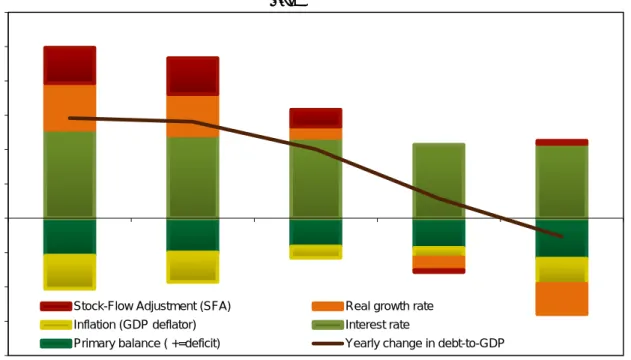
Despite an extremely responsible management of public finances, resulting in the achievement of agreed consolidation targets, exceptionally bad cyclical conditions exerted a negative impact on the dynamics of the debt-to-GDP ratio. Actually, an increase on average by more than 5.0 percentage points of GDP over 2012-2014 is due to the so-called snowball effect, accounting for the impact of interest rate and nominal output growth. Part of this effect has been driven by negative real GDP growth which increased the debt-to-GDP ratio by 1.9 percentage points in the three-year period. The snowball effect is amplified in the current low inflation environment, reducing nominal GDP compared to the baseline. These negative dynamics will also apply in 2015, despite a further increase in primary surplus.
Other factors also heavily contributed to the negative debt dynamics. First of all, over the period 2012-2014, the Stock Flow Adjustment has contributed to increase the debt-to-GDP ratio by, on average, almost 1.8 percentage points, completely offsetting the reduction due to the primary surplus. Contributions to financial assistance and stability mechanisms have indeed exerted a significant impact on the level of public debt in Italy, already above 3 per cent of GDP in 2013 and up to 3.8 per cent of GDP in 2014 and 2015. In addition, recent legislative initiatives introduced for the settlement of general government overdue trade debts, in line with recommendations from the Commission, have an impact on the debt-to-GDP ratio around 3.0 percentage points in 2014 and 2.7 in 2015. If those two components were excluded from the debt-to GDP ratio, it would record only a modest increase to 123.2 in 2013, 125.0 in 2014 and 126.6 per cent of GDP in 2015.
5. Debt Sustainability
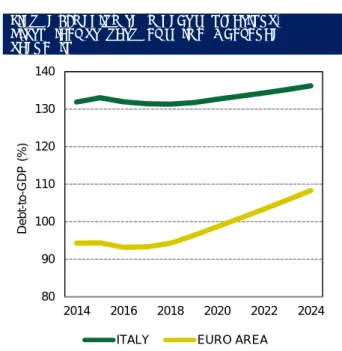
According to the Commission services framework and assumptions, Italy does not raise particular concerns in term of debt sustainability. First, overall fiscal risk in the short term has diminished considerably since 2012 and it is now close to the average value for the EU, thanks to improvements in both its financial and fiscal components. Second, risks over the medium term are very limited and well below many other countries with a lower debt-to-GDP ratio. Last, looking at long term sustainability, the Italian public debt entails a low level of implicit liabilities.The impact of ageing population, which is the current challenge for a number of major EU economies, has been already dealt with in Italy by the pension reforms introduced over the past 20 years and the tight control on health and long-term care expenditures. As a result, the indicator of long-term sustainability calculated by the Commission shows that Italy’s debt is the most sustainable over the long term among the EU countries. Long term projections of age-related expenditures show that long term sustainability is fully preserved even if the current high level of the primary balance had to deteriorate in the next years. In addition, Italy’s public debt presents a maturity structure
that compares very favorably with those of other developed countries, being among the highest in Europe.
6. Other relevant factors
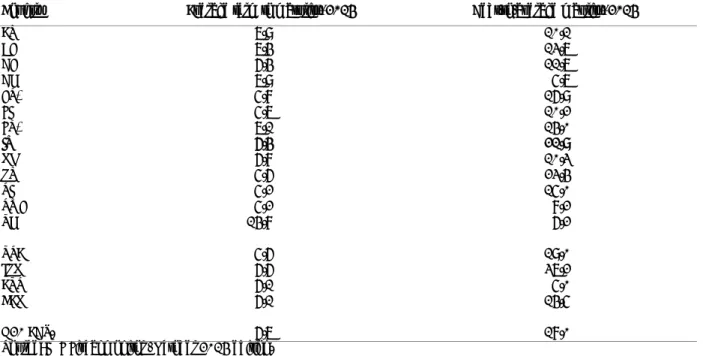
The sound situation of private sector balance sheet is among the main strengths of the Italian economy. At the end of 2013, household debt, despite an increase during the crisis, amounted to approximately 43 per cent of GDP, around 18 percentage points below the euro area average. With regard to non financial enterprises, the ratio of firms’ financial debt to GDP (111 per cent) is consistenly lower than in the euro area (128.5 per cent). As a result, (also confirmed by latest provisional figures on 2014), Italy’s total debt - including public and private debt - is in line with euro area average, and much lower than many major European countries.
Moreover, Italy performs remarkably well for what concerns contingent liabilities of the government, both in the form of guarantees and in the form of liabilities of government controlled entities that are classified outside general government. In 2013, public guarantees amounted to 6.1 per cent of GDP, of which around 5 per cent of GDP related to the financial sector, a level clearly below those recorded in the large majority of MS suggesting no major negative potential feedback on public debt could arise from the sector. Data on liabilities of government controlled entities post a low level relatively to EU average, as they amount to 45 per cent of GDP.
Summing up
In spite of exceptionally bad cyclical conditions Italy has kept to its ambitious budgetary targets. Adverse debt developments are largely due to a prolonged period of very low inflation and negative real growth. The cumulated impact of financial assistance contributions and the payment of debt arrears further aggravated the situation. Due to current macroeconomic dynamic the effectiveness of further structural adjustments on debt reduction is dubious while negatively affecting growth prospects. According to Government’s evaluation, the overall impact on GDP growth and therefore on debt sustainability of the announced comprehensive package of reforms in the course of implementation is significant. Finally, it is worth reminding that, according to calculations from the Commission, Italy is the most sustainable among EU countries in terms of long term sustainability thanks to the reforms already enacted in age-related expenditure, while Italy also records one of the most favourable debt maturity structures among EU countries. Considering overall private and public debt, including contingent liabilities the position of Italy is in line with major EU countries.
1.
CYCLICAL CONDITIONS
1.1 CYCLICAL CONDITIONS AND POTENTIAL GROWTH
The Italian economy has been going through one of the most severe and lengthy recessions in its history. After the reduction of 2.3 per cent in 2012 and 1.9 per cent in 2013, real GDP growth is expected to post, for the third year in a row, another negative value in 2014 around -0.4 per cent. On the basis of the 2015 Commission services Winter forecast, Italy should resume to positive growth only in 2015, when GDP is expected to increase by 0.6 per cent.
Estimated potential growth for Italy has kept hovering in negative territory both as a result of the crisis and as a consequence of the procyclicality embedded in the commonly agreed methodology. On the basis of the 2015 Commission services Winter Forecasts, potential growth is projected to record negative rates of -0.9 per cent in 2012, -0.6 per cent in 2013 and -0.5 in 2014. Over the forecast period, potential growth will keep being negative and equal to -0,3 per cent in 2015 and -0,1 per cent in 2016.
The analysis of the underlying factors shaping potential growth shows that the contribution coming from labour, after the large and negative record of 2012 (equal to -0.7 per cent), is expected to resume. Labour contribution (both hours and number of employed) is expected to positively support potential growth as of 2015. By contrast, the contribution coming from capital is projected to remain slightly negative (equalling -0.1 percent) over the 2013-2015 period. Total Factor Productivity (TFP), is delivering negative support to potential growth, averaging -0.3 per cent over the years 2012-2016.
In spite of the negative potential growth rate, output gaps posted historical high levels, equalling -4.3 per cent of potential GDP both in 2013 and in 2014. According to the
Commission services matrix specifying the annual fiscal adjustment towards the MTO1, such
cyclical conditions can be defined as exceptionally bad times.
In 2015 the output gap should start closing, in spite of the deflationary trends that are affecting the country, reaching -3.5 per cent of potential GDP. Nonetheless, the severe conditions of economic recession seen in 2012, 2013 and 2014 are likely to persist for the next few quarters, ending only in 2016, when the level of the output gap should fall in line with the value considered representative2 and below the threshold of -3.0 which, according
to the Commission matrix, still indicates bad conditions.
1 European Commission, Communication from the Commission- Making the best use of the flexibility
within the existing rules of the SGP, January 13th, 2015
2The European Commission calculates the level of the representative output gap (ROG), i.e. that
1.2 CYCLICAL CONDITIONS AND COHERENCE BETWEEN THE PREVENTIVE
ARM OF THE SGP AND THE DEBT RULE
This section elaborates on the link between the assessment of budgetary developments under the preventive arm of the SGP and the compliance with the debt rule.
The rationale of the SGP implies that the compliance with the preventive arm ensures a declining path of the debt to GDP ratio in line with the debt rule. MTOs and the adjustment path towards it are set, indeed, taking into account the need to ensure sustainability. Moreover, at the time of the negotiation of the Six-pack - which formalized the implementation of the debt rule in the EDP procedure - the working assumption was that under normal economic circumstances a structural deficit corresponding to the MTO was sufficient to bring the debt down at a speed even faster than that envisaged by the debt rule.3
However, latest budgetary data in some member states show that applying without some judgment the current set of rules for both the preventive and the corrective arm of the SGP may result in an inconsistent outcome. Full compliance with the preventive arm of the SGP may indeed be accompanied by a decline in the debt to GDP ratio which is lower than the one required by the debt rule. At the same time, at the current economic juncture, the required correction necessary to ensure compliance with the debt rule would most likely imply a self-defeating strategy with adverse effects on future budgetary results.
The reason of this inconsistency is to be found in the fact that the debt rule, in its current operationalization, is not able to adequately take into account exceptionally weak economic circumstances, such as persistent negative cyclical conditions and/or low inflation.
In light of the application of the debt rule, cyclical conditions assume particular relevance as the influence of the cycle on the pace of debt reduction should be taken into account when measuring the breach from the backward-looking debt benchmark. As it is well known, the pro-cyclicality inherent in the debt reduction is more pronounced than in the budget balance. The impact of a weaker growth on the debt ratio needs indeed to be offset both because of the cyclical deterioration in the budget balance and also for the denominator effect.
In order to compensate for both effects, the formula used to cyclically adjust the debt ratio subtracts in the numerator the cyclical component of the budget balance from the debt. The denominator is adjusted by using an estimate of real GDP obtained by using potential GDP growth. To convert real growth into nominal growth the actual rate of inflation is used.
3 Actually, as shown in the 2014 Italian Stability programme and confirmed in the Staff Working
Document accompanying the Commission Opinion on the DBP of Italy (p. 13), the very high level of the nominal primary surplus associated with the attainment of a structural balanced budget would be sufficient to ensure compliance with the debt rule (in its forward looking configuration) assuming a nominal GDP growth of 3.0 per cent. This performance of Italian GDP was well within reach in the year 2010, when the rule was negotiated. At that time it was expected that GDP rates of growth would have returned at the pre-crisis levels with an aggregate potential output estimated to be above 1 percentage point in the medium term (2013-15) in the Euro area. On the contrary, this rate has almost halved (it is now approximately 0.5 percentage points) and in the case of Italy it passed from 0.5 to -0.3 percentage points. Furthemore nominal potential growth estimated on average at only 0.5 per cent over 2014-2016.
Given the negative GDP potential growth prevailing so far and the limited contribution stemming from GDP deflator, correcting the debt-to-GDP ratio of 2015 for the effect of cycle of the previous three years, so as to measure whether the breach of the debt benchmark is due to cyclical factors, may prove a worthless exercise for Italy.
In this regard, it is worth noticing that both in 2013 and 2014, two of the three years considered in the transition period of the debt rule, GDP growth for Italy was negative contributing to increase rather than to decrease the debt-to-GDP ratio (see the following section). Over the same period, the contribution of inflation (GDP deflator) to the deleveraging of public debt has been subdued.
A simple counterfactual calculation shows that, given the negative potential growth estimated for Italy on the basis of the agreed methodology, the output gaps of 2013, 2014 and 2015 should have been, ceteris paribus, on average 1,6 per cent wider than the actual figures (averaging to -5.6 per cent of potential output over the last 3 years) and potential growth 0,8 percentage points higher (averaging to 0.3 per cent over the last 3 years) so as to allow the debt-to-GDP ratio corrected for the cycle to be below the backward-looking benchmark.
Even assuming that over the period 2013-2015,the increase in GDP deflator averages 2.0 per cent in line with the Euro Area inflation target and potential growth averages zero, an historically wide output gap equal, on average -5.0 per cent of potential GDP, would still be required in order to allow the cyclically-adjusted debt to meet the backward looking benchmark.
Such values, required to be compliant with the debt rule under the cyclical correction configuration, have never been recorded in Italy as of 1965, not even in 2013 and 2014 when output gaps reached historical records. Accordingly, the cyclical correction of the debt-to-GDP ratio appears as an unsuitable tool, even when allowing for the presence of very large output gaps just being recorded by Italy.
At the current juncture, the adjustment of the denominator presents two major flaws: i) the first is about the uncertainties surrounding the estimate of potential output, which the available methodologies are not able to adequately measure and tend to underestimate in protracted lack of demand crisis; ii) the second is about the use of actual data for inflation at a time of inflation rates close to zero and serious risks of deflation. This latter choice is quite controversial. Indeed, a more logical solution would have been to use the 2 per cent reference value of the ECB.
The above considerations show the rigidity of the debt rule and that the benchamark provisions are ill-eqiupped to take into account exceptionally weak economic circumstances. It may be argued that to avoid this inconsistency, the SGP provides that the report under art. 126(3) will include a broad analysis of the effect of the cycle on debt developments. If after this analysis and the assessment of all the other relevant factors, the Commission considers that the debt rule is not breached then no excessive deficit procedure will be open.
While the 126(3) report may be considered as a significant safeguard against a too mechanistic application of the rules, one may wonder about the need to further elaborate on the actual rules for the debt criterion. Important progress has been recently made in specifying the margins of flexibility embedded in the SGP both on the preventive arm and the corrective arm for the part concerning the deficit criterion. An additional effort is required on the debt side.
The recent Communication by the Commission on the flexibility publishes the new matrix with the new thresholds for the adjustment towards the MTO. The thresholds are differentiated according to the position of each country in the economic cycle. This differentiation needs to be taken into account while assessing the debt rule as well. If under exceptionally weak economic circumstances a waiver is provided for the fiscal effort a similar approach has to be applied for the debt rule. A different approach would be inconsistent as policies fostering growth prospects can bring the debt to GDP ratio on a sustainably downward path.
1.3 CYCLICAL CONDITIONS AND SELF DEFEATING FISCAL CONSOLIDATION
This section discusses the impact of fiscal consolidation on debt dynamics in the current environment, drawing some implications for fiscal policy. Among other elements, two features of the current macroeconomic framework are noteworthy and make the outcome of fiscal consolidation different than usual: remarkably higher fiscal multipliers and very weak price dynamics.Fiscal policy in “exceptional” circumstances
In the current macroeconomic juncture fiscal consolidation efforts may produce particularly strong effects on growth (Berti et al., 2013). During a protracted slump of the economic activity, fiscal multipliers tend to be larger than usual (Corsetti et al., 2012), in particular when: i) the zero lower bound on the nominal policy interest rate binds, thus greatly reducing the effectiveness of monetary policy (Christiano et al., 2011); ii) economic agents are financially constrained (Galí et al., 2007); iii) the economic outlook is extremely uncertain.
Under these assumptions, fiscal consolidation may entail disappointing dynamics in the public debt to GDP ratio of the consolidating countries, due to its adverse impact on economic activity. The higher the initial debt-to-GDP ratio, the more likely it is such an outcome.
On the basis of 2012 debt-to-GDP ratios and cyclical budgetary elasticities, Boussard et al. (2012) calculated the largest value the multiplier can take before fiscal consolidation leads to an increase in the debt-to-GDP ratio (albeit in the short term), suggesting that current first year multipliers might be above these critical multipliers. For Italy this “critical” multiplier was estimated at 0.6.
Lowflation or even deflation prospects
A persistently weak aggregate demand is the main cause of price dynamics that are falling short of the ECB’s target, risking to disanchor the long-term inflation expectations. The prices slowdown increases the real interest rates, depressing business investment and credit demand, therefore impairing competitiveness and external imbalances adjustment among countries; in particular, it also makes more expensive to service the debt, hindering orderly deleveraging in countries with high public or private debt. These undesirable effects may well exceed the terms of trade improvement associated with prices slowdown.
If the economy slides from lowflation to a quite long-lasting deflation, these effects are more pronounced, while additional ones further impact on growth. In fact, an enduring prices decline – embedded in the consumer expectations – incentivizes: i) to postpone purchases of unessential goods (especially durable) and services; ii) to save more, thus reducing aggregate demand. Companies, which are struggling to sell their productions, are forced to charge lower prices; the resulting revenues and profits fall is generally paired with costs compression policies – cuts on wages and purchases from suppliers. The uncertain demand outlook and the increase in the real interest rate also postpone firms’ investment and borrowing. Deflation thus is self-fulfilling, and – as time elapses – the drop in consumption, production, investment and labor demand widens.
In particular, the surge in unemployment is paralleled with a further decrease in aggregate demand, which in turn reinforces the deflationary spiral, causing severe and long-lasting harms to the affected economy. These effects tend to be sharper among businesses that are mainly focused on the domestic market and in the presence of significant territorial divides, as is the case in Italy, threatening to permanently compress the potential output of a country. The Japanese case supports these deflation driven changes in households and firms behavior, whose impact the economic analysis struggles to size up.
Fiscal consolidation and its impact on Italy’s growth and debt
To evaluate the impact of fiscal consolidation on the Italian economy and debt dynamics and its compliance with the debt rule, two different scenarios over a 10 years horizon (2015-2024) have been built using the Italian Treasury econometric model (ITEM), whose main difference is in the price outlook.
A first baseline scenario is very close to the policy-scenario envisaged in the DBP; the divergences are due to changes in the values of exogenous international variables. Inflation reaches 1.5 per cent in 2016 and stays above that level in the following years – a less unlikely outcome than before, in light of the recent ECB’s decision to expand its asset purchase programme. Debt to GDP ratio is decreasing as of 2017, but does not decline according to the path required by the so called debt benchmark envisaged by the SGP.
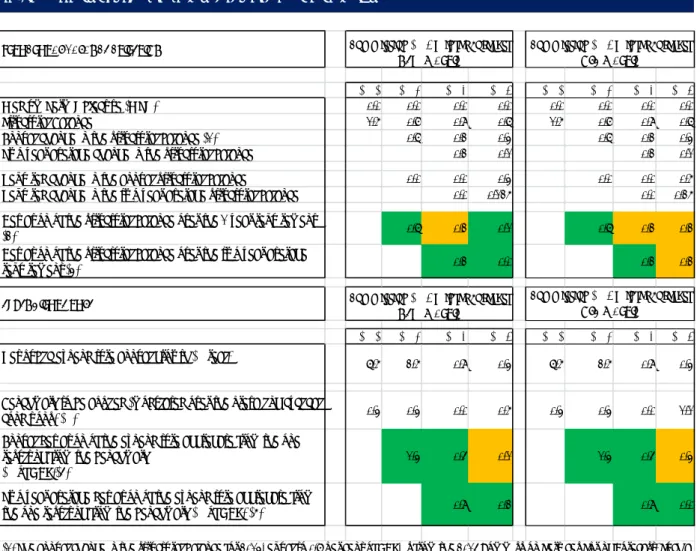
Table 1 shows the minimum linear structural adjustment as well as the increase of the primary surplus needed to comply with the debt rule in 2015. Under this scenario, the Italian fiscal policy should tighten its primary balance by 1.7 per cent of GDP this year.
TABLE 1 - FISCAL ADJUSTMENT NEEDED TO COMPLY WITH THE DEBT RULE IN 2015 – “STANDARD INFLATION” BASELINE SCENARIO
2013 2014 2015
DEBT RULE
Minimum Linear Structural Adjustment (a) in pp 1.1 1.1 1.1 Structural adjustment from the previous year (b) 0.5 1.6 Planned structural adjustment (c) 0.5 0.0 0.4
Further needed structural adjustment (d)=(a)+(b)-(c) 0.5 1.6 2.2 Primary balance adjustment to comply with the debt rule (% GDP) 1.7
The second baseline scenario takes into account the (concrete) risk of persistent lowflation in the coming years. Consumption prices decline in 2015 (-0,6 per cent), to grow afterwards at very moderate rates. This divergence is due to changes in both the values of exogenous international variables and the evolution of domestic prices. Public debt is
increasing in 2015-2017, to slowly decline afterwards. Again, its evolution is not in line with the path required by the debt rule. Due to the lower rate of inflation – in spite of the improvement of terms of trade associated with prices slowdown – the debt to GDP ratio is much higher than in the previous scenario.
Table 2 shows the fiscal path needed to ensure compliance with the debt rule in 2015. The minimum linear structural adjustment should be 4.2 percentage points of GDP implying a permanent fiscal correction of the primary surplus of the baseline scenario equal to 3.8 per cent of GDP.
TABLE 2 - FISCAL ADJUSTMENT NEEDED TO COMPLY WITH THE DEBT RULE IN 2015 – LOW FLATION BASELINE SCENARIO 2013 2014 2015
DEBT RULE
Minimum Linear Structural Adjustment (a) in pp 1.7 1.7 1.7
Structural adjustment from the previous year (b) 1.2 3.0
Planned structural adjustment (c) 0.5 -0.1 0.4
Further needed structural adjustment (d)=(a)+(b)-(c) 1.2 3.0 4.2
Primary balance adjustment to comply with the debt rule (% GDP) 3.8
Then, in order to comply with the debt rule the required fiscal adjustment has been applied to both baseline scenarios. As of 2015, a permanent fiscal correction is introduced equal to: i) 1.7 per cent of nominal GDP in the “standard inflation” scenario; ii) 3.8 per cent in the lowflation scenario – the burden of fiscal correction being equally distributed on the expenditure and the revenue side.
In line with in‘t Veld (2013), a first year fiscal multiplier of 0.9 per cent is assumed,
possibly at the low end of the recent literature on fiscal multipliers in ZLB;4 in both
scenarios fiscal consolidation proves to be self-defeating (Figure 1), producing severe impacts on growth and employment. In particular, when the attempt to comply with the debt rule is enacted in a lowflation environment, (very low) inflation turns into deflation for five years, dramatically worsening the path of the debt to GDP ratio.
Whatever the scenario chosen as starting point, fiscal consolidation is self-defeating. Compliance with the debt rule is not achieved and, even more worryingly, debt projections worsen in comparison with the respective baseline. It is worth noting that, whatever the
magnitude of the chosen consolidation,5 the path of the debt-to-GDP ratio would be less
favorable than that envisaged by the baseline, in both scenarios. The more severe the consolidation, the worse the impact on GDP via hysteresis effects. Moreover, under the current exceptional economic circumstances, the effects of any additional consolidation measure in the following years – in the attempt to chase the debt rule – would harm even more the economy, further distancing the initial goal of debt sustainability.
4 In the ITEM model the cumulative fiscal multiplier has an hump-shaped pattern: as far as this
simulation is concerned, it is equal to 0.9, 1.2 and 1.2 in the first three years. Further details on the simulations are described in ANNEX 1.
5 The figure reports also the effect of a 0,5 pp GDP consolidation, but as the ANNEX 1 shows in
FIGURE 1 - DEBT-TO-GDP RATIO VIS-A-VIS EX-ANTE DEBT BENCHMARKS
Standard inflation scenario (percentage points) Lowflation scenario (percentage points)
Source: The different scenarios have been built using the Italian Treasury econometric model (ITEM).
As a robustness check, the same exercise has also been run lowering the fiscal multiplier intensity, to 0.7 per cent in the first year after the fiscal adjustment.6 Even in a more favorable environment for fiscal consolidation – ie “standard inflation” and a relatively low multiplier – fiscal adjustment is self-defeating: in fact, a fiscal correction would drive debt projections above the baseline i) for the first seven years, if equal to 1.7 per cent of GDP; ii) for all the considered sample period, if equal to 0.5.
These crucial results are mainly due to: (i) the price developments, (ii) the impact of fiscal policy on output, (iii) the high debt level, (iv) hysteresis effects. As argued above, very low inflation or even deflation worsen the debt dynamic in spite of the positive effects on growth through price competitiveness. Furthermore, a 0.9 multiplier impacts on output damaging the growth prospects to such an extent to offset its direct impact on debt. This is also consistent with studies finding lower thresholds for fiscal multiplier to be self defeating, e.g see Boussard et al. (2012) who found 0.6 as the critical value for Italy, also given its high debt level. Finally, hysteresis – especially if so pronounced as it is implicitly assumed by the EU potential GDP model – reduces long-run growth and increases debt to-GDP.
Conclusions
This simple exercise clearly shows that in the current “exceptional” circumstances a fiscal stance aimed at complying with the debt rule would be counterproductive. In the worse but not unrealistic case scenario, Italy would experience a large GDP fall in 2015 and 2016 (3.2 and 1.2 per cent, respectively); such a recessionary impact would be unacceptable
6 Its mean in the first three years has been imposed equal to 0.9.
90 100 110 120 130 140 150 2014 2016 2018 2020 2022 2024 Baseline
Backward-looking debt benchmark Forward-looking debt benchmark Fiscal consolidation in 2015 (1,7 pp GDP) Fiscal consolidation in 2015 (0,5 pp GDP) 90 100 110 120 130 140 150 2014 2016 2018 2020 2022 2024 Baseline
Backward-looking debt benchmark Forward-looking debt benchmark Fiscal consolidation in 2015 (3,8 pp GDP) Fiscal consolidation in 2015 (0,5 pp GDP)
and, beyond that, meaningless as it would worsen debt dynamics along the whole 10 years period.
Moreover, the simulations illustrated above do not incorporate two potentially relevant effects that would worsen the picture even further: (i) the economic model does not allow to evaluate the effects of deflation on expectations and, therefore, it is very likely that the impact of deflation on the consumption of durables goods and firms’ investment has been underestimated in the second scenario; (ii) the behavior and interactions of financial markets are not considered by the simulations - if it is true that inter alia financial markets should ex-ante positively evaluate a fiscal consolidation, they could also negatively react to ex-post gloomy growth and/or debt-to-GDP prospects.
In the light of the potential structural effects of such a long crisis, it is wise that national and European policymakers consider with extreme caution further fiscal consolidation measures, whose outcomes are subject to significant risks. A fortiori given the asymmetric risks that make the consequences of severe austerity choices potentially far more serious than those related to the adoption of smoother adjustment paths. Also considering that the Japanese lost decade(s) shows how difficult it is, once caught by deflation, to escape from it.
Last, one should also bear in mind that, as long as too tight fiscal consolidation reduces growth prospects, it would weaken the incentives for policymakers to deliver structural reforms and/or diminish their positive effects, as argued in the following section.
REFERENCES
Andres, J., J. Bosca and J. Ferri (2012) “Household Leverage and Fiscal Multipliers” Banco de España, Documentos de Trabajo No. 1215.
Berti, Katia, Francisco de Castro, Matteo Salto (2013), “Effects of fiscal consolidation
envisaged in the 2013 Stability and Convergence Programmes on public debt dynamics in EU Member States”, European Commission, Directorate-General for Economic and Financial
Affairs, Economic Papers 504.
Boussard, Jocelyn, Francisco de Castro and Matteo Salto (2012), “Fiscal Multipliers and
Public Debt Dynamics in Consolidations”, European Commission, Directorate-General for
Economic and Financial Affairs, Economic Papers 460.
Christiano, L., M. Eichenbaum and S. Rebelo (2011) “When is the Government Spending
Multiplier Large?” Journal of Political Economy 119(1), 78-121.
Corsetti, G., A. Meier and G. Müller (2012) “What determines government spending
multipliers?” Economic Policy, 27: 521–565.
Christophe Blot, Marion Cochard, Jérôme Creel, Bruno Ducoudré, Danielle Schweisguth and Xavier Timbeau “fiscal consolidation in times of crisis: is the sooner really the
better?”, Revue de l’OFCE / Debates and policies – 132 (2014).
Estevão, Marcello and Issouf Samake (2013) “The Economic Effects of Fiscal
Consolidation with Debt Feedback”, International Monetary Fund, IMF Working Paper.
Galí, J., D. López-Salido and J. Vallés (2007) “Understanding the effects of government
in ‘t Veld, Jan (2013), “Fiscal consolidations and spillovers in the Euro area”, European Commission, Directorate-General for Economic and Financial Affairs, Economic Papers 506.
Estevão, Marcello and Issouf Samake (2013) “The Economic Effects of Fiscal
Consolidation with Debt Feedback”, International Monetary Fund, IMF Working Paper.
Galí, J., D. López-Salido and J. Vallés (2007) “Understanding the effects of government
spending on consumption” Journal of the European Economic Association, 5, pp. 227-270.
in ‘t Veld, Jan (2013), “Fiscal consolidations and spillovers in the Euro area”, European Commission, Directorate-General for Economic and Financial Affairs, Economic Papers 506.
2.
STRUCTURAL REFORMS
2.1 THE REFORM AGENDA AND THE OVERALL IMPACT ON GDP
Since the start of the Italian Presidency of the Council the Italian government has underlined the importance of a comprehensive approach, based on the simultaneous implementation of structural reforms, fiscal policies and measures to support investment to boost flexibility, resilience, growth and employment. Taking stock of the Italian Semester, we are convinced this is the right policy recipe, as the risks of self-defeating fiscal consolidation are becoming more real, while the positive feedbacks for public finance sustainability obtainable from structural reforms are significant.
The Italian government is pursuing structural reforms which also plays an important role in the context of the Macroeconomic Imbalances Procedure and the European Union’s strategy for growth and employment. To this end, the government is focusing on political and institutional changes as well as on structural measures to remove persistent impediments to full implementation of reforms.
In many cases, such as civil justice, simplification, public administration reform and many aspects of the labour market reform, plans represent a continuity with policies initiated in past years but aim at completing the process eliminating present rigidities and barriers to growth.
The government’s plans stretch over three years, according to a pre-announced timetable. Accordingly, over recent months, the Government has introduced interrelated packages of structural reforms, while others are under way. They focus on job creation, improving competitiveness, strengthening growth and, therefore, fostering debt sustainability. Policy action includes:
• Reform of the labour market - Jobs act (recently approved);
• Measures to improve the efficiency of the public administration;
• Reform of the civil justice system, as well as the reinforcement of the anti-corruption
authority;
• Deregulation of credit and improved access to capital markets that will increase
financing alternatives for businesses, especially small- and medium-size firms;
• Simplification of the tax system; shifting the tax burden from productive factors, and
strengthening the fight against tax evasion;
• Reform of the educational system to ultimately improve the quality of human capital.
From February 22 to December 29, the Government approved 121 pieces of legislation, including 54 draft laws, 25 decree laws, 42 legislative decrees. 59 pieces of legislation entered into force having been officially published. As for the initiatives of previous Governments (Monti and Letta), of the 889 pieces of secondary legislation required, 65% have been adopted.
In particular, the recently approved Jobs Act will allow for a more rapid response in adjusting production to cyclical and structural changes, with beneficial effects on investment and participation in the labour market, and a related reduction in the segmentation of the work force. By increasing employment, it will also foster the long term sustainability of the pension system, which is already one of the most solid thanks to past reforms. The Jobs Act is recognized by international organizations as a welcome step to put Italy on a more dynamic growth path. According to the OECD Economic Outlook projections, released at the beginning of November, in 2016 Italy’s GDP growth is expected to achieve 1.0 per cent, confirming the policy scenario of the DBP. OECD estimates of the labour market reform impact suggest that within 5 years GDP would be 1.0 per cent higher than otherwise, 0.7 per cent of which by the Jobs Act implementation.
The building blocks of the labour-market reform have been set out in the enabling legislation approved in December. The enabling law empowers the government to introduce further flexibility in hiring and a new framework of passive and active labour market policies. The strategy relies, indeed, on a new type of open ended contract with employment protection increasing with tenure and a universal unemployment safety net associated with stronger active labour market policies. The government is also in charge of strengthening the work-family conciliation, rationalize contractual arrangements and simplify administrative procedures. The implementation of the enabling law is expected to be completed by June 2015. The government has already approved in a preliminary way two enabling decrees concerning the new standard contract and the universal unemployment scheme. Each enabling decree is then subject to the non-binding opinion of the Parliament.
At the same time, the Stability Law 2015 introduced a permanent reduction in the tax
wedge on labour and fiscal incentives for firms who hire workers with open ended contracts. In particular, the reduction of the tax wedge for employees is accomplished by
reducing the personal income tax for permanent employees earning less than €26,000 before taxes and, on an experimental phase, the possibility for employees in the private sector to
perceive in their paycheck, as part of their salary, quotas coming from severance pay (so
called ‘TFR’). On the other hand, firms benefit from a deduction of the permanent labour cost from the taxable base of local business tax. Such a reduction has been extended to self-employees. Moreover, the new open-ended contracts agreed in 2015 will benefit from a 36-month full exemption from social security contributions.
The reform of the justice system is a crucial step in closing the efficiency gap that has adversely impacted not only on the public at large, but also and more importantly, on business activities. Important steps have been taken to improve efficiency in the judicial system, through reaching economies of scope and scale by the amalgamation of small courts, thus allowing some specialisation by judges. Next steps will focus on the final approval of the pending legislation concerning, among the most important, the statute of limitation and the magistrates responsibility. First results of the reforms undertaken in past years are becoming evident: between December 2009 and December 2013 pending backlog of civil cases were reduced by 14.9%; the length of proceedings, in cases in which mediation led to agreement, is about 70 days against 1,132 days for ordinary procedures in Court; increase in court fees applied by the Justice of the Peace in cases where administrative sanctions are challenged reduced the number of pending cases by 70%; starting from July 2014, injunction proceedings (decreto ingiuntivo) take 6 days instead of 15, as previously, thanks to the introduction of new on line procedures.
Measures taken in 2014 have also impacted positively on the efficiency of public
administration. Reducing corruption remains a priority. The new anti-corruption agency
ANAC has been enhanced, and the government is firmly committed to strengthen the law against corruption. The powers of suppressed Authority for the Supervision of Public Contracts (AVCP) moved to ANAC. ANAC President can propose to local Prefects to grant
extraordinary and temporary management to a contracting company, limited to the
complete execution of the contract subject to criminal proceedings.
Relaunching public investment is crucial to support the economic recovery in the whole Country and to trigger a medium-to-long term growth path in Southern regions. Cohesion policy has an important role to play in Italy, having become a key source of public investment, as in several Member States. In light of this assumption, Cohesion policy expenditure, notably in Southern regions, is essential to improve territorial competitiveness as well as to ensure quality standard for relevant public services in those areas. Acknowledging that sound public finances are beneficial for the effectiveness of EU Structural and Investment Funds, the flexibility in the application of the Stability Growth Pact, recently put forward by the Commission, is a pre-condition in order to properly implement the widespread investment programme supported by those funds. Greater attention will be given to the quality of expenditure. The full operation of the newly established Agency for territorial cohesion as well as a more result-oriented programming framework go in this direction. Other essential elements will be the completion of strategic planning identifying development trajectories in relevant policy areas as well as the strengthening of project capacity at national and regional level.
The management of structural funds has improved: as of December 2014, the certified expenditure of EU Funds for 2007–2013 reached 70,7% % of total available resources. After the approval of its Statute, the Territorial Cohesion Agency is fully operational. The effort to accelerate expenditure for the implementation of programmes cofinanced by the EU structural funds has been increasing over the past years (2012: EUR 5.6 billion; 2013: EUR 6.9 billion) and the expenditure for 2014 exceeds the Commission target (7.9 billion in a year), reaching a total of 33 billion euro since the beginning of the program cycle. Expenditure will continue to increase in 2015 up to EUR 13.6 billion in order to implement key investment projects especially in the south of Italy and ensure the full absorption of funds. This renewed effort, requiring a proportionate increase in national co-financing, has implications on public finances.
The newly approved decree law on banking system and investments will mark a turning point in the governance of cooperative banks with assets worth more than €8bn, with the aim of reinforcing the banking sector in Italy and adapting it to the European scenario. As a consequence, 10 cooperative Italian banks will have to transform into joint-stock companies in 18 months and remove their “one share one vote” governance rule. The legislation adapts to ordinary practices the governance of larger cooperative banks, that in the majority of cases are also listed companies. The ultimate goal of the intervention is to ensure that the available liquidity will turn into credit to households and businesses and to promote the availability of better services at more competitive prices.
The reform of the banking governance goes in parallel with the investment compact, approved with the same decree law. The main features of the compact are: the establishment of a Service Company for the renovation, financial recovery and industry consolidation of Italian enterprises with temporary capital and financial difficulties; the
authorization7 for SACE to provide direct credit (acting as a bank), in its activity of supporting exports and internationalization of Italian economy; the establishment of the new category of ‘innovative SMEs’ to which the advantages of Start-ups have been extended; the tax relief on patent (so called Patent Box) is strengthened, including trademarks among the activities receiving tax benefits, so as to attract qualified investments; extension of the exemption of the withholding tax to all revenues received by the funds entitled to provide direct credit to firms; optional use of ‘Cassa Depositi e
Prestiti’ supplies for banks and financial intermediaries that provide funding to SMEs.
Tight budget constraints mean that scarce public resources need to be used as efficiently as possible. The current and previous governments have launched a number of initiatives to improve efficiency in public spending. These include a much wider use of the Consip system for public procurement, the full use of an online database for public scrutiny of the expenditure of local administrations.
The Government is strongly engaged in improving the quality of the education system. The strategy designed by ‘La Buona Scuola’ initiative hinges on: i) an extraordinary recruitment plan providing schools with an increased and stable staff; ii) teachers carriers shifts based on evaluation and merits; iii) increased transparency in the school management and public evaluation report; v) tax incentives and fast-track administrative procedures to allow for private investment in schools and didactical offer; iv) mandatory vocational training for technical and professional curricula; v) improved digital skills and computational thinking, as well as foreign languages. The Stability Law 2015 has already allocated €1bn in 2015 and €3bn by 2016 for implementing the educational plan.
A more equitable and efficient tax system complete the reform framework, making tax compliance more easy and the fiscal system more close to businesses and citizens. The enabling law on fiscal reform is under implementation with several decrees already adopted by the government, after the positive assessment of the Parliament. They provide for the rationalization and simplification of fiscal procedures, revision of the cadastral system, and the revision of the taxation on tobacco products. From this year the simplification of personal tax obligations through pre-filled tax returns will be available for permanent employees and pensioners (around 20mn taxpayers). Many simplifications have been realized on the field of tax repayment obligations, corporate tax obligations, as well as abrogation of unnecessary hurdles for firms and citizens. Also the Stability Law 2015 contains provisions aiming at streamlining the tax framework for professionals and self-employed.
As for the fight against tax evasion and elusion, the government recently introduced the voluntary disclosure of financial information related to undeclared taxable revenue or income held abroad or in Italy. At the same time, the legislation was improved by introducing the provision of a new crime for self-money laundering. The fight against tax evasion was enhanced also by the recent international agreements on the exchange of relevant information discussed among the EU Member States. Besides, on October 2014, Italy signed a multilateral agreement to automatically exchange financial information based on OECD standards, beginning 2017.
A crucial step has also been taken with new tax agreement between Italy and
Switzerland8 ending banking secrecy, reached after three years of negotiations. As a result
any type of tax information will be shared between the two countries. In no circumstances it will be possible for banks, financial intermediaries and trusts to decline to provide the information they hold.
Moreover, as concerns the public finance planning and decision process, in 2015 the reform for the introduction of a balance-budget provision (law n. 243/2012) will be further implemented, reinforcing the allocation function of the budget (through the unification of the draft budget and stability law) and establishing new principles on the balance of local governments in a view of taking into account the effects of the economic cycle on their budgets and overcoming the current domestic stability pact. Delegated legislation on cash-based accounting and the completion of the State budget reform is also due, paving the way for a more substantial integration of the spending review in the annual budget cycle.
The reform agenda is on track but the essential condition for its full implementation relies on the important changes to the institutional setting, to tackle political instability and weak administrative capacity. The incomplete implementation of reforms is often due to political changes and legislation reversal by subsequent governments. The present government has therefore focused its efforts on improving the law-making process with a new architecture of the parliament and a reduced and more clearly-defined role of sub-national governments. These important institutional changes are expected to be completed by the end of 2015.
The Government efforts in the next months will concentrate in completing and upgrading its ambitious plan of reforms, with the firm view that implementing structural reforms simultaneously would be self-reinforcing and generate significant growth synergies. This position is also shared by international organisations that in the past months have analysed the Italian reform process (such as IMF), and confirmed by the convergent estimates on the reform’s impact by the OECD.
The IMF in particular, “welcomed the bold policy agenda set out by the new
government” and recognised that “the proposed changes to the labour market, the judicial system, the public sector, and the electoral law are important steps for supporting future growth”.
The Government has repeatedly shown that reforms announced and implemented will have a significant impact on GDP growth. As reported in the tables below, the overall impact estimated by the Government - obtained by summing up the results in each single domain of intervention - is confirmed also by the OECD.
8The signing of the agreement by the respective Finance ministers will take place in February, before
the March 2 deadline of the discipline for the repatriation of funds, and therefore making it possible to avoid double sanctions and double checks.
REFORMS IMPACT ON GDP IN 2020
IT Government estimates OECD estimates
Product Market Reform 1.1 1.5
Labour Market Reform 0.9 1.0
Public Administration and judicial system 1.4 0.6
Tax wedge reduction (1) 0.2 0.2
Total 3.6 3.3
(1) It worth noticing that OECD estimates included just the €80 IRPEF cut (in the form of a cut in the labour tax wedge) while the Italy’s Government estimates incorporated both €80 IRPEF cut and the labour cost reduction from IRAP.
Note: The impact on GDP is intended as percentage deviation from a baseline scenario.
In fact, the considered measures contribute to enhance GDP by 3.6 per cent in 2020 according to Italy's government evaluation, while in the same period OECD estimates the overall impact on GDP by 3.3 per cent. In the following five years a further gain of similar magnitude could be expected.
In particular, the area of interventions where the most beneficial effects on GDP accrue to is Product Market, whose effects range from 1.1 per cent for Italy's government up to 1.5 per cent according to OECD evaluation. Moreover, the reforming action in Labour market area is found to stimulate GDP by around 1 per cent in 2020 in both Italy's government as well as OECD evaluations. Public administration and judicial system reforms are estimated to boost GDP by 0.6 per cent according to OECD evaluation and by 1.4 in Italy's government assessment.
2.2 STRUCTURAL REFORMS AND THE MACROECONOMIC ENVIRONMENT
Structural reforms increase long-run growth and improve debt sustainability in a durable way. Their impact is magnified when policymakers manage to exploit synergies across policies by implementing broad packages. Moreover, reforms may well boost confidence of investors and consumers about the future health of economy and quality of business environment. This confidence effects contribute to increase investment. Furthermore, theory and econometric evidences suggest that some structural policies strengthen macroeconomic resilience by reducing the persistence of cyclical fluctuations and by lowering the cumulative output loss in the aftermath of contractionary shocks. It is therefore crucial keeping and increasing reforms efforts to boost potential growth, especially in Italy that experienced a prolonged period of low growth also before 2008.
A positive macroeconomic environment is a relevant condition for structural reform. In good times, Governments have the necessary strength to introduce structural changes, as the economic and social conditions give margin to absorb the first, negative, impact of such changes. Furthermore, approved reforms deliver their benefits quicker if the economy is growing at a high rate. An unfavorable macroeconomic environment, on the other way, can discourage Governments to invest the needed political capital into a wide ranging reform strategy because of short-run costs and, if the crisis is exceptionally long lasting, because of the weak beneficial effects of reforms in the long-run.
Short-term costs can be economic, fiscal and political. First, temporary economic costs can emerge because firms and households need time to adjust to the new set of regulations. Second, the start-up of several measures requires additional budgetary resources during its
phasing-in, e.g. transforming labor market regulations which protects jobs to rules that protect people and spur adjustment could increase unemployment benefits spending before increasing productivity and employment and eventually decreasing the pressure on public funds to support the unemployed. Third, several reforms are aimed at removing rents or the advantages enjoyed by agents with market power which results in resistance to change. Under imperfect competition, in effect, these reforms help to redistribute market rents among agents, temporarily creating winners and losers, although there are typically more winners in the long-run.
Furthermore, if policymakers envisage a prolonged period of low growth and high unemployment, short-term costs considerations became even more relevant. Italy is slowly emerging from a three years recession and any further fiscal tightening would decrease incentives for approving and implementing structural reforms. Indeed, the reform action is not easy in the current context. The Italian Government embarked in a wide program of reforms (see below) but this could be jeopardized if recovery does not materialize and unemployment remains at high levels.
In the current extreme macroeconomic environment pro-reforms Governments face two additional problems. Recent contributions to academic and policy debates have questioned the benefits of structural reforms in a depressed economy for two reasons.
The first issue relates to the length of the crisis. The essence of structural adjustment is moving resources from unproductive firms and sectors to productive ones. This requires investment. However, investment may be inhibited if demand prospects are gloomy and policy uncertainty is elevated. If poor macroeconomic performance persists, adjustment could be contractionary by squeezing inefficient sectors without boosting the efficient ones (Rodrick 2011). In the same vein, the IMF (2014) stresses that the effects of structural reforms could be undermined by adverse macroeconomic conditions. For instance, when demand is depressed, relaxing employment protection may not stimulate job creation, or increasing the retirement age may just raise the number of unemployed. The benefits of reforms are maximized when expected growth is on the rise.
The second problem arises when monetary policy is constrained by the zero lower bound (ZLB). The concern that structural policies may be contractionary at the ZLB derives from the reform-related increase in the real interest rate. Structural reforms that enhance aggregate supply in the economy put downward pressure on prices. This decline in the price level increases the real interest rate when nominal rates are stuck at zero. If real rate increase dampens aggregate demand, economic activity will fall rather than increase. Structural reforms thus become counter-productive, even contractionary, in the short- to medium-term (Eggertsson et al. 2014 and to a lesser extent European Commission, 2014). That obviously would not be the case of reforms not focused on price competition but aimed to enhance governance and the quality of business environment (e.g. the reform of civil justice).
Fiscal austerity plans are likely to severely reduce the positive effects of structural interventions, especially during the first years of reform process by drawing significant and immediate adverse spillovers mainly via demand shocks. The incidence of such spillovers is likely to be more pronounced in times of economic setback. In the context of a prolonged crisis, indeed, some transmission channels tend to be largely affected and specific internal conditions may contribute to the amplification of such spillovers (namely, the presence of a large share of credit-constrained households may magnify the negative consequences of a
tight fiscal consolidation). Furthermore, some nonlinearities may arise. As a result, fiscal austerity plans may severely erode the positive effects of structural interventions, even if the policy effort to bring in such reforms is substantial and ambitious.
Fiscal consolidation in the current Italian situation would exacerbate those features – prolonged period of low growth, weak growth prospects and ZLB - which do not incentivize policymakers to deliver reforms and which, even if enacted, would not make structural reforms as beneficial as in normal times. Recent IMF report on the Euro Area suggests that structural reforms should be complemented by policies to boost aggregate demand. At least, we should avoid further tightening.
REFERENCES
Eggertsson G., A. Ferrero, and A. Raffo, "Can structural reforms help Europe?", Journal of Monetary Economics, 2014.
European Commission, Quarterly report on the euro area, October 2014, Volume 13, Issue 3.
International Monetary Fund, Euro Area Policies 2014, Article IV consultation, Country Report n. 14/999.
Rodrik D., Europe’s Way Out, Project Syndacate, 2013, retrieved 12 June 2013,
http://www.project-syndicate.org/commentary/saving-the-long-run-in-the-eurozone-by-dani-rodrik.
In ‘t Veld, J. (2013), Fiscal consolidations and spillovers in the Euro area periphery and core, European Economic Papers no. 506.
Stability Law 2015- Main features (CSR 1)
• Net borrowing/GDP: at 3.0% in 2014 and 2.6% in 2015, close-to-balance in 2018; debt/GDP to
decline from 2016.
• Reduction in structural deficit: 0.3pp of GDP in 2015, 0.2pp in 2016, 0.4 in 2017 when balance
budget is projected.
• New spending instruments to support the reform process.
• Significant spending cuts to provide financing.
• The Spending Review will be increasingly integrated within the annual budget process. It applies
to national, regional and local spending. The DBP sets cumulative savings targets up to 11.3bn in 2015, 12.4bn in 2016, 13.4bn in 2017 and 15. 6bn in 2018.
• Foresees a rationalisation of expenditure for Central Government, Regions, Provinces and
metropolitan cities, as well as municipalities for €15bn.
• Easing of the Domestic Stability Pact for investments.
• Implementaion of the Health Pact 2014-2016.
Privatisations (CSR 1)
• Rules to divest initial tranches of ENAV (up to 49%) and Poste Italiane (up to 40%) already set.
• Ongoing work related to other companies directly or indirectly owned by the State (i.e. STM,
ENEL, ENI and FS).
• Fincantieri already listed (€1.3bn cap., initial share offering of €350mn) and RaiWay (€1.1bn
cap., i.s.o. of €300mn).
• 35% of CDP Reti (which owns 30% of Terna and 30% of SNAM) for €2.1bn.
Tax Wedge (CSR 2)
• Permanent reduction in the tax wedge on labour.
• Provides additional resources for extending the short-term wage supplementation schemes
(ASPI) to involuntary unemployed, including atypical workers.
• Deduction of the labour component from IRAP.
• Possibility for employees in the private sector to perceive in their paycheck, as part of their
salary, quotas coming from severance pay (so called ‘TFR’).
• Structural bonus of €80 for permanent workers.
• New hiring exemption from Social Security contributions.
• Tax credit on private R&D investments and patent box.
• Measures for families with children.
Fight against tax evasion (CSR 2)
• Voluntary disclosure of financial information related to undeclared taxable revenue or income
held abroad or in Italy.
• Legislation improved with the provision of a new crime of self-money laundering.
• Foreign Account Tax Compliance Act (FATCA) between US and IT.
• On October 2014, Italy signed a multilateral agreement to automatically exchange financial
information based on OECD standards, beginning on 2017.
• Agreement between Italy and Switzerland to end banking secrecy,
Reform of the civil justice (CSR 3)
• Decree Law converted into Law in November 2014.
• Out-of-court proceedings enhanced and possibility of access to Alternative Dispute Resolution
(ADR) procedures (so-called ‘Arbitrato e Negoziazione Assistita’) expanded.
• For legal separation and divorce, easier access to out-of-court proceedings and other
simplifications for minor cases.
• A pending draft enabling law contains: i) measures strengthening special courts for companies;
ii) special courts for human rights and family-related issues; iii) increased certainty on length of proceedings.
• As regard criminal justice, the bill approved by the Government contains: i) provisions against
economic crimes (i.e. money laundering, etc.); ii) severe sanctions for accounting frauds; iii) tougher measures to fight mafia.
• On procedures: i) revision of the statute of limitations; ii) provisions for compensatory actions in
substitution of sentences.
• A draft enabling law foresees: i) civil responsibility of magistrates according to the EU model; ii) a reform of honorary magistracy and justice of the peace officers.
The decree law on banking system and governance of cooperative banks (CSR 4)
• In 18 months, cooperative banks with assets worth more than €8bn will have to transform into
joint-stock companies, removing their “one share one vote” governance rule.
• The reform could foster consolidation and more modern governance for an important part of the
Italian credit system.
• The decree law also takes action regarding the long-standing problem of proxy votes. The bylaws
of cooperative banks will need to indicate that no less than 10 and no more than 20 proxy votes are allowed.
Jobs Act (CSR 5)
• The enabling law on reforming the labour market has been approved.
• Strengthening ALMPs: better coordination between active and passive labour market policies
even through the creation of a National Agency and the strengthening of the partnership between public and private employment services; rationalisation of tax incentives to self-employment and employers.
• Unemployment insurance and benefits: unemployment benefits extended to all types of workers
and conditioned to the individual activation in labour search; tightened criteria for the wage supplementation schemes in case of business closure.
• Rationalisation of contractual arrangements: streamline the labour code with a revision of
employment contracts; introduction of a new open ended employment contract with increased flexibility with the provision of the sole economic indemnity in case of economic dismissal.
• Simplification and digitalisation of administrative procedures specifically related to hiring and
employment.
• Strengthening work-family conciliation: enhanced childcare and eldercare services, extension of
the maternity leave, improved work-life balance measures within the national collective agreements.
• The government has already approved in a preliminary way two enabling decrees concerning new
rules for the new open-ended contract and the new social safety net.
• Provides resources for the School and Education Reform “La Buona Scuola” i) recruitment of
teachers and ii) school-to-work alternation initiatives; Simplification and better legislation (CSR 7)
• The Simplification Agenda for 2015-2017 approved in December 2014. Five sectors of
intervention: digital citizenship, health and welfare, taxation, construction, and business. A total of 38 simplification actions with expected results to be published on line.
• Unified and standardised application forms for citizens and firms (e.g. SCIA in the construction
sector).
• Speeding up of e-invoicing for commercial transactions between the PA and suppliers.
• Implementation rate of the norms approved under the previous governments proceeded at fast
pace in the first half of 2014. As for the initiatives of previous Governments (Monti and Letta), of the 889 pieces of secondary legislation required, 65% have been adopted.
Sblocca Italia decree and Strategic Infrastructures (CSR 8)
• The ‘Unlock Italy’ decree supports public works through: i) administrative simplifications; ii) €4bn
of public resources allocated to the kick-off of planned infrastructures; iii) €2.2bn of private resources invested in highways.
• Large and large broadband: 50% tax credit on IRAP and IRES for investment in
ultra-broadband network.
• Energy infrastructure: i) the typologies of strategic energy infrastructures have been identified:
natural gas pipelines - import and national transmission networks, the storage of natural gas and regasification terminals; ii) the State competency on investments related to strategic energy infrastructures ha