Predicting Risk Of Recurrent Stroke Based On Changes In Risk Factors: The VISP Study
Stephen Michael Campbell
A dissertation submitted to the faculty of the University of North Carolina at Chapel Hill in partial fulfillment of the requirements for the degree of Doctor of Philosophy in the School
of Public Health (Epidemiology).
Chapel Hill 2011
Approved by:
Dr. Gerardo Heiss
Dr. Ana Cristina Goncalves Felix Dr. Steve W. Marshall
ii © 2011
ABSTRACT
Stephen Michael Campbell: Predicting Risk Of Recurrent Stroke Based On Changes In Risk Factors: The VISP Study
(Under the direction of Gerardo Heiss)
Background: Recurrent stroke carries a greater risk of disabling or fatal aftereffects (1,2,3)
and poor quality of life compared to first-ever stroke 1. Secondary stroke prevention has been successful in controlled trials but less so in the general population 4. Improvements in
secondary stroke prevention may be realized through optimization of the management of risk factors following a stroke (5,6,7). The objective of this study was to examine whether
recurrent stroke risk can be predicted from risk factor profile changes and to determine whether improvements in care guideline adherence resulted in a reduction of recurrent stroke risk. Methods: We analyzed data from the VISP trial. VISP’s methods and results have been
described previously 8, 9. Demographic, clinical and laboratory data were collected at baseline and at six-month intervals. Participants on heparin (n= 36), from the Glasgow clinic (n= 46), or with irremediable missing data (n=274) were excluded, leaving 3324 participants with 14142 observations for use in the first analysis. For the second analysis, the dataset was further restricted to those participants with a baseline and a twelve-month follow-up visit (N=2750). Results: We developed and calibrated two recurrent stroke risk models using
iv
aspirin use showed a protective effect in nonwhites. Care guideline adherence post-index stroke was heterogeneous, with changes in adherence nearly exactly balanced between adherence and non-adherence. Participants not using aspirin were at a significantly higher recurrent stroke risk if after their stroke they did not use anti-diabetic medications (within the first six months ) or started using diabetic medications or maintained a BMI of 25 kg/m2 or greater during the first twelve months Conclusion: We have established that it is possible to
DEDICATION
To my boyfriend and my family: thank you for all your love and support throughout my life, in particular during the past eight years. I appreciate more than I can express that this work has been successful in large part due to the understanding and encouragement you have given
me. I shall continue to work as hard as I can to achieve as much as possible, following the examples you have set.
To those who have been and those who continue to be my teachers, colleagues, and friends: Words cannot sufficiently express the debt of gratitude I feel for your encouragement,
vi
ACKNOWLEDGEMENTS
TABLE OF CONTENTS
LIST OF TABLES ... xiii
LIST OF FIGURES ... xviii
LIST OF ABBREVIATIONS ... xix
CHAPTER I: BACKGROUND AND INTRODUCTION ...1
Overview of Study Background, Specific Aims, and Study Questions ...1
Specific Aims and Study Questions ...3
Background and Significance ...5
Introduction ...5
Total stroke mortality and recent changes in stroke mortality ...6
Increases in total stroke prevalence ...7
Stroke-related morbidity ...7
Costs of primary and recurrent stroke ...8
Recurrent stroke ...9
Challenges in secondary prevention of stroke ...10
Changes in secondary stroke prevention methods ...13
Predicting first-ever stroke risk ...14
Predicting recurrent stroke risk ...16
viii
Tables ...30
CHAPTER II: RESEARCH METHODS AND DESIGN ...31
Introduction ...31
Study population ...31
Exclusions ...34
Time points used in the analyses ...34
Questionnaire and physical measurement data available from VISP ...35
Blood pressure ...35
Obesity and overweight status ...35
Cholesterol, triglycerides, and homocyst(e)ine ...36
Medications ...36
Medical history ...36
Initial (first) stroke severity measures...37
Outcome data ...37
Assessment of stroke events ...38
Statistical Methods and Data Analysis ...40
General description of the analysis plan ...40
Choice of model for Research Questions 1, 2, and 3 ...40
General description of the “counting process” model ...41
Rationale for using the “counting process” model ...43
Assessment of intervariable correlations as potential threat to model ...44
Assessment of intravariable correlations as potential threat to model ...44
Specific Variable Definitions of Risk Factors ...46
Aspirin use ...46
Aspirin use adherence ...47
Atrial fibrillation status ...47
BMI ...47
BMI adherence ...47
Chronic kidney disease stage ...47
Combined dementia, deficit, dependency, and disability status ...47
Combined deficit and disability status ...48
Combined dementia and dependency status ...48
Dementia status (mild, moderate, severe, any) ...48
Dependency status (mild, moderate, any) ...49
Diabetes status ...49
Anti-diabetic medication use ...49
Diabetes and anti-diabetic medication use ...50
Diabetes and anti-diabetic medication use adherence ...50
Disability status (mild, moderate, severe, any) ...50
Endarterectomy status ...50
Glomerular filtration rate (MDRD, estimated) ...51
Hypertension ...51
Blood-pressure-lowering medication use ...52
x
Hyperlipidemic status ...53
Lipid-lowering medication use ...53
Hyperlipidemic status and lipid-lowering medication use ...53
Hyperlipidemic and lipid-lowering medication use adherence ...54
Neurologic deficit status (mild, moderate, any) ...54
Obesity and overweight status ...54
Rose angina status ...55
Smoking status – current and past ...55
Preliminary power analyses for ability to achieve research goals ...55
Research Question 1 Analysis ...58
Tables and Figures ...60
CHAPTER III: PREDICTING RECURRENT STROKE USING REPEATED MEASURES OF RISK FACTORS ...70
Introduction ...70
Methods...70
Population ...70
Variables included in the models ...71
Missing data and data with extreme values ...72
Statistical analysis ...72
Results ...73
Population Description...73
Unadjusted results ...74
Model results ...75
Sensitivity analysis...75
Discussion ...76
Tables ...80
CHAPTER IV: CHANGES IN ADHERENCE TO MEDICATIONS AND RISK FACTOR LEVELS AND THE RISK OF STROKE RECURRENCE ...87
Introduction ...87
Methods...88
Population ...88
Variables included in the models ...89
Missing data and data with extreme values ...90
Statistical analysis ...91
Results ...92
Assessment of medication and continuous variable adherence and change in adherence ...92
Unadjusted results ...92
Model assessment ...93
Model results ...95
Discussion ...96
Tables ...101
CHAPTER V: DISCUSSION ...120
Recapitulation of overall study aims, findings and degree to which the goals of the doctoral research have been met ...120
xii
Specific Aim 1 results ...121
Research Question 1 results ...121
Research Question 2 results ...121
Research Question 3 results ...122
Degree to which the goals of the doctoral research have been met ...122
Study Strengths ...125
Validity and utility of the analysis approach ...125
Novelty of the analysis approach ...126
Sample size and source of population ...127
Data available from the VISP cohort ...128
Outcomes ...128
Study Limitations ...129
VISP cohort dataset ...129
Exposure misclassification ...130
Time periods of exposure assessment ...131
Sample size considerations ...132
Statistical power ...132
Future directions ...133
Tables ...138
APPENDIX: Additional Tables and Figures ...143
LIST OF TABLES
Table 1.1. Stroke Prognostic Instrument -I and –II Kaplan-Meier two-year
percentages for stroke or death ...30 Table 1.2. List of risk factor information available in the VISP cohort dataset,
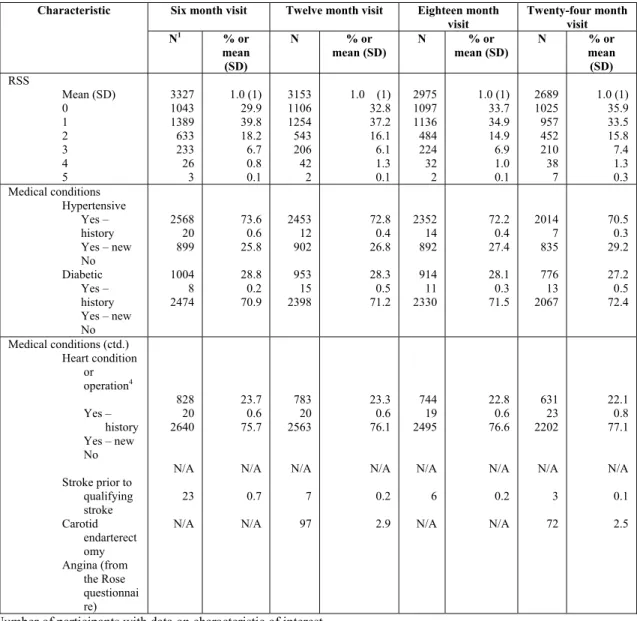
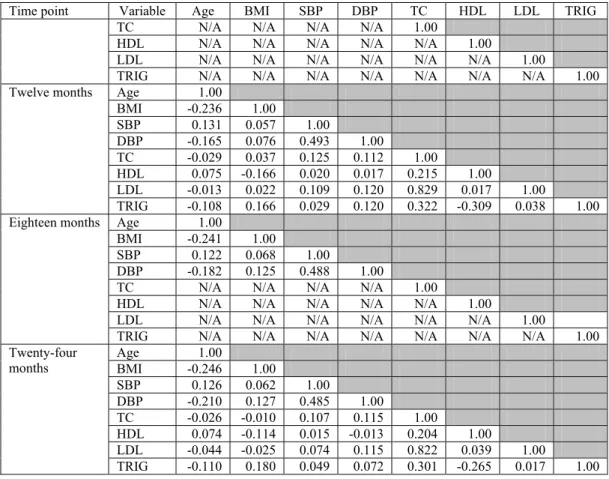
with frequency of measurement ...30 Table 2.1. VISP patient characteristics at baseline (first stroke) ...60 Table 2.2. VISP patient characteristics at follow-up visits ...61 Table 2.3. Correlations (Pearson’s r) between different risk factors
(with continuous values) at different time points during
VISP cohort follow-up ...63 Table 2.4. Correlations (Kendall’s τ) between categorical risk factors
(coded as “Yes” or “No”) at different time points during
VISP cohort follow-up ...64 Table 2.5. Correlations (Pearson’s r) within continuous risk factors
measured at twelve-month intervals during VISP cohort follow-up ...65 Table 2.6. Correlations (Pearson’s r) within continuous risk factors
measured at six-month intervals during VISP cohort follow-up ...65 Table 2.7. Correlations (Kendall’s τ) within categorical risk factors
(coded as “Yes” or “No”) measured at different time points
during VISP cohort follow-up ...65 Table 2.8. List of exclusions considered for this study together with
numbers of participants or observations removed by the exclusion ...66 Table 2.9. Missing data (number and percent) in the VISP cohort dataset ...67 Table 2.10. Estimates of hazards for obese (or becoming obese) and
non-obese (or becoming non-obese), by time period ...67 Table 2.11. Estimates of hazards for diabetics versus non-diabetics
(baseline) and those who became diabetics versus those
whose status did not change (followup) ...68 Table 2.12. Estimates of hazards for hypertensives versus
xiv
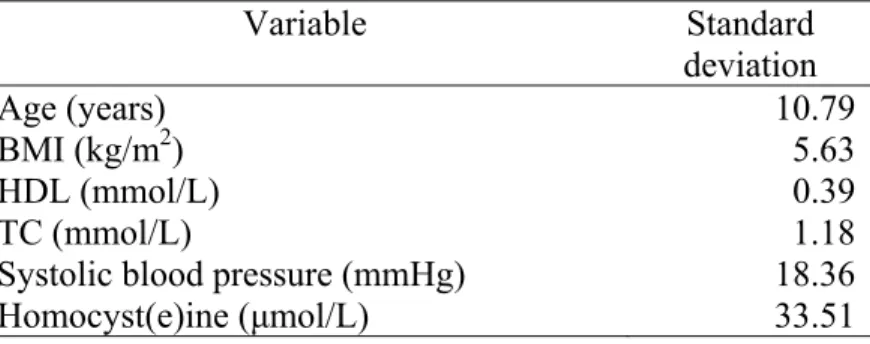
Table 3.1. Description of study population at each time point ...80 Table 3.2. Cohort baseline standard deviations for continuous variables ...80 Table 3.3. Minimum and maximum counts of substituted risk factor
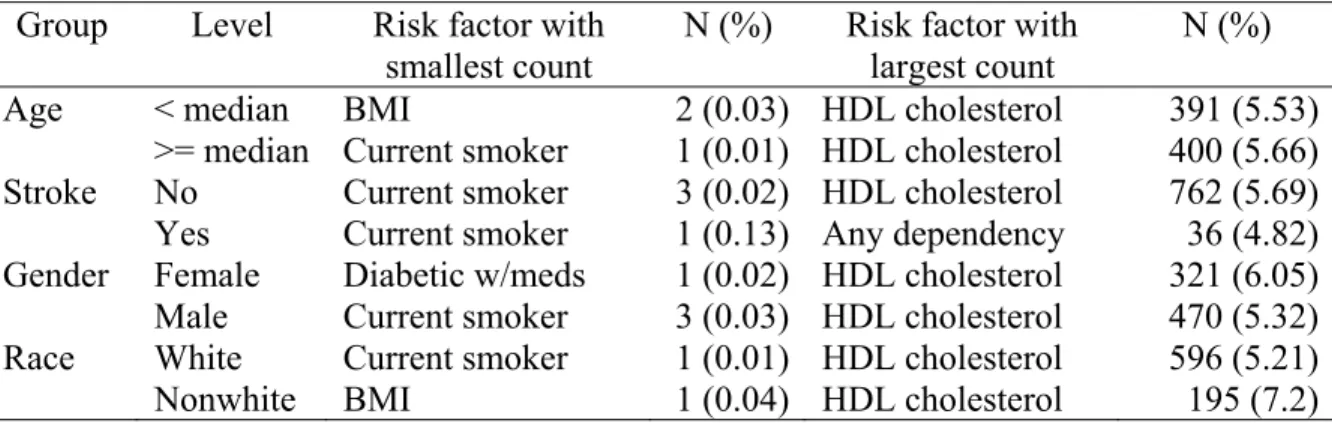
values, by age, race, gender and stroke outcome ...81 Table 3.4. Frequencies of trimmed variable, by interval variable ...81 Table 3.5. Incidence of recurrent stroke in year one of follow-up (per
100 person-years) by change in risk factors ...82 Table 3.6. Incidence of recurrent stroke in year two of follow-up (per
100 person-years) by change in risk factors ...83 Table 3.7. List of variables considered in clinical (C) models,
psychoneurological (PN) models, or both (B) ...84 Table 3.8. Last clinic visit per participant ...85 Table 3.9. Hazard ratios for recurrent stroke based on risk factors assessed
at baseline and at six-month intervals ...86 Table 4.1. Definitions of medication adherence variables (except aspirin) ...101 Table 4.2. Description of study population (N=2739), risk factors, and
change in risk factors at or between baseline and six-month visits,
with counts of recurrent stroke ...101 Table 4.3. Description of study population (N=2750), risk factors, and
change in risk factors at or between baseline and twelve-month visits,
with counts of recurrent stroke ...103 Table 4.4. Minimum and maximum counts of substituted risk factor values,
by age, race, gender, and stroke outcome, for baseline-to-six months
dataset ...106 Table 4.5. Minimum and maximum counts of substituted risk factor values,
by age, race, gender and stroke outcome, for baseline-to-twelve months
dataset ...106 Table 4.6. Frequencies of trimmed values, by interval variable, baseline to
six months ...106 Table 4.7. Frequencies of trimmed values, by interval variable, baseline to
Table 4.8. Incidence of recurrent stroke (per 100 person-years)
by baseline risk factor levels and change in risk factors between baseline and six months (for analysis results shown in Tables
4.10 and 4.12) ...108 Table 4.9. Incidence of recurrent stroke (per 100 person-years)
by baseline risk factor levels and change in risk factors between baseline and twelve months (for analysis results shown in Tables
4.11 and 4.12) ...110 Table 4.10. Adjusted hazard ratios and 95% CI for change in medication adherence
assessed over the first six months post-stroke, stratified by aspirin use ...113 Table 4.11. Adjusted hazard ratios and 95% CI for change in medication adherence
assessed over the first twelve months post-stroke, stratified by aspirin use 113 Table 4.12. Adjusted hazard ratios and 95% CI for change in adherence to systolic
blood pressure and total cholesterol guidelines assess over the first six
months post-stroke and over the first twelve months post-stroke ...114 Table 4.13. Statistical power results (α set to 0.05, two-sided) for models shown
in Tables 4.9, 4.10, and 4.11 ...116 Table 5.1. Method of data collection for factors considered or included in
the analyses ...138 Table 5.2. List of sample size estimates (alpha set to 0.05, power set to
90%, two-sided) based on Chapter IV models...139 Table A.1. Assessment of missingness of data at baseline visit
by age group, race, gender, and stroke outcome (for analysis
results shown in Table 3.9) ...143 Table A.2. Assessment of missingness of data at six-month visit
by age group, race, gender, and stroke outcome (for analysis
results shown in Table 3.9) ...149 Table A.3. Assessment of missingness of data at twelve-month visit
by age group, race, gender, and stroke outcome (for analysis
results shown in Table 3.9) ...156 Table A.4. Assessment of missingness of data at eighteen-month visit
xvi
Table A.5. Assessment of missingness of data at twenty-four month visit by age group, race, gender, and stroke outcome (for analysis
results shown in Table 3.9) ...168 Table A.6. Profile list of models selected based on BIC and GB χ2 p-values,
sorted by GB χ2 p-value (for analysis results shown in Table 3.9) ...175 Table A.7. Significant Breslow-Day results (p<0.05) for assessment of EMM
using baseline risk factors (for analysis results shown in Table 3.9) ...177 Table A.8. Evaluation of possible PHA violations (for analysis results
shown in Table 3.9) – time and LOG(time) score tests for clinical model ....181 Table A.9. Evaluation of possible PHA violations (for analysis results
shown in Table 3.9) – rank(time) and Kaplan-Meier(time) score tests for clinical model ...182 Table A.10. Evaluation of possible PHA violations (for analysis results
shown in Table 3.9) – time and LOG(time) score tests for
psychoneurological model ...182 Table A.11. Evaluation of possible PHA violations (for analysis results
shown in Table 3.9) – rank(time) and Kaplan-Meier(time) score
tests for psychoneurological model ...183 Table A.12. Statistical power results (α set to 0.05, two-sided) for clinical and
psychoneurological models ...184 Table A.13. Summary table of significant Breslow-Day results (p<0.05) for
assessment of EMM using baseline risk factors, six month risk factors, and change in medication and risk factor adherence (for analysis results shown in Tables 4.5 and 4.6) ...184 Table A.14. Summary table of significant Breslow-Day results (p<0.05) for
assessment of EMM using baseline risk factors, twelve month risk factors, and change in medication and risk factor adherence (for analysis results shown in Tables 4.5 and 4.6) ...210 Table A.15. Evaluation of possible PHA violations (for analysis results
shown in Table 4.6) – time and LOG(time) score tests for baseline
to six months medication adherence model ...238 Table A.16. Evaluation of possible PHA violations (for analysis results
shown in Table 4.6) – rank(time) and Kaplan-Meier(time) score
Table A.17. Evaluation of possible PHA violations (for analysis results
shown in Table 4.7) – time and LOG(time) score tests for baseline
to six months continuous variable adherence model ...240 Table A.18. Evaluation of possible PHA violations (for analysis results
shown in Table 4.7) – rank(time) and Kaplan-Meier(time) score
tests for baseline to six months continuous variable adherence model ...241 Table A.19. Evaluation of possible PHA violations (for analysis results
shown in Table 4.6) – time and LOG(time) score tests for baseline
to twelve months medication adherence model ...241 Table A.20. Evaluation of possible PHA violations (for analysis results
shown in Table 4.6) – rank(time) and Kaplan-Meier(time) score tests
for baseline to twelve months medication adherence model ...242 Table A.21. Evaluation of possible PHA violations (for analysis results
shown in Table 4.7) – time and LOG(time) score tests for baseline
to twelve months continuous variable adherence model ...243 Table A.22. Evaluation of possible PHA violations (for analysis results
shown in Table 4.7) – rank(time) and Kaplan-Meier(time) score tests for baseline to twelve months continuous variable adherence
model...244 Table A.23. Profile of full cohort and those participants for whom
xviii
LIST OF FIGURES
LIST OF ABBREVIATIONS
AHA American Heart Association
AIC Akaike Information Criterion
AUC Area under the curve
BIC Bayesian Information Criterion
BMI Body mass index
CAPRIE Clopidogrel versus Aspirin in Patients at Risk of Ischemic Events
CHS Charleston Heart Study
CI Confidence interval
CT Computer(-assisted) tomography
DBP Diastolic blood pressure
ECG Electrocardiogram
DCC (VISP) Data Coordination Center
DMS (VISP) Data Management System
EMM Effect measure modification
FSS (VISP) Follow-Up Stroke Symptoms form
GB Gronnesby-Borgan goodness-of-fit statistic HDL High-density lipoprotein (cholesterol)
HR Hazard ratio
HTN Hypertension
ICD International Classification of Disease
xx
LDL Low-density lipoprotein (cholesterol) MMSE Mini-Mental Status Examination
MRI Magnetic resonance image
NHANES National Health and Nutrition Examination Survey NIH National Institutes of Health
NIHSS NIH Stroke Scale form
NoMaSS Northern Manhattan Stroke Study
PAI-I Plasminogen activator inhibitor type I gene PHA Proportional hazards assumption
PHREG (SAS) Proportional Hazards Regression procedure ROC Receiver Operating Characteristic
RSS Modified Rankin Stroke Scale
SBP Systolic blood pressure
SD Standard deviation
SDU Standard deviation units
TC Total cholesterol
TIA Transient ischemic accident
tPA Tissue plasminogen activator
TRIG Triglycerides
UK The United Kingdom
UNC-CH University of North Carolina at Chapel Hill USDA United States Department of Agriculture
CHAPTER I: BACKGROUND AND INTRODUCTION
Overview of Study Background, Specific Aims, and Study Questions
Recurrent stroke carries with it a greater risk than first-ever stroke for disabling or fatal aftereffects. (1, 2, 3) As mortality from first-ever strokes has decreased over the past four decades, 10 the numbers of those at risk for recurrent stroke has increased, with a concomitant increase in morbidity and health care costs. (1,11) Secondary stroke prevention has been successful in controlled trials but less so in the general population. 4 It has been suggested that improvements in treatment modalities could come about through optimizing the management of stroke risk factors. (5,6) However, it is difficult to estimate the potential decrease in stroke risk resulting from altering one or more risk factors, since the current stroke risk prediction equations do not incorporate repeat measures or information collected after the first stroke. The development of a prediction equation, incorporating information obtained at the first stroke and subsequent changes in stroke risk factor profiles, could help clinicians customize treatment options for individual patients on the basis of the greatest possible reduction in stroke risk, thereby potentially improving stroke outcome and reducing health care expenditures.
and efficient, the statistical tools used by clinicians as a part of treatment prescription and patient counseling for secondary prevention of stroke should be adaptive to changes in risk factors over time. Therefore, the objective of this project was to develop a clinical tool capable of aiding neurologists and other clinicians in prescribing the most effective treatment modality to reduce the risk of recurrent stroke while at the same time addressing issues of patient treatment adherence, cost, and morbidity.
The primary objective of this project was to predict variations in recurrent stroke risk based on risk factor changes occurring after the initial stroke. A more effective “targeting” of the most significant risk factors (ones in which a change has the greatest effect on recurrent stroke risk) will help clinicians reduce treatment costs, decrease the effort involved for both physician and patient (in treatment adherence), reduce the number of side effects, and diminish morbidity and mortality. To aid clinicians in targeting the most influential risk factors, the project planned to develop and validate a clinical tool to aid physicians’
3
predicted recurrent stroke risk versus clinical risk score in order to facilitate a quick assessment of a patient’s current recurrent stroke risk.
Specific Aims and Study Questions
This project addressed the following three research questions:
Research Question 1: Which risk factors influence risk of recurrent ischemic stroke in
the VISP population?
Research Question 2: Do short-term changes (e.g., six-month) in risk factors after an
ischemic stroke influence the risk of recurrent ischemic stroke?
Research Question 3: Can repeat assessments of risk factors be used to optimize the
outcome of an ischemic stroke?
In order to accomplish the objective and answer the research questions the following specific aims were addressed:
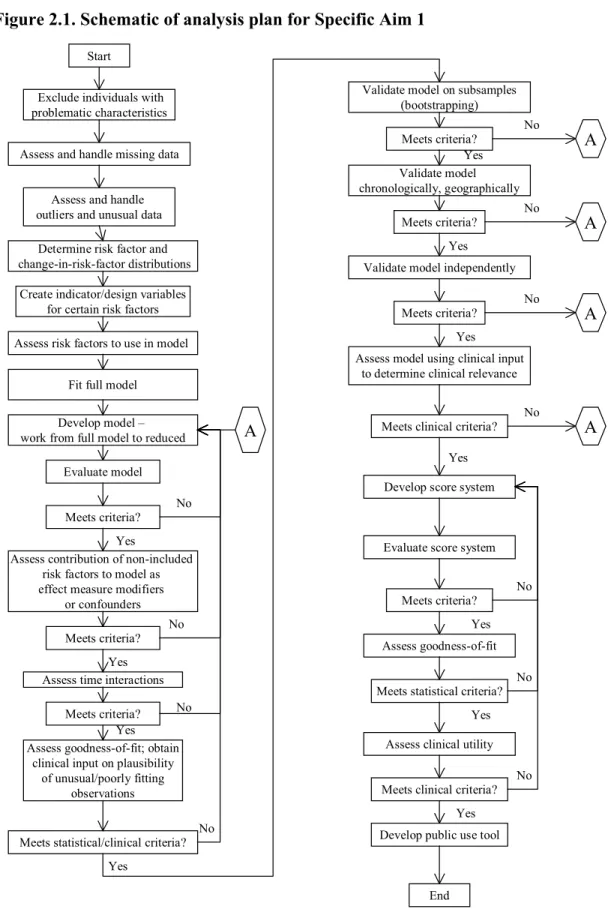
Other tasks which were necessary as part of the work addressing Specific Aim 1 include the following: a) an assessment of model goodness-of-fit and discriminatory ability (sensitivity, specificity) using the Receiver Operating Curve (ROC) and the Area Under the Curve (AUC) – or c – statistic and standard statistical tests; b) validation of the model
prospectively, chronologically, geographically and independently (calibration and ROC curves) following the methods of Justice et. al. 12 – internally using subsets of the model source dataset, prospectively using datasets collected subsequent to the model’s source dataset, independently using other study datasets with different measures of risk factors (likely collected in a different time period), and geographically by testing the model on populations from different geographic locations;
2. Specific Aim 2 (addresses research question 3): Develop a “scoring system” based on the validated prediction equation which can be used by clinical personnel to optimize patient counseling and care by determining the likely outcomes of differential risk reduction strategies and targeting those risk factors which have a larger impact on recurrent stroke risk.
5
graph of approximate predicted recurrent stroke risk for use with the calculated “risk score”, e.g., by using an interactive calculation system, such as a spreadsheet with graphical ability.
After the score system has been developed and initial testing completed, independent medical personnel were to be asked to conduct additional tests of the system using medical history information with blinded stroke outcome to assess ease of use, accuracy, and repeatability. Finally, a Web-based application similar to that produced by the ARIC study for initial stroke risk – URL: http://aricnews.net/strokecalc/html/s_RC1.html – was to be developed to allow remote users to enter relevant data and obtain estimates of recurrent stroke risk.
Background and Significance
Introduction
Although recurrent stroke is less prevalent than first-ever stroke, it is associated with a greater risk for disabling or fatal consequences, (1, 2, 3) its other aftereffects are often more costly economically, and survivors report lower quality of life. 1 Fatality from first-ever strokes has decreased over the past four decades as medical interventions have improved, 10 however, this has resulted in an increase in the numbers of those at risk for recurrent stroke together with the predictable increase in morbidity and health care costs. (1,11) While prevention of recurrent stroke has been achieved in clinical trials, secondary stroke
prevention has been less successful in the general stroke survivor population. 4 Some authors have posited that optimizing the management of stroke risk factors could yield additional improvements in treatment modalities and reduction in recurrent stroke risk, (5,6) however it is
risk-factor-specific changes measured through repeated assessments of the risk factor profile obtained after the first stroke. Consequently, the creation of a risk prediction model based on risk factor profiles measured at the time of first stroke together with changes in risk factors determined from repeat measures of stroke risk factor profiles could aid clinicians in
targeting those risk factors with the greatest influence on a patient’s risk of recurrent stroke, and using that information either to provide the patient with that information (to aid in risk management decision-making) or to allow the patient to choose the risk factors they are most comfortable modifying, with an eye towards maximizing risk reduction.
Total stroke mortality and recent changes in stroke mortality
Stroke – including primary and recurrent – is the third leading cause of death in the United States 11 and contributes heavily towards mortality rates in other developed and developing countries. Reports from the Global Burden of Disease 2000 project and the World Health Report 2001 indicated that stroke accounted for roughly 42.9% of years of lost life caused by brain diseases (48.8% when psychiatric diseases were removed from the total). 13 (The observant reader may notice that in this report the percentage of years of lost life, when summed over all causes, is greater than 100; the authors comment that this is due to “residual categories.”) Although stroke mortality rates had declined generally in the United States 10 between 1900 and roughly 1990, not all regions have experienced an equivalent decrease – the Minnesota Heart Survey documented a varying decline in mortality rates between 1960 and 1984 14 and some areas in the Mississippi River region showed no change. 15 In addition, although the 28-day case hospital-based case fatality rate has decreased, 14 still roughly half
7
in stroke-related mortality appears to have slowed both nationally and regionally, (14, 16, 17) and may have plateaued, indicating that stroke will continue to be a leading cause of death.
Increases in total stroke prevalence
Over the same time period that a decrease in the stroke mortality rate occurred, the incidence rates for stroke did not change significantly, (11, 14) resulting in an increase in stroke prevalence. Muntner et. al. estimated that there was a roughly 30% increase in stroke
prevalence between 1973 and 1991, using self-report data from NHANES I, II, and III and reported that the number of stroke survivors younger than age 75 increased by 930,000 during the same time period, resulting in an estimated prevalence of 2.4 million individuals living with stroke. 10 A similar increase in stroke hospitalizations of 38.6% (age-adjusted, 18.6%) between 1988 and 1997 was documented by Fang et. al. using the National Hospital Discharge Survey. 18 Since stroke is not only an acute condition, the increase in prevalence implies that there have been and will be rising social, economic and societal stroke-related costs.
Stroke-related morbidity
and whether the advent of various therapies such as warfarin, statins, tissue plasminogen activator, and aspirin has significantly changed the case mix. Prevalence and incidence of disabilities is still high in stroke survivors, despite new therapies and improvements in rehabilitation methods. For example, Hankey and colleagues noted that 36% of first-ever stroke patients between 1989 and 1990 in the Perth Community Study, who had not been disabled at the time of their stroke, were disabled five years after stroke onset. 22 The relative risk (RR) for incident dementia associated with stroke was 8 times higher for a stroke cohort than for a control group in New York City. 23 Lastly, Roth and colleagues at the
Rehabilitation Institute of Chicago found that although updated rehabilitation methods improved disability levels, the frequencies of many secondary medical complications increased over time. 24 To sum up, despite progress in acute and long-term care for stroke, there are still many serious aftereffects of a first-ever or recurrent stroke.
Costs of primary and recurrent stroke
Such consequences are accompanied by high social and economic costs, on an
individual and societal basis. The lasting effects of stroke hinder recovery, functionality, and productivity while increasing dependence and the burden on caregivers, and the necessity of hospitalization at stroke onset and possible institutionalization after stroke increase the economic costs to patients, their families, and society. Swedish researchers at Goteborg University found that even for mild stroke cases (in persons less than 75 years old) life satisfaction was well below normal values in terms of overall satisfaction as well as the ability to manage one’s own personal care. 25 On an economic level, the Copenhagen Stroke
9
increased expenses because they were discharged to nursing facilities and had higher costs of acute care and rehabilitation. 26 Confirming this, Caro et. al., modeling treatment costs of stroke based on the Barthel Index score at the time of presentation or shortly thereafter (using data from two international trials of stroke treatment in persons 18 years or older), found that a 5-point shift in the Barthel score resulted in a roughly 10% change in treatment costs. 27 In addition, because the aftereffects of stroke can be life-long, the cumulative costs can also be very high – in the United States, Taylor and colleagues calculated that the lifetime cost per person of first-ever strokes in 1990 was roughly $228,030 for subarachnoid hemorrhage, $123,565 for intracerebral hemorrhage, $90,981 for ischemic stroke, and $103,576 averaged across the three sub-groups. 28 Finally, individual costs add up to a large societal expenditure – according to the Morbidity and Mortality Weekly Report, roughly 50% of hospitalized stroke patients are discharged to home and 40% are discharged to a skilled nursing or other facility, 29 resulting in a national projected cost (for 2003) of $51 billion, $12 billion of which was due to nursing home expenses.
Recurrent stroke
The discussion to this point has mainly been concerned with total stroke, which is composed of approximately 65-75% first-ever stroke and 25-35% recurrent stroke. (30, 11) However, these two types of stroke, while they share many etiological risk factors and common results, can differ significantly in the severity of outcomes and associated costs. Hardie et. al. found that the 30-day case fatality for recurrent stroke in the Perth Community Stroke Study was 41%, significantly greater than the 22% associated with first-ever stroke. 31
11
Challenges in secondary prevention of stroke
Although recurrent stroke is known to have more serious outcomes than the first-ever stroke, which suggests that a high degree of patient adherence to prescribed treatments and lifestyle changes would be desirable, secondary prevention of stroke may be paradoxically more difficult than primary prevention. There are probably several reasons for this, one of which is that there is a much shorter time window within which to work. The Perth Community Stroke study found that the risk of recurrent stroke was highest in the first six months after initial stroke and that between 30-40% of initial stroke survivors had a recurrent stroke within five years. 34 Boysen and Truelsen documented other studies which confirmed the Perth percentage. 35 The absolute risk for recurrent stroke is higher than that for first-ever stroke – between 15% and 40% of first-ever stroke survivors have a recurrent stroke,
although the exact rate varies with the subtype (34, 35, 36) – and those suffering recurrent stroke are often older and have poorer health generally (e.g., 9.7% of those with recurrent strokes had a history of TIA versus 3.6% of those with a primary stroke). (1, 3, 23)
In addition, while therapeutic approaches to secondary prevention often work well under controlled circumstances, lack of patient adherence to clinical recommendations often seems to result in no effective modification of existing risk factors. For example,
randomized controlled trials testing anti-hypertensive medications demonstrated a reduction of approximately 24% in fatal recurrent stroke and approximately 20-25% in nonfatal
Quilliam et. al. found that many stroke survivors who were nursing home residents were not receiving adequate treatment to prevent recurrent stroke. 38 Inadequate control of known risk factors is not limited to hypertension – data from the South London Stroke Register showed that even at one year after stroke 22% of patients still smoked, 4% drank excessive amounts of alcohol, and 36% were obese. 39 There have been studies which focused on controlling risk factors. One such example is that of Leonberg and colleagues who recruited 88 patients (aged 38 to 77 years, average age 60 years at onset, 24 female, 21 black), 73 of whom had an ischemic stroke and 15 of whom had an embolic event, and followed them at intervals of one to three months for an average of five years. They attempted to ensure that at least some risk factors (including hypertension, diabetes, hyperlipidemia, obesity) were brought under better control, and were able to achieve an approximately 16-17% reduction in expected mortality despite admittedly mixed success at risk factor control. However, this study was much smaller than others (cited in their paper), suggesting that such interventions work better on a small group level (possibly due to the higher degree of patient monitoring resulting from study participation) than for patients in the general population, who may not be as well followed. 40
13
reduction of recurrent stroke risk. 9 Repeated findings of inadequate secondary prevention have led reviewers, including Leys and colleagues, to conclude that “optimal management of risk factors for stroke is crucial to reduce the risks of first-ever stroke [and] recurrent stroke” and that “acute stroke therapies that are effective at the individual level have only a little impact in term[s] of public health.” 5
Changes in secondary stroke prevention methods
However, as part of their review, Leys et. al. also point out that surgical and
pharmaceutical treatment “used for stroke prevention carry some risk and may be limited by cost” and suggest that “prevention should, therefore, be targeted at those individuals who have the highest absolute risk, and are the most likely to gain the greatest benefit.” 5 They designate three groups at high risk: those with a previous vascular event, those with a potential cause of stroke (e.g., carotid artery stenosis), and those with risk factors for stroke.
Consequently, one key to the prevention of recurrent stroke is likely to be the assessment of etiologically important factors and the predicted stroke risk associated with each so that treatment can be individualized to a given patient’s risk profile, as suggested by O’Neill et. al. 41 – in fact, these authors stated that the “careful identification and reduction of
outcome of targeting one or more risk factors, either singly or in combination, and providing clinicians with that information so that they can prescribe treatment more effectively. Short and colleagues demonstrated that a computerized system based on patient profiles
(describing groups of patients rather than individuals) could be used to guide primary care physicians in the decision to prescribe aspirin as part of the management of stroke patients. Although their application of this approach was limited in scope and the results assessed qualitatively, access to their system appeared to reduce potential conflicts in decision-making for the general practitioners who used the system, and “practitioners were very positive about the potential … to address uncertainty among [general] practitioners.” 43 However, most stroke risk prediction equations utilize risk factor profile information obtained either prior to the first stroke (if predicting initial stroke) or just after the first stroke (if predicting recurrent stroke).
Predicting first-ever stroke risk
Numerous etiological models and prediction equations have been developed to predict the risk of first-ever stroke based on existing risk factor information. Framingham has developed and published prediction equations for incident stroke at regular intervals over the past few decades, such as those presented by Anderson and colleagues 44 and Wolf et. al.;
45 although there has been the occasional debate over the applicability of these equations in
15
between 2 and 6 for “present”) and increasing age yielded points between 0 (54-56 years) and 10 (84-86 years). For men, the total point scores translated into a 10-year stroke risk probability which ranged from 2.6% (at 1 point) up to 87.9% (at 30 points). For women, the same point scores translated into a range of 1.1% to (at 27 points, the maximum shown) 84.4%.
The Framingham equations have been modified and adjusted to account for new developments – an example of this are the updates made to adjust for antihypertensive medication 48 – which has likely improved their sensitivity and specificity. Due perhaps to the debate over applicability of prediction equations to groups other than those for which they were developed, a plethora of other predictive models has been developed for incident and recurrent stroke, ranging from paper instruments to customized software applications to Web-based forms. Another illustration of a first-ever stroke risk prediction equations (or risk profiles) found in the Riscard 2002 software package based on Italian cohort data and
validated using the Gubbio Population Study and the ECCIS study 49 (the equations contained in the software do not appear to have been published). A third example of a
incident stroke risk prediction model is the Cardiovascular Health Study’s (CHS) Web-based application found at http://chs3.chs.biostat.washington.edu/chs/stroke.htm50 which allows a user to enter clinical information and obtain a “stroke risk score” for primary stroke.
1.25 mg/dl, ADA diabetic grade, age, history of heart disease, and atrial fibrillation. Total risk scores are then translated to 5-year stroke risks which range from (men, women) 2.0%, 1.5% at 0-5 points up to 53%, 41% at 41-45 points. Parenthetically, although the CHS’s score system goes up to 49 points or more, percent risks were not listed above 45 points.
Predicting recurrent stroke risk
Models have also been developed for recurrent stroke risk prediction. One such example is the SPI–I and its successor (SPI–II), which are software and paper instruments used to predict recurrent stroke 51 developed using the WEST trial and validated using 3 other cohorts, the UK-TIA Aspirin trial, the CAPRIE trial, and the NoMaSS study). The scoring system for Stroke Prognostic Instrument I was as follows: age >65 years (3 points), diabetes (3 points), severe hypertension (2 points), distinction between stroke and TIA (2 points for stroke), and coronary artery disease (1 point). A patient’s total score determined his or her risk group assignment – 0 to 2 points for group I (low risk), 3 to 6 points for group II (medium risk), and 7 to 11 points for group III (high risk). Stroke Prognostic Instrument II added the following components to Stroke Prognostic Instrument I’s point assignments: congestive heart failure (3 points) and prior stroke (3 points). Stroke Prognostic Instrument II’s point totals for groups I, II, and III were slightly different – 0 to 3 points for group I, 4 to 7 points for group II, and 8-15 points for group III. The Kaplan-Meier 2-year percentages for Stroke Prognostic Instrument I and Stroke Prognostic Instrument II for the four cohorts in which they were tested are shown in Table 1.1 (note that whether “death” was all-cause mortality or a stroke case fatality rate was not specified).
17
blood pressure over a four-year period; on the surface of it, this would suggest that the equation they developed would be capable of assessing the effect on stroke outcome risk based on changes in risk factor profile post-first stroke, however, their models used the average and standard deviation of the four measures rather than the individual repeated measures 52 so they technically did not use repeat measures.
All of the above equations (except for the Lehigh Valley model) have been validated and perform well, but none of them incorporate adjustments to stroke risk based on repeat measures of risk factors. One exception to this is the model produced by Davis et. al. which used time-dependent covariates measuring the appearance of new risk factors during a 13-year followup of a Mayo Clinic cohort to assess the effect of change in risk factors on the risk of recurrent stroke. However, this model looked only at the presence of risk factors and the development of new risk factors and their association with recurrent stroke risk and did not assess the effects of controlling, eliminating or ameliorating existing risk factors. 53
Adaptability in predicting stroke risk
Most of the prediction equations developed to date for recurrent stroke have utilized only risk factor measurements taken at the time of the first stroke, and the one that
incorporated subsequent changes in risk factors did not examine removal or amelioration of risk factors into account in adjusting predictions of recurrent stroke. This is contrary to clinical practice – neurologists and other clinical personnel adapt their treatment approaches and patient advice on the basis of changes in risk factor profiles (for better and for worse) as the changes occur. For several reasons, a good risk prediction equation for recurrent stroke should be similarly adjustable. The first of these reasons is that an adaptive equation would be more clinically relevant and more useful – the predicted risk produced would be updated based on the new information rather than a “stock answer” which then must be modified by a clinical practitioner. (While it is true that the predicted risk could be interpreted as “you’re at risk” if the predicted risk was greater than a certain cutpoint or “you’re not at risk” if less than that cutpoint, the incorporation of multiple risk factors and a range of predicted stroke risks would also allow for a more gradated interpretation which was based on future changes to modifiable risk factors – e.g., “You’d reduce your risk by a lot more if you stopped
19
patient’s predicted recurrent stroke risk based on new information obtained at each post-event encounter (even if no changes were made or contemplated with respect to treatment or lifestyle options).
An ideal recurrent stroke risk prediction model
The likelihood of a recurrent stroke is influenced by three primary components. The first component, the risk factors present prior to and after the first stroke, as well as any changes in those risk factors, likely influence recurrent stroke risk in the same manner (5, 55) as for the first stroke. (According to Sacco’s review in Neurology33, hypertension, cardiac disease, and alcohol abuse have been identified as risk factors for both first stroke and recurrent stroke, but the statement that other risk factors influence recurrent stroke risk in the same manner as the first stroke should be regarded as a simplifying assumption.) The second component is the severity of the first stroke, which acts directly and indirectly, through its effects, both immediate and chronic, on an individual’s body (circulatory changes, effects on speech and memory, dementia, and disability) to influence the risk of a recurrent stroke. The third component is the acute and long-term treatment provided to the individual along with prescribed lifestyle modification(s), during and after the first stroke, in the attempt to minimize recurrent stroke risk by reducing the effects of the first two components.
variables measured prior to, at the time of, and after the first stroke, along with time as a structural element (e.g., in a proportional hazards model), so that the effects of changes in the three primary components on the risk of recurrent stroke can be estimated. In the following paragraphs, the “ideal” model will be explored in order to determine the risk factors and other elements desirable in a recurrent stroke risk prediction model; at the conclusion of this section, this “ideal” model will be “reduced” to one based on data more easily obtainable in a clinician’s office and one which is more effectively developed and implemented.
Recurrent stroke is the result of an infarct, a biological event, but stroke risk factors and prevention operate on both the biological and psychosocial levels. Psychosocial factors include isolation/social support, impaired cognition, access to medical care, compliance with treatment prescriptions, and the inability to perform self-care, all of which may interact to increase recurrent stroke risk. For example, psychosocial isolation has been found to increase recurrent stroke risk, 56 possibly operating through poor compliance, depression, or stress. Dementia may act to increase recurrent stroke risk either before the first stroke (possibly due to biological factors affecting both dementia and stroke) 57 or, similarly to isolation, after the first stroke, e.g., through noncompliance to treatment or to differential treatment of such individuals. 58 Lack of compliance with treatment prescriptions, independent of isolation or dementia, may also act to increase recurrent stroke risk due to inadequate management of known biological or behavioral risk factors. (39, 59) The inability to perform self-care (or other activities of daily living) has been associated with an increased rate of readmission for stroke. 60 Consequently, since psychosocial factors appear to affect
21
may influence recurrent stroke risk, a good recurrent stroke prediction model should include psychosocial factors.
In addition to psychosocial risk factors, there are behavioral and biological elements both well-known and perhaps less well-known, including genetic, atherosclerosis, physical activity (leisure-time and work-related), diet, use or non-use of tobacco, alcohol or other substances, and other chronic conditions (e.g., hypertension and diabetes). Genetic elements have been found which increase the risk of a stroke – examples include alleles for platelet glycoprotein and alpha-fibrinogen 61 - and which decrease the risk of a stroke, e.g., the 4G allele of the PAI-I gene, which may act to stabilize atherosclerotic plaques, 62 and the M280 allele of fractalkine (which may induce leukocyte adhesion and migration at a lower rate than other alleles, thus resulting in hard plaques, considered more stable than soft ones) 63
Lifestyle components such as physical activity (leisure-time and work-related) have been shown to reduce the risk of stroke, (64-66) and physical inactivity has been inferred to increase the risk of stroke 67 through its effects on the metabolic syndrome (defined as “the
association of hyperinsulemia, dyslipidemia, hypertension, hyperglycemia and abdominal obesity” 67). A healthy diet, e.g., one in accordance with the AHA Dietary Guidelines and the
USDA Dietary Guidelines for Americans 2000, has been associated with a lower odds for carotid atherosclerosis (an indicator of subclinical atherosclerosis) in women 68 and, on a more specific level, drinking milk (69-71) and consumption of tuna fish 72 have been associated with a reduced risk of stroke. Use of tobacco has been linked to an increased risk for stroke,
73 as has passive tobacco exposure, 74 and alcohol use has also been associated with an
referred to above, some studies have found an association between the syndrome and an increased risk of stroke; 76 additionally, studies of the individual components of the metabolic syndrome have found apparently independent associations with increased risk of stroke, including diabetes (hyperinsulemia, hyperglycemia, although hyperglycemia’s association appears to be more controversial than that for hyperinsulinemia),77 hypertension,78 and dyslipidemia.79 As with the psychosocial factors, these elements, having been found to have an influence on stroke risk, should be incorporated into the ideal recurrent stroke risk
prediction model.
First stroke survivors are known to have a higher risk of recurrent stroke than the general population has of a first stroke, suggesting that the sequelae, or effects, their degree, and the type (ischemic, hemorrhagic, lacunar), location, and extent of a first stroke can affect the risk of a recurrent stroke (likely because the latter influences the former). Increasing clinical severity of the first stroke, as measured by the degree of cerebral artery stenosis, has been found to increase both the 30-day and longterm risk for recurrent stroke, 80 and this association has also held when severity was measured using the Barthel Index or the MMSE score. 81 However, even after adjustment for stroke severity (assessed using the RSS), the
subtype of stroke has been shown to affect the 30-day risk of recurrent stroke – stroke due to large-vessel or intracranial atherosclerosis had a higher risk of recurrent stroke than did lacunar or stroke of unknown cause. 36 Similarly, subarachnoid hemorrhage or brain
23
association in that of the degree and extent of stroke lesions with recurrent stroke risk: for example, the risk of recurrent stroke has been shown to vary with site of the lesion resulting from the first stroke – lesions in the basal ganglion and corona radiata regions were
associated with a higher risk for recurrent stroke 83 than the middle cerebral artery region, and both of the former regions also showed a higher cumulative recurrence rate than did the latter at the same time points after first stroke. Stroke due to large-vessel atherosclerosis showed higher odds of stroke recurrence at seven days compared with other subtypes, 84 and the grade of carotid stenosis and plaque ulceration have been positively related to recurrent stroke event rate. 85 Ideally, measures of stroke extent and lesion type would be included in a recurrent stroke prediction model, to account for their influence on recurrent stroke risk; however, since it is not always feasible to assess the degree of white matter hyperintensities or atherosclerotic plaque in studies of first-ever stroke survivors and the Barthel Index, RSS, and MMSE scores can be used to assess stroke severity, if they can be or are obtained routinely in a clinical setting, a recurrent stroke risk prediction model should include at the least these measures of first stroke severity to improve prediction performance.
Finally, the acute and long-term care given to the survivor of a first stroke should influence the risk of a recurrent stroke as such care is intended to address both the risk factors which may have precipitated the first stroke and the sequelae of the first stroke. Ticlopidine, an anti-thrombotic agent, has been found to reduce the risk of a recurrent stroke, 86 although it has severe complications; low-dose aspirin, clopidrogel, and warfarin similarly have been shown to be effective in preventing recurrent stroke, 87 although the preventive effects vary
increase the risk of recurrent (hemorrhagic) stroke: 87 specifically, warfarin has been found to increase the risk for recurrent events when compared to aspirin, 88 and aspirin and
clopidrogel taken together placed patients at a higher risk for intracranial hemorrhage. 89 Administration of tPA has been linked to an increased risk for intracranial hemorrhage. (90, 91) Consequently, as the effects of pharmacological treatment on recurrent stroke risk vary with the type (and, likely, duration) of treatment, measures of treatment should be included in a recurrent stroke risk prediction model.
The components described above – risk factors, sequelae of the first stroke, and the care given to first stroke survivors – change over time: for example, if risk factors are not successfully managed or disability worsens, additional treatments may be prescribed to address the possible increase in recurrent stroke risk. Predicting recurrent stroke risk should therefore be based, in addition to the elements mentioned previously, on the presence or modification of factors influencing recurrent stroke risk, and should include time as a
25
recurrent stroke risk including risk factors present after the first stroke are: the I and SPI-II, software and paper instruments used to assess the influence of diabetes, severe
hypertension, age, and coronary artery disease; 51 and the Lehigh Valley Recurrent Stroke Study’s modeled estimates of the effect of controlled hypertension (after first stroke), using the average and standard deviation of four repeat measures of systolic blood pressure over a four-year period. 52 However, none of these models took into account changes in risk factors subsequent to the first stroke (which have been found to also influence subsequent stroke risk), and none incorporated measures of baseline stroke severity or care.
Some models have been produced which examine recurrent stroke risk using changes in risk factors appearing after the first stroke (e.g., factors or conditions newly diagnosed post-first-stroke such as hypertension, congestive heart disease, diabetes mellitus), some of which have been alluded to above; one such is the model produced by Davis and colleagues which incorporated the appearance of new risk factors – including transient ischemic attack, hypertension, hypertensive heart disease, coronary heart disease, atrial fibrillation, diabetes mellitus – during follow-up after first stroke, 53 but this model did not examine the effects of controlling or eliminating risk factors after first stroke. Among more “population-based” examples is that of Chambers and colleagues, who developed the Stroke Outcome Model (94,
95) (a semi-Markov state-transition model) based on meta-analyses as well as existing stroke
27
samples), and could not therefore make use of patient-specific covariates. Additionally, the model could not be presented (unlike that based on real trial data) from different perspectives or over different time frames, and, due to its limitations on Rankin score values, may not have been entirely representative of participants in a real randomized trial. Consequently, a model of recurrent stroke risk incorporating patient-specific measurements of risk factors, first stroke sequelae, and effects of care would seem to be the next logical step in risk prediction development.
An “ideal” model incorporating those components present in the “state of being” of an individual stroke survivor would include risk factor assessments made prior to the first stroke, (multiple) follow-up assessments made after the first stroke and resulting estimated changes in risk factors, along with the sequelae of the first stroke and any treatment provided subsequent to the first stroke. It would permit the assessment of recurrent stroke risk based on any of the following: management, elimination, or new development of risk factors; amelioration, worsening, or steady-state nature of first stroke sequelae; and effects of pharmacological and other treatments (lifestyle modifications, behavioral changes)
prescribed to control risk factor and sequelae influences. It would allow a physician to assess the likelihood of a recurrent stroke based on changes to one or more components, to
The model described above, while desirable in a world with comprehensive and complete data, is not one easily developed and implemented – the comprehensive data required is simply not easily available in most clinical settings, although repeated assessments of risk factors (e.g., worsening, improving, stable) are routinely obtained clinically. Consequently, some of the components mentioned above should be eliminated from the conceptual model developed above so that an effective and useful model can be developed. For example, CT scan data – assessing stroke lesion site and extent – or MRI scan data (which can be used to assess plaque ulceration and carotid narrowing) is not
29
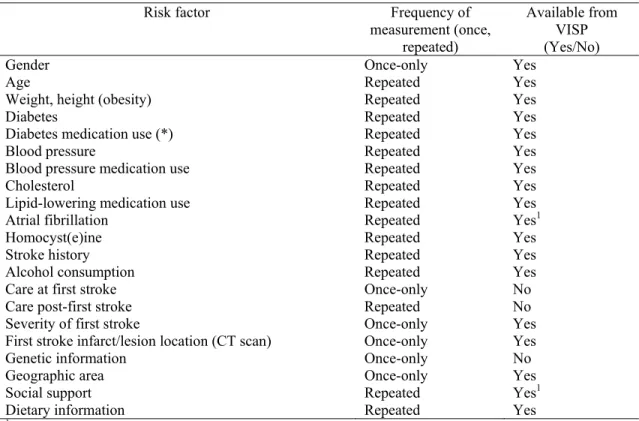
The next step in further reducing the model is the restrictions imposed by available datasets with which to develop and test the model. One such dataset, that of the VISP clinical trial, the focus of which was the testing of the hypothesis that administration of high doses of Vitamin B6, Vitamin B12 and folic acid reduces the risk of recurrent stroke, contains many of
the desired elements necessary for the pragmatic version of the ideal model (shown in Table 1.2). Although the VISP dataset does not contain elements detailing acute or long-term care received by the trial participants, nor is information available on physical activity, genetic elements, metabolic syndrome, or several other components of the “ideal” model, it does contain most of the elements readily available to a clinician, together with additional
information on the initial stroke’s severity (Barthel, RSS, and MMSE assessments as well as CT scan information). Risk factor profiles are available at or shortly after the initial stroke as well as up to four times at regular intervals after the first stroke.
TABLES
Table 1.1. Stroke Prognostic Instrument I and Stroke Prognostic Instrument II Kaplan-Meier two-year percentages for stroke or death
Instrument Points Cohort
WEST CAPRIE NoMaSS UK-TIA % % % % Stroke Prognostic Instrument I
Group I (low risk) 0-2 11 9 20 8
Group II (medium risk) 3-6 18 15 25 15
Group III (high risk) 7-11 32 23 32 13
Stroke Prognostic Instrument II
Group I (low risk) 0-3 9 9 16 11
Group II (medium risk) 4-7 19 17 24 19
Group III (high risk) 8-15 42 26 42 17
Table 1.2. List of risk factor information available in the VISP cohort dataset, with frequency of measurement
Risk factor Frequency of
measurement (once, repeated)
Available from VISP (Yes/No)
Gender Once-only Yes
Age Repeated Yes
Weight, height (obesity) Repeated Yes
Diabetes Repeated Yes
Diabetes medication use (*) Repeated Yes
Blood pressure Repeated Yes
Blood pressure medication use Repeated Yes
Cholesterol Repeated Yes
Lipid-lowering medication use Repeated Yes
Atrial fibrillation Repeated Yes1
Homocyst(e)ine Repeated Yes
Stroke history Repeated Yes
Alcohol consumption Repeated Yes
Care at first stroke Once-only No
Care post-first stroke Repeated No
Severity of first stroke Once-only Yes
First stroke infarct/lesion location (CT scan) Once-only Yes
Genetic information Once-only No
Geographic area Once-only Yes
Social support Repeated Yes1
Dietary information Repeated Yes
1 Information available is limited; e.g., social support would only be tangentially indicated by marital status at baseline or by
31
CHAPTER II: RESEARCH METHODS AND DESIGN
Introduction
The development of a recurrent stroke risk prediction model based on repeated measures of risk factor information requires prospective data collected at several points during follow-up over at least two years of subjects who have had at least one stroke prior to the start of data collection, and who will have had one or more recurrent strokes during follow-up. Follow-up data on a large cohort of first-stroke survivors or a clinical trial testing secondary prevention strategies would constitute the best source of information for producing the risk prediction equations, as all cohort members would have had at least one stroke prior to follow-up, the data from such a study would be of very high quality, participants would be followed at regular intervals for at least a year or two after the first stroke with repeat measures of risk factor information obtained at each follow-up visit, and, particularly for the clinical trial, stroke at intake and during the follow-up period would be carefully ascertained and classified (thus reducing the potential admixture of stroke sub-types which might occur even in a large prospective cohort). The choice of analytic approach required by the project’s objective must include multivariate statistical methods capable of handling repeat measures of risk factor information, along with any possible correlations between risk factors at multiple time points.
Study population
(to ensure high quality and standardized data collection methods); b) At least one stroke prior to follow-up; c) Neurologist-classified and confirmed stroke endpoint, preferably of one stroke subtype only (e.g., ischemic stroke); d) Repeat measures utilizing standardized measurement methods and instruments obtained at regular intervals over at least a two-year period; e) the possibility of obtaining multiple stroke endpoints for each participant (i.e., no right-censoring at first recurrent event).
33
A brief description of the study population follows: VISP was a trial of secondary prevention of stroke using high- and low-dose vitamins. The 3680 randomized participants in the VISP study were divided into two groups – a “low-dose” group (1853 individuals) and a “high-dose” group (1827 individuals). Both groups received multivitamins containing the reference intakes recommended by the US Food and Drug Administration – the low-dose multivitamin contained 200μg of pyridoxine (vitamin B6), 6 μg of cyanocobalamin (vitamin
B12), and 20 μg of folic acid and the high-dose multivitamin contained 25 mg of pyridoxine,
0.4 mg of cyanocobalamin, and 2.5 mg of folic acid; the multivitamins were indistinguishable in scent, color, or taste.
The eligibility criteria for the VISP study and profiles of the treatment groups have been described previously. (9, 8) VISP participants were followed at three-month intervals for up to two years. The official schedule and type of follow-up visits was as follows: clinic visits at one month, six months, twelve months, eighteen months, and twenty-four months after the randomization visit, and telephone visits at three, nine, fifteen, and twenty-one months post-randomization. Clinics were allowed to vary the follow-up schedule if it facilitated obtaining clinic visit information; e.g., clinics with “snow birds” (participants in northern clinics who were accustomed to vacation in warmer climates during the winter) could conduct a clinic visit shortly before the participant was supposed to leave and obtain follow-up information by telephone visit while the patient was on vacation, thus resulting in two adjacent clinic visits followed by a telephone visit. A description of the VISP
Exclusions
Participants from the Glasgow, Scotland, clinic were excluded (46 participants, 190 observations) due to differences in treatment modalities and exposures.(97-99) Literature research 100and clinical input suggested the exclusion from the analyses of those participants who were on heparin at baseline visit or at a follow-up visit (36 participants, 313
observations) due to concerns that such individuals were significantly less healthy than other participants. Non-clinical follow-up visits and follow-up visits outside the standard specified VISP time frame were excluded (17140 observations, 0 participants) and duplicate follow-up visits were removed (172 observations, 0 participants). Other exclusions, such as participants with multiple recurrent strokes, those with no follow-up visits or no visits beyond the six-month follow-up visit, were considered (Table 2.8); of these, only “those with no follow-up visits” was considered (but resulted in no exclusions as such had already been excluded) and recurrent strokes after the first were censored to avoid bias in statistical estimates.. For Chapter III, those with irremediable missing data (678 observations, 279 participants) were excluded, leaving 3404 participants with 14142 observations (Table 3.1). For Chapter IV, both analysis datasets – change over six months and change over twelve months – were restricted to those with a baseline and a twelve month visit (N=2791), then those with irremediable missing data (N=52 for baseline to six months, N=41 for baseline to twelve months) were excluded, leaving 2739 participants in the baseline to six months dataset (Table 4.2), 2750 participants in the baseline to twelve months dataset (Table 4.3).
Time points used in the analyses
35
the analysis dataset (part of the 17140 observations excluded above), since they did not contain clinically-obtained data such as blood pressure, etc. For the latter two analyses, only a single observation was retained for use in the statistical models: either an observation detailing the changes between baseline and six months (for change-over-six-months analysis) or an observation including the changes between baseline and twelve months (for change-over-twelve months).
Questionnaire and physical measurement data available from VISP
Blood pressure
Blood pressure was assessed at the baseline visit and follow-up clinic visits by following a standardized protocol and a random zero sphygmomanometer – systolic and diastolic blood pressures were each measured twice, five minutes apart. (For purposes of data recording and data analysis, if two sets of values are available, the average of the two was used; if only one set was obtained, it was taken as the blood pressure.)
Obese/overweight status
Weight was recorded to the nearest pound, rounding down if the participant’s weight was between pound marks. Height was measured to the nearest inch; if the height was between inch marks, it was rounded down to the nearest whole inch. For the purposes of this study, height and weight were converted into metric units and BMI (height in meters divided by squared weight in kilograms) was used as a measure of weight for the Chapter III analysis and as part of the change in adherence to guidelines analysis in Chapter IV. BMI was also used in preliminary analyses to categorize participants into normoweight, overweight, or obese status based on WHO guidelines
Cholesterol (total, HDL, LDL), triglycerides and homocyst(e)ine
Cholesterol and triglyceride levels were recorded from a lipid profile obtained within 120 days of the baseline, twelve-month, and twenty-four month visits. Since VISP’s main focus was control of homocyst(e)ine, blood was drawn at each clinic visit (screening visit, baseline visit, and each clinic followup visit) and sent to the VISP Central Laboratory for assessment of homocyst(e)ine, vitamin B12, and folate levels to ensure that these analytes
were measured using the same methods by the same personnel. (The exact blood analyses performed varied with the follow-up visit – homocyst(e)ine at each clinical follow-up visit; B vitamin and folate analyses were only performed at the six-month and eighteen-month
follow-up visits.)
Medications
At the randomization visit and at follow-up visits, participants were asked to bring in medications and supplements that they were currently taking; these were recorded in the Medication Survey Form. Subsequent to the conclusion of VISP, a pharmacist at UNC-CH coded this medication information into a systematic classification system. Two caveats to the use of this data exist: the first is that participants did not necessarily bring all of their
medications to clinic for recording, and the second is that some medications taken on a short-term basis while in hospital may not have been recorded at clinic visits. However, both risk-factor-independent medications and those related to medical conditions such as hypertension or diabetes were identified for analysis using this system.
Medical history