ABSTRACT
Hye‐Sung Han: A longitudinal Analysis of the Linear and Nonlinear Impacts of Housing Abandonment on Neighborhood Property Values
(Under the direction of William M. Rohe)
This dissertation examines the linear and nonlinear impacts of housing abandonment on
neighborhood property values in three separate but related papers.
Paper 1: The Impact of Abandoned Properties on Nearby Property Values
Previous research has shown that housing abandonment contributes to neighborhood
Paper 2: Exploring Threshold Effects in the Impact of Housing Abandonment on Nearby Property Values
Most prior research examining the impact of distressed (foreclosed, vacant, abandoned)
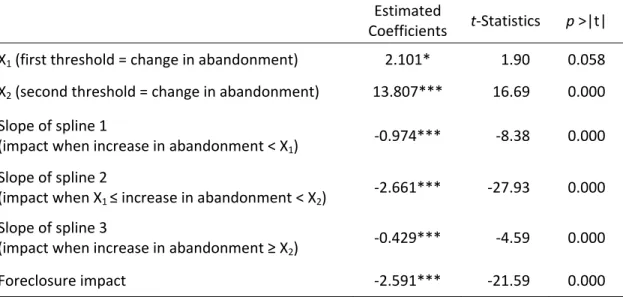
properties on nearby property values has assumed that each additional distressed property has the same marginal effect on nearby property values as the prior distressed property had. In other words, these studies assumed that the impact of distressed properties on nearby property values is linear. Scholars have suggested that there could be threshold effects in the impact of distressed properties, yet no prior research explored this issue. Therefore, this research explores the presence of threshold effects in the impact of housing abandonment on nearby property values in Baltimore, Maryland, from 1991 to 2010. This research finds that the magnitude of the impact of housing abandonment does not increase proportionally to the number of nearby abandoned properties; rather that there is a threshold effect. Specifically, this research finds that the marginal impact on nearby property values increases significantly in magnitude when the number of abandoned properties within 250 ft. increases by more than 2. It also finds that the marginal impact drops significantly when the number of abandoned properties within 250 ft. increases by more than 14.
Paper 3: Neighborhood Characteristics and Resiliency to the Impacts of Housing Abandonment
Housing abandonment is often disproportionally distributed across a city. Previous research
abandonment among neighborhoods and that the magnitude of impact changed at unequal rates among neighborhoods over time. Neighborhood crime rate was the strongest predictor of the change in the magnitude of impact of housing abandonment among neighborhoods. Neighborhood unemployment rate, housing unaffordability, proportion of properties with housing violations, and foreclosure rate were also influenced the impact of housing abandonment.
To my family, thank you.
ACKNOWLEDGEMENTS
I would like to express the deepest appreciation to my committee chair and academic
advisor, Professor William M. Rohe. Without his mentoring and support, this dissertation would not have been possible. I also wish to thank my other committee members, Professor Roberto Quercia, Professor Mai Nguyen, Dr. Spencer Cowan, and Professor Kyle Crowder, who have been extremely helpful and available in my time as a student.
I acknowledge the City of Baltimore, Circuit Court of Baltimore City, and Baltimore
Neighborhood Indicators Alliance – Jacob France Institute for supplying the bulk of the data used in this research. I thank Mr. Satyen N. Shah for bringing me up to speed with programming in SQL which was essential for analyzing the data. Lastly, I thank the United States Department of Housing and Urban Development for sponsoring this work with a dissertation grant.
TABLE OF CONTENTS
LIST OF TABLES……….………x
LIST OF FIGURES……….…..xii
INTRODUCTION TO THE RESEARCH………1
1. How Has Housing Abandonment Been Defined.………..……2
2. What Is the Extent of Housing Abandonment in U.S. Cities?………...4
3. Why Should We Be Concerned About Housing Abandonment?...………...6
4. Questions Still Remain: Limitations of Prior Research………...11
5. Objectives of this Research and Overview of Three Studies..………14
6. Implications of the Research: Scholarly Contribution and Policy Implications..…..…………20
Bibliography…………...….……….23
PAPER 1: THE IMPACT OF ABANDONED PROPERTIES ON NEARBY PROPERTY VALUES………..…………..26
1. Introduction…….………26
2. Data………...………..42
3. Methodology…….……….47
4. Results……….………...56
5. Conclusion……….………64
Bibliography…………....……….67
PAPER 2: EXPLORING THRESHOLD EFFECTS IN THE IMPACT OF HOUSING
ABANDONMENT ON NEARBY PROPERTY VALUES………..………..71
1. Introduction…….………71
2. Research Site and Data..………..88
3. Methodology….….……….92
4. Results…..……….……….………...99
5. Conclusion……….……….……106
Bibliography………..……….109
PAPER 3: NEIGHBORHOOD CHARACTERISTICS AND RESILIENCY TO THE IMPACTS OF HOUSING ABANDONMENT………..………113
1. Introduction…….………113
2. Data and Variables..……….……..127
3. Methodology…….……….……….138
4. Results……….……….………...145
5. Conclusion……….……….…………157
Appendix A..………..………..………..………160
Bibliography………..………..………..………161
CONCLUSION………..……….165
1. What Is This Research About?...………165
2. Summary of Research Findings…….………..166
3. Significance of This Research….…...………...………170
4. Limitations of This Research………..………..……….173
5. Implications for Future Research……….………..………174
LIST OF TABLES
PAPER 1: THE IMPACT OF ABANDONED PROPERTIES ON NEARBY PROPERTY VALUES
Table 1. Number of abandoned residential properties in Baltimore City from 1991 to 2010………44
Table 2. List of data and sources………..45
Table 3. Abandoned properties groups………53
Table 4. Change in abandonment between repeat sales pair transactions in each ring………57
Table 5. Estimated contagion effect of abandoned properties in each ring………..57
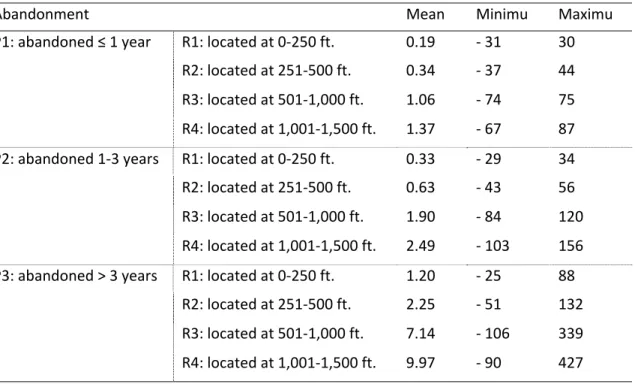
Table 6. Change in abandonment between repeat sales pair transactions by the duration of abandonment……….………..……….58
Table 7. Estimated contagion effect of abandoned properties sorted by the duration of abandonment……….……….59
Table 8. Change in the number of abandoned properties in each ring and time period between repeat sales pair transactions……….………....60
Table 9. Estimated contagion effect of abandoned properties by location and duration of abandonment……….……….…………61
PAPER 2: EXPLORING THRESHOLD EFFECTS IN THE IMPACT OF HOUSING ABANDONMENT ON NEARBY PROPERTY VALUES Table 1. Change in the number of abandoned properties between sales………...99
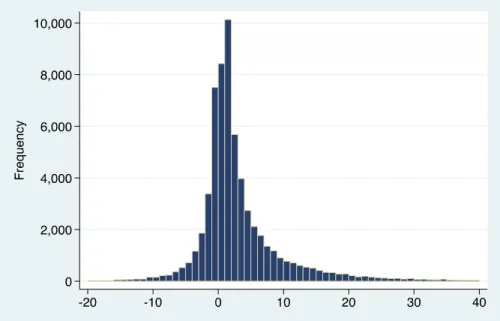
Table 2. Distribution of the change in the number of abandoned properties between sales………...100
Table 3. Estimated contagion effect of abandoned properties within 250 ft.………..…101
Table 4. Estimated thresholds and contagion effects (1991‐2010)………..………103
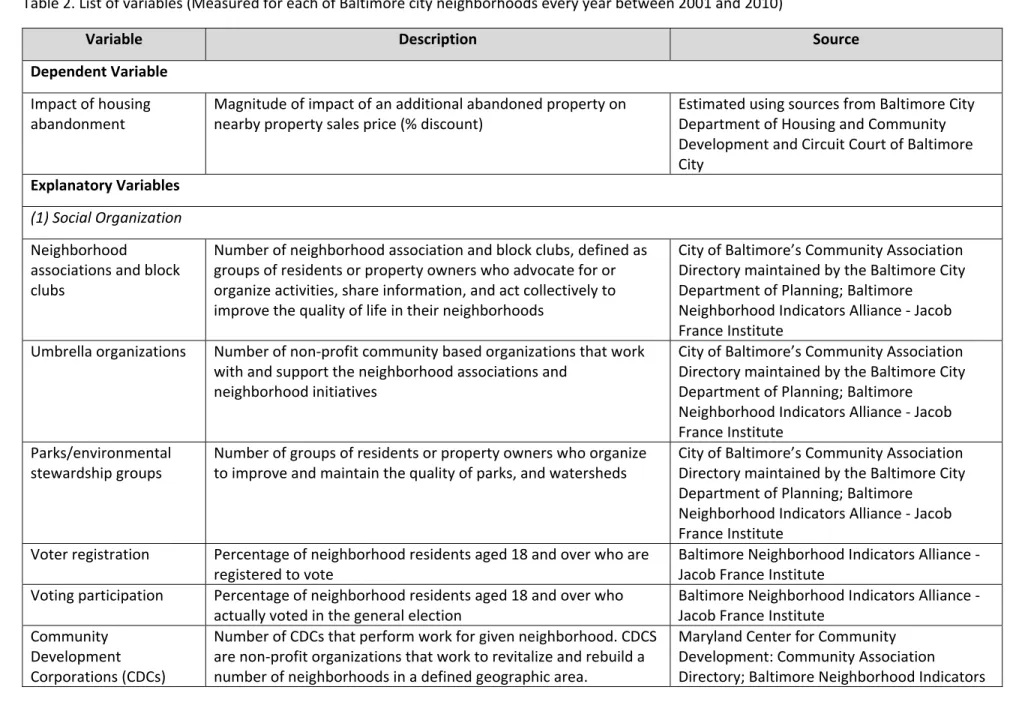
Table 2. List of variables (Measured for each of Baltimore city neighborhoods
every year between 2001 and 2010)………135
Table 3. Descriptive statistics of neighborhood characteristics (2001 to 2010)………148 Table 4. Latent growth curve modeling parameter estimates (2001 to 2010)..………150 Table 5. Neighborhood characteristics as predictors of conditional multivariate
latent curve model (2001 to 2010)……….………..154
LIST OF FIGURES
PAPER 1: THE IMPACT OF ABANDONED PROPERTIES ON NEARBY PROPERTY VALUES
Figure 1. Distribution of abandoned residential properties in Baltimore, Maryland, 2010….………43 Figure 2. Rings around the subject property (repeat sales pair)….………..52 Figure 3. Impact of abandoned properties depending on the duration of abandonment………..…63
PAPER 2: EXPLORING THRESHOLD EFFECTS IN THE IMPACT OF HOUSING
ABANDONMENT ON NEARBY PROPERTY VALUES
Figure 1. Threshold‐like effect of housing abandonment on nearby property values………...87 Figure 2. Number of abandoned residential properties in Baltimore, Maryland, 1991‐2010…...89 Figure 3. 250 ft. ring around the repeat sales pair property in typical Baltimore neighborhood………98 Figure 4. Distribution of change in housing abandonment at the second sale
compared to the first sale (1991 – 2010)……….………..……101
Figure 5. Nonlinear impact of housing abandonment………..…….104
PAPER 3: NEIGHBORHOOD CHARACTERISTICS AND RESILIENCY TO THE
IMPACTS OF HOUSING ABANDONMENT
INTRODUCTION TO THE RESEARCH
In 2006, the United States began to experience a dramatic increase residential mortgage foreclosures. According to the Mortgage Bankers Association of America, 1.2% of all loans were in the foreclosure process and 4.6% of all loans were delinquent at the end of 20061. Both delinquency and foreclosure rates have continued to increase since then. The foreclosure rate increased to 4.6% and the delinquency rate increased to 9.3% as of end of 20102. As foreclosures continue to spread across the country, many of the foreclosed properties end up abandoned contributing to a total of more than 4.8 million vacant residential properties in the U.S. by the end of 20123. This problem is particularly acute in new suburban developments that have excess housing supply and weak housing markets (Kingsley, Smith, & Price, 2009). Scholars argue that lengthy and complex foreclosure processes lead to prolonged periods of vacancy, which allow for greater chances of vandalism and of the property falling into disrepair (Immergluck, 2006). In addition, very high foreclosure costs increase the instances in which lenders walk away from properties that are of marginal value, which in turn leads to vacancy and abandonment (Apgar, Duda, & Gorey, 2005; Immergluck, 2006).
1 Source: Mortgage Bankers Association of America, Washington, DC, “MBA Mortgage Originations Estimates,”
National Delinquency Survey, quarterly, <http://www.mortgagebankers.org/> 2 Same as note 1.
3 Source: HUD Aggregated USPS Administrative Data on Address Vacancies, Quarter 4 ending December 31,
The foreclosure crisis has brought heightened awareness to vacant and abandoned residential properties nationwide. But the problem of housing abandonment is not new. Long before the current mortgage crisis, many large metropolitan areas were grappling with housing abandonment (Sternlieb & Indik, 1969; U.S. General Accounting Office, 1979). Despite the extent and the problems of the housing abandonment, research on housing abandonment and the development of effective policies to address abandonment has been, however, very limited. Therefore, this dissertation attempts to examine the impact of housing abandonment to extend the current level of understanding of the relationship between housing abandonment and
neighborhood decline. Without a concrete understanding of this relationship, policymakers lack the information necessary to develop effective policy strategies to address the housing abandonment problems.
The purpose of this introduction section is to explain why further research on the impact of housing abandonment is needed. This section begins by defining housing abandonment and
examining the extent of housing abandonment in U.S cities. After presenting what past research has found regarding the impact of housing abandonment, I discuss the shortcomings of past research. Next, I present the overview of my three research papers: research questions, data, and analytical methods. This section concludes with a discussion of the scholarly significance and policy
implications of this dissertation.
1. How Has Housing Abandonment Been Defined?
Comptroller General’s Report to the Congress that examined the housing abandonment in U.S. cities stated that no single definition of the term housing abandonment existed among cities (U.S. General Accounting Office, 1979). This report stated that although cities defined abandoned housing in various ways, some of the more frequently used definitions described abandoned housing as those which were tax delinquent, vacant on a year‐round basis, not receiving utilities, not being
maintained, boarded up and/or open to causal entry (U.S. General Accounting Office, 1979).
Cities often identify an abandoned property depending on its structural condition and the length of vacancy (Cohen, 2001). For instance, Pagano and Bowman, in their 1998 survey estimating abandoned structures in 60 U.S. cities, found that some cities consider a structure abandoned, and therefore an immediate danger to the public safety or health, if it has been unoccupied for 60 days (Cohen, 2001; Pagano & Bowman, 2000). Others use 120 or more days as a threshold (Cohen, 2001; Pagano & Bowman, 2000).
Many scholars consider neglected property ownership duties (e.g., delinquent property taxes or noncompliance with relevant codes) as an indicator of abandonment. Sternlieb, Burchell, Hughes, and James (1974) defined an abandoned building as a residential structure that the owner has removed from the housing stock by neglecting property ownership duties regarding functional, financial, and physical maintenance. Hillier, Culhane, Smith, and Tomlin (2003) stated there are three distinct aspects of abandonment: functional, financial, and physical. Functional abandonment concerns a vacant property that is not suitable for residency, such as one that lacks sealed doors and windows. Financial abandonment happens when an owner stops meeting his financial
carrying out at least one of the significant responsibilities of property ownership, causing a property to be vacant or likely to become vacant.
In this dissertation research, a property is considered abandoned based on its functional (i.e., inhabitable with boarded up windows and doors) and physical aspects (i.e., showing the signs of neglect). Harding, Rosenblatt, and Yao (2009) stated that the mechanism by which a distressed property influences the value of neighboring properties is largely visual, based on evidence in their empirical study measuring the contagion effect of foreclosed homes on nearby property values. Therefore, the sign of neglect is a major indicator of abandonment. Thus, the residential property is considered abandoned if either (a) it is boarded up or (b) it is unboarded but the conditions are unlivable, severely dilapidated, or inadequately secured with missing doors and windows. The research does not consider the following properties as abandoned: (a) mortgage or tax delinquencies and (b) unoccupied properties but if they are still livable.
2. What Is the Extent of Housing Abandonment in U.S. Cities?
To date there have been few attempts to count the number of abandoned properties in U.S. cities. Some federal agencies, such as the U.S. Bureau of the Census and the United States Postal Service (USPS), compile data on the number of vacant properties in the United States. Decennial census data identify a unit as vacant if no one is living in it at the time of the survey (U.S.
difficulty stems from the lack of accurate methods to identify abandonment. For example, simple exterior inspection methods may not be sufficient to identify actual vacant or abandoned properties (U.S. Government Accoutability Office, 2011).
Furthermore, estimates of abandoned properties in U.S. cities vary among studies or across jurisdictions. This is mainly because there is no standardized definition of property abandonment. For instance, James Cohen reported that the number of abandoned housing units in Baltimore is between 12,700 and 42,481; the low number is the city’s recent count of vacant units unfit for habitation, whereas the high number is the number of vacant units from Census 2000 (Cohen, 2001). The lack of a shared definition of property abandonment often complicates efforts for researchers or government officials trying to accurately measure the extent of abandoned housing (Pagano & Bowman, 2000). Furthermore, maintaining a count of abandoned properties is not an easy task. Properties often turn over rapidly and tracking abandoned properties requires a substantial amount of resources and efforts (Pagano & Bowman, 2000).
Although there has not yet been a nationwide attempt to systematically count and track the number of abandoned properties, a number of studies illustrate the extent of the housing
More recently, Allan Mallach (2006), using 2000 U.S. Census Bureau data, estimated an average of about 10,000 abandoned residential properties per city in 19 cities with populations over 100,000. Another survey by Pagano and Bowman (2000) at the Brookings Institution in 2000 found an average of 2.63 abandoned structures for every 1,000 residents in 60 U.S. cities with populations over 100,000. The cities in the Northeast region reported the highest average number of abandoned structures per 1,000 residents: 7.47 (Pagano & Bowman, 2000). The high average for the Northeast is caused by a few cities with exceptional statistics: Philadelphia with 36.5 abandoned structures per 1,000 residents, and Baltimore with 22.2 abandoned structures per 1,000 residents, for example (Pagano & Bowman, 2000).
3. Why Should We Be Concerned About Housing Abandonment? Findings of Past Research
Weakening Local Housing Market
One of the major problems of housing abandonment is its spillover effect on neighborhood housing market. Studies found that property abandonment affects other properties within the area by lowering property values (Griswold & Norris, 2007; Mikelbank, 2008; Shlay & Whitman, 2006). Shlay and Whitman, for example, examined the impact of vacant housing units on nearby property values in Philadelphia and found that the presence of a vacant property on a block reduces the value of all the other property by an average of $6,720. This study also estimated the net impact of
properties located between 300 and 449 ft. from an abandoned house experienced a loss of value of $3,542.
In another study, Mikelbank (2008) examined the impact of both foreclosures and
vacant/abandoned properties in Columbus, Ohio, in 2006, and concluded that for a property located near foreclosed and vacant/abandoned properties, the property value is reduced by an average of $8,600 – $4,256 by foreclosed properties and $4,411 by vacant/abandoned properties. Furthermore, this study found that the effects of vacant/abandoned properties were more concentrated than the effects of foreclosed properties; the impact of vacant/abandoned properties on a nearby property was more severe within 500 ft. but was insignificant beyond 500 ft. whereas the impact of
foreclosed properties was less severe overall but still significant out to 1,000 ft. (Mikelbank, 2008).
Griswold and Norris (2007), in their study of Flint, Michigan, also found that an additional abandoned structure within 500 ft. would reduce the sale price of a property by 2.27%. This study also found that the farther the abandoned property was located, the lower the impact of an additional abandoned structure on nearby property value. Thus, the previous research findings are consistent: housing abandonment weakens local housing market by lowering nearby property values.
Impact on Neighborhood Crime through Weakened Social Fabric of Communities
A number of past researches examined the association between housing abandonment and neighborhood crime. Scholars have long agreed that disorder – either physical or social –
between neighborhood social structure, social control, and crime. Scholars of this theory have found a consistent relationship between urban crime and social disorder as measured by the presence of public intoxication, loitering, or drug dealing (Sampson & Raudenbush, 1999). They also have found a consistent relationship between urban crime and physical disorder as measured by the presence of abandoned cars, graffiti, or litter (Sampson & Raudenbush, 1999). Skogan also argues that physical disorder, such as abandoned properties, not only raises fear of crime among neighborhood residents but also may cause an actual increase in serious crime (Skogan, 1990).
Some scholars argue that weakened social fabric of communities by abandoned properties explains the association between abandoned properties and neighborhood crime. Skogan (1990), for instance, argues that physical disorder including abandoned properties increases the fear of crime and this fear isolates the individual within a community, weakening social ties to others and ultimately the sense of collectivity. Kelling and Coles (2006), for instance, also argue that disorder encourages people to withdraw physically, and as they withdraw, they also withdraw from roles of mutual support with fellow residents on the streets, therefore relinquishing the community social controls.
between disorder and crime or fear of crime in Baltimore neighborhoods found that although observed disorder generally predicts several violent crimes, there are other stronger predictors for change in crime such as neighborhood exchange value, home ownership, and racial composition.
A few studies explored the impact of abandoned properties on crime. Spelman examined 59 abandoned residential properties in a low‐income neighborhood in Austin, Texas. Of these buildings, he found that 34% were being used for illegal activities, and of the 41% of abandoned buildings that were unsecured, some 83% were being used for illegal activities (Spelman, 1993). This study also found that the crime rates on blocks with unsecured abandoned buildings were twice as high as the rates on matched blocks with secured abandoned buildings (Spelman, 1993). Another study on the relationship between foreclosure, vacancy, and crime in Pittsburgh, Pennsylvania, by Cui (2010) also found that violent crime increases by more than 15% when foreclosed homes become vacant. Immergluck and Smith (2006b), who examined the relationship between neighborhood foreclosures and crime, found that higher foreclosure levels do contribute to higher levels of violent crime; approximately 2.8 foreclosures per 100 owner‐occupied properties in one year leads to an approximately 6.7% increase in neighborhood crime. Thus, there is evidence that housing
abandonment increases neighborhood crime.
Threatening Neighborhood Stability
abandonment can threaten neighborhood stability. For instance, Sternlieb et al. (1974) explained that when landlords invest less on their aging properties because of increased maintenance costs and lowered rents or housing prices as a result of increased housing supply in suburbs, then their aging properties deteriorate further and can no longer attract similar households. As properties continue to decay, neighborhoods decline, and some of worst structures end up abandoned. At this stage, relatively more affluent residents move out, threatening neighborhood stability and leading to further disinvestment in residential properties (Sternlieb et al., 1974).
In addition, abandoned properties lower residential satisfaction with the neighborhood, thereby triggering residents’ decisions to move out, and eventually threatening neighborhood stability. The residential mobility theory argues that when a household is not satisfied with the characteristics of the house or neighborhood, the household undergoes stress (Quercia & Rohe, 1993). When the stress level becomes too strong, the household chooses to move to another unit or neighborhood. If a household finds the neighborhood condition satisfactory but not the house itself, then the household is likely to remain and improve their housing condition. However, if the
household is not satisfied with the neighborhood condition, they are more likely to move out of the neighborhood (Quercia & Rohe, 1993). As for empirical evidence, Ahlbrandt and Cunningham (1979) in their study provided evidence that low satisfaction with neighborhood condition threatens the stability of neighborhood population. Their study found that factors affecting a household’s decision to move include neighborhood physical condition and satisfaction with the dwelling unit.
Financial Burden on Local Governments
Abandoned properties impose financial burden on local governments. An abandoned house
is a waste of a housing resource. But the problem is not confined to the property alone;
abandonment harms local governments and neighborhoods. Housing abandonment means lost tax revenue for local governments, and lost revenue for the local economy as a whole. Furthermore, abandoned properties increase costs for local governments that must expend resources to inspect, secure (locks, boarding up doors and windows), and even demolish abandoned properties that pose health or safety hazards (U.S. Government Accoutability Office, 2011). The United States
Government Accounting Office’s November 2011 report on vacant properties stated that Chicago City spent about $875,000 to board up 627 properties in 2010 whereas Detroit City spent $1.4 million to board up about 6,000 properties in the same year (U.S. Government Accoutability Office, 2011). Baltimore City spends $2 million per year on boarding up and cleaning (U.S. Government Accoutability Office, 2011). Abandoned properties require additional police and fire services. In 2008, Baltimore City undertook a detailed study on the cost of police and fire services associated with vacant properties. The study found that the cost of police and fire services per block showed an annual increase of $1,472 for each vacant property (U.S. Government Accoutability Office, 2011; Winthrop & Herr, 2009).
4. Questions Still Remain: Limitations of Prior Research
of urban disinvestment, or the result of a neighborhood’s life cycle, instead of being viewed as a problem itself (Accordino & Johnson, 2000). This view led to a lack of interest among urban researchers and policymakers whereas it provided justification for them to focus on policies to stimulate market demand and urban investment rather than directly address the abandoned property problem (Accordino & Johnson, 2000). Although the recent foreclosure crisis led to increased interest in research on housing abandonment, there is still very limited research and empirical evidence on the relationship between housing abandonment and neighborhood decline.
Shortcomings of Prior Research
Past researches that estimated the impact of abandoned properties on nearby property values did not isolate the impact of abandoned properties sans foreclosure. Many vacancies are related to mortgage foreclosures, especially in recent years, and numerous studies have shown that foreclosures have substantial impacts on nearby property values (Immergluck & Smith, 2006a; Lin, Rosenblatt, & Yao, 2009; Rogers, 2010; Schuetz, Been, & Ellen, 2008; Simons, Quercia, & Levin, 1998). Therefore, without controlling for foreclosures, it may be difficult to measure the impact of only abandonment on nearby property values.
abandonment on nearby property values could simply mean that abandonment occurs in areas with relatively lower‐valued properties. And it becomes unclear whether nearby abandoned properties caused a decline in nearby property values, or whether a general decline in property values caused properties to be abandoned in the area.
Past research demonstrated that the impact of abandoned property on nearby property values decreases as the distance between them increases. However, no research has examined how the duration of property abandonment influences nearby property values. Scholars argue that the mechanism by which a distressed property influences nearby property values is largely visual. Then, it is plausible to assume that the impact of recently abandoned properties may not be same as the impact of properties that have been unmaintained for a much longer time.
Most prior research examining the impact of distressed properties – foreclosures or
vacant/abandoned properties – on nearby property values assumed that each additional distressed property had the same effect on nearby property value as the prior distressed property. That is, these studies assumed that the impact of distressed properties was linear. These studies used linear least squares to measure the impact of a distressed property on nearby property values. However, some of the studies did find evidence suggesting that the impact of distressed properties on nearby property values is nonlinear. They found that the magnitude of impact of distressed properties on nearby property values did not increase proportionally to the number of distressed properties. Yet, there were very limited attempts to explore the possible nonlinearity of the impact of distressed properties in planning literature.
If the impact of housing abandonment is indeed nonlinear, are there threshold effects in the impact of housing abandonment on nearby property values? In planning literature, there are
change. Yet, no studies investigated the existence of threshold effects in the impact of distressed properties including foreclosures and vacant/abandoned properties. If threshold effects exist in the impact of housing abandonment on nearby property values, what would be those threshold values? How would the impact of housing abandonment on nearby property values change when the number of abandoned properties exceeds those threshold values?
Finally, past research has not thoroughly examined whether the impact of foreclosed or vacant or abandoned properties on nearby property values would vary among different
neighborhoods. Neighborhoods are not homogenous; each neighborhood has distinct geographic, demographic, and social characteristics. And housing abandonment is often disproportionally distributed, and grows at different rates across the city. There are a number of theories and empirical studies that explain why there is variability in the rate of housing abandonment across neighborhoods. Then, it is plausible that as the rate of housing abandonment differs among neighborhood types, the magnitude of impact of housing abandonment on nearby property values may differ. If so, what accounts for such variability? What neighborhood characteristics mitigate or exacerbate the impact of abandoned properties on nearby property values?
5. Objectives of this Research and Overview of Three Studies
Research Objective and Questions
providing empirical findings on areas that have not been addressed by previous research; and ii) employing analytical models that represent methodological improvements over previous research to yield more accurate measurements of the impact of housing abandonment.
To achieve this objective, this research addresses the following three major research questions:
1. What is the impact of housing abandonment on nearby property values?
1) Does the impact of abandoned property on nearby property values differ depending on the distance between an abandoned property and nearby property? If so, how?
2) Does the impact of abandoned property on nearby property values differ depending on how long the property has been abandoned? If so, how?
2. Are there threshold effects in the impact of housing abandonment on nearby property values?
1) Does the impact of housing abandonment on nearby property values experience an abrupt change in magnitude when the number of nearby abandoned properties reaches some critical point?
2) Is there a second threshold in the number of abandoned properties beyond which nearby property values do not drop dramatically?
1) Is a neighborhood with a relatively high level of neighborhood‐level social organization more resilient than a neighborhood with a relatively low level?
2) Is a neighborhood with a relatively high level of concentrated disadvantage less resilient than a neighborhood with a relatively low level?
Each of the questions is addressed in one of the three papers that constitute the body of this dissertation.
Research Site and Data
To answer the above research questions, I conduct an empirical study of housing
since 19504. This loss of population and jobs has resulted in a large amount of vacant, abandoned, and underutilized residential and commercial property in the city.
Although there is no generally agreed upon definition of abandonment, Baltimore City defines a property as abandoned if it is boarded up, or if it is unboarded but the conditions are unlivable and severely dilapidated, regardless of the property’s status with mortgage or tax
delinquencies. Baltimore City considers a property simply unoccupied if it is livable and uninhabited (Harding, Rosenblatt, & Yao, The Contagion Effect of Foreclosed Properties, 2009). According to Baltimore City’s vacancy data, there were 16,850 abandoned residential properties as of 2010, compared to 5,925 in 1991 – an increase of more than 10,000 in just two decades.5
Furthermore, housing abandonment is disproportionally distributed in Baltimore City. Abandoned properties are often concentrated in low‐income, minority neighborhoods. Baltimore City has adapted various approaches to address housing abandonment problems. One of the common strategies is to acquire and rehabilitate abandoned properties, often using federal funds (U.S. Government Accoutability Office, 2011). Demolition and infill development and adaptive reuse were other approaches Baltimore City adapted to address severely blighted properties. Most recently, Baltimore City began to focus on abandoned properties in emerging market areas or near large public investments or the city’s major amenities in order to generate interest among private developers in rehabilitating nearby abandoned properties (U.S. Government Accoutability Office, 2011).
4
Source: 1) U.S. Census Bureau. (2010). 2010 Census Summary File 1, Table DP‐1. Retrieved from
http://factfinder2.census.gov. 2) U.S. Census Bureau. (2010). Population of the 100 Largest Urban Places:1950. Internet Release Date: June 15, 1998. Retrieved from
http://www.census.gov/population/www/documentation/twps0027/tab18.txt.
5 Source: The Vacant House File 1991 ‐2010, the Baltimore City Department of Housing and Community
However, there have been several factors that have complicated the city’s efforts to address its abandoned housing problem including: the need for more comprehensive approach that
addresses both causes and impacts of housing abandonment; the financial cost of taking a comprehensive approach; the difficulty of reaching consensus on the optimal strategy in a given area; and limited administrative and the financial resources for acquisition and demolition of abandoned properties (Cohen, 2001). Since the early 1990’s, Baltimore City has concentrated on improvements and investments in areas surrounding the downtown, which has helped to attract visitors and generated high‐end residential development in those areas. During this time however, conditions of blight and deterioration in many other Baltimore neighborhoods were worsening (Kromer, 2002).
To conduct this research, the following data were obtained for the study period (1991 to 2010). The residential property sales data and abandoned property data were obtained from the Baltimore City Department of Housing and Community Development. To identify the foreclosed residential properties, the foreclosure filing case numbers were first obtained from the Circuit Court of Baltimore City. Using scripting tools, the address of each property and the initial filing dates for each case were scraped from the Maryland Judiciary Case Search web portal. GIS data was
downloaded from the Baltimore City website to identify the locations of all abandoned properties, sold residential properties, and foreclosed properties. Finally, a range of Baltimore neighborhood characteristics were obtained from sources including U.S. Census, Baltimore City Department of Planning, Baltimore neighborhood Indicators Alliance – Jacob France Institute, and Baltimore City Police Department.
Research Analytical Methods
Existing research on housing abandonment has employed two major empirical models to estimate the spillover effects of distressed properties on nearby property values: a hedonic price model and a repeat sales approach. Most prior studies estimated the impact of distressed
properties on nearby property values using cross‐sectional hedonic price models. This dissertation uses a weighted repeat sales approach to construct a model to estimate the impact of housing abandonment on nearby property values. In simple term, the repeat sales method is a means of calculating average price changes in repeat sales on the same properties. Scholars argue that a repeat sales approach substantially reduces the omitted variable bias problem of hedonic price models (Harding, Rosenblatt, & Yao, The Contagion Effect of Foreclosed Properties, 2009). The repeat sales approach is also better suited to estimate the separate effects of the overall market trend and the impact of distressed properties (Harding, Rosenblatt, & Yao, The Contagion Effect of Foreclosed Properties, 2009). This research also uses a longitudinal dataset and estimates the impact of housing abandonment while controlling for nearby foreclosures and local market trend.
The statistical analysis employs a piecewise linear regression model with spline functions to explore threshold effects in the impact of housing abandonment. This statistical technique is effective in modeling thresholds and is commonly used for nonparametric data analysis. I
hypothesize that the amount of housing abandonment has a linear effect on nearby property values over a certain range of values, but a different linear effect over a different range. Piecewise linear regression models with spline functions provide a means for conducting this analysis. Since there is no theory to guide the locations of threshold values, a nonlinear estimation method (nonlinear least squares) is used to estimate the location and the regression function (slopes and levels)
To assess how the impact of housing abandonment changes in neighborhoods with different characteristics over time, I use longitudinal data (2001 to 2010) and use latent growth curve
modeling which is particularly effective in investigating changes over time. Latent growth curve modeling allows us to examine the process of change, the nature of change over time, and what may explain the change. Specifically, latent growth curve modeling allows us to examine the initial level of the impact of housing abandonment at neighborhood level and the shape and rates of the change in the magnitude of impact of housing abandonment at neighborhood level over time. In addition, time‐varying covariates (which may account for variability in the magnitude of impact among neighborhoods) can be incorporated to explain neighborhood‐level variability over time.
6. Implications of the Research: Scholarly Contribution and Policy Implications
weighted repeat sales methodology that substantially reduces the major problem of hedonic price models and is better suited to estimate the impact of distressed properties and the effect of the overall market trend separately.
Second, this research hopes to contribute to current literature discussing the impact of distressed properties by providing empirical findings in areas not addressed by previous research. This research examines how the duration of abandonment influences the magnitude of impact on nearby property values. This research explores the nonlinearity of the impact of housing
abandonment to look for thresholds in the impact of housing abandonment. Lastly, this research examines whether the magnitude of impact of housing abandonment varies among neighborhoods and, if so, what neighborhood characteristics may explain such variability.
acquisition, rehabilitation, and demolition of distressed properties also proved to be very difficult and expensive (U.S. Government Accoutability Office, 2011). For most cities with large‐scale housing abandonment and foreclosure crises, government resources are often not enough to adequately address all of their distressed properties.
Therefore, local governments need to be strategic in their decision to target limited resources (Thomson, 2011). Concentrating resources in limited geographic areas to enhance the impact of public intervention, commonly known as strategic geographic targeting, has become an increasingly popular tool for local governments (Thomson, 2011). This research hopes to provide findings that would help governments in their decisions about where and how to allocate their limited resources and to maximize the effectiveness of government interventions and investments.
In particular, an understanding how the duration of abandonment influences the magnitude of the impact of housing abandonment would help governments identify properties to target for immediate intervention. Similarly, an understanding of threshold effects – how the marginal impact of abandoned properties on nearby property values in the neighborhood changes as the number of nearby abandoned properties increases – will serve as guideposts for strategic geographic targeting for governments. If the magnitude of impact of abandoned properties increases dramatically past a certain threshold, then it would be beneficial for local governments to target their resources to areas that are close to reaching that threshold. Finally, understanding what neighborhood characteristics mitigate or exacerbate the negative impact of housing abandonment would guide governments to develop more effective strategies in providing government services in general.
BIBLIOGRAPHY
Accordino, J., & Johnson, G. T. (2000). Addressing the Vacant and Abandoned Property Problem. Journal of Urban Affairs , 22 (3), 301‐315.
Ahlbrandt, R. S., & Cunningham, J. V. (1979). A New Public Policy for Neighborhood Preservation. New York: Praeger.
Apgar, W. C., Duda, M., & Gorey, R. N. (2005). The Municipal Cost of Foreclosures: A Chicago Case Study. Homeownership Preservation Foundation Housing Finance Policy Research Paper Number 2005‐1. Minneapolis, MN: Homeownership Preservation Foundation.
Cohen, J. R. (2001). Abandoned Building: Exploring Lessons from Baltimore. Housing Policy Debate , 12 (3), 415‐448.
Cui, L. (2010). Foreclosure, Vacancy and Crime (November 1, 2010). Available at SSRN:
http://ssrn.com/abstract=1773706.
Downs, A. (1981). Neighborhoods and Urban Development. Washington , D.C.: Brookings Institution. EIR Economics Staff. (2006, January 6). Deindustrialization Creates 'Death Zones':The Case of
Baltimore. Executive Intelligence Review , 33 (1), pp. 4‐26.
Frame, W. (2010). Estimating the Effect of Mortgage Foreclosures on Nearby Property Values: A Critical Review of the Literature. Economic Review , 95 (3), 1‐9.
Griswold, N. G., & Norris, P. E. (2007). Economic Impacts of Residential Property Abandonment and the Genesee County Land Bank in Flint, Michigan. Flint, MI: The MSU Land Policy Institute.
Harcourt, B. E., & Ludwig, J. (2006). Broken Windows: New Evidence from New York City and a Five‐ City Social Experiment. The University of Chicago Law Review , 73 (1), 271‐320.
Harding, J. P., Rosenblatt, E., & Yao, V. W. (2009). The Contagion Effect of Foreclosed Properties. Journal of Urban Economics , 66, 164‐178.
Hillier, A. E., Culhane, D. P., Smith, T. E., & Tomlin, C. D. (2003). Predicting Housing Abandonment with the Philadelphia Neighborhood Information System. Journal of Urban Affairs , 25 (1), 91‐105. Immergluck, D. (2006). Will "Streaming" the Mortgage Foreclosure Process Reduce Vacancy and Abandonment? Working Paper:WP07DI1, Lincoln Institute of Land Policy, Cambridge, MA.
Immergluck, D., & Smith, G. (2006a). The External Costs of Foreclosure: The Impact of Single‐Family Mortgage Foreclosures on Property Values. Housing Policy Debate , 17 (1), 17‐79.
Immergluck, D., & Smith, G. (2006b). The Impact of Single‐family Mortgage Foreclosures on Neighborhood Crime. Housing Studies , 21 (6), 851‐866.
Kelling, G. L., & Coles, C. M. (2006). Fixing Broken Windows: Restoring Order and Reducing Crime in Our Communities. New York, NY: Touchstone.
Kilpatrick, J. A. (2006). Application of Repeat Sales Analysis to Determine the Impact of a Contamination Event. Journal of Housing Research , 15 (2), 129‐142.
Kingsley, G. T., Smith, R., & Price, D. (2009). The Impacts of Foreclosures on Families and Communities. The Urban Institute, Washington, DC.
Kromer, J. (2002). Vacant‐Property Policy and Practice: Baltimore and Philadelphia. The Brookings Institution, Center on Urban and Metropolitan Policy. The Brookings Institution.
Levine, M. V. (2000). A Third‐World City in the First World: Social Exclusion, Race Inequality, and Sustainable Development in Baltimore. In M. Polese, & R. Stern (Eds.), The Social Sustainability of Cities: Diversity and the Management of Change (pp. 123‐156). Toronto: Toronto University Press. Lin, Z., Rosenblatt, E., & Yao, V. W. (2009). Spillover Effects of Foreclosures on Neighborhood Property Values. Journal of Real Estate Finance and Economics , 38 (4), 387‐407.
Mallach, A. (2006). Bringing Buildings Back:From Abandoned Properties to Community Assets.
Montclair, New Jersey: National Housing Institute.
Mikelbank, B. A. (2008). Spatial Analysis of the Impact of Vacant, Abandoned and Foreclosed
Properties. working paper submitted to Office of Community Affairs Federal Reserve Bank of Cleveland.
Pagano, M. A., & Bowman, A. O. (2000). Vacant Land in Cities: An Urban Resource. Washington, D.C.: Brookings Institution Survey Series.
Quercia, R., & Rohe, W. M. (1993). Models of Housing Adjustment and Their Implications for Planning and Policy. Journal of Planning LIterature , 8 (1), 20‐31.
Rogers, W. H. (2010). Declining Foreclosure Neighborhood Effects over Time. Housing Policy Debate , 20 (4), 687‐706.
Sampson, R. J., & Raudenbush, S. W. (1999). Systematic Social Observation of Public Spaces: A New Look at Disorder in Urban Neighborhoods. American Journal of Sociology , 105, 603‐651.
Sampson, R. J., Morenoff, J. D., & Gannon‐Rowley, T. (2002). Assessing "Neighborhood Effects": Social Processes and New Directions in Research. Annual Review of Sociology , 28, 443‐478. Schuetz, J., Been, V., & Ellen, I. G. (2008). Neighborhood Effects of Concentrated Mortgage Foreclosures. Journal of Housing Economics , 17, 306‐319.
Shlay, A. B., & Whitman, G. (2006). Research for Democracy: Linking Community Organizing and Research to Leverage Blight Policy. City and Community , 5 (2), 153‐171.
Simons, R. A., Quercia, R. G., & Levin, I. M. (1998). The Value Impact of New Residential Construction and Neighborhood Disinvestment on Residential Sales Price. Journal of Real Estate Research , 15 (2), 147‐161.
Skogan, W. G. (1990). Disorder and Decline: Crime and the Spiral of Decay in American
Neighborhoods. Berkeley and Los Angeles, California: University of California Press.
Spelman, W. (1993). Abandoned Buildings: Magnets for Crime? Journal of Criminal Justice , 21, 481‐ 495.
Sternlieb, G., & Indik, B. (1969). Housing Vacancy Analysis. Land Economics , 45 (1), 117‐121. Sternlieb, G., Burchel, R. W., & Paulus, V. (1972). Residential Abandonment: the Environment of Decay. Monticello, Ill., Council of Planning Librarians .
Sternlieb, G., Burchell, R. W., Hughes, J. W., & James, F. J. (1974). Housing Abandonment in the Urban Core. Journal of the American Institute of Planners , 40 (5), 321‐332.
Taylor, R. B. (2001). Breaking Away from Broken Windows: Baltimore Neighborhoods and the
Nationwide Fight against Crime, Guns, Fear, and Decline. Boulder, Colorado: Westview Press. Thomson, D. E. (2011). Strategic Geographic Targeting in Community Development: Examining the Congruence of Political, Institutional, and Technical Factors. Urban Affairs Review , 47 (4), 564‐594.
U.S. General Accounting Office. (1979). Housing Abandonment: A National Problem Needing New
Approaches. U.S. General Accounting Office. Washington, D.C.: U.S. General Accounting Office.
U.S. Government Accoutability Office. (2011). Vacant Properties: Growing Number Increases
Communities' Costs and Challenges. Washington, DC: U.S. Government Accountability Office. Wilson, J. Q., & Kelling, G. L. (1982, March). Broken Windows. Atlantic Monthly , pp. 29‐38.
Winthrop, B., & Herr, R. (2009, June). Determining the Cost of Vacancies in Baltimore. Government Finance Review .
PAPER 1:
THE IMPACT OF ABANDONED PROPERTIES ON NEARBY PROPERTY VALUES
1. Introduction
Although the ongoing mortgage crisis has brought heightened awareness to foreclosed and abandoned properties nationwide, the problem of housing abandonment is not new. Long before the current mortgage crisis, many large metropolitan areas were grappling with the problems of housing abandonment and neighborhood decline (U.S. General Accounting Office, 1979). This problem, however, is no longer confined to older cities but is spreading to small towns and suburbs across the country, as a result of the recent foreclosure crisis. Many recently abandoned properties are a result of foreclosures, particularly in new suburban developments that have an excess housing supply and in weak housing market areas (Kingsley, Smith, & Price, 2009).
Despite the extent of the housing abandonment problem, research on the housing abandonment and the development of effective policies to address abandoned properties has not been at the forefront of urban research or policy making in recent years. Traditionally,
abandonment has been viewed as an indicator of market failure, a symptom of urban disinvestment, or the result of a neighborhood’s life cycle, instead of being viewed as a problem itself (Accordino & Johnson, 2000). This view led to a lack of interest among urban researchers and policymakers whereas it provided justification for them to focus on policies to stimulate market demand and urban investment rather than address the abandoned property problem (Accordino & Johnson, 2000). Consequently, there is a dearth of research on abandonment and very limited empirical evidence regarding the relationship between housing abandonment and neighborhood decline.
This research, therefore, attempts to extend the current level of understanding of the relationship between housing abandonment and neighborhood decline by examining the impact of abandoned residential properties on nearby property values. Specifically, using longitudinal data on housing abandonment and property values in Baltimore, Maryland from 1991 to 2010, this research examines the impact of abandoned residential properties on nearby property values, depending on how far abandoned properties are located and how long they have been abandoned. I used
weighted repeat sales methodology and control for nearby foreclosures and local housing market trends.
research findings. This article concludes with a discussion of the scholarly significance and policy implications of this research.
1.1. How Has Housing Abandonment Been Defined?
One challenge to measuring housing abandonment is the lack of a universal definition. What defines a property as abandoned is not consistent (Sternlieb, Burchel, & Paulus, 1972; Cohen, 2001) and the terms abandoned and vacant are often used interchangeably. The lack of a shared definition of property abandonment often complicates efforts by researchers or government officials to accurately measure the extent of abandoned housing (Pagano & Bowman, 2000). Cities often identify an abandoned property depending on its structural condition and the length of vacancy (Cohen, 2001). For instance, Pagano and Bowman, in their 1998 survey estimating abandoned structures in 60 U.S. cities, found that some cities consider a structure abandoned, and therefore an immediate danger to the public safety or health, if it has been unoccupied for 60 days (Cohen, 2001; Pagano & Bowman, 2000). Others use 120 or more days as a threshold (Cohen, 2001; Pagano & Bowman, 2000).
windows. Financial abandonment happens when an owner stops meeting his or her financial
responsibilities, such as making property tax or mortgage payments. Physical abandonment happens when a property is unfit for occupation because the owner neglected to maintain the inside or outside of the residence. Mallach (2006), of the Brookings Institution, considers a property abandoned if the owner has stopped carrying out at least one of the significant responsibilities of property ownership, causing a property to be vacant or likely to become vacant.
In this research, a property is considered abandoned based on its functional (i.e., inhabitable with boarded up windows and doors) and physical aspects (i.e., showing the signs of neglect). Harding, Rosenblatt, and Yao (2009) stated that the mechanism by which a distressed property influences the value of neighboring properties is largely visual, based on evidence in their empirical study measuring the contagion effect of foreclosed homes on nearby property values. Therefore, the sign of neglect is a major indicator of abandonment. Appropriately, the Baltimore City Building Code defines a property vacant if either (a) it is boarded up or (b) it is unboarded but the conditions are unlivable, severely dilapidated, or inadequately secured with missing doors and windows (U.S. Government Accoutability Office, 2011). Baltimore City does not consider mortgage or tax
delinquencies as vacant and further considers a property unoccupied but not vacant if it is uninhabited but still livable (U.S. Government Accoutability Office, 2011).
1.2. What Is the Extent of Housing Abandonment in U.S. Cities?
census data identify a unit as vacant if no one is living in it at the time of the survey (U.S. Government Accoutability Office, 2011). The USPS defines a vacant address if mail has not been deliverable for 90 days or longer (U.S. Government Accoutability Office, 2011). However, it is difficult to use these data to identify unoccupied property that is unsafe or unfit for human habitation or other authorized uses (U.S. Government Accoutability Office, 2011). The primary difficulty stems from the lack of accurate methods to identify abandonment. For example, simple exterior inspection methods may not be sufficient to identify actual vacant or abandoned properties (U.S. Government Accoutability Office, 2011). However, on the basis of USPS Vacancy data, as of December 31, 2011, 3.25% of the 140 million residential addresses in the United States, totaling 4,556,257 addresses, were identified by the USPS as having been vacant.1 And 73.09% of these 4.56 million vacant residential addresses were identified as having been vacant for over 12 months or longer.2 By contrast, the U.S. Census Bureau reports a higher vacancy rate for the same year;
according to the 2011 American Housing Survey, there were 10,339,140 nonseasonal vacant housing units in 2011, accounting for roughly 7.85% of U.S. housing stock.3
Furthermore, estimates of abandoned properties in U.S. cities vary among studies or across jurisdictions. This is mainly because there is no standardized definition of property abandonment. For instance, Cohen (2001) reported that the number of abandoned housing units in Baltimore is between 12,700 and 42,481; the low number is the city’s recent count of vacant units unfit for habitation, whereas the high number is vacant units from Census 2000. The lack of a shared definition of property abandonment often complicates efforts for researchers or government
1 Source: HUD Aggregated USPS Administrative Data on Address Vacancies, Quarter 4 ending December 31,
2011, <http://www.huduser.org/portal/usps/home.html> 2 Same as note 1.
officials trying to accurately measure the extent of abandoned housing (Pagano & Bowman, 2000). Furthermore, counting abandoned properties is not an easy task. Properties often turn over rapidly and tracking abandoned properties requires a substantial amount of resources and efforts (Pagano & Bowman, 2000).
Although there has not yet been a nationwide attempt to systematically count and track the number of abandoned properties, a number of studies illustrate the extent of the housing
abandonment problem. As early as in 1967, Sternlieb and Indik surveyed Newark, New Jersey, and found that 6.74% of the housing units were vacant (Sternlieb & Indik, 1969). The 1979 Comptroller General’s Report to the Congress reported that 113 large U.S. cities had housing abandonment problems to some degree; 55 of these cities acknowledged substantial to moderate housing abandonment problems (U.S. General Accounting Office, 1979). This report examined three cities – Philadelphia, Pennsylvania; St. Louis, Missouri; and Detroit, Michigan – in more detail and reported that as of 1977, Philadelphia had 21,214 abandoned residential structures and St. Louis had 2,738 and as of 1976, Detroit had 11,684 (U.S. General Accounting Office, 1979).
properties in Detroit even though the city had already demolished more than 28,000 houses since 1989‐1990 (Wilgoren, 2002).
The housing abandonment problem is not limited to large cities; many smaller cities and towns across the United States – such as Dayton Ohio, Durham North Carolina, Cleveland Ohio, and Flint Michigan – are grappling with this problem (Mallach, 2006). The current mortgage foreclosure crisis is exacerbating this problem: housing abandonment is no longer confined to older, low‐income neighborhoods, but is spreading to middle‐class neighborhoods. The latest Mortgage Bankers Association’s delinquency survey data reported that 13.52% of mortgage loans were either
delinquent or in the foreclosure process in the third quarter of 2010, which translates to 6.75 million mortgages delinquent or in foreclosure (Mortgage Bankers Association, 2010). Plus, whereas news about the mortgage crisis often focuses on cities and suburbs, research by the Housing Assistance Council found that foreclosures are at least as prevalent in small towns and rural areas as in cities (Housing Assistance Council, 2009). As home foreclosures continue to spread across the country, this would likely increase the number of abandoned properties, because foreclosures can lead to abandoned properties (Immergluck, 2006). Researchers argue that lengthy and complex foreclosure processes lead to prolonged periods of vacancy, which allow for greater chances of vandalism and of the property falling into disrepair (Immergluck, 2006). Plus, very high foreclosure costs increase the instances in which lenders walk away from properties that are of marginal value, which in turn leads to vacancy and abandonment (Apgar, Duda, & Gorey, 2005; Immergluck, 2006).
1.3. Why Is Housing Abandonment a Problem?
An abandoned house is a waste of a housing resource. But the problem is not confined to the property alone; abandonment harms local governments and neighborhoods. Abandoned properties can increase costs for local governments that must expend resources to inspect, secure (e.g., install locks and board up doors and windows), and even demolish abandoned properties that pose health or safety hazards (U.S. Government Accoutability Office, 2011). For instance, the U.S. Government Accounting Office’s November 2011 report on vacant properties stated that Chicago City spent about $875,000 to board up 627 properties in 2010, whereas Detroit City spent $1.4 million to board up about 6,000 properties in the same year (U.S. Government Accoutability Office, 2011). Baltimore City spends 2 million per year for boarding up and cleaning (U.S. Government Accoutability Office, 2011). In addition, abandoned properties require additional police and fire services. In 2008, Baltimore City undertook a detailed study on the cost of police and fire services associated with vacant properties. The study found that the cost of police and fire services per block showed an annual increase of $1,472 for each vacant property (Winthrop & Herr, 2009; U.S.
Government Accoutability Office, 2011). Besides placing an increased financial burden on local governments, scholars argue that abandoned properties contribute to neighborhood decline by lowering property values and increasing crime rates.
Impact on neighborhood crime
Scholars have long agreed that disorder – either physical or social – undermines