DEVELOPMENT OF EXPRESSIVE VOCABULARY AND GRAMMAR IN YOUNG CHILDREN WITH REPAIRED CLEFT PALATE, CHILDREN WITH A HISTORY OF
OTITIS MEDIA, AND CHILDREN WITH TYPICAL DEVELOPMENT
Marziye Eshghi
A dissertation submitted to the faculty at the University of North Carolina at Chapel Hill in partial fulfillment of the requirements for the degree of Doctor of Philosophy in the
Department of Allied Health Sciences in the School of Medicine.
Chapel Hill 2018
ABSTRACT
Marziye Eshghi:Development of Expressive Vocabulary and Grammar in Young Children with Repaired Cleft Palate, Children with A History of Otitis Media, and Children with Typical
Development
(Under the direction of David Zajac)
This Dissertation composes of two related studies. Study1 aimed to investigate the expressive vocabulary skill of 40 children with repaired cleft palate (CP), 29 children with histories of otitis media (OM), and 25 typically developing (TD) children at 18 and 24 months of age and compared the three groups in terms of the vocabulary growth from 18 to 24 months of age. In addition, the contribution of factors such as hearing level, tympanogram status, size of consonant inventory, maternal education level, and gender to the development of expressive vocabulary was explored. The purpose of the second study was to examine the lexical-grammatical skills of 26 children with CP with consistent velopharyngeal (VP) closure, 27 children with OM, and 20 TD children at two years of age. Further, the association between early vocabulary skills and grammatical attainment as well as the precursors of early
longitudinal study, sound-field audiometry screenings were performed at 12 and 24 months of age. Bilateral tympanogram data were obtained at 18 and 24 months of age.
ACKNOWLEDGEMENT
First, I would like tothank my parents, Asghar and Esmat,who nurtured my sense of curiosity by providing me with all sorts of educational resources that allowed me to realize my own capabilities. Having your constant love and support over the years have been the greatest gifts I could ever think of. Thank you mom for tolerating my absence during the years I have been away from you! I know at times you desired my presence but whenever we talked, you sacrificed your heart’s desire behind words of encouragement and hope. Thank you dad for believing in my potential and facilitating my trip to the United States. Thanks for all of your great advice that has kept me going on my path to success. Mom and dad, thank you for loving me unconditionally without expecting anything in return. You are both role models and pillars of support!
I would also like to praise my lovely, sweet husband, Mehdi, for his never ending love and heartfelt support. Thank you Mehdi, for making my life journey so beautiful. Thanks for putting up with me in difficult moments where I felt overwhelmed or frustrated. Your support and patience enabled me to work more efficiently and effectively during my PhD program. You always give me the power to believe in my passion and pursue my goals with a stronger
determination. You are such a wonderful and amazing partner! Thanks for your unwavering and unselfish love and support! Love you always and forever!
achievement and accomplishment. Thank you David for giving me the opportunity to work on your interesting project which not only expanded my research experiences but also covered my school expenses. My life could have been very stressful without the financial assurance you generously offered me during my PhD study. Thank you very much for sharing your valuable time whenever I approached you to discuss studies or any questions I had. Thanks forgiving me all the freedom to conduct independent research studies and giving me insightful comments and suggestions.I shall eternally be grateful to you for your warm encouragement, and continuous support. You have been and will be my mentor and friend regardless of where my career path will take me!
I must express my very profound gratitude and best regards to Dr. Amelia Drake, Dr. Elizabeth Crais, Dr. John Preisser, Dr. Adam Jacks, Dr. Katarina Haley, and Dr. Karen Erickson for their support that was above and beyond great! You all have, in whatever manner possible, kept me going on my path to success. Thanks for your invaluable words of guidance, inspiration, and encouragement during these critical years of my life.
I have a great pleasure in acknowledging my gratitude to our research team members and my cohort of colleagues and friends at the UNC Craniofacial Center who always offered me great assistance whenever I needed their help. The completion of my research projects in general and this Dissertation in particular would not have been possible without the help of Reuben Adatorwovor, Daniela Vivaldi, Kristen Lynch, and Marina Pastore Rampazzo. Thank you all for assisting me throughout the entire course of my research projects. Your continued support and encouragement have been definitely great contributors to the completion of this work.
true friendship, joy, and mutual learning. I should give my special and sincerest thanks to Nancy Quick whose kindness, passion, generosity, and favor go beyond the horizon of the universe. Thank you Nancy for connecting me with many people who all had something valuable for me to learn. Thanks for showing me different aspects of American culture and lifestyle. I will never forget the language-play entertainment time we had together after a long day of work!
TABLE OF CONTENTS
CHAPTER 1: INTRODUCTION ... 1
Phonetic Characteristics of Speech in Children with CP ... 2
Phonological Processes in Children with CP ... 5
The Effect of Prelinguistic Vocalization on Vocabulary and Language Development in Children with CP... 6
Significance of the Current Studies ... 9
REFERENCES ... 12
CHAPTER 2: VOCABULARY GROWTH FROM 18 TO 24 MONTHS OF AGE IN CHILDREN WITH AND WITHOUT REPAIRED CLEFT PALATE ... 18
Introduction ... 18
Methods... 26
Participants ... 26
Assessment of Expressive Vocabulary ... 29
Estimation of the Size of Consonant Inventory ... 30
Evaluation of Middle Ear Function... 31
Evaluation of Hearing ... 31
Evaluation of VP Status ... 32
Reliability of the Measurements ... 33
Statistical Analysis ... 33
Results ... 34
Secondary Data Analysis ... 39
Discussion ... 41
Clinical Implications ... 46
Limitations of the Study... 48
Conclusion ... 49
REFERENCES ... 50
Introduction ... 60
The Relationship between Lexicon and Grammar ... 63
Missions of the Present Study ... 68
Methods... 69
Participants ... 69
Evaluation of VP Status ... 71
Assessment of Vocabulary and Grammatical Skills ... 72
Statistical Analyses ... 73
Results ... 75
Lexical and Grammatical Skills ... 75
Association between Lexical and Grammatical Development ... 78
Predictors of Lexical-grammatical Development ... 79
The Effect of Hearing Level on Lexical and Grammatical Skills ... 80
The Effect of Tympanogram Status on Lexical and Grammatical Skills ... 82
The Effect of MEL on Lexical and Grammatical Skills ... 83
The Effect of Gender on Lexical and Grammatical Skills ... 83
Discussion ... 84
Clinical Implications ... 90
Limitations of the Study... 90
Conclusion ... 91
REFERENCES ... 93
CHAPTER 4: CONCLUSION AND FUTURE DIRECTIONS ... 102
LIST OF TABLES
Table 2.1: Mean and standard deviation for the number of words produced by each group at 18 and 24 months of age as well as the six-month’s vocabulary
growth from 18 to 24 months of age ... 35
Table 2.2: Descriptive statistics for number of words produced by children in CP, OM, and TD groups categorizing children based on hearing level,
tympanogram status, MEL, and gender. ... 36
Table 2.3: Unadjusted and adjusted model estimates for change in the mean
number of words across the three groups. ... 38
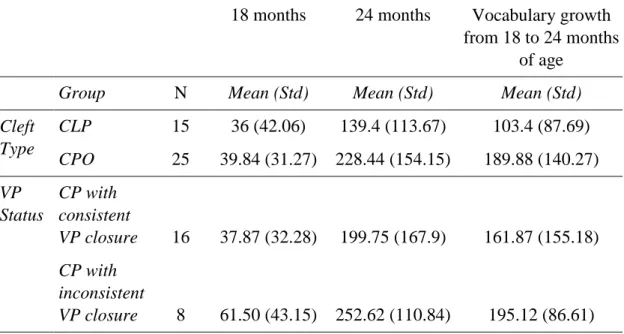
Table 2.4: Mean (standard deviations in parentheses) for the number of words produced at 18 and 24 months of age as well the vocabulary growth from 18 to 24 months after splitting the CP group based on the type of the cleft and VP status... 40
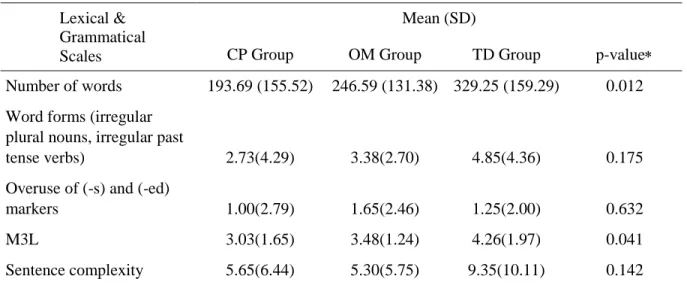
Table 3.1: Mean (standard deviation) estimates of lexical and grammatical
development for children with CP, children with OM, and TD children ... 76
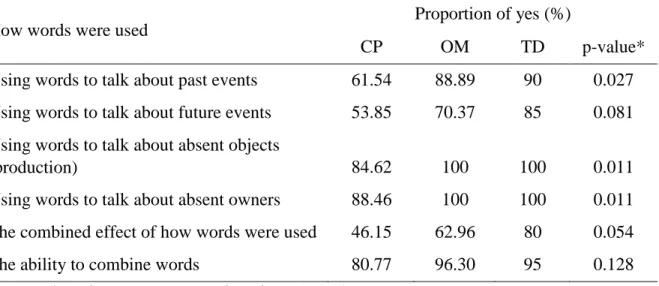
Table 3.2: Proportion of children in CP, OM, and TD groups who used words to refer to past events, future events, absent objects (production), and absent owners as well as children who were reported to be able to combine words. ... 77
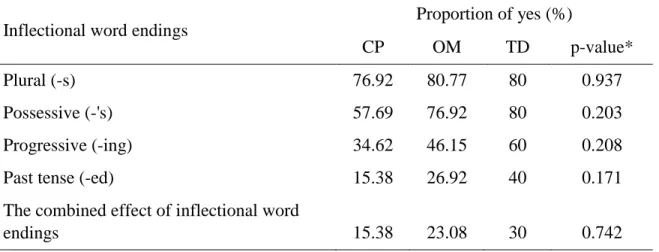
Table 3.3: Proportion of children in CP, OM, and TD groups who produced
inflectional word endings. ... 78
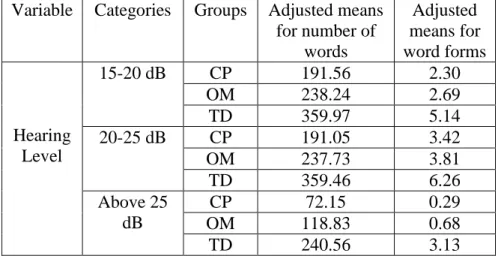
Table 3.4: The adjusted means for the number of words and word forms after controlling for different hearing levels from the two-way ANOVA without
interaction model. ... 81
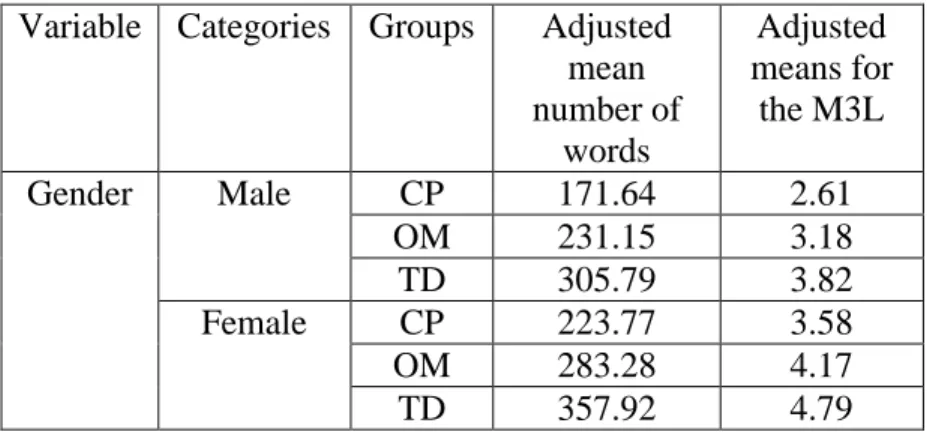
Table 3.5: The adjusted means for the number of words produced and the M3L scale after controlling for tympanogram status from the two-way
Table 3.6: The adjusted means for the number of words produced and the M3L scale after controlling for the MEL from the two-way ANOVA without
interaction model. ... 83
LIST OF FIGURES
LIST OF ABBREVIATIONS
CDI-WS the MacArthur-Bates Communicative Development Inventories: Words and Sentences
CLP Cleft Lip and Palate
CP Cleft Palate
CPO Cleft Palate Only
MEL Maternal Education Level
MLU Mean Length of Utterance
M3L Mean Number of Morphemes in Three Longest Utterances
NRP Nasal Ram Pressure
OM Otitis Media
PE Pressure Equalization
TD Typically Developing
VP Velopharyngeal
CHAPTER 1: INTRODUCTION
Cleft palate (CP) is one of the most common birth defects with the prevalence of 1-in-500 to 1-in-750 live births. Moreover, cleft of the lip and/or palate can occur as part of a syndrome. For example, about 400 syndromes may cause cleft of the lip and/or palate along with other medical conditions. Anatomically, depending on the type and extent of the cleft, cleft may lead to muscular malformation of the lips, bone and soft tissue abnormalities of the palate, and mismorphology of the nose. These structural complexities cause a range of problems including aesthetic, feeding, otologic, and speech/language difficulties. In this Dissertation I will focus on specific aspects of language impairment in children with CP.
Prior to palatal surgery, velopharyngeal inadequacy (VPI), reduced palatal surface for lingual-palatal contact, abnormal morphology of the oral cavity, and concurrent conductive hearing loss are the main pathologic factors that affect normal development of prelinguistic vocalizations and babbling. Research has shown that VPI following the primary cleft palate surgery may still persist in up to 30% of children with CP (Inman, Thomas, Hodgkinson, & Reid, 2005; Webb, Watts, Read-Ward, Hodgkins, & Markus, 2001). Usually children with inadequate VP function show complex issues in production of high-pressure sounds (i.e., stops and
Penko, & McFadden, 2001; Marino, Williams, Wharton, Paulk, Dutka-Souza, & Schulz, 2005), maxillary arch anomalies (Eshghi & Zajac, 2014, 2017; Eshghi, Zajac, Bijankhan, & Shirazi, 2013; Okazaki, Kato, & Onizuka, 1991; Zajac, Cevidanes, Shah, & Haley, 2012), dental-occlusal problems (Golding-Kushner, 1995), reduced tactile feedback due to postsurgical cicatrices (Hardcastle, Morgan Barry, & Nunn, 1989), and early-established retracted tongue posture possibly related to early feeding patterns (Hardcastle et al., 1989; Russell & Grunwell, 1993), may restrict the ability of children with CP to produce vocalizations.
In addition, fluctuating conductive hearing loss is common in children with CP (Paradise, Bluestone, & Felder, 1969) due to malformation of the tensor veli palatine muscles. Conductive hearing loss distorts the auditory input needed for acoustic decoding and aural-oral matching during speech production. Studies have shown a relationship between otitis media and delayed phonological and expressive language skills in populations without cleft (Donahue, 1993; Luloff, Menyuk, & Teele, 1993; Petinou, Richard, Maria, & Judith, 1999; Rvachew, Slawinski, Williams, & Green, 1999). Jones, Chapman, and Hardin-Jones (2003) also reported that children with a higher number of reported episodes of otitis media and failed tympanometry at pre- or postsurgery sessions showed less progress in size of consonant inventory after palatal repair.
Phonetic Characteristics of Speech in Children with CP
According to a general principle of phonetic development, language-specific parameters of speech sounds are learned and fine-tuned during the babbling stage. Research has
anomaly that can disrupt the developmental course of canonical babbling may place the child at risk of phonological and language delay compared to their peers with typical development.
Research has shown that compared to typically developing (TD) children, those with CP are delayed in the onset of babbling (Chapman, Hardin-Jones, Schulte, & Halter, 2001) and frequency of babbling (Scherer, Williams, & Proctor-Williams, 2008). In addition, babbling produced by children with CP has been characterized to consist of fewer total consonants (Lohmander, Lillvik, & Friede, 2004), fewer multisyllabic productions (Chapman, 1991), and more vowel-only syllables than consonant–vowel productions (Scherer, Williams, Henley, Lambert, Lassiter, & Osborne, 2000). Chapman et al. (2001) reported that babies with unrepaired CP had smaller canonical babbling ratios than their age-matched peers, with just 57% of the babies with CP reaching the canonical babbling stage by 9 months compared to 93% of babies without CP.
Studies of babbling in children without clefts report a predominance of anterior sounds in pre-speech productions (Kent & Bauer, 1985; Roug, Landberg, & Lundberg, 1989; Smith & Oller, 1981; Stoel-Gammon, 1985). In contrast, in children with CP, glottal and labial productions were more frequent than the alveolar, palatal, and velar productions (Chapman, 1991; Chapman et al., 2001; Grunwell & Russel, 1987; Hutters, Bau, & Brøndsted, 2001; O’Gara & Logemann, 1988; Olson, 1965). Predominance of initial consonants articulated at the periphery of the oral tract (i.e., [-coronal]) rather than the center of the oral tract (i.e., [+coronal]) was reported in some studies (Estrem & Broen, 1989; O’Gara & Logemann, 1988). For example, O’Gara and Logemann (1988) reported that in the babbling of children with clefts, sounds
sounds). Lohmander-Agerskov, Söderpalm, Friede, Persson, and Lilja (1994), however, suggested that there are correlations between cleft type and place of articulation. Sounds with anterior place of articulation occurred frequently among TD children and children with CP only. In children with cleft lip and palate (CLP), however, sounds with posterior place of articulations are more frequently produced.
Differences were also observed in the size of consonant inventory (Chapman, Hardin-Jones, & Halter, 2003; Chapman et al., 2001; Scherer, 1999). Examination of spontaneous vocalizations produced by children with CP demonstrated smaller consonant inventories
consisting of low-pressure consonants such as nasals, glides, and liquids (Chapman et al., 2001; O’Gara & Logemann, 1988; Olsen, 1965; Salas-Provance, Kuehn, & Marsh, 2003). When compared to TD infants, infants with CP produced fewer oral stops, velars, and alveolars (Chapman, 1991; Chapman et al., 2001; Hutters, 2001; Lohmander et al., 2004; Lohmander, Olsson, & Flynn, 2011; O’Gara & Logemann, 1988; Willadsen & Albrechtsen, 2006), as well as more nasals and glottals (Chapman et al., 2001; Hutters et al., 2001; O’Gara & Logemann, 1988; Olsen, 1965; Willadsen & Albrechtsen, 2006).
occurred in 32%, 21%, and 67% of vowels at 12, 14, and 18 months of age, respectively. As suggested by the data, while carry-over coarticulation increased considerably between 12 and 14 months of age in the TD group, a similar increase occurred with approximately 2 to 4 months delay in the CP group (i.e., between 14 and 18 months of age). Overall, children with CP were found to produce less co-articulated speech compared to TD children. The authors hypothesized that reduced carry-over nasal coarticulation occurred as a strategy to circumvent hypernasal speech or as a consequence of prolonged speech segments in children with repaired CP (Eshghi, Preisser, Bijankhan, & Zajac, 2016; Forner, 1983).
Phonological Processes in Children with CP
Speech disruptions may initially occur as a consequence of the structural deviations, but over time become incorporated into the child’s developing phonological system. For example, glottal stop substitution for a bilabial stop could develop in response to presurgical VPI and persist as a learned phonological rule in the phonology of a child with CP. Chapman (1993) reported that children with CP exhibited more instances of phonological processes at 3 and 4 years of age, but by 5 years of age they were similar to children without CP in phonological process usage. In another study by Chapman and Hardin (1992), two-year-old children with CP employed the same phonological processes with similar frequency as observed in the speech of their age-matched TD peers. In other words, children with CP were similar to children without CP with regard to the phonological patterns at 2 and 5 years of age, but they produced more phonological process errors at 3 and 4 years of age. The authors explained the observed
phonological regression of children with CP at 3 and 4 years of age through the course of normal phonological development. They argued that the suppression of phonological processes is
substantial decreases in the number of processes at 3 and 4 years while children with CP employ phonological process for a longer period of time.
Deletion of final consonants and syllable reduction are two productive phonological processes in the speech of children with CP, whereas these two processes are commonly seen in the speech of TD children prior to 3 years of age (Stoel-Gammon & Dunn, 1985). Other common phonological processes in the speech of children with CP are: backing (using back sounds for front sounds), stopping (substitution of stops), stridency deletion, and deaffrication (substituting a fricative for an affricate) (Chapman, 1989). These processes might be employed by children with CP at 3 years of age for ease of articulation. In addition, three syllable structure processes including deletion of final consonants (Chapman, 1989), syllable reduction (Chapman, 1989), and cluster simplification (Chapman, 1989; Powers, Dunn, & Erickson, 1990) were also observed to be more frequent in the speech of the 3-year-old children with CP.
The Effect of Prelinguistic Vocalization on Vocabulary and Language Development in
Children with CP
Longitudinal studies have reported a positive relationship between early vocalization and later speech and language abilities in children with CP (Chapman, 2004; Chapman et al., 2003; Scherer et al., 2000). Typically, children with larger consonant inventories and higher rates of stop consonants at the prelinguistic stage have better speech and language performance. Studies of the prelinguistic abilities of children with CP showed that they vocalize as frequently as young children without CP, but their early vocalizations are less complex and they are delayed in
They documented that children with CP have a specific deficit in the complexity of early sound production that was characterized by lower mean babbling level (MBL) and reduced use of stop consonants.
Chapman at al. (2003) reported that among indices for speech development, onset and composition of canonical babbling can differentiate children with CP from TD children at prelinguistic stages. However, neither of the two variables was significantly correlated with later speech or language measures. In contrast, later phonological and language measures were significantly associated with small consonant inventories and restricted production of stop consonants. Restricted consonant inventories may lead to delayed onset of first words and poor expressive vocabulary development (Broen, Devers, Doyle, Prouty, & Moller, 1998; Chapman et al., 2003; Eshghi, Baylis, Vallino, Crais, Preisser, Vivaldi, Dorry, & Zajac, 2017; Eshghi, Dorry, Vivaldi, Crais, Vallino, Baylis, Preisser, & Zajac, 2017; Jocelyn, Penko, & Rode, 1996; Jones et al., 2003; Scherer, 1999; Scherer & D’Antonio, 1995).
In addition, the transition from the prelinguistic stage to linguistic level has been reported to take longer for children with CP. In a study conducted by Scherer et al. (2013), all 15 children with CP were still in the prelinguistic level at 17-19 months of age and half of them remained in the prelinguistic level at 23-25 months of age in comparison to TD children. Hardin-Jones & Chapman (2014) reported that while children with CP showed similar expressive vocabulary skill to that of TD children at 13 months of age, they showed significantly reduced size of their lexicon at 21 and 27 months of age. Further examination of the words produced by the children with CP revealed that restricted consonant inventory may influence early vocabulary
system. Marked lexical selectivity and avoidance have been observed by Hardin-Jones & Chapman (2014) and Willadsen (2013) who reported that children with CP produced
significantly more words beginning with sonorants and fewer words beginning with obstruents in their spontaneous speech samples.
In addition to expressive vocabulary skills, children with CP have exhibited poorer grammatical performance by producing shorter mean length of utterance (MLU) (Spriestersbach et al., 1958, Eshghi et al., 2017), and less syntactictically complex utterances (Morris, 1962; Eshghi et al., 2017). Considering other aspects of language, young children with CP have shown weaker scores for social communication skills (Eshghi,Vivaldi, Dorry, Crais, Vallino, Baylis, Preisser, & Zajac, 2017) and symbolic behavior (Eshghi, Dorry, Crais, Baylis, Vallino,Vivaldi, Preisser, & Zajac, 2017), but both domains were typically within normal limits, when compared to TD children.
The observed early speech and language impairments in children with CP deserve closer attention especially because a significant number of research studies have reported that young children diagnosed with speech and language problems have literacy difficulties at school (Felsenfeld, Broen, & McGue, 1994; Lewis, Hansen, Stein, Shriberg, Iyengar, & Taylor, 2006; Scarborough, 1990; Sices, Taylor, Freebairn, Hansen, & Lewis, 2007). For example, using the Standard Reading Inventory, Richman, Eliason, & Lindgren, (1988) reported that out of 172 elementary school children with CLP and CPO, approximately 52% exhibited moderate (35%) to severe (17%) reading disability. Children with CP have a high prevalence of speech and
be found in Collett, Leroux, & Speltz, (2010), who reported that children with clefts showed similar language skills and academic achievement compared to their TD peers. It should be noted that children with clefts in Collet et al. (2010) benefitted from frequent early speech and
language interventions as well as good quality mother-child interaction. Further research is warranted to examine early language milestones in young children with CP.
Significance of the Current Studies
Literature on the association between cleft palate and speech/language development suffers from various methodological limitations. Some studies applied a cross-sectional research design by recruiting participants from a wide age span. Because of the inherent heterogeneity in the cleft palate population and the multiplicity of factors that affect early expressive language development, a cross-sectional research design especially with a small sample size would fail to represent a true picture of language abilities in a larger population. Although attempts have been made to investigate language patterns of children with CP from a longitudinal perspective, in some studies, discrete intervals between two consecutive sessions of speech/language evaluation were not frequent enough to trace different trajectories of language development. In addition, insufficient information about the hearing status of children with CP is another limitation of some previous studies. Given that hearing status can affect the course of speech and language development, it is not known to what extent auditory deprivation impacts the observed delay in speech and vocabulary performance of children with CP. Most importantly, because objective assessment of VP function through imaging and pressure-flow techniques requires high level of cooperation from the participants, in previous studies, any assumption with regard to the status of the VP mechanism of children with CP was made indirectly from perceptual evaluation of
children with CP and lack of information about it could jeopardize the subject-matching criteria. Furthermore, research on language and communication skills of children with CP has focused almost exclusively on speech and early expressive language. Little research, however, has been conducted on the grammatical ability of these children. Research has documented a strong association between size of the lexicon and measures of grammatical skills such as MLU and sentence complexity (e.g., Bleses, Vach, Slott, Wehberg, Thomsen, Madsen, & Basbøll, 2008; Marjanovič-Umek, Fekonja-Peklaj, & Podlesek, 2013; Stolt, Haataja, Lapinleimu, & Lehtonen, 2009). If children with CP have delayed and deficient phonological and expressive language, they are more likely to have difficulties in other domains of language such as grammar as well. Finally, language development is a multifactorial process. This means that multiple
physiological, environmental, and sociodemographic factors can influence normal development of language profiles singly or in combination. Therefore, the contribution of factors such as maternal education level, gender, and cleft type should be taken into account in investigations of language development in children with CP.
grammatical skills measured through the MacArthur-Bates Communicative Development Inventories: Words and Sentences (CDI WS; Fenson et al., 2007). The contribution of factors such as VP status, hearing level, tympanogram status, maternal education level, and gender to the development of expressive vocabulary and grammar was further examined. NRP monitoring was used innovatively to obtain objective estimation of VP status during production of stop
consonants. Findings of these studies could highlight the importance of early speech and language assessment to identify children with CP who are in need of appropriate
REFERENCES
Bleses, D., Vach, W., Slott, M., Wehberg, S., Thomsen, P., Madsen, T. O., & Basbøll, H. (2008). Early vocabulary development in Danish and other languages: A CDI-based
comparison. Journal of Child Language, 35(3), 619-650.
Broen, P. A., Devers, M. C., Doyle, S. S., Prouty, J. M., & Moller, K. T. (1998). Acquisition of linguistic and cognitive skills by children with cleft palate. Journal of Speech, Language, and Hearing Research, 41(3), 676-687.
Bureau, S., Penko, M., & McFadden, L. (2001). Speech outcome after closure of oronasal fistulas with bone grafts. Journal of Oral and Maxillofacial Surgery, 59(12), 1408-1413. Chapman, K. L. Phonological process usage in children with cleft palate. Paper presented at the
American Speech-Language-Hearing Association Convention, St. Louis, MO, 1989. Chapman, K. L. (1991). Vocalizations of toddlers with cleft lip and palate. The Cleft
Palate-Craniofacial Journal, 28(2), 172-178.
Chapman, K. L. (1993). Phonologic processes in children with cleft palate. The Cleft Palate-Craniofacial Journal, 30(1), 64-72.
Chapman, K. L. (2004). Is presurgery and early postsurgery performance related to speech and language outcomes at 3 years of age for children with cleft palate?. Clinical Linguistics & Phonetics, 18(4-5), 235-257.
Chapman, K. L., & Hardin, M. A. (1992). Phonetic and phonologic skills of two-year-olds with cleft palate. The Cleft Palate-Craniofacial Journal, 29(5), 435-443.
Chapman, K. L., Hardin-Jones, M., & Halter, K. A. (2003). The relationship between early speech and later speech and language performance for children with cleft lip and palate. Clinical Linguistics & Phonetics, 17(3), 173-197.
Chapman, K. L., Hardin-Jones, M., Schulte, J., & Halter, K. A. (2001). Vocal development of 9-month-old babies with cleft palate. Journal of Speech, Language, and Hearing Research, 44(6), 1268-1283.
Collett, B. R., Leroux, B., & Speltz, M. L. (2010). Language and early reading among children with orofacial clefts. The Cleft Palate-Craniofacial Journal, 47(3), 284-292.
Donahue, M. L. (1993). Early phonological and lexical development and otitis media: A diary study. Journal of Child Language, 20, 489-489.
Eshghi, M., Baylis, A., Vallino, L. D., Crais, E., Preisser, J., Vivaldi, D., Dorry, J., & Zajac, D. (2017). 204. Lexical and morphosyntactic abilities in two-year-old children with and without repaired cleft palate. The Cleft Palate-Craniofacial Journal, 54(3), e42. Eshghi, M., Dorry, J., Crais, E., Baylis, A., Vallino, L.,Vivaldi, D., Preisser, J., Zajac, D
Paper presented at the 74th Annual Meeting of the American Cleft Palate-Craniofacial Association (ACPA), Colorado Springs, Co, 2017.
Eshghi, M., Dorry, J., Vivaldi, D., Crais, E., Vallino, L. D., Baylis, A., Preisser, J., & Zajac, D. (2017). 202. Development of early sounds and words in children with and without repaired cleft palate. The Cleft Palate-Craniofacial Journal, 54(3), e41.
Eshghi, M., Preisser, J. S., Bijankhan, M., & Zajac, D. J. (2016). Acoustic-temporal aspects of stop-plosives in the speech of Persian-speaking children with cleft lip and
palate. International Journal of Speech Language Pathology, 1-9.
Eshghi, M., Vallino, L. D., Baylis, A. L., Preisser, J. S., & Zajac, D. J. (2017). Velopharyngeal status of stop consonants and vowels produced by young children with and without repaired cleft palate at 12, 14, and 18 months of age: a preliminary analysis. Journal of Speech, Language, and Hearing Research, 60(6), 1467-1476.
Eshghi, M., Vivaldi, D., Dorry, J., Crais, E., Vallino, L. D., Baylis, A., Preisser, J., & Zajac, D. (2017). 247. Development of social communication skills in children with and without repaired cleft palate. The Cleft Palate-Craniofacial Journal, 54(3), e58.
Eshghi, M., Vivaldi, D., Dorry, J., Zajac, D. Carry-over nasal coarticulation in young children with and without repaired cleft palate: preliminary findings. Paper presented at the American Speech-Language-Hearing Association (ASHA), Philadelphia, PA, 2016. Eshghi, M., Zajac, D. Spectral analysis of word-Initial /s/ and /sh/ in Persian speaking children
with bilateral cleft lip and palate and maxillary collapse; Paper presented at the 71st Annual Meeting of the American Cleft Palate-Craniofacial Association (ACPA), Indianapolis, IN, 2014.
Eshghi, M., & Zajac, D. (2017). Covert acoustic markers of alveolar-velar stop contrasts in the speech of two-year-old children with and without repaired cleft palate. The Journal of the Acoustical Society of America, 141(5), 3839-3840.
Eshghi, M., Zajac, D. J., Bijankhan, M., & Shirazi, M. (2013). Spectral analysis of word-initial alveolar and velar plosives produced by Iranian children with cleft lip and palate. Clinical Linguistics & Phonetics, 27(3), 213-219.
Estrem, T., & Broen, P. A. (1989). Early speech production of children with cleft palate. Journal of Speech, Language, and Hearing Research, 32(1), 12-23.
Fea, Ch., Eshghi, M.,Zajac, D. Anticipatory Nasal Coarticulation in School-Aged Children With and Without Repaired Cleft Palate: Preliminary Findings. American Speech-Language-Hearing Association (ASHA), Philadelphia, Pennsylvania, USA, November, 17–19, 2016. Felsenfeld, S., Broen, P. A., & McGue, M. (1994). A 28-year follow-up of adults with a history
of moderate phonological disorder: Educational and occupational results. Journal of Speech, Language, and Hearing Research, 37(6), 1341-1353.
Golding-Kushner, K. J. (1995). Treatment of articulation and resonance disorders associated with cleft palate and VPI. In R. J. Shprintzen & J. Bardach (Eds.), Cleft palatespeech management: A multidisciplinary approach (pp. 327–351). St. Louis, MO: Mosby. Grunwell, P., & Russell, J. (1987). Vocalisations before and after cleft palate surgery: a pilot
study. British Journal of Disorders of Communication, 22(1), 1-17.
Hardcastle, W., Morgan Barry, R., & Nunn, M. (1989). Instrumental articulatory phonetics in assessment and remediation: Case study with the electropalatograph. In J. Stengelhofen (Ed.), Cleft palate: The nature and remediation of communication problems (pp. 136–164). London: Churchill Livingstone.
Hardin-Jones, M., & Chapman, K. L. (2014). Early lexical characteristics of toddlers with cleft lip and palate. The Cleft Palate-Craniofacial Journal, 51(6), 622-631.
Hutters, B., Bau, A., & Brøndsted, K. (2001). A longitudinal group study of speech development in Danish children born with and without cleft lip and palate. International Journal of Language & Communication Disorders, 36(4), 447-470.
Inman, D. S., Thomas, P., Hodgkinson, P. D., & Reid, C. A. (2005). Oro-nasal fistula
development and velopharyngeal insufficiency following primary cleft palate surgery—an audit of 148 children born between 1985 and 1997. British Journal of Plastic
Surgery, 58(8), 1051-1054.
Jocelyn, L. J., Penko, M. A., & Rode, H. L. (1996). Cognition, communication, and hearing in young children with cleft lip and palate and in control children: a longitudinal
study. Pediatrics, 97(4), 529-534.
Jones, C. E., Chapman, K. L., & Hardin-Jones, M. A. (2003). Speech development of children with cleft palate before and after palatal surgery. The Cleft Palate-Craniofacial Journal, 40(1), 19-31.
Kent, R. D., & Bauer, H. R. (1985). Vocalizations of one-year-olds. Journal of Child Language, 12(03), 491-526.
Kommers, M. S., & Sullivan, M. D. (1979). Written language skills of children with cleft palate. Cleft Palate Journal, 16(1), 81-5.
Lewis, B. A., Freebairn, L. A., Hansen, A. J., Stein, C. M., Shriberg, L. D., Iyengar, S. K., & Taylor, H. G. (2006). Dimensions of early speech sound disorders: A factor analytic study. Journal of Communication Disorders, 39(2), 139-157.
Lohmander, A., Lillvik, M., & Friede, H. (2004). The impact of early infant jaw‐orthopaedics on early speech production in toddlers with unilateral cleft lip and palate. Clinical
Linguistics & Phonetics, 18(4-5), 259-284.
Lohmander-Agerskov, A., Söderpalm, E., Friede, H., Persson, E. C., & Lilja, J. (1994). Pre-speech in children with cleft lip and palate or cleft palate only: phonetic analysis related to morphologic and functional factors. The Cleft Palate-Craniofacial Journal, 31(4), 271-279. Luloff, A. K., Menyuk, P., & Teele, D. W. (1993). Effects of persistent otitis media on the
speech sound repertoire of infants. In D. J. Lim, C. D. Bluestone, J. O. Klein, J. D. Nelson, & P. L. Ogra (Eds.), Recent advances in otitis media. Proceedings of the Fifth International Symposium. Hamilton: Decker Periodicals (pp. 531-533).
Marino, V. C., Williams, W. N., Wharton, P. W., Paulk, M. F., Dutka-Souza, J. C., & Schulz, G. M. (2005). Immediate and sustained changes in tongue movement with an experimental palatal “fistula”: a case study. The Cleft Palate-Craniofacial Journal, 42(3), 286-296. Marjanovič-Umek, L., Fekonja-Peklaj, U., & Podlesek, A. (2013). Characteristics of early
vocabulary and grammar development in Slovenian-speaking infants and toddlers: a CDI-adaptation study. Journal of Child Language, 40(4), 779-798.
O’Gara, M. M., & Logemann, J. A. (1988). Phonetic analyses of the speech development of babies with cleft palate. Cleft Palate Journal, 25(2), 122-134.
Okazaki, K., Kato, M., & Onizuka, T. (1991). Palate morphology in children with cleft palate with palatalized articulation. Annals of Plastic Surgery, 26(2), 156-163.
Oller, D. K., Wieman, L. A., Doyle, W. J., & Ross, C. (1976). Infant babbling and speech. Journal of Child Language, 3(01), 1-11.
Olson, D. A. (1965). A descriptive study of the speech development of a group of infants with unoperated cleft palate (Doctoral dissertation, Northwestern University).
Paradise, J. L., Bluestone, C. D., & Felder, H. (1969). The universality of otitis media in 50 infants with cleft palate. Pediatrics, 44(1), 35-42.
Petinou, K., Richard, G. S., Maria, M., & Judith, S. G. (1999). The impact of otitis media with effusion on early phonetic inventories: A longitudinal prospective investigation. Clinical Linguistics & Phonetics, 13(5), 351-367.
Powers, G. R., Dunn, C., & Erickson, C. B. (1990). Speech analyses of four children with repaired cleft palates. Journal of Speech and Hearing Disorders,55(3), 542-549. Richman, L. C. (1976). Behavior and achievement of cleft palate children. The Cleft Palate
Journal, 13, 4-10.
Richman, L. C. (1980). Cognitive patterns and learning disabilities in cleft palate children with verbal deficits. Journal of Speech, Language, and Hearing Research, 23(2), 447-456. Richman, L. C., Eliason, M. J., & Lindgren, S. D. (1988). Reading disability in children with
clefts. Cleft Palate Journal, 25(1), 21-5.
Russell, J., & Grunwell, P.(1993). Speech development in children with cleft lip and palate. In P. Grunwell (Ed.), Analysing cleft palate speech (pp. 19–47). London: Whurr.
Rvachew, S., Slawinski, E. B., Williams, M., & Green, C. L. (1999). The impact of early onset otitis media on babbling and early language development. The Journal of the Acoustical Society of America, 105(1), 467-475.
Salas-Provance, M. B., Kuehn, D. P., & Marsh, J. L. (2003). Phonetic repertoire and syllable characteristics of 15-month-old babies with cleft palate. Journal of Phonetics, 31(1), 23-38. Scarborough, H. S. (1990). Very early language deficits in dyslexic children. Child Development,
61(6), 1728-1743.
Scherer, N. J. (1999). The speech and language status of toddlers with cleft lip and/or palate following early vocabulary intervention. American Journal of Speech-Language Pathology, 8(1), 81-93.
Scherer, N. J., Boyce, S., & Martin, G. (2013). Pre-linguistic children with cleft palate: Growth of gesture, vocalization, and word use. International Journal of Speech-Language
Pathology, 15(6), 586-592.
Scherer, N. J., & D'Antonio, L. L. (1995). Parent questionnaire for screening early language development in children with cleft palate. The Cleft Palate-Craniofacial Journal, 32(1), 7-13.
Scherer, N. J., Williams, A. L., Henley, P. J., Lambert, A. N., Lassiter, L. J., & Osborne, J. K. (2000). Early vocalization profiles in children with and without cleft palate. In Annual Meeting of the American Speech, Language, Hearing Association Convention.
Scherer, N. J., Williams, A. L., & Proctor-Williams, K. (2008). Early and later vocalization skills in children with and without cleft palate. International Journal of Pediatric
Otorhinolaryngology, 72(6), 827-840.
Sices, L., Taylor, H. G., Freebairn, L., Hansen, A., & Lewis, B. (2007). Relationship between speech-sound disorders and early literacy skills in preschool-age children: Impact of comorbid language impairment. Journal of Developmental and Behavioral Pediatrics: JDBP, 28(6), 438-447.
Smith, B. L., & Oller, D. K. (1981). A comparative study of pre-meaningful vocalizations produced by normally developing and Down's syndrome infants. Journal of Speech and Hearing Disorders, 46(1), 46-51.
Stoel-Gammon, C. (1985). Phonetic Inventories, 15–24 Months A Longitudinal Study. Journal of Speech, Language, and Hearing Research, 28(4), 505-512.
Stoel-Gammon, C., & Cooper, J. A. (1984). Patterns of early lexical and phonological development. Journal of Child Language, 11(2), 247-271.
Stolt, S., Haataja, L., Lapinleimu, H., & Lehtonen, L. (2009). Associations between lexicon and grammar at the end of the second year in Finnish children. Journal of Child
Language, 36(04), 779-806.
Vihman, M. M. (1992). Early syllables and the construction of phonology. Phonological Development: Models, Research, Implications, 393-422.
Webb, A. A. C., Watts, R., Read-Ward, E., Hodgkins, J., & Markus, A. F. (2001). Audit of a multidisciplinary approach to the care of children with unilateral and bilateral cleft lip and palate. British Journal of Oral and Maxillofacial Surgery, 39(3), 182-188.
Willadsen, E. (2013). Lexical selectivity in Danish toddlers with cleft palate. The Cleft Palate-Craniofacial Journal, 50(4), 456-465.
Willadsen, E., & Albrechtsen, H. (2006). Phonetic description of babbling in Danish toddlers born with and without unilateral cleft lip and palate. The Cleft Palate-Craniofacial Journal, 43(2), 189-200.
CHAPTER 2: VOCABULARY GROWTH FROM 18 TO 24 MONTHS OF AGE IN CHILDREN WITH AND WITHOUT REPAIRED CLEFT PALATE
Introduction
Early expressive vocabulary development has been characterized by two idiosyncratic features. First, there is a high individual variability in the onset, size, and rate of vocabulary development (Bates, Bretherton, & Snyder, 1988; Bleses, Vach, Slott, Wehberg, Thomsen, Madsen, & Basbøll, 2008; Devescovi, Caselli, Marchione, Pasqualetti, Reilly & Bates, 2005; Fenson, Marchman, Thal, Dale, Reznick & Bates, 2007; Ganger & Brent, 2004; Marjanovič-Umek, Fekonja-Peklaj & Podlesek, 2013; Marjanovič-Marjanovič-Umek, Fekonja-Peklaj & Sočan, 2017; Rowe, Raudenbush & Goldin-Meadow, 2012). Second, regardless of the ambient language the child is exposed to, the transition from prelinguistic vocalizations to canonical babbling and subsequent production of first words is gradual with no discrete landmarks (e.g., Ganger & Brent, 2004; Vihman, Macken, Miller, Simmons, & Miller, 1985).
words at 18 months and 312 words at 24 months in normal toddlers. In addition, using the MacArthur Communicative Development Inventories (CDI) in a cross-sectional study on 1,803 middle-class children, Fenson, Dale, Reznick, Bates, Thal & Pethick (1994) reported that TD children at the median produced fewer than 10 words, about 40 words, and 573 different words at 12-, 16-, and 30-month of age, respectively.
In spite of the abundance of research on the developmental course of expressive vocabulary, our understanding of the patterns of vocabulary growth is not yet complete.
Investigations of lexical development have identified a number of cognitive, physiological, and sociodemographic factors that singly and in combination influence the onset and rate of the vocabulary growth in toddlers. For example, normal development of various cognitive skills including lexical memory (Woodward, Markman & Fitzsimmons, 1994), categorization and naming (Gopnik & Meltzoff, 1987, 1992), and the ability to associate objects with words (Woodward & Hoyne, 1999) have been identified as essential cognitive precursors of lexical development. In addition, physiological factors such as competent anatomical structure and normal hearing are essential for making articulatory movement and oral-aural adjustments to produce sounds that comprise words. Research has shown that children with cognitive
disabilities, abnormal anatomical structure, or disrupted hearing are at risk of developing poor vocabulary skills (Bates, Thal, Trauner, Fenson, Aram, Eisele, & Nass, 1997; Estrem and Broen, 1989; McGregor, Berns, Owen, Michels, Duff, Bahnsen, & Lloyd, 2012; Rvachew, Slawinski, Williams, & Green, 1999; Scherer and D’Antonio, 1995; Singer Harris, Bellugi, Bates, Jones, & Rossen, 1997). Because there is a continuity from prespeech vocalizations to speech sounds and consequently to first word productions (Locke, 1989; Stoel-Gammon, 1989; Vihman & McCune, 1994), any pathological condition that disrupts normal development of pre-speech vocalizations and canonical babble is likely to jeopardize the development of other aspects of language in general and expressive vocabulary in particular.
and rate of vocabulary growth (Arriaga, Fenson, Cronan, & Pethick, 1998; Hoff, 2003; Pan, Rowe, Singer, & Snow, 2005). These studies suggest that children from families lower in SES were exposed to significantly fewer words compared to children from families higher in SES and subsequently experienced slower rates of vocabulary growth. Strong association has been also reported between maternal educational levels (MEL) and early language skills such as expressive vocabulary, comprehension, and grammatical skills (Dollaghan, Campbell, Paradise, Feldman, Janosky, Pitcairn, & Kurs-Lasky, 1999; Magnuson, Sexton, Davis-Kean, & Huston 2009; Marjanovič-Umek, Fekonja, Kranjc, & Bajc, 2008; Marjanovič-Umek, Bozin, Cermak, Stiglic, Bajc, & Fekonja-Peklaj, 2016).
Speech and language characteristics of children with repaired cleft palate (CP) have been the focus of substantial research as children with CP are born with palatal cleft, which may prevent normal tongue-palate contact to make prelinguistic vocalizations. After palatal surgery (which typically occurs by 12 months of age), adequate velopharyngeal (VP) function is not surgically restored in up to 30% of children (Inman, Thomas, Hodgkinson, & Reid, 2005; Webb, Watts, Read-Ward, Hodgkins, & Markus, 2001). The VP mechanism plays an important role in early speech development by assigning appropriate resonance feature to speech sounds and setting up the aerodynamic condition for the production of high pressure sounds (i.e., stops, fricatives, and affricates). Using nasal ram pressure (NRP) technique, Eshghi, Vallino, Baylis, Preisser, & Zajac (2017) reported that while TD children exhibited consistent VP closure at 12 months of age, some children (33% of participants) with CP achieved consistent VP closure approximately 3 to 4 months following palate repair around 14 months of age. Delayed achievement of consistent VP closure in children with CP may negatively impact early
development of speech sounds. After palatal surgery, complications such as collapsed maxilla, postsurgical scarred palate, and in some cases oronasal fistulae may restrict tongue
maneuverability andnormal tongue-palate contact.
In addition, children with CP are usually prone to degrees of conductive hearing loss. Occurrence of otitis media (OM) in babies with cleft palate is common due to malformation of tensor veli palatini muscle which is responsible for opening and closing of the eustachian tube. Conductive hearing loss distorts the auditory signal that children with CP may use for acoustic-articulatory adjustments. Studies have shown a relationship between OM and delayed
Chapman, and Hardin-Jones (2003) also reported that children with CP who had a higher number of reported episodes of OM and failed tympanometry at the pre- or postsurgery sessions showed less progress in size of consonant inventory after palatal repair. All these physiological factors put a child with CP at risk for developing poor expressive language skills.
Differences in prespeech babbling between children with CP and TD children have been observed as early as 6 months of age (Scherer, Williams, & Proctor- Williams, 2008). Numerous studies have documented delayed onset of babbling in children with CP (Chapman, Hardin-Jones, Schulte, & Halter, 2001), less frequent (Scherer et al., 2008), and less complex prespeech vocalizations (Scherer et al., 2008, Scherer, Boyce, & Martin, 2013; Park, & Ha, 2016), and restricted consonant inventory (Chapman, Hardin-Jones, & Halter, 2003; Park, & Ha, 2016). The composition of babbling produced by children with CP consists of fewer total consonants
(Chapman et al., 2001; Lohmander, Lillvik, & Friede, 2004; Lohmander, Olsson, & Flynn, 2011), fewer multisyllabic productions (Chapman, 1991), and more vowel-only syllables than consonant–vowel productions (Scherer, Williams, Henley, Lambert, Lassiter, & Osborne, 2000). In addition, the transition from the prelinguistic stage to linguistic level takes longer for children with CP. In a study conducted by Scherer et al. (2013), all 15 children with CP were still in the prelinguistic level at 17-19 months of age and half of them remained in the prelinguistic level at 23-25 months of age. In addition,Hardin-Jones and Chapman (2014) reported that while children with CP showed similar expressive vocabulary skills to that of TD children at 13 months of age, they showed significantly reduced size of their lexicons at 21 and 27 months of age.
D’Antonio, 1995; Scherer et al., 2008). In a longitudinal study conducted by Broen, Devers, Doyle, Prouty, and Moller (1998), toddlers with CP exhibited a slower rate of vocabulary
acquisition as they were behind their age matched peers without CP for approximately 3 months. Because of the documented strong correlation between early phonological development and later vocabulary skills (Ferguson & Farwell, 1975; Stoel- Gammon, 1989; Storkel, 2001; Storkel & Morrisette, 2002; Vihman, 1992), delayed onset of first words, and poor expressive vocabulary skills in children with CP have been largely attributed to restrictions in size and diversity of consonants (especially stop consonants), at earlier stages of language acquisition (Scherer & D’Antonio, 1995; Chapman et al., 2003; Jones et al., 2003, Broen et al. 1998; Jocelyn et al., 1996; Scherer, 1999). In support of this speculation, several studies reported that children with CP may have tacit knowledge of their phonology as they “select” or “avoid” words based on the level of difficulty. Children with CP have been observed to produce significantly more words beginning with sonorants (i.e., nasals, liquids, glides) and fewer words beginning with obstruents (i.e., stops and fricatives) in their spontaneous speech samples (e.g., Hardin-Jones & Chapman, 2014; Willadsen, 2013; Park & Ha, 2016). Of particular interest, Willadsen (2013) noted that as it has been described for English-speaking toddlers with and without cleft palate, Danish toddlers with CP displayed marked lexical selectivity at 18 months by using words with initial sounds with high distribution at 11 months of age. The term lexical selection was first used by Ferguson & Farwell, (1975) who observed that TD children choose words that are consistent with their developing phonological system and avoid words with characteristics that are outside their phonological system. This pattern was further observed by Leonard, Schwartz, Morris and
One source of complexity in the study of expressive language skills in children with CP, however, pertains to the multiplicity of factors that can influence the trajectories of language growth in general and expressive vocabulary in particular. For example, Scherer et al. (2000) provided evidence for the effect of cleft type on the development of the expressive language skills, as they observed that children with isolated CP performed poorer than the group with cleft lip and palate (CLP) on measures of expressive language and vocabulary.
The purpose of the present study was to further investigate the development of expressive vocabulary in children with repaired CP, children with OM, and TD children at 18 and 24
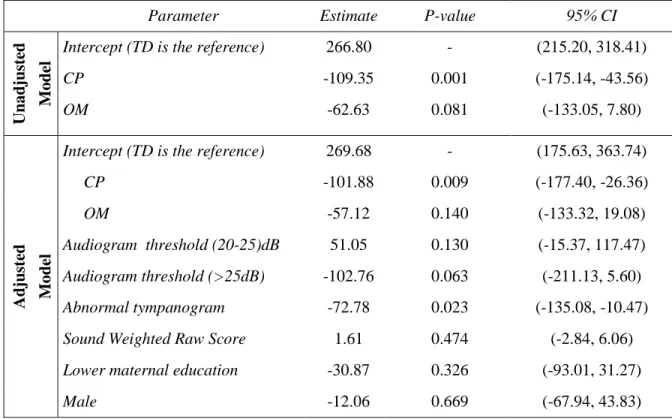
months of age. In addition, the effect of variables such as hearing level (at 12 months of age), tympanogram status (at 18 months of age), size of consonant inventory (at 18 months of age), MEL, and gender on the vocabulary growth from 18 to 24 months of age was examined. The following research questions were asked: (1) What is the developmental course of expressive vocabulary in young children with CP compared to children with OM and TD children at 18 and 24 months of age? (2) To what extent do variables such as, hearing level, tympanogram status, size of consonant inventory, MEL, and gender influence the vocabulary growth from 18 to 24 months of age? In a secondary data analysis, I was further interested in comparing the
vocabulary growth of subgroups of children with CP based on the cleft type and VP status in reference to the performance of children with OM and TD children. I hypothesized that: a) children with CP would be behind the OM and TD groups with regard to the vocabulary growth, and children with OM would fall in between; b) factors such as hearing status, size of consonant inventory, MEL, and gender may be predictors for the hypothesized differences among the three groups. Further, cleft type and VP status may be important factors in the development of
This study has both theoretical and clinical significance. Findings of this study will provide additional information about the pattern of vocabulary growth in children with CP while their VP function is objectively assessed through the nasal ram pressure (NRP) monitoring. This is promising as literature on the development of expressive vocabulary skills in children with CP lacks a solid understanding of the effect of VP status on the observed differences. In all studies conducted so far, assumptions about the VP function were based on articulatory or perceptual evidence only. In addition, in this study, the effects of hearing status on the development of expressive vocabulary were isolated by incorporating children with a history of OM. This methodological design has not been implemented in previous studies. In addition, this study can further support the clinical application of the CDI assessment tool to identify the subgroup of children with CP who need early speech and language interventions. Given that impaired expressive language has been shown to negatively impact higher level language and literacy attainment in later childhood (Felsenfeld, Broen, & McGue, 1994; Lewis, Hansen, Stein, Shriberg, Iyengar, & Taylor, 2006; Scarborough, 1990; Sices, Taylor, Freebairn, Hansen, & Lewis, 2007), early assessment of expressive language with subsequent management could prevent persistent language delay and later literacy underachievement.
Methods
Participants
A total of 94 children participated in this study: 40 children with repaired CP (19 males, 21 females), 29 children with OM (20 males, 9 females), and 25 TD children (13 males, 12 females). These children were a subset of participants recruited for an ongoing multi-site
Information about birth and family history, demographics, medical history, surgical history as well as cleft classification were obtained from the primary care giver of the child at the screening visit when the child was initially enrolled in the study. Cleft type and date of palate surgery were verified from medical records. Of 40 children with repaired CP, 37 children were non-Hispanic/Latino and 3 children were Hispanic/Latino. In addition, 31 children with CP were Caucasian, 2 were African-American, and 7 belonged to more than one race. None of the
children with CP were born prematurely (i.e., gestation less than 36 weeks) or diagnosed with any known syndromes including Pierre Robin syndrome. Of the 40 children with repaired CP, 15 had cleft of the lip and palate (CLP) (13 male, 2 female) and 25 had cleft of the hard and/or soft palate only (CPO) (6 male, 19 female). All children with CP had undergone a single surgery to repair the palate by at least 11 months of age (mean = 10.43 months, SD= 1.39). Oral
examination was performed at both 18 and 24 months to rule out the presence of oronasal fistulae. All children in the CP group underwent myringotomy with insertion of pressure-equalization (PE) tubes at the time of their palate surgery.
All children in the OM group had experienced multiple episodes of otitis media with effusion during their first year of life and also underwent myringotomy with insertion of PE tubes prior to the enrollment in the project (12 months of age). None of these children had any type of clefts. Twenty-eight children with OM were non-Hispanic/Latino and only one child in this group was Hispanic/Latino. In addition, 27 children with OM were Caucasian, one was African-American, and one belonged to more than one race.
Finally, none of the children in the TD group had any type of cleft nor PE tubes. All TD children showed normal language development at 12 months of age determined by the
Prizant, 2002) assessment tool. In addition, none received any early speech/language or
developmental intervention services. Twenty-three TD children were non-Hispanic/Latino and 2 TD children were Hispanic/Latino. In addition, 20 TD children were Caucasian, 2 were African-American, and 3 belonged to more than one race.
All participants (CP, OM, and TD) were from monolingual American English–speaking families and they showed normal development of social and symbolic skills of language as determined by the CSBS DP. Further, all children who participated in the study were in good general health and had no documented sensorineural haring loss or global developmental delays. As described below, all participants underwent tympanometry at 18 and 24 months of age to evaluate middle-ear function and/or confirm the presence of PE tubes (for the CP and OM groups). In addition, audiometric assessments were performed at 12 and 24 months of age as described below. This study was approved by the intuitional review board (IRB) of the University of North Carolina at Chapel Hill.
and 10 TD) were examined at A. I. duPont Hospital for Children, Wilmington, DE; and 31 children (17 CP, 8 OM, and 6 TD) were examined at Nationwide Children’s Hospital, Columbus, OH.
Assessment of Expressive Vocabulary
The CDI WS consists of two parts. The first part is a vocabulary checklist of 680 words and the second part samples sentences and grammar. For the present study, the first part of the CDI-WS inventory was used to measure the lexical (i.e., expressive vocabulary) development of the participants. The number of words was derived from a checklist of 680 commonly used vocabulary items in 22 categories: 12 words for onomatopoeic words (i.e., sound effects and animal sounds), 43 words for animals, 14 words for vehicles, 18 words for toys, 68 words for food and drink, 28 words for clothing, 27 words for body parts, 50 words for small household items, 33 words for furniture and rooms, 31 words for outside things, 22 words for places, 29 words for people, 25 words for games and routines, 103 action words, 63 descriptive words, 12 time expressions, 25 pronouns, 7 question words, 26 prepositions and locations, 17 quantifiers and articles, 21 helping verbs, and 6 conjunctions.
Estimation of the Size of Consonant Inventory
The size of consonant inventories of the children was estimated by direct observation through the administration of the Communication and Symbolic Behavior Scales Developmental Profile (CSBS DP; Wetherby & Prizant, 2002) at 18 months of age. The CSBS DP consists of six semi-structured communication and play opportunities to sample various speech and
language skills. All personnel (speech-language pathologists, SLPs, at UNC-CH and NWC, and a social worker at AID) were trained in administration of the CSBS DP and met interrater agreement at the 85% level or higher with the trainer. The participant, caregiver, and tester were video-recorded during the administration of the CSBS DP using a camera (SONY, HDR CX380) with 8.9 megapixels resolution and a built-in zoom microphone. The camera was mounted on a tripod and positioned in front of the participant. The CSBS DP videos were watched and
/n/), glides (/w/, /y/), and the liquid sound /l/ were identified per instructions in the CSBS DP scoring manual by well-trained SLPs with known reliability at UNC-CH. It should be noted that the CSBS DP does not distinguish between voiced/voiceless stop cognates. This may be due to the fact that the voice onset time (VOT) dichotomy of short timing lag for voiced stops and long timing lag for voiceless stops develops between two-years of age and adulthood (Zlatin & Koenigsknecht, 1976). The sound weighted raw score was calculated and used as an estimation of the size of consonant inventory.
Evaluation of Middle Ear Function
Bilateral tympanogram data at 18 months of age was used to assess the status of the middle ear and to check the functionality of the myringotomy tubes. Tympanograms were obtained by either SLPs and/or certified audiologists at each of the sites. Tympanogram status for each ear was defined by two levels of normal (type A and type B as an indication of large volume in the presence of tube) and three levels of abnormal (type As, type B as an indication of small volume, and type C for compliance with pressure less than -250 daPa). Finally, normal tympanogram status was defined as normal tympanogram readings of both ears and abnormal tympanogram status was defined as an abnormal reading for at least one ear.
Evaluation of Hearing
averaged and three categories of hearing were defined: 1) normal hearing (between 15 to 20 dB), 2) slight hearing loss (between 20 to 25 dB), and 3) at least mild hearing loss (greater than 25 dB).
Evaluation of VP Status
The status of VP closure in children with CP was objectively determined through nasal ram pressure (NRP) monitoring at 18 months of age. This aerodynamic technique detects localized nasal air velocity sensed at the anterior nares during speech production (Bunton & Hoit, 2018; Thom, Hoit, Hixon, and Smith, 2006; Eshghi et al., 2017).During NRP monitoring, a two-pronged, nasal cannula (AirLife, infant or pediatric size) was inserted into the nares and looped around the ears of the child. The end of the cannula was connected to a bidirectional, differential pressure transducer (Setra, model 239, range ± 1 inch WC) referenced to atmosphere. This transducer was part of the PERCI-SARS system (Version 3.2, Microtronics, Inc., Chapel Hill, NC) and provides both filtered (80 Hz low pass) and unfiltered outputs. Audio signals were obtained using an omnidirectional condenser microphone (Shure, model MX150) attached to the clothing of the infant under the chin. The low-pass filtered NRP signal, the unfiltered NRP signal, and the audio signal were digitized by an A/D converter (Data Translation, model 9804) to a computer. The NRP and audio signals were digitized at 2 kHz and 20 kHz, respectively, using TF32 Lab Automation software (Milenkovic, 2001). During the 15-minute NRP
monitoring, a standardized set of toys/pictures was used to elicit spontaneous production of oral stop consonants /p b t d k g/ in the initial and final word positions while the participant was video recorded for the entire session. All targeted words are listed in Appendix A. Only stop
a binary determination of the status of the VP port as being either open or closed (Thom et al., 2006). See Eshghi et al. (2017) for details regarding the NRP analysis procedures. Of 40 children with CP, 16 children exhibited consistent VP closure at 18 months of age as defined as closure during production of at least 85% of stop consonants (Eshghi et al., 2017). Eight children with CP, however, did not achieve consistent VP closure on stop consonants by 18 months of age. Six children with CP did not produce any stops during the NRP monitoring and the NRP recording of one child was not scored because he produced stops in postvocalic rather than prevocalic positions. NRP data were not obtained for 9 children due to the child’s unwillingness to cooperate for the procedure.
Reliability of the Measurements
Inter- and intra-rater reliabilities were assessed by randomly selecting 20% of participants and repeating the scoring for the CSBS DP assessment tool and NRP recordings. Reliability for the NRP data was assessed by calculating exact agreements between raters. Inter- and intra-rater reliability was greater than 85% for both CSBS DP and NRP scorings.
Statistical Analysis
age was graphed for visual representation of group performance over the six-month period. Next, covariates of hearing levels (15 to 20 dB, 20 to 25 dB, and greater than 25 dB),
tympanogram status (normal and abnormal), sound weighted raw score, MEL (holding education below Bachelor’s degree vs. Bachelor’s degree and above), and gender (male vs. female) were added to the statistical model. All statistical analyses were run in SAS version 9.4 (TS1M1, SAS institute, Cary, NC) and p-values were compared against the 0.05 significance level a priori.
Results
Table 2.1: Mean and standard deviation for the number of words produced by each group at 18 and 24 months of age as well as the six-month’s vocabulary growth from 18 to 24 months of age
18 months 24 months Vocabulary growth from 18 to 24 months of
age
Group N Mean (Std) Mean (Std) Mean (Std) CP 40 38.40 (35.22) 195.05 (145.49) 157.45 (129.10) OM 29 57.41 (42.30) 261.59 (149.26) 204.17 (116.54) TD 25 60.80 (48.73) 327.60 (165.86) 266.80 (145.14)
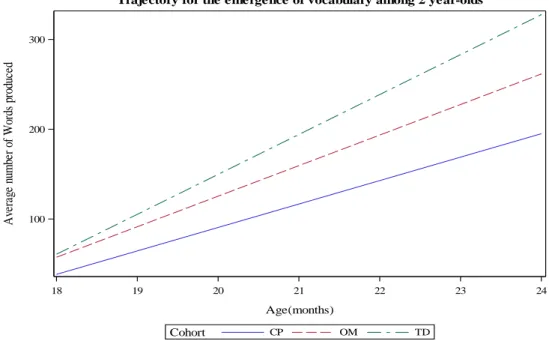
The model-predicted trajectory of vocabulary growth in each group over the six months’ period is shown in Figure 2.1. As suggested by the model, children with CP were behind children with OM and TD children over the course of the development and continued to diverge as they got closer to 24 months of age. Although children with OM and TD children clustered at the starting point, they diverged at later months.
Figure 2.1: The trajectory model of vocabulary growth in CP, OM, and TD groups from 18 to 24 months of age
18 19 20 21 22 23 24
Age(months) 100 200 300 A ve ra ge n um be r of W or ds p ro du ce d TD OM CP Cohort
Table 2.2 presents descriptive statistics for the number of words produced by children in CP, OM, and TD groups at 18 and 24 months of age as well as the change in the number of words from 18 to 24 months of age while taking the covariates of hearing level, tympanogram status, MEL, and gender into account.
Number of words at 18 months
Number of words at 24 months
Change in the number of words
Variable Group Categories N Mean Std Mean Std Mean Std
Hearing Level
CP (15-20]dB 27 39.33 34.11 187.33 126.03 149.19 109.97
(20-25]dB 11 40.91 40.64 240.18 185.25 199.27 168.46
>25dB 2 12.00 11.31 51.00 62.23 39.00 50.91
OM (15-20]dB 21 57.76 46.09 272.90 164.71 215.14 126.01
(20-25]dB 5 56.20 21.12 246.60 81.82 190.40 88.86
>25dB 3 57.00 53.93 207.33 144.55 150.33 97.33
TD (15-20]dB 20 58.50 49.73 331.95 162.95 273.45 139.75
(20-25]dB 2 78.50 48.79 475.00 164.05 396.50 115.26
>25dB 3 64.33 58.52 200.33 134.84 136.00 132.89
Tymp CP Missing 1 39.00 . 359.00 . 320.00 .
Normal 28 37.07 34.77 195.21 151.69 159.29 138.73
Abnormal 11 41.73 39.45 179.73 132.22 138.00 99.84
OM Missing 3 51.33 58.71 163.00 165.43 111.67 106.98
Normal 22 62.32 43.39 286.95 146.23 224.64 112.10
Abnormal 4 35.00 18.49 196.00 140.78 161.00 130.59
TD Missing 5 40.80 23.21 368.40 201.79 327.60 195.40
Normal 13 53.85 35.47 346.77 131.44 292.92 107.38
Abnormal 7 88.00 72.95 262.86 203.13 174.86 146.02
Gender CP Male 19 32.11 31.63 174.37 162.70 142.26 149.29
Female 21 44.10 38.03 213.76 129.15 171.19 109.65
OM Male 20 55.05 45.27 260.45 160.61 205.40 123.88
Female 9 62.67 36.75 264.11 129.21 201.44 105.25
TD Male 13 67.15 57.97 343.46 180.31 276.31 154.88
Female 12 53.92 37.63 310.42 154.70 256.50 139.89
MEL CP Low 21 32.29 34.63 174.67 164.07 143.90 149.87
High 19 45.16 35.54 217.58 122.20 172.42 103.46
OM Low 6 76.33 58.15 278.33 221.52 202.00 169.84
High 23 52.48 37.23 257.22 130.78 204.74 103.58
TD Low 2 77.00 63.64 390.00 332.34 313.00 395.98