LIFE AS A SWIMMER
by
Danielle N. Coville
Department of Chemistry and Biochemistry California Polytechnic State University
LIFE AS A SWIMMER
Danielle N. Coville
Date Submitted
Project Advisor’s Signature
Department Chair’s Signature
TABLE OF CONTENTS
I. Introduction………..1
II. Chemical Properties of the different pool water sterilization system……...2
III. Different ways the human body is exposed and affected by pool water………..6
A. Integumentary System………..………..6
B. Eyes……….……..…….7
C. Respiratory System……….…………...8
D. Digestive System………...……....9
E. Ears……….……..10
IV. Conclusion………..11
I. INTRODUCTION
Swimming pools are filled with different compounds that can potentially harm the human body. They are filled with bacteria, and other pathogenic microorganisms that enter the pool by way of swimmers themselves. Swimmers bring these organisms in through sweat, urine, mucus, saliva, hair, skin, fecal matter, and dirt.7 Due to these harmful contaminants specialized disinfectant systems are required to lower or eliminate the consequences of such compounds.
The most common disinfectant system is with the treatment of chlorine. There are many different forms of chlorine allocating, but they all form hypochlorous acid (HOCl) and hydrochloric acid (HCl), the main components that kill harmful bacteria and organisms.11 Bromine is another form of disinfectant that forms hypobromous acid (HBrO) which not only disinfects but also is an oxidizing agent helping eliminate bacteria and other harmful
compounds.12 Salt-water pool systems also use chlorine, but obtain it through the electrolysis of sodium chloride (NaCl), table salt, into hypochlorous acid and sodium hypochlorite (NaClO). 9 Ozone disinfectant pools use very little chlorine or bromine and require only O2,
which is converted into ozone (O3) that oxidizes all the harmful compounds.10
All these systems require regulation of the pH, alkalinity, calcium hardness, and water stability. The recommended pH range for pool water is 7.4-7.6. A consistent pH is important to swimmer comfort and water balance. 13 Sodium bisulfate (NaHSO4) or muriatic
acid or hydrochloric acid (HCl) is used to lower the pH when it becomes too high and sodium carbonate (soda ash, Na2CO3) is used to increase pH. The alkalinity is a measure of
how much a certain amount of water is buffered or responds to pH adjustment.13 Sodium bicarbonate (NaHCO3) is used to help increase alkalinity when it becomes to low, the water
should contain an alkalinity between 100-120 ppm. A build up of calcium and magnesium ions, known as hardness, is unwanted because it can cause clogged plumbing and the formation of carbonates making the water cloudy.13 A hardness minimum of 80ppm is recommended to refrain from corrosive water at values below the minimum.13 Calcium chloride dihydrate (CaCl2 • 2H2O) is added to increase hardness and if it becomes to high the
dissipation of chlorine from UV light. There should be about 30-100 ppm of cyanuric acid ((CNOH)3) in a pool to lower chlorine loss.8
A swimmers body is exposed to pool water in a variety of different forms and depending on the type of swimmer, leisure or competitive, they are exposed to the water for different lengths of time. The skin, eyes, ears, hair, teeth, respiratory and digestive system are all exposed to pool water in some way while swimming. The pool water is disinfected to lower contamination and associated health problems, but disinfectant by-products (DBPs) are formed. These by-products can potentially be harmful forming derivatives with contaminants such as chloramines and trihalomethanes (THMs) that react with the body.7 Each chemical used in the disinfectant treatment of the different pool water systems has certain properties and affect each region in a specific way.
II. CHEMICAL PROPERTIES OF THE DIFFERENT POOL WATER STERILIZATION SYSTEMS
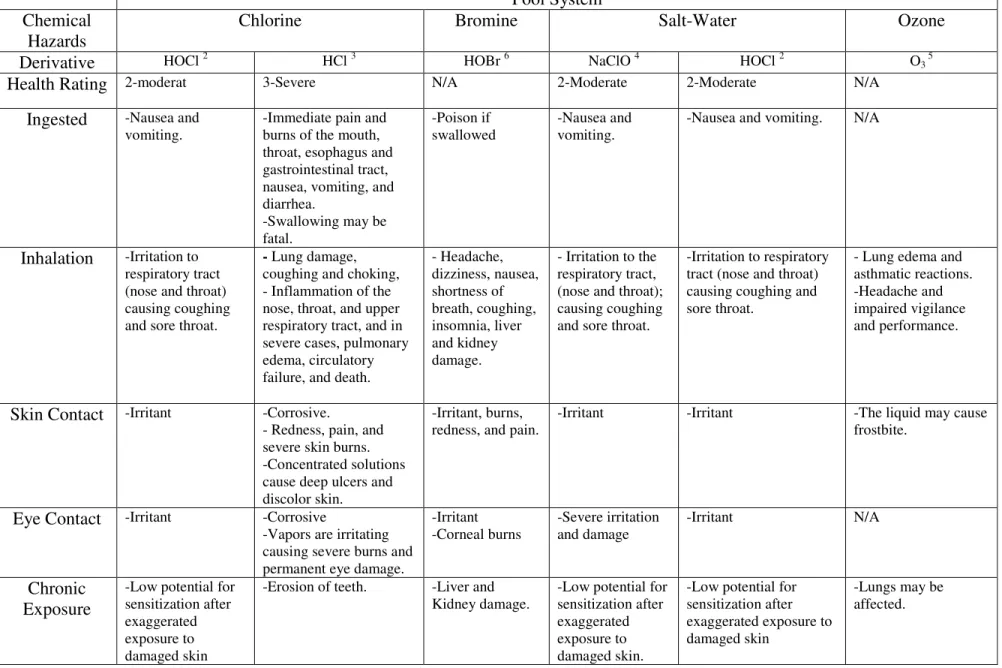
Table 1: Chemical Hazards
Pool System Chemical
Hazards
Chlorine Bromine Salt-Water Ozone
Derivative HOCl 2 HCl 3 HOBr 6 NaClO 4 HOCl 2 O3 5
Health Rating 2-moderat 3-Severe N/A 2-Moderate 2-Moderate N/A
Ingested -Nausea and vomiting.
-Immediate pain and burns of the mouth, throat, esophagus and gastrointestinal tract, nausea, vomiting, and diarrhea.
-Swallowing may be fatal.
-Poison if swallowed
-Nausea and vomiting.
-Nausea and vomiting. N/A
Inhalation -Irritation to respiratory tract (nose and throat) causing coughing and sore throat.
- Lung damage, coughing and choking, - Inflammation of the nose, throat, and upper respiratory tract, and in severe cases, pulmonary edema, circulatory failure, and death.
- Headache, dizziness, nausea, shortness of breath, coughing, insomnia, liver and kidney damage.
- Irritation to the respiratory tract, (nose and throat); causing coughing and sore throat.
-Irritation to respiratory tract (nose and throat) causing coughing and sore throat.
- Lung edema and asthmatic reactions. -Headache and impaired vigilance and performance.
Skin Contact -Irritant -Corrosive.
- Redness, pain, and severe skin burns. -Concentrated solutions cause deep ulcers and discolor skin.
-Irritant, burns, redness, and pain.
-Irritant -Irritant -The liquid may cause frostbite.
Eye Contact -Irritant -Corrosive
-Vapors are irritating causing severe burns and permanent eye damage.
-Irritant -Corneal burns
-Severe irritation and damage
-Irritant N/A
Chronic Exposure
-Low potential for sensitization after exaggerated exposure to damaged skin
-Erosion of teeth. -Liver and Kidney damage.
-Low potential for sensitization after exaggerated exposure to damaged skin.
-Low potential for sensitization after exaggerated exposure to damaged skin
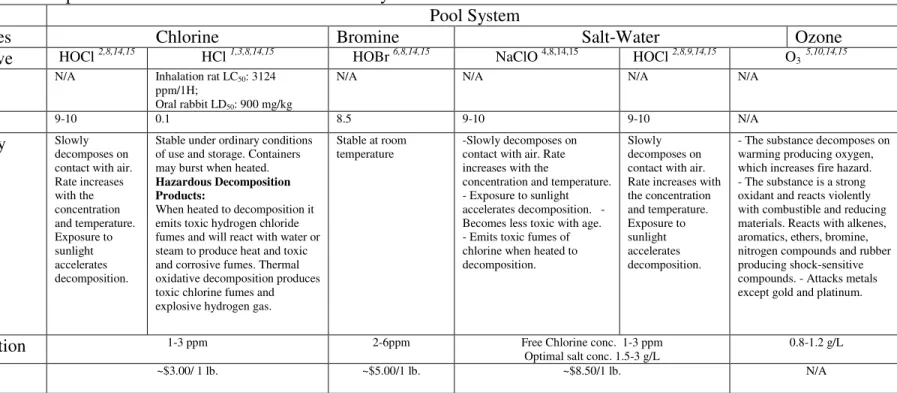
Table 2: Physical Properties of the Main Chemicals in the Pool Systems
Pool System
Properties Chlorine Bromine Salt-Water Ozone
Derivative HOCl 2,8,14,15 HCl 1,3,8,14,15 HOBr 6,8,14,15 NaClO 4,8,14,15 HOCl 2,8,9,14,15 O3 5,10,14,15
LD50 N/A Inhalation rat LC50: 3124
ppm/1H;
Oral rabbit LD50: 900 mg/kg
N/A N/A N/A N/A
pH 9-10 0.1 8.5 9-10 9-10 N/A
Stability Slowly decomposes on contact with air. Rate increases with the concentration and temperature. Exposure to sunlight accelerates decomposition.
Stable under ordinary conditions of use and storage. Containers may burst when heated.
Hazardous Decomposition Products:
When heated to decomposition it emits toxic hydrogen chloride fumes and will react with water or steam to produce heat and toxic and corrosive fumes. Thermal oxidative decomposition produces toxic chlorine fumes and explosive hydrogen gas.
Stable at room temperature
-Slowly decomposes on contact with air. Rate increases with the
concentration and temperature. - Exposure to sunlight accelerates decomposition. - Becomes less toxic with age. - Emits toxic fumes of chlorine when heated to decomposition.
Slowly decomposes on contact with air. Rate increases with the concentration and temperature. Exposure to sunlight accelerates decomposition.
- The substance decomposes on warming producing oxygen, which increases fire hazard. - The substance is a strong oxidant and reacts violently with combustible and reducing materials. Reacts with alkenes, aromatics, ethers, bromine, nitrogen compounds and rubber producing shock-sensitive compounds. - Attacks metals except gold and platinum.
Concentration 1-3 ppm 2-6ppm Free Chlorine conc. 1-3 ppm
Optimal salt conc. 1.5-3 g/L
0.8-1.2 g/L
Table 3. Properties of Pool Water Chemical balancers and Controllers
pH Control Alkalinity
Control
Hardness Control Stabilizer
Properties Na2CO3 1,15,16,14 NaHSO4 1,15,17,14 HCl 1,3,14,15 NaHCO3 1,18,14,15 CaCl2 • 2H2O 14,15,19 (CNOH)3 1,20,14,15
LD50 (Mice) Oral=6600mg/kg (Rat) Oral= 2490 mg/kg Inhalation rat = 3124 ppm/1H; Oral rabbit= 900 mg/kg Oral rat = 4220 mg/kg Oral rat= 1000 mg/kg (Rats) Oral= >5.00g/kg
pH 11.6 1.4 0.1 8.3 8-9 N/A
Stability Hygroscopic: absorbs moisture from air
Stable under normal conditions.
Stable under ordinary conditions of use and storage. Containers may burst when heated.
Hazardous Decomposition Products:
When heated decomposition emits toxic hydrogen chloride fumes and will react with water or steam to produce heat and toxic and corrosive fumes. Thermal oxidative
decomposition produces toxic chlorine fumes and explosive hydrogen gas.
Stable under normal conditions
Stable under normal conditions
Stable under normal temperature and pressure.
III. DIFFERENT WAYS THE HUMAN BODY IS EXPOSED AND AFFECTED BY POOL WATER
Many chemicals are found within pool disinfection systems, but the chemicals that seem to be the most dangerous are hydrochloric acid (HCl) and hypochlorous acid (HOCl). These two chemicals are the main bacterial killing agents in pool systems due to their strong oxidizing capabilities.11 When these chemicals are dissolved in water the chlorine reacts with the organic matter (perspiration, hair, urine, cosmetics, saliva, etc.) forming harmful DBPs such as chloramines and trihalomethanes (THMs). 21 Chloramines are formed by the reaction of ammonia with hypochlorous acid forming organic compounds such as HNCl2, H2NCl, and
NCl3, which are strong irritants. Trihalomethanes are formed from the reaction of halogens
with methane forming CHX3, such as CHCl3 and studies have shown that THMs may have
severe effects on human health.21 Due to the severity and large contribution of chloramines and trihalomethanes in pool water disinfection systems they will be the focus of the
remainder of the paper.
A. INTEGUMENTARY SYSTEM
The skin is the most superficial barrier that protects the body’s internal environment from the harsh chemicals found externally. THMs tend to permeate skin making dermal exposure an important route of study.22 The hydration of the top layer of skin, the stratum corneum, may help in facilitating the movement of foreign or even toxic compounds into the skin and possibly further into the blood contributing to the development of allergic or irritant contact dermatitis from swimming pool exposure.23 Additionally, changes in water pressure gradients across the stratum corneum, may enhance the release of cytokines. Water hardness,
osmolarity and temperature may all play a role in swimming pool water irritancy of the skin as well.23 Prolonged exposure to water also modifies the physiological functions of skin increasing the risk for skin diseases explaining the exposure to hypotonic water on the slow onset of irritant contact dermatitis by chlorinated water.23
A study on the permeation of skin proved that well-hydrated skin was more
permeable than normal dry skin. In this study the permeation coefficients (Kp) of DBPs and
THMs were found to be ten times more permeable than the other compounds, but the permeation coefficient for many DBPs have not been reported yet leaving a limited list.24 When skin is overexposed to water it causes the lipid lamellae in the stratum corneum to become disrupted which enhances its permeability allowing for the transfer of more foreign compounds into the body.24
Chlorine and other disinfectants found in pool water cause many different forms of contact dermatitis. Pool dermatitis, which is an irritation of the skin from contact with chlorine and bromine can cause severe to moderate eruptions which are presented as eczematous plaques in uncovered areas.25 Pool water dermatoses, is an allergic contact dermatitis to chlorine and bromine which causes red rashes.25 Another reaction that is common in collegiate swimmers is bleached swimmer syndrome and blonding. This condition is caused from prolonged exposure to pool water causing dry skin, erythematous macular emption, loss of body hair, lightening of dark hair, and discolored swim suites.25 Over all bromine treated pools tend to cause more irritation than chlorine treated pools.25 Some other common adverse effects of pool water are verrucus, mycosis, eczema, and rashes.26
B. EYES
Eye irritation is another common symptom from over exposure to pool water. Some epidemiological studies have connected ocular irritation with trichloramines.26 Chloramines can remain in the pool water or volatize into the air above the water creating the poignant smell.27 The level of chloramines is dependent on the ventilation of the pool and pool water chemistry.27
Common ocular irritations consist of burning eyes, watery eyes, blurry vision, difficulty opening eyes, photophobia, corneal epithelial dehydration, and edema of corneal epithelium.27, 28 In one study of hotel pools greater than 70% of pool patrons interviewed after exposure to the pool had ocular irritation and over 72 people became ill.27 Ocular symptoms tend to occur within minutes after exposure to pool water and occur more in people with increased exposure time.27
edema, but whether chlorine or chlorine compounds such as chloramines have any toxic effect of corneal epithelium is still unknown.28 No swimmer experienced a large amount of visual acuity, but all within 30 minutes of leaving the pool had complete recovery.28 It is suspected that the corneal changes in swimmers are due to an increased chlorine
concentration, pH, and the hypotonicity of swimming pool water.28 A pH of 7.0 caused more eye irritations than that of a pH of 8.0. Also, salt-water pools of 0.5% sodium chloride were less irritating than fresh water pools because swimmers experienced less corneal edema. Tears are about 0.9% sodium chloride so the less hypotonic pool water caused less water absorption into corneal epithelium due to the smaller concentration gradient.28
C. RESPIRATORY SYSTEM
Respiration is one of the most common routes of exposure to chloramines and
trihalomethanes in chlorine disinfected swimming pools. These chlorine compounds volatize and remain above the pool where they can be inhaled. Indoor swimming pools with poor ventilation compared to outdoor pools have a higher concentration of chlorine compounds in the air. The concentration of these compounds has been measured using HS-SPME/GC/ECD analysis. 21 Early studies have determined that there is a correlation between the measurement THMs in breath of swimmers and that of indoor swimming pool environment by using alveolar air analysis.26 A study by Alfred Bernard has proven that it is not just trichloramines that cause respiratory symptoms in swimmers but total pool exposure including the water and what sits on top of it as well, since the same symptoms occur in swimmers who attend
outdoor and indoor swimming pools.29
Chlorine swimming pools contribute to asthma, hay fever, and allergic rhinitis, wheezing, cough, chest tightness, shortness of breath, dry mouth, and other respiratory allergies.29, 27 The chlorine treated pool water reacts with organs of swimmers in contact with the water and the air above the pool.29 The chloramines and hypochlorous acid found in pools have been associated with increased lung permeability because they are membrane-permeant oxidants that open tight junctions and facilitate the movement of allergens across the lung or
bronchiole epithelium causing inflammation and irritation.29, 22
considered that this is due to long term and repeated exposure to chloramines, THMs, and other chlorine compounds in swimming pools during training and competitions.31 With the worry of the increase of respiratory symptoms due to chlorine exposure in adolescents, Lars Pedersen studies showed that adolescent elite swimmers did not have any significant airway damage after only a few years of training, therefore, adult elite swimmers develop respiratory symptoms, airway inflammation, and airway hyper-responsiveness over the long period of their career.30 Competitive swimmers respiratory problems tend to be chronic from years of exposure compared to those of short pool use.
C. DIGESTIVE SYSTEM
Chloramines and THMs affect teeth, kidneys, and possibly the bladder. Chlorine disinfectants have been found to cause tooth staining and enamel erosion. The mixture of pool water (pH 7.0-9.2) with oral fluids (pH 6.5) and the difference of their pH may lead to the formation of inorganic material, poorly crystallized CaPO4 salts, in the mouth.32, 33 The
disinfectants denature the saliva proteins, which can then be deposited as a film on the surface of the teeth causing dental staining by the reaction with the inorganic substances on the teeth.33 Multiple studies have shown competitive swimmers have an increase in the amount of yellow to dark brown deposits on the teeth and are most noticeable on the facial and lingual surfaces on the anterior teeth.32
Acidic swimming pools have also been found to be damaging to teeth. Erosion of dental enamel can be caused by contact with the acidic water when pH of the water drops below that of saliva.33, 34 It seems that prolonged exposure to acidic pool water increases the chances of enamel erosion.35 In vitro studies have proven that low pH chlorine pool water demineralizes human enamel.35 In one case a competitive swimmer on the German national swim team suffered significant enamel erosion after only 27 days of training averaging 4 hours a day.35
ability in the rats when acutely administered by intraperitoneal.36 There was also an interference with proximal tubular reabsorption within the kidney.36
Bladder cancer has become a concern of many people exposed to chlorine DBPs. Epidemiological studies show that long-term consumption of chlorinated water and exposure to THMs in drinking water in many industrialized countries has been correlated with an increase in bladder cancer.37 Since bladder cancer has been one of the primary adverse health focuses associated with drinking water DBPs further studies have been done not only in drinking water, but also on swimming pools.22
The highest levels of exposure to THMs are through inhalation and dermal absorption rather then ingestion, possibly because they are metabolized or excreted rather then absorbed into the blood.37, 39 All of the regulated THMs have been found to cause DNA damage in vitro, where all four THMs are carcinogenic in rodents, except chloroform.37 Some studies have shown that in a survey of cancer patients, those who had swam in pools had an
increased risk of bladder cancer.38 A study was done on the genotoxic effects of the THMs in swimming pools on swimmers focusing on the biomakers of genotoxicity by monitoring exhaled air, blood, and urine.37 The results showed that brominated THMs were more genotoxic and carcinogenic then chlorinated DBPs.37 Overall, it is hard to interpret the many studies on the relation of bladder cancer to swimming because very little is known about long-term exposures to DBPs and there is a lack of information on the mixtures of DBPs in pools and their carcinogenicity.38
D. EARS
Swimmers ear, otitis externa, is one of the most common ear problems from
swimming in a pool. Most people believe that swimmers ear is from the pool water, but it is actually an inflammatory and bacterial infection of the external ear canal. Heat and humidity cause the stratum corneum of the skin to swell and the addition of water from swimming increases the moisture within the canal destroying the protective barrier of the skin.40 This creates a favorable environment for bacterial growth. Some common organisms found to be involved in ottis externa are Pseudomonas aeruginosa, Proteus vulgaris, Escherichia coli, S. aureus, S. epidermidis, Enterobacter aerogenes, Klebsiella pneumoniae, Citrobacter spp.,
Studies have shown that there tends to be an increase in otitis externa during the summer months and this is most likely due to the overuse of swimming pools leading to an imbalance in the pool chemicals and an increase in microorganisms.41In a study involving 179 swimmers, it was found that chlorine levels of 0.4 mg/l, water of a pH up to 8.6, and exposure to cyanuric acid can increase the risk of otitis externa by raising the normal acid pH.41The ear canals normal pH is 5 which is maintained by the sebaceous oil and cerumen secretions from glands, the acid helps decrease organism growth while the cerumen creates a waxy protective layer. 40 Any change in the natural environment of the ear canal can increase the chance for further organism growth causing irritation and infection.
IV. CONCLUSION
Due to the lack of research on pool chemicals and their adverse effects little is known about the long-term effects of swimming pool water on the human body. The only
disinfectant by-products that have been extensively investigated are trihalomethanes, chloramines and a few others leaving hundreds to still be studied. The cause of asthma and other respiratory problems, bladder cancer, hair loss, ear and eye problems can all be further studied along with what specific compounds within the pool water that may potentially cause such irritations and health problems. Also, more research should be done on the effects of long-term exposure to swimming pool water disinfectants. Little is known about the difference in chronic versus acute exposure to swimming pool disinfectants and the
associated health risks. A possible study could be to investigate the elderly with respiratory problems and if there is any correlation with being a swimmer when they were younger.
allergic responses are hard to fight other then maintaining proper chemical levels. I suggest asking chemical levels before entering into any pool to decrease the risk of having adverse effects.
IV. REFERENCES
1. O'Neil, M.J., (Ed.). (2006). The Merck Index: An Encyclopedia of Chemicals, Drugs,
and Biologicals (14th ed., pp. 270, 450, 826, 1479-1480). NJ: Merck.
2. Hypochlorous Acid; MSDS No. S4106; Mallinckrodt Baker: Phillipsburg, NJ,
February 4, 2009. http://www.jtbaker.com/msds/englishhtml/s4106.htm (accessed 2/5/11).
3. Hydrochloric Acid; MSDS No. H3880; Mallinckrodt Baker: Phillipsburg, NJ,
November 21, 2008. http://www.jtbaker.com/msds/englishhtml/h3880.htm (accessed 2/5/11).
4. Sodium Hypochlorite; MSDS No. S4106; Mallinckrodt Baker: Phillipsburg, NJ,
February 4, 2009. http://www.jtbaker.com/msds/englishhtml/s4106.htm (accessed 2/5/11).
5. Ozone; International Safety Card No. 0068; International Programme on Chemical
Safety & the Commission of the European Communities, 1993. http://hazard.com/msds/mf/cards/file/0068.html (accessed 2/5/11).
6. Hypobromous Acid; Chembase ID 83547; ChemBase December 13, 2010.
http://chembase.com/cbid_83547.htm (accessed 2/6/11).
7. Bonnick, D.M. Swimming Pool Disinfection Techniques & Pitfalls.
www.water.siemens.com/.../Swimming_Pool_Disinfection.pdf(accessed 2/5/11), Part of Siemens Water Technologies. http://www.water.siemens.com (accesed 2/5/11).
8. 105 CMR 435.00: Minimum standards for swimming pools (State Sanitary Code: Chapter V).
http://www.mass.gov/?pageID=eohhs2terminal&L=4&L0=Home&L1=Government
&L2=Local+Government&L3=Community+Sanitation&sid=Eeohhs2&b=terminalco
ntent&f=dph_environmental_g_sanitation_pools&csid=Eeohhs2 (accessed 2/6/11), Part of Department of Public Health, Health and Human Services
http://www.mass.gov/?pageID=eohhs2agencylanding&L=4&L0=Home&L1=Govern
ment&L2=Departments+and+Divisions&L3=Department+of+Public+Health&sid=Ee
9. Chlorinator System. http://www.lenntech.com/chlorinator-system.htm (accessed 2/5/11), Part of Water Treatment Solutions Lenntech
http://www.lenntech.com/index.htm (accessed 2/5/11). 10.Ozone the use of Ozone in swimming pools.
http://www.lenntech.com/ozone_pool.htm (accessed 2/4/11), Part of Water Treatment Solutions Lenntech http://www.lenntech.com/index.htm (accessed 2/5/11).
11.Conditions for water disinfection (swimming pool treatment).
http://www.lenntech.com/processes/disinfection/swimming-pool-/swimming-pool-disinfection.htm (accessed 2/4/11), Part of Water Treatment Solutions Lenntech http://www.lenntech.com/index.htm (accessed 2/4/11).
12.Disinfectants Bromine.
http://www.lenntech.com/processes/disinfection/chemical/disinfectants-bromine.htm
(accessed 2/4/11), Part of Water Treatment Solutions Lenntech http://www.lenntech.com/index.htm (accessed 2/4/11).
13.Asmus, K. D. Recent aspects of thiyl and perthiyl free radical chemistry. In Active oxygens, lipid peroxides, and antioxidants; Yagi, K., Ed.; Japan Scientific Societies: Tokyo; CRC: Boca Raton, Fl., 1993; pp 57-67.
14.Swimming pools a guide to their planning, design, and operation, 4th ed. Gabrielsen, M.A., Ed., Human Kinetics: Champaign, IL, 1987, pp 201-221.
15.Pool Chemicals. http://www.intheswim.com/Pool-Chemicals/ (accessed 2/6/11), part of In the Swim.
16.Sodium Carbonate Anhydrous; MSDS No. 2108; Fisher Scientific: Fair Lawn, NJ,
February 15, 2008. https://fscimage.fishersci.com/msds/21080.htm (accessed 2/6/11).
17.Sodium Bisulfate; MSDS No. S3050; Mallinckrodt Baker: Phillipsburg, NJ,
November 21, 2008. http://www.jtbaker.com/msds/englishhtml/s3050.htm (accessed 2/6/11).
18.Sodium Bicarbonate; MSDS No. S2954; Mallinckrodt Baker: Phillipsburg, NJ,
19.Sodium Chloride Dihydrate; MSDS No. C0352; Mallinckrodt Baker: Phillipsburg, NJ, September 23, 2009. http://www.jtbaker.com/msds/englishhtml/c0352.htm (accessed 2/6/11).
20.Cyanuric Acid; MSDS No. 79053; Fisher Scientific: Fair Lawn, NJ, November 20,
2008. https://fscimage.fishersci.com/msds/79053.htm (accessed 2/6/11).
21.SA, C.S.A, Boaventura, R.A.R., Pereira. I.B. (2011) Analysis of trihalomethanes in water and air from indoor swimming pools using HS-SPME/GC/ECD. Journal of
Environmental Science and Health, Part A [Online] 2011, 46(4): 355-363.
22.Zwiener, C., et. al. Drowning in Disinfection Byproducts? Assessing Swimming Pool Water. Journal of Environmental Science and Technology [Online] 2007, 41(2): 363-372.
23.Pardo, A., et. al. The Effect of Physical and Chemical Properties of Swimming Pool Water and its Close Environment on the Development of Contact Dermatitis in Hydrotherapists. American Journal of Industrial Medicine [Online] 2007, 50:122-126.
24.Xu, Xu, et al. Percutaneous Absorption of Trihalomethanes, Haloacetic Acids, and Haloketones. Toxicology and Applied Pharmacology [Online] 2002,184: 19-26. 25.Tlougan, Brooke E., et al. Aquatic sports dermatoses: Part 1. In the Water: Freshwater
Dermatoses. International Journal of Dermatology [Online] 2010,49: 874-885. 26.Guglielmina, Fantuzzini. Prevalence of Ocular, Respiratory and Cutaneous
Symptoms in Indoor Swimming Pool Workers and Exposure to Disinfection By-Products (DBPs). Int. J. Environ. Res. Public Health [Online] 2010,7: 1379-1391. 27.Bowen, Anna B., et al. Outbreaks of Short-Incubation Ocular and Respiratory Illness
Following Exposure to Indoor Swimming Pools. Environmental Health Perspectives
[Online] 2007,115 (20): 267-271.
28.Haag, Jeffrey R., Giesser, Richard G. Effects of Swimming Pool Water on the Cornea. Journal of the American Medical Association [Online] 1983,249(18): 2507-2508.
29.Bernard, Alfred, et al. Impact of Chlorinated Swimming Pool Attendance on the Respiratory Health of Adolescents. Journal of the American Academy of Pediatrics
30.Pedersen, Lars, et al. Airway responsiveness and inflammation in adolescent elite swimmers. Journal of the American Academy of Allergy, Asthma & Immunology
[Online] 2008, 122(2): 322- 327.
31.Varraso, Raphaelle, et al. Not only training but also exposure to chlorinated compounds generates a response to oxidative stimuli in swimmers. Toxicol Ind
Health [Online] 2002, 18(6): 269-278.
32.Rose, Karen J., Carey, Clifton M. Intense Swimming Can it Affect Your Patients’ Smile?. J Am Dent Assoc [Online] 1995,126: 1402-1406.
33.Escartin, J. L., et al. A study of dental staining among competitive swimmers.
Community Dent Oral Epidemiol [Online] 2000,28: 10-16.
34.Dawes, Colin, Boroditsky, Carey, (2008). Rapid and Severe Tooth Erosion from Swimming in an Improperly Chlorinated Pool: Case Report, JCDA [Online] 2008, 74(4): 359-361.
35.Geurtsen, W. Rapid and general dental erosion by gas-chlorinated swimming pool water. Review of the literature and case report. American Journal of Dentistry
[Online] 2000, 13(6): 291-293.
36.Kroll, R. B., Robinson, G. D., Chung, J.H., (1994). Characterization of
Trihalomethane (THM)- Induced Renal Dysfunction in the Rat. II: Relative Potency of THMs I Promoting Renal Dysfunction. Arch. Environ. Contam. Toxicol. [Online] 1994,27: 5-7.
37.Kogevinas, Manolis, et. al. Genotoxic Effects in Swimmers Exposed to Disinfection By-products in Indoor Swimming Pools. Environmental Health Perspectives
[Online] 2010, 118(11): 1531-1537.
38.Lakind, J. S., Richardson, S. D., Blount, B. C. The Good, the Bad, and the Volatile: Can We Have Both Healthy Pools and Healthy People?. Environ. Sci. Technol.
[Online] 2010, 44: 3205-3210.
39.Caro, J., Gallego, M. Assessment of Exposure of Workers and Swimmers to
Trihalomethanes in an Indoor Swimming Pool. Environ. Sci. Technol. [Online] 2007, 41: 4793-4798.