Injury Rates Among Hispanic Population
by
Shelly Johnson RN, BSN, COHN-S
A Master's Paper submitted to the faculty of the University of North Carolina at Chapel Hill in partial
fulfillment of the requirements for the degree of Master of Public Health in the Public Health
Leadership Program.
2007
Abstract
The purpose of this paper is to review the higher fatality and injury rate in the Hispanic population in the United States (US) whether legal immigrants,
citizens, or illegal immigrants; to review the current government and private industry regulations and safety programs; to propose additional legislation or
programs; and to describe the role of the occupational and environmental health nurse in reducing injuries and fatalities in this population. This paper will review recommendations from unions and national conference participants on action items proposed to reduce workplace injuries for the Hispanic population. A summary of these recommendations include
TABLE OF CONTENTS
Abstract . . . ii
Table of Contents . . . i i i List of Figures . . . i v List of Tables . . . iv
Chapters 1. INTRODUCTION . . . 1
2. LITERATURE REVIEW . . . 4
Definitions . . . 4
Significance of the Problem . . . 4
Rates . . . 4
Cost to Employers and the Economy . . . 6
Demographics . . . 8
High Risk Industries and Occupations . . . 15
3. SAFETY REGULATIONS . . . l9 Occupational Safety and Health Administration ... 20
National Institute of Occupational Safety and Health . . . 24
Other Government Programs . . . 27
Current Programs by Private Industry . . . 32
Barriers to Workplace Safety . . . 35
Barriers for Employers . . . 39
4. ROLE OF OEHN . . . 43
Culturally Competent . . . 43
Reduce Health and Safety Hazards . . . 47
Health Literacy . . . 4 9 Literacy . . . 54
5. DISCUSSIONS AND RECOMMENDATIONS . . . 57
Gaps in the Literature . . . 59
Future Research . . . 60
Policy Implications for Hispanic Worker Safety .. 61
Conclusion . . . 62
LIST OF FIGURES
1.1. Number and Distribution of Fatal Occupational Injuries by Race/Ethnicity Among Hispanic and
Non-Hispanic Workers, 2002 . . . 2 2.1. Number and Rate of Fatal Occupational Injuries
Among Employed Hispanic Workers, 1992-2002 . . . 7 2.2. Median Age and Percentage Under Eighteen By
Ethnic Group, 2006 . . . 13 2.3. Distribution and Number of Fatal Occupational
Injuries Among Hispanic Workers By Industry,
1992-2002 . . . 17 3.1. Number and Fatality Rate For All Workers Versus
LIST OF TABLES
Chapter I INTRODUCTION
"Most Americans between the ages of 22 and 65 spend 40 to 50% of waking hours at work. Every year millions of Americans suffer injuries and thousands experience deaths in our workplaces" (Markowiz, Leigh, Fahs, and Landgren, 2003, para. 1).
Results from the 2000 Census of Fatal
Occupational Injuries program show higher fatal work injury rates for Hispanic workers than for other racial/ethnic groups as illustrated in Figure 1.1. Hispanic worker fatality rates appear to be increasing even as fatal work injury rates for most other US
workers are declining. Non-fatal occupational injury and illness rates are also higher among Hispanic
FIGURE 1.1
NUMBER AND DISTRIBUTION OF FATAL OCCUPATIONAL INJURIES BY RACE/ETHNICITY AMONG HISPANIC AND NON-HISPANIC
WORKERS, 2002
those born in the US (US Bureau of Labor Statistics (BLS), 2005).
This paper will discuss the current issues related to Hispanic worker safety, the role of the occupational and environmental health nurse, and recommendations to decrease the rate of injury and fatalities in the Hispanic population.
Recommendations include increased OSHA enforcement, including safety training in English as Second
CHAPTER II
LITERATURE REVIEW
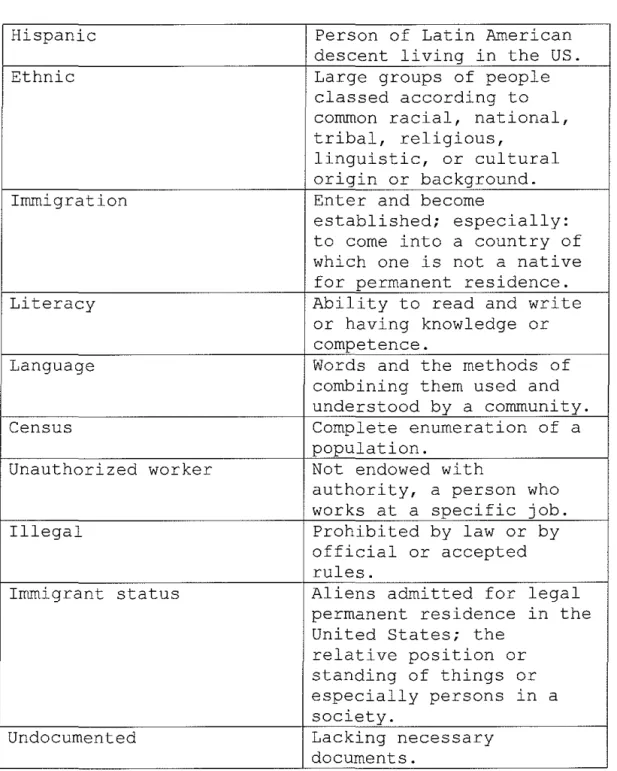
Definitions are presented in order to clarify the meaning and understanding of terms and words used in this paper. Miriam Webster Dictionary definitions are used in Table 2.1 (2007).
Significance of Problem
While overall workplace fatalities have dropped 20% in the last decade, workplace fatalities among Hispanic workers, especially those working in the - construction industry, have risen almost 35% in the
same period. OSHA states the number of injuries and illnesses with days away from work among Hispanic workers, which increased between 1996 and 2001, declined by 11.3% from 2002 to 2003 (Occupational Safety and Health Administration, 2007).
Rates
TABLE 2.1
Definitions
Hispanic Person of Latin American
descent living in the
us.
Ethnic Large groups of people
classed according to cormnon racial, national, tribal, religious,
linguistic, or cultural origin or background.
Irmnigration Enter and become
established; especially: to come into a country of which one is not a native for permanent residence. Literacy Ability to read and write
or having knowledge or competence.
Language Words and the methods of combining them used and understood by a cormnunity.
Census Complete enumeration of a
population.
Unauthorized worker Not endowed with
authority, a person who works at a specific job.
Illegal Prohibited by law or by
official or accepted rules.
Irmnigrant status Aliens admitted for legal permanent residence in the United States; the
relative position or standing of things or especially persons in a society.
Undocumented Lacking necessary
documents.
varied from 5 to 6 per 100,000 employed as outlined in Figure 2.1. The largest proportion of fatal
occupational injuries among Hispanic workers was in the construction industry (27.7% of the total, or 1,994 cases). Transportation incidents accounted for 2,593 or 33.7% of fatal occupational injuries among Hispanic workers (National Institute for Occupational Safety and Health, 2004c).
Cost to Employers and the Economy
In the report, Death on the Job, the Toll of Neglect, the AFL-CIO reports:
According to Liberty Mutual, the nation's largest workers' compensation insurance company, the
direct cost of occupational injury and illness nationwide is $50.3 billion, nearly $1 billion per week. Researchers have found the cost of occupational injuries and illnesses is spread among many payers. Worker's compensation covers roughly 27% of all costs. Injured workers and their families pay for 44% and private health insurance pays for about 10%. Taxpayers, through federally paid programs, pay for roughly 18%
FIGURE 2.1
NUMBER AND RATE OF FATAL OCCUPATIONAL INJURIES AMONG EMPLOYED HISPANIC WORKERS, 1992-2002
Iiiii Number . ...,z..-
Rate-900
800
~ 700 634
62-l 6t9 638 658
~ 600 533
•
500$ 0 ·100
~ 300
c
5:
z 200 100 0
1992 1'JSJ3 199·1 19!.15 1996 1997 199S 1999 200(1 2001 2002
Many injuries are not paid through worker's
compensation because many employees, especially those with questionable immigration status, are afraid to report injuries. In addition, many small employers may not cover worker's compensation insurance.
According to the Small Business Administration report, "Workers' compensation costs have been increasing, often putting small businesses at a disadvantage because they pay a larger fraction of their payroll dollars for workers' compensation than do large businesses (Popkin, Joel, 1995, para. 2) .• The cost burden then falls to the individual, private health insurance or government programs such as Medicaid and Medicare.
Demographics
According to the 2005 US Census Bureau population estimate, there were roughly 42.6 million Hispanics living in the US in 2004. Among Hispanic subgroups, Mexicans ranked as the largest at 66% followed by Central and South Americans (13%), Puerto Ricans
(9.4%), Cubans (3.9%) and the remaining 7.5% are people of other Hispanic origins. The US Census
Mexico had the highest percentage of Hispanics in the US with 43% of the state's population being Hispanic, compared to the national rate of 14%. California and Texas were tied for second, with each having a
Hispanic population of 35% followed by Arizona with 28% and Nevada with 23%. West Virginia and Maine had the lowest percentage rate of the Hispanic population with 0.8% and 1.0%, respectively. The US Census Bureau
(2005) estimated by 2050, Hispanics will compose 30% of the entire US population.
Education Level
As outlined by the US Census Bureau (2005), Hispanic college students now comprise 10% of the
student population, up from 4% two decades earlier. In terms of educational attainment, 12% of the Hispanic population age 25 and older had a bachelor's degree or higher in 2004 compared to 28.3% of non-Hispanic
whites. The number of Hispanics age 18 and older who had at least a bachelor's degree in 2004 was 2.7
million, which is about double the number only a decade earlier ( 1. 3 million) . (US Census Bureau,
longer, and earn more money (Pew Hispanic Center, 2006b).
Income level
In 2005, the median income for Hispanic
households was $35,967, which is 71% of the median household income for non-Hispanic Caucasian households
(US Census Bureau, 2005) . According to a 2004 US
Census Bureau report, We the People: Hispanics in the United States, 24.6% of Hispanics in comparison to 13.4% non-Hispanic Caucasians work within service occupations. Approximately 17% of Hispanics in
comparison to 39.1% of Caucasians work in managerial or professional occupations. Among full-time year-round workers in 2004, 29.4% of Hispanics in
comparison to 57.5% of non-Hispanic Caucasians earned $35,000 or more. According to the same 2004 study, 22.5% of Hispanics in comparison to 8.2% of
non-Hispanic Caucasians were living at the poverty level. Hispanics represented 14% of the total US population but constituted 21.8% of the population living in poverty.
ethnic group within the US. The Office of Minority Health, a department of the US Department of Health and Human Services, Hispanic Profile report stated that private insurance coverage among Hispanic
subgroups varied as follows: 39.3% of Mexicans, 48.6% of Puerto Ricans, 55.9% of Cubans, 45.3% of other Hispanic and Latino groups. In 2003 Medicaid coverage varied among Hispanic subgroups: 21.7% of Mexicans, 31.0% of Puerto Ricans, 13.8% of Cubans, and 19.3% of other Hispanic or Latino groups. Those without any health insurance coverage varied among Hispanic
subgroups: 37.8% of Mexicans, 17.7% of Puerto Ricans, 29.1% of Cubans and 33.4% of other Hispanic or Latino groups (Center for Disease Prevention and Control, 2000) 0
Literacy and Language Level
In the 2005 Census, 11% of the Hispanic
population aged 18-64 reported speaking Spanish at home, of which 67.8% reported being able to speak
English "very well'' or ''well," and 32.2% "not well" or "not at all" (US Census Bureau, 2005).
population, participated in English as a Second Language (ESL) classes for the following reasons:
• 95% participated to improve the way they feel about themselves,
• 93% participated to make i t easier to do things on a day to day basis
• 67% participated to attend college, • 60% participated to get a raise or job
promotion
(O'Donnell and Chapman, 2006).
The National Household Education Survey, 2004-2005, found that 40% of attendees in the ESL program attended the program at a private business, company, or local hospital; 30% attended at a local community or religious organization; and 29% attended at a local post-secondary educational institution (O'Donnell and Chapman, 2006) .
Age of Hispanics in the US Workforce
According to the US Census Bureau (2005), the median age for all non-Hispanic whites is 35.9 years of age while the median age for Hispanics is 26.8 years of age. As shown in Figure 2.2, among
FIGURE 2.2
MEDIAN AGE AND PERCENTAGE UNDER EIGHTEEN BY ETHNIC GROUP, 2006
Population
by
Age and Hispanic
Origin
80.0 70.0 60.0 50.0 40.0 30.0 20.0 10.0
lllil
Hispanic
- - - ,
0.0
Median
lill
Non-Hispanic,
White alone
Under
18
years
Hispanics were under the age 18 in comparison to 21.9% of non-Hispanic Caucasians. This demonstrates a
significant difference in generations, with a greater proportion of the Hispanic population in the younger age categories. Hispanic workers, on average, are 5 years younger than non-Hispanic workers in
construction and the median age is 33 for Hispanic workers compared to 39 for non-Hispanic workers. More than one-third (37%) of the Hispanic workers in
construction are under 30 years old, compared to 23% of non-Hispanic workers.
Immigration Status
The Pew Hispanic Center (2006a) estimates there are 7.2 million illegal unauthorized workers. An unauthorized worker is an individual who resides in the US but is not a US citizen, but an illegal alien, has not been admitted for permanent residence, and is not authorized for temporary work. These unauthorized workers make up nearly 5% of the entire US workforce. The construction industry is the largest employer of unauthorized workers with 1.4 million unauthorized workers compromising 12% of the construction
The ACL-CIO report, Safety and Health Toolbox: Facts about Worker Safety and Health, (2007) states:
Immigrant workers have a disproportionate rate of injuries, illnesses, and fatalities in the workplace largely because they are hired to do the most
undesirable and dangerous jobs at the lowest wages. They often do not know what rights they have or what laws protect them and they receive no training in safety and health. Language and cultural barriers make i t difficult for them to learn their rights and those who lack immigration status are particularly fearful of speaking out. Employers frequently view immigrant workers as disposable and easy to exploit. The increase in fatalities among immigrant workers, particularly Hispanic and Latino workers has been alarming. Since 1992, when these data were first collected in the BLS census of fatal occupational injuries, the number of fatalities to Hispanic workers has increased by 65 percent, from 508 fatalities in 1992 to 840 in 2002.
High Risk Industries and Occupations
highest risk for injury and fatalities for Hispanic workers are construction, manufacturing, and
retail/service occupations. Figure 2.3 shows the distribution of injuries by industry. In Illinois, with a large Hispanic population in the Chicago area, there have been 576 fatalities investigated by OSHA 1997-2004, an average of 72 fatalities per year.
Of those 576 fatalities, 224 (39%) occurred in the construction industry, 110 (19%) occurred in manufacturing, and 242 (42%) occurred in the North American Industry Classification System (NAICS) codes that do not fall into either construction or
manufacturing and is classified as other. Of these other fatalities, 55 were determined due to natural causes.
The NAICS with the most fatalities were roofing, siding, and sheet metal work, and special trade
contractors. According to the report by the AFL-CIO, 34.2% of fatally injured workers in the construction industry were Mexican born workers.
The AFL-CIO (2006) report lists the top
FIGURE 2.3
DISTRIBUTION AND NUMBER OF FATAL OCCUPATIONAL INJURIES AMONG HISPANIC WORKERS BY INDUSTRY, 1992-2002
Agric1lture~ luresl.ry. 16.7''·~
ow.;:! fish•ng
Mirmg 3.1)"-;,
Ccmstructior; .. ,. 27.7"-~
Mano...factur<ng 10 .. 3"-:, TranSJ.!•:lr!aticn and
oublic uLiities 12.i.Y:~ Wh-olesa:~ tmde 4.0%
Retail trade . 11 .9"~ Fil"anc;e, insurance,
OJI"'<:l real asta:e
Serc1ices
,,
12.3~.,0 10 15 20 25 30 Oistribulion (''-~1
construction trades at 13.7%. Falls, which are common in the construction industry, continue to be the
leading cause of workplace fatalities. While fall accidents occur on a variety of work surfaces, ladders, roofs, and scaffolds are the most common sites.
In the National Institute for Occupational Safety and Health's Worker Health Chartbook, 2004e, the two industries with the highest fatality rates,
Chapter III SAFETY REGULATIONS
Numerous safety regulations have been passed by the US government to assist employers in reducing hazards and providing a safe workplace, and to assist employees in remaining injury and illness free while at work. An employer must provide safety information to its employees using both a language and vocabulary that the employees can understand. For example, if an employee does not speak or comprehend English,
instruction is to be provided in a language the employee can understand. Employers may also provide instruction in learning the English language to non-English speaking employees. Over time, this may lessen the need to provide safety training in other languages
(OSHA Training Standards Policy Statement, 2007). The Occupational Safety and Health Act of 1970 established the Occupational Safety and Health
Administration (OSHA) and the National Institute for Occupational Safety and Health (NIOSH). Although NIOSH and OSHA were created by the same Act of Congress, they are two distinct agencies with separate
Occupational Safety and Health Administration
OSHA's mission is to assure the safety and health of America's workers by setting and enforcing
standards; providing training, outreach, and
education; establishing partnerships; and encouraging continual improvement in workplace safety and health. OSHA has been effective in meeting its mission, i t has helped reduce workplace fatalities by more than 60% and occupational injury and illness rates by 40% between 1971 and 2005 (OSHA, n.d.).
In 2001 OSHA noted that fatalities among Hispanic workers were rising despite the fact that overall
workplace fatalities were dropping; preventing on the job deaths for Hispanics became a priority. Figure 3.1 displays the number and rate of total fatalities as compared to Hispanic fatalities. The Agency's focus led to a decline of fatalities among Hispanic workers by 12.5% since 2001 (OSHA, 2006).
FIGURE 3.1
NUMBER AND FATALITY RATE FOR ALL WORKERS VERSUS HISPANIC WORKERS
2000
1001
1001
1003
1004
1000
1001
1001
1003
2004
m
Total tlumber of Fatalities
o Total Fatality Rate 1 Hispanic Fatality Rate
For example, OSHA developed the Hispanic
Employers and Workers Compliance Assistance Web Page targeted to English speaking and bilingual Hispanic employers and workers. The OSHA en Espanol web site, a Spanish version of essential information on the general OSHA website has also been developed.
To assist further, OSHA has English to Spanish and Spanish to English dictionaries of general OSHA, general industry, and construction industry terms. The workplace safety poster, required by law, has been translated into Spanish. This poster explains
employee's rights and responsibilities under the OSH Act. This poster is required to be posted on official bulletin boards in all work areas. Many OSHA
publications have been translated into Spanish including brochures, quick cards, safety tips, and fact sheets on a variety of topics including personal protective equipment, fall protection, workplace
violence, blood borne pathogens, heat/cold stress, trenching and excavation, hazard communication, tree trimming, landscaping, electrical safety, silica
exposure, and employee rights. OSHA also established a national hotline for Spanish speaking assistance
The OSHA Training Institute offers a number of training and education programs to assist Hispanic employers and workers to improve their knowledge of safe and healthful work practices. Examples of these programs are seminars on safety issues in
construction, excavation, fall arrest systems, and demolition. Education centers are located throughout the US and offer classes in work safety topics;
training grants, which are offered to nonprofit organizations to train employers and employees in Spanish to recognize, avoid, and prevent safety and health hazards in their workplaces; and a resource center loan program, which offers over 35 video titles in Spanish on a variety of safety topics such as fall prevention (OSHA, 2007).
The OSHA Area Offices periodically provide training to Hispanic workers including the OSHA 10-hour construction course in Spanish. OSHA has a free on-site consultation program which helps small
businesses meet their obligations under the Occupational Safety and Health Act of 1970. The
Health Achievement Recognition Program which
recognizes small employers who operate an exemplary safety and health management system.
To assist in removing the language barrier in the workplace, OSHA appointed Hispanic/English-as-Second Language (ESL) coordinators in each of the ten OSHA regions to assist a variety of groups including
employers, small businesses, trade associations, union locals, community and faith-based groups and Hispanic workers with outreach, education, and training (OSHA, 2007) .
National Institute for Occupational Safety and Health (NIOSH)
The National Institute for Occupational Safety and Health (NIOSH) is the federal occupational safety and Health research agency and provides funding for education for occupational safety and health
professionals. NIOSH and OSHA work together toward the common goal of protecting worker safety and health.
Information pertaining to the responsibilities of NIOSH is found in Section 22 of the Occupational
• Develop recommendations for occupational safety and health standards;
• Conduct research on worker safety and health; • Conduct training and employee education;
• Develop information on safe levels of exposure to toxic materials and harmful physical agents and substances;
• Conduct research on new safety and health problems;
• Conduct on-site investigations to determine the toxicity of materials used in workplaces and; • Fund research by other agencies or private
organizations through grants, contracts, and other arrangements (NIOSH, 2007}.
Although NIOSH cannot regulate safety standards, their research and recommendations are the framework for future OSHA standards, best practices for
businesses, and can be cited by OSHA enforcement under the general duty clause.
trauma through a focused program of research and prevention. Because of the wide range of causes and events associated with traumatic occupational injuries and deaths, and the fact that they occur in all
industry sectors, NIOSH relies heavily on injury and fatality surveillance to identify and track traumatic injury problems in specific worker populations, and to establish research priorities. Numerous publications on research findings and recommendations to reduce worker risk across all occupations and age groups have been developed and distributed through this program.
NIOSH participated in 2000, along with other Federal agencies and the National Safety Council, in organizing and participating in the "Hispanic Forum on a Safe and Healthy Environment" which discussed a
range of safety and health topics including issues relevant to construction safety.
The NIOSH website also describes work with universities and key partners such as the Center to Protect Workers' Rights to coordinate research, evaluate the effectiveness of interventions, and disseminate those that emerge as best practices.
work-related illness and injury. For example, silicosis was identified as a fatal disease that occurs in rock drillers and other construction
workers. NIOSH developed a silicosis survey in Spanish and evaluated the effectiveness of targeting a
silicosis prevention message to Hispanic construction workers. NIOSH developed a Spanish translation of silicosis education materials. Other construction-related education materials available in Spanish cover topics such as sandblasting, operation of wood
chippers, electrocutions, and falls during tree trimmings, working in hot environments, and work-related hearing loss.
The Electronic Library for Construction
Occupational Safety and Health (eLCOSH), funded by NIOSH, provides English and Spanish education
materials. The materials are available on the internet for distribution by trainers and health educators
(NIOSH, 2007).
Other Government Programs
These programs seek to reduce or minimize occupational injuries and illnesses as part of a comprehensive
health objective for the nation.
Department of Health and Human Services
Healthy People 2010 is a set of health objectives for the nation to achieve over the first decade of the new century. These objectives can be used by many
different people, states, communities, professional organizations, and others to develop programs to improve health. Healthy People 2010, Chapter 20, as outlined in Table 4.1, is focused on occupational safety and health with the goal to promote the health and safety of people at work through prevention and early intervention.
Managers of public and private sector occupational safety and health programs face increasing demands to document program
cost-effectiveness and impact on worker health. The lack of evidence about intervention effectiveness stymies the introduction of new programs and threatens the
TABLE 4.1
Healthy People 2010, Chapter 20 Objectives
20-1. Reduce deaths from work-related injuries. 20-2. Reduce work-related injuries resulting in
medical treatment, lost time from work, or restricted work activity.
20-3. Reduce the rate of injury and illness cases involving days away from work due to
overexertion or repetitive motion. 20-4. Reduce pneumoconiosis deaths.
20-5. Reduce deaths from work-related homicides. 20-6. Reduce work-related assaults.
20-7. Reduce the proportion of adults who have elevated blood lead concentrations.
20-8. Reduce occupational skin diseases or disorders among full-time workers.
20-9. Increase the proportion of worksites employing 50 or more persons that provide programs to prevent or reduce employee stress.
20-10. Reduce occupational needlestick injuries among hospital-based health care workers.
20-11. Reduce new cases of work-related, noise-induced hearing loss.
and educational campaigns are among the types of interventions that need to be developed, implemented, and evaluated. In addition to promoting worker safety and health, intervention programs can lead to
increased productivity and save on long-term operating costs (Department of Health and Human Services,
2000a) .
State Programs for Hispanics
Although more state programs exist than could be covered within this paper, a sampling of state
programs related to Hispanic workplace safety will be discussed.
California's WISH (Working Immigrant Safety and Health Coalition) seeks to improve the health and safety conditions for immigrant workers, most of whom are Hispanic. This report recommends hiring more bilingual inspectors, training and recruiting
bilingual health and safety professionals, developing culturally appropriate materials, and requiring that health and safety information provided by employers be available in non-English languages to increase safety in the workplace for all immigrant workers in
The Government Accountability Office found that although data are limited, day labor workers may be prone to workplace abuses and they are usually young Hispanic men with limited educational skills and
significant language barriers, with some portion being undocumented. These characteristics make workers
vulnerable to workplace dangers and abuses (Government Accountability Office, 2002). To provide improved workplace safety, Illinois signed legislation on August 9, 2005, amending the Illinois Day and
Temporary Services Act. This legislation provides the state Department of Labor with tougher enforcement tools to stem abusive practices and unsafe working conditions for day laborers.
In North Carolina, the North Carolina
Current Programs by Private Industry
According to the AFL-CIO report (2005), some
employers and unions in the meat packing industry have begun to integrate new immigrant workers more
effectively and to reduce the very high turnover rates that have plagued the industry. High turnover rates negatively impact worker safety. One union contract, for example, contains a clause that provides for a multicultural fund, the union uses these funds to provide services and educational programs for
immigrant workers such as ESL and safety training. The Union group AFL-CIO published a report titled, "Immigrant Workers at Risk: The Urgent Need for Improved Workplace Safety and Health Policies and Programsn (2005), which states that all workers,
regardless of race, sex, age, religion or immigration status, have enforceable rights to safe and decent work. All recommendations of this report are targeted towards increased government action including
expanding OSHA enforcement and NIOSH research topics. Researchers at the Georgia Tech Research
Institute have created materials to make federally mandated training more effective for Hispanic
focuses on five areas where the greatest number of injuries and deaths occur among construction workers: fall protection, scaffolding, trenching and
excavation, electrical hazard, and material handling. Programs by Organizations
~A safety program is as critical to achieving world-class business status as quality, cost, and time. Workplace injuries have a definite impact on product quality and cycle time, and can add millions of dollars to the annual costs of workers'
compensation programs (Ansari and Modarress, 1997, para. l} ."An increase in worker's compensation costs can increase the cost of goods and services.
A unique, 40-hour safety training course is being used in the $2.6 billion Dallas/Forth Worth Airport
(DFWA} expansion project. The airport's safety
training program appears to be breaking down barriers of language, literacy, and culture - and having a big impact on safety. DFWA's Capital Development Program, as the project is called, may have one of the best construction training programs in the country. The program, which began in September 2002, has an
construction site, DFWA is saving additional money on its project-controlled insurance program. The average cost of a workers' compensation claim is more than 15 percent lower than the Texas average.
This program cites the following as keys to their success: speaking the workers language, printed
materials workers can take to the job, address cultural differences, not skimping on training,
verifying learning, using demonstration, and follow up (Nash, 2004). The Chicago Interfaith Worker Rights Center (2006) is a safe space for workers to learn about and organize ways to improve safety conditions in their workplaces. The workers' center is a program of the Chicago Interfaith Committee on Worker Issues and operates as a partnership between workers,
religious institutions, unions, government agencies charged with protecting worker rights, and attorneys.
For many workers, i t is extremely difficult to figure out how to file safety complaints with
appropriate government agencies. Volunteers at the Center can help workers file complaints, as well as the network of 120 trained Worker Rights Advocates who are scattered in congregations and community
knowledge and ability to file complaints against
unsafe worker places is vital to a fair, healthy, and safe workplace.
The organization will work with workers and their clergy to directly affect change in their working
conditions including setting up delegations and
meetings, as well as prayer vigils and other actions with the aim of changing the working conditions in workplaces where employers are abusing their power in the workplace.
Employee Responsibilities
Employees are responsible to learn, understand and comply with the workplace policies regarding
safety and the reporting of injuries and hazards. For a workplace safety program to be success, employee participation is vital. Employees are each
responsible for maintaining a safe workstation, reporting workplace hazards, and unsafe conditions
(Rogers, 2003) .
Barriers to Workplace Safety
Hispanic employees face barriers not understood by non-Hispanic, white, or other majority ethnic groups. Some of these barriers include language
by new immigrant workers for those in the US
illegally: fear of being reported to immigration, fear of losing their job and being deported, and
transportation. These barriers affect workplace safety by decreasing reporting of accidents and injuries, inadequate training, and a lack of awareness of the employees' rights (OSHA, 2006)
Language Differences
The AFL-CIO (2002) study conducted by the Pew Hispanic Center concluded that nearly half of all foreign-born workers are "limited English proficient" or LEP. Nearly three-quarters of LEP workers speak Spanish. Time in the US and work experience reduce the number of LEP workers, but 29% of workers who have been in the country for 20 years or more can still be classified as LEP. Language fluency varies among Hispanic subgroups who reside within the mainland US. The number of Hispanics who speak Spanish at home include 14.5 million Mexicans, 2.3 million Puerto Ricans, 1 million Cubans and 6.7 million other
training received. It is the responsibility of the worker to comply with the safety standards and rules in the workplace, use protective equipment as
supplied, and report any workplace hazards (OSHA, 2003).
Education Attainment
Only 16% of Latino high school graduates earn a four-year college degree by age 29, compared with 37% of non-Hispanic whites and 21% of African-Americans, according to a recent study of census data by the Pew Hispanic Center (2002). Less educational attainment often means lower wages at more labor intensive
occupations such as hotel housekeepers, construction workers, day laborers, and agricultural workers. These occupations have higher injury rates than
professional, white collar professions. College degrees provide more opportunities for professional jobs in fields such as nursing, teaching, and
accounting. Experts say that Hispanic students battle many of the problems that other minority students do -the lack of role models and practical college advice at home, as well as inadequate preparation from
schools. They also face additional barriers of
the extended family. Hispanic teenagers often stay home while attending college, making i t all the more likely that they get caught up in their families' financial needs (Navarro, 2003).
Literacy Barriers
Numerous educational and training materials have been translated into the Spanish language; however, if Hispanic workers have poor literacy levels the
content of the materials will not be effective. Videos in their primary language or in English for those who speak English, but are illiterate may be a more
effective tool if literacy barriers exist. Fears of Illegal Immigrants
AFL-CIO (2005), states the fear of the
consequences of reporting injuries-such as being fired in retaliation or being reported to the Bureau of
Immigration and Customs (ICE) is just one reason
Hispanic workers may not report injuries or workplace hazards. Hispanic workers are also unaware that as a non-citizen they are eligible to receive benefits and don't know the process for reporting injuries.
According to the AFL-CIO report, low-wage and immigrant workers are most likely to be fired or
risk future job assignments by reporting health problems or may lose their potential for permanent employment with a company if they report an injury. As stated in the union report, under current US law and OSHA regulations, there is no penalty for
employers who hire undocumented workers and fire them if they complain about safety conditions.
Barriers for Employers
Employers who utilize Hispanic employees can face barriers of their own. As an example of the barriers employers can face, the Government Accountability Office (2005) found that document and identity fraud have made it difficult for employers who want to comply with the law. The employment verification process is primarily based on employers' review of their new employees' work eligibility documents, but various weaknesses, such as the process' vulnerability to fraud, have undermined this process.
Language Barriers
bilingual employee is not properly trained on health and safety issues, the training may be substandard. Additionally, if there are no bi-lingual employees, i t can be difficult to ascertain the appropriateness and quality of some safety training materials that only come in Spanish or to extrapolate general training to the specifics of the workplace. One-fourth of all fatalities investigated by OSHA were is some way related to language or cultural barriers.
(Blagojevich, 2005)
In the opening of testimony before the Senate Subcommittee on Employment, Labor and Pensions,
Committee on Health, Education, Labor, and Pensions on the CDC Efforts to Address the Health and Safety Needs of Immigrant Workers by Rosemary Sokas, M.D., M.O.H. Associate Director for Science, National Institute for Occupational Safety and Health, Centers for Disease Control and Prevention discussed the role of immigrant workers on our nation's success. She believes that limited English proficiency may contribute directly to workplace fatalities. Dr. Sokas cited language
and injured another six. In response to these findings, the State of Nevada revised the Nevada Occupational Safety and Health Act to include the requirement that a written safety program and all training programs required must be conducted and made available in a language and format that is
understandable to each employee (2002). Economic Barriers
Translation phone services and quality
interpreters cost money; some small employers may not desire or have the ability to absorb the costs
associated with providing safety training to Hispanic employees in their native language. Videos, signs, and other training aids in Spanish must be purchased in addition to the English materials.
Labor Force Barriers
Large numbers of immigrants, many of whom are Hispanic, are employed in the "informal" economy. This economy and those who work in i t often are not recognized, regulated, or protected by law. This economy is characterized by high turnover, poor
training, and a lack of employer accountability. Day laborers, sweatshop garment workers, and domestic
CHAPTER IV
ROLE OF THE OCCUPATIONAL AND ENVIRONMENTAL HEALTH
(OEHN) NURSE
In any program targeted toward the Hispanic population in the workplace, i t is vitally important to provide the program in a language they can
understand, written materials they can read; all within their cultural norms. The OEHN role also
includes assisting the Hispanic, non-English speaking workers towards understanding the language,
expectations, culture, and customs of the US. Some interventions to assist the Hispanic worker towards this goal include coordinating on-site ESL classes and working with various community and social
organizations to assist workers with understanding their rights and responsibilities in the US. The OEHN can apply the principles of cultural competence when interacting with Hispanic employees and their family members. Adapting to different cultural beliefs and practices requires flexibility and a respect for others' view points.
Culturally Competent
Education and training about cultural differences and sensitivities can be obtained through numerous sources including AAOHN continuing education modules,
government programs, and local colleges. Cultural and linguistic competence is defined by the US Department of Health and Human services (2007) as a set of
congruent behaviors, attitudes, and policies that come together in a system, agency, or among professionals that enables effective work in cross-cultural
situations. According to the CDC, Office of Minority Health (2007), culture refers to integrated patterns of human behavior that include the language, thoughts, communications, actions, customs, beliefs, values, and institutions of racial, ethnic, religious, or social groups. Competence implies having the capacity to function effectively as an individual and an
organization within the context of the cultural
beliefs, behaviors, and needs presented by consumers and their communities. Culture and language may
influence:
• health, healing, and wellness belief systems; • how illness, disease, and their causes are
•
•
the behaviors of patients/consumers who are seeking health care and their attitudes toward health care providers; and
the delivery of services by the provider who looks at the world through his or her own limited set of values, which can compromise access for patients from other cultures (CDC, Office of Minority Health, 2007).
According to the Kaiser report authored by Jane Perkins (2003), the increasing population growth of racial and ethnic communities and linguistic groups, each with its own cultural traits and health profiles, presents a challenge to the health care delivery
service industry in this country. The provider and patient each bring their individual learned patterns of language and culture to the health care experience which must be transcended to achieve equal access and quality health care. Cultural competence means to listen to the patient in order to find out and learn about the patient's beliefs regarding health and illness. In order to provide culturally appropriate care we need to know and understand culturally
Cultural norms for the Hispanic population include a present time orientation, deference by females to the males in the family, communication focuses on personal relationships rather than information gathering, and pregnancy is seen as a natural and normal process (Perkins, 2003).
The OEHN provides culturally appropriate information to the employee on their rights and
responsibilities under the state worker's compensation laws. Some states, including Illinois and California, have the worker's compensation handbook available in Spanish.
AAOHN has a course designed to help occupational health professionals develop the skills required to deliver culturally appropriate care to multicultural workers and worker populations. Module One provides an overview of cultural competence in health care and provides tools to increase self-awareness of cultural issues for the participant. This module concludes with a list of references and resources that can be
moving organizations to be more culturally sensitive (AAOHN, n.d.).
Reduce Health and Safety Hazards
An important component of any safety program is the interdisciplinary team working together to reduce and monitor hazards in the workplace. The team may include the OEHN, safety officer, industrial
hygienist, management, employee representative, and ergonomist. This team can monitor and analyze near misses and accidents, which can assist in determining areas where training may not have been understood by the Hispanic employee. For this analysis to be
accurate and complete, Hispanic employees must be
encouraged to report accidents and near misses without fear of consequences from the employer.
Once the interdisciplinary team has identified workplace hazards, programs can be developed by the team members and implemented to minimize these hazards in the workplace. Interdisciplinary collaboration is the key to the development and implementation of a successful workplace hazard control program.
rotation, are examples of effective workplace control strategies (Rogers, 2003) .
The OEHN assesses the Hispanic employee's
understanding of workplace health and safety through interpreters, written or oral surveys, and observation of employees complying with safety rules in the
workplace.
OSHA commissioned a report to explore the issue of hazard communication in general and MSDSs in
particular. This report advised that, on average, literate workers understood only 60% of the
information on a Material Safety Data Sheet (MSDS) associated with a hazardous chemical. A lack of understanding regarding the hazards and protections required, provided or recommended at the workplace will likely cause preventable injuries and illnesses. The OEHN or the safety team can assist in providing MSDS' in Spanish; teach Hispanic workers how to
Health Literacy
Health literacy is defined by Brigette Settles Scott in Low Literacy: A Health Care Quality Issue
(2003) as "the degree to which people can obtain, process, and understand basic health information and services to make appropriate health care decisions." A key role for the OEHN is assessing the health literacy of the workplace with special emphasis on the Hispanic worker and developing or coordinating
programs to assist the Hispanic worker in improving their health literacy. A systematic approach must include an assessment of the overall literacy of the workplace Hispanic population, their progress towards mastery of the English language and any cultural
barriers which may exist.
An example of a community program which the OEHN can refer or recommend to Hispanic employees is the Health Literacy El Paso (HELP), which was created to develop and implement a health literacy program to serve academically and economically disadvantaged Texas residents and assist them to better understand health issues, access health care services, and
ages of 30-35. The program used tactics such as using medical forms to assist in learning to read and write English and using health information of interest to the participant in learning to read. The results: of the 500 participants; 400 were screened for Diabetes, all females received information on breast cancer and learned to perform a self breast exam, and all males received information on testicular cancer. One
hundred and sixty program participants now have health insurance (Settles Scott, 2003).
Other resources include numerous websites
including the CDC, the Department of Health and Human Services, and Office of Minority Health, which each provide data on the health conditions specific to the Hispanic population as well as materials and resources to address these health issues.
Health Care Services
The Hispanic population is unique in its genetic predisposition to certain health conditions including diabetes and obesity. The Centers for Disease Control and Prevention (2007) has cited some of the leading causes of illness and death among Hispanics, which include heart disease, cancer, unintentional injuries
conditions and risk factors that significantly affect Hispanics are: asthma, chronic obstructive pulmonary disease, HIV/AIDS, obesity, suicide, and liver
disease. Factors that contribute to poor health outcomes among Hispanics include: language and
cultural barriers, lack of access to preventive care, and lack of health insurance (CDC, 2007).
Knowledge of the employee's health insurance and the appropriate alternatives within the community for those who lack insurance can assist the OEHN in making the appropriate referrals to entities such as low cost or sliding scale clinics.
To provide linguistically appropriate services, the OEHN may also utilize any language interpreters available at the worksite or at the physician offices during appointments. Additionally, interpreter phone services are available for a person minute fee. The OEHN should avoid using friends and family members for interpreter services as these individuals may follow cultural norms. For example, they may not always
The OEHN must insist all health and claim related information is provided to the employee in their
native language whenever possible. Case management services would assure the Hispanic employee receives the appropriate medical care and assist the employee in understanding the follow up and self home care required for healing and early return to work (Rogers, 2003).
Primary, Secondary and Tertiary Prevention Programs
Providing health promotion and education can be an important component to a workplace safety program. A healthy and well employee may be less likely to have health factors which contribute to workplace accidents and may heal faster from workplace injury and illness.
Primary prevention activities are defined as "those aimed at eliminating or reducing disease through specific and protective actions; effective primary prevention measures include providing worksite immunizations to control infectious disease onset; counseling and education about at-risk behaviors such as physical inactivity and unhealthy food choicesn
(Rogers, 2003, p. 58). Secondary prevention is
screenings, exams, and medical surveillance.
Activities include screening exams and medical and health surveillance to identify injuries from hazards and measures to eliminate the problem (Rogers, 2003) . Tertiary prevention is when a health problem or
disability is fixed, stabilized, or irreversible. Activities are directed at minimizing residual
disability and rehabilitating or restoring individuals to an optimal level of health and functioning (Rogers, 2003) . Examples include cardiac rehab programs, case management, and chronic illness monitoring.
For the Hispanic population, these programs target health issues specific to this population. Primary prevention program examples include cooking classes for typical Hispanic meals taught by a
Hispanic or bilingual nutritionist, exercise programs at work, and promoting 10,000 daily steps programs. Secondary prevention program examples include
screenings for glucose, blood pressure, and body fat. Tertiary prevention program examples include case management services.
Preventive medicine is not a norm for most Hispanics. This behavior may be related to the
future-planning orientation. Women participate in more screening activities than men. Women's breast and
pelvic cancer screening procedures may be seen as intrusive and embarrassing and may be delayed or not done. Many Hispanic men are resistant to the concept of health screening. Wives may be very influential in men's screening decisions. The elderly may be
influenced by their adult children's opinions (Rhode Island Department of Health, 2007).
Literacy
The OEHN works with the employer to provide ESL programs, whether on-site or at local community
agencies, to help Hispanic workers become literate in the English language. To be the most effective, these programs would be offered at the work site during working hours. Insisting on the use of English only in the workplace would reinforce the ESL classroom learning. Moving the Hispanic workplace population towards literacy has benefits for both the employer and employees.
According to the Conference Board of Canada (2007), workplace literacy provides employers with higher profits by increasing the skill of the
learn more and faster when they take job-specific and technical training. This saves time and money, and improves performance and productivity. Other benefits include reduced error rates, a better health and
safety record, reduced waste in production of goods and services, and increased customer and employee retention.
The Conference Board of Canada (2007) also found that employers who support literacy and basic skills development have a more conscientious, resourceful, loyal, and dependable workforce. When employees learn that high-quality work is crucial to the success of the organization and to their own job security, they often become more conscientious. Once they become fully aware of what is expected of them and how their efforts fit into the big picture, and then gain the skills to meet those demands, the quality of their work generally rises.
Benefit to employees
Benefits to employees of improving their
numeric, communication and problem-solving skills, the greater chance of being promoted or transferred into new positions, and increased pay or responsibility
CHAPTER V
DISCUSSION AND RECOMMENDATIONS As a country founded on immigration and considered the ftmelting potu of the world, i t is
important and appropriate to address the needs of all races, cultures, and languages in the workplace. Due to the increase in illegal immigration enforcement and homeland security issues, the topic of immigration, both legal and illegal, has become a hot political topic on both sides. Various immigration related legislation is being considered in Congress and
several non-governmental groups, such as the AFL-CIO are attempting to address the issue through
recommendations for action.
The National Conference on Immigrant Workers' Safety and Health, held at the University of
Massachusetts in 2004, brought together leading
activists and researchers from around the country for discussions on how to provide better protection for immigrant workers. The conference planning committee subsequently produced a report which included
workplace hazards in the workers' language, that OSHA should strive to develop effectively functioning
partnerships with community organizations representing immigrant workers, that Congress should allocate
sufficient funds to OSHA to enable effective enforcement, and that workers' compensation laws should be standardized across the country (National conference report, 2004, pp. 1-2).
Participants at the National Conference on Immigration and Worker Safety and Health also
developed a list of the top strategies they have found most successful in conducting projects with immigrant workers. These included outreach and training
programs to reach out to immigrant employers with information about health and safety laws and
regulations and integrating OSH training into English as a Second Language classes, computer classes, and other skill-based training (National conference report, 2004, pp. 1-2).
employee's native language can be cumbersome for employers with a melting pot of employees with numerous different languages. At the same time, learning a new language in a new culture takes time. While the OEHN and employers can help assist non-English speaking employees towards becoming non-English speaking and literate, steps must be taken in the interim to provide safety training non-English
speaking employees can understand using interpreters, language phone lines, bilingual employees or materials in the employee's native language. Employers may want to consider safety training needs in their hiring
process.
Gaps in the Literature
Most information on this ethnic group involves lack of access to health and preventative care, health disparities, and lack of sufficient health insurance as outlined in references such as the Kaiser Report. Few publications address the specific issues facing Hispanic workers in the US today, especially from an OEHN perspective. The union group AFL-CIO
publication, Immigrant Workers at Risk: the Urgent Need for Improved Workplace Safety and Health Policies
documents on the hazards facing Hispanic workers and the recommendations for change. This report, however, is self-serving toward continued union activities and union growth.
The leading publication for OEHN, the AAOHN Journal has provided articles about working with minority and vulnerable populations in the workplace as well as Spanish/English tools to assist OEHN's communication with Hispanic employees; however, the specific issue of higher injury and fatality rates has not received specific attention in this journal nor from the Association of Occupational Health
Professionals (AOHP) . With the broad wealth of
knowledge regarding health and safety required for a competent OEHN and a lack of a cohesive, comprehensive directive on this issue, i t is not surprising this topic has not been specifically addressed by these organizations.
Future Research
Safety for Hispanics in the workplace is complex and multifaceted; numerous research studies on a
the Hispanic population would be invaluable. For the interdisciplinary team, research on specific safety programs and their effectiveness is recommended. Instead of broad federal standards, some government agencies such as OSHA reach out to the Hispanic
population at a local level, each Region designs, and implements and evaluates their outreach to the
Hispanic population.
Policy Implications for Hispanic Worker Safety
Organizations such as universities are working with communities to reduce health disparities, remove language barriers, and improve access to health care through private programs such as ESL and OSHA training in Spanish among many others. The legislative branch of the US government is currently working on
immigration reform and additional protection for Hispanic workers. As outlined earlier in the paper, employees have a responsibility to learn, understand and comply with the workplace safety policies. Neither Rogers nor OSHA absolve employees of their
Conclusion
OSHA's mission is to "assure the safety and health of America's workers" (OSHA, 2007) regardless of race, language, religion, gender, or sex. Working together with a consistent and comprehensive approach to reducing injuries to Hispanic individuals in all occupations, government agencies, private
References
AFL-CIO. (August 2005). Immigrant Workers at Risk: The Urgent Need for Improved Workplace Safety and Health Policies and Programs. Retrieved March 6, 2006 from
http://www.aflcio.org/aboutus/laborday/upload/imm igrant risk.pdf
AFL-CIO. (2007). Death on the Job the Toll of Neglect. Retrieved October 19, 2007 from
http://www.aflcio.org/issues/safety/memorial/up1o ad/doj 2007.pdf
AFL-CIO. (2007). Safety & Health Toolbox. Retrieved March 6, 2007 fran http:
I
/www. aflcio. orgI
issues/safety /tools/ American Association of Occupational Health Nurses.(n.d.). Online Continuing Education. Retrived July 15, 2006 from
http://www.aaohn.org/education/online-learning/Online_CNE.cfm
Ansari, A. and Modarress, B. (1997). World-class Strategies for safety: a Boeing approach. Retrieved October 13, 2007 from
http://www.emeraldinsight.com/Insight/viewContent Item.do?contentType=Article&hdAction=lnkhtml&cont entid=849039
Blagojevich, R. (September, 2005). Latino Workforce Injuries and Fatalities in Illinois Panel on Latino Workforce Injuries and Fatalities.
Bouchard, C. (January 2007). AAOHN Journal, Literacy and Hazard Communication Ensuring
Workers Understand the Information They Receive. 55(1), 18.
California Working Immigrant Safety and Health
Coalition. (November, 2002). Improving Safety and Health Conditions for California's Immigrant
Workers. Retrieved on March 7, 2006 at
Center for Disease Control. (2000). Office of Minority Health: Hispanic or Latino Populations. Retrieved April 10, 2006 from
http://www.cdc.gov/omh/Populations/HL/hl.htm Center for Disease Control (n.d.). National Institute
Of Occupational Safety and Health, About Us. Retrieved June 1, 2007 from
http://www.cdc.gov/niosh/
Center for Disease Control. (2002) . The Construction Chart book 2002. Retrieved July 15, 2007 from http://www.cdc.gov/elcosh/docs/d0100/d000038/sect 15.html
Center for Disease Control (n.d.). Electronic Library for Construction Occupational Safety and Health
(eLCOSH). Retrieved October 7, 2007 from http://www.cdc.gov/elcosh/
The Conference Board of Canada. (2007). Benefits. Retrieved Oct 13, 2007 from
http://www.conferenceboard.ca/workplaceliteracy/b enefit.asp#employees
Department of Health and Human Services. (2000a). Healthy People 2010. Retrieved on February 22, 2007 from
http://www.healthypeople.gov/About/whatis.htm Department of Health and Human Services. (2000b).
Health People 2010 Objectives. Retrieved February 22, 2007 from
http://www.healthypeople.gov/Data/midcourse/html/ focusareas/FA200bjectives.htm
General Accounting Office. (Sept, 2002). Worker Protection. Retrieved October 12, 2007 from http://www.gao.gov/new.items/d02925.pdf
General Accounting Office. (August 2005). Immigration Enforcement Weakness Hinder