Native Health Initiative Program Plan and Evaluation Strategy
Anthony Fleg
A Master's Paper submitted to the faculty of the University of North Carolina at Chapel
Hill in partial fulfillment of the requirements for the degree of Master of Public Health in
the Public Health Leadership Program.
Native Health Initiative (NHI)
Program Plan and Evaluation Strategy
A Manual for Program Leaders
'
I
'
i i i '
\
\ 3
/ ,. ·'
'· \
The Native Health lritiative Cii-cle
of
Healirg
A c/c/tessing he;;lth i nequ ifies thr=gh loving service
4 Interns/Volunteers ii
/
I/
TABLE OF CONTENTS
1: PROGRAM PLAN ... ...
4
A. PROGRAM CONEXT
1. AMERICAN INDIANS AND THEIR HEALTH IN THE U.S.A ... 5
2. AMERICAN INDIANS AND THEIR HEALTH IN NC ... 7
3. HOW NHI BEGAN ... 11
4. WHY NHI BEGAN ... 13
B. PROGRAM MISSION
1.
PRINCIPLES ... 20
2. FRAMEWORK AND PROGRAM THEORY ... 21
3. GOALS AND OBJECTIVES ... 25
C. PROGRAM PARTICIPANTS
1. NHI COORDINATORS ... 29
2. NHI FACULTY ADVISORS ... 31
3. NHI MENTORS ... 33
4. NHI INTERNS ... 35
5. NHI COMMUNITY VOLUNTEERS ... 38
6. NHI YOUTH ... 39
7. NHI PARTNERS ...
.40
D. NHI ACTIVITIES ... .42
1. HEALTH INTERVENTIONS ... .42
2. COMMUNITY BASED PARTICIPATORY RESEARCH ... .42
3. COLLABORATIVE EFFORTS ... .44
4. ADVOCACY ... .44
E. NHI RESOURCES/FUNDING ... .45
II: EVALUATION STRATEGY ... 50
IMPLEMENTATION EVALUATION ...
51
ENGAGEMENT PROCESS EVALUATION ... 59
I. PROGRAM PLAN
A. PROGRAM CONTEXT
1. American Indians and their health in the United States
a. Overview
American Indians and Alaska Natives (AlAN) are heterogeneous groups of peoples whose
ancestors were the original peoples of the Americas and who maintain tribal affiliation; with one
of the 569 federally recognized tribes or more than 300 state recognized tribes in the United
States (Note 1 ). In all, this group represents more than 200 indigenous languages, with
approximately 10% of AlAN households speaking a language other than English at home.
Current estimates suggest that the AlAN population consists of 4.1 million people,
approximately 1.5% of the U.S. population;;. While AlAN are often associated with reservations,
land appropriated for tribes by the U.S. government, the majority live in cities and towns where
indigenous peoples are the minority. Overall, AlAN are more likely to live in poverty (26% vs
13%), less likely to have a high school education (66% vs. 75% in 1990), and twice as likely to
be unemployed than the average American citizen;;;.
b. Indian Health Service
Federally recognized tribes enjoy a government-to-government relationship with the United
States. Through treaties, congressional laws (Synder Act of 1921, Indian Health Care
Improvement Act of 1976), and court decisions the U.S. government agreed to provide health
care for AlAN, a duty currently carried out through the Indian Health Service (IHS). A program
under the Department of Health and Human Services (DHHS), the IHS cares for 1.8 million
AlAN and describes itself as the "principal Federal health care provider and health advocate for
Indian people.;v, However, the IHS is poorly under-funded; a review that compared the IHS to
mainstream health plans, accounting for other forms of coverage and payments fund AlAN
health care, revealed that the IHS expenditure of $1 ,385 per user was 52% of the $2687 it
would take to provide benefits similar to what the average plan offersv. For those moving off
their respective reservations, problems of access to care mirror those seen in other minority
populations. Currently, the IHS allocates less than 1% of its budget to providing urban AlAN
health care, despite the fact that more than 50% of the AlAN population live in these settings,
suggesting that the government's promise of health care is an absent one for many AIANv'.
c. Health status
Today, Native Americans continue to experience significant rates of diabetes, mental
health disorders, cardiovascular disease, pneumonia, influenza, and injuries. Native Americans are 770 percent more likely to die from alcoholism, 650 percent more likely to die from
tuberculosis, 420 percent more likely to die from diabetes, 280 percent more likely to die from accidents, and 52 percent more likely to die from pneumonia or influenza than other Americans, including white and minority populationsv''.
This quote, part of a U.S. Commission of Civil Rights briefing on Native American health
disparities, was part of a larger survey by the Commission which found that equal access to
health and healthcare to minority populations was not given the same federal protection as
equal access to housing, education and employmentv'''. While the numbers are shocking, the
trends toward poorer health amongst AI citizens, communities, and Tribes has persisted since
European contact.
While the diseases themselves, and the explanations for the disparities have changed over
these centuries, the AI have consistently lived sicker and died younger than the average
American'x. A recent study examining the differences in health between population groups in the
U.S. broke the population into "Eight Americas." One of the eight, labeled Western Native
Americans, had a male/female life expectancy of 69 and 75 years, respectively. In contrast,
Asian Americans, the longest-living subset, live 83 and 88 years; In other words, the healthiest
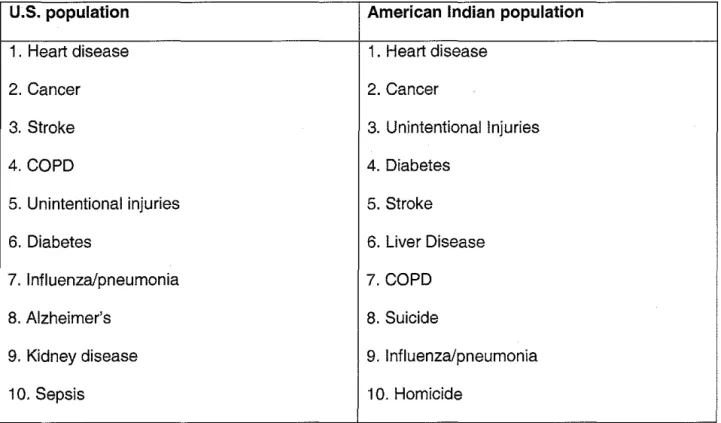
Looking at the leading causes of death in 2002 using Centers for Disease Control (CDC) data,
a few differences between AlAN and the U.S. population are evident: diabetes and unintentional
injuries are higher on the AI list, as are markers of substance abuse and mental health.
Regarding the latter, three of the top ten causes of death (liver disease, suicide, homicide) for
American Indians are known to be associated with substance abuse and mental health
conditions, while they are absent from a similar list for the U.S. population.
Table 1: 2002 CDC Mortality Data for the United States- Top 10 leading causes of death
U.S. population American Indian population
1 . Heart disease 1. Heart disease
2. Cancer 2. Cancer
3. Stroke 3. Unintentional Injuries
4. COPD 4. Diabetes
5. Unintentional injuries 5. Stroke
6. Diabetes 6. Liver Disease
7. Influenza/pneumonia 7. COPD
8. Alzheimer's 8. Suicide
9. Kidney disease 9. Influenza/pneumonia
10. Sepsis 10. Homicide
The CDC office on Minority Health has identified a "disproportionately high prevalence" of health
inequalities in four areas: mental health, substance abuse, obesity and sudden infant death
syndrome)xi. Of the twelve Indian Health Service (IHS) areas, ten identified mental health as the
top health problem in 2001 xii.
2. American Indians and their health in North Carolina
a.
OverviewVibrant Pow Wow culture ... American Indian churches ... Communities where Indigenous
culture and traditions are practiced. These are not the first things most people think of upon
hearing the words North Carolina, even to those who live in the state. In fact, many North
Carolinians, like residents of other Eastern states, are entirely un- aware of the presence of
American Indians in their midst";;;_
More than 100,000 American Indians (AI) from eight recognized tribes live in North
Carolina, giving it the largest American Indian population east of the Mississippixiv_ However, as
seven of the eight tribes are state recognized and therefore not eligible for designated land or
services (e.g. health care) from the federal government, North Carolina's American Indians are
less visible and less distinct from the larger population than in other states. The history of
segregation in the south also contributed to the "hiding" of one's Indian identity, as anonymity
was a tool for survival. This unique socio-historical mileu leads to an equally unique Indigenous
culture in the state. Dr. Stanley Knick, professor at UNC-Pembroke says, "Probably, very little
that you learned in school about American Indians is true, especially for the Indigenous
population of North Carolina and the southeastern United Statesxv."
Native American Tribes in North Carolina
B1 Cherokee (Qualla Bourdary)
ml Coharie (Sampson Co.) 5I Haliwa-Saponi (Halifax Co.) ~ HC:IIiwa-Saponi ('!Varren Co.)
CJ Lumbee (Robeson Co.:
-..t;~;pi &I Meherrn (Hertford co.)
"to. liiiiiiiiOccaneechi-Ssponi (Alamance Co.)
1111!11 Occaneechi-Ssponi (Orange Co.)
_ . Waccamauw :::iouan (Bladen Co.) IIDm Waccamauw :::iouan (Columb~..-s Co.)
b. Health status
The health of the AI population in North Carolina is difficult to assess, given the current
paucity of dataxvi. However, all indications suggest that Indigenous persons in North Carolina
fare worse on determinants of health (e.g. economic status, education level), health care (e.g.
access to care, rates of uninsured), and health outcomes (e.g. rates of chronic and infectious
disease) than other citizens of the statexvii.
A report in 2005 from the North Carolina Department of Health and Human Services, AI
had higher rates of diabetes, hypertension, asthma, and arthritis than African Americans or
Whites;;_ Age-adjusted mortality rates for American Indians from chronic disease were 2.44
times higher for diabetes and 1 .55 times higher for kidney disease when compared to the White
population. Similar disparities existed in infectious diseases (e.g. 2.13 times higher death rate
from HIV) and injury/violence (e.g. death rates 3.70 times higher from homicide and 2.05 times
higher from motor vehicle injuries).
On quality of life measures, AI had poorer functional status on all five measures when
compared to Whites and African Americans, and reported disproportionately high rates of
problems with access to health care. Of note, many of these disparities persisted even after
controlling for socio-economic status. The report concludes with a dismal statement, "For most
of the measures presented here, American Indians in North Carolina experience substantially
worse health problems than whites." However, we should remember that the AI "data gap," an
embarrassing result of misled priorities, continues to serve as an impediment to health equity
amongst North Carolina's Indigenous peoples.
c. Lack of data and infrastructure
Many of the Tribes in NC do not know the extent of the health problems that exist within their communities and do ·not have the infrastructure to begin the process of providing services and assistance. A directed effort is needed to document the health priorities in American Indian communities in North Carolina, and a means to which these areas can be effectively addressedxviii.
This quote from North Carolina Joint Task Force on Indian Health summarizes the current
structural dilemmas regarding AI health -a lack of data and a lack of health infrastructure.
Regarding the issue of data, for the majority of North Carolina's eight recognized Tribes,
the best answer to 'What does your Tribe's health look like?" would be "Not sure." In fact,
literature on the health of the state's indigenous population is almost non-existent, with the
exception of the Eastern Band of Cherokee (who have data due to having IHS services and
funding) and the Lumbee (who have data due to the fact that they are the largest Tribe in the
Eastern U.S.).
Health infrastructure, insofar as it relates to clinics, home health services, and public
health programs that have an AI focus are also non-existent for most of the AI communities in
the state. Thus, AI largely rely on county and state-run health services, with similar barriers to
care as seen with other rural, minority, and lower socioeconmic populations in the
state-transportation issues, cost of care/medicines, absence of health resources (e.g. sources of
3. HOW NHI BEGAN
In multiple attempts to find volunteer opportunities in American Indian communities as a
pre-medical student, I consistently ran into dead ends. This happened for a variety of
reasons-a lreasons-ack of reasons-an infrreasons-astructure within reasons-acreasons-ademic institutions for such opportunities, reasons-a similreasons-ar lreasons-ack of
infrastructure within Tribal communities, the rural and isolated nature of many AI communities,
and the historical scars from exploitative outsiders and researchers that made AI communities
wary of bringing volunteers into their midst.
In my case, it was not until 2002, the third year of my quest to volunteer, that I convinced
an Indian Health Service staff member to send out a request on my behalf, stating that "Anthony
is offering his time for the summer to work on a health related project- is anyone interested?"
One program responded - the Navajo Nation Health Education Program in Tuba City, Arizona,
located in the heart of the Navajo Reservation. With minimal communication as to what I would
be doing or whether I was even welcome there, I boarded a plane June 22nd, headed to Arizona.
On the first day there, I was asked to sign extensive paperwork stating that I would not publish
or present anything that I did or saw during my time there, opening my eyes to level of mis-trust
amongst Indigenous persons, the result of the long history of exploitation and discrimination
they had enduredx;x_
Returning to Chapel Hill to begin medical school in August of 2002, I began to wonder
how a summer opportunity like mine could be replicated. With the added impetus of a foreign
medical student posting a message to U.S. medical student internet list-serves in 2004, looking
for an opportunity to volunteer in American Indian communities, the work on building a program
to connect AI communities with health professions students began.
With only a vague idea of what such a program would look like that, I contacted the
North Carolina Commission of Indian Affairs to propose the project. This led to a November
2004 meeting at the Commission, where I discussed my idea, and more importantly, listened to
the opinions and expressed health needs cited by Commission members. The overall sense
from the meeting was that such a project was both needed and did not currently exist, with the
recommendation to follow-up with community-level AI health leaders to work toward creating
such a program.
A few months later, in January 2005, with the support of a prominent minister in the
Pembroke community, home of the Lumbee Nation, we sat in a church -the minister, a
representative from the Commission, and community health leaders from various tribes. In this,
and ensuing meetings, we agreed upon a name for the project- the Native Health
Initiative-and developed four principles to guide our work.
Ambitiously, with a $0 budget, we looked to begin projects in the summer of 2005,
leaving me to recruit volunteers while the community partners thought about how to "host"
volunteers, and how to effectively use the time and talents of the volunteers.
There were many things that stood out from these initial events, many of which went
against the stereotypes and fears that I brought into this project. First, there was an inherent
sense of trust in the good of the project, and of me as an outsider. Second, there was a desire
to see more done in AI health, but a lack of infrastructure and resources (e.g. human and capital)
that stood in the way. There was also a sense of urgency regarding the ill-health of American
Indians, yet a sense of hopelessness from feeling that their health needs were neglected from
the non-Indian, health, academic, and political communities. Fourth, the leaders expressed a
need for youth outreach to help them live healthier and receive encouragement and information
regarding health careers. Fifth, there was a very visible excitement among the community
leaders at the potential for a unified purpose to drive such a project, despite the absence of
infrastructure and funding. And maybe most striking, given the stereotype of the "stoic Indian
4. WHY NHI BEGAN: THE UN-MET NEEDS AND UN-TAPPED RESOURCES
a. American Indian Health in North Carolina - The Needs
Unlike many needs assessments, which focus on the "deficits" and "deficiencies" of
communities and populations, the needs we identified in North Carolina with regard to AI health
primarily focus on entities beyond the Indigenous population. The AI population in North
Carolina is largely invisible to policy makers and health care systems, comprising only 1% of the
state's population, and with few persons lobbying on their behalf. The primary needs we
identified were the lack of health data, inequities in social determinants of health, inequities in
health and health care outcomes, few existing AI health interventions, minimal avenues for
health professions students to learn about AI culture and health, and the under-representation
of AI in health professions.
Paucity of data
As mentioned above, there is little data on the health of the AI population in NC, and
data at the level of the tribes is non-existent. Addressing the "data gap" was recently cited by
the North Carolina American Indian Health Task Force as a priority.;;;
Inequities in social determinants of health
Despite the lack of data, we know is that AI in North Carolina are more than twice as
likely to be unemployed and to live in poverty, and much more likely to have low educational
attainment when compared with white North Caroliniansxx. Adding these barriers to health to the
effects of racism and historical trauma on Indigenous peoples in this country, we would expect
that the health of the AI population in North Carolina suffers accordingly.
Inequities in health and healthcare outcomes
Also mentioned above, available data suggest that American Indians live sicker and die
younger than other citizens of the state. This is an ethical issue as much as it is a
medical/health issue, as the vast majority of differences in health and healthcare are
preventable and correctable. Of note, the health of American Indians appears to correlate
closely with African Americans and Latinos in NC, evidence for the presence of larger inequities
disproportionately affecting minorities in the state.
Inadequate levels of interventions aimed at AI health
The reality of poor health is compounded by the current situation in which there is little
collaboration between tribal communities and health professions students or their respective
Universities. Indeed, no programs exist that offer students the opportunity to volunteer in any of
North Carolina's American Indian communities. Not surprisingly, the same is true nationally,
where there are few programs/internships in AI health or AI communities for the health
professionals of the future. Barriers include the history of exploitative research efforts targeting
AI communities, brought back to the forefront in 2004 with the misuse of blood samples from the
Havasupai tribe by Arizona State University.xxi Indigenous people are wary of participating in
research. Second, as a small percentage of the population, AI health is often not on the political
or public health agenda, even in the realm of minority health. At the University of North Carolina,
for example, there are no AI faculty on the health side of campus (nursing, dentistry, medicine,
allied health, social work, public health) and, thus, conversations regarding minority health occur
without Indigenous input; as expected, the resulting programs and initiatives, from our
experience, systematically ignore and forget the state's first people.
Lack of opportunities for health professions students to learn about AI culture/health
The lack of attention to the health of AI communities breeds ignorance and cultural
no American Indian faculty within the medical school, and no courses that address American
Indian health in either the pre-clinical or clinical years. In fact, to my knowledge, the only
teaching in the entire medical school on American Indians occurs in once class period during a
Social Medicine selective on health disparities that 10-15 second-year students have the
chance to take. On a larger scale, despite the large presence of American Indians in NC and the
reality that UNC is one of four campuses in the U.S. to have all of the core health professions
schools on one campus, there is a glaring absence of American Indians at UNC- zero
American Indian faculty on the health side of campus, and zero courses in American Indian
health.
Using Microsoft's Live Search on November 61h, 2007 and the search words "American
Indian" and "service learning," the first thirty items were reviewed. Interestingly, while we found
that some programs did allow students to visit American Indian communities, with others
allowing Tribal communities to take leadership in the program/project, NHI's model was unique
from all thirty in the following ways: (1) student-driven project, (2) focuses on change on the
campus on which it is situated, (3) loving service and health equity as foundations for the
project, (4) funding- I am making an assumption that since the programs I found are by either
Universities or Foundations, that these programs have much more financial capital than NHI,
(5)bringing students from beyond the University at which the project is located, (6) bringing
students from abroad to volunteer, {7) summer internships -the programs I found have spring
break trips or short activities, but not summer internships, and (8) tribe directed projects - not a
single one of the programs talked about tribe-directed programs/projects.
Whether faced with a Lumbee patient in the clinic or being in a position to advocate for
the needs of the Cherokee, clinicians fall short, and will continue to do so, in working to
eliminate health inequities simply because they, and their academic institutions, have little
understanding of American Indians and their needs.
Lack of AI in health professions
Finally, while we do need to increase the understanding of AI culture and health for
tomorrow's clinicians, we also need to increase the numbers of AI health professionals. In many
tribal communities, there are no Indigenous health providers and many of these tribes have yet
to produce a health care provider. This has obvious implications for both the quality of care
given, and for the difficulty in encouraging youth to choose health professions. In a recent NHI
event, A Day into Health, where high school students from across the state came to UNC to
learn about health careers, one participant confessed, "It is real hard when you don't have
anyone that looks like you [in the health fields] ... it can make you become discouraged and just
want to give up and do something else."
AI comprise 0.9% of the U.S. population but only 0.3% of those graduating in dentistry
and public health doctoral programs, and 0.6% of those becoming physicians"";;. In other words,
in order to match their proportion in the population, our system needs to produce at least 200%
more AI dentists and doctors of public health and 50% more AI doctors. When we consider
estimates for the near future which predict a doubling of the AI population (as a percentage of
the U.S. population) by 2050, it is clear that the lack of AI health providers is a critical concern,
and a necessary point of action in working toward health equity for America's Indigenous
Initial Poor health status of AI population
[an issue that is isolated, either "kept on the rez" (Federally recognized tribes) or
an enigma due to "data gaps" (State recognized tribes). It is also left out of the
realm of education in health professions, and is often left out of
conversations/programs on Minority Health]
+
Substandard education that most AI students receive, along with the negative
experiences with substandard health care systems, and few role models leads to
very few AI students choosing health careers
+
Health professions students learn nothing about AI culture or health issues
1
AI communities get poor health care, at the hands of clinicians that do not fully
understand AI culture or AI health, and who have limited ability/desire to advocate
for AI communities and issues.
Continued Poor health status of AI population
(a result of all of the above factors - ignorant health professionals, substandard
health care for AI population, few AI as health professionals)
Figure 2: Schematic of the perpetuation of AI health inequities, and the multiple levels at which interventions are needed to achieve health equity
b. American Indian Health in North Carolina - The assets
NHI's initial assessment could have ended by simply highlighting the health inequities
and needs. However, we recognized that asset mapping must complement this traditional needs
mapping. By mapping the assets of a community, we can begin to create programs that utilize
these resources, creating invested and empowered communities that will, in turn, create
sustainable, culturally-appropriate solutions to their social and health issues. Our mission, as a
project is therefore not 'What can we do for the communities," but instead, 'What we can do to
help communities in their efforts to do for themselves."
In North Carolina's AI community, NHI identified two unique assets as critical resources.
First, in AI communities, a strong social network exists based on families, tribal communities
(e.g. a geographic location where a subset of the tribe lives) and tribal identity. These networks
have allowed NHI to find housing for students and establish trust and support in ways that would
not be possible in many populations.
Second, a strong sense of "preserving the traditional way" exists amongst the AI
communities that parallel much of what medical and public health professionals preach as
solutions to health problems. For example, there is a push to teach youth about traditional
tobacco, the sacred plant used in ceremonial and medicinal ways, as a way to curb smoking
rates in this group and reclaiming the image of tobacco from the cigarette companies that have
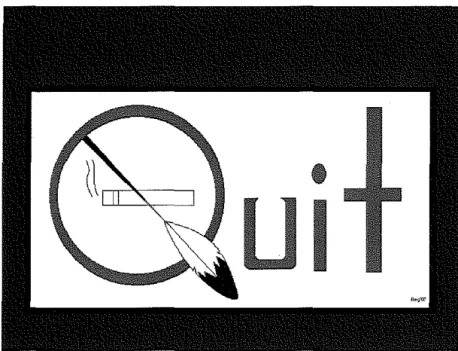
depicted their product as connected to AI and sacred tobacco. (See figure 3) Similar strategies
exist for addressing diabetes (e.g. invoking the traditional diet), substance use and mental
health (e.g, use of sweat lodge ceremonies and "Oneness" with the Creator), and other
conditions. NHI seeks to incorporate these and other assets of our partner communities to teach
Figure 3: Healing from within.
A revered traditional symbol, the eagle feather is depicted
in a logo aimed at smoking cessation, without
demonizing tobacco (e.g. the use of traditional tobacco) altogether. Designed by Shannon Fleg
B. PROGRAM MISSION
1. PrinciplesAt initial meetings that brought together community leaders (health workers, ministers), a liaison
from the North Carolina Commission of Indian Affairs, and NHI coordinator Anthony Fleg, our
group came up with the name of the project and developed four principles to guide NHI's work:
Figure 4: Four guiding principles to NHI and its work
(1) educating health professions students about health equity, about health inequities in
American Indian communities and in U.S. society, and doing so within an interdisciplinary,
holistic model of health
(2) creating tribe-directed sustainable health projects,
(3) fostering cultural exchange and sincere, loving interactions between all involved in the "NHI
Family"
(4) youth empowerment toward healthy living, becoming health leaders in their communities,
and toward health careers.
2. Framework and program theorv
A gestalt of these four principles was that we would use health equity as our gold
standard for our work, doing so through the "loving service" of community and student
volunteers. While this does not fit neatly in a linear description of our raison d'etre, it speaks to
the circular nature of Indigenous culture in which all aspects of life are related, interwoven, and
not always amenable to Western (linear) explanations. More recently, we have coined the idea
that the principles are "how we accomplish NHI's mission" while the framework of loving service
and health equity are "why we work to accomplish NHI's mission." We think it will be helpful to
Why health equity?
Health equity differs in three fundamental ways from the biomedical model that
dominates the literature under the titles health disparities and health inequalities. First, the issue
of our ethical stance. Disparities and inequalities simply denote a difference in health and
disease, taking no ethical position on these differences. Health inequities, however, suggests
that such disparities and inequalities are, by definition, unjust.
Second, the scope of our work is critical to the ultimate success in eliminating
differences rates of health and disease. Health inequities broadens the scope from the
disparities model, which often focuses on a specific disease within a specific population, and
instead seeks to understand the common inequities in health and healthcare that affect certain
segments of the population disproportionately (See figure 5). We believe that this shift in
language is critical if we are to address the underlying causes of health inequalities- we must
recognize them as unjust and search for the root causes of the injustices across populations.
Third, we must know what we are holding as our goal in this work. The biomedical
framework points out the disparities/inequalities, but as a curse of its ethical neutrality, it posits
no corresponding answer regarding the solution. NHI feels that health equity is a critical gold
standard by which we must work, pointing to the goal of restoring justice by the elimination of
systematic inequalities in health.
Fact: For most chronic diseases, prevalence rates are elevated in American Indians (AI) in NC,
comparable to the rates for African Americans (AA).
Disparities/inequalities {biomedical) approach
Question: Why are AI experiencing high rates of chronic disease in NC
Intervention: Study AI health, tailor program to address AI risk factors
Endpoint: ????
Health equity approach
Question: What social and health inequities, shared by AA and AI are
leading to similarly high rates of disease?
Intervention: Study both groups, looking for social and health determinants
of health that can be addressed
Endpoint: When health equity is achieved (e.g. rates of disease for AA, AI
are equivalent to other North Carolinians)
Figure 5: Framework is everything: An example illustrating the differences in the
disparities/inequalities approach to the health equity approach, and the effect this has on the question asked, the intervention planned, and the endpoint for the intervention
Why loving service?
First, it is important to understand that Indigenous culture values, above degrees and
titles, relationships with others. Congruent with this, NHI could not expect to enter as a guest to
these communities as an academic or volunteer program, but rather as a group seeking to build
relationships, a group whose work was grounded in "loving service" and not merely intellectual
We decided that unlike other programs working with AI communities and those initiatives
attracting foreign volunteers, we would not charge for our internships, and would instead use
"loving service" as our funding source. Volunteers from the tribal communities offer meals and
places to stay in the tradition of the hospitality of Indigenous culture while the NHI coordinators
and interns offer their time and talents, sharing of their own cultures. Congruent with this
philosophy, we invited each person into the NHI as equals, forgoing a hierarchy of coordinators
vs. interns, community members vs. students. The sincere friendships and cross-cultural
connections that are made with this approach provide the support and foundation for our work.
Thus, in lieu of a logic model, NHI created a pictoral representation of its work, known as
the NHI Circle of Healing.
3 / i i i ,'
\,
,.The Native Health lr:>itiative Cit-de
of
Healir:>g
Addressil7ghe;;/th iJ7eqmHes thr=gh /ovt17g setvice
4
ln.:figenous Communities
1
NHI Circle ofHe<11ing:
1 -Community-driven model - Whetewe do our work
,'
'
Autonomy given to Indigenous he<Jith le<Jders to design proiects, <1nd using community- expressed needs to direct NHI's progr<Jmming. Accordingly, our proiects <Jnd efforts t<Jke pi<Jce prim<Jrily in Indigenous
communities.
2- The framework for NHI- Whywe do this work
"Loving Service-Our found<Jtion is love, requiring us to serve <IS equ<Jis, with open he<Jrts <Jnd minds to cre<Jte the NHI f<Jmily- NHI is 'l hum<Jn proiect, b<Jsed on the rei<Jtionships <Jnd sincere love for one <Jnother, <Jnd is
not merely 'In <Jcqdemic ende<Jvorl
"He<Jith Equity- Out belief is th<Jt he<Jith disp<Jrities <Jre, by defin.ition, uniust, <Jnd <Jre therefore he<Jith inequities. We seek he<Jith equity (e.g. the elimin<Jtion ofhe<Jith inequities) <IS the ethiql <Jnd pr<Jctic<JI found<Jtion for our work
5- The principles of NHI - How we clo this work
From <Jn initi<JI community meeting, four principles were identifiecl, <Jcknowledging th<Jt <JII NHI entities h<Jve t<Jients to give <Jnd things to le<Jm, We <Jppro<Jch "he<Jith" in the most holistic, interdisciplin<Jty sense
of
the term, feeling th<Jt cultur<JI, historic<~ I, spiritu<JI, <Jncl other <Jspeds oflife <Jre integr<JI to unclerst<Jnding <Jncl <Jddressing lncligenous he<Jith concerns in <1 me<Jningful w<Jy.4- The people ofNHI-
Who
cloes the work3. Goals and Objectives
Goals:
NHI will strive to accomplish the following goals, which are aligned with the framework and
principles of the program:
• To increase health and pre-health professions students' knowledge of American Indian
culture and health
• To increase health and pre-health professions students' understanding of health
inequities and the framework of health equity.
• To increase partnerships between American Indian communities and health and
pre-health professions students
• To increase AI communities' health capacity and programming
• To increase the health literacy within AI communities
• To increase understanding of "loving service" for its ability to mobilize resources to work
for social justice
Objectives:
In keeping with its mission and goals, NHI's objectives are best divided by participant category.
Since we foster an environment in which all participants are both giving and receiving, we have
grouped the objectives accordingly. Percents correspond to the % of individuals expected to
achieve each objective.
Receiving - Corresponding to the non-hierarchical structure of NHI, along with a model of
service that is the reciprocal exchange between equals"";", our objective is for all groups within
NHI to receive equally, in the following ways:
1) Will report new friendships as a result of their work with NHI (75%)
3) Will report feeling rewarded and appreciated for their efforts, by all NHI participant
categories (75%)
Giving -Each participant category will lend their unique talents to the program, and will also be
expected to gain skills appropriate for their position.
NHI Coordinators
1) Will report increased knowledge of the framework of health equity and loving service as
a framework for addressing health inequities (100%)
2) Will report an increased awareness of American Indian culture and health, particularly
with regard to the local American Indian Tribes (1 00%)
3) Will report increased self-efficacy in their ability to translate health equity and loving
service into service (1 00%)
4) Will show ability to transmit the framework, principles, and project areas of NHI, both
through recruitment of volunteers and the following year's coordinators (1 00%)
NHI Advisors
1) Will report increased knowledge of the framework of health equity and loving service as
a framework for addressing health inequities (1 00%)
2) Will report an increased awareness of American Indian culture and health, particularly
with regard to the local American Indian Tribes (1 00%)
3) Will report ability to support NHI Coordinators, through giving direction, assisting with
infrastructure (e.g. funding, networking), and troubleshooting (75%)
NHI/nterns
1) Will report increased knowledge of the framework of health equity and loving service as
a framework for addressing health inequities (75%)
2) Will report an increased awareness of American Indian culture and health, particularly
with regard to the local American Indian Tribes (100%)
3) Will report increased self-efficacy in their ability to translate health equity and loving
service into service (75%)
NH/Mentors
1) Will report increased knowledge of the framework of health equity and loving service as
a framework for addressing health inequities (75%)
2) Will report increased self-efficacy in their ability to translate health equity and loving
service into service (75%)
3) Will report direct benefits to their community as a result of collaboration with NHI (75%)
NHI Community Volunteers
1) Will report increased knowledge of the framework of health equity and loving service as
a framework for addressing health inequities (75%)
2) Will report increased self-efficacy in their ability to translate health equity and loving
service into service (75%)
3) Will report being able to share talents, wisdom, and or energy that directly improved the
work NHI is doing (75%)
NHI Youth
1) Will report increased knowledge of the framework of health equity and loving service as a
framework for addressing health inequities (75%)
2) Will report increased self-efficacy in their ability to translate health equity and loving
service into service (75%)
3) Will report increased desire for one or more of the following as a result of their
involvement with NHI (100%)
Taking leadership to better their community
Attending post-secondary education
Becoming a health professional
NHI Partners
1) Will report increased knowledge of the framework of health equity and loving service as
a framework for addressing health inequities (75%)
2) Will report an increased awareness of American Indian culture and health, particularly
with regard to the local American Indian Tribes (100%)
3) Will report increased programming as a result of collaboration with NHI (1 00%)
C. PROGRAM PARTICIPANTS
NHI is a partnership and '1amily'' of seven entities- Coordinators, Advisors, Mentors,
Volunteers/Interns, Community Members, Youth, and Partners. We will briefly describe the role
of each element in NHI, the responsibilities and important qualities for each position, and will
describe the role of that position in our work in North Carolina, the NHI pilot project. As with
other sections of this manual, the set-up of NHI-NC is an example of how NHI projects could be
run.
1. NHJ Coordinators
NHI Coordinators are an important component of NHI, serving to connect the individual
pieces of the NHI puzzle and turn them into a collective NHI Family. While no higher than
anyone else in NHI, Coordinators have much of the responsibility for the ultimate success (or
failure) of NHI. Since our NHI mentors are often the leaders of many efforts in their communities,
it would be impossible to expect them to spend the time required to recruit students, develop
programming and advocacy efforts, and make partnerships and collaborative efforts to the
extent that NHI requires.
NHI-NC:
We began with one coordinator, Anthony Fleg, a medical student at the University of
North Carolina (UNC) at Chapel Hill. In the first summer of work, we expanded to three
coordinators with the addition of Shannon Fleg (a Navajo public health educator) and Sabina
Fattah (a 2005 volunteer who is a Norwegian medical student). Sabina took the role of
student organization. In the 2007-8 school year, in preparation to transition into a new stage of
NHI's existence in which the initial coordinators will no longer be running the project, we have
begun a search for undergraduate and graduate students who can run the project. In our search,
we are heavily targeting Indigenous students, and those from diverse health professions, hoping
that the NHI Coordinators will reflect the interdisciplinary approach of the project, along with our
feeling that American Indians should be involved in leading the project.
Responsibilities of NHI Coordinators
• Recruit summer interns
• Arrange summer internships with Indigenous health leaders
• Initiate NHI programming on the campus to speak to the needs of
the AI population in your state/community.
• Advocate for AI issues in the academic and political realms
• Secure funding for NHI programming
• Establish and maintain partnerships with campus, tribal, and other organizations
Characteristics of a successful NHI Coordinator
• Passionate about addressing health inequities, improving health for the Indigenous
population, and doing so through a grounding in the principles of equity and love.
• Previous experience as a volunteer with NHI or other organization working with
Indigenous health
• Understanding of Indigenous culture, history, and health.
• Has the ability to lead with authority while simultaneously creating a "team" approach
• Willing to role up sleeves, and lead by example of "loving service"
• Ability to network amongst many different types of people, in many different forums
• lntrinsics: good smile, great sense of humor, lots of patience and flexibility
Additional advice:
tving multiple Coordinators is beneficial, and is critical to avoid burnout.
2) As the project expands, so should the number of NHI Coordinators, though more than 4-5 might
create inefficiency and logistical problems.
3) Of the Coordinators, it is preferable to have at least 1 Indigenous member, and preferably, and
AI student from one of the local tribes.
4) Of the Coordinators, it is preferable to have 2-3 health professions represented
5) You may decide to adopt a more formal leadership structure (e.g. president, vice-president,
treasurer, etc), and may be forced to do so (e.g. to be recognized as a student group, many
schools will require such positions to be filled)
2. NHI Advisor(s)
NHI, once establshed at a school, will benefit greatly from having a dedicated advisor. We
prefer to use this term over '1aculty advisor", knowing that for various reasons, the best NHI
Advisors may not be University faculty, or even University employees. Like the Coordinators,
the faculty advisor is part of the NHI Family, a dedicated member of the team. An advisor with
experience in working with ambitious student-run projects will provide needed guidance and
direction for the project. Since he/she/they will remain at the university longer than the
Coordinators, they are an essential part of the continuation of the project. In addition, as a part
of the academic institution, an advisor has the ability to make connections, raise funds, and
the logistical work for NHI and the Mentors direct much of the work to be done, an advisor must
be willing to forgo much of the decision-making in the project.
NHI-NC
For two years, NHI was un-affiliated with no official connections to UNC. Our un-official
advisor, was a UNC staff person, Danny Bell (Coharie/Lumbee). Mr. Bell is very well-connected
with the AI tribes and leaders in this state, more so than anyone else on campus, and being a
UNC employee, understands the perspective of both the Tribes and UNC. Partially because
there are no AI faculty on the health side of our campus, Mr. Bell, who runs the UNC American
Indian Studies program, became our unofficial advisor in the first years of the project. However,
since he is not a faculty member, our official recognition by UNC as a student group in the fall of
2006 meant that we had to choose a faculty member as an advisor. We approached Dr. Adam
Goldstein, a family physician well-known for his passion for service work and mentorship of the
Student Health Action Coalition (S.H.A.C.). Dr. Goldstein was instrumental in the formation of a
partnership between S.H.A.C. and NHI, with NHI becoming a project under S.H.A.C.'s umbrella
by November, 2006, an example of the positive influence that an advisor can have on the
growth of the project.
In the 2006-7 school year, we have made a concerted effort to recognize both Dr.
Goldstein and Mr. Bell in our work, treating them both as advisors. While we don't consider any
of our Mentors officially as Advisors, we see the potential good for the project of having an
Advisor who is not a part of the University community (e.g. a Tribal leader who brings the
community and Indigenous perspective to the advisor position). However, in each specific
project or question we have, the Coordinators turn to whoever is most qualified to answer the
question, a duty often falling upon our Mentors and community volunteers.
•
•
•
•
•
•
•
•
•
Responsibilities of NHI Faculty Advisor
Help Coordinators set goals and agenda
Aid in transitioning Coordinators and Mentors
Provide connections to academic realm, as necessary (e.g. funding contacts)
Characteristics of a successful NHI Faculty Advisor
Passion for service work and/or health equity work
Ability to lead without being in control
Experience in leading similar student projects
Experience in serving as a volunteer for similar projects
Flexibility
Behind-the-scenes leadership style
Additional advice:
1) Faculty Advisors who are Indigenous, particularly from the a local Tribe, are preferable.
2) Having more than one advisor is a possibility, especially in a case where stipulations prevent a
well-qualified advisor from having that official role.
3) Though not a part of NHI-NC, having an advisor who is not a part of the campus community,
presumably a Tribal member/leader, would add a community perspective to this position
3. NHI Mentors
Working under a community-driven model of service, NHI relies on the energy and
a backbone of NHI's programming, require the commitment of the Mentors. While NHI does
extend its non-heirarchical concept to all involved, we also make it clear to the Mentors that they
are in charge of their projects and their interns. A goal of NHI is to ultimately have
community-level leadership for the project, which would most likely involve Mentors as the governing body.
NHI-NC
Our mentors have served as the backbone for the summer projects. They range from
clinicians to ministers, educators, and tribal leaders. We have attempted to create a community
amongst the rnentors themselves, an effort that has proven difficult. We have also created
"Project Proposals" for the Mentors to help them clarify what they want their communities to get
out of the volunteers' work, and to help the Coordinators understand what students would be
best-suited for a particular project. In NC, we have also asked the Mentors to find housing for
the students in their communities, preferably with host families.
Responsibilities of NHI Mentor
• Direct and guide volunteers
• Are given the "voice of the community'', a power which they must wield with care
• Assist in providing and promoting cultural exchange between volunteers and community
• Assist in finding housing for students
Characteristics of a successful Mentor
• Passionate about improving their community
• Able to work well across lines of disciplines, race/ethnicity, culture, and age
• Enjoy teaching
• Willing to listen to students' opinions, concerns, etc.
, . Supportive and encouraging
4. NH/Interns and student volunteers
NHI relies on the efforts of students in two senses. First, students are the ones providing
services to the partner communities (NHI principles #2 and #4). Equally important, however, is
the need for students to be engaged in working with, and learning about AI communities to be
capable of taking care of, and advocating for, the AI population and other populations that face
systematic health inequities (objectives #1 and #3). There are four unique aspects of the
interns/volunteers in NHI, compared to places where they have volunteered before NHI.
First, students must understand that NHI operates under the guidance of our American
Indian constiutuency, whose concerns and ideas for programs take precedence over the
interests of the volunteers themselves. Second, especially for those doing projects in American
Indian communities, they must understand that the NHI coordinators, while there to support the
students, have no authority over the projects themselves. In other words, each student's NHI
Mentor is the one to whom questions, ideas, and concerns should be directed.
Third, NHI's loving service framework makes us a "human" project, as opposed to a
"student" or "academic" project, and interns/volunteers are expected to get away from seeing
their work as research, as an academic endeavor, but instead to see it as service between two
equally needy parties. Related to this, volunteers/interns are expected to share of themselves
and give of themselves in their work. A fourth aspect that students must grasp is that NHI is
more of a collective, a family, than a organization with strict hierarchy. Thus volunteers are told
that they are NHI, and should feel comfortable speaking about our work, representing NHI as no
volunteers and interns from directing persons to the NHI Coordinators for answers to ''What is
NHI?", instead encouraging them to answer these queries themselves.
NHI volunteers fall into two primary categories- those that commit to large amounts of
time working with, and often living in, AI communities, and those volunteering on a more limited
basis. Both groups are needed, especially as NHI expands its programming at a given site.
Recruiting interns involves contacting many organizations across diverse fields of the health
professions, both undergraduate and graduate, and in diverse geographic locations. For
shorter-term volunteers, diverse groups representing the health and pre-health professions
students are places where we recruit students. In both cases, the use of list-serves has proved
to be the single most effective way to recruit volunteers.
NHI-NC
We began in the summers of 2005 and 2006 with interns as the basis of the project. At
this point, we did not have a strong presence on the University's campus, and focused the
majority of our energy on running the summer programs. In 2007, we have expanded greatly in
the academic realm, and accordingly, have recruited volunteers to work on one-day events
(lectures, health fairs, youth empowerment workshops) and projects (semester-long projects in
American Indian communities, creating a clinical course in the medical school). In addition, we
have expanded the summer internships to include 27 students, up from the 9 interns we had in
each of the first two years.
Responsibilities of NHI lnternsNolunteers
o Take direction from appointed NHI mentors with regard to the project
o Commitment to learning about all that is "beneath the surface" - health inequities, AI
culture, loving service, etc.
• Commitment to adding to NHI in some way
• Commitment to creating projects in a way that allows the community to sustain them.
Characteristics of a successful NHI lnternNolunteer
• Commitment to loving service and health equity
• Flexible and creative
• Energetic
• Comfortable with being an outsider (racially/ethnically, culturally, and geographically)
• Eager to learn about areas that they might not be familiar with - health inequities,
community-directed work, American Indian culture
• Respectful of communities
• Cognizant of the issues of power and privilege that exist between themselves and those
they are working with
Additional advice:
1) Volunteers who have requirements to meet (e.g. for a paper, for a practicum) must
understand that NHI will always put the requirements and interests of the community as first
priority.
2) Along with #1, we will not allow volunteers/interns to bring their own research questions
to NHI, unless they were developed in conjunction with our American Indian partners (Mentors,
Tribes, communities)
3) One of the best ways to encourage a feeling of the NHI family is transparency- for
instance, the 2007 summer interns, working along with the Coordinators and Mentors, will
5. NHI Community volunteers
The community volunteers are the un-sung heroes of NHI, providing much of the
intangible and in-kind support of NHI interns, from places to stay, home-cooked meals,
invitations to social gatherings and religious events, and a loving, Indian version of southern
hospitality. Our volunteers also serve to assist NHI mentors and interns run the projects. From
the perspective of NHI, the organization, our community volunteers are the pulse to the
relevancy of our work- if community members are not willing to be a part of NHI, it suggests
that NHI's work needs a thorough diagnosis and resuscitation to be more effective and relevant
in the eyes of the community.
NHI-NC
Our project relies on community volunteers in each of our projects, but particularly, for
the summer internships. There are intangibles that these volunteers provide, such as invitations
for meals, sharing of their homes (e.g. serving as host families), and supporting the projects
themselves. While NHI does not directly recruit these volunteers, we do make every attempt to
contact them to show our appreciation, and to recognize them in various ways.
Responsibilities of NHI Community Members
• Collectively, will help to house and feed students
• Support the NHI projects in their community
• Invite Interns to participate in their community's functions (e.g. church services, Tribal
council meetings, social events, etc)
Characteristics of a successful NHI Community Member
• A strong pride in their community and Tribe
• Willingness to volunteer
• Interest in sharing their lives and culture with others
6. NHI Youth
Young people have much to offer their communities, and it is a mission of NHI to
incorporate youth into our work in a variety of ways. If we are successful in this, we will
accomplish NHI's principle #4: youth empowerment toward healthy living, becoming health
leaders in their communities, and toward health careers. Thus, in addition to reaching out to
youth, NHI must empower AI youth so that they can use their talents to reach out to others.
NHI-NC
While our first two years of work involved considerable amount of youth-directed work, it
has proven difficult to get NHI Interns to empower AI youth in a way that allows these young
people to become leaders and educators in the realm of health. In the third year, we have
begun to see a change in this, through a variety of strategies. We held a "Day into Health,"
bringing AI high school students to UNC to learn about health professions, and to develop
health projects that NHI then works with them to carry out. Also, we have developed Youth
Project Grants, open to AI and non-AI youth to create, and get funded for, projects that meet
health needs in their communities. We will also incorporate youth in our NHI orientation for the
summer interns, hoping to model the outcome we hope to see- putting young people in
positions of leadership in the projects carried out.
• Learning material asked of them
• Helping their community with the material they have learned
• Working to recruit other youth to become leaders
Characteristics of a successful NHI Youth
• Excited to learn, excited to lead
• Passionate about improving their community
• Strong sense of pride in their Tribe
7. NHI partners
Interestingly, from a initiative that listed almost no partnerships for the first two years of
the project, NHJ has begun to not only develop partnerships, but to see these partners are
integral to our work. While many of the partners may never meet our AI communities, or even
the Interns or Mentors, there is a critical part of NHJ's work done through these partnerships. In
North Carolina, and the Eastern U.S., one of the primary benefits and functions of partnerships
is the attention that it brings to AI health inequities, attention, as mentioned above, that this
population rarely receives. Partnerships also bring added agendas and complexities, and should
be approached with a clear understanding of the role both parties will play.
NHJ-NC
As mentioned, NHJ strategically avoided partnerships for the first two years of its
existence. In hindsight, looking at the two primary opportunities for partnerships during this time,
this was a smart approach. The North Carolina Commission of Indian Affairs, while authoritative,
would have brought political barriers and issues of concern toward NHI's mission in the
communities we serve. Partnering with the University of North Carolina, meanwhile, would have
brought great scrutiny from our communities regarding the sincerity of our work, and the agenda
driving it.
However, in the third year of NHI, now with more to bring to the table, and with the looming
question of how to make this project sustainable, building partnerships became a priority. NHI
partners now include a student-run service organization on UNC's campus, which will serve as
a permanent home on the campus for NHI. Organizations aligned with health equity
(Association of Clinicians for the Underserved, American Medical Student Association and their
Health Equity Campaign, Justice Speaks), loving service (the Gesundheit Institute), service
learning (APPLES service learning program at UNC-CH, Carolina Center for Public Service),
and minority health (UNC Minority Student Caucus, UNC Health Care Access to Professions)
and others now stand as organizations with which we can turn to as allies, and organizations
which we can work with to bring attention to AI health inequities.
Responsibilities of NHI Partners
• Establish clear, common points of interest with NHI
• Include NHI in their work, as appropriate
Characteristics of a successful NHI Partner
• Understands, and appreciates the need for collaboration
• Understands, and respects, NHI's commitment to our communities
• Willing to push NHI, willing to be pushed by NHI (in the sense of constantly
expanding-becoming more knowledgeable, developing new programs, reaching new populations,
D. NHI ACTIVITIES
The more that NHI can do, working in diverse realms to develop a multi-faceted
approach to addressing health inequities through loving service, the more effective the project
will be.
In our pilot project in North Carolina, our 4 focuses are health interventions, community based
participatory research, advocacy, and collaborative efforts. Following the description of these
areas is a chart with examples of projects from each realm. (For a more detailed look at NHI
projects from 2006-7, see appendix C)
1 . Health interventions
Our health interventions have focused on health education and youth empowerment,
building on the assets of the host communities under the direction of tribal leaders (NHI
mentors). Examples of such projects are seen in Figure 7. However, there is a second level of
intervention which reflects the idea that sincere service work acknowledges that both parties
-the "giver'' and "receiver''- are equally changed and improved by -the act of service. Thus, -the
, clinical experience our volunteers gain, often working with AI health care providers, is an
intervention of its own right, with NHI volunteers gaining the ability to practice more culturally
appropriate care, and in the process, becoming better healers for all of their future patients.
2. Communitv Based Participatory Research
Another important element of our work, especially given the data gap facing NC's
Indigenous peoples, is research. NHI conducts research using the Community Based
Participatory Research (CBPR) framework, believing that the most relevant and empowering
research will be that which is driven by our community partners. CBPR, which stresses equity of
power at all stages of the research process, has also proven an effective means for building
community capacity in the communities with which we work, as very few AI communities have
contact with research, and almost none have ever been engaged in the research process.
NHI strives to go a step further in the CBPR realm, recognizing that the majority of such work
has not shifted the powerful driving force- funding -away from the control of academic
institutions. This is a slippery slope on which to tread, especially if we are proposing a true shift
of power in line with CBPR's principles. As long as the purse strings are not distributed equitably,
the communities lack the control over the research process. Thus, NHI has pledged to pay our
researchers in all projects such that community researchers receive at least 50% of the funds
going to reimburse the researchers.
An exciting project set for summer 2007 illustrates the power of CBPR to empower and build
capacity- two of our tribal partners have proposed to their tribal councils to conduct "Assessing
the Health of Our People" projects in which the community would work with NHI interns in
coming up with the questions to be asked, the methods for data collection, and ultimate power
and ownership over the data once collected. This has already created a sense of excitement
and empowerment for communities who have often felt invisible to the health community, and
who often express their frustration that "they just don't care enough about Indian people to
know what our health is," in reference to the lack of data on the tribes. These projects are critical
for another reason -the data that is collected will be vital for understanding the health of these
tribes and will provide impetus for gaining programming and funding to address the health
3.Advocacy
Advocacy has become increasingly important for NHI, realizing that inequitable systems will
never produce health equity. At UNC, NHI is involved in various efforts to address the lack of
emphasis on AI health, but also to work on behalf of other populations being left out of the
conversations and programs. We have found great opportunity in pushing for the language and
mindset of health equity in place of the current health disparities approach. In the latter,
underserved groups and their advocates are forced to shout louder than the others for their
specific issue in order to be heard. However, a health equity framework suggests that all of this
shouting is not necessary, nor is it fruitful, since the social, political, educational, and economic
inequalities underlying the inequalities in health are shared by these groups, and therefore
deserve a unified approach in addressing them.
4.Collaborative Efforts
A fourth aspect of NHI's efforts has been. focused on collaborative projects, creating
connections with other organizations to increase the capacity for service work, and to further the
work of health equity. For instance, this spring NHI will host American Indian high school
students from around the state in Chapel Hill for an event called "A Day into Health," which will
seek to empower and inspire students toward becoming health leaders in their communities,
and toward choosing health careers. This project stems from a collaboration between NHI, the
eight recognized tribes and four North Carolina urban-American-Indian associations, the
American Medical Student Association, the Carolina Center for Public Service and various
student groups in the UNC-CH schools of nursing, medicine, dentistry and public health.