To the Graduate Council:
I am submitting herewith a dissertation written by Jamie Kay Fugitt entitled ―Does the Grade Level at Which Algebra I is Completed Affect Future Mathematics Performance?‖ I have examined the final electronic copy of this dissertation for form and content and recommend that it be accepted in partial fulfillment of the requirements for the degree of Doctor of Philosophy, with a major in Education.
Dr. Vena Long, Major Professor
We have read this dissertation and recommend its acceptance:
_______________
________________
________________
Accepted for the Council:
Vice Provost and Dean of the Graduate School
(Original signatures are on file with official student records.) Dr. Lynn Hodge
Dr. Carl Wagner Dr. Gary Skolits
DOES THE GRADE LEVEL AT WHICH ALGEBRA I IS COMPLETED AFFECT FUTURE MATHEMATICS PERFORMANCE?
A Dissertation Presented for the Doctor of Philosophy
Degree
University of Tennessee, Knoxville
Acknowledgements
Numerous people have supported me throughout my life--some personally and some professionally. I would like to offer my sincere appreciation to each person who has believed in me, supported me, and helped me to reach this milestone in my life.
Dr. Vena Long -- Thank you for your invaluable support through my entire doctoral program. Your encouraging words, quick response to questions and concerns, and suggestions and feedback have been invaluable through this process.
Additional Doctoral Committee Members, Dr. Hodge, Dr. Skolits, & Dr. Wagner -- Thank you for valuable feedback as you have taken time to read through parts of my dissertation several times. Your willingness to meet and offer suggestions has been most helpful. A special thank you to Dr. Skolits for providing answers to many statistical questions.
ACCLAIM Family -- I truly appreciate the opportunity that ACCLAIM has provided me through this doctoral program. The dedication of the grant administrators and professors is impeccable. The professionalism and thoughtfulness of my fellow cohort members is most impressive. One of the most significant benefits of this journey is the deep friendships which I have formed. For these I will always be grateful.
College of the Ozarks Family -- Thank you for supporting me through this endeavor with words of encouragement, access to data, and financial support. Your acts of support and words of encouragement over the past four years have been most helpful.
Abstract
According to analysis of 2003 NAEP data, the percentage of students enrolling in Algebra I prior to ninth grade continues to increase, up to 42% in 2003. This current study is designed to examine the benefits of acceleration into algebra by exploring four major questions regarding timing of algebra. The first question examines relationships between student
characteristics and timing of algebra. Relationships between school characteristics and timing of algebra are examined by the second question. Questions three and four explore relationships between timing of algebra and mathematics achievement and course taking, respectively.
Information was gathered on 449 students matriculating at a small liberal arts college, located in the Midwest, during 2007-2008. Students were grouped according to the grade level at which they completed Algebra I. Eighty-two students completed Algebra I prior to ninth grade, 288 during ninth grade, and 79 after ninth grade. Statistical tests utilized to analyze the data include the chi square test of independence, one way between group analysis of variance, and multinomial logistic regression.
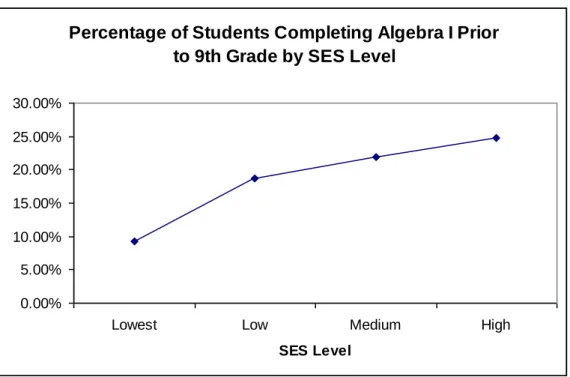
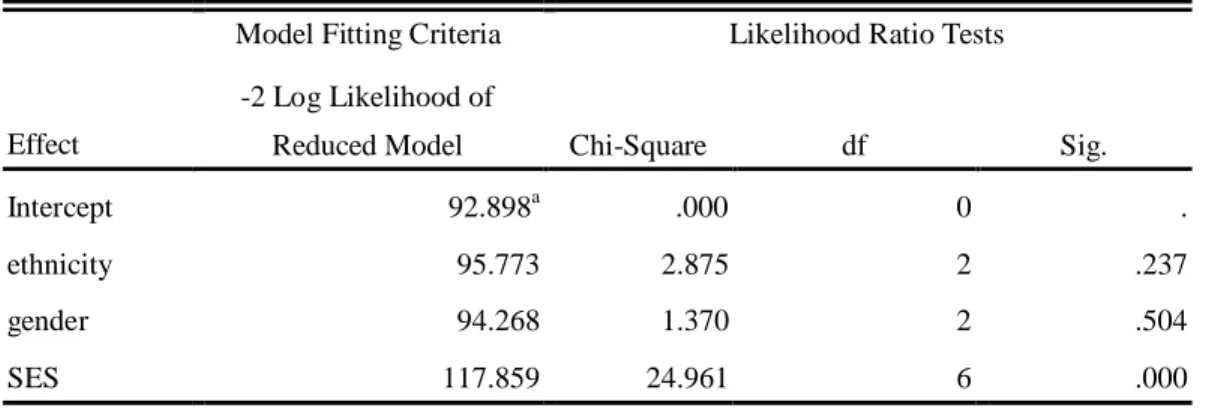
A significant positive relationship between SES and enrollment in Algebra I prior to ninth grade and a significant negative relationship between SES and enrollment in Algebra I after ninth grade was found. No significant relationship was found between gender or race-ethnicity and timing of algebra.
Table of Contents
Chapter 1 ... 1
Background of the Study ... 1
Significant Research Regarding Acceleration into Algebra ... 2
Personal Connection to the Study ... 4
Problem Statement... 6
Significance of the Study ... 6
Theoretical Implications. ... 6
Practical Implications. ... 12
Limitations and Delimitations of the Study ... 13
Limitations. ... 13
Delimitations. ... 15
Definitions ... 15
Conclusion ... 18
Chapter 2 ... 20
Literature Review ... 20
Non-Research Publications... 21
Public Opinion.... 21
Research Briefs. ... 24
Research Publications ... 26
Early Research Reporting Positive Outcomes. ... 26
Current Research Reporting Positive Outcomes.... 28
Research Reporting Negative Outcomes. ... 33
Other Factors Affecting Mathematics Achievement ... 36
Racial-Ethnic Trends. ... 37
Socioeconomic Trends. ... 38
Gender Trends. ... 39
School Size, School Locale, and Curricular Offerings. ... 40
Conclusion ... 42
Chapter 3 ... 44
Methodology ... 44
Setting ... 45
Data ... 46
Race-Ethnicity. ... 48
Student Socioeconomic Status (SES). ... 48
High School Information. ... 48
ACT Mathematics Score. ... 49
Summary. ... 49
Research Questions ... 50
Question 1. ... 50
Question 2. ... 51
Question 4. ... 53
Conclusion ... 54
Chapter 4 ... 56
Findings ... 57
Preparing the Data ... 57
Student Characteristics and Timing of Algebra ... 60
Gender and Timing of Algebra. ... 62
Race-Ethnicity and Timing of Algebra.... 62
Socioeconomic Status and Timing of Algebra. ... 64
Predicting Timing of Algebra. ... 67
School Characteristics and Timing of Algebra ... 72
School Type and Timing of Algebra. ... 72
School Size and Timing of Algebra. ... 73
School Locale and Timing of Algebra.... 77
Timing of Algebra and Mathematics Course-Taking Patterns ... 79
Timing of Algebra and All Mathematics Courses. ... 80
Timing of Algebra and Advanced Mathematics Courses.... 81
Timing of Algebra and Persistence in the Mathematics Pipeline. ... 82
Timing of Algebra and Calculus. ... 84
Timing of Algebra and Mathematics Achievement ... 86
Timing of Algebra and Algebra II Grades. ... 87
Timing of Algebra and Mathematics Grade Point Average. ... 89
Timing of Algebra and ACT Mathematics Scores. ... 91
Conclusion ... 95
Chapter 5 ... 96
Conclusions ... 96
Summary of the Study ... 97
Findings... 98
Student Characteristics and Timing of Algebra. ... 98
School Characteristics and Timing of Algebra. ... 99
Course Taking and Timing of Algebra.... 100
Mathematics Achievement and Timing of Algebra. ... 101
Discussion ... 102
Student Characteristics and Timing of Algebra. ... 102
School Characteristics and Timing of Algebra. ... 102
Course Taking and Timing of Algebra.... 103
Mathematics Achievement and Timing of Algebra. ... 105
Conclusion ... 105
Recommendations for Further Study ... 107
References ... 111
List of Tables
Table Page
Table 1: Locale Code... 17
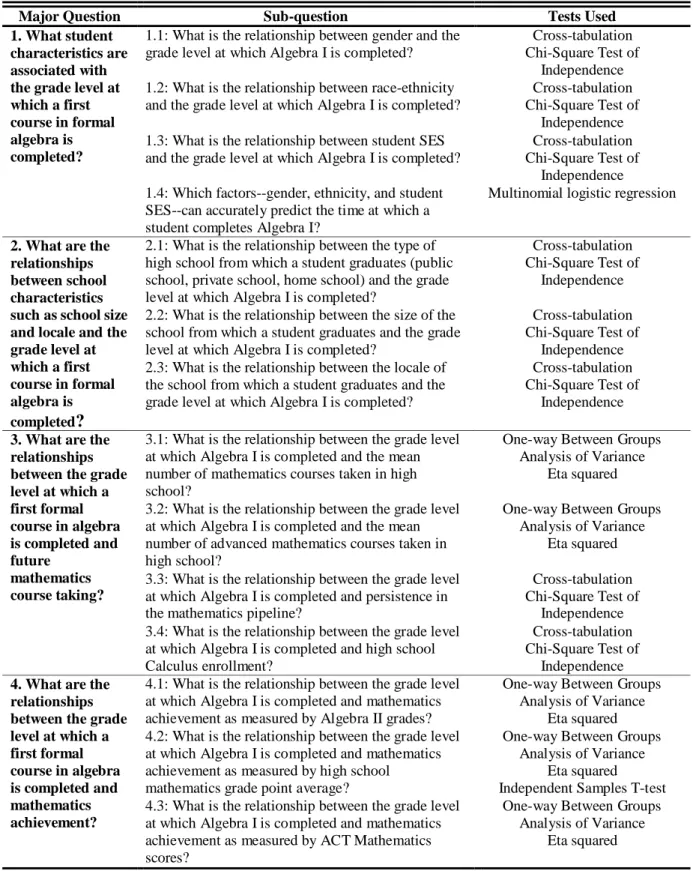
Table 2: Questions Addressed in the Study ... 55
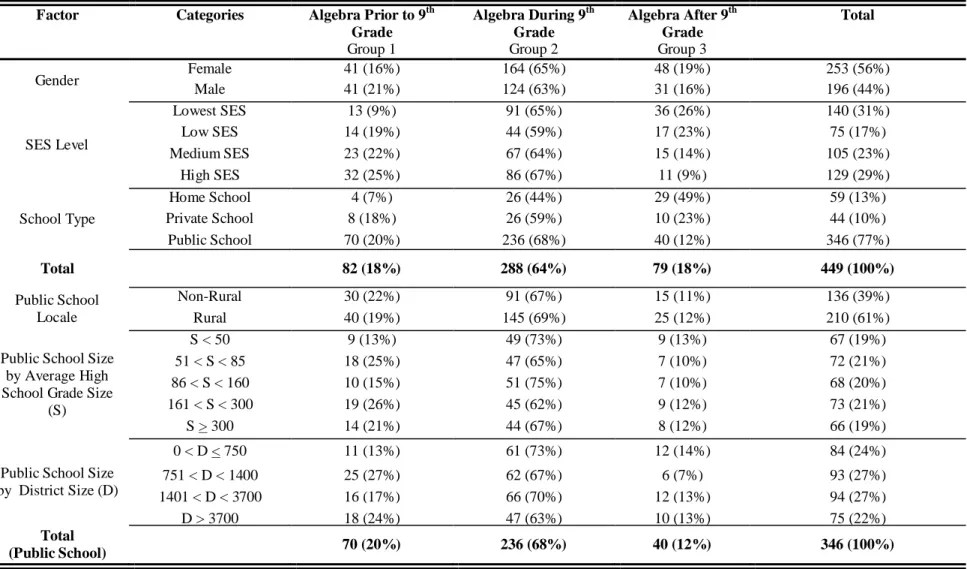
Table 3: Summary of Data ... 61
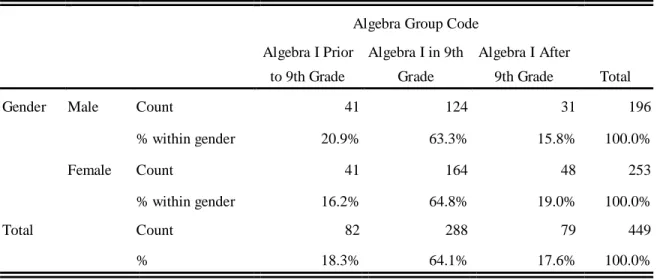
Table 4: Gender*Algebra Group Cross-Tabulation ... 63
Table 5: Income Levels for Student SES... 65
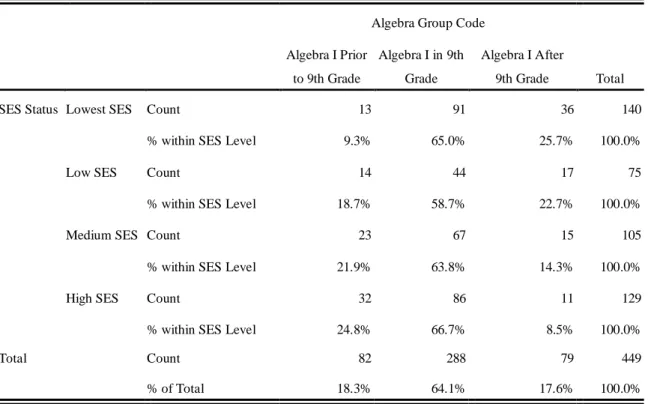
Table 6: SES Level*Algebra Group Cross-tabulation ... 66
Table 7: Likelihood Ratio Test ... 69
Table 8: Parameter Estimates for Gender+Ethnicity+SES Model ... 70
Table 9: School Type*Algebra Group Cross-tabulation... 73
Table 10: School Size Codes ... 76
Table 11: District Size Code ... 77
Table 12: School Locale*Algebra Group Cross-tabulation for All Students ... 78
Table 13: Descriptive Statistics for 9-12 Mathematics Courses... 81
Table 14: Algebra Group*Mathematics Persistence Cross-tabulation ... 83
Table 15: Algebra Group*Calculus Credit Cross-tabulation ... 85
Table 16: Point Value of Letter Grades ... 88
Table 17: Descriptive Statistics for Algebra II Grades ... 89
Table 18: Descriptive Statistics for Mathematics GPA ... 90
List of Figures
Figure Page
Figure 1: Positive Relation Between SES Level and Membership in Algebra Group 1 ... 68
Figure 2: Negative Relation Between SES Level and Membership in Algebra Group 3... 68
Figure 3: Relation Between Membership in Algebra Group 3 and School Type ... 74
Figure 4: Relation Between Membership in Algebra Group 1 and School Type ... 74
Figure 5: Persistence in the Mathematics Pipeline by Algebra Group ... 85
Chapter 1
Background of the Study
Should all students study algebra? Although this question is frequently debated, there is considerable agreement among educators today that the study of algebra is critical to students‘ futures (Bottoms & Carpenter, 2003; NCTM, 2000; USDE, 1995). Algebra has been identified as a gatekeeper in that successful completion of algebra is required for further study in mathematics as well as other school subjects. Success in algebra has also been linked with success in college and with many career opportunities (Algebra Project, n.d.; Silver, 1997). As of 2006, 28 states require all students to complete Algebra I before graduating from high school (Public Education in Arkansas, 2006). This requirement is closely aligned with work of the National Council of Teachers of Mathematics (NCTM). In the NCTM‘s Principles and Standards for School
Mathematics (PSSM), published in 2000, the case is made that all students should study algebra throughout their school careers. In PSSM, a view of algebra as a content strand spanning the pre-kindergarten through secondary school curriculum is promoted. Significant emphasis on algebra in the middle grades is also recommended, so that a strong foundation in algebra is in place by the end of eighth grade to accommodate a challenging high school mathematics curriculum for all students.
This recommendation of algebra for all brings up another recurrently debated set of questions. When should students take Algebra I? Should all students take Algebra I at the same point in their school careers? If so, should this be seventh, eighth, or ninth grade? These
grade. Over a decade later, in 1999, an article by Steen appeared in Middle Matters questioning why we rush students to take algebra in eighth grade. Steen suggested we continue to offer algebra to students only when they are ready to take it – some in eighth, some in ninth, and some in tenth grade.
Significant Research Regarding Acceleration into Algebra
During the 90s several opinion pieces were published regarding early entry into algebra and the effects on mathematics achievement. The majority of these articles indicate that
acceleration into algebra has a positive correlation with mathematics achievement. An early research study on the topic was conducted by Smith and was published in Educational
Evaluation and Policy Analysis in 1996. Based on analysis of the High School and Beyond data, Smith (1996) concludes that ―early access to algebra has a sustained positive effect on students, leading to more exposure to advanced mathematics curriculum and, in return, higher
mathematics performance by the end of high school‖ (p. 48).
of higher mathematics courses, or may find themselves forced to enroll in courses that are more advanced than their interests require‖ (Dulaney, 1996, p. 2).
A more recent study, conducted by Partenheimer and Miller in Indiana with results presented at the American Education Research Association Annual meeting in 2001, also questions the benefits of early entry into algebra. The results of this case study are similar to the results of Dulaney in North Carolina, with many early entrants into algebra repeating Algebra I in high school and with many of these students exiting the mathematics pipeline in tenth grade. Over the past five years Ma, Department of Curriculum and Instruction, University of Kentucky, has published several articles relating directly to the topic of acceleration into algebra. These articles report research conducted by Ma in which he analyzes data from the Longitudinal Study of American Youth (LSAY). The purpose of his research is to examine the effects of enrollment in formal algebra in middle school on such factors as mathematics course-taking patterns and mathematics achievement. These analyses indicate that regardless of mathematics achievement at the beginning of middle school, students who are accelerated into algebra in seventh or eighth grade experience more mathematical growth than students who are not accelerated. In regard to mathematics course-taking patterns, Ma's research shows that students completing Algebra I in eighth grade take more advanced mathematics and science courses throughout high school.
conducted using a variety of data sets to see if similar conclusions are reached. Additionally, research should be conducted to determine the availability of early entry into formal algebra for various groups of students in a variety of locales as well as the effects of early entry into algebra on mathematics course taking and mathematics achievement.
Personal Connection to the Study
I personally have experienced this dilemma regarding the most advantageous placement of a first formal algebra class within a child's course of study. My son was not allowed to take pre-algebra in seventh grade, thus putting him off track to take algebra in eighth grade. Believing he was developmentally and mathematically ready to study algebra in eighth grade, I contended with the school administrators for permission for him to enroll in Algebra I during eighth grade. This turned out to be a good choice for him, as he understood the material well and early entry into algebra allowed him to study calculus in high school, creating a good foundation for study of college level mathematics. In subsequent years, the requirements for early entry into algebra in our local school system became less stringent with more students enrolling in Algebra I during middle school. Subsequently, I have engaged in numerous conversations with parents
questioning their decisions to enroll their children in algebra in middle school due to the intellectual struggles and frustrations their children experienced.
I have also experienced the dilemma regarding acceleration into algebra from a mathematics professor‘s point of view. At the college where I teach we have a significant percentage of students with weak mathematics skills. Virtually all of these students have
first course in formal algebra in middle school or high school. Often students comment that these algebraic concepts are completely foreign to them, or they may vaguely remember hearing about the concepts, but have very little understanding of them. Even among the students who are not required to complete a remedial algebra course, weak algebra skills are often evident. Frequently these students comment that they remember studying these algebraic concepts, but that so much time has elapsed that they don‘t remember them. Some indicate that they completed Algebra I in middle school and believe they have not used algebra much since then and cannot remember many of the basic concepts of introductory algebra. Would students remember more of the concepts of a first algebra course if they took Algebra I a year later and perhaps had a higher level of cognitive development and could understand abstract concepts more completely? Would other students, if allowed to take algebra earlier, receive a greater challenge while in middle school and thus develop a more positive attitude towards mathematics resulting in persistence in the mathematics pipeline and higher mathematics achievement at the end of high school? Does the time at which a first formal course in algebra is completed affect mathematics course taking and mathematics achievement?
Problem Statement
The purpose of this study is to examine relationships between timing of algebra and students‘ mathematics achievement and mathematics course-taking patterns. Characteristics of early entrants into algebra are also examined. Additionally the availability of acceleration into algebra for students who attend different size schools in different locales will be explored. The major research questions for this study are stated below. They are further delineated in chapter three.
1. What student characteristics are associated with the grade level at which a first course in formal algebra is completed?
2. What are the relationships between school characteristics, such as school size and locale, and the grade level at which a first course in formal algebra is completed?
3. What are the relationships between mathematics course-taking patterns and the grade level at which a first formal course in algebra is completed?
4. What are the relationships between mathematics achievement and the grade level at which a first formal course in algebra is completed?
Significance of the Study
Theoretical Implications. If one looks into a typical mathematics classroom in the United States, various patterns emerge. Young children learn to count and write numbers. They study basic addition facts of whole numbers and then relate addition and subtraction. In second or third grade, children are introduced to multiplication and are encouraged to memorize basic
after mastery of these and other mathematical topics, children are ready to enroll in a first formal course in algebra.
Although education generally, and mathematics education specifically, has varied greatly over the past few centuries, this widely accepted sequencing of topics in mathematics has been in existence since the early days of formal education in the United States. According to Cohen (2003), arithmetic knowledge in eighteenth century America was learned from textbooks usually imported from England. These books usually contained a collection of rules which children dutifully copied into their own copybooks. These textbooks first introduced students to numeration and place value. This was followed by addition, subtraction, multiplication, and division of whole numbers. After these topics were introduced there was some variation in texts. Some texts then covered the basic operations with fractions and decimals while others took up weights, measurements, and commercial calculations. Also included in most texts was the study of ratios and the four basic operations with multi-digit numbers. Despite the presence of this very familiar order of topics, many of the eighteenth century arithmetic texts contained claims that arithmetic had no sequential nature to it (Cohen, 2003). "The Order in which the different Rules should be taught is a matter entirely arbitrary, and therefore no directions could be given for it; however, they are so disposed as to have but little dependence on each other, and consequently every teacher is left to his own choice in that respect" (Bonnycastle, 1786, preface). Despite such a disclaimer regarding the sequential nature of mathematics, the very familiar sequence of
arithmetic topics studied in elementary classrooms today seems to have been firmly established since the eighteenth century.
arithmetic was regarded as a topic which was too difficult for young children and thus, forma l study of mathematics was usually undertaken by twelve to fourteen year old boys. Arithmetic was viewed primarily as a vocational subject with direct application to commerce. In light of this, typically only boys engaged in the study of arithmetic. The study of arithmetic during the eighteenth century was actually more vocation specific than gender specific. However, with most women appointed to a domestic role in life, arithmetic and especially more advanced areas of mathematics were viewed as completely useless to women. Actually, because of the belief that the study of mathematics developed one's capacity for logical thought, some believed that the study of mathematics would undermine "women's essential intuitive and imaginative nature," damaging their femininity (Cohen, 2003, p. 67).
In addition to this very familiar sequencing of arithmetic topics, other familiar
sequencing patterns within mathematics have been present in the U.S. educational system for well over a hundred years. According to Angus and Mirel (2003), "The main components of what became the traditional series of high school mathematics courses -- beginning algebra, geometry, advanced algebra, and trigonometry -- were in place by the late nineteenth century" (p. 443). However, this traditional series of courses has not continued without much debate and questioning. Early in the twentieth century critics began raising questions about the importance and the nature of mathematics in high school. Some argued that the traditional course of study of mathematics in high school was elitist because it allegedly neglected the needs of non-college-bound students, focusing instead on preparing students for college. In order to better understand the changes occurring in high school mathematics during the twentieth century, Angus and Mirel (2003) divide the century into four distinct periods. They refer to these four eras as "the
shopping mall high school" (1960-1980); and "toward the twenty-first century high school" (1980-2000). Each of these periods experienced changes in the high school curriculum as a whole, and specifically in the high school mathematics curriculum.
The focus of "the vocationalizing high school" era was on devising a vocational program alongside the traditional college-preparatory program. This new curriculum was intended to make high school more attractive, thus engaging a much broader cross section of students. To make room for additional vocational classes, other subjects, including mathematics, had to play a less prominent role in the overall curriculum offerings. Basic arithmetic, algebra, and geometry courses all lost ground in enrollment percentages during this time. Also, differences in
mathematics course-taking patterns increased both across gender and class lines during this era. With the onset of the Great Depression and the decline of job opportunities for teenagers, American high schools experienced the largest increase in enrollment relative to population size in history. This brought about "the custodial high school" era in which the focus was to expand the general curriculum track and make the curriculum more interesting and immediately applicable to the needs of students. Throughout this period the enrollment rate in mathematics classes continued to decline reaching an all time low of 55% in 1948-1949 (Angus & Mirel, 2003, p. 463). A large number of general and practical mathematics courses were offered as alternative courses to algebra, geometry, and trigonometry.
Sharp increases in mathematics course taking began to occur in the late 70s. Much of this growth occurred in basic and consumer mathematics classes, but increases were also present in enrollment in elementary and pre-algebra courses. This growth continued throughout the 80s and 90s with much of the growth concentrated in mathematics classes that had previously been considered strictly college preparatory. "The percent of high school graduates earning credit for elementary algebra increased from 54 percent to 67 percent" from 1982 to 1994 (Angus & Mirel, 2003, p. 474). Despite this impressive increase in mathematics enrollment after 1980, many questions about the nature of these courses and the availability of these courses to all students still remain.
Questions regarding the most advantageous sequencing of mathematics topics and courses continue to be debated. Recent publications by the NCTM bring light to this debate. For example, in the 2000 publication of Principle and Standards of School Mathematics (PSSM), algebra is presented as a topic which, rather than reserved for high school, should be
incorporated in all levels from pre-kindergarten through twelfth grade. Despite these recent recommendations, the majority of U.S. students complete a first formal algebra class in ninth grade. In the late 90s about 25% of U.S. students completed Algebra I in eighth grade (Riley, 1997). Recent NAEP data indicate that the percentage of students enrolling in Algebra I prior to ninth grade has increased significantly since this 1997 report. Currently some estimates suggest that as high as 42% of U.S. students enroll in Algebra I prior to ninth grade (Mathews, 2007). This particular report does not indicate how many of these students successfully complete Algebra I prior to high school, moving on to more advanced classes in ninth grade.
sequencing of mathematical topics that currently exists in the majority of U.S. schools. Perhaps, on the other hand, the findings of the study will raise questions regarding this sequencing of topics or even indicate that this sequencing limits mathematics achievement for many students.
Results of this study may also raise questions regarding the commonly accepted belief among mathematics educators that the study of formal algebra should be reserved until one has a good grasp of many basic arithmetic concepts. Most educators believe that the most efficient way for a child to learn a language is for the child to be immersed in the language. Children are not required to master the recognition and writing of all the letters of the alphabet before they are allowed to use words and even form complete sentences. Children are not required to know the spelling of words and the dictionary definitions of words before they are encouraged to use the words to communicate with others. Eventually children do study language in a formal sense, with this process made much more meaningful and accessible because of early immersion into the language. Algebra is often referred to as a language, and some educators compare the learning of algebra and the learning of language. Perhaps the study and acquisition of algebraic knowledge should be approached in a manner similar to the study and acquisition of language. Perhaps, as is being posited by the NCTM, algebraic concepts should be introduced to children during pre-kindergarten days with continual exposure to the topic throughout school. If this study finds that middle school children, even those who have not mastered many arithmetic concepts, benefit from exposure to formal algebra, new insights may be provided into the manner in which children learn algebraic concepts and the sequencing of mathematics that is practiced in so many U.S. schools.
The results of this study also have potential to contribute to the broader discussion
been conducted to analyze relationships between mathematics achievement and course-taking patterns and factors such as gender, race-ethnicity, and student SES. Although consensus has not been reached among researchers, results of much of this research do indicate that some gaps in mathematics achievement may be attributable to the aforementioned student factors. As a part of this study, these student characteristics will be examined in light of the time at which a first formal course in algebra is completed. Findings regarding relationships between these student characteristics and the opportunity to enroll in formal algebra prior to high school may be significant for equity issues, especially if early entry into algebra is shown to be related to increased mathematics achievement.
Practical Implications. Decisions about when students complete a first formal algebra class are important to academic outcomes for students. Parents often have access to publications such as the ACT Policy Report, College Readiness Begins in Middle School, which indicates that middle school students who complete Algebra I are more likely to enroll in advanced
mathematics courses in high school and are more likely to attend a four-year college (Wimberly & Noeth 2005). However, parents may at the same time be provided contradictory information. For example, parents could access Dulaney's aforementioned research, which paints a less than positive outcome for many students who enroll in algebra in eighth grade. According to this study, a fairly significant number of students studying Algebra I in eighth grade receive a grade of C or lower with many students repeating the course in ninth grade. The primary reason given for early entry into algebra for students in Dulaney‘s study was to allow them to pursue
students will take more advanced mathematics in high school or that these students will have attained greater mathematics achievement by the end of their senior year (Dulaney, 1996).
If, in this current study, the effects of timing of completion of Algebra I on mathematics course-taking patterns and future mathematics achievement can be established, this result will be of great interest to students, parents, guidance counselors, mathematics teachers, school
administrators, and state and national educational personnel. The information may be used to better advise students regarding mathematics course taking and how decisions about
mathematics course taking may affect their future academic and career choices. Also, if relationships are found between school size and locale and timing of completion of Algebra I, school teachers and administrators may be challenged to rethink course offerings and course sequencing, providing more equitable mathematics education opportunities for all students. Limitations and Delimitations of the Study
Limitations. The data set under consideration contains very limited information about student mathematics achievement prior to enrollment in formal algebra. Thus determination of the effects of early entry into algebra on rates of growth in mathematical achievement was not feasible. Additionally, information about the nature and content of the mathematics courses taken by students involved in the study was not available. Courses which share similar names but are offered by different school districts may vary greatly in quality and content. The available data did not allow the research to determine these differences.
assumption was made that Algebra I was completed prior to high school and thus the student was classified as an early entrant into algebra. While this technique for identifying early entrants into algebra is common in research related to the topic, it does raise some concerns. Some research indicates that a significant number of students who attempt a first formal course in algebra prior to high school repeat the course in high school (Dulaney, 1996; Partenheimer & Miller, 2001). However, when Algebra I was included on a high school transcript, determining if the class was being repeated was not possible.
There has been much discussion and disagreement during the past few decades regarding an appropriate definition of mathematics achievement and how mathematics achievement can best be measured. Because the mathematics portion of the ACT exam is used as a measure of mathematics achievement in this study, a somewhat limited definition of mathematics
achievement is utilized. Since the ACT Mathematics exam contains only multiple-choice questions, concern exists that mathematics achievement may be too narrowly defined by this exam. Despite this concern, due to the significance of ACT scores to college acceptance and placement in college courses, its use as a measure of mathematics achievement in this study is justified. The use of additional measures of mathematics achievement helps to further alleviate this concern.
this information was invaluable in determining which factors affect timing of algebra,
mathematics course-taking patterns, and mathematics achievement, care was taken to limit the confounding of the variables as much as possible.
Currently in some schools, students have the option of completing Algebra I over a two year period. These two courses involved are often titled Algebra IA and Algebra IB. If a student completed Algebra IA in eighth grade and Algebra IB in ninth grade, this complicated the issue of whether or not the student should be classified as an early entrant into algebra. In the case where Algebra I was completed over two years, the first year was designated as pre-algebra and completion of the second year was designated as completion of Algebra I. Also, the sequencing and names of some mathematics courses made classification of the course as dependent on algebra or not dependent on algebra difficult in some cases.
Delimitations. This study is limited to students enrolled in a small liberal arts college in Southwest Missouri. The majority of students enrolled at the college are Caucasian and reside in the Midwest. Therefore, the results of the study will be limited in generalizability. Although data included in the study is limited to students who entered the college during the 2007-2008
academic year, the data provides a randomly selected and adequately sized sample for the study. Definitions
Advanced Mathematics Courses -- For the purpose of this study, classes beyond a first course in geometry and Algebra II are considered advanced mathematics courses. Thus classes such as college algebra, trigonometry, pre-calculus, and calculus are classified as advanced. Classes such as applied mathematics, technical mathematics, pre-algebra, Algebra I, geometry, and Algebra II are not classified as advanced.
Algebra Group -- For the purpose of this study, students were placed in Algebra Groups based on the time at which they completed Algebra I. Students who completed Algebra I prior to ninth grade were placed in Algebra Group 1. Algebra Group 2 is comprised of students who completed Algebra I in ninth grade, and students who completed Algebra I after ninth grade were placed in Algebra Group 3. Only one student had not completed Algebra I, and this student was dropped from the study.
Early Entrant into Algebra – This phrase refers to a person who completes Algebra I prior to ninth grade.
Early Entry into Algebra -- This phrase refers to the completion of Algebra I prior to ninth grade. For most early entrants into algebra the course is completed in the eighth grade, and for a smaller number it is completed in the seventh grade. The phenomenon is also referred to as acceleration into algebra.
First Course in Formal Algebra -- Algebra I, combination of Algebra IA and Algebra IB, or a similar combination is considered a first course in formal algebra. The phrase, ―first formal course in algebra‖ is used interchangeably with this phrase.
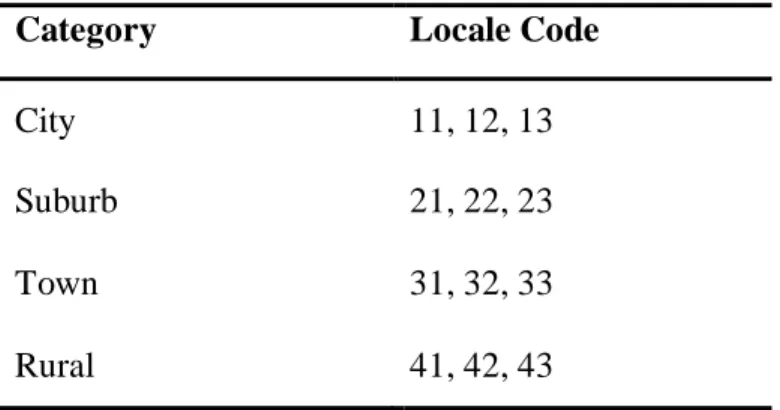
to an urbanized area, classify an area into four major types: city, suburban, town, or rural. Each of these major types has three subcategories. For city and suburb these are based on population size differences while towns and rural areas are further delineated by their distance from an urban area. The 2005-2006 codes are used to define locales in this study and are provided in Table 1. In this study city, suburb, and town are classified as non-rural, while locale codes 41, 42, and 43 are classified as rural (Identification of rural locales, n.d.).
Mathematics Achievement -- Mathematics achievement has been measured in many different ways. For this particular study, mathematics achievement is measured in a variety of ways, including scores on the ACT Mathematics exam. Further measures, such as grades earned in Algebra II and high school mathematics grade point averages, are also considered as measures of mathematics achievement in this study.
Mathematics Course-Taking Patterns --This phrase refers to the sequence of mathematics courses that a student takes during his or her high school career.
Table 1: Locale Code
Category Locale Code
City 11, 12, 13
Suburb 21, 22, 23
Town 31, 32, 33
Rural 41, 42, 43
Mathematics Pipeline – This phrase indicates an organization of transcript data into levels based on the normal progression and difficulty of courses within mathematics. This phrase has specific meaning in certain data sets such as the National Educational Longitudinal Study data set, but is used more generically in this study.
Non-rural High School -- High schools with a locale code of 11, 12, 13 (City); 21, 22, 23 (Suburb); or 31, 32, 33 (Town); as defined by the National Center for Education Statistics (NCES) are classified as non-rural for the purpose of this study.
Rural High School -- High Schools with a locale code of 41, 42, or 43 (Rural), as defined by NCES, are classified as rural for the purpose of this study.
Student Socioeconomic Status (SES) -- For the purpose of this study, student socioeconomic status is based on information obtained from the Free Application for Federal Student Aid (FAFSA). Family adjusted gross income and family size are compared to information provided by the U.S. Department of Agriculture regarding qualifications for public school free and
reduced price meals (USDA, 2008). This information is used to assign each student an SES Code of one to four, with one indicating lowest SES and four indicating highest SES.
Conclusion
Chapter 2 Literature Review
While there is general agreement among mathematics educators that all students should study formal algebra there is ongoing debate about the optimal timing for an introduction into a first formal course in algebra. Some argue that virtually all students should study Algebra I in eighth grade, while others assert that the nature and quality of the course is significantly more critical than the timing of the course and that students should enroll in Algebra I at different times based on motivation and maturity levels.
In what follows, arguments both in favor of and against early entry into algebra are examined. First, opinions found in non-research publications such as popular magazines and educational journals are reviewed. Attention is then given to examination of research briefs which are connected to various national data sets but often are devoid of rigorous statistical analysis. Following a review of these publications, both past and current research on the effects of timing of algebra on mathematics achievement and mathematics course-taking patterns are examined. This research is grouped into early research (prior to 2000) reporting positive outcomes of early entry into algebra, current research (2000 to present) reporting positive
outcomes of early entry into algebra, and early and current research reporting negative outcomes of acceleration into formal algebra.
Following a review of research directly related to early entry into algebra a brief review of research on other factors which have been linked with mathematics achievement is included. Such factors as socioeconomic status (SES), gender, and race-ethnicity are considered in relation to mathematics achievement and course-taking patterns. Additionally, literature related to
examined. The review of these various bodies of literature reveal gaps in current research, indicating a need for further research in the area of relationships between early entry into algebra and mathematics achievement and course taking.
Non-Research Publications
Public Opinion. One of the most popular water cooler topics in America today is education. Virtually everyone has an opinion on what is right and what is wrong with public schools in the United States. Perhaps this is because nearly all Americans play a role which involves them directly in education -- a student, a parent or grandparent of a student, an
employer hoping to hire a recent graduate, a public school teacher. If one engages in a discussion regarding the challenges facing education in the United States it is common for the discussion to turn to mathematics education. Some opine that the study of any mathematics beyond basic arithmetic is a waste of time. After all, one may argue, "I am a well educated, productive citizen and I have never used algebra or geometry a day in my life." Others decry the state of
mathematics education in the United States and disparage the performance of U.S. students on international mathematics exams. These individuals may believe that the study of higher level mathematics by all school age students is a necessity if the United States is to remain competitive in a global economy.
require successful completion of Algebra I for graduation from high school (Public Education in Arkansas, 2006). Despite the large number of students studying algebra prior to graduation, a consensus regarding high school algebra requirements has not been reached, even among
educators. For example, in the April 2000 issue of Mathematics Education Dialogues, Noddings, Emeritus Professor of Child Education, Stanford University, and Professor of Philosophy and Education at Teachers College, Columbia University asserts that the requirement that all students take courses designed for college-bound students is shameful. She argues that requiring all students to successfully complete a formal course in algebra forces students into courses suitable for only some future careers. "Instead of showing truly democratic respect for all honest work, we treat everyone as college-bound. Students who take jobs without going to college do so by default because they are considered 'not good enough' for college" (p. 2). Noddings concludes that students should have the option to choose college or non-college curricula, doing so with pride and with both yielding an excellent and valued education.
More recently, Cohen (2006), a self-acclaimed hater of mathematics, writes in The Washington Post of a girl who dropped out of school after failing algebra six times. He claims that in Los Angeles, "more kids drop out of school on account of algebra than any other subject" (¶ 4). He states that although he was forced to study algebra in high school he has never once in his life used algebra and the idea that the study of algebra is beneficial for strengthening
reasoning skills is "a lie propagated by, among others, algebra teachers" (¶ 7).
algebra course. For over a century Algebra I has been most commonly studied during the
freshman year of high school. Over the past two decades parents, school administrators, guidance counselors, public school teachers, and college professors have engaged in an ongoing debate regarding the most advantageous time for students to be introduced to formal algebra. A significant number of people have been involved in this debate, with many well-respected educators arguing for acceleration into algebra for all, while others caution against such a practice. In 1987, Usiskin, a well-respected professor of mathematics education, posited that most students should be taught algebra in eighth grade. He provides several reasons why he believes algebra should be taught in eighth instead of ninth grade. He reasons that algebra would be beneficial to most eighth grade students since in traditional middle school mathematics classes very little new material is explored in seventh and eighth grades. Additionally he argues that it is probably easier for children to learn algebra at age thirteen than at age fourteen, and that taking algebra in eighth grade reduces pressure on students in grades 9 through 12, allowing them to pursue the study of more advanced mathematics.
student learning. In conclusion he states that "the most effective way to make 'algebra for all' a reality is for students to take it when they are ready -- some in eighth grade, some in ninth, and some in tenth. What matters is not when students study algebra but that they learn it well" (Steen, 1999, p. 7).
Research Briefs. Since the publication of these two hallmark pieces by Usiskin and Steen, many other articles and reports, some connected with national data sets such as National
Assessment of Educational Progress (NAEP), National Education Longitudinal Study (NELS), and ACT, have been published. Authors of these reports analyze the particular data set under consideration to determine factors which affect mathematics achievement. Many of these reports examine the effects of early entry into algebra, with virtually all indicating positive benefits of the practice. For example, in the February1996 issue of NAEPFACTS in which the 1992 NAEP results are examined, the claim is made that "eighth graders who were enrolled in algebra courses had consistently higher average proficiencies than students enrolled in pre-algebra, who in turn had higher proficiencies than students taking general eighth-grade mathematics courses" (Shakrani, 1996, p. 2). In a comparable analysis published by the Southern Regional Educational Board in 2003, in which an exam referenced to the NAEP is used, similar conclusions are drawn. The researchers conclude that "Students who take algebra before grade nine have higher
mathematics achievement scores than students who do not take algebra in the middle grades" (Bottoms & Carpenter, 2003, p. 13). Based on this study, which specifically examines mathematics achievement in rural schools, the recommendation is made that more students should complete "real" Algebra I in the middle grades.
foreign language expand educational opportunities for students. While this report does not focus on the relationship between algebra in eighth grade and mathematics achievement, other factors are connected with taking algebra in eighth grade. "Enrollment in gatekeeper courses, such as algebra and foreign language in eighth grade helps students reach higher levels in the
mathematics and foreign language pipelines" (Atanda, 1999, p. 1). Also reported in this research brief is a link between studying algebra in eighth grade and an increased likelihood of applying to a four-year college.
In an ACT policy report published in 2005, a strong argument is made for college readiness beginning in middle school. Based on this conjecture, parents, teachers, and guidance counselors are urged to encourage middle school students to enroll in rigorous courses such as Algebra I and foreign language while in middle school. The report indicates that middle school students who complete courses such as Algebra I have the opportunity to enroll in advanced classes in high school which in turn results in a higher likelihood that they will apply to a four-year college (Wimberly & Noeth, 2005).
Both public opinion pieces, whether printed in education journals or in popular
magazines, and research briefs, have the potential to greatly influence mathematics education in the United States. Parents, students, school board members, teachers, and other school personnel may rely on these articles for guidance on how to best advise students in decisions related to mathematics course taking. While these publications may be very beneficial to many they may also be somewhat misleading. The opinion pieces are generally not based on research, but often upon the experiences of the author and may not be generalizable. The aforementioned research related articles, often fail to take into account other important factors which may affect
example, students who enroll in formal algebra early often do so because of exceptional previous mathematical achievement. If these students already possess superior mathematics achievement levels prior to early enrollment into algebra, it would only seem logical that their level of
mathematics achievement would remain superior after completion of algebra. With that being the case one must be cautious concluding that early entry into algebra causes increased mathematics achievement for these students. These opinion pieces and research briefs also often fail to
consider other student factors such as SES and parental support and school factors such as school SES, teacher quality, and curricular materials which may also affect mathematics achievement. Since the 1990s, research which includes an analysis of the effects of many of these factors on mathematics achievement has been conducted. After a brief examination of research on the effects of acceleration into algebra, research regarding other factors affecting mathematics achievement is reviewed
Research Publications
Early Research Reporting Positive Outcomes. In a study published in 1996 in
examine the effects of taking algebra prior to high school on the number of years of advanced mathematics taken by the senior year and mathematics achievement measured during the senior year. Other factors, such as student background characteristics and tenth grade mathematics achievement were also considered in the analysis.
The results of the research reveal that there are differences in students who have early access to algebra. Students who experienced early entry into algebra came from families of higher socioeconomic status and were less likely to be from minority groups. The study also found that students who completed algebra prior to high school continued in the mathematics pipeline longer and took more advanced mathematics classes than those who took algebra in high school. Smith (1996) hypothesizes that early access to algebra may ―‗socialize‘ a student into taking more mathematics, regulating access both to advanced coursework and increased achievement in high school‖ (p. 141).
Limitations of the study include the manner in which students were grouped. If a high school transcript included Algebra I, the student was grouped with those who had not taken algebra prior to high school. Thus students who attempted algebra prior to high school but chose to retake it in high school were not included in the early access group. If a significant number of students unsuccessfully attempted algebra prior to high school this is likely to affect the results of the study. Another limitation of the study is the lack of information on the quality of the algebra courses taken both prior to high school and in high school.
outcomes for algebra-taking in middle school and recommending that more students be placed in algebra during middle school.
Current Research Reporting Positive Outcomes. In a study published in Contemporary Educational Psychology in April 2005, Ma analyzed data from the Longitudinal Study of American Youth (LSAY) to examine if early entry into formal algebra in middle school
promotes growth in mathematics achievement. The LSAY data followed over 2000 students for six years as they progressed from seventh grade through twelfth grade. Each year the students completed a student questionnaire and took a mathematics achievement test. The test measured outcomes on four mathematical subscales: basic skills, algebra, geometry, and quantitative literacy.
The key independent variables in the study were early acceleration in mathematics and initial mathematics achievement at the beginning of middle school. Other independent variables considered in the study include age, family structure and size, gender, language spoken at home, parent socioeconomic status, and race-ethnicity. School-level variables, provided by student, teacher, and principal questionnaires were considered. These include factors such as school size and location, student-teacher ratio, parental involvement, and extracurricular activities.
growing fastest in algebra and geometry. The data also indicate that students who experienced more mathematical growth in one area, such as algebra, also grew faster in the other three areas.
Following this examination of rates of growth without any adjustment, ―conditional rates of growth were then estimated with early acceleration (together with initial mathematics
achievement and their interaction), student characteristics, and school characteristics sequentially and accumulatively added to the unconditional model‖ (Ma, 2005b, p. 447). These analyses indicate that regardless of mathematics achievement at the beginning of middle school, students who were accelerated into algebra in seventh or eighth grade experienced more mathematical growth than students who were not accelerated. Also reported, is that students with low initial achievement benefited more from early acceleration than students with high initial achievement in mathematics. Analysis also indicates that school and student characteristics did not make much difference in the rates of growth in any of the four mathematical areas.
In a second article published from analysis of this same data set, Ma (2005a) grouped students according to ability and examined the correlation between early acceleration into algebra and mathematics growth across ability levels. Students scoring above the 90th percentile in mathematics in the seventh grade were classified as gifted; students scoring between the 65th and 90th percentiles were classified as honors; and students scoring below the 65th percentile were classified as regular. The results of the study indicate that early acceleration in mathematics had little advantage in mathematics achievement for gifted students, small advantage for honors students, and large advantage for regular students. The major limitation of this study is the small number of accelerated students, especially regular accelerated students. The author reports that statistical measures (pooled multilevel analyses) were taken to alleviate this concern.
As a result of this research, the conclusion is drawn that "all students, regardless of prior math skills, benefit from taking high school algebra" (p. 250). While achievement growth is evident for each of the four student groups, "differences in achievement growth between those who did take algebra and those who did not are much greater than the differences among those who took algebra at different points in time" (p. 246). In contrast to Ma's findings reported above, in which students with lower initial mathematics achievement benefited most from early entry into algebra, Gamoran and Hannigan (2000) found that "the benefits of taking algebra in high school are weaker for students whose initial scores were at the 20th percentile or lower" (p. 246).
Further conclusions, directly related to the effects of early entry into algebra , are also reported by Gamoran and Hannigan. They found that after controlling for eighth-grade
mathematics scores, students who took algebra only in eighth grade gained more in achievement than students who never took algebra. "However, those who took algebra only in eighth grade, but still entered high school with very low test scores, received no boost to tenth-grade scores from their eighth-grade algebra course" (p. 246). Once again this seems to differ from Ma's findings that students with lowest initial mathematics achievement may benefit most from early entry into algebra.
Despite the fact that the evidence of this research points to benefits of taking algebra, the authors point out that it is still difficult to predict the effects of moving all students who
heterogeneity among students enrolled in algebra would weaken the impact of algebra courses on growth in student achievement" (Gamoran & Hannigan, 2000, p. 250).
Gamoran and Hannigan‘s analysis of the NELS data includes a category of students who take algebra in eighth grade and then retake the class in high school, eliminating the concern which was present in Ma‘s analysis about the classification of this group of students. However, a limitation of this study is the timing of the mathematics test used to measure mathematics
achievement. This assessment was administered during tenth grade, with students having considerable more opportunities to study high school mathematics. It is not clear if the benefits of taking algebra would still be present at the end of high school and if the timing of the study of algebra might have more or less of an impact on mathematics achievement measured near the end of twelfth grade. Additionally, as with the previous study, this study is somewhat limited by an inadequate amount and depth of information related to school curricular and instructional characteristics available in the NELS data itself.
success in mathematics attainment. A very significant limitation of this study is that no information is available about mathematics achievement of students prior to placement into Algebra I. Thus it is impossible to determine if the academic success of the eighth-grade algebra group is related to their accelerated placement in algebra.
The amount of research comparing acceleration into algebra and various aspects of mathematics attainment has increased since the turn of the century, with much of it indicating positive outcomes for students experiencing early entry into algebra; however, research reporting negative outcomes of acceleration into algebra is also available and is examined in the following section.
Research Reporting Negative Outcomes. The results of a case study of the effects of accelerating eighth-grade students into algebra appear in a non-published paper presented at the American Educational Research Association Annual meeting in 2001 (Partenheimer & Miller, 2001). This longitudinal study involves examining mathematics course-taking patterns and transcripts of 49 students as they progressed from eighth grade to twelfth grade, graduating in 1992. These 49 students, constituting 27% of the class, were selected from a group of 179
students to take algebra in eighth grade. During the course of the study, three students transferred out of the school system so that data from 46 participants were analyzed. Numerous research questions were posed in the study with two of particular interest to this review.
The focus of one question of interest is on the relationship between acceleration into algebra and further mathematics course taking. Accelerating students into algebra in this Indiana school appears to have produced somewhat negative results as indicated by the following
tenth grade; and (3) only fourteen of the 46 students (30%) completed five years (including Algebra I) of advanced mathematics.
The second research question of interest focuses on the effects of early acceleration into algebra on mathematics achievement. In order to analyze achievement, grades from advanced mathematics classes were examined for the 46 participants. The number of accelerated students receiving a C grade in specific classes is as follows: Algebra I (17/46) 37%; Ninth grade Algebra I (repeat) (10/19) 53%; Geometry (29/46) 63%; and Algebra II (27/46) 59%. Perhaps even more disconcerting is the fact that 35 of the 46 students (76%) received a grade of C or below in Geometry with 37% of those who attempted Geometry in ninth grade receiving a D or F in at least one semester of the course. The grades seem surprisingly low considering the fact that students were identified to accelerate into algebra based on high IQ scores, success in seventh grade pre-algebra, and recommendation from a seventh grade teacher.
This study has some limitations, the most obvious of which is related to external validity. The reader is not able to conclude if specific characteristics of the school, students, teachers, or mathematics curriculum might affect these results so that they are not generalizable to other settings. It is worth noting that the authors cited other, some what dated literature (1981 & 1985), that reports similar conclusions about the attrition rate of accelerated algebra students in the mathematics pipeline (Dockweiler & Prevost, as cited in Partenheimer & Miller, 2001).
were not accelerated into algebra might have provided some valuable comparisons and strengthened internal validity.
In 1996, Dulaney analyzed success rates of students in the Wake County Public School System in North Carolina to provide advice to parents about the benefits and concerns associated with early entry into algebra. The results of his study are similar to those of the previously reported study. In 1990-91, about 21% of the eighth-grade students who took Algebra I received a grade of C or below in the class and 12% repeated the class. The following year eighth-grade algebra enrollment increased substantially (the report does not include enough data to determine the exact percentage increase) and the percentage of students who received a grade of C or below increased to 34% with 16% of the students repeating the class.
According to Dulaney‘s article, the primary reason for allowing enrollment in eighth-grade algebra in the Wake County School System is to allow for enrollment in Advanced Placement Calculus during the senior year without necessitating enrollment in two advanced mathematics courses during a single year. However, only 41% of the students who were accelerated in algebra actually took Advanced Placement Calculus.
It is important to note that the information reported for these students from North Carolina does not come from a carefully planned research study. The information is simply reported as an analysis of data to aid in course-taking decisions. Many factors such as
Other Factors Affecting Mathematics Achievement
Research indicates that factors other than timing of mathematics course work affect mathematics achievement. Significant among these are student factors such as socioeconomic status (SES), race-ethnicity, and gender, as well as broader factors such as school SES and teacher qualifications. Over the past several years much funding has been dedicated to research designed to determine relationships between these factors and mathematics achievement. In a meta-analysis published in the Journal for Research in Mathematics Education in 1997, Tate examined quantitative research literature from the previous fifteen years "to determine trends in mathematics achievement of various social groups defined along lines of race, class, gender, ethnicity, and language proficiency" (p. 652). After examining general population trends, Tate analyzed research based on the following data sources: NAEP data gathered from 1973 to 1992; NELS data collected in 1988, 1990, and 1992; College Entrance Exams; and Advanced
Placement Calculus Exams.
More recent information regarding factors influencing mathematics achievement was presented in 2003 at the annual meeting of the American Educational Research Association in Chicago. In this presentation, Lubienski and Shelley reported on "trends related to race and socioeconomic status (SES) and mathematics achievement, beliefs, class room experiences, course-taking patterns, and teachers' educational backgrounds" (abstract). For this study, NAEP data collected from the fourth, eighth, and twelfth grade mathematics achievement exams in 1990, 1992, 1996, and 2000 were used. Data from teacher and student surveys administered as part of NAEP assessments were also included.
occurred in relationships between these variables from 1973 to 2000. Other recent research and analyses is reviewed as well.
Racial-Ethnic Trends. Tate's (1997) analysis of various research publications indicates that from the 1970s to the 1990s all racial-ethnic groups at each grade level made statistically significant gains in mathematics achievement. His findings indicate that African American and Hispanic students made greater gains than White students, slightly closing the mathematics achievement gap. With several recent studies indicating mathematics course-taking differences between racial-ethnic groups, Tate's reporting of a strong relationship between mathematics achievement and mathematics course taking is significant. Some of the research he reviewed suggests "course taking has the potential to equalize achievement levels across racial-ethnic groups" (p. 662).
Socioeconomic Trends. Both of these studies also examined relationships between student SES and mathematics achievement. Tate reviewed several studies which focused on relationships between mathematics achievement and socioeconomic status of students. These studies used various measures, such as parents' education levels, family income, and community types in which the students reside, to define socioeconomic status. Consistently, the studies indicate a very strong relationship between SES and mathematics achievement. The findings "demonstrate the need to raise the mathematics achievement of low-SES students as a whole and, even more urgently, of low-SES minority students. Moreover, these findings suggest the need for an intervention in the two geographic regions with the highest poverty levels--urban and rural communities" (p. 667).
The NAEP data, as analyzed by Lubienski and Shelley, also indicate that SES-related differences in achievement are large, with students in the highest-SES quartile significantly outscoring students from the lowest-SES quartile. The SES-related gaps are similar in size to the mathematics achievement gaps related to race-ethnicity. Lubienski and Shelley further analyzed the data to determine interactions between race-ethnicity and SES on mathematics achievement. They concluded that "SES related differences do not account for substantial portions of the race-related gaps ... [evidenced by the fact that] the lowest-SES white 12th graders score more
assessment, curricular materials, and access to calculators were found to be related to students' race-ethnicity as well as their SES.
Gender Trends. In addition to race-ethnicity and SES, Tate reviewed studies which included analysis of NAEP, NELS:88, College Entrance Exams, and AP Calculus data in regard to relationships between gender and mathematics achievement. These studies suggest "that no significant gender achievement differences exist on items measuring basic skills" with the
exception being 17 year olds on the 1992 NAEP trend assessment where males significantly
outscored females (Tate, 1997, p. 670). Tate's findings also suggest that the small
mathematics achievement differences that do exist between genders emerge in secondary
school. Some of the researchers thus conclude that these differences in achievement levels
may be explained by differences in mathematics course-taking patterns between male and
female high school students.
While the 2003 Lubienski and Shelley publication does not focus on gender and
mathematics achievement, in a 2006 publication, McGraw, Lubienski, and Strutchens describe gender gaps in mathematics achievement appearing in the NAEP data from 1990 to 2003. The analysis regarding gender achievement gaps reveals "relatively small but consistent gaps
favoring males across reporting years (1990-2003)" (p. 145). However the analysis suggests that the gender gap is not evenly distributed across mathematical content strands or across
at the time of the analysis, interactions among gender, race-ethnicity, and SES could not be analyzed. In a 2001 study, Lubienski states, "Any existing gender gaps pale in comparison to the highly significant gaps between Black and White students, as well as the gaps between the lowest- and highest-SES students" (Lubienski, 2001, p.8).
A 2007 statistical analysis report of course-taking patterns of U.S. students, prepared by staff of NCES, corroborates many of the aforementioned findings. While the research indicates that persistence in the mathematics pipeline and enrollment in advanced mathematics courses increased for students from all subgroups from 1982 to 2004, significant disparities were found between racial-ethnic groups. White and Asian students were significantly more likely to persist in the mathematics pipeline and enroll in advanced mathematics courses than students in all other racial-ethnic groups. Similar relationships were found between SES and mathematics course taking. From 1982 to 2004 enrollment in advanced mathematics courses increased for students from all SES groups; however, disparities in enrollment in pre-calculus and calculus between the highest and lowest SES quartiles increased during this time period. In regard to gender, the report indicates that no substantive differences were found between males and females in percentages completing advanced mathematics courses (Dalton, Ingles, Downing, & Bozick, 2007).
relationship between school size and the number of distinct course offerings. For example, in a study published by Barker in 1985, personnel from over 1300 public high schools in the United States responded to surveys providing information about 105 different course offerings. The collected data reveal that over 35% of these courses were offered at significantly higher frequencies in larger schools. Included in these more frequently offered courses were four mathematics courses -- advanced geometry, calculus, probability and statistics, and computer math. Another study, examining relationships between school district size and high school course offerings in Connecticut, was published by Melnick, Shibles, and Gable (1987) during the same time frame. The results of this study also confirm that large high schools consistently offer more advanced courses than small or medium high schools. However, the results of this study differ from those reported by Barker in that small, medium, and large high schools did not differ significantly with respect to course offerings in calculus or computer programming.
Despite the increased curricular course offerings in large schools, research by Melnick et al (1987), finds that there is no significant difference in the percentage of students in need of additional help in math, reading, or writing with respect to school size. Similarly, with respect to school size, there are no significant differences on mean scores or percentages of students
scoring above proficiency level on Connecticut's state exams. These, and similar findings, cause one to question whether student achievement is influenced more by number of courses offered or by the caliber of instruction offered in these courses.