AM I NEXT? MEGA-THREATS, IDENTITY LABOR, AND THE BUFFERING EFFECT OF CLOSE WORK RELATIONSHIPS
Angelica E. Leigh
A dissertation submitted to the faculty at the University of North Carolina at Chapel Hill in partial fulfillment of the requirements for the degree of Doctor in Philosophy in the
Department of Organizational Behavior in the Kenan-Flagler Business School.
Chapel Hill 2020
iii ABSTRACT
Angelica E. Leigh: Am I Next? Mega-Threats, Identity Labor, and the Buffering Effect of Close Work Relationships
(Under the direction of Shimul Melwani)
In this dissertation, I explore the influence of mega-threats – large scale, negative, identity relevant occurrences that receive significant media attention – on individuals at work. Mega-threats are frequent occurrences in our society today, yet the influence of these events on individuals remains unclear. I explicate the psychological consequences of these events – namely anticipatory threat – for event observers that share identity group
iv
v
To my mom, your love means so much to me I hope this dissertation makes you proud.
To every employee that has felt as if they had to hide parts of who they were to be successful in the workplace, I see you, I respect you, and I dedicate my career to convincing the rest of
vi
ACKNOWLEDGEMENTS
My deepest gratitude is to my advisor, Shimul Melwani. I have found that it is truly rare for graduate students to have the space to bring their wholes selves to their work. I have been fortunate to work with an advisor that gives me the space to express my ideas, while always challenging me to continue to refine my thinking. Thank you for encouraging me to “think bigger”. It truly has been an honor working with you Shimul. It is my hope that our relationship continues to grow, and that we continue to co-author bold, authentic, and rigorous research.
vii
continuously improve. I quite literally would not be starting the next chapter of my career in North Carolina without your support.
I would also like to thank, every member of the Kenan-Flagler Organizational Behavior department for your guidance, support, and encouragement throughout the years. I am especially thankful to the faculty in the department for providing me with the tools to develop into the scholar I am today. I am so grateful for the classes I took in my first two years that exposed me to research within the field of OB and Psychology and allowed me to begin to develop my research identity. I am also grateful for the opportunities that I was given throughout the years to present my research to faculty and receive your constructive, insightful feedback. Special thanks to my faculty co-authors, Sreedhari, Mike, and Jessica, that have guided me through the research process. I would also like to thank Noah Eisenkraft for your mentorship and guidance during my first two years in the program, and for your multilevel research methods seminar. Your seminar taught me how to think critically while analyzing data. I am not sure I would have been able to analyze my dissertation data without this class. And thank you to the person that keeps our department running, Sonya Simon, for always being there to help me navigate the bureaucracy that is Kenan-Flagler Business School. Thank you for being a friend that is always there to support me and cheer me on. I am also very grateful for the broader Kenan-Flagler Business School community. It has been an honor being a member of this community and I look forward to continuing to contribute to the success of Kenan-Flagler as an alumni. Special thanks to Kim Yates, Jeff Cannon, Larry Chavis, and Jim Johnson; you all have been instrumental in my success at Kenan-Flagler.
viii
Spencer and Jamie for bringing me into the fold and helping me figure out how to navigate classes and start research in our program. Thank you to the current PhD students Hanna, Tracy, Ben, Casher, Ricky, Daniel, Chicas, Terence, Natalie, and Alyssa for your support, friendship, and for listening to all of my practice job talks. Special thanks to my cohort mates Sal, Tricia, and Ayana. I honestly do not know how I would have gotten through this program without you. At every step of the way your friendship, advice, and support have been invaluable to my continued success. I am excited to continue this academic career journey with you all! Special thanks to my “roomie” Ayana for your friendship. You are such an amazing human being and scholar, and I am honored to be your friend. It really is a privilege to be your colleague and friend and I am excited to see the great things you’re going to do both personally and professionally in the future!
I would also like to thank all of the other PhD students and faculty that I have met and connected with throughout my years as a PhD student. As a PhD student I have been lucky enough to travel both domestically and internationally to present and learn about research in the field of OB. These trips also provided me with the opportunity to connect and become friends with PhD students and faculty from all over the world. There really are too many people to name, and I don’t want to forget anyone, so I will just simply say thank you for your friendship, and I am looking forward to connecting with you all again at our next in-person conference. I am truly grateful to both Kenan-Flagler and the PhD project for providing me with the funding to attend these conferences.
ix
for me. Mrs. Busbee always believed that I was capable of greatness and that I would go on to do great things. This dissertation is a direct result of the love for learning that Mrs. Busbee instilled in me all those years ago. Next, I would like to thank the members of the Michigan State University (MSU) Multicultural Business Programs (MBP). As an undergraduate business student, MBP provided me with the tools to be a successful student, and with a community of other high achieving business students, some of whom are still my best friends today. I would especially like to thank the leaders of MBP: Dr. Ernest Betts, Dr. Darrell King, Dr. Kevin Leonard, and Anne Crain. MBP truly transformed my undergraduate experience and was the place where I heard for the first time that I should consider pursing a PhD in business. Thank you for everything that you do for students, particularly students of color, at MSU. In addition, I would like to thank former MSU professor, current UAB professor, Dr. Steven McCornack. You were the second professor at MSU to note that becoming a professor might be the right career path for me. I really appreciate all the time you spent with me as an undergrad, and I am so thankful for the insights you provided me when I was applying to PhD programs. I wish there were more professors like you in the academy.
x
that allowed me to successfully traverse every component of my PhD program. These conferences also provided me with a network and family of PhD students and faculty that have been invaluable in helping me to achieve my goals. I owe a lot to the PhD project. I am looking forward to giving back to this organization in any way I can for the rest of my career.
On a more personal note, I would like to thank my family and friends. My family members are really my biggest cheerleaders. I would like to thank my Dad for always believing in me and being so supportive and proud through every step of the program. I would also like to thank my aunt Cynthia for providing me with a safe place to escape. Whenever the pressures of this program became too much, I always knew I could simply drive to Savannah, GA and hang out with my aunt Cynthia for a couple days. These trips helped me to regroup, rejuvenate, and return to Chapel Hill ready to continue my studies. Cynthia I am truly grateful for your love and support. Thank you to the rest of my family, including my beloved cousins, for always keeping me grounded and cheering for my success.
Thank you to my Alpha Kappa Alpha Sorority, Inc. “sorors” for always supporting me and cheering for my success. Many of these extremely accomplished women have been calling me Dr. Leigh since I announced that I was starting a PhD program. When I would respond that I hadn’t quite earned the title of Dr. yet, they would always remark “oh but you will soon!” Thank you for always having faith in me and for being my sisters.
xi
xii
TABLE OF CONTENTS
LIST OF TABLES ... xvi
LIST OF FIGURES ... xvii
CHAPTER 1: INTRODUCTION ... 1
CHAPTER 2: DEFINING MEGA-THREATS ... 7
CHAPTER 3: MODEL OF THE IMPACT OF MEGA-THREATS ON EMPLOYEES ... 12
Step 1: The Psychological Consequences of Mega-Threats ... 12
Step 2: The Mediating Role of Identity Labor ... 16
Building the Definition of Identity Labor. ... 16
Components of Identity Labor. ... 18
Step 3: Identity Labor and Work Engagement ... 21
CHAPTER 4: THE MODERATING ROLE OF CLOSE WORK RELATIONSHIPS ... 24
CHAPTER 5: EMPIRICAL INVESTIGATION OF MEGA-THREATS... 27
Overview of Empirical Strategy ... 27
Study 1: Method ... 29
Participants ... 29
Procedure ... 29
Measures ... 30
Independent Variable: Gender. ... 30
xiii
Dependent Variable: Anticipatory Threat. ... 31
Study 1: Results ... 31
Manipulation Check ... 31
Hypothesis Test ... 31
Study 2: Method ... 33
Participants ... 33
Procedure ... 34
Measures ... 35
Study 2: Results ... 37
Manipulation Check ... 37
Hypothesis Tests ... 37
Study 3: Method ... 40
Mega-Threat Under Study ... 40
Participants ... 41
Procedure ... 42
Measures ... 42
Study 3: Results ... 44
Test of Hypothesis 1 ... 44
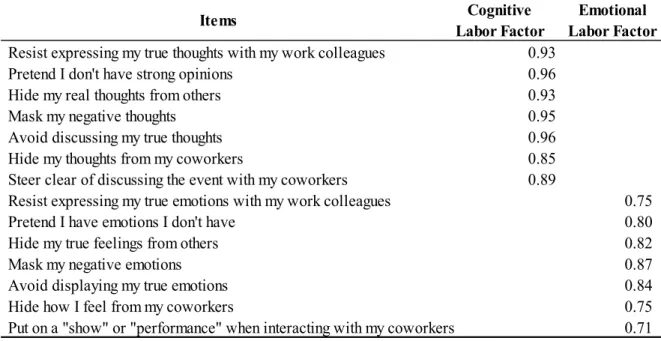
Identity Labor CFA Analysis ... 44
Test of Hypotheses 2 & 3 ... 46
Study 4: Method ... 48
xiv
Participants ... 52
Measures ... 53
Study 4: Results ... 55
Subsample A Results ... 55
Subsample B Results ... 57
CHAPTER 6: GENERAL DISCUSSION ... 60
Theoretical Contributions... 61
Limitations/Future Directions ... 64
Practical Implications ... 66
Conclusion ... 68
APPENDIX A. SURVEY FOR SURVEY 1 ... 93
Demographics Items... 93
News articles for conditions ... 93
Study Scales ... 95
APPENDIX B. SURVEY FOR STUDY 2 ... 97
Demographics Items... 97
News articles for conditions ... 98
Study Scales ... 99
APPENDIX C. SURVEY FOR STUDY 3 ... 101
Study Scales ... 102
CFA Scales ... 103
xv
Time 1 Survey ... 105
Demographics Items and Scales... 105
Time 2 Survey ... 107
Time 2 News article – Subsample A ... 108
Time 3 News article – Subsample A ... 109
Time 2 News article – Subsample B ... 111
Study Scales ... 111
APPENDIX E. SUPPLEMENTARY ANALYSES ... 113
Study 1: Supplementary Analysis ... 113
Independent Variable: Identity Centrality ... 113
Study 2: Supplementary Analysis ... 116
Attributions to Race by Condition and Participant Race ... 116
Independent Variable: Identity Centrality. ... 118
Study 3: Supplementary Analysis ... 122
Moderators: Close Work Relationships, Workforce Diversity and Climate for Inclusion ... 122
Study 4: Supplementary Analysis ... 126
Moderators: Workforce Diversity and Climate for Inclusion ... 126
xvi
LIST OF TABLES
Table 1. Study 2 Identity Labor Scale Exploratory Factor Analysis Results ... 69
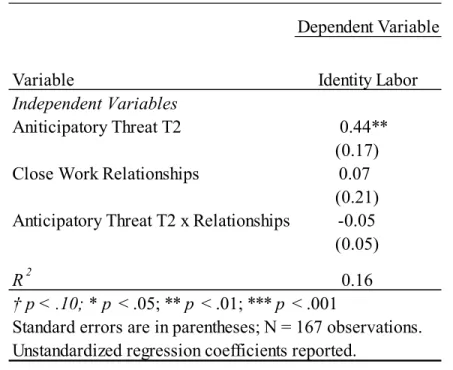
Table 2. Study 2 Moderated Mediation Regression Table ... 70
Table 3. Study 3 Means, Standard Deviations and Correlations ... 71
Table 4. Study 3 Confirmatory Factor Analysis Loadings ... 72
Table 5. Study 3 Regression Results... 73
Table 6. Study 3 Indirect Effect Results ... 74
Table 7. Study 4 Means, Standard Deviations, and Correlations ... 75
Table 8. Study 4 Sample A Regression Results ... 76
Table 9. Study 4 Sample A Indirect Effect Results ... 77
Table 10. Study 4 Sample A Close Work Relationships Moderator Results... 78
Table 11. Study 4 Sample B Regression Results ... 79
Table 12. Study 4 Sample B Indirect Effect Results ... 80
xvii
LIST OF FIGURES
Figure 1. Theoretical Model ... 82
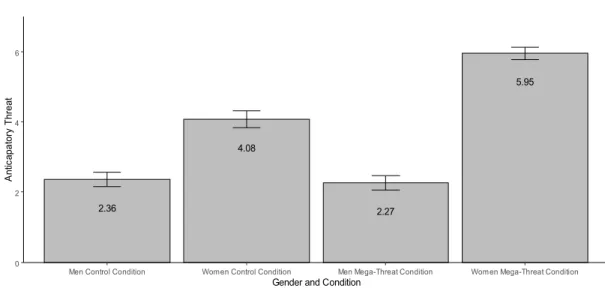
Figure 2. Study 1 Mean Anticipatory Threat ... 83
Figure 3. Study 2 Mean Anticipatory Threat ... 84
Figure 4. Study 2 Mean Identity Labor ... 85
Figure 5. Study 2 Moderated Mediation Results ... 86
Figure 6. Study 3 Identity Labor Mediation Results ... 87
Figure 7. Study 3 Total Effect of Mega-threats on Task & Social Engagement ... 88
Figure 8. Study 4 Subsample A Identity Labor Mediation Results ... 89
Figure 9. Study 4 Subsample A Total Effect of Mega-Threats ... 90
Figure 10. Study 4 Subsample B Identity Labor Mediation Results ... 91
1
CHAPTER 1: INTRODUCTION
Societal events have the potential to shake the foundations of communities, structures, and organizations. For example, the 2012 shooting of Black teenager Trayvon Martin by a White neighborhood watch volunteer captured the attention of millions of Americans and sparked the creation of the Black Lives Matter social movement. In another instance, a highly publicized exposé detailing numerous sexual assault allegations against Hollywood producer Harvey Weinstein in October 2017 inspired 1.7 million tweets and reignited the MeToo social movement. Indeed, research suggests that these major societal occurrences not only influence societal structures, but could also have effects at every level within organizations, “from the most molar environmental level to the most molecular individual level” (Morgeson et al., 2015, p. 515). However, while scholars have examined the influence of large scale societal events on firm-level behavior (Tilcsik & Marquis, 2013), little research has explored how these events impinge on employees within organizations.
2
victims of the event. Their dual-pathway model suggests that mega-threats can act as a catalyst that motivates social identity group members to engage in positive behaviors on behalf of their group in organizations. However, this theory highlights that these risky
positive progroup behaviors may only occur when there are organizational structures in place that lead employees to feel empowered to engage in behaviors that depart from
organizational norms. Thus, while positive organizational change is one possible outcome of mega-threats, it is imperative that organizational scholars continue to investigate the
consequences of mega-threats in organizations.
Therefore, the purpose of this dissertation is to extend current theorizing about mega-threats by developing a theoretical framework that clarifies the psychological processes triggered by mega-threats and explains the consequences of these events for employees at work. Toward this end, I build a theoretical model (see Figure 1 for full model) and provide empirical evidence designed to answer three research questions.
3
the harmed identity group – leading group members to experience anticipatory threat, or to become concerned that a similar negative event may personally happen to them.
I then seek to understand how individuals manage this threat at work. In answering this second question, I suggest that the typically taboo nature of discussing social identities in the workplace forces employees to engage in an effortful process of suppressing their threat related cognitions and emotions that I refer to as identity labor. I propose that identity labor is a combined process of identity concealment (Petriglieri, 2011) and emotional labor
(Grandey, 2000) that occurs as a result of organizational norms that dictate the suppression of identity threat in the workplace. Furthermore, I posit that identity labor consumes
psychological resources that, in turn, prevents individuals from fully engaging with work tasks and socially with their work colleagues (Christian et al., 2011; Kahn, 1990; Melwani & Sharma, 2018).
4
This dissertation makes three important contributions to our understanding of the influence of mega-threats on individuals in organizations. First, by explicating the psychological evaluations and consequences of mega-threats this paper extends current research on mega-threats. In their original conception of mega-threats Leigh and Melwani (2019) posited that societal events can be considered mega-threats when they are negative, large-scale, and identity relevant. However, the authors did not explicitly consider how observers of societal events infer that an individual or group was harmed because of their social identity, thus making the event identity relevant. This paper extends this work by demonstrating that negative societal events can be deemed identity relevant, and therefore are mega-threats, when observers make the attribution that the victim(s) of the event were
targeted and/or harmed because they are a member of a specific identity group.
Second, by developing the construct of identity labor this paper addresses calls for research that jointly examines cognitive and emotional authenticity in organizations (Cha et al., 2019). In a recent review of the literature on authenticity in organizations Cha and colleagues (2019) noted that emotional labor and identity concealment can be viewed as forms of inauthenticity in organizations, yet research on these constructs has largely
developed separately. In contrast, my theory proposes that identity labor is a dynamic process of cognitive and emotional suppression that occurs as a result of the tension between
experiencing identity-based threat and knowing that expressing this threat goes against organizational norms that dictate appropriate self-expression.
5
occurrences for organizations because these events lead individuals to engage in identity labor that then reduces both task and social engagement in the workplace. This work
advances research on work engagement by demonstrating the important influence that events which occur outside the bounds of organizations can have on behaviors that are enacted within the bounds of organizations.
In sum, this dissertation provides a comprehensive theory that explicates the psychological experience of mega-threats and seeks to provide empirical evidence of the individual level consequences of mega-threats on employees at work. In the next section of this paper, I will integrate disparate literatures on events, attributions to discrimination, and inter-group threat to explicate the psychological consequences of mega-threats. Then, drawing from theories on identity management, authenticity, and work engagement I build a theoretical model that explains the negative downstream consequences of mega-threats on impacted identity group members at work. I also identify one moderating factor that may reduce these negative consequences. Next, I report the methods and results of a laboratory study that tests the influence of mega-threats on individuals that are members vs. non-members of a harmed identity group (Study 1). Then, I report the methods and results of an online experimental study where I replicate the findings from my laboratory study with a different identity group under study, and I begin to develop my measure of identity labor (Study 2). Following the initial development of my measure of identity labor, I report the methods and results of an online field study where I further validate my measure of identity labor and test the total effect of mega-threats on task and social engagement after the occurrence of a mega-threat (Study 3). Finally, I report the methods and results of a
6
7
CHAPTER 2: DEFINING MEGA-THREATS
There is a long tradition in organizational research of investigating organizational phenomena by examining the influence of events that are encountered by organizations or the entities within them (Allport, 1940; Pepper, 1948). Organizational research on the effects of events defined as discrete, discontinuous, non-routine episodes that occur within and outside of an organization’s environment (Morgeson et al., 2015) has historically focused on events that directly or personally involve organizations and/or the individuals within them. For instance, affective events theory (Weiss & Cropanzano, 1996) and research on traumatic work-related events (Bacharach & Bamberger, 2007) demonstrates that events that employees encounter within the workplace can lead to important changes in employee’s emotions, behaviors, and well-being. Research on life events demonstrates that personal events, such as divorce or death of a loved one, have an important influence on
8
Recognizing the importance of societal events Leigh and Melwani (2019) introduced a theory of mega-threats – large scale negative identity related episodes that receive
significant media attention – that begins to consider the influence of societal events on individuals at work. In this work the authors proposed that mega-threats have three defining features. First, mega-threats are overwhelmingly negative occurrences that consist of individuals or groups of individuals being attacked, threatened, or physically harmed. Second, mega-threats are large-scale events that garner significant attention through both traditional media outlets and on social media platforms. Third, these occurrences are identity related because they highlight the devaluation of a particular identity group in society, making them important occurrences for any individual that is a member of this identity group.
9
As described by Leigh and Melwani (2019), the defining feature that separates mega-threats from other large-scale events is the fact that these occurrences are identity related. However, in their original conception of mega-threats the authors did not explain how observers come to infer that a large-scale societal occurrence is related to social identity. Utilizing an attribution theory lens (Jones & Davis, 1965) I posit that in order for an event to be deemed identity related individuals must attribute, or infer that the event was caused by (Jones & Davis, 1965), or occurred because the victim(s) of the event are members of a particular identity group. In the section below, I explicate the two identity related attributions that I propose observers must make in order for a negative large-scale event to be appraised as identity related, and as a consequence be considered a mega-threat.
In general, attribution theories explain how individuals make attributions, or judgements about the causes of an event (Jones & Davis, 1965; Jones & Nisbett, 1971). Attributions about the causes of an event are typically described as either external – arising from situational or contextual factors – or internal – arising from stable dispositional
characteristics (Jones & Nisbett, 1971). Extending this work to situations of discrimination or prejudice, Major and colleagues (2002) assert that attributions to discrimination involve two judgements that involve both internal and external attributions. First, attributions to
discrimination involve an internal attribution that negative treatment or harm occurred because an individual possesses an attribute or characteristic that is devalued in a particular social context or in society. Second, attributions to discrimination involve an external
attribution that the actor, or person inflicting the mistreatment or harm, holds an inherent bias or prejudice against individuals that possess the relevant attribute or characteristic.
10
discrimination is the possession of stigma, or belonging to a social identity group that is devalued within society (Major, Quinton, et al., 2002), as this increases the possibility that individuals will be the target of discrimination (Crocker et al., 1993; Crocker & Major, 1989; Major, Gramzow, et al., 2002; Major, Quinton, et al., 2002). While this research explains how individuals make attributions to discrimination for personal experiences, it has not considered whether individuals make similar attributions for events that they are not directly involved in.
Drawing from Major and colleagues (2002) work, I argue that in the wake of a
11
12
CHAPTER 3: MODEL OF THE IMPACT OF MEGA-THREATS ON EMPLOYEES To understand the impact of mega-threats on individuals at work I propose a
theoretical model that explains the multi-step process whereby mega-threats lead to cognitive, emotional, and behavioral changes in the workplace. In Step 1, I argue that the consequences of threats differ based on identity group membership, such that mega-threats lead to a heightened awareness of the increased risk of harm that may befall any member of a particular identity group, leading individuals that belong to this identity group to experience feelings of anticipatory threat. Then in Step 2, I posit that when individuals enter the workplace they continue to cope with this experience of threat, but the typically taboo nature of discussing social identities in the workplace prevents employees from expressing this threat. As a consequence of this interaction between experiencing identity-based threat and organizational norms that constrain the expression of this threat, I argue that individuals engage in an effortful process of cognitive and emotional suppression that I refer to as identity labor. Finally, in Step 3, I propose that because identity labor is an effortful process that consumes psychological resources it leads to reduced task and social
engagement in the workplace. In the sections below, I describe the psychological
consequences of threats and explain how the psychological consequences of mega-threats spills over into organizations leading to changes in behaviors at work.
Step 1: The Psychological Consequences of Mega-Threats
In the wake of a mega-threat any observer, regardless of their identity group
13
I posit that the psychological consequences of the identity attributions that encompass mega-threats differ based on event observers own identities. In the section below, I argue that because mega-threats highlight the potential for identity-based discrimination or harm that could potentially befall any member of the harmed identity group, these societal events lead event observers that are also members of the harmed identity group to experience
anticipatory threat.
Individuals generally believe that we live in a predictable world, and that they are impervious to negative events (Janoff-Bulman, 1992). Threats, or negative events that highlight the potential for loss (Chattopadhyay et al., 2001), are particularly challenging for individuals to cope with because they shatter these positive assumptions about the world (Janoff-Bulman, 1992). When individuals encounter threats it typically triggers a threat response, or leads individuals to enter a state of readiness in which they assess the nature of the threat and their ability to cope with the threat (Lazarus & Folkman, 1984). Furthermore, threats frequently lead individuals to become hyper-vigilant to their environment, where they begin to anticipate and protect against future losses (Kouchaki & Desai, 2015; Stephan et al., 2015). Scholars have argued that personal experiences of discrimination are typically
14
& Major, 1989), may not be important for event observers who do not share this identity, because these individuals do not possess the devalued characteristic; and as a result these events do not represent a threat to their self-concept. However, when an event observer is a member of the targeted and/or harmed identity group it likely leads to the perception that the observer could also personally suffer a similarly negative outcome because they possess the devalued characteristic that caused the negative event. Thus, I argue that mega-threats have important personal consequences for any observer who shares social identities with victim(s) of the event because these occurrences can be appraised as personal threats that have the potential to trigger a threat response in which identity group members anticipate that they may become victims of a similarly negative discriminatory event.
The relationship between the experience of personal discrimination and experiences of threat is well established. For example, McCoy and Major (2003) found that when women participants were confronted with negative feedback from a sexist evaluator they experienced significantly higher levels of threat than those that received negative feedback from a non-sexist evaluator. In another study, Townsend and colleagues (2011) found that when women were rejected from a position for overtly sexist reasons, such as being too emotional, they experienced significantly higher levels of threat than those that were rejected based on merit (Townsend et al., 2011). In a third paper, Dover and colleagues (2015) found that Hispanic participants were more likely to make attributions to discrimination and experience threat as a result of unfair treatment from an outgroup member than an ingroup member (Dover et al., 2015).
15
anticipatory threat response. More specifically, I argue that mega-threats act as a shock that leads identity group members to enter a state of readiness in which individuals perceive that they, or other members of their group, are at greater risk for personally experiencing a negative event – leading individuals to experience anticipatory threat. Anticipatory threat is an adverse cognitive and emotional response to being threatened where individuals anticipate that they are at greater risk for personally experiencing a negative loss situation (Janoff-Bulman & Frieze, 1983; Lazarus & Folkman, 1984). I propose that anticipatory threat triggered in response to a mega-threat is a negative high arousal experience where individuals become hyper-vigilant to the potential that they could personally experience identity-based discrimination or physical harm. As an example, in the case of the shooting of Trayvon Martin, many observers made the attribution that Trayvon was killed because he was a young Black male; and that his shooter held an inherent bias that Black males are suspicious and threatening. In turn, this led many Black Americans, from singer/songwriter, Sean “Puff Daddy” Combs and then U.S. President Barack Obama to publicly express fear that they or their families could become a target of similarly racially motivated violence (Fowler, 2012; Tau, 2012). In this example, the mega-threat, or the shooting death of Trayvon Martin, triggered other Black Americans to experience anticipatory threat where they became concerned that they too could become victims of a negative discriminatory event. Based on these arguments I hypothesize the following:
Hypothesis 1 (H1): The effect of mega-threats on experiences of anticipatory threat is
higher for event observers that are members of the harmed identity group than for
16 Step 2: The Mediating Role of Identity Labor
The experience of anticipatory threat that arises in response to mega-threats does not dissipate when individuals who belong to the harmed identity group enter the workplace. Instead, this threat likely spills over into workplace experiences, influencing impacted identity group member’s emotions, cognitions, and behaviors at work (Leigh & Melwani, 2019). Given the typically taboo nature of discussing social identities, particularly those associated with minority group status, in the workplace (Ragins, 1997; Roberts, 2005), I propose that these events may be particularly challenging to cope with at work.
In the next section of this paper, I argue that as a consequence of the interaction between experiencing arousing threat-related cognitions and emotions that stay at the forefront of our minds and organizational norms that prevent individuals from sharing authentic thoughts and emotions related to their social identities, individuals will likely engage in a process that I call identity labor. In the sections below, I define identity labor and describe it as the mechanism that links anticipatory threat experienced as a result of a mega-threat to behavioral changes in the workplace.
17
examples of individuals switching off or downplaying their social identities at work: female scientists describe hiding their female identities when enacting a scientist identity (Settles, 2004); mothers “put on their work hats” when they enter the workplace (Ladge et al., 2012); Black female employees describe needing to “lose their Blackness” and “act White” at work (Bell & Nkomo, 2001, p. 13); and homosexual men have described preferring to keep “personal matters out of the office” (Woods & Lucas, 1993). However, even as some minority organizational members may decide to switch off their identities at work, others may pursue a more integrative identity management strategy where they infuse aspects of their social identities into their professional image (Roberts, 2005). For example, female professionals in male-dominated industries may include both masculine and feminine characteristics into their professional identities (Ely, 1995), and Black female professionals may display aspects of their cultural heritage in the workplace, like wearing an African pin or wearing their hair in a natural style (Bell & Nkomo, 2001; Rosette & Dumas, 2007).
Whether an individual typically decides to switch off their minority identity at work or finds ways to integrate it into their professional identity, mega-threats will likely interrupt these routine identity management processes. More specifically, I argue that the shock of a mega-threat leads social identities to remain salient in the workplace (Leigh & Melwani, 2019), and this salience coupled with the arousing experience of anticipatory threat
18
Roberts, 2005) or increasing the likelihood of negative stereotyping or discrimination (Clair et al., 2005).
As a consequence of the tension between experiencing arousing negative threat related cognitions and emotions and knowing that expressing these cognitions and emotions goes against organizational norms that dictate appropriate self-expressions in the workplace (Cha et al., 2019), I propose that mega-threats lead affected identity group members to engage in a psychological process I refer to as identity labor. I define identity labor as the effort, planning, and control needed to suppress cognitions and emotions that arise from experiences of identity related threat within the workplace. In other words, I posit that identity labor is an arduous process of identity concealment (Petriglieri, 2011) and emotional labor (Grandey, 2000) that occurs within the workplace as a result of an experience of threat.
Components of Identity Labor. There are three key components to this definition of identity labor that warrant further explanation. First, at the core of this definition is that identity labor occurs as a result of an experience of identity based threat. As described in the prior sections, mega-threats lead affected identity group members to experience anticipatory threat. If this experience of threat was related to a societal event that impacted everyone in an organization uniformly, such as a hurricane that causes extensive damage within a
community (Stephan et al., 2015), then all individuals, including minorities, may feel
comfortable openly discussing the threat they experienced as a result of the event. However, I propose that because anticipatory threat experienced as a result of a mega-threat is
19
Second, I posit that identity labor occurs within social interactions or organizational contexts that limit the expression of social identities. As discussed above, under normal circumstances, employees may engage in multiple strategies to manage their identities in the workplace. However, regardless of the identity management strategy that individuals
typically pursue I argue that the experience of threat related to identity group membership interrupts these identity management strategies. When individuals experience identity threat they typically become consumed by negative cognitions and emotions about their identity (Inzlicht & Kang, 2010), and they feel compelled to share these negative thoughts and feelings with others (Leigh & Melwani, 2019). Yet, individuals may perceive that discussing this experience of threat with coworkers, particularly those who do not share the harmed identity, may have negative consequences for them in organizations (Dumas et al., 2013). Thus, I posit that instead of openly displaying or discussing their authentic threat related cognitions and emotions in the workplace identity group members likely decide to engage in a psychological process to actively suppress these adverse threat reactions.
Third, identity labor involves concealing or suppressing identity related cognitions and emotions. While research examining identity suppression and emotional suppression has largely developed separately (Cha et al., 2019), theories of stress and coping posit that the experience of threat and the resulting suppression of this threat has both affective and cognitive components (Lazarus & Folkman, 1984). Building on this work, I argue that identity labor is a combined process of cognitive and emotional suppression.
20
anticipatory threat response in an effort to negate any further potential harm (Lazarus & Folkman, 1984), which may lead to identity management strategies such as downplaying or suppressing characteristics associated with a threatened identity (Petriglieri, 2011). While there is research that suggests that individuals may engage in identity concealment as a result of identity threats that originate within the organizational context (Holmes IV et al., 2016; Petriglieri, 2011; Ramarajan & Reid, 2013), this work has not considered whether identity threats encountered outside the workplace have effects on individuals within the workplace. Given the permeability of organizational boundaries (Katz & Kahn, 1978), I argue that when individuals encounter identity threats outside of organizations, they may carry those threats with them into the workplace, thus leading individuals to cope with this threat by engaging in identity concealment.
21
members were more likely to engage in emotion regulation within interactions with their teammates (Kim et al., 2013). This research suggests that individuals may routinely engage in emotional labor within interactions with diverse others, especially when displaying
authentic emotions has the potential to highlight difference. Building on this work, I propose that in the wake of a mega-threat, identity group members may feel compelled to suppress their threat-related emotions to meet organizational emotional display rules that typically dictate that individuals do not display negative emotions like anxiety or sadness (Grandey et al., 2012), as well as to avoid highlighting their experience of dissimilar emotions from their diverse work colleagues. Based on these arguments I hypothesize the following:
Hypothesis 2 (H2): In the aftermath of a mega-threat, being a member of the harmed
identity group has a positive indirect effect on identity labor, which is mediated by
anticipatory threat.
Step 3: Identity Labor and Work Engagement
I further propose that identity labor has negative downstream effects on employee work engagement, or “the simultaneous investment of personal energies in the experience or performance of work” (Christian et al., 2011, p. 95). As contemporary workplaces typically require individuals to work both independently and interdependently with others to complete work tasks, scholars have begun to examine the influence of work engagement as two
22
seeks connections with others at work. In the section below, integrating Kahn’s (1990) theory of personal engagement with research on identity concealment and emotional labor
(Grandey, 2000; Petriglieri, 2011), I propose that identity labor reduces the three
psychological conditions necessary for work engagement, preventing individuals for fully investing in both their work tasks and socially with their work colleagues.
To understand the link between identity labor and work engagement, I draw from Kahn's (1990) theory of personal engagement that argued that individuals make a conscious choice to either personally engage or disengage from a work role — and that this decision — depends on their psychological experiences within the workplace. In his qualitative study of individuals working as camp counselors and architects, Kahn (1990) proposed that employees will have high levels of personal engagement under three circumstances: when they feel as if their contributions to the workplace are valued or meaningful, when it is safe to show their true self without fear of negative repercussions, and when they possess the resources necessary to invest in their work role.
23
meaningfulness and safety. Second, I argue that identity labor is an effortful process that drains psychological resources (Baumeister et al., 1998). Identity labor reduces the availability of these psychological resources for investment in the workplace. As a result, I propose that when individuals engage in identity labor, they are also experiencing low levels of availability of psychological resources.
I argue that when individuals engage in identity labor it increases the likelihood that they will personally disengage from their work tasks (Kahn, 1990). When identity labor is high the psychological resources that would typically be invested in work tasks are instead diverted to concealing and suppressing true cognitions and emotions (Baumeister et al., 1998), leading to reduced task engagement. In addition, engaging in identity labor leads to lower self-disclosure and avoidance of work colleagues, especially when interactions with coworkers have the potential to highlight dissimilarity among interaction partners (Dumas et al., 2013; Prisbell & Andersen, 1980).Thus, I propose that identity labor also reduces social engagement. Based on these arguments I hypothesize the following:
Hypotheses 3a (H3a): In the aftermath of a mega-threat, being a member of the
harmed identity group has a negative indirect effect on task engagement, which is
mediated by anticipatory threat and identity labor.
Hypotheses 3b (H3b): In the aftermath of a mega-threat, being a member of the
harmed identity group has a negative indirect effect on social engagement, which is
24
CHAPTER 4: THE MODERATING ROLE OF CLOSE WORK RELATIONSHIPS Thus far, I have argued that mega-threats have deleterious downstream effects for impacted social identity group members in the workplace. My theory suggests that mega-threats lead individuals that share identity group membership with victim(s) of the event to experience threat that then must be suppressed in the workplace, leading to higher levels of identity labor that in turn reduces both task and social engagement.
I further propose that close work relationships (Bacharach et al., 2005; Dumas et al., 2013), may provide a buffer to the negative effects of mega-threats. Positive coworker relationships have also been referred to in the literature with different nomenclature such as high quality relationships (Carmeli et al., 2009; Stephens et al., 2011), supportive peer relationships (Bacharach et al., 2005), and workplace friendships (Melwani & Sharma, 2018; Methot et al., 2016). All of these descriptors have been used to describe coworker
relationships that involve reoccurring positive interactions that provide benefits such as increased physiological resources, resilience, and organizational learning (Carmeli et al., 2009; Heaphy & Dutton, 2008).
Dumas and colleagues’ (2013) characterization of close work relationships is particularly critical to my theorizing because of their emphasis on relationship closeness, which the authors’ define as the extent to which individuals feel a sense of connection and bonding with their work colleagues that goes beyond mere work tasks. Close work
25
partners engage in behaviors such as socializing together, sharing personal information, and discussing non-work matters (Dumas et al., 2013). Close work relationships are also
characterized as relationships where individuals feel comfortable infusing aspects of their personal lives and cultural heritage into their relationships (Dumas et al., 2013).
I propose that in the aftermath of a mega-threat close work relationships attenuate the effect of anticipatory threat on identity labor in two ways. First, close work relationships provide individuals with an outlet for their negative emotions and cognitions related to a mega-threat, effectively reducing the need for suppression. When individuals encounter an emotional event they are compelled to share this experience with others (Gable & Reis, 2010; Rimé, 2009). However, the typically taboo nature of discussing negative aspects of social identity group membership in the workplace prevents the natural sharing of cognitions and emotions related to mega-threats. I propose that close work relationships provide impacted social identity group members with a safe avenue to disclose their authentic emotions related to an event, reducing the need to engage in suppressing their emotions.
Second, I argue that close work relationships help to dispel negative cognitions and emotions related to mega-threats by enabling individuals to repair or restore their threatened identity. In the wake of a mega-threat, impacted identity group members experience
26
close work relationships reduce the need to engage in identity labor following a mega-threat. Based on these arguments I propose the following:
Hypothesis 4 (H4): In the aftermath of a mega-threat, the effect of anticipatory threat
on identity labor is smaller for event observers that have close work relationships,
which reduces the indirect effects of shared group membership on task engagement
27
CHAPTER 5: EMPIRICAL INVESTIGATION OF MEGA-THREATS Overview of Empirical Strategy
In this dissertation I have proposed that mega-threats have important consequences for individuals’ cognitions, emotions, and behaviors at work. Integrating disparate literatures on attributions to discrimination, identity threat, authenticity, and work engagement I’ve built a theoretical model that explains the multi-step process through which mega-threats lead to behavioral changes in the workplace for affected identity group members. In general, it is difficult to study the influence of societal events on organizations because as Johns (2006) posited “research in organizational behavior is seldom timely enough to capture the impact of such events.” Given the lack of empirical evidence of the impact of societal events on
organizations, another goal of this dissertation is to be among the first to empirically investigate the influence of mega-threats on employees in organizations. Toward this end, this dissertation presents a series of studies which investigate my hypotheses.
In an attempt to isolate the consequences of mega-threats for individuals that share identity group membership with victim(s) of the event, and to capture the effects of these events in real-time on employees in the real-world, I employed experimental, cross-sectional survey, and longitudinal survey methods to investigate my hypotheses. In Study 1, I
28
29
Study 1: Method
The purpose of Study 1 was to investigate the psychological consequences of mega-threats. In this study, I presented participants with one of two possible news articles that I developed that either described a mega-threat or a control negative non-identity relevant event. The article that described the mega-threat detailed an incident that insinuated that a young woman was sexually harassed in the workplace by a male CEO. I expected that within the mega-threat condition women participants would experience significantly higher levels of anticipatory threat than men as a result of reading about the mega-threat (Hypothesis 1).
Participants
Participants were one hundred and eighty-three undergraduate business students that participated in a laboratory session in exchange for course credit. The sample consisted of 86 women and 97 men, was 81% White, and on average participants were 20 years old (SD = 1.06 years). Male and female participants were randomly assigned to one of two “event” conditions (0 = control condition, 1 = mega=threat condition). Accordingly, this enabled me to create four conditions based on the combination of participant gender and experimental condition (1 = male control condition, 2 = female control condition, 3 = male mega-threat condition, 4 = female mega-threat condition).
Procedure
30
described an event where a male CEO was asked to testify in front of the U.S. Senate about unsafe working conditions at his firm. The manipulation of the mega-threat was contained in the article that described either a negative event that was particularly relevant for women, or a control negative event that was not identity related. In the mega-threat condition, drawing from news reporting about highly publicized instances of sexual assault in the workplace (Setoodeh & Wagmeister, 2017), the article described an event were a young woman was made to feel unsafe by a male CEO at work. In the control condition, the news article described an event where a young woman was made to feel unsafe by malfunctioning equipment within the office building (see Appendix A for the full articles).
After reading one of the articles, participants answered several survey items designed to measure the variables of interest in this study. Finally, they also filled out demographic information about their gender, race, and age.
Measures
Unless otherwise indicated, all items used a 7-point Likert-type scale anchored at 1 = strongly disagree and 7= strongly agree. All measures are included in Appendix A.
Independent Variable: Gender. Participants indicated their gender by reporting whether they identified as male or female.
31
Dependent Variable: Anticipatory Threat. Drawing from measures of terroristic threat (Onraet et al., 2013; Onraet & Van Hiel, 2013) I adapted a 3-item measure designed to assess perceptions of anticipatory threat. The items were “I worried this could happen to me”, “I worried that my gender makes me vulnerable to experiencing a situation like this”, and “was concerned I could end up in this situation because of my gender”(α = 0.89).
Study 1: Results Manipulation Check
I began by confirming that there were indeed differences in identity relevance between the two conditions by testing differences in gender salience. I found that gender salience was significantly higher in the mega-threat condition F(1,167) = 40.69, p < .001, (M
= 5.08, SD = 2.01) as compared to the control condition (M = 2.96, SD = 2.30).
Hypothesis Test
To assess the influence of mega-threats on individuals who share a social identity with the victim of the event I conducted a one-way ANOVA that examined differences in anticipatory threat between men and women in each condition. Supporting Hypothesis 1, the overall model was significant F(3,165) = 68.89, p < .001 and contrast testing revealed that women in the mega-threat condition experienced significantly higher anticipatory threat (M = 5.95, SD = 1.20) than men in the mega-threat condition (M = 2.27, SD = 1.33) , t(165) = 12.728, p < .001, women in the control condition (M = 4.08, SD = 1.50) , t(165) = 6.22, p < .001, and men in the control condition (M = 2.36, SD = 1.52) , t(165) = 12.19, p < .001. See Figure 2 for graphical depiction of results.
32
33
Study 2: Method
In Study 2, I sought to replicate the results of Study 1 with a different mega-threat under study. In this experimental study I specifically recruited participants that were employed and self-identified as either Black or White. I used similar methods to those employed in Study 1 by presenting participants with one of two possible news articles that I developed for this study to describe either a mega-threat or a control non-identity relevant event. In the mega-threat condition, participants were presented with a news article that described a police shooting of a Black victim. In the control condition, participants were presented with a news article that described a police encounter where a Black victim died of electrocution. In this study, I also began the process of developing my measure of identity labor by having participants predict the extent to which they would have to engage in identity labor in the workplace after hearing about the event they read about. I predicted that the interactive effect of reading about a mega-threat, in which a Black victim was harmed, and participant race, or being a Black participant, would lead to higher levels of anticipatory threat (Hypothesis 1). I also predicted that there would be a positive indirect effect of the interaction between condition and participant race on experiences of identity labor, such that Black participants in the mega-threat condition would anticipate that their experience of anticipatory threat would spill over into the workplace leading them to engage in
significantly higher levels of identity labor (Hypothesis 2).
Participants
34
indicated that they were employed outside of Amazon Mechanical Turk for at least 20 hours a week. This demographic data was collected by turkprime when individuals register to use the website (Litman et al., 2017), and was used to display the study to participants on the website that met the study criteria. Using quota sampling techniques (Singleton et al., 1993), I sought to recruit an equal number of Black and White participants to participate in the study. The final sample consisted of 96 Black participants and 101 White participants, 52% were women, the mean age was 35 years old (SD = 10.29), and 65% had an associate degree or higher. The participants were randomly assigned to one of two “event” conditions (0 = control condition, 1 = mega=threat condition). Accordingly, this enabled me to create four overarching conditions based on the combination of participant race and experimental condition (1 = White control condition, 2 = Black control condition, 3 = White mega-threat condition, 4 = Black mega-threat condition).
Procedure
Similar to Study 1, participants were told that they would be participating in a study about the influence of societal events on individuals. In this study, participants were
presented with a news article and instructed to imagine that they had read this article on their way to work. In both conditions, participants read about a deadly incident in a city named Greenville where a Black man named Jamal Jackson died after encountering police in his backyard.
The manipulation of the mega-threat was contained in the articles where participants were randomly assigned to read one of two news articles that described either an identity relevant (mega-threat) or a non-identity relevant (control) event. In the mega-threat
35
CA in March of 2018 (Winton et al., 2018), participants read about an unarmed Black man that was shot and killed by police after they mistakenly thought that the victim’s cell phone was a gun. In the control condition participants read about a Black man that encountered police officers, was surprised, and died of electrocution as a result of a downed powerline that was in his backyard (See Appendix B).
Similar to Study 1, after reading one of the articles, participants answered several survey items designed to assess their reactions to the event. Finally, they also filled out demographic information about their gender, race, education, and age.
Measures
Unless otherwise indicated, all items used a 7-point Likert-type scale anchored at 1 = strongly disagree and 7= strongly agree. All measures are included in Appendix B.
Independent Variable: Race. Participants indicated their race by reporting whether they self-identified as Black or White.
Manipulation Check: Attributions to Race. In this study, I sought to further refine my manipulation check. Drawing from research on personal attributions to discrimination (Major, Quinton, et al., 2002; McCoy & Major, 2003), I developed a 3-item measure to assess the extent to which participants attributed the cause of the deadly incident to the identity (race) of the victim. The items were: “race was an important part of this event”, “racism was a contributing factor to this event”, and “race had very little to do with the event (reverse coded)” (α = 0.91).
36
Dependent Variable: Identity Labor – Scale Development Phase 1. In this study, I purposefully recruited a sample of working adults in order to assess differences in anticipated identity labor between Black and White employees. In this section of the survey, participants were reminded that they should be imagining that they had read the news article on their way to work, and then they were instructed to respond to a 14-item measure that I developed to assess identity labor.
Given that I have argued that identity labor is a combination of identity concealment and emotional suppression in the workplace, I began with Brotheridge and Lee's (2003) and Grandey's (2003) validated scales of emotional suppression (or surface acting) as the starting point for my measure of identity labor. I adapted these measures and added new measures to ensure that the items described feeling as if you must suppress authentic emotions that may be experienced as a result of the event within the workplace and in interactions with work colleagues. Sample items for the emotional labor portion of the scale include, “resist expressing my true emotions with work colleagues” and “hide how I feel from my
coworkers”. Next, I developed new items to assess identity concealment or suppression that were designed to capture the extent to which respondents believed that they would have to suppress their authentic identity related thoughts about the event while interacting with their colleagues at work. Sample items for the cognitive labor portion of the scale include “resist expressing my true thoughts with my work colleagues” and “steer clear of discussing the event with my work colleagues”. These items were measured on a 7-point Likert scale anchored at 1 = not at all to 7 = a great deal.
37
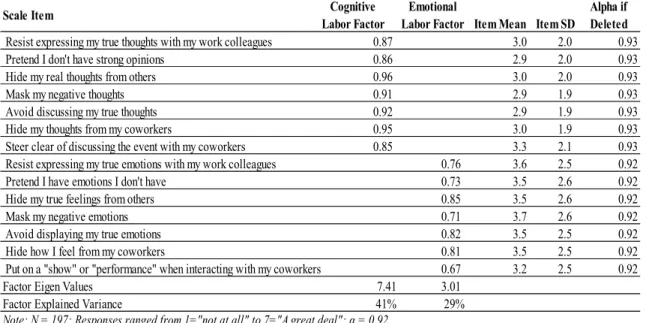
factoring and oblim rotation (Kim & Mueller, 1984) as a means of examining the factor structure of my identity labor scale. The EFA extracted 2 factors, with eigenvalues greater than 1, which accounted for 70% of the variance. The factor that accounted for the largest amount of variance (41%) was labeled “cognitive labor” because the factor contained all the items related to suppressing authentic cognitions and avoiding discussions about the event. The second factor, which accounted for 29% of the variance, was labeled “emotional labor” because the factor contained all the items related to suppressing authentic emotional reactions to the event. All items in the scale demonstrated sufficiently high item loadings and there were no items that had cross-factor loadings greater than 0.30 (Fabrigar et al., 1999); thus, all the items were retained in the final scale. The resulting 14-item measure of identity labor that was used in Study 2 (and the remaining studies in this paper) is presented in Table 1, with scale descriptive statistics, item loadings, and item reliabilities.
Study 2: Results Manipulation Check
To confirm that there were differences in causal attributions to race between the two conditions I examined and found that attributions to race were significantly higher in the mega-threat condition F(1,195) = 101.1, p < .001, (M = 5.44, SD = 1.70) as compared to those in the control condition (M = 2.85, SD = 1.90).
Hypothesis Tests
38
Supporting Hypothesis 1, the overall model was significant F(3,193) = 29.04, p < .001 and contrast testing revealed that Black participants in the mega-threat condition experienced significantly higher anticipatory threat (M = 5.24, SD = 1.90) than White participants in the mega-threat condition (M = 2.46, SD = 1.51) , t(193) = 8.06, p < .001, Black participants in the control condition (M = 3.62, SD = 1.95), t(193) = 4.72, p < .001, and White participants in the control condition (M =2.39, SD = 1.34) , t(193) = 8.14, p < .001. See Figure 3 for graphical depiction of the results.
To assess the spillover effects of mega-threats on individuals at work, I first ran a one-way ANOVA that examined differences in identity labor among Black participants in the mega-threat condition, White participants in the mega-threat condition and Black and White participants in the control condition. The overall model was not significant F(3,193) = 2.06, p
39
40
Study 3: Method
The results of Study 2 represent an initial step in developing a validated measure of identity labor. These results also provided preliminary evidence of the spillover effects of mega-threats on individuals at work. In Study 3, I sought to further validate my measure of identity labor, by conducting a Confirmatory Factor Analysis (CFA), and I sought to further examine the spillover effects of mega-threats on individuals at work by investigating the impact of a real-world mega-threat on employees (Hypotheses 1 – 3). To this end, in Study 3 I conducted an online study with employees after the occurrence of a mega-threat.
Mega-Threat Under Study
In order to assess the influence of mega-threats on employees I first needed to stay up to date on events that were happening in the world and be prepared to collect data after a mega-threat occurred. The mega-threat that I chose to examine in this study occurred on July 14, 2019 when the President of the United States posted a series of tweets about four
Democratic congresswomen. In his tweets the President wrote “So interesting to see ‘Progressive’ Democrat Congresswomen, who originally came from countries whose governments are a complete and total catastrophe, the worst, most corrupt and inept anywhere in the world (if they have a functioning government at all), now loudly … and viciously telling the people of the United States, the greatest and most powerful nation on earth, how our government should be run. Why don’t they go back and help fix the totally crime infested places from which they came. Then come back and show us how it’s done.”
41
twitter and other social media outlets (Rogers & Fandos, 2019). Additionally, this series of tweets was the subject of 183 online news articles published by local, state, and national news outlets over a 3-day period immediately after the event. Second, these comments were negative in that they were meant to insult the four Congresswomen. In fact, many media outlets referred to these tweets as racist in their coverage of the event (Rogers & Fandos, 2019). Third, and relatedly, this event was identity related because the insult within the tweets was meant to insinuate that the four Congresswomen were less American than other citizens of the United States (Rogers & Fandos, 2019). In response to this event many
individuals made attributions that the President singled out the Congresswomen because they are members of minority identity groups in the U.S. For example, in reaction to this event scores of Americans that are immigrants or members of racial minority groups in the posted on social media about their personal experiences of being the target of the insult “go back to your country” throughout their lives (Rogers & Fandos, 2019; Shao, 2019).
Thus, I collected data over a five-day period after this event to examine the differential effects of this mega-threat on immigrants and racial minorities that frequently encounter insults like the insult contained in the tweets in their everyday life, as compared to White individuals who may not ever be the victim of this type of insult.
Participants
42
generation immigrants about 55% were of Asian descent and 35% were of Hispanic descent. 47% of the sample was women, the mean age was 37 years old (SD = 22.0 years), and 68% held an associate degree or higher.
Procedure
Participants were told that they would be participating in a study that was about the influence of societal events on people at work. After consenting to participate in the study participants were shown a short excerpt from a news report about the mega-threat (Rogers & Fandos, 2019, see Appendix C), including a snapshot that contained the tweets that were posted by the President. Next, participants were asked to react to the event by writing 2-3 sentences about their thoughts, feelings, and experiences in the few days since this event had occurred. Then, participants were presented with survey items designed to assess their experiences of anticipatory threat and the salience of their immigration status over the past few days. Next, participants were told that the study was also about their experiences in the workplace over the past few days and they responded to several survey items about their experiences in the workplace in the days following the event. Finally, participants filled out demographic information including their race, gender, age, and educational attainment.
Measures
Unless otherwise indicated, all items used a 7-point Likert-type scale anchored at 1 = strongly disagree and 7= strongly agree. All measures are included in Appendix C.
43
coded as 1.Furthermore, to ensure that participants were at least minimally aware of the U.S. President’s tweets I asked a screening question (“Have you heard of this event before reading this article?”, yes/no). 85% of the sample reported that they had heard of the event. The
results reported below focus on the participants that responded yes to this screening question.
Mediator: Anticipatory Threat. I measured anticipatory threat with the same 3-item measure that was used in Study 1 and 2 (α = 0.89; Onraet & Van Hiel, 2013; Onraet et al., 2013).
Mediator: Identity Labor – Scale Development Phase 2. I measured identity labor using the 14-item measure that I developed in Study 2. The items used a 7-point Likert scale anchored at 1 = not at all to 7 = a great deal. In addition, to continue validating my measure of identity labor I collected measures of several constructs that are related to identity labor including: facades of conformity (Hewlin, 2009), authenticity (van den Bosch & Taris, 2014), and identity suppression (Madera et al., 2012). I also collected several measures that identity labor should theoretically predict including: job satisfaction (Wanous et al., 1997), organizational commitment (Tepper et al., 2004), and turnover intentions (Tepper et al., 2009). These items were used to perform a confirmatory factor analysis (CFA), and an examination of the validity of my identity labor measure.
Dependent Variable: Task Engagement. Drawing from prior research that has demonstrated the validity of using a shortened scale to measure work engagement
44
Dependent Variable: Social Engagement. To measure social engagement, I adapted the social engagement subscale of Soane and colleagues’ (2012) ISA work engagement scale which assesses the extent to which one is socially connected to their work environment and shares common values with their work colleagues. The items were “I sought out connections with my work colleagues”, “I enjoyed spending time with my coworkers”, and “I sought out opportunities to work on tasks with others” (α = 0.92; Soane et al., 2012).
Study 3: Results Test of Hypothesis 1
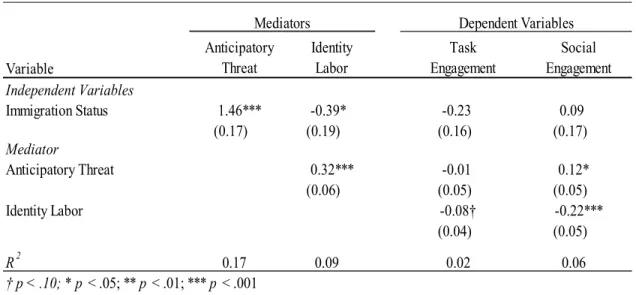
Table 3 includes the means, standard deviations, and correlations amongst the variables in this study. To examine the differential effect of this mega-threat on individuals who identified as immigrants as compared to those who do not, I began by conducting a regression analysis with the immigration status variable as the independent variable and anticipatory threat as the dependent variable. In support of Hypothesis 1, I found that the overall model was significant F(1,363) = 75.33, p < .001, and contrast testing revealed that participants that identified as immigrants experienced significantly higher levels of
anticipatory threat (M = 3.32, SD = 1.88) than non-immigrant participants (M = 1.86, SD = 1.23) , t(363) = 8.68, p < .001.
Identity Labor CFA Analysis