PINK AND DUDE CHEFS: EFFICACY OF AN ONLINE TRAIN-THE-TRAINER MECHANISM AND STUDENT PROGRAM OUTCOMES
A Thesis presented to
the Faculty of California Polytechnic State University, San Luis Obispo
In Partial Fulfillment
of the Requirements for the Degree Master of Science in Nutrition
by Jacqueline Chen
COMMITTEE MEMBERSHIP
TITLE: Pink and Dude Chefs: Efficacy of an Online
Train-the-Trainer Mechanism and Student Program Outcomes
AUTHOR: Jacqueline Chen
DATE SUBMITTED: June 2017
COMMITTEE CHAIR: Dr. Aydin Nazmi, Ph.D.
Associate Professor of Food Science & Nutrition
COMMITTEE MEMBER: Dr. Arlene Grant-Holcomb, Ed.D., R.D.
Director of Didactic Program in Dietetics, Lecturer of Food Science & Nutrition
COMMITTEE MEMBER: Dr. Kari Pilolla, Ph.D., R.D.
ABSTRACT
Pink and Dude Chefs: Efficacy of an Online Train-the-Trainer Mechanism and Student Program Outcomes
Jacqueline Chen
Background: The rate of overweight and obesity among adolescents aged 12-19 years has quadrupled since 1980. Reducing obesity is a key public health priority, as obesity is associated with individual and population-level health and economic consequences. Afterschool-based obesity prevention programs that aim to develop nutrition and culinary self-efficacy have shown promise. However, the level of aptitude among program instructors is directly correlated with student success, suggesting the importance of effective train-the-trainer (TTT) mechanisms for implementing and scaling up these strategies.
Pink and Dude Chefs (PDC) is an afterschool nutrition education and culinary skills program for middle-school adolescents aged between 11-14 years. The PDC online TTT platform trains lay instructors on program content and preparation, lesson delivery, and classroom and kitchen safety. Trained instructors deliver PDC lessons on topics ranging from macronutrients and USDA MyPlate to knife skills and food preparation. The literature on online TTT models and instructor impact on student outcomes is limited and the PDC online training mechanism has not been evaluated. The current project sought to address these critical gaps with the aim of creating the most effective intervention model.
Methods: This project was implemented in Santa Maria, Guadalupe, and New Cuyama, California from Fall 2015 to Spring 2016. Eleven instructors and 68 middle school students participated and comprehensive surveys were used to evaluate instructor and student outcomes.
Results: Instructors’ performance on all three domains (food and kitchen safety, program knowledge, and overall knowledge) increased following training (45%, 63%, and 53%, respectively), all p≤0.01. Students outcomes (food and kitchen safety, nutrition knowledge, and overall knowledge) also improved following participation (14%, 33%, and 23%, respectively), all p≤0.001. Impact analyses revealed that students with instructors who scored high in overall knowledge performed better than students with low-scoring instructors (p=0.01).
Conclusion: If obesity prevention programs that incorporate online TTT mechanisms, such as PDC, continue to show promising outcomes for both instructors and adolescents, larger scale efforts may contribute to decreasing the public health and economic burdens associated with obesity.
ACKNOWLEDGMENTS
TABLE OF CONTENTS
Page
LIST OF TABLES ... xi
LIST OF FIGURES ... xiii
CHAPTER 1. LITERATURE REVIEW ... 1
1.1 Introduction ... 1
1.2 Childhood and Adolescent Obesity ... 3
1.2.1 Measurement of obesity ... 5
1.2.2 Consequences of obesity ... 5
1.2.3 Determinants of obesity ... 8
1.3 School-Based Obesity Prevention Programs ... 11
1.4 Afterschool-Based Obesity Prevention Programs ... 12
1.4.1 Evaluating intervention programs ... 16
1.5 Instructor Training Mechanisms ... 19
1.5.1 Importance of instructor aptitude ... 19
1.5.2 Train-the-trainer (TTT) model ... 21
1.5.3 Online TTT programs ... 24
1.5.4 Online nutrition education and training outcomes ... 27
1.6 Pink and Dude Chefs (PDC) Program ... 32
1.6.2 Outcomes of PDC participants ... 33
1.7 Adolescent Obesity in Northern Santa Barbara County, California ... 38
1.7.1 Racial and socioeconomic disparities ... 39
1.8 Summary and Rationale ... 39
1.9 Research Questions ... 41
2. MATERIALS AND METHODS ... 42
2.1 Program Development ... 42
2.1.1 Program coordinators ... 42
2.2 Program Recruitment ... 42
2.2.1 Site selection ... 42
2.3 Program Implementation ... 44
2.3.1 Program timeline ... 44
2.3.2 Instructor recruitment ... 44
2.3.3 Student recruitment ... 44
2.4 PDC online training curriculum for instructors ... 45
2.4.1 Online training program structure ... 45
2.4.2 Online quizzes and final exam ... 45
2.5 PDC program curriculum for student participants ... 48
2.5.1 Program structure ... 48
2.5.3 Kitchen practicum ... 51
2.5.4 Family Fiesta ... 52
2.6 Program Evaluation ... 53
2.6.1 Data collection and surveys ... 53
2.6.2 Instructor survey ... 53
2.6.3 Student survey ... 55
2.6.4 Data coding ... 55
2.6.5 Statistical analysis ... 56
2.7 IRB ... 57
2.8 Funding ... 57
3. RESULTS ... 58
3.1 Instructors ... 58
3.1.1 Instructor demographics ... 58
3.1.2 Food and kitchen safety knowledge ... 59
3.1.3 Program knowledge ... 61
3.1.4 Overall instructor knowledge ... 64
3.2 Students ... 66
3.2.1 Student demographics ... 66
3.2.2 Food and kitchen safety knowledge ... 67
3.2.4 Overall student knowledge ... 69
3.3 Instructor Impact on Student Outcomes ... 71
4. DISCUSSION ... 74
4.1 Instructors ... 74
4.2 Students ... 78
4.3 Instructor Impact on Student Outcomes ... 82
4.4 Strengths ... 85
4.5 Limitations ... 89
5. CONCLUSIONS ... 94
REFERENCES .………...95
APPENDICES A. Instructor Survey ... 115
B. Student Survey ... 121
C. Mean baseline, follow-up survey, and difference in instructors’ food and kitchen safety knowledge scores. ... 130
D. Mean baseline, follow-up survey, and difference in instructors’ program knowledge scores. ... 131
E. Mean baseline, follow-up survey, and difference in students’ food and kitchen safety knowledge scores. ... 132
G. Comparison between student scores for instructors with high vs. low
LIST OF TABLES
Table Page
1. Weight status category and percentile range of childhood and adolescent obesity categories adapted from Centers for Disease Control and
Prevention, (2014). ... 5
2. Comorbidities and adverse outcomes associated with overweight and obesity, adapted from Daniels et al., (2005). ... 6
3. Site locations and program cohort dates. ... 44
4. Overview of PDC online training module topics. ... 46
5. Quiz topics and example questions covered in the PDC online training. ... 47
6. Lesson topics, objectives, and corresponding recipes for PDC programs. ... 50
7. Example questions covered in the instructor baseline and follow-up survey. ... 54
8. Examples of demographic questions included in the instructor baseline and follow-up survey. ... 54
9. Example questions covered in the student baseline and follow-up survey. ... 55
10. Baseline socio-demographic characteristics of Pink and Dude Chef program instructors. ... 59
11. Mean food and kitchen safety knowledge scores for instructors, stratified by site location, highest level of education completed, and trained kitchen experience. ... 61
13. Mean overall knowledge scores for instructors, stratified by site location,
highest level of education completed, and trained kitchen experience. ... 66 14. Mean food and kitchen safety knowledge scores for students, stratified by site
location and sex. ... 68 15. Mean nutrition knowledge scores for students, stratified by site location and
sex. ... 69 16. Mean overall knowledge scores for students, stratified by site location and
sex. ... 71 17. Comparison between student scores for instructors with high vs. low overall
LIST OF FIGURES
Figure Page
1. Percentage of children and adolescents categorized as overweight and obese in the United States from 1970 to 2016 (Barlow, 2007; Ogden et al., 2012;
The State of Obesity, 2016). ... 3 2. Students’ pre- and post-intervention knowledge scores from Oceano and
Arroyo Grande PDC cohorts in 2008, extracted from Chessen, 2008. ... 34 3. Pre- and post-survey fruit and vegetable preference scores for Arroyo Grande
and Carpinteria PDC cohorts in 2013, extracted from Sheehan, 2013. ... 35 4. Percent change in pre- and post-survey preference, knowledge, and intake
scores for Arroyo Grande and Nashville PDC cohorts in 2014, extracted
from Bierlich-Wesch, 2016. ... 37 5. Mean baseline, follow-up, and difference in instructors’ food and kitchen safety
knowledge, program knowledge, and overall knowledge scores. ... 64 6. Percent change in instructor scores following participation in the PDC online
training mechanism. ... 65
7. Mean baseline, follow-up, and difference in students’ food and kitchen safety
CHAPTER 1 LITERATURE REVIEW 1.1 Introduction
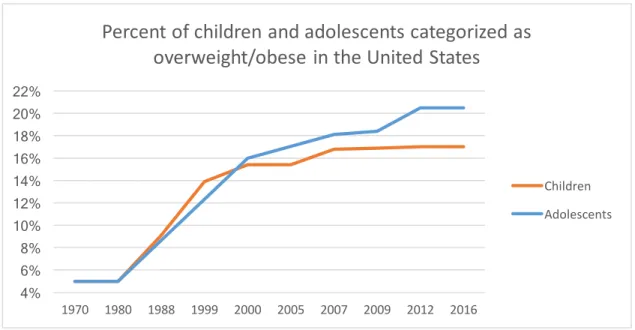
Rates of obesity in the United States have increased dramatically over the past 30 years. In particular, adolescent obesity rates more than quadrupled between 1980 to 2012, from 5% to 20.5% (Barlow, 2007; Ebbeling, Pawlak, & Ludwig, 2002; The State of Obesity, 2016). Obesity is associated with a range of health consequences, including chronic disease such as cardiovascular and metabolic disorders including hypertension and diabetes, and social and psychological issues such as depression (Daniels et al., 2005). Obese and overweight children have 70-80% greater risk of adulthood obesity compared to normal weight and underweight children, leading to increased risk for lower quality of life and obesity-related conditions throughout life (Torgan, 2005; University of Southern California, 2015). The direct and indirect medical costs associated with obesity are high, having surpassed $210 billion in 2016, representing 21% of healthcare dollars in the United States (Hammond & Levine, 2010; The State of Obesity, 2016).
As online training mechanisms have become a viable alternative to traditional methods, the efficacy of online training models designed for nutrition program instructors has recently been evaluated. Train-the-trainer (TTT) models have shown promise in adequately preparing nutrition educators to effectively deliver nutrition programming (Marks, Sisirak, & Chang, 2013; Wartha et al., 2013). Additionally, online training platforms allow for broad dissemination of nutrition training to larger audiences while increasing the convenience of learning and decreasing costs (Young et al., 2008).
The Pink and Dude Chefs (PDC) program provides afterschool nutrition education and culinary skills training to middle-school participants between aged 11 to 14 years. Through a combination of classroom activities and hands-on kitchen experience, students gain knowledge and skills to develop and maintain healthy eating behaviors. Prior to program implementation, PDC instructors, usually lay adults, are required to complete a comprehensive online training. During this training, instructors learn about preparing for lessons, maintaining classroom and kitchen control, managing program expenses, and proper kitchen and food safety. Student outcomes of PDC have been researched (Bierlich-Wesch, 2016; Chessen, 2008; Lockhart, 2014; Sheehan, 2013), but there is a lack of data on PDC instructor outcomes vis-a-vis the online training platform, or how instructor knowledge impacts students’ learning.
1.2 Childhood and Adolescent Obesity
Obesity affects one out of every six children and adolescents between the ages of 2 to 19 years in the United States. In children aged 2 to 11 years, the obesity rate increased dramatically between 1970-2003, from 5% to 17% (Barlow, 2007; Ogden et al., 2015). Between 1980-2012, adolescent (12 to 19 years) obesity increased from 5% to 20.5%, highlighting a major public health concern among all young people (Ogden et al., 2012). Rates have stabilized since, but in most populations are still at their highest historically (Figure 1).
Figure 1. Percentage of children and adolescents categorized as overweight and obese in the United States from 1970 to 2016 (Barlow, 2007; Ogden et al., 2012; The State of Obesity, 2016).
Disparities in obesity rates disproportionately impact youth of minority racial/ethnic groups and those from low socioeconomic backgrounds. Overweight and obesity impact 41.2% of Hispanic/Latino and 41.8% of African American children and adolescents between ages 6-19 years, compared to 29.0% of White children and
4% 6% 8% 10% 12% 14% 16% 18% 20% 22%
1970 1980 1988 1999 2000 2005 2007 2009 2012 2016
Percent of children and adolescents categorized as
overweight/obese in the United States
Children
According to the National Health and Nutrition Examination Survey (NHANES), the prevalence of overweight and obesity among Hispanic/Latino children increased from 26% to 35% for males and 37% to 44% for females, between 1999 to 2010. During this same time period, overweight and obesity rates among African American children increased from 27% to 37% for males, and 47% to 53% for females (Centers for Disease Control and Prevention, 2010). Among White children, rates increased from approximately 11% to 16% for males and females during this time (Centers for Disease Control and Prevention, 2015). Between 2001-2004, the Office of Minority Health reported the most dramatic increases in overweight Hispanic/Latino adolescents from 12% to 24% for 6-11 year olds, and 8% to 21% for 12-19 year olds (Hispanic Obesity Initiative, 2010). In 2012, 11% of African American children between ages 2-5 years and 23.8% between ages 6-11 years were considered obese (Skinner & Skelton, 2014). Among 8th graders, the Early Childhood Longitudinal Study conducted between 1999 to 2007 showed disparities in obesity rates among Hispanic, African American, and White adolescents (25.0%, 25.1%, and 17.4%, respectively (Rendall et al., 2012).
obese by 15.5 years of age, compared to those who did not experience early poverty (Lee et al., 2014).
In sum, obesity is a huge concern and impacts certain populations more than others. However, it should be noted that environmental and behavioral disparities in obesity, discussed below, arise at least partly from racial and ethnic minorities being overrepresented in lower SES groups, making it difficult to study these risk factors in isolation (Kumanyika & Grier, 2006; Ogden et al., 2012).
1.2.1 Measurement of obesity
Through measurements of weight and height in terms of weight (kg) divided by height squared (kg/m2), body mass index (BMI) can identify weight categories for specific ages and genders that may lead to higher risk of health problems (Center for Disease Control, 2015). Children and adolescents who fall between the 85th and 94th BMI percentiles of their age and sex determinants are considered “overweight,” whereas children and adolescents who fall at or above the 95th BMI percentile among their age and sex groups are classified as “obese” (Table 1; Alberga et al., 2012).
Table 1. Weight status category and percentile range of childhood and adolescent obesity categories adapted fromCenters for Disease Control and Prevention, (2014).
Weight Status Category Percentile Range
Underweight < 5th percentile
Healthy weight 5th to < 85th percentile
Overweight 85th to < 95th percentile
Obese 95th or higher percentile
1.2.2 Consequences of obesity
problems, and pulmonary issues which obstruct sleep and breathing (Table 2). Childhood obesity is linked to adverse complications previously seen only in adults, including cardiovascular disease, chronic inflammation, hypertension, and Type II diabetes mellitus (Ebbeling et al., 2002; Lakshman, Elks, and Ong, 2012). Overweight and obese children and adolescents have 5.4 times higher risk of Type II diabetes and 2.7 times higher risk for hypertension, compared to normal weight children (Juonala et al., 2011). A half-unit increase in BMI among overweight and obese youth was associated with a 55% higher risk of developing metabolic syndrome (OR: 1.55, 95% CI: 1.16-2.08) (Weiss et al., 2004).
Table 2. Comorbidities and adverse outcomes associated with overweight and obesity, adapted from Daniels et al., (2005).
Type of comorbidity Examples of comorbidities
Metabolic Type II diabetes mellitus
Metabolic syndrome Inflammation
Cardiovascular abnormalities Hypertension Atherosclerosis Dyslipidemia
Left ventricular hypertrophy
Psychological Depression
Poor quality of life Social isolation
Orthopedic Slipped capital femoral epiphysis
Blount’s disease
Neurological Pseudotumor cerebri
Hepatic Nonalcoholic fatty liver disease
Nonalcoholic steatohepatitis
Pulmonary Obstructive sleep apnea
Asthma (exacerbation)
Renal Proteinuria
other age groups (Swallen et al., 2005). In a 4-year longitudinal study on 1,540 adolescents aged 13-14 years, overweight and obesity was associated with decreased self-esteem (p=0.05), and with increased feelings of sadness (p<0.001), loneliness (p<0.001), and nervousness (p<0.05) (Strauss, 2000). These issues have long-lasting effects on lifelong health and can severely affect quality of life, physical health, and mental health during all stages of life (Daniels et al., 2005).
Higher BMI during childhood and adolescence is also associated with increased morbidity and mortality in adulthood (Alberga et al., 2012; Guo et al., 1994). Compared to children who are normal or underweight, obese and overweight children had a 70% increased rate of being overweight or obese as adults (Torgan, 2005). A significant proportion of chronic diseases in adulthood have been shown to associated with obese BMI, including 42% of diabetes in women and 30% of hypertension in men (Kearns et al., 2014). Obese women had a 2.9 times (95% CI: 2.3-3.6) higher risk for hypertension, compared to normal weight women (Kearns et al., 2014). According to the Nurse’s Health Study that followed 114,000 registered nurses over 14 years, overweight and obese women were 8.1 times (95% CI: 6.2 to 10.5) and 27.6 times (95% CI: 22.7-33.5) more likely to develop diabetes than normal weight women (Colditz et al., 1995). A one-unit decrease in BMI was associated with 26 and 28 fewer chronic disease incidences per 1,000 men and women, respectively (Kearns et al., 2014). These poor health outcomes lead to individual and population level economic burdens.
medications, and approximately 40% higher primary care costs (Hammond & Levine, 2010). At the population level, total estimated obesity-related medical costs have increased from approximately $78.5 billion a year in 1998, to $147 billion a year in 2008, to upwards of $210 billion a year in 2016 (Hammond & Levine, 2010; The State of Obesity, 2016). Childhood obesity alone accounts for $14 billion of these healthcare dollars (Marder & Chang, 2006).
In sum, childhood and adolescent obesity lead to major health and economic consequences at the individual and population levels. Further, the adolescent age group seems to be at disproportionate risk given the trends in overweight and obesity rates and the excess risk for negative psychosocial outcomes (Gonzalez-Suarez et al., 2009). As such, there is a clear need for evidence-based obesity prevention strategies among key age groups that focus on factors that most influence risk.
1.2.3 Determinants of obesity
Obesity is multi-factorial in etiology, with most key determinants being modifiable. Environmental, socioeconomic, and behavioral factors contribute strongly to overweight and obesity risk, but are inter-related such that it is difficult to study any individual variable in isolation, as discussed above. A vast literature indicates that these factors act independently and in conjunction to determine risk. This section highlights obesity risk related to nutrition and dietary variables in the context of these modifiable factors, including individual-level factors such as education, knowledge, and skills.
2012). Lower availability and access to fresh fruits and vegetables among residents of low-income neighborhoods impact food choices and dietary behaviors (Hilmers et al., 2012). A study on 7,514 Los Angeles County residents determined that individuals who lived within one mile of a grocery store were 25% more likely to consume four or more servings of fruits/vegetables per day and 14% were more likely to consume five or more servings (Robinson et al., 2013). The United States Department of Agriculture estimates that 29.7 million people in the country live in low-income areas where the only options for grocery shopping are limited to convenience stores, gas stations, and fast food restaurants which often lack access to fresh fruits and vegetables (Ploeg et al., 2012).
Nutrition knowledge alone is not enough to improve dietary behaviors, and should be coupled with building cooking skills (Ternier, 2010). Knowledge about nutrition and food preparation has been positively associated with more healthful dietary behaviors, including meeting food guideline requirements (Story, Neumark-Sztainer, & French, 2002). Decline in food preparation in the home and declining culinary skills are associated with increased reliance on convenience and fast foods (Monsivais, Aggarwal, & Drewnowski, 2014). In a study performed on 1,710 young adults, individuals who reported frequent food preparation at home were less likely to consume frozen or fast food, and more likely to meet dietary requirements for fat (p<0.001), calcium (p<0.001), fruit (p<0.001), vegetables (p<0.001), and whole grains (p=0.003) (Larson et al., 2006). In a study of 3,699 middle school and high school adolescents between the ages 11-18 years, involvement in helping to prepare family meals at least once a week was associated with increased intake of fruits and vegetables, and decreased intakes of fried foods and carbonated beverages (p<0.01 for both) (Larson et al., 2006). A cross-sectional study performed on 1,049 subjects assessed food-related outcomes in learning cooking skills at different ages. Compared to adults and adolescents between the ages of 13-18 years, children ages 12 or younger showed greater improvements in safe food handling, time invested in cooking on weekdays and weekends, interest in eating healthily, less frequent consumption of convenience food, using fresh ingredients for meal preparation, and significantly higher fruit intake per day (p<0.05 for all) (Lavelle et al., 2016).
the greatest impact on youth include nutrition education and culinary skills development (Hersch et al., 2014; Larson et al., 2006; Lavelle et al., 2016; Story et al., 2002). The following sections will highlight the implementation of obesity prevention programs that incorporate nutrition education and culinary skills in the school setting, with a focus on afterschool programs. The literature indicates that afterschool-based obesity prevention programs benefit from flexibility in their organization and implementation, and are associated with positive participant outcomes including improvements in knowledge, skills, and dietary behaviors.
1.3 School-Based Obesity Prevention Programs
Intervention methods include providing healthy food options in cafeterias, incorporating health and physical activity lessons at schools, and implementing nutrition education curricula in classrooms (Gonzalez-Suarez et al., 2009). Programs also advocate for the adoption of healthy food-related habits such as consuming recommended quantities of fruits and vegetables, preparing family meals, eating breakfast, using appropriate portion sizes, and eating a balanced diet (Barlow, 2007). A meta-analysis of 19 school-based intervention programs targeting childhood obesity between 1995 to 2007 found that programs had a significantly protective effect against overweight and obesity among participants compared to control (OR: 0.74, 95% CI: 0.60, 0.92) (Gonzalez-Suarez et al., 2009). Long-term effects of programs have been associated with a mean decrease in BMI by 0.42 points over a year post-intervention (95% CI: -0.69, -0.14) (Gonzalez-Suarez et al., 2009). Overall, school-based nutrition education programs have shown promise when incorporated into adolescents’ classroom lessons and school sites, but they should not be limited to regular school hours alone. In 2014, 10.2 million children, nearly 18% of children and adolescents living in the U.S., participated in afterschool programs (Afterschool Alliance, 2014). Because of their widespread use, the afterschool setting offers a valuable setting for providing nutrition education to participating youth in the nation.
1.4 Afterschool-Based Obesity Prevention Programs
2014). In a survey conducted on 13,709 households in the United States, 82% of parents believe that afterschool programs can excite children about learning (Afterschool Alliance, 2014). Afterschool programs have greater flexibility in organization, implementation, time, and development of strategies for mitigating obesity (Veugelers & Fitzgerald, 2005). Because they are not delivered during school, lessons are not constrained to meet state health education standards and can focus on a variety of objectives and strategies of a program’s choosing (Veugelers & Fitzgerald, 2005). Additionally, programs help alleviate the numbers of adolescents who are unsupervised afterschool. In 2014, 19% of middle schoolers, or 2.2 million students, did not have adult supervision when the school day ended (Afterschool Alliance, 2014). According to parents of adolescents not enrolled in afterschool programs, 41% of them would be enrolled in an afterschool program if it were available (Afterschool Alliance, 2014). The demand for afterschool programs is higher among low-income households (20%), Hispanic/Latino youth (29%), and African American youth (24%) (Afterschool Alliance, 2014). These populations are all at higher risk for developing overweight and obesity as previously mentioned (Frederick et al., 2013; Kumanyika & Grier, 2006; Ogden et al., 2012). For these reasons, afterschool programs provide a growing opportunity for implementing obesity prevention programs to help students establish healthy behavioral outcomes.
schools and centers (The Children’s Aid Society, 2017). Each year, the program culminated with an Iron Go!Chefs competition where the elementary school and middle school students worked together to create their own original recipes for judging. Participants were also quizzed on nutrition concepts emphasized throughout the course to test their knowledge (The Children’s Aid Society, 2017). In 2008, the Children’s Aid Society expanded their program to pilot Fun Food, Smart Food, a 12-week technical assistance and culinary training program targeted specifically towards middle school students (The Children’s Aid Society, 2017). This program empowered participants to learn new and more advanced cooking skills, and gain motivation for making healthier food choices through a passion for cooking (The Children’s Aid Society, 2017). While no specific data was released, strategies similar to those employed in Go!Chefs have been extensively studied in the literature.
that students who participated (n=407) in the Michigan Model lessons improved intake of fruit (p<0.05) and vegetables (p=0.02), and increased nutrition knowledge by 17% (p<0.01), when compared to students in the control groups that did not participate (n=169) (Fahlman et al., 2008). Longer-term mental health and social outcomes have also been implicated six-weeks after participating in the program, such as improved social and emotional health (p<0.001) and drug refusal skills (p<0.001), but the long-term effects on nutrition have yet to be evaluated (O Neill, Clark, & Jones, 2011).
Los Angeles Sprouts (LA Sprouts) is a 12-week afterschool gardening, nutrition, and cooking intervention program that was developed for 4th and 5th grade Latino students in Los Angeles, California (Davis et al., 2011). Thirty-four participants already enrolled in an existing afterschool care program, LA’s BEST, received weekly 90-minute interactive classes, while 70 participants not enrolled in LA’s BEST served as control. Lessons incorporated a 45-minute hands-on cooking and nutrition education lesson with a 45-minute gardening lesson. Each lesson emphasized increasing fruit and vegetable intake, culturally relevant foods, and the growing and harvesting of organic fruits and vegetables. Post-intervention data revealed that LA Sprouts participants (n=34) increased their dietary fiber intake, compared to non-participating peers in the control group (+22% vs. -12% respectively, p=0.04) (Davis et al., 2011). Participants also had a 16% greater increase in vegetable preference compared to control subjects (P=0.009) (Gatto, Ventura, Cook, Gyllenhammer, & Davis, 2012). In a subsequent study, LA Sprouts participants (n=134) showed improved scores for identifying vegetables compared to the control group (+11% vs. +5% respectively, p=0.001), as well as increased nutrition and gardening knowledge (+14.5% vs. -5.0%, p=0.003) (Davis, Martinez, Spruijt-Metz, & Gatto, 2016). Continuing research on this program participation shows many positive short-term effects, but the longer-term effects have yet to be assessed.
1.4.1 Evaluating intervention programs
al., 2006; Weepie & Mccarthy, 2002; Zenzen & Kridli, 2001). The literature has yet to establish the minimum program duration required for best outcomes. However, programs as short as five weeks and as long as a year have shown benefits. Eighty-nine elementary school students received five 35-minute long nutrition lessons covering food groups, serving sizes, and nutrients in foods over the course of five weeks (Weepie & Mccarthy, 2002). While knowledge on these concepts increased by 3.1 points at follow-up compared to baseline (p<0.001), researchers acknowledged the brevity of the program may have impacted their findings (Weepie & Mccarthy, 2002). Researchers hypothesize that programs with longer intervention lengths or program durations may have more significant long-term impacts compared to shorter programs. In a year-long intervention targeting healthy eating behaviors for middle school students through interactive classroom lessons, 447 female participants exhibited a greater decrease in fat intake compared to 340 females in the control group who did not receive the lessons (14.8 g/day vs. 4.2 g/day respectively (Haerens et al., 2006). Following two years of program participation, female students reported even more significant decreases in fat intake compared to control (19.9 g/day vs. 10.1 g/day; p<0.05) (Haerens et al., 2006). Further research is necessary to address finding a more specific optimal program length, as this, along with program strategies, can impact outcomes.
high-fat or high-sugar foods, including sugar-sweetened beverages (4.2 servings, p<0.001) (Epstein et al., 2001). Dietary interventions also had a higher impact when they targeted foods readily available and accessible to children in their environment (Haire-Joshu & Nanney, 2002). Researchers note that a variety of factors may influence types of foods prevalent in the home, including geographic location, cultural or regional preferences, and food availability (Haire-Joshu & Nanney, 2002; Kirby et al., 1995). In Missouri, 304 participants received eight nutrition lessons and healthy eating tips that were specifically tailored towards their most frequently consumed fruits and vegetables. Mean servings of fruits and vegetables increased following this intervention (0.75 servings, p<0.001; and 0.03 servings, p=0.3, respectively) (Nanney et al., 2005). Highlighting less familiar fruits and vegetables children did not significantly impact participants’ dietary intakes (p=0.4 and p=0.7 respectively) (Nanney et al., 2005). Researchers also have noted the role of families and their impact on children’s eating behaviors, as parents play a key role in purchasing of fruits and vegetables for the home (Zenzen & Kridli, 2001).
eating behaviors. Students reported a mean decrease in daily energy intake and fat intake following the intervention (265 calories and 2.5%, respectively), as well as increased nutrition knowledge (p<0.001) (Caballero et al., 2003). In addition to parents having control over the types of foods available in the home, 22.6% of fruit and vegetable intake in parent-adolescent pairs can be attributed to the other’s level of intake (Dwyer et al., 2017). Increased motivation to eat healthily by a parent was associated with higher intake in the adolescent, and vice versa (p<0.001 for both) (Dwyer et al., 2017). Because parents can influence their children’s dietary habits in several ways, it is important to include at least one parent in obesity prevention programs (Epstein et al., 2001; Zenzen & Kridli, 2001).
Overall, obesity prevention programs have shown benefits on participants’ dietary behaviors and nutrition knowledge when these programming and family-related factors are taken into consideration. While further research is necessary to establish the long-term outcomes of programs and best practices for optimal efficiency, program instructors are also key contributors that determine the success of programs (Young et al., 2008). 1.5 Instructor Training Mechanisms
1.5.1 Importance of instructor aptitude
Zidenberg-Cherr, 2015). Instructors (n=30) who participated in an 8-hour comprehensive in-service nutrition training reported increased confidence in teaching these topics compared to control instructors (n=29) who did not receive training (20.8 points vs. -1.0 points, respectively, p=0.001) (Fahlman et al., 2011). Sixty-three percent of instructors acknowledged that participation in training or in-service nutrition education sessions would increase their likelihood and motivation to teach nutrition topics (Jones & Zidenberg-Cherr, 2015). Undergoing training focused on nutrition or dietary behavior significantly increased the likelihood of instructors incorporating at least 4 hours of instruction on those topics into classroom curricula compared to instructors who did not receive training (OR: 1.1, 95% CI: 0.6, 2.0) (S. E. Jones, Brener, & Mcmanus, 2004).
1.5.2 Train-the-trainer (TTT) model
A train-the-trainer (TTT) model is defined as the development of “community-based trainers to deliver a specific program, who may or may not have direct experience with the content being delivered” prior to the training (Sanders et al., 2015). During the development and implementation of a state-wide TTT model for Join the Healthy Boat, a primary school-based health promotion and nutrition program in Baden-Württemberg, Germany, a process evaluation of the training program was performed (Wartha et al., 2013). Between 2009-2010, 453 teachers completed 6 preparatory training courses and completed questionnaires regarding their satisfaction with the training sessions and their self-perceived competency in teaching program curricula post-training. Overall, all 453 participating teachers felt either “very well” or “well” prepared to teach others, indicating the TTT model would be useful for other school-based prevention programs as well (Wartha et al., 2013).
beverages from trained IMPACT instructors showed increased fruit and vegetable intake by 0.85 servings/day (p<0.05), as well as improved knowledge on food groups and appropriate servings (p<0.01) compared to the control group (Muth et al., 2008).
A multidisciplinary TTT approach was also used in the Nutrition Detectives program designed to improve food label literacy in 3rd grade students in four public elementary schools in Connecticut (Sanders et al., 2015). One hundred and forty-five graduate students from different disciplines were trained on the Nutrition Detectives curriculum and activities in a 3-hour formal training session. The program curriculum included topics on reading food labels, recognizing marketing deceptions, and understanding ingredient content in foods (Sanders et al., 2015). Following completion of the training, instructors delivered programming to 110 3rd grader students. Nutrition knowledge and food label literacy scores increased in these students by 25.2% (p<0.01) from baseline scores following participating in Nutrition Detectives (Sanders et al., 2015).
Results from the MM study also revealed that instructors who completed training reported higher expectations that their instruction would lead to better student health outcomes, such as consuming at least five fruits and vegetables per day (p=0.030), eating more whole grains (p=0.001), increased nutrition literacy (p=0.001), and reducing unhealthy eating habits (p=0.001) (Fahlman et al., 2011). Professional development and training increased intervention instructors’ confidence and competency, as they scored higher in nearly all areas compared to control instructors. This study highlights the benefits of providing teachers with all the necessary tools needed throughout the program ahead of time, including all curriculum materials and any associated instructional or supplementary resources (Fahlman et al., 2011).
Evidence indicates that instructor participation in training programs designed specifically for nutrition programs can adequately prepare them to deliver nutrition information covered in program curricula (Fahlman et al., 2011; Marks & Sisirak, 2012; Muth et al., 2008; Sanders et al., 2015; Wartha et al., 2013). The positive behavioral outcomes among students of all ages highlights the necessity of appropriately trained instructors. While the literature highlights the benefits of traditional methods for training instructors, the rise of technology may offer an equally effective and more convenient training modality.
1.5.3 Online TTT programs
rates amongst those who enjoy online learning less, more, or the same as a traditional classroom (Muilenburga & Bergeba, 2005). Additionally, of respondents who had studied online before, 22.8% feel they learned better online, 33.2% believed they could not learn as well online, and 44.0% did not perceive a difference (Muilenburga & Bergeba, 2005). A meta-analysis performed on empirical studies of online learning from 1996 to 2008 revealed that online learning produced stronger student learning compared to face-to-face instruction (mean effect=0.20, p<0.001) (Means et al., 2010).
Improvements in online learning mechanisms can decrease barriers that may contribute to negative perceptions of these services. Effective learning cannot occur through online nutrition education training by simply posting traditional learning methods such as textbook readings, lectures, or exams, online (Cohen et al., 1999). Instead, developers of the training mechanisms should consider interactive elements and activities to promote additional learning opportunities and further understanding of the material (Cohen et al., 2008). Online teaching tools should include skill-based visual education, such as demonstrative videos and step-by-step instructions (Stotz et al., 2017).
been made in designing effective in-person nutrition education TTT models, adapting these training mechanisms to an online format may efficiently disseminate nutrition training to a wider audience and population.
There are several advantages to online education models. Web-based tailored nutrition education has become more popular in the past decade with the development of new technologies, and has been shown to have effects on changing participants’ health-related behaviors (Kreuter et al., 2000). Despite mixed reviews on preferred learning styles, online education can be a powerful incentive for motivating individuals to learn about nutrition by increasing convenience and reducing barriers for learning for a larger population. An advantage of online training programs over traditional methods of learning is the reduction in costs associated with printed materials, learning space, and transportation (Young et al., 2008). Online courses are self-contained, can be available and accessed at any time, and do not require an instructor for course delivery which also makes it a more cost-effective option (Morrison et al., 2013). Results from a pilot program for an online instructor certification program for employees of the Supplemental Nutrition Assistance Program-Education and Expanded Food and Nutrition Education highlighted that the online training saved an estimated $16,000 in costs to train 22 employees compared to traditional face-to-face training used by the organization (Christofferson et al., 2012).
modestly better than students in face-to-face instruction courses (mean effect=0.45 vs. 0.18, p=0.06) (Means et al., 2010). Online nutrition education can enhance learning opportunities for limited-resource learners in rural communities or populations who have limited motivation in seeking formal nutrition education (Case, Cluskey, & Hino, 2011). Computer-based programs provides the opportunity to reach larger groups of people than in-person education programs can accommodate (Oenema, Brug, & Lechner, 2001).
In addition to reaching larger audiences, advancements and improvements in technology allow for the tailoring of online programs to fit the needs of different populations and nutrition education program objectives. Tailored interventions are more appreciated and are rated as more personally relevant than general nutrition information (Oenema et al., 2001). Web-based TTT models can be tailored for each specific nutrition education program, but can also be further personalized for instructors of different backgrounds, geographic locations, and levels of computer literacy for more successful outcomes (Harris et al., 2011). The ease of technology also allows fast and efficient methods to score and assess participant learning, using practice problems, quizzes, and tests to provide instant feedback (Hubackova, 2011). The high level of accessibility, advancements in data transmission, and cost-effectiveness of online learning makes online nutrition education training mechanisms a potentially powerful tool for preparing instructors to facilitate health promotion and obesity prevention programs (Harris et al., 2011).
1.5.4 Online nutrition education and training outcomes
online nutrition education program developed using Kolb’s Learning Styles and Experiential Learning Model was implemented in 14 low-income counties in Indiana from April to December 2010 (Neuenschwander et al., 2013). Three educational lessons on fruits and vegetables, reading nutrition labels, and whole grains were distributed to low-income adults online (n=57) and in-person (n=66). Following the program, more individuals in the online group reported using Nutrition Labels when shopping than the control in-person group (1.0 vs. 0.67 points, p<0.004) (Neuenschwander et al., 2013). The online group reported greater increases in several nutrition-behavior scores at follow-up compared to the online grofollow-up, including higher frequency of using grocery lists to shop (0.55 vs. 0.27 points, p=0.11), whole grain intake (0.95 vs. 0.41 ounces, p=0.3), and fruit intake (1.26 vs. 0.96 cups, p=0.6) (Neuenschwander et al., 2013). Furthermore, 83% of online participants also reported willingness to use the online website again, indicating a preference for this mode of learning (Neuenschwander et al., 2013).
online and in-person nutrition education on healthy breakfast behaviors and salt intake was assessed in Los Angeles, California WIC clinics in 2014 and 2015 (Au et al., 2017; Au et al., 2016). Breakfast-related objectives included reducing frequency of breakfast skipping and promoting healthy breakfast options for parents and children. Online participants (n=359) and in-person controls (n=231) reported reductions in barriers to eating breakfast, including time constraints, difficulty with preparation, and lack of foods in the home (Au et al., 2016). Intervention parents and their children reported increased frequency of breakfast eating at follow-up (0.36 points, p<0.001; 0.87 points, p=0.01, respectively) compared to those in the control group (0.09 points, p=0.3; 0.01 points, p=0.9, respectively) (Au et al., 2016). Salt-focused lessons highlighted limiting salt intake, assessing salt content in foods, and tips for substituting salt with herbs and spices (Au et al., 2017). Online intervention (n=257) and in-person control (n=257) groups both reported increased self-efficacy in reducing salt intake (p<0.05), less salt used in cooking (p<0.0001), and eating fewer foods with added salt (p<0.001). Adults who participated in the online education reported a 5-point greater increase in nutrition knowledge scores at follow-up compared to those who participated in in-person education (p<0.05) (Au et al., 2017).
in the control group who did not participate (n=37), while individuals who completed the course (n=105) showed improvements in scores for knowledge and skills (1.16 points, p<0.001), self-efficacy (1.18 points, p<0.001), and creating action plans for nutrition education using the knowledge learned from training (1.19 points, p<0.001). Ninety-one percent of participants reported that they intended to apply prevention strategies from the online course following the training session (Stark et al., 2011). These findings, along with the positive implications of train-the-trainer models, suggest that incorporating online instructor training platforms into obesity prevention programs will extend positive outcomes for both instructors and their students.
The efficacy of an online training course on saturated fat, with the objective of preparing librarians to help patrons find health- and nutrition related resources, was tested (Turner-McGrievy & Campbell, 2009). The online course utilized short videos to highlight topics on the role of fat in health, saturated fats, and resources for reducing fat intake. Post-training increases were reported in nutrition knowledge (p<0.001), self-efficacy and confidence in ability to deliver information (p<0.001), and expectancies in ability to help library patrons with their questions (p<0.001) (Turner-McGrievy & Campbell, 2009). After 6 months, 39% of the librarians used information they learned from the online training to find appropriate resources for patrons with health and nutrition-related questions. Additionally, 82% of librarians used this information to help friends and family members (Turner-McGrievy & Campbell, 2009).
et al., 2012). Program objectives included preparing instructors on effective teaching, presentation, and demonstration skills, as well as nutrition-related lessons on MyPyramid, macro- and micro-nutrients, metabolism, menu planning and smart food shopping, nutrition during pregnancy and childhood, and food safety (Christofferson et al., 2012). Participating instructors (n=22) reported increased knowledge on being effective teachers (p<0.001), with 40% of employees strongly agreeing and 60% agreeing that they were better prepared as nutrition educators post-training (Christofferson et al., 2012).
An evaluation of a childhood obesity prevention online training certificate program for community family educators who lacked formal health and nutrition education revealed favorable training outcomes for this population (Eck et al., 2016). The training program focused on childhood obesity-related concepts like appropriate portion sizes, physical activity, and feeding practices, and tested participant knowledge with quizzes or tests throughout the training program (Eck et al., 2016). Educators who completed the training (n=68) showed significant improvements in childhood obesity-related concepts like nutrition knowledge (p<0.001), as well as increased intentions to promote obesity prevention behaviors (Eck et al., 2016). Overall, participants reported being very satisfied with the training program and feeling comfortable with the knowledge and skills they gained (Eck et al., 2016).
online training mechanism to train instructors without formal nutrition education and prepares them to deliver a comprehensive nutrition and culinary curriculum to students. 1.6 Pink and Dude Chefs (PDC) Program
Pink and Dude Chefs (PDC) is an afterschool nutrition education and culinary skills program for middle-school students between the ages 11 to 14 years. It was designed in 2008 by researchers at the Center for Solutions Through Research In Diet and Exercise (STRIDE) at California Polytechnic University San Luis Obispo with the aim of combating childhood obesity through improving nutrition and culinary knowledge and promoting healthy eating behaviors. Past iterations of the PDC program have targeted adolescents mostly from low socioeconomic backgrounds. The 12-lesson Phase 1 “Let’s Get Started” curricula divides lessons between a 40-minute classroom portion, a 60-minute hands-on culinary practicum, and 20-60-minute clean-up session. Lessons were designed for a once-weekly 2-hour meeting over the course of 12 weeks, but could also be organized to twice-weekly meetings over the course of 6 weeks.
1.6.1 PDC online TTT mechanism
Instructors charged with implementing the PDC program at their respective sites are required to complete the online training course prior to program. The training is separated into three modules that encompass the following comprehensive topics: Finances, Personnel, Other Expenses, Partnerships and Sites, Preparing for a Lesson, Classroom Control, Kitchen Control, Culinary Terms and Skills, and Kitchen and Food Safety. Instructors are required to pass a total of nine quizzes (one per topic) and one cumulative final exam with perfect scores before they receive their PDC training certification. Quizzes and the final exam may be attempted as many times as necessary to pass. Lessons were designed to accommodate instructors lacking prior nutrition education or formal culinary training, as it was assumed that PDC program instructors would be laypeople with no nutritional or culinary background. To date, the efficacy of the PDC online training has not been evaluated. More information on the online training mechanism can be found in Section 2 “Materials and Methods.”
1.6.2 Outcomes of PDC participants
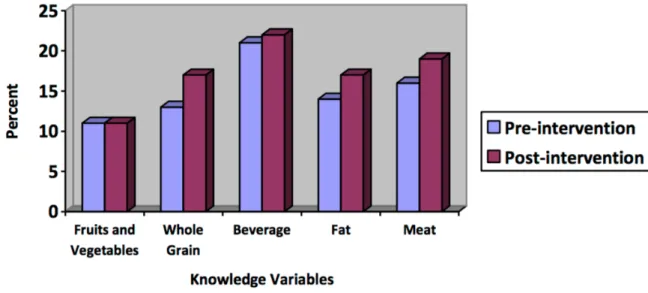
follow simple recipes, safely use knives and demonstrate proper knife skills, and plan low-cost meals. Overall self-efficacy scores increased by an average of 2.0 points from baseline measurements following programming (p=0.005) (Chessen, 2008). Improvements were also observed in participants’ nutrition knowledge or dietary behaviors, but were not significant (Figure 2). However, evidence suggested that increasing self-efficacy for cooking and increasing repetition to new foods, fruits, and vegetables were important for overcoming barriers and establishing healthy eating behaviors (Chessen, 2008).
Figure 2. Students’ pre- and post-intervention knowledge scores from Oceano and Arroyo Grande PDC cohorts in 2008, extracted from Chessen, 2008.
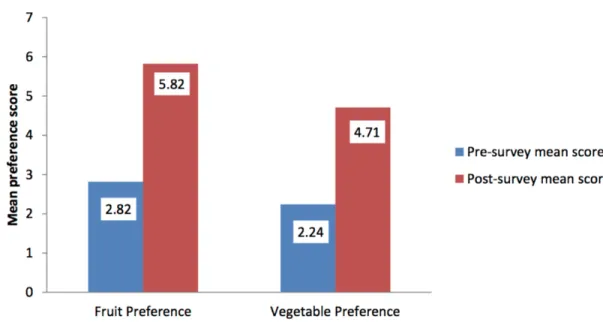
(Figure 3). While vegetable preference did not increase significantly, increases were observed for 16 out or 20 vegetables and suggested willingness to eat these vegetables after participation in the program (Sheehan, 2013). Because fruit and vegetable preferences track into adulthood, these behavioral changes have practical implications. Targeting dietary behaviors during adolescence increases the potential for establishing lifelong sustainable eating habits that improve health outcomes (Kelder et al., 1994). Mean culinary confidence, nutrition knowledge, and culinary self-efficacy scores also improved after PDC participation by 0.05 points (p=0.9) 0.80 points (p=0.1), and 0.05 points (p=0.8), respectively (Sheehan, 2013). An inability to detect statistically significant associations for these variables was attributed to the small sample size of the study, indicating a need for higher statistical power through larger sample sizes in future studies (Sheehan, 2013).
2000). PDC participants in these cohorts showed improvements in multiple areas, including nutritional knowledge and dietary and behavioral outcomes.
Figure 4. Percent change in pre- and post-survey preference, knowledge, and intake scores for Arroyo Grande and Nashville PDC cohorts in 2014, extracted from Bierlich-Wesch, 2016.
food choices (Gentry, 2017). These preliminary findings suggest that short-term outcomes associated with PDC may be sustained over time and may contribute to the establishment of lifelong healthy behaviors, although more quantitative data is necessary.
The main objective of the PDC program is to provide middle school-aged adolescents with nutrition knowledge and culinary skills necessary to prepare healthy foods and establish healthful eating behaviors as part of the effort to prevent childhood obesity. Overall, research to date suggests that participation in the PDC program increases nutrition knowledge, fruit and vegetable intakes and preferences, cooking skills, and culinary self-efficacy (Bierlich-Wesch, 2016; Chessen, 2008; Gentry, 2017; Lockhart, 2014; Sheehan, 2013). As with similar programs, the combination of classroom-based nutrition education and hands-on culinary training within the PDC program increases the likelihood of establishing healthy behaviors that may alleviate the burden of childhood obesity. However, these studies have been limited by small sample sizes, a lack of long-term follow up data, mixed results, and diversity in site locations. 1.7 Adolescent Obesity in Northern Santa Barbara County, California
1.7.1 Racial and socioeconomic disparities
The population of Santa Barbara County is predominantly White (45.4%) and Hispanic/Latino (44.8%) (United States Census Bureau, 2015), but the population of Santa Maria, CA is 70.4% Hispanic/Latino and 21.7% White, while the population of Guadalupe, CA is 86.2% Hispanic/Latino and 8.8% White (United States Census Bureau, 2015). The median income in Santa Barbara County overall ($63,985) is higher than the national median ($53,889). However, the median incomes in Santa Maria, CA and Guadalupe, CA are $50,433 and $43,710 per year, respectively (United States Census Bureau, 2015).
Obesity disproportionately affects lower-income and Hispanic/Latino populations in the county. In 2009, 73% of Latino adults in Santa Barbara County were considered overweight or obese, compared to 49% of White adults (County of Santa Barbara Public Health Department, 2011). Also in 2009, the National Pediatric Nutrition Surveillance System reported that 45.5% of the county’s lower-income adolescents between ages 12 to 19 were overweight or obese (California Department of Health Care Services, 2009). In 2010-2011, 43% of lower-income preschool and kindergarten children were overweight or obese (County of Santa Barbara Public Health Department, 2011). These high rates suggest a need to implement appropriate intervention strategies, such as PDC, for combatting obesity in this county.
1.8 Summary and Rationale
1.9 Research Questions
• Objective #1 (Instructors): Determine the efficacy of the PDC online training mechanism for three program instructor outcomes: 1) food and kitchen safety knowledge (FKSK), 2) program knowledge (PK), and 3) overall instructor knowledge (OIK).
o Hypothesis #1: Scores for all three training components will increase after participating in the PDC online training.
• Objective #2 (Students): Determine the impact of participation in the PDC program for three student outcomes: 1) food and kitchen safety knowledge (FKSK), 2) nutrition knowledge (NK), and 3) overall student knowledge (OSK).
o Hypothesis #2: Scores for all three participation components will increase after participation in the PDC program.
• Objective #3 (Instructor impact on students): Assess the impact of instructor aptitude on changes in student outcomes.
CHAPTER 2
MATERIALS AND METHODS 2.1 Program Development
2.1.1 Program coordinators
Two nutrition graduate students from California Polytechnic State University San Luis Obispo oversaw and coordinated Pink and Dude Chefs (PDC) program implementation for this project. The two PDC program coordinators were responsible for site selection, management of the instructor online training process, and delivery of lesson materials prior to the start of each site’s programming. Program coordinators offered continued support to program instructors during training and PDC implementation at all sites. Support included frequent telephone and email updates, as well as multiple on-site visits during each cohort.
Program coordinators also oversaw all aspects of data collection, including the development of quantitative surveys for the instructors and student participants, delivery of surveys, and data coding. They also helped assist the thesis supervisor in statistical analysis of the collected data.
2.2 Program Recruitment 2.2.1 Site selection
of residents in these cities are adolescents and many live in poverty. In Santa Maria, 31.4% percent the city’s population are under the age of 18 years and 21.2% of residents live below the federal poverty line (United States Census Bureau, 2015). 34.2% of residents in Guadalupe are under the age of 18 years, and 18.9% of the population lives under the federal poverty line (United States Census Bureau, 2015). In New Cuyama, 42.1% of the city’s residents are under the age of 18 years, and 31.9% of live under poverty lines (United States Census Bureau, 2015).
The program coordinators reached out to potential sites in these cities who were interested in implementing the PDC program. Program sites needed to be accessible to middle school-aged students after school hours. Sites were required to have a classroom space for each week’s nutrition lesson, as well as a working kitchen for each lesson’s cooking practicum. Each kitchen was required to contain a sink, oven, stove, and counter-space, at minimum, to qualify as a working kitchen.
2.3 Program Implementation 2.3.1 Program timeline
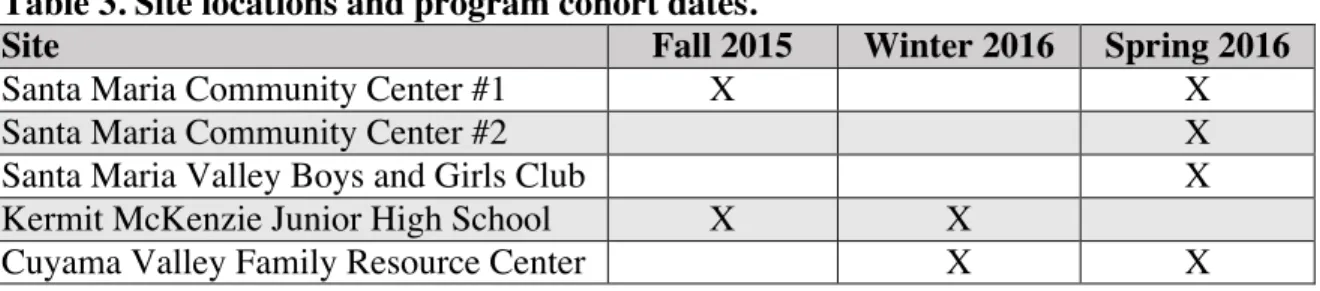
PDC programming was implemented at the five targeted sites during Fall 2015, Winter 2016, and Spring 2016. Two sites implemented the program once and three sites ran programming twice for a total of eight PDC cohorts, as outline in Table 4 below. Table 3. Site locations and program cohort dates.
Site Fall 2015 Winter 2016 Spring 2016
Santa Maria Community Center #1 X X
Santa Maria Community Center #2 X
Santa Maria Valley Boys and Girls Club X
Kermit McKenzie Junior High School X X
Cuyama Valley Family Resource Center X X
2.3.2 Instructor recruitment
Each site was responsible for identifying an instructor to undergo mandatory online training in order to teach the PDC curriculum. Instructors were required to be over the age of 18 years, but were not obligated to have prior nutrition education or culinary training. Only one trained instructor was required to lead each cohort. Some sites chose to train more than one instructor to help with program delivery and some instructors taught more than one PDC cohort over the course of program implementation.
2.3.3 Student recruitment
resulting in some students starting programming a few weeks after initiation. Due to the smaller population of interested middle school students at the rural sites, some participants also enrolled in programming more than once. Written informed consent was collected from parents/guardians prior to program participation, as was student written assent.
2.4 PDC online training curriculum for instructors 2.4.1 Online training program structure
Site instructors were required to complete the PDC online training program prior to the start of program implementation at each site. The training course included training videos focused on PDC background information and objectives, demonstration of proper culinary techniques, and relevant nutrition knowledge associated with each lesson. Topics also included macro- and micro-nutrients, tips for shopping for ingredients, proper food and kitchen safety, and how to maintain proper classroom control (Table 4). Important program components for involving students’ families were discussed, including the use of weekly goal sheets containing two nutrition-related goals for student participants to try at home each week and keep their families updated with their progress. Also highlighted was the Family Fiesta- a culminating celebration for families to come together to celebrate the skills students learned throughout the program and enjoy a family-style meal prepared by the students themselves.
2.4.2 Online quizzes and final exam
score of 100%. There was no limit on the number of quiz attempts. Table 4 outlines the topics covered in the three training modules. The PDC training program concludes with a cumulative final exam designed to test instructors’ mastery of all program topics.
Table 4. Overview of PDC online training module topics.
Module Topics
1 • Finances
• Personnel • Other Expenses • Partnerships and Sites 2 • Preparing for a Lesson
• Classroom Control • Kitchen Control
3 • Culinary Terms and Skills • Food and Kitchen Safety Cumulative Final Exam
Table 5. Quiz topics and example questions covered in the PDC online training.
Quiz Topic Example Questions
1 Finances Which of these are inevitable costs needed to run a successful Pink and Dude Chefs program? (mark all that apply)
a. Employee pay, if not volunteers b. Cooking equipment
c. Computer
d. Printer, printer paper, ink e. Transportation
f. Food
2 Personnel Which of these is the responsibility of a Pink and Dude Chefs Program Coordinator? (mark all that apply)
a. Contact site for program implementation b. Coordinate with community food organizations c. Coordinate food shoppers and shopping times d. Prepare/gather all materials for each lesson e. Revise any lessons following evaluation f. Plan Family Fiesta
3 Other Expenses
Which of these are strategies for saving money on food costs? (mark all that apply)
a. Contact your local food bank to request food donations b. Purchase additional items at a lower-priced grocery store c. Skip the cooking portion of every other lesson
4 Partnerships and Sites
Which of these strategies will help with recruiting participants in the Pink and Dude Chefs program? (mark all that apply)
a. Be enthusiastic
b. Bring fun recruitment flyers detailing the program c. Speak only about nutrition and health topics
d. Inform students of all the yummy food they will be making e. Remind students that they will need these skills when they
move out of their parents’ homes and live independently 5 Preparing
for a Lesson
How often do the aprons and chef hats need to be washed? a. After every other lesson
b. Once during the program
c. At the beginning and end of the program d. After every lesson
6 Classroom control
One way that we mentioned to handle a more difficult teen, is to: a. Reprimand them in front of the other Pink and Dude Chefs.
The embarrassment will cause them to behave.
b. Assign the student a specific task, tell the student that the task is important, and provide positive feedback
c. Make the student stand in the corner
d. Ignore them. You do not want to give this kind of bad behavior any attention
7 Kitchen Control
a. Mishandling knives b. Running in the kitchen c. Playing with cell phones d. Yelling loudly
e. Not wearing an apron f. Heat from oven and stoves 8 Culinary
Terms and Skills
Which of the following are tips we gave to hold a knife properly? (mark all that apply)
a. Grasp the handle with three fingers and put your forefinger and thumb on opposite sides of the blade
b. Use your other hand to feed the food you are cutting toward the knife
c. Keep fingers extended for better grip on the food you are feeding to the knife
d. Curl your fingers in and use your fingertips to grasp and move the food toward the knife
9 Food and Kitchen Safety
You should wash your hands for _____ to ensure the removal of all harmful bacteria.
a. 10 seconds b. 30 seconds c. 1 minute d. 15 seconds e. 20 seconds
2.5 PDC program curriculum for student participants 2.5.1 Program structure
2.5.2 Classroom nutrition lessons
Table 6. Lesson topics, objectives, and corresponding recipes for PDC programs.
Lesson Topic Learning Objectives Recipes
1 Introduction This lesson:
• Introduces “Pink and Dude Chefs” program and learning nutrition through cooking • Establishes classroom and food
safety rules
Yogurt Parfait, Personality Pie
2 How To Read A Recipe
Participants learn to:
• Properly extinguish a kitchen fire • Properly read and follow recipes
from beginning to end
• Correctly identify measurement tools for wet and dry ingredients
Blueberry Muffins
3 Cutting Edge This lesson teaches:
• Knife safety and knife skills • Cutting techniques: dicing,
chopping, slicing, julienne, chiffonade, and mincing
Rainbow Stir-fry
4 MyPlate This lesson teaches participants: • The components of MyPlate food
groups and portion sizes • Use MyPlate to balance food
groups and promote healthy eating
MyPlate Pizza
5 “Get the Facts” This lesson focuses on:
• Reading a Nutrition Facts Label • Comparing food products using
Nutrition Facts Labels • Substituting alternative
ingredients to create “healthier” versions of recipes
White Bean Macaroni and Cheese
6 Carbohydrates Participants will understand: • The difference between simple
vs. complex and refined vs. unrefined carbohydrates
• Whole grains and components of a grain
• Fiber and its dietary importance • How to incorporate dietary
whole grains
Apple Crisp
7 Protein Participants recognize:
• Different types of protein
sources: animal vs. plant proteins