s a r a j . s c h e r r a n d s a j a l s t h a p i t
WO R L D WAT C H R E P O R T
179
Through Food
and Land Use
Mitigating
W O R L D WAT C H R E P O R T
1 79
s a r a j . s c h e r r a n d s a j a l s t h a p i t
l i s a m a s t n y,
e d i t o r
Mitigating Climate
Change Through
Food and Land Use
e c o a g r i c u lt u r e pa r t n e r s a n d
w o r l d wat c h i n s t i t u t e
Reprint and copyright informationfor one-time academic use of this material is available by contacting Customer Service, Copyright Clearance Center, at +1 978-750-8400 (phone) or +1 978-750-4744 (fax), or by writing to CCC, 222 Rosewood Drive, Danvers, MA 01923, USA.
Nonacademic and commercial users should contact the Worldwatch Institute’s Business Development Department by fax at +1 202-296-7365 or by email at [email protected].
The report is also available at www.ecoagriculture.org/publications.php. © Worldwatch Institute, 2009
Washington, D.C. ISBN 978-1-878071-91-0
Printed on paper that is 50 percent recycled, 30 percent post-consumer waste, process chlorine free.
The views expressed are those of the authors and do not necessarily represent those of the Worldwatch Institute; of its directors, officers, or staff;
or of its funding organizations.
On the cover:A farmstead in Nepal framed by ripening rice. Photograph by Sajal Sthapit
Summary . . . .5
Appreciating Terrestrial Carbon . . . .7
Carbon-Rich Farming . . . .12
Conserving and Restoring Natural Habitats . . . .20
A Real Climate Solution? . . . 25 Co-Benefits: Distraction or Opportunity? . . . .33
Realizing the Potential . . . .37
Endnotes . . . .40
Index . . . .44
Figures and Sidebars Figure 1.Multiple Strategies to Productively Absorb and Store Carbon in Agricultural Landscapes . . . .12
Figure 2.Managed Natural Regeneration in the Drylands of Niger . . . .23
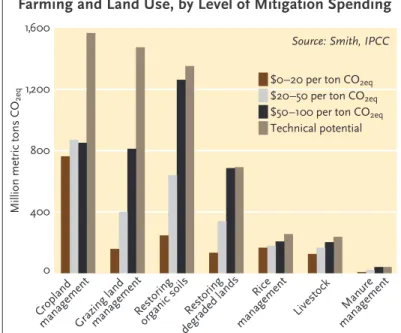
Figure 3.Annual Greenhouse Gas Sequestration Potentials from Farming and Land Use, by Level of Mitigation Spending . . . .25
Figure 4.Sustainable Development Benefits Motivating Climate Action . . . .34
Sidebar 1.The Carbon Cycle . . . .8
Sidebar 2.Greenhouse Gas Emissions from Land Use . . . .9
Sidebar 3.Six Principles for Tapping the Full Potential of Land Use Mitigation . . . .39
Table of Contents
Acknowledgments
This report builds on our chapter “Farming and Land Use to Cool the Planet” published in the Worldwatch Institute reportState of the World 2009: Into a Warming World. We are indebted to all who contributed to that work. We also appreciate the useful and encouraging feedback from Worldwatch Senior Researcher Brian Halweil and Jonathan Haskett at the World Agroforestry Centre, as well as the penetrating questions from Worldwatch Vice Presi-dent Robert Engelman, which helped us address key issues in this report. Finally, many thanks to Worldwatch Senior Editor Lisa Mastny for bringing much-needed clarity to the text and for her flexibility in working with changing deadlines.
About the Authors
Sara J. Scherris an economist whose work has focused on agricultural and environmental policy, particularly in tropical developing countries. She is the founder and president of Eco-agriculture Partners, a nongovernmental organization that supports organizations managing agricultural landscapes both to increase production and livelihoods and to enhance wild biodiversity and ecosystem services. She is a member of the United Nations Environment Programme Advisory Panel on Food Security and serves on the Board of Directors of The Katoomba Group. She recently served on the Board of the World Agroforestry Centre and the United Nations Millennium Project Task Force on Hunger.
Sara was previously Director of Ecosystem Services for Forest Trends; Adjunct Professor at the University of Maryland; Co-Leader of the CGIAR Gender Program; Senior Research Fellow at the International Food Policy Research Institute; and Principal Researcher at the World Agroforestry Centre. She was a Fulbright Scholar (1976) and a Rockefeller Social Science Fel-low (1985–87). Sara received her B.A. in Economics at Wellesley College and her M.Sc. and Ph.D. in International Economics and Development at Cornell University. She has published 13 books and over 37 articles in refereed journals.
Sajal Sthapitis a Program Associate at Ecoagriculture Partners. Sajal has previously worked for Local Initiatives for Biodiversity, Research and Development in Nepal. He received his B.A. in Biology and Philosophy at the College of Wooster and his M.Sc. in Sustainable Develop-ment and Conservation Biology from the University of Maryland.
Ecoagriculture Partners(www.ecoagriculture.org) is an international non-profit organization dedicated to supporting people in agricultural landscapes to produce food and enhance their livelihoods while protecting biological diversity and ecosystem services. Through collaboration with ecoagriculture innovators all over the world, Ecoagriculture Partners works to better understand the principles, practice, and tools for ecoagriculture; link people and organizations who are practicing ecoagriculture; and promote markets and policy action that encourage and sustain ecoagriculture landscapes.
Summary
and makes up a quarter of Earth’s sur-face, and its soil and plants hold three times as much carbon as the atmos-phere. More than 30 percent of all greenhouse gas emissions arise from the land use sector. Thus, no strategy for mitigating global climate change can be complete or successful without reducing emissions from agriculture, forestry, and other land uses. Moreover, only land-based or “terrestrial” car-bon sequestration offers the possibility today of large-scale removal of greenhouse gases from the atmosphere, through plant photosynthesis.
Five major strategies for reducing and seques-tering terrestrial greenhouse gas emissions are:
• Enriching soil carbon.Soil is the third largest carbon pool on Earth’s surface. Agricultural soils can be managed to reduce emissions by minimizing tillage, reducing use of nitrogen fertilizers, and preventing erosion. Soils can store the carbon captured by plants from the atmosphere by building up soil organic mat-ter, which also has benefits for crop produc-tion. Adding biochar (biomass burned in a low-oxygen environment) can further enhance carbon storage in soil.
• Farming with perennials.Perennial crops, grasses, palms, and trees constantly maintain and develop their root and woody biomass and associated carbon, while providing vege-tative cover for soils. There is large potential to substitute annual tilled crops with perenni-als, particularly for animal feed and vegetable oils, as well as to incorporate woody perenni-als into annual cropping systems in agro-forestry systems.
• Climate-friendly livestock production.
Rapid growth in demand for livestock
prod-ucts has triggered a huge rise in the number of animals, the concentration of wastes in feedlots and dairies, and the clearing of natu-ral grasslands and forests for grazing. Live-stock-related emissions of carbon and methane now account for 14.5 percent of total greenhouse gas emissions—more than the transport sector. A reduction in livestock numbers may be needed but production innovations can help, including rotational grazing systems, manure management, methane capture for biogas production, and improved feeds and feed additives.
• Protecting natural habitat.The planet’s 4 billion hectares of forests and 5 billion hectares of natural grasslands are a massive reservoir of carbon—both in vegetation above ground and in root systems below ground. As forests and grasslands grow, they remove carbon from the atmosphere. Defor-estation, land clearing, and forest and grass-land fires are major sources of greenhouse gas emissions. Incentives are needed to encourage farmers and land users to maintain natural vegetation through product certification, pay-ments for climate services, securing tenure rights, and community fire control. The con-servation of natural habitat will benefit biodi-versity in the face of climate change.
• Restoring degraded watersheds and range-lands.Extensive areas of the world have been denuded of vegetation through land clearing for crops or grazing and from overuse and poor management. Degradation has not only generated a huge amount of greenhouse gas emissions, but local people have lost a valu-able livelihood asset as well as essential water-shed functions. Restoring vegetative cover on
carbon at field scales for many diverse prac-tices and components of the landscape (soils, grasses, trees, animal wastes, etc.), and meth-ods for integrated landscape-wide carbon assessment will soon be available.
While there are institutional challenges to rapidly scaling up climate-friendly practices in diverse rural areas of the world, expertise can be tapped to overcome them—in rural development agencies, farmers’ organizations, nongovernmental organizations, and private agricultural businesses. Institutional platforms exist in many countries to promote sustainable land management on a large scale. Commu-nity land use planning and action models are widely implemented and can be strngthened and adapted to address climate change mitiga-tion as well as adaptamitiga-tion.
The food industry is beginning to mobilize investments for climate action in its agricul-tural supply chains, in response to anticipated consumer demand and regulation. National policies can re-shape public investments and subsidies to support climate-friendly agricul-ture and land use. Indeed, the benefits for food security, rural livelihoods, and watershed and biodiversity protection that accompany wise, locally appropriate investments in land use will expand political support and new coali-tions for climate action generally. They will be an attraction, not a distraction.
To tap the full potential of land use mitiga-tion, six principles for action are recommended: 1. Include the full range of terrestrial emission
reduction, storage, and sequestration options in climate policy and investment; 2. Incorporate farming and land use
invest-ments in cap-and-trade systems; 3. Link terrestrial climate mitigation with
adaptation, rural development, and conser-vation strategies;
4. Encourage large, area-based programs; 5. Encourage voluntary markets for
green-house gas emission offsets from agriculture and land use;
6. Mobilize a worldwide, networked movement for climate-friendly food, forest, and other land-based production.
degraded lands can be a win-win-win strategy for addressing climate change, rural poverty, and water scarcity.
Agricultural communities can play a central role in fighting climate change. Even at a rela-tively low price for mitigating carbon emis-sions, improved land management could offset a quarter of global emissions from fossil fuel use in a year. In contrast, solutions for reducing emissions by carbon capture in the energy sec-tor are unlikely to be widely utilized for decades and do not remove the greenhouse gases already in the atmosphere. To tackle the climate chal-lenge, we need to pursue land use solutions in addition to efforts to improve energy efficiency and speed the transition to renewable energy.
Yet so far, the international science and pol-icy communities have been slow to embrace terrestrial climate action. Some fear that investments in land use will not produce “real” climate benefits, or that land use action would distract attention from investment in energy alternatives. There is also a concern that land management changes cannot be implemented quickly enough and at a scale that would make a difference to the climate.
But most of these concerns are misplaced or can be addressed effectively now. While many land-use activities are not strictly “per-manent,” there are numerous ways to ensure that commitments to reduce or offset emis-sions are strictly met, such as by using large-area programs and investing in reserve large-areas for insurance. Carbon sequestration through interventions such as agroforestry do not pres-ent any “leakage” problems, and the risks of leakage from avoided deforestation can be addressed through large-scale monitoring and project screening.
Investments to overcome major barriers to farmer adoption of climate-friendly land use systems (such as lack of technical assistance, credit, or planting materials) are clearly “addi-tional,” even when the interventions are them-selves profitable to land users, and land uses with long-term profitability are far more per-manent. Great strides have been made in devising methods for monitoring land-use
* Endnotes are grouped by section and begin on page 40. † All measurements are expressed in metric units unless
indicated otherwise.
west, intensive soil tillage, erosion, and fertil-ization are a major source of these releases.6
It is increasingly clear that no strategy for mitigating global climate change can be com-plete or successful without addressing the widespread emissions from agriculture and forestry, also known as the land use sector. Yet so far, land-based, or “terrestrial,” carbon has been largely ignored in climate mitigation ini-tiatives, including at the highest levels. This has
grave implications not only for the success of global efforts to head off dangerous climate change, but also for the future of the planet as we know it.
Land makes up a quarter of Earth’s surface, and its soil and plants hold three times as much carbon as the atmosphere does. About 1,600 billion tons (5,872 billion tons of carbon diox-ide equivalent) of this terrestrial carbon is in the soil as organic matter, and some 540–610 ew people realize that Indonesia is the
third largest emitter of greenhouse gases on the planet, after the United States and China. This is because the bulk of Indonesia’s emissions—as much as 85 percent—do not come from widely publicized sources such as polluting factories or gas-guz-zling vehicles.1* Instead, they are related to land use: the clearing of land for agriculture and infrastructure, and the burning of forests and peatlands.
Indonesia emits 3 billion tons of carbon dioxide equivalent annually, or about half the yearly emissions of the United States.2† Although the country covers only about one-fifth the U.S. land area, its rich tropical vegeta-tion and peatlands store enormous volumes of carbon in branches, roots, leaves, and soil.3 When this carbon is released into the atmos-phere, it heats the planet just as surely as coal-fired power plants or combustion engines do.
Forest fires are the main driver of deforesta-tion in Indonesia, followed by illegal logging and rising worldwide demand for palm oil, an ingredient used in food, cosmetics, and bio-fuel.4Elsewhere in Southeast Asia, as well as in the Amazon and Africa, the main driver of for-est loss is the conversion of new land on which to grow commodity crops and graze livestock. These agricultural activities have a significant impact on the global climate. New Zealand’s millions of sheep and cattle, for example, are responsible for nearly a third of the country’s greenhouse gas emissions.5In the U.S.
Mid-Appreciating
Terrestrial Carbon
F
Monsoon rains have led to landslides and soil erosion in these deforested hills of Nepal.
S
aj
al
S
th
ap
face and in the atmosphere pales in compari-son to the many trillions of tons stored deep under the surface in sediments, sedimentary rocks, and fossil fuels, terrestrial carbon is cru-cial to climate change and life due to its inher-ent mobility.8
Carbon, it appears, moves around a lot. Ter-restrial carbon moves from the atmosphere to the land and back, and in this process it drives life on the planet. Plants use carbon dioxide from the atmosphere to grow and produce food that sustains the rest of life. When these organ-isms breathe, grow, die, and eventually decom-pose, carbon is released to the atmosphere and the soil. Carbon from this past life provides the fuel for new life. Indeed, life depends on this harmonized movement of carbon from one “sink” to another.9(See Sidebar 1.)
Large-scale disruption or changes on land alter this harmonious movement of carbon drastically. Deforestation, agriculture, and live-stock grazing are the major land use changes that increase the release of carbon into the atmosphere. Globally, land use and land use changes account for around 31 percent of total human-induced greenhouse gas emissions into the atmosphere.10(See Sidebar 2.) Together, land use changes and the burning of fossil fuels such as oil and coal are the two dominant sources of the increased carbon dioxide in the atmosphere that is changing the global climate.
Burning fossil fuel releases carbon that has been buried for millions of years. In contrast, deforestation, intensive tillage of soil for crops, and overgrazing release carbon from living or recently living plants and soil organic matter. Some land use changes further affect climate by altering regional precipitation patterns (for example, removing forest cover reduces tran-spiration from plants, affecting the hydrologi-cal cycle), as is occurring now in the Amazon Basin in South America.11
On the up side, other kinds of land uses can play an opposite, positive role in the climate cycle. Plants that are growing, whether as natu-ral habitat or for productive uses, can remove huge amounts of heat-trapping carbon from the atmosphere, breaking it down into its con-stituent parts and storing the carbon in
vegeta-Appreciating Terrestrial Carbon
billion tons is in living vegetation, such as long-living forests, grasses, and palms.7 Although the volume of carbon on Earth’s
sur-Sidebar 1. The Carbon Cycle
The carbon cycle is the movement of the element carbon (C), sometimes in altered chemical forms, through different reservoirs or carbon sinks on the planet. Over a relatively short timescale of less than thousands of years, the carbon cycle is a biological and physical process whereby carbon moves among the vegetation, soil, and animals on land; the atmosphere; and the organisms and water in the oceans. (See Figure.) Over a longer time span of millions of years, the carbon cycle is a geological process, during which carbon also moves to and from the deeper parts of Earth’s surface as sediments.
Carbon dioxide (CO
2) and methane (CH4) are two greenhouse
gases in the atmosphere that contain carbon; a third major green-house gas, nitrous oxide (N
2O), does not. Green plants use the
energy of sunlight to facilitate a chemical reaction (photosynthe-sis) between atmospheric CO
2and water to produce complex
sugars that are the ultimate food source for almost all life on the planet. In the process, plants remove carbon from the atmos-phere and add it into soils, vegetation, and the bodies of animals that feed on that vegetation. Meanwhile, plants, animals, and organic matter continue to release carbon dioxide and methane into the atmosphere through respiration and decay.
Increasing the amount of carbon in a sink or reservoir other than the atmosphere is called "carbon sequestration. “Carbon storage” refers to the net carbon that stays in living biomass and in soils.
Terrestial vegetation
1,982–2,239
Values are billion tons of CO2eq
Soils and organic matter
5,872
Marine sediments, sedimentary rocks and fossil fuel
242,220,000 –367,000,000 Change in land use Fossil Fuel emissions Atmosphere 2,752 Dissolved organic carbon 2,569 Intermediate and deep water 139,460 –146,800 Marine organisms 11 224 220 1.8 5.5 330 330 20 367 338
22 15 184 147
Surface water
3,743
Source: See Endnote 9 for this section.
Jo an A . W ol bi er
Appreciating Terrestrial Carbon
mate change agreement to the Kyoto Protocol are likely to result in some strategy to increase international public funding for “avoided deforestation” (referred to as “reduced emis-sions from deforestation and degradation,” or REDD). But this is being done reluctantly, through mechanisms that are isolated from those focused on energy and that receive far less (and less-secure) funding. There is consid-erable resistance to expanding the scope of land use-related climate mitigation activities beyond certain types of forest conservation.
Several factors have contributed to the widespread reluctance of climate policy actors to use terrestrial carbon as a solution for cli-mate change. For one, most clicli-mate leaders tion and soils. This can not only stabilize the
climate but also benefit food and fiber produc-tion and the environment. Thus, to be success-ful, it is imperative that any climate change mitigation strategy embrace solutions based on terrestrial carbon, including emission reduction, sequestration, and storage.
So why has terrestrial carbon largely been ignored as a climate change mitigation strategy in intergovernmental initiatives, including those under the United Nations Framework Convention on Climate Change? Many policy-makers are aware of the dramatic impacts of tropical forest burning and large-scale defor-estation, and the international negotiations currently under way to frame a successor
cli-Sidebar 2. Greenhouse Gas Emissions from Land Use
Carbon dioxide (77 percent), nitrous oxide (8 percent), and methane (14 percent) are the three main greenhouse gases that trap infrared radiation and contribute to climate change. Land use changes contribute to the release of all three of these greenhouse gases. (See Table.) Of the total annual human-induced GHG emissions in 2004 (49 billion tons of carbon dioxide equivalent), roughly 31 percent—15 billion tons—was from land use. By comparison, fossil fuel burning accounts for 27.7 billion tons of CO
2-equivalent emissions annually.
Deforestation and devegetation release carbon in two ways. First, the decay of the plant matter itself releases car-bon dioxide. Second, soil exposed to wind and rain is more prone to erosion. Subsequent land uses such as agricul-ture and grazing exacerbate soil erosion and exposure. The atmosphere oxidizes the soil carbon, releasing more carbon dioxide into the atmosphere. Application of nitrogenous fertilizers leads to soils releasing nitrous oxide. Methane is released from the rumens of livestock such as cattle, goats, and sheep when they eat and from manure and water-logged rice plantations.
Naturally occurring forest and grassland fires also contribute significantly to greenhouse gas emissions. In the El Niño year of 1997–98, fires accounted for 2.1 billion tons of carbon emissions. Due to the unpredictability of these events, annual emissions from this source vary from year to year.
Land Use Annual Emissions Greenhouse Gas Emitted
(million tons CO2equivalent)
Agriculture 6,500
Soil fertilization (inorganic fertilizers and applied manure) 2,100 Nitrous oxide* Gases from food digestion in cattle (enteric fermentation in rumens) 1,800 Methane*
Biomass burning 700 Methane, nitrous oxide*
Paddy (flooded) rice production (anaerobic decomposition) 600 Methane*
Livestock manure 400 Methane, nitrous oxide*
Other (e.g., delivery of irrigation water) 900 Carbon dioxide, nitrous oxide*
Deforestation (including peat) 8,500
For agriculture or livestock 5,900 Carbon dioxide
Total 15,000
* The greenhouse gas impact of 1 unit of nitrous oxide is equivalent to 298 units of carbon dioxide; 1 unit of methane is equivalent to 25 units of carbon dioxide.
come out of the atmospheric science or energy sectors and are little aware of proven and promising land use mitigation options. While so-called “Annex 1” countries (those countries obligated to meet emission-reduction goals under the Kyoto Protocol) must report on emissions from a broad range of land uses, regulatory schemes in signatory countries have generally not included sources of land use emissions. And while land use issues have been analyzed in-depth scientifically by the Intergovernmental Panel on Climate Change (IPCC), particularly in itsFourth Assessment Reportreleased in 2007, land use action has not been championed in negotiations either inter-nationally or in Europe.
In the United States, by contrast, agricul-tural interests have raised the profile of soil carbon potentials. A 2006 study for the Pew Center on Global Climate Change estimated that between 257 and 807 million tons of car-bon dioxide equivalent, or up to 11 percent of U.S. 2007 emissions, can be sequestered annu-ally in the country’s agricultural soils.12This could be done through widespread adoption of better management practices, such as the retention of crop residues for increased mois-ture and organic matter, zero tillage, and the efficient application of manures, fertilizers, and water.
The diversity of land uses and emission sources from land use, the differences in their emission patterns across ecosystems, and the diversity and variation of practices to reduce emissions or sequester carbon in different farming systems and ecosystems is daunting for non-specialists to consider. The level of complexity is actually quite comparable to energy systems, but because energy issues are much more familiar to most of the specialists involved in climate negotiations, tackling energy-based solutions may seem more man-ageable than dealing with land use issues.
Another reason climate policy actors may be reluctant to use terrestrial carbon as a cli-mate solution, even if they recognize the potential and necessity of land use mitigation, is that they lack confidence that actions will produce real, measurable, and permanent net
benefits. Plants sequester carbon only when they are growing, and the benefits can be reversed quickly through deforestation, fires, and poor soil management. As long as the economy sends price signals that make land-clearing lucrative, avoiding deforestation in one region may simply contribute to forest clearing elsewhere, causing “leakage” of the sequestered carbon.
As a result, some climate experts consider it unwise to trust our climate future to carbon sinks, such as tropical forests or other carbon-rich lands that could be ephemeral.13They also see great challenges in measuring and moni-toring terrestrial carbon emissions in heteroge-neous and dynamic land use systems well enough to inform a global emissions tracking or trading system.14
Moreover, many of those who do accept the scientific evidence of the potential climate benefits of land use action—and who are per-suaded by recent advances that there are prac-tical solutions to the challenges of permanence and measurement—remain skeptical that agri-cultural and land use investments can be scaled up quickly enough to make a difference to the climate. One of the most compelling argu-ments for terrestrial carbon investment is that technologies are immediately available and can thus be implemented right away, without long delays for further research and development. Renewable energies such as wind and solar are also ready for scaling, but even these promise only to reduce emissions, not to capture and store them.
But the largest gains globally from land use are in developing countries, many of whose land use sectors have poor reputations. Agri-culture and forestry are perceived as stagnant sectors with weak institutions, and existing ter-restrial carbon projects are very small scale. Small-scale farmers, who dominate agriculture worldwide, are assumed capable of only small-scale climate action. Meanwhile, the diversity of agricultural systems implies few economies of scale.
Finally, even among those who recognize the scale of land use impacts on the climate, and the potential scale of mitigation, there is a
Appreciating Terrestrial Carbon
addressed, and scaling up can be achieved rap-idly by building on existing institutional mod-els. The co-benefits of land use investments are more likely to attract allies to ambitious climate action, rather than distract. And there are many positive opportunities for engaging farmers and other land managers and for mobilizing terrestrial carbon-based mitigation as a major strategy to slow and ultimately stop climate change.
Appreciating Terrestrial Carbon
concern that action in the land use sector will distract critical attention and resources from efforts to transform the energy economy. Champions of terrestrial carbon-based mitiga-tion often highlight the many “co-benefits,” such as increased food security, restoration of degraded resources, and protection of ecosys-tem services and biodiversity. But some in the climate sector are skeptical of this win-win proposition. They agree that these are impor-tant goals, but fear that embracing them within climate action strategies will undermine com-mitment to achieving rigorous climate out-comes. Or they fear that the lower cost of emission reductions and sequestration in the land use sector—seemingly a major advan-tage—would undermine political will to take ambitious action in the energy sector or would let industrial-country emitters “off the hook.”15
All of these concerns must be addressed before terrestrial carbon is fully incorporated into our climate management strategies. Ter-restrial carbon-based mitigation is a viable as well as a necessary course to take to secure our climate future. Concerns about permanence, additionality, leakage, and measurement of land use climate solutions are being rigorously
Liquid manure from a hog farm being spread on cropland in Iowa.
U
S
D
A
N
R
C
S
/T
im
M
cC
ab
Figure 1. Multiple Strategies to Productively Absorb and Store Carbon in Agricultural Landscapes
convert today’s high-emissions food produc-tion systems to “carbon-rich” farming systems. They are: enriching soil carbon, incorporating perennials in cropping systems, and promoting climate-friendly livestock production systems.
Strategy 1: Enriching Soil Carbon
Soil has four components: minerals, water, air, and organic materials (both nonliving and liv-ing). The nonliving material comes from dead plant, animal, and microbial matter, whereas the living organic material is from plants and other organisms in the soil, including living oday, we face a unique opportunity
to achieve “climate-friendly” land-scapes. These include, for example, large expanses of agricultural land, interconnected with natural habitats, that are managed to minimize greenhouse gas emis-sions and maximize the sequestration of car-bon in soils and vegetation. Many options are already at hand to achieve such landscapes.1 (See Figure 1.) None is a silver bullet, but in combinations that make sense locally they can help us move forward decisively.
Three strategies are especially promising to
Carbon-Rich Farming
T
Degraded soils are revegetated, and biochar is incorporated; fertile soils remain productive using organic methods and reducing tillage.
Retaining forests and grass-lands maintains carbon sinks while protecting watersheds. Source: Scherr and Sajal; Phemister
Perennials, tree crops, and other agroforestry methods retain greater biomass in the cropping system.
Rotational grazing minimizes livestock impacts; biogas digesters turn waste into energy and organic fertilizer. Figure 1. Multiple Strategies to Productively Absorb and Store Carbon in
year experiment by the Rodale Institute com-pared organic and conventional cropping systems in the United States and found that organic farming increased soil carbon by 15–28 percent and nitrogen content by 8–15 percent.6The researchers concluded that if the 65 million hectares of corn and soybean grown in the United States were switched to organic farming, a quarter billion tons of carbon diox-ide (or about 4 percent of annual U.S. emis-sions) could be sequestered.7
The economics and productivity of these methods vary widely. In some very intensive, high-yield cropping systems, replacing some or all inorganic fertilizer may require methods that use more labor or require costlier inputs, but there is commonly scope for much more efficient use of fertilizer through better target-ing and timtarget-ing. The field of precision agricul-ture recognizes that variations exist on-farm and tries to improve efficiency of inputs, including fertilizers, through targeted use aided by remote-sensing techniques. In less-intensive systems, the use of organic nutrient sources with small amounts of supplemental inorganic fertilizer can be quite competitive and attractive to farmers seeking to reduce cash costs.8
Improvements in organic technologies over the past few decades have led to comparable levels of productivity across a wide range of crops and farming systems. The question of whether organic farming can feed the world, as many argue, remains controversial.9And more research is needed to understand both the potentials and limitations of agro-ecologi-cal systems across the broad range of soil types and climatic conditions globally. But there is little question that farmers in many produc-tion systems can already profitably maintain yields while using much less artificial fertil-izer—with major benefits to the environment and the climate.
Soil used to grow crops is commonly tilled, or turned over, to improve the conditions of the seed bed and to uproot weeds. But tilling turns the soil upside down, exposing anaerobic microbes to oxygen and suffocating aerobic microbes by working them under. This distur-roots and microbes. Together, living and
non-living organic materials account for only 1–6 percent of the soil’s volume, but they con-tribute much more to its productivity.2The organic materials retain air and water in the soil and provide nutrients that the plants and the soil fauna depend on for life. They are also reservoirs of carbon in the soil.
In fact, soil is the third largest carbon pool on Earth’s surface. New mapping tools, such
as the 2008Global Carbon Gap Mapproduced
by the United Nations Food and Agriculture Organization, can identify areas where soil car-bon storage is greatest, as well as areas with the physical potential for billions of tons of addi-tional carbon to be stored in degraded soils.3 In the long term, agricultural practices that build and conserve soil carbon from year to year through organic matter management, rather than depleting it, will provide produc-tive soils that are rich in carbon and require fewer chemical fertilizers.
Current use of inorganic (chemical) fertiliz-ers is estimated at a staggering 102 million tons worldwide, with use concentrated in industrial countries and in irrigated regions of develop-ing nations.4Soils with nitrogen fertilizers release nitrous oxide, a greenhouse gas that has about 300 times the warming capacity of carbon dioxide. Fertilized soils release more than 2 billion tons (in terms of carbon dioxide equivalent) of greenhouse gases every year.5It is possible to reduce these emissions, however, by adopting soil fertility management practices that increase soil organic matter and siphon carbon from the atmosphere.
Numerous technologies can be used to sub-stitute or minimize the need for inorganic fertilizers. Examples include composting (the decomposition of food and plant waste in the presence of air to produce dark organic mat-ter), green manures (crops grown during fallows to be plowed into the soil to add nutrients and organic matter), nitrogen-fixing cover crops (such as velvetbean), intercrop-ping, and the use of livestock manure. Even improved fertilizer application methods can reduce emissions.
In one example of organic farming, a
gases of reduced emissions and increased car-bon storage from reduced tillage depend sig-nificantly on associated practices, such as the level of vegetative soil cover and the impact of tillage on crop root development, which depends on the specific crop and soil type. It is projected that the carbon storage benefits of no-till may plateau over the next 50 years, but this can be a cost-effective option to buy time while alternative energy systems develop.13
Decomposition of plant matter is another way of enriching soil carbon if it takes place securely within the soil; decomposition on the surface, on the other hand, releases carbon dioxide into the atmosphere. In the humid tropics, for example, organic matter breaks down rapidly, limiting the carbon storage ben-efits of organic systems.
Another option, recently discovered, is biochar—the burning of biomass in a low-oxygen environment.14This keeps carbon in soil longer and releases the nutrients slowly over a long period of time. While the burning does release some carbon dioxide, the remain-ing carbon-rich dark aromatic matter is highly stable in soil. Hence, planting fast-growing trees in previously barren or degraded areas, converting them to biochar, and adding them to soil is a quick way of taking carbon from the atmosphere and turning it into an organic slow-release fertilizer that benefits both the plant and the soil fauna.
Interestingly, between 500 and 2,500 years ago Amerindian populations added incom-pletely burnt biomass to the soil. Today, Ama-zonian “dark earth” soils created in this way still retain high amounts of organic carbon and fertility in stark contrast to the low fertility of adjacent soils.15There is a global production potential of 594 million tons of carbon dioxide equivalent in biochar per year, simply by using waste materials such as forest and milling residues, rice husks, groundnut shells, and urban waste.16Far more could be generated by planting and converting trees. Initial analyses suggest that planting vegetation for biochar on idle and degraded lands could be quite economical, though not in more highly pro-ductive lands, and is thus a promising option bance exposes nonliving organic matter to
oxy-gen, leading to a chemical reaction that releases carbon dioxide. Keeping crop residues or mulch on the surface helps soil retain moisture, prevents erosion, and returns carbon to the soil through decomposition. Hence, many practices that reduce tillage also reduce carbon emissions in certain types of soils and ecosystems.10
A variety of conservation tillage practices accomplish this goal. In non-mechanized
sys-tems, farmers might use digging sticks to plant seeds and can manage weeds through mulch and hand-weeding. Special mechanized sys-tems have been developed that drill the seed through the vegetative layer and use herbicides to manage weeds. Many farmers combine no-till methods with crop rotations and green manure crops. In Paraná, Brazil, farmers have developed organic management systems com-bined with no-till. No-till plots yielded a third more wheat and soybean than conventionally ploughed plots and reduced soil erosion by up to 90 percent.11The latter has the additional benefit of reducing labor and fossil fuel use and enhancing soil biodiversity—all while cycling nutrients and storing carbon.
Worldwide, approximately 95 million hectares or about 7 percent of the world’s arable land is under no-till management—a figure that is growing rapidly, particularly as rising fossil fuel prices increase the cost of tillage.12The actual net impacts on greenhouse
In Nepal, terraces for rice cultivation help prevent erosion.
S
aj
al
S
th
ap
it
also require a lot of fossil fuels to produce. Furthermore, excessive application of nitrogen fertilizers, which is the norm, is a major source of nitrous oxide emissions.24
Achieving a carbon-rich cropping system, as well as the year-round vegetative cover required to sustain soils, watersheds, and habi-tats, will require farmers to plant a variety of crops and to incorporate a far greater share of perennial plants. In contrast to annual grains, perennial grasses retain a strong root network between growing seasons. Hence, a good amount of the living biomass remains in the soil instead of being released as greenhouse gases. Furthermore, these grasses help hold soil organic matter and water together, reducing soil erosion and emissions. Finally, their peren-nial nature does away with the need for annual tilling that releases greenhouse gases and causes soil erosion, and also makes the grasses more conservative in the use of nutrients. In one U.S. case, harvested native hay meadows retained 179 tons of carbon and 12.5 tons of nitrogen in a hectare of soil, while annual wheat fields retained only 127 tons of carbon and 9.6 tons of nitrogen.25This is despite the fact that the annual wheat fields had received 70 kilograms of nitrogen fertilizer per hectare annually for years.26
Researchers have already developed peren-nial relatives of cereals (rice, sorghum, and wheat), forages (intermediate wheatgrass, rye), and oilseeds (sunflower) that provide nutri-tious and good-tasting alternatives to conven-tional annual crops. In the U.S. state of Washington, some perennial wheat varieties have already been bred that yield more than
70 percent as much as commercial wheat.27
Domestication work is under way for a num-ber of lesser known perennial native grasses, and many more perennials offer unique and exciting opportunities.28
Shifting production systems from annual to perennial grains should be an important research priority for agricultural researchers and crop breeders, but significant research challenges remain. Breeding perennial crops takes longer than annuals due to longer gener-ation times. Perennials also have lower seed for carbon emission offset payments.17
Most crops respond with improved yields for biochar additions of up to 183 tons of car-bon dioxide equivalent.18If biochar additions were applied at this rate on just 10 percent of the world’s cropland (160 million hectares), this method could store 29 billion tons of car-bon dioxide equivalent, offsetting nearly all the emissions from fossil fuel burning.19
Strategy 2: Farming with Perennials
Plants harness the energy of the sun and accu-mulate carbon from the atmosphere to pro-duce biomass on which the rest of the biota depend. The great innovation of agriculture 10,000 years ago was to manage the photo-synthesis of plants and ecosystems so as to dependably increase yields. With 5 billion hectares of Earth’s surface now used for agri-culture (69 percent under pasture and 28 per-cent in crops) in 2002, and with half a billion more hectares projected by 2020, agricultural production systems and landscapes have to not only deliver food and fiber but also support biodiversity and important ecosystem services, including climate change mitigation.20
A major strategy for achieving this is to increase the role of perennial crops, shrubs, trees, and palms, so that carbon is stored while crops are being produced. Perennials con-stantly keep root biomass, while tree crops and agroforestry maintain significantly higher bio-mass than clear-weeded, annually tilled crops.
Although more than 3,000 edible plant species have been identified, 80 percent of world cropland is dominated by just 10 annual cereal grains, legumes, and oilseeds.21 Cur-rently, two-thirds of all arable land is used to grow annual grains.22Wheat, rice, and maize cover half of the world’s cropland.23Since annual crops need to be replanted every year and since the major grains are sensitive to shade, farmers in much of the world have gradually removed other vegetation from their fields. Production of annuals depends on till-ing, preparing seed beds, and applying chemi-cal inputs. Every year, the process starts over again from scratch. This makes production more dependent on chemical inputs, which
and crops have complementary growth pat-terns, so that the trees shed their leaves during the crops’ growing season, avoiding light com-petition all together.31
While agroforestry systems have a lower carbon storage potential per hectare than standing forests do, they can potentially be adopted on hundreds of millions of hectares. And because of the diverse benefits they offer, it is often more economical for farmers to establish and retain them. A “Billion Tree Cam-paign” to promote agroforestry was launched at the United Nations climate convention meeting in Nairobi, Kenya, in 2006. Within a year and a half, the program had shattered ini-tial expectations and mobilized the planting of 2 billion trees in more than 150 countries.32 Half the plantings occurred in Africa, with 700 million in Ethiopia alone. By taking the lead from farmers and communities on the choice of species, planting location, and management, and by providing adequate technical support to ensure high-quality planting materials and methods, these initiatives can ensure that the trees will thrive and grow long enough and large enough to actually store a significant amount of carbon.
In a prescient book in 1929, Joseph Russell Smith observed the ecological vulnerabilities of annual crops and called for “A Permanent Agriculture.”33This work highlighted the diversity of tree crops in the United States that could substitute for annual crops in producing starch, protein, edible and industrial oils, ani-mal feed, and other goods as well as edible fruits and nuts—if only concerted efforts were made to develop genetic selection, manage-ment, and processing technologies. Worldwide, hundreds of indigenous species of perennial trees, shrubs, and palms are already producing useful products for regional markets but have never been subject to systematic efforts of tree domestication and improvement or to market development. Since one-third of the world’s annual cereal production is used to feed stock, finding perennial substitutes for live-stock feed is especially promising.34
Exciting initiatives are under way with dozens of perennial species, mainly tapping yields than annuals, though this could be
improved through breeding. Since annuals live for one season only, they give priority to seeds over vegetative growth, making yield improve-ment in annuals. Perennials have to allocate more resources to vegetative parts like roots in order to ensure survival through the winter. But in the quest for high-carbon agricultural systems, plants that produce more biomass are a plus. Through breeding, it may also be possi-ble to redirect increased biomass content to seed production.
Another method of increasing carbon in agriculture is agroforestry, in which productive trees are planted in and around crop fields and pastures. The tree species may provide prod-ucts (fruits, nuts, medicines, fuel, timber, and so on), farm production benefits (such as nitrogen fixation from leguminous tree species for crop fertility, wind protection for crops or animals, and fodder for animals), and ecosys-tem services (habitat for wild pollinators of crops, for example, or micro-climate improve-ment). The trees or other perennials in agro-forestry systems sequester and store carbon, boosting the carbon content of the agricul-tural landscape.
Agroforestry was common traditionally in agricultural systems in forest and woodland ecosystems and is being newly introduced into present-day subsistence and commercial sys-tems. The highest carbon storage results are found in multistory agroforestry systems that have many diverse species using ecological “niches,” from the high canopy to bottom-story shade-tolerant crops.29Examples are shade-grown coffee and cocoa plantations, where cash crops are grown under a canopy of trees that sequester carbon and provide habitats for wildlife. Simple intercrops are used where tree-crop competition is minimal or where the value of tree crops is greater than the value of the intercropped annuals or grazing areas, or as a means to reduce market risks. Where crops are adversely affected by competition for light or water, trees may be grown in small plots in mosaics with crops. Research is also under way to develop low-light tolerant crop varieties.30And in the Sahel, some native trees
mal’s stomach, while manure releases methane and nitrous oxide, both of which are more potent greenhouses gases than carbon dioxide. Carbon dioxide and nitrous oxide are also released as a result of land clearing for pastures and feed crops, during soil degradation, and through the consumption of fossil fuels in var-ious stages of the livestock supply chain.41
Remarkably, annual greenhouse gas emis-sions from livestock total some 7.1 billion tons (including 2.5 billion tons of carbon dioxide
equivalent from clearing land for the animals), accounting for about 14.5 percent of climate-altering emissions from human activities, or nearly half of all emissions from agriculture and land use change.42Indeed, a single cow/calf pair on a beef (or even dairy) farm in the eastern United States is responsible for more greenhouse gas emissions in a year than a person driving nearly 13,000 kilometers in a mid-sized car.43
Serious action on climate change will almost certainly require reductions in the global consumption of meat and dairy by today’s major consumers in industrial coun-tries, as well as slowing the growth of demand in developing countries. As with other sources of agricultural emissions, no such major shift seems likely without putting a price on live-stock-related greenhouse gases, so that pro-ducers treat them as a business cost and thus have a direct incentive to reduce them. intra-species diversity to identify
higher-yield-ing, higher-quality products and developing rapid propagation and processing methods to use in value-added products. For example, more than 30 species of trees, shrubs, and liane in West Africa have been identified as promis-ing for domestication and commercial devel-opment. Commercial-scale initiatives are under way to improve productivity of the Allanblackia and muiri (Prunus africanus)
trees, which can be incorporated into multi-strata agroforestry systems to “mimic” the nat-ural rainforest habitat.35Growing trees at high densities is not, however, recommended in dry areas that are not naturally forested, as this may cause water shortages, as has happened with eucalyptus in some dry areas of Ethiopia.36
Around the world, farmers and energy pro-ducers are converting large areas of land to bio-fuels. Shifting biofuel production from annual crops (which often have a net negative impact on greenhouse gas emission due to cultivation, fertilization, and fossil fuel use) to perennial alternatives like switchgrass offers a major new opportunity to use degraded or low-produc-tivity areas for economically valuable crops with positive ecosystem impacts.37But this will require an approach that strategically inte-grates biofuels into landscapes in ways that use resources sustainably, enhance overall carbon intensity in the landscape, and complement other key land uses and ecosystem services.38 Strategy 3: Climate-Friendly Livestock Systems
Domestic livestock—cattle, pigs, sheep, goats, poultry, donkeys, and so on—account for most of the total living animal biomass worldwide. A revolution in livestock product consumption has been under way since the 1970s. Meat con-sumption in China, for example, more than doubled in the past 20 years and is projected to double again by 2030.39This trend has trig-gered the rise of huge feedlots and confined dairies—or factory farms—around many cities, and the clearing of huge areas of land for grazing.40
Livestock generate prodigious quantities of greenhouse gases. Methane is produced from the fermentation of plant matter in the
ani-Carbon-Rich Farming
Agroforestry: mango trees interspersed in rice paddies in Nepal.
S
aj
al
S
th
ap
Meanwhile, a variety of solutions are at hand to reduce current livestock-related emis-sions. Innovative grazing systems, for example, offer alternatives to both extensive grazing sys-tems and confined feedlots and dairies, greatly reducing net greenhouse gas emissions while increasing productivity. Conventional thinking says that the current number of livestock in many grazing areas of the world far exceeds the carrying capacity of the ecosystem. But in many circumstances, this reflects poor grazing management practices rather than having too many animals in one place.
Research shows that grasslands can support large livestock herds more sustainably through better management of herd rotations, which allows the vegetation to regenerate after graz-ing. Letting plants recover protects the soil organic matter and carbon from erosion while maintaining or even increasing livestock pro-ductivity in some places. For example, a 4,800-hectare U.S. ranch that uses rotational grazing practices was able to triple the perennial species in the rangelands while also nearly tripling beef production, from 66 kilograms to 171 kilograms per hectare.44Various types of rotational grazing are being practiced success-fully in the United States, Australia, New Zealand, parts of Europe, and southern and eastern Africa.45Large areas of degraded rangeland and pastures around the world could be brought under rotational grazing to
enable sustainable livestock production. Rotational grazing also offers a viable alter-native to confined animal operations. A major study by the U.S. Department of Agriculture compared four temperate dairy production systems: a full-year confinement dairy, con-finement with supplemental grazing, an out-door all-year and all-perennial grassland dairy, and an outdoor cow-calf operation on peren-nial grassland.46The study found that thenet carbon emissions were much higher for the confinement dairy than for the grazing systems, mainly because high carbon sequestration in the latter more than offsets somewhat higher overall carbon emissions. The researchers con-cluded that the best ways to improve the green-house gas footprint of intensive dairy and meat operations are to: improve carbon storage in grass systems, feed more grain and less forage in confined operations, use higher-quality for-age overall, eliminate the storfor-age of manure or cover the stores and flare the gas, increase pro-duction per animal, and use well-managed rotational grazing.
Methane produced in the animal’s rumen— the first stomach of cattle, sheep, goats, and other species that chew the cud—accounts for the annual release of some 1.8 billion tons of carbon dioxide equivalent.47Nutrient supple-ments and innovative feed mixes, such as those with increased starch content, have been devel-oped to make feed easier for animals to digest, thereby reducing methane production. Other advanced techniques for methane reduction include removing specific microbial organ-isms from the rumen (a process known as defaunation) and adding other bacteria that actually reduce gas production in the rumen. Defaunation can reduce methane emissions by 20 percent, although this practice is not yet commercially viable for most farmers.48 Research is also under way to develop vaccines against the organisms in the stomach that pro-duce methane.49
These approaches require fairly sophisti-cated management, so they are useful mainly in larger-scale, intensive livestock operations (which also tend to be a significant source of livestock-related methane emissions).50
Carbon-Rich Farming
In need of rotation: cattle on over-grazed pasture near Elgin, Texas.
R
ay
m
on
d
G
ilf
or
They will not benefit the millions of pastoral-ists who depend on livestock for their daily survival. As a result, other solutions that rely on rotational grazing, managing herds, and restoring grasslands must be further developed and implemented.
Manure is a major source of methane, responsible for some 400 million tons of
car-bon dioxide equivalent.51And poor manure
management is a leading source of water pol-lution.52Large manure lagoons, or pits, can leak into groundwater and also contaminate surface water when they overflow during storms or hurricanes.
But manure is also an opportunity for an alternative fuel that can reduce a farm’s reliance on fossil fuels. By using appropriate technologies such as an anaerobic biogas digester, farmers can profit from their farm waste while helping the climate. A biogas digester is basically a temperature-controlled air-tight vessel. Manure (or food waste) is fed into the vessel, where microbial action breaks it down into methane or biogas and a low-odor, nutrient-rich sludge. The biogas can be burned for heat or electricity and the sludge can be used as fertilizer in locations where it makes economic sense. Methane has 25 times the global warming potential of carbon dioxide, so collecting the methane and burning it to
convert it to carbon dioxide will have a lesser overall impact on the climate.53
By thinking creatively, previously underval-ued and dangerous wastes can be converted into new sources of energy, cost savings, and even income. In 2005, the Penn England dairy farm in Pennsylvania invested $141,370 in a digester to process manure and $135,000 in a combined heat and power unit, with a total project cost of $1.14 million to process the manure from 800 cows.54* Today, the farm generates 120 kilowatts of electricity, which in some months is more that it can use.55In addi-tion, the generator produces sufficient heat to warm the digester, make hot water, and heat the barns and farm buildings.
Many large dairies and confined pig opera-tions in the United States are already receiving large government subsidies to invest in anaero-bic digesters. In the developing world, some communities are using manure to produce biogas cooking fuel. Biogas digesters involve an initial cash investment that often needs to be advanced for low-income producers, but life-time benefits far outweigh the costs.56This technology could be extended to millions of farmers, with benefits for the climate as well as for human well-being by providing greater access to energy.
Carbon-Rich Farming
* All dollar amounts are expressed in U.S. dollars unless indicated otherwise.
Conserving and Restoring
Natural Habitats
ost farming landscapes around the world still retain, or have the potential to restore, large areas of forests and natural grasslands under private, community, or public manage-ment. These areas are often important for local livelihoods, whether for gathering food, fuel, raw materials, or medicines, or for grazing, and they provide critical habitat for biodiversity. Conserving and restoring these resources on a large scale would contribute powerfully to slowing climate change. Thus, two additional strategies for sequestering terrestrial carbon are protecting natural habitat and restoring degraded watersheds and rangelands.
Strategy 4: Protecting Natural Habitat
The planet’s 4 billion hectares of forests and 5 billion hectares of natural grasslands are a massive reservoir of carbon—both in vegeta-tion above ground and in root systems below ground.1As forests and grasslands continue to grow, they remove carbon from the atmosphere and contribute to climate change mitigation. Natural and undisturbed forests are particularly important. Intact natural forests in Southeast Australia, for example, hold 2,349 tons of car-bon dioxide equivalent per hectare, compared with 796 tons on average for temperate forests.2 Thus, in terms of total emissions reduction from land use interventions, protecting Earth’s existing carbon in forests and grasslands could have the largest impact, if achieved.
Massive deforestation is releasing stored car-bon back into the atmosphere. Between 2000 and 2005, the world lost forest area at a rate of 7.3 million hectares per year.3For every hectare of forest cleared, hundreds of tons of carbon
are added to the atmosphere, depending on the type of tree removed.4Deforestation and land clearing have many causes, from large-scale, organized clearing for crop and grazing land and infrastructure, to the small-scale move-ment of marginalized people into forests in search of farming or employment opportuni-ties. Trees are also cleared for the commercial sale of timber, pulp, and fuelwood. In many cases, the key drivers of deforestation are out-side the productive land use sectors and are instead the result of public policies in other sectors, such as the construction of roads and other infrastructure, human settlements, or border control.
Unlike many of the other climate-mitigating land use strategies described in the previous section, protecting large areas of standing natural vegetation typically provides fewer short-term financial or livelihood benefits for landowners and managers. It may even reduce their incomes or livelihood security. In places where there is strong enforcement capacity, the solution may lie in regulation: in Australia, for example, comprehensive laws restrict the clear-ing of natural vegetation.5In many areas, how-ever, the challenge is to develop incentives for conservation for the key stakeholders.
Several approaches are being used. One is to raise the economic value of standing forests or grasslands by improving markets for sustain-ably harvested, high-value products from those areas or by paying land managers directly for their conservation value. Current international negotiations are exploring the possibility of compensating developing countries for leaving their forests intact or improving forest man-agement. At the United Nations climate
vention in Bali, Indonesia, in December 2007, governments agreed to a two-year negotiation process that would lead to the adoption of a mechanism for “reduced emissions from deforestation and degradation” (REDD) after
2012.6Implementation of any eventual REDD
mechanism will pose major methodological, institutional, and governance challenges, but numerous initiatives are already under way to begin addressing these problems.
A second incentive for conservation is prod-uct certification, whereby agricultural and for-est products are labeled as having been produced without clearing natural habitats or in “mosaic” landscapes that conserve a mini-mum area of natural patches. For example, the International Finance Corporation’s Biodiver-sity and Agricultural Commodities Program seeks to increase the production of sustainably produced and verified commodities (for exam-ple, palm oil, soy, sugarcane, and cocoa), work-ing closely with commodity roundtables and their members, regulatory institutions, and policymakers. While the priority focus is on conservation of biodiversity, this initiative will have significant climate impacts as well, due to its focus on protecting existing carbon vegeta-tive sinks from conversion, developing stan-dards for sustainable biofuels, and establishing certification systems.7
A third approach is to secure local tenure rights for communal forests and grasslands so that local people have an incentive to manage these resources sustainably and protect them from outside threats such as illegal commercial logging or land grabs for agriculture. Many women in particular are not allowed to own land, even in places where they comprise a majority of the farmers and livestock keepers. A study in 2006 of 49 community forest man-agement cases worldwide (admittedly a small number) found that all the initiatives that included tenure security were successful, but that only 38 percent of those without it suc-ceeded.8Diverse approaches and legal arrange-ments are being used to strengthen tenure security and local governance capacity.
The burning of biomass—forests, grass-lands, and agricultural fields—is a significant
source of carbon emissions, especially in devel-oping countries. Controlled biomass burning in the agricultural sector, on a limited scale, can have positive functions as a means of clearing and rotating individual plots for crop produc-tion; in some ecosystems, it is a healthy means of weed control and soil fertility improvement. In several natural ecosystems, such as savanna and scrub forests, wild fires can help maintain biotic functions, as in Australia.9But in many forest ecosystems, fires are set mostly by
humans and are environmentally harmful— killing wildlife, reducing habitat, and setting the stage for more fires by reducing moisture con-tent and increasing combustible materials. Even where they can be beneficial from an agricul-tural perspective, fires can inadvertently spread to natural ecosystems, opening them up for fur-ther agricultural colonization.
Systems are already being put in place to track fires in “real time” so that governments and third-party monitors can identify the people responsible. In the case of large-scale ranchers and commercial crop producers, bet-ter regulatory enforcement is needed, along with alternatives to fire for management pur-poses. For small-scale, community producers, the most successful approaches have been to link fire control with investments in sustain-able intensification of production, in order to develop incentives within the community to protect investments from fire damage. These
Waterfall in the forested wilderness of New South Wales, Australia.
Ta
ti
an
a
G
er
us
“social controls” have been used effectively to generate local rules and norms around the use
of fire in Honduras and The Gambia.10
Protected conservation areas provide a wide range of benefits, including climate regulation. Just letting these areas stand not only helps the biodiversity within, it also stores the carbon, avoiding major releases in greenhouse gas emissions. Moreover, due to some early effects of climate change, important habitats for wildlife are shifting out of protected areas. Plants are growing in higher altitudes as they seek cooler temperatures, while birds have started altering their breeding times.11Larger and geographically well distributed areas thus need to be put under some form of protection.
This need not always be through public pro-tected areas. At least 370 million hectares of forest and forest-agriculture landscapes out-side official protected areas are already under local conservation management, while half of the world’s 102,000 protected areas are in ancestral lands of indigenous and other communities that do not want to see them
developed.12Conservation agencies and
com-munities are finding diverse incentives for protecting these areas, from the sustainable harvesting of foods, medicines, and raw mate-rials to the protection of locally important ecosystem services and religious and cultural values as well as opportunities for nature tourism income. Supporting these efforts to develop and sustain protected area networks, including public, community, and private con-servation areas, can be a highly effective way to reduce and store greenhouse gases.
Strategy 5: Restoring Degraded Watersheds and Rangelands
Extensive areas of the world have been denuded of vegetation from large-scale land clearing for annual crops or grazing and from overuse and poor management in community and public lands with weak governance. This is a tragic loss, from multiple perspectives. People living in these areas have lost a potentially valuable asset for the production of animal fodder, fuel, medicines, and raw materials. Gathering such materials is an especially
important source of income and subsistence for low-income rural people. For example, researchers found in Zimbabwe that 24 percent of the average total income of poor farmers
came from gathering woodland products.13At
the same time, the loss of vegetation seriously threatens ecosystem services, particularly watershed functions and wildlife habitat.
Efforts to restore degraded areas can thus be “win-win-win” investments. Although there may be fewer tons of carbon dioxide seques-tered per hectare from restoration activities, millions of hectares can be restored with low opportunity costs and strong local incentives for participation and maintenance.
Hydrologists have learned that “green water”—the water stored in vegetation and fil-trating into soils—is as important as the “blue water” in streams and lakes.14When rain falls on bare soils, most is lost as runoff. Landscapes that retain year-round vegetative cover in strategically selected areas and natural habitat cover in critical riparian areas can maintain most, if not all, of various watershed functions, even if much of the watershed is under pro-ductive uses. In many of the world’s major watersheds, most of the land is in productive use. Poor vegetative cover limits the capacity to retain rainfall in the system or to filter water flowing into streams and lakes—therefore accelerating soil loss. From a climate perspec-tive, lands stripped of vegetation have lost the potential to store carbon.
With rapid worldwide growth in the demand for water and with water scarcity looming in many countries (probably in part due to climate change), watershed revegetation is now getting serious policy attention. Both India and China have launched large national programs targeting millions of hectares of forests and grasslands for revegetating, and they see these as investments to reduce rural poverty and protect critical watersheds.15In most cases, very low-cost methods are used for revegetation—mainly temporary protection to enable natural vegetation to reestablish itself without the threat of overgrazing or fire. In Morocco, 34 pastoral cooperatives with more than 8,000 members rehabilitated and manage
Conserving and Restoring Natural Habitats
450,000 hectares of grazing reserves.16 On highly degraded soils, some cultivation or reseeding may be needed. Two keys to suc-cess in these approaches are to engage local communities in planning, developing, and maintaining watershed areas, and to include rehabilitation of areas of high local impor-tance. These areas can include productive graz-ing lands, local woodfuel sources, and features such as gullies that can be used for productive cropping. In Rajasthan, India, community-led watershed restoration programs have rein-stated more than 5,000 traditionaljohads
(rainwater storage tanks) in over 1,000 villages, increasing water supplies for irrigation, wildlife, livestock, and domestic use and recharging groundwater.17As a result, natural vegetative cover has been re-established and
crop biomass has increased, sequestering car-bon in soils.
In Niger, a “regreening” movement using farmer-managed natural regeneration and simple soil and water conservation practices reversed desertification, increased tree and shrub cover 10- to 20-fold, and reclaimed at least 250,000 hectares of degraded land for crops.18(See Figure 2.) Over 25 years, at least a quarter of the country’s farmers were involved in restoring about 5 million hectares of land, benefiting at least 4.5 million people through increased crop production, income, and food security.19Extending the scale of such efforts could have major climate benefits, with huge advantages as well for water security, biodiver-sity, and rural livelihoods.
Loss and fragmentation of natural habitat
Figure 2. Managing Natural Regeneration in the Drylands of Niger
1975 2003
Difference in vegetation levels between 1975 (left) and 2003 (right) in Niger. This increase can be attributed to the farmer-managed natural regeneration of vegetation. The 15–20 times increase in on-farm tree numbers is absent across the border in Nigeria despite similarities in landscape, soils, vegetation type, and even greater average rainfall.
Source: See Endnote 18 for this section.