Promoting Local Content Hosting to
Develop the Internet Ecosystem
Michael Kende and Karen Rose
January 2015
With thanks to
Executive Summary
In many developing countries and emerging regions the vast majority of content accessed by local users is hosted overseas. This content must traverse international links that are often expensive and sometimes under-provisioned, which can have a significant impact on the economics of access as well as the user experience. While there has been significant effort in recent years to increase the amount of locally produced content, we believe it is equally important to develop an effective enabling environment to encourage the local hosting of content, by local content developers as well as international content delivery networks, as part of efforts to more broadly develop the local Internet ecosystem.
Content providers in developing countries often choose to host content abroad in order to access lower-cost hosting services. However, this can create several challenges: it tends to impose lower-costs on ISPs, who are faced with significantly higher transit costs to deliver the content to local users; and it means the delivery of content is much slower, giving rise to a diminished user experience. The resulting reduced usage and stifling of the Internet ecosystem can be addressed with coordinated action from key stakeholders.
This paper is an effort to begin to understand the impact of content hosting decisions, as well as develop practical guidance on creating an attractive enabling environment for local content hosting. We would stress that global hosting options have clearly been valuable for content producers, and will continue to be so as local hosting markets are further developed. In particular, we do not subscribe to arguments that content producers should be required to host locally for any reason, including economics, security or privacy. Rather, local hosting should be a viable option, whose choice by content producers alongside global options can help promote usage and development of the local Internet ecosystem more broadly. This report is based on an in-depth case study of the local hosting dynamics in Rwanda, however, the situation outlined is common to many developing countries. As such, we believe the frameworks for analysis and lessons learned from Rwanda will assist stakeholders in other countries to assess the challenges and realise the opportunities identified here.
Impact in Rwanda of Overseas Content Hosting
The reliance on hosting locally relevant content abroad has cascading impacts on stakeholders and the local Internet economy, including, notably, its end users:
Cost: Local content providers typically host their content abroad because the hosting cost is lower. However, content hosted abroad must be delivered back to the country over international Internet transit links that, in spite of significant infrastructure investments in recent years, are still expensive. The resulting high costs to access content hosted abroad are generally borne by ISPs. The result is a negative
externality, where the rational decisions of content providers to host abroad have a negative impact on ISPs’ costs, which in turn disproportionately increases the cost of Internet usage and limits demand. We found in Rwanda that almost all of the commercial websites were hosted abroad, and based on the data provided to us, a small savings for the content providers in hosting abroad indeed resulted in significantly higher costs for the ISPs to access the content. For one of the larger Rwandan websites we examined, we found that the content developer achieved a saving of USD 111 per year by hosting overseas, but that this imposed USD 13,500 in transit costs for the Rwandan ISPs to deliver the content to
local users. The fact that the direct economic impact on ISPs is somewhat limited by the modest traffic generated by the websites serves as evidence of the more significant negative impact on the market: the significant latency effects and relative high costs of access can smother demand for Internet services among end-users.
Latency: Hosting abroad adds latency, or delay, for users accessing the content, resulting from distance and congestion on international links. Latency negatively impacts the user experience by making content and services slower to download, and can render some services, such as interactive content and games, nearly unusable.
We measured significant latencies in accessing content hosted overseas from Rwanda: frequently 350ms latency for accessing Rwandan website sites hosted in the USA or Europe, and peak latencies of 800-1000ms during congested evening hours. This compares to latency of around 10ms for sites hosted in Rwanda. Such latencies in turn decrease the throughput of downloading a webpage. The load delay experienced by users in Rwanda can frequently be 5 seconds or more, and this can increase for
webpages composed of multiple elements. The cumulative effect can make the overall Internet experience slow and frustrating, with a corresponding negative impact on usage.
Usage: Together, the cost and latency involved in accessing content can depress usage, with the result that the full potential and benefits of the Internet are not realised. Depressed usage has a direct impact on content developers, as reduced user engagement with content translates to a lower potential for content and service providers to earn revenue from advertising and sales. In addition, the high latency and low throughput can limit the viability of interactive and data-intensive services
In contrast, we note the positive impact of the introduction of a Google Global Cache (GGC) and Akamai cluster in Rwanda in the past two years, which made popular international content available locally. The introduction of the GGC in mid-2013 increased traffic through the local IXP (RINEX) fourfold, which we believe was largely driven by users downloading more video content due to the improved user experience. Furthermore, Akamai recently activated a cluster in Rwanda – within two months, there has already been an 80% increase in peak-hour demand from users in Rwanda.
Overcoming Incentives to Host Overseas
We examined the factors contributing to Rwandan content developers’ decisions to host abroad, evaluating them along three separate but related dimensions:
Economic/Business: Just like other market players, content providers make hosting decisions based on economic and business factors, including prices and services available. The cost of providing hosting services is often higher in developing countries, which is then factored into the prices and services offered in the market. Access to lower prices for higher-capacity hosting packages is a leading reason for content developers in emerging markets to host their content abroad.
In Rwanda, one content developer reported spending USD 49.99 per year for up to 150GB capacity overseas, compared to a Rwandan offer of over USD 900 for 50GB capacity. Few content developers in Rwanda require 50GB or more of capacity, and most require far less, which makes like-for-like
comparisons between offers at home and abroad very difficult. In addition, hosting prices in Rwanda have started to decrease, and there is an opportunity to ensure offers are well matched to the needs of local content developers.
Furthermore, content developers expressed a willingness to pay a reasonable premium to benefit from reduced latency and increased throughput, subject to concerns regarding the quality of hosting services, covered next.
Technical/Skills: The local availability of technology and skills for hosting services and to facilitate traffic exchange between users and content are key elements in creating an effective local hosting environment. In this regard, Rwanda has a head start in its potential to increase the availably of local content, having more than one data centre in the country and a professionally run IXP that counts all major market players as its members.
At the same time, however, many Rwandan content providers explained that their decision to host websites abroad reflected a perception of higher technical competence and better service quality from overseas data centres. Content developers considered high levels of security, 24/7 customer service and trouble-shooting, and skills to host and manage advanced services (such as audio and video streaming), as qualities they would seek to compare when considering to host their content locally.
Policy/Legal: Legislation and regulation that affect the liability of the developer of content, the company hosting the content, and/or any intermediary distributing the content, can have an impact on hosting decisions.
In Rwanda, there is legislation to curtail hate speech that also applies to Internet content, though none of the content developers interviewed reported concerns over government intervention as a driving factor in their hosting decisions. It was also noted that restrictions on hate speech would be applicable to Rwandan content producers regardless of where the content is hosted. In addition, Government officials also noted that legislation specifically limiting intermediary liability is expected to pass shortly, providing additional certainty in the legal environment.
Summary of Recommendations
The Rwandan Internet environment has seen impressive growth in recent years due to the commitment and involvement of a range of stakeholders, including an enterprising population and business community, dedicated technical community, and key policy leadership by the Government of Rwanda. Working collaboratively from a strong starting base, Rwanda is in a favourable position to bolster the environment for local content hosting. We summarise our recommendations in the table below, which we believe will help to provide local hosting options for providers of locally relevant content.
Category Recommendations
General Conduct multi-stakeholder local content forums to raise awareness on local hosting benefits, discuss issues, and identify market solutions Promote wider implementation of data measurement tools and techniques by relevant stakeholders, including ISPs and content developers, to improve understanding and management of the dynamics of content hosting
Economic/Business Further tailoring and marketing of hosting products and services by local data centres to more closely match the needs of the Rwandan content market, particularly the growing market in smaller websites
Greater focus by content developers on the performance and potential business benefits of local hosting, in addition to cost considerations
Technical / Skills Development of partnerships with government or industry bodies to ensure training for data-centre employees is complete and up to date to meet expectations and services levels demanded by the industry
Greater advertising of existing and new local data-centre capabilities
Policy / Legal Continuing to ensure legal and policy clarity for local content developers, hosting providers, content delivery networks, and other relevant
stakeholders, including advancing legislation specifically limiting intermediary liability
Executive Summary 2
Impact in Rwanda of Overseas Content Hosting 2
Overcoming Incentives to Host Overseas 3
Summary of Recommendations 4
Introduction 7
Background 9
Content Hosting Externality 10
An Enabling Environment 12
Methodology 12
Internet Connectivity in Rwanda 13
Internet Market and Policy 13
Box 1: International Capacity Costs and the Content Equation: 15
Local Content Providers 16
Box 2: Local Content in Rwanda: A Growing Market 18
Economic/Business Incentives of Hosting Abroad 18
Technical/Skills of local hosting providers 19
Legal/Policy issues related to local hosting 19
Recognised Benefits of Hosting Locally 20
Analysis 21
Economic / Business Issues 26
Technical / Skills Issues 27
Legal / Policy Issues 27
Recommendations 29
General Recommendations 29
Economic / Business Recommendations: 29
Technical / Skills Recommendations 30
Policy / Legal Recommendations 30
Box 3: Local Content Hosting: Focusing on the Enabling Environment 31
Conclusion 32
Introduction
In recent years, Internet development efforts have focused mainly on expanding Internet access infrastructure in order to close the digital divide separating countries and regions that have high levels of Internet penetration and usage from those that do not. Efforts to promote local access, submarine cables, terrestrial backbones, and Internet exchange points (IXPs) have met considerable success, with billions of dollars of investments enabling increases in connectivity in emerging regions. However, there is significant evidence that Internet adoption now lags behind access availability in many regions, and that actual usage lags its potential. In other words, existing access infrastructure may be under-utilised, with the broader Internet ecosystem also remaining under-developed.
The use of locally relevant content to increase interest and drive adoption and usage of the Internet has attracted significant attention, in terms of research and policy consideration.1 Less attention has been paid to the infrastructure and conditions required to promote the local hosting of relevant content. For adoption and usage to grow, it is critical that users have access to content that is locally relevant, but even relevant content may not be consumed if it is not quickly and cheaply accessible. For the purposes of this paper, we define the relevance and accessibility of content separately:
Locally relevant content can include content generated internationally or locally, which meets local interest in news, information, services, and entertainment, among the wide range of content types, and is generally available in local language(s).2 It can be made available on local or global platforms (such as YouTube) and can be hosted locally or abroad.
Locally hosted content refers to locally relevant content that is hosted in-country, either on servers, in caches, or delivered by content delivery networks (CDNs) with a presence in the country. We have chosen a broad definition to reflect the wide variety of models that content developers can use to deliver content in a country, while focusing on the benefits of having the resulting locally hosted content directly available to end-users.
We make a distinction between ‘locally relevant content’ and ‘locally hosted content’ because most, if not all, countries already produce locally relevant content, but it is not always available or hosted locally, which has an impact on usage. Evidence from Internet service providers (ISPs) in a number of countries in Africa, for example, suggests that very little Internet content is hosted locally, with the bulk of it hosted internationally. One of the clear benefits of an open, global Internet is the ability for companies,
entrepreneurs, and individuals to benefit from globally available technology and services, including hosting services, regardless of their location. In the evolution of Internet markets around the world, a common development path has included initial growth in access networks, with most content sourced from abroad, followed by growth in local data hosting infrastructure and services, and a related increase in locally hosted content.
1
One such piece of research is the 2011 UNESCO/OECD/ISOC study “The Relationship Between Local Content, Internet Development, and Access Prices.”
2The definition in this study of “locally relevant content” is somewhat similar in notion to the definition of “local content” used in the
UNESCO/OECD/ISOC study “The Relationship Between Local Content, Internet Development, and Access Prices.” The term “locally relevant content” as used in this paper also includes technical and software services requested by local users, for example computer operating system and security software updates, and internationally produced content of local interest, such as the latest worldwide music hit popular with local users. Furthermore, we make a distinction in this paper between “locally relevant content” and “locally hosted content” to differentiate between content that is of interest to local users regardless of where it is hosted, to content of interest to local users that is hosted in-country or available through the local presence of a CDN. We do so as the location of content impacts the economics and technical efficiency of the delivery to end-users.
The current situation in Africa has clear parallels in the European telecommunications markets in the early days of the Internet. At that time, when European telecommunications markets were not yet liberalised, much of European traffic was sourced from the USA. For historical reasons, most early Internet content was hosted in the USA, where the Internet first developed. As a result, ISPs in Europe had to connect to the USA to access the content, and used these same links to exchange local and regional traffic – a result sometimes referred to as tromboning. As domestic and cross-border markets in Europe began to liberalise and the cost of local and regional links fell, more and more traffic remained within Europe for two reasons:
First, a number of IXPs emerged to allow local traffic to be exchanged locally and regional traffic to be exchanged regionally, which eliminated the tromboning of traffic through the USA. This not only reduced the latency of traffic exchange, by eliminating the international transport to and from the USA, but also saved costs as local transport costs fell in relation to international transport. Second, these IXPs grew to become large traffic hubs as an increasing amount of content was
located near them in order to be able to distribute traffic more efficiently. As with traffic exchange, locating content locally or in the region lowered the latency of access, while also lowering the cost – the subject at the heart of this paper.
We expect a similar evolution in Africa. Alongside many international and local partners, the Internet Society has undertaken a significant amount of work to support the development of IXPs in many countries in Africa and other regions – these IXPs connect access networks and thereby act to eliminate
tromboning.3 However, IXPs in Africa have yet to attract significant amounts of content. In this paper, we investigate why this is the case, and provide recommendations to increase the amount of locally hosted content available.
It is important to note that local content developers should have choice on where to host their content, including options to host their content locally and overseas. In many developing countries, however, the local hosting market is yet to mature, limiting the practical options available for content developers to host locally. The lack of locally hosted content can in turn have significant impacts on the entire Internet ecosystem in a country. First, accessing any type of content abroad can be very costly for ISPs and therefore, international links are typically under-provisioned, resulting in slow access times that limit usage. Second, the high costs for accessing international content are passed on to users, with high prices acting to limit usage. Finally, these limits on demand will, in turn, restrict the creation of further Internet content, keeping the entire ecosystem underdeveloped.
We developed this study using Rwanda as an in-depth case study. In doing so, we had the fortune and privilege to work in close partnership with the Ministry of Youth and ICT (MyICT) in Rwanda along with the major government, business, and technical stakeholders in the country (see acknowledgements in the Annex). As a result, we received data and insights that were critical to developing the analysis and recommendations outlined in this report, and will continue to work with Rwanda to support the implementation of the recommendations and to monitor and report on the results.
While the results were based on a study of a single market, the situation outlined here is common in many developing countries. As such, we believe our analysis and recommendations have broader implications for other developing countries where locally hosted content has been slow to emerge.
3
For more information regarding the Internet Society’s work on IXPs, see http://www.internetsociety.org/what-we-do/issues/internet-exchange-points-ixps.
Background
Hosting locally relevant content abroad has three cascading impacts on stakeholders, including, notably, end-users.
Cost. In spite of significant expansion of and upgrades to infrastructure serving developing regions (including submarine cables, national and regional fibre backbones, and satellite networks) international Internet transit is still expensive and usually much more costly than domestic Internet traffic. While it is true that transit bandwidth capacity is getting cheaper over time, the benefits are offset by ever-increasing traffic volumes resulting from more data-rich content such as video. The resulting high costs to access content hosted abroad are generally borne by ISPs, and most often passed on to customers, typically in the form of data usage charges.
Latency. In addition, hosting abroad adds latency in accessing the content. This is true in part because of the increased distance that the content must travel, but also because ISPs may choose to under-provision expensive international links, resulting in congestion and additional latency. It can also negatively impact the technical functioning of the data exchange itself. This latency diminishes the user experience in accessing content and services, and can render some services, such as interactive content and games, nearly unusable.
Usage. Together, the cost and latency involved in accessing content abroad depresses usage, with the result that the full potential and benefits of the Internet are not realised.4
A previous Internet Society study on the impact of the Kenya Internet Exchange Point (KIXP) illustrated that placing popular content locally can have a significant impact on the market. 5 Specifically, the study showed a significant increase in traffic when a Google Global Cache (GGC) was made available to all ISPs via the exchange point.Below, we will show a similar impact when a GGC was placed in Rwanda. The KIXP study also showed that much of the increased traffic in Kenya was newly generated traffic, not traffic that formerly was accessed from outside Kenya. By having the GGC accessible through KIXP, latency went down significantly, leading Kenyan users to begin to access more content, in particular the YouTube videos that made up much of the cache. This additional traffic, in turn, did not incur international transit costs for the ISPs, saving the ISPs at least USD 1 million per year while also increasing their revenues from data usage by up to USD 6 million per year.
Given the clear benefits involved with localised hosting of content, the question is, why is more content not hosted locally? We believe that the answer relates to a separation between the benefits and costs of local hosting across different stakeholders.
In particular, the immediate economic benefits of local hosting, as seen in the Kenyan example above, accrue to ISPs - accessing content locally saves them costs on international transit, while increasing their data usage revenues. But, of course, the decision to host content locally is not made by the ISPs; it is made by the content providers, whose calculus is a bit more complicated.
4
In follow-on research, we will analyse whether increased usage from locally hosted content also increases the incentives to create new local content.
5
Kende, Michael and Charles Hurpy, “Assessment of the impact of Internet Exchange Points – empirical study of Kenya and Nigeria.” April 2012. See http://www.internetsociety.org/ixpimpact
Based on our research in Kenya and Rwanda, which we believe is applicable in other developing countries, hosting content locally often involves higher costs than hosting abroad, and many content developers have at least a perception that the quality of local hosting may be lower. These costs (actual and perceived) are direct and clear; the benefits of hosting locally, in terms of increased usage from lower latency, are indirect and may not be fully foreseeable or accounted for when content developers make hosting choices.
The result, in economic terms, is a negative externality, in which the rational decisions of the content providers to host abroad have a knock-on impact on the ISPs, and more broadly on the rest of the ecosystem.6 It is this externality that we seek to quantify in this paper, while working with the industry in Rwanda in order to highlight the benefits for all of hosting more content locally.
Content Hosting Externality
In a country with a robust IXP, hosting content abroad results in an inefficient outcome compared with accessing content that is hosted locally and available through a connection with the IXP.
Content developers in emerging economies often have rational economic incentives to host their data abroad, but local ISPs bear the cost in terms of international transit costs. If hosted locally, the content traffic could be exchanged at the IXP and would not require any international capacity to deliver to end-users. With international transit being significantly more expensive than peering locally at the IXP, ISPs are incurring the bulk of the costs for accessing the internationally hosted data – not the content developer. Figure 1 Outcome of hosting locally relevant content abroad (Source: Internet Society, 2014)
Figure 1 above illustrates the situation when content developers choose to host locally relevant content abroad to save money on hosting. The cost savings for the developer hosting abroad are likely significantly outweighed by the additional transit costs for ISPs to bring that data back to local users. Hence, there is
6
A negative externality is defined as a cost impacting one or more people who are not a party to the original transaction. In other words, the transaction is imposing a social cost on others, which is not taken into account when economic decisions are being taken. An example is pollution, in which case a factory may choose a technology that creates air pollution, which the factory would not have to account for unless a third party such as the government imposes limits on pollution.
room to improve economic efficiency by locating the content domestically, as shown below. However, the economic impact is not evenly distributed between the ISPs and content developers, which must be addressed in order to increase the amount of locally hosted content.
Figure 2 Outcome of hosting locally relevant locally (Source: Internet Society, 2014)
Figure 2 above illustrates the situation when locally relevant content is hosted locally, and is able to take advantage of an effective local IXP. In this case, the content developer hosts the content at a local data centre, which typically costs more than international hosting, based on scale economies and power costs. At the same time, that traffic can be exchanged locally, at the IXP, alongside other traffic from the data centre.7 The web content is thus delivered to local ISPs, without any international transit costs.
Lowering the costs of accessing locally relevant content by hosting it locally is likely to benefit a broad set of stakeholders, since overseas hosting can result in the ISPs shifting some of their additional international transit cost burden onto customers in the form of higher prices or data caps. Local hosting of locally relevant content could consequently initiate a positive cycle of lowered costs for access, which could spur an increased demand for, and supply of, local content.
Hosting more content locally would not only lower costs, but also improve the quality of service. Lowering latency will increase consumption of existing websites, and also encourage the creation and take-up of new services and applications. For instance, some services, such as VoIP and video streaming, are directly dependent on a fast and reliable network to function. As was seen with the example of YouTube availability in Kenya, decreased latency could increase the usage of such services, as well as stimulate and enable the development of local alternatives.
In sum, the situation where there is a lack of locally hosted content can be described as generating three significant constraints:
Costs: Hosting locally relevant content abroad generates high costs of international transit, which in turn increases the price of Internet access for all stakeholders.
Latency: Hosting content abroad increases latency, with a significant negative impact on online businesses, as well as access and the creation of new services.
Usage: hosting content abroad generates a negative feedback loop of increased costs that constrains access for users and businesses.
7
We assume that any transit charges to bring the traffic to the IXP for exchange are marginal to existing contracts with an ISP or between the data centre and the IXP, and thus will not represent any significant cost for the local traffic exchange.
Below we identify the impact of hosting abroad, and examine how to increase the incentives to host content locally.
An Enabling Environment
The characteristics of any ecosystem are intrinsically linked to its environment. Different conditions act as important determinants of the development and sustainability of the ecosystem. The Internet’s ecosystem is no different and is fundamentally dependent on conditions stemming from many factors, which we gather into three separate but related dimensions: Economic/Business, Technical/Skills, and Legal/Policy.
Economic/ Business: Prices play a key role in driving economic decisions. Content providers, of course, factor prices into their business decisions just as any other economic actor would. Indeed, as described above, the cost savings available by hosting abroad are a main trigger for the decision of where to locate content. Promoting economic/business conditions that can encourage local hosting and thereby lead to a more efficient outcome is thus an important part of the enabling environment.
Technical/Skills: The technical dimension describes the quality of services in the hosting environment, which may also have an impact on where the content is hosted. This includes the terms and conditions offered by the hosting provider, and includes factors such as a reliable supply of electricity and the availability and training of staff.
Legal/Policy: Commercial activities are dependent on the institutional framework in which they operate. Legislation and regulation that affects the liability of the developer of the content, the company hosting the content, and/or any intermediary distributing the content, can have an impact on the decision of where to host the content.
We will use this as the framework for analysing the situation in Rwanda and developing recommendations.
Methodology
In order to highlight the current situation, we have worked with key stakeholders across the Internet ecosystem of Rwanda. This included individuals and entities from across the Rwandan ISP and hosting industry, technical community, content developers, website developers, and government, among others. The analysis relies on qualitative and quantitative data collected from those stakeholders, as well as data from international CDNs with presence in Rwanda. The identification of the key stakeholders in Rwanda was facilitated by MyICT, with the help of the Rwanda Information and Communication Technology Association (RICTA).
Data cited in the report has been collected using a questionnaire targeted to the key stakeholders, as well as through information obtained through a workshop held in Kigali, Rwanda, on 9 July 2014. Some of the information has also been provided through meetings with individual stakeholders. In order to gather commercially sensitive business data from providers, we have anonymised the sources for this report.
Internet Connectivity in
Rwanda
Internet Market and Policy
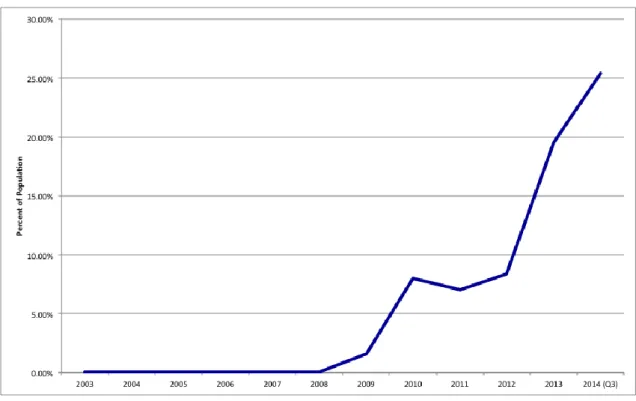
Rwanda has seen a recent surge in Internet users. Figure 3 below shows that overall growth over the past ten years has been significant. As is common in developing countries, mobile Internet dominates
Rwanda’s broadband market – in the case of Rwanda, accounting for more than 99% of all Internet subscriptions.8
Figure 3 Internet Penetration in Rwanda (Source: Rwanda Utilities Regulatory Authority, 2014)
The Government of Rwanda (GOR) has been actively promoting the country’s digital development for more than a decade. With ambitions for a knowledge-based economy by 2020, the GOR has had a consistent focus on improving the information and communication technology (ICT) knowledge and infrastructure.
The GOR’s most recent National ICT Plan (NICI - 2015) was introduced in 2011 and is specifically aimed at increasing access to and uptake of Internet services across the country. Other policies affecting ICT include the 2006 Policy on Science, Technology and Innovation and the 2011 National Export Strategy. The GOR established a Universal Access Fund (UAF), specifically aimed at facilitating access to telecoms services in rural areas. Financed through an additional tax on telecoms operators, the fund has so far been used to subsidise Internet services, but also includes subsidies of mobile handsets, while the government separately contributes to a “One Laptop per Child” project. All these policies illustrate GOR’s holistic
8
approach to ICT development that incorporates banking, agriculture, education, government and e-trade in its development agenda within agriculture, health, manufacturing, infrastructure and education sectors.
In addition, the GOR also has actively introduced specific ICT-related policies as well as legal and regulatory measures, including measures aimed at opening the market to competition, measures aimed at increasing infrastructure development (including policies to promote universal access and service), and measures aimed at promoting uptake. These measures have encouraged new entrants into the market, allowing more competitors in all segments of the market, including fixed telephony, mobile telephony, Internet service provision, and television. Government, as well as the private sector and development partners, have rolled out major investments in ICT.
As in many African countries, the cost of international connectivity in Rwanda has traditionally been high, which can act as a brake on usage. In particular, as a landlocked country, Rwanda cannot directly benefit from the recent boom in international submarine cables that landed on the East Coast of Africa (as discussed in the box below). As a result, Rwanda has taken several steps to lower the cost of international connectivity.
The Rwandan Internet Exchange Point9 (RINEX) was established in 2004 to both reduce the need for international transit and improve performance. The IXP is managed by RICTA and counts all of Rwanda’s ISPs as members. As occurred in Europe, RINEX has served to eliminate tromboning between its members, while also being the platform through which other ISPs are accessing GGC content, along with all government content. In addition, RINEX gives all its members access to a local instance of an Internet Domain Name System (DNS) root server (i-root-servers.net), which improves the local Internet user experience by speeding up the DNS resolution process.10 RINEX has had a beneficial impact on local Internet services in Rwanda, but its ultimate potential as a catalyst for growing the broader Rwandan Internet ecosystem and market has been limited by the lack of locally hosted content.
In addition to its support for RINEX, the Government purchased international bandwidth from telecom operators in neighbouring countries, which has been made available to both the government and the private sector. The purchase was made by the Rwanda Development Board (RDB) as part of the World Bank’s Regional Communication Infrastructure Program (RCIP) and is being managed by the Broadband Systems Corporation (BSC).11 As a result, ISPs can purchase international transit for USD 125 per Mbps per month. While this is significantly lower than what was paid in Rwanda before, it is also still significantly higher than the prices paid by ISPs in developed countries. Thus international transit remains a factor in the affordability of access prices in Rwanda.
9
See http://www.rinex.org.rw.
10
An introductory primer on the domain name system is available at http://www.internetsociety.org/internet-domain-name-system-explained-non-experts-daniel-karrenberg.
11
See http://www.bsc.rw/services/fiber-services/fiber-internet/ for more details. ISPs are also free to build or acquire their own international capacity, and we understand this is increasingly common.
Box 1: International Capacity Costs and the Content Equation:
The costs of international capacity between Africa and Europe have been dropping rapidly since the introduction of undersea cables in the early 2000s and the subsequent deployments that now circle the continent. Prior to the undersea cable investments, it was not uncommon for international capacity over satellite to cost in excess of USD 2000 per Mbps per month. In 2013, Analysys Mason and the Internet Society undertook a survey of International capacity prices across a sample of countries in Sub-Saharan Africa, including both coastal and landlocked markets.12 As shown in Figure 4 below, prices for capacity to Europe ranged from nearly USD 650 per Mbps per month in Botswana to some USD 50 per Mbps per month in Senegal.
Figure 4 Price of uncontended capacity to Europe at STM-1 level (155Mbit/s). (Source: Analysys Mason, 2012)
Of particular note, the cost of capacity did not precisely correlate to geography, as land-locked countries must use terrestrial cross-border capacity to access undersea cables via a coastal neighbour. In East Africa, for instance, the landlocked countries, including Rwanda, have managed to address issues related to cross-border connectivity and enjoy international capacity at prices near those enjoyed by their coastal neighbours Tanzania and Kenya. This stands in stark contrast to Southern Africa, where, for instance, land-locked Botswana paid significantly more than its coastal neighbour South Africa.
At the same time, evidence suggests that in Africa very little Internet content is sourced locally, with the vast majority sourced internationally — including local content that is hosted overseas. Despite drastic falls in prices for international capacity compared to those experienced prior to undersea cable deployment, significant costs are still incurred by ISPs due to the high proportion of locally relevant content that is sourced internationally.
12
Schumann, Robert and Michael Kende, “Lifting barriers to Internet development in Africa: suggestions for improving connectivity,” May 2013. See http://www.internetsociety.org/doc/lifting-barriers-internet-development-africa-suggestions-improving-connectivity.
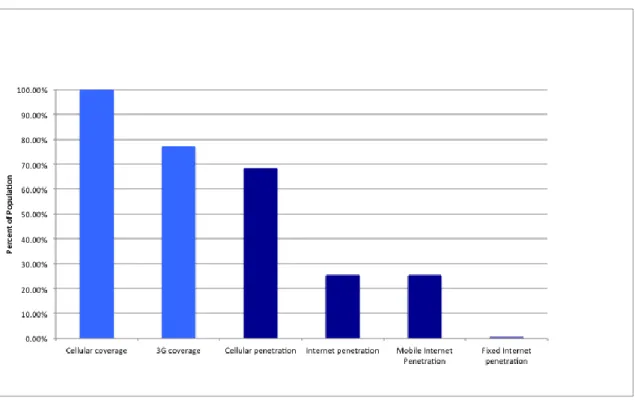
Overall, availability of Internet access far outweighs adoption in Rwanda, a situation that is typical in emerging countries where the deployment of mobile broadband networks has allowed widespread coverage. As shown below, cellular (voice) coverage is available to effectively the entire population in Rwanda, and uptake is approaching 70% in September 2014.13 3G coverage is not far behind cellular, which is promising, but overall mobile Internet penetration lags well behind at 25%, and mobile broadband is further behind. We believe that one of the key factors holding back adoption is the relative lack of locally hosted content.
Figure 5 Internet availability and adoption in Rwanda (Source: Rwanda Utilities Regulatory Authority, 2014)
In order to help address the divide between Internet availability and adoption, we focus here on promoting an enabling environment that make it attractive for local content developers to host their content locally, for international providers to make their content more locally accessible, and for investment in data centres required to make cost-effective local hosting a reality. Promoting local hosting of content should increase demand for Internet access – by eliminating international transit charges and therefore reducing costs, and by reducing the latency of access – which in turn should help to promote adoption and usage.
Local Content Providers
Rwanda’s rapid increase in the number of Internet users has stimulated positive momentum where more and more Rwandan content has moved online. Small businesses are increasingly looking to publish content online, accompanied by new businesses providing Internet-related services. At the same time, there are several data centres already operational in Rwanda, which we understand have spare capacity, with at least one more soon to be operational. As the table below shows, however, most Rwandan content is hosted abroad, and one of the goals of this paper is to determine why more content providers do not consider local hosting as an option.
13
Rwanda Utilities Regulatory Authority. “Statistics and Tariff Information in Telecom Sector as of September 2014.” See http://www.rura.rw/fileadmin/docs/Statistics_report_3rd_quarter___2014_for_publication.pdf
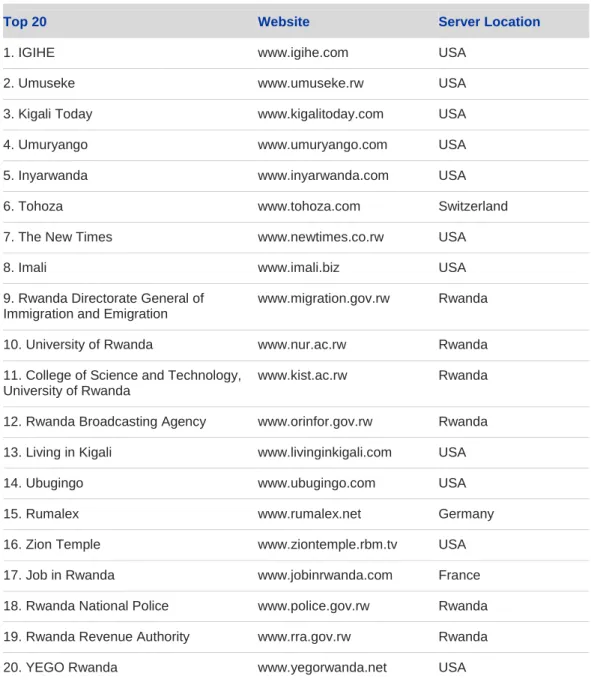
For instance, in Rwanda, RICTA compiled a list of the top 20 local websites and their respective hosting locations, listed here.
Figure 6 Top 20 Rwandan websites and server location (Source: RICTA, 2013)
Top 20 Website Server Location
1. IGIHE www.igihe.com USA
2. Umuseke www.umuseke.rw USA
3. Kigali Today www.kigalitoday.com USA
4. Umuryango www.umuryango.com USA
5. Inyarwanda www.inyarwanda.com USA
6. Tohoza www.tohoza.com Switzerland
7. The New Times www.newtimes.co.rw USA
8. Imali www.imali.biz USA
9. Rwanda Directorate General of Immigration and Emigration
www.migration.gov.rw Rwanda
10. University of Rwanda www.nur.ac.rw Rwanda
11. College of Science and Technology, University of Rwanda
www.kist.ac.rw Rwanda
12. Rwanda Broadcasting Agency www.orinfor.gov.rw Rwanda
13. Living in Kigali www.livinginkigali.com USA
14. Ubugingo www.ubugingo.com USA
15. Rumalex www.rumalex.net Germany
16. Zion Temple www.ziontemple.rbm.tv USA
17. Job in Rwanda www.jobinrwanda.com France
18. Rwanda National Police www.police.gov.rw Rwanda
19. Rwanda Revenue Authority www.rra.gov.rw Rwanda
20. YEGO Rwanda www.yegorwanda.net USA
In line with government policy, the six government websites listed above are required to be hosted in Rwanda. All 14 of the commercial websites are all hosted in Europe or the USA. In terms of international content, we are only aware of the local presence of a GGC and the recently-launched Akamai local cluster; otherwise all other content is also hosted abroad.
Box 2: Local Content in Rwanda: A Growing Market
Internet penetration in Rwanda is growing exponentially from a relatively modest base. Rwandan content developers are already capturing current opportunities, with an eye on future growth.
Current Rwandan-developed content offerings cover a wide diversity of services – including national newspapers, on-line local and global news aggregators, e-commerce ventures, local entertainment and social sites, and job search portals, to name just a few. Of the range of content developers we had the privilege to interview, all reported a strong intent to grow their on-line services, with many expecting to expand video content, audio and live-video streaming, and other data-intensive services. Many content outlets also have started offering website development services to local companies and entrepreneurs to address the growing demand in Rwanda.
IGIHE Limited is one example of a media provider expanding its offerings to capture the growing on-line demand and opportunity in Rwanda. A leading provider of local and international news in a range of languages including Kinyarwanda (the local language of Rwanda), Kirundi (the local language of Burundi), English and French, the company has launched a companion service, IGIHE TV, which focuses on video content and live streaming for private and public events. In addition, the company has expanded to offer a full range of web development, content production, and on-line management services for the Rwandan market, positioning itself as a “one-stop shop” for local companies looking to start and expand their Internet presence.
Rwandan web entrepreneurs have also experienced tremendous response and take-up shortly after launch. Tohoza.com, Rwanda’s leading classified advertising portal, is one such example. Started as a part-time venture in 2011 by brother and sister team Patience Nduwawe and Chance Tubane, the website has quickly become one of the most popular websites in the country. It connects buyers and sellers of products and services ranging from real estate and furniture to construction services and driving lessons. In addition to continuing to grow their presence in Rwanda, the founders have aspirations to expand their footprint throughout East Africa and beyond.
With its entrepreneurial spirit, a young population interested and engaged with Internet technology, and government policy aimed at growing the Internet economy, the Rwandan content market is set for further growth, which we feel can be accelerated as the issues highlighted in this report are addressed by local stakeholders.
As mentioned above, the Internet Society led a local content forum in Kigali on 9 July 2014, organised by MyICT, to learn more about why all the largest websites were hosted abroad. Present at the workshop were the key stakeholders, including representatives of MyICT, RICTA, BSC, the ISPs, data centres, content providers and aggregators, and members of the local Internet Society chapter.
The discussion and responses to a questionnaire we sent as a follow-up to the workshop revealed a number of impediments to local content hosting. We believe that many of the issues reflect actual concerns, while some were based on perceptions that may no longer be valid, but nonetheless must be addressed. We summarise the issues raised from the questionnaire responses here through the filter of the three environmental categories mentioned above, and set out below to address which issues may be actual and which may be perceived.
Economic/Business Incentives of Hosting Abroad
Cost was clearly a significant issue influencing the hosting decision of many content providers. Many of the Rwandan content providers stated that they would prefer to host their content locally, but that Rwandan
web-hosting services did not offer affordable solutions. Many of the smallest content developers entrusted their websites to local providers who were able to offer competitive prices by aggregating a number of websites and storing them abroad – often these content developers themselves did not know where their websites were hosted.
The difference in hosting costs arises from three components, which we separate into:
Economies of Scale: Rwandan data centres tend to have higher costs than their international data centre competitors, who enjoy great economies of scale and lower energy costs (with less need to use backup power owing to more consistent primary electricity supplies)
Actual vs. perceived costs: some Rwandan content providers’ views were based on outdated perceptions, such as local web-hosting prices which have been coming down in recent years Local Market Reality: there may also be a market mismatch where local Rwandan web-hosting services have not been marketed to smaller websites, and developers of smaller websites may be comparing prices of the largest hosting packages available in Rwanda to the unlimited capacity often offered in Europe or the USA, even though such capacity may not be needed. As such, the cost of hosting content in Rwanda is a significant element in the hosting decision of local websites, which must be addressed in order to increase the amount of locally relevant content hosted in Rwanda.
Technical/Skills of local hosting providers
The choice to host local content internationally is based on more than economic incentives. Many of the local Rwandan content developers explained that the decision to host their websites abroad was related to better service quality and, fundamentally, their perception that overseas hosting companies have a higher level of technical competence. One content developer with experience hosting locally commented that they believed hosting and data centre skills in Rwanda were sufficient for basic hosting needs, but skills for maintaining more advanced services, such as live video and audio streaming, required improvement. The availability of constant (24/7) customer service, as well as clear communication in the event of problems, was frequently highlighted as a benefit of hosting abroad. As pointed out by many of the content producers, their ability to provide customer service to their own users is intrinsically linked to actions and information stemming from the hosting provider.
Related to the perception of technical competence is the issue of security. A few of the Rwandan content producers stated that they are more comfortable with hosting their data at large hosting providers abroad due to perceptions of better security. Other participants at the forum, however, noted that international hosting companies were not automatically better in terms of technical and security competence. Local Rwandan hosting providers state that the security of their services are on par with larger providers abroad, as well as less frequently targeted by large-scale cyber-attacks.
Legal/Policy issues related to local hosting
Although the potential for government intervention, such as blocking websites or shutting down operations, were factored in by the Rwandan content producers interviewed, they were not cited as playing a major role in the decision to host their websites abroad. While Rwanda has legislation14 to prevent hate speech that also applies to Internet content, none of the respondents reported that they were asked to take down content from their local websites. As expressed by one of the respondents, there is a common
14
understanding of “where the line is drawn.” Furthermore, it was noted that restrictions on hate speech would be applicable on Rwandan content developers regardless of where the content is hosted. As such, Rwandan stakeholders did not indicate concerns over government intervention as a considerable factor in hosting decisions. Government officials also indicated that a law explicitly limiting intermediary liability for communication services providers is expected to pass shortly.
Furthermore, the decision of Google to extend its network into Rwanda with a GGC, and the more recent decision of Akamai to put a cache in Rwanda are positive milestones. Both companies have extensive experience with different countries legal systems surrounding issues such as intermediate liability, and thus their decision to enter Rwanda should provide a signal for other companies considering entering the market with locally hosted content.
Recognised Benefits of Hosting Locally
Many Rwandan content producers who we interviewed that are presently hosting their websites abroad do recognise a number of benefits in hosting their content locally, and stated that they would even be willing to pay a reasonable premium to host their data at home. Indeed, many Rwandan content providers recognise the significant reduction of latency from local hosting and its associated benefits, such as improved user experiences and increased page views. Nonetheless, they felt that the current price premium was too high.
Testimonies from Rwandan content producers that have tried to host their websites both locally and abroad indicate great benefits of doing the former. One company that chose to host its static content locally (e.g. components of the website such as pictures that do not change frequently) reported a 60% increase of load speed and an increase in page views as a result. Although the company intends to keep its dynamic content abroad, it currently is looking at creating a local mirror site as a direct response to the success of localising static content.
Other content developers highlighted insulation from disruptions of international links as an important benefit of hosting their websites locally. At the same time, however, such arrangements were also perceived as risky due to concerns about the reliability of local web hosting services as described above. Addressing any service quality issues or perceptions will clearly increase the willingness of providers to host their content locally.
Analysis
Based on the data provided by the local Rwandan industry, we have made a number of important insights relevant to this study. In particular, we were able to quantify the impact of hosting content abroad with some examples, summarised in Figure 7.
Figure 7 Impact of overseas hosting of content from Rwanda (Source: Internet Society, stakeholder submissions, 2014)
Based on some data provided to us by one of the larger Rwandan content developers, we can draw several key conclusions, outlined in the diagram above, moving from right to left.
First, the Rwandan content provider indicated that it is hosting its content in the USA for USD 149.99 a year. Based on the size of the website, which was indicated to be approximately 8 GB in size, this website could be hosted in Rwanda for USD 261.15
Second, based on the amount of traffic that the Rwandan content provider indicated was being sent to Rwanda, the yearly cost of importing this traffic was approximately USD 13,500 (based on just over 9 Mbps of incoming traffic, at a cost to the ISPs of USD 125 per Mbps per month).
Finally, the average latency of accessing the website from Rwanda was approximately 350ms, compared with an average of 10ms for accessing websites that are hosted in Rwanda.
This demonstrates that, indeed, there is a large negative externality involved with overseas hosting of Rwandan content – for a yearly savings of USD 111 to this particular local content provider, a cost of USD 13,500 was imposed on the ISPs, which in turn is passed over to Rwandan end-users. Furthermore, this is just one website, albeit one of the larger ones, and we expect that there are multiple cases of these externalities occurring.
However, this does not reveal the extent of the issues surrounding decisions to host websites abroad. There are at least eight content aggregators operating in Rwanda, and based on those who provided data, they count over 800 small websites as customers, almost all exclusively hosted abroad. In terms of size of
15
We note that this price-point was recently announced by one of the data centre providers, and that this lower price may entice content providers to take a second look at local options.
websites, there is a relatively even distribution of websites between three categories: about one-third of websites are less than 500MB, another third between 500MB and 1GB, and the remainder larger than 1GB.
These websites are not just small in size, but also generate little traffic today. A sample of Rwandan aggregators representing approximately 100 of the 800 Rwandan websites provided traffic information. They indicated that at least 80% of the traffic from Rwandan websites is flowing back into Rwanda, but that the total amount of traffic was significantly less than 1Mbps. Thus, given the current cost structure of hosting in Rwanda, these websites would be relatively expensive to host locally at this time, but, on the other hand, they are so small that hosting them abroad currently generates relatively little externality for the ISPs who import the traffic. We believe that the amount of traffic is limited, in part, because the content is hosted internationally and suffers from high latency. Thus a solution that would make it cost-effective to host the content locally would increase usage.
As noted above, one significant factor that is likely to limit the usage of Rwandan websites hosted abroad is the latency in accessing the websites. We frequently measured latency of 350ms or greater when accessing websites from Rwanda that are hosted in the USA or Europe, while websites hosted locally had latency under 10ms. Distance between the user and content hosting location adds latency to
transmissions – based on the physics of transmission over fibre optic cable, the theoretical minimum latency to Europe is 70ms (and up to twice that latency to the USA).16 The additional latency that is experienced in reality originates in a variety of sources, including connectivity arrangements, congestion on transit links and the bandwidth of the last mile connection in Rwanda. This latency translates to a wait before a website starts loading, and the “wait time” can depress usage.
Additionally, latency also has an important secondary effect on usage, because it also impacts throughput; in other words, how long it takes for the website to load once it starts. The protocols that underlie the Internet (TCP/IP) break up a data transmission into packets that are then reassembled upon arrival. To ensure full delivery of the content, acknowledgments are sent when packets arrive – at a certain point, data will no longer be sent before acknowledgements of previous transmissions are received. As a result of these acknowledgements, latency has a secondary impact – the longer the latency, the longer it takes to receive the acknowledgements, which slows the time it takes to load the website. This can add significant time for the end-user. This is particularly true for many websites that are composed of smaller pieces such as maps, which each must be transmitted separately.
16
See https://www.igvita.com/2012/07/19/latency-the-new-web-performance-bottleneck/ for an interactive map of latencies. In practice, the latencies may be longer owing to factors such as routing and congestion.
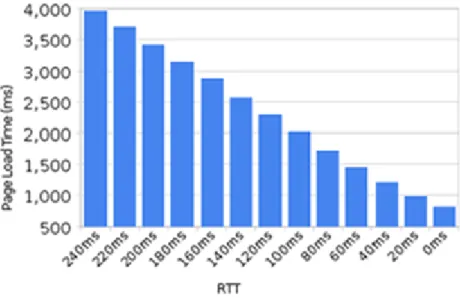
Figure 8 Page Load Time as Round Trip Time Decreases (Ilya Grigorik, 2012)
Figure 8 shows how the time to load a page increases linearly with the latency of the connection –while a given page may take up to a second to load if latency is at or below 20ms, at a latency of 240ms, the load time for the same page would be 4 seconds, and yet even more for the 350ms latencies frequently experienced in Rwanda for content hosted overseas.17 During congested evening hours, we measured peak latencies up to 800-1000ms, resulting in yet larger increases in throughput times. We also measured packet loss of 6 – 22% during these peak times – all lost packets must be retransmitted, increasing the bandwidth required by the transmission and further reducing throughput efficiencies.
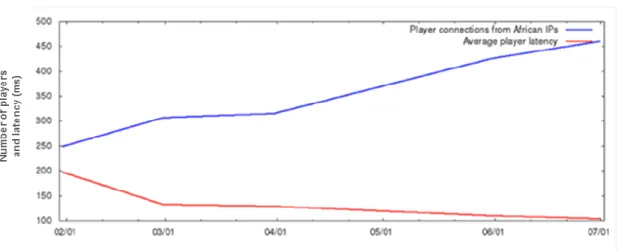
Together, the latency for accessing a website hosted abroad, along with the resulting slow throughput for loading that website, can act to limit users’ willingness to access these websites. As an example, latency has a significant impact on online gamers, particularly for multi-player games where response time is critical. A multi-player gaming community based in Uganda called GamersNights was suffering from poor latency, which limited growth of the number of players. Liquid Telecom offered to host their server in order to conduct an experiment of the impact of latency and growth in the number of players. As shown in Figure 9, as the latency decreased significantly, the number of players increased accordingly to take advantage of the better user experience.18
17
See https://www.igvita.com/2012/07/19/latency-the-new-web-performance-bottleneck/.
18
GamersNights.com presentation by Kyle Spencer at the African Peering and Interconnection Forum (AfPIF), August 26-28, 2014, see https://www.internetsociety.org/afpif-2014/. For more information on the GamersNights initiative, see http://gamersnights.com.
Figure 9 Number of game players and average latency (Source: GamersNights, 2014)
Closer to home in Rwanda, and as noted above, the GGC, containing largely YouTube videos was made available to all ISPs connected to RINEX in July/August 2013.19 Videos are relatively large in bandwidth, and, thus, user experience is significantly sensitive to latency and throughput. As Figure 10 shows, when the GGC was made available in mid-2013, the traffic through the IXP increased up to four-fold. We expect that much of this was new traffic, as users responded to the improved user experience by viewing more videos. A similar issue was noted in an earlier Internet Society study of the impact of IXPs in Kenya and Nigeria.20
Figure 10 Traffic through Rinex Switch (Source: Rinex, 2014)
Finally, the recent launch of an Akamai cluster in Rwanda provides significant evidence of the benefit of local hosting of content. Akamai is a leading provider of cloud services for delivering, optimising and security securing online content, delivering between 15% to 30% of global web traffic through its platform on behalf of its international content customers.21 During the week of 20 October 2014 Akamai turned on a local cache cluster in Rwanda, which is hosted by RICTA and makes the content available to all ISPs via RINEX. The results, provided to us by Akamai, are significant.
19
See https://peering.google.com/about/ggc.html for more details on the GGC.
20
Kende and Hurpy (2012).
21
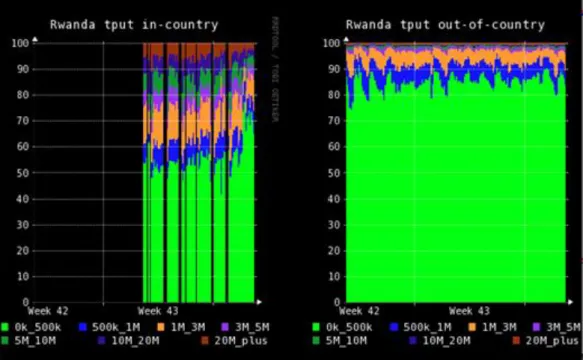
By hosting the content in a local cache, latency decreased, making it faster for users to access the content. As discussed above, latency also impacts the resulting throughput of data – and the Akamai data show just how significantly throughput is impacted. Prior to locating the cache in Rwanda, the vast majority of users – around 90% – experienced throughput below 500 kbps when accessing the relevant content abroad. The day the cache was turned on, 50% of these users saw their throughput exceed 500 kbps, in some cases by quite a bit – 5% of the users experienced throughput in excess of 20 Mbps, accessing the same content, using the same mode of access. These data are displayed in Figure 11.
Figure 11 Throughput data for Akamai traffic (Source: Akamai, 2014)
These results, in turn, have a positive impact on usage, in a way to which all Internet users can relate – as latency falls and throughput increases, the user experience is better, which leads to more usage of the corresponding web sites. According to Akamai, based on the data from other emerging countries, traffic usually strongly increases once users experiences have drastically improved, even above normal traffic growth patterns. For example, Figure 12 below shows how the percentage of traffic delivered in-country increased quickly after an Akamai cluster came online in another country, which in turn led to steady increased growth in total average and peak usage in that location. A similar pattern is starting in Rwanda – two months after the cluster was activated, there has already been an 80% increase in peak-hour demand from users in Rwanda.
Figure 12: Impact of Akamai cluster on traffic in-country (NOTE not Rwanda) (Source: Akamai 2014)
Together, the data in Rwanda show that hosting content locally is beneficial to all parties. ISPs save money from not having to ‘import’ the traffic from Europe or the USA over relatively expensive international links, which will in turn lower the latency of accessing content. As a result, users will experience much quicker response and throughput from accessing websites that are hosted locally, leading them to
increase their usage accordingly. Finally, as a result of more usage the content providers will receive more traffic for their websites, helping them to realise the benefits of the content that they have developed, whether that is advertising revenue, brand awareness, or subscribers. This, in turn, helps to improve the entire Internet ecosystem, helping the country to realise the benefits of the ambitious government goals for the digital economy.
We now investigate the particular issues that are curbing the development of local hosting as an attractive option, divided into the three environmental categories identified above.22
Economic / Business Issues
Providing local web-hosting services that match the needs of the growing local content industry is necessary to compete with the international hosting providers that are hosting Rwandan content today. Recognising and responding to the different storage needs for different local Rwandan content and businesses is the first step, which can potentially shift the comparative advantage in favour of local web hosting services. As discussed previously, there are a significant number of small websites in Rwanda today, whose needs are met by website aggregators, alongside some larger ones who arrange their own hosting.
The required storage capacity of a website is fundamentally related to its design and the type of content. Websites based on pure text can often be measured in terms of Megabytes (MBs), while websites that contain videos and high definition pictures require capacities in the scope of multiple Gigabytes (GB),
22
As noted below in Box 3, the Internet Society does not support proposals to require local hosting of content, and our identification of issues here, and our recommendations below, should not be read in support of such proposals.
depending on whether or not those videos are embedded, provided as links or if they are stored on the server. By way of example the Internet Society website, www.internetsociety.org, hosts video, maps, data sets, and archives, and currently requires around 7-8 GB of disk space.
Based on the data that we have accumulated, content providers in Rwanda are using very large, or unlimited hosting packages in Europe or the USA – for instance, one company reported a package for USD 49.99 per year for up to 150GB of capacity, compared to one offer in Rwanda for 50GB of capacity for RWF 650,000 (USD 944). However, it is also clear from the data we received that most Rwandan websites currently do not require near 50GB of capacity. Rather, smaller capacities such as a package for websites under 2GB for RWF 60,000 (USD 87) per year may be more appropriate for many local Rwandan websites.
We believe it is important for content developers to consider not just the cost of local hosting, but also the impact of local hosting on the usage of their website, particularly given that lower latency improves customer experience and can encourage increased website use. However, it is equally important for hosting companies to provide packages based on the needs of local content providers, as a first step in minimising the economic incentives of hosting abroad. As discussed above, with the right offer, website developers may be willing to pay a reasonable premium to host in Rwanda, in order to benefit from the impact of reduced latency and increased throughput on usage.
Technical / Skills Issues
Based on our findings, Rwanda has a significant head-start in its potential to increase the availability of local content – more than one data centre for hosting (with at least one additional data centre reportedly being planned), and a long-standing and professional IXP that enables the ISPs and data centres to efficiently exchange traffic. Nonetheless, Rwandan website developers raised questions about the level of service and reliability provided by local data centres in comparison with those abroad, as well as the level of local hosting technical skills. In this regard, it is important to separate actual from perceived issues, in order to remove negative perceptions while addressing the actual issues.
It is important that the data centres advertise their support services, such as security, resilience, backup power, and the availability of backup staff at nights and weekends, and ensure that they meet the
demands of customers. Further, the skill-set at every layer of data centre operations is important, including the physical infrastructure, operating systems, and software/applications. Potential customers must be aware of and recognise existing skills while any remaining gaps in skills are filled in the longer term. Finally, to address on-going concerns, it is important for Rwandan data centre providers to highlight or augment their customer service, reliability, and technical skills.
From a capacity-building point of view, there is no formal strategy to develop the skill sets required in the relevant domains. To date, local networking knowledge is concentrated where educational efforts have already been made, such as with the local Cisco Academy. On the other hand, some local experts also note that skill sets relating to cyber security, system administration, and data centre management could be further enhanced and more broadly distributed. This gap needs to be addressed with a sound capacity-building strategy and programme.
Legal / Policy Issues
In general, the legal issues of concern to content providers include two related aspects – first, the laws covering liability for the content available on websites, and second, the level of uncertainty as to how the law is applied, or how any gaps in the law are addressed. This is important for the developers of content,
and also for so-called intermediates that aggregate and/or distribute third-party content, such as blogs or videos.
In many countries, existing speech laws may have gaps, and there may be further gaps in applying those laws to online content. Furthermore, any uncertainty about the laws may be more harmful than the laws themselves. In other words, legal uncertainty constitutes a significant barrier to entry and integration for both content and hosting providers and any business that prefers to manoeuvre through a country’s existing legal system than having to deal with an ambiguous legal framework. This may be particularly true for international companies who may be deciding where to place content caches or servers, and need to understand the laws regarding their liability.
In Rwanda specifically, stakeholders raised no legal or policy issues as a specific barrier to hosting locally relevant content. Rwandan content developers expressed clarity in their understanding of legal issues with regard to any speech limitations, and any corresponding licensing or regulatory requirements. Further, the existing presence of a GGC and an Akamai cluster exhibits interest in Rwanda by international CDNs, and entry of new data centres demonstrate that legal or policy issues do not appear to act as impediments to hosting of locally relevant content.