Contents
Executive Summary
...
4Progress on recommendations
...
4Ongoing actions for LSAs ... 5
Our key findings: Supervisory function
...
7Staffing challenges ... 7
Recruitment and retention of SoMs ... 7
Birth trends ... 7
Governance and risk-management processes ... 8
Investigations and outcomes ... 8
LSA annual audits ... 8
Our key findings: Good practice across the UK
...
8Raising the profile of statutory supervision ... 8
Promoting normality in childbirth ... 8
Improving the quality of midwifery care ... 9
Contributing to multidisciplinary education and training ... 9
Introduction
...10
Section 1: NMC quality assurance of LSAs 2012–2013
...
11Role of the LSA in protecting the public ... 11
Quality assurance of the LSAs ... 13
The annual report ... 13
Annual review of the LSAs ... 14
Extraordinary reviews ... 15
Quarterly quality monitoring reporting framework ... 15
Section 2: Analysis of the LSA annual reports to the NMC
...18
LSA standard 2: Each LSA will ensure their report is made available to the public 18 LSA standard 3(a): Numbers of supervisors of midwives’ appointments, resignations and removals ... 20
LSA standard 3(b): Details of how midwives are provided with continuous access
to a supervisor of midwives ... 24
LSA standard 3(c): Details of how the practice of midwives is supervised ... 26
LSA standard 3(d): Evidence that service users have been involved in monitoring supervision of midwives and assisting the LSA MO with the annual audits ... 30
LSA standard 3(e): Evidence of engagement with approved education institutions in relation to supervisory input into midwifery education ... 32
LSA standard 3(f): Details of any new policies related to the supervision of midwives ... 35
LSA standard 3(g): Evidence of developing trends that may impact on the practice of midwives in the LSA ... 37
LSA standard 3(h): Details of the number of complaints regarding the discharge of the supervisory function ... 40
LSA standard 3(i): Reports on all LSA investigations undertaken during the year 42
Conclusions
...
46Contact us
...
46Glossary
...47
Summary of recommendations
...
48Recommendations for the NMC for reporting year 2013–2014 ... 48
Executive Summary
This report provides detail on the Nursing and Midwifery Council (NMC) quality assurance of local supervising authorities (LSAs) and is divided into the following sections:
• Section one: provides an overview of how we (as the regulator) monitor and quality assure that LSAs meet the standards for the statutory supervision of midwives.
• Section two: provides detailed analysis of the LSA annual reports. This section contains both quantitative and qualitative information and evidence.
Although the NMC provides guidance on what the focus of the annual report should be, the LSA reports vary in the level of detail, depth and analysis they provide. Many LSAs provide descriptive accounts rather than the evaluative outcomes addressed within each standard. The LSA Midwifery Officers (LSA MOs) are working
collaboratively through the LSA MO Forum UK to develop consistent policies and
processes that support statutory supervision of midwives to protect women and their babies. The NMC expects to see the outcomes of those policies and processes.
All LSA reports have provided information detailing their compliance with rule 16 of the Midwives rules and standards (NMC, 2004) during the practice year period of 1 April 2012–31 December 2012. They also incorporated rule 13 of the new Midwives rules and standards (NMC, 2012), which came into effect on 1 January 2013, for the period of 1 January 2013–31 March 2013.
LSA reports provide assurance that supervisory frameworks and mechanisms are in place to facilitate the statutory supervision of midwives across the UK.
Progress on recommendations
The previous report, Supervision, support and safety: Report of the quality assurance of the local supervising authorities 2011–2012, outlined various recommendations for the LSAs and the NMC.
The NMC has published a new Quality Assurance (QA) framework for 2013–14 following a review of our QA processes and outcomes. This year, in keeping with our move to a risk-based, outcome-focused approach, we have provided indicative grades as part of the ongoing actions. For clarity, we have adopted a red, amber and green rating
system for the current 14 LSA country, consortium or cluster configurations. When recommendations have not been met by six or more LSAs, a red rating will be awarded. When one to six LSAs have not met the recommendation then an amber rating will be awarded. Finally, when the recommendation has been met in full by all LSAs, a green rating will be awarded. Next year, it is our intention to identify specific LSAs which do not meet the standard. This is so there is clarity and transparency about the responsibilities specific LSAs have and the actions and outcomes that are needed from them.
Outlined below is the summary of the progress on the recommendations from 2012– 2013 indicating where the most urgent actions are required. Progress arising from
the action plans will be reported via the quarterly quality monitoring (QQM) cycle during 2013–14 and summarised in next year’s annual report.
Ongoing actions for LSAs
Recommendations Outcomes
1 All LSAs who are unable to fully meet LSA standard 3(d) should review closely the methods used to ensure that service users/lay auditors are present at every annual local LSA audit. Action plans should be developed to address this and monitoring of this will be included in the quarterly quality monitoring reporting.
Although some LSAs can field lay auditors, most are failing to continuously engage with service and lay auditors.
Recommendation not achieved by all LSAs Status: Red
Action: remains an ongoing recommendation for all LSAs.
2 To monitor what direct impact a ratio of supervisor of midwives (SoM) to midwives greater than 1:15 has on either the delivery of
effective statutory supervision of midwives, or the protection of women and their babies. This should be reported on in the next reporting year and through the quarterly quality monitoring reporting.
All LSAs recognise the negative impact an overall ratio of SoM to midwives greater than 1:15 poses to service users, SoMs and the supervisory role. Most LSAs are consistently under the 1:15 ratio.
Recommendation partly achieved Status: Amber
Action: remains an ongoing
recommendation for LSAs who do not consistently meet the ratio.
3 LSAs should continue to support SoMs in strengthening the profile of midwifery supervision, particularly in those trusts and boards where it has been found to be weaker and affects the ability of SoMs to deliver effective supervision.
Some LSAs have outlined the difficulties with strengthening the profile of
midwifery supervision.
Recommendation partly achieved Status: Amber
Action: remains an ongoing recommendation for all LSAs. 4 To continue to monitor how women
who use the maternity services engage with the supervision of midwives and the LSAs.
The LSA reports demonstrate that monitoring the engagement between women and SoMs remains a priority, but that variation in levels of engagement exists.
Recommendation partly achieved Status: Amber
Action: remains an ongoing recommendation for all LSAs. 5 All LSAs should review and monitor
how effective the current
framework is for raising the profile
Although effective relations between LSA MOs and approved education institutions (AEIs) exist, the impact on pre-midwifery
and informing student midwives, of how statutory supervision of
midwives enhances public protection and could support them in practice.
students fully understanding midwifery supervision needs to be examined. Further reviews should be conducted.
Recommendation partly achieved Status: Amber
Action: remains an ongoing recommendation for all LSAs. 6 All LSAs are recommended to review
all national and local guidelines in light of the new Midwives rules and standards (NMC, 2012).
All LSAs have reviewed the impact that the new midwives rules and standards would have on their local and national guidelines.
Recommendation achieved Status: Green
Action: ongoing update of guidelines as required.
7 LSAs must continue to engage and work collaboratively with the NMC to monitor and assure the safety and wellbeing of women using maternity services through the quarterly quality monitoring framework.
All LSAs have provided completed reporting templates in a timely manner and are undertaking quarterly telephone discussions with the NMC.
Recommendation achieved Status: Green
Action: no further action required. 8 LSAs must continue to monitor
supervisory investigations
undertaken by SoMs to ensure that they act fairly and equitably and comply with the standards and guidance set by us and adhere to local guidelines set by the LSA.
All LSAs indicate that they provide a fair and transparent investigation process. Recommendation achieved
Status: Green
Action: remains an ongoing focus for all LSAs.
9 LSAs should develop guidelines for the annual review of a midwife’s practice to ensure that the review undertaken by SoMs is consistent and equitable.
This recommendation was achieved by all LSAs by means of consistent guidelines for annual reviews.
Recommendation achieved Status: Green
Action: ongoing updating of guidelines as required.
10 That all LSAs continue to promote and publicise opportunities for women to have access to a SoM 24 hours a day, seven days a week and continue to report on initiatives, successes and challenges in this area.
This was achieved by all LSAs. Approaches included a dedicated on-call SoM, the use of rotas and other aids to help identify these individuals to all staff.
Recommendation achieved Status: Green
Action: remains an ongoing focus for all LSAs.
The NMC will also continue to monitor complaints made against LSAs, their staff and the supervisory function. We will use the learning from the investigation of complaints
Our key findings: Supervisory function
The statutory supervision of midwives is a framework for supporting midwives to protect mothers and their babies. Our annual review of LSAs for this reporting year showed how statutory supervision works at a local level.
Staffing challenges
• The majority of LSAs continue to highlight the impact of ongoing resource
challenges in complying with the NMC SoM-to-midwife ratio of 1:15. Contributing factors include: ensuring SoMs are allocated to midwives who responded to the national drive to increase the number of Health Visitors; the need to maintain their midwifery qualification; and an increase in private organisations which employ midwives but not SoMs.
• An increasing number of midwives work part-time hours, increasing the midwifery headcount, and many LSAs have seen their ratio increase due to this higher number of part-time midwives. It is anticipated that this trend will continue, and therefore affect the ratio of SoM to midwives in LSAs in the future.
Recruitment and retention of SoMs
• The recruitment of SoMs to meet the recommended SoM-to-midwife ratio remains challenging due to retirements, resignations and requests for leave of absence. In view of these challenges, LSAs described their commitment and
strategies for recruiting midwives onto the approved preparation of supervisor of midwives (PoSoM) programmes.
• Many LSAs have identified that a higher percentage of SoMs are requesting a period of leave of absence. The LSAs continue to maintain contact with these SoMs during this period of leave to ensure that their return is straightforward.
Birth trends
• SoMs are increasingly called upon to offer support to both women and midwives in difficult situations with all reports highlighting the continuing complexity of births. While women have had an increase in alternative forms of birthing options in
midwifery-led units, including personalised birthing centres, a reduction in home births has been noted. It is often women with complex pregnancies – and against medical advice – who are increasingly wishing to give birth at home despite these alternative options.
• Through the supervisory framework, LSAs are working collaboratively with SoMs, AEIs and employers to ensure all midwives continue to have the necessary skills to deliver safe and effective care. This is evident through local post-registration education and training for midwives (such as regular skills and drills practice), high-dependency midwifery care and participating in pre-registration midwifery programmes to promote caring for women with complicated and high-risk pregnancies.
Governance and risk-management processes
• There were examples of statutory supervision of midwives working with trust or board governance and risk-management processes, however, the picture across the UK varies. Some LSAs have highlighted a strengthened working relationship with executive boards. Other LSAs perceive that executive boards have a limited understanding of the role of SoMs and midwifery supervision.
Investigations and outcomes
• LSA reports state that supervision can make a contribution to addressing concerns about standards of practice. These reports include evidence which demonstrates that effective statutory supervision of midwives can successfully aid a midwife’s return to practice by means of a timely period of supervised practice put in place by the LSAs.
LSA annual audits
• All annual reports contained detailed information on the LSAs’ annual audits of the statutory supervision of midwives within their maternity services. The majority of LSAs described the increased involvement of maternity service users in
monitoring the statutory requirements for supervision. However, recruitment and retention of service users remains a challenge for some LSAs.
Our key findings: Good practice across the UK
The analysis of the LSA annual reports identified good practice in the supervision of midwives across the UK.
Raising the profile of statutory supervision
• LSAs continue to work closely with trusts and boards to raise the profile of the statutory supervision of midwives. New recruitment strategies are being
implemented by LSAs to encourage midwives to become SoMs, including:
o talent spotting midwives interested in undertaking the PoSoM
programme; and
o the appointment of full-time SoMs in trusts and boards with a high ratio
of midwives to SoMs and low recruitment of SoMs.
• Introducing tailored leadership courses by LSAs to provide a consistent level of leadership that promotes effective investigation skills across the LSA.
Promoting normality in childbirth
• Across the UK, SoMs are actively promoting normality in childbirth and supporting women and midwives with normality initiatives.
Improving the quality of midwifery care
• SoMs are involved in undertaking regular audit programmes, for example, record keeping and the development of action plans, which drive improvements in the delivery and quality of midwifery care.
• SoMs work collaboratively with clinical governance and risk managers to improve the safety and quality of care provided to women and their babies.
Contributing to multidisciplinary education and training
• SoMs contribute to the education and training of student midwives by giving insight into the statutory supervision of midwives.
Introduction
The NMC is the UK regulator for nurses and midwives. Our primary purpose is to protect patients and the public through effective and proportionate regulation of nurses and midwives. We set standards of education and practice, maintain a register of those who meet these standards and take action when a nurse or midwife’s fitness to practise is called into question. By doing this, we promote public confidence in nurses and midwives, and in regulation.
The Nursing and Midwifery Order 2001 (‘the Order’) sets out the NMC’s role in
overseeing the supervision of midwives eligible to practise within the UK (article 5(1)). It also sets standards for midwives’ education, training, conduct and performance. These standards are considered necessary for safe and effective practice (article 5(2)(a)). The Order also requires us to set rules and standards for midwives and the LSAs responsible for the statutory supervision of midwives. These are contained in the Midwives rules and standards (NMC, 2012), which came into effect on 1 January 2013. The publication is available on our website at www.nmc-uk.org.
The Quality assurance framework (NMC, 2013) sets out what we want to achieve in nursing and midwifery education and supervision of midwives over the next three years and how this will be measured. The LSAs verify to the NMC that the standards for supervision of midwives are being met across the UK.
Under rule 13 of the Midwives rules and standards (NMC, 2012) – previously rule 16 of the Midwives rules and standards (NMC, 2004) – every LSA is required to submit an annual report containing specific information by a date specified each year. The annual report provides the opportunity for every LSA to inform both the NMC and the public of its activities relating to statutory supervision of midwives. The reports also
highlight key issues or challenges faced throughout that year.
The information contained in this report is for the practice year 1 April 2012–31 March 2013, and includes the following:
• Section one – an overview of how the NMC continues to monitor and quality assure LSAs. The Quality assurance framework was published in June 2013 and does not impact on this report’s findings. However, key aspects of how the new framework will interact with the LSA standards for statutory supervision of midwives will be highlighted in preparation for the following year when it will be in full effect.
Section 1: NMC quality assurance of LSAs 2012–2013
Role of the LSA in protecting the public
The purpose of supervision is to protect women and babies by actively promoting a safe standard of midwifery practice. Supervision should also be used as a means of promoting excellence in midwifery care by supporting midwives to practise with confidence. Supervision also has a role in advising and supporting women who use midwifery services.
The NMC creates the LSA rules and sets standards for the statutory supervision of midwives. For this reporting year these are set out in both the Midwives rules and standards (NMC, 2004), as well as the new Midwives rules and standards (NMC, 2012), since the 2012 version came into effect nine months into the reporting year, on 1 January 2013.
LSAs sit within strategic health organisations and the type of organisation varies in each country of the UK. The chief executive of the strategic organisation is
responsible for the LSA.
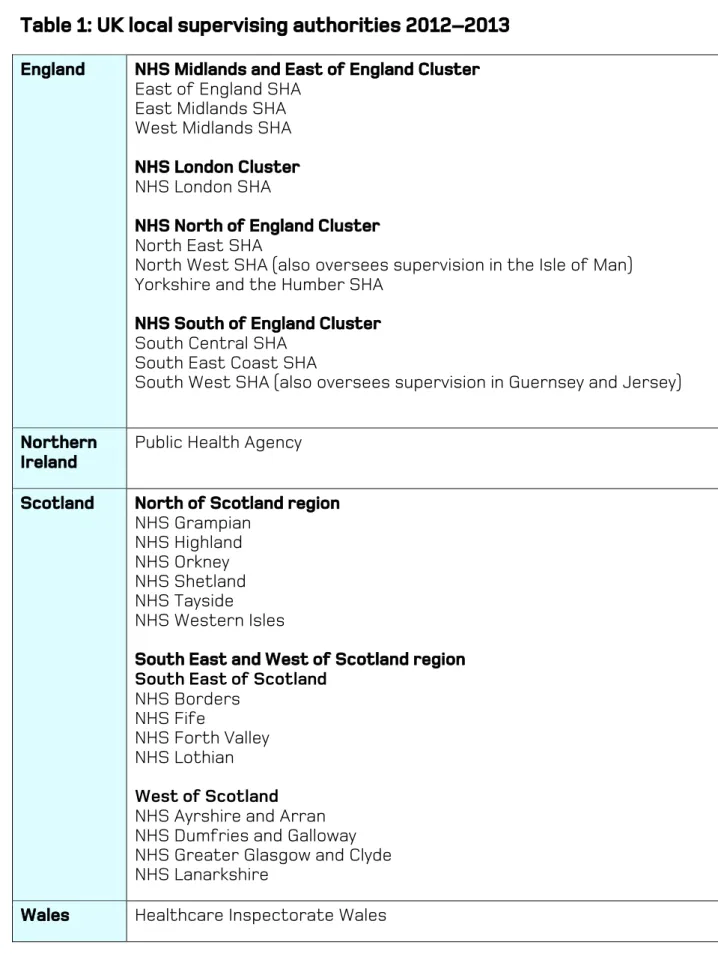
In England, LSAs used to sit within the relevant Strategic Health Authority (SHA), however, since reconfiguration LSAs have been merged into regional clusters. Since April 2013, the LSA in England is NHS England. In Wales, the LSA sits within Healthcare Inspectorate Wales and in Northern Ireland, it is the Public Health Agency. In Scotland, the functions of LSAs are provided by health boards which are arranged into two regions: North of Scotland Region, and South, East and West of Scotland Region. As of 1 March 2013, there were 26 LSAs across the UK. The health boards in Scotland are arranged into two regions encompassing six and eight LSAs each. Therefore, there is a combined representation of 14 LSAs with 15 appointed LSA MOs across the UK (see table 1).
Table 1: UK local supervising authorities 2012–2013
England
NHS Midlands and East of England Cluster East of England SHA
East Midlands SHA West Midlands SHA NHS London Cluster NHS London SHA
NHS North of England Cluster North East SHA
North West SHA (also oversees supervision in the Isle of Man) Yorkshire and the Humber SHA
NHS South of England Cluster South Central SHA
South East Coast SHA
South West SHA (also oversees supervision in Guernsey and Jersey) Northern
Ireland
Public Health Agency Scotland North of Scotland region
NHS Grampian NHS Highland NHS Orkney NHS Shetland NHS Tayside
NHS Western Isles
South East and West of Scotland region South East of Scotland
NHS Borders NHS Fife
NHS Forth Valley NHS Lothian West of Scotland NHS Ayrshire and Arran NHS Dumfries and Galloway NHS Greater Glasgow and Clyde NHS Lanarkshire
Wales Healthcare Inspectorate Wales
The role of the LSA MO is critical in ensuring there is an effective connection between clinical governance frameworks and the statutory supervision of midwives. The LSA MO has a professional leadership role and influences both the quality of the local
maternity service, including in the independent sector, as well as influencing the wider NHS agenda.
SoMs are experienced practising midwives who have met required standards of experience and education for the role through an NMC-approved PoSoM programme. SoMs are appointed by the LSA MO for a specific LSA and are then accountable to that LSA, not their employer, for their supervisory activities. The aim of statutory supervision of midwives is to increase public protection and to ensure that care provided by midwives is safe and appropriate for mothers and their babies. SoMs help to facilitate statutory supervision by providing support, advice and guidance to women and midwives, 24 hours a day.
Every practising midwife must provide a notification of intention to practise to the LSA within the area of the intended practice. Each practising midwife will have a specific SoM who will offer guidance and support in developing their skills and expertise. The SoM has a duty to bring to the attention of the LSA any practice or maternity service issue that may affect a midwife’s ability to care for women and their babies, and which could have an impact on safety.
Quality assurance of the LSAs
As the regulator, the NMC’s responsibility is to monitor and quality assure the
performance of each LSA. They must demonstrate that they are delivering effective statutory supervision of midwives.
The quality assurance framework includes:
• the submission of an annual report by the LSA;
• analysis of the LSA annual reports by the NMC;
• a LSA review cycle;
• extraordinary reviews; and
• QQM reporting from each LSA.
The annual report
Under rule 13 of the Midwives rules and standards (NMC, 2012) – rule 16 of the Midwives rules and standards (NMC, 2004) – LSAs are required to produce an annual report to Council by a set date each year, containing information specified by us (see NMC circular 01/2013 Annexe 1).
The information contained in section two of this report is for the practice year 1 April 2012–31 March 2013. It contains a detailed analysis of all the LSA reports submitted under rule 16 of the Midwives rules and standards (NMC, 2004) from 1 April–31
December 2012, as well as rule 13 of the Midwives rules and standards (NMC, 2012) for the period of 1 January–31 March 2013.
One of the key objectives of the LSA annual report is to analyse the data and trends highlighted, and to provide assurance that each LSA is delivering effective statutory supervision of midwives.
LSAs must provide adequate information, including how standards are met or not met, and what improvements could be initiated that can reduce risks.
All LSA annual reports are available on our website at www.nmc-uk.org.
Annual review of the LSAs
The NMC is committed to fairness and transparency in both the selection of LSAs for review and the conduct of reviews, whether based on risk or on a rolling review basis. In September 2013, the NMC published the details of how LSAs were chosen for the upcoming year’s review and additional information about this process.
During 2012–2013, three planned reviews were undertaken. The review process uses a qualitative approach and includes reviewing documentary evidence submitted by the LSA. Interviews and focus groups with key stakeholders were part of the review. LSA review teams include a LSA MO, a midwife and a lay reviewer. A written report is produced detailing compliance against the NMC standards.
The LSA review is an opportunity for trusts and boards to provide evidence to demonstrate how statutory supervision of midwives is contributing to the
development of midwifery practice, as well as protecting women and their babies. It also provides an opportunity to share good practice and raise the profile of statutory supervision with stakeholders such as CEOs, directors of nursing (DoNs) and heads of midwifery (HoMs).
During this reporting year the following LSAs were reviewed:
• East of England LSA
• Yorkshire and the Humber LSA
• South, East and West of Scotland LSA. The following issues arose from these reviews:
• The role of the contact SoM in the East of England is not fully utilised as elsewhere. The role of the contact SoM has evolved and developed in recent years and is now seen as a pivotal resource in supporting the LSA team. The LSA MO does not meet with the contact SoMs as a group, but instead
distributes information via email to SoMs at a local level. It was recommended that the role of the contact SoM in the East of England LSA is reviewed and further developed in line with UK-wide models to utilise its full potential in supporting the LSA team.
• Yorkshire and the Humber LSA was encouraged to review the audit process and reporting template to ensure it focused solely on statutory supervision and not on specific service needs. This new style will help reduce descriptive reporting. Potential risks may also be addressed since early reports will enable action plans to be formally implemented sooner.
• The recruitment of lay and service users is an ongoing challenge that all three LSAs recognise needs further improvement. In order to fully comply with Guidance 3 within rule 13, of the Midwives rules and standards (NMC, 2012) (previously standard 8.4) the LSAs need to consider using both existing and
innovative methods to attract service users to become involved in local audit processes.
• An open acknowledgment was made in relation to the amount of time it takes to complete investigation reports. While some assurances were made, there continues to be a cause for concern regarding the length of time taken to complete reports for final release. LSAs were urged to give this their immediate attention as the current length of time to complete some final reports is unacceptable.
• Further progress of development programmes have been recommended in order to help strengthen SoM leadership skills.
• Some improvement has been noted regarding SoMs having protected time to undertake their supervisory duties. Support from DoNs and HoMs is
encouraging, including the use of an escalation process to the LSA if sufficient time for supervisory duties is not made available. The LSAs were strongly recommended to evaluate the role of the LSA MO to ensure that sustainable and appropriate resources are made available to support the LSA team.
Extraordinary reviews
When concerns are raised through other intelligence, we are permitted under the midwives rules and standards to undertake extraordinary reviews. The purpose of such a review is to inspect and provide assurance that a local framework exists within the LSA to deliver effective statutory supervision that meets with our standards. Extraordinary reviews can form part of a joint review carried out in collaboration with another regulator, for example the Care Quality Commission (CQC). Such reviews have proven beneficial to both parties and we see a value in further collaborative work using this approach.
During this reporting year, one joint extraordinary follow-up review was undertaken between the NMC and the CQC. This was of University Hospitals of Morecambe Bay NHS Foundation Trust, following the extraordinary review previously taken in July 2011. Progress has been made, however further work is required by the trust and SoM. The NMC has handed over the monitoring of statutory supervision to the North West LSA and will continue to monitor progress against the action plan via LSA reports. The NMC report of the July 2012 return review was published and is available on our website at www.nmc-uk.org.
Quarterly quality monitoring reporting framework
The QQM framework was developed in response to the recommendations made by our external auditors in 2009. Following collaboration with the LSA MOs this framework was introduced in January 2011.
The purpose of the QQM is to:
• identify good practice and share this with other LSAs, and to identify practice which needs development;
• provide up-to-date information on potential risks. We also encourage the LSAs to proactively report any concerns outside the quarterly monitoring. Any data
collected will in future directly relate to the core regulatory role of the NMC and statutory supervision of midwives. Midwifery staffing issues will continue to be considered, where it may have an impact on the provision of statutory
supervision of midwives or the protection of women and their babies.
• promote more rapid reporting of significant events, including:
o maternity units placed on special measures by other regulators; o significant changes in the SoM-to-midwife ratio;
o specific identified threats to the maternity service; and
o maternity incidents that may have generated public interest; and
• realise other benefits, including:
o faster collation and publication of the annual report;
o sharing good practice between LSAs in a more timely manner;
o the development of more proactive relationships between the NMC and
the LSAs; and
o the collation of evidence to demonstrate the impact of statutory
supervision of midwives.
This is the third year of reporting on QQM. The reporting template has been refined in collaboration with the LSA MOs. Emerging trends and themes have been monitored and evaluated and presented in reports to both the Midwifery Committee and Council. These papers are available on our website at www.nmc-uk.org.
Issues and trends highlighted through the QQM across the four UK countries include:
• Identification of the challenge in consistently achieving the recommended ratio of SoMs to midwives. Although a significant proportion of maternity units are compliant in relation to SoM-to-midwife ratios for the LSA, a high number of LSAs reported SoM-to-midwife ratios greater than 1:15 in one or more maternity units, with ratios ranging from 1:16 to 1:24. While the QQM provided immediate quantitative information of individual units, the follow-up
conversations with individual LSA MOs provided insight into the impact of actual ratios and how this is managed across the LSA to ensure public protection.
• Some SoMs continued to raise concerns about securing time for supervisory activities and the processes adopted to mitigate these situations vary between LSAs. Mitigation includes the appointment of full-time SoMs, an increase in monthly protected time allocations and appropriate joint working processes with risk and clinical governance managers where possible.
• LSA MOs have reported that some organisations decline to host midwives on supervised practice programmes due to the level of resources required. This results in midwives being referred to the NMC and for some midwives it could result in a second referral if it was a result of a condition of practice.
• Here too, differences in reporting styles were common. As a result, the QQM template has recently been revised following input from the LSA MO forum and has been implemented since April 2013. Revised reporting mechanisms are now in line with the NMC’s new Quality Assurance Framework that went live in
September 2013, although it was not active during this year’s reports. The NMC is developing a template for all LSA annual reports in the future.
Section 2: Analysis of the LSA annual reports to the NMC
Assurance is required from each LSA demonstrating that they have implemented the required framework and mechanisms to perform their statutory function for the supervision of midwives. The NMC recognises that trusts and health boards have processes in place that report on maternity care delivery, however, this section of the report will outline in detail our analysis of the 12 LSA annual reports and how statutory supervision operates across the UK.
Under rule 16 of the previous standards, and under rule 13 of the current standards, each LSA provides detail in their annual reports of how they meet certain standards.
LSA standard 2: Each LSA will ensure their report is made available to
the public
Guidance
Details of how and when your LSA makes the report available and accessible to the general public and key organisations.
What we found
Each LSA continues to make their annual reports available in a variety of ways, including both electronic and hard copy versions. LSAs place them on their websites and some have made hard copies available to any member of the public and also placed copies in maternity units. Electronic versions are available on the NMC website at www.nmc-uk.org
Example of good practice
• A trust in the South of England LSA has developed a section on the NHS website specifically for SoMs. This is anticipated to be a platform to ensure women understand how and why to access the LSA MO or a SoM.
Our judgment
While LSAs have continued wider reaching campaigns to increase the public profile of statutory supervision, the available evidence suggests there is no increase in the public directly requesting copies of the annual report. The majority of LSA reports noted that only a marginal increase of women and their families have contacted SoMs directly despite the introduction of new public-reaching initiatives. The main form of contact between women and SoMs continues to be directly following an adverse clinical incident during maternity care. While women may be obtaining the information they seek through other sources and support groups, the evidence may suggest that women are not aware of the role and profile of supervision of midwifery and the additional support offered to them by SoMs.
Risk to public protection
Supervision of midwives is in place to protect women and their babies so it is vital that women know about supervision of midwives and how to contact a SoM for support and advice and when raising concerns. LSAs are responsible for ensuring that women understand what supervision of midwives can do for them and how to become actively involved.
Key recommendation
(rule 13(1) of Midwives rules and standards (NMC, 2012))LSAs should continue to monitor how women who use maternity services engage with the supervision of midwives and the LSAs.
LSA standard 3(a): Numbers of supervisors of midwives’ appointments,
resignations and removals
Guidance
Please include data for the preceding three years and provide a summary of any trends and action plans if any risks have been identified.
• Total number of SoMs working in your LSA.
• Total number of midwives practising in your LSA.
• New appointments, resignations and removals. (Please provide a general overview of the reasons for resignations and removals and any impact this has on the effectiveness of statutory supervision of midwives. This information will be used to collate a UK-wide perspective.)
• Ratio of midwives to SoMs across your LSA.
• Ratio of midwives to SoMs for each maternity service as of 31 March 2013 (please identify each maternity service by name).
• Information detailing your recruitment strategy for SoMs to ensure sufficient and sustainable numbers for the future.
• Please include, where possible, the current arrangements for continuing professional development for SoMs and how this is monitored.
What we found
LSAs continue to highlight the challenges that exist in meeting the recommended ratio of SoMs to midwives (1:15). The LSAs have provided detailed information about
succession planning, and recruitment campaigns, in order to raise the profile of statutory supervision, as well as the role and function of a SoM.
Time to undertake the role of SoM remains problematic despite local protected-time agreements. The majority of SoMs find it difficult to set aside time to carry out their supervisory duties. The majority of supervisors find that they must work out-of-office hours in order to meet the demands of their role. Each LSA annual report provided detailed information regarding the number of SoMs working in their LSA for the period of 1 April 2012–31 March 2013. Information included new appointments, resignations, leave of absence and removals, and the SoM-to-midwife ratios.
SoM-to-midwife ratios
SoM-to-midwife ratios were provided in all LSA reports. At the end of March 2013, 23 of the 26 LSAs (or when combined into regions, 12 out of 14 LSAs) had met or
exceeded the minimum recommended ratio. Of the three LSAs that did not meet the minimum recommended ratio, the ratios ranged from 1:16 to 1:18. Although this is an
improvement from the last reporting year of 1:20, we will continue to monitor this and the measures relevant LSAs have put in place.
It has been noted, as indicated earlier, that the consortium LSAs in the North of Scotland region and South, East and West of Scotland region have identified the ratio of SoM to midwife individually. Despite some LSAs not achieving the 1:15 recommended ratio individually, when averaged as a region, the North of Scotland region and South, East and West of Scotland region, met this recommendation (1:10 and 1:14.6
respectively).
An increase in requests for leave of absence from the SoM role has been reported. LSAs acknowledge that while not ideal, supporting such requests helps to retain experienced SoMs for the longer term. LSAs actively engage with the individuals on a leave of absence, and provide support for their re-induction to the SoM role on their return. LSAs also monitor the impact that periods of leave of absence have on the ongoing workload of the remaining SoM team.
The SoM-to-midwife ratios are being negatively affected by the number of midwives who work in public health nursing roles. Those who only have a midwifery registration, rather than a nursing registration, are required under the Order to maintain their registration and abide by the Midwives rules and standards (NMC, 2012). This requires them to notify their LSA annually with their intention to practise and for them to have a named SoM. This will therefore increase the number of midwives who require
supervision, although they may not be directly providing midwifery care. Although a public health nurse is a registered midwife, their practice is not the same as that of a typical midwife. Consequently, employers of SoMs are increasingly questioning the use of SoMs to supervise those midwives employed outside their organisation.
Chart one below indicates the number of midwives in each LSA over the last three years, while chart two illustrates the corresponding number of SoMs in each LSA over the same period in order to demonstrate how effective the adherence to the ratio of 1:15 has been.
Chart 1 - Number of midwives by LSA 0 1000 2000 3000 4000 5000 6000 7000 W es t M idl ands So ut h W es t Lon don So ut h C ent ra l Nor th W es t Eas t M id lan ds Nor th E as t So ut h E as t C oa st Eas t o f E ng lan d Yo rk sh ire & the H um be r No rt he rn I re la nd So ut h E as t a nd W es t of S cot la nd re gi on Nor th of S cot la nd re gi on Hea lth ca re In sp ec to ra te W al es LSA M id w iv es 2010-11 2011-12 2012-13
Chart 2 - Number of SoMs by LSA
0 50 100 150 200 250 300 350 400 W es t M id la nd s So ut h W es t Lo ndo n So ut h Ce nt ra l No rt h W es t Ea st M id la nd s No rt h Ea st So ut h Ea st C oa st Ea st of E ng la nd Yo rk sh ire & the H um be r No rt he rn Ire la nd So ut h Ea st a nd W es t o f S co tla nd re gi on So uth E as t o f Sc otl an d re gio n W es t o f S co tla nd re gi on No rth o f S co tla nd re gi on Hea lth ca re In sp ec to ra te W al es LSA Supe rv iso r o f m idw iv es 2010-11 2011-12 2012-13
Examples of good practice
• Some trusts have identified a potential risk in the number of midwives
approaching retirement age and are working towards a lower SoM-to-midwife ratio in order to consistently maintain a ratio lower than the recommendation. All LSA MOs in the South of England and in Yorkshire and the Humber LSA have set a target ratio of 1:12 to allow for these and any other unplanned changes.
• An ‘activity sheet’ has been developed by a SoM in the East of England LSA. It is used to collect and collate data about supervisory activities, and the time taken to undertake the role. A version of the activity sheet has now been shared on the LSA MO forum database.
• London LSA, a particularly busy LSA with a high volume of part-time and agency midwives, continues to pioneer the full-time SoM role. London LSA reported on another innovation requiring collaboration between two midwifery agencies and the LSA. They secured three SoMs, employed by both agencies, to provide
statutory supervision to those midwives who undertake agency work on a full-time basis. The LSA is monitoring the success of the role of the full-time SoM, which allows 150 hours per month, equal to ten extra SoMs. Other LSAs are considering this approach.
Our judgment
Maintaining ratios and recruiting new SoMs remain challenging for some LSAs and the SoM shortages can have a possible adverse impact on education, training and
retention.
Two aspects of employment are impacting on statutory supervision. Midwives are increasingly working in private organisations as midwives and in public health as health visitors. As the employers of SoMs are increasingly questioning the use of SoMs to supervise midwives employed outside their organisation, it is important to continue to monitor how LSAs manage this situation next year.
Risk to public protection
Although only three LSAs have a ratio of SoMs to midwives higher than the recommended 1:15, seven other LSAs have a ratio at 14.6 or above. LSAs need to monitor these numbers so that there is a sufficient number of SoMs available in the future to provide statutory supervision. A shortage of staff and SoMs can affect the consistent, functional and effective running of statutory supervision of midwives.
Key recommendation
(standards 1.1 and 1.2 of rule 9 of Midwives rules andstandards, (NMC, 2012))
LSAs are recommended to monitor the impact a ratio of SoM to midwife greater than 1:15 has on either the delivery of effective statutory supervision of midwives, or the protection of women and their babies. This should be reported through the QQM and annual reporting.
LSA standard 3(b): Details of how midwives are provided with continuous
access to a supervisor of midwives
Guidance
Please provide evidence of how access to a SoM is provided in your LSA including outcomes from audits and the impact of any action plans.
Where possible provide information in relation to any themes highlighted.
What we found
All midwives (including those in the private sector, agencies, independent practice, GP practices and prisons) must have a named SoM and a midwife should have access to a SoM at any time.
The LSA reports described in detail the processes for achieving this objective. Initially, midwives are allocated a named SoM, but are later given the opportunity to change SoMs if desired.
LSAs inform midwives of the various methods of contacting their named SoM by providing:
• specific contact numbers, or email addresses for their SoM;
• notice boards with names, photos and profiles of the SoM team; and
• new starters or newly qualified midwives with written information in relation to their SoM and how to contact them at any time of the day.
The majority of LSAs provide their contact details and the process for contacting a SoM 24 hours a day. Most LSAs choose to remind all midwives at their annual review of the on-call rota and how to contact the LSA MO should a SoM not be available.
The 2012–2013 audit process showed an overall improvement from last year’s figures. Some LSAs have been auditing response times on a regular basis. This has enabled them to address such issues as switchboards not being aware of SoMs on-call rotas and midwives having to go through the maternity unit or senior midwife on the labour ward to access a SoM. The audit questionnaire identified that there was an improved understanding of when to contact a SoM and when to contact a manager. It is worth noting that there have been no reported incidents where an on-call SoM was not contactable. All SoMs are aware of the need to continue to audit this.
Some trusts have reported receiving a number of calls from women and families seeking advice and guidance, especially in areas where supervision is widely published and included on website pages. Despite the innovative methods developed to provide information to women about statutory supervision of midwives and details of how to contact a SoM or the LSA MO, the evidence does not indicate any significant overall increase in women directly accessing a SoM in this reporting year. This highlights that more information needs to be directed at service users to encourage them to directly contact a SoM if needed.
One of the main challenges detailed in the reports relates to insufficient time to carry out statutory functions. The profile of the SoM has risen across the LSAs and this has increased demands on the time of SoMs, as has a higher incidence of women with complex needs. All LSAs identified that protected time for SoM duties, and continued professional development, is essential to support this role. The LSAs have agreed to monitor the provision of protected time.
As in previous years, access to SoMs by self employed (independent) midwives was described by some LSAs. We recognise the continued good practice to support communication, share practice challenges and identify named ‘liaison’ SoMs for self-employed midwives.
Examples of good practice
• In the South West LSA, the supervisors of a trust have agreed to wear distinctive t-shirts with a supervisor logo when they serve as a supervisor for the day. This is being well received by midwives, staff and women and will be formally audited next year to measure its impact.
Our judgment
All LSAs have provided detailed information about how they have met this standard, including the use of audits, that suggest that no midwife had difficulty in contacting a SoM.
Risk to public protection
This standard needs to continue to be monitored in order that midwives know how to access SoMs during emergencies or at different hours of the day. If SoMs are not
available, midwives could be at risk of not having appropriate channels to refer queries or concerns.
Key recommendation
(rule 9(a), (b), (c) and (d) of Midwives rules and standards (NMC,2012))
That all LSAs continue to find ways to promote and publicise opportunities for midwives to have access to a SoM 24 hours a day, seven days a week and continue to report on all initiatives, successes and challenges in this area.
LSA standard 3(c): Details of how the practice of midwives is supervised
Guidance
Describe and explain the approaches you have taken and share evidence of their impact. This includes:
• methods of communication and mechanisms to disseminate information; • mechanisms to ensure consistency when carrying out supervisory functions; • evidence about how your LSA has improved care to women or enhanced and supported the practice of midwives; and
• information on achievements and challenges, giving examples that demonstrate that SoMs are effective leaders and change agents.
What we found
The evidence provided in the reports referred largely to the underpinning legislation, the Nursing and Midwifery Order 2001, which makes provision for the practice of midwives to be supervised. The Midwives rules and standards (NMC, 2004) (through to 31 December 2012), Midwives rules and standards (NMC, 2012) (from 1 January 2013) and LSA national and local guidelines provide the framework for statutory supervision rather than specific outcomes.
LSAs reported how each midwife has a named SoM who they are required to meet at least once a year. Meeting enables the SoM to identify any learning or practice needs for individual midwives. The SoM is able to discuss further training opportunities, both mandatory and elective, that could involve practical scenarios for serious midwifery and obstetric emergencies. LSAs continue to encourage all SoMs to use the electronic database for recording the outcome of annual reviews. The development of the LSA standards for supervision has ensured that all SoMs have a clear picture of what is expected from them. LSAs then audit compliance with these standards.
All LSAs have a full-time midwifery officer who audits maternity services and gathers data about the effectiveness of supervision of midwives. While all LSAs provided assurance that they had audited every maternity service, different approaches were used to provide the data, both formal and informal. Some LSAs used themed audits which change each year depending on specific issues or concerns. When there have been adverse events reported by system regulators, the specific actions taken and subsequent outcomes are monitored by the LSA.
The process LSAs use to assure standards for the supervision of midwives are met, monitored and identified are the following:
• Receipt of Notification of Intention to Practise and Notifications by the LSA.
• Provision of a named SoM and 24-hour access to supervisory advice.
• Reviewing how care and supervisory records are made and maintained.
• Auditing supervision teams and whether they meet the standards for midwifery supervision annually.
• Effective communication with SoMs, midwives, women and stakeholders.
• Recognising and sharing good practice initiatives.
• Identifying challenges and creating plans to solve problems.
LSAs identified the importance of completing all aspects of supervision. For example, LSA MOs were involved in reviewing Intention to Practise forms and validating all information prior to its publication to ensure they were fit for purpose. One LSA MO wrote to all SoMs advising them when to enter the next year’s Intention to Practise forms onto the LSA database so that, on 1 April, the NMC website is fully updated. Some LSA MOs also sent letters advising the date by which the Intention to Practise forms needed to be entered onto the LSA database. All errors that were identified were resolved satisfactorily and this ensured that all midwives who notified their intention to practise were entered as eligible on the register for this reporting period. All LSAs reported clear communication between the LSA, SoMs and midwives. In most LSAs, a Contact Supervisor is designated to act as a link between the LSA and the group of SoMs in that area. The Contact Supervisor ensures that all information received from the LSA is fed to every SoM and that joint responses are available to be reported back to the LSA as needed. Communication between the LSA MO, LSA
midwife and the Link Supervisors is maintained in one LSA by meeting every three months. These meetings are used to discuss supervisory issues and incidents as well as to review the supervision and education strategies. It was noted that involvement in LSA-facilitated working groups gives SoMs the opportunity to share learning from good practice and from incidents.
Aspects of the supervisory function are discussed at the local supervisors’ meetings. It has been noted that standardised letters are commonly used, both to midwives and when communicating with supervisors. The use of standardised letters, and the continued use of an LSA database, has increased consistency of many areas of the supervisory function. These processes enable consistency in areas such as Intention to Practise processes, and the confidential storage of supervision records and data collection. It allows electronic transfer between supervisors when midwives move. SoMs also contact the LSA for advice and refer to national guidelines and templates at all times in order to ensure consistency when carrying out their functions.
The LSA MO Forum UK has worked on consistency in statutory supervisory functions including the development of national guidelines, including monthly electronic LSA briefings to all SoMs for dissemination. These include a mixture of national, regional and local news including key publications, research findings, sharing of best practice, notice of LSA events and working groups, and summaries of evaluations or notes of meetings. More information is available on the website at
Many LSAs noted challenges, including the management of midwives who have current intention to practise notifications with the LSA but who do not have a named SoM. This is usually due to a recent change of employment or a return to midwifery after a break from practice. In one LSA, the LSA MO and a nominated SoM have identified the need to review the database regularly in order to identify those midwives and allocate a SoM as soon as practicable.
A key challenge that is being addressed is the lack of leadership development skills available to SoMs. Many SoMs have also identified that they need further training in areas such as report writing, investigation and interview skills. LSAs have
demonstrated proactivity in providing targeted training and development in these areas.
Examples of good practice
• SoMs in the South West LSA have developed a clinical skills self-assessment document for community midwives to evidence and update specific areas of practice within acute settings. This is to ensure that each community midwife gains skills and competence in relevant acute clinical practice.
• A SoM in the South East Coast LSA revised the parent education session with a new approach called ‘The Journey’. This change ensured sessions across the whole of East Kent are consistent with the same quality advice being given. ‘The Journey’ is also available on the trust web site and on YouTube for those women who are unable to attend sessions.
• SoMs at Princess Elizabeth Hospital, Guernsey are running a Birth Afterthoughts service aimed at providing support for women and their partners following more complex birth experiences.
Our judgment
LSAs have continued to provide training opportunities for SoMs to support the development of their supervisory practice and their approach to undertaking and
completing investigations. SoMs have been involved in continual improvement of care for women. This includes reviewing the guidance and standards for midwife-led units and carrying out multidisciplinary record-keeping audits.
Risk to public protection
The evidence provided in the LSA reports demonstrates how the statutory supervisory framework is being complied with when supervising the practice of midwives. While some information was given indicating involvement with governance, many LSAs have not demonstrated how their role in statutory supervision interacts with clinical governance and risk management processes.
Key recommendation
(standard 2.2 of rule 7 of Midwives rules and standards (NMC,2012))
• LSAs should continue to support SoMs in strengthening the profile of midwifery supervision particularly in those trusts and boards where it has been found to be weaker.
LSA standard 3(d): Evidence that service users have been involved in
monitoring supervision of midwives and assisting the LSA MO with the
annual audits
Guidance
Describe and explain the approaches you have taken and share evidence of any impact this may have made on the service users.
• Progress against action plans to improve service user involvement.
• Evidence of service users assisting with the annual audits.
• Training provided to service users involved in the supervision process.
What we found
The majority of LSAs have made progress in ensuring service user or lay auditor involvement with local annual audits of maternity services. However, this remains a challenge for some. One LSA has lost a significant number of their lay reviewers, who are now pursuing courses within healthcare and are no longer available as users for the LSA audits. Although it is understandable that lay and service users change over time, it is necessary that these risks are identified and anticipated. This LSA has now set measures in place for further user involvement and will create a ‘bank’ of users for LSA audits and PoSoM interviews.
LSAs that have identified difficulty in recruiting permanent lay reviewers have ensured that a lay reviewer was present at all annual audits for this reporting year and noted their value to the LSA Audit team, indicating that measures are in place to meet this standard in the future.
The LSAs have detailed the overall impact and purpose of using lay auditors in enabling women and their partners to feel more comfortable talking to another woman (lay auditor) about their experiences. Women are encouraged to speak candidly and honestly about their experiences without fear of their care being compromised. Women who have worked with the LSA gained further confidence and some became involved in other areas of midwifery practice and education.
Half of the LSAs outlined how lay auditors speak to women using a pre-prepared questionnaire or other format. There was evidence of positive feedback from women about their engagement with lay auditors. In instances where serious problems or complaints were raised during LSA audits, women were offered the opportunity to speak to the LSA MO or a SoM at that time. Service user participation in the audit team provides reassurance and support to women, although women can opt out of this process at any time.
The training given to service users varies greatly. Some LSAs gave minimal and informal training, while others set aside training days and time for the LSA MO to meet service user auditors and provide one-to-one training on the audit process and what is expected of them. The majority of training was carried out for the service users who had agreed to act as auditors for the LSA visits. Those who had assisted
previous audits were invited to take part in future training sessions and experienced service users provided one-to-one support for new auditors. Other LSAs provided training events where service users were trained alongside SoMs and student SoMs.
Examples of good practice
• Despite currently having 10 permanent lay reviewers for audits, one LSA is currently undergoing training for a further three women to be recruited. The diversity of their audit team was also highlighted, with the inclusion of women with disabilities and another whose first language is not English.
• One LSA has a ‘shadowing’ process for new volunteers to audit alongside experienced service users. The volunteers undertake the audit visits as part of the training and development programme.
• Opportunities for lay or user representatives to shadow within maternity services and work alongside midwives for a short period of time.
Our judgment
Despite an increase in maternity service user or lay auditor involvement, some LSAs continue to struggle to meet this standard effectively and in a consistent manner. While some LSAs cited difficulty in training and retaining lay auditors, no further information was provided as to what initiatives would be taken to improve this in the future. LSAs which have managed to recruit and continue to develop the role of the lay auditor are
commended.
Risk to public protection
Women’s views of supervision of midwives may not be fully captured if lay auditors are not recruited in sufficient numbers as part of the LSA audit activity.
Key recommendation
(standard 2.3 of rule 7 of Midwives rules and standards (NMC,2012))
• All LSAs that do not meet this standard must closely review the methods used to ensure that service users or lay auditors are present at every annual local LSA audit. Action plans should be developed to address this, and monitoring should be included in the QQM reporting.
LSA standard 3(e): Evidence of engagement with approved education
institutions in relation to supervisory input into midwifery education
Guidance
• Explain how you define your contribution to midwifery education and where possible include details of any feedback received from approved education institutions (AEIs) about the impact of your engagement.
• How does your LSA gain information about the clinical learning environment for pre-registration student midwives?
• The process used to feed this back into AEIs and commissioners and the service.
• How does your LSA determine that new SoMs are competent to undertake the role at the end of the programme?
What we found
LSAs report that SoMs and LSA MOs are involved in the development, delivery and monitoring of pre-registration midwifery programmes and the PoSoM programmes. This close working relationship supports a continuing contribution to midwifery education programmes and to midwives’ continuing professional development.
Pre-registration midwifery education
The majority of LSAs highlighted that regular meetings with the Lead Midwives for Education (LMEs) at the universities are extremely helpful, and indicated that at least one midwifery lecturer is a SoM. The involvement of SoMs in the education process has raised the profile of supervision, thus allowing the students to become more familiar with the concept and the importance of supervision in preparation for registration as a midwife.
In some LSAs, focus groups with student midwives are held in order to capture
students’ experiences of their clinical education, the quality of midwifery practice they observe and the supervisory practice they experience. Questionnaire responses are also obtained from midwives and SoMs in relation to their experience in mentoring student midwives and student SoMs as part of the LSA audit process.
Preparation and practice of supervisors of midwives
In order to undertake the SoM appointment, LSAs have a formal appointment process. This ensures that no employment or supervisory issues have arisen during the
programme which would not have been identified through the academic and clinical competence routes.
All LSAs have stated that the LSA MOs are involved in the curriculum planning, programme management, delivery and evaluation of the programme. LSAs have engagement with the programme leaders, the LMEs and form part of the selection process. They have stated that collaboration exceeds the requirements of the NMC standards for the preparation and practice of SoMs.
While there is a degree of variance in the actual reporting of the programme outcome, most LSAs reported that the LMEs inform the LSA MOs and the LSA Administrator through direct contact of all midwives who have passed, deferred or failed to complete the programme. The LSA Administrator then updates the database to ensure that the records are kept up to date. On completion of the course, the
midwives must achieve the proficiencies of practice before they are appointed by the LSA. The majority of the reports noted that the LSA MO meets with midwives following completion of their PoSoM programme to review the personal development plan and to discuss their preceptorship and on-going developmental needs. Following
successful completion of the PoSoM programme, a newly appointed supervisor is usually given a period of preceptorship while taking on a reduced caseload for the first year in post.
Return to practice
Only two LSAs highlighted that Return to Practice (RtP) programmes had run in their areas. As minimal information was provided, it is difficult to comment on whether there are sufficient opportunities available for returning midwives.
Examples of good practice
• The South of England Cluster gave detailed information of how the LSA MOs support the PoSoM programme by sitting on interview panels, lecturing on the programme and attending programme evaluation. This enables the trainee SoMs to develop a relationship with the LSA MO during their course.
• Each LME in North West LSA was invited to participate in the annual LSA audit process in 2012–2013. This new initiative was well received by both the SoMs and the education teams and has enhanced relationships.
• East of England LSA has facilitated workshops on undertaking a supervisory investigation. SoMs reported that they feel more confident and better equipped to undertake an investigation and there has been a corresponding improvement in the quality of the investigations. A supervisory report writing workshop has
enabled SoMs to understand the level of analysis and content required in an investigatory report and has resulted in a marked improvement in the quality of the reports.
Our judgment
Collaboration is in place with LSAs, SoMs and AEIs and this provides assurance as well as monitoring for students. Even with these positive findings, continual work could be done to raise the profile of statutory supervision of midwives consistently throughout education programmes, both pre- and post-registration.
Risk to public protection
It is important that student midwives continue to understand and actively engage with statutory supervision in preparation for registration so that women and their babies continue to be protected.
Key recommendation
(rule 9 (1.1.2) Midwives rules and standards (NMC, 2012))All LSAs should review and monitor how effective the current framework is for raising the profile, and informing student midwives, of how statutory supervision of midwives
LSA standard 3(f): Details of any new policies related to the supervision
of midwives
Guidance
• Explain the evidence and drivers for the development of new policies.
• Explain how they were developed, and how the impact of the policy will be monitored. • Provide information on how this will influence practice in relation to protecting the public.
What we found
National guidelines
National guidelines, developed by the LSA MO’s Forum UK, are provided to ensure consistency is achieved across the whole of the UK. The national guidelines can be accessed on the LSA MO Forum UK website at http://www.lsamoforumuk.scot.nhs.uk/ The current process used for guideline development is intended to support an
equitable, consistent and transparent approach to the supervision of midwives. New guidelines are developed in response to standards and each guideline uses auditable standards that assist the LSA MO when undertaking local LSA audits.
The forum was aware of the new Midwives rules and standards (NMC, 2012), which came into effect in January 2013, and all national guidelines were reviewed and updated by different project groups.
Local guidelines
Some LSAs continue to have processes in place for reviewing and developing local guidelines. Terms of reference for local groups exist, and guidelines are usually reviewed on a three-yearly cycle. Both the North, and South, East and West of Scotland regions continue to use the Supervisors Quality Improvement Group for reviewing and implementing guidelines relevant to Scotland.
Local consultation involves SoMs, HoMs and, in some instances, maternity service users. Some LSAs still give SoMs hard copies of guidelines, but increasingly they are referred to local and national websites for the most up-to-date version.
Examples of good practice
• The LSA MO Forum UK regularly meets to give LSA MOs an opportunity to develop their professional leadership role and influence both the quality of midwifery services and the wider NHS agenda. The forum ensures that supervision across the UK is consistent, enhances the protection of women and their babies and reports shared findings to LSA MO NMC Strategic Reference Group.
• Four LSA MOs joined a task and finish group to work on the single operating framework for LSAs in England. The single operating model for the LSA function
will be responsible for ensuring that statutory supervision of midwives and midwifery practice is carried out in ways that support consistency and high standards of quality across the country. Phase 1 of the Single Operating Model was successfully launched in April 2013.
Our judgment
The LSA MO Forum UK has provided assurance that a UK-wide approach to the development of national guidelines results in a collaborative approach that promotes equity, transparency and consistency. This is seen as a positive step in further enhancing the protection and wellbeing of the women and families using maternity services across the UK.
All LSAs have provided evidence that demonstrates this standard is fully met. Some LSAs reported recently updating local guidelines, and these can be found on their websites.
Risk to public protection
Inconsistent adherence to national and local policies presents a risk to public protection.
Key recommendation
(standard 1.5 of rule 9 of Midwives rules and standards (NMC,2012))
• All LSAs are recommended to review all national and local guidelines as required following the new Midwives rules and standards (NMC, 2012).
• NHS England should report on the implementation of the single LSA operating model in supporting statutory supervision.